News related to
network

The cryptocurrency market saw more than US$330 million of short positions liquidated over a 24-hour span, reflecting mounting pressure on traders betting on a downturn in Bitcoin and Ethereum. Liquidations of this magnitude underscore the fragility of leveraged positions amid sudden price swings.

Data compiled from derivatives analytics shows that the bulk of the liquidations struck bears — traders who had placed bets that the prices of BTC and ETH would fall. While precise exchange-level breakdowns vary across analytics platforms, the overall magnitude points to a sharp reversal in market dynamics.

The liquidation wave was triggered as both Bitcoin and Ethereum posted upward moves, igniting what appears to be a short squeeze — a market condition where rising prices force short-sellers to cover positions, further accelerating the rally. On-chain volume and open interest metrics surged, suggesting that traders were forced to exit leveraged bets en masse.

Ethereum stood out in the mix: analysts attributed a substantial portion of the liquidated shorts to ETH derivatives. The second-largest cryptocurrency has often been more volatile in these situations, and its recent upward momentum inflicted considerable pain on those betting against it. The pressure on short positions flowed into Bitcoin markets as well, although to a lesser degree.

The exchange derivatives arena—spanning platforms such as Binance, Bybit and OKX—saw divergent stress levels. Some exchanges reported that short liquidations exceeded those of longs by a wide margin, suggesting that hedged strategies and aggressive shorting were particularly vulnerable during the surge. In several cases, individual orders topping tens of millions of dollars were forcibly closed.

Market analysts caution that such events can create feedback loops. Forced liquidations push prices higher, inflicting further losses on lagging short sellers, which in turn intensifies the rally. At the same time, elevated funding rates and reduced liquidity become major risks for momentum traders and institutional participants.

Macro and sentiment factors are believed to have played contributory roles. Speculation around easing monetary policy, stronger demand for risk assets, and renewed interest from institutional crypto funds have been cited by analysts as underlying catalysts. In particular, expectations that interest rates may soften have fuelled investor appetite for higher-volatility assets like Bitcoin and Ethereum.

Nevertheless, this kind of volatility also invites skepticism. Some market watchers warn that forced liquidations of this scale may not reflect genuine organic demand but rather mechanical stress in overleveraged market segments. The question is whether the rally can sustain itself once all forced short covering has played out.

A hitherto unidentified Chinese-aligned advanced persistent threat group named Phantom Taurus has escalated cyber-espionage activities against government and telecommunications targets across Asia, Africa and the Middle East, employing a newly uncovered. NET malware suite called NET-STAR to penetrate Internet Information Services servers. Researchers say its refined tactics and stealthy architecture make it among the most sophisticated China-linked spy campaigns to date. Security analysts attribute Phantom Taurus to […]

London-based CoinShares, a leading European digital asset manager with about US$10 billion in assets under management, has struck a deal to acquire FCA-regulated Bastion Asset Management. The transaction, which must clear approval from the UK Financial Conduct Authority, is intended to bolster CoinShares’ actively managed crypto offerings and accelerate its push into the US institutional market.

Under the agreement, Bastion’s strategies, quantitative team and leadership, including CEO Philip Scott and CIO Fred Desobry, will be integrated into CoinShares. Bastion is known for deploying market-neutral and systematic investment strategies tailored for institutional clients. The acquisition allows CoinShares to complement its existing passive exposure products with alpha-oriented solutions.

CoinShares is already positioning for expansion across the Atlantic. It is in the process of going public in the United States via a definitive business combination with SPAC Vine Hill Capital Investment Corp, valuing the firm at roughly US$1.2 billion on a pro forma basis. CoinShares currently holds a dominant 34 percent share of the EMEA crypto ETP market and ranks as the fourth largest global digital asset ETP manager after BlackRock, Grayscale and Fidelity.

With Bastion’s integration, CoinShares aims to fuse its Investment Advisor registration in the US with new actively managed strategies targeting institutional investors. By combining quantitative alpha models with its distribution infrastructure, the firm seeks to differentiate itself from both traditional asset managers entering the crypto space and crypto-native infrastructure providers.

Jean-Marie Mognetti, CEO and Co-Founder of CoinShares, described the acquisition as closely aligned with the firm’s goal of offering comprehensive digital asset solutions to its global clientele. Bastion’s team brings extensive expertise: Fred Desobry has over 17 years’ experience in systematic investing and quantitative research; Philip Scott brings more than 25 years in financial services.

The acquisition takes shape against evolving regulatory backdrops. In Europe, CoinShares recently secured Markets in Crypto-Assets authorisation for its French subsidiary, making it the only continental European asset manager to hold all three major regional licenses. The US regulatory environment is also shifting: the Securities and Exchange Commission’s adoption of generic listing standards for commodity-based exchange traded products is shortening approval timelines from roughly 240 days to 75 days. This regulatory clarity is viewed as conducive to faster rollout of actively managed crypto funds.

The U. S. Securities and Exchange Commission’s Division of Investment Management has issued a no-action stance confirming that registered advisers and regulated funds may use state-chartered trust companies for custody of crypto assets without fear of enforcement under certain conditions.

Under the letter released on 30 September, the SEC staff stated it “would not recommend enforcement action” against advisers or funds that treat state trust companies as a “bank” for purposes of holding digital assets and related cash, provided they adhere to strict safeguards and eligibility requirements. The letter stops short of legal advice, but marks a shift in how crypto custody might evolve under federal oversight.

While the no-action relief does not carry the force of a rule, it addresses long-standing ambiguity over whether state trust companies qualified as custodians under the Investment Advisers Act and the Investment Company Act. The guidance is conditional on advisers performing due diligence to confirm the trust’s authority, maintaining audited financial statements, segregating client assets, restricting rehypothecation without client consent, and verifying internal controls.

The SEC’s letter was precipitated by a request from law firm Simpson Thacher & Bartlett on behalf of financial advisers seeking formal assurances about using state trust entities for crypto custody. This marks the second such no-action letter from the agency in short order, reflecting a trend towards regulatory clarity in crypto frameworks.

Proponents argue the move broadens the pool of eligible custodians beyond a small set of federally chartered institutions. Many prominent crypto custodians already operate under state trust charters, including affiliates of Coinbase, Paxos, and others. Under previous regulatory interpretations, these firms faced uncertainty about whether they satisfied the “qualified custodian” requirement.

SEC Commissioner Hester Peirce applauded the letter, saying it ends the “guessing game” that advisers confronted in choosing custody providers. She suggested the guidance could pave the way for future reforms of custody rules that are more flexible and technology-aware. However, Commissioner Caroline Crenshaw dissented, warning that the agency’s move bypasses formal rulemaking and could undermine trust in the regulatory process by favouring state trust firms over applicants seeking national charters.

Market observers welcomed the clarity. James Seyffart, an ETF analyst, described the letter as “a textbook example of more clarity for the digital asset space.” Institutional participants, previously wary of custody risk, may now consider deeper allocations to crypto. The move may also prompt competition from new entrants able to operate under state trust frameworks.

Vanguard, the formidable asset manager overseeing over $9 trillion in assets, is reported to be preparing to permit its U. S. brokerage clients access to crypto exchange-traded funds offered by third parties, marking a notable departure from its previously cautious stance.

According to insiders, the firm has initiated internal evaluations and external consultations as demand from clients for exposure to digital assets has intensified. The move would not involve Vanguard issuing its own crypto products, but rather offering access to selected ETFs managed by external providers.

Vanguard’s transformation of its policy comes amid evolving regulatory signals. The Securities and Exchange Commission has recently approved a generic listing standard designed to streamline the approval process for new ETFs, including those that track cryptocurrencies. That change is credited with spurring wider institutional interest in crypto products.

At the centre of speculation is Vanguard’s CEO, Salim Ramji, who played a pivotal role in the development of BlackRock’s Bitcoin ETF. While Ramji has publicly reiterated that Vanguard has no immediate plans to launch proprietary crypto products, his background has heightened expectations that the firm’s strategic direction may be shifting.

Industry observers note that Vanguard’s entry into the crypto ETF space could provoke competitive pressures. Firms such as BlackRock and Fidelity have already embraced digital asset offerings; BlackRock’s Bitcoin ETF has attracted substantial inflows since its launch. This push by Vanguard suggests it is seeking to retain client engagement and not fall behind in the financial innovation race.

Despite momentum, significant uncertainties remain about the roadmap. There is currently no public timeline for the rollout, no confirmation on which crypto ETFs may be made available, and little clarity on eligibility criteria or platform integration. Some sources caution that regulatory, operational and compliance hurdles could delay or scale back the plans.

Sceptics argue that Vanguard’s caution is warranted. The inherent volatility of crypto markets, ongoing regulatory scrutiny, and custody risks for digital assets represent real challenges. For clients accustomed to Vanguard’s historically conservative and low-cost approach, the shift may raise questions about risk exposure and fee structures.

Still, proponents contend that the move is a logical evolution. With growing client appetite for digital exposure and a maturing ecosystem of regulated crypto products, access via established financial infrastructure may help reduce barriers and integrate crypto more deeply into mainstream investing.

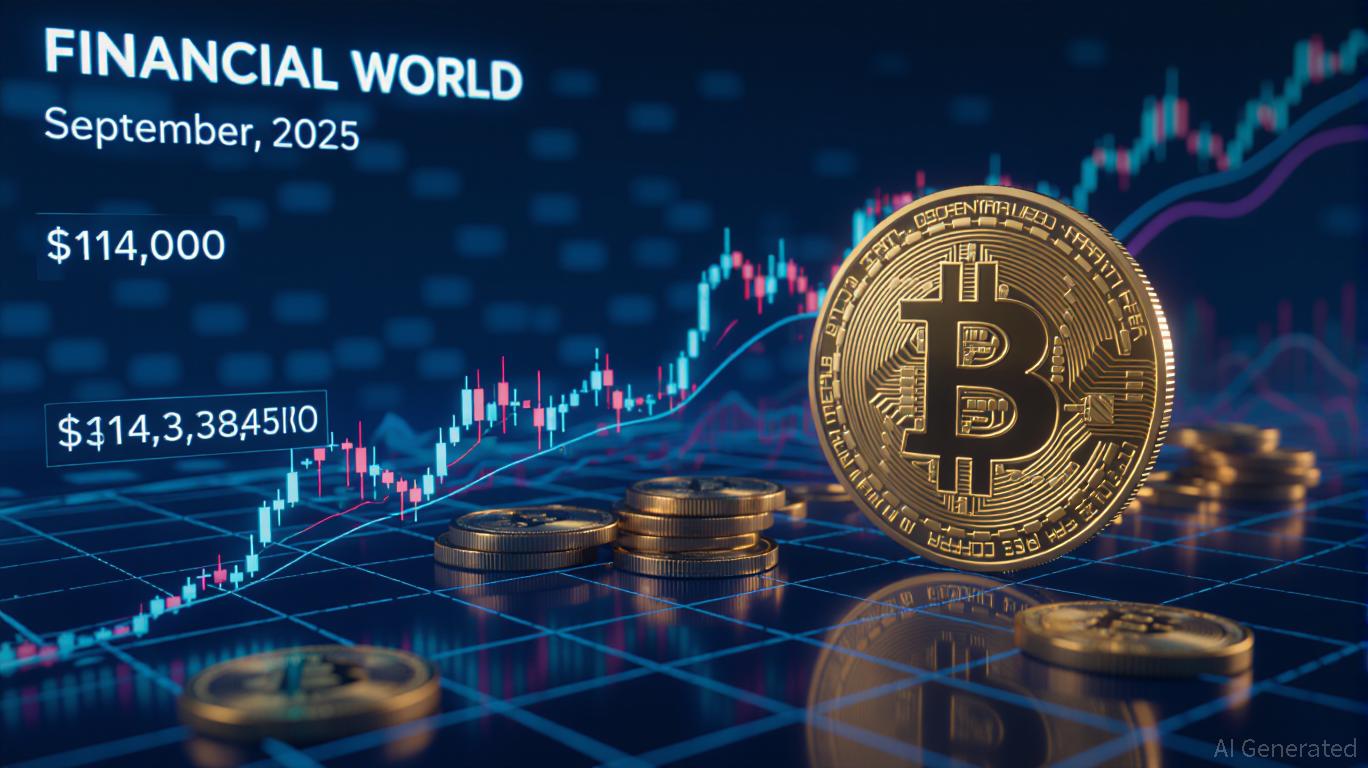
Bitcoin’s price has flirted with the $115,000 mark, only to pull back and settle into a tight range between about $108,750 and $112,000 as buying momentum weakens. Traders and analysts now await a decisive move in either direction to signal the next major trend.

After a breakout attempt stalled just above $115,000, liquidity cooled and buyers began to step aside, according to on-chain data and sentiment analysis. The 30-day momentum index on CryptoQuant dropped to –2 per cent from +1 per cent earlier in the week, underlining a loss of conviction behind the rally. The price action now shows descending highs, suggesting bulls are losing early ground. Resistance sits in the $111,000–$112,000 zone; only a sustained move here could re-ignite upward pressure. Failure to defend support around $108,600 could expose the market to a slide toward $106,000–$105,000.

Technical analysts point to a pattern of consolidation following the failed breakout above $115,000. While buyers attempted to push through, they lacked follow-through, leaving the market stuck in a neutral to slightly bearish posture. Axel Adler, whose work with CryptoQuant is cited in analyses, observed that sellers are stepping in at lower highs, limiting upside attempts. Market structure is now tilted toward volatility unless fresh demand emerges.

Institutional behaviour adds nuance. Whale wallets—those holding between 100 and 1,000 BTC—have accumulated roughly 65,000 BTC in recent sessions, bringing their aggregate holdings to an all-time high of about 3.65 million BTC. That accumulation suggests structural demand remains under the surface. At the same time, analysts note that technical indicators like moving averages have formed bullish signals—for instance, a “golden cross” between the 50-day and 100-day exponential moving averages on shorter timeframes is seen as supportive. Some forecasts even project a path toward $150,000 should momentum revive.

Macro drivers are also in focus. ETF inflows in the United States are injecting liquidity into the market and are widely regarded as a catalyst for continuation moves. Bitcoin has reclaimed its 100-day moving average, which had acted as resistance and is now a support anchor. RSI readings have turned positive, and the broader sentiment has shifted from outright bearish to cautiously optimistic as institutional capital flows reappear.

Still, not everyone is confident. Some analysts argue that despite price strength, the upside is structurally vulnerable. A technical review on Seeking Alpha has rated Bitcoin a “Sell” over the next 12 months, citing weaker momentum and divergence as signals that gains may not sustain without external catalysts.

Crucially, macroeconomic uncertainty looms. Market bets converge around expectations of U. S. Federal Reserve interest rate cuts in the final quarter. Should stimulus emerge, risk-assets including Bitcoin might rally; if inflation surprises or central banks hold firm, volatility could reverberate downward.

Global private equity heavyweight KKR has acquired a minority share in the company that leases Abu Dhabi National Oil Company’s gas pipelines, deepening its commitment to the UAE’s energy infrastructure. The financial terms and precise percentage of the stake were not disclosed. The deal gives KKR exposure to ADNOC Gas Pipeline Assets LLC, which holds the lease rights for a network of 38 pipelines across the UAE, […]

Advertisements

A joint venture between UAE grocer Spinneys and Philippines conglomerate Ayala Corporation aims to introduce premium supermarkets across the archipelago, with the first outlet slated for the fourth quarter of 2026. Ayala will control 60 per cent of the venture, with Spinneys holding the remaining 40 per cent, launching the Dubai-based brand’s first expansion beyond the Gulf Cooperation Council. The two-phase deal calls for Spinneys to bring […]

Etihad Rail has confirmed that passenger services will begin operations in 2026, ushering in a new era of high-speed connectivity across the UAE. At the Global Rail 2025 exhibition in Abu Dhabi, the company revealed the first public visuals of its passenger rolling stock and detailed plans for its network, integration efforts, and operating partnerships. Azza Al Suwaidi, deputy CEO of Etihad Rail Passenger Services, stated that […]

PHNOM PENH, CAMBODIA – Media OutReach Newswire – 1 October 2025 – Cambodia’s climate resilience efforts gained fresh momentum with the signing of a memorandum of understanding between the Ministry of Environment and the Chen Zhi Climate Action Challenge, a nationwide initiative led by Neak Oknha Chen Zhi that empowers young Cambodians to lead scalable, community-based climate solutions. Memorandum of Understanding (MoU) Signing Ceremony with Ministry of […]

DELRAY BEACH, FL, Sept 2025 – Global Call Forwarding, a leading global provider of enterprise-grade virtual phone numbers and cloud communication solutions, will return to GITEX Global 2025 to exhibit its latest innovations in voice technology, CRM & helpdesk integrations, BYOC solutions, and AI-powered Call Insights. The company will be showcasing solutions designed to help modern tech and software companies streamline communications across international markets. Following successful […]

Metaplanet has added 5,268 Bitcoin to its treasury, lifting its total holdings to 30,823 BTC—a stash now worth roughly $3.5 billion. The move marks another aggressive step in the company’s ambition to dominate corporate Bitcoin accumulation.

The Tokyo-listed firm disclosed the latest purchase via its analytics platform, citing an average cost per coin in the range of $116,800. With this transaction, Metaplanet fortifies its position among the largest public Bitcoin treasuries globally. The company has previously disclosed a 5,419-coin buy earlier in September.

Metaplanet’s strategy, initiated in 2024 when it shifted from hotel and media operations into a Bitcoin-heavy treasury model, has relied heavily on capital raises and issuance of equity linked instruments. In early September, shareholders green-lit a plan to issue up to 550 million new shares overseas—raising about ¥130.3 billion —with proceeds earmarked in part for further BTC accumulation. Eric Trump, who serves on Metaplanet’s advisory board, was present at the meeting and took part in a fireside chat session.

The company projects bold long-term goals: by 2026, it aims to reach 100,000 BTC, and by late 2027, to hold 210,000—about 1 percent of total Bitcoin supply.

Despite its crypto focus, Metaplanet’s stock performance has been volatile. Since mid-June, the share price has fallen sharply—losing over 50 percent—reflecting investor concern over dilution risk, weak revenue fundamentals, and compressed valuation premiums compared to its Bitcoin holdings.

Analysts caution that Metaplanet’s heavily leveraged approach leaves it vulnerable. Should Bitcoin’s price fall, the firm could see large mark‐to-market losses or face funding constraints if markets turn against inflows. Still, Metaplanet argues its “Bitcoin yield” metric—growth in BTC per share—aligns incentives for equity holders to back continued accumulation.

The company also is diversifying its strategy. It has launched a U. S.-based subsidiary in Miami to manage derivatives and income-generation business lines, and is developing digital platforms rooted in Bitcoin.

Salah Uddin Shoaib Choudhury For decades, the Muslim Brotherhood has loomed large in the Western imagination, often described as the ideological mothership of global Islamism. To many policymakers in Washington, London, or Brussels, the name alone has become shorthand for a wide spectrum of Islamist activity. Yet, this perception is increasingly divorced from reality. The Brotherhood, fractured and in disarray since its downfall in Egypt, no longer […]

HONG KONG SAR – Media OutReach Newswire – 1 October 2025 – As Hong Kong’s iconic green transport infrastructure, MTR Corporation is committed to keeping cities moving and creating value for the sustainable development of Hong Kong. The Corporation announces today (23 September 2025) that with the support of 15 leading international banks, it has signed a HKD30 billion seven-year syndicated green term loan facility (the “Facility”), […]

Hong Kong startups and business leaders join renowned entrepreneur on his first Asia tour to explore the mindset behind successful founders HONG KONG SAR – Media OutReach Newswire – 30 September 2025 – Hong Kong Science and Technology Parks Corporation (HKSTP) and Tatler called on the innovation community to “Keep Up with Steven Bartlett”, at an exclusive breakfast dialogue with the world-renowned entrepreneur and host of the […]

By Anjan Roy Donald Trump’s high fees for H1B visas are a serious headache for India, not just for the sake of its impact on India’s IT sector and services exports to USA. This is a huge worry for the overall security environment and strategic- diplomatic scenario for India. Among others, if China is able […]


The article China Is Making Every Effort To Attract Talent Thrown Out By America appeared first on Latest India news, analysis and reports on Newspack by India Press Agency).

HONG KONG SAR – Media OutReach Newswire – 30 September 2025 – KPMG celebrated its 80th anniversary in Hong Kong last Friday, reaffirming its enduring commitment to the city’s growth and its role as a leading international financial centre. The milestone event, held at the Hong Kong Convention and Exhibition Centre, was graced by The Honourable John KC Lee, The Chief Executive of Hong Kong Special Administrative […]

Passenger volume across African airlines is forecast to reach 113 million in 2025, up from 98 million in 2024—an increase of about 15.3 %, according to the African Airlines Association. With such growth, aviation stakeholders are stepping up calls to liberalise air transport across the continent to unlock further gains. A core mechanism in this push is the Single African Air Transport Market, conceived under African Union […]

U. S. equity markets eked out modest gains on Monday as investors absorbed mixed signals from policymakers and braced for a potentially disruptive funding impasse. The S&P 500 rose about 0.3 percent, while the Nasdaq added 0.5 percent.

Tech and semiconductor names powered much of the upside, with Nvidia climbing nearly 2 percent and Micron advancing over 4 percent. Meanwhile, energy lagged, weighing on the Dow Jones. Treasuries rallied: the 10-year yield fell to around 4.14 percent.

Markets have long eyed the congressional standoff over government funding, now escalating toward a possible shutdown as the funding deadline tightens. If Congress fails to agree on a stopgap measure by the start of October, crucial economic reports — including this week’s non-farm payrolls — may be delayed.

Within the Senate, tension has grown around healthcare and Medicaid funding demands, a key sticking point in negotiations. Democratic leaders have warned against accepting a funding plan that omits those measures, even as pressure mounts to avoid a closure.

Analysts warn that the shutdown risk magnifies uncertainty over Federal Reserve policy. Without fresh labour and inflation data, the central bank may have to lean more heavily on its own forecasts, complicating rate-cut expectations. Some strategists suggest the Fed could still manage two cuts in 2025, contingent on how deeply economic data is disrupted.

Historical precedent somewhat tempers alarm. In past shutdowns of limited duration, equities have tended to rebound quickly. On average, the S&P 500 returns roughly 0.1 percent during shutdowns, and over the following year the index has gained about 12.2 percent. Still, the threat this time includes a new wrinkle: proposals for mass federal layoffs rather than traditional furloughs, which could intensify economic and psychological fallout.

Sector watchers anticipate uneven effects. Government contractors and firms reliant on federal payments could see downside pressure. In contrast, defensive and AI-linked names may continue attracting flows.

Gold cracked past $3,800 per ounce as investors rotated into safe havens, and the dollar weakened amid risk aversion. Meanwhile, earnings announcements and deal activity remain under close scrutiny: Electronic Arts jumped nearly 4.5 percent after announcing a $55 billion going-private deal.

Markets have thus far held up despite the political drama. The headline indexes are still straddling their 50-day moving averages — Nasdaq has run more than 100 sessions without dipping below. But as the week progresses, volatility could spike if lawmakers stall or key data go missing.

U. S. securities regulators have delivered a rare favourable response to a crypto infrastructure startup, granting a “no-action” letter to DoubleZero that clears its 2Z token from immediate enforcement risk under securities laws. The Division of Corporation Finance stated that, based on the facts presented, it would not recommend enforcement action and that the 2Z token need not be registered as a class of equity securities.

The letter, dated 29 September 2025, indicates that the Division accepted the argument that DoubleZero’s programmatic transfers of 2Z tokens—automatic distributions tied to network contribution—fall outside the classic securities framework if conducted as specified. The Division emphasised that its position is fact-sensitive: any deviation from the described token model could alter the assessment.

SEC Chief Counsel Michael Seaman signed the response, and the Division’s stance affirms that, under the conditions laid out by DoubleZero and its counsel, compliance with Sections 5 and 12 of U. S. securities law is not required for this token model. The decision does not amount to a general opt-out for all tokens, but offers a regulatory precedent for projects structured similarly.

Commissioner Hester Peirce, in a public statement accompanying the action, framed the move as a model for how the SEC might engage with innovation without expanding its reach beyond mandates set by Congress. She observed that Decentralized Physical Infrastructure Network projects like DoubleZero differ fundamentally from capital-raising schemes: tokens issued in DePIN networks are intended to incentivise contributors rather than to deliver profits derived from managerial efforts. Peirce argued that applying securities laws to such tokens risks stifling infrastructure growth rather than protecting investors.

DoubleZero’s model reconstructs how blockchain systems interact with underutilised physical fibre infrastructure. Contributors supplying fibre bandwidth or network connectivity can earn 2Z tokens as compensation. The company asserts that these tokens function primarily as utility instruments—facilitating access and rewarding service—not as speculative investments. The SEC’s letter affirms that under its described assumptions, Howey-style securities analysis does not capture this design.

Market response was muted. Tokens in the DePIN ecosystem dipped by around 2 % in the 24 hours following the announcement—suggesting that while the regulatory clarity is a positive signal for builders, traders may be cautious about immediate upside.

Industry stakeholders view this as a potentially transformative moment. Legal and crypto analysts argue that the DoubleZero relief may embolden other infrastructure-oriented projects to seek direct regulatory engagement, rather than assuming hostile enforcement. The letter gives craftable guardrails for teams to align token economic models with functional incentives.

Nevertheless, the relief comes with caveats. The Division reserves the right to reconsider if conditions change. As critics note, this decision does not immunise DePIN tokens universally—each must be evaluated on whether token distribution is truly non-speculative, decentralised, and aligned with service contribution. Projects must maintain transparent, algorithmic issuance plans and avoid marketing that emphasises profits or speculation.

Matein Khalid Wall Street’s strong bid is skating on macro thin ice as a government shutdown that reflects the toxic polarization in Congress looms. The latest PCE data shows that Powell’s fear for a tariff related uptick in inflation was well founded and Fed funds futures have narrowed the odds of a December rate cut to only 60%, which is perfectly rational given that the US economy […]

A UAE unveiling today brought BYD’s Megawatt Flash Charging system to public attention in partnership with Al-Futtaim, promising a vehicle charging speed that aims to rival petrol refuelling. The pilot is expected to add up to 400 km of range in five minutes under ideal conditions, with the infrastructure rollout to begin across selected locations in the Emirates. The technology is part of BYD’s Super e-Platform, leveraging […]

Law enforcement agencies are now deploying drones equipped with automated licence plate reader systems, enabling vehicles’ registration data to be captured from the air. The Electronic Frontier Foundation reports that firms such as Flock Safety are marketing drones with built-in ALPR capability to police forces seeking to scale up surveillance. These airborne ALPR units combine optical character recognition technology with the mobility of drones. In presentations to […]

BERLIN, GERMANY – Newsaktuell – 29 September 2025 – The Regional Court of Frankfurt am Main has granted a comprehensive preliminary injunction in favor of Josip Heit, strategic advisor to Apertum Holding a company specialized in technology solutions, against the Ireland-based website “BE Conflict Management” and its domain bekm.eu, which had published a series of defamatory statements in both English and German concerning Mr. Heit, Apertum Holding, […]

VISHNU RAJA
RYO YAMADA
HITORI GOTOH
IKUYO KITA