News related to
network

Abu Dhabi-based XRG P. J. S. C. has finalised its acquisition of an 11.7 percent equity interest in Phase 1 of the Rio Grande LNG project in Brownsville, Texas, marking the company’s first natural gas investment in the United States. The purchase was made through a joint-venture structure involving Global Infrastructure Partners, an investment vehicle affiliated with BlackRock. Phase 1 of Rio Grande LNG is one of […]

Dubai’s Roads and Transport Authority has unveiled a new strategic focus for the 5th Dubai World Challenge for Self-Driving Transport, scheduled for 2027: smart integrated infrastructure. Mattar Al Tayer, Director-General and Chairman of the Board of Executive Directors of the RTA, said the competition will pivot to challenges that bind sensing, connectivity and analytics to urban infrastructure across Dubai.

At the closing of the Dubai World Congress for Self-Driving Transport held at the Dubai World Trade Centre, RTA inked four key agreements with Emaar Properties, Al Futtaim Group, and the winners of the 2025 challenge—WeRide and Deutsche Bahn consortium, together with Zelos Technology—to deploy and test autonomous systems in Festival City, Creek Harbour and other strategic urban zones. Al Tayer affirmed that the move aligns with Dubai’s ambition to serve as a global testbed for mobility innovation.

This year’s theme shifts from discrete vehicle-centric competition to a systems-level mandate: entrants will be judged on how well their solutions embed into city-wide networks of sensors, roads, communication links and data platforms. The RTA framework calls for designs that anticipate traffic dynamics, weather variations and public transit interaction, while maintaining safety, resilience and sustainability.

Over 3,000 participants and more than 80 expert speakers participated in the Congress, spanning government, academia and industry. The gathering marked the formal launch of the 2027 edition. The Congress also highlighted Dubai’s strategic goal that by 2030, one quarter of all journeys within the emirate will be autonomous or smart-enabled—an ambition already embedded in the RTA’s transport roadmap.

Stakeholders see this shift as an essential maturation of the challenge format. Rather than focusing only on individual vehicle prototypes, the next competition will test ecosystem coherence and scalability across urban modules. According to industry analysts, the new direction presses participants to align with evolving demands in mobility, where digital and physical layers must fuse.

Dubai’s prior edition in 2025 carried the theme “Dubai Autonomous Transport Zone,” pushing contestants to integrate multiple autonomous mobility modes in defined neighbourhoods. That foundation now gives way to a broader remit, with RTA officials stressing that smart infrastructure is the backbone for reliability and public acceptance of self-driving systems.

The agreements struck with developers and past challenge winners will see pilots in zones like Festival City and Creek Harbour, where road layouts, sensor grids and vehicle operations will be tested side by side. RTA counts on these field deployments to validate technical performance, operational cost and citizen experience before full-scale adoption.

Critics caution that the complexity of integrating diverse systems—communications, edge computing, failsafe control layers—could raise cost, regulatory and interoperability risks. Some stakeholders argue the success of the 2027 challenge will depend on whether entrants can navigate not only technical but institutional challenges across urban agencies and telecommunications providers.

For technology firms and research groups, the new emphasis offers both opportunity and challenge. It rewards proposals able to harmonise hardware, software, data and governance. Observers expect to see consortia spanning telecom operators, municipal agencies, AI firms, and road infrastructure specialists.


HONG KONG SAR – Media OutReach Newswire – 25 September 2025 – Southco Asia Limited proudly celebrated the grand opening of its new state-of-the-art manufacturing facility, Southco Manufacturing and Technology (Foshan) Co., Ltd., located in the Plainvim Intelligent Industrial Park in Gaoming, Foshan, China. The event marked a major milestone for Southco, showcasing its commitment to innovation, operational excellence, and strengthening its presence in the Asian market. […]

A high-profile gathering scheduled for 29 September in Singapore will convene health professionals, AI innovators and medtech entrepreneurs to examine the evolving intersection of artificial intelligence and clinical care. Titled CliniConnect: AI X Healthcare SG Edition, the event aims to catalyse collaboration across disciplines and continents.

Organisers say the agenda will include interactive panels, pitch sessions, and roundtable debates focused on real-world adoption of AI in diagnostics, hospital systems, and patient care. They expect participation from clinicians, researchers, startup founders and regulatory stakeholders alike. The event is expected to coincide with TOKEN2049, a major AI & blockchain gathering, offering cross-domain exposure and synergy.

CliniConnect has hosted several prior editions in Singapore and other regional hubs, with past speakers including Dr Adam Chee, founding lead of Singapore’s Centre for AI-Enabled Health. These gatherings have emphasised bridging the gap between algorithm development and clinical deployment, with attention to ethics, data governance and system integration.

One central topic will be how hospitals and health systems can scale AI solutions beyond pilot phase. Many institutions struggle to integrate point-solutions into legacy electronic health records or workflows. Executives and innovation leads at the event will share strategies for deploying AI at scale without fragmenting operations.

Another critical strand will explore trust, explainability and regulatory oversight. While AI is making strides in pathology, radiology and triage, clinicians often resist “black-box” models. Some speakers plan to advocate hybrid approaches combining model outputs with human oversight or modular interpretability frameworks.

Regulatory perspectives are expected to feature heavily. Several jurisdictions are updating medical device rules to account for adaptive algorithms. Singapore’s Health Sciences Authority has begun consultations on AI frameworks, and regional alignment across ASEAN markets remains a challenge. CliniConnect hopes to provide a forum for convergence on standards, data privacy and cross-border validation.

On the entrepreneurship front, medtech startups will pitch innovations aimed at workflow automation, predisposition risk modeling, remote patient monitoring, and imaging augmentation. Organisers have indicated that venture capital and hospital innovation arms will be present, seeking collaborations or early investments.

The event also intends to showcase case studies from institutions that have begun deploying AI in clinical settings. Narratives are expected from hospitals in Singapore, South Korea, India and Dubai on how they piloted decision-support tools, performance-monitoring systems or diagnostic assistants, and the bottlenecks they encountered in scaling. These stories will help attendees assess trade-offs, resource requirements and institutional readiness.

Observers note CliniConnect’s growing ambition: it now brands itself not just as a regional meetup but as a bridge between Asia’s health tech communities and global AI networks. By aligning with TOKEN2049 and leveraging cross-sector partnerships, it hopes to attract more international participants and raise its influence in defining health AI standards.

Luma Protocol, incubated by PopChain and Nivex, officially entered the market on 20 September 2025, positioning itself as a new architecture in decentralized finance that anchors value in computing power rather than speculative token mechanics. At midday UTC+8 the project launched its pre-sale and, within hours, issued the first mining rewards — signalling a shift from purely token-based incentives toward infrastructure-backed models.

The project’s core proposition is that “Hash Power” — the computational capacity underlying blockchains — becomes a tangible, tradeable asset integrated into DeFi systems. Luma’s model seeks to counterbalance what its promoters describe as the unsustainable cycles of token subsidies that have affected prior generations of DeFi protocols. Underpinning the system, Luma plans to merge capital, computational resource markets, and application layers in a closed-loop infrastructure.

PopChain contributes its identity and settlement capabilities, while Nivex offers liquidity, exchange infrastructure, and compliance support. This strategic alignment aims to deliver an ecosystem where value issuance, transaction execution, and mining resource distribution interlock. According to the announcement, the first mining rewards were disbursed at midnight UTC+8, immediately after launching the pre-sale.

Market reaction to the LUMA token has been volatile. On the MEXC exchange, LUMA traded with a 24-hour jump of 26 per cent, reflecting speculative interest. Yet the token’s 7-day price variance is extremely steep, plunging nearly 99.97 per cent over the week, pointing to high risk and low liquidity stability. The circulating supply and full market capitalisation currently remain opaque.

Critics caution that the concept of tokenizing hash power is not without inherent risk. In the realm of blockchain security, high concentration of mining capacity has historically exposed smaller networks to attacks. The accessibility of mining power through services like NiceHash demonstrates how hash power can be rented and concentrated, creating vulnerability, especially for new entrants. At the same time, mainstream DeFi research underscores systemic risks emerging from leverage, protocol interdependence, and opacity in governance.

Luma’s governance architecture is not fully detailed in public documentation, but the model will need to grapple with decentralised decision-making, hardware centralisation, and incentives for fair participation. Without sufficient safeguards, the protocol may face the same challenges of centralisation, collusion, or exploitability that have troubled other DeFi platforms.

For its part, Nivex has been scaling its ecosystem prior to Luma’s debut. It recently launched a Web3 wallet integrated with PopChain, with plans to embed users into a flow from wallet to liquidity operations to settlement. This vertical integration may benefit Luma by driving demand for the infrastructure stack. Nivex also recently listed the POP/USDT trading pair, anchoring the POP ecosystem that underlies PopChain’s social finance ambitions.

On the supply side, the broader mining industry’s economics are under strain. Electricity, hardware depreciation, and operational costs continue to restrict profitable deployment of hash power. The Cambridge Digital Mining Report underscores that energy cost variance across geographies is a major barrier for expansion. Projects that seek to monetise compute power must navigate this cost differential.

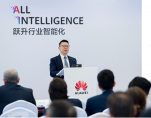
SHANGHAI, CHINA – Media OutReach Newswire – 25 September 2025 – During HUAWEI CONNECT 2025, Huawei released the ISP/MSP Business Success Driven by RAMS White Paper at the summit themed “Powering the ISP/MSP Industry with All Intelligence and Resilience.” The white paper introduces the RAMS framework—ROI, Availability, Maintenance, and Security, aiming to help ISPs and MSPs thrive with AI by transitioning from providing connectivity to offering intelligent […]

Meta has partnered with Circus SE, a leading European AI company, to extend its artificial intelligence capabilities to the defence and security sectors. This collaboration signals Meta’s growing commitment to leverage AI technologies for a range of applications, including military and security operations, aiming to strengthen both European and global defence strategies. Meta, which has been investing heavily in AI over the past few years, is shifting […]

Advertisements

Defence stocks will rally and global investors will be paying attention, I believe. The reason the bullish analysis is a catalyst came the moment President Donald Trump, after meeting Ukraine’s President Volodymyr Zelenskyy at the UN General Assembly, declared that Kyiv can reclaim all territory seized by Russia, an abrupt and market-moving pivot from his earlier calls for compromise. In a single statement, the world’s largest economy […]

MetaMask’s long-awaited native token, MASK, has received confirmation from ConsenSys CEO Joe Lubin that it is on the horizon, stoking anticipation across crypto markets. Lubin suggested the token may arrive sooner than many expect, reawakening speculation about a potential airdrop tied to user activity. Traders have already begun positioning around the move.

Parallel to the MASK buzz, derivatives activity around Aster’s native token has escalated dramatically: futures open interest has expanded by 46 per cent, reflecting aggressive speculative demand.

Bitcoin’s climb toward as high as $113,500 has added momentum to altcoin risk appetite, though analysts warn of resistance near $115,000 as a critical hurdle for sustained upside.

Momentum behind Aster has been fuelled by on‐chain flows and whale accumulation. One address spent over $1.18 million acquiring nearly 595,580 ASTER tokens in a single trade, underscoring deep-pocketed conviction in the token’s trajectory. Aster has also introduced 300x leverage trading for HYPE, drawing comparison and competition with Hyperliquid’s native token ecosystem.

Meanwhile, Hyperliquid’s own tokenomics are under pressure. A major holder transferred around 200,000 HYPE tokens—worth roughly $8.9 million—within two hours, moving the assets toward Aster platforms. The selling pressure from large holders is prompting governance discussions: one proposal suggests burning 45 per cent of HYPE supply to counterbalance impending token unlocks.

Liquidity metrics reflect the competitive dynamics among perpetual DEX platforms. While Hyperliquid historically dominated, new entrants such as Aster, Lighter and edgeX are aggressively capturing share through incentives and token distribution programmes. Some analysts caution that much of Aster’s volume is driven by incentive-seeking rather than long-term retention.

The MASK narrative adds an extra layer of complexity. Decrypt reports that prediction markets assign roughly 32 per cent odds to a token launch by November, indicating widespread uncertainty despite Lubin’s confident tone. MetaMask’s path to decentralisation is expected to involve allocation to active users—those conducting swaps or interacting with dApps—though tokenomics remain unpublished.

Traders are watching to see whether cross-correlations form between MASK speculation and derivative positioning in ASTER and HYPE. If Aster’s futures momentum continues, it may draw further capital away from incumbents, even while regulatory risk looms over token launches.

New data centers and service centers designed to enhance infrastructure coverage and stay ahead of global growing demand for AI and Cloud services Full-stack AI and Cloud capabilities fuel innovations withglobalpartners and customers HANGZHOU, CHINA – Media OutReach Newswire – 24 September 2025 – Alibaba Cloud, the digital technology and intelligence backbone of Alibaba Group, today announced its latest strategic plans to launch its first data centers […]

Abu Dhabi’s Presight and investment company Shorooq have introduced a $100 million fund called Presight–Shorooq Fund I to back artificial intelligence start-ups worldwide. The fund, which is hosted in the Abu Dhabi Global Market, combines both capital investment and access to infrastructure to help scale promising ventures. The fund targets start-ups at early and growth stages developing in areas such as AI/ML, smart cities, energy, fintech, AR/VR, […]

Electric vehicle insurance policies in the UAE are commanding about 72 per cent higher premiums than those for comparable petrol or diesel cars, largely because of elevated repair costs, limited workshop capacity, and parts supply chain challenges. Such figures, derived from data compiled by leading insurance and automotive analysts, shed light on systemic pressures across the market. Average comprehensive EV insurance is being priced at approximately AED […]

Citadines strengthens leadership in the resilient upper-midscale segment through rapid conversions and geographical diversification Franchise model gains momentum as a driver of scalable, efficient growth Global brand campaign amplifies refreshed Citadines lifestyle with activ∞ and “For the Love of Coffee” experiences across operational properties SINGAPORE – Media OutReach Newswire – 24 September 2025 – The Ascott Limited (Ascott), the wholly owned lodging business unit of CapitaLand Investment […]

SINGAPORE – Media OutReach Newswire – 23 September 2025 – VinFast has achieved an outstanding victory with six awards at the prestigious Asia-Pacific Effie Awards (APAC Effie Awards), making it the only automaker honored at the regional-level competition. The company also made history as the first Vietnamese brand to win a Gold at the APAC Effie Awards. This remarkable achievement reaffirms VinFast’s credibility and growing stature on […]

KUALA LUMPUR, MALAYSIA – Media OutReach Newswire – 23 SEPTEMBER 2025 – Webull Malaysia, a subsidiary of Webull Corporation (NASDAQ: BULL), the owner of the Webull trading platform, has launched its nationwide campaign #SamaSamaWebull, aiming to make investing more accessible for Malaysians. The campaign addresses challenges many Malaysians face, including limited financial literacy, complex platforms, and perceived high costs, by offering low-cost and simplified tools that make […]

CEO Explores New Opportunities in Foreign Trade Finance SHANGHAI, CHINA – Media OutReach Newswire – 22 September 2025 – XTransfer, the World’s Leading & China’s No.1 B2B Cross-Border Trade Payment Platform, was recently invited by the Global Finance & Technology Network (GFTN) to attend the highly anticipated annual technology event, 2025 Inclusion·Conference on the Bund in Shanghai. Bill Deng, Founder and CEO of XTransfer, was invited as […]

National Industries Park, the DP World-run industrial zone in Dubai, has secured over AED 1 billion in new project investments between January and September 2025, underpinned by a major push into greenfield manufacturing. It has leased more than 7 million square feet of land during that period, with much of the allocation going to fresh build-outs rather than expansions of existing facilities. The tenant roster has grown […]

HONG KONG SAR – Media OutReach Newswire – 22 September 2025 – DFI Retail Group (“DFI” or “the Group”) is pleased to announce a five-year partnership with Toumi Foods and Product Co., Ltd. (“Toumi”), one of Thailand’s leading rice exporters. This collaboration will see the production and delivery of 1,000 metric tons low-carbon rice to Hong Kong and Macau markets in 2026. Curtis Liu, Chief Executive Officer, […]

NEW YORK, US – Media OutReach Newswire – 21 September 2025 – A team from Monash University Malaysia has won the 4th edition of the Universities for Goal 13 competition, a global challenge organised by the United Nations Sustainable Development Solutions Network (SDSN) in partnership with Siemens Energy. The winning project, “Turning algae into the future of a clean industry”, exhibits how microalgae can be used to […]

Dubai’s telecommunications provider du has begun rolling out its upgraded 5G+ network, aiming to double existing 5G speeds and unlock new technology-driven opportunities for both urban infrastructure and entrepreneurship. The rollout is concentrated initially in central zones of Dubai, Abu Dhabi and other major emirates, with plans to extend coverage more widely by the end of 2025.

Karim Benkirane, chief commercial officer at du, said 5G+ will enable the UAE to advance its smart city and sustainability agendas, while creating an ecosystem where start-ups can “really innovate in the future”. He added that the network will offer faster download speeds, lower latency, and more seamless connectivity—features vital for AI-powered applications, ultra-HD streaming, gaming and real-time virtual or augmented reality experiences.

The infrastructure uses 5G‐Advanced architecture, operating independently of existing LTE networks, and requires compatible devices and SIMs or eSIMs to access the enhanced service. du has said that users leveraging the 5G+ network in busy or downtown areas can expect significantly improved performance.

Enterprise uses are being emphasised as well. du believes that the upgraded network will support government initiatives and private sector innovation, particularly in fields that depend heavily on low latency and reliable data throughput—such as smart traffic systems, IoT deployments, creator-led content, and AI for public services.

Smart city ambitions are aided by 5G+’s ability to maintain connectivity even in crowded zones and to deliver consistent performance as demand grows. The network’s enhancements are intended to sustain video calls, streaming and online collaboration, even in high-traffic environments. du has framed 5G+ as a cornerstone for future digital infrastructure across the UAE.

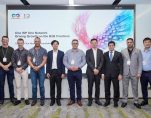
SHANGHAI, CHINA – Media OutReach Newswire – 18 September 2025 – The roundtable themed “One ISP One Network: Driving Growth on the B2B Frontiers” ended on a high node at HUAWEI CONNECT 2025 in Shanghai. At the roundtable, Huawei brought together ISP experts and partners from the Middle East, Asia Pacific, and Africa to explore effective ways to help ISPs grow their B2B business. In addition, Huawei […]

Crypto influencer Ben Armstrong, known as BitBoy, has asserted that Ripple’s XRP possesses potential to rival Bitcoin’s dominance—not in every metric, but in overall market influence and growth. He argues that while Bitcoin remains unmatched on decentralisation and brand recognition, XRP may outpace Bitcoin in return-on-investment and adoption under certain conditions.

Armstrong points to several factors he believes could drive XRP forward: its far faster transaction settlement times, its emerging use for cross-border payments, and increasing interest from both retail and institutional investors. He acknowledges these victories come with drawbacks—particularly XRP’s higher centralisation compared with Bitcoin, given significant holdings of its supply are controlled by Ripple.

He describes market capitalisation as one pathway for competition, noting that XRP lags far behind Bitcoin’s more than US$2 trillion valuation. Nevertheless, he suggests that XRP could narrow that gap by capitalising on regulatory improvements and product developments in the crypto space. He cited possibilities such as exchange-traded funds for XRP and Ripple’s potential corporate moves that could boost legitimacy.

Comparisons with Ethereum form a large part of Armstrong’s argument. He has predicted that XRP may overtake Ethereum in market cap, saying Ethereum’s role in decentralised finance gives it current strength but also comes with trade-offs in efficiency and scalability. XRP, in his view, may benefit from being lighter in overhead, and more directly applicable in payment systems. Critics, however, highlight that Ethereum’s developer ecosystem, DeFi dominance, and smart contract utility are powerful advantages that XRP must overcome.

Recent legal developments related to Ripple have itself affected XRP’s trajectory. Armstrong notes that favourable rulings, greater regulatory clarity in jurisdictions like the US, and growing institutional interest are enhancing investor confidence. He also emphasises that the narrative around cryptocurrency regulation is shifting, which could favour assets like XRP that are often under scrutiny.

On price forecasts, Armstrong has offered a range of scenarios: gains ranging from three-fold to much higher depending on whether certain catalysts—such as regulatory approvals or ETF launches—unfold as hoped. He cautions that for XRP to truly rival Bitcoin, sustained momentum must be maintained over a multi-year horizon, not just in speculative bursts.

FTX’s bankruptcy estate will issue a $1.6 billion payment to verified creditors on 30 September, under its Chapter 11 plan of reorganisation. This marks the third major disbursement since the crypto exchange defaulted in November 2022.

Creditors who complete required verification on FTX’s claims portal and comply with tax documentation will receive payouts via service providers BitGo, Kraken, or Payoneer. Funds are expected to arrive in accounts within three business days after distribution.

Class-5B U. S. customer entitlement claims will receive 40% in this round, elevating their cumulative recovery to 95%. “Dotcom” customers will obtain an additional 6%, bringing their total recovery to 78%. General unsecured and digital asset loan claims will be paid 24%, lifting them to 85% total recovery. Convenience claims will be paid at 120%, exceeding their original declared amounts.

To date, over $6 billion has been repaid to creditors across prior distributions under the plan.

The distributions are being overseen by the FTX Recovery Trust, which is executing on its court-approved strategy to restore assets and settle claims. The plan reflects a structured priority of classes: senior claims and verified claims first, with smaller or “convenience” classes handled in earlier rounds. Sam Bankman-Fried, FTX’s founder, is serving a 25-year sentence for fraud and conspiracy tied to the exchange’s collapse.

eBPF Foundation has awarded $100,000 in unrestricted research grants to support two major university-led initiatives advancing both safety and energy efficiency in systems infrastructure. Each project will receive $50,000, chosen from 27 proposals submitted by 23 institutions globally. University of Michigan Associate Professor Ryan Huang will lead a project called Verifier-Cooperative Instrumentation, which introduces a framework named EPASS. The aim is to combine static verification with runtime […]

VISHNU RAJA
RYO YAMADA
HITORI GOTOH
IKUYO KITA