Just in:
LANDMARK Presents ‘Destination CENTRAL’: A District-Wide Celebration Inviting Global Travellers to Explore the Dynamism, Luxury, and Soul of Central // Yicura BioMed Advances Dual Capital and Industrial Strategy: Completes First Closing of Series B Financing Led by Gobi Partners // U.S. Democratic Leadership Starts Dialogue With Progressive Bloc For Joint Strategy // December Is the Last Window for $800,000 U.S. Residency Investment // Musk expresses willingness to recruit Nvidia chief Huang // Ladakh Ban On Protests Ahead Of Election Is Uniquely Contentious // MG Motor presents four electrified vehicles at Dubai exhibition // Microsoft outage leaves Outlook and Teams users disconnected // DP World transports million containers through UAE corridors // Fujairah highway pile-up leaves 14 dead and 30 injured // Crescent Enterprises venture arm funds Oyster Therapeutics development // Forged court directives trigger probe into website blocking // EBANX and Eneba strengthen partnership in Latin America with 138% YoY growth in payment volume // Ration dealers seek GPS aided grain deliveries // ONYX Hospitality Group Unveils Plans for Amari Samui Resort and Villas, Elevating Its Premium Resort Offering on Koh Samui // Uforce reaches $6 billion valuation with British backing // Modi ally flags youth opportunities gap despite growth // How A Newly Elected Democratic Congress Could Reshape US–India Relations? // From Dubai to the EU: how UAE-based crypto firms can expand under MiCA // Ajman University MBA climbs to joint 13th regionally //

News related to
network

A newly disclosed flaw in TeamViewer’s Remote Management tools for Windows allows attackers with local, unprivileged access to delete files with SYSTEM-level privileges, raising serious security concerns for organisations relying on the platform. Tracked as CVE‑2025‑36537, the vulnerability stems from incorrect permissions during MSI rollback operations and affects installations prior to version 15.67. TeamViewer issued a patch on 24 June 2025 and urges all users with Remote Management […]

Over 500 Premium Global Products Now Available for Convenient Home Shopping HONG KONG SAR – Media OutReach Newswire – 25 June 2025 – Best Mart 360 Holdings Limited (“Best Mart 360” or the “Company”, together with its subsidiaries, the “Group”; stock code: 2360.HK), a leading leisure food retailer in Hong Kong, is excited to announce that its flagship retail brand, “Best Mart 360˚ ” and its global […]

Jasper County authorities in Texas executed a search warrant to physically open a Bitcoin ATM on June 16, retrieving approximately $32,000 in cash—$25,000 of which a local family had deposited after falling prey to a scammer posing as a government official. Sheriff Chuck Havard authorised the operation after tracing funds to an ATM operated by Bitcoin Depot.

Law enforcement agents secured the warrant following a police report that fraudulent calls threatened the family with fines unless they paid via the kiosk. Deputies pulled cash from the machine using a power‑cutting tool, recovering a surplus in addition to the family’s deposit.

The sheriff defended his actions: “When thieves, low‑lifes and scammers attempt to take advantage of the citizens of Jasper County, we will work swiftly and utilise every resource at our disposal to protect our citizens and their property at all costs”. He also warned that cryptocurrency‑based fraud cases are notoriously complex and that the perpetrator remains unidentified.

The incident has sparked debate across digital‑currency communities. Some critics argue that damaging ATM infrastructure and seizing funds from an operator may undermine property rights, asserting that the ATM itself—provided by a third party—was collateral damage in the scam. One Redditor remarked:

“Sounds like maybe government employees destroyed an innocent third party’s property and stole his money.”

This episode highlights a concerning rise in crypto‑ATM scams. The FBI logged nearly 11,000 complaints totaling over $246 million in losses tied to such ATMs in 2024—a 31 percent increase from the previous year—with many victims aged over 60. Citing the surge in fraud, Spokane, Washington, enacted a ban on crypto‑ATMs on June 18, and Australia imposed tighter transaction caps earlier this month.

Bitcoin Depot, the ATM’s operator, confirmed it works closely with law‑enforcement agencies under AML and KYC protocols, but typically does not supervise cash retrieval directly from kiosks. The nature of cryptocurrency—its decentralisation and pseudonymity—adds obstacles to tracking illicit transfers and returning funds to victims.

Although the seized amount exceeds the family’s loss, victims must navigate legal processes to claim reimbursement, and success often depends on tracing crypto to identifiable exchanges. Past efforts, such as the U.S. Department of Justice recovering $2.3 million from the Colonial Pipeline ransomware attack, show that fund recovery is complex and rare.

Industry observers say the operation may set a legal precedent for law enforcement intervention in crypto‑ATM fraud. However, critics caution against the public destruction of third‑party property without clear evidence of complicity, warning it could erode trust in digital‑currency infrastructure.

Amid growing consumer vulnerabilities, experts call for enhanced public education, robust regulation, and strengthened compliance from ATM operators. Proposed measures include mandatory transaction limits, stricter licensing, real‑time fraud monitoring, and clearer cooperation channels with enforcement agencies.

Federal and state authorities are also considering new legislation targeting crypto‑ATM fraud. The Crypto ATM Fraud Prevention Act, if passed, would require improved operator oversight and clearer protocols for law‑enforcement response. Meanwhile, states like North Dakota and Nebraska have already introduced licensing and transaction‑cap laws.

As this case advances, Jasper County officials and Bitcoin Depot are expected to coordinate further to identify the scammer and determine rightful ownership of the recovered assets. The outcome of this operation may shape future legal and regulatory standards governing crypto‑ATM responses to fraud.

Efforts to foster youth entrepreneurship in Sharjah have taken decisive shape with the launch of a new initiative by the Municipal Council and Sharjah City Municipality alongside the Family Development Department. Known as the Sustainable Future Youth Programme, the project seeks to streamline startup processes, facilitate licensing, and provide mentorship and finance support for young innovators.

The programme introduces a unified one-stop-shop for business setup, combining municipal services with regulatory and advisory support. It aims to reduce administrative delays and lower barriers to entry for promising youth-led enterprises. Stakeholders hope this will catalyse innovation and expand economic diversification within the emirate.

Under the scheme, participants benefit from facilitated licensing via the municipality’s dedicated entrepreneurship centre. Young entrepreneurs will receive support in completing documentation, securing permits, and understanding compliance requirements. Meanwhile, Family Development Department branches will offer training sessions in business planning and financial literacy targeted at individuals aged 18–35.

Sources within the Sharjah Youth Council say the programme differentiates itself through its inclusive approach to sustainability. Every startup selected must embed at least one sustainable development objective—whether in social impact, environmental protection, or economic resilience—into its business model. Mentorship and advisory services will be provided by experts from government, private sector, and academia, ensuring access to high‑value networks.

Officials emphasised that one of the programme’s early successes is its cooperation with Sharjah FDI Office’s Emerging Entrepreneurs initiative. Since its inception in early 2024, the Emerging Entrepreneurs initiative reportedly processed its first licenses within days—365 Luxury Watches being one example of a brand that expanded into the emirate swiftly. The new youth programme is designed to build upon this momentum and scale the model to a broader demographic.

The launch event featured remarks by Saif Al Suwaidi, Acting Manager of the Sharjah Investors Services Centre, who highlighted the intent to “embrace young entrepreneurs and innovators eager to launch their projects and businesses in the emirate’s vibrant markets”. Sheikha Issa Al Harmoudi of the Sharjah Youth Council stressed that aligning municipal and youth-targeted efforts is key to reduce obstacles faced by local innovators.

Ruwad, the Sharjah SME foundation, will also play a pivotal role by offering membership benefits, financing options, and virtual incubation facilities—especially targeting universities and alumni. As of early 2024, Ruwad’s network of roughly 1,500 members had already started utilising such support programmes.

Earlier in 2025, complementary youth measures were introduced in the emirate. The Sharjah Capacity Development Foundation released Masar, focused on bridging the gap between education and employment for graduates. The Sharjah Youth Council, together with the Ministry of Industry and Advanced Technology, also organised the “Industry Pioneers – Make it in the Emirates” session to orient Emirati youth towards emerging industrial opportunities under the national diversification strategy.

These activities reflect Sharjah’s broader ambition to bolster non‑oil sectors—such as manufacturing, tech, and creative industries—to contribute significantly to the UAE’s economic targets by 2031. They also coincide with the Municipality’s efforts during UAE Innovation Month in January that included youth‑centric programmes like Innovative Engineer and Innovative Farmer, aimed at nurturing a culture of creativity within municipal services.

Analysts note that the sharpening focus on youth-empowerment initiatives is timely, given the global rise of youth-led impact ventures and the UAE’s increasing competition with regional innovation hubs. According to market data, Sharjah’s share in domestic non‑oil FDI and startup investment has grown significantly, though it remains modest compared to Abu Dhabi and Dubai. The new programme aims to narrow that gap by improving regulatory efficiency and offering targeted support.

Critics, however, caution that sustainable impact depends on measurable outcomes. They argue the programme should establish clear metrics—such as business survival rates, job creation, and investment attraction—to accurately assess its effectiveness. Some have also emphasised the need to extend outreach to rural and underrepresented communities across the emirate.

Government responses indicate that a central dashboard for monitoring and reporting outcomes will be unveiled in the coming quarter. The Municipality has committed to publishing annual impact reports detailing licence issuance, active ventures, funding accessed, and employment generated. They also plan to host follow‑up workshops and bootstrap funds later this year.

As implementation proceeds, attention will turn to integration with existing initiatives. Stakeholders emphasise synergy with SAEED’s established model, Ruwad’s incubation services, and the Youth Council’s outreach. Plans to forge links with private sector incubators and international investor networks are also under exploration, signalling Sharjah’s ambition to transform municipal-level support into a globally connected entrepreneurship ecosystem.

HONG KONG SAR – Media OutReach Newswire – 25 June 2025 – AIA Hong Kong announced the launch of Wealth Generation (“the Plan”), a bespoke life insurance plan designed exclusively for high-net-worth (HNW) individuals. This Plan enables customers to capitalise on wealth creation opportunities in today’s dynamic market while fostering long-term prosperity through strategic legacy planning. The Plan features multiple market-first^ legacy planning options, a rare-in-market* Flexi […]

LAGOS — Rack Centre’s Lagos campus has entered a strategic collocation deal with TelCables Nigeria, a subsidiary of Angola Cables, marking a significant enhancement of West Africa’s digital infrastructure. The agreement brings high-capacity network infrastructure and four major subsea cable systems—SACS, MONET, SEBRAS and EllaLink—directly into Rack Centre’s campus, securing faster, lower-latency routes to Europe, the Americas and Latin America. Fernando Fernandes, chief executive of TelCables Nigeria […]

Polymarket, the world’s largest blockchain-based prediction market platform, is on the verge of completing a funding round exceeding $200 million that would value the company at over $1 billion. The strategic investment reflects growing investor confidence in forecasting platforms as tools for real-time insights and market intelligence.

The company, founded in 2020 by Shayne Coplan and headquartered in New York, has previously secured $70 million across Series A and B rounds led by General Catalyst, Founders Fund, alongside participation from Ethereum co-founder Vitalik Buterin. That capital helped Polymarket scale its operations offshore, particularly following regulatory setbacks in the United States, where it withdrew services under pressure from the Commodity Futures Trading Commission.

Sources indicate the new investment round will build on these foundations, raising upwards of $200 million and propelling Polymarket into unicorn status with a valuation north of $1 billion. Those close to the transaction describe a diverse syndicate of venture capital firms, strategic investors and high-profile figures from the crypto and financial sectors, though official names are yet to be disclosed.

Polymarket’s appeal lies in its novel combination of decentralised finance, crowd-sourced wisdom and smart contract automation. The platform allows participants to trade on real-world events—ranging from elections and policy outcomes to entertainment and economic indicators—by buying and selling shares reflective of outcome probabilities. Transactions occur using USDC on Polygon, ensuring on-chain settlement and transparency.

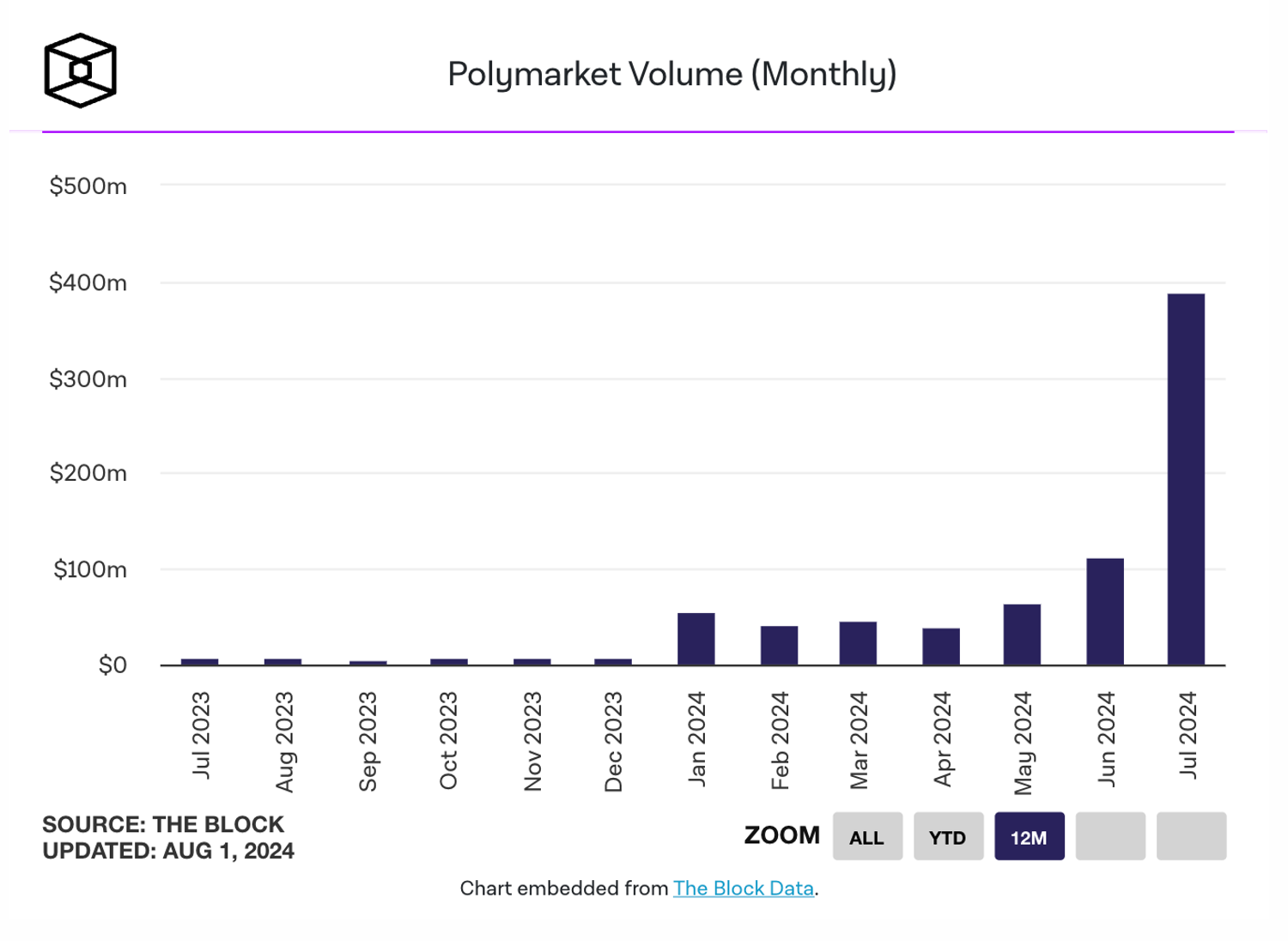
Trading volumes attest to the platform’s influence. In August 2024 alone, Polymarket processed approximately $472 million in trades, with political markets—especially those related to the US presidential election—accounting for nearly $1 billion in wagers by November 2024. Peter Thiel’s Founders Fund highlighted its trust in Polymarket’s market intelligence: “checking Polymarket when breaking news happens has become a habit”.

That compelling performance comes amid regulatory headwinds. Polymarket has barred US users since reaching a settlement with the CFTC in early 2022, which included a US$1.4 million fine and the appointment of former CFTC chairman J. Christopher Giancarlo to its advisory board. These changes aimed to address compliance concerns as the platform expanded internationally. More recently, the FBI reportedly raided Coplan’s home in autumn 2024 as part of an investigation into whether US-based activity violated these agreements.

Despite these challenges, Polymarket has continued to deepen its appeal. Ethereum co-founder Vitalik Buterin has publicly supported the broader application of prediction markets, terming them pioneers in “Info Finance,” an area he believes can enhance journalism, governance and scientific transparency. Polymarket’s data is now cited within Bloomberg’s Terminal services, offering institutional investors fresh analytical layers based on global betting dynamics.

The potential $200 million funding round is expected to include an allocation of token warrants enabling investors to participate in a future token issuance by Polymarket. Earlier reporting by CoinDesk and The Defiant in late 2024 highlighted a $50 million interim funding plan tied to a utility token offering, intended to integrate with or supplant the UMA oracle dispute-resolution system. That mechanism would allow users—or token holders—to validate market outcomes, an evolution that could expand Polymarket’s governance and on-chain autonomy.

Market observers view this token strategy as a logical advancement. Rising volumes and user engagement on election forecasts have revealed limitations in relying solely on external oracles; introducing a native token could decentralise verification and cement Polymarket’s position in the governance of its own markets.

Emerging trends suggest Polymarket is transitioning from an insurgent, crypto-native prediction exchange to a mainstream information infrastructure. Its user base now spans political analysts, financial professionals and retail traders. The recent partnership with X integrates Polymarket’s probabilistic feeds into social media dynamics, allowing users to access market sentiment in real-time alongside breaking news.

Yet questions over regulatory alignment remain. The CFTC is reportedly examining off-shore platforms that permit US bettor access, and lawmakers are considering broader prohibitions on event-based derivatives. The fallout from the 2024 FBI inquiry adds a layer of legal uncertainty, even as Polymarket navigates regulatory environments in Europe and Asia, where its platform has faced access restrictions from gambling regulators in Belgium, Poland, Singapore and France.

As Polymarket nears completion of its landmark funding round, it stands at a crossroads defined by opportunity and scrutiny. A valuation exceeding $1 billion would underscore investor conviction in its model, but unlocking the full potential of prediction markets may depend as much on regulatory clarity as on capital infusion.

Advertisements

Japan’s Financial Services Agency has unveiled plans to amend the Financial Instruments and Exchange Act, bringing cryptocurrencies under securities‑style regulation and opening the door to Bitcoin spot ETFs. The proposals also aim to replace the current progressive tax on crypto gains—ranging up to 55 per cent—with a uniform 20 per cent levy.

The agency’s discussion paper, released on 10 April by its digital policy division, outlines regulatory changes including classification of crypto into “Type 1” and “Type 2”, with insider‑trading rules to follow much like those in equity markets.

Behind the latest move is a growing consensus among Japan’s mainstream political and financial circles. The governing Liberal Democratic Party has actively backed the 20 per cent tax proposal, offering parity with capital‑gains treatment on stocks and bonds. It has also pushed to align tax on derivatives and crypto‑to‑crypto swaps accordingly.

Parliament is expected to review legislative amendments in early 2026, with the FSA targeting a policy direction announcement by mid‑2025.

Analysts note the regulatory upgrade could unlock institutional entry. While crypto ETFs have been launched in the US, Europe and Hong Kong, Japanese regulators have remained notably cautious. Under the proposed amendments, crypto-like instruments would qualify as financial instruments, subject to disclosure, custody, and market‑abuse safeguards.

This shift marks a departure from the current regime under the Payment Services Act, where digital assets are categorised alongside payments rather than securities. The FSA’s plan would position crypto within a legal framework better suited to large-scale trading activities.

Tax treatment has been a central barrier. Gains on crypto are now taxed as “miscellaneous” income—reaching rates as high as 55 per cent—while ETFs qualify as capital gains taxed around 20 per cent. The new flat rate would remove current inequities and possibly stimulate market growth.

Participants in the Japanese financial industry, including SBI and Franklin Templeton, are reportedly making strategic preparations. SBI has already collaborated with both US and UK asset managers to launch crypto‑related products, anticipating that regulatory approval will soon follow.

Despite these signals, caution persists. The Ministry of Finance remains cautious, wary of crypto’s volatility and adverse events such as the collapse of Mt. Gox and DMM Wallet, which led to extensive losses. The FSA itself is said to proceed methodically, emphasising investor protection above all.

To ensure granularity, the FSA’s discussion paper recommends dividing tokens into two regulatory categories: Type 1 assets—used in fundraising or business operations—and Type 2 assets, which include decentralised tokens like Bitcoin and Ethereum with no single issuer. This structure supports tailored oversight, including anti‑insider trading provisions.

Industry reactions reflect a mix of anticipation and prudence. Proponents argue that clearer classification and tax certainty would attract both retail and institutional investors. They point to the global momentum behind crypto ETFs and the relative tax efficiency such structures bring. Opponents, however, urge regulators to remain vigilant to market manipulation and developing infrastructure risks.

Global comparisons place Japan near the frontier of regulatory maturity. Countries such as the United States have delayed crypto classification under securities law even as they approved Bitcoin ETFs. The EU’s MiCA and Hong Kong’s licensing framework signal increased global regulatory alignment. Japan’s proposed amendments would signal competitive parity in Asia‑Pacific markets.

As Japan prepares to table the bill in parliament in 2026, attention will centre on implementation details. These include ETF approval timelines, disclosure requirements for exchanges and custodians, and whether the flat‑tax rate will apply retroactively or to future accruals only.

Cryptocurrency markets are recalibrating as TRON’s USDT reserves climb to an unprecedented $80.7 billion, eclipsing Ethereum’s $73.8 billion—a record milestone for 2025. Data from blockchain analytics firm CryptoQuant highlights that TRON’s share of the Tether stablecoin ecosystem has entered previously uncharted territory.

This expansion further cements TRON as the dominant platform for USDT issuance. Tether’s circulation on TRON—branded as TRC‑20 tokens—has surged sharply since the beginning of the year, jumping from approximately $59.8 billion in January to over $80 billion by mid‑June. In comparison, Ethereum’s ERC‑20 USDT remains below TRON’s benchmark, highlighting a structural shift in network preference.

Market observers attribute TRON’s gains to its lower fees and faster transaction times. A report from NFTEvening confirms that, as of mid‑May, TRON commanded nearly 50 per cent of global USDT supply, while Ethereum’s share hovered around 41 per cent. TRON’s blockchain now processes more than 2.4 million USDT transactions daily, dwarfing Ethereum’s roughly 280 000 transfers.

TRON’s performance in 2021 was already notable, with USDT supply expanding from $6.7 billion to $39.4 billion—an increase of nearly 487 per cent. Stakeholder confidence accelerated through 2024, with TRON first overtaking Ethereum in USDT issuance in November.

While TRON’s stablecoin dominance grows, its total value locked in DeFi has declined—from roughly $7.5 billion in January to about $4.3 billion by mid‑year—according to DefiLlama statistics. However, decentralised exchange activity on TRON is rising; trading volume increased from $4.9 billion in April to $5.5 billion in May. Analysts argue that users may prefer flexible, liquid trading over locking capital in yield‑farming protocols.

TRX, TRON’s native token, has gained approximately 2.2 per cent in the past 24 hours to $0.2729, yet remains some 36 per cent beneath its December 2024 peak of $0.4313. Technical charting shows consolidation below the 20‑day simple moving average and strength above key exponential moving averages, indicating latent bullish potential.

CryptoQuant reports that TRON’s agenda is now largely centred on payments rather than advanced DeFi, noting a distinct mix of tokens like Wrapped TRX and USDD on the network. The network’s recurring USDT mints are viewed as part of a strategic buildup. In mid‑May, Tether authorised another $1 billion mint on TRON, pushing its authorised supply well beyond Ethereum’s at $73.7 billion compared with $74.5 billion.

TRON’s growing role in Asia and emerging markets may be another driver. The platform appeals to users and exchanges that prioritise low cost and swift settlement—features that align with cross‑border remittance and retail payments. However, questions around TRON’s longstanding association with illicit transactions continue to cast a shadow over its rising stature.

Ethereum retains significant traction within DeFi due to its robust ecosystem and broader stablecoin diversity. Nevertheless, ongoing surcharges and network congestion are prompting shifts towards alternate chains like TRON. The competition reflects a broader evolution towards a multi‑chain infrastructure where each blockchain plays to its strengths: Ethereum for advanced financial apps, TRON for efficient payments.

Regulators are also watching this competition. Policy discussions around stablecoin frameworks in the United States, Europe and Asia could reshape how tokens are issued and used. TRON’s dominance in USDT may prompt further scrutiny and prompt Tether to reassess its minting cadence and reserve disclosures across different chains.

Aflac detected a cyberattack on its U.S. network on 12 June and contained the intrusion within hours. The company has confirmed that the attack may have compromised sensitive personal data, including Social Security numbers, claims and health information belonging to customers, beneficiaries, employees and agents. Operations remain fully functional as experts investigate the full extent of the breach. The insurer’s SEC filing and subsequent statement referred to […]

Etihad Rail and the Abu Dhabi Projects and Infrastructure Centre have entered a Memorandum of Understanding to synchronise infrastructure planning and execution across the Emirate. The agreement, signed on 18 June at the Abu Dhabi Infrastructure Summit 2025, is designed to bolster the alignment of Etihad Rail’s projects with Abu Dhabi’s strategic five‑year capital projects plan, ensuring coherent development and efficient deployment of resources. Shadi Malak, Chief Executive Officer of Etihad Rail, […]

Free shuttle network connects to Disney, KOOZA, and transport hubs, while baby gear rentals and kid perks turn stays into seamless adventures HONG KONG SAR – Media OutReach Newswire – 24 June 2025 – This summer, experience Hong Kong’s most anticipated events from the award-winning 4.5-star Dorsett Wanchai, Hong Kong. Strategically located to provide family travellers with unparalleled convenience, the hotel not only offers the iconic Hong […]

Ethiopia’s financial sector has entered a decisive phase as Nib International Bank and Arifpay Financial Technologies formally join forces to upscale the nation’s digital payment infrastructure. With card acceptance, a merchant‑centric app and payment gateway on the launchpad, the alliance aims to expand financial inclusion, support small and medium enterprises and attract foreign currency inflows. Nib International Bank, the country’s sixth‑largest private lender, brings to the table […]

The Federal Reserve has directed its supervisors to eliminate reputational risk as a standalone factor in bank examination programmes, shifting scrutiny instead to concrete financial metrics.

The Fed’s decision, announced on 23 June 2025, reforms supervisory frameworks by removing all references to reputational risk from examination manuals and related materials. This places greater emphasis on tangible financial exposures—credit, liquidity, market, operational and legal risks—mirroring the stance already adopted by the Office of the Comptroller of the Currency and the Federal Deposit Insurance Corporation.

In its official statement, the Fed clarified that examiners will undergo training to uniformly implement this adjustment across banks under its oversight and to ensure alignment with other federal regulators. While reputational considerations will no longer guide supervisory assessments, banks are still expected to maintain strong internal risk-management mechanisms and may incorporate reputational factors in their own decision-making processes.

Market analysts say the move addresses long-standing industry concerns. Bankers had argued that the concept of reputational risk was too subjective—allowing for arbitrary judgements over lawful, financially sound activities—potentially chilling innovation or prompting unwarranted corrective actions. The Fed’s pivot to more specific financial criteria is seen as a bid to enhance transparency and reduce regulatory ambiguity.

Nevertheless, the Fed insists that the policy adjustment does not weaken its commitment to safety and soundness. It affirmed that the shift is procedural—about refining supervisory focus—not a relaxation of oversight standards. The Board emphasised that its expectations for robust risk governance remain unchanged.

In parallel, this recalibration may affect emerging sectors like cryptocurrency. Observers suggest the de-emphasis on reputational risk could lower compliance barriers for banks seeking to engage in digital asset services. However, the Fed has made no direct reference to crypto in its announcement. It remains unclear whether other regulators, such as the Securities and Exchange Commission, will follow suit in adopting similar adjustments.

Critics caution that removing reputational risk from the supervisory toolkit may overlook the broader implications of public trust. While financial measures remain central, reputational damage—stemming from scandals, data breaches or environmental and social controversies—can lead to litigation, customer attrition and systemic instability, even if immediate financial indicators appear stable. Some analysts argue a comprehensive risk approach should balance quantifiable metrics with qualitative reputational insights.

The Fed’s timeline for implementation spans several months. Examiners must be retrained and supervisory documents updated across all Reserve Banks. Coordination with fellow regulators remains key to maintaining consistent supervisory practices nationwide.

As the Fed charts its new supervisory trajectory, attention now turns to how institutions recalibrate. Will banks reduce spend on communications and brand monitoring? Or will they independently sustain reputational frameworks to safeguard stakeholder confidence? The answer may shape the future of reputational governance in the financial sector.

Bitcoin continues to hover above the US $100,000 mark, yet the network’s on‑chain activity tells a contrasting story. Overall transaction counts have declined sharply—from over 730,000 daily in 2023–24 to between 320,000 and 500,000 so far in 2025—while average transaction values surge, indicating that large investors are driving activity.

Despite fewer overall movements, the economic weight of each transaction remains high. Daily on‑chain settlement averages around US $7.5 billion, peaking at US $16 billion when Bitcoin briefly pierced its all‑time high of US $111.7 thousand. That amounts to an average transaction value of about US $36.2 thousand—dramatically higher than before.

The evidence points to a concentration in high‑value transfers. Transactions exceeding US $100,000 now account for nearly 89 percent of on‑chain volume—a stark increase from around 66 percent in late 2022—while transfers under that threshold have dwindled. Smaller wallets and lower‑value senders are increasingly absent from the blockchain.

Transaction fees are also bucking historical trends. In previous bull markets, network congestion drove fees higher. Now, with Bitcoin nearing all‑time highs, miner fee revenue has dropped to just US $558,000 per day—markedly low in comparison to past cycles. This divergence demonstrates muted block‑space demand despite soaring prices.

Meanwhile, trading activity is shifting decisively off‑chain. Centralised exchanges now dominate, with combined spot, futures and options volumes estimated at seven to 16 times greater than on‑chain settlement values. Futures markets alone trade roughly US $57 billion per day on average, peaking at US $122 billion in November 2024. Spot volumes, although smaller, remain robust, averaging US $10 billion daily.

Total open interest in Bitcoin futures and options has reached about US $96.2 billion. Notably, collateral structures have improved; stablecoin‑margined positions now dominate the derivatives landscape—an encouraging sign of reduced systemic risk following the collapse of FTX.

The on‑chain/off‑chain divergence shapes a nuanced picture: Bitcoin’s price resilience stems less from broad public usage and more from concentrated institutional flows and leveraged activity in centralised markets. While large holders continue to shift substantial sums on‑chain, much of the ecosystem’s vitality lies within off‑chain derivatives.

Etihad Rail and Abu Dhabi authorities have formalised a strategic partnership aimed at aligning rail infrastructure planning with the emirate’s broader development goals. The initiative centres on coordinated knowledge exchange around studies, designs, engineering, and strategic development, supporting the integration of Etihad Rail’s projects into Abu Dhabi’s urban and economic landscape.

The agreement, endorsed by Sheikh Theyab bin Mohamed bin Zayed Al Nahyan, Chairman of Etihad Rail, underscores the importance of a fully integrated transport ecosystem. Shadi Malak, CEO of Etihad Rail, confirmed that the collaboration spans infrastructure studies, engineering tender layouts and development planning to ensure rail projects dovetail seamlessly with Abu Dhabi’s urban expansion.

This forms part of a broader wave of recent MoUs signed by Etihad Rail during the Global Rail 2024 conference. Memorandums were inked with a range of international entities—from transport‑focused to tech innovators—to enrich its projects. These include partnerships with Presight AI for AI-driven operational insights; RITES Ltd and South Korea’s KNR/KORAIL on engineering and construction expertise; Austria’s WKÖ for planning cooperation; L&T Technology Services for establishing a national mobility innovation centre; as well as technical alliances with IronLev, Nevomo, Hitachi and Singapore’s SBS Transit.

One high‑profile partnership saw Etihad Rail team up with COSCO’s CSP Abu Dhabi CFS—a key freight terminal operator—under an MoU to bolster multimodal connectivity, enhance logistics flows via rail, and reduce CO₂ emissions, aligning with Abu Dhabi’s Net Zero by 2050 target.

The newly reinforced Abu Dhabi alignment focuses on future passenger services and urban sprawl. While Etihad Rail Stage One and Stage Two freight operations stretch more than 900 km across the UAE, passenger services are under preparation. The Abu Dhabi–Dubai high‑speed link, capable of up to 350 km/h journeys in as little as 30 minutes, has moved through tendering and design finalisation phases. Six passenger stations—including Reem, Saadiyat and Yas Islands plus two in Dubai—are to be integrated with metro and bus networks.

Experts highlight the economic uplift from such rail integration. Mohammed Al Shehhi, Chief Projects Officer, noted that the Abu Dhabi–Dubai high‑speed route could add AED 145 billion to GDP over fifty years, enhancing social cohesion and sustainable mobility.

The collaboration also intersects with major sustainability initiatives. The Ghuweifat freight terminal, which handles cargo from the Saudi border, has been solarised in partnership with Masdar and EDF’s Emerge JV—a project designed to cover 85 % of its power needs, saving over 8 500 tons of CO₂. Rail freight services aim to cut emissions in road transport by 21 % annually by 2050—roughly 8.2 million tonnes of CO₂ per year.

On the regional integration front, Etihad Rail, Oman Rail and Mubadala launched Hafeet Rail—a 300 km link through Al Ain to the port of Sohar. With a US $3 billion contract signed in April 2024, trains are expected to run at 200 km/h and connect Abu Dhabi to Omani ports in just over 100 minutes.

Etihad Rail’s development timeline follows a phased rollout. Stage One became fully operational for freight in January 2016. Stage Two launched freight services in February 2023, completing a 900 km network. Passenger services are yet to be scheduled publicly, though station planning and tendering details are advancing rapidly.

Engineer analysts suggest this partnership framework marks a pivotal shift. By embedding knowledge exchange—covering everything from preliminary studies and engineering specifications to strategic transit modelling—Etihad Rail looks to avoid siloed project delivery. Instead, it positions rail development as core to Abu Dhabi’s urban vision, supported by a holistic transport network and sustainable infrastructure policy.

Public sector observers note the involvement of ADQ, through Etihad Rail, aligns with Emirate-level economic strategies such as Abu Dhabi Economic Vision 2030 and broader UAE Vision 2021. The rail strategy supports logistics, tourism growth, environmental goals, and inter-emirate connectivity. It is built to support freight services now and evolve into passenger transport, high-speed travel, and international rail links.

An Abu Dhabi infrastructure planner stated: “This marks a meaningful move from planning rail as a standalone corridor to delivering integrated mobility that ties directly into the emirate’s urban, economic and environmental objectives.”

Rail specialists emphasise digital and technical partnerships as vital. Collaborations with AI, mobility-as-a-service, maglev and autonomous rail firms reflect Etihad Rail’s push toward a technology-driven, future-ready rail network.

Strategy, the publicly traded firm led by Michael Saylor, increased its Bitcoin reserve, purchasing 245 BTC for US $26 million during the week ending 22 June, at an average price of US $105,856 per coin. This augments the company’s holdings to 592,345 BTC, acquired at a cumulative cost of approximately US $41.87 billion and an average cost of US $70,681 per coin. Year‑to‑date, the firm has realised a yield of 19.2% on its Bitcoin portfolio.

Buying at the tail end of a dip—from highs near US $108,900 down to lows just below US $99,000—Strategy appeared undeterred by broader macroeconomic anxieties weighing on crypto markets. The timing underscores a deep conviction in Bitcoin’s long‑term trajectory, reinforced by Saylor’s forecast that the asset could reach US $21 million within 21 years, presented on 21 June.

This additional acquisition keeps Strategy on track with its 2025 target of a 25% annual yield, recently raised from an earlier goal of 15%. As of this purchase, the return-on-holding stands at 19.2%, offering a clear path toward the revised objective.

Despite a broad sentiment shift toward caution in the crypto space—manifest in an estimated US $5.5 billion inflow into institutional products in the three weeks through early May—the decision by Strategy to double down highlights a contrasting stance. Institutional inflows have been largely concentrated in Bitcoin, accounting for US $1.8 billion of the total amid a surge in interest.

Crypto analysts suggest that volatility triggered by geopolitical risks and shifting macroeconomic dynamics, including trade tensions and Federal Reserve policy, is creating opportunities for long‑term players. AInvest noted a “volatility window” in mid‑2025 that may set the stage for a fresh bull run towards US $200,000, drawing in investors anticipating US foreign‑trade and rate‑cut shifts.

Blockchain data firm Glassnode reports that on‑chain accumulation continues steadily, with long‑term holders increasing their reserves despite price swings. This suggests ongoing confidence among institutional and retail actors alike.

Strategy’s accumulation strategy exemplifies a bet on mean reversion and broader adoption of Bitcoin as a hedge against currency debasement and inflation. Saylor has consistently argued that Bitcoin is “hard money” with inherent scarcity, likening it to digital gold—an argument echoed in institutional flows and strategic investor behavior.

HANOI, VIETNAM – Media OutReach Newswire – 23 June 2025 – With the invention of solar cells using Passivated Emitter and Rear Contact (PERC) technology, Prof. Martin Andrew Green from the University of New South Wales (Australia) and his team made a groundbreaking contribution to green energy production. Two years after receiving the 2023 VinFuture Grand Prize, he continues to push the boundaries of solar innovation, working […]

By Nantoo Banerjee It may be wrong to believe that Israel and the United States of America are the only two countries strongly against Iran’s bid to become a nuclear-armed country. The entire world is concerned about nuclear proliferation and nuclear smuggling and its falling into the wrong hands. The nature of the Iranian regime […]

OKX is considering a US initial public offering following its April relaunch in America, which came after the exchange paid a total of $505 million to settle Department of Justice charges for operating without a money-transmitting licence. The settlement comprised an $84 million fine and the forfeiture of $421 million in earnings, predominantly drawn from institutional activity.

The Seychelles-based platform formally pleaded guilty to US anti‑money‑laundering and Know Your Customer deficiencies, marking a significant compliance turnaround. Its re-entry strategy included appointing Roshan Robert, former Barclays director, as its US CEO and establishing a regional headquarters in San Jose, California. The focus is on a phased rollout of a centralised exchange and the OKX Wallet, which supports 130 blockchains and a DEX aggregator with access to more than 10 million tokens.

Insiders suggest that buoyed by regained US compliance and growing user demand, OKX is now assessing an IPO as early as the first quarter of 2026. Such a move would mark its shift from a privately held crypto entity to a publicly accountable company, increasing transparency and potentially assuring investors and regulators alike of its commitment to best practice.

Industry observers note that OKX’s ambition aligns with broader trends in the crypto space. Rivals such as Coinbase underwent similar transitions, leveraging IPOs to enhance visibility and unlock capital for product development. OKX’s path, however, is distinguished by its heavier regulatory baggage and the scale of its US re-entry, which could either strengthen its credibility or raise fresh scrutiny.

Market analysts highlight several factors that could influence the success of an IPO. These include OKX’s ability to sustain compliance upgrades, the performance of its US exchange and wallet division, and the overall sentiment in financial markets towards regulated crypto firms. The firm’s leadership anticipates that demonstrating stringent compliance and deep liquidity will be pivotal in securing investor confidence.

According to statements from OKX’s Star Xu, the exchange aspires to become “the gold standard of global compliance at scale,” an ambition underscored by its decision to engage a compliance consultant post‑settlement.

The timing of the potential IPO is crucial. Market conditions in early 2026 will determine valuation and investor appetite, particularly if macroeconomic headwinds or equity market volatility persist. OKX will also compete for attention with other crypto entrants, including those preparing to go public or seeking regulatory approval for spot Bitcoin ETFs.

OKX insiders stress that success hinges on execution in several areas: maintaining licence approvals in multiple jurisdictions, expanding US user adoption, and integrating fiat ramps to bolster accessibility. The San Jose hub is positioned as a central node for regulatory engagement, staff expansion, and innovation, with the US team reportedly growing aggressively since April.

Should OKX proceed with an IPO, it will signal a full-circle moment—from prosecution and penalties to listing on a major US exchange. The move would also put it in direct competition with publicly traded peers, raising expectations for quarterly reporting, rigorous audits, and adherence to US securities law.

Regulators will likely scrutinise OKX’s filings, probing its past compliance gaps and evaluating its new internal controls. Investors and analysts will examine user metrics, trading volumes, fee structures, and the viability of the wallet service as revenue drivers. The success or failure of OKX’s US debut could shape the narrative for other non-US crypto exchanges contemplating public listings.

A magnitude 5.7 earthquake struck the New Britain region of Papua New Guinea on Monday, registering at a depth of just 10 km, according to the European Mediterranean Seismological Centre. The tremor occurred at approximately 01:17 pm local time, near New Britain Island, and while shallow, it did not prompt any tsunami alerts. Seismologists note that shallow quakes—those less than 70 km deep—tend to produce more intense shaking at the surface. However, […]

Businesses across Houston are accelerating their transition to Voice over Internet Protocol blended with cloud services, aiming to streamline communication, enhance customer experience and reduce costs. Leading this shift is Phonoscope Communications, a Houston-based provider that leverages its fibre-optic metro network to integrate VoIP and cloud-based services for enterprises across eight counties. With a history dating to 1953—and pioneering two-way videotelephony in schools—Phonoscope now supplies unified voice, […]

Cloud computing giants AWS, Google, Microsoft, Meta and OpenAI are accelerating in-house development of custom application‑specific integrated circuits, aiming to erode NVIDIA’s dominance in high‑performance AI datacentres. Industry reports highlight a projected annual growth rate of around 50% for ASIC purchases by hyperscalers, marking a strategic pivot in the AI hardware landscape.

NVIDIA’s premium-priced solutions—including Blackwell GPUs—have placed pressure on hyperscalers to secure more cost‑efficient, scalable systems. With single GPUs ranging from $70,000 to $80,000 and fully configured servers tallying up to $3 million, these companies are betting on internal design to manage costs and supply risks.

Amazon Web Services has notably moved ahead with its in‑house chips—Trainium for training and Inferentia for inference—reporting 30 – 40% greater cost efficiency compared with NVIDIA hardware. AWS is also collaborating with Marvell and Taiwan’s Alchip on next‑generation Trainium versions. Internal indications suggest AWS may deploy as many as half‑a‑million ASIC units in its data centres, an expansive scale‑up that could rival NVIDIA’s installed base.

Google, meanwhile, has scaled its TPU v6 Trillium chips, transitioning from single‑supplier to dual‑supplier design by partnering with MediaTek. With deployments reportedly hitting 100,000‑unit clusters to support Gemini 2.0 workloads, Google claims competitive cost-performance metrics relative to NVIDIA GPUs. Microsoft’s forthcoming Maia 200 chip, co‑designed with GUC using TSMC’s 3 nm process, is scheduled for commercial release in 2026.

Meta’s Meta Training and Inference Accelerator, developed alongside Broadcom, Socionext and GUC, is expected in early 2026 on TSMC’s 3 nm node, featuring HBM3e memory—another step towards self‑sufficiency in AI compute. OpenAI has also announced a proprietary training processor, with mass production anticipated at TSMC by 2026.

Market projections reflect this tectonic shift. ASICs are poised to claim between $100 billion and $130 billion of custom AI accelerator spend by 2030, with Broadcom estimating a market of $60 billion to $90 billion by 2027. Traditional ASIC powerhouses—Broadcom, Marvell, MediaTek, Alchip and GUC—are experiencing surging demand as they support hyperscaler transitions.

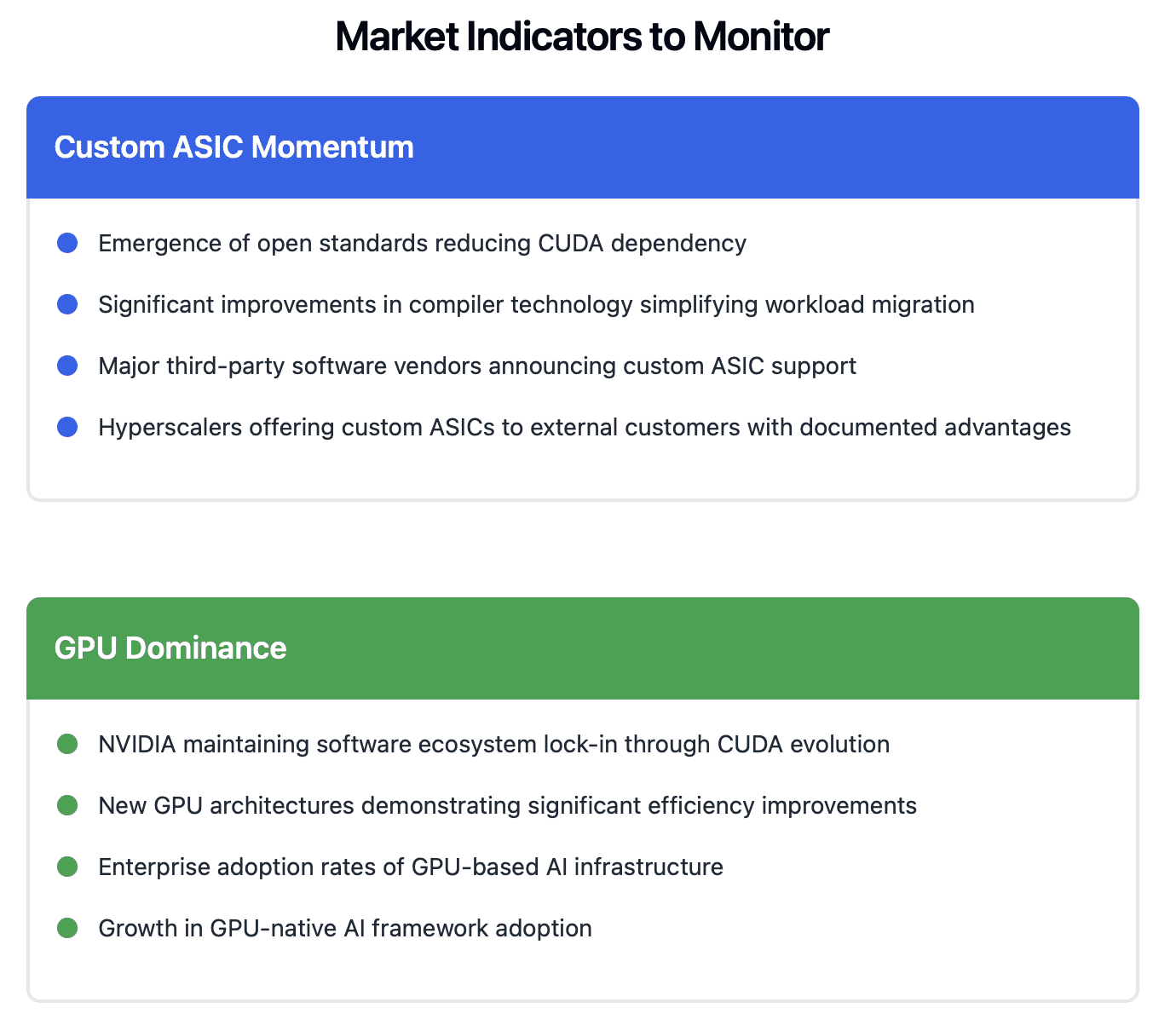
Despite these developments, hyperscalers continue to reserve capacity for NVIDIA chips, recognising the GPU giant’s entrenched ecosystem—especially its CUDA software stack—and the steep technical barriers to immediate elimination of GPU dependencies.

The trend resembles historical transitions in specialised compute. Just as cryptocurrency mining moved from GPUs to ASICs for lower costs and greater efficiency, hyperscalers now aim to fragment the AI compute supply chain and diversify their hardware portfolios.

TSMC stands to benefit significantly, serving as the foundry for both NVIDIA’s mass‑market GPUs and hyperscaler ASICs. Its chairman emphasises that the competition between NVIDIA and cloud‑designed chips is ultimately beneficial to TSMC, ensuring a broad customer base.

Broadcom has emerged as a frontrunner, with its ASIC and networking chipset revenues soaring 220% to $12.2 billion in 2024. Hyperscalers are investing in clusters featuring up to one million custom XPUs over open‑Ethernet networks—an architecture that places Broadcom and Marvell in strategic positions. Networking ASICs are expected to account for 15–20% of AI data‑centre silicon budgets, rising from the 5–10% range.

Revenue trends reflect these structural shifts. Marvell has secured a multi‑year AI chip deal with AWS and anticipates its AI silicon revenue jumping from $550 million in 2024 to over $2.5 billion in 2026. Broadcom, similarly, is redirecting significant investment toward hyperscaler ASIC demand.

Nevertheless, NVIDIA retains a commanding lead in AI training and general‑purpose GPU compute. Its end‑to‑end platform—from hardware to software—remains deeply embedded in the AI ecosystem. Custom ASICs, by contrast, offer task‑specific gains but lack the breadth of software compatibility that NVIDIA enables.

Analysts caution that the AI compute landscape is evolving toward a more fragmented, mixed‑architecture model combining GPUs and ASICs. Hyperscalers’ shift signals strategic recognition of rising costs, supply constraints, and performance demands. Yet, they also underscore persistent obstacles: software ecosystem maturity, long development cycles, and the complexity of large‑scale deployment.

Questions remain regarding the timeframe in which hyperscalers can meaningfully shift workloads away from NVIDIA GPUs. Industry roadmaps project new ASIC deployments through 2026–27. Analysts expect GPU market share erosion may begin toward the end of the decade, provided in-house ASICs deliver consistent performance and efficiency.

The stage is set for a multi‑year contest in datacentre compute. NVIDIA faces increasing pressure from hyperscalers building bespoke chips to optimise workloads and control supply. The next evolution of AI infrastructure may look less like a GPU‑centric world and more like a diverse ecosystem of specialised, interlocking processors.


An Estonian-based blockchain project is upending traditional cryptocurrency mining by enabling everyday mobile users to mine Bitcoin Solaris via a smartphone app. The Solaris Nova App, currently in its private beta, allows earning tokens through adaptive, low‑energy background processes—sidestepping the need for ASIC rigs and high electricity costs.

The platform combines conventional Proof‑of‑Work with Delegated Proof‑of‑Stake, boasting energy efficiency nearly 99.95% lower than Bitcoin yet capable of processing over 10,000 transactions per second with two‑second finality. It includes built‑in wallet features, real‑time analytics, gamified leaderboards and a marketplace for leasing computational power, aiming for a secure but user‑friendly experience.

Engagement has surged. Over 11,500 users have joined the presale, contributing more than $5 million, at an average price of $8 a token, with scheduled price increases to $9 ahead of a $20 launch value. Phase 7 is underway, confirming momentum as the project enters its final presale phase.

Independent audits from Cyberscope and Freshcoins, plus KYC verification, reinforce security credibility. Market analysts such as Ainvest note the platform’s one‑tap mining and liquid staking features as transformational for retail traders.

Bitcoin Solaris’s dual‑layer architecture merges SHA‑256 Proof‑of‑Work with a high-speed Delegated Proof‑of‑Stake layer. This enables smartphone‑based mining via the Nova App, steering the network’s validation duties to unused storage and CPU cycles—a model described as authentic on-chain participation rather than gamified simulation.

Device‑level mining accommodates Android, iOS, desktop and browser setups. It adjusts load according to hardware: simpler algorithmic backend for phones, scalable tasks for laptops. Energy consumption remains negligible compared to traditional setups. These advancements allow earning BTC‑S tokens immediately, even enabling leasing of computing capacity via smart contracts, and fostering deeper DeFi involvement through liquid staking.

Tokenomics emulate Bitcoin’s scarcity: 21 million total tokens, with 66.7% allocated to mining over 90 years, 20% set aside for presale, and 5% for liquidity. Early presale investors also access bonus slots—up to 10% in earlier phases—highlighting the company’s emphasis on accessible wealth-building.

Crypto commentators highlight its egalitarian potential. Coin World describes it as aimed at making mining accessible to average traders. Analytics Insight suggests mobile mining is generating a wave of new crypto millionaires. Observers such as Crypto Nitro, Crypto Infinity and Crypto Show emphasise its blend of energy efficiency with scalability and inclusivity.

Technical infrastructure rests on security measures, including zero‑knowledge proofs, rotating smart validator sets and continuous audits. Developers argue this permits afforded decentralisation without sacrificing speed or integrity.

Operationally, the project is on a tight timeline: the private beta is active, presale entering its final stage, and full exchange listing expected by July–August. Marketing strategies include referral bonuses, token rewards and daily spins, designed to sustain engagement as broader exposure looms.

Critics note that presale hype may inflate expectations and urge diligence. But Bitcoin Solaris counters with transparent audits, robust KYC, and smart contract evidence of functioning architecture. The simplicity of an app‑based mining system breaks from older models that few retail users can access profitably.

Industry significance could be profound. By transforming everyday devices into contributors to blockchain consensus, Bitcoin Solaris substantially lowers barriers. This may redefine early‑phase crypto wealth dynamics, where first movers historically held advantage via specialist mining investments.

As global attention turns to scalable, eco‑conscious blockchain models, Bitcoin Solaris positions itself at the intersection of accessibility and utility. With the Nova App reaching beta testers and node count rising, the platform is providing tangible participation alternatives for small investors.

VISHNU RAJA
RYO YAMADA
HITORI GOTOH
IKUYO KITA
Just in:
L’OCCITANE Celebrates 50 Years Of Provençal Craftsmanship With Holiday 2026 Collection // LANDMARK Presents ‘Destination CENTRAL’: A District-Wide Celebration Inviting Global Travellers to Explore the Dynamism, Luxury, and Soul of Central // Crescent Enterprises venture arm funds Oyster Therapeutics development // Modi ally flags youth opportunities gap despite growth // From Dubai to the EU: how UAE-based crypto firms can expand under MiCA // Ajman University MBA climbs to joint 13th regionally // Wizz Air half-year earnings sink as fuel costs surge // December Is the Last Window for $800,000 U.S. Residency Investment // High Court orders scrutiny of Thachankary hospitalisation // MG Motor presents four electrified vehicles at Dubai exhibition // EBANX and Eneba strengthen partnership in Latin America with 138% YoY growth in payment volume // Musk expresses willingness to recruit Nvidia chief Huang // Nvidia appoints Colette Kress interim chief after Huang departure // Forged court directives trigger probe into website blocking // Uforce reaches $6 billion valuation with British backing // ONYX Hospitality Group Unveils Plans for Amari Samui Resort and Villas, Elevating Its Premium Resort Offering on Koh Samui // Turkish Airlines adds Chengdu to mainland China services // Yicura BioMed Advances Dual Capital and Industrial Strategy: Completes First Closing of Series B Financing Led by Gobi Partners // Fujairah highway pile-up leaves 14 dead and 30 injured // Ration dealers seek GPS aided grain deliveries //