News related to
political

The Trump administration is preparing a comprehensive plan to implement stricter oil sanctions against Russia and impose additional economic pressure on Iran. This move comes as part of a broader strategy to curb both nations’ geopolitical influence, especially in global oil markets and energy security. Senior U.S. officials have outlined a series of measures aimed at restricting Russia’s ability to profit from its oil exports and penalizing […]

By Nitya Chakraborty The announcement on Gaza between Israel and Hamas just five days before the inauguration of Donald Trump as the President of USA on January 20 has baffled many leaders of the peace movement as also left liberal political analysts as to how to properly assess the policies of this hard far right […]

Chinese solar giant Trinasolar is seeking a strategic partner in the United Arab Emirates (UAE) for a major solar power initiative valued at $5 billion. This ambitious project is designed to further the company’s foothold in the Middle East’s rapidly expanding renewable energy sector. The program aims to leverage Trinasolar’s advanced technologies and the UAE’s increasingly aggressive push towards sustainability, a combination that could mark a significant […]

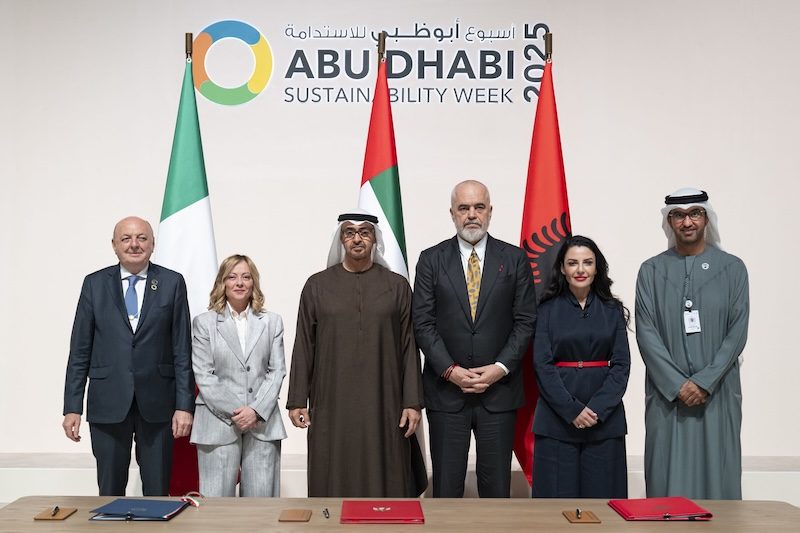
A groundbreaking project is set to revolutionize energy transmission as the UAE, Italy, and Albania unite to build a $1 billion undersea cable that will connect the three nations. This ambitious infrastructure initiative, touted as one of the most significant energy projects in the region, aims to enhance energy security, boost renewable energy integration, and strengthen ties between Europe and the Middle East.

The proposed undersea cable will span the Mediterranean, linking Albania’s grid to Italy’s energy system, with an additional link to the UAE. Once completed, the cable is expected to facilitate the efficient transfer of electricity, particularly renewable energy generated from solar and wind sources in the UAE and Albania. The project is a bold step toward reducing carbon emissions and advancing the global energy transition.

This collaborative effort is backed by significant political and economic support, with each country bringing unique advantages to the table. The UAE’s vast solar energy resources and its commitment to sustainable energy development are pivotal in this venture. Italy, with its advanced energy infrastructure and strategic location in the Mediterranean, serves as a critical hub for energy distribution in Europe. Albania, although not traditionally known for its energy exports, is set to play a crucial role in the renewable energy supply chain, utilizing its untapped potential for hydropower and wind energy generation.

The undersea cable will have the capacity to carry up to 1,000 megawatts of electricity, marking a significant milestone in renewable energy integration. The project aims to address the growing demand for clean energy in Europe while providing the UAE with a reliable market for its abundant solar power. Additionally, the cable will serve as a crucial link in the Mediterranean’s evolving energy landscape, enabling cross-border electricity exchange and fostering greater energy cooperation between nations.

The strategic importance of this initiative cannot be overstated. For the UAE, it represents an opportunity to diversify its energy export markets and reduce its reliance on traditional fossil fuel exports. The undersea cable will allow the UAE to leverage its renewable energy potential, particularly solar power, which has seen substantial growth in recent years. This will also help the country meet its sustainability goals and contribute to global efforts to combat climate change.

Italy, on the other hand, stands to benefit from enhanced energy security and the opportunity to access cleaner energy sources. With the European Union’s ambitious climate targets in mind, the undersea cable provides Italy with a reliable avenue to meet its renewable energy quotas while reducing carbon emissions. The cable also complements Italy’s existing efforts to integrate renewable energy into its grid and reduce dependence on fossil fuels.

Albania, while facing challenges in modernizing its energy infrastructure, offers considerable potential as a renewable energy producer. The country boasts a diverse range of renewable energy resources, including hydropower, solar, and wind energy, which can be harnessed for export to neighboring nations. By joining this project, Albania stands to benefit from increased investments in its energy sector, as well as improved grid connectivity that can stimulate economic growth and job creation.

The undersea cable project is expected to be completed by 2028, with construction set to begin in the coming years. The cable will be laid along the Mediterranean seabed, with specialized vessels and teams working to ensure the project’s success. The engineering challenges associated with such an ambitious undertaking are significant, requiring advanced technology and meticulous planning. However, the potential benefits of the project are enormous, with experts predicting a transformative impact on regional energy markets.

The alliance between the UAE, Italy, and Albania reflects a broader trend of increasing cooperation on global energy challenges. With a shared commitment to reducing carbon emissions and promoting sustainable energy solutions, the countries are setting an example for future international collaborations. By combining their unique strengths, they are forging a path toward a greener and more interconnected energy future.

The project holds significant implications for the broader geopolitical landscape. As energy interconnections grow in importance, countries are increasingly looking to build robust, sustainable, and resilient energy networks that can withstand the challenges posed by climate change and geopolitical tensions. The undersea cable is a testament to the growing recognition that collaboration is key to addressing the world’s energy needs, as no single nation can solve these challenges alone.

This project is also part of a broader strategy to diversify the energy mix in Europe and the Middle East, regions that have traditionally relied heavily on fossil fuels. By connecting these regions through advanced infrastructure like the undersea cable, the project will help to diversify energy sources and increase resilience to energy supply disruptions.

Abu Dhabi’s Emirates Nuclear Energy Corporation (ENEC) is strategically expanding its footprint in the global nuclear power industry, aiming to become a significant player in energy markets beyond the UAE. The initiative comes at a time when the world is focusing on achieving carbon-neutral goals and ensuring sustainable energy solutions. ENEC’s pursuit of global growth underscores the UAE’s ambition to diversify its energy sources and establish itself as a leader in clean energy technologies.

ENEC, founded in 2009, has made considerable strides in the UAE’s nuclear power sector, with the Barakah Nuclear Energy Plant being the centerpiece of its operations. The plant, located in the Al Dhafra region, is the first nuclear power plant in the Arab world, with four reactors now operational. The successful implementation of Barakah has positioned ENEC as a model for nuclear energy projects in the Middle East and has given it the confidence to pursue expansion into international markets.

One of the key drivers behind ENEC’s global ambitions is its desire to capitalize on growing global demand for low-carbon energy solutions. As countries strive to meet their climate goals, there is an increasing emphasis on nuclear energy as a reliable and scalable option for reducing greenhouse gas emissions. The International Atomic Energy Agency (IAEA) has reported a steady rise in interest in nuclear power projects worldwide, especially in Asia and Europe, where governments are pushing for clean energy investments.

The UAE’s commitment to carbon neutrality by 2050 has propelled ENEC’s expansion plans. Nuclear energy, which is free from carbon emissions during its generation phase, aligns with the country’s goal of reducing reliance on fossil fuels. By expanding its nuclear operations globally, ENEC is not only seeking to help other nations achieve their climate objectives but also to strengthen the UAE’s geopolitical standing as a leader in energy innovation.

ENEC’s global ambitions are supported by the robust technological expertise it has developed over the years. The company has already partnered with international firms and organizations to develop state-of-the-art nuclear power technologies. One of the most notable partnerships is with Korea Electric Power Corporation (KEPCO), which has provided engineering and design expertise for the Barakah plant. This collaboration has enhanced ENEC’s capacity to build and operate nuclear power plants efficiently, making the company well-positioned to expand its presence abroad.

ENEC’s strategy to pursue international nuclear energy ventures is multifaceted. The company is looking at countries with high energy demands and those committed to reducing their carbon footprints. In particular, ENEC is eyeing markets in Asia, Europe, and parts of Africa, where energy infrastructure is rapidly developing, and nuclear power is seen as a critical part of the energy mix.

In Asia, where the demand for electricity continues to grow, nuclear power is gaining traction as a solution to meet the surging energy needs while curbing emissions. Countries like India, China, and South Korea are already investing heavily in nuclear energy projects, and ENEC’s experience and expertise make it an attractive partner for these nations. Additionally, ENEC has expressed interest in the potential of expanding its influence in Eastern Europe, where countries such as Ukraine and Poland are looking to diversify their energy sources in the face of rising energy security concerns.

ENEC’s drive for global expansion is not limited to providing nuclear plants; the company is also looking to position itself as a comprehensive energy services provider. This includes offering nuclear safety consultancy, training services for operating nuclear plants, and contributing to the development of nuclear infrastructure in emerging economies. ENEC’s efforts to enhance its global standing go hand in hand with its long-term commitment to developing nuclear energy that adheres to the highest international safety standards.

While ENEC’s expansion plans are ambitious, they come with challenges. Nuclear energy, while growing in demand, still faces significant scrutiny due to concerns about safety, waste management, and the long-term environmental impact. Despite the rigorous safety standards that ENEC follows, including compliance with the highest regulatory protocols from the UAE’s nuclear authorities, the company will need to work proactively to address public concerns about nuclear energy’s potential risks. Furthermore, the costs associated with nuclear power plants, including construction, decommissioning, and waste disposal, remain high, which could be a deterrent for some countries exploring nuclear options.

Nevertheless, ENEC’s management believes that the long-term benefits of nuclear power far outweigh these concerns. By promoting nuclear energy as a key component of a diversified energy strategy, ENEC hopes to help countries reduce their reliance on fossil fuels, stabilize energy prices, and enhance energy security. Nuclear power, with its capacity for reliable, large-scale energy generation, can complement renewable sources like wind and solar, ensuring a balanced energy grid that is capable of meeting the needs of an evolving global market.

Global sukuk issuance is forecasted to approach $190 billion to $200 billion in 2025, driven by monetary easing and substantial financing needs in core Islamic finance countries, according to S&P Global Ratings.

In 2024, the total issuance stabilized at $193.4 billion, slightly down from $197.8 billion in 2023. This performance was underpinned by a significant increase in foreign currency-denominated issuance and a drop in local-currency issuance. The stabilization was further aided by strong financing needs in core Islamic finance countries, the need to attract foreign capital, and improving global liquidity conditions, with major central banks starting to ease their monetary policy.

Local currency-denominated sukuk issuance fell by 14.6% year on year, primarily due to lower issuance in Malaysia, Pakistan, Turkiye, and Indonesia. The largest drop was in Malaysia, where government issuance decreased because of a smaller fiscal deficit due to the reduction of subsidies. Similarly, Malaysia’s central bank’s issuance fell as a result of tighter liquidity conditions for the Islamic banks as their financing growth continued to outpace deposit growth. Pakistan also saw lower local-currency issuance, as the government’s fiscal position remains under pressure and monetary conditions remain tight, as did Turkiye, where tight monetary conditions resulted in lower local currency-denominated issuance. However, local-currency issuance in Saudi Arabia resumed its growing trend as the government tapped the market with jumbo issuance and started issuing retail sukuk.

Conversely, foreign currency-denominated sukuk issuance increased significantly, rising to $72.7 billion in 2024 from $56.5 billion in 2023. This surge was mainly attributable to the Gulf Cooperation Council (GCC) countries, Malaysia, and Indonesia. Among GCC countries, Saudi Arabia and Kuwait led the way, with banks, corporations, and the government of Saudi Arabia stepping up their foreign-currency issuance, while banks and corporations in Qatar and Oman were also more active in this area. The United Arab Emirates ended the year with marginally lower foreign-currency sukuk issuance than last year. In Malaysia, performance was mainly underpinned by increased issuance by the International Islamic Liquidity Management Corporation and a couple of issuances by the central bank and the sovereign wealth fund. Indonesia’s higher sukuk volumes were due to the country’s increased sovereign issuance.

Fitch Ratings reported that global outstanding sukuk grew 8.5% year-on-year to $900 billion by the end of the third quarter of 2024. Sukuk held a large 30% share of the global debt capital market outstanding in core markets. In the GCC, the debt capital market is about $1 trillion outstanding, with sukuk holding a 37% share.

The U.S. Federal Reserve’s 50-basis-point rate cut in September improved financing conditions, leading to a rise in global sukuk issuances. Fitch expects rates to reach 4.5% at the end of 2024 and 3.5% at the end of 2025, boosting issuance activity in the fourth quarter of 2024 and into 2025. A further decline in interest rates is anticipated to support refinancing upcoming maturities and funding diversification goals.

Despite the positive outlook, risks to the sukuk pipeline remain. Sharia-related complexities, rising geopolitical risks, and oil price volatilities could affect market growth. Bashar Al Natoor, global head of Islamic finance at Fitch Ratings, noted that while there is a build-up of the sukuk pipeline partially supported by the recent Fed cut, these downside risks could impact the market.

In the first half of 2024, global sukuk issuance reached $91.9 billion, a slight increase from $91.3 billion during the same period in 2023. This growth was significantly influenced by a 23.8% rise in foreign currency issuances, which hit $32.7 billion by June 30, 2024, up from $26.4 billion the previous year. Saudi Arabia, the United Arab Emirates, Oman, Malaysia, and Kuwait were the main contributors to this increase.

However, the market might face disruptions starting next year with the adoption of the Accounting and Auditing Organization for Islamic Financial Institutions’ (AAOIFI) Standard 62 guidelines. These guidelines, which transition the industry toward asset-backed sukuk by requiring the real transfer of underlying assets to investors, could impact the market depending on investor and issuer response. Despite potential challenges, existing sukuk are unlikely to be disrupted as any changes in contractual obligations would require investor consent.

By K Raveendran The latest decision by the Modi government to grant sanction for prosecution of Aam Aadmi Party (AAP) leaders Arvind Kejriwal and Manish Sisodia marks yet another chapter in the ongoing narrative of central agencies being leveraged for political ends. At its core, the move highlights a pattern that has become increasingly familiar, […]
Advertisements

Companies identify Business interruption as their top business concern for the year ahead (37% of overall responses) Cyber ranks #2 (31%), with data breaches identified as the cyber exposure companies fear most Natural catastrophes retain #3 rank (27%) in Asia, which is heating up faster than the global average SINGAPORE – Media OutReach Newswire – 15 January 2025 – Business interruption is the biggest worry for Asian […]

By Dr. Gyan Pathak The way AAP, BJP and the Congress have been trying to woo the electorates living in Delhi’s slums, unauthorized colonies, and less developed areas, it is increasingly becoming clear that the key to winning the legislative elections lies with them. Over 50 per cent of the voters live in these areas, […]

KUALA LUMPUR, MALAYSIA – Media OutReach Newswire – 14 January 2025 – 2024, a year of geopolitical stress and major political changes, is drawing to a close. It is time to focus on the future and identify new trading opportunities. However, according to Octa broker, the outlook for the global economy is uneven and mixed, ‘rife with uncertainties and riddled with challenges’, so traders are advised to […]

HONG KONG SAR – Media OutReach Newswire – 13 January 2025 – The Hong Kong Institute of Certified Public Accountants (HKICPA) is participating in the two-day “Asian Financial Forum 2025” from today (13 January to 14 January), to promote Hong Kong’s sustainable development and the implementation of the HKFRS Sustainability Disclosure Standards (HKFRS SDS). At the Forum, the HKICPA President Edward Au shared the importance of HKFRS […]

By Nantoo Banerjee There seems to exist a method in US President-elect Donald Trump’s madness when he talks about his desire to annex Canada and Greenland, and renaming the Gulf of Mexico among others. A US annexation of Canada is possible through a treaty between the two countries involving the British Monarch, or a referendum […]

HONG KONG SAR – Media OutReach Newswire – 13 January 2025 – VT Markets, an award-winning financial services provider, today releases its 2025 Q1 Economic Outlook. The report highlights how the dual tailwind of favourable policies and market dynamics will propel the cryptocurrency sector into a new era of mainstream adoption. The report also underscores the transformative strides achieved by cryptocurrencies in 2024, which sets the stage […]

Damac Properties, a major real estate development company based in the UAE, has announced a remarkable $20 billion investment deal that marks a significant milestone in the continued strengthening of ties between the Gulf region and former President Donald Trump. The deal comes on the heels of growing business activities between the Trump Organization and companies within the UAE, signaling a deepening relationship that blends politics and commerce.

The landmark investment will largely focus on large-scale development projects in the Middle East, particularly in the UAE and surrounding regions, areas that have seen a significant increase in foreign investment in recent years. This particular venture, supported by Damac, which is one of the region’s most influential real estate developers, not only marks a huge financial commitment but also highlights Trump’s ongoing influence in the Middle East, a region where he has cultivated robust business partnerships.

Damac’s decision to align with the Trump Organization further consolidates the firm’s position within the luxury real estate sector, particularly as demand for high-end properties in the Gulf grows. The projects set to be developed under this partnership will span various sectors, from residential to commercial spaces, further enhancing the region’s appeal as a hub for international business.

This growing collaboration between Trump and Gulf-based entities like Damac points to a shift in the way Gulf states are engaging with American businessmen. The partnership reflects a broader trend where the region’s wealthy investors see value in deepening their relationships with powerful political figures, especially those with a global influence, such as Trump.

While Trump’s presidency left a complicated legacy regarding his ties to foreign governments, the current investment underscores the longevity of his business connections, particularly in the UAE, which remains one of the most lucrative and influential partners for Trump outside the United States. Under the terms of the deal, Trump will lend his brand to high-profile projects, which will undoubtedly raise the profile of these developments globally.

The expansion of Trump’s real estate ventures in the region speaks volumes about his sustained business interests in the Middle East. Trump’s brand, which has long been associated with luxury and wealth, aligns seamlessly with the aspirations of Gulf investors looking to increase their visibility on the global stage. The collaboration has also highlighted the shifting dynamics in real estate development, where political figures increasingly play a key role in shaping the future of business deals across borders.

What is especially notable is the involvement of the UAE in these initiatives. As one of the most economically diversified countries in the Middle East, the UAE is positioning itself as a leader in not only finance and tourism but also in the luxury real estate market. The Trump Organization’s presence in the region further underscores the country’s influence and its ability to attract major international investors. Despite concerns over the potential conflicts of interest due to Trump’s dual role as a businessman and political figure, the Gulf region has continued to welcome his projects, leading some analysts to question the broader implications of such investments.

The agreement also raises questions about the future of Trump’s business operations, especially in the context of his ongoing political career. With his political influence diminishing following his presidency, the $20 billion investment deal could be seen as an attempt to stabilize his financial portfolio by aligning with powerful Middle Eastern entities. The Trump Organization’s expansion into luxury real estate markets in the UAE also fits into a broader pattern of American businesses exploring new opportunities in foreign markets that are seen as stable and profitable.

Gulf investors, including those behind Damac, have increasingly demonstrated their willingness to engage with the Trump Organization despite the political controversy that surrounds his name. For many investors in the region, the financial upside of such partnerships outweighs the potential diplomatic fallout, a sign of the region’s prioritization of economic interests over political considerations.

The deal has sparked a mixed reaction. On one hand, it is seen as a symbol of the enduring power of Trump’s brand and his ability to foster profitable business ventures, even after leaving the White House. On the other hand, critics point to the risks of such ties, with concerns over the potential influence that foreign investors could exert over American politics through business arrangements.

By K Raveendran Microsoft’s deepening engagement with India is both a strategic imperative and a reflection of its renewed focus on emerging technologies under the leadership of Satya Nadella. Nadella’s connection to India goes beyond his heritage; his initiatives underscore a profound appreciation for the country’s pivotal role in shaping the future of technology. As […]

Newly Launched “Trading and Hedging” Solutions to Empower Businesses with FX Trading, Hedging Strategies and Products SINGAPORE – Media OutReach Newswire – 9 January 2025 – SUNRATE, the global payment and treasury management platform, kickstarts the new year by introducing new treasury solutions – “trading and hedging” for businesses worldwide. These solutions are launched through Sunrate Markets Pte. Ltd., which holds a Capital Markets Services (CMS) licence […]

By Dr. Gyan Pathak Delhi elections has clearly shown that the opposition INDIA bloc has now become a dilapidated house in which the walls and pillars are falling apart. Saying two of its allies – Congress and Aam Aadmi Party (AAP) has broken away, will be an understatement, since the Congress is not only trying […]

KUALA LUMPUR, MALAYSIA – Media OutReach Newswire – 10 January 2025 – Developments such as Forex market volatility, rising commodity prices, and Southeast Asia’s economic growth are poised to reshape the trading landscape in 2025. Market participants need to be aware of these trends to develop strategic approaches and mitigate risks. Kar Yong Ang, a financial market analyst at Octa broker, highlights key trading trends to expect […]

By Arun Srivastava RSS chief Mohan Bhagwat visiting Bengal for ten days is certainly not such a big news to draw attention. But his stay this time attains importance for the reason that he would discuss the state of the BJP and RSS in the state and give direction to the RSS workers to take […]

HONG KONG SAR – Media OutReach Newswire – 9 January 2025 – Award-winning brokerage VT Markets, a global leader in financial services, has released its 2025 Q1 Economic Outlook. In the report, the broker spotlights the remarkable trajectory of gold in 2024 and its potential market performance in the coming year. The report further delves into key drivers of gold’s price movement; an explainer on why the […]

Saudi Arabia’s Public Investment Fund (PIF) has made a significant investment of $200 million into the first globally listed exchange-traded fund (ETF) based in the Kingdom. The strategic move aims to bolster Saudi Arabia’s ambitions of diversifying its economy beyond oil and positioning the nation as a key player in global financial markets. This infusion of capital marks a notable step in the PIF’s growing efforts to […]

Venture capital funding in Saudi Arabia and the UAE has experienced a notable decline, as shifting investor priorities and regional economic trends impact the growth of startups and early-stage businesses in both countries. The drop reflects broader changes in the global investment landscape, marked by a heightened focus on risk-adjusted returns and increased caution in the face of global economic uncertainty. In the past year, venture capital […]

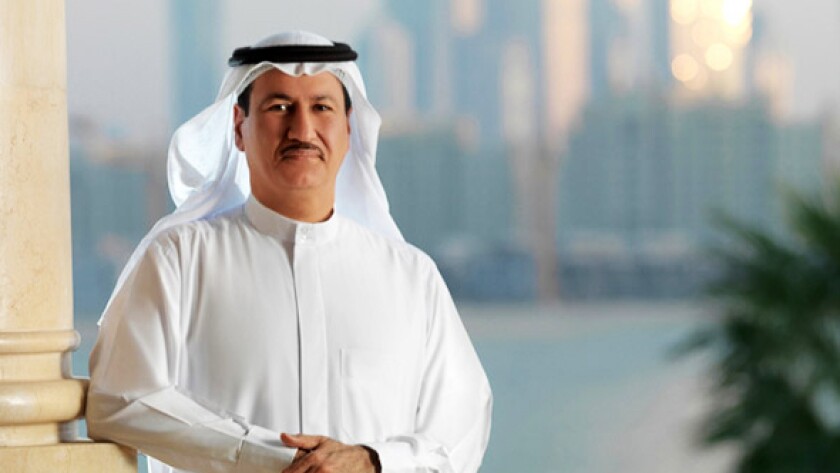
Emirati billionaire Hussain Sajwani has pledged to invest $20 billion in the U.S. data center industry, a move announced alongside President-elect Donald Trump at his Mar-a-Lago residence in Palm Beach, Florida.

Sajwani, chairman of Dubai-based DAMAC Properties, expressed his intention to potentially exceed the $20 billion investment, contingent upon favorable market conditions. This substantial commitment underscores the growing demand for data infrastructure to support advancements in artificial intelligence and cloud services.

DAMAC Properties, under Sajwani’s leadership, has a history of collaboration with the Trump Organization, notably developing the Trump International Golf Club in Dubai, which opened in 2017. Sajwani’s relationship with Trump has been well-documented, with the two families sharing both business and personal ties.

The announcement comes amid a surge in investments in AI technology and the necessary infrastructure to support it. Since the introduction of OpenAI’s ChatGPT in late 2022, there has been a significant increase in funding directed toward generative AI technology and the infrastructure required to support it. For instance, Microsoft announced plans to invest approximately $80 billion this fiscal year to expand its AI capacity.

President-elect Trump has emphasized his commitment to bolstering domestic industries and attracting foreign investment. During his campaign, he proposed higher tariffs on Chinese goods to limit China’s access to advanced data center technology. The announcement of Sajwani’s investment aligns with Trump’s economic agenda, aiming to stimulate job creation and technological advancement within the United States.

However, it’s worth noting that not all previously announced investments have come to fruition. Early in his first term, Trump announced a $10 billion investment by Foxconn in a Wisconsin factory, which promised thousands of jobs but was largely abandoned. Despite such precedents, the current investment climate, particularly in AI and data infrastructure, appears more robust, with multiple tech giants committing substantial funds to expand their capabilities.

Sajwani’s investment is expected to focus on the construction of data centers across various U.S. states, including Texas, Arizona, Oklahoma, Ohio, Illinois, Louisiana, Michigan, and Indiana. These facilities will play a crucial role in supporting the growing demands of AI applications and cloud computing services.

The U.S. data center industry has been experiencing significant growth, with estimates suggesting that the country could attract up to $1 trillion in data center investments over the next five years. Sajwani’s commitment represents a notable contribution to this expanding sector, highlighting the increasing importance of data infrastructure in the digital economy.

In addition to his ventures in real estate and data centers, Sajwani has diversified his business interests through his private investment firm, which acquired Italian fashion group Roberto Cavalli in 2019. He has also invested in luxury developments in London, including the Versace-branded DAMAC Tower in Nine Elms.

The collaboration between Sajwani and Trump has not been without scrutiny. Their business dealings have raised questions about potential conflicts of interest, given Trump’s political position and the international scope of their ventures. Nonetheless, both parties have maintained that their relationship is strictly professional, centered around mutually beneficial business opportunities.

As the U.S. continues to tighten restrictions on the export of AI chips to China, investments like Sajwani’s are seen as strategic moves to bolster domestic technological infrastructure. The Biden administration had previously implemented measures to limit China’s access to advanced AI technology, a stance that President-elect Trump appears poised to continue with key appointments in his administration.

Sajwani’s commitment to investing in U.S. data centers reflects a broader trend of international investors recognizing the potential of the American technology sector. With the increasing integration of AI and cloud services into various industries, the demand for robust data infrastructure is set to rise, making such investments both timely and strategically significant.

The announcement has been met with optimism from industry analysts, who view it as a positive indicator of continued growth and innovation in the U.S. technology sector. As these data centers become operational, they are expected to create numerous job opportunities and contribute to the advancement of AI and cloud computing technologies.

While the full impact of Sajwani’s investment will unfold over the coming years, its alignment with current technological trends and economic policies suggests a significant boost to the U.S. data center industry. As the digital economy expands, the importance of such infrastructure investments cannot be overstated, positioning the United States as a continued leader in technological innovation.


By Manish Rai Since Assad’s regime fell in early December, clashes have intensified in northern Syria between the US-backed Kurdish fighters and the Turkish proxy force Syrian National Army (SNA). Following the regime change in Syria, Turkey has become the most important regional actor in the country. By providing support for Hayat Tahrir al-Sham (HTS) and the Syrian National Army Ankara has been consolidating its power over […]

VISHNU RAJA
RYO YAMADA
HITORI GOTOH
IKUYO KITA