News related to
risk

A new community-centric retail development by KeyMavens Group is under construction in Wadi Al Safa 5 and is scheduled to open in the third quarter of 2026. The project, named The Villa Square, spans more than 124,000 square feet and positions itself as a boutique shopping and lifestyle hub with a focus on sustainability and wellness. Located at the heart of one of Dubai’s fast-growing residential zones, […]

A groundbreaking partnership has emerged between Ripple Labs, Mastercard Incorporated, WebBank and Gemini Trust Company to pilot the use of Ripple’s U. S. dollar-backed stablecoin, RLUSD, for credit-card settlement on the XRP Ledger network. The announcement, made at Ripple’s annual Swell 2025 event, signals a key move by a mainstream payments network to integrate blockchain-based tools into legacy infrastructure.

Under the terms of the pilot, Card issuer WebBank—partnering via Gemini’s credit-card programme—will explore settling Mastercard-network transactions using RLUSD on the XRPL. The goal is to streamline settlement flows between merchants and issuers, compressing what now often takes days into near-real-time settlement through blockchain rails, while preserving regulatory compliance and consumer protection.

Ripple noted that RLUSD has already surpassed a circulation threshold of $1 billion, and is issued under the oversight of the New York Department of Financial Services with reserves held in cash and short-term U. S. Treasuries. Mastercard described the collaboration as part of its broader strategy to integrate regulated digital assets. “Through our partnerships with Ripple, Gemini and WebBank, we’re using our global payments network to bring regulated, open-loop stablecoin payments into the financial mainstream,” said Sherri Haymond, Mastercard’s Global Head of Digital Commercialisation.

The partnership unfolds amid growing attention on stablecoins as institutional settlement tools rather than niche digital-asset instruments. Mastercard’s previous statements reflect cautious optimism: its Chief Product Officer, Jorn Lambert, has said that despite the potential of stablecoin technology, adoption demands “a seamless and predictable user experience, reach and wide distribution” beyond the technological narrative alone.

Industry analysts note that if scaled, this model could challenge entrenched settlement processes such as those using ACH and SWIFT and cut both transactional cost and latency—especially for cross-border commerce. Ripple executives suggest that the pilot is a demonstration of how stablecoins can function within regulated frameworks rather than as adversarial alternatives.

Nonetheless, key caveats remain. The pilot requires regulatory clearance before full onboarding begins, and adoption by issuers and merchants at scale remains to be proven. Some banks and payment networks continue to view stablecoins with caution, given ongoing questions about trust, custody, interoperability and how legacy infrastructure will migrate. As an example, Mastercard has publicly noted stablecoins still have “a long way to go” before becoming everyday payment tools.

This initiative builds on Ripple’s broader institutional push, which included a reported $500 million funding round at a $40 billion valuation, intended to fuel growth in custody, stablecoins and institutional payments infrastructure. The XRPL platform, which underpins XRP and is designed for low-cost, high-speed settlement and tokenisation, is central to the experiment.

For cardholders, the consumer experience may remain unchanged—swipe a card—but behind the scenes, settlement flows could shift dramatically. For merchants and issuers, the promise lies in reduced settlement risk, faster liquidity and improved traceability. For regulators and infrastructure providers, the test will show whether a hybrid bridge between legacy finance and blockchain can scale without undermining compliance or stability.

By TN Ashok NEW  YORK:When the polls closed at 9 p.m. on Tuesday, November 4, 2025, it took less than 40 minutes for the Associated Press to call the race. Zohran Mamdani, a 34-year-old democratic socialist and state assemblyman from Queens, had accomplished what many considered impossible just a year earlier: he defeated Andrew Cuomo—twice—to […]

The article The Mamdani Moment: A Political Earthquake In America’s Largest City appeared first on Latest India news, analysis and reports on Newspack by India Press Agency).

HO CHI MINH CITY, VIETNAM – Media OutReach Newswire – 5 November 2025 – Many countries in Asia are reporting a sharp rise in flu cases. The intensified rainy season is fueling transmission and creating ideal conditions for rapid spread. In a single week, Thailand recorded more than 30,000 new cases.1 Meanwhile, Japan declared a nationwide flu epidemic on 3 October after confirming more than 6,000 patients […]

Business conditions across the United Arab Emirates’ non-oil private sector eased with the headline S&P Global UAE Purchasing Managers’ Index slipping from 54.2 in September to 53.8 in October. Growth remained above the mid-year trend but the moderation highlights emerging caution amid new challenges. The decline in the PMI reflects a tempering of momentum, notably in hiring and new business orders. While the headline index still signals […]

Canada is set to introduce a comprehensive federal framework aimed at regulating fiat-backed stablecoins under its 2025 budget. The plan mandates issuers to maintain full asset reserves, enforce redemption policies, and deploy robust risk-management and data-security protocols.

The regulatory scheme will be overseen by the Bank of Canada under the existing Retail Payment Activities Act, with the BoC allocating CAD 10 million over two years beginning in the 2026-27 fiscal year for implementation. Administration thereafter is expected to cost around CAD 5 million annually, to be offset through regulated-issuer fees.

This approach aligns Canada with the global trend in digital-asset regulation. The United States passed its own stablecoin legislation in July, placing pressure on Canada to move with similar urgency. The international stablecoin market currently stands above USD 300 billion and is projected to reach USD 2 trillion by 2028.

Regulated issuers will face specific requirements: they must hold reserves sufficient to cover outstanding stablecoins, enable immediate redemption at par value, and adopt risk protocols covering operational, credit, and market exposures. Issuers also must protect consumers’ personal and financial data and support national-security safeguards. Entities already operating as payment-service providers may need to transition under the Retail Payment Activities Act if they issue “prescribed stablecoins”.

Industry reaction has been broadly positive. The Canada arm of Coinbase called the framework “a watershed moment” that will “change how Canadians interact with money and the internet”. Fintech firms such as Tetra Digital and Wealthsimple, which are developing Canadian-dollar stablecoin offerings, have welcomed clarity of regulation as unlocking innovation. Nonetheless, some market commentators caution that tighter regulation must avoid stifling fintech entrants or pushing innovation offshore.

Canada’s decision follows a growing regulatory impetus. The BoC had earlier urged federal and provincial authorities to coordinate efforts on stable-coin regulation and payment-system modernisation, highlighting that Canada’s payment infrastructure lagged that of other advanced economies.

The timing of the regulatory initiative is notable. While the budget itself does not specify the exact date when the legislation will be tabled, it signals a shift toward payment-ecosystem reform. The budget also signals expansion of the BoC’s oversight of payment-service firms and accelerated deployment of the Real-Time Rail payments system expected to launch in 2026.

Analysts see multiple drivers behind the move: protecting consumers from stable-coin issuer failure; preserving monetary sovereignty by keeping domestic transactions off unregulated foreign stablecoins; encouraging competition and innovation in the payments sector; and aligning with international regulatory frameworks as digital assets blur traditional banking boundaries.

Some key challenges lie ahead. Defining which tokens qualify as “stablecoins” under the framework, and carving the issuer view between payment-instrument regulation and securities regimes at the provincial level, remain open. Enforcement mechanisms, cross-border coordination, and transitional arrangements for existing issuers will also test regulators’ capacity.

Under the announced funding plan, the BoC will allocate CAD 10 million over the first two years to establish regulation of stablecoin issuance and oversight, beginning in the 2026-27 fiscal period. Ongoing annual oversight costs of CAD 5 million will be recouped via licensed-issuer fees. Regulators assert that the initiative will support faster, cheaper and safer payment flows for Canadians while reducing reliance on unregulated digital tokens.

Extends Agentic AI Safety from infrastructure to application with agentless EDR and integrated guardrails to secure next-generation AI factories HONG KONG SAR – Media OutReach Newswire – 5 November 2025 – Trend Micro Incorporated (TYO: 4704; TSE: 4704), a global cybersecurity leader, today announced a new integration with NVIDIA BlueField, which embeds protection directly into the data center layer for more secure and scalable AI factories. This […]

Advertisements

The governments of the northern United Arab Emirates have taken a bold step into natural-hydrogen exploration with the collaboration among the Sharjah National Oil Corporation, Siemens Energy and Decahydron to assess the use of naturally occurring hydrogen for power generation and other industrial applications. This marks a decisive departure from traditional fossil reliance and underscores Sharjah’s ambition to secure a foothold in the emerging hydrogen economy. The initiative rides on ongoing technical studies by Decahydron and SNOC at an existing exploration well in Sharjah, with initial findings reported as encouraging and further drilling scheduled for 2026 to gather detailed resource data and measure flow rates.

The emerging project will evaluate whether natural hydrogen — distinct from hydrogen produced by electrolysis or reforming — can feed power turbines or serve heavy industry without the extensive storage, transport and conversion infrastructure typically required for conventional “green” or “blue” hydrogen. Siemens Energy brings its global hydrogen and energy-system expertise into the alliance, while Decahydron focuses on mineralisation and subsurface hydrogen resources. SNOC, as the emirate-owned upstream and midstream energy company, provides the local infrastructure and regulatory engagement needed to steer the resource development. The companies frame the effort as a potential new low-carbon energy source that could serve data centres, manufacturing plants and other energy-intensive uses in the UAE.

Figures within the consortium underscore the significance of the move. SNOC’s chief executive, Khamis Al Mazrouei, said the feasibility study could mark “a new chapter in Sharjah’s energy landscape—providing an abundant, naturally occurring source of clean energy.” Siemens Energy’s UAE managing director, Khalid Bin Hadi, described hydrogen as central to decarbonising the power sector, adding that this collaboration sets a new course for natural-hydrogen in the Gulf region. Decahydron’s CEO, Arnaud Lager, said early findings suggest the potential for continuous supply directly from subsurface sources and that Sharjah and the northern Emirates hold “exceptional potential”.

Global context reinforces the ambition behind the project. The UAE aims to become one of the top ten hydrogen-producing countries and to capture a 25 per cent share of the low-carbon hydrogen key markets, according to statements from leading federal energy officials. Sharjah’s drive aligns with this broader national strategy. Previously SNOC announced its intent to explore green hydrogen and carbon capture within its portfolio as part of its pathway to net-zero emissions. Now the emphasis on naturally occurring hydrogen marks a notable shift in approach.

The technical front remains complex. Natural hydrogen projects remain nascent worldwide, with questions around resource size, continuity of flow, well economics, contaminants and commercial usability still to be resolved. The Sharjah initiative is built on preliminary well-site data, but the drilling slated for 2026 will be critical in determining resource scale and flow rate viability, which in turn will affect whether the hydrogen can be used directly for power generation or whether it will need conversion. Siemens Energy’s role will involve analytical and technical verification of commercial potential, while SNOC’s project governance will oversee permitting, regulatory interaction and integration with Emirate infrastructure.

Industrial demand in the Gulf region adds urgency to the project. With increasing energy consumption from data centres, hydrogen applications in manufacturing, and a drive to decarbonise hard-to-abate sectors, natural hydrogen presents a complementary path to electrolytic hydrogen and renewables. The potential upside includes bypassing some of the cost and complexity of hydrogen storage and pipeline transport by tapping subsurface reservoirs directly. If proven viable, the Sharjah project could serve as a model for other Middle East jurisdictions investigating hydrogen from unconventional sources.

Strategic risks remain. Project economics will depend on the continuity and purity of hydrogen flows, the cost of drilling and well development, regulatory frameworks, and the readiness of industrial hosts to adapt infrastructure. Market competition is intensifying: electrolytic green hydrogen is scaling rapidly and could outpace unconventional hydrogen if production and storage costs fall further. Moreover, hydrogen certification, transport logistics, and industrial offtake agreements remain evolving domains globally. For Sharjah and the GNOC-Siemens-Decahydron alliance, time to commercial decision-making will be an important metric.

Crypto markets experienced a sharp upheaval as the price of Bitcoin slid below the US $100,000 mark for the first time in approximately six months, while Ethereum plunged to levels near US $3,000. As a result, leveraged positions totalling around US $2 billion were liquidated within a 24-hour period.

The downturn began when Bitcoin fell to about US $99,000, triggering a cascade of forced unwinds in futures and perpetual contracts. According to data providers, more than 80 per cent of these losses stemmed from long bets, amounting to approximately US $1.6 billion. Ethereum’s drop—exceeding 20 per cent over two days—added nearly US $1 billion in liquidations in the same timeframe. The broader crypto market capitalisation slipped to roughly US $3.4 trillion, marking its lowest level in four months.

Analysts point to a confluence of factors driving the sell-off. The Federal Reserve’s cautious comments about future policy signalled the end of easy money for risk assets and prompted a rise in the US dollar index and treasury yields—both typically adverse for cryptocurrencies. Weakening institutional demand compounded the problem, as cumulative outflows from spot Bitcoin exchange-traded funds and related vehicles exceeded US $1.3 billion in the days leading to the crash. Algorithm-driven trades amplified the move: Bitcoin breached its 200-day exponential moving average near US $109,800 and touched technical support around US $100,000, triggering automated sell orders.

The liquidation event has wider implications for investor sentiment and the structure of the crypto market. The so-called Fear & Greed index plunged into the “extreme fear” zone, while open interest in perpetual futures contracts dropped as many leveraged players exited. On-chain metrics show historic wallets transferring tens of thousands of Bitcoin to exchanges, signalling profit taking by long-term holders. Yet some argue the correction could serve as a cleansing phase for the market: by flushing out excessive leverage, the environment may become healthier for the next leg of the cycle.

Despite the turbulence, there are signs that structural demand remains intact. Large-scale buyers such as MicroStrategy continue to accumulate Bitcoin—its holdings now exceed 641,000 BTC. Meanwhile, infrastructure-oriented developments in decentralised physical infrastructure networks and the convergence of blockchain with artificial intelligence are still attracting investor interest. Nevertheless, the immediate path forward is fraught. Analysts now identify a failure to hold US $100,000 for Bitcoin as potentially opening a decline toward the US $92,000–US $94,000 range. For Ethereum, a slide toward US $2,700–US $2,800 is on the radar if momentum fails to stabilise around current levels.

Kyoto-based gaming giant Nintendo has raised its sales projection for the Switch 2 console to 19 million units for the fiscal year ending March 2026, up from a previous estimate of 15 million. The upward revision reflects stronger-than-expectations demand since the hardware’s launch in June. The company reported that as of the end of September, 10.3 million Switch 2 units had been sold globally. Sales momentum has […]

The African Union and the Global Fund to Fight AIDS, Tuberculosis and Malaria have signed a memorandum of understanding aimed at bolstering health systems across the continent, particularly in the fight against AIDS, tuberculosis and malaria. The agreement, inked on 3 November 2025 in Geneva, commits both parties to deeper collaboration including data-driven accountability, domestic resource mobilisation and integrated development planning. Under the pact, the AU and […]

Wall Street’s surge in equity valuations, largely driven by a small group of technology giants, has raised concerns about the shallow nature of the rally and the potential risks that may follow. Leading the pack are companies such as Nvidia, Microsoft and Amazon. com, whose combined market capitalisations and dominant positions in artificial-intelligence-driven sectors are exerting an outsized influence on the broader market. Analysts note that the […]

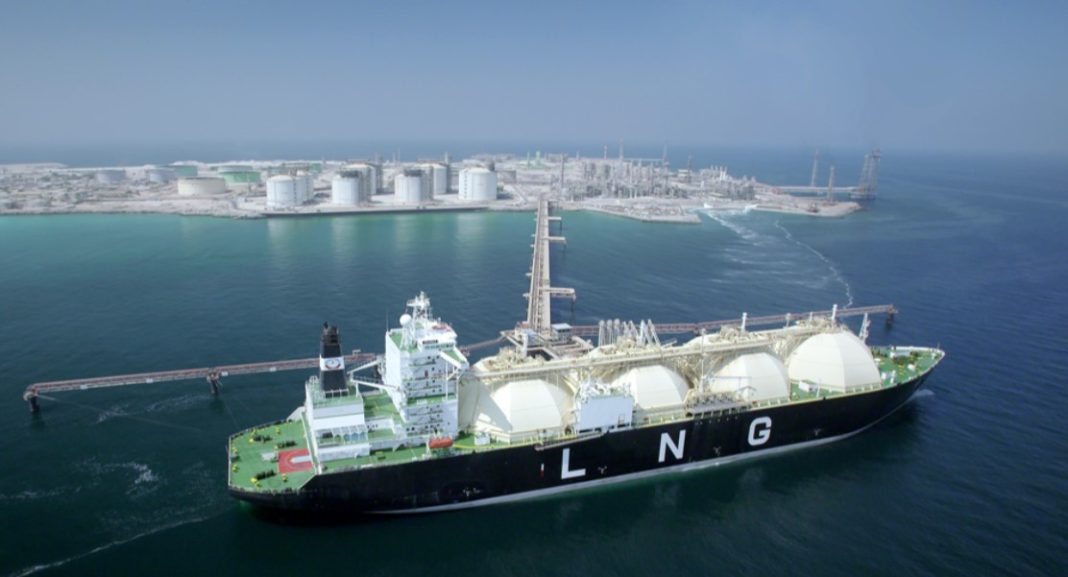
Abu Dhabi’s state energy company signed a 15-year sales and purchase agreement with a unit of British energy major for the delivery of up to 1 million tonnes per annum of liquefied natural gas. The contract represents the first long-term LNG sales deal between the company and Shell and marks the eighth offtake agreement secured for its new export facility.

The LNG will be supplied from the Ruwais LNG project in Al Ruwais Industrial City, Abu Dhabi, which is under development and is set to become the first LNG export plant in the Middle East and Africa region to operate on clean power. Shell holds a 10 per cent equity stake in the project. The agreement converts a previous heads of agreement into a definitive contract and accelerates the project’s commercial timeline.

By securing this deal, more than 8 mtpa of the facility’s planned 9.6 mtpa capacity has already been contracted across Asia and Europe, just 16 months after the project’s final investment decision in July 2024. The project comprises two liquefaction trains of 4.8 mtpa each and is designed to more than double the company’s existing LNG production capacity to around 15 mtpa.

The deal is timed to global gas-market conditions where demand is picking up and energy security is a key concern for buyers. By locking in long-term supply, the exporting company seeks to position itself as a “reliable global supplier of lower-carbon LNG”, while the buyer views the contract as a strategic commitment to expanding its LNG portfolio and securing long-term supplies.

For the seller, the rapid pace at which contract commitments have been won is significant. The chief executive of the gas-division described the achievement of contracting more than 80 per cent of the plant’s capacity within roughly a year of FID as “a new benchmark” for large-scale LNG projects globally, and noted that construction, contractor mobilisation and site works remain on track for commissioning by the end of 2028. The buyer emphasised its long-standing partnership of more than fifty years with the Abu Dhabi exporter and said the agreement supports its global LNG-expansion strategy.

Analysts note that the project’s clean-power design, advanced technology deployment, and rapid contracting distinguish it in the LNG market. That said, while the exporting company releases its ambition to expand its LNG portfolio, competitors in the region are also pursuing aggressive growth, raising competitive risk. Moreover, delivering commercial operations at a low-carbon intensity adds complexity and cost — achieving the projected timeline and performance will require careful execution.

On the demand side, the contract underscores how buyers are increasingly seeking longer-term and lower-emissions supply arrangements in the transition-era gas market. For the buyer, the deal adds to its diversified portfolio of LNG suppliers as it faces intensified competition for cargoes from traditionally dominant exporters. The seller’s ability to secure multiple offtake agreements rapidly helps de-risk the project and supports financing and construction momentum.

One key theme emerging is the alignment of LNG expansion with sustainability credentials. The Ruwais facility’s design to run on clean grid-powered operations, along with claims of being among the lowest-carbon intensity LNG plants globally, reflects a shift in gas-project metrics: projects are now evaluated not solely on cost and capacity but also on carbon footprint and technology sophistication. This trends suggests that access to lower-carbon LNG could become a differentiator among suppliers and a value driver for buyers.

However, achieving this low-carbon ambition may face challenges such as securing clean-power infrastructure, managing capital-cost escalation, and meeting stringent environmental and regulatory expectations across export markets. The broader LNG market is also subject to volatility in feed-gas supply, shipping capacity constraints, and fluctuating demand growth in key markets such as Asia and Europe.

By Dr. Arun Mitra On October 29, U.S. President Donald Trump announced that ‘Because of other countries testing programs, I have instructed the Department of War [the Pentagon] to start testing our nuclear weapons on an equal basis. That process will begin immediately. This statement is not only disturbing but also extremely dangerous’. The last […]

The article US Cannot Be Allowed To Push The World To The Nuclear Precipice appeared first on Latest India news, analysis and reports on Newspack by India Press Agency).

Video game publisher Nintendo has won a legal victory against a Colorado streamer identified as Jesse Keighin, following his broadcast of pirated, unreleased games for the Switch console. The court awarded Nintendo US$17,500 in damages after Keighin failed to respond to the lawsuit and default judgement was entered in March. The company’s filing indicates that Keighin, who used the handle “Every Game Guru”, streamed at least 10 […]

A significant security breach involving the open-source extension registry Open VSX Registry and maintained by Eclipse Foundation has exposed a vulnerability in the software-supply-chain ecosystem. Developer tokens that grant publish permissions were unintentionally made public, enabling threat actors to upload malicious extensions and target developers using the platform. Security researchers from Wiz flagged more than 550 exposed secrets within public repositories, among which tokens belonging to Open […]

South Korean industry and government have secured a major hardware boost as Nvidia will deliver more than 260,000 of its flagship “Blackwell” AI chips to the Republic of Korea in a partnership spanning the public sector and major corporations. The deal, announced during the Asia‑Pacific Economic Cooperation Summit in Gyeongju on 31 October, positions South Korea as a rising artificial-intelligence hub and reflects Nvidia’s pivot amid shifting global semiconductor geopolitics.

The agreement covers deployments across multiple sectors: the government will obtain roughly 50,000 of Nvidia’s GPUs for its National AI Computing Centre; top chip-maker Samsung Electronics and conglomerate SK Group are each set to install about 50,000 units; automaker Hyundai Motor Group another 50,000; and internet-giant Naver Corporation around 60,000.

Nvidia’s chief executive, Jensen Huang, described the arrangement as an opportunity to “produce intelligence as a new export” for South Korea—drawing on its track record in electronics, ships and cars. He met President Lee Jae Myung and leading industrial executives during APEC’s leader-week, underpinning the deal’s strategic importance.

For South Korea the timing is critical. The country’s ambition to become one of the world’s top three AI powerhouses is tied to this surge in computing capacity. Officials estimate that the new GPU stock will raise South Korea’s installed AI-chip inventory from roughly 65,000 to over 300,000 units—more than a four-fold increase.

The motive spans multiple strands. Domestically, the government has signalled its intent through a budget push to triple AI-related spending to 10.1 trillion won in the 2026 fiscal year, with AI infrastructure now a key focus alongside semiconductors, autos and ship-building. Meanwhile, on the global stage, the transaction reflects Nvidia’s response to US export restrictions targeting China: by deepening partnerships with allied economies, Nvidia hedges market access and secures demand beyond geopolitical risk zones.

Industry commentators note the strategic value for South Korea’s private sector. Samsung’s aim to build an AI-factory on the back of these chips and Hyundai’s plan to apply them in autonomous driving and smart factories indicate a broad industrial integration of AI hardware. SK Group’s creation of an industrial-AI cloud, together with Naver’s scaling of its model-training infrastructure, further illustrate the ecosystem approach.

However, risks remain. The logistics of deploying such volumes of high-performance chips across multiple sectors present challenges in cooling, power supply and skilled workforce capabilities. Moreover, the influx of foreign hardware raises questions about long-term sovereignty of critical AI infrastructure—South Korea may become reliant on external chip providers even as it strives to build home-grown strength. Some analysts caution that building capacity alone does not always translate into global leadership in AI.

Another layer of uncertainty stems from the export environment. US policy is tightening its grip on shipments of Nvidia’s most advanced chips to China and other countries. While the South Korean deal has been approved, shifts in global regulation or export licences could affect timelines or chip-variants supplied.

For the key players in South Korea the stakes are substantial. Samsung and SK are leveraging this infusion to advance semiconductor development and edge-computing systems. Hyundai is tackling next-generation vehicle autonomy. Naver and Kakao increasingly rely on large-scale model training—now anchored to the new hardware. At a national level, the government aims to unlock innovation, jobs and exports through “sovereign AI” infrastructure under domestic control.

In global context, South Korea’s move places it firmly within the push by middle powers to stake out a significant role in the AI value chain, not merely as chip supplier but as a platform developer and services export economy. For Nvidia it reinforces its global reach and market dominance at a time when alternatives seek to challenge its position. The magnitude of the chip deployment and its industrial-strategic alignment make this one of the most consequential AI-hardware partnerships of the year.


The XRP Ledger delivered a marked performance in the third quarter of 2025, with significant growth across transaction volume, wallet activity and real-world asset tokenisation. A latest report from Messari shows average daily transactions rose from 1.6 million to 1.8 million — an 8.9 per cent uptick. Meanwhile, the number of active sender addresses grew 15.4 per cent, climbing from 21,900 to 25,300, and new wallet addresses surged 46.3 per cent to 447,200. Overall address count reached 6.9 million, up 6.1 per cent.

Growing interest from institutional players is manifest in XRPL’s RWA market capitalisation, which moved from around $115.5 million to $364.2 million, representing a 215 per cent increase during the quarter. Such tokenisation efforts featured funds of tokenised U. S. Treasuries, tokenised short-term debt instruments and real-estate assets being issued via XRPL.

NFT-related activity on XRPL also accelerated. Average daily NFT transactions increased 51.1 per cent — from 50,400 to 76,100 — while NFT minting alone rose 70.8 per cent, climbing from 37,800 to 64,600. The report noted that for the fifth quarter running, the number of active receiver addresses exceeded active sender addresses — a pattern often associated with airdrop and distribution events, as many wallets receive assets from a smaller cohort of senders.

Analysts say this trajectory suggests XRPL is maturing into an ecosystem that is bridging traditional finance and tokenisation, beyond its earlier reputation as primarily a payments-focused ledger. The built-in decentralised exchange, token-issuance features and escrow mechanisms support a broad set of use-cases.

However, the evolving narrative carries risks. One reservation is the heightened concentration of receiver addresses which may indicate that a disproportionate volume of activity stems from token-drops rather than organic usage. The sharp rise in new addresses and sender addresses does not necessarily translate into consistent value transfers unless sustained engagement follows. The decline of average daily receiver addresses by 30.1 per cent in the quarter further underscores the skew towards distribution-type events.

From a market perspective, the native token XRP closed the quarter at $2.85 — up 27.2 per cent — with a circulating market capitalisation of $170.3 billion, outperforming combined gains of the top competitors. That said, macro-factors remain relevant: broader risk sentiment turned negative in October as central-bank rate policy tightened, and XRP slipped to around $2.50 amid heavier selling pressure.

Institutional engagement is underlined by reported allocations of digital-asset treasury exposure: companies such as Trident Digital Tech Holdings, Webus International and others are said to hold sizeable XRP-based exposures in their portfolios. Meanwhile, seven spot XRP ETF applications to the U. S. Securities and Exchange Commission are pending, with expectations mounting around possible approvals and increased institutional inflows.

While enthusiasm builds, critics caution that XRPL’s broader utility remains under scrutiny. Analysts such as Scott Melker have questioned whether XRP’s role in payments can compete against entrenched networks such as SWIFT and other cross-border settlement platforms. The ledger’s capability to sustain and scale tokenisation beyond initial bursts — and to convert new wallet creation into ongoing transaction activity — will be key to its next stage of evolution.

From a technical vantage, XRPL’s architecture offers advantages: fast settlement times, comparatively low fees and in-built token issuance capabilities. The ledger’s use of enforced compliance tools and identity frameworks adds appeal to enterprise and institutional actors exploring tokenised real-world assets. Early adoption signals from tokenised treasuries and short-term debt suggest some firms are viewing XRPL as a settlement infrastructure alternative.

Greenlogue/AP Coastal communities and seafood industries face mounting pressure as a body of research shows that pathogenic bacteria of the genus Vibrio—long confined largely to warmer waters—are advancing into higher-latitude regions, creating new public-health risks associated with shellfish consumption and marine recreation. A 2023 study found that Vibrio vulnificus infections in the eastern United States increased eightfold between 1988 and 2018 and that the northern edge of […]

Microsoft has announced a commitment to invest approximately $15.2 billion in the United Arab Emirates by the end of 2029, while securing U. S. export licences to ship advanced AI chips to the Gulf state. The investment is centred on building and expanding cloud infrastructure, artificial-intelligence data centres and talent development in partnership with local entities.

The majority of this sum will flow into the construction and operation of AI-enabled data-centre campuses, with Microsoft Vice-Chair and President Brad Smith describing the growth of those facilities as “by far” the largest element of the investment. The U. S. export licences permit shipment of tens of thousands of the latest-generation Nvidia GB300 Grace Blackwell GPUs to the UAE, enabling Microsoft to deploy higher-end compute capacity in its regional centres.

The investment timeline outlines that Microsoft had invested just over $7.3 billion between 2023 and the end of the present year and plans to spend more than $7.9 billion from 2026 to 2029. Of the latter, over $5.5 billion is earmarked for capital expenditure on data-centres and cloud systems, with the remainder directed at local operating expenses and workforce development. The export licence approvals follow a strategic arrangement between Washington and Abu Dhabi, reflecting shifting U. S. policy on high-end chip exports and technology partnerships with Gulf states.

By leveraging the licences, Microsoft gains the ability to scale AI infrastructure in the UAE under its own operation and in concert with regional firms. The firm emphasizes talent and ecosystem-building alongside infrastructure, noting its launch of a Global Engineering Development Centre in Abu Dhabi, and targeting wide-scale skilling of AI talent across the region. Local partner G42-based in Abu Dhabi plays a key role, with Microsoft having invested $1.5 billion for a minority stake and a board seat for Smith. G42’s board participation and Microsoft’s alignment reinforce the strategy of blending global tech capability with regional execution.

Beyond the financials, the deeper strategic purpose illuminates broader geopolitical dynamics. The U. S. decision to grant chip-export licences to the UAE signals a recalibration of export controls in favour of trusted partners, even as Washington manoeuvres to counter Chinese influence in the global AI supply-chain. The UAE’s ambition to become a global AI hub, and to host one of the world’s largest data-centre complexes in Abu Dhabi, aligns with Microsoft’s drive to diffuse AI at scale. The chip-export approvals are bound by stringent cyber-security and physical-security conditions; Smith emphasised that Microsoft became “the first company” under this administration to obtain such licences for the Gulf region.

Concerns remain, however. Some U. S. lawmakers have flagged that the UAE’s past technology ties with China raise questions about enforcement of export-control safeguards and potential technology diversion. The export licences carry conditional compliance obligations; any lapses may provoke regulatory scrutiny. For Microsoft and the UAE, execution risk spans multiple fronts: timely deployment of infrastructure, talent acquisition and retention, regulatory alignment, and ensuring that capital investment yields operational returns in a cloud and AI market set to intensify.

For the UAE, the benefits are manifold: access to cutting-edge AI hardware, alignment with global technology leaders, and bolstered credentials as a regional innovation hub. For Microsoft, the Gulf expansion offers a new growth frontier outside its traditional markets, delivering cloud-services scale and AI-model hosting in a region keen to adopt generative-AI applications at high per-capita levels. According to Microsoft’s own AI diffusion data, the UAE leads global per-capita use of generative AI, with 59.4 per cent of its population reported to be active users, ahead of second-placed Singapore at 58.6 per cent.

Matein Khalid Jay Powell has put cold water on a December FOMC rate cut as inflation risk triggers dissent at the Fed. Yet Uncle Jay is now a lame duck and the world awaits his first MAGA Fed Chairman. My bet is on Kevin H as I doubt if even a supine Senate will confirm yes man – Stephen Miran. Why even bother to hold the FOMC […]

The United Arab Emirates has established itself as a leading hub for innovation and the deployment of advanced technology in the energy sector, according to George Bou Mitri, President of Honeywell for the Middle East, Türkiye and Central Asia. Speaking at the sidelines of the Abu Dhabi International Petroleum Exhibition & Conference 2025, he highlighted how the country’s digital transformation initiatives are serving as a global model for sustainable, technology-driven energy systems.

Bou Mitri said the UAE presents a distinctive example of openness, collaboration and synergy between public and private sectors in driving innovations that are making a tangible global impact in the energy industry. “The solutions created here in the UAE extend their influence far beyond its borders,” he commented. He noted that the country is actively integrating advanced technologies across its energy ecosystem, including expanding the use of LNG, hydrogen, solar and developing sustainable aviation fuel and bio-fuel as part of its emissions-reduction drive.

Honeywell is playing a significant role in this transformation. Bou Mitri pointed to the company’s participation in a landmark project with Abu Dhabi National Oil Company for the Ruwais LNG facility, expected to produce about 9.6 million tonnes annually. He also revealed that Honeywell is developing the region’s first fully autonomous control room powered by agent-based artificial intelligence in partnership with Borouge, aimed at managing petrochemical operations without direct human intervention.

Bou Mitri stressed that digital transformation forms the backbone of the sector’s future. He noted that global energy demand is projected to increase by 32 percent by 2050, while electricity demand is expected to grow by more than 75 percent in the same period, necessitating comprehensive tech solutions to balance growth with emission reduction and operational efficiency. He added that the UAE is clearly adopting that approach, emphasising that the country’s facilities are becoming important development grounds for technologies related to emissions management, artificial intelligence applications and workforce productivity improvements through digitalisation.

The autonomous control-room initiative with Borouge stands out as a practical demonstration of this strategy. According to Borouge, the project will deliver the petrochemical industry’s first AI-driven control room at its UAE plant operations and forms part of its “AIDT” programme with a targeted value generation of US$575 million. The collaboration is intended to optimise production, reduce energy use and enhance safety while lowering costs at what is set to be the world’s largest petrochemical site.

The UAE’s positioning as an innovation frontier for energy technologies comes at a time when the industry is under growing pressure to adapt. Emerging themes include the convergence of artificial intelligence, digital twins, autonomous operations, and clean-energy integration. The broader Middle East region is witnessing major energy investment momentum, with expectations of exceeding US$130 billion this year in oil and gas alone, and simultaneous major expansion in clean-energy investments including hydrogen, LNG and carbon capture projects.

For Honeywell, the UAE’s energy ecosystem is a fertile environment for deploying its digital and automation technologies, but challenges remain. Among these are workforce skills deficits — Bou Mitri pointed out that more than 50 percent of the global energy workforce is aged over 45 — and the need to transfer accumulated expertise to a younger generation. In a sector where downtime, operational safety and emissions control have high stakes, the technology must deliver in real-world conditions, not just in controlled test environments.

Critics might point to the scale of investment required, potential cybersecurity and data governance risks as operations become more connected and autonomous, and the difficulty of scaling pilot programmes into full-scale operations across multiple sites. Nonetheless, the UAE’s strategic posture — combining government backing, private-sector capability and a willingness to test and deploy cutting-edge systems — presents a compelling case study for the global energy community.

There is a good deal of worry about AI. While some feel it’s a godsend, others think it might take away their career options. These are legitimate concerns. Let’s talk about some careers that AI is not likely to take away anytime soon.  Travel Agent If you’re a travel agent, and you set up a business with great payment processing for travel industry expenses and a highly […]

Nasdaq has issued a formal letter of reprimand to TON Strategy, citing a breach of listing rules after the company raised equity and used nearly half its privately raised funds to acquire a large holding in Toncoin without obtaining required shareholder approval. According to the regulatory filing, the company’s issuance of new common stock and warrants during a private investment in public equity transaction in August exceeded the 20 per cent threshold of outstanding shares that triggers an approval requirement.

The issuer, formerly known as Verb Technology and re-branded earlier this year to become a listed vehicle focused on digital asset treasury strategy, announced a $558 million PIPE closed on 7 August. The company disclosed that approximately 48.78 per cent of those proceeds were used to purchase Toncoin.

Nasdaq’s notice pointed out the omission of shareholder approval, which is required when share issuances exceed thresholds designed to protect existing investors and maintain transparency. The exchange concluded that while the misstep was a violation, it did not appear to reflect intentional avoidance of rules and therefore did not recommend delisting the company’s securities.

Toncoin’s market price reacted sharply, declining more than 5 per cent to around $2.165 following the notice, and trading volumes surged, which analysts interpreted as heightened investor concern about governance risks in crypto-linked public-company structures.

In a briefing, TON Strategy CEO Veronika Kapustina had warned that the nascent model of publicly traded cryptocurrency treasury firms could be showing “early indications of a bubble”, pointing to rising valuation and risk of complacency in transparency.

The leadership change within TON Strategy also drew attention: on the closing date of the PIPE, the firm appointed Manuel Stotz, former president of the TON Foundation, as Executive Chairman. The combination of leadership transition, major token purchase, and share issuance without vote has raised questions around alignment of interests and governance framework.

Market observers say the incident underscores a broader trend where public companies are adapting treasury models that hold large cryptocurrency positions, creating novel intersections of asset-class risk, corporate finance and regulatory oversight. Each of these linkages raises fresh scrutiny as traditional exchanges apply inspection regimes developed for conventional equity markets. One analyst commented that “crypto treasury firms now face the same listing rigour as any industrial company, but with far less precedent to guide them”.

For TON Strategy and its shareholders, immediate focus will be on how the company responds within the 45-day window typically afforded by Nasdaq to submit a corrective plan. The notice does not affect the company’s listing status so long as it meets other requirements, but revisions may include retroactive shareholder approval or altered future financing protocols.

VISHNU RAJA
RYO YAMADA
HITORI GOTOH
IKUYO KITA