News related to
risk

A partnership between the investment firm Orion Resource Partners, the U. S. International Development Finance Corporation and sovereign investor ADQ has launched a major critical-minerals fund, mobilising an initial $1.8 billion in capital with a target of up to $5 billion to support supply-chain development of essential raw materials. The initiative, known as the Orion Critical Mineral Consortium, aims to invest in and scale near-term producing assets for minerals such as copper, cobalt and rare earths, in line with partner-government industrial and security goals. The DFC has confirmed its cornerstone commitment, matched by funds managed by Orion and ADQ, creating the foundation of the expanding pool of capital.

The fund emerges amid heightened concern in Washington over the concentration of critical-minerals processing in rival economies and the lag in Western investment, with deferred permitting, falling ore grades and decelerating mine-development pipelines cited as systemic pressures. Orion, which manages around $8 billion in assets and has global mining-finance experience, brings its platform into the consortium, while ADQ’s prior joint venture with Orion—announced earlier this year for $1.2 billion—provides a blueprint for the strategic partnership. The fresh consortium will prioritise assets capable of delivering supply within a shorter timeframe rather than frontier exploration, signalling a shift towards faster-payback, lower-development-risk opportunities.

The strategic calculus ties directly into U. S. national-security and industrial-policy ambitions. “Securing critical minerals is a paramount matter of U. S. strategic interest and economic prosperity,” said DFC CEO Ben Black. Orion founder and CEO Oskar Lewnowski described the consortium as a “bridge” between emerging-market production jurisdictions and advanced-manufacturing demand in the U. S. and among allies. The fund will focus on eligible jurisdictions for DFC investment and will integrate production, processing and offtake structures.

The $1.8 billion commitment represents the current scale of the vehicle, with Orion CMC envisaged to grow further as aligned investors join. Observers note that while the headline target is $5 billion, execution will depend on securing suitable assets, navigating permitting and securing host-nation partnerships. The model mirrors the earlier ADQ-Orion joint venture launched in January, which committed to deploy $1.2 billion over its first four years across metals-and-mining investments in Africa, Asia and Latin America.

For Orion and ADQ, this represents an expansion of their earlier alliance: the Abu Dhabi-based JV served both to secure long-term resource links and to align with ADQ’s infrastructure-and-critical-minerals cluster. For the U. S., the consortium marks one of the largest private-sector-linked initiatives in the critical-minerals domain, aligning DFC’s mandate of mobilising private capital abroad with the administration’s aim to reduce strategic vulnerabilities in supply chains.

Challenges remain. Mining projects are long-horizon endeavours, and merely committing funds does not guarantee results. Host-country regulatory regimes, permitting timelines, environmental and social governance constraints and market-price volatility all play roles in investment outcomes. Industry analysts caution that while the push for supply-chain resilience is timely, the gap between intent and delivery is sizeable. Even with $5 billion in capital, global demand for some critical minerals is projected to outstrip supply capacity.

Operationally, the consortium’s emphasis on “existing or near-term producing assets” rather than early-stage exploration is intended to accelerate results and mitigate development risk. That strategy reflects frustration in industry circles with projects that take a decade or more to bring into production. The presence of sovereign-wealth capital, allied-government backing and private-sector mining-finance expertise may create a differentiated pathway for this fund compared with earlier, traditional mining-investment funds.
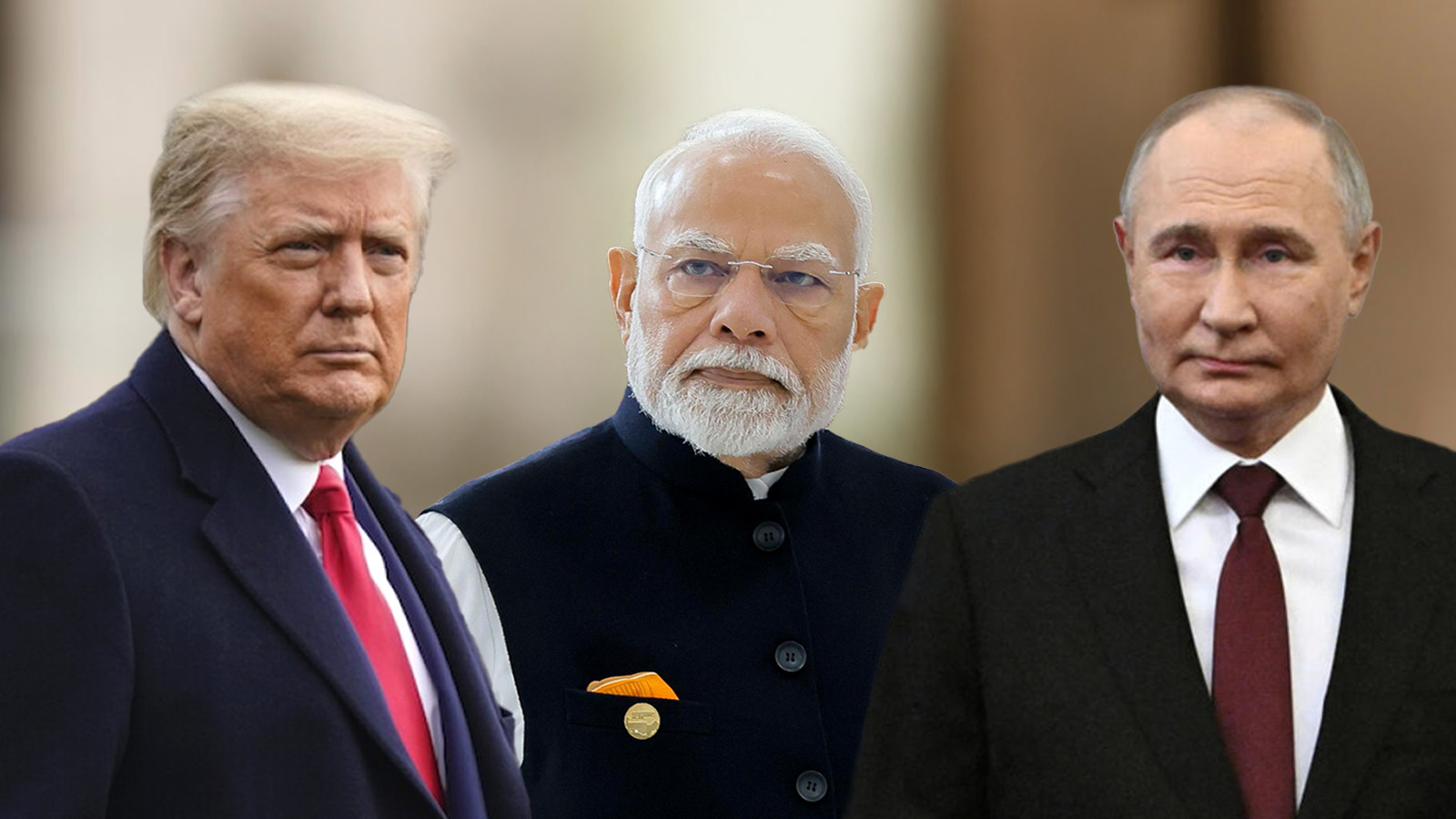
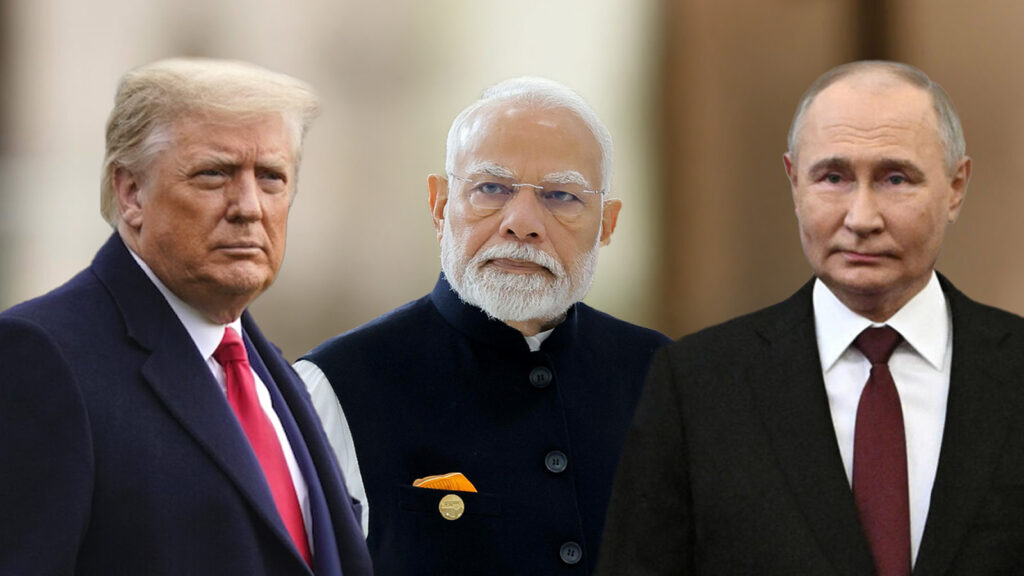
   By K Raveendran   The market seems to have already done its arithmetic on the new US sanctions on two major Russian oil companies, Rosneft PJSC and Lukoil, gauging the immediate and medium-term consequences for energy supply lines stretching from Moscow to Mumbai. In a matter of hours, crude prices spiked, reflecting not just […]

The article Latest Trump Sanction On Russian Oil Companies Gives Escape Route To India appeared first on Latest India news, analysis and reports on Newspack by India Press Agency).

Global oil prices climbed sharply following new sanctions targeting Russia’s major producers, underscoring how geopolitical risk is once again reshaping the energy sector. The United States moved to impose measures against Rosneft and Lukoil, companies that together account for roughly half of Russia’s oil production. The measures froze U. S. assets of the companies, barred American business dealings and threatened secondary penalties for third-party entities dealing with them.

The immediate market reaction was decisive. Brent crude rose by about 5.7 per cent after the announcement, while U. S. futures recorded their most significant one-day jump in over four months. Supply concerns and uncertainty around the disruption of Russian flows have added a new premium to oil prices. Some analysts describe this as the return of the “geopolitical risk premium” that had subsided earlier this year.

Key dynamics are emerging in the global energy landscape. One of them is the pressure on refineries in China and India that have heavily relied on Russian crude. With sanctions threatening secondary penalties, buyers are reconsidering their linkages. The ramifications extend beyond immediate flows: Russia’s ability to route crude via its so-called ‘shadow fleet’ of tankers and opaque trading chains may be challenged further, complicating its export capacity.

From the Russian side, President Vladimir Putin described the U. S. move as “unfriendly” and warned it could backfire by pushing up global oil costs. However, Moscow also signalled that production would continue, and previous sanctions have not immediately led to a collapse in output, suggesting resilience and adaptation persist in the Russian energy sector.

For the buyer nations, the calculus is shifting. Indian and Chinese refineries, which have depended on discounted Russian grades, now face the risk of being cut off from Western-dollar financing, insurance and shipping links if they flout U. S. rules. The potential loss of Russian supply at discount could create a scramble for alternative sources. Meanwhile, Russia may turn more aggressively towards friendly states or deepen barter trade, but such shifts would likely come with higher costs and logistical complexity. Analysts argue that the global spare capacity outside OPEC is already thin, so any reduction in Russian supply could tighten the market further.

In financial markets the impact is tangible. Energy stocks in Europe rose alongside oil prices, while Russian stock indices registered losses on the back of sanction pressure. Firms in the Asia-Pacific region with exposure to Russian crude may face heightened risk premiums or supply disruptions. The confluence of sanctions and market reactions underscores how inter-linked energy flows, geopolitics and financial exposure have become.

On the structural front, situation highlights the ongoing challenge of sanction enforcement. The U. S. Treasury and allied agencies are increasingly focusing not just on Russia’s producers but the broader ecosystem: shipping, insurance, finance. The effectiveness of these measures depends upon the willingness of non-U. S. players to comply and the ability of Russia to create work-arounds through alternative trade routes. The efficiency of existing infrastructure, the cost of shipping to farther markets, and the reliability of insurance all factor into how quickly Russian production or exports may come under strain.

Dubai-based investment platform Green Dome Investments has signed a binding agreement to acquire the entire equity stake in cold-chain specialist Transcorp International for AED 225 million. The transaction is subject to customary regulatory approvals and is expected to complete in the coming weeks.

GDI’s shareholder backing includes SISCO Holding, the Saudi-listed infrastructure investment company that holds a 31.67 per cent stake in GDI. SISCO will contribute AED 75 million towards the acquisition price, with the remainder to be financed through equity from GDI’s shareholders. Transcorp, founded in 2013, operates across the UAE, Saudi Arabia and Qatar and has built a substantial cold-chain logistics footprint, including warehousing, transportation and last-mile delivery for temperature-sensitive cargo in 50 key cities across the Gulf region, supported by more than 1,000 employees.

GDI’s strategy for the deal is driven by its desire to accelerate growth in the fast-growing temperature-controlled supply-chain segment in the Gulf Cooperation Council markets. The investment complements its existing logistics arm, Elite Co., which focuses on fulfilment, middle-mile and last-mile services, and will now incorporate Transcorp’s cold-chain infrastructure and expertise. According to GDI’s chairman, the acquisition gives the group a stronger presence in Saudi Arabia and positions it to capitalise on what is described as one of the fastest-growing logistics segments in the region.

From a financial performance viewpoint, Transcorp reported revenues of AED 60.8 million in 2022, AED 75.8 million in 2023 and AED 109.4 million in 2024.. Its compound annual growth rate across that period has reportedly been strong, reflecting rising demand in cold-chain services tied to e-commerce, pharmaceuticals and food-service sectors in the GCC. The acquisition therefore aligns with broader regional trends in logistics expansion, infrastructure investment under national initiatives and growing interest from institutional investors in supply-chain resilience.

Analysts note that the deal is part of a wave of consolidation in the Gulf logistics market, especially in niche segments such as temperature-controlled transport and last-mile fulfilment. By integrating Transcorp into its logistics ecosystem, GDI stands to enhance its service offering, widen geographic reach and deepen its customer base. However, risks remain. Integration of operations across multiple jurisdictions and alignment of management, systems and culture will demand careful oversight. The transaction’s successful execution will hinge on regulatory approvals, seamless operational integration and the maintenance of service quality levels which are critical in cold-chain logistics.

From SISCO’s perspective, the investment into GDI underscores its strategy of enabling portfolio companies to capture growth opportunities that bolster long-term value creation. SISCO’s backing of AED 75 million represents a material commitment and underscores confidence in GDI’s growth roadmap. The deal also reinforces the increasing role of Saudi institutional capital in regional logistics expansion, in line with broader economic diversification efforts.

For customers and clients in the logistics market, the enlarged platform that emerges from this transaction could offer more integrated solutions—from cold-storage warehousing and temperature-controlled freight to last-mile delivery capabilities—across multiple Gulf countries. That could translate into improved efficiency, faster delivery cycles and access to a broader network for firms in high-growth sectors such as e-commerce, healthcare and retail. On the flip side, the enlarged scale could bring complexity in operations and may put pressure on margins if the competitive dynamics intensify or if cost inflation rises.

Mumbai-based crypto exchange WazirX has enabled both Indian-rupee and cryptocurrency deposits as it moves toward resuming full trading and withdrawal services, signalling a critical recovery phase after its high-profile $230-million hack. The platform will initiate trading on 24 October 2025, launching with zero trading fees across all pairs for at least 30 days, and is rolling out withdrawals gradually.

WazirX’s comeback is anchored on a restructuring plan approved by the Singapore High Court for its parent company Zanmai Labs Private Limited, which had been navigating creditor claims and asset recovery since the breach. The company has partnered with US-based custodian BitGo to manage digital-asset wallets and bolster security with insured, institutional-grade custody solutions.

Operating under a phased restart, WazirX will first enable crypto-to-crypto markets and the USDT/INR pair from 24 October, with other INR pairs added later. Deposits are active now; withdrawals will follow in stages. Users who opted in to the restructuring will receive so-called “Recovery Tokens” within ten business days, representing claims on illiquid or frozen assets.

This relaunch occurs after the July 2024 hack — attributed to the Lazarus Group by multiple governments — in which WazirX exposed vulnerabilities that resulted in loss of approximately $234 million in digital assets and triggered a suspension of trading, withdrawals and deposits. The setback had eroded trust among India’s crypto retail community and drawn regulatory scrutiny.

WazirX co-founder and CEO Nischal Shetty acknowledged the challenge of restoring confidence, stating on social media: “Our focus is only YOU — we are committed to a secure and transparent restart.” Still, some users have raised concerns over discrepancies in post-rebalancing balances, alleging that their credited holdings were lower than earlier display values. WazirX has pledged to release a detailed audit and reconcile any shortfalls.

Industry analysts view WazirX’s relaunch as a litmus test for Indian crypto exchanges, which have faced security, regulatory and trust-deficit issues. While the zero-fee offer may stimulate trading volume and liquidity, questions remain over how effectively WazirX can demonstrate enhanced operational resilience and compliance oversight. Further complicating matters is India’s evolving regulatory landscape: a proposed crypto-assets bill is under discussion, and exchange-licensing frameworks remain undefined.

For traders, the phased rollout presents both opportunity and risk. Market-makers caution that liquidity may be thin in the initial days, potentially creating wider spreads or slippage. WazirX’s blog announcement advises users to monitor token availability, confirm order execution conditions and treat first-day price action with caution. With a delisting of some tokens and swaps or mergers during the downtime, certainty over token status is also being tested.

A leading voice at the United Nations General Assembly roundtable pressed for stablecoins and blockchain-based identity systems as crucial tools in closing the gap for the 1.7 billion people globally who remain outside formal financial services. Adrian Wall, managing director of the Digital Sovereignty Alliance, moderated a session on global digital identity and financial inclusion on 22 October 2025 at the UN headquarters in New York, asserting that inclusive digital ecosystems must go hand in hand with personal data ownership.

Wall declared that “financial inclusion without financial literacy is a bridge to nowhere. It is access without empowerment,” emphasising that agency begins with ownership of data and dignity begins with choice. The DSA event convened 48 policy-makers, technology leaders and sustainable-development practitioners to explore frameworks combining blockchain, stablecoins and digital identity protocols in Africa, Asia and Latin America.

The discussion centred on how stablecoins—cryptocurrency units pegged to fiat currencies—and decentralised ledger infrastructures can extend access to payments, savings and credit for those shut out of traditional banking. Wall highlighted that data sovereignty underpins financial sovereignty: by empowering individuals to control their digital identity, systems can shift from passive access to active agency. He noted the critical role of stablecoins in environments where banking infrastructure is weak, pointing to pilots in sub-Saharan Africa where mobile wallets linked to digital identity verify transactions in previously unbanked communities.

Yet speakers also raised caution about stablecoins’ risks. Regulatory oversight remains uneven, with concerns about reserve transparency, anti-money-laundering compliance and the possibility of financial exclusion if digital identity systems mis-function. One attendee warned that “if identity platforms fail, we may deepen the exclusion we’re trying to solve.” The DSA stressed the need for multi-stakeholder governance: national regulators, technology providers and civil-society organisations must co-design the protocols to safeguard inclusion rather than displace it.

Beyond Africa, the dialogue extended to how stablecoins might support cross-border remittance flows, reducing cost and settlement delay. With global remittances hitting over US$700 billion annually, the potential for digital-asset rails has attracted attention from development lenders and fintech firms. Wall suggested that stablecoins anchored to trusted fiat liabilities could complement central bank digital currencies where those are nascent, offering a hybrid model for underserved markets.

SINGAPORE – Media OutReach Newswire – 24 October 2025 – Apical was awarded the Sustainable Supply Chain Partnership Award – Singapore at the ESGBusiness Awards 2025 in Kuala Lumpur, Malaysia. The honour recognises Apical’s leadership in building a responsible, deforestation-free palm oil sourcing model that supports inclusive growth across its value chain. The award highlights Apical2030, the company’s long-term sustainability strategy, built on four pillars: Transformative Partnerships, […]

Advertisements

LAGOS – Fintech company Moniepoint Inc. announced yesterday that it has raised more than US $200 million in a Series C equity financing round aimed at accelerating its expansion across Africa and into diaspora markets. The round was led by British private equity firm Development Partners International through its African Development Partners III fund, with participation from impact-investor LeapFrog Investments, Google Africa Investment Fund, global payments giant […]

Cape Town — South Africa’s agricultural exports to the United States rose sharply in the second quarter of 2025, hitting US$161 million and marking a 26 per cent year-on-year increase despite the imposition of heavy tariffs by the U. S. administration. The growth is attributed to strong harvests and increased shipments of high-value produce, but concerns linger over how sustainable the trend is given the trade headwinds. […]

The International Court of Justice in The Hague issued an advisory opinion stating that Gaza Strip’s occupying power must facilitate humanitarian relief efforts by the United Nations Relief and Works Agency for Palestine Refugees in the Near East and other UN bodies, and ensure the civilian population’s essential needs for food, water, shelter, fuel and medical care are met. Presiding Judge Yuji Iwasawa declared that Israel “is […]

A study by the European Broadcasting Union in collaboration with the BBC has found that leading artificial-intelligence news assistants deliver flawed responses in nearly half of the cases evaluated. The analysis assessed over 3,000 replies from major tools including ChatGPT, Copilot, Gemini and Perplexity, across 14 languages and involving 22 public-service media organisations from 18 countries. According to the report, 45 per cent of all answers contained […]

A governance storm has erupted within the Ethereum ecosystem after long-serving core developer Péter Szilágyi accused the Ethereum Foundation of operating a tightly-controlled “Vitalik-centric” inner circle that dictates project success and sidelines contributors. His public letter places co-founder Vitalik Buterin at the centre of decision-making, raising fresh concerns about decentralisation, compensation and the future of Ethereum’s governance.

Szilágyi, who led the development of the “Geth” client for nearly a decade, claims that only five to ten individuals—alongside one to three venture-capital firms—consistently influence which projects flourish within the ecosystem. He wrote: “Ethereum may be decentralised, but Vitalik absolutely has complete indirect control over it.” According to his account, the public image of his leadership role masked a reality in which he had little real influence and often found himself excluded when he challenged insiders. His letter also revealed that over six years he earned approximately US $625,000—despite Ethereum’s market capitalisation reaching US $450 billion in the same timeframe—highlighting concerns about remuneration for key infrastructure developers.

The Ethereum Foundation now finds itself under scrutiny. Critics say its funding and rewards mechanisms favour a narrow elite and neglect the broader developer community. Analysts point to the letter as sparking a wider debate about whether Ethereum’s governance is diverging from its founding ethos of open participation and merit-based outcomes.

The reaction from the ecosystem has been swift. Sandeep Nailwal, co-founder of Polygon Technology and previously closely aligned with Ethereum, echoed frustrations that “major contributors regularly face public questioning of their allegiance” and receive scant support. He questioned his own loyalty to Ethereum, citing neglect of Polygon’s contributions and reflecting broader unease among Layer-2 project leaders.

Meanwhile, Vitalik Buterin issued a public statement emphasising gratitude for Polygon’s work and the role of the broader community, but stopped short of addressing Szilágyi’s specific claims about governance and compensation. His comments were interpreted by some observers as an attempt to defuse the tension while preserving the Foundation’s preferred narrative.

The governance crisis arrives at a delicate moment for Ethereum. With the ecosystem navigating a complex architecture of Layer-2 scaling, data-availability upgrades and broader institutional adoption, questions of control, reward and direction carry more weight than ever. Governance practitioner Andre Cronje also warned that Ethereum risks losing technological and social cohesion if contributors feel disenfranchised or opt out of aligned development.

Cybersecurity firm Sophos has unveiled its new solution, Sophos Identity Threat Detection and Response, offering organisations continuous monitoring of identity risks, dark-web credential tracking and automated response capabilities within its Sophos Central platform. The UK-headquartered company positions the product as a strategic response to the “never-ending” rise of identity-based attacks. The new ITDR module integrates with Sophos’ existing Extended Detection and Response and Managed Detection and Response […]

The automaker Tesla, Inc. is recalling 63,619 units of its Cybertruck in the United States after regulatory scrutiny identified a software-driven fault that causes the front parking lights to exceed allowable brightness levels, potentially impairing the vision of on-coming drivers. The recall covers vehicles produced between November 13, 2023 and October 11, 2025 and running software versions earlier than 2025.38.3. Federal safety regulators including the National Highway […]

The Chief Executive of Tesla, Inc., Elon Musk, stands to become the first individual ever to reach a personal net worth of US$1 trillion if he fulfils the company’s newly unveiled incentive package that ties his compensation to the firm achieving an $8.5 trillion valuation. Tesla’s latest proxy filing reveals that Musk could be awarded up to 423.7 million shares, or roughly 12% of the company, if the […]

The implied volatility of Bitcoin has remained unusually elevated even as the equity-market gauge of fear, the S&P 500 Volatility Index, has receded to its usual levels. Data show Bitcoin’s 30-day implied volatility hovering above 50 % after the October 10 market shake-up, while the VIX slipped back below 20 %. This divergence signals a significant recalibration of risk within crypto markets.

Analysts point to a cluster of structural pressures within the crypto ecosystem that are now being priced in: chief among them are auto-deleveraging mechanisms on exchanges, thinning liquidity depth, and offshore funding stress. According to Wintermute co-founder Yoann Turpin, “Bitcoin volatility was subdued earlier… It has now become clear that new risks … such as ADL were underestimated and are now being fully priced in.” In practice, when an exchange triggers ADL it forces closure of profitable offsetting positions when an insurance fund is depleted—this introduces an additional risk vector not present in the mainstream equity markets. The residual impact of a major liquidation event on October 10–11, estimated at over billion, has sharpened market caution.

Liquidity concerns are compounded by the behaviour of market-makers during the crash. According to a recent study, market makers withdrew roughly million from key order-books within hours of the triggering event, creating a vacuum in bid-ask depth and amplifying price moves. Participants say that while the VIX drop reflects a return of calm to equity markets after the shock, Bitcoin’s elevated IV suggests the market is in a higher-volatility regime rather than merely bouncing back. Liquidity in offshore markets, which heavily influences Bitcoin trading, appears particularly tight: for example, the Hong Kong Interbank Offered Rate has returned to pre-May levels even as the U. S. dollar index has risen, signalling funding stress that tends to feed into crypto volatility.

Another factor cited is the rapid growth of exchange-traded funds and over-the-counter desks absorbing Bitcoin supply, creating a supply-shock risk for derivatives and making hedging more expensive. A report warned of a potential “liquidity crisis” within six months for Bitcoin ETF structures unless infrastructure adapts. Meanwhile, the macro backdrop of easing interest-rates and previously abundant liquidity has given way to tighter conditions, which amplify volatility across leveraged assets.

Institutional interest in hedging Bitcoin risk has surged. Following the liquidation that knocked Bitcoin from about to roughly, investors rushed into options contracts that bet on further price drops—put-buying spiked as a hedge against renewed turbulence. Such demand for protection keeps implied volatility elevated even if spot prices settle. At the same time, the VIX’s retreat suggests equity investors believe the shock has passed; crypto markets apparently disagree.

The divergence is significant because implied volatility represents the market’s expectation of future price swings. A 50 % annualised IV for Bitcoin implies expected one-month moves of roughly; by contrast, a 20 % IV for the S&P 500 implies one-month moves of around. Such a gap underscores the unique risk environment in which crypto operates—where leverage, thin liquidity and exchange-specific infrastructure risk matter significantly. Academic research supports this: a recent study found Bitcoin’s risk-premia vary across volatility regimes, and that downside risk is significantly more priced in than with equities.

Market makers and trading desks are adapting. Some are widening spreads, reducing inventory and limiting exposure during volatile episodes—actions that in effect undermine liquidity further and contribute to the “sticky” implied volatility. One trader said that “no one slept” during the weekend of October 10–11, as the cascade of liquidations forced hedge funds and desks to scramble for cover amid evaporating depth.

Dubai– Nakheel has unveiled a new collection of ultra-luxury waterfront villas at its flagship Palm  Jebel  Ali development, signalling a major push in high-end residential real estate on the island. The release covers both the “Beach Collection” and “Coral Collection” villa clusters, with the broader master plan of the scheme now coming into sharper focus. The announcement highlights that the master community will include a 9,000 sq […]

Riyadh is advancing its push into artificial intelligence, sidestepping some of the previous fanfare around the massive urban-megaproject Neom, and signalling a new strategic pivot by its sovereign wealth arm Public Investment Fund. The fund is repositioning to attract global AI investment, deepen partnerships with major tech players and harness data-centre infrastructure at scale.

The kingdom’s leadership is steering resources away from grand construction ambitions to technology-driven growth. The newly formed Humain — a PIF-backed AI company — was launched in May with the mission of establishing Saudi Arabia as a global hub for AI. The firm plans to build advanced data centres, cloud services and one of the world’s most powerful Arabic large-language models.

Strategic deals have followed. U. S. chip-maker Nvidia has agreed to ship some 18,000 Blackwell chips to Saudi Arabia to support a 500-megawatt data-centre facility coordinated by Humain. PIF and international analysts say the move reflects a shift in focus: less emphasis on sprawling “giga-projects” of construction, more on the digital-infrastructure layer that underpins a future knowledge-economy.

Globally, transformative AI applications — from generative-AI language models to edge computing in industries — require vast compute power, energy and state coordination. PIF’s governor Yasir Al‑Rumayyan has said the kingdom is well-placed, given its energy resources and large-scale capital, to become a “hub outside the U. S.” for AI development. Analysts suggest the pivot acknowledges market realities: mega-cities like Neom have proved slower to materialise than envisaged, while digital-economy bets offer faster, more measurable returns.

The megacity Neom and its flagship component – The Line – have faced scepticism over timelines, cost-overruns and foreign investor pull-back. Executive reshuffles in Neom’s leadership and recalibrated investment priorities have signalled the shift. Meanwhile, PIF has begun trimming the proportion of its portfolio allocated to global investments — moving foreign-allocation toward 18 per cent from previous targets — to double-down on domestic strategic sectors like AI.

The investment case for Saudi Arabia is sizeable. Humain aims to tap into the Arab-language market of over 450 million people, while deploying data-centre capacity measured in gigawatts. Academic and industry voices say the kingdom has already built one of the strongest AI-ready physical infrastructures in the Middle East: multiple super-computers, data centres and training programmes are in motion. On the human-capital front, programmes to train 20,000 data/AI experts by 2030 are underway through partnerships with international firms such as Microsoft, Accenture and Huawei Technologies.

For global tech firms and investors, Saudi Arabia’s offer now centres around “sovereign AI infrastructure” rather than purely construction or real-estate play. The deal with Nvidia is seen as precedent-setting: Nvidia’s CEO told reporters that AI infrastructure is “essential infrastructure” akin to power and internet. Moreover, the shift aligns with the kingdom’s broader strategic framework Vision 2030 — which seeks to reduce oil-dependence and build a diversified economy.

Nevertheless, risks remain. Observers caution that the AI ambition is spectacular in scale yet faces operational and regulatory challenges — from data-governance to talent retention and ideological scrutiny. The push may also attract geopolitical scrutiny given the involvement of U. S. technology in Saudi infrastructure. The earlier mega-project model illustrates how bold vision can be slowed by delivery hurdles.

Semiconductor giant Broadcom Inc. on 14 October 2025 launched its first 800 gigabit-per-second AI Ethernet Network Interface Card named the “Thor Ultra”, a product the company says enables interconnection of hundreds of thousands of XPUs and supports trillion-parameter artificial-intelligence workloads. Broadcom describes Thor Ultra as the “industry’s first 800G AI Ethernet NIC” that adheres fully to the open standard of the Ultra Ethernet Consortium. The card supports […]

Moscow has authorised the use of cryptocurrencies in cross-border payments for trade, marking a significant departure from previous policy. The Ministry of Finance of the Russian Federation and the Bank of Russia have reached an agreement to legalise digital-asset settlements in foreign trade transactions, while simultaneously tightening regulatory oversight of the wider crypto market.

Finance Minister Anton Siluanov said the step was necessary because imports are already being paid for with crypto assets and the existing regulatory framework was inadequate. He emphasised that the legalisation would be accompanied by “proper legislative regulation” to restore order in the sector.

Under the new framework, firms engaged in exports and imports will be able to transact using cryptocurrencies—but only via authorised channels that meet stringent anti-money-laundering and know-your-customer standards. The shift builds on an earlier “experimental legal regime” that allowed limited crypto use in foreign trade and by select investors.

The Bank of Russia remains cautious. Its governor Elvira Nabiullina continues to resist full recognition of cryptocurrencies as a means of payment domestically, and proposed restricting use to cross-border trade and wealthy “qualified” investors under licensed firms.

Market analysts interpret the decision in the context of pressures from Western sanctions, which have constrained access to global payment systems. The move is seen as part of Russia’s strategy to bolster trade flows, particularly in energy and commodities, by bypassing traditional channels.

Still, legalisation is selective rather than broad. The regime applies for now only to foreign-trade transactions; the domestic use of cryptocurrency for everyday payments or retail investments remains prohibited. The Bank of Russia argues allowing wide retail access poses “financial and social” risks.

For domestic investors, the path to broader engagement remains narrow. Earlier this year the regulator proposed allowing only those with assets above 100 million roubles or annual incomes above 50 million roubles to participate in a crypto-investment experiment.

Industry players say the legalisation will create new opportunities. Top banks—such as Sberbank and Alfa‑Bank—had warned that millions of Russians hold crypto assets despite being excluded from the formal regime. They argued the grey market status of holdings was a risk for the broader financial system.

Critics caution that regulatory oversight and enforcement will be key. The Prosecutor-General’s Office, under Alexander Gutsan, highlighted that the new framework includes tools to monitor transactions linked to corruption, terrorism, extremism, and illicit financial flows.

Observers outside Russia are weighing potential ripple effects. Some suggest the policy could encourage other sanctioned or emerging-market nations to adopt crypto-based trade settlement models, challenging the dominance of traditional systems such as SWIFT.

For Russian exporters and importers, the shift may offer relief from constrained access to Western-dominated financing and payment networks. Nonetheless, firms must still operate within Bank of Russia-endorsed platforms and are subject to rigorous compliance oversight—so adoption may remain cautious in the near term.

From the government’s perspective the move attempts to draw the large informal crypto-market inside the regulatory perimeter. Holding of crypto assets by Russian users has been estimated in the hundreds of billions of roubles, according to central bank data.

HONG KONG SAR – Media OutReach Newswire – 23 October 2025 – The Hong Kong Productivity Council (HKPC) today released the results of the “AI Readiness in Workplace Survey 2025”, which delves into the overall readiness, actual needs, challenges and future development opportunities of local enterprises in the application of artificial intelligence (AI). Building on these insights, HKPC set out eight strategic recommendations to drive broad and […]

The urban development landscape of the Emirate of Ras Al Khaimah is being reshaped as Marjan and RAK Hospitality Holding announced a landmark merger to form a unified entity under the Marjan brand, merging land-development and hospitality arms into one. Under the partnership, Marjan will consolidate real-estate development, hospitality operations and lifestyle offerings, effectively becoming one of the largest property developers in the United Arab Emirates. According […]

The company formed by Hyperliquid Strategies Inc. has filed a registration statement with the U. S. Securities and Exchange Commission, seeking to raise up to US$1 billion by issuing up to 160 million shares of common stock. According to the filing, the share-offering will be handled underwritten by Chardan Capital Markets LLC, acting as financial advisor for the transaction.

HSI is the combined entity formed via the business combination between Sonnet BioTherapeutics, Inc. and Rorschach I LLC, a special-purpose vehicle affiliated with Atlas Merchant Capital LLC and Paradigm Operations LP. That merger agreement valued HSI at approximately US$888 million, comprising roughly US$583 million in the native token HYPE and at least US$305 million in cash.

In its S-1 filing, HSI states the capital will support “general corporate purposes, including the acquisition of HYPE tokens and other digital-asset treasury activities.” Analysts interpret this as an indication that HSI intends to deepen its exposure to the HYPE ecosystem and position itself as a publicly-listed vehicle for crypto-asset treasury management.

Leadership for the combined company is drawn from the sponsors behind Rorschach I. At closing, the board will include Bob Diamond and David Schamis. Current independent directors from Sonnet will also roll over into the new board structure.

Market observers point out that the transaction marks a significant shift from the biotech credentials of Sonnet to a crypto-treasury focus at HSI. At the time of the agreement, the value of HYPE tokens held by HSI was based on a spot price of approximately US$46.37. The shift has drawn scrutiny: one investor-rights law firm is investigating whether the minority stakes to legacy Sonnet shareholders create equity fairness issues.

The $1 billion raise is notable for several reasons. First, it underscores the trend of publicly-listed companies forming or converting into crypto treasury vehicles, providing regulated-market access to digital-asset exposure. Second, by aligning its strategy around HYPE token accumulation, HSI is building a sector-specific reserve, akin to what several other companies have done with Bitcoin in prior years. Third, the timing — amid heightened regulatory discussions around crypto infrastructure and token-linked public entities — places HSI at a crossroads of capital-markets innovation and regulatory risk.

Abu Dhabi has unveiled Hub71+ Life Sciences, a specialist platform designed to speed up the path from laboratory research to patient-ready products across biotechnology, medical technology and digital health, with the launch staged at Hub71’s Impact Event 2025 in the UAE capital. Founders are promised streamlined access to regulators, hospitals, investors and corporate partners to test, validate and scale products from the emirate. New platform powers Abu […]

VISHNU RAJA
RYO YAMADA
HITORI GOTOH
IKUYO KITA