News related to
risk

The dominance of the Magnificent 7 now defines the shape of global markets. Apple, Microsoft, Alphabet, Amazon, Meta, Nvidia, and Tesla account for more than a third of the S&P 500’s total value, up from about 12% a decade ago. Their performance has lifted the index even as most of the remaining companies have moved sideways. The question for investors is whether these firms are overvalued or […]

Belgrade’s governing party has introduced legislation designed to fast-track the development of a luxury hotel complex linked to the son-in-law of former United States President Donald Trump, signalling the project is gaining momentum despite mounting controversy. The law would relax planning and heritage oversight on the site of the former Yugoslav Ministry of Defence buildings, allowing the U. S.-based investment firm Affinity Partners, headed by Jared Kushner, […]

A sweeping seven-year agreement valued at some US$38 billion has been struck between OpenAI and Amazon. com Inc.’s cloud arm Amazon Web Services, granting OpenAI access to hundreds of thousands of next-generation GPUs to fuel its artificial-intelligence models. The deal marks a significant shift in the cloud-computing landscape as OpenAI broadens its infrastructure base beyond longstanding relationships. OpenAI said it will begin deploying AWS’ compute capacity immediately, […]

Istanbul flagged-carrier Turkish Airlines has completed a five-year financing agreement worth 2.9 billion yuan with Bank of China, under the coordination of its Türkiye unit and Macau branch. The deal positions the airline to accelerate fleet expansion, enhance infrastructure at Istanbul Airport and diversify its funding strategy.

The financing aligns with Turkish Airlines’ strategic ambition to raise its fleet to more than 800 aircraft by 2033. The carrier currently operates some 512 aircraft, including 26 freighters, and serves 353 destinations across 131 countries, making it the airline with the broadest country-reach globally.

Chief Financial Officer and board member Murat Şeker described the transaction as a strengthening of the airline’s financial structure and noted it would contribute to deeper economic and cultural collaboration between Türkiye and China. The lender, Bank of China Türkiye, collaborated with its Macau branch to deliver this cross-regional funding solution.

Analysts view the move as a sign of increasing Chinese willingness to facilitate offshore financing in yuan for non-Chinese corporates. Xinhua reports that the loan will also support cargo-business growth and the construction of a new simulator training centre within Istanbul Airport’s ecosystem.

For Turkish Airlines, the financing serves as a milestone in its drive to broaden funding channels beyond traditional Western banking and leasing markets. It arrives after the airline announced major aircraft purchase agreements, including 150 of the Boeing 737 Max family and up to 75 Boeing 787 wide-bodied jets, although final engine supply details remain subject to negotiation.

The infrastructure element stands out: part of the funding is earmarked for new facilities at Istanbul Airport, underscoring Turkish Airlines’ ambition to solidify Istanbul as a global aviation hub. The airline notes that the deal supports “core development initiatives including fleet expansion, business growth, new facility investments and infrastructure projects”.

In a broader context, Türkiye’s aviation sector faces rising costs—fuel, labour and regulatory compliance among them—so locking in a yuan-denominated facility may serve as a hedging mechanism against currency volatility and reliance on US-dollar debt. For Chinese finance, this deal further reinforces the Belt and Road Initiative’s financial architecture and the internationalisation of the yuan.

Despite the positives, risks remain. While Turkish Airlines has grown rapidly—its fleet jumped from about 100 aircraft in 2006 to 500 by 2025—the aggressive expansion strategy faces pressure from global economic uncertainties, competition in the MEA region, and potential over-capacity. Analysts caution that long-term debt commitments must be matched by sustained profitability and disciplined cost control.

Aircraft-financing environments have grown more complex since the pandemic, with lessor appetite curtailed and interest rates trending higher. By turning to a Chinese state-bank facility, Turkish Airlines is signalling both innovation and urgency in addressing its funding needs—but the source and terms of this financing will remain closely watched by investors and market participants.

For Bank of China, the arrangement opens the door to further cross-border deals with regional air-carriers and strengthens the bank’s credentials in aviation market financing outside its traditional geography. Observers say it may trigger similar deals as airlines seek diversified sources of capital and navigate constrained global leasing markets.

A new stablecoin backed by the Argentine peso has been launched by the Latin American crypto exchange Ripio, signalling a significant step in the region’s digital finance landscape. The token, named wARS, is available on the Ethereum, Base and World Chain networks and is intended to provide users with 24/7 access to local-currency funds without relying on the US dollar or traditional bank systems.

Ripple effects are already evident across the fintech sector as Ripio seeks to leverage its more than 25 million users throughout Latin America to build cross-border payment rails denominated in local currencies. Ripio’s management says the introduction of wARS is part of a broader strategy to bring real-world assets such as fiat currencies and tokenised debt onto blockchain platforms. The move follows the company’s earlier launch of a tokenised sovereign bond in Argentina.

The economic context makes the launch especially noteworthy. Argentina’s inflation rate fell to around 31.8 % this year, down from close to 292 % in April 2024 under President Javier Milei’s government. The peso remains subject to strict controls and capital restrictions, creating demand for crypto alternatives and dollar-linked stablecoins. A peso-pegged token could serve as an on-chain alternative for Argentines seeking to transact in their local currency while bypassing conventional banking and remittance infrastructure.

Market analysts point to three immediate implications. First, wARS offers a familiar reference point for domestic users who know the peso, rather than US-dollar-backed tokens. Second, by operating on multiple blockchains, it allows integration with decentralised finance applications across ecosystems. Third, the design could appeal to freelancers, exporters and cross-border businesses connecting Argentina with Brazil, Chile and other Latin American economies that currently settle in US dollars or face fragile local-currency rails.

Still, several challenges lie ahead. Liquidity and market acceptance remain uncertain outside major cryptocurrencies, and the value of a peso-pegged token will likely be sensitive to broader macroeconomic policy changes and FX-control shifts. Regulatory clarity is another concern: while stablecoins tied to major currencies have faced scrutiny in major jurisdictions, less attention has been paid to local-currency tokens in emerging markets. One analyst cautions that “regulators worldwide have not fully caught up with stablecoins that reflect non-dollar fiat currencies, so scalability and risk need careful governance.”

By Nantoo Banerjee   The majority government-owned Life Insurance Corporation of India’s detailed rebuttal to The Washington Post report claiming that the government directed LIC to invest $3.9 billion in the Adani group seems to lack the punch. A comparison of the lately sprouted Adani Group with some of India’s age-old business conglomerates such as […]

The article Adani Group’s Striking Rise Since 2014 Sparks Global Speculation appeared first on Latest India news, analysis and reports on Newspack by India Press Agency).

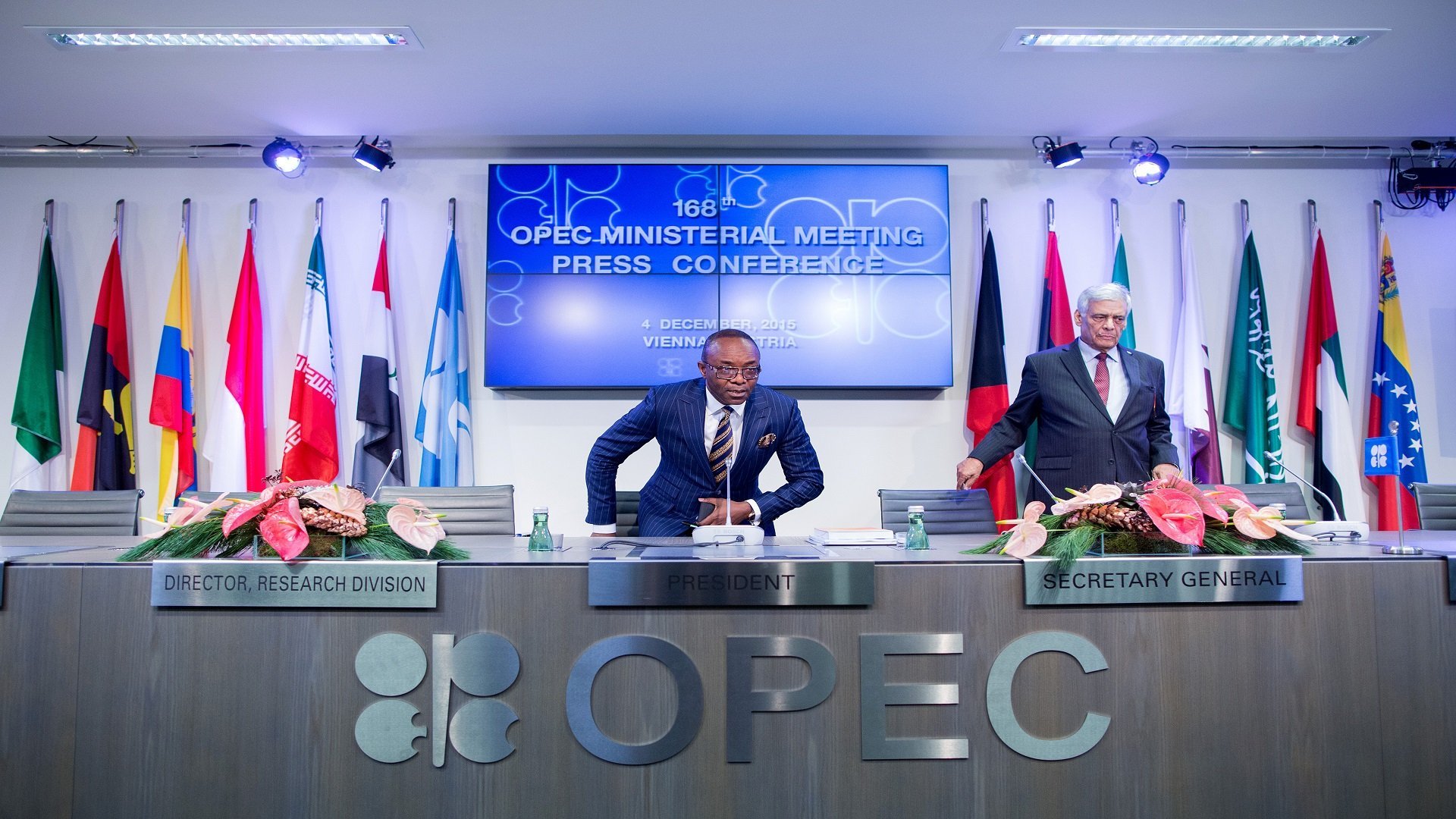
The production-alliance led by OPEC+ has agreed to raise crude oil output by 137 000 barrels per day for December, but will refrain from further increases during the first quarter of 2026. The decision reflects mounting concerns about global oil supply exceeding demand and comes amid sanctions on Russia and anticipated seasonal weakness in demand. The eight-member subgroup comprising Saudi Arabia, Russia, the United Arab Emirates, Iraq, […]

Advertisements

Abu Dhabi-based energy major Abu Dhabi National Oil Company has sealed three new agreements with US-based robotics specialist Gecko Robotics aimed at embedding artificial intelligence and robotics into its operations while accelerating the development of local skills for nationals. The accords were signed at the ENACT Majlis forum in Abu Dhabi and span a multi-year deployment for ADNOC Gas, a collaboration with the group’s training arm ADNOC […]

Chinese authorities have agreed to suspend implementation of a new wave of export controls on rare-earth metals and to cease investigations into U. S. semiconductor companies, signalling a de-escalation in trade tensions between the world’s two largest economies. According to a White House fact sheet, the measures to be paused were those announced by People’s Republic of China in October and would have expanded export licences and […]

Dubai telecom operator du has launched a new cloud-mining subscription service named “Cloud Miner” offering residents in the UAE access to cryptocurrency mining without the need to purchase or operate hardware. The offering was introduced at a launch event held at the Burj Khalifa and will be managed under du’s B2B sub-brand du Tech. Customers will be able to lease 250 terahashes per second of mining capacity […]

Seoul and Beijing accelerated bilateral engagement on Saturday when their leaders met on the sidelines of the Asia-Pacific Economic Cooperation summit in Gyeongju. President Lee Jae Myung of South Korea and President Xi Jinping of China signed a new five-year currency swap worth about 70 trillion won between their central banks, and agreed six memorandums of understanding covering economic cooperation, agriculture and services trade. This financial pact mirrors one that expired last month and signals a stronger push by both Seoul and Beijing for deeper economic synchronisation.

At the same time, the two administrations flagged potential restoration of cultural exchange channels that were effectively shut down more than a decade ago. China’s informal ban on South Korean entertainment—spanning K-pop, television dramas and film—was imposed following Seoul’s deployment of a U. S. missile defences system, which Beijing viewed as a strategic threat. At the summit, Lee and Xi agreed on the need to expand cultural cooperation, though Lee’s office cautioned that the dialogue reflected “courtesy comments” rather than final decisions.

Analysts describe the summit as a signal of warming relations after years of tactical distancing around security issues. Lee pressed for China’s constructive involvement in facilitating dialogue with North Korea, emphasising that high-level exchanges between Pyongyang and Beijing had ramped up. Xi reaffirmed China’s policy of strategic consistency and pledged deeper communication with Seoul. In parallel, the Korean and Chinese law-enforcement authorities signed an MOU to combat transnational voice-phishing and online scam crimes. Other MOUs addressed cooperation in the silver industry, innovative start-ups and agricultural exports from South Korea to China, reinforcing the emphasis on citizen-facing and practical cooperation.

Still, important caveats remain. While the swap agreement and MOUs represent tangible results, they come against a backdrop of prominent domestic dissent in South Korea. Thousands of protesters rallied in Seoul ahead of the summit, chanting anti-China slogans and highlighting a rising climate of nationalist sentiment. The South Korean government has acknowledged that such unrest risks undermining its diplomatic efforts and international standing. On the cultural front, though the possibility of lifting the ban on Korean content in China was raised, officials stressed that legal and procedural constraints remain in place and the matter is “premature” to reinterpret as a full reopening.

Commercially, the new swap line aims to bolster market stability for both nations amid global economic uncertainty and an intensifying U. S.–China rivalry. For cultural industries in South Korea—home to major firms such as Hybe, SM Entertainment and CJ ENM—the prospect of access to China’s vast audience is tantalising but still uncertain. For Beijing, deeper cultural ties with Seoul could ease past tensions and bolster the role of cultural-and-creative industries in economic growth, as alluded to in the summit’s wider Asia-Pacific framework which emphasises the importance of such sectors alongside digital transformation and artificial intelligence.

Greenlogue/AP The decision by the administration of Donald Trump not to send senior representatives to the COP30 climate summit in Belém, Brazil has triggered alarm among international climate officials and reshaped the contours of global environmental diplomacy. The move signals a sharp pivot by the United States away from multilateral climate forums, raising questions about future global cohesion on climate change mitigation. The White House confirmed that […]

Producers grouped under OPEC+ are preparing to approve a modest rise in oil‐production targets for December, in an effort to balance market share ambitions against signals of oversupply and constrained output growth. Three delegates familiar with the discussions indicated the increase is expected to amount to roughly 137,000 barrels per day, mirroring the size of the hikes seen in both October and November.

The key players in the alliance include Saudi Arabia, Russia, the United Arab Emirates, Iraq, Kuwait, Oman, Kazakhstan and Algeria. The group’s online meeting scheduled for Sunday is expected to formalise the decision.

The incremental increase is part of a broader strategy underway since April, in which OPEC+ has raised output targets by more than 2.7 million barrels per day, amounting to about 2.5 per cent of global supply. However, the pace has been deliberately slowed from earlier months as signs emerge of an excess in global supply pools, including a forecasted surplus of over 3 million barrels per day in the current quarter.

Market analysts, including those at RBC and Rystad, anticipate the 137,000 bpd figure to represent the baseline scenario. Some delegates are also said to be weighing a pause on further hikes if supply conditions deteriorate.

Russia faces particular hurdles in supporting the quota rise, as Western sanctions limit the capacity of the Russian oil sector to boost output rapidly. That constraint is factoring into OPEC+ calculations as it debates whether to add more barrels to the market. Meanwhile, the UAE has been granted a higher production quota through to September 2026, enabling a phased increase of up to 300,000 bpd in its case.

Oil‐price behaviour reflects the tension between supply ambitions and demand concerns. Brent crude dropped to around US$60 a barrel in late October amid oversupply fears and sluggish demand from Asia, but has since climbed back toward the mid‐US$60s on the back of sanctions on Russia and trade optimism.

OPEC+’s cautious approach is informed by concerns about a supply‐demand mismatch next year. The International Energy Agency has flagged that world supplies could outstrip demand by over 3 million bpd in the current quarter, with an even larger gap potentially forming in 2026.

One industry commentator noted that unless there is clear evidence of a disruption to supply, the group is unlikely to commit to a large output hike. That view underscores the balancing act between protecting market share and avoiding a price collapse driven by oversupply.

Compliance remains another pressure point for the alliance. Some OPEC+ members have struggled to lift production to their quotas due to infrastructure, regulatory or investment constraints, diluting the impact of nominal target rises. This has helped temper the immediate effect of output increases even as quotas climb.

A further consideration is the shale oil sector in the United States, where producers are ready to capitalise on any loosening of supply discipline. OPEC+ therefore faces a strategic dilemma: raise output and risk reigniting competition, or hold back and cede ground to non-OPEC supply growth.

For December the decision appears modest, signalling a move to restore barrels cautiously rather than aggressively. The virtual meeting on Sunday will thus act as a critical test of the alliance’s ability to calibrate policy around shifting global demand patterns and geopolitical risk.


European authorities’ push to regulate stablecoins under the Markets in Crypto‑Assets Regulation has brought order to a previously opaque market, but analysts warn it might also be sowing the seeds of a fresh risk for financial stability. The regulation mandates that issuers of e-money tokens and asset-referenced tokens must hold matching reserves, provide transparency on custody and investment of assets, and submit to governance and wind-down planning. […]

Tech entrepreneur Elon Musk said his social media platform X has rebuilt its messaging system and will launch a standalone app, branded as “X Chat”, which uses peer-to-peer encryption architecture “similar to Bitcoin”. He stated that the system will eschew advertising hooks and treat security not as a binary but in “degrees of insecurity”, aiming to make X Chat the “least insecure” messaging system. According to Musk, […]

Seventeen years after the publication of the nine-page document titled “Bitcoin: A Peer-to-Peer Electronic Cash System,” authored under the pseudonym Satoshi Nakamoto on 31 October 2008, the digital asset known as Bitcoin has evolved from an experimental peer-to-peer payment proposal into a multi-trillion-dollar fixture of global finance.

At its launch, the paper proposed a decentralised network free of financial-institution intermediaries, aiming to avoid double-spending through a proof-of-work mechanism. Over the years the network has grown into a dominant cryptocurrency, and observers say that Bitcoin’s role in financial markets has shifted markedly. A study examining institutional adoption found that Bitcoin’s correlation with major equity indices — once low — rose to as high as 0.87 in 2024, signalling growing integration with mainstream markets.

Institutional interest forms a central pillar of this transformation. Following the approval of spot Bitcoin exchange-traded funds in the United States in January 2024, which drew in more than $50 billion in inflows, traditional asset managers such as BlackRock and Fidelity Investments gained routes for mainstream investors to access Bitcoin. Some corporations have adopted Bitcoin as part of corporate treasury strategy: around 80 companies now hold approximately 3.4 per cent of total Bitcoin supply.

Despite this ascent, some early proponents of Bitcoin’s original vision — that of a decentralised digital cash usable for everyday transactions — argue that the current model leans more toward its status as “digital gold” than as peer-to-peer money. Payment-system advances like the Lightning Network seek to restore that vision, enabling faster and cheaper transactions on-chain. Meanwhile, critics highlight that energy consumption and regulatory uncertainty continue to pose risks to Bitcoin’s wider adoption.

Regulatory momentum also remains uneven. While the United States moves closer to clearer rules through legislation such as the proposed Clarity Act — which analysts estimate has an 80 per cent chance of passing by early 2026 — global approaches vary significantly. Some jurisdictions have embraced crypto frameworks, while others maintain prohibitive stances. The potential for banks and custodial institutions to operate more directly with digital assets is gaining attention.

Technologically, Bitcoin remains foundational. The original protocol, unchanged at its core since its launch, still underpins a thriving ecosystem of wallets, exchanges and blockchain analytics. That continuity has contributed to its brand as the ‘first mover’ in the cryptocurrency space. At the same time, ecosystem participants are attending to scalability challenges, security risks tied to quantum computing and ecosystem fragmentation through forks.

On the macro-economic front, Bitcoin is increasingly viewed as a hedge or alternative asset, though its extreme price volatility continues to limit its suitability for everyday payments for most users. A survey found 63 per cent of Americans did not feel confident investing in or using cryptoassets, and among adults aged 50 or over that figure rose to 71 per cent. At the same time, the asset’s market cap has situationally breached the $2 trillion mark, reflecting its material scale within finance.

The evolution of Bitcoin also reflects a broader shift in financial architecture: decentralised networks and tokenised assets are increasingly challenging traditional models of money, payment and settlement. Analysts argue that the next phase of Bitcoin’s maturation will hinge on regulatory clarity, technological scalability and an enhanced role in everyday commerce, rather than only institutional accumulation.

Fintech firm Afriex has announced a strategic collaboration with payments giant Visa to deliver real-time cross-border transfers to over 160 markets, marking a significant expansion of its global payments network. The platform will integrate with Visa’s “Visa Direct” service through Afriex’s financial institution partner, enabling eligible Visa endpoints to receive funds instantaneously, according to the announcement. Afriex’s chief executive, Tope Alabi, emphasised that “for the millions of […]

A new initiative unveiled by the Dubai Future Foundation in collaboration with the MIT Senseable City Lab presents a data-intensive approach to urban greenery by applying artificial intelligence to evaluate the cooling effect of trees in multiple global cities. The project, named “Re-Leaf”, harnesses satellite imagery, street-level visuals and thermal data across locations such as Dubai, Amsterdam, Los Angeles and Rome to measure how trees can function as natural cooling infrastructure.

Re-Leaf reveals that shade and evapotranspiration from trees can reduce local surface temperatures by up to 15 °C compared with surrounding paved or built areas. One key finding is that drought-resistant species such as neem trees outperform more commonly planted palms in arid urban environments. DFF described the work as a shift in treating urban vegetation “as essential infrastructure for the cities of tomorrow”.

The initiative emerges under the banner of the 19th International Architecture Exhibition in Venice, curated by Carlo Ratti, in which Re-Leaf features as a special project. The exhibit presents city-scale “skyscraper-like” visualisations that depict greenery levels across the participating cities, with taller towers indicating higher vegetation cover.

Dubai’s establishment of the first Middle East-based Senseable City Lab via DFF provides a focal point for this research. The lab, working in partnership with MIT, developed the algorithms and datasets behind the project. From a strategic perspective, the work aligns with Dubai’s ambition to be an innovation hub and to address the demands of climate-resilient urban planning.

Beyond the headline figure of 15 °C cooling, the dataset comprises more than 2,000 trees across the four cities, allowing comparative analysis of species performance in different climates and urban morphologies. The research team emphasises that while the act of planting trees is well-known, the novelty lies in quantifying their impact using high-resolution AI tools and translating the results into actionable urban design decisions. “In a hotter world, trees must be seen as essential infrastructure, not just decoration,” Ratti said.

Urban planners and environmental scientists are responding to the project by pointing out its potential to shift policy focus from reactive mitigations—such as heavy air-conditioning—to proactive green infrastructure deployment. According to one expert, tree shading and transpiration “are vital for climate-responsive urban design”. For cities in arid or semi-arid zones—where energy use for cooling is high and water scarcity is acute—the findings are particularly relevant. The identification of species that deliver stronger cooling while requiring less water offers practical guidance for future planting strategies.

However, the project also faces scepticism around questions of scalability and implementation cost. Critics ask whether data-rich analyses can translate into large-scale urban forestry programmes in dense built environments, and note that factors such as soil depth, maintenance regimes and tree lifespan require further study. One architecture-critique article raised a broader question: “Do we need AI to confirm that trees cool cities?” highlighting the risk of attending to measurement rather than action.

The choice of cities for analysis – Dubai, Los Angeles, Amsterdam and Rome – reflects a mix of climatic zones and urban typologies, offering the chance to test how vegetation behaves across contexts. Amsterdam, with a temperate maritime climate, provides contrast to Dubai’s arid conditions, while Rome offers a dense historical fabric and Los Angeles a sprawling low-rise geography. Re-Leaf’s catalogue of thousands of tree species and urban cooling maps explicitly aims to support urban designers and policymakers.

For DFF and its partners, integrating tree-cooling metrics into master-planning holds promise beyond aesthetics. The project’s immersive display at Venice functions not only to showcase technology but to prompt debate on how cities invest in nature-based solutions. DFF Director of Dubai Future Labs, Khalifa Al Qama, described the work as generating insights with global value.

Major banks in Nigeria posted solid earnings in the quarter ending September 30 as elevated interest rates and assets repricing lifted income streams, though underlying risks linger. Leading the pack, United Bank for Africa Plc recorded a profit after tax of ₦537.53 billion, up 2.3 per cent from the same period last year. Gross earnings rose 3.0 per cent to ₦2.469 trillion while net interest income climbed […]

By K Raveendran The narrative circulating among professionals in high-performing technology firms is increasingly marked by anxiety. Reports of employees receiving lay-off notifications at 3 a.m. are emblematic of a culture in which even top-paid staff feel tethered to the abyss of “you may not be here tomorrow”. The juxtaposition of lucrative compensation and precarious […]


The article Big Tech’s Brutal Culture Pushes Employees Down An Abyss Of Anxiety appeared first on Latest India news, analysis and reports on Newspack by India Press Agency).

Amazon has activated a sweeping measure across its Fire TV Stick and Fire TV device lineup to block applications that provide unauthorised access to premium films, television and live sport. The initiative is anchored in a collaboration with the anti-piracy coalition Alliance for Creativity and Entertainment. According to Amazon, apps known to offer infringing streams — including those sideloaded from outside the official App Store — will […]

European data-centre operator AtlasEdge has secured a €253 million green financing package to scale up its campus in Lisbon, Portugal. The facility, split into two tranches, is respectively earmarked for the first building and the second of the site, with the company also acquiring land to host a third phase, LIS003, drawing on Portugal’s renewable-energy credentials. The financing comprises a seven-year senior-secured term-bond arrangement. The first tranche, […]

The White House announced a policy that prohibits credentialed reporters from freely entering Room 140, a section of the West Wing known as “Upper Press” housing senior communications staff, unless they first secure an appointment. The directive originates from the National Security Council, which cited the protection of “sensitive material” now routinely handled in that zone. Press Secretary Karoline Leavitt and her deputy Steven Cheung are among […]

Tokyo-based digital forwarder Shippio has secured fresh capital to accelerate its transformation of international trade logistics, signalling a push to capture a major share of cargo flows into and out of Japan and beyond. The company, founded in 2016, has raised a total of approximately ¥3.24 billion in its Series C round, comprising ¥1.87 billion in equity and ¥1.37 billion in debt financing, bringing its lifetime funding to roughly ¥7 billion overall.

Key investors in this round include DNX Ventures as lead investor, along with Suzuyo, New Commerce Ventures and YMFG Capital in the equity portion, and a consortium of financial institutions—such as Shoko Chukin Bank, Japan Finance Corporation, Mizuho Bank, Mitsubishi UFJ Bank and Resona Bank—providing the debt portion. The funds will support Shippio’s goal of capturing a 30 per cent share of Japan’s total cargo volume through product development, customer expansion and mergers and acquisitions.

Japan, as an island economy heavily dependent on imports and exports, has seen a dramatic up-surge in e-commerce and cross-border trade: customs clearance permits have reportedly increased eight-fold between 2016 and 2024. Despite this, many logistics operations remain mired in analog workflows and manual documentation. Shippio aims to plug that gap by deploying a digital platform that offers shipment tracking, cost analysis, invoice management and customs processing. The founder and co-CEO, Takanori Sato, has remarked that the company is building a multi-sided network for importers/exporters and freight forwarders, with an eye on becoming the leading digital forwarder in Asia.

Shippio’s growth trajectory is evident: industry data indicates the company achieved approximately US$1.8 million in revenue in 2024, up from roughly US$590 000 in 2023, representing year-on-year growth of more than 200 per cent. Though earlier funding profiles remain opaque, publicly available records state Shippio underwent a Seed round of ¥190 million in December 2018 and has proceeded through Series A and Series B stages.

The logistics industry in Japan presents both a compelling opportunity and formidable challenge. On one hand, the market is highly fragmented, low margin, and hard-to-digitise—qualities that deter many investors. On the other, digital disruption in freight forwarding is overdue and ripe for those who can execute. In an interview with a logistics-industry podcast, Sato acknowledged the complexity of the space, noting that legacy practices have persisted for decades, and that the challenge lies not simply in building technology but in shifting enterprise behaviour and workflows.

Shippio now aims to expand its platform coverage beyond freight forwarding into wider supply-chain orchestration, including customs brokerage, trucking and warehousing. The company has already opened an office in Ho Chi Minh City to establish a Southeast Asia footprint, recognising that Vietnam and other manufacturing-heavy nations will be key origins for cargo flowing to Japan and other Asian markets. Its ambition to gain 30 per cent share implies a very steep climb: the total Japanese import-export market for logistics services is large, and incumbent players have entrenched relationships.

Industry analysts observe that Shippio’s dual-capital structure—equity plus debt—reflects a hybrid growth model where the company needs forward-looking product development as well as stable working-capital to service logistics networks. The inclusion of major banks suggests confidence in Shippio’s revenue model and risk profile. However, some caution that scaling in freight forwarding entails managing international customs regimes, myriad carriers, modal shifts and often low visibility in cost structures and margins. How well Shippio executes integration of its digital platform with real-world assets and operations will determine whether it can move beyond a niche player into a regional logistics heavyweight.

VISHNU RAJA
RYO YAMADA
HITORI GOTOH
IKUYO KITA