News related to
unit

Globally recognized UI/UX and growth marketing agency Tenet (We Are Tenet) selected to spearhead digital growth initiatives for Yomly, two-time ‘HR Software of the Year’ winner at the Entrepreneur Middle East Tech Innovation Awards, as the company accelerates international expansion & enterprise market penetration. Dubai, UAE — July 14, 2025 — Tenet, an award-winning global growth marketing and UI/UX design agency, today announced its selection as the […]

Affirming Its Pioneering Role in Realising Vietnam’s National Digital Asset Policy Over 20 investment fund leaders and 20 top companies in attendance. Featuring partner ARC and senior Nasdaq representatives. Deep-dive sessions on capitalisation solutions and IPO roadmap for Vietnamese enterprises. Official signing of a comprehensive strategic cooperation between Meey Group and ARC HANOI, VIETNAM – Media OutReach Newswire – 14 July 2025 – Meey Group, Vietnam’s leading […]

By Nantoo Banerjee Trade unionism seems to have lost focus in India. It has failed to reform itself to keep pace with economic reforms and globalisation, and changing job scenarios. It is also facing the biggest leadership crisis. The poor public and industry response to the nationwide strike call by 10 central trade unions on […]

SHENZHEN, CHINA – Media OutReach Newswire – 14 July 2025 – The inaugural promotion event for the 2025 Global Artificial Intelligence Machines and Electronics Expo (AIE) was held in Shenzhen, a thriving innovation hub in South China, on Thursday. Shenzhen hosts first promotion event for 2025 Global AI Machines and Electronics Expo Over 100 representatives from government, industry, and international trade associations attended the event. The event […]

Dubai authorities have issued a warning after a surge in phishing emails impersonating companies such as McAfee Security and PayPal. These messages falsely claim that debit transactions of around AED 1,400 or AED 2,200 have been processed, instructing recipients to cancel the payment within 24 hours. The ruse prompts panicked victims to call a provided number, where scammers gain remote access to their computers and harvest sensitive personal and financial data.

Law enforcement agencies in the emirates highlight this scam as a sophisticated iteration of classic technical support fraud. Dubai Police reported nearly 500 arrests related to phone-based fraud last year, while Sharjah Police uncovered another gang that misused remote-access prompts to defraud residents of AED 3 million via 173 bank accounts. Cybercrime units from across the UAE have reiterated that legitimate companies never solicit remote access, issue invoices from personal accounts, or demand immediate cancellation via unsolicited calls.

Cybersecurity experts confirm that such scams operate by embedding urgency and trusted branding within fraudulent invoices. In some cases, genuine McAfee or PayPal logos are used, with phishing emails exploiting official domains like “@paypal. com” to evade security filters. Most alarmingly, McAfee Labs noted that PayPal-related phishing attempts have spiked sevenfold compared to a month earlier, indicating that cybercriminals are increasingly refining their tactics.

These email scams typically follow a multi-stage process. Victims first receive a customised invoice claiming unauthorised charges. Alarmed by the sum, recipients are directed to call a phone number that leads to a scam call centre. Once connected, scammers initiate remote access software—such as AnyDesk—using the pretext of ‘fraud prevention’, and subsequently extract bank details, personal data and in some cases install malware.

Anecdotal evidence from victims underscores the psychological impact of the scam’s design. One government employee from Dubai reported receiving an email from someone named “Jarred” bearing a McAfee invoice. Convinced that she had skipped a subscription renewal, she reached out via the provided number to cancel. Similar stories have surfaced across the UAE, often involving the extraction of remote passwords and sensitive credentials.

Authorities emphasise vigilance. They advise members of the public to verify any invoice or billing-related email by visiting official websites or contacting customer support via verified communication channels. Users should never allow remote access in response to unsolicited calls.

Globally, this scam mirrors trends seen in the UK and North America. Consumer watchdog Which? identified parallel phishing campaigns wherein emails purporting to be from McAfee or AVG warned of antivirus renewals. These messages aimed to persuade users to scan QR codes or download malicious software to seize device control. York University’s Information Security team also identified fake McAfee renewal notices that claimed subscription charges had been processed, urging recipients to call to reverse the transaction, only to be prompted for remote access.

PayPal’s system has also been exploited via its official invoice and address‑confirmation tools. Scammers can trigger legitimate PayPal alerts by entering a user’s email, bypassing email filters and lending credibility to the scam. Subsequent messages urge recipients to call fake “support” phone numbers, leading to remote-control software installation under the guise of account verification.

Security specialists recommend the following countermeasures:
Always verify invoices by logging into the official company site or app rather than interacting with email links or phone numbers.
Inspect email senders carefully to ensure they match legitimate company domains.
Avoid granting remote access or installing software when prompted by unsolicited callers claiming to represent vendors.
Register suspicious emails with relevant authorities—PayPal’s phishing email forwarding service, and McAfee’s scam reporting email addresses are official avenues.

Email marketing firms and cybersecurity analysts also note that the sharp rise in such scams reflects a broader shift by criminals towards hybrid phishing campaigns that combine urgency, trusted branding and remote access elements. Authorities across the UAE continue to intensify public awareness efforts, urging residents to scrutinise any invoices involving unfamiliar charges above AED 1,000.

President Donald Trump has revealed plans to provide Ukraine with additional Patriot air-defense systems, a move aimed at bolstering Kyiv’s efforts to defend itself against Russian aerial assaults. The announcement, made during a public address, highlights the growing US commitment to supporting Ukraine’s military capabilities amidst ongoing tensions in the region. The decision to send more advanced missile defence systems comes at a critical juncture in the […]

OpenAI is preparing to unveil a web browser embedded with its flagship ChatGPT interface and “Operator” AI agent, marking a strategic shift directly targeting Google’s Chrome dominance. The forthcoming browser, expected within weeks, promises to streamline browsing by enabling conversational queries, task automation and form-filling without navigating multiple sites, according to Reuters. The browser is built atop Chromium, the open-source foundation behind Chrome, Edge and Opera, ensuring […]

Advertisements

The Indian rupee weakened further against the UAE dirham, trading at approximately ₹23.36-23.40 per dirham amid a stronger US dollar and heightened global trade tensions. This decline continues the trend from earlier in the month, providing a beneficial window for expatriates in the Gulf remitting funds home.

Market pressures stemmed from fresh US tariff threats under President Trump, triggering broader dollar appreciation and weighing on emerging-market currencies. The dollar index hovered near 98, while US non-deliverable forwards priced in a rupee rate around ₹85.90-86 per dollar.

Currency exchange houses in Dubai report a steep drop in the rupee–dirham rate. It has fallen from around ₹23.29-23.30 recently to lows of ₹23.36-23.40. Analysts suggest the trend may extend to ₹23.50 or possibly ₹23.60, especially if additional US tariffs are imposed on broader trade partners without a trade deal with India.

Financial managers in Dubai believe that non‑resident Indian workers are taking advantage of these levels. One treasury manager anticipates further rupee weakness until India finalises any trade arrangements with the US. Exchange-house sources confirm a decline in remittances during July—attributed partly to summer holidays—but note an uptick in transfers as expatriates act on the current exchange rates.

The backdrop of US trade policy remains a significant influence. US announcements of 30% tariffs on EU and Mexico imports effective August 1, and potential large levies on BRICS nations, have contributed to dollar strength and weighing on Asian currencies including the rupee. Although India has not yet received formal tariff notices, market participants are interpreting ongoing trade rhetoric as negotiating tactics, cushioning immediate currency volatility.

A weakened rupee benefits remitters, who can convert savings at more favourable rates. Gulf-based exchange officials report NRIs are actively sending funds home wherever possible. One senior official described a notable spike in AED‑INR transactions when the rate hit ₹23.50, marking the lowest point since early April.

Typically, remittance volumes dip in summer due to travel and expenses, yet this year’s trend bucks the seasonal norm. An Economic Times analysis notes a sustained surge in fund transfers since mid‑June, with industry sources commenting: “Last Thursday was one of the best days in recent weeks for AED‑INR remittances”.

Analysts emphasize that the current remittance window aligns with forex volatility and the dollar’s rally—driven by global trade uncertainty and safe‑haven demand. Surprisingly, gold, not the dollar, has been the primary beneficiary of geopolitics in recent weeks, offering an unusual twist in safe‑asset flows.

Looking ahead, significant factors likely to influence the rupee–dirham rate include the trajectory of US-India trade talks, the rollout of any new American tariffs, and global investor risk appetite. Should a US‑India agreement emerge, the rupee could stabilise or recover; however, absent any deal, dollar strength may persist.

For expatriates in the Gulf, the current divergence between weaker rupee and firmer dollar represents a strategic opportunity. With the potential for rupee to decline further, remittances increase the value of transfers sent home in the near term.

Overview – Asia Pacific’s Wealth Boom Accelerates HONG KONG SAR – Media OutReach Newswire – 14 July 2025 – The sixth edition of the Julius Baer Global Wealth and Lifestyle Report confirms the ongoing shift from material consumption towards experiences. Jen-Ai Chua, Research Analyst, Asia, Julius Baer, commented: “Asia Pacific remains one of the fastest-growing regions globally. Real GDP grew 4.5 per cent year on year in […]

Linux users can now install Mozilla VPN via Flatpak on Flathub, opening the way for seamless cross‑distribution deployment. The move elevates the privacy-centric VPN’s reach beyond Debian-based systems, where it was previously limited by Debian packages, addressing long-standing accessibility challenges. Bringing Mozilla VPN to Flatpak aligns with growing demand for universal packaging solutions across diverse desktop environments. Previously, users on distros like Fedora, Arch and openSUSE had […]

Emergency crews have paused operations in Kerr County today following a new surge of torrential rain across Central Texas that renewed flood risks and prompted evacuations. Authorities withdrew search teams from river corridors, citing a high likelihood of flash flooding. The decision came as weather alerts signalled up to two inches of rainfall per hour in parts of Kerrville and along the Guadalupe River, overwhelming swollen tributaries […]

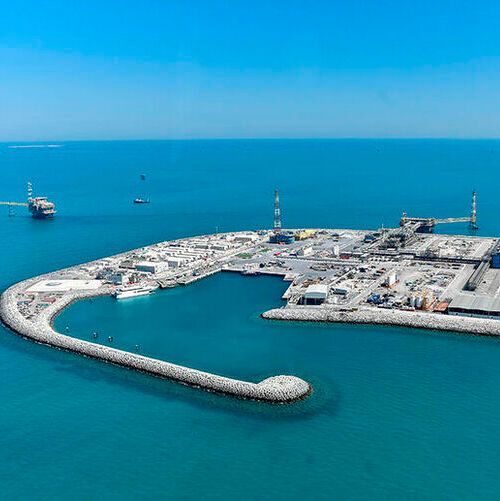
DP World has finalised a 30‑year concession worth US $800 million to modernise and operate the port of Tartus on Syria’s Mediterranean coast, as per official statements issued on 13 July 2025. The agreement, inked in Damascus between DP World and Syria’s General Authority for Land and Sea Ports, was witnessed by Syrian President Ahmed al‑Sharaa, along with DP World’s Chairman and Group CEO Sultan Ahmed bin Sulayem and Qutaiba Ahmed Badawi, […]

Greenlogue/AP UAE health and finance leaders have been urged to expedite air quality improvements, with a new report estimating annual savings of $596 million if pollution levels align with World Health Organization guidelines. The projected gains stem from fewer hospital admissions, drops in respiratory illnesses such as asthma, and reduced premature mortality. The study, led by Economist Impact, highlighted over 94 per cent of the global population lives in areas […]

UAE’s Ministry of Energy and Infrastructure has restated its unwavering aim to lift crude oil production capacity to five million barrels per day by 2027 amid shifting global energy demand. The clarification from Abu Dhabi follows remarks from the Energy Minister indicating potential capacity growth beyond that goal.

Aligned with its declared strategy, the nation insists the 5 million bpd target remains intact. Energy Minister Suhail Mohamed al‑Mazrouei, speaking at the Opec International Summit in Vienna, emphasised the UAE could scale up to six million bpd if global markets required—while making clear this figure is not an official target.

Presently, UAE’s production capacity stands at around 4.85 million bpd. The ministry’s public affirmation underscores long‑established plans by Abu Dhabi National Oil Company to align with wider economic imperatives, including state‑led diversification and responsible growth.

On the sidelines in Vienna, Minister al‑Mazrouei pointed to oil inventories that have not surged, interpreting it as evidence of sustained market demand. He characterised the additional million barrels potential as a proactive choice, contingent on demand, rather than a binding pledge.

Opec+ has already increased the UAE’s production quota this year, acknowledging its heavy investment in expanding capacity from 3 million to 4.85 million bpd. That quota adjustment reflects a bid to balance output with capacity and avoids penalising investment-led increases.

Global energy forecasts cited at the summit envision oil demand climbing by nearly 19 percent to 123 million bpd by 2050, driven by economic growth, urbanisation, and energy‑intensive industries such as artificial intelligence. Despite this, Opec has revised its short‑term forecast downward amid signs of slowing demand in China. Long‑term growth, however, is expected from regions including Asia, the Middle East and Africa.

ADNOC’s accelerated expansion plan—bringing forward its 5 million bpd capacity objective from 2030 to 2027—was endorsed by the board under the leadership of His Highness Sheikh Mohamed bin Zayed Al Nahyan, supported by CEO Sultan Ahmed Al Jaber. The strategy forms part of a broader state-led drive combining energy security with economic diversification and sustainability.

While bolstering its crude oil output, ADNOC is also investing heavily in low‑carbon solutions. It allocates about US $5 billion annually to clean energy and has set a net‑zero emissions ambition for 2045. The company is integrating solar and nuclear power into offshore fields and is implementing carbon‑capture technologies in major developments.

ADNOC’s low-carbon division recently acquired Germany’s Covestro for US $16 billion, signalling a move to diversify into value‑added petrochemicals such as plastics, foams and ammonia. Its strategy foregrounds gas, chemicals and downstream operations alongside oil capacity growth, in anticipation of structural shifts in global energy use.

The UAE is poised to become the world’s fourth-largest oil and liquids producer if the anticipated expansion is achieved, trailing only the United States, Saudi Arabia and Russia. At six million bpd capacity, it would surpass producers such as Canada, China, Iraq and Iran in scale.

However, uncertainties remain. The pace of global energy transition, the adoption of renewables, and potential peaking of oil demand—especially in China—pose risks to long-term strategy. But the UAE appears ready to hedge by maximizing flexibility: build for five million bpd, yet leave room to stretch if markets demand.

The public reaffirmation by the ministry serves both domestic and international audiences: showcasing earnest delivery of targets, reassuring investors on energy stability, and reinforcing the UAE’s position as a stabilising force within Opec+.

VinFast Auto India has entered into agreements with 13 dealership groups to open 32 showrooms across 27 cities, aiming to scale up to 35 outlets by the end of 2025. This expansion aligns with the pre-booking launch of its electric SUVs, the VF 6 and VF 7, beginning on 15 July, signalling a strategic push into India’s burgeoning EV market.

Building a strong retail presence, VinFast has engaged partners such as Pasco Group in Delhi, Raja Group in Karnataka, Nanesh Automotive in Telangana and Maansarovar Group in Tamil Nadu. The network spans major urban centres including Delhi, Bengaluru, Chennai, Hyderabad, Pune, Jaipur, Ahmedabad, Kolkata and Thiruvananthapuram, chosen for their growing EV infrastructure and consumer demand.

CEO of VinFast Asia, Pham Sanh Chau, described the venture as foundational to delivering “an elevated EV experience backed by reliability, customer trust, and service excellence”. The company’s approach follows its unveiling of the VF 7 at the Bharat Mobility Global Expo earlier this year and confirms the staging of VF 7 and VF 6 pre-bookings later this month.

Complementing its showroom rollout, VinFast is forging an ecosystem of after-sales and charging infrastructure. A tie-up with myTVS aims to establish 120 service workshops across India, enhancing customer support ahead of the EV launch. Additional alliances include Global Assure for mobile servicing and roadside assistance, myTVS and RoadGrid for charging infrastructure, and BatX Energies for sustainable battery recycling.

VinFast’s manufacturing ambitions are centred on Tamil Nadu’s Thoothukudi facility, expected to commence operations by June 2025. The 400‑acre plant is projected to assemble completely knocked down units initially, with capacity for up to 150,000 EVs annually once fully ramped up. Further discussions are underway with state governments in Andhra Pradesh and Telangana for a potential second manufacturing plant, signalling long-term investment in local operations.

Despite this momentum, VinFast has revised its India sales projections. Initial targets have been reduced by one‑third to approximately 3,000 units in the first year, reflecting measured realism amid market uncertainties and distribution challenges.

VinFast has previously sought reduction of import duties on fully built EVs, aiming to sustain competitive pricing until local assembly becomes fully operational. Domestic automakers have opposed this move, citing concerns over market fairness.

The VF 7, which carries a lithium‑ion battery capacity of approximately 75 kWh and offers up to Level 2 ADAS, was designed by former General Motors designer Lee Jae Hoon. It is expected to debut ahead of India’s upcoming festival season, with the VF 6 following suit.

As VinFast prepares for pre-bookings on 15 July, its strategy integrates showroom proliferation, service infrastructure, local manufacturing and sustainable practices. The expanding dealership network and ecosystem partnerships aim to support customer confidence, while adjustments to sales forecasts and regulatory considerations underscore a pragmatic, long-term approach to entering one of the world’s fastest-growing EV markets.

A joint alert from seven United Nations agencies has flagged Gaza’s fuel stocks as critically depleted, imperilling vital services for its 2.1 million residents. With fuel supplies down to a scarce trickle, health care, water, sanitation, aid distribution and communications infrastructures are faltering.

Hospitals such as Al‑Shifa in Gaza City have begun rationing fuel, placing patients in life-threatening situations. Doctors report incubators and dialysis equipment may fail within hours, while oxygen generators are sputtering. Ambulances have stalled, forcing staff to carry patients by hand, as critical care units teeter on collapse.

Water purification plants and sewage systems are shutting down without generator support, raising alarms over disease risks. UN officials have witnessed a sharp rise in meningitis and diarrhoeal illnesses among children. Bakeries and community kitchens have stopped, reducing the availability of fresh bread—a major food source for the displaced.

Although a one‑time delivery of some 75,000 litres reached Gaza—marking the first fuel entry in roughly four months—UN agencies caution this is but a drop in a deepening crisis. The quantity represents only a small fraction of the daily requirement to sustain relief operations. Officials emphasise that without regular, scaled deliveries, essential services face imminent blanket failure.

Israeli authorities have maintained that fuel shipments may be misused by militant groups, a claim that relief agencies strongly dispute. UN humanitarian representatives assert that fuel restrictions effectively constitute a form of collective punishment, with civilians bearing the brunt.

The blockade has persisted alongside ongoing military operations since March, despite intermittent commitments to allow aid in. The latest minimal fuel delivery was reportedly the first in 130 days. UN Secretary‑General António Guterres warned that without fuel to power ambulances, incubators and water networks, the fabric of civilian life is unraveling.

Aid workers are racing to implement rationing measures, diverting remaining stocks toward the most critical services—hospitals, maternity wards, water treatment facilities and mobile communications. But this partial reprieve is insufficient to meet surging demand.

In Gaza and beyond, humanitarian experts are urging urgent diplomatic engagement. Negotiations for new fuel corridors and scaled deliveries via Egypt and other Gaza crossings are underway, though the process remains slow and subject to volatile approval protocols. Some international mediators argue that allowing fuel in is as vital as increasing food aid, citing the interdependency of humanitarian systems.

The crisis has sparked global concern. UN agencies emphasise that fuel is the “backbone of survival”—not just for hospitals but for sanitation, communications, bakeries and logistics networks that sustain entire communities.

As operations continue under strain, the spotlight falls on the window of opportunity for diplomatic resolution. Pressure is mounting on all parties involved to remove barriers inhibiting consistent fuel access, which UN officials say is non‑negotiable to prevent the collapse of civilian life in Gaza.

By K Raveendran The most important takeaway from the Supreme Court’s stand on the Special Intensive Revision (SIR) of Bihar’s electoral rolls is a reminder that while the Election Commission of India (ECI) has the constitutional authority to take all necessary steps to ensure free and fair elections, it does not have the license to […]

Nigeria’s foreign minister, Yusuf Tuggar, has accused the United States of mounting significant pressure on African countries to accept deported Venezuelans, including individuals released directly from US prisons—a demand Nigeria says it cannot meet given its own domestic challenges. Speaking from Brazil at the BRICS summit on 11 July, Tuggar emphasised that with a population of roughly 230 million and pressing socio-economic issues, Nigeria cannot shoulder such responsibilities. The […]

A UAE delegation, under the leadership of Omran Sharaf, Assistant Foreign Minister for Advanced Science and Technology, has completed visits to the Netherlands and Belgium aimed at expanding strategic collaboration in R&D and critical advanced technologies. The two-day mission centred on forging partnerships in areas including AI, space, health and nanoelectronics.

Sharaf, who oversaw the Emirates Mars Mission and now leads the UAE’s science diplomacy efforts, engaged Dutch counterparts such as Vice Minister Michiel Sweers and Cyber Affairs Ambassador Ernst Noorman. Meetings with Erwin Nijsse and Harm van de Wetering from the ministries of innovation and space respectively focussed on aligning the UAE’s science ambitions with Dutch expertise.

A highlight was a high-level roundtable featuring public and private stakeholders, where both sides discussed collaborative initiatives in artificial intelligence, space tech, biotechnology and broader scientific research. Key Dutch institutions – including TNO, Deltares, ASML and Eindhoven University of Technology – were visited to explore joint applied research programmes spanning water management, semiconductor innovation and university- industry linkages.

The delegation’s mission concluded with a visit to the imec headquarters and labs in Leuven, Belgium. Imec, a globally recognised centre for nanoelectronics and digital innovation led by CEO Luc Van den Hove, is home to over 5,500 researchers and reported revenue of €846 million in 2022. The UAE delegation toured imec’s facilities to investigate potential partnerships involving semiconductor research, AI hardware and future communications.

Beyond institutional visits, UAE participants included Nouf Al Hameli, Science and Technology Adviser to Sharaf’s ministry, alongside representatives from EDGE Group, Dubai Future Foundation, MGX, G42 and the Technology Innovation Institute under the Advanced Technology Research Council. Their presence signals a cross‑sector push to integrate government, defence, private sector and academic R&D capabilities.

The timing of the visit aligns with Europe’s ambition to build technological autonomy. In May, EU officials emphasised the importance of domestic AI chip production to strengthen technological sovereignty. The UAE, keen on diversifying its tech ecosystem, stands to benefit from Dutch and Belgian strengths in microelectronics, photonics and applied AI.

Analysts note that such collaboration is consistent with a UAE strategy that blends national ambition with international partnerships. Sharaf himself has deep domain credibility: a former board member of the UAE Space Agency and chair of the UN Committee on the Peaceful Uses of Outer Space, he led the Emirates Mars Mission, forging global R&D alliances with institutions in the US and Europe.

While official communiqués framed the visits in diplomatic and institutional terms, sources familiar with discussions highlighted potential next steps: co-funded research programmes, joint innovation labs, and student exchange schemes in semiconductor and AI development.

Experts caution, however, that cross-border R&D frameworks require careful alignment. Differences in intellectual property regimes, export controls, and standard-setting processes between the UAE, EU and Belgium must be navigated for meaningful cooperation. Partners are expected to elaborate memoranda of understanding, agreeing on joint funding protocols and industry-academia mechanisms.

UAE’s delegation marks a strategic shift: away from transactional acquisition of tech, and towards co-development through knowledge ecosystems. In engaging flagship institutions like ASML and imec, and government bodies in The Hague, the UAE signals a move to deepen scientific diplomacy alongside its broader economic diversification goals.


Wegovy® is indicated for chronic weight management in adults and adolescents (12+) with obesity or overweight and at least one related health condition. The once-weekly injectable supports weight loss when used alongside a reduced-calorie diet and increased physical activity. The launch marks a step toward evidence-based, compassionate treatment of obesity as a chronic disease—not a personal failing. SINGAPORE – Media OutReach Newswire – 12 July 2025 – […]

HEFEI, CHINA – Media OutReach Newswire – 11 July 2025 – On July 10, Anhui officially released the teaser for the upcoming 2025 World Manufacturing Convention, setting the stage for this premier gathering of the global manufacturing community. Under the theme “Intelligent Manufacturing, Better Future,” the teaser opens with a creative invitation addressed to an AI robot, symbolizing Anhui’s ambitions to build itself into a leading manufacturing […]

By Prakash Karat The infamy that the Narendra Modi government’s foreign policy has earned in the recent period, is something that cannot be understated. On June 13, the United Nations General Assembly adopted a resolution moved by Spain calling for an immediate and unconditional ceasefire in Gaza. The resolution accused Israel of using “starvation of […]

ADNOC Gas has finalised a supply agreement worth 1.5 billion dirhams with Germany’s SEFE Securing Energy for Europe, signalling a significant push to reinforce the energy partnership between the UAE and European markets. The three-year contract will see ADNOC Gas deliver 0.7 million tonnes of liquefied natural gas, with shipments commencing this year from the Das Island liquefaction facility. The deal forms part of Europe’s broader strategy […]

Greenlogue/AP Abu Dhabi’s renewable energy developer Masdar and Spanish energy giant Iberdrola have announced a joint investment totalling €5.2 billion in the UK’s 1.4 GW East Anglia Three offshore windfarm. The project, located around 69 km off the Suffolk coast, will be equally co-owned—50:50—by both firms and supported by a €4.1 billion financing package arranged by 24 international banks. East Anglia Three forms part of a decade‑long partnership underpinned by a broader […]

VISHNU RAJA
RYO YAMADA
HITORI GOTOH
IKUYO KITA