

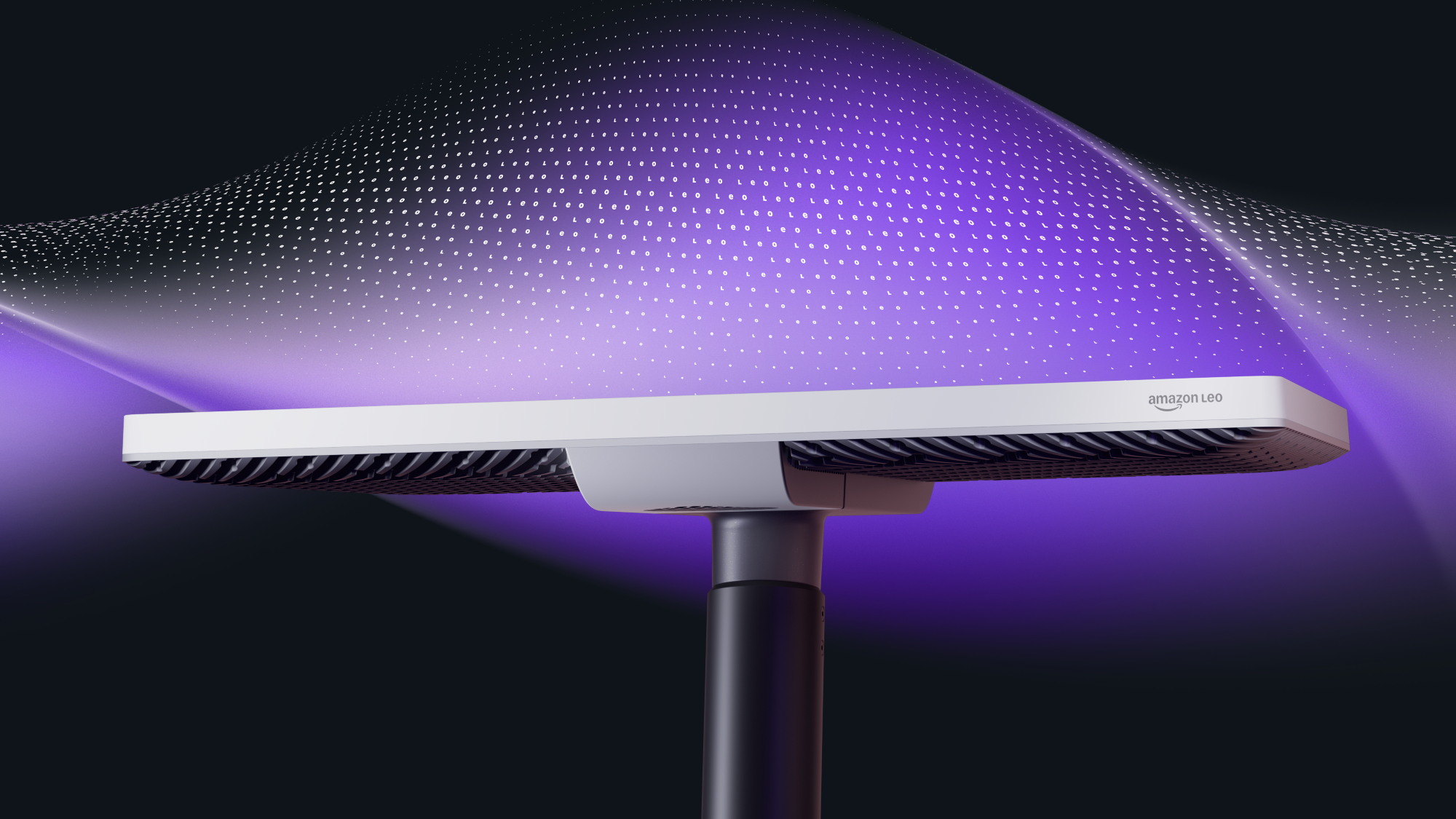
Amazon has begun shipping its most advanced phased-array terminal, dubbed Leo Ultra, to select enterprise customers as part of a preview programme for its satellite broadband service Amazon Leo — the rebranded successor to Project Kuiper. The company claims the terminal can deliver download speeds up to 1 gigabit per second and upload speeds reaching 400 megabits per second, representing a bold push to challenge incumbent players such as Starlink.
Leo Ultra runs on Amazon-designed silicon and uses a full-duplex phased-array antenna engineered to operate under harsh environmental conditions, with no moving parts and a weather-resistant build. The terminal supports high-throughput, low-latency connectivity, making it suitable for demanding enterprise tasks such as cloud-native deployments, video conferencing, remote infrastructure monitoring, and direct integration with Amazon Web Services via private networking and “Direct to AWS” links.
The 1 Gbps / 400 Mbps target marks the fastest commercial phased-array terminal available to date and places Amazon Leo in direct competition with Starlink — which currently reports business-tier speeds in the low hundreds of megabits per second and has committed to enabling gigabit-level service in 2026. Amazon says Leo Ultra is its first production-grade offering and that the enterprise preview will help refine the service prior to wide commercial rollout.
To power the system, Amazon has deployed more than 150 low-Earth orbit satellites as of late November 2025. The full constellation is planned to comprise over 3,200 satellites operating across multiple orbital shells, using optical inter-satellite links for high-speed communication and a global network of ground stations and gateways for terrestrial connectivity. Amazon aims to complete deployment of at least half the constellation by mid-2026.
Amazon’s enterprise preview has drawn early interest from clients across industries such as aviation, energy, transportation and remote infrastructure. The company says the flexibility and cloud-native design of Leo — particularly with AWS integration — could make it attractive for businesses operating in remote or underserved regions where traditional broadband is unreliable or unavailable.
While Leo Ultra’s speed targets and enterprise-grade features are promising, observers note that real-world performance will depend on constellation density, capacity allocation, latency, weather resilience and sustained throughput under load. Amazon has not revealed pricing or service-level agreement details for either enterprise or consumer tiers.
Follow Arabian Post
Select Arabian Post as your preferred source on Google and MSN News for trusted business news and Arab politics and updates.



