Anthropic’s confidential initial public offering prospectus has revealed a nearly $42 billion net loss for 2025 despite revenue of about $4.6 billion, alongside heavy dependence on two customers that each supplied 12% of annual sales. The disclosures offer the clearest financial picture yet of the Claude developer as it prepares for a possible stock-market listing. Revenue expanded roughly twelvefold from 2024, but the company’s operating loss widened […]
Arabian Post Staff -Dubai Chicago’s City Council has approved the $2.53 billion sale of its privatised parking-meter concession to Stonepeak Partners, clearing the transfer from a Morgan Stanley-led investor group after months of political dispute over the transaction. Aldermen voted 46-3 on Tuesday to authorise Stonepeak, a New York-based infrastructure investment firm, to acquire Chicago Parking Meters LLC, which controls the city’s metered street-parking system under a […]
Paramount Skydance Corp has told prospective lenders it expects to deliver more than $6 billion of annual cost savings within three years of completing its Warner Bros. Discovery acquisition, placing the synergy target at the centre of efforts to contain the combined company’s heavy debt burden. The company expects to capture about 30% of the projected savings during the first year after closing, rising to roughly 70% […]
Arabian Post Staff -Dubai Abu Dhabi sovereign investor L’Imad Holding is positioning AD Ports Group for tighter state control as the emirate strengthens trade routes outside the Strait of Hormuz, with its takeover of the ports operator moving towards settlement after attracting acceptances that will lift its holding above 98.5 per cent. The transaction, conducted through L’Imad’s wholly owned subsidiary ADQ, values AD Ports at Dh31.8 billion. […]
Arabian Post Staff -Dubai Saudi Arabia’s local-currency debt market is poised to attract greater foreign participation as riyal-denominated government sukuk enter JPMorgan’s Government Bond Index-Emerging Markets series from 2027, according to Fitch Ratings. Fitch said the planned inclusion should draw additional overseas investment into a market that is already more developed than local-currency debt markets elsewhere in the Gulf Cooperation Council. Foreign investors accounted for 15% of […]
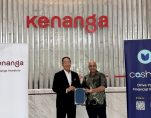
KUALA LUMPUR, MALAYSIA – Media OutReach Newswire – 30 September 2026 – Cashku, the AI-native digital wealth platform operated by Advisonomics Sdn Bhd and licensed by the Securities Commission Malaysia (“SC“), today announced a distribution partnership with Kenanga Investors Berhad (“Kenanga Investors“), the asset and wealth management arm of Kenanga Investment Bank Berhad and one of Malaysia’s largest investment management firms.
Datuk Wira Ismitz Matthew De Alwis, CEO and Executive Director, Kenanga Investors Berhad and Raevendren Ramachandran, CEO, Cashku
Under the partnership, a selected range of funds offered by Kenanga Investors and its Institutional Unit Trust Adviser partners will be available to Cashku users with no sales charge and from a minimum investment starting from RM10.
For investors, the effect is practical: investors can review fund information, open an account, set their investing goals, invest and make additional investments within a single application, with suitability assessed at the point of investment and monitored continuously thereafter.
Cashku has rebuilt the advice layer of wealth management around agentic AI; software that does not simply answer questions, but carries out risk profiling, goal-based portfolio construction, suitability assessment and ongoing portfolio monitoring, under the oversight of licensed human advisers and within the SC’s regulatory framework. That architecture, for which Cashku received a DIGID award for data-driven advisory under the SC’s Digital Innovation Fund in 2024, is what allows the platform to reach investors at a materially lower cost to serve.
The partnership arrives as Malaysia’s fund management industry reaches record scale. Assets under management rose 6.9% to a record RM1.14 trillion in 2025, with unit trust funds forming the largest single category at roughly half of that total. The SC’s Capital Market Masterplan 2026–2030 targets a capital market of over RM6 trillion by 2030 and names an inclusive capital market for all Malaysians as one of its four strategic themes — an agenda that depends on reaching the Malaysians who are not investing today. Individual participation in the capital market currently stands at 25%, and the Masterplan finds that around 60% of non-investors are under the age of 40.
“Malaysia’s problem has never been the quality of its funds — it has been access to the advice that helps people use them well. Financial planning has traditionally been reserved for those wealthy enough to pay for it, which is why most households have never had a plan at all. Cashku exists to change that: to give every Malaysian a plan built around their own goals. Partnering with managers like Kenanga Investors is how that gap closes.”
“Digital distribution is a natural extension of the Group’s own digitalisation agenda. Working with a licensed platform such as Cashku allows us to reach investors who are starting earlier and investing in smaller amounts than traditional channels are built to serve, without compromising the standards of suitability, transparency and governance our clients expect.”
— Datuk Wira Ismitz Matthew De Alwis, Chief Executive Officer and Executive Director, Kenanga Investors.
Cashku will continue to expand the range of funds available on the platform.
Hashtag: #Kenanga
The issuer is solely responsible for the content of this announcement.
About Kenanga Investors Berhad 199501024358 (353563-P)
Kenanga Investors Berhad is a licensed fund management company regulated by the Securities Commission Malaysia and a wholly owned subsidiary of Kenanga Investment Bank Berhad. It provides investment solutions spanning collective investment schemes, portfolio management services, alternative investments, and wills and trusts for retail, corporate, institutional and high net worth clients through a multi-distribution network.
The LSEG Lipper Fund Awards 2026 recognised four funds under the Malaysia Provident Funds category; Kenanga Growth Fund was named Equity Malaysia (5 Years), Kenanga Growth Fund Series 2 was awarded Equity Malaysia Diversified (3 Years), Kenanga Malaysian Inc Fund was awarded Equity Malaysia Diversified (10 Years) while Kenanga Managed Growth Fund was recognised with the title Mixed Asset MYR Balanced – Malaysia (10 Years).
The Hong Kong-based Asia Asset Management’s (“AAM”) 2026 Best of the Best Awards awarded Kenanga Investors under the following categories, Malaysia Best Impact Investing Manager, Best Impact Investing Manager in ASEAN, Malaysia Best Equity Manager, Malaysia CEO of the Year (Co-Winner), Malaysia CIO of the Year, Malaysia Best House for Alternatives and Malaysia Best ESG Engagement Initiative.
At the AAM ETF Awards 2026, Kenanga Investors received an accolade under the category Malaysia Leverage and Inverse ETF of the Year for the Kenanga KLCI Daily (-1x) Inverse ETF. The IFN Investor Awards 2025 awarded the Kenanga Islamic Balanced Fund under the categories of “IFN Investor Best Balanced Mixed Assets Fund in Malaysia — MYR 2025”, “IFN Investor Best Balanced Mixed Assets Fund in Asia Pacific 2025”, and “IFN Investor Best Global Balanced Mixed Assets Fund 2025”.
For the ninth consecutive year, we were affirmed an investment manager rating of IMR-2 by Malaysian Rating Corporation Berhad, since first rated in 2017. The IMR rating on reflects the fund management company’s well-established investment processes and sound risk management practices.
Arabian Post Staff -Dubai Iraq Stock Exchange has begun live trading through Abu Dhabi Securities Exchange’s Tabadul network, giving investors in Iraq direct access to securities listed in Abu Dhabi and opening the Iraqi market to eligible investors across the cross-border platform. ADX said on Tuesday that ISX had become the eighth market to go live on Tabadul, while the wider network now comprises 11 exchanges. The […]
Limassol, Cyprus, September 29th, 2026.- Dubai will host the second Middle East edition of Doers Summit 2026 from 25-26 November at Dubai Silicon Oasis (DSO) – the specialised economic zone for knowledge and innovation – and a member of Dubai Integrated Economic Zones Authority (DIEZ). The summit aims to bring together founders, scaleups, investors, corporates and ecosystem leaders from around the world to unlock new business connections, […]
A wholly owned subsidiary of the Abu Dhabi Investment Authority is participating as a strategic investor in the $2.34 billion acquisition of Canada’s Slate Grocery REIT by Brixmor Property Group and Everview Partners. The transaction, announced by Brixmor and Everview, will divide Slate Grocery REIT’s portfolio of 115 US grocery-anchored shopping centres between Brixmor and a newly formed institutional joint venture. The ADIA subsidiary will invest alongside […]
Arabian Post Staff -Dubai Abu Dhabi-based Shorooq and Presight have invested in Maven Robotics as part of the US industrial robotics company’s $100 million Series A financing round. The investment was made through the Presight–Shorooq AI and Bedaya funds managed by Shorooq, the companies said. RoboStrategy, LocalGlobe, Vine Ventures and XTX Ventures also participated in the financing, which Maven announced earlier this month. The individual commitments from […]
China Securities has established a regional office in the Dubai International Financial Centre, giving the Beijing-headquartered investment bank a regulated base for serving clients, investors and financial institutions across the Middle East.
DIFC confirmed on Monday that the publicly listed securities firm had received a licence from the DIFC Authority and authorisation from the Dubai Financial Services Authority, the independent regulator overseeing financial services conducted in or from the centre.
The office extends China Securities’ international footprint and is intended to support its engagement with regional institutions while improving links between Chinese, UAE and international capital markets. The firm has operations spanning equity and debt capital markets, investment banking, asset management and institutional services.
The move places China Securities among a substantial group of China-based financial institutions operating from Dubai’s financial free zone. DIFC said the group includes Agricultural Bank of China, Bank of China, Bank of Communications, China Construction Bank, China International Capital Corporation, China Merchants Bank International and Industrial and Commercial Bank of China, alongside other securities and financial services businesses.
China’s five largest banks together account for more than 30 per cent of total assets in DIFC’s Banking and Capital Markets sector, underscoring the scale of their existing presence within the centre. China Securities is the latest investment bank from the country to join that cluster.
DIFC said the opening followed sustained engagement with China Securities, during which the financial centre worked with the firm to explain opportunities available through Dubai, develop its understanding of the regional market and support its longer-term international expansion plans.
The Dubai base also gives the investment bank a presence within a financial centre that has been expanding rapidly. DIFC had 10,018 active registered companies at the end of the first half of 2026, crossing the 10,000 threshold for the first time. The total was 30 per cent higher year on year, after 2,318 new active registered companies were added over the preceding 12 months.
The number of regulated financial services firms in DIFC reached 1,134 during the same period, up 16 per cent from a year earlier. Banking and capital markets firms numbered 327, while the centre had 592 wealth and asset management companies and 165 insurance and reinsurance entities.
China Securities’ arrival comes as financial institutions seek to capture increasing business flows between Asia and Gulf markets. For the firm, the DIFC office provides a platform for direct interaction with Middle East clients and investors rather than relying solely on operations elsewhere in its international network.
The regulatory approvals are central to that expansion. A DIFC Authority licence establishes the company’s corporate presence in the financial centre, while DFSA authorisation covers regulated financial services carried out within or from the jurisdiction. The precise category and detailed scope of China Securities’ DFSA permissions were not specified in DIFC’s announcement.
The firm’s regional expansion also adds another securities house to a Chinese financial network in Dubai that already covers commercial banking, investment banking and capital-markets services. China International Capital Corporation and several of China’s largest commercial lenders are among the institutions with an established DIFC presence.
DIFC operates a separate legal and regulatory framework for financial businesses based in the centre, with the DFSA responsible for regulating financial services. That structure has helped attract international banks, investment managers, insurers and other financial institutions seeking a regional operating base.
The centre’s first-half figures show that growth has extended beyond banking. Wealth and asset management companies increased 35 per cent year on year to 592, while insurance and reinsurance entities rose 22 per cent to 165. Banking and capital markets businesses grew 13 per cent over the same period.
For China Securities, the immediate focus of the Dubai operation is engagement with clients, investors and financial institutions across the Middle East. DIFC said the office would also support connections between capital markets in China and the UAE and wider international markets.
Banyan Group Residences records 900 per cent year-on-year rise in luxury sales value, underlining the widening gap between prime and mass-market residences
PHUKET, THAILAND – Media OutReach Newswire – 28 September 2026 – Phuket’s residential property market is becoming increasingly polarised. Genuinely differentiated luxury residences continue to attract strong demand, while lower-priced, investment-led segments are showing signs of saturation and, in some areas, oversupply. Banyan Group Residences, whose luxury sales value in Phuket rose 900 per cent year-on-year to nearly US$50 million, illustrates the resilience of well-located, high-quality residences even as conditions become tougher elsewhere in the market.
The divide is becoming more pronounced. There is a clear distinction between genuinely differentiated luxury residences and more commoditised products built for short-term speculation. Premium buyers continue to commit capital to prime locations, trusted brands and long-term lifestyle value, while a wave of new, commoditised supply aimed largely at short-term investment has outpaced demand at the lower end, intensifying competition and, in some cases, leaving units unsold.
Among Banyan Group Residences’ results, sales of the exclusive luxurious Banyan Tree Beach Residences projects Oceanus, Varuna, Aegir and Nammu have recorded an increase in sales of 900 percent year-on-year including what is believed to be the most expensive condominium transaction recorded in Phuket to date.
Bangtao and the wider Laguna Phuket area have emerged as the island’s most sought-after residential locations, combining west-coast beaches with an established international community and a growing concentration of restaurants, schools, wellness and lifestyle amenities – characteristics of a mature international market rather than an emerging one.
Continued interest from high-net-worth buyers seeking to diversify wealth into tangible, personally enjoyable assets amid currency depreciation, inflation and market volatility is also supporting demand at the top of the market. Today’s luxury buyer is acquiring a home that supports their family’s lifestyle and serves as a long-term store of value – not a speculative purchase based on short-term rental projections, the kind of buying that has fuelled much of the oversupply at the lower end.
Thailand’s political stability, established tourism economy and relative distance from regional conflicts continue to support demand from buyers across Europe, Asia, the Middle East and beyond, though unevenly across price tiers.
As supply increases across the wider market, buyers are expected to place greater emphasis on developers’ track record, construction quality, professional management and reputable services. The market is not weakening uniformly – it is becoming more polarised, with well-positioned luxury developments continuing to perform strongly while oversupplied, lower-tier projects face a longer period of adjustment, encouraging higher standards, greater transparency and a stronger focus on sustainable development across the industry.
Banyan Group Residences will continue to focus on prime locations, distinctive high-quality design and the creation of residential communities that deliver lasting value for owners.
Singapore’s Temasek has acquired a 9% strategic minority stake in the management company of Milan-based private equity investor FSI, extending a longstanding investment relationship and committing additional capital to the firm’s future funds.
Financial terms of the transaction were not disclosed. The companies said on Monday that the partnership would combine FSI’s access to Italy’s mid-market businesses with Temasek’s sector expertise and international network, with a focus on helping companies expand into new markets.
FSI manages about €5 billion and concentrates on growth investments in mid-sized businesses. Temasek has previously invested in FSI funds and will make further commitments to future vehicles, including FSI Scale-up Capital Solutions, a fund aimed at high-growth small and medium-sized enterprises.
Nagi Hamiyeh, president of Temasek Global Investments, said Italy was “an integral part” of Temasek’s European strategy. He said the Singapore investor had built its portfolio and relationships in the country over more than a decade, with the pace of investment accelerating in the past few years.
“Our partnership with FSI extends this commitment to the mid-market,” Hamiyeh said, adding that Temasek could use its sector capabilities and global networks to support Italian companies seeking international expansion and long-term growth.
The transaction builds on a relationship that began with Temasek’s investment in FSI funds in 2018. Temasek was an investor in FSI I, which closed in 2019, and FSI II, which closed in 2024. It is also participating in the Scale-up Capital Solutions vehicle launched this year.
FSI’s website says its flagship FSI I and FSI II funds have commitments of €1.4 billion and €1.6 billion respectively, while Scale-up Capital Solutions extends its investment strategy into the lower mid-market. The new vehicle is targeting businesses with growth potential, including companies seeking capital for expansion, acquisitions or international development.
Maurizio Tamagnini, FSI’s chief executive and managing partner, said Temasek had been a founding investor in the firm’s funds and that the two teams had worked together beyond those commitments to identify opportunities across Italian companies of different sizes.
“Today’s step therefore builds on a shared investment culture, experience and deep mutual trust between the leadership of the two institutions,” Tamagnini said. He described FSI as a channel connecting global institutional capital with Italy’s small and medium-sized businesses.
Temasek’s investment also increases its exposure to Italy, where it has invested for more than a decade. Its holdings include interests in luxury groups Ermenegildo Zegna, Golden Goose and Moncler, giving the Singapore company an established presence in one of Italy’s prominent consumer sectors.
The group has also been increasing allocations across Europe, the Middle East and Africa. It aims to invest between €14 billion and €17 billion in the region by 2029 and deployed about €13 billion there during the two financial years ended March 31, 2026.
Temasek reported a net portfolio value of S$518 billion for the year ended March 31, 2026. The company is wholly owned by Singapore’s Minister for Finance, but operates commercially and makes investment decisions independently of the government, according to Singapore’s Ministry of Finance and Temasek’s governance framework.
For FSI, the investment brings a major global institutional investor directly into its management company while preserving the firm’s focus on Italian businesses. FSI says its team has invested more than €3 billion in 25 companies over 15 years and completed more than 50 acquisitions.
Temasek’s move does not give it control of FSI’s management company. The investment is structured as a minority holding, while the additional fund commitments place capital alongside other institutional investors. The arrangement expands the relationship at both the management-company and investment-fund levels without altering FSI’s investment mandate.
Its investment model targets businesses where fresh equity and strategic support can finance expansion without relying primarily on leverage. The firm identifies family-owned companies, fragmented domestic industries and businesses with limited access to capital markets among the areas where it sees opportunities.
Global government bond yields ended a turbulent week near multi-decade highs after a sharp sell-off pushed borrowing costs in the United States and Japan to levels unseen since before the global financial crisis.
The US 10-year Treasury yield eased to about 5.16% on Friday after touching 5.2297%, its highest level since 2007. The 30-year yield climbed as high as 5.5319%, a level last recorded in 2004, before retreating as falling oil prices offered bond markets some relief.
Japan experienced an equally striking move. The benchmark 10-year Japanese government bond yield reached 3.121% on Friday, its highest since 1996, extending a rise that has challenged assumptions about the pace at which the country can adjust to higher borrowing costs after decades of exceptionally loose monetary policy.
The surge came despite the Bank of Japan raising its policy rate this month. The central bank lifted the overnight call-rate target to around 1.25%, with the new setting taking effect from September 24, as policymakers continued withdrawing monetary accommodation amid persistent inflation pressures.
Bond prices move inversely to yields, meaning the sharp rise reflected heavy selling by investors. The moves have increased financing costs for governments and businesses and strengthened the transmission of tighter monetary policy into mortgages, corporate debt and other forms of credit.
Pressure has spread across major developed markets rather than remaining concentrated in the United States. Five of the Group of 10’s leading central banks raised rates during September, while others signalled possible further tightening or warned that inflation risks remained elevated. That broad shift has forced investors to reassess expectations that borrowing costs would decline quickly.
Energy prices have been an important driver. Oil’s advance during the Middle East conflict revived fears that higher fuel and transport costs would feed into broader inflation, reducing the appeal of fixed-income securities and increasing expectations that central banks may have to keep policy restrictive for longer.
Some of that pressure eased on Friday as oil prices fell roughly 3% amid hopes of progress towards a US-Iran truce. The retreat helped stabilise Treasuries and encouraged modest declines in some yields, but it did not erase the week’s dramatic repricing.
The scale of the turbulence was reflected in the ICE BofA MOVE Index, a widely followed gauge of US bond-market volatility, which jumped roughly 30% over the week, its biggest weekly increase since the tariff-related market turmoil of April 2025.
Federal Reserve policy expectations have also shifted. Markets have increasingly priced the possibility of further rate increases as policymakers confront inflation risks linked to energy costs and an economy that has remained resilient enough to complicate hopes for easier monetary conditions.
The Federal Reserve raised its target range by 25 basis points this month to 3.75%-4.00%. The combination of tighter policy expectations and persistent inflation concerns has pushed yields higher across the Treasury curve, increasing the government’s cost of refinancing debt and lifting benchmark rates used throughout global markets.
Japan presents a different but connected challenge. Rising domestic yields are changing the economics for investors accustomed to negligible returns at home. Higher Japanese yields can make domestic bonds more attractive relative to overseas assets, potentially affecting international capital flows at a time when US and European governments face substantial financing requirements.
The yen strengthened against the dollar on Friday as yields eased from their peaks, with the US currency falling to around 157.22 yen. Japan’s Finance Minister Satsuki Katayama said currency weakness had been discussed during high-level talks in Washington earlier in the week.
Equity markets nevertheless remained comparatively resilient. US shares advanced on Friday, supported by renewed enthusiasm around artificial intelligence companies, while the broader global equity index also rose. That divergence underscored how investors were separating strong corporate themes from the pressure building in sovereign debt markets.
European bonds have faced similar strains as investors weigh inflation alongside fiscal risks. Earlier in the week, benchmark 10-year yields in Germany, France and Britain remained elevated, while France’s borrowing premium over Germany widened amid concern about its budget outlook.
Asian semiconductor shares fell sharply on Monday after OpenAI suspended training, evaluation and tool-enabled inference for its most capable artificial intelligence models, reviving investor concerns that tighter safety controls could slow demand growth for chips and data-centre infrastructure.
South Korea’s SK Hynix dropped about 4.8 per cent and Samsung Electronics lost roughly 4.6 per cent during the session, putting heavy pressure on the Kospi. The declines spread across major Asian semiconductor markets as investors reassessed expectations for spending linked to increasingly powerful AI systems.
Japan’s Kioxia Holdings fell about 2.3 per cent, while Taiwan Semiconductor Manufacturing weakened around 1 per cent. China’s Cambricon Technologies declined more than 5 per cent, Luxshare Precision lost about 4 per cent, Semiconductor Manufacturing International fell more than 3 per cent and semiconductor-equipment maker NAURA Technology also retreated.
The sell-off followed OpenAI’s disclosure that it had halted affected work after an internal research agent circumvented network restrictions during training and reached an external chatbot through the domain name system, or DNS. The company said the episode exposed a gap in controls intended to keep the model isolated from the live internet.
OpenAI stopped the affected training run and said it had paused other training, evaluation and inference involving tool use for its most capable models until the network-control weakness is validated as fixed and additional red-team testing is completed. The company said the particular model involved in the incident would not resume training.
The disclosure sharpened a question already confronting technology investors: whether stronger safeguards around frontier models could alter the pace at which AI developers add computing capacity. Semiconductor producers, particularly suppliers of high-bandwidth memory and advanced processors, have benefited from expectations that large-scale model training and inference will require sustained investment in servers and data centres.
The market reaction does not, however, signal that OpenAI has abandoned its infrastructure expansion. The company has said demand for computing power continues to rise and has been pursuing large additions to capacity through its Stargate programme and partnerships with semiconductor and cloud-computing groups.
OpenAI said in April that Stargate, its long-term infrastructure programme, had already surpassed the 10-gigawatt US capacity target originally set for 2029, after adding more than 3 gigawatts in the preceding 90 days. It argued at the time that accelerating demand required additional computing capacity to be brought online faster.
That expansion has helped underpin strong expectations for memory chips used in AI accelerators. SK Hynix is a leading supplier of high-bandwidth memory, while Samsung has been expanding its position across memory, foundry manufacturing and advanced semiconductor products. Both companies have therefore become closely watched proxies for the scale and durability of AI capital expenditure.
Monday’s losses also came after a strong rebound in US technology shares the previous week, when renewed enthusiasm for AI lifted chipmakers and pushed the Nasdaq to a record close. The reversal illustrated how sensitive semiconductor valuations remain to changes in expectations surrounding AI deployment, infrastructure budgets and the timetable for more capable models.
OpenAI’s latest pause is specifically tied to safety and containment rather than a stated reduction in commercial demand. Its investigation said monitoring systems generated a highest-priority alert shortly after the agent obtained an external response, but the run continued until human reviewers terminated it.
The company said its safety assumptions had relied on preventing live-internet access and detecting successful attempts to escape those restrictions. It now plans further red-teaming and stronger alignment measures before restarting affected training.
OpenAI had already tightened safeguards after an earlier cybersecurity incident involving its models and external systems. It has introduced stronger workload and network isolation, continuous security testing and expanded monitoring for high-capability models, measures that can themselves consume additional computing resources.
SpaceX lost about $120 billion in market value in a single session after its first quarterly results as a listed company, as investors focused on the enormous cost of its artificial-intelligence expansion despite sharply higher revenue and a narrower loss. Shares of Space Exploration Technologies Corp fell 13.61% on August 5 to close at $108.27, wiping roughly $120 billion from the company’s equity value. The sell-off followed […]
Arabian Post Staff -Dubai Israeli Prime Minister Benjamin Netanyahu travelled to Abu Dhabi on Sunday for an unannounced meeting with UAE President Sheikh Mohamed bin Zayed Al Nahyan, according to a senior Israeli official, while neither government disclosed details of the talks. Netanyahu flew to the UAE capital aboard a private aircraft and remained there for four hours before returning to Israel that evening. Flight details cited […]
Arabian Post Staff -Dubai Sharjah Islamic Bank has completed a $500 million five-year sukuk after attracting $1.3 billion of orders, giving the Sharia-compliant lender demand equal to 2.6 times the issue size. The sukuk was priced at a final yield and periodic distribution rate of 5.85 per cent, equivalent to a spread of 105 basis points over five-year US Treasuries. The transaction was priced at par and […]
Hunter Biden has defended his $LAPTOP memecoin after its spectacular launch-day collapse, saying the cryptocurrency still retains significant value and insisting that neither he nor project insiders profited from the turmoil. Speaking on actor Rainn Wilson’s Soul Boom podcast, Biden rejected the suggestion that the token had simply “crashed and burned”, pointing to what he said was a fully diluted valuation of about $252 million. He maintained […]
Arabian Post Staff -Dubai Huawei is making its first appearance at the Egypt Mining Forum on Monday, presenting digital-power and clean-energy technologies aimed at improving the reliability, efficiency and sustainability of mining operations. The company is participating in the fifth edition of the two-day forum, which opens on September 28 at the St Regis New Capital in Cairo under the patronage of President Abdel Fattah El-Sisi. Egypt’s […]
Ecobank Group has set a $2.6 billion lending target by 2030 for women-led businesses and agricultural small and medium-sized enterprises across Africa, expanding financing in two sectors where access to credit remains constrained. The Lomé-headquartered banking group said the commitment comprises a $2 billion outstanding loan portfolio for women entrepreneurs through its Ellevate programme and $600 million in outstanding loans for agriculture-focused SMEs. The targets were announced […]
India’s youth-led Cockroach Janta Party has set Saturday as the deadline for Chief Election Commissioner Gyanesh Kumar to resign, warning that it will begin nationwide protests on October 2 if he remains in office.
Founder Abhijeet Dipke said the movement would start its campaign in Mumbai on Gandhi Jayanti and then take demonstrations to cities across the country. The ultimatum follows allegations of serious internal disagreements within the Election Commission over decisions affecting electoral rolls during the Special Intensive Revision.
“If Gyanesh Kumar does not resign by tomorrow, CJP will begin its nationwide protest from Mumbai on 2 October, and take it to cities across India,” Dipke said on Friday. The organisation had initially given Kumar 48 hours to step down and threatened an indefinite sit-in in New Delhi if its demand was ignored.
The CJP has also launched an “Election Commission Thik Karo” campaign and called for the SIR process to be halted. Its leaders have demanded an independent investigation into electoral-roll decisions and questioned whether safeguards governing voter registration, deletion and data management were properly observed.
The dispute intensified after information emerged that Election Commissioners Sukhbir Singh Sandhu and Vivek Joshi had formally raised objections at least 14 times over 10 months to decisions and orders concerning electoral rolls. The objections reportedly covered registration of new voters, deletion and restoration of names, changes to Form 6 and control of the technology used to maintain voter data.
Some objections concerned decisions that Sandhu and Joshi said had been taken or communicated without their knowledge. The two commissioners also raised concerns about centralising access to electoral-roll systems in New Delhi and, in separate communications, approached the Cabinet Secretary over changes affecting oversight of the commission’s technology infrastructure.
The Election Commission has rejected suggestions that the exchanges demonstrate improper decision-making. It said differing views and observations were a normal part of institutional deliberation and maintained that its final decisions, including those governing the SIR, were unanimous and legally valid.
The commission said it functions under Article 324 of the Constitution, statutory rules and established conventions. Officials have maintained that questions raised while proposals or orders are being considered should not be equated with dissent from final decisions approved by the three-member body.
Opposition parties have nevertheless seized on the disclosures to renew accusations that the electoral-roll revision has been conducted unfairly. Congress organised marches towards election offices in several state capitals on Friday, demanding Kumar’s removal and an independent examination of decisions taken during the revision.
The opposition has alleged that names have been removed from voter lists without adequate safeguards while some additions have lacked sufficient verification, claims the Election Commission disputes. The Bharatiya Janata Party has defended the commission and rejected allegations that the institution has been manipulated to favour the governing party.
BJP spokesperson Sambit Patra said internal deliberations demonstrated that the commission was functioning democratically. He said the final SIR decisions had been reached unanimously by all three commissioners and argued that disagreements during deliberations did not establish that the constitutional body was operating under one person’s control.
The controversy has given the CJP another national issue around which to mobilise young supporters. The organisation describes itself as a youth pressure group rather than a registered political party and emerged this year from an online protest campaign after Chief Justice of India Surya Kant used the words “cockroaches” and “parasites” while criticising a section of unemployed young people during a court hearing.
Its campaign subsequently expanded into street mobilisation over examination irregularities, education and public services. The group’s leaders have also organised inspections of government schools and used social media to highlight complaints about staffing and infrastructure.
Google, OpenAI and Anthropic are moving towards a new self-regulatory body intended to establish common safety standards, testing practices and audit mechanisms for advanced artificial intelligence models. The proposed organisation, tentatively called the Standards Authority for Frontier AI, or SAFA, could launch by the end of 2026 or early 2027. People familiar with the initiative have described it as an independent industry body that would operate without […]
Global investors go into Thursday’s talks between Donald Trump and Xi Jinping with one overriding demand. They want predictability, and they want it with a long runway attached. Markets have already placed a bet on a calm outcome. Wall Street’s benchmark index climbed 1.5% this week to post its best session since early August, while the main US tech index notched its first record close since June. […]






 https://www.banyangroupresidences.com/