Rocketlane has raised $60 million in a Series C round led by Insight Partners, as the software company moves to expand an AI-driven platform aimed at professional services teams that are increasingly being asked to turn enterprise AI spending into measurable operating results. The funding, announced on March 25, takes the company’s total capital raised to $105 million and comes as more corporate buyers shift attention from […]
Artificial intelligence is redrawing the economics of data centres at a speed that is forcing developers, utilities and investors to rethink where digital infrastructure can be built and how it can be financed. A new 2026 marketplace report from Colliers says global investment in data centres topped $580 billion in 2025, up 27 per cent from a year earlier, as hyperscalers and infrastructure groups poured money into […]
Digital Realty has begun providing colocation infrastructure to Samsung Electronics at its ICN10 facility in Seoul, a deal that highlights how large corporate users in South Korea are seeking more resilient, high-density digital infrastructure as artificial intelligence, cloud services and mission-critical enterprise workloads put heavier demands on power, cooling and connectivity. The announcement was made on March 25 by Digital Realty, which said the arrangement would support Samsung Electronics’ enterprise IT operations from its Seoul site.
The ICN10 facility, located in Sangam-dong in Mapo-gu, has been operating since 2022 and is described by the company as South Korea’s first carrier-neutral data centre. Digital Realty says the building has a maximum IT load of 12 megawatts and around 132,000 square feet of space, with high-density power architecture, network connectivity and the resilience needed for large-scale computing environments. Those specifications matter because enterprise clients are no longer looking only for secure rack space; they increasingly want facilities that can handle denser compute loads without compromising uptime.
For Samsung Electronics, the move points to a practical shift in how even large technology groups manage parts of their own internal infrastructure. Rather than relying exclusively on self-operated facilities, major companies are turning to specialist operators for colocation capacity that can be scaled more quickly and managed to global standards. Digital Realty framed the arrangement as support for a large-scale customer environment in Korea, while emphasising stable, high-performance infrastructure for global enterprises. That wording suggests the deal is less about consumer-facing products and more about the backbone systems that keep a multinational company running across data-intensive operations.
The timing is notable because Seoul’s data-centre market is expanding while facing mounting strain over where future capacity can be built and how it will be powered. Cushman & Wakefield said the Greater Seoul Area reached 533 megawatts of capacity in the first half of 2025, with a further 715 megawatts in the development pipeline, alongside land secured for another 250 megawatts. Its later market update said the second half of 2025 saw double-digit year-on-year growth, while AI demand and tighter power-related rules were reshaping development patterns. That combination of growth and constraint is pushing operators and customers alike to value operational certainty.
South Korea’s broader technology push adds another layer to that demand story. Reuters reported this week that Seoul approved a 250 billion won investment in AI chip startup Rebellions, part of a wider effort to strengthen domestic semiconductor and advanced computing capabilities. Reuters also reported that SK Hynix is pursuing a US listing partly to fund major chipmaking investments tied to rising AI demand. Those moves sit outside the colocation market itself, but they reinforce the same structural point: processing power, data movement and digital infrastructure are becoming more strategically important across the economy.
Digital Realty’s position in Seoul also reflects a larger contest among global and regional operators seeking to capture Asia’s enterprise and cloud demand. Market research and adviser reports point to South Korea as one of the faster-growing data-centre markets in the region, driven by digital-first consumers, cloud adoption and increased enterprise modernisation. JLL’s 2026 outlook said the global data-centre sector could nearly double between 2025 and 2030, while other market estimates show South Korea’s colocation and broader data-centre segments expanding strongly through the decade. Forecasts from commercial research firms should be treated cautiously, but taken together with operator activity and land acquisition trends, they show why Seoul has become a closely watched infrastructure market.
The Samsung agreement may not be transformative in size on its own, yet it carries signalling value. When one of the country’s largest technology groups places enterprise workloads with an external colocation provider, it gives weight to the argument that carrier-neutral, high-density facilities are becoming integral to mainstream corporate IT strategy rather than serving only cloud giants and telecom operators. It also strengthens Digital Realty’s credentials in a market where network diversity, reliability and location all matter.
Questions remain over how quickly South Korea can add capacity in and around Seoul without worsening power bottlenecks or pushing new builds further from the capital’s main concentration of corporate demand. Legal and advisory analyses have pointed to the mismatch between the location of generation capacity and the heavy concentration of data centres around metropolitan Seoul. That tension is likely to shape the next phase of expansion, forcing operators to balance geography, power access and customer proximity more carefully than before.
Arabian Post Staff -Dubai Telda has moved beyond payments and cards to add stock and fund investing to its app, opening a new front in Egypt’s fast-growing race to attract first-time retail investors. The Cairo-based fintech said on Sunday that users can now buy and sell shares on the Egyptian Exchange and subscribe to investment funds from within the same platform, without relying on a traditional broker […]
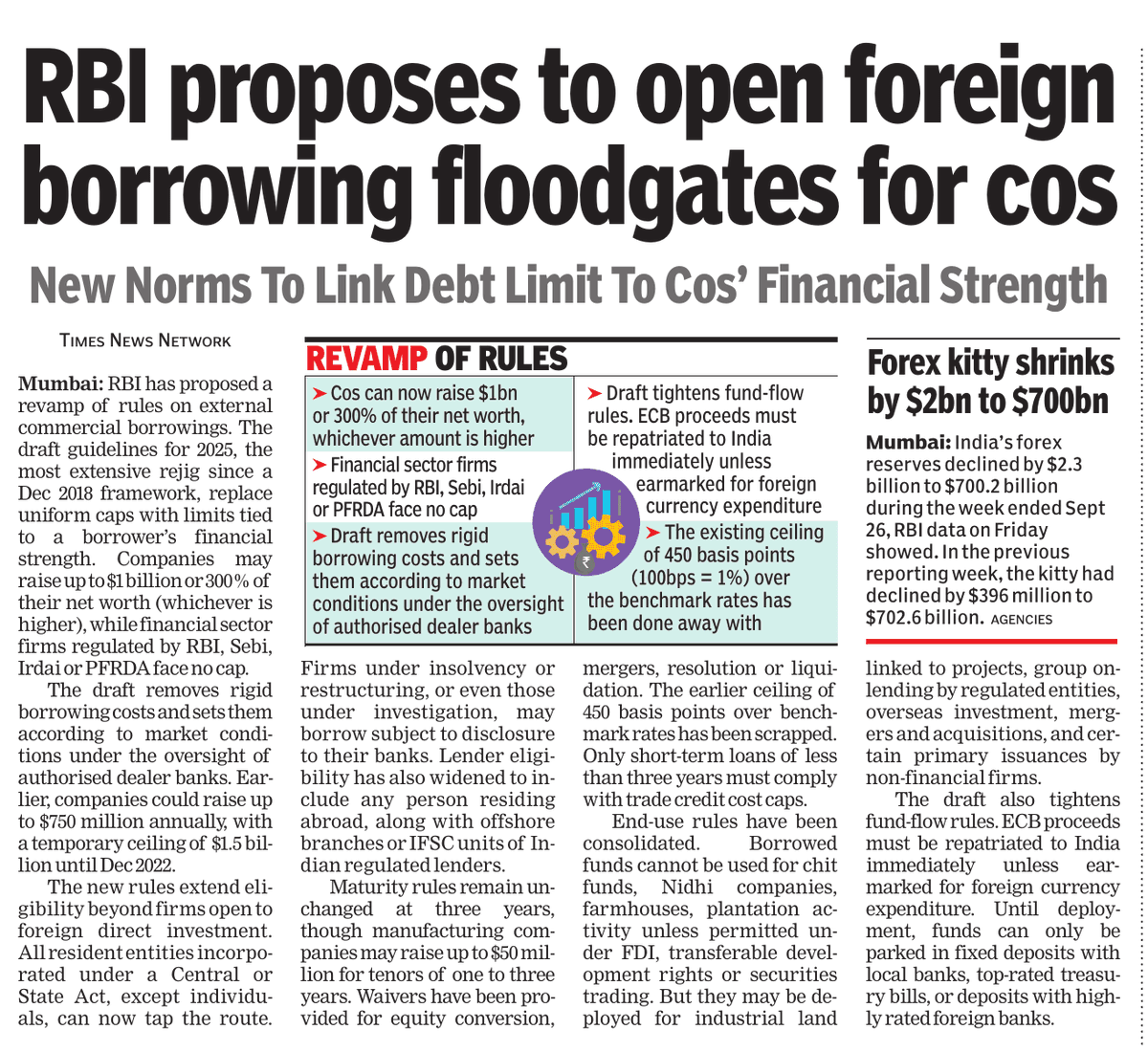
Banks are pressing the Reserve Bank of India to soften a new foreign-exchange rule that dealers say could force the unwinding of large arbitrage positions, deepen trading losses and add fresh strain to the rupee at a fragile moment for the currency market. The central bank has told lenders to keep their net open rupee positions in the onshore deliverable market within $100 million by the end of each business day from April 10, replacing a far more flexible regime under which banks’ boards could set limits linked to capital.
The pushback from lenders has grown because the rule change lands after weeks of pressure on the rupee from higher oil prices, foreign portfolio outflows and war-driven risk aversion across global markets. The rupee touched a record low of 94.84 against the US dollar after a sharp slide this week, underscoring the urgency with which the central bank is trying to contain volatility and regain influence over price formation in the domestic market.
At the heart of the dispute is a trading structure that banks have used to profit from differences between the onshore market and the offshore non-deliverable forward, or NDF, market. Under the earlier framework, dealers could offset positions across the two venues without breaching broader exposure limits. The new rule narrows that room sharply by capping end-of-day net open rupee exposure in the onshore deliverable market, regardless of how positions are balanced elsewhere. Traders told Reuters that arbitrage books likely to be affected are worth about $10 billion to $18 billion, while Bloomberg reported that banks see total unwinding pressure building toward roughly $30 billion.
That distinction matters because the RBI appears to be targeting a channel through which offshore pricing has increasingly spilled back into the domestic market. By tightening end-of-day exposure, the central bank is seeking to reduce the ability of banks to transmit volatility from the NDF market into onshore rupee trading, while making its own intervention in the domestic market more effective. That objective fits with a broader pattern this month, as the RBI has been active in spot, futures and non-deliverable forward markets to steady the currency.
Banks, however, argue that the speed of implementation could be costly. Treasury officials have warned that compressing positions before the April 10 deadline may force disorderly exits, widen onshore-offshore spreads and crystallise mark-to-market losses on trades that had previously been profitable. The immediate complaint is not only about tighter oversight but also about the lack of transition time for legacy positions built under the old regime. Reports from the domestic financial press say lenders have asked the central bank to reconsider or provide relief, reflecting concern that a hard cap applied uniformly across banks does not distinguish between speculative bets and market-making activity.
The central bank’s tougher line comes as India’s external buffers, while still substantial, have been tested by intervention. RBI data cited in a Reuters report showed foreign-exchange reserves at $709.76 billion as of March 13, enough to cover 11.2 months of imports and about 95 per cent of outstanding external debt. Even so, reserves had fallen notably over the month as the central bank sold dollars to smooth rupee moves. That means policymakers are trying to balance two goals at once: preserving confidence in India’s macro-financial resilience while discouraging trading structures that may amplify pressure during periods of external shock.
Another layer of complexity is that the RBI had, only weeks earlier, proposed broader reforms that would ease some foreign-exchange transaction norms for authorised dealers and give market participants greater flexibility in hedging and balance-sheet management. That makes the present clampdown look less like a reversal of liberalisation and more like a targeted response to extraordinary market conditions. For banks, though, the contrast has sharpened frustration: one arm of the regulatory agenda promises flexibility, while another has suddenly imposed a hard operational ceiling on rupee positions.
Ethereum has drawn renewed market attention after a sharp jump in large-holder transactions coincided with a formal push by developers to harden the network against future quantum-computing risks. Data circulated by analyst Ali Martinez showed whale transactions rising from 123 on 21 March to 2,055 on 24 March, a move that put the token back at the centre of debate over whether big holders are accumulating, rotating […]
Arabian Post Staff -Dubai Exeed has opened a new showroom in Jeddah through Arabian Heritage Motors, part of Al Ghurair Mobility, extending the premium vehicle brand’s physical presence in Saudi Arabia as competition intensifies among Chinese carmakers across the Gulf. The Jeddah launch was disclosed by Al Ghurair in a corporate post and comes after Exeed appointed Al Ghurair as its exclusive distributor in the Kingdom in […]
Intercontinental Exchange, the parent of the New York Stock Exchange, has expanded its push into prediction markets with a fresh $600 million investment in Polymarket, tightening a partnership that could take its total commitment to almost $2 billion and further pull event-based trading into the financial mainstream. ICE said the new cash injection forms part of a previously announced arrangement and does not expect to materially affect […]
By K Raveendran US President Donald Trump’s attempt to jawbone oil lower has run into the hard edge of market reality. At the start, the strategy appeared to work. When he signalled that peace talks with Iran were possible and suggested a diplomatic opening, crude quickly gave back a large share of its war premium. […]
London Internet Exchange has completed a broad upgrade of its 17-site LON2 network in the capital, handing Nokia a deeper role in one of the UK’s most important interconnection systems at a time when traffic growth, AI-led workloads and the retirement of older equipment are forcing operators to rethink how core internet infrastructure is built and scaled. The overhaul covers LINX’s secondary London interconnection fabric, known as […]
Arabian Post Staff -Dubai Banishing delivered a polished front-end result for the United States and Saudi Arabia at Meydan on Saturday, winning the $1 million Group 2 Godolphin Mile and handing a notable success to trainer David Jacobson, jockey Silvestre de Sousa and owners Sharaf Mohammed Al Hariri, David Jacobson and Lawrence Roman. The Godolphin-bred six-year-old beat Commissioner King by 2¼ lengths over the mile on dirt, […]
“Culinary Capital” Title Reaffirmed with Over 200 Restaurants Listed in Internationally Acclaimed Gourmet Guides
HONG KONG SAR – Media OutReach Newswire – 28 March 2026 – Following last year’s “The World’s 50 Best Bars” Award Ceremony in Hong Kong, the Hong Kong Tourism Board (HKTB) this year brought the “Asia’s 50 Best Restaurants 2026” Awards Ceremony to Hong Kong for the first time. The event today (25 March) brought together over 1,000 culinary industry representatives, renowned chefs and media worldwide. Top local Cantonese restaurant The Chairman and contemporary Cantonese restaurant Wing secured first and second places respectively on the Asia’s 50 Best Restaurants 2026 list, once again highlighting the leading position of Hong Kong’s dining scene in Asia.
HKTB Chairman Dr Peter Lam said: “We extend our sincere gratitude to the Asia’s 50 Best Restaurants team for selecting Hong Kong for the first time as the host city for the Awards Ceremony. This international award recognises the outstanding achievements of the culinary sector. I am very proud of Hong Kong’s remarkable accomplishments in this year’s Awards. Together with the ‘MICHELIN Guide Hong Kong Macau 2026’ and ‘The Black Pearl Restaurant Guide’, over 200 restaurants have been listed in these internationally acclaimed gourmet guides, reaffirming Hong Kong’s position as a “Culinary Capital” in Asia. We are delighted to welcome the esteemed Asian chefs and other culinary professionals attending the Awards Ceremony to Hong Kong, and we warmly invite everyone to explore the city’s unique and diverse gastronomic charm by following the master chefs’ curated recommendations featured in the citywide ‘Taste Hong Kong’ Gourmet Guide.”
Hong Kong Tourism Board (HKTB) Chairman Dr Peter Lam speaks on stage at the Asia’s 50 Best Restaurants 2026 Awards Ceremony.
Danny Yip, owner of The Chairman, said “Being named The Best Restaurant in Asia for the second time is a huge honour for our entire team, and to achieve it here in Hong Kong makes it even more meaningful. This recognition — as well as the strong results for the city on this year’s list — reflects the depth and diversity that define Hong Kong’s dining culture today. It’s a privilege to represent our city in this way and to continue sharing the traditions and stories that shape our cuisine.”
Hong Kong Tourism Board (HKTB) Chairman Dr Peter Lam, left, and Danny Yip from top local Cantonese restaurant The Chairman, winner of the first place award, at the Asia’s 50 Best Restaurants 2026 Awards.
Hong Kong Leads Asia Culinary Landscape with Two Restaurants in the Top Three
Together with the previously announced extended list of Asia’s 50 Best Restaurants (51th – 100th), a total of ten Hong Kong restaurants were recommended in the Asian edition of the prestigious list. These include six restaurants in the top 50: while The Chairman and Wing topped the list at first and second spots, Neighborhood (No. 24), Estro (No. 32), Caprice (No. 35), and Mono (No.46) stayed strong on the list. Four other restaurants were also feature in the extended list, namely Ta Vie (No. 68), Vea (No. 70), Andō (No. 88), and Amber (No. 90). With this stellar performance, Hong Kong reaffirming its leading position in the regional culinary scene. The winning restaurants cover a diverse range of cuisines, demonstrating Hong Kong’s unique appeal as a melting pot of global flavours and a hub for star-rated dining establishments.
In the recently announced “Black Pearl Restaurant Guide”, the number of Hong Kong entries increased to 39, up from last year, including four first-time entries – Mosu Hong Kong, founded by three-Michelin-star South Korean chef Sung Anh; Jee, a Cantonese-French fusion restaurant; contemporary Indian restaurant Leela, and Cantonese fine-dining establishment Man Ho Chinese Restaurant. In addition, homegrown chef Vicky Cheng of Chinese-French restaurant VEA, and Terry Ho, Chef de Cuisine of French restaurant Amber, received the Master Chef Award and the Young Chef Award respectively in the Black Pearl Restaurant Guide, affirming the distinguished reputation of Hong Kong’s culinary talent in the Asian dining scene. In the “MICHELIN Guide Hong Kong Macau 2026”, more Hong Kong establishments were awarded MICHELIN stars than in the previous year, bringing a total to 77 Michelin-starred restaurants in one destination, further demonstrating the world-class standard of the city’s culinary scene.
Top Asian Chefs and Global Media Gather in Hong Kong to Experience the City’s Culinary
Wong Lung-to, Executive Chef of Forum Restaurant, left, leads a dim sum workshop organised by Hong Kong Tourism Board (HKTB) during the Asia’s 50 Best Restaurants 2026.
Chef Grégoire Michaud from Bakehouse leads an egg tart baking workshop, which is one of the recommended pastry shops under Taste Hong Kong, during the Asia’s 50 Best Restaurants 2026 Awards.
Capitalising on the opportunity presented by major culinary event being hosted in Hong Kong, HKTB arranged exchanges between leading Asian chefs and renowned local culinary talent, enabling them to experience the city’s diverse gastronomic offerings and produce promotional videos dedicated to “Taste Hong Kong”. In addition, HKTB leveraged its global network to invite media representatives from the Chinese Mainland, Taiwan, South Korea, Southeast Asia and other key markets to visit Hong Kong. In addition to attending the award ceremony for media coverage of the event, HKTB curated a series of immersive culinary experiences to fully showcase Hong Kong’s unique charm as a Culinary Capital.
Highlights of the itinerary included engaging with local master chef Vicky Cheng to gain firsthand insight into his exceptional culinary skills and cooking philosophy; participating in a dim sum workshop led by master chef Wong Lung-to, Executive Chef of Forum Restaurant, to learn how to make classic Cantonese dim sum such as siu mai (Cantonese pork dumplings) and har gow (shrimp dumplings); and joining an egg tart baking workshop. Media representatives were also invited to dine at several listed restaurants and visit emerging bars to experience Hong Kong’s diverse food and beverage culture in full. Through in-depth media coverage, the media trip will help promote Hong Kong’s distinctive culinary appeal to audiences worldwide, attracting more visitors to explore “Taste Hong Kong” and further consolidating the city’s status as a Culinary Capital.
11 Exclusive Collaborative Signature Sessions around the Awards Ceremony to Share Hong Kong’s Gastronomic Experiences
From left, representatives from restaurants Estro, Baan Tepa, Born, Labyrinth, Eatanic Garden, Crony and Gaggan collaborate at one of several Signature Sessions.
From left, representatives from restaurants Louise, Odette and Villa Aida collaborate at one of several Signature Sessions.
To encourage locals and visitors to immerse themselves in the vibrant atmosphere surrounding the award ceremony, HKTB partnered with the organiser for the first time this year to invite 40 internationally renowned and local award-winning restaurants to present 11 limitedtime collaborative Signature Sessions covering various global cuisines, bringing multiple tasting surprises to locals and visitors. The events attracted many locals and visitors, allowing everyone to experience the charm of global cuisines converging in Hong Kong at a single table.
Popular Variety Shows Drive Tourism and Encourage Visitors to Experience Hong Kong’s Diverse Culinary Delights through “Taste Hong Kong”
In line with the “Taste Hong Kong” Gourmet Guide launched in January, which covers all neighbourhoods across the city and features chef-recommended restaurants, HKTB has stepped up its promotional efforts in key source markets, such as the Chinese Mainland, Taiwan, New Zealand, South Korea and Southeast Asia. By collaborating with popular local food variety shows, HKTB showcased Hong Kong’s diverse dining culture to wider audiences, further enhancing international interest in Hong Kong’s culinary tourism.
In the Chinese Mainland, HKTB promoted culinary travel to Hong Kong through a Chinese New Year food programme on Shenzhen Satellite TV, with master chefs introducing restaurants recommended in the Guide and visiting specialty streets such as “Dried Seafood Street” and Shanghai Street, locally known as “Kitchenware Street”, to explore the charm of Hong Kong’s neighbourhoods. HKTB also partnered with New Zealand’s popular programme Seven Sharp, inviting media to visit Sham Shui Po to taste authentic local snacks, such as pineapple buns, milk tea, tofu pudding and dumplings, and to dine at a time-honoured Western restaurant to sample Swiss chicken wings and soufflé, showcasing Hong Kong’s diverse food culture. In addition, HKTB collaborated with Taiwan’s Super Taste, South Korea’s Boss in the Mirror, and multiple travel and food programmes in Thailand and the Philippines, featuring visits to recommended restaurants and exchanges with local master chefs. Through the broad influence of these variety shows, HKTB is actively showcasing the unique charm of “Taste Hong Kong”, attracting more visitors to embark on a culinary journey in Hong Kong.
The team from top local Cantonese restaurant The Chairman accept the top prize on stage at the Asia’s 50 Best Restaurants 2026 Awards.
Zimbabwe has turned a long-signalled restriction on second-hand clothing into formal law, tightening its effort to shield domestic manufacturers even as economists and traders warn that the move could squeeze low-income consumers and deepen pressure on an already fragile apparel market. The measure is now enforced under Statutory Instrument 59 of 2026, which bars the import of second-hand clothes unless an importer holds a government permit issued […]
Singapore-linked professional bodies and trade groups have opened a Professional Services Centre in Nanjing, pitching it as a gateway for Chinese companies seeking to expand into Southeast Asia and for Singapore firms looking to deepen their footprint in China. The launch took place on March 27 at a forum in Nanjing and marks the alliance’s second centre in China and third globally, according to the announcement distributed by the organisers.
The centre has been set up under an alliance led by the Institute of Singapore Chartered Accountants and supported by the Association of Small & Medium Enterprises, Institute of Valuers & Appraisers, Singapore Business Federation, Singapore Chinese Chamber of Commerce & Industry, Singapore Manufacturing Federation, Tax Academy of Singapore and the Law Society of Singapore. Organisers said the Nanjing base is intended to provide companies with legal, tax, accounting, valuation, advisory and market-entry support as they navigate cross-border expansion. The move comes as commercial links between China and ASEAN continue to broaden and as businesses face a more complex regulatory and geopolitical environment when operating across jurisdictions.
Nanjing was presented as a deliberate choice rather than a symbolic one. The alliance said the city offers strong university linkages, talent pools and institutional support, while the Singapore-Nanjing Eco Hi-tech Island provides an established platform for bilateral cooperation. That project is jointly backed by authorities in Jiangsu and Nanjing as well as Singapore’s Ministry of Trade and Industry, giving the new centre an anchor in a corridor that already carries a Singapore brand in east China.
Officials used the launch to underline the commercial logic. Nanjing Vice Mayor Xu Feng said enterprises expanding overseas depend on professional services support and described Singapore as a global hub with complementary strengths. Ernie Koh, a council member at Singapore Business Federation and vice-chairman of the research and publications committee at Singapore Chinese Chamber of Commerce & Industry, said the platform could help enterprises build capabilities and unlock opportunities across Southeast Asia. Darren Ku, a council member at ASME, said smaller companies in particular need a more coordinated route into foreign markets, from compliance to market-entry strategy. Daniel Koh, vice-president of the Law Society of Singapore, framed the legal dimension as equally important, arguing that cross-border growth now demands stronger risk management and regulatory advice.
The alliance is presenting the centre as more than a ceremonial office. It says its centres in China and Vietnam have already supported more than 100 businesses, and cited BIPO, the human resources technology group, as one example of a company that used the ecosystem to establish operations and build local teams in Nanjing. Those claims could not be independently verified from public disclosures in full, but they fit the broader trend of service providers bundling market access, compliance and talent support for companies trying to expand across Asia without building every capability in-house.
That broader trend matters. Enterprise Singapore continues to position China as a major destination for outward expansion, pointing to its scale, consumer market and innovation ecosystem, while also offering grants and overseas market assistance to firms venturing abroad. At the same time, ASEAN’s own data show the region’s trade in goods rose to about $3.8 trillion in 2024, and ASEAN says two-way merchandise trade with China reached $772.4 billion that year, accounting for roughly a fifth of ASEAN’s total trade. Chinese media and official commentary have since pointed to China-ASEAN trade crossing the $1 trillion mark in 2025, underscoring why service platforms that specialise in cross-border operations are multiplying.
Commercial opportunity, however, does not remove the risks. China is trying to reassure foreign investors after weaker inbound investment figures, while international companies remain alert to policy shifts, compliance burdens, data rules and geopolitical tensions. Reuters reported this month that Beijing has been signalling a more open stance to foreign business even as it works to reverse a decline in foreign direct investment. For Chinese firms heading south, Southeast Asia offers growth, manufacturing diversification and access to younger consumer markets, but it also presents a patchwork of tax regimes, legal systems and political risks that can complicate expansion plans. That is precisely the gap the Nanjing centre says it wants to fill.
The launch also reflects a wider Singapore strategy of exporting professional and business services alongside capital and trade links. Earlier alliance messaging around the Shanghai centre described a “hunt in a pack” model in which multiple associations expand together so companies can tap a bundled network rather than isolated advisers. That approach appears to be carrying over into Nanjing, with the added emphasis on helping Chinese enterprises invest in Singapore and across ASEAN, not only on helping Singapore firms move into China.
Safe-haven demand pushed the US dollar towards its strongest monthly advance since July, as investors sought liquidity and relative shelter from a widening Middle East energy shock while also scaling back expectations for Federal Reserve easing this year. The dollar index was trading near 100.17 on March 27 and was up about 2.6 per cent for the month, a move that outpaced most major peers. Currency […]
Arabian Post Staff -Dubai Mezza, a new hospitality platform in the UAE, has launched with a model aimed at giving restaurants upfront capital in exchange for future food and beverage credit, offering operators an alternative to bank debt or equity fundraising while also promising a pipeline of diners over time. The company says partner venues can access between AED 20,000 and AED 10 million, with the credit […]
Arabian Post Staff -Dubai Omniyat has moved to reassure investors that it has enough liquidity to meet its debt obligations after the Dubai ultra-luxury developer was placed on watch for a possible downgrade, arguing that its cash position and funding profile leave it well equipped to handle maturities without depending on a fresh burst of property sales or a quick return to calmer markets. The company said […]
Blackstone has invested $250 million in an Abu Dhabi-based payments and data intelligence platform aimed at regulated digital markets, pressing ahead with a Gulf deal even as the war involving Iran continues to unsettle investors, energy markets and regional transport links. The investment in Advanced Digital Gaming Technology, or ADGT, marks what LSEG identified as the first private equity-backed inbound transaction in the Gulf since the conflict […]
Qatari billionaire Sheikh Hamad bin Jassim bin Jaber Al Thani has taken a stake in German robotics company Neura Robotics, adding Gulf capital to one of Europe’s biggest funding pushes in humanoid and cognitive machines. The investment places the former Qatari prime minister alongside Amazon in Neura’s latest financing, while corporate filings cited by Bloomberg show he became a shareholder through Prime Capital SA, a unit […]
Mubadala Energy has secured the Southwest Andaman exploration Production Sharing Contract in Indonesia, giving the Abu Dhabi-based company full control of a new offshore block that strengthens its growing position in one of Southeast Asia’s most closely watched gas frontiers. The contract was awarded under Indonesia’s Gross Split regime, under which the contractor bears all operating and capital costs, and the company will hold a 100 per […]
Arabian Post Staff -Dubai Abu Dhabi Commercial Bank has secured regulatory approval to establish a wholly owned subsidiary in Kazakhstan, opening the way for one of the UAE’s biggest lenders to deepen its footprint in Central Asia and broaden access to conventional and Islamic banking services in one of the region’s most closely watched financial markets. The approval was granted by Kazakhstan’s Agency for Regulation and Development […]
Reflection, an artificial intelligence startup supported by Nvidia, is seeking to raise $2.5 billion at a valuation of about $25 billion, positioning itself as a high-profile contender to China’s rapidly advancing open-source AI ecosystem led by DeepSeek. The fundraising effort, still under discussion with investors, underscores intensifying competition between proprietary AI models backed by large capital pools and open-source alternatives gaining traction across Asia and beyond. Reflection’s […]
Ziff Davis has struck a new licensing agreement to launch a dedicated French edition of IGN, extending the global reach of its gaming and entertainment media brand through a partnership with European publisher eMense. The deal will see eMense operate IGN France under licence, marking the latest step in Ziff Davis’s strategy to scale its media properties internationally without direct ownership of local operations. The move builds […]
Arabian Post Staff -Dubai Shareholders of Al Ansari Financial Services have approved a full-year dividend for 2025 at the company’s Annual General Meeting, reinforcing a payout approach that signals stability in earnings and confidence in cash flow generation. The approved distribution includes a final dividend of AED 148.5 million, equivalent to 2 fils per share, for the second half of the financial year. This follows an identical […]