News related to
Capital

Arabian Post Staff -Dubai Abu Dhabi Securities Exchange has opened official live market data to conversational artificial intelligence platforms, allowing investors and institutions to interrogate exchange information through tools including ChatGPT and Claude using ordinary language. The initiative makes ADX the first exchange in the Middle East and North Africa to provide such access through a governed Model Context Protocol, or MCP, server. The system connects compatible […]

Arabian Post Staff -Dubai Sukuk have become more liquid than conventional bonds across key Gulf markets, with Saudi Arabia, Oman and Bahrain recording stronger trading conditions for Islamic debt as regional fixed-income markets recover from disruption caused by the US-Iran conflict. Liquidity scores for sukuk rose to 68 compared with 57 for bonds when US dollar outstanding securities were excluded, widening the gap between the two asset […]

China Foreign Trade Industry Annual Mega-Event “XTransfer Summit 26” Concludes Successfully

SHENZHEN, CHINA – Media OutReach Newswire – 14 August 2026 – XTransfer, the World’s Leading B2B Cross-border Trade Payment Platform, successfully hosted China’s premier annual foreign trade event, XTransfer Summit 26, in Shenzhen. The summit gathered over 4,500 foreign trade enterprises, more than 50 top-tier banks and financial institutions, and numerous industry experts for in-depth discussions on global trade opportunities, business growth strategies, and digital intelligence in cross-border finance.

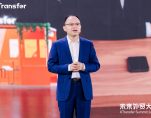
Bill Deng, Founder and CEO of XTransfer, speaks at the summit.

The summit explored how SME foreign traders can navigate global uncertainties. According to an XTransfer client survey, SME export performance remains optimistic this year. Despite geopolitical tensions and shipping disruptions, SMEs are reporting healthier payment collections and stronger bargaining power in international markets.

Serving Over 1 Million Enterprise Clients: Protecting Every Foreign Trader’s Global Dream with Fintech

Bill Deng, Founder and CEO of XTransfer, said, “SMEs are stabilisers of globalisation. Facing de-globalisation, geopolitical risks, and logistics volatility, they continue to show remarkable resilience. SMEs are more agile in adjusting market strategies while steadily improving pricing power and operational quality.”

Deng emphasised, “SMEs are the most capable force in global trade, and every foreign trader’s global dream deserves to be protected.” He added, “Through years of dedicated focus on SME cross-border payment pain points, XTransfer delivers secure, compliant, and efficient solutions to help more businesses go global. Since our founding, we have served over 1 million enterprise clients and continue to expand our local collection and settlement capabilities globally, optimising collection experiences and working capital efficiency.”

XTransfer’s pioneering Local Account service now covers nearly 60 countries and regions across Africa, Asia, Latin America, the Middle East, Europe, the Americas, Australia, and New Zealand, enabling buyers to pay sellers in local currencies and significantly boosting capital turnover.

AI and Global Risk Control Enhance Compliance Efficiency: TradePilot Drives Audit Automation

To address SMEs’ core needs for security, compliance, efficiency, and cost optimisation, XTransfer has ramped up fintech investments, scaling AI applications in risk control and business processes.

XTransfer has also built a unified global B2B cross-border trade settlement and risk management system to safeguard SME transactions. According to CIC, TradePilot is the world’s first and most advanced AI model for B2B cross-border trade payments. With 72 AI agents embedded in TradePilot’s review workflow, covering KYC onboarding, transaction authenticity verification, and ongoing AML monitoring, TradePilot delivers industry-leading performance in risk control accuracy and user experience.

Hashtag: #XTransfer #XTransferSummit #Crossborder #Payment #SMEs


The issuer is solely responsible for the content of this announcement.

XTransfer

XTransfer is the world’s largest B2B cross-border trade payment platform with over US$60 billion TPV in 2025, according to CIC. Founded in 2017 as one of the first payment platforms worldwide dedicated to B2B cross-border trade, we serve the largest customer base of over 1,000,000 registered SMEs globally.

We connect top-tier financial institutions directly to SMEs, the backbone of global trade, giving businesses of every size access to the same secure, compliant and seamless payment infrastructure once reserved for multinationals. As of March 31, 2026, we provide payment services across more than 200 countries and regions through partnerships with financial institutions, including some of the most established international banks around the world.

XTransfer has obtained required licenses in major hubs, including the Chinese Mainland, Hong Kong SAR, the United Kingdom, the United States, Singapore, the Netherlands, Australia and Canada.

For more information, please visit: https://www.xtransfer.com

By K Raveendran Spontaneous student protests across Uttar Pradesh, Uttarakhand and Madhya Pradesh are exposing a vulnerability conventional politics has been slow to recognise. Their importance lies not merely in the numbers gathering on streets or outside examination centres and government offices, but in the absence of the organisational structure that usually accompanies political mobilisation. […]

The article Leaderless Student Protests Pose New Challenge To National Politics appeared first on Latest India news, analysis and reports on Newspack by India Press Agency).

HONG KONG SAR – Media OutReach Newswire – 13 August 2026 – Bora Pharmaceuticals (“Bora”; TWSE: 6472; OTCQX: BORAY) today announced its financial results and operational highlights for 2Q2026 and provides full year outlook update.

2Q26 Business and Financial Highlights

  • Bora delivered historically record-high quarterly revenues of NT$5,889 million in 2Q26, up 47.2% quarter-over-quarter driven by broad-based operational momentum, with basic EPS of NT$4.36.
  • CDMO revenue growth and increased site utilization rates, along with strong growth in the rare disease business and a return to growth for generics business of the Pharma Sales operations lifted group profitability, with gross margin expanding to 41.3% from 36.0% and operating margin reaching 16.8% from 10.2% in 1Q26. Excluding one-time costs related to the Weider Global Nutrition transaction, operating margin was approximately 18%.
  • CDMO’s strong backlog of US$317 million as of end of 2Q26, another historical high following a strong quarter, signals that Bora’s core business continued to perform with higher demand.
  • Pharma Sales’ rare disease franchise continues to show double digit sequential growth and the increased demand from government channels during the quarter with stabilized pricing in DLS has lifted the generics business back to normal.
  • Reflecting Bora’s recent increase in investment in Sunway Biotech, from 35.97% to 42.27% and subsequent acquisitions of Weider Global Nutrition’s, the Company has introduced “Consumer Healthcare (CHC)” as a new segment in its revenue mix disclosure beginning this quarter. In 2Q26, revenues from CHC were NT$824.76 million in 2Q26, a 354.4% increase QoQ and 234.3% YoY, and contributed to 14% of the Bora Groups consolidated revenues, an all-time high.
  • Cash-on-hand reached an all-time high of NT$8,431 million as the Company was preparing for MacroGenics Inc.’s Rockville facility acquisition.
  • The Company has kicked off a group-wide AI in Manufacturing, BORA AIM, program aimed at improving process efficiency across sites, spanning engineering, quality and production. Bora has also signed a partnership with Insilico Medicine for AI drug discovery. The first 6 months will focus on beta version testing of the Bora AIM agents and AI champions to drive process consolidation.
  • Share capital increased 0.3% during the quarter from employee stock option exercise.


Mr. Bobby Sheng, Chairman of Bora Group, stated, “We are pleased to announce Bora Group’s return to strong operating profits and double to triple-digit growth on all key margins sequentially, as well as demonstrate that our soft 1Q26 performance was anomalous rather than structural. Our impressive sequential improvement was driven entirely by strong demand from both our CDMO and Pharma Sales businesses, with 2Q26 manufactured batches reaching 0.38 billion doses, led by increased commercial production in Maple Grove and Zhunan sites and a full quarter of operations in the Maryland injectable facility, while our flagship products DLS and VIGAFYDE® in Pharma Sales continues to secure leading market share.

Our focus right now is execution. CAPEX investments in our mature sites, including facilities in Taiwan and in Canada, continue to deliver operational leverage driven by gross margin expansion, and our recently acquired oral solid dose facility in Maple Grove continues to show stellar and impactful demand as we sign more projects. Our 12-month rolling backlog is at historic high in almost all our sites, despite projected manufacturing delays at our Maryland injectable facility as we diligently respond to FDA audit observations from a recent audit. Bora Group’s commitment to the fast-growing Biologics manufacturing industry took another big step as we look to integrate 12,000 liters of capacity, and 3 commercial products from our Rockville facility, as well as see revenue recognition from this acquisition starting Q3. As Bora’s CDMO footprint expands in the US, we continue to capture durable, high-value demand as customers increasingly prioritize supply security and onshore capacity.

In addition, we are seeing sustained growth and improved gross margins in the Vigabatrin franchise, our most important, rare disease franchise, thanks to renegotiations with our partner vendors. Accelerated state and government orders for generics products increased 2Q26 revenues and 6 new generics launches have also supported a more diversified generics portfolio. Together, the advancement in rare disease franchise and generics business has positioned Bora’s Pharma Sales business, operating under the name Upsher-Smith, in a far stronger state than it was just a quarter ago.

As announced in July, we are excited to be developing a group-wide AI in Manufacturing program, BORA AIM, aimed at improving process efficiency across sites, spanning engineering, quality and production. We also announced a partnership with Insilico Medicine to enhance our understanding of AI drug discovery and create more customized AI manufacturing platforms for AIDD small molecules. In the next 12 months, Bora Group will be ready to showcase some exciting AI-enabled CDMO platforms that will truly add value to our partners and sharpen the overall competitive advantages of Bora Group.

As our momentum carries Bora into the second half of the year, we expect margins of our flagship products in Pharma Sales and CHC businesses to hold steady on continuous revenue growth, and improved efficiencies in the CDMO business in addition to consolidation of new revenues from the Rockville facility.”

2Q26 Operational Achievements & 2026 Outlook


Global CDMO Operations

Revenues increased 30.3% year-over-year and 29.0% quarter-over-quarter including internal orders, and 33.0% and 40.2% external orders only, or NT$2,116.4 million. The growth was primarily driven by a strong rebound in injectables following the semi-annual maintenance in 1Q26 and same period last year, and demand acceleration overall as we continue to meet the increasing backlog.

CDMO business also signed a record high US$378.2 million in total external wins. Highlighted by a 10+2-year, multi product commercial contract in our Maple Grove facility with a new top-20 pharma company, and 14 new molecules from pre-commercial programs from multiple new customers. Bora is confident in its mid- to long-term growth trajectory as pharma and biotech companies continue to look for US based CDMOs as a part of their efforts to onshore US production and improve supply chain resilience.

During the quarter, 0.38 billion doses, or 109 molecules, were developed and manufactured. Contribution from the top 20 global pharmaceutical companies stood at roughly 30% and should increase drastically in the next 8 quarters.

Looking at 3Q26, the Company is highly optimistic, with our backlog having climbed to an unprecedented level even after a strong quarter of manufacturing output. We do anticipate some timing shifts in revenue recognition related to scheduled semi-annual maintenance at our Maryland injectable site, alongside targeted quality-enhancement activities in connection with observations on passive RABS (Restricted Access Barrier System) line received from an FDA audit that took place 2Q26. However, there has been no reduction in total commercial batch productions in 2026 as we speak and several existing clients have initiated transfers to the FlexPro isolator filling lines. RFP activity has risen, with the first GMP PPQ campaign starting in August. On the newest, isolator-based AST lines, factory acceptance testing (FAT) is planned for Q326, with qualification to follow in 2027, expanding our ability to onboard small-scale isolator programs, including tech transfers.

On biologics, Rockville facility revenue recognition started in the first month of 3Q26 and the site has confirmed that it is on track to deliver batch production volumes ahead of last year’s run rate of around 13 batches for the remainder of 2026. We anticipate one-time transaction costs from this acquisition of approximately 3% of the purchase price including legal and FA fee and transition related expenses as stated in the Transition Service Agreement. The Rockville acquisition expands biologics capacity and brings integrated drug substance (DS) and drug product (DP) capabilities under one roof, strengthening our end-to-end service offering and attracting more inbound opportunities and higher value conversion with cross selling opportunities for our injectable business.

For our strategic investment in Tanvex Biopharma, the main Bora Biologics platform company, although the business still operates at a loss, Tanvex has built a strong presence in international conferences, especially Bio International in the US in June. We have seen a positive uptick in pipeline from leading biotechs and heavy weight biopharmas, and stable demand for early-stage PD programs in Zhubei. The Rockville acquisition is expected to orchestrate and accelerate opportunities for Tanvex in the coming quarters.

Pharma Sales Operations

Revenues decreased 2.7% year-over-year and increased 30.4% quarter-over-quarter, arriving at NT$2,934.04 million in 2Q26. The year-over-year decrease was mainly due to a product rationalization program in 2025 that lead to the withdrawal of a basket of legacy generics products.

During the quarter, specialty and brand came in strongly, up 58.8% for the quarter QoQ and displayed almost 50% growth against 2025 run rate. The rare-disease Vigabatrin franchise demand is robust, and our continuous investment in the segment has resulted in much broader patient access compared to when we acquired Upsher-Smith 28 months ago. On coverage, we are on track to achieve year-end formulary goal of >50%, supported by more regional plans and strong physician adoption as they gain experience with VIGAFYDE®. The Company has also renegotiated contracts with suppliers, leading to improved gross margins for the franchise during the quarter and expects full economic contribution starting 3Q26. Simultaneously, the Company out-licensed its non-core assets, Stiripentol generics and 505(b)(2), during the quarter, fully capturing the economic value of these drug assets to enable fueled and renewed focus on core specialty and brand business.

The generics business returned to stability as Upsher-Smith successfully defended flagship product DLS. High value generics advanced 20.6% sequentially from downstream restocking, narrowing the year-to-date YoY decline against 2025 run rate to high teens.

Having executed our way through specialty and brand business growth and generics portfolio optimization, we have returned to the 2023–2024 peaks of Pharma Sales performance but with healthier and more resilient operating profits. As of now, Upsher-Smith sees 6 ANDA pending approval.

CHC Operations

Bora Group has increased holdings of Sunway Biotech to 42.27% through a private placement at $NT 596 million. Subsequently, Sunway completed the acquisition of Weider Global Nutrition (WGN), a global nutritional supplements company with offices in the US, Spain, and Germany and products sold in over 60 countries. Benefitting from the consolidation of WGN that started in May, Consumer Health business totaled NT$824.76 million in 2Q26, a 354.4% increase QoQ and 234.3% YoY. Focusing on longevity and sports nutrition, WGN’s distribution strength is expected to meaningfully contribute to the CHC business in 2026 and beyond and shall deliver vertical-integration synergies to Sunway’s existing ingredients’ manufacturing operations. Together, the WGN acquisition is expected to catapult Sunway Biotech into a leading global nutritional supplements company and substantially accelerate top and bottom-line improvements in the future.

Recent Investor Conference

Bora will host English online earnings call at 8:00 a.m. Taiwan time on Aug. 14th, 2026. The event will cover the Company’s 2Q26 financial and business results and 2H26 outlook.

English Online Earnings Presentation Link: https://teams.microsoft.com/meet/225504163505748?p=UyyncWl1CnOzjBCNKD

Bora will participate in Goldman Sachs 2026 CDMO day in Singapore in Sept. For 1:1 meetings with management, please contact your GS representative.

Bora 2026 Earnings Schedule

Q3 2026: Expected in the 2nd week of Nov 2026
Q4 2026: Expected in the 2nd week of Mar 2027

Hashtag: #BoraGroup

The issuer is solely responsible for the content of this announcement.

About Bora

Founded in 2007, Bora Pharmaceuticals (“Bora” or “the Company”, 6472.TW and BORAY.OTCQX) is a leading pharmaceutical services company with a vision and goal of “Contributing to Better Health All Over the World”. Operating under a “Dual Engine” model that integrates CDMO and commercial expertise, we empower pharmaceutical and biotech partners to optimize product development, accelerate launches, and scale supply to meet global patient needs. At the same time, we actively broaden R&D and sales infrastructure, focusing on niche and rare disease markets to improve patients’ quality of life.

By investing in talent, infrastructure, and biologics expansion, Bora continues to transform operations and achieve sustainable growth. Committed to making success “certain,” Bora sets new standards in the pharmaceutical and CDMO industries.

For more, please visit:

Disclaimer:

This document and the accompanying information may contain forward-looking statements. All statements regarding the company’s future business operations, potential events, and prospects (including but not limited to forecasts, targets, estimates, and operational plans) are considered forward-looking statements unless they refer to factual occurrences. Forward-looking statements are subject to various factors and uncertainties that may cause significant differences from actual results, including but not limited to price fluctuations, actual demand, exchange rate variations, market share, competitive conditions, changes in the legal, financial, and regulatory framework, international economic and financial market conditions, political risks, cost estimates, and other risks and variables beyond the company’s control. These forward-looking statements are based on current predictions and assessments, and the company disclaims any responsibility for future updates.


Standard Chartered has initiated coverage of Chainlink’s LINK token with a price forecast of $200 by the end of 2030, betting that rapid expansion in tokenised assets and decentralised finance will sharply increase demand for the blockchain network’s infrastructure. The projection implies an increase of roughly 25 times from the price near $8 used when the forecast was prepared. The bank has set an interim target of […]

Arabian Post Staff -Dubai Saudi Arabia has emerged among the world’s 10 leading destinations for private artificial intelligence investment, strengthening its position in a global race to secure capital, computing capacity and specialised talent. The World Development Report 2026, The Promise of Artificial Intelligence, places the Kingdom among a relatively small group of economies attracting substantial private investment into AI. The assessment comes as Riyadh directs more […]

Advertisements

Swedish artificial intelligence start-up Lovable has raised $400 million at a $13.3 billion valuation, doubling its worth in less than a year as demand grows for tools that let employees build software using natural-language instructions. The Series C financing was led by Menlo Ventures and the Scaleup Europe Fund, with participation from investors including Balderton Capital, Carmignac, Tencent, World Innovation Lab and Regent. The transaction lifts Lovable’s […]

XRP trading on Binance has entered a markedly calmer phase, with its 30-day realised volatility falling to about 0.34, the lowest level in roughly three months, as traders assess whether reduced price swings could set the stage for a larger market move. The decline represents a sharp reversal from June, when the same volatility measure climbed to about 0.53 amid heavier trading activity and wider price fluctuations. […]

China’s yuan is facing stronger appreciation pressure after coordinated US-Japan action lifted the yen and rippled through Asian currency markets, complicating Beijing’s efforts to support an economy where export strength contrasts with weak domestic demand.

The yuan has gained about 3.6 per cent against the dollar this year, making it one of Asia’s strongest-performing currencies. The advance has persisted despite falling Chinese government bond yields and a widening yield disadvantage against US Treasuries, conditions that would normally encourage capital to favour the dollar. Strong export receipts and increased conversion of dollar earnings by exporters have instead provided sustained support for the currency.

Pressure intensified after the US and Japan intervened to strengthen the yen at the end of July. The operation marked the first coordinated action by Washington and Tokyo to support the Japanese currency since 1998, following a slide that took the yen to four-decade lows. US authorities had also alerted major banks to be prepared for possible intervention through the Federal Reserve Bank of New York, highlighting Washington’s concern about excessive currency volatility.

The yen subsequently surrendered roughly half of its initial gains, but the intervention had broader consequences across Asian foreign-exchange markets. South Korea’s won, the Singapore dollar and the Taiwan dollar have shown relatively high correlations with yen movements, while several other regional currencies have been less sensitive. The spillover has reinforced a wider trend towards appreciation in currencies exposed to North Asian trade and investment flows.

For Beijing, the stronger yuan presents a complicated policy trade-off. Appreciation reduces the local-currency cost of imported commodities and can provide some insulation against inflation generated by energy prices. It can also create more room for monetary easing because policymakers need to worry less about triggering capital outflows or destabilising depreciation.

The cost is greater pressure on exporters at a time when foreign demand has become an increasingly important support for economic activity. China’s export machine has remained resilient while household consumption, property investment and parts of the private economy have struggled to regain momentum. A rising yuan makes Chinese products more expensive abroad and reduces the value of exporters’ overseas earnings when converted back into local currency.

The People’s Bank of China has appeared increasingly willing to moderate the currency’s advance. Daily yuan reference rates have been set weaker than market expectations at times, signalling a preference for slowing appreciation rather than allowing the currency to rise unchecked. China operates a managed exchange-rate system in which the central bank establishes a daily midpoint and permits the onshore yuan to trade within a defined band around that fixing.

The yuan traded around 6.75 per dollar on Wednesday after strengthening through the 6.80 level earlier this year. Exporters have continued selling dollars when the US currency rises, while central-bank guidance has kept the appreciation gradual. Market forecasts generally point towards further controlled yuan strength rather than a rapid revaluation.

The currency’s resilience highlights an unusual divergence inside China’s economy. Long-term sovereign yields have declined as investors price weak domestic demand and subdued inflation, while the yuan has strengthened because of trade surpluses and exporter dollar conversions. China’s current-account surplus has expanded significantly as manufacturing exports have outpaced imports and domestic spending.

That divergence could influence the timing of the next monetary-policy move. One scenario would see the central bank reducing its benchmark policy rate by 10 basis points to 1.3 per cent before the end of the year, using currency strength as protection against depreciation pressure. Expectations remain divided, however, with many economists anticipating unchanged rates through 2026 as policymakers assess inflation, financial stability and the effectiveness of previous easing measures.

July inflation data strengthened the case for additional support. Consumer-price growth slowed to its weakest pace in six months, while producer-price pressures eased, renewing concerns that deflationary forces could return if domestic demand remains subdued. Higher energy costs had previously reduced expectations for further easing.

Currency policy is also becoming more closely tied to trade tensions. China’s expanding manufacturing surplus has generated demands among trading partners for a stronger yuan, particularly as exports of vehicles, machinery, electronics and clean-energy equipment increase. A materially stronger exchange rate would weaken some of that competitive advantage but could also reduce political pressure surrounding trade imbalances.

Cognition AI has opened preliminary discussions with investors over a fresh capital raise that could value the fast-growing artificial intelligence coding company at at least $40 billion, marking another sharp escalation in investor expectations for autonomous software development tools. The talks remain at an early stage and the size, valuation and investor line-up could change before any transaction is completed. A $40 billion valuation would nevertheless represent […]

By K Raveendran Another session of Parliament has closed with an uncomfortable sense of déjà vu. Repeated adjournments, slogan-shouting, demonstrations inside and outside the chambers and legislation moving through amid uproar have again raised the question of whether Parliament is performing the function for which representative democracy created it. The problem is no longer simply […]

The article Parliament Is Losing The Argument To The Smartphone appeared first on Latest India news, analysis and reports on Newspack by India Press Agency).

BEIJING, CHINA – Media OutReach Newswire – 12 August 2026 – SOKOYO, a top manufacturer of solar street lights, has installed 252 sets of lighting units in QatarEnergy‘s solar power project in Ras Laffan and Masaieed in Qatar.

SOKOYO's installed in a municipal lighting project in an Asian country.
SOKOYO’s installed in a municipal lighting project in an Asian country.

Installation of SOKOYO‘s split solar street lights for the project being built by Samsung C&T Corp. was completed in July. The arrangement of solar panels was customized at the customer’s request for ease of maintenance.

“SOKOYO provided us with a specially customized solution for our power station,” said Ms. Kathy, senior procurement manager for Samsung. “The entire solar street lighting system consistently met our expectations for brightness, battery life and overall reliability.”

SOKOYO, founded in 2008, has manufactured more than 1 million lighting units installed in a wide range of settings across SoutheastAsia, Africa, the Middle East and Central Asia.

The company manufactures its own LED modules, solar panels, batteries, light housings and light poles. They have third-party certification for European Union and other safety and reliability standards, which qualifies them for export to global markets.

SOKOYO is regularly appointed to bodies that establish national and industry standards.

SOKOYO‘s product line includes all-in-one solar street lights, all-in-two solar street lights and split-type solar street lights. They can be controlled remotely with IoT technology to improve safety and efficiency. Using solar power makes them immune to disruptions in supplies of oil and gas.

As the industry evolves to focus on “system-level R&D,” SOKOYO is reducing customer costs by enhancing reliability and resistance to heat and cold. To improve efficiency, it is developing smart lighting and IoT applications. It is promoting modular production, intelligent manufacturing and standardized process management.

The research team has seven engineers, some with more than two decades of industry experience. They develop technology for a wide range of environments and customer needs.

SOKOYO has experience in markets including Thailand, thePhilippines, Pakistan, Saudi Arabia and Nigeria. It has developed technology to cope with heat, humidity, sandstorms and low light during extended rains, a challenge in central Africa and other areas.

In Uganda, SOKOYO supplied 1,000 light sets to help improve safety on a busy expressway between the capital, Kampala, and the eastern industrial center of Jinja. They provide the first nighttime lighting on a 22-kilometer section of road crowded with trucks, buses and motorcycles.

In Yemen and the United Arab Emirates, SOKOYO lights use LED modules developed to cope with heat, sun and sand.

The company supplied more than 2,000 light units to Saudi Arabia‘s planned high-tech city of NEOM as part of the Saudi 2030 Vision plan.

An aerial view of SOKOYO's industrial manufacturing park, supporting global B2B projects.
An aerial view of SOKOYO’s industrial manufacturing park, supporting global B2B projects.

Customers can use SOKOYO‘s test facilities to try out different light configurations. Lights can be tested on roads of up to four lanes in an1,100-square-meter darkroom. Designers and urban planners can ensure light is distributed effectively, eliminating dark areas on the road and improving safety.

Batteries are tested to confirm they resist crushing, heat and cold, vibration, overcharging or being dropped. LED modules are drenched in salt spray for up to 72 hours to make sure they resist corrosion.

SOKOYO has been chosen for bodies that formulated eight national and industry standards including the “General Technical Specification for Solar Photovoltaic Lighting Devices” in 2025 with definitions and standards for split-type and integrated solar devices.

SOKOYO products have third-party certification that they meet standards of the International Electrotechnical Commission (IEC) and other bodies.Its batteries meet the requirements of the CB scheme under the IEC, recognized in more than 50 countries. Tests confirm they withstand overcharging, high temperature, vibration, impact and short circuit.

The company‘s solar panels received IEC certification that they meet standards for electric shock protection, temperature changes, damp, heat, humidity, hail impact and other factors.

SOKOYO participates in efforts to improve the industry‘s reputation by promoting “zero false labeling” and reliable products that refuse to cut corners.

SOKOYO pays attention to the environment. Its products are designed to minimize light pollution and limit disruption for wildlife, stargazers and the public.

Hashtag: #SOKOYO

The issuer is solely responsible for the content of this announcement.

Arabian Post Staff -Dubai Moody’s Ratings has placed Binghatti Holding Ltd’s Ba3 rating on review for downgrade, signalling rising concern over the Dubai developer’s liquidity and its ability to generate sufficient cash as major debt obligations approach. The action covers Binghatti’s Ba3 corporate family rating and Ba3-PD probability of default rating. The company previously carried a stable outlook. The review reflects a sharp deterioration in unrestricted liquidity […]

Nvidia is joining forces with six of the world’s biggest investment groups to mobilise more than $500 billion for artificial intelligence infrastructure, creating financing platforms designed to expand access to the computing capacity underpinning the global AI boom. The chipmaker has signed memorandums of understanding with Apollo, BlackRock, Blackstone, Brookfield, Goldman Sachs and KKR. The firms plan to establish independent platforms that will provide dedicated pools of […]

Coinbase has chosen Abu Dhabi as its international base for tokenised securities after securing regulatory approval to arrange investment transactions and provide custody services within Abu Dhabi Global Market, accelerating its expansion beyond cryptocurrency trading into blockchain-based capital markets. The Financial Services Permission granted by ADGM’s Financial Services Regulatory Authority gives the US-listed crypto exchange the regulatory foundation to develop tokenised investment products from the emirate. Coinbase […]

By Dr. Nilanjan Banik The protesters at Jantar Mantar, whose protest is now over for the time being, had good reason to be angry. The NEET paper leaks are one symptom; the deeper problem is youth unemployment. Young and educated Indians account for a significant share of the unemployed, while underemployment remains widespread. At a […]

The article Beyond Incentives: Why India’s MSMEs Need Stronger Ecosystems? appeared first on Latest India news, analysis and reports on Newspack by India Press Agency).

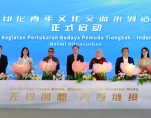
JAKARTA, INDONESIA – Media OutReach Newswire – 10 August 2026 – On August 6, the “Boundless Creativity, Connecting Youth” China–Indonesia Youth Cultural Exchange Series was held in Jakarta, Indonesia. The event was jointly hosted by the China Intercontinental Communication Center (CICC) and Indonesia’s GARUDA TV, with co-organized by Luoyang Radio and Television Media Group Co., Ltd. and Coocaa, a brand under Skyworth Group. More than 800 people attended the opening ceremony. Among them were representatives from government agencies, cultural circles, news media, and creative industries, as well as youth delegates from higher education institutions across both nations.

22bae0744311e06514b79d2900f

At the event, the exhibitions Her Bloom: A Digital Cultural Heritage Exhibition on Luoyang, the Divine Capital and the Indonesian leg of Emerging Forces, Boundless Horizons: A Global Touring Exhibition Series Featuring Young Chinese Artists officially opened. The event also launched a China–Indonesia media organization, FAST Media Alliance, the Indonesian broadcast of the micro-drama Her Bloom, and the China–Indonesia Visual Project—Nanyang Film Festival, among other collaborative initiatives.

In her remarks, Anindita Kusuma Listya, Special Advisor to the Minister of Culture for Cultural Diplomacy and Cultural Industries at Ministry of Culture of Indonesia, expressed her strong appreciation for the event’s focus on youth connectivity, digital innovation, and media co-creation. She noted that Indonesia has consistently attached great importance to cultural exchanges and cooperation with China, encouraging young people, arts professionals, media organizations, and cultural and creative enterprises from both countries to engage in regular, in-depth, and multidimensional collaboration. As nations with diverse civilizations, Indonesia and China enjoy vast potential for cooperation and closely aligned development needs in cultural heritage preservation, digital cultural and creative industries, film and television production, and youth innovation.

Wang Siping, Counsellor at the Chinese Embassy in Indonesia, said in his remarks that cultural exchanges and cooperation between China and Indonesia have yielded fruitful results in recent years, while people-to-people exchanges have continued to gain momentum. He expressed the hope that young people from both countries would engage more frequently and that more events such as “Boundless Creativity, Connecting Youth” would be organized and widely attended. China is ready to pursue more cooperation with Indonesia and share more opportunities. China also stands ready to work hand in hand with Indonesia to cultivate the fertile ground of people-to-people exchanges, expand channels for youth engagement, strengthen the “people-to-people pillar” of bilateral relations, and advance the high-quality building of a China–Indonesia community with a shared future.

Al Busyra Basnur, Chairman of the Indonesia–China Friendship Association, noted in his remarks that both China and Indonesia possess abundant pools of young talent. Cooperation among outstanding young people from the two countries, he said, will not only deepen bilateral relations but also inject fresh momentum into regional prosperity, technological progress, and the building of a more peaceful and closely connected world. He expressed his hope of holding in-depth discussions with all parties during the subsequent activities on such issues as advancing China–Indonesia relations, talent development, and educational exchanges, with a view to identifying practical avenues for cooperation.

Arianto Surojo, Consul General of Indonesia in Guangzhou, said that the event was innovative in concept and far-reaching in significance, providing a high-level platform for cultural exchanges between Indonesia and China in the new era. Youth-oriented, digital, and innovative forms of exchange such as this, he noted, enable people—especially young people—in both countries to gain a more direct understanding of one another and forge deeper connections. They also help elevate cultural exchanges between Indonesia and China from the superficial to the substantive, enriching the content of bilateral people-to-people cooperation. “When young people thrive, nations thrive; when young people are strong, nations are strong,” he said. “Let us embrace the spirit of exploration and innovation and jointly write a new chapter in the friendship between our two countries.”

Li Mian, Deputy President of CICC, said that CICC has long worked with media organizations in Southeast Asia to promote cultural exchanges. Over the years, CICC has actively advanced audiovisual cooperation with mainstream media outlets in Indonesia and elsewhere in Southeast Asia through the television program UPanda Cinema. Through this event, CICC has launched such collaborative projects as the China–Indonesia media organization, FAST Media Alliance, the broadcast of the micro-drama Her Bloom, and the China–Indonesia Visual Project. These initiatives aim to tell the story of China–Indonesia friendship, share digital technologies and high-quality resources, and promote deeper, more substantive cooperation between the two countries.

Atika Suri, Editor-in-Chief of Indonesia’s GARUDA TV, said that the event, focusing on youth exchange and cultural empowerment, carried out a rich array of activities, including digital cultural heritage exhibitions, joint visual exhibitions, and touring exhibitions of young artists. It not only carries forward the traditional friendship between Indonesia and China, she said, but also represents an active exploration of new models and pathways for people-to-people cooperation in the new era.

Li Jing, Vice President of Coocaa, a Skyworth Group company, and CEO of Coolita, said that emerging technologies such as artificial intelligence, smart television, and FAST are driving the global media industry into a new digital era, creating fresh opportunities for cultural communication and international media cooperation. During the event, Coolita and CICC jointly launched the China–Indonesia media organization, FAST Media Alliance. Going forward, they will work with Indonesian media organizations and partners such as Tencent Cloud to explore innovative models in artificial intelligence, FAST, and digital content distribution; drive the digital transformation of traditional media; and promote innovation in the digital cultural industries of both countries.

The event also featured themed roundtable discussions bringing together esteemed institutions and figures. Participants included China National Archives of Publications and Culture, Tencent Cloud, “Honor of Kings”, the acting head of the Institute of Social Sciences and Humanities (ISSH) at Indonesia’s National Research and Innovation Agency, the University of Indonesia, LSPR Institute of Communication and Business, the Jakarta Film Commission, the renowned game studio Anantarupa Studios, and the visual creative studio Mono Studio. They were joined by Indonesian contemporary painting master Sidik Martowidjojo (Ma Yongqiang) and Chinese young artist Ren Zhe.

The issuer is solely responsible for the content of this announcement.

Arabian Post Staff -Dubai Flowdesk has secured a full broker-dealer licence from Dubai’s Virtual Assets Regulatory Authority, allowing its local entity to provide regulated digital-asset services to qualified and institutional investors from the emirate. The authorisation for Flowdesk Omega FZE completes a regulatory process that moved from in-principle approval in June to full licensing in August. It gives the digital-asset trading and technology company an operating base […]

MARA Holdings sold about 23,093 bitcoin for $1.6 billion during the first half of 2026, marking a major reversal from the cryptocurrency miner’s earlier strategy of accumulating and retaining virtually all the bitcoin it produced. The figure, disclosed in the company’s quarterly regulatory filing, represents cumulative sales during the six months ended June 30 rather than a single transaction carried out on Monday. Social-media posts describing the […]

Arabian Post Staff -Dubai Qatar’s inward foreign direct investment rose 3.3% in the first quarter of 2026 to QAR172.2 billion, while the country’s investments abroad climbed 3.5% to QAR221.7 billion, strengthening signs of expanding cross-border capital activity. The figures, covering January to March, show foreign investment positions increasing on both sides of Qatar’s balance sheet as Doha pursues a strategy of attracting international capital while expanding its […]

Yemen’s Houthi movement said it attacked Saudi Aramco’s Jazan refinery with a drone on Sunday, escalating a confrontation that has again placed the kingdom’s energy infrastructure and Red Sea shipping routes under pressure. Saudi authorities confirmed that a fire broke out at the Aramco facility in Jazan, in the kingdom’s southwest, and said emergency teams extinguished it. No injuries were reported. Saudi officials did not immediately confirm […]

AI Financial Corp has sold its main operating subsidiary for a $12 million secured promissory note and shares in the buyer, marking a dramatic reversal for a fintech company that surged past a $1 billion market valuation after tying its fortunes to the Trump family’s cryptocurrency venture. The Las Vegas-based company, formerly known as ALT5 Sigma Corp, completed the sale of Quebec-based ALT 5 Sigma Canada Inc […]

Beijing has been designated the UNESCO-UIA World Capital of Architecture for 2029, placing the Chinese capital at the centre of a global programme examining how architecture and urban planning can create more sustainable and liveable cities. UNESCO Director-General Khaled El-Enany approved the designation following a recommendation from the Joint UNESCO-International Union of Architects Committee for the World Capital of Architecture, chaired by French architect Dominique Perrault. Beijing […]

VISHNU RAJA
RYO YAMADA
HITORI GOTOH
IKUYO KITA