News related to
Chinese

Court filings in the Chapter 11 case for collapsed exchange FTX suggest that users in 49 jurisdictions may see their claims disputed or denied over local crypto restrictions. A filing submitted on 2 July to the Delaware bankruptcy court outlines a new “hold‑and‑review” process, halting distributions to users in areas with bans on crypto trading or restrictions on offshore platforms.

FTX’s trustee, along with legal counsel, will evaluate whether paying out creditors in these jurisdictions violates local laws. Notices will then be issued to affected users, granting them at least 45 days to challenge their classification. Absent a timely response, claims and any accrued interest will be forfeited to the estate.

Although users in these 49 jurisdictions represent just 5% of approved claims, the financial exposure is heavily weighted. Over 82% of that total value originates from mainland China. China accounts for the vast majority of claims in what FTX labels “potentially restricted jurisdictions”. Advocates warn that most Chinese claimants may not recover any funds.

FTX’s court motion says it will seek legal opinions for each jurisdiction before approving any payout. If counsel concludes local law prohibits the disbursement, those claims will be formally challenged. The legal framework treats such claims as “disputed,” pending approval or denial of their status. Distributions will be suspended until those claims are resolved.

Affected users must submit sworn statements confirming acceptance of US court jurisdiction to pursue objections. Upon objection, the trustee will petition the court to determine if exclusion is justified. Lack of objection will result in automatic forfeiture.

The list of 49 jurisdictions includes not only China, but also countries such as Nigeria, Russia, Egypt, Saudi Arabia, Andorra, Fiji and Zimbabwe. That breadth reflects the wide global footprint of FTX prior to its collapse.

Chinese users have responded with alarm, exploring legal avenues in the US. One affected claimant, identified as “Will,” told media that though the crypto ban in mainland China prevents trading, holdings remain legal and ownership rights should entitle them to fiat reimbursement in US dollars. He has engaged a New York attorney to counter FTX’s position on wire transfers and jurisdictional exclusion.

Some creditors are studying whether to transfer or sell their claims through entities in compliant jurisdictions, though it remains unclear whether such mechanisms will resolve legal barriers.

FTX Recovery Trust reported an overall decline in disputed claims—from US $6.5 billion to US $4.6 billion—after approving $1.8 billion in claims and expecting another $2.7 billion to be cleared. Approved claim distributions have reached approximately $8.3 billion. This new policy specifically targets the subset linked to restricted jurs, leaving billions in limbo.

Legal experts suggest the court’s decision could set precedent for how bankruptcy courts manage cross‑border crypto claims when local compliance is at risk. FTX is therefore seeking judicial approval to formalise this tailored procedure.

Critics argue the move undermines proportional equity. Victims from major markets like China, Nigeria and Egypt, who collectively hold substantial unrationalised stakes, now face potential complete exclusion. These developments raise concerns about transparency and fairness in the global recovery process.

FTX’s reorganisation plan approved in October 2024 allows repayment of up to US $16.5 billion to customers. It prioritises accounts holding US $50,000 or less under the terms of the Chapter 11 order, but regional legal hurdles may override the general scheme.

Trustee Sunil Kavuri summarised that each claim will proceed only with a supportive local legal opinion. If the opinion concludes a payout contravenes domestic laws, the claim will be formally disputed and may be permanently disallowed.

Alibaba Cloud has unveiled its third data centre in Malaysia and confirmed plans for a second facility in the Philippines, deepening its infrastructure presence in Southeast Asia. The Malaysian centre became operational on 1 July 2025, while the Philippine hub is scheduled to launch by October 2025. These moves are part of Alibaba’s broader efforts to bolster cloud and AI services across the region.

Growth in cloud demand and the strategic importance of Southeast Asia underpin this expansion. Alibaba Group’s cloud division has embarked on a $52 billion investment over the next three years to build a unified global cloud network, spanning Asia, the Middle East, Europe and the Americas. Southeast Asia has emerged as a pivotal battleground as enterprises accelerate AI adoption and seek resilient digital infrastructure.

At a summit in Singapore marking Alibaba Cloud’s tenth anniversary in the city-state, Eddie Wu, CEO of Alibaba Cloud, highlighted the company’s strategy: “Globalisation is Alibaba Cloud’s long‑term strategy,” he said, adding that the company would “accelerate the development of its global cloud computing network”. These statements reinforce Alibaba’s ambition to deliver end‑to‑end cloud services, spanning compute, storage, networking and AI capabilities.

This announcement follows earlier infrastructure roll‑outs across Asia. The company deployed a second data centre in South Korea in June 2025 and launched new regions in Thailand and Mexico in the first half of the year. Strategic market withdrawals from Australia and India in 2024 appear to be counterbalanced by intensified investment in high‑potential markets.

Southeast Asia’s accelerating digital transformation is creating rising demand for secure, scalable cloud services. Malaysia, with its growing ecosystem of startups and tech‑savvy enterprises, will now benefit from three Alibaba Cloud zones, an improvement in redundancy and local connectivity. The Philippine expansion addresses growing demand in Manila and surrounding urban centres, where cloud adoption is being propelled by fintech, e‑commerce, and the BPO sector.

At the Singapore summit, Alibaba also launched its AI Global Competency Centre, designed to support over 5,000 businesses and 100,000 developers. The centre offers access to advanced AI models, labs and infrastructure support. These investments aim to accelerate enterprise AI adoption by providing both tools and training through partnerships with more than 120 universities, aiming to train 100,000 AI professionals annually.

In addition to infrastructure, Alibaba Cloud is upgrading its cloud offerings. The ninth‑generation intel‑based Enterprise Elastic Compute Service will roll out across Malaysia, the Philippines, Japan, South Korea, Thailand, UAE, Germany and the UK from July. Enhancements to its Data Transmission Service and Platform for AI demonstrate a push to simplify deployment of large language models and accelerate inference capabilities.

Competitive pressure in Southeast Asia is intensifying, with other hyperscalers—AWS, Microsoft Azure, Google Cloud—announcing new regions and services. Alibaba’s bets on localised data centres, AI‑centric products and talent development programmes are its response to positioning itself as a regionally integrated cloud‑AI partner.

Regulatory headwinds and trade tensions, particularly restrictions on Chinese cloud firms, lend further urgency to Alibaba’s diversification strategy. By embedding infrastructure in Southeast Asia, the company aims to mitigate geopolitical risk, offer compliant local services and deliver low‑latency performance.

Corporate results reflect this momentum: Alibaba Cloud has reported double‑digit year‑on‑year growth in AI‑related product revenues for six consecutive quarters, with Q4 cloud revenue hitting CNY 31.7 billion and quarterly growth of 13%. These figures position the unit as the fastest‑growing segment within the broader Alibaba Group.

Tech analysts and regional partners have praised the expansion as timely. “These deployments will significantly improve resilience, latency and service coverage across key markets,” remarked a Southeast Asia‑based CIO. A telco executive added that local data centres are crucial to scaling AI‑powered services like real‑time analytics, IoT and smart city infrastructure.

Channel partners in Malaysia and the Philippines, including telcos and systems integrators, anticipate accelerated digital transformations. Industry groups reported a surge in enquiries following the Malaysian centre’s opening, particularly from manufacturing and education sectors. Cloud‑native startups welcomed the news, viewing the increased compute availability as essential to scaling AI‑driven products.

Optimising energy use and sustainability is also part of the plan. Alibaba’s “Energy Expert” ESG‑focused reporting tool integrates AI into energy management. This aligns with industry benchmarks that 84% of leaders see green AI as important, although 69% are still at early adoption stages. Emerging green data centre practices—including renewable power sourcing and efficient cooling—are expected to feature prominently in the Southeast Asian roll‑outs.

The Malaysian data centre opens amid strong macro trends: Malaysia’s digital economy was projected to grow at over 10% annually through the next five years, while Philippine cloud adoption is forecast to grow at a similar rate, driven by government digitalisation policies and enterprise cloudisation. As Alibaba deploys this enhanced infrastructure, both nations are expected to see AI‑centred cloud services gain momentum in verticals ranging from finance to manufacturing.

HAIKOU, CHINA – Media OutReach Newswire – 3 July 2025 – This summer, journalists and photographers from the United States, Japan, South Korea, Spain, the United Arab Emirates, and other countries gathered at China’s Hainan Free Trade Port, experiencing firsthand the vibrant pulse of its industrial development. The international media team immersed itself in the colorful experience that the “cool island” of Hainan offered in summer. (Photo […]

President Trump has confirmed that the United States and Vietnam have reached a trade agreement, with a detailed framework now in place while formal terms await finalisation. The accord suspends the 46 per cent reciprocal tariff on Vietnamese imports, originally imposed in April, and paves the way for expanded market access and tighter controls on rerouted Chinese goods. Negotiations were fast-tracked to meet the looming July 9 deadline, when the […]

By Nitya Chakraborty Prime Minister Narendra Modi faces a tough task in improving India’s image as defender of the interests of Global South at the coming meeting of the BRICS at Rio de Janeiro in Brazil on July 6 and 7 which he will be attending. The 17th BRICS summit will be hosted by Brazil […]

Mubadala Investment Company is set to acquire a 30 per cent stake in Loscam International, a move that significantly strengthens its foothold in Asia‑Pacific’s logistics and packaging sector. The agreement positions Mubadala alongside existing shareholders Trustar Capital, FountainVest and Sinotrans Limited, aligning sovereign wealth capital with a proven regional operator. The deal revolves around a share purchase agreement dated 26 June 2025, under which Mubadala, via its wholly owned Abu Dhabi […]

Chinese automakers secured a record share of Europe’s hybrid-car segment in May, commanding more than 9% of hybrid sales and an equivalent share of the electric-vehicle market, according to Dataforce. Including internal-combustion models, Chinese-branded registrations surpassed 5% of Europe’s new-car market—an unprecedented milestone. This surge is driven by brands like BYD and SAIC’s MG, which continue to reshape the continent’s automotive landscape.

China’s push into Europe is gaining momentum, with JATO Dynamics reporting that Chinese brands more than doubled their overall market share in May to 5.9%, up from 2.9% a year earlier. These gains are occurring despite EU import tariffs on Chinese battery EVs, which have prompted manufacturers to pivot towards plug-in hybrids and full hybrids—segments not subject to tariffs.

MG held its position as Europe’s top-selling Chinese marque in May, registering 29,400 vehicles, a 30% increase year-on-year. BYD’s growth was even more dynamic, with registrations skyrocketing by nearly 400%, lifting it to just 40 units shy of Tesla’s European sales during the month.

Electric vehicle registrations across the EU rose 25% year-on-year in May, reaching 142,776 units. Plug-in hybrids saw an even sharper surge, up nearly 47% to 87,301 units. Increased consumer appetite for hybrids has powered Chinese-branded sales, enabling brands to bypass non-EV tariffs while entering the market with competitive pricing.

BYD’s strategy appears effective. Dataforce identifies that Chinese-led auto makers captured 8.9% of Europe’s EV market in April—the highest share since the summer of 2024. In addition, BYD’s global sales figures show strong overseas traction, with 89,047 new-energy vehicles shipped to international markets in May, marking a sixth consecutive record month. Notably, BYD’s total NEV sales hit 382,476 in May, reflecting a 15% year-on-year increase.

European consumers are responding to Chinese offerings that combine affordability, feature-rich builds, and tariff-smart powertrains. In-car digital features, such as BYD’s karaoke system or advanced infotainment, are often cited by analysts as differentiators. Models such as BYD’s Seal U, Dolphin, MG’s ZS hybrid, and MG3 urban hybrid are winning particular attention. The Seal U has shifted about 12,400 units this year to date; the Dolphin EV saw around 4,500 sales in the same period. MG’s ZS hybrid, priced at approximately £30,000, has outsold Tesla’s Model Y in early 2025, while the MG3 hybrid has added another 15,200 units to MG’s tally.

Tesla’s foothold in Europe is diminishing. EV registrations for Tesla fell 28% in May to 14,055 units, and the brand has now seen five straight months of declining sales in the region. Tesla’s European market share has dropped from 1.6% to under 1%, with significant year-on-year decreases—45.2% in the EU and 37.1% in the wider region including the UK and Switzerland.

Beyond BYD and MG, other Chinese manufacturers are making steady inroads. Brands like Chery, Jaecoo, Omoda, Geely-owned Polestar, and Leapmotor have launched models across Europe. Leapmotor’s T03 city EV, sold in partnership with Stellantis, registered about 2,500 units in early 2025. Polestar 4 delivery has doubled to over 9,000 units, a figure bolstered by its luxury EV market position. JATO data also highlights Chery affiliates Jaecoo and Omoda expanding beyond their initial markets, with Jaecoo registering 7,449 units and Omoda 4,213.

Chinese carmakers’ strategic pivot addresses barriers head-on. WardsAuto explains this shift from BEVs to hybrids as a direct response to both EU tariffs and growing demand for PHEVs. PHEV sales in Europe surged by 534% year-on-year, while BEVs rose 41%. Around a third of Chinese-sourced registrations now utilise hybrid powertrains.

European brand loyalty is being reshaped. The global proliferation of Chinese NEVs is contributing to Europe’s EV sales reaching record 1.6 million units by May—27% ahead of last year—with massive growth in southern Europe, including a 72% increase in Spain. Analysts caution that without swift adaptation in pricing, tech, and product strategy, legacy European brands risk further erosion of market share through the 2030s.

While European consumers are warming to Chinese vehicles, an EU probe into state subsidies lingers, casting a strategic shadow. China denies allegations. For now, market data reveals that Chinese automakers have formulated a dual-pronged approach—introducing advanced PHEVs and hybrids to outflank tariffs and strategically pricing BEVs for maximum impact.

This acceleration of Chinese brands in Europe is reframing competition. BYD’s quadrupling of sales over four months and MG’s expanding dominance among Chinese marques demonstrate a transformative shift. Tesla’s slowdown and mounting EV and hybrid demand mark a turning point—one in which Chinese manufacturers are not just participants, but increasingly prominent shapers of Europe’s automotive future.

Advertisements

“Yuyuan Lantern Festival 2025” Lights Up Bangkok to Celebrate 50 Years of Thai–Chinese Diplomatic Ties BANGKOK, THAILAND – Media OutReach Newswire – 1 July 2025 – ICONSIAM, the global landmark along the Chao Phraya River, joins hands with Shanghai Yuyuan Tourist Mart Group, the legendary host of China’s most prestigious lantern festival to present the first-ever Yuyuan Lantern Festival in Thailand. Titled “Spirit of Mountains and Seas […]

By Nantoo Banerjee The techniques of traditional warfare seem to be fast changing. Attack drones are increasingly playing a significant role in military aggression alongside missiles. The 12-day Israel-Iran war and the ongoing Russia-Ukraine battle showed how devastating the role of drones in modern wars is. In one of the most daring attacks, Ukraine said […]

STUTTGART, GERMANY / TOKYO, JAPAN – Media OutReach Newswire – 24 June 2025 – Porsche Design Tower Bangkok emerges as a defining statement of excellence in luxury automotive-inspired living. As Asia’s first and the world’s third Porsche Design Tower, this landmark development welcomes Japanese connoisseurs and collectors to an exceptional experience. Redefining Ultra-luxury Rising above Bangkok’s sophisticated Thong Lo district the development introduces just 22 masterfully crafted […]

A Singapore court has postponed the trial of three men accused of illegally redirecting Nvidia AI chips to China until 22 August, after prosecutors stressed the need for additional time to analyse fresh documents and obtain international cooperation. The adjournment allows police to deepen their review of evidence and reach out to overseas authorities for responses.

Charged with fraud, the defendants—Singaporeans Aaron Woon Guo Jie, 41, and Alan Wei Zhaolun, 49, along with Chinese national Li Ming, 51—stand accused of falsifying end‑user information to secure servers during purchases in 2023 and 2024. Those servers, allegedly equipped with high-end Nvidia chips, were then shipped via Singapore to Malaysia before possibly continuing to China. Political pressure surrounds the case, as the United States banned exports of leading-edge chips to China in 2022 over military and intelligence concerns. A senior U.S. official has asserted that DeepSeek, the Chinese AI firm implicated, supports military and intelligence operations.

Home Affairs Minister K. Shanmugam confirmed that Singapore authorities pursued the investigation independently after an anonymous tip-off, and preliminary findings indicate the servers may indeed contain Nvidia’s chips. The equipment, originally sourced from Dell Technologies and Super Micro Computer via Singapore‑based firms, was rerouted to Malaysia, though the final destination remains uncertain.

This case forms part of a broader probe involving 22 individuals and companies alleged to have falsified end‑user data in order to bypass export restrictions. Singapore’s position as a regional invoicing hub—recording 18% of Nvidia’s fiscal year revenues despite accounting for less than 2% of physical shipments—underscores its vulnerability as a transit point in such schemes.

Observers note that policing such complex supply chains is increasingly difficult, especially when high‑performance AI hardware carries dual-use potential with applications in advanced military or surveillance systems. Singapore’s legal actions and multilateral engagements will be closely watched as the court reconvenes late in August.

U.S. former President Donald Trump has announced that a group of “very wealthy people” is set to acquire TikTok’s U.S. operations, with identities expected to be disclosed in approximately two weeks. He stated that the sale would likely require approval from China’s President Xi Jinping, whom he anticipates will greenlight the transaction.

This development follows an extension of the deadline — now set for mid‑September — under a 2024 law mandating that ByteDance divest its U.S. TikTok assets or face a ban. Trump granted this third 90‑day reprieve on 19 June, citing negotiations and U.S. investors’ desire to maintain the app while safeguarding American user data.

The Protecting Americans from Foreign Adversary Controlled Applications Act, passed in April 2024, requires a “qualified divestiture” or risk removal from U.S. app stores. ByteDance challenged it in court, but the Supreme Court upheld its constitutionality in January 2025. TikTok was removed temporarily before Trump’s administration issued executive orders delaying its enforcement.

Trump reversed his earlier stance — once favouring a complete ban — after gaining a large TikTok following during his 2024 campaign. He credited the platform with boosting his appeal among younger voters.

A consortium led by Oracle, with interest from firms such as Blackstone, Amazon and Walmart, reportedly lost momentum this spring when China refused to approve the proposed transaction. The impasse was linked to Trump’s threat of tariffs, used as negotiating leverage.

Several potential bidders have emerged in the course of discussions. Notably, real‑estate magnate Frank McCourt has confirmed he remains ready to support a $20 billion bid through his group, Project Liberty. Other names associated with interest include Kevin O’Leary, former Activision Blizzard CEO Bobby Kotick, YouTuber Jimmy Donaldson — known as MrBeast — and former Treasury Secretary Steve Mnuchin.

Negotiations have involved U.S. Vice‑President J.D. Vance’s office and TikTok, which has pledged to continue working with U.S. officials and expressed gratitude for the extensions. ByteDance has stated that any deal would require compliance with both U.S. and Chinese legal frameworks.

As the mid‑September Reuters‑mandated deadline approaches, Trump’s timeline for announcing the buyer coincides with intensifying public and legal scrutiny. Critics, including Senator Mark Warner, argue that repeated extensions exceed presidential authority and compromise U.S. national security.

Trade expert Joel Thayer noted that even if the app is sold without its proprietary algorithm, the core TikTok experience could remain affordable — possibly undervalued compared to its full potential.

Approval from China remains the primary hurdle. Trump said securing Xi Jinping’s consent will be vital to finalising the transaction. Analysts suggest that any concessions — including a rollback of U.S. tariffs — may be part of a broader trade‑off tied to China’s agreement.

TikTok continues to operate in the U.S. ahead of the deadline, with its managers asserting commitment to user safety and asserting they have no intention of relinquishing presence in the market.

A new Qingdao Overseas Integrated Service Centre launched at the China‑Arab Business Forum in Qingdao is set to deepen commercial ties between China and the Gulf region by enhancing the current $400 billion trade corridor.

Abdulla Albasha Alnoaimi, UAE commercial attaché to China, and Zeng Zanrong, Qingdao’s municipal party secretary, formally unveiled the centre, established by SepcoIII Electric Power Construction Co and Hisense Group. Drawing on their extensive foothold in the UAE and the broader Middle East, the centre is intended to act as a bridge to support Chinese firms entering Arab markets.

At the forum, 40 projects worth $5.93 billion were signed, spanning high‑end equipment, new energy, advanced materials and next‑generation information technology. These agreements signal a deliberate shift towards elevating the technological content and sophistication of trade between the regions.

Bilateral trade between China and Arab countries reached more than $400 billion in 2024, compared to just $36.7 billion in 2004, marking a ten‑fold rise over two decades. Saudi Arabia and the UAE led these exchanges, recording $107.53 billion and $101.838 billion respectively in 2024, with the latter growing by 7.2 per cent year‑on‑year.

Mohammed Saqib, secretary‑general of the CHIMENA Business Council, emphasised the centre’s role in aligning public and private sectors to drive economic cooperation, cultural exchange and joint investment initiatives. He noted it will act through mechanisms such as overseas industrial parks, procurement matching and international exhibitions.

China’s expansion into the Gulf forms part of its broader geopolitical strategy to diversify trade alliances and reduce dependency on Western markets, especially the US. Chinese firms are now deeply involved in infrastructure development across the MENA region, including ports, industrial zones, and renewable energy projects.

The forum drew 465 multinational firms, including 135 from the Fortune Global 500 and 330 leading industry enterprises across 43 countries. Three focused matchmaking sessions brought together over 300 Chinese companies with counterparts in Egypt, the UAE and Saudi Arabia.

Co‑hosts of the event included the Qingdao municipal government, China’s Ministry of Commerce and the Shandong provincial department of commerce, signalling full institutional support and coordination.

With its strategic location in the UAE, the centre is expected to catalyse an export‑oriented alliance, supporting Chinese firms in sectors such as energy, manufacturing and new materials, as well as bolstering the implementation of the Belt and Road Initiative across Gulf markets.

This initiative aligns with a historical trajectory of Sino‑Arab exchange, tracing back over two millennia via the Silk Route. Contemporary developments reflect a sharpened focus on innovation‑driven partnerships.

The unfolding dynamics underscore a growing economic interdependence between China and Gulf states. The QOISC adds an institutional anchor to sustain momentum, foster deeper investment flows, and integrate advanced technology and green energy into bilateral commerce.

However, observers caution China must continue to navigate geopolitical sensitivities, particularly in managing strategic competition with the US and ensuring sustainable and balanced partnerships that benefit local economies.

Australia’s earnings from mining and energy exports are set to decline over the coming years, with rising gold revenues unable to fully offset weak demand and price falls in iron ore, liquefied natural gas and coal. Government projections show a fall from A$415 billion in 2023–24 to A$385 billion in 2024–25, and further to A$352 billion by 2026–27. The Office of the Chief Economist highlights that surplus global supply—particularly in […]

Demand for physical gold is diverging sharply across regions, with US investors cashing in on their bullion holdings while Asian buyers ramp up their purchases. Data shows US retail demand for gold bars and coins dropped to roughly 19.3 tonnes in the first quarter of 2025 — a five‑year low, down 22% year‑on‑year — as Americans took advantage of record prices to realise gains. Meanwhile, in Asia, […]

Senate Republicans have advanced a version of President Trump’s sweeping tax and spending bill that would accelerate the end of several clean‑energy incentives, prompting fierce criticism from Elon Musk, who warned the proposal threatens millions of jobs and harms future industries. The legislation aims to eliminate the federal $7,500 tax credit for new electric vehicles and a $4,000 credit for used models by September 30, 2025, and […]

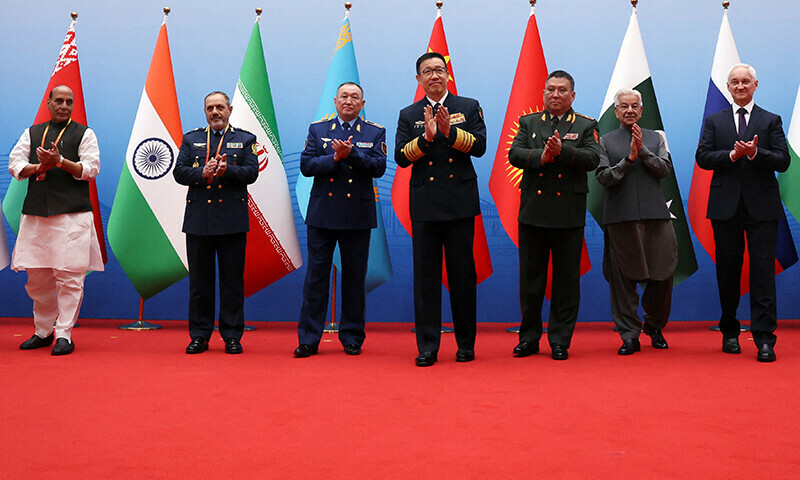
By Nitya Chakraborty India’s total diplomatic isolation was in show in the Shanghai Cooperation Organisation (SCO)’s defence ministers meet in Qingdao city in China on June 25 and 26 when a joint statement was prepared calling upon the members to jointly fight terror but there was no mention of Pahalgam killings on April 22 while […]

NVIDIA Corp is a equity in the USA market. The price is 154.31 USD currently with a change of 6.45 USD from the previous close. The latest trade time is Thursday, June 26, 17:06:55 +0530. Nvidia Surpasses Microsoft to Reclaim Global Valuation Crown Nvidia has overtaken Microsoft to retake its position as the world’s most valuable publicly traded company, with a market capitalisation reaching approximately $3.77 trillion. The […]

SINGAPORE – Media OutReach Newswire – 25 June 2025 – Six trade associations and professional membership bodies have come together under a unified collaboration, known as the Alliance, to officially launch the full-scale Professional Services (PS) Centre in Shanghai today. The Alliance comprises the Institute of Singapore Chartered Accountants (ISCA), the Association of Small & Medium Enterprises (ASME), the Institute of Valuers and Appraisers, Singapore (IVAS), the […]

Trellix’s Advanced Research Center has documented a red team exercise named OneClik, simulated Advanced Persistent Threat tactics against entities within the energy, oil, and gas sectors. The red team employs sophisticated phishing lures and exploit Microsoft ClickOnce, a.NET deployment tool, to execute malware under the guise of trusted applications. This campaign exhibits hallmarks consistent with Chinese-affiliated threat actors, according to the researchers. Phishing emails played a central […]

BEIJING, CHINA – Media OutReach Newswire – 24 June 2025 – On June 19, the 3rd Wave Music Awards – Honor Ceremony concluded splendidly at the Beijing Performing Arts Center. Initiated by the Wave Music Committee and hosetd by the Tencent Music Entertainment Group (TME), this year’s Awards upheld the principle of “Jointly Establishing Artistic and Aesthetic Standards for the Music Industry,” with work quality as the […]

Patients Demonstrate Significant Knowledge Gaps in Treatment Options, Leading to Lost Hope and Treatment Discontinuation Over 70% of Vitiligo Patients Desire Skin Repigmentation; New Topical Therapy Introduced in Hong Kong Shows Encouraging Results HONG KONG SAR – Media OutReach Newswire – 22 June 2025 – In observance of World Vitiligo Day (June 25), Hong Kong Vitiligo Support Group has released findings from its latest “Hong Kong Vitiligo […]

Tests by Thailand’s Pollution Control Department have revealed that arsenic concentrations in the Kok River and tributaries now exceed national safety limits by up to five times. Biochemical analysis indicates that these toxic levels are linked to unregulated mining operations in Shan State, Myanmar, particularly within territories controlled by the United Wa State Army.

The Kok River, which begins its 285km course in Myanmar’s Daen Lao Range before entering Thailand through Mae Ai and flowing into Chiang Rai and eventually the Mekong, has become the focus of mounting alarm. Tests conducted between late May and early June demonstrated elevated arsenic at all 15 tested points along the Kok and Sai rivers, with further contamination detected in two Mekong sampling sites.

Local fishermen have reported adverse impacts to aquatic life and livelihoods. Prices for catch in Chiang Rai have dropped by nearly half, as consumer fear surrounding contamination takes hold. Fisherman Sawat Kaewdam told AFP: “They say, ‘There’s arsenic. I don’t want to eat that fish.’”.

Satellite imagery and drone footage show dozens of active mining sites emerging since around 2022, believed to involve both gold and rare earth minerals. These mines operate under minimal environmental safeguards, with tailings and chemical-laden effluent discharged directly into rivers. One environmental campaigner described the situation as Thailand’s “largest-ever case of transboundary pollution”.

Health experts warn that while immediate poisoning symptoms may not materialise, long‑term exposure through contaminated water and fish consumption could lead to chronic arsenic poisoning. Somporn Phengkham of the Community Health Impact Assessment Platform emphasised the risk of gradual accumulation, urging increased scrutiny of wells and irrigation systems.

Communities along the Kok River have experienced unusual water discolouration, persistent skin irritations, and fish deformities. Chiang Rai environmentalists staged protests on 5 June, tying ribbons along the river bridge to demand intervention and mine closure. In Chiang Mai’s Mae Ai district, a monk from Wat Thaton confirmed that the river’s appearance and use had become culturally and practically untenable.

Thailand’s federal government has initiated emergency measures. Deputy Prime Minister Prasert Jantararuangtong has overseen a new response centre, while the Pollution Control Department is conducting enhanced sampling. Officials reassure domestic water supplies are safe, although the contamination source remains external.

Proposals for containment include constructing a dam across the Kok River to trap sediments, dredging heavily polluted sections, and pursuing diplomatic negotiations with Myanmar and China. The Foreign Affairs Committee is engaging Beijing to urge oversight of Chinese mining companies operating within UWSA territories.

Challenges persist as Shan State’s mines lie beyond Myanmar’s central control. With the UWSA exerting autonomy and Chinese-linked firms driving extraction operations, finding a direct negotiating partner proves elusive. Regional analysts warn that building physical barriers without curbing source pollution will yield temporary alleviation at best.

Environmental advocates underscore the urgency of scaling up real-time monitoring and cross-border coordination. They highlight growing concerns that contamination could extend throughout the Mekong basin, threatening agriculture, fisheries, and water security across Southeast Asia.

Experts like Tanapon Phenrat of Naresuan University stress that addressing the problem requires systemic reform: mandated tailings treatment, strict environmental standards, and international cooperation. “We need to act now,” he stated.

China is confronting significant disruption to its Iranian crude oil supply, risking both its energy security and geopolitical ambitions in the Middle East. With over 90 per cent of Iran’s oil exports directed to China via Kpler, the contraction of that flow places Beijing’s $400 billion 2021 cooperation deal in jeopardy. Major Chinese independent refiners, the so‑called “teapots” in Shandong province, are enduring mounting losses as deepening discounts on Iranian […]

VISHNU RAJA
RYO YAMADA
HITORI GOTOH
IKUYO KITA