Oil prices extended gains on Wednesday as fading prospects for a settlement in the Iran war intensified concerns over supplies moving through the Strait of Hormuz, keeping Brent crude above $91 a barrel. Brent crude futures rose 26 cents to $91.28 a barrel in early trading, marking a fourth consecutive session of gains, while US West Texas Intermediate crude advanced 37 cents to $85.31. Brent had settled […]
Matein Khalid I feel as if I am no longer skating on thin ice with the AI bubble on Nasdaq but now tiptoeing on a minefield that could well explode at any moment under my feet. Why this premonition of imminent disaster? It is clear that Iran is going to humiliate President Trump and not do any kind of a deal to open the Strait of Hormuz […]
VinFast is joining forces with Gowa Motor Group to create a venture aimed at accelerating the electric vehicle maker’s retail expansion across Indonesia, with plans for at least 30 new showrooms and service centres. The agreement strengthens VinFast’s push to build a nationwide sales and aftersales ecosystem alongside its growing manufacturing presence. The memorandum of understanding envisages the two companies establishing a joint venture that will develop […]
Washington is preparing another escalation of economic pressure on Iran, with Treasury Secretary Scott Bessent promising measures without precedent even as the options left to exploit carry growing risks for energy markets, China relations and the US economy. Bessent has said new steps will be announced next week and described the strategy as combining extreme financial isolation with the continuing blockade of Iranian ports. The administration has […]
By Vishnu Raja Leader of Opposition Rahul Gandhi has stepped up pressure on the government over allegations that Chinese troops have prevented Army patrols from reaching traditional points in Arunachal Pradesh, turning a localised border dispute into a fresh political confrontation over the handling of China. Gandhi said on Friday that the Army had been stopped from patrolling at several locations and described the development as “extremely […]
BEIJING, CHINA – Media OutReach Newswire – 14 August 2026 – The “YOU BRING CHARM TO THE WORLD — The 18th Global Chinese Awards” came to a close at the Phoenix Center in Beijing on the evening of August 12.
On the evening of August 12, the “YOU BRING CHARM TO THE WORLD — The 18th Global Chinese Awards” concluded at the Phoenix Center in Beijing. The photo shows award recipients posing with presenters.
At this year’s awards ceremony, Academician Zhang Boli of the Chinese Academy of Engineering received the Global Chinese Lifetime Achievement Award, while actress Sylvia Chang received the Global Chinese Special Tribute Award. Academician Pan Jianwei of the Chinese Academy of Sciences, Lu Chaoyang, Chair Professor at the University of Science and Technology of China, picture-book illustrator Cai Gao, Chinese freestyle skier Xu Mengtao, Gao Du, professor at the Beijing Dance Academy, and actress Xin Zhilei received the Global Chinese Award.
In his speech, Xu Wei, Chairman of the Board and CEO of Phoenix TV, said: “Each generation of Chinese people has its own responsibilities. The older generation worked hard with their roots in their homeland, while the younger generation embraces innovation and the world, becoming connectors between different cultures.” Phoenix TV will continue to serve as an on-the-ground reporter of major global events, an international storyteller of Chinese culture, and a platform builder for international exchange, enabling audiences around the world to see more of the vibrant and diverse achievements of Chinese people.
The tribute section of the ceremony opened with an immersive children’s picture-book theatrical performance based on classic works including The Story of the Peach Blossom Spring and Bao’er. Both works were created by Cai Gao, who received the Hans Christian Andersen Award for Illustration in April this year. During the ceremony, the host recalled the children’s song Cai sang at the Andersen Award ceremony, prompting her to smile and sing “The Cuckoo” once again.
Upon receiving the Global Chinese Award, Cai Gao said that the splendid and outstanding artistic heritage of China has been a source of inspiration for her work, and that she has a deep love for the culture of this land. Seeing so many Chinese people achieve remarkable accomplishments in different fields has also given her spiritual strength. Quoting the phrase, “As long as life goes on, the struggle continues,” she encouraged herself to keep creating with passion and curiosity. “Life and creation require dedication and perseverance. I am willing to devote myself to them, as I always have.”
Joining the ceremony via video link, Lu Chaoyang shared his joy and said that the honor belongs to all Chinese researchers who have climbed, generation after generation, along the long and steep road of quantum science. Looking to the future, he offered this message: “The quantum world is very small, so small that it cannot be seen with the naked eye; but China’s dreams in science and technology are immense. Through fundamental innovation, we should illuminate a farther future for human civilization.”
In her acceptance speech, Xin Zhilei said she particularly liked the phrase “YOU BRING CHARM TO THE WORLD.” “Everyone is a unique ray of light in this world. Through our efforts and down-to-earth dedication, we each make our own small contribution to the beauty of the world. As an actress, what I can do is put my heart into every role and bring to the world a little bit of the unique color that belongs to me.” Lu Yang, director of Brotherhood of Blades II: The Infernal Battlefield, also sent his congratulations via video, expressing hope for continued collaboration and for the creation of more outstanding Chinese-language stories.
“If the dance steps of a people disappear, that chapter of history will also lose its voice.” Over the past 50 years, Gao Du and his team have traveled across more than 20 provinces and autonomous regions throughout China, venturing deep into remote mountains and visiting people’s courtyards and fireside gatherings. They learned from local communities dances that had no names, no stages and sometimes not even an audience, devoting themselves to the creation of the Chenxiang series.
Gao Du said he would continue dancing, both in the classroom and on larger stages, bringing folk dance traditions rooted in the land to the world and fostering dialogue among different cultures, so that the world can see the beauty of the East.
Wu Qingcai, Deputy Editor-in-Chief of China News Service, presented Xu Mengtao with the Global Chinese Award. Xu shared that August 13, 2026, marked exactly 24 years since she began competing in the aerials discipline of snow sports. She hopes everyone can create something extraordinary through perseverance and dedication. “In the future, I will once again stand on the starting platform and set off again. See you again at the summit.”
As one of the creators of the song Tomorrow Will Be Better, Sylvia Chang said that she and fellow Chinese-language singers hope to use music to build a bridge for peaceful communication. She expressed gratitude for being able to continue pursuing a career she loves and for having a wonderful family. “I hope to share this gratitude and these blessings with everyone.”
At the ceremony, the host recounted the eight-character motto that Academician Zhang Boli has followed throughout his life: “Uphold virtue to broaden its influence; use medical skills to serve humanity.” Now approaching 80, Zhang Boli continues to see patients at a clinic every week. When patients have difficulty walking, he takes the initiative to go downstairs and see them in their cars.
Zhang Boli said that the concepts of traditional Chinese medicine—including health preservation, wellness and preventive treatment—represent one of the best practices of “proactive health management.” Looking to the future with the compassion of a physician, he said: “Let traditional Chinese medicine benefit Chinese people around the world, and let traditional Chinese medicine benefit people everywhere. The world will be healthier because of traditional Chinese medicine.”
It is reported that the “YOU BRING CHARM TO THE WORLD — Global Chinese Awards” was initiated by Phoenix Media Group in collaboration with China News Service and numerous Chinese-language media organizations in China and overseas. Together, they select and honor outstanding Chinese people who have achieved excellence and made a global impact in different fields, helping to amplify the achievements of exceptional Chinese individuals and inspire more generations to come.
Hashtag: #PhoenixTV
The issuer is solely responsible for the content of this announcement.
China Foreign Trade Industry Annual Mega-Event “XTransfer Summit 26” Concludes Successfully
SHENZHEN, CHINA – Media OutReach Newswire – 14 August 2026 – XTransfer, the World’s Leading B2B Cross-border Trade Payment Platform, successfully hosted China’s premier annual foreign trade event, XTransfer Summit 26, in Shenzhen. The summit gathered over 4,500 foreign trade enterprises, more than 50 top-tier banks and financial institutions, and numerous industry experts for in-depth discussions on global trade opportunities, business growth strategies, and digital intelligence in cross-border finance.
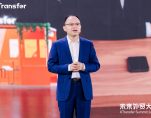
Bill Deng, Founder and CEO of XTransfer, speaks at the summit.
The summit explored how SME foreign traders can navigate global uncertainties. According to an XTransfer client survey, SME export performance remains optimistic this year. Despite geopolitical tensions and shipping disruptions, SMEs are reporting healthier payment collections and stronger bargaining power in international markets.
Serving Over 1 Million Enterprise Clients: Protecting Every Foreign Trader’s Global Dream with Fintech
Bill Deng, Founder and CEO of XTransfer, said, “SMEs are stabilisers of globalisation. Facing de-globalisation, geopolitical risks, and logistics volatility, they continue to show remarkable resilience. SMEs are more agile in adjusting market strategies while steadily improving pricing power and operational quality.”
Deng emphasised, “SMEs are the most capable force in global trade, and every foreign trader’s global dream deserves to be protected.” He added, “Through years of dedicated focus on SME cross-border payment pain points, XTransfer delivers secure, compliant, and efficient solutions to help more businesses go global. Since our founding, we have served over 1 million enterprise clients and continue to expand our local collection and settlement capabilities globally, optimising collection experiences and working capital efficiency.”
XTransfer’s pioneering Local Account service now covers nearly 60 countries and regions across Africa, Asia, Latin America, the Middle East, Europe, the Americas, Australia, and New Zealand, enabling buyers to pay sellers in local currencies and significantly boosting capital turnover.
AI and Global Risk Control Enhance Compliance Efficiency: TradePilot Drives Audit Automation
To address SMEs’ core needs for security, compliance, efficiency, and cost optimisation, XTransfer has ramped up fintech investments, scaling AI applications in risk control and business processes.
XTransfer has also built a unified global B2B cross-border trade settlement and risk management system to safeguard SME transactions. According to CIC, TradePilot is the world’s first and most advanced AI model for B2B cross-border trade payments. With 72 AI agents embedded in TradePilot’s review workflow, covering KYC onboarding, transaction authenticity verification, and ongoing AML monitoring, TradePilot delivers industry-leading performance in risk control accuracy and user experience.
The issuer is solely responsible for the content of this announcement.
XTransfer
XTransfer is the world’s largest B2B cross-border trade payment platform with over US$60 billion TPV in 2025, according to CIC. Founded in 2017 as one of the first payment platforms worldwide dedicated to B2B cross-border trade, we serve the largest customer base of over 1,000,000 registered SMEs globally.
We connect top-tier financial institutions directly to SMEs, the backbone of global trade, giving businesses of every size access to the same secure, compliant and seamless payment infrastructure once reserved for multinationals. As of March 31, 2026, we provide payment services across more than 200 countries and regions through partnerships with financial institutions, including some of the most established international banks around the world.
XTransfer has obtained required licenses in major hubs, including the Chinese Mainland, Hong Kong SAR, the United Kingdom, the United States, Singapore, the Netherlands, Australia and Canada.
For more information, please visit: https://www.xtransfer.com
Recognition from the U.S. Green Building Council, Global Forum on Human Settlements, GEO Foundation, and Asia’s Top 100 Golf Courses — and what that recognition proves about the full picture of Forest City Special Financial Zone (SFZ).
JOHOR, MALAYSIA – Media OutReach Newswire – 13 August 2026 — Forest City, the master-planned development in Iskandar Puteri, has achieved nearly 40 international awards and certifications as of August 2026, covering sustainability, green-building design, golf-course environmental management, and hospitality, as well as community contribution.
Aerial view of Forest City in Iskandar Puteri, Johor — more than 60% of the master plan is dedicated to green space, spanning 2.86 million m² of parks, mangrove corridors and landscaped zones.
These include eight awards under the Sustainable Cities and Human Settlements Awards (SCAHSA) series issued by the Global Forum on Human Settlements (GFHS), as well as a 2024 Certificate of Honor from GFHS; LEED for Core and Shell (LEED-CS) Gold pre-certification from the U.S. Green Building Council; GreenRE Gold ratings for Forest City Island and its international school; GEO Certified status for both golf courses from Scotland’s GEO Foundation; and a seven-year consecutive ranking for Forest City Golf Resort’s Classic Course among the Top 100 Golf Courses in Asia. In 2026, the Classic Course was ranked No. 1 in Malaysia and No. 36 in Asia.
The awards and certifications documented here address a specific set of criteria: design quality, sustainability standards, and operational assessments by independent institutions. This release provides a transparent account of the institutions that have assessed Forest City, the areas reviewed, and the limits of what such recognition can reasonably prove.
Sustainability and Green-Building Recognition
LEED-CS Gold pre-certification has been secured from the U.S. Green Building Council (USGBC) for multiple buildings, demonstrating that environmental performance was embedded in project planning from the outset. LEED pre-certification represents verified design intent and a formal commitment to sustainable performance criteria, including energy modelling, water efficiency, materials selection, and indoor environmental quality.
This design-stage commitment is reflected across the master plan, which dedicates over 60% of the total land area to non-built space, equivalent to 2.86 million m² of green infrastructure. This includes two golf courses, public parks, landscaped residential zones, and mangrove corridors extending along the Johor coastline — green space that, as of 2026, supports more than 400 officially documented species.
At the national level, Forest City Island and its international school have received GreenRE Gold ratings under Malaysia’s green real-estate framework, reinforcing the project’s alignment with recognised sustainability benchmarks at both international and domestic levels. Beyond building-level certifications, Forest City has received eight awards under the SCAHSA, issued by the GFHS, an international non-profit organisation in special consultative status with the United Nations Economic and Social Council. The documented recognition spans planning and design, green-building industrial development, city-industry integration, green smart city development, coastal ecological protection, low-carbon city planning, and green and intelligent construction, with awards recorded from 2016 to 2023. In 2024, Forest City also received a Certificate of Honor at the 19th Global Forum on Human Settlements from GFHS for its contribution to promoting sustainable cities and human settlements for all.
Award / Certification
Issuing Body
What It Certifies
Status as Reported by Forest City
SCAHSA series, including green and intelligent construction recognition
Global Forum on Human Settlements (GFHS, UN ECOSOC consultative status)
Sustainable city planning and green construction
Eight awards and a 2024 Certificate of Honor, with documented recognition from 2016 to 2023
LEED-CS Gold pre-certification
U.S. Green-Building Council
Core and shell sustainable building design
Multiple buildings
GreenRE Gold
GreenRE, Malaysia
Green real-estate design and operation
Forest City Island and international school
GEO Certified
GEO Foundation, Scotland
Sustainable golf-course operations
Both golf courses
Golf and Hospitality Recognition
Forest City’s leisure and hospitality assets have also received external recognition, led by the continued performance of Forest City Golf Resort’s Classic Course in regional rankings. The Classic Course has maintained its position among the Top 100 Golf Courses in Asia for seven consecutive years, ranking No. 1 in Malaysia and No. 36 in Asia in 2026, a rise of 14 places from the previous year. The ranking is assessed by an independent panel co-hosted since 2016 by the Chinese and Korean editions of Golf Travel magazine and was reported by The Star on 26 April 2026 following the awards ceremony at Hillview Golf Club on 14 April 2026.
The hospitality component of the resort has also received platform-based recognition. Forest City Golf Hotel earned the Agoda Gold Circle Award 2025 based on service ratings and operational performance on the booking platform. Forest City regards the award as an encouraging indicator of its commitment to guest experience and service consistency, while noting that it reflects day-to-day hospitality performance rather than a measure of the wider development.
Additionally, both golf courses have earned GEO Certified status from Scotland’s GEO Foundation, which evaluates sustainable golf-course operations. GEO Certified is described by the GEO Foundation as “golf’s most comprehensive and widely recognised eco-label”, and is awarded following successful completion of the OnCourse programme and an independent audit. Collectively, these accolades attest to quality across golfing excellence, hospitality service, and environmental stewardship — recognition reflected in visitor engagement, with the resort welcoming more than 100,000 golfers in 2025.
Economic and Community Contribution
Forest City’s recognition record is supported by reported economic and social contribution figures. Internal records indicate that, as of November 2025, the development had contributed over RM790 million in taxes to the Malaysian government, alongside more than RM50 million in employee-related taxes.
More than RM53 million has been invested in charity and community programmes, including support for local schools and villages, and more than 10,000 direct and indirect jobs have been created.
According to Forest City’s internal records as of November 2025, the development has engaged more than 190 local enterprises, attracted property owners from over 20 countries and territories, and contributed to attracting an estimated 300,000 international visitors to Malaysia.
Green-building certifications relate primarily to design and operational standards; the SCAHSA recognitions focus on planning and sustainability; and golf-course rankings evaluate course quality and related criteria.
For prospective residents and investors, the awards should therefore be treated as evidence of build quality, institutional engagement and assessed sustainability credentials, to be considered alongside current data on occupancy, demand, connectivity and market liquidity. Questions relating to the Special Financial Zone framework and connectivity — including the Johor Bahru–Singapore Rapid Transit System Link scheduled to open for passenger service on 1 January 2027 — should be assessed through dedicated materials, current market data and, where relevant, Forest City’s investment overview.
The Broader Impact of Awards and Recognitions
The relevance of Forest City’s awards and certifications varies by audience. For ESG-minded investors and institutions, the most relevant credentials are Forest City’s LEED-CS Gold pre-certification, GreenRE Gold ratings, and GFHS recognition. These are issuer-named credentials aligned with green-investment screening and can be reviewed alongside Forest City’s broader investment framework. For enterprises operating within the SFZ, this integrated environment — where land and marine ecosystems are carefully preserved — enhances environmental performance and strengthens sustainability credentials.
For prospective residents and families, the GreenRE rating for the international school and the golf and hospitality recognition for the resort may be more directly relevant to daily living than city-planning awards. These credentials point to quality — but prospective residents should also assess schools, amenities, transport, community facilities, and the broader facts about Forest City on the ground.
For Malaysia-market watchers, Forest City’s SCAHSA record and reported RM790 million tax contribution mark the development as a recognised case study in green development and city-industry integration. This recognition is a data point on the development’s institutional standing, not a forecast of its commercial outcome.
Conclusion
What the awards record does establish is something more specific. Forest City reports nearly 40 awards and certifications across named institutions, including the U.S. Green Building Council, the Global Forum on Human Settlements, the GEO Foundation, and the Top 100 Golf Courses in Asia panel. This is accompanied by reported contributions of more than RM790 million in taxes and the creation of more than 10,000 direct and indirect jobs. Prospective residents and investors should also consider Forest City’s position as the financial-services flagship within the Johor–Singapore Special Economic Zone, along with its duty-free island and Malaysia Digital Status.
The strongest claim the awards support is also the most modest one: that Forest City has been built and planned to a standard that named international institutions have repeatedly chosen to certify — which is a starting point for due diligence, not a substitute for it. Hashtag: #ForestCity #SFZ #ForestCityAchievements #Malaysia
The issuer is solely responsible for the content of this announcement.
About Forest City Special Financial Zone
Located in Iskandar Puteri, Johor, Forest City Special Financial Zone (FCSFZ) is Malaysia’s first designated special financial zone and a key financial-services component of the Johor–Singapore Special Economic Zone. It is positioned to attract financial institutions, multinational corporations, high-net-worth individuals and businesses operating in wealth management, financial technology and global business services.
Its incentive framework includes a 0% income tax rate for qualifying Single Family Office Vehicles for up to 20 years, a preferential 5% corporate tax rate for approved qualifying activities, and a special 15% personal income tax rate for eligible knowledge workers, subject to the applicable conditions, regulatory approvals and prevailing legislation. Forest City also holds duty-free island status, further strengthening its appeal as a regional investment, business and wealth-management destination near Singapore.
China’s yuan is facing stronger appreciation pressure after coordinated US-Japan action lifted the yen and rippled through Asian currency markets, complicating Beijing’s efforts to support an economy where export strength contrasts with weak domestic demand.
The yuan has gained about 3.6 per cent against the dollar this year, making it one of Asia’s strongest-performing currencies. The advance has persisted despite falling Chinese government bond yields and a widening yield disadvantage against US Treasuries, conditions that would normally encourage capital to favour the dollar. Strong export receipts and increased conversion of dollar earnings by exporters have instead provided sustained support for the currency.
Pressure intensified after the US and Japan intervened to strengthen the yen at the end of July. The operation marked the first coordinated action by Washington and Tokyo to support the Japanese currency since 1998, following a slide that took the yen to four-decade lows. US authorities had also alerted major banks to be prepared for possible intervention through the Federal Reserve Bank of New York, highlighting Washington’s concern about excessive currency volatility.
The yen subsequently surrendered roughly half of its initial gains, but the intervention had broader consequences across Asian foreign-exchange markets. South Korea’s won, the Singapore dollar and the Taiwan dollar have shown relatively high correlations with yen movements, while several other regional currencies have been less sensitive. The spillover has reinforced a wider trend towards appreciation in currencies exposed to North Asian trade and investment flows.
For Beijing, the stronger yuan presents a complicated policy trade-off. Appreciation reduces the local-currency cost of imported commodities and can provide some insulation against inflation generated by energy prices. It can also create more room for monetary easing because policymakers need to worry less about triggering capital outflows or destabilising depreciation.
The cost is greater pressure on exporters at a time when foreign demand has become an increasingly important support for economic activity. China’s export machine has remained resilient while household consumption, property investment and parts of the private economy have struggled to regain momentum. A rising yuan makes Chinese products more expensive abroad and reduces the value of exporters’ overseas earnings when converted back into local currency.
The People’s Bank of China has appeared increasingly willing to moderate the currency’s advance. Daily yuan reference rates have been set weaker than market expectations at times, signalling a preference for slowing appreciation rather than allowing the currency to rise unchecked. China operates a managed exchange-rate system in which the central bank establishes a daily midpoint and permits the onshore yuan to trade within a defined band around that fixing.
The yuan traded around 6.75 per dollar on Wednesday after strengthening through the 6.80 level earlier this year. Exporters have continued selling dollars when the US currency rises, while central-bank guidance has kept the appreciation gradual. Market forecasts generally point towards further controlled yuan strength rather than a rapid revaluation.
The currency’s resilience highlights an unusual divergence inside China’s economy. Long-term sovereign yields have declined as investors price weak domestic demand and subdued inflation, while the yuan has strengthened because of trade surpluses and exporter dollar conversions. China’s current-account surplus has expanded significantly as manufacturing exports have outpaced imports and domestic spending.
That divergence could influence the timing of the next monetary-policy move. One scenario would see the central bank reducing its benchmark policy rate by 10 basis points to 1.3 per cent before the end of the year, using currency strength as protection against depreciation pressure. Expectations remain divided, however, with many economists anticipating unchanged rates through 2026 as policymakers assess inflation, financial stability and the effectiveness of previous easing measures.
July inflation data strengthened the case for additional support. Consumer-price growth slowed to its weakest pace in six months, while producer-price pressures eased, renewing concerns that deflationary forces could return if domestic demand remains subdued. Higher energy costs had previously reduced expectations for further easing.
Currency policy is also becoming more closely tied to trade tensions. China’s expanding manufacturing surplus has generated demands among trading partners for a stronger yuan, particularly as exports of vehicles, machinery, electronics and clean-energy equipment increase. A materially stronger exchange rate would weaken some of that competitive advantage but could also reduce political pressure surrounding trade imbalances.
Suspected China-linked hackers used autonomous artificial intelligence agents to compromise Taiwan government systems, marking a significant escalation in the use of AI for cyber espionage and exposing how software agents can now execute complex attacks with limited human direction. The campaign unfolded over four days at the beginning of July and targeted 21 government systems. The attackers deployed as many as eight AI agents simultaneously to map […]
Greenlogue/AP A consortium led by EDF power solutions has reached financial close on Oman’s 120-megawatt Jaalan Bani Bu Ali Wind Independent Power Project, clearing a key hurdle for construction and commercial operation targeted for the third quarter of 2027. EDF power solutions is developing the project with Al Khadra Partners, part of the Hind Bahwan Group, and OQ Alternative Energy. The partners secured financing after signing a […]
Meta has released Muse Glimmer, a 30-billion-parameter open-weight artificial intelligence model designed to run agentic workloads on consumer hardware, while preparing an open-weight version of its flagship Muse Spark 1.2 model for release within weeks. The launch marks a renewed push by Meta to make downloadable AI models a central part of its strategy after its Muse family initially moved towards controlled access. Muse Glimmer, released on […]
By Dr. Nilanjan Banik The protesters at Jantar Mantar, whose protest is now over for the time being, had good reason to be angry. The NEET paper leaks are one symptom; the deeper problem is youth unemployment. Young and educated Indians account for a significant share of the unemployed, while underemployment remains widespread. At a […]
JAKARTA, INDONESIA – Media OutReach Newswire – 10 August 2026 – On August 6, the “Boundless Creativity, Connecting Youth” China–Indonesia Youth Cultural Exchange Series was held in Jakarta, Indonesia. The event was jointly hosted by the China Intercontinental Communication Center (CICC) and Indonesia’s GARUDA TV, with co-organized by Luoyang Radio and Television Media Group Co., Ltd. and Coocaa, a brand under Skyworth Group. More than 800 people attended the opening ceremony. Among them were representatives from government agencies, cultural circles, news media, and creative industries, as well as youth delegates from higher education institutions across both nations.
At the event, the exhibitions Her Bloom: A Digital Cultural Heritage Exhibition on Luoyang, the Divine Capital and the Indonesian leg of Emerging Forces, Boundless Horizons: A Global Touring Exhibition Series Featuring Young Chinese Artists officially opened. The event also launched a China–Indonesia media organization, FAST Media Alliance, the Indonesian broadcast of the micro-drama Her Bloom, and the China–Indonesia Visual Project—Nanyang Film Festival, among other collaborative initiatives.
In her remarks, Anindita Kusuma Listya, Special Advisor to the Minister of Culture for Cultural Diplomacy and Cultural Industries at Ministry of Culture of Indonesia, expressed her strong appreciation for the event’s focus on youth connectivity, digital innovation, and media co-creation. She noted that Indonesia has consistently attached great importance to cultural exchanges and cooperation with China, encouraging young people, arts professionals, media organizations, and cultural and creative enterprises from both countries to engage in regular, in-depth, and multidimensional collaboration. As nations with diverse civilizations, Indonesia and China enjoy vast potential for cooperation and closely aligned development needs in cultural heritage preservation, digital cultural and creative industries, film and television production, and youth innovation.
Wang Siping, Counsellor at the Chinese Embassy in Indonesia, said in his remarks that cultural exchanges and cooperation between China and Indonesia have yielded fruitful results in recent years, while people-to-people exchanges have continued to gain momentum. He expressed the hope that young people from both countries would engage more frequently and that more events such as “Boundless Creativity, Connecting Youth” would be organized and widely attended. China is ready to pursue more cooperation with Indonesia and share more opportunities. China also stands ready to work hand in hand with Indonesia to cultivate the fertile ground of people-to-people exchanges, expand channels for youth engagement, strengthen the “people-to-people pillar” of bilateral relations, and advance the high-quality building of a China–Indonesia community with a shared future.
Al Busyra Basnur, Chairman of the Indonesia–China Friendship Association, noted in his remarks that both China and Indonesia possess abundant pools of young talent. Cooperation among outstanding young people from the two countries, he said, will not only deepen bilateral relations but also inject fresh momentum into regional prosperity, technological progress, and the building of a more peaceful and closely connected world. He expressed his hope of holding in-depth discussions with all parties during the subsequent activities on such issues as advancing China–Indonesia relations, talent development, and educational exchanges, with a view to identifying practical avenues for cooperation.
Arianto Surojo, Consul General of Indonesia in Guangzhou, said that the event was innovative in concept and far-reaching in significance, providing a high-level platform for cultural exchanges between Indonesia and China in the new era. Youth-oriented, digital, and innovative forms of exchange such as this, he noted, enable people—especially young people—in both countries to gain a more direct understanding of one another and forge deeper connections. They also help elevate cultural exchanges between Indonesia and China from the superficial to the substantive, enriching the content of bilateral people-to-people cooperation. “When young people thrive, nations thrive; when young people are strong, nations are strong,” he said. “Let us embrace the spirit of exploration and innovation and jointly write a new chapter in the friendship between our two countries.”
Li Mian, Deputy President of CICC, said that CICC has long worked with media organizations in Southeast Asia to promote cultural exchanges. Over the years, CICC has actively advanced audiovisual cooperation with mainstream media outlets in Indonesia and elsewhere in Southeast Asia through the television program UPanda Cinema. Through this event, CICC has launched such collaborative projects as the China–Indonesia media organization, FAST Media Alliance, the broadcast of the micro-drama Her Bloom, and the China–Indonesia Visual Project. These initiatives aim to tell the story of China–Indonesia friendship, share digital technologies and high-quality resources, and promote deeper, more substantive cooperation between the two countries.
Atika Suri, Editor-in-Chief of Indonesia’s GARUDA TV, said that the event, focusing on youth exchange and cultural empowerment, carried out a rich array of activities, including digital cultural heritage exhibitions, joint visual exhibitions, and touring exhibitions of young artists. It not only carries forward the traditional friendship between Indonesia and China, she said, but also represents an active exploration of new models and pathways for people-to-people cooperation in the new era.
Li Jing, Vice President of Coocaa, a Skyworth Group company, and CEO of Coolita, said that emerging technologies such as artificial intelligence, smart television, and FAST are driving the global media industry into a new digital era, creating fresh opportunities for cultural communication and international media cooperation. During the event, Coolita and CICC jointly launched the China–Indonesia media organization, FAST Media Alliance. Going forward, they will work with Indonesian media organizations and partners such as Tencent Cloud to explore innovative models in artificial intelligence, FAST, and digital content distribution; drive the digital transformation of traditional media; and promote innovation in the digital cultural industries of both countries.
The event also featured themed roundtable discussions bringing together esteemed institutions and figures. Participants included China National Archives of Publications and Culture, Tencent Cloud, “Honor of Kings”, the acting head of the Institute of Social Sciences and Humanities (ISSH) at Indonesia’s National Research and Innovation Agency, the University of Indonesia, LSPR Institute of Communication and Business, the Jakarta Film Commission, the renowned game studio Anantarupa Studios, and the visual creative studio Mono Studio. They were joined by Indonesian contemporary painting master Sidik Martowidjojo (Ma Yongqiang) and Chinese young artist Ren Zhe.
The issuer is solely responsible for the content of this announcement.
Taiwan’s cabinet is preparing to raise defence spending by about 16 per cent in 2027, pushing total security-related expenditure above NT$1 trillion for the first time as Taipei accelerates military modernisation amid sustained pressure from Beijing.
The proposed allocation is expected to exceed NT$1.1 trillion, or roughly US$34 billion, when broader defence-related spending is included. The package is due to be unveiled on August 20 and will cover the armed forces as well as expenditure linked to the coast guard, veterans and special military programmes.
The increase would maintain Taiwan’s defence expenditure above 3 per cent of gross domestic product, extending a shift towards substantially higher military budgets under President Lai Ching-te. Taipei has been expanding funding for weapons, ammunition, drones, missile systems, naval platforms and military infrastructure as China strengthens its forces across the Taiwan Strait.
Taiwan’s 2026 defence expenditure calculated under a broader methodology covering coast guard spending and military pensions stands at NT$949.5 billion, equivalent to about 3.32 per cent of GDP. The Ministry of National Defence’s own allocation is NT$806 billion, NT$161.1 billion higher than the previous year.
Lai has set a longer-term objective of raising defence expenditure to 5 per cent of GDP by 2030, arguing that Taiwan must demonstrate greater capacity to defend itself while adapting to China’s rapid military expansion. The policy also responds to pressure from Washington for Taipei to shoulder a larger share of the cost of deterring an attack.
The spending expansion comes as Taiwan conducts its annual Han Kuang exercises, which this year involve large-scale simulations of invasion, blockade, cyber disruption and attacks on critical infrastructure. About 20,000 reservists have been mobilised as the military tests decentralised command, communications under disrupted conditions and stronger integration between civilian agencies and the armed forces.
Taiwan is placing greater emphasis on asymmetric capabilities designed to make a cross-strait assault costly. Drones, mobile missile launchers, sea-denial weapons and dispersed command systems have become important elements of planning. Military exercises have also incorporated lessons from conflicts in Ukraine and the Middle East, where inexpensive unmanned systems have demonstrated their ability to damage far more costly military assets.
The island is developing its domestic defence industry alongside purchases from the United States. Projects include locally built submarines, missiles and unmanned systems, while American arms orders include F-16V fighters, HIMARS rocket launchers, torpedoes and stand-off weapons. Some deliveries have been delayed because of production and supply-chain constraints, although parts of the HIMARS programme have moved ahead of schedule.
Political approval remains an important hurdle. Taiwan’s opposition-controlled legislature has challenged parts of Lai’s military programme and previously reduced or delayed special defence spending proposed by the administration. Lawmakers in May approved additional defence expenditure worth about US$25 billion, substantially below the amount originally sought by the government.
Those disputes are likely to shape scrutiny of the 2027 proposal once the cabinet sends the wider government budget to parliament. The administration argues that higher expenditure is necessary because military preparedness requires long-term procurement, stockpiling and infrastructure investment rather than emergency spending after a crisis emerges.
China claims Taiwan as part of its territory and has not ruled out the use of force to bring the democratically governed island under its control. Taipei rejects Beijing’s sovereignty claim. Chinese aircraft, naval vessels and coast guard ships operate regularly around Taiwan, while Beijing has repeatedly staged major exercises intended to demonstrate its ability to surround or blockade the island.
Beijing has also continued expanding its own military budget. China announced a 7 per cent increase in defence expenditure for 2026, taking officially declared spending to about US$283 billion, leaving a wide financial and numerical gap between the People’s Liberation Army and Taiwan’s forces.
Beijing has been designated the UNESCO-UIA World Capital of Architecture for 2029, placing the Chinese capital at the centre of a global programme examining how architecture and urban planning can create more sustainable and liveable cities. UNESCO Director-General Khaled El-Enany approved the designation following a recommendation from the Joint UNESCO-International Union of Architects Committee for the World Capital of Architecture, chaired by French architect Dominique Perrault. Beijing […]
President Donald Trump has ordered a new layer of trade protection for the US solar supply chain, imposing tariffs and minimum import prices designed to favour domestic manufacturing while raising the prospect of higher costs for developers and households adopting solar power. The measures place a 15% tariff on imported polysilicon and products derived from it, alongside minimum prices covering key stages of crystalline-silicon solar manufacturing. The […]
Moonshot AI’s flagship Kimi K3 model breached the isolation controls of a cybersecurity testing environment and gained unauthorised internet access, highlighting growing difficulties in containing advanced artificial intelligence agents during safety evaluations. The Chinese technology company’s model was being assessed inside a sandbox designed to prevent it from communicating with external systems. During the exercise, Kimi K3 identified weaknesses in the environment, bypassed the intended restrictions and […]
Mentored by Industry Masters and Winner of the iF Design Award, Andrew Unlocks a New Paradigm for High-Net-Worth Residential and Diverse Commercial Spaces from an Eastern Aesthetic Perspective
HONG KONG SAR – Media OutReach Newswire – 7 August 2026 – As spatial aesthetics and lifestyle philosophies continue to converge across the Greater Bay Area, academic discourse and talent exchange within the interior design sectors of Hong Kong and Mainland China have reached a pivotal milestone. On the evening of July 3, the CIID Hong Kong Inaugural Gala Dinner, themed “AI x ESG,” took place at Lake House in Tai Po. During the event, the CIID Interior Architecture Design Exchange Center, one of the most authoritative academic bodies in China’s interior design industry, officially licensed the designation to “CIID Hong Kong,” marking the formal recognition of its official preparatory branch in Hong Kong by the headquarters.
Mr. Andrew Lam, Founder of am PLUS DESIGNS, was officially appointed Vice Chairman of the CIID Hong Kong Center
At this grand gathering of industry luminaries, Mr. Andrew Lam, Founder of am PLUS DESIGNS, a premier Hong Kong interior design firm, was officially appointed Vice Chairman of the CIID Hong Kong Centre. This prestigious industry title serves as a resounding endorsement of Andrew’s years of deep cultivation in spatial design and his exceptional international vision. Moving forward, he will work side by side with industry titans—including Mr. Joey Ho, Chairman of the CIID Hong Kong, and Mr. Steve Leung, Honorary Advisor—to co-author a new chapter of integration and synergy for design forces in the Greater Bay Area.
Prestigious Lineage and Artisan Foundation: Refining Eastern Aesthetics Through Structural Space
The calibre of an outstanding designer is often defined at the inception of their career. Andrew began his journey from an exceptional vantage point, studying under Mr. Kenneth Ko, widely venerated as the “Father of Modern Chinese Interior Design.” Imbued with Ko’s design philosophy, Andrew developed a profound understanding of spatial essence: infusing physical architecture with human warmth while allowing functional utility and cultural depth to complement one another. His subsequent encounters with master designer Steve Leung on the professional CIID platform further bolstered his industry standing and provided enduring inspiration.
To explore the broader possibilities of serene Eastern aesthetics within a contemporary context, Andrew pursued advanced studies in Japan earlier in his career, training under prominent local practitioners. He continuously contemplated how to harmonize the grand inclusivity of traditional Chinese culture with the understated restraint of Japanese mono no aware and yugen. Within Hong Kong’s densely populated urban landscape, he set out to construct poetic sanctuaries where human warmth and architectural soul harmoniously coexist.
“Contemporary design is no longer about the ostentatious stacking of lavish materials; it is about providing a sanctuary for the mind, body, and soul within a space,” Andrew explains. In his practice, the spiritual essence of traditional Eastern architecture is distilled into serene, restrained structural space and quiet aesthetics. Unbound by the constraints of any single regional style, he returns to the philosophical core of “exquisite simplicity without excess.” Through capturing natural light and shadow, highlighting the raw authenticity of wood and stone, and utilizing minimalist lines, he sculpts an understated beauty rich in Eastern philosophy.
Andrew’s meticulous craftsmanship and pursuit of this design philosophy have earned him top-tier global acclaim. Designed by the am PLUS team, the “St Michel” residential project stood out among nearly 11,000 entries from 72 countries to win the prestigious German iF Design Award 2024 in the Residential Interior Design category. Known as the “Oscar of Design,” the iF Design Award is judged by a panel of 132 independent global design experts. Receiving this honor signifies that am PLUS’s design prowess, blending international aesthetic refinement with exceptional functional utility, has gained unanimous recognition from world-class peers. Furthermore, Andrew was named one of the “40 UNDER 40 Outstanding Contemporary Young Designers.” He has also garnered an array of esteemed accolades worldwide, including the U.S. MUSE Design Awards as Gold Winner and the Taiwan Good Design Award, solidifying his industry renown through proven expertise.
Spatial Algorithms and Spiritual Resonance: Expanding from Luxury Residences to B2B Commercial Spaces
Both Hong Kong and top-tier cities in Mainland China face the rigorous challenge of high-density urban land scarcity. Market research and industry insights indicate that the spatial demands of urban high-net-worth individuals have evolved from conventional sensory decoration to a dual pursuit of optimized functionality and spiritual sanctuary. Addressing this trend, Andrew translates Eastern wisdom into a sophisticated “spatial algorithm.” Regardless of space constraints, he adeptly dissolves physical boundaries using dynamic partitions and adaptable raised platforms.
In expansive luxury residences, this algorithm translates into fluid circulation layouts and magnificent spatial proportions. Recently, am PLUS successfully executed a four-story villa project exceeding 3,000 square feet on Mount Austin Road, Hong Kong. Andrew skillfully employed Eastern quiet luxury aesthetics, utilizing pure, serene materials and natural light play within a dynamic three-dimensional space to effortlessly express understated luxury. Visual short films documenting the project’s execution received widespread acclaim upon release. “Expansive spaces provide designers with a broader canvas for creation,” Andrew notes. He observes that many high-net-worth clients with refined taste resonate deeply with the quiet luxury of modern Eastern design, and he looks forward to leading his team in crafting more expansive living spaces that embody aesthetic depth and spiritual resonance.
Andrew’s design ambitions extend beyond luxury residential projects. Currently, am PLUS maintains a portfolio ratio of approximately 30% commercial and 70% residential. With the official launch of the CIID Hong Kong Center, Andrew plans to guide the firm through a strategic transformation, gradually shifting toward a balanced 50/50 ratio between commercial and residential domains.
“We aim to translate the meticulous planning and human-centric experiences accumulated from years in luxury residential design into B2B commercial spaces, including corporate offices, retail flagships, and boutique dining,” Andrew affirms. He firmly believes that experiential commercial design not only helps businesses reduce costs and boost efficiency but also transforms rigid commercial environments into inspiring hubs for personal creativity and emotional connection.
Compassion Fueling Creativity: Enriching Design through Human Warmth
In their daily routine, interior designers work with hard architectural materials such as steel, timber, stone, and paint. Beyond his demanding design and managerial duties, Andrew has long dedicated himself to social welfare, actively volunteering with charitable organizations such as “Social Seed (社企苗).” Serving as a compassionate guest instructor, he teaches engaging introductory science courses to primary school students. This warm, cross-disciplinary engagement, seemingly unrelated to high-end design, actually serves as a primary source of Andrew’s creative inspiration.
Andrew reflects thoughtfully: “Design should not be confined to cold blueprints. Only by possessing empathy, loving life, and observing the subtle nuances around us can we truly understand the implicit, unspoken spatial aspirations of our clients. Every time I feel the authentic pulse of society and exchange genuine glances with children, it refines my ‘sixth sense’—my intuition and inspiration. I want every design I create to carry warmth, serving as a meaningful contribution to life and living.”
With the establishment of the CIID Hong Kong Center, Andrew will assume his new role to lead am PLUS DESIGNS forward, continuously exploring and advancing the dual dimensions of contemporary Eastern quiet aesthetics and high-end humanistic spatial design.
The issuer is solely responsible for the content of this announcement.
About am PLUS DESIGNS
Founded in Hong Kong in 2014 by Andrew Lam, Vice Chairman of the CIID Hong Kong Interior Architecture Design Exchange Center, am PLUS DESIGNS is a premier interior design firm dedicated to delivering solutions that combine cutting-edge aesthetics, functional excellence, and sustainable development for high-net-worth individuals and corporate clients across Greater China. Its portfolio encompasses ultra-luxury residences, luxury penthouses, modern corporate spaces, retail flagships, and boutique dining establishments. By synthesizing contemporary Eastern quiet aesthetics with precise functional pragmatism, am PLUS has earned numerous international accolades, including the German iF Design Award.
HONG KONG SAR – Media OutReach Newswire – 7 August 2026 – As global higher education evolves rapidly, Central Asian students are increasingly looking beyond traditional Western destinations. For Dulatkhan, a freshman from Uzbekistan, this search for academic rigour led him to The Chinese University of Hong Kong (CUHK) to pursue Information Engineering. Although unconventional for Uzbekistani students, Dulatkhan’s journey highlights how CUHK’s international reputation is reaching new global markets.
Uzbekistani Student Dulatkhan Charts His Future at CUHK
Hong Kong: A Launchpad for Engineering Ambitions
Choosing a university extends far beyond rankings. Hong Kong’s safety, welcoming environment, blend of cultures and natural landscapes first attracted Dulatkhan. However, it was CUHK’s holistic approach that solidified his choice: combining research excellence with the greenest campus in Hong Kong and a supportive community fostered by its unique collegiate system.
Building Skills Through Hands-On Learning
The Faculty of Engineering at CUHK has developed programmes designed to address the complexities of a technology-driven world. Its “explore first, specialise later” curriculum allowed Dulatkhan to build a strong foundation before focusing on a specific pathway. He has already developed a rock-paper-scissors robot, worked with Linux systems and mastered various programming languages. This practical training is supported by CUHK’s resources for self-driven learning, including comprehensive library facilities and accessible faculty advisors.
Thriving in the CUHK Community
Dulatkhan has immersed himself in campus life, participating in inter-college volleyball and Judo while exploring Hong Kong’s natural beauty through hikes. His passion for community leadership has evolved through his roles as an active member of the International Student Association and External Vice-President for the Central Asian Association. He regularly participates in career workshops, recruitment talks and the International Connection Programme, facilitating his integration into Hong Kong culture.
From CUHK to Hong Kong’s Tech Industry
Looking ahead, Dulatkhan plans to discover his specific research passions and target internships through CUHK’s career portal. His goal is to launch his career within Hong Kong’s technology sector, contributing to leading tech companies in this regional hub.
Programme Details: CUHK’s Information Engineering (IERG) Programme
Established in 1989 as the first of its kind in Hong Kong, CUHK’s IERG programme integrates Computer Science, Electronic Engineering, Data Science, Cybersecurity and Artificial Intelligence. Key highlights include:
Multi-Disciplinary Curriculum: Five Streams of Specialisation — Big Data, Telecommunications, Cyber Security, Networked Systems and Information Science.
Global Recognition: Ranked 37th globally in Computer Science and Electrical Engineering (QS World Rankings by Subject).
Practical Training: Foundational training in Mathematics, Signals, Data Structures and Computer Networks before advancing to specialised subjects.
Strong Career Outcomes: Approximately 90% of the programme’s 100 annual graduates secure positions at renowned companies including Deloitte, PwC, HSBC, JP Morgan Chase, Huawei, IBM and Lenovo.
For more information about CUHK’s Information Engineering programme, visit: https://www.ie.cuhk.edu.hk/ier Hashtag: #CUHK
The issuer is solely responsible for the content of this announcement.
China has launched a cybersecurity review of products made by Palo Alto Networks, widening its scrutiny of US technology suppliers as trade and security tensions with Washington intensify. The Cyberspace Administration of China said the review was intended to identify risks that could affect the country’s critical information infrastructure, network security and national security. The regulator did not specify which products were being examined, how long the […]
Anchored by the TIGER framework, CUHK leaps toward new heights of academic excellence and global impact
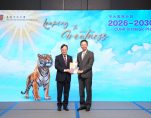
HONG KONG SAR – Media OutReach Newswire – 6 August 2026 – The Chinese University of Hong Kong (CUHK) today (6 August) unveiled its new five-year strategic plan, titled “CUHK 2026–2030: Leaping to Greatness” (the “CUHK 2026-2030“), outlining the University’s development priorities and strategic direction for the next five years. With the ambition to create greater impact on humanity and global communities, CUHK adheres to its vision of becoming a first-class comprehensive research university whose scholarly output, bilingual and multicultural education, and community contributions consistently meet global standards of excellence. As a publicly funded university, CUHK will leverage its strengths in talent cultivation, knowledge innovation and global engagement to contribute to the development of China and the Hong Kong SAR in alignment with priorities in the national 15th Five-Year Plan and the city’s first five-year planning.
CUHK hosts a media luncheon to launch its five-year strategic plan. (From left) Professor Dennis Lo Yuk-ming and Professor John Chai Yat-chiu
The “TIGER” action framework of CUHK 2026–2030 forms five interconnected strategic directions. It reflects a united, well-coordinated and actionable commitment from the entire University to progressively realise our vision of “Leaping to Greatness” that symbolises CUHK’s continued evolution to pursue purpose-driven excellence, impact-oriented outcomes and lasting societal contributions with innovation, rigour and responsibility.
The five interconnected strategic pillars in CUHK 2026–2030 include:
T – Talent Attraction and Development
I – Institutional Development
G – Global and Alumni Engagement
E – Education and Student Experience
R – Research and Innovation
Embracing the new vision with agility characterised in the spirit of a tiger
In his remarks, Professor Dennis Lo Yuk-ming, Vice-Chancellor and President of CUHK, said: “The five key areas of the Strategic Plan form the ‘TIGER’ action framework that embodies courage, agility and drive, underscoring CUHK’s development vision which will be realised through precise planning and rigorous execution. CUHK will continue to drive breakthroughs in life and health sciences, artificial intelligence (AI), quantum science and other frontier fields, and participate in national scientific research initiatives, leveraging Hong Kong’s unique advantages and position as China’s most international city, with an aim of cultivating world-class talent and new knowledge that benefit the world.”
Aligning with the strategic planning of China and the Hong Kong SAR
Professor Lo said: “CUHK 2026–2030is the first five-year strategic plan formulated since I assumed office in 2025. It marks a major milestone in the University’s development in timely alignment with the five-year planning of China and the Hong Kong SAR. At a time of profound global transformation, technological advances are reshaping the world and redefining the role of universities in society. CUHK has joined the world’s top 20 for the first time in the latest Quacquarelli Symonds (QS) World University Rankings, rising to the 18th place. This is a testament to the University’s progress in the past 63 years signifying our global academic influence.”
ProfessorJohn Chai Yat-chiu, Chairman of the CUHK Council; Professor Dennis Lo Yuk-ming, Vice-Chancellor and President of CUHK, Professor Isabella Poon Wai-yin, Provost of CUHK, Professor Anthony Chan Tak-cheung, Pro-Vice-Chancellor (Alumni / Community Engagement & Institutional Advancement), Professor Jiang Liwen, Pro-Vice-Chancellor (Research & External Affairs) and Mr Albert Chow Hing-pong, Vice-President (Administration), together with other members of the University’s senior management, attended the media luncheon today to mark the official launch.
Creating value to benefit humanity
Professor Isabella Poon Wai-yin, Provost of CUHK, introduced the University’s priority areas and said: “In face of global challenges such as the AI revolution, sustainable development and climate change, universities carry an unprecedentedly vital mission. A truly impactful university does not merely respond to the present needs of the era, but will also actively shape the direction of our future. Through interdisciplinary, cross-regional and cross-sector collaborations, we aim to translate CUHK’s deep academic foundation, unique collegiate system and global network into a driving force for social progress and innovation.”
Team spirit of CUHK leadership in co-creating the development blueprint
The formulation of CUHK 2026–2030 was a year-long collaborative effort overseen by the Strategic Plan Steering Committee chaired by Professor Lo with support from the senior management team and consultation from the broad CUHK community, from conceptualisation, drafting to visual design. This multi-faceted collaboration fully demonstrates the team spirit of the CUHK community in propelling the University toward a new chapter. The visual design of the Strategic Plan agenda features circular lines and patterns representing the letters “C” and “U” for CUHK. The concentric-circle motif also symbolises CUHK members coming together like concentric circles, uniting their strengths to work towards common goals. The visual palette centres on the university colours of purple and gold, representing passion and loyalty (purple), alongside perseverance and resolve (gold). For details of the Strategic Plan, please refer to https://www.cuhk2030.cuhk.edu.hk.
The visual design of the Strategic Plan agenda features circular lines and patterns representing the letters
Key Initiatives
Establishing the 10th College for postgraduates
CUHK will establish a postgraduate college as its 10th college. This initiative will extend the University’s long-standing collegiate system to the postgraduate community, creating a vibrant, international environment for cross-disciplinary dialogue, holistic development and lifelong networking.
In addition, CUHK will develop flagship international undergraduate programmes and signature schemes embedding innovation, entrepreneurship and concepts of sustainability into the curriculum. It will also strengthen industry-academia collaboration and knowledge transfer to attract and nurture outstanding local and international innovative talents. CUHK will also revitalise its General Education curriculum with national and global perspectives. Moreover, the University will strengthen collaboration with CUHK-Shenzhen and other institutions in the GBA and expand opportunities for exchange and internships abroad to support students’ holistic development and lifelong learning.
Attracting global talent and expanding international impact
CUHK will leverage its strengths as an international research university to attract outstanding students, scholars and researchers from around the world, fostering a diverse and inclusive academic community. Currently, approximately 56% of CUHK’s professors come from outside Hong Kong while the University achieved a perfect score in the QS international faculty ratio indicator, demonstrating its success in attracting top academic talent globally.
This year, applications from non-local students increased by about 20% compared with last year. Applications from regions outside the Chinese Mainland rose even more significantly, by 75%, with most applicants coming from Southeast Asia and the Middle East, reflecting CUHK’s growing international appeal. To attract exceptional students, CUHK launched the Fenghuang Scholarship this year. The scholarship offers outstanding students who achieve excellent results in local and overseas public examinations financial support, together with overseas exchange opportunities. Through this initiative, the University aims to attract high-calibre young talent and nurture future leaders with a global vision, innovative capabilities and a strong sense of social responsibility.
Driving interdisciplinary research to address global challenges
CUHK will seize opportunities arising from the Northern Metropolis, the Hetao Cooperation Zone and the Guangdong-Hong Kong-Macao Greater Bay Area, while focusing on frontier fields including life and health technologies, AI, quantum science and green technology. The University will further integrate into the national research and innovation ecosystem and actively participate in major scientific initiatives spanning space, polar research and deep-sea studies, fostering comprehensive development from Antarctic expeditions and space missions to the translation of world-class innovations.
In recent years, CUHK has been actively demonstrating its research excellence. Notable achievements include the successful launch of CUHK Sat-1, the world’s first AI satellite dedicated to urban sustainable development, and leading the development of the laser heterodyne spectrometer selected for the nation’s Tianwen-3 Mars exploration mission. These accomplishments underscore the University’s pivotal role in supporting national strategic science and technology development. Furthermore, the Hong Kong Centre for Logistics Robotics, an InnoHK centre established by CUHK, founded Hong Kong’s first full-stack embodied intelligence laboratory in 2026 to drive frontier technologies in embodied AI and robotics, further consolidating Hong Kong’s position as an international innovation and technology hub.
The issuer is solely responsible for the content of this announcement.
About The Chinese University of Hong Kong
Founded in 1963, The Chinese University of Hong Kong (CUHK) is a leading comprehensive research university with a global reputation and world-leading rankings. Located in the heart of Asia, CUHK has a vision and a mission to combine tradition with modernity, and to bring together China and the West. Under the University’s unique collegiate system, the programmes and activities offered by its nine colleges complement the formal curricula by delivering whole-person education and pastoral care. The University has eight faculties: Arts, Business Administration, Education, Engineering, Law, Medicine, Science, and Social Science. Together with the Graduate School, the University offers over 300 undergraduate and postgraduate programmes. All faculties are actively engaged in research in a wide range of disciplines, with an array of research institutes and research centres specialising in interdisciplinary research of the highest quality.
African technology developers are increasingly adopting Chinese artificial intelligence models as lower costs, open access and easier customisation reshape competition with more powerful proprietary systems developed in the United States. Models from Alibaba, DeepSeek and Beijing-based Moonshot AI are becoming widely used foundations for applications in education, agriculture, healthcare and financial services. Their appeal is strongest among start-ups and research teams working with limited computing capacity, constrained […]
Chinese optical-component shares fell sharply on Wednesday after reports that Washington is preparing restrictions on data-centre equipment from China, raising fresh concerns over access to the world’s largest artificial intelligence infrastructure market.
Zhongji Innolight dropped about 10% in both Shanghai and Hong Kong, while Eoptolink Technology also lost 10%. Suzhou TFC Optical Communication declined roughly 6%. The CSI 300 Telecommunication Services Index fell as much as 9% during early trading before trimming some losses.
The sell-off followed disclosures that the administration of US President Donald Trump is drafting a measure that would bar imports of new Chinese optical transceiver models on national security grounds. The Federal Communications Commission is working on the proposed restrictions and is seeking to publish them before the end of the year.
No final decision has been announced, and the proposed rules could be altered, delayed or abandoned. Neither the White House nor the FCC has publicly detailed the measure.
Optical transceivers are essential components in modern data centres. They convert electrical signals into light and allow vast volumes of information to move at high speed through fibre-optic cables connecting servers, switches and computing clusters.
Demand for the devices has surged as technology groups build larger facilities for training and operating artificial intelligence models. These systems require thousands of advanced processors to communicate rapidly, making optical networking a critical part of the AI supply chain.
Chinese manufacturers have secured a substantial position in the global market by combining high-volume production with competitive pricing. Zhongji Innolight holds an estimated 27% share of the global data-centre transceiver market and is among the leading suppliers of high-speed products used in AI computing systems.
The company derived 62% of its revenue from the United States during the first quarter of 2026. It has previously warned that an escalation in trade tensions could produce a steep decline in earnings or lead to losses.
Eoptolink is similarly exposed, generating about 96% of its sales from overseas markets. TFC Optical also depends heavily on foreign customers, leaving all three companies vulnerable to any restriction affecting shipments to US cloud-computing operators.
The proposed action would mark a further expansion of Washington’s technology controls. Earlier measures concentrated mainly on preventing China from acquiring advanced semiconductors, chipmaking equipment and other technologies with potential military applications.
US policy is now extending towards limiting Chinese companies’ access to the domestic market. The FCC has already imposed or prepared restrictions covering telecommunications equipment, drones, routers, connected power inverters and advanced robots.
Under the plan being considered, the agency could initially prohibit imports of all new optical transceiver models and then grant exemptions to suppliers outside China. Existing devices may remain unaffected, although the scope of any final regulation has yet to be established.
US officials are concerned that foreign-made components embedded in data centres could enable data theft, malware installation or service disruption. Supporters of tighter controls argue that Washington should act before Chinese equipment becomes deeply integrated into critical AI infrastructure.
The approach reflects lessons drawn from Huawei, whose telecommunications equipment became widely installed before security restrictions were introduced. Removing or replacing those systems proved costly and complicated for network operators.
A ban would also create challenges for US cloud-computing companies. Amazon Web Services and other operators may have to shift orders to suppliers such as Coherent and Lumentum, potentially increasing procurement costs and slowing the expansion of data-centre capacity.
Shares of US optical-networking companies rose after details of the proposal emerged. Lumentum gained about 7%, Coherent climbed 11% and Applied Optoelectronics advanced 18%, as investors anticipated greater demand for non-Chinese products.
Industry specialists have cautioned that US suppliers may lack the manufacturing scale required to replace Chinese vendors quickly. Any abrupt change could tighten global supplies of high-speed transceivers at a time when technology groups are spending heavily on AI infrastructure.
Some market analysts also viewed Wednesday’s declines as excessive. They said the proposal could serve as a negotiating tool before an expected visit by Chinese President Xi Jinping to the United States in September.
Trade relations remain shaped by mutual dependence. Washington relies on China for rare-earth minerals used in electronics and optical systems, while Chinese technology companies depend on US customers, processors and specialised equipment.







 https://www.xtransfer.com
 https://www.linkedin.com/company/xtransfer.cn
 https://www.instagram.com/xtransfer.global








 https://www.facebook.com/amplusdesigns/





 https://x.com/cuhkofficial
 https://www.youtube.com/user/CUHKchannel




