News related to
Chinese

HONG KONG SAR – Media OutReach Newswire – 13 September 2025 – The 10th Belt and Road Summit was successfully held at the Hong Kong Convention and Exhibition Centre from September 10 to 11, 2025. China Telecom Global Limited (hereinafter referred to as “China Telecom Global”) made a strong appearance under the theme “Empowering the New Silk Road via AI for Good.” The company spotlighted three key […]

Harare has been thrust into the spotlight over severe human rights violations linked to mining operations, as watchdog groups and local activists issue alarming reports of forced displacement, environmental destruction and labour abuse. The Crisis in Zimbabwe Coalition has accused mining firms and state actors of orchestrating “grave human rights violations” against residents in mining regions. These include evictions without proper compensation, widespread water and air pollution, […]

Singapore is witnessing a sharp decline in wealthy mainland Chinese individuals relocating to the city-state, driven by stricter financial regulation, tougher compliance requirements, and more burdensome permanent residence and family-office rules. The flow is shifting instead toward Hong Kong, Japan and the Middle East.

Applications from wealthy Chinese seeking family office status or residency in Singapore have dropped by about 50 per cent compared to 2022, according to legal advisers involved in vetting such clients. One lawyer noted that platforms offering cryptocurrency, tokenised equity or stablecoins must now obtain licensing even when serving clients outside Singapore, and approval will be rare. Minimum capital thresholds have been introduced, along with anti-money laundering, technology-risk and conduct obligations.

The Fujian money-laundering scandal of 2023 is widely cited as a turning point. Following that case, Singapore’s financial institutions and regulators re-screened clients and intensified know-your-customer processes. Some family office applications have taken over a year to process; others have been rejected or delayed because of stricter background checks, including detailed disclosures about dependents and family relationships that many find invasive.

Hong Kong has responded by making entry and residency procedures easier. Earlier this year, its Capital Investment Entrant Scheme was reformed so that applicants need only six months of asset holding instead of two years, and family-held wealth or investments via family companies are now accepted. Dubai and Japan are similarly pulling ahead with more streamlined family office incentives.

Henley & Partners projects that only 1,600 millionaires will move to Singapore in 2025, less than half the number projected in the previous year. Meanwhile, many Chinese family offices already based in Singapore are relocating their operations back to Hong Kong or setting up in the Middle East or Japan.

Regulation focusing on crypto activity has been particularly discouraging. New rules require licensing for platforms offering crypto or tokenised financial products even to clients outside Singapore; approvals are expected to be rare and compliance burdens steep. Some crypto firms have already departed because of the regulatory regime.

Discussions between Washington and New Delhi are said to have reached a critical stage, with US officials making India’s cessation of buying Russian oil a central condition for sealing a bilateral trade agreement. Ambassador-nominee Sergio Gor, during his Senate Foreign Relations Committee hearing, stated that the two sides are “not that far apart” and are now negotiating “the nitty-gritty” of deal terms. He added that ending oil purchases from Russia is one of the Trump administration’s highest priorities. Those talks are expected to involve India’s trade and commerce ministers in Washington next week.

Commerce Secretary Howard Lutnick echoed Gor’s position in an interview, saying the US will resolve trade barriers with India once India stops purchasing Russian oil. The US has imposed a 50% tariff on certain Indian goods, partly as a penalty tied to India’s energy imports from Russia, while insisting that market openness and reciprocal concessions are essential.

India’s leadership has defended its energy procurement strategy as aligned with national interests, citing economic factors and global market conditions. Finance Minister Nirmala Sitharaman reaffirmed that New Delhi intends to continue buying Russian crude, describing it as a practical choice given price and supply stability. She referenced the high import dependency for energy and refined fuels and argued that decisions about suppliers are driven by utility and cost.

Diplomatic signals suggest that the trade impasse stems from more than tariffs and oil. Gor characterised previous delays as “hiccups” and praised the personal rapport between President Donald Trump and Prime Minister Narendra Modi as playing a pivotal role in reopening the dialogue. He noted shared strategic goals, including countering Chinese influence, enhancing regional stability, and expanding cooperation in defence and infrastructure.

Analysts warn that making the Russian oil condition a non-negotiable requirement may limit India’s flexibility. New Delhi has maintained that certain sectors — agriculture, dairy, small producers — cannot absorb full opening of its markets without harming domestic stakeholders. As US pressure mounts through tariffs and public statements, India seeks assurances about trade access, particularly for its exports, while preserving sovereign control over energy policy.

BEIJING, CHINA – Media OutReach Newswire – 11 September 2025 – Against the backdrop of repurposed blast furnaces and industrial relics of Shougang Park in western Beijing, the 2025 China International Fair for Trade in Services (CIFTIS) opened on Wednesday, striking a tone of open markets and digital innovation. People visit a booth of Pop Mart during the 2025 China International Fair for Trade in Services (CIFTIS) […]

China has seen financial flows totalling about US$4.5 trillion, a figure that many analysts believe marks a turning point in how its markets are engaging with the world. The scale of cross-border investment—both inbound and outbound—is now surpassing trade in many respects, reflecting Beijing’s accelerating liberalisation efforts and a growing confidence among foreign and domestic investors.

The financial sum comprises equity, bond, and other capital movements, and corresponds with recent policy moves designed to reduce restrictions and open up China’s capital markets. One key driver is the Stock Connect programme, which allows mainland Chinese investors to purchase eligible Hong Kong–listed stocks and gives international investors access to A-shares. Southbound flows—money moving from mainland China into Hong Kong—have been especially significant, gathering close to US$100 billion within the first half of 2025. That alone matched the total stock in 2024 via that channel.

Yields on Chinese government bonds have hit highs not seen since late 2024, suggesting investors are now demanding greater returns, but also that they perceive risks such as inflation and currency pressures to be easing. The 10- and 30-year yields climbing indicates that institutions expect stabilization in key macro indicators, even if headline economic growth remains uneven. The bond market, however, has also become more volatile, driven by leveraged buying of equities and speculative pressure in certain sectors.

Another contributing factor is the behaviour of domestic institutional investors. With over 160 trillion yuan in household savings, China’s policy makers are encouraging pension funds, insurance companies, and sovereign funds to shift more capital into domestic equities. These kinds of flows reinforce the internal market strength, even as external capital enters or exits depending on global risk appetite.

Hong Kong’s IPO market has benefited greatly. Several major mainland firms—including tech and battery makers—have either listed in Hong Kong or signalled plans to do so. This has helped Hong Kong reclaim its spot among the world’s most active IPO hubs in 2025. The changes to listing rules, including shorter approval times for eligible mainland firms, have been essential in this revival.

Nearly 90% of Chinese companies plan expansion across the Middle East, with Saudi Arabia and the UAE emerging as the most favoured para­l­lel investment destinations, according to a PwC survey of 136 firms. The findings show that 84% of respondents are targeting Saudi Arabia and 79% favour the UAE. The study, conducted between April and May 2025, reveals that 44% of these companies have already formalised business […]

Advertisements

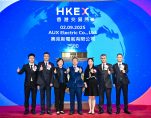
HONG KONG SAR – Media OutReach Newswire – 10 September 2025 – AUX Electric Co., Ltd. (Stock Code: 2580.HK), the core air conditioning business of AUX Group, listed on the Hong Kong Stock Exchange on September 2nd. As the third major Chinese air conditioning company to list on the exchange, the event marks a milestone for the industry reflecting AUX’s philosophy of “quality as the cornerstone, innovation […]

Galaxy Macau’s dynamic lifestyle hotel Andaz Macau marks its 2nd anniversary by reviving the celebrated “Sino-Luso Gastronomic Bazaar” on September 13 – an epicurean fête blending Portuguese flair and Cantonese verve, curated with local Macanese savoire-faire. MACAU SAR – Media OutReach Newswire – 10 September 2025 – Macau – In a city famed for its seamless fusion of East and West, where Chinese and Portuguese cultures have […]

By Nitya Chakraborty Is the Prime Minister Narendra Modi retracting from his commitment to the SCO declaration issued on September 1 and the BRICS statement of July 6 this year to send some sort of signals to US President Donald Trump about restoring reciprocity in the India-US relations? The question is very relevant as one […]

As the morning light kisses the glazed curtain wall of the Burj Khalifa over the Persian Gulf, and the evening breeze of Doha whispers against the dome of the Museum of Islamic Art, a practice team named “Weihai Yangxing” from Weiyang College of Tsinghua University is measuring the lands of the Middle East with their footsteps and building bridges of cooperation through dialogue. From August 14 to 24, […]

ORDOS, CHINA – Media OutReach Newswire – 8 September 2025 – From September 16 to 17, 2025, the 10th Kubuqi International Desert Forum will convene in Ordos, Inner Mongolia Autonomous Region. Recently, reporters visited the Kubuqi Desert to investigate desertification control measures. Seen from the air, 196,000 solar panels stretch across the Kubuqi Desert in a striking horse-shaped mosaic, while on the ground, visitors to Chaideng Village, […]

China’s AI sector is accelerating beyond reliance on imported semiconductors, leaning into algorithmic ingenuity and open-source collaboration to offset hardware constraints and project growing soft power abroad. Chinese firms face significant barriers in securing the most advanced GPUs, due to U. S. export restrictions. Rather than compete on sheer processing capacity, companies such as DeepSeek have turned to architectural innovation. Its R1 large language model, released under […]

BERLIN, GERMANY – Media OutReach Newswire – 5 September 2025 – The Internationale Funkausstellung (IFA), the world’s leading trade show for consumer electronics and home appliances, kicked off on September 5 in Berlin. At this year’s event, Changhong drew global attention with the debut of its panda-themed smart appliances, a strategic new partnership in winter sports, and a compelling demonstration of ESG initiatives, all underscoring the brand’s […]

A protocol on phytosanitary standards agreed upon during President Emmerson Mnangagwa’s visit to Beijing has unlocked the possibility of Zimbabwe exporting blueberries to China, the Horticultural Development Council has announced. This agreement offers local growers access to one of the world’s fastest-growing blueberry markets, although actual export volumes will depend on their ability to meet stringent sanitary conditions and manage compliance-related costs. Zimbabwe’s blueberry production is set […]

A Chinese state-sponsored cyber-espionage group known as Salt Typhoon almost surely infiltrated Canadian telecommunications systems during the campaign that exfiltrated data belonging to millions of Americans. The intrusion, part of the broader Chinese-backed hackers almost certainly breached Canadian networks operation, raises alarm over the growing reach and sophistication of cross-border cyber-threats. The FBI and Canada’s Centre for Cyber Security have attributed the breach in Canada to Salt […]

A high-level delegation from Dubai Electricity and Water Authority, led by MD & CEO HE Saeed Mohammed Al Tayer, is in the People’s Republic of China to boost collaboration with leading firms in solar and battery storage technology. The mission aims to support Dubai’s clean energy ambitions under its 2050 strategies by examining advanced practices in renewable energy systems. DEWA Seeks Deeper Energy Ties With Chinese Firms, as the delegation intends, marks a pivotal move in cross-border energy engagement.

Al Tayer and his team engaged with Huawei, BYD, Tesla’s battery energy storage plant, Sungrow, and the CRRC Zhuzhou Institute to survey cutting-edge developments in photovoltaic panels, energy storage solutions, artificial intelligence applications, smart infrastructure, and Fourth Industrial Revolution advancements. These interactions reinforce DEWA’s commitment to integrating global expertise into its operations.

The delegation includes prominent executives such as Waleed bin Salman, Executive Vice President of Business Development and Excellence; Hussain Lootah, Executive Vice President of Transmission Power; Marwan bin Haidar, Executive Vice President of Innovation and the Future; Dr Yousef Al Akraf, Executive Vice President of Business Support and Human Resources; Mohammed Jamea, Vice President of Clean Energy and Diversification; and Ghanim Al Qassim, Senior Manager of Solar Energy. Their breadth of expertise equips DEWA to absorb and apply technological insights strategically.

Central to the discussions is the seventh phase of the Mohammed bin Rashid Al Maktoum Solar Park, currently at the tendering stage. This phase will incorporate 2,000 MW of photovoltaic solar capacity alongside 1,400 MW of battery energy storage, delivering six hours of storage—establishing it among the largest solar-plus-storage projects globally under the independent power producer model. The delegation’s visit underscores this project’s importance in shaping Dubai’s sustainable energy future.

SHENZHEN, CHINA – Media OutReach Newswire – 5 September 2025 – On September 3, ASIA FRUIT LOGISTICA opened at AsiaWorld-Expo in Hong Kong. BGY Fruits, China’s leading fruit retail chain, participated alongside its subsidiary Jin Chengtai, continuing its annual presence at the event. Through consistent participation, BGY Fruits showcases its strengths in supply chain integration and brand development to global partners and potential clients—further advancing its strategy […]

HONG KONG SAR – Media OutReach Newswire – 4 September 2025 – Hong Kong joined nationwide activities to mark the 80th Anniversary of Victory in the Chinese People’s War of Resistance against Japanese Aggression and the World Anti-Fascist War. September 3 is designated as Victory Day in China, marking the end of the longest-running campaign in the war against fascism (1931-1945). John Lee, Chief Executive the Hong […]

By Dr Arun Mitra Unending armed conflicts are unfolding across various regions of the world. As a result the global security is perhaps facing a degree of uncertainty not witnessed since the Second World War. Crisis-ridden capitalist institutions may outwardly appear powerful and dominant, yet their inability to resolve the pressing problems of the people […]

BEIJING, CHINA – Media OutReach Newswire – 4 September 2025 – On August 27, Mengniu Dairy (2319.HK) released its interim results for 2025, reporting revenue of RMB 41.57 billion for the first half of the year, with operating profit reaching RMB 3.54 billion—an increase of 13.4% year-on-year. Thanks to the company’s ongoing implementation of lean management practices, Mengniu also achieved a 46.2% year-on-year growth in operating cash […]

China’s solar industry, particularly its polysilicon segment, is experiencing a defining shift. Six leading solar makers reported a combined loss of Rmb20.2 billion during the first half of 2025, prompting regulatory intervention to stem overcapacity and destructive price competition.

In early September, GCL Technology Holdings confirmed that investors can anticipate clarity soon on a plan to restructure the polysilicon industry—potentially this year. Chief Financial Officer Yang Wenzhong indicated that GCL may invest its own capital into the effort but is proceeding with caution amid financial uncertainty.

The core of this restructuring lies in a proposed RMB50 billion pooling of funds by top producers like GCL and Tongwei. The aim is to acquire and retire roughly one-third of existing production capacity, targeting approximately one million metric tonnes of lower-quality output. This supply reduction could help raise prices and restore downstream solar panel maker profitability.

Government authorities are reinforcing this market realignment through direct meetings with industry representatives. In August, China’s Industry Ministry held its second session in two months, urging the sector to eliminate outdated manufacturing capacity and curb “low-price disorderly competition” as part of a broader effort to reverse deflationary trends.

The policy response reflects concern over global glut: in 2024, China produced 588 GW of solar capacity while global demand stood at 451 GW, leaving utilisation at just 54%. Analysts estimate that up to 20–30% or more of solar manufacturing capacity must exit the market to reestablish profitability.

This state-guided consolidation faces substantial obstacles. Local governments that have boosted regional development through subsidies, tax breaks and favourable land deals for solar manufacturers may resist decommissioning facilities tied to local GDP and employment. Even if a cartel is formed, analysts warn that members might sneak back into production once prices rebound.

While the outlook remains complex, sentiment among investors appears cautiously optimistic. Markets showed tentative improvement after reports of progress in industry coordination and price gains surfaced. Trina’s commentary on earnings, describing polysilicon as “the first step of anti-involution,” hints at broader hopes for a turnaround.

Global attention is intensifying. Successful restructuring could reinforce China’s dominance—already controlling around 90% of global solar cell capacity—while disrupting cheap exports that have pressured international markets. But a failed effort could compound challenges in other overcapacity-prone sectors such as electric vehicles or shipbuilding.

Longi, another solar powerhouse, is also adapting. Its founder, Li Zhenguo, has relinquished daily management to focus on R&D, including back‑contact cell and green hydrogen technology. The shift comes amid sustained losses and an 80% decline in its share price since 2021, as analysts predict that overcapacity will persist through 2028.

China’s solar supply chain—from polysilicon to panels—is at an industrial crossroads. The restructuring effort is perhaps the boldest policy move yet to recalibrate supply with demand. But its success hinges on overcoming entrenched regional interests, ensuring disciplined industry behaviour, and catalysing sustainable demand growth.


JIAXING, CHINA – Media OutReach Newswire – 2 September 2025 – On the evening of August 28, 2025, the Berlin Women’s Choir from Germany gave a concert at the Yanguan Theatre, conducted by renowned maestro Sabine Wuesthoff. This concert marked the ensemble’s debut performance in China. More than twenty members of the choir performed entirely a cappella, featuring works from composers including Beethoven and Schumann. Their harmonious […]

By Nitya Chakraborty After successfully passing the test of strategic autonomy for India at the just concluded summit of the Shanghai Cooperation Organisation (SCO) at Tianjin in China on August 31 and September 1, Prime Minister Narendra Modi faces another test on Monday September 8 at the virtual meeting of the BRICS nations convened by […]
VISHNU RAJA
RYO YAMADA
HITORI GOTOH
IKUYO KITA