News related to
Chinese

Carlsberg’s Brewmaster Zoran Gojkovic takes his pairings from the brewhouse to Singapore’s boldest tables, with exclusive deals on Grab Dine Out

SINGAPORE – Media OutReach Newswire – 28 September 2026 – Carlsberg Asia is partnering with Grab, Southeast Asia’s everyday superapp, to launch exclusive dine-out deals with Brewmaster-curated beer pairings at 28 restaurants in Singapore. Available until 25 October, the campaign invites consumers to discover unexpected pairings and enjoy them firsthand at partner restaurants.

Carlsberg Asia partners with Grab to launch exclusive dine-out deals with beer pairings curated by Zoran Gojkovic, Carlsberg's Brewmaster.
Carlsberg Asia partners with Grab to launch exclusive dine-out deals with beer pairings curated by Zoran Gojkovic, Carlsberg’s Brewmaster.

image-1.jpeg

Guided by Carlsberg’s Brewmaster, Zoran Gojkovic, this first-of-its-kind collaboration takes diners on a seamless journey, from digital inspiration to tableside enjoyment. Diners can explore curated food-and-beer pairing experiences, unlock exclusive vouchers, and head to partner restaurants to savour the perfect pairing. Whether it’s a spicy weeknight supper with local favourites, a long weekend brunch or a premium fine dining experience, every pairing is designed to turn everyday meals into memorable beer moments.

Carlsberg’s Brewmaster Brings His Expertise to Singapore’s Boldest Tables

To bring this to life, Carlsberg’s Brewmaster, Zoran Gojkovic, travelled across Southeast Asia, trading the brewhouse for the region’s most exciting kitchens. At every stop, he sat down with chefs, restaurant partners and local food communities to explore the rich culinary traditions behind each dish and share the brewing science behind great pairings. Along the journey, Zoran drew on his decades of expertise to match every innovative dish with the perfect brew from Carlsberg’s portfolio, revealing how local food culture and brewing craftsmanship blend seamlessly at the same table.

Zoran Gojkovic, Carlsberg's Brewmaster, brought his brewing expertise across Southeast Asia, curating the perfect beer pairings.
Zoran Gojkovic, Carlsberg’s Brewmaster, brought his brewing expertise across Southeast Asia, curating the perfect beer pairings.

With exclusive deals now available on Grab Dine Out, Carlsberg is redefining the modern beer occasion in a bustling city filled with vibrant local flavours. The partnership allows food lovers to discover local spots, unlock personalised deals, and explore expertly crafted beer pairings tailored to diverse tastes.

Olga Pulyaeva, General Manager, Carlsberg Singapore, said: “By bringing our premium portfolio onto Grab and tapping into its extensive ecosystem, we are connecting with digitally engaged consumers and turning online discovery into real dining experiences. Paired with Zoran’s expertise in matching our beers with the city’s diverse flavours, this partnership is taking diners from inspiration to the table in just a few taps.”

Discovering the Perfect Pairing in Singapore’s Vibrant Dining Scene

The food-and-beer pairing experience spotlights a curated selection from Carlsberg’s portfolio, including the citrusy and refreshing 1664 Blanc, the rich and velvety Connor’s Stout Porter, the refined Japanese lager Sapporo, the easy-drinking Carlsberg Smooth Draught, and the OG, well-balanced Carlsberg Danish Pilsner. Each chosen to distinctively bring out the best of the city’s culinary concepts. From contemporary Chinese to an energetic Japanese gastrobar and open-flame grill mastery, the pairings are designed to showcase how Carlsberg’s beer styles complement the chefs’ creations.

At Empress, Connor's robust, roasty malt complements the restaurant's time-honoured Chinese classics.
At Empress, Connor’s robust, roasty malt complements the restaurant’s time-honoured Chinese classics.

At Empress, the contemporary Chinese restaurant overlooking the Singapore River, time-honoured classics such as Empress Roast Duck and a savoury Popcorn Chicken Spicy Sichuan Style take center stage. Connor’s Stout Porter‘s robust, roasty malt perfectly echoes the lacquered, smoky skin of the duck, while Carlsberg Danish Pilsner’s crisp mouthfeel and hoppy notes balance the popcorn chicken’s rich, spicy flavours.

image-1.jpeg

Over at Kinki, a vibrant Japanese fusion gastrobar on Collyer Quay, bold, modern plates like Jeju Pork Jowl and Saikoro Pepper Steak meet a buzzing atmosphere. The bright, aromatic citrus notes of 1664 Blanc cut through the richness of the pork jowl, lifting every savoury note with a bright, refreshing finish. Sapporo’s light, well-balanced finish complements the tender richness of the pepper steak.

image-1.jpeg

Fireplace by Bedrock, a modern wood-fired concept spotlighting premium ingredients, turns up the heat with the deep smokiness of 6-Hour Wood-Fired Pork Belly. Its robust flavours call for the mellow and easy finish of Carlsberg Smooth Draught to reset the palate between bites.

image-1.jpeg

From Grab to the Table: Turning Everyday Meals into Beer Occasions

Going from craving to table takes just a few taps. On the dedicated Carlsberg selection page in the Grab app, consumers can browse participating restaurants and explore curated food-and-beer pairing deals. Simply pre-purchase a deal in the app and then redeem it at the restaurant to enjoy the exact pairing featured in the campaign. Together, Carlsberg and Grab are making great pairings easier to find and enjoy: one deal, one pairing, one shared table at a time.

Hashtag: #Carlsberg #Grab #BeerPairing

The issuer is solely responsible for the content of this announcement.

About Carlsberg Asia

Established in 1847 by brewer J.C. Jacobsen, the Carlsberg Group is one of the leading brewery groups in the world, with an attractive portfolio of beer and other beverage brands. With over 37.000 employees, and with a presence in more than 150 markets, the Group has a purpose of brewing for a better today and tomorrow. Doing business responsibly and sustainably supports that purpose – and drives the efforts to deliver value for shareholders and society.

Carlsberg Asia is a dynamic and diverse region comprising of 8 operating markets: Cambodia, China, Hong Kong S.A.R. (Macau and Taiwan), Laos, Malaysia, Myanmar, Singapore and Vietnam. Altogether we have 35 breweries in operation and some 13,000 employees spreading across the Asian markets. The Asia Regional Office is based in Hong Kong.

About Grab

Grab is a leading superapp in Southeast Asia, operating across the deliveries, mobility and digital financial services sectors. Serving over 900 cities in eight Southeast Asian countries – Cambodia, Indonesia, Malaysia, Myanmar, the Philippines, Singapore, Thailand and Vietnam – Grab enables millions of people everyday to order food or groceries, send packages, hail a ride or taxi, pay for online purchases or access services such as lending and insurance, all through a single app. We operate supermarkets in Malaysia under Jaya Grocer and Everrise, which enables us to bring the convenience of on-demand grocery delivery to more consumers in the country. As part of our financial services offerings, we also provide digital banking services through GXS Bank in Singapore and GXBank in Malaysia. Grab was founded in 2012 with the mission to drive Southeast Asia forward by creating economic empowerment for everyone. Grab strives to serve a triple bottom line – we aim to simultaneously deliver financial performance for our shareholders and have a positive social impact, which includes economic empowerment for millions of people in the region, while mitigating our environmental footprint.

China has agreed to buy at least 10 million metric tonnes of US coal in 2027 and the same amount in 2028, adding a concrete energy commitment to a wider package reached during President Donald Trump’s talks with President Xi Jinping in Washington. The White House disclosed the coal pledge after Xi’s three-day state visit, alongside an agreement to pursue more favourable tariff treatment for $30 billion […]

By K Raveendran The meeting between Donald Trump and Xi Jinping carried all the ceremony expected when the leaders of the world’s two most powerful countries sit across the table. On artificial intelligence, however, the encounter produced little that matched either the scale of the technology’s advance or the urgency surrounding its risks. The two […]

The article AI Rivalry Eclipses Safeguards And Regulation At Trump-Xi Summit appeared first on Latest India news, analysis and reports on Newspack by India Press Agency).

By Nitya Chakraborty Donald Trump-Xi Jinping summit on September 24 in Washington has not led to a major breakthrough in resolving the issues of bilateral trade, AI’s future, West Asia wars and Taiwan’s fate, but the visible bonhomie between the two leaders has laid the ground for a firm understanding that the world’s two biggest […]

The article President Xi Dominates US-China Summit, But Trump Has His Winning Cards appeared first on Latest India news, analysis and reports on Newspack by India Press Agency).

By Ashok Nilakantan Ayers NEW YORK: September 24, 2026, the third day of the high-level General Debate of the 81st UN General Assembly, turned the UN podium into something of a geopolitical courtroom on Thursday, with Iran’s war with the United States and Israel, Gaza, terrorism, sovereignty and the credibility of the international system crowding […]

The article UNGA 81 Day 3: Gaza, Iran War And The Limits Of Multilateral Diplomacy appeared first on Latest India news, analysis and reports on Newspack by India Press Agency).

Empowering Brand Globalization Through Innovative Premium Consumer Experiences

HONG KONG SAR – Media OutReach Newswire – 24 September 2026 – ZJLD Group Inc. (“ZJLD” or the “Company”, together with the Company’s subsidiaries, collectively the “Group”) (SEHK stock code: 06979.HK), a flagship enterprise in China’s baijiu industry and the first baijiu company listed on the Hong Kong Stock Exchange, is pleased to announce that its flagship brand, Kweichow Zhenjiu, has partnered with CDF (China Duty Free) Cruise to successfully host the themed event “Timeless Brew, Maritime Legend – Exclusive Zhenjiu Tasting on Adora Magic City” aboard China’s domestically built large cruise ship, Adora Magic City. This collaboration marks a key milestone in ZJLD’s “go‑global” strategy by leveraging the cruise as an international showcase, while deepening bilateral cooperation by upgrading from a traditional supply‑only model to an all‑round co‑creation model.

Held from September 12 to 16, the event targeted high-net-worth individuals and duty-free consumers aboard the cruise. Through a diverse array of activities—including exclusive tasting sessions, fashion shows, and thematic workshops—the event showcased the deep cultural heritage and exquisite brewing craftsmanship of Chinese sauce-aroma baijiu to global travelers. During the event, Zhenjiu’s star products, “Da Zhen · Zhenjiu” and “NEWS Oak-Aged Craft Beer“, made their international debut, further conveying the brand’s core values and commitment to a high-quality lifestyle.

The Head of International Business at ZJLD stated: “Cruise ships represent a premium cross-border spending scenario, serving as an innovative testing ground for the globalization of Chinese baijiu. This partnership not only achieves deep integration between brand heritage and distribution channels but also marks a significant exploration of the global strategy for Chinese sauce-aroma baijiu. Moving forward, Kweichow Zhenjiu will remain committed to artisanal craftsmanship while taking innovative consumer touchpoints as a breakthrough point to showcase the unique charm of Chinese baijiu to global markets, striving to establish an international benchmark for China’s premium sauce-aroma baijiu.”

Hashtag: #ZJLDGroup

The issuer is solely responsible for the content of this announcement.

About ZJLD Group Inc.

Zhen Jiu was established in 1975 in Zunyi, Kweichow, China’s primary production area of sauce-aroma baijiu. In 1988, it was honored with the National Quality Award at the 5th National Wine Appreciation Conference. In the same year, it was announced by the Protocol Department of the Ministry of Foreign Affairs, the Communication Department of the Ministry of Economy and Trade, and the Great Hall of the People Management Bureau to become one of the two sauce-aroma baijiu served at state banquets. It is also known as one of the “Three Representative Baijiu Brands in Kweichow”.

ZJLD Group Inc. is a leading baijiu group in China devoted to offering premium baijiu products, including sauce-aroma, mixed-aroma, and strong-aroma varieties. According to Frost & Sullivan statistics, the flagship brand Zhenjiu has maintained its position for two consecutive years (2023 and 2024) as the fourth-largest sauce-aroma baijiu brand in China and the third-largest in Guizhou Province, by revenue. The Company operates four baijiu brands in China, including two national baijiu brands, Zhen Jiu and Li Du, and two regional brands, Xiangjiao and Kaikouxiao. ZJLD prides itself on inheriting the time-honored baijiu-brewing techniques and reinvigorating them to develop iconic products. It strives to create a wide variety of aromatic and mellow baijiu products to meet the diverse preferences of consumers, seize broader market opportunities, and promote traditional Chinese baijiu culture.

Global investors go into Thursday’s talks between Donald Trump and Xi Jinping with one overriding demand. They want predictability, and they want it with a long runway attached. Markets have already placed a bet on a calm outcome. Wall Street’s benchmark index climbed 1.5% this week to post its best session since early August, while the main US tech index notched its first record close since June. […]

Advertisements
China has placed another batch of low-Earth-orbit internet satellites into orbit after a Long March-8A rocket lifted off from Hainan, extending the build-out of the country’s state-backed satellite communications network.

The rocket launched at 9.32 pm Beijing time on Wednesday from the Hainan Commercial Space Launch Site in Wenchang and successfully delivered the 26th group of internet satellites into their designated orbit, China Aerospace Science and Technology Corporation said. Independent launch trackers identified the mission as carrying nine communications satellites for the SatNet constellation.

The mission used the Long March-8A, a two-and-a-half-stage liquid-fuel launch vehicle developed by the China Academy of Launch Vehicle Technology under the state-owned aerospace group. The manufacturer said the rocket is designed for constellation deployment missions to low and medium Earth orbit and uses a 3.35-metre core first stage, a hydrogen-oxygen second stage, two liquid boosters and a 5.2-metre payload fairing.

Wednesday’s flight was the 669th launch of the Long March rocket family, according to the aerospace corporation. Launch tracking services recorded liftoff at 13.32 UTC and classified the mission as successful.

The launch followed another satellite-internet deployment from Hainan on September 17, when a Long March-12 rocket carried the 25th group of low-orbit internet satellites into space. That mission was also declared successful, putting the payloads into their planned orbit. The succession of launches underscores the accelerated cadence being used to assemble China’s large communications constellation.

The latest deployment also marks the third numbered internet-satellite group sent up in little more than five weeks. The 24th group flew on a Long March-12 from Hainan on August 16, followed by the 25th group on September 17 and Wednesday’s 26th group. Official launch announcements for those missions have not disclosed satellite counts, while independent orbital and launch databases identify nine spacecraft on the latest flight after successful deployment into orbit.

The satellites form part of a national low-Earth-orbit broadband system associated with China Satellite Network Group, the state-owned operator commonly linked with the SatNet programme. Specialist launch databases list the planned network at roughly 13,000 satellites, although Chinese authorities have disclosed limited technical and commercial detail about individual spacecraft and the timetable for completing the full constellation.

Low-Earth-orbit communications systems are designed to provide broadband links with lower latency than traditional geostationary satellites because they operate much closer to Earth. Large constellations require frequent launches to establish coverage, replace spacecraft and maintain orbital capacity, making launch rate and manufacturing scale central to deployment.

The Long March-8A has become one of the vehicles assigned to that role. Launch data show Wednesday’s mission was the rocket variant’s 11th flight and its fifth mission of 2026. The vehicle entered active service in 2025 and is rated by launch databases to carry up to about 9.8 tonnes to low Earth orbit, depending on mission profile.

The Hainan commercial launch facility is also playing a larger role in China’s launch programme. Its location near Wenchang gives launch vehicles access to trajectories over the sea and supports missions carrying larger payloads from a relatively low latitude. China has increasingly used the site for commercial and constellation missions alongside its established inland spaceports.

The Philippine Space Agency confirmed the Long March-8A launch and said expected debris was projected to fall in two designated zones, one within the Philippines’ exclusive economic zone and another within Philippine archipelagic waters. The agency said the zones were identified through a Notice to Airmen issued before the flight.

Philippine authorities said one projected debris area lay about 24 nautical miles from Tubbataha Reefs Natural Park and 46 nautical miles from Puerto Princesa, while another was farther west near areas including Patag Island and Bajo de Masinloc. No debris was projected to fall on land or inhabited areas.

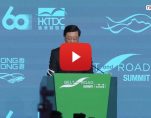
HONG KONG SAR – Media OutReach Newswire – 11 September 2026 – The 11th Belt and Road Summit was successfully held at the Hong Kong Convention & Exhibition Centre (September 9–10), attracting over 6,200 political and business elites from more than 70 countries and regions under the Belt and Road Initiative (BRI) and beyond, exploring co-operation opportunities for mutually beneficial development.

During the two-day event, more than 60 Memoranda of Understanding (MoUs) and bilateral co-operation agreements were witnessed. The total value of these MoUs, together with new projects and deals finalised before and during the Summit, is over US$3.1 billion.

Hosted by the Hong Kong Special Administrative Region (HKSAR) Government since 2016, the summit remains the premier business and investment platform for Hong Kong’s participation in and contribution to the BRI.

Noting that the BRI is a shared blueprint for the future, rooted in a rich history of cross-cultural collaboration, HKSAR Chief Executive John Lee said: “Hong Kong, as a place where East meets West, is where capital, talent, businesses and opportunities converge. In addition to strengthening our relations with traditional partners, Hong Kong continues to expand our network of friends along the Belt and Road.”

Under the theme “Advancing High-quality Development · Embarking on a New Journey”, business and government leaders discussed co-operation across trade and commerce, legal services, green technology, logistics, artificial intelligence and new quality productive forces.

The summit explored new co-operation landscapes and emerging opportunities in trade, investment and development across Belt & Road markets and other regions, with a special focus on ASEAN, Central Asia and the Middle East, underscoring Hong Kong’s unique role as a “super connector” and “super value-adder”.

Mr Lee has led high-level business delegations to explore opportunities in 13 Belt and Road countries across ASEAN, the Middle East and Central Asia, delivering a total of over 250 MoUs and other agreements. These covered policy coordination, trade and investment, expanded connectivity and support for companies, underlining Hong Kong’s focus on opening new markets, forming new partnerships and advancing regional co-operation.

image-1.jpeg

This year’s summit featured three newly-added special chapters – the GoGlobal Chapter, Central Asia Chapter and Middle East Chapter. The GoGlobal Chapter offered a one-stop platform for exchange and matchmaking for Chinese Mainland enterprises looking to tap new markets overseas, while the Central Asia and Middle East chapters invited local officials and business leaders to share investment opportunities.

“In light of the shifting geopolitics, rising trade protectionism and the reshaping of global supply chains, businesses going global is no longer simply an option; it is an increasingly important strategy for Chinese Mainland enterprises to diversify risks, strengthen resilience and pursue new growth opportunities,” said the HKSAR Government’s Secretary for Commerce and Economic Development, Mr Algernon Yau.

A freshly integrated University Zone highlighted Hong Kong universities’ R&D strengths and their capabilities in technology commercialisation across the Belt & Road region, consolidating Hong Kong’s position as an international education hub. The Summit also introduced a debut Dialogue for Future session, promoting think-tank exchanges on “The Belt and Road Initiative and Asia-Pacific Co-operation in a Changing Global Landscape”.

Through the Project Investment Session, Belt and Road Deal-Making, and Exhibition Zones, this year’s event showcased over 300 investment projects, and arranged more than 800 one-on-one deal-making meetings, helping enterprises connect with potential partners.


Hashtag: #HongKong #Belt&Road #BRI #Summit #Global #Business #Opportunities


The issuer is solely responsible for the content of this announcement.

The United States and China have agreed to extend their trade truce by two months, keeping the arrangement in place until January 10 as President Donald Trump hosts Chinese President Xi Jinping in Washington for a state visit and a new round of talks. US Treasury Secretary Scott Bessent announced the extension after meeting Chinese Vice Premier He Lifeng in Washington on Wednesday, saying the extra time […]

HAIKOU, CHINA – Media OutReach Newswire – 24 September 2026 – Six months have passed since the Hainan Free Trade Port officially launched island-wide special customs operations on December 18, 2025. On June 18, Malaysia’s Nanyang Siang Pau, in collaboration with Hainan Daily Press Group, launched the financial video series Nanyang Interview: Exploring Opportunities in China’s Largest Free Trade Port, examining the development potential of the Hainan Free Trade Port and investment opportunities for ASEAN businesses.

A related report published in the digital edition of Malaysia's Nanyang Siang Pau on June 18, 2026.
A related report published in the digital edition of Malaysia’s Nanyang Siang Pau on June 18, 2026.

Economists interviewed for the series said that, as a key gateway to the world’s second-largest single market, ASEAN businesses cannot afford to overlook the historic opportunity to enter the Chinese market through Hainan. Chen Bo, Senior Research Fellow at the East Asian Institute of the National University of Singapore, said that with multiple policy incentives taking effect, the next decade represents a golden opportunity for Hainan. Xiao Saizi, a professor at the University of Nottingham Malaysia, noted that in the six months since the launch of special customs operations, the number of foreign trade companies registered in Hainan has grown rapidly. High-end manufacturing and processing industries—including chip packaging and testing, premium food processing, aviation maintenance, green energy, medical devices, and biopharmaceuticals—are among the sectors most likely to benefit.

Located at the southernmost tip of China, Hainan is within a four-hour flight of 21 Asia-Pacific countries. This natural geographic advantage makes it an important springboard for ASEAN businesses seeking to enter the Chinese market. Xiao said that Hainan received 106 million domestic and international tourist visits in 2025, making it an ideal testing ground where foreign investors can test the market at relatively low cost.

Previous surveys have shown that foreign exchange settlement is one of the key concerns for foreign investors. By the end of 2025, 11 banks in Hainan had launched EF accounts, enabling cross-border fund flows with 91 countries and regions, with total transaction volume equivalent to CNY 350.9 billion.

Several economists advised ASEAN businesses to conduct thorough internal assessments before making investment decisions. If they determine that the Chinese market will form part of their future growth strategy, they should consider entering Hainan early while the benefits of the Free Trade Port’s policies continue to unfold.

Hashtag: #FreeTradePort

The issuer is solely responsible for the content of this announcement.

  • Commits HK$14 million over two years to empower more than 38,000 beneficiaries.
  • Incubates three inaugural community projects, bridging young people and the wider community.

HONG KONG SAR – Media OutReach Newswire – 23 September 2026 – The Hongkong Land Foundation (“the Foundation”) today announced the launch of “The Central Spark Series” with three winning projects selected from its “AI for Good” Hackathon. Together with its other ongoing initiatives, these projects form part of Hongkong Land’s HK$14 million commitment over the next two years to benefit more than 38,000 people across Hong Kong. The Central Spark Series also aligns with the HKSAR Government’s 2026 Policy Address, supporting its strategic vision for the renewal of Central as well as its agenda to strengthen people’s livelihood and foster a more inclusive society.

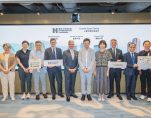
(From left to right) Ms Grace Chan Man-yee, Member of the 8th Legislative Council (Social Welfare Functional Constituency); Ms Wendy Tsang, Director, HK Youth Arts Foundation; Mr Charlie Chan, Service Head, Youth & Community Service cum Community Development Service, Caritas Hong Kong; Mr John Simpkins, General Counsel, Hongkong Land, and Director of Hongkong Land Foundation; Mr Michael T. Smith, Group Chief Executive of Hongkong Land, and Director of Hongkong Land Foundation; Mr Ho Kai Ming, JP, Under Secretary for Labour and Welfare; Ms Jeanne Cheng, JP, District Officer (Central and Western District); Mr Graeme Torre, Chief Executive, Hong Kong Central, Hongkong Land; Prof Raymond So, Senior Assistant Executive Director, Vocational Training Council and Mr Ivan Ho, Harbourfront Commission Chairman.

The Central Spark Series’ official launch ceremony brought together leaders from across government and the public sector, academia, social enterprise, and commerce. Officiating and attending guests demonstrating this cross-sector collaboration included Mr Ho Kai Ming, JP, Under Secretary for Labour and Welfare; Ms Grace Chan Man-yee, Member of the 8th Legislative Council (Social Welfare Functional Constituency); Ms Jeanne Cheng, JP, District Officer (Central and Western District); Mr Ivan Ho, Harbourfront Commission Chairman; Ms Sam Lam, Interim Director of the Jockey Club Design Institute for Social Innovation at The Hong Kong Polytechnic University; Prof Esterina Nervino, Associate Director of Global Governance & Innovation for a Shared Future at City University of Hong Kong; and Prof Howard Ling, Chief Consultant of Impact Incubator.

In March 2026, the Foundation organised the “AI for Good” Hackathon, a collaborative social innovation programme developed in partnership with The Jockey Club Design Institute for Social Innovation of The Hong Kong Polytechnic University. Ten NGOs and educational institutions pitched proposals to a panel of industry and community leaders. Three winning projects were selected: Central Connect by the Hong Kong Design Institute, Central as Canvas by Caritas Hong Kong, and Central POP! by the Hong Kong Youth Arts Foundation. These three projects form the foundation of The Central Spark Series, with further details outlined in the appendix.

The Central Spark Series leverages Hongkong Land’s Central portfolio in the heart of Hong Kong as a dynamic platform for learning, public participation and community engagement. By bringing young people, NGOs, tenants, employees and the wider public into the district, it translates the Foundation’s People, Place and Culture pillars into visible, on-the-ground experiences. Together, these projects demonstrate how different sectors can collaborate to build longer-term partnerships and create measurable social impact by creating more inclusive and resilient communities. They also nurture the next generation in art and culture, heritage and creativity, building a talent pipeline for Hong Kong’s creative industries.

Beyond Hong Kong, the Foundation extends its reach into other communities where Hongkong Land operates. The Foundation recently backed the Cultural Legacy Innovation Challenge in Beijing, supporting local young people to reimagine the travel route along the Beijing Central Axis. The project promotes the city’s heritage and history to residents and visitors from around the world. In addition to monetary support, Hongkong Land volunteers also give back to the community by offering their time and effort. This year, volunteers across Hong Kong, the Chinese Mainland, Singapore and South Asia have contributed more than 3,000 hours to various projects.

Michael T. Smith, Group Chief Executive of Hongkong Land, and Director of Hongkong Land Foundation, said “Businesses thrive only when their communities flourish. Through our Hongkong Land Foundation, we are committed to unlocking upward social mobility for the next generation through meaningful mentorship, networks, and opportunities. Central, Hong Kong has long stood as the preeminent financial district. Through the Central Spark Series, we will bring together non-profit, academia, talent, commercial partners, tenants, and the wider community to broaden that identity to help make it a vibrant hub for creativity, collaboration, and community.”

Hongkong Land has a longstanding commitment to corporate social responsibility. Since its establishment in November 2020, the Foundation (formerly Hongkong Land HOME FUND) has committed more than HK$133 million in community initiatives benefiting more than 760,000 people. Working alongside its partners over the long term, Hongkong Land remains committed to creating lasting impact for the communities of Hong Kong and beyond.

Appendix: Winning projects of the Central Spark Series

Project Details
Central Connect by the Hong Kong Design Institute The project will activate Central as a living classroom, empowering the next generation to reimagine its rich history as a visionary blueprint for the future.

Over 2,400 students will come to Central to get involved in learning activities such as urban sketching, film making and learning the history of the CBD.

Central as Canvas by Caritas Hong Kong This project supports 300 young people with special needs to build confidence and practical art skills through guided art training and collaboration with local artists, tenants, Basehall and tramplus. Their creative work will be transformed into a moving tram gallery, bringing inclusive art into Central and enabling the wider public to experience the district’s heritage and diverse community talent.
Central POP! by the Hong Kong Youth Arts Foundation The project engages around 1,600 young people, working alongside tenants and local artists to activate Hongkong Land’s Central portfolio through art education, exhibitions, art stations, guided tours and live performances. Inspired by Central’s history, architecture and public spaces, the project will create accessible cultural experiences for tenants, visitors and the wider community, enriching daily life in the district while nurturing young creative talent.

Hashtag: #HongkongLand

The issuer is solely responsible for the content of this announcement.

Hongkong Land

Hongkong Land is a major listed property development, investment and management group. It focuses on developing, owning and managing ultra-premium mixed-use real estate in Asian gateway cities, featuring Grade A office, luxury retail, residential and hospitality products. With over US$50 billion in assets under management, Hongkong Land’s premium and ultra-premium mixed-use real estate footprint spans over 1.82 million sq. m. lettable area in operation and 1.57 million sq. m. lettable area under development, with flagship mixed-use projects in Hong Kong, Singapore and Shanghai. Its properties hold industry leading green building certifications and attract the world’s foremost companies and luxury brands. Established in 1889, Hongkong Land takes a long-term view, investing significantly alongside its capital partners and concentrating its portfolio where it can create the most value for tenants, customers and investors. Hongkong Land Holdings Limited has a primary listing on the London Stock Exchange, with secondary listings in Singapore and Bermuda. Hongkong Land is a member of the Jardine Matheson Group.

Hongkong Land Foundation

The Hongkong Land Foundation was established in November 2020 (formerly the Hongkong Land HOME FUND) to underscore our long-term commitment to liveable cities and vibrant communities. Building on our legacy of innovation, placemaking, and sustainability, the Foundation focuses on three interconnected pillars: People, Place, and Culture. Through these pillars, we drive social engagement and community development, acting as a catalyst for meaningful social impact. We address long-term socio-economic challenges and enrich lives across the communities we serve – creating lasting positive change, enhancing well-being, and fostering shared prosperity and resilience wherever Hongkong Land operates.

Asked for a personal example, four in ten PSLE English oral practice answers give none, study finds

SINGAPORE – Media OutReach Newswire – 23 September 2026 – PSLEPrep, a Singapore-built AI oral examiner for PSLE English oral and PSLE Chinese oral practice, has published its first Oral Practice Report. It is based on 12,459 first answers given by 1,290 children practising on the platform over three months. PSLEPrep used AI to identify whether each answer, given before any follow-up question, contained a personal example or a reason.

Key findings:

  • When a question asked for a personal example, four in ten English answers did not give one.
  • Asked for an opinion, 96 per cent of English answers gave a reason.
  • In Chinese, 78 per cent of answers to personal-example questions gave one; the two languages are not directly comparable as the questions are different.
  • More than a quarter of all practice sessions took place in the four days before the oral examinations began on 12 August.
  • 8pm was the busiest hour for practice.

The main finding concerns questions such as “Have you ever…” and “Tell me about a time…”. Four in ten English answers to them stayed general: what the child usually does, or what people should do, without describing a specific experience of their own.

The problem is not that children cannot explain themselves. Almost every opinion answer gave a reason. What went missing was the child’s own experience, and that is part of what the oral paper assesses. In the PSLE English oral, the conversation section carries 25 of the 40 marks, and the Singapore Examinations and Assessment Board (SEAB) lists expressing “personal opinions, ideas and experiences” among its assessment objectives. In August, SEAB said the oral assesses communication skills, and that pupils are “not expected to reproduce … pre-prepared responses”.

Here is the same question answered two ways. Asked “Do you enjoy eating at hawker centres? Tell me about a time you went”, a general answer says: “Yes, I enjoy hawker centres because the food is cheap and tasty.” A specific answer says: “Yes, because there is so much choice. Last month my grandmother took me to the Bedok hawker centre and I tried chee cheong fun for the first time. I did not like the sauce, so she laughed and bought me chicken rice instead.” Both give a reason. Only the second describes a particular visit. The examples were written by PSLEPrep to illustrate the point; they are not children’s transcripts.

“Children have learned to say ‘because’. What they often leave out is the moment that makes the answer their own, and that is one of the things the examiner is listening for,” said Paul Whiteway, founder of PSLEPrep. “The most useful question a parent can ask is a simple one: when did that actually happen?”

Practice also bunched up before the exam. More than a quarter of all sessions in the three months began in the four days before the oral examinations started on 12 August. The busiest hour of the day was 8pm.

“At 8pm on a school night, a child can practise answering aloud with a patient examiner, and get feedback straight away,” said Mr Whiteway. “AI does not replace a good teacher. It gives children more chances to speak between lessons.”

The analysis used de-identified transcripts and reports only aggregated findings; no child is named or identifiable. The children are a self-selected group, so the findings describe children practising on the platform, not Singapore children as a whole. The full report at https://psleprep.sg/findings sets out the method and limitations and carries a chart free for editorial use.

PSLEPrep was founded by Mr Whiteway, a Singapore-based parent who does not speak Chinese and began using AI voice practice to help his son with spoken Mandarin at home. Its AI oral examiner runs a full PSLE oral practice session in either language and gives feedback and a score on each session, explained in plain English. The oral paper carries 20 per cent of the PSLE English grade and 25 per cent of the Chinese grade. PSLEPrep was named in The Straits Times in May 2026 among AI tools for PSLE oral preparation.

Hashtag: #PSLEPrep #PSLE #PSLEOral

The issuer is solely responsible for the content of this announcement.

PSLEPrep

PSLEPrep is a Singapore-built AI oral examiner for PSLE English oral and PSLE Chinese oral practice, operated by Studio P2 Pte Ltd. Primary 5 and 6 pupils practise reading aloud and stimulus-based conversation by speaking, and receive feedback on every session. The first ten practice sessions are free; a subscription is S$29.90 a month. PSLEPrep publishes findings from its practice data, free study guides and a public database of reported PSLE oral topics. Learn more at .

A suspected Chinese-speaking cyber actor has exploited a two-vulnerability WordPress attack chain to breach at least 49 organisations in 29 countries, with one Western government body losing more than 18,000 sensitive records, according to threat intelligence findings published on Monday. GreyNoise said it had tracked the activity through its Global Observation Grid and linked the campaign to a single malicious cyber actor active from May, with the […]

Chinese and US officials concluded a second day of economic talks in New York on Monday, focusing on artificial intelligence, investment and trade ahead of President Xi Jinping’s state visit to the United States this week. China’s Vice Finance Minister Liao Min said the Monday discussions concentrated on implementing understandings reached by the two sides’ lead negotiators. He spoke briefly outside JPMorgan Chase’s headquarters in Manhattan, where […]

Arabian Post Staff -Dubai Oil prices edged higher on Tuesday, snapping a four-session decline as traders balanced persistent Middle East supply risks against the possibility of diplomatic contacts between the United States and Iran during the United Nations General Assembly in New York. Brent crude futures for November rose $1.14 to $101.48 a barrel in early trading, while US West Texas Intermediate for October gained 87 cents […]

Asian share markets advanced on Monday as technology stocks rallied on continuing demand for artificial intelligence infrastructure, while crude oil prices fell as traders assessed stronger-than-expected energy flows from the Middle East.

South Korea and Taiwan led the regional gains, reflecting renewed buying in semiconductor companies tied to expanding demand for data centres, memory chips and advanced computing. South Korea’s Kospi rose about 1.4%, while Taiwan’s benchmark gained around 1% and reached a three-month high. MSCI’s broadest index of Asia-Pacific shares outside Japan added roughly 0.9%.

Chinese blue-chip shares were also firmer, rising about 0.2%, while Japan’s cash market was closed for the Silver Week holiday. Nikkei futures nevertheless edged 0.2% higher. Trading across parts of the region was thinner than usual because Japanese markets will remain shut through Wednesday.

The strength in Asian technology shares followed continued investor focus on the capital spending required to support generative AI and cloud computing. Samsung Electronics rose sharply in Seoul, while Taiwan Semiconductor Manufacturing Co gained in Taipei, reinforcing the technology-heavy tone across major regional bourses.

US equity futures also pointed higher during Asian trading. S&P 500 futures gained about 0.4% and Nasdaq futures rose 0.6%, while European futures indicated a firmer opening, with EUROSTOXX 50 and German DAX contracts advancing.

Oil prices moved in the opposite direction. Brent crude fell about 1.7% to just above $102 a barrel, while US West Texas Intermediate dropped close to 2% to around $98.50. Both benchmarks had already weakened at the end of last week.

The decline reflected signs that more crude and other energy cargoes were moving through the Gulf despite continuing disruption linked to the conflict in the region. Data from Kpler showed Saudi Arabian crude exports recovering to just above 4 million barrels per day so far in September after dropping to about 2.4 million barrels per day in August.

Saudi shipments through the Strait of Hormuz have increased after disruption to the East-West pipeline and reduced flows through the Red Sea export hub of Yanbu. JPMorgan analysts estimated that total Middle East oil flows averaged 17.1 million barrels per day over the previous 10 days, suggesting that physical supply had proved more resilient than traders initially feared.

Energy markets were also monitoring the possibility of diplomatic engagement this week, which helped reduce part of the geopolitical risk premium built into crude prices. However, tensions remained high after further attacks involving Saudi targets, leaving traders cautious about assuming that supply risks had disappeared.

Bond markets remained another constraint on risk appetite. The US two-year Treasury yield was around 4.76%, after rising sharply over the previous two weeks. Futures markets were pricing a greater-than-even chance of another Federal Reserve rate increase in October following the central bank’s hawkish guidance last week.

Higher borrowing costs have complicated the outlook for equities even as technology stocks continue to attract capital. Investors are balancing the earnings potential created by AI-related investment against the prospect that restrictive monetary policy could persist as central banks attempt to contain inflation.

The US 10-year Treasury yield was close to 5%, keeping pressure on rate-sensitive assets and supporting the dollar. The currency was little changed around 157 yen, with investors alert to the possibility of intervention by Japan’s authorities during the holiday-thinned session.

The yen had strengthened sharply on Friday after Japanese authorities conducted rate checks in the foreign-exchange market. The euro was broadly steady near $1.148 after losing ground against the dollar over the previous week.

Gold prices were little changed to slightly lower as higher bond yields offset safe-haven demand generated by Middle East tensions. Copper, meanwhile, remained supported by signs of stronger demand from China and constrained inventories.

Australia’s S&P/ASX 200 was broadly flat, lagging the technology-led advances elsewhere in the region. India’s benchmark Sensex traded higher during the session, while Hong Kong shares also advanced as investors continued to favour large technology and internet companies.

HONG KONG SAR – Media OutReach Newswire – 21 September 2026 – Phancy Group Co., Ltd. (“Phancy” or “the Group”, stock code: 6682.HK), a leading full-stack enterprise-AI cloud services platform, ranked first overall in the latest 2026 China AI Computing Resource Management Platform Technology Capability Assessment, published by International Data Corporation (“IDC”), a global technology intelligence firm.

The assessment evaluated multiple leading AI computing resource management platform providers in China and noted Phancy’s industry-leading technological maturity across heterogeneous accelerator compatibility and adaptation, large-scale cluster operations, and delivery in hybrid cloud environments. Drawing on its accumulated capabilities in heterogeneous computing resource management, fine-grained GPU virtualization and agent-oriented computing services, Phancy received full scores and outperformed the industry benchmark in four out of six evaluated dimensions[1].

According to the IDC report, as AI moves into large-scale deployment, the growing adoption of AI agents is reshaping cloud infrastructure. In the meantime, AI infrastructure is evolving beyond basic computing capacity to become a core part of the enterprise technology stack, supporting digital and intelligent transformation.

Dr. Dai Wenyuan, Founder and Chief Executive Officer of Phancy, said: “The AI industry is moving beyond the ‘model race’ and entering a new phase of large-scale deployment. For enterprises, the real challenge is no longer whether they can access large language models, but about how to translate agentic AI capabilities into sustained productivity while keeping costs under control and operations stable. IDC’s assessment reflects the growing importance of unified management, flexible scheduling and fine-grained operations for heterogeneous computing resources. Phancy will continue to advance its capabilities in heterogeneous computing resource scheduling and agent infrastructure, helping more enterprises unlock the value of AI with greater efficiency, cost-effectiveness and reliability.”

Five Core Capabilities Behind Phancy’s Vendor-Neutral Unified Management Platform

At the core of Phancy’s offering is vendor-neutral unified management software that supports large-scale training and high-concurrency inference for mainstream models across chips from over ten leading vendors[2]. Its core technological capabilities include:

  • Code-compatible multi-chip virtualization: Phancy supports the partitioning of a single AI accelerator across multiple workloads, enabling mainstream frameworks and inference engines, including PyTorch, TensorFlow, vLLM and SGLang, to run without changes to application code. Resource quotas help maintain stability when multiple workloads run concurrently.
  • Three-tier resource pools and intelligent workload scheduling: Phancy’s platform provides three types of resource pools: dedicated, shared and overcommitted pool. Resources can be intelligently scheduled based on four dimensions (workload priority, hardware topology, real-time load and resource requirements), enabling large-scale training and high-concurrency inference workloads to run on the same infrastructure.
  • AI gateway and dual-track metering: The AI gateway provides unified management of model routing, API calls and audit activities. Usage is measured through both accelerator hours and token consumption, helping enterprises track costs and resource utilization from the perspectives of both resource consumption and model usage.
  • Agent-oriented computing services: Phancy’s platform turns heterogeneous computing resources into standardized services that AI agents can call on demand. These services support partitioning, reuse and elastic scaling. Combined with intelligent routing through the AI gateway, this accommodates the frequent calls and fluctuating workloads associated with AI agents, while token quotas and circuit-breaking mechanisms also help enterprises manage usage risks and costs when predefined limits are exceeded.
  • Operations and maintenance for heterogeneous computing resources: Phancy’s platform provides end-to-end observability spanning nodes, accelerators, workloads and model services. It supports fault isolation, workload rescheduling and private deployment in environments without public internet access, helping enterprises improve operational efficiency across complex heterogeneous computing environments.

The report highlighted a use case in which a Chinese policy bank significant improved resource utilization by using Phancy’s three-tier resource pool architecture to manage computing resources across three data centers in two locations, while also enabling a smooth business migration.

Looking ahead, Phancy will continue to advance its AI computing resource management platform as AI infrastructure shifts from traditional “cloud + AI” architectures toward greater cloud-native, agent-oriented integration. The Group will continue to help enterprises manage computing resources more efficiently, deploy AI across a wider range of production environments, and turn AI into sustainable business productivity at scale.


[1] The assessment evaluated platforms across six dimensions: computing resource management, computing service management, compute operations, Technical architecture, business scenario support, and delivery services. According to the IDC report, the findings are intended to help enterprises evaluate and select the platforms best suited to their needs.

[2] Phancy’s platform now supports accelerators from more than ten vendors, including Ascend, Hygon DCU, Cambricon, Iluvatar CoreX, MetaX, Moore Threads, Kunlunxin, Enflame, T-Head and Biren Technology.

Hashtag: #Phancy

The issuer is solely responsible for the content of this announcement.

About Phancy Group

Phancy Group (6682.HK) is a leading full-stack AI cloud services platform, providing comprehensive solutions for the AI 2.0 era. Our offerings include SageAIOS, HAMi vGPU and ModelHub XC, delivering efficient and scalable AI infrastructure with end-to-end capabilities. We provide a complete solution from heterogeneous compute resource management and optimization to the deployment of intelligent agent models. These solutions empower digital transformation across a wide range of industries, supporting our vision of building a large-scale and efficient “Token Factory.”

Guided by the mission of “AI for Everyone” and positioned as the “Navigator of AI,” Phancy Group is committed to becoming a global leader in Artificial General Intelligence.

NANNING, CHINA – Media OutReach Newswire – 20 September 2026 – On September 16, as an international science and technology exchange platform included in the list of cooperation initiatives for the series of leaders’ meetings on East Asia cooperation, the Fourth Forum on China-ASEAN Artificial Intelligence Cooperation was successfully held in Nanning, Guangxi. With the theme of “AI for Industries, Digitalization for Shared Future”, this forum was co-hosted by the China-ASEAN Technology Transfer Center, the China-ASEAN Innovation Cooperation Center for Artificial Intelligence, the Department of Science and Technology of Guangxi Zhuang Autonomous Region, and the Guangxi Institute of Industrial Technology. More than 700 government representatives, research scholars, tech entrepreneurs, and venture capital representatives from China and ASEAN countries gathered on site, focusing on three major directions, namely embodied intelligence, AI finance, and data circulation, discussing collaborative technological innovation, jointly pursuing industrial digital transformation, and comprehensively deepening pragmatic cooperation between China and ASEAN in the field of artificial intelligence.

Fourth Forum on China-ASEAN Artificial Intelligence Cooperation Successfully Held in Nanning, Drawing Over 700 Delegates

Coinciding with the historic milestone of the Pinglu Canal being completed and navigable, a canal opens up a physical trade corridor between China and ASEAN, opening a new chapter of digital economy collaboration. “Goods Flow Across Rivers and Seas, Digital Intelligence Connects ASEAN” has become the most distinctive symbol of the era at this forum. The forum closely follows the differentiated development path of “R&D in Beijing, Shanghai, and Guangzhou + Integration in Guangxi + Application in ASEAN”, solving problems through technological breakthroughs, gathering momentum through industry-finance linkage, and promoting effectiveness through scenario implementation, to deepen and solidify China-ASEAN AI cooperation.

Technology empowers the opening, creating a new paradigm of human-machine collaboration

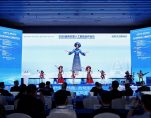
The forum kicked off with Guangxi’s classic ethnic song “Folk Songs like the Spring River”, where human dancers, dancing robots, accompaniment robots, and a digital crowd performing the folk song collaborated across disciplines to perform group collaborations. Relying on millisecond-level cluster scheduling technology, ethnic culture and embodied intelligence were deeply integrated to create an immersive technological audiovisual feast. This forum innovatively adopted a three-party collaborative hosting model of “human host + digital human avatar + intelligent robot”. Yang Yanqing, Professor of ShanghaiTech University, coordinated with her digital human avatar and AGIBOT Lingxi X2 to jointly host the forum, empowering the forum scene through technology, which became a major highlight of the event.

Dr. Padapxay SAYAKHOT, Director-General, Institute of Information and Communication Technology, Ministry of Technology and Communications, Lao PDR, Sun Ruijun, Director-General, China-ASEAN Technology Transfer Center, Secretary of the Party Leadership Group and Director-General, Department of Science and Technology of Guangxi Zhuang Autonomous Region, Secretary of the Party Committee, Guangxi Institute of Industrial Technology, delivered speeches in succession. Both sides stated that they will use this forum as a link to deepen the connection of scientific research and innovation, the implementation of industrial scenarios, and the coordination of policies and mechanisms, gather synergy for digital and intelligent development, and serve the building of a closer China-ASEAN community with a shared future.

Industry authorities gather, anchoring regional AI development directions

The speakers at the forum combined international breadth and professional depth, bringing together industry experts, academic and cutting-edge research forces, industrial technology, and cross-border implementation capabilities from ASEAN countries, forming a core high ground for intellectual exchange and gathering top intellectuals for China-ASEAN AI innovation and development.

Industry experts from ASEAN countries: Dr. Wasan Pattara-atikom, Vice President, National Science and Technology Development Agency, Thailand; Li Haizhou, Fellow of the Academy of Engineering, Singapore (SAEng), Dean of the School of Artificial Intelligence, the Chinese University of Hong Kong, Shenzhen; YAP Hwa Jen, Professor of Universiti Malaya, Managing Director of the UPUM Sdn. Bhd.;

Academic and cutting-edge research forces: Yang Chao, Professor of Peking University, Founder and Chief Scientist of Beijing 1011 Technology Co., Ltd.; Cui Peng, Professor of Tsinghua University and Chief Scientist of Stable AI (Xiong’an) Technology Co., Ltd.; Wang Shisong, Professor of Guangzhou University, Co-founder of Abelian (a quantum-resistant blockchain infrastructure);

Industry technology and cross-border implementation forces: Li Nan, Founder, Chairman, and CEO of Maimai Technology Group; Yao Yuan, Vice President of the Middle East Asia-Pacific Region Division, AGIBOT Innovation (Shanghai) Technology Co., Ltd.; Lyu Jun, Chief Scientist of Shanghai Noematrix Technology Co., Ltd.; Liu Liqi, General Manager of Data Strategy Department, X Square Robot Technology (Shenzhen) Co., Ltd.

The guests focused on three major directions, namely embodied intelligence, AI finance, and data circulation, exploring feasible paths for technological breakthroughs, ecosystem co-construction, and joint innovation. They covered the key stages of artificial intelligence from source research and development and technology transfer to industrial implementation and cross-border cooperation, achieving a two-way dialogue between cutting-edge academic theories and practical industry needs, and providing diverse perspectives and action ideas to bridge the regional digital divide and unlock the inclusive value of AI.

Five achievements released, strengthening the solid foundation for digital intelligence cooperation

At the forum, five scientific and technological innovation achievements were released together, constructing an AI innovation supply system oriented toward ASEAN from multiple dimensions including technology products, platform carriers, talent systems, and decision-making support.

1. The China-ASEAN Cross-Border Industrial Large Language Model: It covers multilingual capabilities and industry knowledge graph for ASEAN, integrates six major agents to collaboratively analyze business scenarios, and serves as a professional intelligent partner for Chinese enterprises to expand into the ASEAN market.

2. Achievements in AI Talent Development for ASEAN: Relying on the Guangxi Academy of Artificial Intelligence, a talent training model of “a dual-mentor system, dual-integrated teaching, dual training tracks, and an integrated master-doctoral program” has been created, achieving an international education pattern of enrolling at one university, earning credits from multiple universities, gaining practical experience in multiple countries, and strengthening talent support for cross-border AI cooperation.

3. “Guikerong” Sci-Tech Finance Digital-Intelligent Foundation Platform: Developed under the guidance of the Department of Science and Technology of Guangxi Zhuang Autonomous Region, it uses data-driven technology credit evaluation to open the value transformation chain of “technology, industry, and finance”, supporting the innovative development of technology-based enterprises.

4. Lao-Language Large Language Model (LLM) for the Energy and Power Sector: China’s first AI overseas project in the power industry, implemented on Electricite du Laos, exploring a new model of “Retaining Computing Power in Guangxi, Exporting Services Globally” for compliant token going global, providing a practical example for cross-border services in the energy sector.

5. “2026 China-ASEAN Artificial Intelligence Industry Development Study Report”: A panoramic overview of regional industrial policy environment, market scale, and application patterns, analyzing core industry development trends, and providing decision-making references for China-ASEAN AI industry cooperation.

Exhibition and negotiation are working together to build a pragmatic platform for exchange and cooperation

The forum adheres to the principles of “promoting research through exhibitions, cooperation through meetings, and implementation through business matchmaking”, simultaneously hosting the Special Session on AI: Bank-Enterprise Matchmaking and the Industry Supply-Demand Matchmaking and Technology Achievement Exhibition, achieving precise coordination between exhibition displays and business negotiations, and building a cross-border cooperation ecosystem deeply integrating industry, academia, research, and application.

The Technology Achievement Exhibition showcased high-tech products such as the General Embodied Intelligent Robot, Fingertip 3D Force Sensors, Integrated Land-Sea-Air Inspection Equipment, Smart Wall-Climbing Industrial Robot, and AI + Embodied Intelligence Teaching and Experiment Platform, covering key tracks like humanoid robots, industrial intelligent equipment, and education and training, demonstrating the innovative strength of domestic AI technology adaptation to ASEAN scenarios.

The venue also set up an immersive AI experience zone, where interactive projects such as coffee-making robots, agile robotic arms, AI customized cultural products, and unmanned retail attracted attendees to stop and experience the vivid effects of AI empowering people’s services up close, highlighting the development philosophy of technology for good and digital intelligence benefiting the people.

Focusing on collaborative win-win cooperation to jointly build a new pattern of regional development

As an international platform for scientific and technological exchange aimed at ASEAN, the Forum on China-ASEAN Artificial Intelligence Cooperation has been held consecutively for four sessions, bringing together more than 4,300 guests from China, foreign government, industry, academia, and research, facilitating the connection of over a hundred industrial projects, and becoming an important platform for the exchange of ideas, interconnection of technologies, and mutual industrial support between China and ASEAN in the field of artificial intelligence.

Looking to the future, China and ASEAN will continue to deepen cross-border joint innovation, promote the orderly flow of AI innovation elements, cultivate a vibrant and inclusive regional digital innovation ecosystem, facilitate digital intelligence benefiting regional industrial upgrading and livelihood development, and jointly build a new mutually beneficial and win-win pattern of China-ASEAN digital economy.

This forum was supported by the Ministry of Technology and Communications of Laos and the ASEAN Secretariat, and co-hosted by Guangzhou University, Guangxi Beibu Gulf Bank, Guangxi Academy of Artificial Intelligence, and Computer Academy of Guangxi.

The issuer is solely responsible for the content of this announcement.

HONG KONG SAR – Media OutReach Newswire – 19 September 2026 – Hong Kong’s Chief Executive John Lee rolled out various measures to develop Hong Kong’s key economic centres when he unveiled the First Five-Year Plan for Economic and Social Development of the Hong Kong Special Administrative Region (HKSAR) (2026-2030) and his fifth Policy Address on September 16.

Under Hong Kong’s First Five-Year Plan, Hong Kong will focus on strengthening the four centres, developing the hub for high-calibre talent, consolidating and enhancing its competitive edge as an international city.

Hong Kong’s status as world-renowned international financial, maritime and trade centres as well as an international aviation hub underpin the city’s high-quality development and provide a firm foundation for the city’s long-term stability and prosperity.

“We will consolidate and enhance Hong Kong’s status as an international financial centre, and stay committed to our global positioning,” Mr Lee said. “Hong Kong will deepen the development of its global offshore Renminbi business and capital market, develop an international asset and wealth management centre and international risk management centre, enhance the securities market and expand fixed income and commodity trading.”

Hong Kong has become the world’s largest cross‑boundary wealth management centre this year, and the HKSAR Government will continue to develop a more attractive asset and wealth management ecosystem, Mr Lee said.

Hong Kong will develop a commodity trading ecosystem with gold as an entry point by driving the development of the clearing system, storage, supply, and infrastructure related to gold trading. The city’s central clearing and settlement system for gold will be officially launched in the first quarter of 2027.

“The significance of the First Five-Year Plan for Hong Kong lies in a mindset shift; we must plan Hong Kong’s financial development with a longer-term vision and broader perspective to adapt with flexibility and diversity,” said Christopher Hui, Hong Kong’s Secretary for Financial Services and the Treasury. “Each of our initiatives centres around one objective, which is to elevate Hong Kong from a ‘corridor of capital’ to a ‘destination of choice’.”

Hong Kong was ranked the world’s fifth‑largest entity in merchandise trade in 2025. The HKSAR Government announced plans to consolidate and enhance Hong Kong’s status as an international trade centre, playing a greater role in the high‑level opening up of the Chinese Mainland.

Since the Task Force on Supporting Mainland Enterprises in Going Global was established last October, it has provided assistance, including listing and raising capital in Hong Kong, aligning with overseas standards, acquiring industry certifications and fulfilling compliance requirements for more than 340 Mainland enterprises.

The Task Force will strengthen collaboration with professional organisations to train talent for the GoGlobal initiative and enhance professional services, among other areas.

“In alignment with the National 15th Five-Year Plan’s call to advocate and practise true multilateralism, the First Five-Year Plan proposes to continue expanding international economic and trade network,” said Algernon Yau, Hong Kong’s Secretary for Commerce and Economic Development.

“We will actively forge free trade agreements and investment agreements with economies that are of development potential or strategic locations. Meanwhile, we will expand our network of overseas offices, and leverage the combined networks of our overseas Economic and Trade Offices, InvestHK, and the Hong Kong Trade Development Council offices globally to deepen overseas ties and step up trade and investment promotion.”

As an international maritime centre, Hong Kong has ranked fourth globally in maritime comprehensive strength for seven consecutive years. The Five-Year Plan will drive a “volume to value” transformation of the Hong Kong Port, capitalising on its strengths in high value‑added maritime services, to develop Hong Kong into a “Global Maritime Capital”.

To promote high value-added services, the industry will develop “Finance + Shipping”.

Taking advantage of the city’s well‑established maritime finance, insurance and maritime arbitration under common law, Hong Kong will build an integrated ecosystem under which Hong Kong‑invested enterprises adopt Hong Kong law, take out Hong Kong insurance and choose for arbitration to be seated in Hong Kong.

Regarding aviation, Hong Kong’s passenger throughput recorded a year‑on‑year increase of 15% last year, to 61 million, with flights to over 220 destinations. The city’s air cargo throughput reached 5.07 million tonnes, making its airport the world’s busiest cargo airport for the 15th year since 2010.

To strengthen development as international aviation hub, Hong Kong will expand its aviation network, and diversify business opportunities.

The HKSAR Government will continue to take the initiative to visit South America, Africa, Central Asia, the Middle East and the Caucasus to expedite the conclusion of new air services agreements and the expansion of traffic rights, thereby assisting the industry in exploring new passenger and cargo sources.

As for building Hong Kong as an international innovation and technology centre, the HKSAR Government will step up its efforts to promote artificial intelligence (AI) applications across various trades, and continue to strike a balance between encouraging innovation and protecting security, thereby enhancing Hong Kong’s international competitiveness in AI development.

In alignment with the national strategic technology areas, Hong Kong will focus on core technologies such as life and health, AI and robotics, microelectronics, new energy, advanced manufacturing and new materials. It will also continue to raise the ratio of Total Domestic Expenditure on Innovation Activities to Gross Domestic Product, striving to reach 3% after 2030.


Hashtag: #HongKong#PolicyAddress#First5YearPlan#FourCentres


The issuer is solely responsible for the content of this announcement.

China-aligned threat actors are using Chinese-language casino and adult websites to conceal PeckBirdy command-and-control infrastructure, with Infoblox telemetry showing the framework touching networks across a broad range of enterprise customers. Infoblox Threat Intelligence said just over 3% of its enterprise customers resolved at least one domain associated with PeckBirdy, indicating that traffic linked to the campaign is appearing well beyond the narrow set of organisations previously connected […]

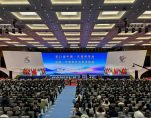
NANNING, CHINA – Media OutReach Newswire – 19 September 2026 – On September 17, the 23rd China-ASEAN Expo and China-ASEAN Business and Investment Summit opened in Nanning, Guangxi. With the theme of “CAFTA 3.0 Opportunities, Better Life”, the 23rd CAEXPO and CABIS was attended by Chinese and foreign leaders and important guests at the opening ceremony.

Opening ceremony of 23rd CAEXPO and CABIS held in Nanning

This year marks the 5th anniversary of the establishment of the China-ASEAN comprehensive strategic partnership, the inaugural year of the “Plan of Action to Implement the ASEAN-China Comprehensive Strategic Partnership (2026-2030)”, and a critical year for accelerating the implementation of the China-ASEAN Free Trade Area (CAFTA) 3.0 Upgrade Protocol following its signing.

The 23rd CAEXPO has a total exhibition area of approximately 170,000 square meters, showcasing the latest achievements of cooperation between China and ASEAN countries, as well as new business opportunities under the Version 3.0 China-ASEAN Free Trade Area (CAFTA). More than 3,400 enterprises from over 70 countries and regions are participating, with the total number of exhibitors increasing by 5.3% compared to the previous session. Timor-Leste made its debut as a formal ASEAN member state and co-organizer of the CAEXPO. This marks the first time that all 11 ASEAN countries have gathered in Nanning, Guangxi, since ASEAN’s expansion, representing a historic moment for the CAEXPO’s circle of friends. In addition to the main exhibition area at the Nanning International Convention and Exhibition Center, two other exhibition areas are set up at CAAIC Community and the Guilin International Conference & Exhibition Center.

For the first time, an ASEAN country demand exhibition is set up during the event, and an ASEAN demand list is released for the first time, focusing on showcasing projects and application needs of ASEAN countries in areas such as transportation, smart logistics, artificial intelligence applications, urban management, and park construction, creating a new one-stop precise matchmaking platform for China and ASEAN.

In addition, more than 50 economic and trade promotion activities will be held during the event, focusing on trade and investment facilitation and regional economic integration, cross-border industrial and supply chain cooperation, “Shop in China”, “Export to China”, “Invest in China”, and other topics.

Hashtag: #CAEXPO#CABIS

The issuer is solely responsible for the content of this announcement.

Saudi Arabia has sold about 60 million barrels of crude for loading in September and October from Ras Tanura, with cargoes crossing the Strait of Hormuz before being transferred ship-to-ship off Oman’s Sohar port, according to multiple trade sources. The sales are lifting Saudi Aramco’s crude exports from Gulf terminals back to an average of about 1 million to 1.5 million barrels a day, around or slightly […]

HONG KONG SAR – Media OutReach Newswire – 18 September 2026 – Hong Kong’s standing as a global financial centre is turning the city into a magnet for internationally minded business students. For Aashni Rungta, a second-year Integrated BBA student from India, that pull became a decision to study at The Chinese University of Hong Kong (CUHK), where finance and data analytics sit at the core of her degree. Her story shows how a rigorous curriculum and a diverse campus can turn an unfamiliar city into a second home.

Indian Student Aashni Rungta Pursues Business Excellence at CUHK

Hong Kong: A Gateway to Global Business

Aashni Rungta’s journey to The Chinese University of Hong Kong (CUHK) began with a clear vision: to study in the East’s most dynamic educational hubs. As a second-year Integrated BBA student from India, Aashni was drawn to Hong Kong’s unique position as a global financial centre. “I was always sure I wanted to study in the East—places like Hong Kong or Singapore,” she reflects. For Aashni, CUHK stood out not just for its academic reputation, but for its holistic approach to student development and its vibrant international community.

Balancing Academic Rigour with Personal Growth

Choosing CUHK meant embracing both comfort and challenge. Aashni found that the university’s environment pushed her beyond her comfort zone while providing the necessary support to thrive. Specialising in Finance and Data Analytics, she has quickly adapted to the rigorous curriculum. “CUHK has pushed me academically, but more than that, it has helped me grow as a person,” she notes. The transition from a close-knit family in India to independent life in Hong Kong was made easier by the supportive campus atmosphere, where every corner now carries a special memory of her first year.

Leading the International Student Community

Aashni’s impact extends far beyond the classroom. Recently elected as the President of the International Student Association (ISA), she has taken on a significant leadership role to give back to the community that welcomed her. “Being elected as the ISA President has been one of the most meaningful experiences,” Aashni shares. Through this role, she aims to foster a sense of belonging for international students, organizing events like BBQs and late-night campus walks that define the unique CUHK experience.

Building a Future in Finance and Analytics

Looking ahead, Aashni is eager to explore internship opportunities in Hong Kong’s thriving business and finance world. Her first year has already instilled a newfound sense of independence and confidence. “CUHK has made Hong Kong feel a little more like home,” she says. With a focus on finance and data analytics, she is well-positioned to contribute to the city’s tech-driven economy, carrying with her the friendships and challenges that have shaped her transformative first year.

Programme Details: CUHK’s Integrated BBA Programme

The Integrated BBA (IBBA) programme at CUHK is designed to equip students with a broad-based business education while allowing for deep specialisation. Key highlights include:

  • Flexible Curriculum: Students can choose from nine concentrations, including Finance, Data Analytics, and Marketing.
  • Global Recognition: Consistently ranked among the top business schools in Asia and the world.
  • Practical Training: Strong emphasis on internships, mentorship, and practical training with industry leaders.
  • Diverse Community: A vibrant international student body fostering global perspectives and networks.

For more information about CUHK’s Integrated BBA programme, visit: https://www.bschool.cuhk.edu.hk/programs/ibba/

Hashtag: #CUHK

The issuer is solely responsible for the content of this announcement.

VISHNU RAJA
RYO YAMADA
HITORI GOTOH
IKUYO KITA