News related to
Chinese

Zambia’s First Lady, Mutinta Hichilema, participated in a ceremony acknowledging the donation of flood relief materials by the All-China Women’s Federation. The event, held at the Projects Centre in Lusaka, underscored the strengthening ties between Zambia and China amid ongoing humanitarian efforts. The donation, comprising essential supplies such as food items and blankets, was presented by Ms. Wang Li, Counsellor at the Chinese Embassy in Zambia. Ms. […]

Gold reached an all-time high of $3,432.77 per ounce in April 2025. The climb has been steady, underpinned by sustained demand and fundamental global shifts. The next milestone, $5,000, is firmly in sight, I believe. Capital is realigning. Central banks, institutions, and private investors are adjusting their positioning in response to clear macro realities: weakening currencies, structural inflation, declining real yields, and geopolitical instability. In this environment, […]

By K Raveendran Trump’s aggressive tariff war with China – built on a throwback protectionist logic more suited to the 1800s than today’s intertwined economy – has driven Chinese firms to redeploy their strategies. Major Chinese exporters, now facing punitive U.S. tariffs as high as 145 percent, are desperately seeking other markets and partners. Chinese […]

MACAU SAR – Media OutReach Newswire – 30 April 2025 – In celebration of the 30th anniversary of diplomatic relations between China and Monaco, Galaxy Macau™ proudly presents the “Galaxy Music Gala: A Musical Journey from Monaco to Macau“. On May 21. This prestigious evening of classical music celebrates the deepening friendship between China and Monaco over the years with musical charm, further promoting exchanges and cooperation […]

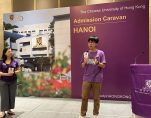
HONG KONG SAR – Media OutReach Newswire – 30 April 2025 – The Chinese University of Hong Kong (CUHK) continues to attract top talent from Vietnam, as demonstrated by Ryan Le Minh Khue, a Year 3 student in the Integrated Bachelor of Business Administration (IBBAC) Programme. Coming from the prestigious Nguyen Hue High School for the Gifted in Hanoi, Ryan represents a growing trend of Vietnamese students […]

By Nitya Chakraborty The United States of America President Donald J. Trump has completed his first one hundred days in office in his second non-consecutive term on April 29, Tuesday amidst continuing global disorder over his chaotic policies — unilateral tariffs hike, failure to establish peace in Gaza with Israeli killing spree continuing unabated and […]

China International Capital Corp. is intensifying efforts to expand its presence beyond mainland China by establishing a new branch in Dubai and deepening its foothold in Southeast Asia, as global demand for cross-border financial services continues to grow. The Beijing-based investment bank, recognised as one of the country’s most influential financial institutions, is preparing to open a new branch in the Gulf city to cater to sovereign […]

Advertisements

HSBC Holdings Plc has disclosed an anticipated pre-tax loss of up to $1.6 billion following the dilution of its stake in China’s Bank of Communications . This development arises from BoCom’s private share placement, part of a broader initiative by Chinese state-owned banks to bolster their capital reserves.

The dilution reduces HSBC’s holding in BoCom from 19.03% to approximately 16%, a consequence of the Chinese government’s strategy to strengthen its banking sector. The $71.5 billion recapitalization effort aims to enhance the capacity of major state-owned banks, including BoCom, to support the national economy.

Despite the substantial charge, HSBC has indicated that the loss will not significantly impact its capital ratios or dividend distributions. The bank emphasized that the investment in BoCom is long-term, and the charge is a non-cash accounting adjustment due to the dilution.

This is not the first time HSBC has faced financial repercussions related to its BoCom investment. In the previous year, the bank reported a $3 billion impairment on its stake, citing challenges in China’s financial sector, particularly the ongoing property market crisis.

The latest charge coincides with HSBC’s announcement of a 25% decline in first-quarter pre-tax profits, amounting to $9.5 billion. This downturn is attributed to one-time losses from business disposals in Canada and Argentina. Nevertheless, the results surpassed analyst expectations, which had projected profits of $7.8 billion.

In response to the profit decline, HSBC has initiated a $3 billion share buyback and declared a first-quarter dividend of $0.10 per share. The bank’s CEO, Georges Elhedery, who assumed the role in September, is spearheading a cost-cutting initiative targeting $1.5 billion in annual savings by 2026. This strategy includes restructuring business segments and divesting operations in Germany, South Africa, France, and Malta.

HSBC has also raised its bad loan provisions by $202 million to $876 million in the first quarter, reflecting economic uncertainty and the impact of higher tariffs. Of this amount, $100 million is allocated for exposure to Hong Kong’s commercial property sector. The bank anticipates lending demand to remain subdued throughout the year and projects a potential $500 million increase in loan loss provisions if global economic conditions deteriorate further.

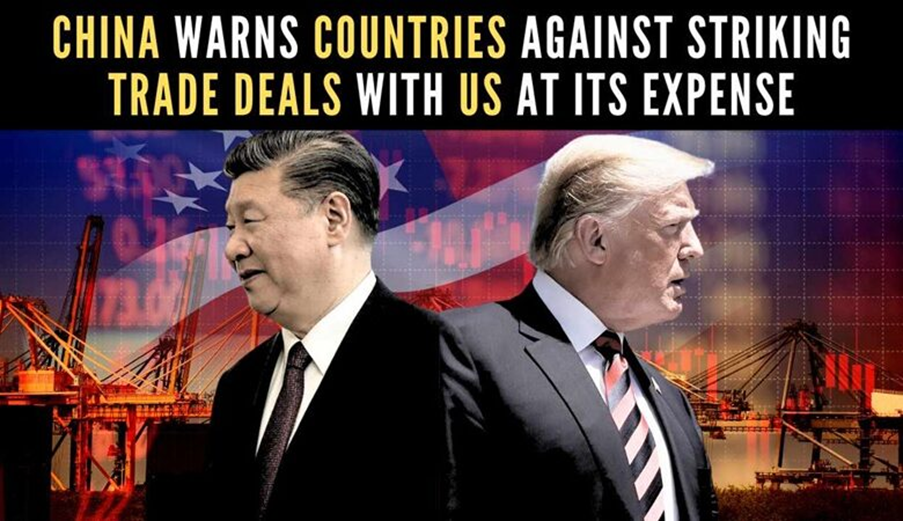
By Nantoo Banerjee Hit by the massive US import tariff, export-led China seems to have gone crazy as its No.1 export destination, the United States of America, has suddenly gone out of reach after US President Donald Trump’s prohibitive import tariff on China. Shockingly, China has issued a warning against countries seeking to strike a […]

Arabian Post Staff -Dubai Unveiling its latest flagship devices at a grand event in Singapore, POCO made a strong statement with the launch of the POCO F7 Ultra and POCO F7 Pro, positioning itself more firmly within the premium smartphone segment. The UAE market, where young, tech-savvy consumers are increasingly demanding top-tier performance without exorbitant pricing, is poised to become a key battleground for these new devices. […]

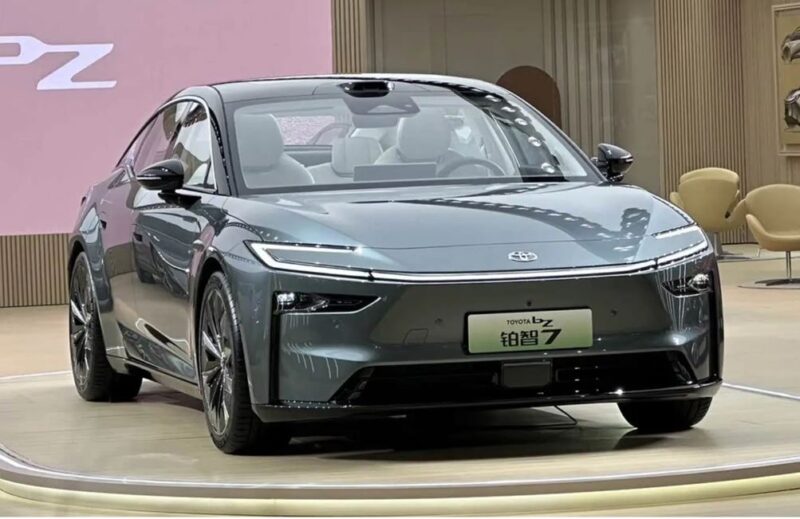
Toyota has partnered with Huawei to integrate the Chinese tech giant’s HarmonyOS in its upcoming electric sedan model. This move marks a significant shift in the automotive industry as the Japanese automaker aligns itself with a technology platform developed by a key competitor to Google’s Android in the connected car space. The decision comes amid growing tensions between the US and China, as well as a rapidly evolving global market where automakers are increasingly dependent on innovative software for everything from vehicle performance to customer experience.

HarmonyOS, launched by Huawei as a competitor to Android, is designed to offer greater security and seamless integration across various devices. While initially developed for smartphones, the system has expanded into a variety of smart devices, including automobiles. Toyota’s adoption of HarmonyOS in its new electric sedan reflects the growing importance of software in vehicles, especially as automakers shift focus to electric and autonomous technologies.

The electric sedan, set to hit the Chinese market first, will benefit from the advanced connectivity and smart features of HarmonyOS, such as AI-based in-car assistants and enhanced user interfaces. This is expected to provide a competitive edge for Toyota as it navigates the increasingly crowded Chinese electric vehicle market, where local companies such as BYD and NIO have already established a strong foothold.

Huawei’s HarmonyOS has faced challenges in gaining international traction, particularly due to its ties to the Chinese government and its exclusion from key US-based app ecosystems. However, the system has found significant success within China, where Huawei has a commanding presence in both telecommunications and consumer electronics. Toyota’s decision to integrate the platform may not only strengthen its position in the Chinese market but also mark a turning point in the global race for automotive software dominance.

While Toyota continues to rely on established partners like Google for its global connected car initiatives, this collaboration with Huawei represents a key step in diversifying its software strategy, particularly in regions like China where local technology is often favoured. As automakers seek to ensure the security and functionality of increasingly digital vehicles, HarmonyOS’s promise of enhanced privacy features could play a crucial role in attracting tech-savvy consumers.

The automotive industry has long been navigating a delicate balance between software development and traditional vehicle manufacturing. Toyota’s embrace of Huawei’s operating system is indicative of the growing reliance on third-party tech companies to provide the kind of high-tech, integrated solutions that are rapidly becoming a standard in modern cars. The partnership also underscores the importance of China as a strategic market for global automakers, with its massive population and burgeoning EV market offering significant growth potential.

This development comes at a time when other major tech players are making inroads into the automotive sector. SK Telecom’s announcement to replace SIM cards in its vehicles after a data breach underscores the growing importance of cybersecurity in connected car systems. Moreover, India’s advancements in satellite docking automation signal a broader trend toward increased integration of autonomous systems in the automotive sector. In China, companies are working toward greener solutions, with efforts to reduce the carbon footprint of data centres becoming a focal point for many technology giants.

With the global automotive industry rapidly evolving, Toyota’s partnership with Huawei places the automaker at the crossroads of software innovation and traditional vehicle manufacturing. The collaboration may not only affect the Chinese electric sedan market but could also set a precedent for future ventures between automakers and tech companies, particularly as the digital landscape of the automotive sector continues to evolve.


HONG KONG SAR – Media OutReach Newswire – 28 April 2025 – In early 2025, Aice, a leading ice cream brand in Southeast Asia, attracted significant attention from global investors following a new round of investment from major shareholders, including China Mengniu Dairy Group – its controlling shareholder. This capital injection is widely viewed as providing both financial and strategic support for Aice’s rapid expansion across Southeast […]

Supporting UNICEF HK with 286-Child Coin Toss for The GUINNESS WORLD RECORDS™ Attempt HONG KONG SAR – Media OutReach Newswire – 27 April 2025 – KLN Logistics Group Limited (“KLN”; Stock Code 0636.HK) today announced the official launch of its rebranding initiative with a grand event held at its Hong Kong Headquarters. 286 children from various schools across Hong Kong collaborated to attempt the GUINNESS WORLD RECORDS […]

Matein Khalid The last time the U.S. Dollar Index plummeted 9% in the first four months of a year was way back in 1973, when Richard Nixon sat in the White House on the eve of Watergate, the October War in the Sinai/Gulan, the Arab oil boycott and a savage 40% bear market in U.S. equities. Last week provided a respite from the tsunami of greenback selling […]

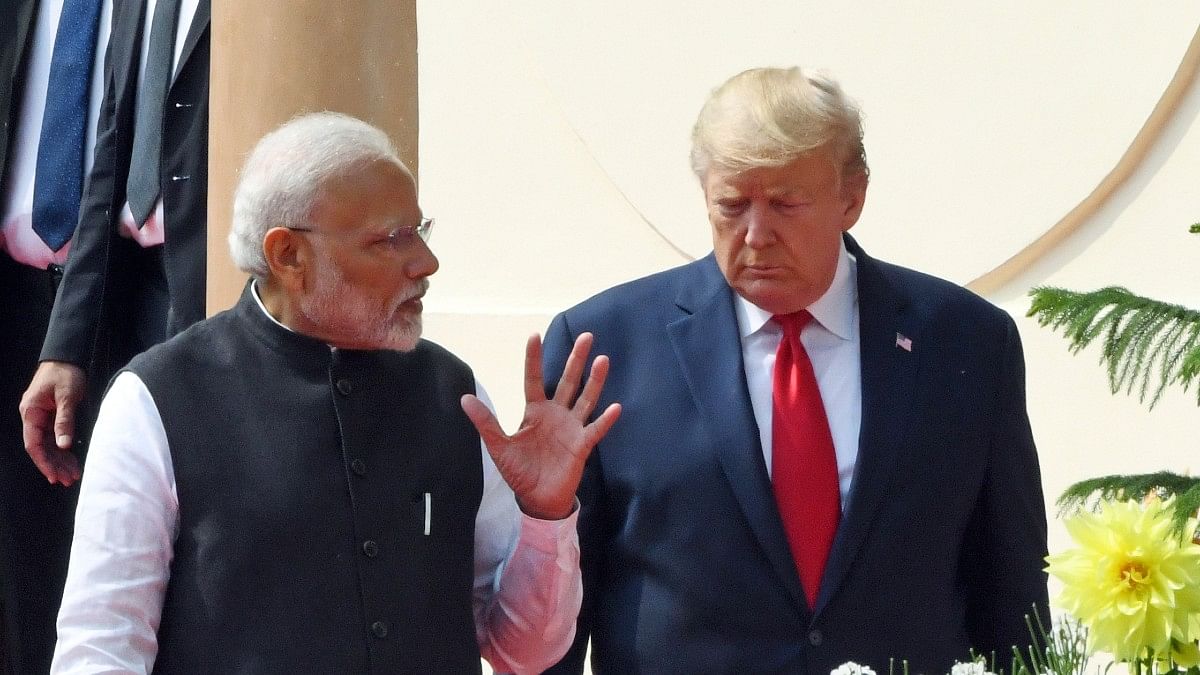
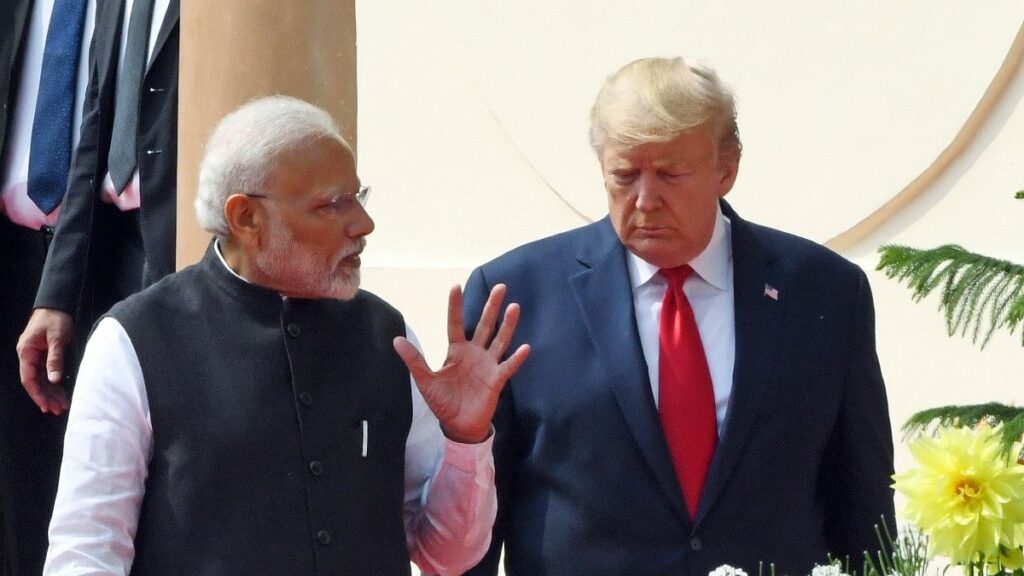
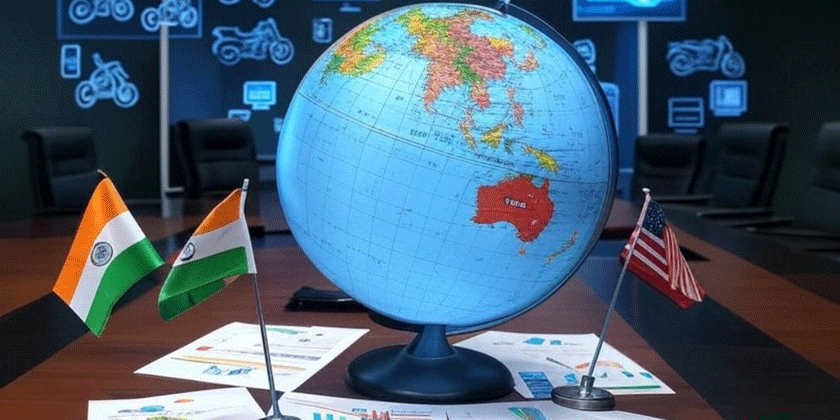
By K Raveendran U.S. Treasury Secretary Scott Bessent’s declaration that India could be the first to finalise a trade deal with the United States after President Trump embarked on his reckless trade war against the world signals a strategic point. The proposed agreement offers India an escape hatch from the looming 26 percent reciprocal tariffs […]

Dr Imran Khalid President Donald Trump’s erratic dance with tariffs continues to confound not just global markets but even his own team. On April 22, in a move that underscored the White House’s habitual policy incoherence, Trump declared that the “very high” tariffs on Chinese goods would soon be “substantially reduced.” This comes after days of raising them dramatically at the start of the month, then selectively exempting key electronics sectors – moves that reflect both strategic […]

A sharp decline in container traffic from China to the United States has emerged, as the latest round of tariffs imposed by the Trump administration triggers significant shifts in global trade flows. Shipping data and industry reports indicate a substantial drop in U.S. imports from China, with container bookings falling by approximately one-third since early April, according to Hapag-Lloyd, the world’s fifth-largest container-ship operator. The downturn follows […]

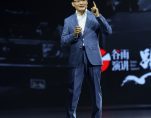
HONG KONG SAR – Media OutReach Newswire – 25 April 2025 – In an atmosphere charged anticipation and entrepreneurial urgency, GE Jun, Chairman and CEO of TOJOY Smart Enterprise Services, delivered a landmark speech at the Chengdu Financial City Performing Center as a guide to reshape the trajectory of China’s private sector. Over 2,000 business leaders, policymakers, and industry experts gathered to hear GE Jun’s Grain Rain […]

Arabian Post Staff -Dubai The United States is preparing to offer Saudi Arabia an arms package exceeding $100 billion, potentially to be announced during President Donald Trump’s upcoming visit to the kingdom in May. This proposal follows a failed attempt by the Biden administration to finalize a defense pact with Riyadh, which included conditions aimed at curtailing Chinese arms acquisitions and investments. Under Trump’s leadership, U.S.-Saudi defense […]

Apple Inc. is set to shift the assembly of all iPhones destined for the US market to India by the end of 2026, marking a significant departure from its longstanding reliance on Chinese manufacturing. This strategic move aims to mitigate risks associated with escalating tariffs and geopolitical tensions between Washington and Beijing.

The United States, accounting for 28% of Apple’s global iPhone shipments in 2024, remains the company’s largest market. The decision to relocate production is driven by the financial impact of steep tariffs on Chinese-manufactured goods, which have reached up to 145%. These levies have prompted Apple to seek alternative manufacturing hubs to safeguard its supply chain and maintain profitability.

India has emerged as a pivotal player in Apple’s diversification strategy. The company plans to double its iPhone production in the country, leveraging the capabilities of its key manufacturing partners, Foxconn and Tata Electronics. Foxconn, Apple’s largest supplier, currently assembles approximately 67% of iPhones produced in India. Tata Electronics, following its acquisition of Wistron’s manufacturing unit, has significantly ramped up its production capacity.

The Indian government’s Production-Linked Incentive scheme has been instrumental in attracting Apple’s investment. This initiative offers financial incentives to companies that boost domestic manufacturing and exports. As a result, Apple’s iPhone production in India reached $14 billion in fiscal year 2024, with exports exceeding $10 billion. Between April and October 2024 alone, production hit $10 billion, with $7 billion worth of iPhones exported.

This expansion has also contributed to job creation, with Apple generating approximately 175,000 direct jobs in India over the past four years. Notably, over 72% of these positions are held by women, reflecting the company’s commitment to inclusive employment practices.

Apple’s shift to India is part of a broader trend among multinational corporations seeking to diversify their manufacturing bases. The move underscores India’s growing prominence as a global manufacturing hub, particularly for high-value electronics. Analysts project that India could account for up to 25% of global iPhone production by 2025, a significant increase from the current 14%.

Despite this transition, Apple continues to rely on Chinese-made components for iPhone assembly, highlighting the complexity of its supply chain. The company is working to develop a more self-reliant manufacturing ecosystem in India, but this process will take time.

Walmart China has introduced a programme aimed at assisting Chinese exporters in enhancing their domestic sales, aligning with Beijing’s efforts to mitigate the impact of escalating US tariffs. The initiative seeks to integrate these exporters into Walmart’s supply chain, simplifying the approval process and facilitating easier access to the domestic market. This move comes as Chinese exporters face challenges due to a 145% tariff hike from the US, prompting the Chinese government to encourage local businesses to pivot towards domestic sales.

Despite government encouragement, many Chinese exporters remain hesitant to redirect their goods to the domestic market. Factory owners cite lower profits, weak demand, aggressive price competition, delayed payments, and high return rates as significant deterrents. Efforts by China’s commerce ministry, including organizing local matchmaking events and issuing support through firms like JD.com and Meituan, have been met with skepticism by small and medium-sized enterprises. These businesses argue that the proposed support falls short of addressing structural challenges, emphasizing the need for fiscal stimulus, rising consumer incomes, and stronger social safety nets to boost domestic consumption.

Walmart’s initiative also includes expanding its e-commerce platform, Walmart Marketplace, within China. The company has established offices in 11 cities nationwide, including Shenzhen, Shanghai, and Hangzhou, offering support in product selection, operational guidance, and both online and offline training to help international sellers grow their businesses on the platform. Additionally, Walmart unveiled its 2025 new seller incentive programme, offering up to $75,000 in incentives, with benefits such as preferential logistics services.

However, Walmart’s efforts to mitigate the impact of US tariffs have not been without controversy. The company has faced pushback from Chinese suppliers after requesting significant price reductions to offset the cost of tariffs. Some suppliers, including producers of kitchenware and clothing, have been asked to lower their prices by as much as 10% per round of tariffs, essentially shouldering the full cost of the duties. This approach has led to tensions with Chinese authorities, who have summoned Walmart executives for discussions. State broadcaster CCTV’s official social media account criticized Walmart’s demands, stating that they “may violate commercial contracts” and warning that “the consequences for the company will go beyond just a discussion” if it continues to press for discounts.

By Satyaki Chakraborty Vietnam has shown how a well calibrated trade diplomacy can be conducted in the year 2025 amidst the ongoing tariff war between the two biggest economic and military powers of the world USA and China. Both countries are having best trade relations with this South East Asian nation which is a sort […]

A U.S. Army intelligence analyst has pleaded guilty to charges of conspiring to transmit sensitive military information to a foreign national, in a case that has raised serious concerns about national security breaches within the armed forces. Sergeant Korbein Schultz, stationed at Fort Campbell, Kentucky, admitted to providing classified documents to an individual he believed to be residing in Hong Kong. The transactions, which occurred between June […]

Boeing has confirmed that Chinese airlines are refusing to accept deliveries of new aircraft due to escalating tariffs, marking a significant setback for the U.S. aerospace manufacturer amid intensifying trade tensions between Washington and Beijing. The company has begun redirecting completed jets to other global customers to mitigate the impact.

Three Boeing 737 MAX 8 aircraft, originally intended for Xiamen Airlines and Air China, have been returned to the U.S. These aircraft were ferried to China just as tariffs were being announced and enforced, highlighting the sudden shift in trade dynamics.

China currently accounts for about 10% of Boeing’s commercial aircraft backlog. The company had scheduled around 50 deliveries to China for the remainder of the year but is now seeking to reassign 41 already-built or in-production jets. Boeing’s leadership has stated that production will not continue for customers unwilling to take delivery, underscoring the operational challenges posed by the trade dispute.

There are 36 Chinese-bound aircraft at various stages of completion in the U.S., and Boeing still has 130 unfilled orders from Chinese entities, including 96 for the 737 MAX. Chief Financial Officer Brian West emphasized that while this presents a short-term challenge, Boeing is prepared to re-market the aircraft, with other customers already expressing increased interest.

The trade tensions have led to China imposing a 125% tariff on U.S. goods in retaliation for the U.S. increasing tariffs on Chinese exports to 145%. This has significantly increased the cost of acquiring Boeing planes for Chinese carriers, making such purchases economically unfeasible.

Boeing CEO Kelly Ortberg expressed confidence that the ongoing U.S.-China trade war will not hinder the company’s financial recovery or aircraft delivery targets. Despite the challenges, Boeing has reported a narrowed loss of $31 million for the first quarter of 2025, down from $355 million a year earlier, indicating signs of recovery.

The company is seeking alternative buyers for up to 50 aircraft initially ordered by Chinese airlines. Production is already underway for 41 of these aircraft, with nine more planned for delivery in 2025. Ortberg noted inquiries from non-Chinese airlines, suggesting potential for reallocation.

VISHNU RAJA
RYO YAMADA
HITORI GOTOH
IKUYO KITA