Just in:
Private varsities bill all set to face the axe // Middle East governments assess Iran war after US vote // Miss Universe Hong Kong Jen Zhou Departs for Puerto Rico to Compete in the 75th Miss Universe World Final // Meraas showcases five residential zones at Dubai Design Week // Millions Of Indians May Soon Be Deprived Of Government Assistance // UK air traffic outage inflicted £33m financial losses // Oil advances towards $100 as tanker attacks persist // Kochi police detain two actors over bid to honey trap doctor // Technology shares plunge as Nasdaq enters correction // Geely’s i-HEV Intelligent Hybrid Technology Offers a New Direction for Gasoline-Powered Vehicles // TVM –Mangaluru Vande Bharat claims top spot // Emaar approves Development buyout ahead of planned delisting // Xi Jinping Preparing For A Trilateral Summit With Trump And Putin At APEC Summit On Nov 18-19 // After Reaching 7 Million Users in the Philippines, Skyro Launches Transparent Cash Loans in Malaysia // CR Longdation Aethereal Cybersecurity × Global Cybersecurity Alliance (GCSA) Join Hands to Establish the “AI and Cybersecurity Research Centre” // ADIA and partners establish $1.4 billion aviation venture // Ousted top Kochi cop gets IG post // Trump’s Iran War Has A Share Of Contribution To His Midterm Debacle // Cloudflare unveils Zero Wire vulnerability intelligence service // The “1st Greater Bay Area Health and Longevity Summit & Awards Ceremony” concludes successfully in Macao //

News related to
Edge

Stellar’s native token XLM jumped above $0.25 as U. S. Bank embarked on a pilot to issue a bank-grade stablecoin on the public Stellar blockchain. That move marks a notable shift for legacy finance, signalling growing institutional comfort with blockchain rails offering compliance, speed and programmability.

U. S. Bank, the fifth-largest commercial bank in the United States, is working in partnership with advisory firm PwC and the Stellar Development Foundation to test issuance of a custom stablecoin using the Stellar network. The pilot aims to evaluate whether a traditional bank can leverage a public blockchain for regulated payments by utilising Stellar’s ability to freeze assets and reverse transactions — features deemed essential for regulatory compliance and customer protection. According to a bank executive, those built-in safeguards helped make the network an attractive choice for a stablecoin pilot.

This institutional endorsement of Stellar coincides with the network’s ongoing development push. A major upgrade code-named Protocol X-Ray is slated for rollout in early 2026. The upgrade will support zero-knowledge applications, giving institutions optional privacy tools for confidential transfers while retaining blockchain auditability — a balance likely to appeal to regulated financial players concerned with compliance and confidentiality.

On-chain metrics suggest the network’s fundamentals are strengthening. Total value locked on Stellar’s smart-contract layer has climbed substantially this year, while transaction volume of stablecoins on the chain — including $AUDD, a prominent fiat-pegged token — has surpassed the $1 billion mark. Observers point out that this surge reflects genuine usage by businesses and institutions rather than speculative activity.

The market has reacted positively. XLM recorded a 2.6 percent uptick, rising from around $0.244 to $0.2505 over 24 hours, with trading volume surging about 45 percent above the daily average. That breakout cleared a key technical resistance near $0.246 and pushed the token past the psychologically significant $0.25 level, renewing optimism among investors who follow price action closely.

While the stablecoin pilot at U. S. Bank remains at an exploratory stage, the partnership underscores a broader shift in the financial sector toward embracing tokenised assets under regulatory guardrails. If the trial succeeds, other banks may follow, potentially driving further demand for blockchain platforms that combine compliance, efficiency and transparency.

Top Organizers and Promoters Applaud ‘UOB LIVE’ as ASEAN’s Premier Comprehensive and Advanced Entertainment Venue BANGKOK, THAILAND – Media OutReach – 28 August 2023 – United Overseas Bank (UOB), in collaboration with The EM District and AEG, has revealed an unprecedented alliance aimed at unveiling “UOB LIVE” – a cutting-edge and most comprehensive indoor event hub set to become the epitome of excellence within ASEAN. Boasting a […]

A vast pocket of superheated rock lying far beneath the Appalachian Mountains may trace its roots to the breakup of Greenland from North America approximately 80 million years ago and is now slowly drifting toward present-day New York. This subterranean mass — known as the Northern Appalachian Anomaly — spans roughly 350 kilometres and lies about 200 kilometres beneath the surface of New England. Researchers behind this […]

Arabian Post Staff -Dubai Crown Prince Mohammed bin Salman arrived in Washington to meet U. S. President Donald Trump with a sweeping agenda spanning defence, technology and economic cooperation — signalling a clear recalibration of Saudi Arabia–United States relations. The meeting resulted in high-stakes commitments including a pledge of up to $1 trillion in Saudi investments and approval for advanced defence hardware, underscoring the kingdom’s ambition to […]

Moscow has moved to ease restrictions on investments tied to digital assets by announcing that major fund managers will be permitted to purchase derivatives linked to cryptocurrencies from early next year. Under this policy shift, the Bank of Russia plans to amend regulations in the first quarter of the upcoming year to allow capital-management firms, previously barred, to engage in futures and options referencing digital currencies.

The initiative marks a departure from earlier policy built around tightly defined access for “specially qualified” investors under a three-year pilot programme unveiled in March, which required individuals to hold over 100 million rubles in securities or earn above 50 million rubles annually. Deputy Finance Minister Ivan Chebeskov confirmed the government is also considering scrapping the “superqual” status entirely, a label proposed for crypto-investors under previous drafts.

The timing aligns with a broader regulatory realignment in which Moscow is both cautioning on crypto risks and expanding permissible use-cases. Earlier this year the central bank issued guidance emphasising that direct cryptocurrency holdings carry significant risk even as it proposed a stepped investment regime for qualified entities. Meanwhile legislators had sanctioned the use of crypto-assets for certain cross-border payments and legalised mining operations in July of last year.

Significant players in the Russian financial sector are already positioning themselves for the shift. Sberbank, the country’s largest lender by assets, reported it had raised 1.3 billion rubles through crypto derivative offerings in recent months and signalled plans to expand the business line further.

Market watchers interpret the regulatory loosening as part of a dual strategy: fostering new sources of capital amid constraints from sanctions, while maintaining supervisory controls on the evolving digital-asset ecosystem. “Allowing derivatives tied to cryptocurrencies is a big step—Russian funds were previously excluded,” said one analyst at a Moscow-based brokerage. At the same time, the analyst warned that “the oversight framework remains immature and the risks of liquidity, valuation and sanctions remain.”

Critics caution that letting traditional investment firms access crypto-linked instruments could raise systemic vulnerabilities. The European Union has recently targeted stablecoin-linked Russian entities under sanctions, and anti-money-laundering regulators flagged the region as high-risk, particularly in flows tied to offshore crypto trading.

Regulators in Moscow underline that the institutional gateway is intended to provide a controlled environment. The Bank of Russia’s earlier proposal for an experimental legal regime limited participation to investors meeting strict asset or income thresholds and required intermediaries to ensure transparency of transactions. It did not allow cryptocurrencies to be used as payment for goods and services.

As the investment window broadens, industry participants expect asset management firms to bring structured products to market, linking outcomes to benchmark crypto indices rather than direct holdings of tokens. “Derivatives give firms a means to hedge and gain exposure without custody of coins,” noted a fund-manager in Moscow. However, he added that regulatory clarity on taxation, disclosure, and cross-border transfers is still lacking.

The government’s removal of the “superqual” status could widen the investor base further, allowing mid-sized firms and high-net-worth individuals access to asset classes previously off-limits. This move may increase competition, as offshore platforms draw new Russian clients frustrated by domestic restrictions.

At the same time, the expanded framework raises questions about how Russia’s risk-management infrastructure will evolve. The central bank has repeatedly warned that cryptocurrencies remain speculative and not backed by the state; ongoing amendments to legislation will need to address issues of market integrity, investor protection and sanctions compliance.

Dubai’s leadership has approved a landmark three-year fiscal plan totalling AED 302.7 billion in expenditure and AED 329.2 billion in projected revenues for the 2026-2028 period, marking the largest budget cycle in the emirate’s history. The approval came under Law No. 15 of 2025, signed off by His Highness Sheikh Mohammed bin Rashid Al Maktoum in his capacity as Vice-President and Prime Minister of the UAE and […]

Data executives in the United Arab Emirates are signalling serious alarm over the lack of transparency in how their artificial-intelligence systems make decisions, according to a fresh survey. About 94 per cent of data leaders in the country say they do not have full visibility of decision-making processes in their AI systems, pointing to deep governance vulnerabilities at a time when adoption is accelerating. This revelation emerges […]

Advertisements

TAIPEI, TAIWAN – Media OutReach Newswire – 24 November 2025 – Established by the Resource Circulation Administration of the Ministry of Environment in 2024, Circular Inorganic Resource Community Unions Taiwan (CIRCU-Taiwan) has, after a full year of refinement and integration, identified three key areas of focus that will be formally introduced to the public this year. CIRCU-Taiwan brings together arterial industries such as cement, steel, construction materials, […]

The world’s largest cryptocurrency, Bitcoin, fell swiftly this week as a sustained sell-off put the token on track for its steepest monthly decline since 2022. It slipped as much as 7.6 per cent to around $80,553 before trimming losses, while the broader crypto market cap fell below $3 trillion for the first time since April.

Forced liquidations, institutional outflows and thin liquidity emerged as key drivers of the slide. Analysts at Ergonia pointed to a convergence of derivative blow-outs and structural selling via exchange-traded products as factors creating a “particularly vulnerable state” where even stabilisation efforts face immediate supply pressure. Futures liquidations exceeded $1 billion, and data highlight more than 30 per cent in market cap erasure since early October.

While Bitcoin climbed to an all-time high near $126,000 in early October, the recent downturn amounts to roughly a 25 per cent retreat within the month. Bloomberg data confirm this represents the largest monthly fall since June 2022. The correction has triggered a reevaluation of year-end positioning, with derivatives markets assigning around a 50 per cent chance that Bitcoin finishes the year under $90,000 — marking a significant sentiment shift in a matter of weeks.

One root cause of the near-term pressure lies in the unwind of leveraged positions. Many traders who piled into futures and perpetual contracts saw funding rates turn against them, triggering cascaded liquidations. Binance chief executive Richard Teng described the move as a “healthy consolidation” for the industry, albeit one that comes amid rising risk aversion and tighter macro conditions. The wave of deleveraging has spilled into alt-coins and broader risk assets, emphasising how crypto still mirrors the wider market’s orientation toward volatility and liquidity stress.

Institutional-product flows add another level of challenge. The launch of spot Bitcoin ETFs earlier this year raised expectations of large capital inflows, but the current environment has seen outflows, particularly from funds that repositioned, hedged or redeemed positions. This structural selling has combined with retail and leveraged exits to deepen the draw-down.

Despite the short-term strain, some analysts suggest the correction may clear the way for a healthier structure going forward. Liquidity indicators normally near major crypto rallies are showing signs of restocking, and some models view the current phase as a reset rather than the end of the cycle. However, sceptics caution that macro risks — including higher rates, regulatory headwinds and geopolitical stress — continue to hang over the sector and may dampen the timing or pace of any recovery.

Among market participants, sentiment has shifted markedly. Portfolio manager Nigel Green of deVere Group noted that heavy borrowing in speculative positions meant “any reversal triggers liquidations that accelerate the move”. Others highlight that although corrections of 20–30 per cent have occurred in past Bitcoin bull markets, the current confluence of leverage, product flows and liquidity outflows is unique, suggesting this phase may represent more than a standard dip.

With December positioning now in focus, the coming days will be closely watched. The monthly close looms large — if Bitcoin avoids a full 25 per cent drop it could blunt the signal of stress; if it does not the message to markets could be more definitive. The broader crypto ecosystem will also look for signs of capitulation or stabilisation — levels of derivative stress, fund flows and institutional signals will inform whether this is a tactical pull-back or the early stages of a deeper consolidation.

As one of the first major asset-classes to undergo structural institutional adoption, Bitcoin’s current draw-down serves as a test of how the market absorbs large-scale flows and macro shocks. The unfolding developments will have implications well beyond the crypto world, casting light on how digital assets behave within the larger financial system.

A major step in electric-vehicle battery technology has been reached as GAC Group announced the completion of China’s first large-capacity all-solid-state battery production line capable of manufacturing vehicle-grade cells of 60 ampere-hours or more. According to company statements, the new line has achieved an areal capacity of 7.7 mAh/cm², compared with under 5 mAh/cm² for many conventional lithium-ion cells, signalling a potential leap in energy storage performance.

GAC’s research director, Qi Hongzhong, said that the energy density of the new solid-state cells is nearly double that of traditional liquid-electrolyte batteries and that vehicles currently capable of about 500 km range could stretch beyond 1000 km once the technology is integrated. The production line is presently in small-batch testing; vehicle integration trials are planned for 2026, with full mass-production targeted between 2027 and 2030.

This development places GAC among the first manufacturers globally to deploy large-format all-solid-state technology, an area in which automakers and battery firms in Japan, Korea and the United States have long been striving. Analysts observe that scaling solid-state technology from lab cells to industrial manufacturing has been a major bottleneck, primarily due to challenges around thick-electrode fabrication, solid-electrolyte interface stability, and cost. GAC’s ability to hit the 7.7 mAh/cm² threshold suggests the company has resolved at least one of the key obstacles.

The solid-electrolyte used in the new cells reportedly allows higher thermal thresholds—tolerating 300-400 °C compared to about 200 °C for conventional cells—and the battery manufacturing process incorporates a “dry” anode method that combines slurry mixing, coating and rolling into a single step. These process innovations are claimed to reduce energy consumption during manufacture and increase yield.

Alongside GAC’s progress, Dongfeng Motor Corporation is advancing its own all-solid-state agenda, targeting mass production of a 350 Wh/kg solid-state battery in September 2026, which it says will enable electric vehicles to achieve a range in excess of 1,000 km. Dongfeng already operates a 0.2 GWh pilot line and is working on variants of 400 Wh/kg and 500 Wh/kg solid-state batteries. The firm states that its 350 Wh/kg battery retains over 72% of its capacity at –30 °C and passed a 170 °C thermal safety test, surpassing current national standards.

Together these announcements reinforce the increasing pace of commercialization in the solid-state battery sector. Manufacturers hope such cells will deliver significant advantages over conventional lithium-ion chemistry: higher energy density, faster charging, better cold-weather performance and improved safety due to the absence of flammable liquid electrolytes. In GAC’s case, the large-cell format means fewer cells are needed per pack, potentially reducing packaging complexity, cost and weight.

However, experts caution that substantial hurdles remain before widespread adoption. Solid-electrolyte materials and manufacturing infrastructure are still costly, and long-term durability in automotive conditions – repeated charge/discharge cycles, thermal stress and mechanical vibration – must be validated. Further, supply-chain constraints for key materials such as solid-electrolyte precursors, special anode/cathode materials and high-purity manufacturing equipment continue to pose risks. GAC and Dongfeng both emphasise the need for ecosystem readiness, including new cell formats, pack integration and vehicle platforms designed for solid-state cells.

The strategic dimension of this move is significant: as China consolidates its leadership in electric vehicles and battery manufacturing, gaining industrial-scale capabilities in solid-state technology could confer a competitive edge. The reported 7.7 mAh/cm² areal capacity and 60 Ah cell format indicate that GAC is not simply experimenting in the lab but making strides towards production-level readiness. Whether the transition to full-scale mass manufacture meets the timetable will be closely watched by global automakers and battery suppliers alike.

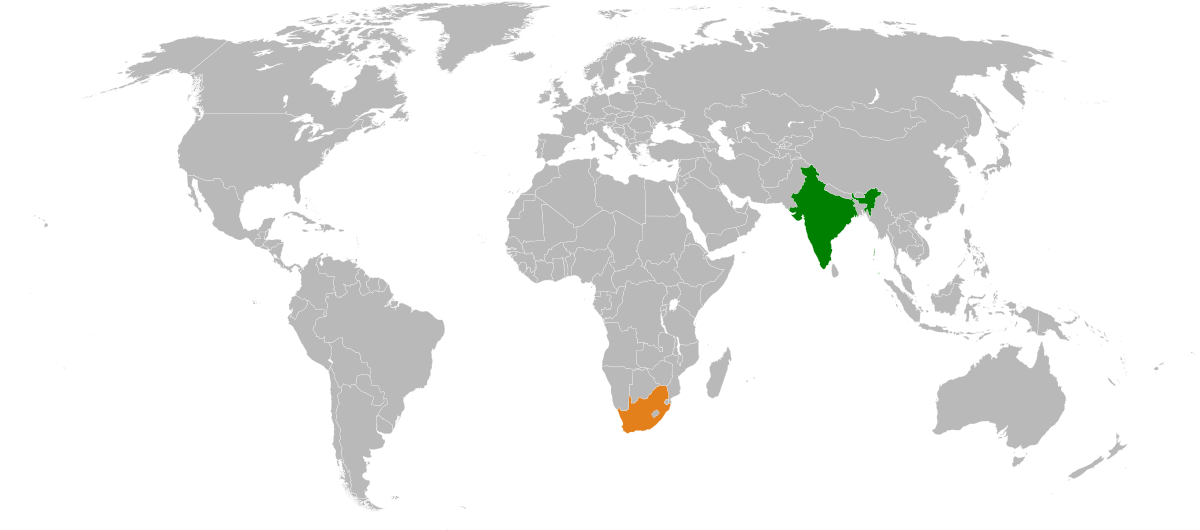
Leaders of India and South Africa affirmed a joint commitment to amplify the resonance of the Global South during a bilateral meeting on the margins of the G20 summit in Johannesburg. India’s Prime Minister met South African President Cyril Ramaphosa to review an expanding partnership that now encompasses trade, digital infrastructure and critical-minerals cooperation.

The leaders emphasised the historical foundation of bilateral ties, tracing back to shared anti-colonial struggles and longstanding people-to-people links. They identified emerging sectors of collaboration, including artificial intelligence and digital public platforms, as well as enhanced investment flows across innovation, infrastructure and mining sectors.

India expressed gratitude to South Africa for its role in relocating cheetahs to India and extended an invitation for South Africa to join the International Big Cat Alliance. At the G20 held in Johannesburg, which is the first summit of its kind hosted on African soil, South Africa has sought to spotlight issues of development, sustainability and Global South equity.

The two countries signalled their readiness to facilitate mutual investments, noting the growing footprint of Indian firms in South Africa and a shared interest in deepening bilateral ties in mining, start-ups, technology and infrastructure. They agreed to enhance support frameworks for these sectors.

In the domain of digital transformation, the meeting explored ways in which India’s Digital Public Infrastructure experience could be shared with South Africa, with the leaders discussing a roadmap for cooperation in those digital arenas that support transparency, inclusion and scalability.

On critical minerals—the backbone of technologies from electric vehicles to renewable energy systems—the dialogue underscored the strategic convergence of India’s growth ambitions and South Africa’s resource endowment. Both governments emphasised sustainable extraction, value-chain development and mutual investment as priorities.

The meeting also took place against the backdrop of global institutional reform debates, where developing countries increasingly seek to adjust frameworks such as the IMF and development banks. South Africa, as serving G20 chair, has framed its presidency around the themes of solidarity, equality and sustainability, particularly as representative of countries in the Global South.

While the two leaders concentrated on bilateral priorities, they also discussed multilateral coordination and collective platforms. They welcomed South Africa’s initiative to convene the IBSA leaders meeting and affirmed cooperation ahead of India’s upcoming chairship of BRICS in 2026.

Observers note that India–South Africa ties have evolved from traditional trade and diplomacy to a more strategic convergence around technology, investment, and global governance. According to experts, this shift reflects the changing priorities of middle powers in a multipolar world, where alignment on development and technological sovereignty is rising.

However, there remain practical challenges. For South Africa, translating resource-rich endowments into sustainable, inclusive growth has long been a domestic policy hurdle. For India, ensuring that digital partnerships respect both sovereignty and local capacity presents implementation risks. Critics argue that while high-level pledges are valuable, they must be matched by concrete mechanisms, regulatory clarity and project-level follow-through.

In trade terms, the two countries’ discussions come at a time when global supply-chain realignments and technology competition are raising the stakes for investment in emerging markets. Indian companies entering South Africa will need to navigate regulatory complexity, local participation requirements and the country’s infrastructure bottlenecks. South Africa, for its part, will have to ensure that its mining and start-up ecosystem attract and retain investment while meeting environmental and community benchmarks.

The diplomatic messaging also signals a broader orientation for both nations. India’s engagement with Africa has increasingly focused on capacity-building and infrastructure, while South Africa has positioned itself as a voice for Africa in global forums. Their joint push to amplify the Global South suggests an intention to influence agendas around debt relief, climate finance, digital equity and reform of global institutions.

A pioneering bio-textile crafted from marine algae has been rolled out by the Fashion Commission of Saudi Arabia at the Misk Global Forum in Riyadh, marking a bold step into sustainable fashion. The initiative, termed the Red Sea Seaweed Project, turns algae harvested from the Red Sea into fabric through a collaboration with King Abdullah University of Science and Technology and the fibre-specialist PYRATEX. The unveiling took place during a panel titled “Fabric of the Future: Red Sea Seaweed Textile” and was led by the commission’s CEO Burak Çakmak.

The textile is created by integrating seaweed biomass with Lyocell and organic cotton to form a sustainable fibre. Py­ra­tex’s expertise in seaweed-based fabrics—previously applied in other regions—has been adapted here for local algae species. The venture relies on KAUST’s research unit KAUST Beacon Development to harvest Red Sea algae while maintaining its bioactive properties and supporting a traceable supply chain. Çakmak said the material “marks a defining moment in our journey to build a future-ready sustainable fashion ecosystem. By transforming a local natural resource into a fully traceable, sustainable textile, we are demonstrating the power of science, creativity and industry working together.”

KAUST’s involvement builds on its broader algal biotechnology work, including the DABKSA initiative set up with the Ministry of Environment, Water and Agriculture to establish local algae-based industries. That scheme originally focused on animal feed, but now its marine-species work is feeding into fashion applications. PYRATEX’s page confirms seaweed-based fabrics offer anti-irritation and skincare benefits—though that model was previously developed in Iceland.

The project is designed not only as a material innovation but as a symbol of economic diversification. The Fashion Commission says it aims to strengthen the Kingdom’s domestic fashion ecosystem by embedding sustainability principles and leveraging local resources. The Lab, the commission’s in-house development studio, converted the seaweed fibre into wearable garments, emphasising full supply-chain transparency.

Analysts note that the fashion industry globally is under rising pressure to reduce its environmental footprint. The Guardian estimated the sector accounts for up to 10 per cent of global greenhouse-gas emissions. By tapping coastal biomass, the Saudi initiative could offer a distinct regional advantage. The Red Sea region’s marine environment provides access to algae species adapted to high salinity and heat, meaning less intensive cultivation may be required. KAUST’s earlier trials with extremophile algae in desert conditions underline that point.

However, questions remain about how the new textile will scale commercially and how its sustainability claims will hold in full life-cycle analyses. Industry watchers emphasise that adopting bio-based textiles is only part of the solution; supply-chain energy use, water consumption, and end-of-life recyclability also matter. The Fashion Commission acknowledged those challenges in its public statement but noted this is a “first step” in a broader innovation roadmap.

Beyond the material itself, the move aligns with broader strategic priorities such as Vision 2030 and the Saudi Green Initiative, which call for economic diversification and sustainable development across the Kingdom. It also positions Saudi fashion as a player in the global sustainability agenda, where brands are looking for story-driven innovation and regional supply-chain transparency. The Fashion Commission’s statements emphasise that this home-grown development can contribute meaningful solutions to the global fashion landscape.

The Fund offers a flexible revenue-share token, unlocking AI infrastructure access from US$1,000 HONG KONG SAR – Media OutReach Newswire – 23 November 2025 – Pioneer Asset Management Limited (“Pioneer“), a subsidiary of Tykhe Capital Group Limited (“Tykhe Capital“), a leading Real-World Asset (RWA) and Security Token Offering (STO) innovator in the Asia-Pacific region and Skyvast Digital Sdn. Bhd. (“Skyvast“), today announced the launch of the world’s […]

AI-as-a-Service applications will make AI virtual CFO and COO for SMEs Public-private collaboration in regulatory sandboxes help to provide clarity and certainty when it comes to new technology like tokenisation and AI SINGAPORE – Media OutReach Newswire – 21 November 2025 – Eric Jing, Chairman of Ant Group, said the company’s focus is on putting new payment and operation tools powered by AI and tokenisation technology in […]

By R. Suryamurthy India’s student mobility crisis is no longer a question of data, it is an indictment of a system that has refused to reform while the world moved on. The new NITI Aayog paper does not so much analyse this imbalance as expose it. The numbers are brutal: for every foreign student who […]

The article India’s Higher-Education System Is Driving Students Out — Not Bringing The World In appeared first on Latest India news, analysis and reports on Newspack by India Press Agency).

TAIPEI, TAIWAN – Media OutReach Newswire – 21 November 2025 – Amid global market shifts and intensifying competition, Taiwan’s leading functional and smart textiles expert, Asiatic Fiber Corporation, has united medical device manufacturers and textile suppliers to form the Taiwan Medical Textile Alliance. The alliance leverages Taiwan’s strengths in medical innovation and advanced textile production to promote cutting-edge, functional healthcare products across Southeast Asia. Focusing on Thailand’s […]

The Abu Dhabi Securities Exchange has marked its 25th year, standing today as one of the world’s top 20 stock markets by market value. Founded in 2000 with just 12 listed companies, the exchange now hosts more than 200 securities, carries a market capitalisation in excess of AED 3 trillion and counts 1.2 million investors drawn from over 200 nationalities. This milestone comes as the ADX embarks […]

A collaboration between the Technology Innovation Institute and Space42 will deliver the first space-to-ground quantum-communication network in the United Arab Emirates, signalling a significant step in national cyber-security strategy. The partnership, unveiled at the Dubai Airshow, brings together TII’s advanced research into Quantum Key Distribution and Space42’s satellite infrastructure to form a sovereign system capable of ultra-secure data transfer between orbiting platforms and terrestrial stations. TII and […]

Valetax marked a major milestone with a powerful presence at Jeddah Fintech Week 2025, held on 16 and 17 November at the Jeddah Hilton Hotel. As the Official Sponsor, the company delivered an impactful showcase that strengthened its relationships with traders, partners, and fintech professionals while reaffirming its long-term commitment to innovation, transparency, and partnership-driven growth across the MENA region.   This year’s edition of Jeddah Fintech […]

US-based artificial intelligence firm Luma AI has secured a $900 million Series C funding round led by Saudi-backed HUMAIN, the AI venture owned by the kingdom’s sovereign wealth fund, the Public Investment Fund. Participation also came from AMD Ventures and existing investors including Andreessen Horowitz, Amplify Partners and Matrix Partners. The funding is part of a broader strategy to advance multimodal artificial general intelligence capable of generating, interpreting and interacting with the physical world.

Luma AI’s valuation following the round is estimated at over $4 billion, underscoring the intense competition among frontier AI firms. The company specialises in “world models” that integrate video, audio, image and language to drive applications in robotics, simulation, advertising, gaming and personalised education. CEO Amit Jain described the aim as training systems on “a quadrillion tokens” of multimedia data to move beyond current large-language-model architectures.

HUMAIN, having positioned itself as a global full-stack AI player, will use the funding partnership to anchor its compute infrastructure ambitions. The joint roadmap includes the rollout of what HUMAIN terms “Project Halo” — a super-cluster targeting up to 2 gigawatts of AI compute capacity in the kingdom. Luma AI will become a key customer of this infrastructure.

The funding and infrastructure build-out reflect a strategic shift in Saudi Arabia’s economic diversification efforts. Under the leadership of Mohammed bin Salman, the PIF is deepening commitments to AI and high-performance computing as pillars of its wider Vision 2030 agenda. Luma AI’s partnership becomes a vehicle for exportable AI capabilities and for strengthening the kingdom’s position in the global tech ecosystem.

From Luma AI’s perspective, the capital infusion and access to sovereign-scale compute represent a strategic lever to accelerate development of next-generation models. In entertainment and creative industries the company already claims traction: its Ray3 reasoning video model has been embedded within major platforms. The new funding will allow expansion into simulation, robotics and immersive media. Jain asserted that only by integrating systems and infrastructure at scale can models “understand and simulate the universe”.

For HUMAIN the deal accomplishes several objectives: securing a marquee US AI partner, anchoring compute commitments, and beginning commercial deployments of its planned AI infrastructure. The first phase of the accompanying joint venture with Cisco Systems and AMD will deliver a 100-megawatt data-centre cluster in Saudi Arabia, fully subscribed by Luma AI, with construction scheduled to begin in 2026 and renewable energy powering the facility.

The global implications are significant. With Asia, Europe, India, the Middle East and Africa identified as target markets-worth an estimated 4.5 billion people-the infrastructure build-out promises to reshape the geography of AI training and inference. HUMAIN’s model seeks to challenge the dominance of US- and China-based AI supply chains.

Challenges remain. Developing multimodal AGI is widely acknowledged as highly complex, with technical risks, high compute costs and uncertain commercial timelines. Critics highlight concerns about geopolitical dependencies in AI infrastructure and the ethical implications of deploying models trained on vast multimedia datasets. The Saudi-US dimension adds further scrutiny given strategic sensitivities around data, export controls and digital sovereignty.

BEIJING, CHINA – Media OutReach Newswire – 20 November 2025 – China showcased its environmental achievements at a side session during the 30th UN Climate Change Conference (COP30) in Belém, Brazil, on November 10, underscoring its broader vision of ecological civilization and its ongoing efforts to address climate change. The event, held at the China Pavilion under the theme on ecological civilization and the practice of building […]

By Dr. Gyan Pathak By the Day 9 November 18, the COP30at Belem (Amazonia) under the Brazilian Presidency recorded several achievements, but the two key issues still remain sticking points – financing the climate action, and clear roadmap for phasing out of fossil fuels. We have now three days to go until the last day […]

The article COP30 So Far Have Some Achievements, But Finance Remains A Sticking Point appeared first on Latest India news, analysis and reports on Newspack by India Press Agency).

Apple Inc’s Chief Executive, Tim Cook, declared his confidence that China will surpass the United States as the company’s leading market, signalling a major strategic shift in the iPhone-maker’s global priorities. In a Beijing meeting with China’s Minister for Industry and Information Technology, Jin Zhuanglong, Cook pledged to deepen Apple’s investment in the country and underscored its significance to the firm’s long-term supply-chain and innovation plans. Cook’s […]

Abu Dhabi based investment firm Lunate has escalated its global ambitions after deploying roughly US$13.5 billion and signalling plans to raise even larger funds for 2026 launches. Founded in 2023 and backed by the emirate’s investment ecosystem, Lunate raised about US$17 billion in 2024 for its flagship funds and has invested around 80 per cent of that amount, according to individuals familiar with its operations. The firm […]

VISHNU RAJA
RYO YAMADA
HITORI GOTOH
IKUYO KITA
Just in:
Oil advances towards $100 as tanker attacks persist // Asia Left Behind: Ten international companies have yet to report delivering on their cage-free egg pledges across the region // Emaar approves Development buyout ahead of planned delisting // Trump’s Iran War Has A Share Of Contribution To His Midterm Debacle // The “1st Greater Bay Area Health and Longevity Summit & Awards Ceremony” concludes successfully in Macao // Millions Of Indians May Soon Be Deprived Of Government Assistance // Middle East governments assess Iran war after US vote // OpenAI identifies 948 Linux privilege escalation flaws using AI // After Reaching 7 Million Users in the Philippines, Skyro Launches Transparent Cash Loans in Malaysia // APT29-linked campaign exploits outdated Apple and Android software // TVM –Mangaluru Vande Bharat claims top spot // Hong Kong mandates crypto transaction disclosures to tax authorities // Meraas showcases five residential zones at Dubai Design Week // Technology shares plunge as Nasdaq enters correction // Cloudflare unveils Zero Wire vulnerability intelligence service // UK air traffic outage inflicted £33m financial losses // Fast Just Got Fastest: STING Energy Boost™ Celebrates Kimi Antonelli’s Formula 1® World Championship and the Fan Energy Behind It // Emirates Group records AED 4.1 billion half-year profit // Kochi police detain two actors over bid to honey trap doctor // Geely’s i-HEV Intelligent Hybrid Technology Offers a New Direction for Gasoline-Powered Vehicles //