Just in:
Private varsities bill all set to face the axe // Beyond the exhibition floor: How robots, AI and networks are moving into the real world // Emaar approves Development buyout ahead of planned delisting // Millions Of Indians May Soon Be Deprived Of Government Assistance // Oil advances towards $100 as tanker attacks persist // Ousted top Kochi cop gets IG post // Ningbo Consensus on Collaborative Development released at 2026 Global Mayors Dialogue · Ningbo // Emirates Group records AED 4.1 billion half-year profit // Trump’s Iran War Has A Share Of Contribution To His Midterm Debacle // TVM –Mangaluru Vande Bharat claims top spot // Kochi police detain two actors over bid to honey trap doctor // UK air traffic outage inflicted £33m financial losses // Geely’s i-HEV Intelligent Hybrid Technology Offers a New Direction for Gasoline-Powered Vehicles // The “1st Greater Bay Area Health and Longevity Summit & Awards Ceremony” concludes successfully in Macao // OpenAI introduces GPT-6 Cyber with restricted security access // Miss Universe Hong Kong Jen Zhou Departs for Puerto Rico to Compete in the 75th Miss Universe World Final // Dubai boat show confirms international shipyard line-up for November // Oil and chip shares retreat after Democratic victories // Asia Left Behind: Ten international companies have yet to report delivering on their cage-free egg pledges across the region // Xi Jinping Preparing For A Trilateral Summit With Trump And Putin At APEC Summit On Nov 18-19 //

News related to
Edge

M A Hossain It is easy to overlook the quiet revolutions in geopolitics, especially when the headlines are dominated by wars in Ukraine and Gaza, tensions in the Indo-Pacific, or the perennial drama of U.S.-China rivalry. Yet, beneath the surface of global power struggles, there is a subtler but equally consequential shift unfolding across Central Asia and the South Caucasus. And it is not Moscow, Beijing, or […]

A significant majority of sovereign wealth funds from the Middle East are poised to increase their investments in Chinese assets over the coming five years, according to the latest findings from Invesco’s Global Sovereign Asset Management Study. This shift places China at the forefront of strategic allocation decisions, reflecting growing confidence in its innovation-led sectors.

The study, conducted between January and March and covering funds and central banks managing a combined US$27 trillion, reveals that around 60% of Middle Eastern sovereign wealth funds are planning to boost exposure to China. This places the region only behind Asia‑Pacific and Africa, where 88% and 80% of funds respectively intend to raise allocations. North American counterparts also show strong interest, with approximately 73% signalling intent to increase investment in China.

Funds across regions cited strong returns—identified by 71% of respondents—as a key motivator, alongside diversification goals cited by 63% and improved market access for foreigners mentioned by 45%. Chinese innovation sectors, including digital technology, software, advanced manufacturing, automation, and clean energy, are particularly attractive, with 89% indicating interest in digital tech and software, and 70% each for manufacturing and green energy.

Participants in the study included 141 senior investment professionals—chief investment officers, asset-class heads and portfolio strategists—drawn from 83 sovereign wealth funds and 58 central banks globally. The high participation rate lends weight to the findings: China is now ranked as a high or moderate priority for 59% of funds, a notable jump from the previous year.

Despite geopolitical tensions between Washington and Beijing, sovereign funds appear more focused on structural opportunities. North American allocations towards China are framed as strategic, long-term bets in innovation rather than reactive moves to policy friction. As one Invesco executive described, investors appear driven by fear of missing out on China’s strides in semiconductors, AI, EVs and renewable energy—“a strategic urgency they once directed toward Silicon Valley”.

A regional lens reveals the Middle Eastern shift as part of a larger recalibration. Sovereign funds in the Gulf and from oil-rich neighbours are increasingly turning to China not just for commodity trades but for diversified returns and access to high-growth sectors. One Middle Eastern fund commented that the credit spectrum in fixed income markets currently offers more attractive risk-adjusted returns than public equities, underlining a broader repositioning.

Globally, sovereign investors are embracing active management, allocating more to fixed income and private credit as markets normalise post ultra-low interest rate era. Thirty‑nine per cent of funds plan to increase fixed income exposure, underscoring a pivot towards liquidity management and resilience. Private credit usage has expanded sharply, from 30% to 44% in direct or co-investments, reflecting growing appetite for yield and portfolio diversification.

Central banks are also reshaping strategy, with 64% planning to grow reserve holdings and 53% aiming to diversify further within two years. Gold remains a popular hedge: almost half intend to expand allocations over the next three years. The dominance of the US dollar persists, with 78% expecting no credible alternative supply within the next two decades.

A modest entrant in the digital asset space, sovereign wealth funds are gradually increasing exposure to digital currencies. Direct allocations rose to 11% from 7% in 2022, most pronounced in the Middle East, Asia‑Pacific and North America. Stablecoins, viewed as more accessible than traditional crypto, are gaining attention among emerging market funds.

China remains a focal point for global sovereign investors seeking exposure to growth-critical sectors and structural diversification. The convergence of strong returns, market access improvements, and sectoral opportunities is driving Middle Eastern and other funds to recalibrate their portfolios. China has transitioned from an optional allocation into a central pillar of future-focused asset strategies, marking a calculated investment pivot amid an evolving global landscape.

Bahrain’s Crown Prince Salman bin Hamad Al Khalifa has secured a deal for Gulf Air to acquire 18 Boeing 787 Dreamliner aircraft fitted with General Electric engines, marking a departure from the carrier’s previous reliance on Rolls‑Royce engines. At a meeting held in Washington with U. S. President Donald Trump, the agreement was signed alongside a broader $17 billion suite of investments from Bahrain in the United States. […]

Ripple has formalised a partnership with UAE-based tokenisation platform Ctrl Alt to deliver institutional-grade digital asset custody services as part of a landmark initiative by the Dubai Land Department to digitise property ownership using blockchain infrastructure.

The agreement will enable Ctrl Alt to leverage Ripple’s custody solution to store and manage tokenised property title deeds on the XRP Ledger, as Dubai intensifies its push to integrate advanced digital frameworks into its real estate sector. The project marks a significant stride in DLD’s broader strategy to streamline property transactions and increase market transparency by replacing conventional title documentation with blockchain-native digital representations.

Ripple’s institutional custody platform, designed for banks and financial institutions, will play a central role in securing and scaling the digital assets underlying Dubai’s real estate tokenisation programme. Ripple’s solution will ensure regulatory compliance, operational efficiency, and asset security as property titles are issued and exchanged through blockchain mechanisms.

The announcement positions Ripple as a key player in the UAE’s drive toward regulated digital asset ecosystems. The partnership also represents Ripple’s first custody deployment in the UAE, expanding its global digital asset custody network into the Middle East and further solidifying its presence across EMEA, Asia Pacific, and Latin America.

Ctrl Alt, which had disclosed its participation in the DLD project earlier, is building tokenisation infrastructure tailored for real-world assets such as real estate. The firm will integrate Ripple’s technology to facilitate the issuance, transfer, and management of tokenised property deeds while ensuring institutional-grade security standards.

The Real Estate Tokenisation Project aims to transform Dubai’s property registry system by offering a fully digital framework that eliminates physical documentation and manual recordkeeping. Through the initiative, the DLD intends to increase efficiency in property ownership transfers, reduce fraud risks, and create a foundation for smart contract-enabled real estate solutions. By leveraging the XRP Ledger’s speed and cost efficiency, the project also seeks to attract global investors and developers to participate in tokenised real estate offerings governed by transparent, immutable ledger protocols.

Ripple’s expansion into the UAE’s digital asset space follows its broader global strategy to deliver enterprise-grade blockchain tools tailored to financial infrastructure, a focus that has intensified as global regulators and institutions begin adopting tokenisation at scale. Ripple’s digital custody division — established through its acquisition of Metaco in 2023 — has emerged as a core offering, providing secure storage infrastructure for tokenised assets in both public and permissioned blockchain environments.

Metaco’s digital asset custody platform, which now underpins Ripple’s institutional offering, was originally designed to meet the requirements of global banks and has been adopted by several financial institutions in Europe and Asia. Its integration with Ripple’s payment and liquidity tools enables a seamless experience for enterprises managing digital asset portfolios alongside tokenisation and cross-border payment rails.

Ripple’s custodial framework offers support for a wide range of tokenised assets, including stablecoins, real-world assets, and CBDCs. It provides multi-tier security, granular permission controls, and compliance features needed for institutional applications. The company’s leadership has highlighted tokenisation as a core theme in the evolution of financial infrastructure, predicting that trillions of dollars worth of real-world assets will migrate to blockchain ecosystems in the coming decade.

Ctrl Alt’s involvement in the DLD-led project comes as Dubai cements its role as a global testbed for blockchain innovation, with a supportive regulatory regime, ambitious smart city initiatives, and a growing appetite for Web3 integration. The company has built its platform to allow regulators, issuers, and investors to interact within a compliant digital asset ecosystem. Its participation in the project is expected to open the door for additional applications of tokenisation beyond real estate, including commodities, equities, and infrastructure.

Dubai’s real estate market, historically characterised by high-value transactions and global investor interest, is seen as an ideal candidate for tokenisation. By converting ownership documents into digital tokens recorded on a blockchain, authorities aim to offer fractional ownership models, enhance liquidity, and enable secondary market trading. The shift could also reduce costs and settlement times, while allowing retail and institutional investors to access real estate markets with lower capital thresholds.

Ripple’s role in the project is expected to be pivotal in meeting security, governance, and compliance requirements for digital custody. The partnership strengthens Ripple’s position as a go-to infrastructure provider for tokenisation use cases and reflects its strategic intent to deepen engagement in jurisdictions with progressive digital asset frameworks.


KUALA LUMPUR, MALAYSIA – Media OutReach Newswire – 18 July 2025 – There are multiple risk factors in trading, and navigating them requires patience and experience. To alleviate that pressure, modern trading platforms offer some highly practical tools that help to manage risks and avoid losses. Unfortunately, many traders are either unaware of these tools or have got used to trading without them. In this article, the […]

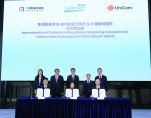
HONG KONG SAR – Media OutReach Newswire – 17 July 2025 – Cyberport successfully hosted the “AI x Data Forum” today. Centered on the theme “AI in Action, Data at the Core: Unlocking Infinite Potential”, the forum brought together over 450 participants from government, finance, innovation and technology, cybersecurity sector, and academia to explore innovative artificial intelligence and data-driven strategies and practical experiences. Cyberport, Canton Data Exchange, […]

Chinese mainland REIT market joined the top three largest REIT markets in Asia for the first time with an 85% increase in market value in 2024 India’s office REIT market attracted considerable leasing demand from global capability centres Data centre and hospitality REITs gained strong investor interest in Japan and Singapore HONG KONG SAR – Media OutReach Newswire – 17 July 2025 – China and India’s Real […]

Advertisements

HONG KONG SAR – Media OutReach Newswire – 17 July 2025 – The brand-new TV show “AI for Humans” will premiere on 19 July (Saturday) at 8:30 PM on HOY TV Channel 78. This 17-episode series focuses on Artificial Intelligence (AI), inviting viewers to explore how AI is shaping the future and driving Hong Kong to become a global innovation and technology hub. Supported by Cyberport and […]

By T N Ashok WASHINGTON: In a landmark but largely silent move, the U.S. Supreme Court has paved the way for former President Donald Trump to dismantle the Department of Education, terminate thousands of federal employees, and slash funding to states — all without providing a single word of legal justification. Issued as a terse […]

Swatch Group’s first‑half figures underscore a deepening crisis in its key Asian markets after the Swiss watch‑maker disclosed a 7.1 per cent drop in sales, generating CHF 3.059 billion, falling short of market forecasts of CHF 3.2 billion. Operating profit plunged 67 per cent year‑on‑year to CHF 68 million, signalling an urgent warning to investors and management alike.

China, alongside Hong Kong and Macau, remains the primary weak spot, contributing 27 per cent of total revenues. Falling demand across these regions continues to undermine core sales and profit performance. Despite encouraging double‑digit growth in North America and market share gains in countries such as Japan, India and the Middle East, these gains have yet to compensate for the shortfall from Greater China.

Net profit attributable to owners collapsed to CHF 3 million, compared with CHF 136 million during the same six‑month period last year. This dramatic decline illustrates the scale of the downturn, making it Swatch’s worst half‑year performance in recent memory.

Analyst commentary has been scathing: Vontobel described this period as “an ugly half year for Swatch Group in all respects”. The fallout from slowed Chinese consumer activity has been compounded by negative currency effects—Swiss franc appreciation cut CHF 113 million from turnover relative to constant‑currency comparisons.

Adding fresh complexity, new U. S. tariffs threaten to raise costs on Swiss watch imports by up to 31 per cent. Industry stakeholders now warn that these levies could further weigh on margins, with retailers like Watches of Switzerland projecting a margin squeeze in the year ahead.

Beyond external pressures, a growing number of investors are scrutinising Swatch’s internal governance. Shareholder activism has surfaced, with calls for more oversight of the centrally controlled Hayek family, whose dual‑class voting structure remains a source of contention. Net profits collapsed by 75 per cent to CHF 219 million in 2024, but critics assert that this malaise runs deeper. GreenWood Investors, led by Steven Wood, has launched a push to join the board, advocating for brand revitalisation, governance reforms and a strategy pivot toward luxury exclusivity akin to Hermès and Ferrari.

Management, though addressing short‑term volatility, emphasises Swatch’s entrenched strengths. Its vertically integrated manufacturing, with over 150 production sites, and the success of the affordable MoonSwatch line demonstrate resilience. The company has pledged that cost‑cutting measures and a pipeline of new product launches—particularly in the U. S. and Japan—should drive a rebound in the second half of the year.

The first‑half slump follows broader downturns last year, when revenue declined 12.2 per cent to CHF 6.74 billion in 2024, and operating profit fell 75 per cent to CHF 304 million. That drop reinforced trading floor rumours of governance fatigue and brand dilution at high‑end labels like Omega and Breguet.

Economically, China’s consumer landscape remains unsettled. A combination of property market stress, slower GDP growth and official campaigns discouraging conspicuous consumption have dampened luxury spending. Swiss watch exports to China and Hong Kong plunged by double digits in early 2024, while only the lower‑priced Swatch line bucked the trend in the region, gaining 10 per cent in sales volume.

Swatch Group’s corporate ambition to maintain full production capacity and avoid layoffs during weak demand, while strategically commendable, has weighed on margins—especially in the production segment. Management asserts this decision safeguards long‑term capabilities and is now beginning to bear fruit, with production margins improving since June.

Mixed signs beyond China offer guarded optimism. North America posted record sales, Japan recorded robust growth, and emerging markets like India and the Middle East offered upside. These regions now form the central axis of Swatch’s recovery strategy.

HONG KONG SAR – Media OutReach Newswire – 17 July 2025 – The brand-new TV show “AI for Humans” will premiere on 19 July (Saturday) at 8:30 PM on HOY TV Channel 78. This 17-episode series focuses on Artificial Intelligence (AI), inviting viewers to explore how AI is shaping the future and driving Hong Kong to become a global innovation and technology hub. Supported by Cyberport and […]

DP World, Deendayal Port Authority and Polish tech firm Nevomo have formalised an agreement to pilot Nevomo’s MagRail system—a self-propelled, electric linear‑motor freight train—on a 750‑metre stretch at the port in Kandla. Signed on 15 July 2025 by top executives from each organisation, the deal marks India’s first experiment with autonomous magnetic rail freight within an operational port environment.

The partnership will pilot MagRail technology on existing railway tracks to autonomously transport containerised and bulk goods. Powered by electric linear motors, MagRail wagons eliminate diesel use, promising reductions in logistics time, operational costs and CO₂ emissions. The trial is designed to enhance port-hinterland connectivity and support India’s broader logistics modernisation under the National Logistics Policy and the PM‑Gati Shakti agenda.

DP World, a global supply chain specialist, is leading efforts to integrate this advanced freight solution. The Deendayal Port Authority—a significant multi‑cargo terminal under central government jurisdiction—is hosting the pilot to assess real‑world viability. Nevomo will provide its proprietary MagRailBooster system, designed for seamless integration with existing port rail networks. This three‑way collaboration reflects an alignment of private innovation and public logistics priorities.

According to Sushil Kumar Singh, chair of the port authority, the initiative represents “a strategic advancement in port infrastructure, enhancing capacity and operational efficiency to support growing cargo demands,” signalling strong institutional backing. Sultan Ahmed bin Sulayem, DP World’s group chairman and CEO, emphasised that MagRail will “reduce transit times and optimise infrastructure use,” adding value for customers while promoting sustainability.

Nevomo’s CEO, Przemek “Ben” Paczek, said the project would “showcase MagRail’s real‑world potential in boosting freight efficiency,” reflecting confidence in the technology’s applicability to closed‑loop logistics systems. Harj Dhaliwal, Nevomo’s Chief Business & Capital Programmes Officer, was credited with advancing the partnership. European rail specialists have already acknowledged MagRail’s promise in port and metro-campus settings.

Industry experts note that MagRail addresses several persistent bottlenecks in freight logistics: it offers rapid container shunting without the need for diesel road vehicles, improves yard cycle times, and integrates with existing rail infrastructure, minimising capital expenditure. The pilot’s green credentials also align with global port decarbonisation targets.

Situated at Kandla, which recently welcomed a large satellite terminal by DP World with a TEU capacity of 2.19 million, the trial supports the port’s expansion strategy. Officials hope that MagRail can help optimise operations across the new and existing facilities.

Planning documents suggest a phased implementation: initial tests on a limited 750 m section within the yard, followed by performance metrics on speed, energy use, reliability, and integration before broader deployment. Results from this pilot are expected to influence decisions on port rail automation nationwide.

This initiative positions India at the forefront of port logistics innovation within Asia. Similar systems have been deployed or tested in Europe, but this marks India’s first on‑site demonstration combining magnetic propulsion and autonomy in a live port. Industry observers see potential for replication at other major ports, boosting capacity and reducing carbon footprints across maritime‑logistics hubs.

Adoption of MagRail could revolutionise short‑haul freight by enabling fast, consistent and emissions‑free movement of containers between berths, storage yards, and hinterland connections. For DP World and the port authority, a successful trial could translate into scalable technology upgrades and competitive advantages in trade facilitation.

Bahrain’s Crown Prince Salman bin Hamad Al Khalifa has unveiled a $17 billion investment plan in the United States following a high-level meeting with President Donald Trump at the White House. The announcement signals deepening economic and strategic ties between Manama and Washington, with deals cutting across aviation, energy, and defence sectors.

A key feature of the plan includes a contract worth approximately $7 billion under which Gulf Air, Bahrain’s flag carrier, will purchase 12 Boeing aircraft. The agreement also includes an option for six additional planes and 40 aircraft engines from General Electric. The deal was presented as a tangible outcome of bilateral discussions, reinforcing Bahrain’s commitment to US industry and technology.

Crown Prince Salman described the deals as “real” and economically sound, addressing scepticism often associated with foreign investment pledges. The statement, made from the Oval Office, was aimed at highlighting the financial credibility of the agreements. “These aren’t fake deals,” he remarked, drawing a sharp contrast with previously publicised but unfulfilled investment promises by other nations.

The Bahraini leader’s Washington visit followed a similar pattern to President Trump’s earlier engagement with Saudi Arabia, during which over $600 billion in US investment commitments were secured. Trump had also finalised a $142 billion arms agreement with Riyadh. Bahrain’s announcement is now being viewed as a strategic move to bolster its position as a reliable economic and security partner of the United States.

The investment plan is expected to deliver significant economic dividends to both countries. For the US, the immediate impact would be in job creation, especially across Boeing’s manufacturing facilities and GE’s industrial operations. For Bahrain, the plan strengthens access to cutting-edge aviation technology and helps modernise its national infrastructure in both civil and defence aviation.

The timing of the announcement also reflects the evolving regional security dynamics in the Gulf. Iran’s influence and the broader geopolitical situation were key discussion points during the White House meeting. Bahrain, which hosts the US Navy’s Fifth Fleet, has remained a close military ally to Washington. The investment commitment not only serves economic purposes but also underscores Bahrain’s alignment with US strategic objectives in the Middle East.

Observers note that the choice of sectors—aviation, defence technology, and energy—signals Bahrain’s intent to link its national growth trajectory with American innovation and industrial capability. Gulf Air’s fleet expansion through Boeing jets and GE engines is viewed as a cornerstone of this agenda. Beyond the aviation component, additional investment is expected in energy-related projects and advanced technology, although specific agreements in these areas are yet to be publicly detailed.

The financial scope of the investment echoes previous patterns of engagement between Gulf monarchies and US administrations. Bahrain’s capital injection arrives amid growing competition among Gulf states seeking to secure American technological partnerships and defence cooperation, while positioning themselves as key regional intermediaries.

For President Trump, who had prioritised foreign investment in US manufacturing and defence during his tenure, the $17 billion figure plays into the broader narrative of restoring domestic industrial capacity through global alliances. It also fits into the administration’s push for balancing trade relationships and encouraging allies to contribute more significantly to US economic interests.

Strategic analysts have pointed out that the Gulf kingdom’s outreach comes at a time when regional alliances are undergoing shifts. Bahrain has been at the forefront of some of the Arab world’s diplomatic realignments, including its role in the Abraham Accords. The alignment with US economic and security goals could further consolidate its position as a trusted partner in American foreign policy planning for the Gulf.

Crown Prince Salman’s visit marked the continuation of a trend where Middle Eastern states use bilateral state visits to announce substantial investment projects. These announcements serve dual purposes: generating domestic political capital for US leaders while allowing foreign partners to project influence and economic modernisation.

Washington policymakers have signalled approval of the deals, suggesting that the partnership with Bahrain could deepen further in sectors such as infrastructure development, cyber-security, and military training. While the specifics of such cooperation are yet to materialise in binding agreements, the tone from both capitals points toward an expanding strategic partnership.

M A Hossain Donald Trump once campaigned on ending the war in Ukraine within 24 hours. He promised to bring an end to the proxy war with Russia, leveraging his self-proclaimed ‘Dealmaking’ skills. Yet, halfway into July, what we see instead is a new escalation dressed up as diplomacy. In a carefully choreographed appearance with NATO Secretary Mark Rutte at the White House, Trump offered Moscow a […]

Momentum across the United Arab Emirates’ equity capital markets is building as the second half of 2025 begins, while Saudi Arabian firms preparing share issuances are confronting investor concerns over lofty valuations. May’s launch of a residential real estate investment trust on the Dubai Financial Market reignited market sentiment after a lull in listing activity during the previous year. Investor interest is intensifying ahead of expected deals […]

JAKARTA, INDONESIA – Media OutReach Newswire – 15 July 2025 – VinFast today announced its return to the Gaikindo Indonesia International Auto Show (GIIAS) 2025, scheduled to take place from July 24 to August 3. At the premier automotive event, the Company will introduce an entirely new right-hand drive model to Indonesian consumers, perfectly complementing its diverse EV lineup. This strategic move reaffirms VinFast’s strong commitment to […]

China Development Bank has successfully listed two bonds on Nasdaq Dubai, raising a total of more than US $1 billion in a strategic bid to broaden its foreign‑currency funding channels and attract global investors. The issuance includes a US $500 million three‑year floating‑rate tranche tied to SOFR + 30 bps, and a €500 million three‑year fixed‑rate tranche offering a 2.25 percent coupon. Both tranches carry an A1 rating from Moody’s. Investor appetite proved robust across both offerings. […]

GCC countries secured $3.4 bn from 24 initial public offerings in the first half of 2025, down 6% from $3.6 bn over 23 listings a year earlier, according to a report by Kuwaiti research firm Markaz. Saudi Arabia drove the surge, contributing $2.8 bn through 22 IPOs—an increase of 36% year‑on‑year—while the UAE and Oman saw more subdued performances.

Oil‑price volatility, US tariff threats and global trade uncertainty weighed on market sentiment, but issuance volumes rose. The number of offerings edged higher to 24 from 23 in H1 2024, illustrating issuer appetite amid wider economic headwinds.

Saudi listings captured 85% of the total proceeds, reinforcing its dominance in the regional IPO pipeline. The Kingdom raised $2.8 bn, up from $2.1 bn in the first half of 2024, with 22 issuances compared to 19 a year ago.

The UAE saw a substantial 88% drop in IPO proceeds, with just one public offering—Alpha Data—raising $163 m in Abu Dhabi. Oman followed with the debut of Asyad Shipping Company, generating $333 m on the Muscat bourse. No IPOs were recorded in Kuwait, Qatar or Bahrain during this period.

Sector analysis reveals the industrials segment led with $1.4 bn in proceeds, bolstered by Flynas and Asyad Shipping Company. Real estate followed with demand for development and construction offerings, while healthcare IPOs collected $505 m. Financial services and technology contributed $408 m and $204 m respectively.

Performance after listing was mixed. Ten of the 24 companies saw positive returns by the end of June. Asyad Shipping led the pack, with its stock surging 835% since its March 12 listing. Umm Al Qura in Saudi Arabia recorded a 51% gain. On the downside, Hedab Alkhaleej, Dkhoun National Trading and Service Equipment fell by 30%, 27% and 26% respectively. Flynas edged slightly lower by 0.2%, despite an initial dip.

Wider equity market performance across the region showed divergence. Kuwait’s bourse rose 18.1% year‑to‑date, followed by Dubai, Abu Dhabi and Qatar, while Oman, Bahrain and Saudi Arabia retreated by 1.7%, 2.1% and 7.6% respectively.

Geopolitical shocks—including renewed US tariff threats and oil price fluctuations— exerted pressure on national indices. On Monday, Saudi Arabia’s Tadawul shed 0.2%, while Dubai, Abu Dhabi and Qatar all fell in the range of 0.3–0.5%. Investors are watching US inflation signals and Fed decisions closely, given the peg of Gulf currencies to the dollar.

Despite softer proceeds overall, the strong issuance tally suggests issuers seized a narrow window before heightened uncertainty. A PwC analysis of Q1 showed GCC IPOs rose 33%, raising $1.6 bn from 11 deals, with Saudi Arabia capturing nearly 70% of that total.

Looking ahead, Saudi Arabia is expected to maintain momentum, driven by privatisation efforts and a diverse pipeline of government-linked listings led by the Public Investment Fund. The UAE is projected to ramp up activity in industrials and tech, while Kuwait is implementing regulatory reforms to stimulate listings.

Market analysts caution that global headwinds remain. PwC flagged how tariff announcements and macroeconomic instability continue to disrupt IPO sentiment globally. Within the GCC, sustained oil-price volatility and tightening monetary conditions add complexity.

Nevertheless, Gulf capital markets have demonstrated resilience. Encouraged by diversified sector participation and healthy post-listing gains, policymakers and market participants appear poised to capitalise on remaining windows of stability.

Meta Platforms’ chief executive, Mark Zuckerberg, has announced a staggering commitment: the firm will dedicate hundreds of billions of dollars to construct multiple gigawatt‑scale data centres aimed at advancing superintelligent AI. The first of these massive hubs, named Prometheus, is slated to become operational in 2026, followed by Hyperion, which is expected to scale up to 5 GW in power consumption in the years ahead. These clusters are […]

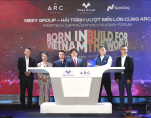
Affirming Its Pioneering Role in Realising Vietnam’s National Digital Asset Policy Over 20 investment fund leaders and 20 top companies in attendance. Featuring partner ARC and senior Nasdaq representatives. Deep-dive sessions on capitalisation solutions and IPO roadmap for Vietnamese enterprises. Official signing of a comprehensive strategic cooperation between Meey Group and ARC HANOI, VIETNAM – Media OutReach Newswire – 14 July 2025 – Meey Group, Vietnam’s leading […]

A tide of tariffs is sweeping across Europe, and the damage is becoming visible just as earnings reports begin to drop. President Trump’s trade decisions are no longer a future threat; they’re now a present force reshaping European corporate performance. The timing is brutal. What was expected to be a modestly positive second quarter for European earnings has shifted into decline, with weakness now concentrated in a […]

Dragon Oil’s board has named Abdulkarim Ahmed Al Maazmi as Acting Chief Executive Officer, entrusting him with steering the company’s strategic trajectory. With a career spanning more than four decades in the oil and gas sector, he succeeds Ali Rashid Al‑Jarwan—CEO since March 2017—in a leadership transition that signals continuity in the firm’s pursuit of global growth.

Al Maazmi joined Dragon Oil, a wholly owned subsidiary of Emirates National Oil Company, in May 2018 as Executive Director of Exploration & New Ventures, overseeing operations across the MENA region. Prior to that, his career included senior roles that shaped key upstream strategies, including serving as President and General Manager of BP UAE in July 2011. There he led partnerships with ADNOC and the Government of Sharjah and oversaw approximately 235,000 barrels per day of oil production.

Board members acknowledged Al Maazmi’s “high‑calibre leadership and strategic vision” as critical to guiding Dragon Oil’s established assets in Turkmenistan, Egypt and Iraq, as well as its commitment to operational excellence, safety and sustainability. The LinkedIn announcement highlights his appointment as “reflecting continued commitment to operational excellence, safety, sustainability, and expanding our global footprint in support of energy security and economic development”.

During his tenure, Al Maazmi steered major strategic projects. In Turkmenistan, he played a pivotal role in projects within the Cheleken Contract Area, consolidating Dragon Oil’s productive presence there since 2000. He also guided initiatives in Egypt’s Gulf of Suez through the GUPCO joint venture and advanced development in Iraq’s Block 9 in partnership with EGPC and KEC.

Stakeholder relations have also been a hallmark of his career. Between 2011 and 2016, Al Maazmi served on the boards of regional energy firms such as ADCO, ADMA, ADGAS, NGSCO and Bunduq Abu Dhabi, and contributed to governance at the Petroleum Institute and the Emirates National Development Program. His track record in negotiating concession renewals and delivering results in multicultural environments underlines his diplomatic and managerial prowess.

In his new leadership role, Al Maazmi inherits a portfolio that includes mature fields like those in Turkmenistan’s Caspian Sea, growth-led projects in the Gulf of Suez, and exploration ventures in Iraq. Observers anticipate his emphasis will include reinforcing localisation and succession planning—as promoted by the UAE government—while also aligning operations with global decarbonisation goals and emerging regional dynamics.

Colleagues report his approach blends technical depth with empowerment of multi‑disciplinary teams, underpinned by an accountability-focused mindset. This ethos was celebrated during a Dragon Oil town‑hall in July 2025 under the theme “One Team, One Vision”, where Al Maazmi emphasised collective effort in achieving strategic aims across Dubai headquarters and field sites.

Industry analysts view the appointment as timely. As upstream players adjust strategies amid evolving energy demand and geopolitical shifts, leadership continuity becomes a critical asset. Al Maazmi’s elevation reflects Dragon Oil’s desire to maintain momentum in long‑standing assets while exploring new areas of growth and innovative technologies.

His stewardship is also expected to further strengthen Dragon Oil’s ties with host governments. A meeting in late 2024 between Al Maazmi and Turkmenistan’s deputy prime minister reinforced state-level confidence in Dragon Oil’s capacity to deliver mutual benefits. Such relationships are vital as the company aims to balance production targets with evolving energy policies.

This leadership transition also aligns with ENOC’s broader strategy to position Dragon Oil as a national champion in upstream operations. As acting CEO, Al Maazmi is likely to champion projects that balance commercial returns with the UAE’s sustainability and security objectives, while also nurturing domestic talent through Emiratisation and professional development initiatives.

With over forty years in the industry and an extensive track record—from field production to corporate governance—Abdulkarim Al Maazmi emerges as a poised leader for Dragon Oil’s next chapter. His appointment signals a commitment to operational resilience, international collaboration and long‑term value creation in a sector grappling with transformation.

SHENZHEN, CHINA – Media OutReach Newswire – 14 July 2025 – The inaugural promotion event for the 2025 Global Artificial Intelligence Machines and Electronics Expo (AIE) was held in Shenzhen, a thriving innovation hub in South China, on Thursday. Shenzhen hosts first promotion event for 2025 Global AI Machines and Electronics Expo Over 100 representatives from government, industry, and international trade associations attended the event. The event […]

digiKam’s 8.7.0 update foregrounds artificial intelligence enhancements, integrating tools that tackle everyday pain points in photo management. Key features include bolstered facial recognition workflows, hardware‑accelerated processing, and a novel AI‑driven image auto‑rotation utility — moves that position digiKam as a free contender in the AI photo management space. Face recognition has undergone targeted refinement. The system now initiates automatic scans when a user confirms or tags a […]

VISHNU RAJA
RYO YAMADA
HITORI GOTOH
IKUYO KITA
Just in:
APT29-linked campaign exploits outdated Apple and Android software // Kochi police detain two actors over bid to honey trap doctor // Private varsities bill all set to face the axe // Meraas showcases five residential zones at Dubai Design Week // Asia Left Behind: Ten international companies have yet to report delivering on their cage-free egg pledges across the region // Xi Jinping Preparing For A Trilateral Summit With Trump And Putin At APEC Summit On Nov 18-19 // Ningbo Consensus on Collaborative Development released at 2026 Global Mayors Dialogue · Ningbo // Geely’s i-HEV Intelligent Hybrid Technology Offers a New Direction Vision for Gasoline-Powered Vehicles // Dubai details five-year visa benefits for returning visitors // Hong Kong mandates crypto transaction disclosures to tax authorities // Technology shares plunge as Nasdaq enters correction // e-Crime Bureau Signs Cybersecurity Partnership With Smart Africa, Reinforcing Its Global Expansion // CR Longdation Aethereal Cybersecurity × Global Cybersecurity Alliance (GCSA) Join Hands to Establish the “AI and Cybersecurity Research Centre” // OpenAI abandons secrecy agreements for future data centres // Geely’s i-HEV Intelligent Hybrid Technology Offers a New Direction for Gasoline-Powered Vehicles // Motorola introduces Signature 27 flagship priced at $1,599 // Ousted top Kochi cop gets IG post // Beyond the exhibition floor: How robots, AI and networks are moving into the real world // Miss Universe Hong Kong Jen Zhou Departs for Puerto Rico to Compete in the 75th Miss Universe World Final // Trump’s Iran War Has A Share Of Contribution To His Midterm Debacle //