Just in:
Dubai boat show confirms international shipyard line-up for November // Technology shares plunge as Nasdaq enters correction // Kochi police detain two actors over bid to honey trap doctor // OpenAI identifies 948 Linux privilege escalation flaws using AI // The “1st Greater Bay Area Health and Longevity Summit & Awards Ceremony” concludes successfully in Macao // UK air traffic outage inflicted £33m financial losses // Geely’s i-HEV Intelligent Hybrid Technology Offers a New Direction for Gasoline-Powered Vehicles // Trump’s Iran War Has A Share Of Contribution To His Midterm Debacle // Cloudflare unveils Zero Wire vulnerability intelligence service // TVM –Mangaluru Vande Bharat claims top spot // Millions Of Indians May Soon Be Deprived Of Government Assistance // Private varsities bill all set to face the axe // Middle East governments assess Iran war after US vote // Ta’ziz finalises $1.39bn funding for Ruwais industrial facilities // CR Longdation Aethereal Cybersecurity × Global Cybersecurity Alliance (GCSA) Join Hands to Establish the “AI and Cybersecurity Research Centre” // Miss Universe Hong Kong Jen Zhou Departs for Puerto Rico to Compete in the 75th Miss Universe World Final // After Reaching 7 Million Users in the Philippines, Skyro Launches Transparent Cash Loans in Malaysia // Fast Just Got Fastest: STING Energy Boost™ Celebrates Kimi Antonelli’s Formula 1® World Championship and the Fan Energy Behind It // Meraas showcases five residential zones at Dubai Design Week // Oil advances towards $100 as tanker attacks persist //

News related to
Edge

UNESCO has mobilised global policymakers, academics and civil society leaders in Bangkok to cement the adoption of its 2021 Recommendation on the Ethics of Artificial Intelligence, the world’s only universal AI ethics framework endorsed by all 194 member states. With over 1,200 delegates from 88 nations and more than 35 ministers present, the third Global Forum on the Ethics of AI underlined the urgency of embedding ethics […]

Santos has granted a six‑week exclusive due‑diligence period to a consortium led by Abu Dhabi’s National Oil Company, signalling serious progress towards its A$36.5 billion takeover proposal.

The consortium, comprising ADNOC’s investment arm XRG, Abu Dhabi Development Holding Company and private equity investor Carlyle, has placed an all‑cash offer of A$8.89 per share—representing a roughly 28 per cent premium on Santos’s previous closing price. Santos’s board is prepared to endorse the deal, pending satisfactory outcomes from due diligence, no better competing bids and approval by an independent fairness expert.

Should the offer proceed, it would mark Australia’s largest-ever all‑cash corporate takeover and rank among the top three transactions nationally—holding an enterprise value near A$36.4 billion.

The acquisition targets Santos’s LNG assets, including Australia’s Gladstone and Darwin facilities, plus substantial interests in Papua New Guinea’s LNG project and the forthcoming Papua LNG development. XRG aims to build an integrated gas and LNG portfolio capable of delivering 20–25 million tonnes annually by 2035.

Adhering to regulatory requirements, the consortium has signed confidentiality agreements and secured exclusive negotiating rights for this due‑diligence phase.

Santos’s management is forecasting a binding scheme implementation agreement before enabling a shareholder vote needing at least 75 per cent support, as per Australian scheme‑of‑arrangement rules. Shareholder approval will depend on a legal and financial assessment of the offer’s fairness.

While the consortium has pledged to maintain Santos’s Adelaide headquarters, preserve local employment, and continue momentum on major projects like the Barossa LNG development and Moomba carbon‑capture initiative, significant regulatory scrutiny lies ahead.

National oversight will involve multiple bodies: Australia’s Foreign Investment Review Board, ACCC, ASIC, and National Offshore Petroleum Titles Administrator; Papua New Guinea’s Securities and Competition commissions; and the US Committee on Foreign Investment due to Santos’s cross-border interests.

Analysts caution that the central risk is FIRB rejection, given Santos’s control over critical gas infrastructure. Potential remedies, like spinning off assets, may invite legal and decommissioning complexities.

South Australian state officials, including Premier Peter Malinauskas and Energy Minister Tom Koutsantonis, have highlighted the importance of protecting domestic jobs, the company’s base, and energy security—leveraging recent legislative powers to oversee licence transfers.

The political backdrop complicates matters, with Treasurer Jim Chalmers in caretaker mode ahead of a potential election. His decision will pivot on FIRB advice and the national interest implications.

Santos has endured pressures in recent years, including a near‑16 per cent drop in annual profit and a 41 per cent dividend cut in 2024. It also abandoned merger negotiations with Woodside that would have created an A$80 billion energy entity.

The consortium’s revised offer follows an initial A$8.00 bid in March, raised to A$8.60 later that month, and now stands at A$8.89—reflecting sustained negotiations and valuation uplifts. Should the agreement proceed, final receipt of regulatory and shareholder clearances could extend into early 2026.

This transaction underscores ADNOC’s growing appetite for strategic LNG assets in the Asia‑Pacific region and exemplifies broader Middle Eastern investment trends in global energy infrastructure. The outcome will influence the balance of power in Australia’s evolving LNG market and set significant precedents for future foreign investment decisions.


Bo Hines, digital asset policy adviser at the White House, confirmed that the United States is actively constructing the infrastructure necessary to support a Strategic Bitcoin Reserve. This initiative follows the executive order signed by President Trump on 6 March 2025, which established both a Strategic Bitcoin Reserve and a broader Digital Asset Stockpile. Hines highlighted that federal agencies have completed accounting for Bitcoin holdings, marking a pivotal step in consolidating treasury-held assets and enabling future acquisitions.

Hines explained that although the order does not compel public disclosure of cryptocurrency holdings, the Treasury may choose to publish a report voluntarily. He emphasised the administration’s inclination to increase government Bitcoin holdings in a budget-neutral way—likely by reallocating existing seized assets or surplus resources—without burdening taxpayers.

The crack team in Washington, including Hines and figures such as David Sacks, are framing Bitcoin as “digital gold”. They contend that, like traditional gold reserves, Bitcoin offers a durable store of value with no central issuer, making it strategically significant for national financial security. Experts point out that such an asset could act as a hedge against inflation and strengthen financial sovereignty, though critics warn of its volatility and speculative nature.

Infrastructure efforts have focused on establishing systems for secure custody, interagency transfer, and real-time accounting of government-held Bitcoin. Hines noted that laying this groundwork is essential before scaling up acquisitions. These efforts reflect a growing shift from regulatory wariness to strategic embrace of digital assets in U.S. policymaking.

Congress is also moving ahead with supporting legislation. The GENIUS Act, jointly advanced by Senators Cynthia Lummis and Tim Scott, is expected to be introduced before the August recess, while further crypto market structure legislation is targeted for completion by September. Hines pointed to this timeline during a session with the senators, underscoring a coordinated push to regulate and support the digital asset space.

State governments and private corporations have already launched Bitcoin-reserve-like initiatives, but the federal programme marks the first national-level effort. This move may be partly inspired by El Salvador’s state-level Bitcoin holding, a model that Hines reportedly examined during conversations with President Nayib Bukele.

Opposition to the federal SBR persists. Economists from the University of Chicago survey unanimously rejected borrowing to acquire crypto assets, citing the speculative nature of Bitcoin. International finance officials—with the European Central Bank in particular—warn that embracing Bitcoin could undermine conventional reserve strategies and monetary stability.

The initiative’s long-term success hinges on robust regulatory clarity. The executive order tasked agencies with full crypto asset accounting and mandated that the Treasury explore budget-neutral acquisition strategies, potentially reallocating portions of gold reserves. These moves aim to balance innovation with fiscal prudence.

As infrastructure construction progresses, the Treasury’s potential publication of federal Bitcoin holdings could signal a new era of transparency and mainstreaming of digital assets in public balance sheets. For stakeholders across government and finance, the outcomes of legislative drafts in the Senate and House will be watched closely.

Alain Robert, the daredevil climber known as the French Spiderman, has ascended the 116‑metre Meliá Barcelona Sky Hotel without any ropes or harnesses to launch TIGERSHARK—claimed as the world’s first cryptocurrency backed by real‑world extreme sports feats. Clad in Tigershark-branded gear and accompanied by his son, former French Navy marine Julien Robert, he live-streamed the stunt via X to mark what organisers call a “Mission 1: Spiderman & Son” initiative.

Organisers describe TIGERSHARK as part of an emerging “Action Economy” in which each token is tied to real adrenaline-fuelled missions spanning big‑wave surfing, wingsuit flying, motocross and parkour. Holding the token grants access to private events, exclusive behind‑the‑scenes content and athlete “drops” – an attempt to fuse thrill‑seeking with blockchain community building.

Lilly Douse, spokesperson for Tigershark, emphasised the departure from traditional token launches: “not airdrops, not smoke and mirrors, but actual real‑world extreme feats, true adrenaline”. She added that the venture is betting on “guts and grits” as the currency’s value proposition.

Robert’s legacy as an urban climber spans more than 150 structures, including the Burj Khalifa, Eiffel Tower and Petronas Towers, all scaled without safety gear. At his current age in the early 60s, he remains committed to pushing boundaries—and this stunt launches a broader strategy merging sport, entertainment and crypto technology.

Discussions are already underway with elite athletes in other high‑risk disciplines—such as base jumping, parkour, wingsuiting and motocross—to participate in future missions. Tigershark’s roadmap includes sponsorships, branded merchandise, global events and athlete plugins, positioning itself as more than a token, but a fully-fledged action-sports brand powered by cryptocurrency.

The circus‑style unveiling has caught the attention of both crypto enthusiasts and adventure-sport communities. While token offerings tied to lifestyle and entertainment have a precedent, Tigershark’s novel angle lies in monetising raw human risk and authenticity. Crypto commentators on social media have amplified the narrative, describing the stunt as “the realest launch Web3 has seen” and “the wildest crypto launch ever”.

However, critics have raised concerns. The stunt’s stunt‑token concept may attract speculative interest, but some analysts warn linking token value to unpredictable physical events could introduce heightened volatility. Moreover, regulatory scrutiny looms over crypto ventures that employ unconventional marketing tactics, especially those involving public stunts with safety or legality risks.

Tigershark’s strategic focus on live‑streamed extreme feats and token‑holder exclusives mirrors broader trends in Web3: blending content, experience and community. Yet the project must deliver consistency and transparency. Observers will scrutinise whether future missions occur as scheduled, whether token economics remain sound, and whether token-holders genuinely receive promised perks.

By embedding risk and spectacle into its founding act, TIGERSHARK sets itself apart from conventional token launches. Early investor sentiment appears buoyed by novelty and potential for real‑world engagement. But delivering a sustainable “Action Economy” will require navigating regulatory complexities and proving that this fusion of blockchain and extreme sport can transform fleeting adrenaline into long‑term value.

Matein Khalid My generation were teenagers in the late 1970’s and thus passionate fans of Sweden since Abba dominated the Top of the Pops (God, how I hated the ghastly Dancing Queen since every girl in high school thought this syrupy pop tune was written specifically for her!) and Björn Borg dominated Centre Court at Wimbledon as the Men’s Champion until the trophy was wrested from him […]

NVIDIA Corp is a equity in the USA market. The price is 154.31 USD currently with a change of 6.45 USD from the previous close. The latest trade time is Thursday, June 26, 17:06:55 +0530. Nvidia Surpasses Microsoft to Reclaim Global Valuation Crown Nvidia has overtaken Microsoft to retake its position as the world’s most valuable publicly traded company, with a market capitalisation reaching approximately $3.77 trillion. The […]

Continued Gross Profit Margin and Net Operating Cash Flow improvements albeit difficult market conditions HONG KONG SAR – Media OutReach Newswire – 26 June 2025 – HONMA Golf Limited (“HONMA”; together with its subsidiaries, the “Group”; HKEx stock code: 6858), one of the world’s most prestigious golf brands, announces its consolidated annual results for the year ended 31 March 2025 (the “Period”). Financial Highlights Due to economic […]

Advertisements

Leafcutter ant colonies, celebrated for their rigid division of labour, have yielded a startling secret: their roles can be rewired with a molecular tweak. Scientists from the University of Pennsylvania orchestrated this transformation using two tiny neuropeptides, shifting defenders into nurses and garden workers into leaf harvesters. The work, published in Cell on 9 June 2025, reveals a mechanism conserved across species, reaching mammals such as naked […]

Seventeen Nigerian soldiers have died and ten more were wounded after coordinated attacks on three military bases in Niger and Kaduna states, the army confirmed. The assaults began in the early hours of Tuesday, as heavily armed gunmen stormed forward operating posts in Kwanar Dutse and Boka, along with a base in neighbouring Kaduna State. Combat persisted for several hours under heavy fire. Army spokesperson Lieutenant Colonel […]

HONG KONG SAR – Media OutReach Newswire – 24 June 2025 – SiegFund, a fintech–driven proprietary trading platform, has officially completed its brand upgrade and will now operate as SiegPath, serving proprietary traders worldwide and ushering in a new chapter in global expansion. To further strengthen its rebranding, SiegPath has simultaneously launched its brand-new official website, built with a user-centric approach and equipped with a range of […]

Abu Dhabi sovereign investor ADQ is negotiating the acquisition of a 35 percent stake in Limagrain’s vegetable seeds unit, forging a strategic partnership focused on developing hard‑climate‑resilient crops. The envisioned alliance includes joint research and development initiatives in the UAE, designed to accelerate innovation in seeds tailored to extreme conditions. The proposed investment centres on Limagrain Vegetable Seeds, the vegetable‑seed division of France‑based cooperative Limagrain, a global market […]

Mashreq Bank has inaugurated a representative office in Türkiye, marking a significant stride toward enhancing financial collaboration between the Gulf and Turkish markets. This strategic move is central to Mashreq’s initiative to channel risk capacity and capital flows directly to Turkish banks and corporates. Dubai’s Mashreq is already a familiar correspondent to Turkish financial institutions, actively participating in syndicated loans, trade finance, payments, treasury services and capital […]

Beirut’s landscape, battered by the 14‑month Hezbollah–Israel war, is set for a critical transformation as the World Bank green‑lights a US$250 million financing package to support urgent restoration and rubble management. Dubbed the Lebanon Emergency Assistance Project, this initiative marks the initial phase of a US$1 billion, government‑led framework aimed at breathing life back into vital public infrastructure and essential services.

Damage and needs assessments conducted between 8 October 2023 and 20 December 2024 estimate total conflict losses at US$7.2 billion, with an overarching reconstruction requirement of US$11 billion. Of this, approximately US$1.1 billion pertains to infrastructure across transport, water, energy, municipal services, education and healthcare – the precise sectors that LEAP will target for immediate interventions.

Jean‑Christophe Carret, the World Bank’s Middle East director, described LEAP’s design as “a credible vehicle for development partners to align their support, alongside continued progress on the Government’s reform agenda, and maximise collective impact in support of Lebanon’s recovery and long‑term reconstruction”. The financing will fund rapid repairs to lifeline services, sustainable clearance of rubble prioritising recycling, and initial design and environmental studies for longer‑term rebuilding.

By adopting a data‑driven, area‑based prioritisation endorsed by the Council of Ministers, LEAP aims to balance speed with social and economic impact in the worst‑affected regions. To ensure accountability and effective delivery, Lebanon has initiated reforms within the Council for Development and Reconstruction, including the appointment of a fully functional board and streamlined processes consistent with international emergency‑response standards.

Operational oversight will be bolstered by an international private‑sector engineering firm, responsible for compliance monitoring across technical, environmental, fiduciary and AML/CFT requirements. Implementation rests under the strategic guidance of the Prime Minister’s Office, with the Ministry of Public Works and Transport leading execution and the Ministry of Environment overseeing social and environmental safeguards, especially debris handling.

Prime Minister Nawaf Salam welcomed the funding as “a key step in reconstruction… reinforcing recovery efforts within a state‑led framework and paving the way for much‑needed additional financing”.

The World Bank has previously confirmed that this initial contribution is part of a US$1 billion scalable fund, with $250 million already committed and plans for donor contributions to fill the remaining $750 million. Lebanon has already secured preliminary approval to raise the World Bank loan to $400 million, signalling growing momentum for the broader rehabilitation agenda.

LEAP emerges at a juncture when Lebanon, in the grip of one of its most severe financial crises in modern history, is balancing a recovery from war with deep‑rooted economic collapse. Nearly three‑quarters of its population live in poverty, the currency has collapsed by over 90 % since 2019, and public services have all but collapsed. The project’s prioritisation of transparency, environmental best practice, and governance reform offers a fresh test of Lebanon’s capacity to channel international finance into tangible, equitable recovery.

Meanwhile, the World Bank is coordinating with multilateral and bilateral donors, aligning its initial funding with evolving Lebanese reforms. The ultimate success of LEAP depends not only on reconstruction dollars, but on effective institutional stewardship—a challenge Lebanon’s government has pledged to embrace.

The Magic Newton Foundation has unveiled its NEWT token, aiming to revolutionise token launches by embedding transparency and equitable distribution at its core. The native token of the Newton Protocol, NEWT debuts with a fixed supply of 1 billion, of which 21.5%—215 million tokens—is initially available.

Designed to tackle persistent issues of insider trading and opaque allocations, NEWT introduces several industry-first safeguards. All allocations are publicly tagged on-chain for independent verification, while quarterly reports will detail usage across community, internal, and liquidity categories. Furthermore, team and contributor allocations are subject to a mandatory 36-month vesting with an initial 12-month lock-up.

Solid data underpins the initiative: research indicates insiders preceded 56% of all ERC‑20 listings since 2021, and studies suggest 10–25% of token listings may involve insider activity. Mohammad Akhavannik, Managing Director of the Foundation, said the goal is to “correct information asymmetry” with full on-chain transparency and equitable distribution.

A significant 60% of the token supply is allocated to community-focused initiatives—growth, ecosystem development, staking, liquidity support—with structured unlocking schedules: 20% at launch, the balance over a 48-month span. The remaining 40% is directed to internal stakeholders—core contributors, early backers, and Magic Labs—with vesting periods designed to align long-term incentives.

Beyond tokenomics, NEWT underpins the Newton Protocol’s AI-driven automation. It serves four primary roles: securing the network through validator staking; acting as the protocol’s native gas fee; funding registration and operational services for AI agent models; and enabling governance participation via staked holdings. The protocol integrates trusted execution environments and zero-knowledge proofs to ensure tasks executed by AI agents adhere to user-defined parameters.

Binance has listed NEWT for margin, futures trading, and inclusion in Earn programmes. The token also features on Coinbase, Upbit, Bybit, and Bithumb. Following the announcements from Upbit and Bithumb, NEWT saw a 40% price surge, which was further bolstered by backing from PayPal Ventures and Polygon securing US$90 million in pre-launch investment.

The launch included a 10% airdrop—100 million tokens—to early community participants and users active on the Kaito platform, including a 0.9% allocation specifically for Kaito rewards, based on an eligibility snapshot on 20 June 2025.

Magic Labs, the principal developer behind Newton Protocol, brings extensive web3 infrastructure experience, having supported over 50 million embedded wallets since 2018 through partnerships with notable platforms such as Polymarket and WalletConnect. This technical legacy, combined with NEWT’s layered governance and economic utility, positions the Foundation to challenge established norms in on‑chain finance.

Critical voices within the crypto community have noted discrepancies in the top-tier distribution: for example, the top 1,000 social‑platform accounts received 0.9% of the circulating tokens, prompting debate over whether influence is being prioritised over grassroots contributors.

Emirates has reinstated its complete flight schedule following brief airspace shutdowns over Gulf states on 23 June. The Dubai‑based carrier reported that all its regular services resumed within hours, with just a handful of cancellations and no forced diversions. Route adjustments took place to avoid congested airspace, as part of the airline’s emergency protocols. The carrier clarified that its contingency systems were promptly deployed. A statement published […]

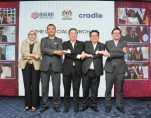
PUTRAJAYA, MALAYSIA – Media OutReach Newswire – 26 June 2025 – Malaysia today launched the Startup ASEAN platform, marking the full-scale rollout of a bold, unified digital gateway to connect and empower startups across ASEAN. Spearheaded by the Ministry of Science, Technology and Innovation (MOSTI) and executed by Cradle Fund Sdn Bhd (Cradle), the platform’s regional launch underscores Malaysia’s commitment under its 2025 ASEAN Chairmanship to fostering […]

By Saifur Rahman Global credit rating agencies Moody’s Investors Service, Standard and Poor’s and Fitch Ratings have assigned ‘AA’ rating with stable outlook for the UAE economy, despite the regional tension. This comes right after the cessation of the military conflict in the region that significantly reduces security, political and economic risks. Standard and Poor’s (S&P Global) on June 17 has assigned ‘AA/A-1+’ long- and short-term foreign […]

By Saifur Rahman A number of UAE developers are entering the lucrative US$110.83 trillion real estate market in the United States, after their success in the UAE, which saw real estate transactions exceeded Dh893 billion last year. Americans are also one of the top ten nationalities to invest in the UAE’s real estate market where rental yield ranges between 7 to 9 percent. “Emirati investments in the […]

Claira, a New York–based deal intelligence platform, has closed a $7 million seed funding round co-led by Barclays and Citi, alongside Reimagine Tech Ventures. Additional backing came from Activant Capital, KDX and OPCO Ventures. Claira’s platform integrates domain-native artificial intelligence directly into deal workflows, enabling banks, private-credit funds and financial institutions to speed up due diligence, unlock historical deal insights and scale decision‑making processes. Founder and chief executive […]

Greenlogue/AP A newly released global analysis reveals that funding for climate adaptation in the world’s most hazard-prone nations has dropped sharply, leaving them dangerously exposed to floods, heatwaves and storms. The Climate Risk Index 2025, based on data spanning 1993 to 2022 from EM-DAT, the World Bank and IMF, found that more than 765,000 people died and nearly US$4.2 trillion was lost in direct economic damage due to […]

Elon Musk has disclosed plans to overhaul xAI’s conversational system Grok by essentially reconstructing its entire knowledge foundation. Frustrated with what he describes as “garbage” and “uncorrected data” in the model, Musk intends to launch Grok 3.5—potentially rebranded as Grok 4—with enhanced reasoning capabilities that will first re-write the entire corpus of human knowledge before retraining the model on that curated dataset. Musk wilted no words on X, characterising […]

Tether chief executive Paolo Ardoino has pledged to catapult the company into the position of the world’s leading Bitcoin miner by the end of 2025, asserting that crypto‑mining is key to safeguarding its $10 billion‑plus Bitcoin reserves. He outlined a sweeping strategy centred on large‑scale investment in mining and energy infrastructure across Latin America.

Ardoino said Tether has already channelled upwards of $2 billion into mining and energy systems and is now accelerating deployment. While the company’s precise hash‑rate remains confidential, executives emphasise that their investment reflects both scale and strategic intent. The mining push forms part of a broader financial architecture designed to secure the firm’s Bitcoin holdings and further embed it within the Bitcoin ecosystem.

The announcement emerged at the Bitcoin Conference in Las Vegas, where Ardoino noted Tether’s robust earnings—reporting a $13 billion profit in 2024—and a sizeable portfolio of U.S. Treasuries. He revealed the firm holds more than 100,000 BTC and hinted that the mining operation will leverage renewable energy sources supporting its underlying reserves.

Tether is concurrently preparing to open‑source its Bitcoin Mining Operating System, which the company says will democratise mining by enabling participants ranging from individual Raspberry Pi setups to large‑scale farms to connect into secure point‑to‑point networks. The move is intended to broaden participation, enhance resilience of the Bitcoin network, and solidify Tether’s position as a leader in infrastructure innovation.

Energy infrastructure forms a crucial part of Tether’s strategy. Ardoino highlighted investments across Latin America in renewable energy projects, including substantial commitments in Uruguay and El Salvador, where Tether relocated its headquarters and backs geothermal initiatives through a project known as Volcano Energy. These investments reflect a dual focus: securing clean, reliable power for mining and contributing to regional energy resilience.

The strategic rationale centres on mitigating the risks of holding large Bitcoin reserves. Mining, Ardoino explained, provides not only operational control but also reinforces financial sovereignty, anchoring assets within a secured blockchain‑based ecosystem. By internalising hash‑rate and power sources, Tether aims to shield its holdings from external dependency and volatility.

Security considerations have informed the launch of MOS. As a decentralised architecture, the system allows devices to operate without reliance on central servers, reducing vulnerability to single‑point failures or third‑party disruptions. Looking ahead, Tether plans to integrate artificial‑intelligence tools into MOS to monitor performance and optimise operations in real time.

Tether’s move into open‑source mining software dovetails with its broader tech ambitions. Ardoino introduced QVAC, an AI platform that uses non‑custodial wallets, and unveiled plans for a Bitcoin‑centric wallet developed with Rumble. These projects underscore Tether’s strategy to embed Bitcoin deeper into digital finance and expand its ecosystem services.

Market observers note that Tether’s mining ambition places it in direct competition with publicly traded mining firms. Although exact hashrate figures are absent, the scale of investment and reserve holdings suggest that surpassing existing miners is credible by late 2025. Tracking progress will require scrutiny of deployment timelines and performance metrics, which Tether has declined to specify.

Financial analysts regard Tether’s diversified asset approach—spanning Bitcoin, gold and U.S. Treasuries—as a deliberate hedge strategy. The large Bitcoin reserves, reportedly worth over $10 billion, alongside substantial gold and treasury holdings, underpin a multifaceted capital structure. By converting passive holdings into active mining assets, Tether aims to generate operational yield and enhance asset security.

Critics of large‑scale corporate mining warn of environmental strains and centralisation risks. Tether’s emphasis on renewable energy uptake and decentralised software architecture reflects an attempt to mitigate these concerns. If MOS and energy projects deliver as promised, the model may provide a template for sustainable, corporate-scale participation in Bitcoin mining.

Next steps include the public release of MOS, scheduled for later in 2025, alongside scaling up of energy infrastructure across targeted Latin American sites. Close monitoring of mining output, energy efficiency, and systems performance will determine whether Tether’s pledge translates into actual dominance in global Bitcoin mining.

Dubai’s skyline is poised to gain a striking addition as OMNIYAT officially unveiled its Visionary commercial tower, Lumena, a 48-storey ultra‑luxury workplace development on Sheikh Zayed Road, scheduled to open in the fourth quarter of 2029. The project, valued at AED 3.6 billion, will comprise 91 customizable office units, including full‑floor, half‑floor and standard spaces with panoramic glazing, state‑of‑the‑art biophilic design and smart‑building technology. Shortly after its launch at […]

 Small and medium-sized companies need more than just spreadsheets and simple systems to be competitive in today’s fast-paced, digital market. They need a single platform that makes finance, operations, sales, and customer support easier. That too, while still being able to grow and provide them real-time data.    Microsoft Dynamics 365 Business Central helps small and medium-sized enterprises run their businesses more effectively. It works well with Office […]

VISHNU RAJA
RYO YAMADA
HITORI GOTOH
IKUYO KITA
Just in:
APT29-linked campaign exploits outdated Apple and Android software // ADIA and partners establish $1.4 billion aviation venture // Meraas showcases five residential zones at Dubai Design Week // e-Crime Bureau Signs Cybersecurity Partnership With Smart Africa, Reinforcing Its Global Expansion // Dubai boat show confirms international shipyard line-up for November // Oil and chip shares retreat after Democratic victories // Private varsities bill all set to face the axe // Miss Universe Hong Kong Jen Zhou Departs for Puerto Rico to Compete in the 75th Miss Universe World Final // UK air traffic outage inflicted £33m financial losses // Geely’s i-HEV Intelligent Hybrid Technology Offers a New Direction for Gasoline-Powered Vehicles // Fast Just Got Fastest: STING Energy Boost™ Celebrates Kimi Antonelli’s Formula 1® World Championship and the Fan Energy Behind It // OpenAI identifies 948 Linux privilege escalation flaws using AI // Asia Left Behind: Ten international companies have yet to report delivering on their cage-free egg pledges across the region // TVM –Mangaluru Vande Bharat claims top spot // CR Longdation Aethereal Cybersecurity × Global Cybersecurity Alliance (GCSA) Join Hands to Establish the “AI and Cybersecurity Research Centre” // Ousted top Kochi cop gets IG post // Technology shares plunge as Nasdaq enters correction // Kochi police detain two actors over bid to honey trap doctor // Hong Kong mandates crypto transaction disclosures to tax authorities // Oil advances towards $100 as tanker attacks persist //