Just in:
Excise chief shunted out in bar licence dispute // The “1st Greater Bay Area Health and Longevity Summit & Awards Ceremony” concludes successfully in Macao // Geely’s i-HEV Intelligent Hybrid Technology Offers a New Direction Vision for Gasoline-Powered Vehicles // Motorola introduces Signature 27 flagship priced at $1,599 // TVM –Mangaluru Vande Bharat claims top spot // Beyond the exhibition floor: How robots, AI and networks are moving into the real world // Millions Of Indians May Soon Be Deprived Of Government Assistance // Ningbo Consensus on Collaborative Development released at 2026 Global Mayors Dialogue · Ningbo // Kochi police detain two actors over bid to honey trap doctor // CR Longdation Aethereal Cybersecurity × Global Cybersecurity Alliance (GCSA) Join Hands to Establish the “AI and Cybersecurity Research Centre” // Emaar approves Development buyout ahead of planned delisting // OpenAI abandons secrecy agreements for future data centres // e-Crime Bureau Signs Cybersecurity Partnership With Smart Africa, Reinforcing Its Global Expansion // Ousted top Kochi cop gets IG post // Private varsities bill all set to face the axe // Trump’s Iran War Has A Share Of Contribution To His Midterm Debacle // Democrats Gearing Up For 2028 Presidential Elections To Gain Full Power // Miss Universe Hong Kong Jen Zhou Departs for Puerto Rico to Compete in the 75th Miss Universe World Final // Battle Uttar Pradesh Will Be Tougher For Yogi Than Expected // Oil advances towards $100 as tanker attacks persist //

News related to
Edge

Singapore’s drive to harness artificial intelligence as an engine of economic growth is entering a decisive phase marked by abundant ambition and clear signs of strain across company ranks. Government fiscal policy and private-sector deployment are converging on AI, but weak data infrastructure, skills gaps and uneven returns are tempering expectations even as enterprises escalate investments and policy support grows.

Last week, the nation’s Budget for the 2026 fiscal year unveiled a suite of measures aimed at elevating AI adoption across multiple industries. Prime Minister and Finance Minister Lawrence Wong confirmed the establishment of a National AI Council, to be chaired by himself, tasked with coordinating research, regulation and investment to align public and private interests in developing AI capability. The plan also includes National AI Missions focused on advanced manufacturing, connectivity and logistics, finance and healthcare, sectoral areas where government and business leaders see the most potential for productivity gains and value creation. The budget expands fiscal incentives with enhanced tax deductions for AI-related expenditures over the next two assessment years and widened grant schemes to support adoption, workforce training and enterprise transformation. Leaders of major consultancies said these measures signal a shift from experimentation to enterprise-scale adoption and give firms a clearer pathway to embed AI into core operations.

Despite this policy momentum, data from industry surveys and corporate research paint a more nuanced picture of utilisation and outcomes. Adoption of AI tools in Singapore is now near universal among larger firms, with about 96 per cent reporting some level of use. But a significant gap remains between deployment and measurable returns on investment. Only a minority of organisations consider themselves leaders in achieving strong, sustained ROI, indicating an emerging disconnect between AI deployment at scale and operational readiness to turn it into business value. Executives widely acknowledge that sprawling and complex data environments, coupled with cybersecurity concerns, are contributing to operational friction and risks that constrain potential gains.

Private forecasts and vendor research suggest that enterprises are committed to accelerating AI spending even as returns lag. Surveys of business leaders show average investments in AI of around SG$18.9 million, with expectations for investment growth of roughly 38 per cent over the next two years and ROI projections rising to an average of 29 per cent during the same period. Yet analysts note that these returns will depend significantly on firms’ ability to bridge gaps in data readiness and workforce capability. Many Singapore companies acknowledge limited internal training, fragmented data integration and widespread informal use of ungoverned AI tools, all of which undermine robust enterprise-level strategy and governance structures.

Structural issues are as salient as technical ones. Industry leaders point to weaknesses in reliable data foundations and the need for stronger leadership alignment to embed AI into strategic operations rather than relegated to pilot projects or isolated business functions. Senior executives contend that competitive advantage over the coming decade will be determined less by technology choice and more by how effectively organisations build hybrid human-AI teams and integrate AI into everyday workflows.

Talent acquisition and retention also feature prominently in conversations around Singapore’s AI trajectory. Advanced AI, cloud and cybersecurity skills are in high demand globally and Singapore is no exception, with firms reporting difficulty scaling teams with the specialised expertise needed to support complex AI systems. This talent shortage both drives up costs and slows the pace at which organisations can absorb and leverage new technologies.

Cloud infrastructure and advanced digital foundations are another determinant of success. Financial services institutions in Singapore, for example, are among the most advanced globally in cloud adoption, with a majority running core workloads in cloud or hybrid environments that facilitate large-scale AI deployment. This infrastructure supports use cases ranging from compliance and risk management to fraud detection and transaction monitoring. However, budget constraints, talent gaps and integration challenges remain headwinds even in these relatively strong pockets of adoption.

Commentators outside the corporate sphere emphasize the importance of inclusive growth, noting that small- and medium-sized enterprises must not be left behind in the national AI push. Business federation and consultancy leaders warn that without targeted support for smaller firms to sustain, not just adopt, AI technologies, widening capability divides could undermine broader economic innovation and productivity goals.

Researchers tracking more than 400 toddlers have found no evidence that receiving an mRNA COVID-19 vaccine during or just before pregnancy increases the risk of autism spectrum disorder or developmental delays, offering what clinicians describe as strong reassurance for expectant mothers. The large prospective study, conducted across multiple clinical centres and involving detailed follow-up assessments of infants born during the pandemic, examined speech and language development, motor […]

Sega Sammy Holdings announced a substantial impairment charge against Finnish studio Rovio Entertainment as part of its financial results for the nine months ended 31 December 2025, underscoring challenges in its bid to expand mobile gaming revenue and prompting strategic shifts in its broader gaming portfolio. The company recorded an impairment loss close to US $200 million linked to Rovio’s performance, coinciding with a sharp fall in […]

Arabian Post Staff -Dubai Dubai’s education landscape is set for a major expansion as Dubai Holding Investments and global operator Nord Anglia Education announced a strategic partnership to develop and operate a network of premium K-12 schools across the emirate, responding to surging demand driven by population growth and an expanding expatriate community — a move that adds momentum to the broader Gulf private education boom while […]

Standard Chartered has slashed its forecast for the digital asset XRP by about 65%, lowering the anticipated year-end 2026 price to around $2.80 from a previous projection above $8, underscoring deepening stress across broader cryptocurrency markets. That adjustment, communicated in an investor note led by Geoffrey Kendrick, the bank’s global head of digital assets research, reflects enduring selling pressure and fading liquidity that have weighed on XRP […]

Arabian Post Staff -Dubai   Indian authorities have seized three oil tankers that were under United States sanctions and linked to Iranian oil networks, intensifying surveillance of the country’s maritime zones to stem illicit trade and enforce sanctions compliance, officials familiar with the matter said. The vessels, operating under multiple identities to evade detection, were intercepted about 100 nautical miles west of Mumbai in the Arabian Sea […]

OpenAI’s chief executive Sam Altman has said that India now has 100 million weekly active users of ChatGPT, elevating the country to the position of the platform’s second-largest market globally after the United States and underscoring its growing influence in the artificial intelligence ecosystem. Altman disclosed the figure in an opinion piece published ahead of the Global AI Impact Summit 2026 in New Delhi, where government officials and global tech leaders are convening to discuss the future of AI and its integration into education, enterprise and public services.

This milestone reflects not just a vast user base but also a distinct pattern of adoption: students in India now represent the largest single demographic of ChatGPT users worldwide, according to Altman, who highlighted the role younger generations are playing in embedding generative AI into daily workflows for learning and productivity.

The 100 million figure forms a significant share of ChatGPT’s global weekly active user count, which stood at about 800 million as of October 2025 and is widely projected to edge closer to 900 million as platforms refine their offerings and expand reach. OpenAI’s decision to open an office in New Delhi in August 2025 and tailor pricing, including a lower-cost subscription tier later made free for a year, is seen as part of a strategy to deepen engagement in what many technology firms regard as a key growth market.

Altman underscored India’s demographic advantages, including a population exceeding one billion internet users and a large proportion of English speakers outside native English-speaking countries — factors that have made the country fertile ground for generative AI adoption. Many students have turned to ChatGPT for support with research, coding, examination preparation and language practice, reflecting a broader trend of digital tools being woven into educational routines.

Despite this surge, translating sheer user numbers into sustained economic returns poses challenges for AI firms. India’s price-sensitive market and uneven internet access complicate monetisation, causing some companies to adjust their strategies to balance affordability with revenue generation. OpenAI’s tailored pricing and promotional offers have helped lower entry barriers, but broader monetisation across emerging markets may require further innovation in business models.

The competitive landscape in India’s AI space is intensifying. Alphabet’s Google has made inroads with its Gemini AI suite, aggressively targeting younger users through free one-year subscriptions and partnerships with telecom firms to broaden adoption among students and professionals. These efforts are part of a broader contest among technology giants to capture share in a market that has vast potential due to its size and digital engagement.

The presence of global tech leaders and politicians at the New Delhi summit highlights the geopolitical and economic significance of India’s AI trajectory. Policy discussions span topics from responsible AI governance and equitable access to scaling infrastructure and boosting domestic innovation capacity. Indian policymakers, alongside industry executives, are advocating approaches that leverage technology to enhance education, public services and economic participation, while grappling with concerns over job displacement and digital divides.

Altman has outlined priorities for fostering inclusive AI growth in India, emphasising the need for practical digital literacy, robust computing infrastructure and frameworks that ensure ethical deployment. Such an approach, he argues, will empower users to harness AI’s potential effectively rather than just expanding access to tools.

The prominence of India’s student base on ChatGPT has broader implications for how AI products are developed and tailored. Feedback from a large and diverse user community helps shape feature enhancements and localisation efforts, influencing global development roadmaps. For companies like OpenAI, this dynamic underscores a strategic shift from traditional markets in Europe and North America toward regions where usage patterns reflect unique demographic and cultural needs.

Advertisements

Nigeria has launched a sweeping industrial policy aimed at restarting idle factories, boosting domestic manufacturing and positioning Africa’s largest economy as a competitive production hub in global supply chains. Federal authorities say the framework is designed to tackle long-standing structural weaknesses that have undermined output, including erratic power supply, limited access to long-term finance, foreign exchange volatility and infrastructure gaps. Manufacturing accounts for less than 10 per […]

Metaplanet has reported a dramatic acceleration in earnings, posting a 738 per cent year-on-year rise in revenue and a 1,700 per cent jump in operating profit, underscoring the impact of its aggressive digital asset strategy and restructuring drive. The Tokyo-listed company, which has repositioned itself as a corporate holder of bitcoin, disclosed the figures in its latest financial update, signalling a sharp turnaround from its earlier years […]

Zilliz has launched a new Zilliz Cloud region in Amazon Web Services’ eu-west-1 data centre in Ireland, expanding its European infrastructure as demand for localised artificial intelligence systems accelerates across Western Europe and the United Kingdom. The move positions the vector database specialist closer to enterprise customers that require data residency, lower latency and regulatory compliance within the European Union. By deploying in AWS’s Ireland region, Zilliz […]

Harvard Management Company has reduced its exposure to bitcoin-linked holdings by about 20 per cent while initiating a new position tied to ether, signalling a recalibration of its digital asset strategy amid shifting market dynamics and valuation pressures. Regulatory filings show that the endowment’s investment arm pared back its stake in BlackRock’s iShares Bitcoin Trust during the latest reporting period, cutting the value of its holding from […]

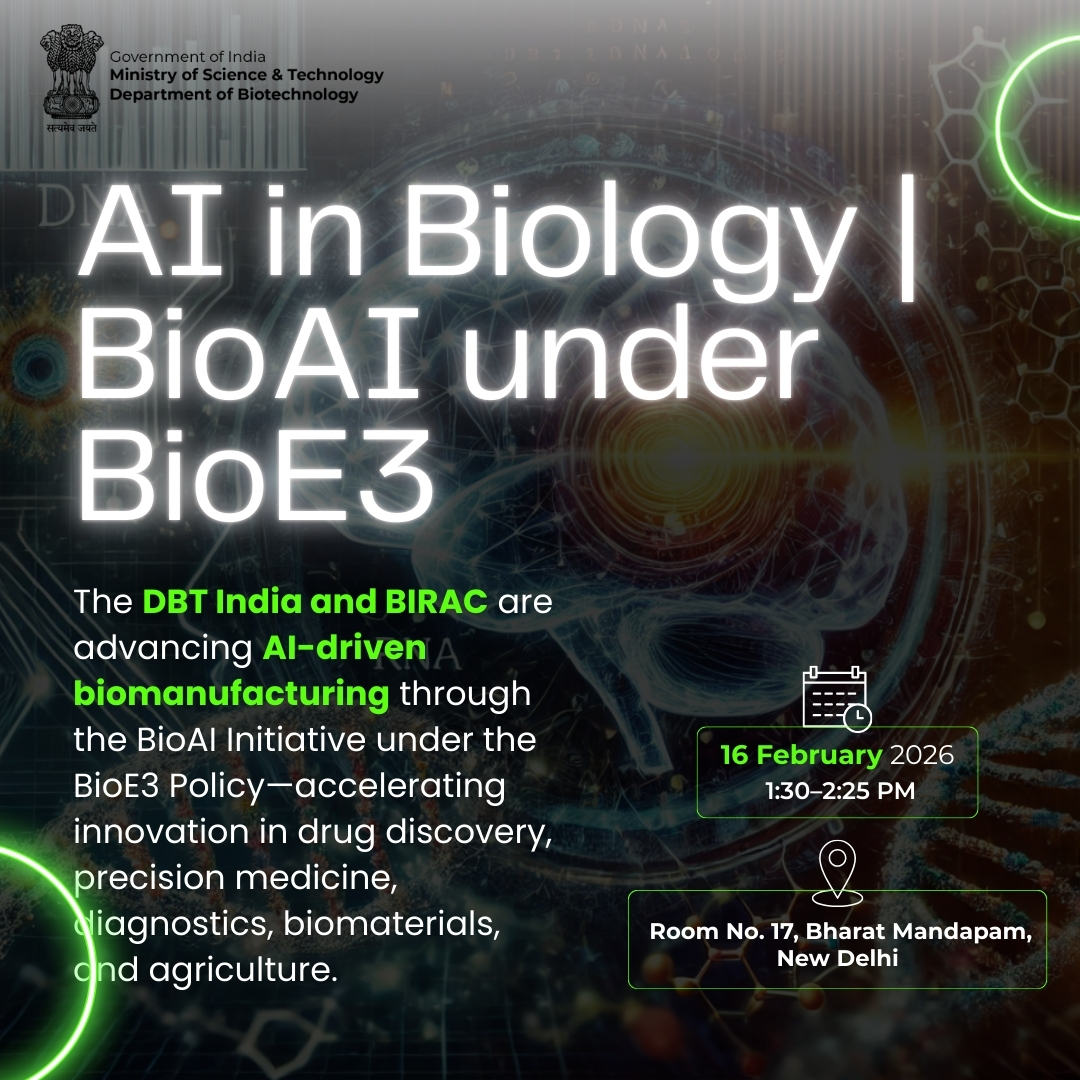
Artificial intelligence is being positioned as a catalytic force in reshaping biomanufacturing, with policymakers, scientists and industry leaders outlining a roadmap that blends computational power with biological science to accelerate drug discovery, industrial enzymes and sustainable materials. Discussions at the India AI Impact Summit placed BioAI at the centre of a strategy aimed at using genomics, in-silico modelling and closed data loops to build scalable and trusted production systems.

The convergence of AI and biology has moved from laboratory experimentation to commercial ambition. India’s biotechnology sector, valued at over $80 billion and targeting significant expansion by the end of the decade under the BioE3 policy framework, is seeking to harness machine learning tools to shorten development cycles that traditionally take years. Speakers at the summit argued that AI-enabled simulation and predictive modelling can reduce trial-and-error experimentation in fields ranging from vaccine development to precision fermentation.

BioAI refers to the integration of artificial intelligence techniques with biological data, particularly genomic sequencing, proteomics and metabolic engineering. The approach relies on large datasets and advanced algorithms capable of identifying patterns invisible to conventional research methods. Advances in protein structure prediction, including breakthroughs in computational biology over the past few years, have demonstrated how neural networks can model complex molecular interactions with remarkable accuracy.

At the summit, researchers described how generative AI systems are being trained to design novel proteins and enzymes tailored for industrial use. By feeding genomic datasets into predictive algorithms, scientists can simulate biological pathways in silico before conducting physical experiments. This method reduces costs and speeds up scaling, particularly in biopharmaceutical production and alternative protein manufacturing.

Government representatives outlined plans to expand national AI infrastructure to support such applications. IndiaAI Mission initiatives include the creation of high-performance computing resources and domain-specific data repositories to ensure that biotech firms and research institutes have access to secure and interoperable datasets. Officials emphasised that trust frameworks and regulatory clarity would be essential to encourage private investment while safeguarding data privacy and biosafety standards.

Industry leaders echoed that sentiment, highlighting that biomanufacturing requires rigorous validation. Unlike digital products, biological outputs interact with living systems, making quality control paramount. AI-driven feedback loops—where laboratory results continuously refine algorithms—were presented as a mechanism to maintain reliability while scaling up production. Data integrity, traceability and auditability were recurring themes, reflecting global debates about AI governance.

The global context underscores the strategic significance of BioAI. The United States and European Union have invested heavily in synthetic biology and AI-assisted drug discovery. China has also advanced computational genomics and large-scale fermentation capabilities. Analysts note that countries able to combine AI talent with robust biotech ecosystems stand to capture a growing share of the global bioeconomy, projected by several industry reports to exceed $4 trillion over the coming decade.

India’s strength in information technology services and pharmaceutical manufacturing offers a foundation for this convergence. The country is a major supplier of generic medicines and vaccines, supported by a network of research institutions and startups. By integrating AI tools into these value chains, stakeholders believe production timelines can be compressed and new therapeutic molecules identified with greater precision.

Academic voices at the summit stressed the importance of interdisciplinary training. Biologists must understand algorithmic thinking, while data scientists need grounding in molecular biology. Collaborative platforms linking universities, startups and established pharmaceutical firms were proposed to ensure knowledge transfer and talent development. Investment in computational biology curricula and shared research facilities is seen as critical to sustaining momentum.

Ethical considerations formed part of the dialogue. AI models trained on genomic data raise questions about consent, ownership and equitable benefit sharing. Experts argued for transparent governance structures aligned with international norms, noting that trust is fundamental when dealing with health-related information. Regulatory agencies are exploring how to evaluate AI-generated biological designs within existing approval pathways.

Private sector participation is accelerating. Venture capital funding in biotech startups leveraging machine learning has grown steadily, reflecting confidence in AI-assisted discovery platforms. Companies are experimenting with digital twins of biological systems, enabling simulation of fermentation processes before industrial deployment. Such capabilities can enhance efficiency and reduce resource consumption, aligning with sustainability goals.

Sustainability featured prominently in discussions on biomanufacturing. AI-optimised microbes can produce bio-based chemicals and materials that substitute fossil-derived inputs. Precision fermentation techniques, guided by predictive analytics, may lower energy use and waste. As global supply chains face pressure to decarbonise, the combination of AI and biotechnology is viewed as a pathway to cleaner industrial production.

Participants also highlighted challenges. High-quality biological datasets remain fragmented, and interoperability across laboratories is uneven. Ensuring cybersecurity in research networks is another concern, given the sensitivity of genetic information. Scaling laboratory successes to commercial volumes demands capital expenditure and regulatory compliance that can deter smaller enterprises.

Mercedes-Benz USA has recalled nearly 12,000 electric sport utility vehicles in the United States after identifying a defect in high-voltage battery cells that could trigger a fire, either while driving or when parked. The recall covers 11,895 EQB vehicles across three variants: 1,708 EQB 350 4Matic models from the 2022 to 2024 model years, 3,674 EQB 250+ units from 2023 and 2024, and 6,513 EQB 300 4Matic […]

Galaxy Digital’s head of asset management, Steve Kurz, is projecting a structural shift in the cryptocurrency market as the industry grapples with price volatility and evolving investor behaviour. Speaking publicly this week, Kurz said the downturn in digital-asset prices is better understood as healthy deleveraging rather than evidence of systemic failure, and described a deepening integration between traditional financial systems and digital-asset infrastructure that he believes underpins […]

Concerns over inadequate privacy safeguards are holding back broader adoption of cryptocurrencies and blockchain technology, according to Binance founder Changpeng Zhao and several industry executives speaking at a major digital assets forum. Their remarks underline a growing consensus that transparency, long touted as blockchain’s defining strength, may also be constraining its appeal among retail users and large institutions. Zhao, widely known as CZ, told a panel at […]

Anthropic has entered a dispute with the United States Department of Defense over the proposed military use of its flagship artificial intelligence system, Claude, underscoring a widening rift between Silicon Valley’s safety-first rhetoric and Washington’s expanding appetite for advanced AI in national security. The San Francisco-based company, founded in 2021 by former OpenAI researchers including chief executive Dario Amodei and president Daniela Amodei, has built its brand […]

BEIJING, CHINA – Media OutReach Newswire – 14 February 2026 – The People’s Daily has launched two seasons of the documentary My China Story, featuring 10 foreigners who have pursued their careers in China. Season one features tech entrepreneur Nikk Mitchell, US zoologist Kevin Messenger, US ceramist Matt Watterson and Argentinian motorcycle designer Rodrigo Álvarez. The newly released season two of the series puts the spotlight on Neil Schmid, a US expert on Buddhist studies and Dunhuang; US martial arts lover and Taoist Jake Pinnick; French spelunker Jean Bottazzi and Russian vlogger Anton Butov, all of whom have shared their distinctive life paths in China.

image-1.jpeg

My China Story gives the world a window into foreign residents who have lived across different regions with a wide range of career choices. This documentary series has gained a significant number of overseas viewers on a variety of social media platforms, including Youtube, Tiktok and X. Among all the episodes, the viewers have shown the most interest in Pinnick, who was born in the 1990s in the US, and came to China following an obsession with Chinese martial arts and Taoism studies. This contrasting background has made viewers more eager to learn why and how he lived in China ‘s Wudang Mountains for over a decade.

2025 marked a remarkable year for Pinnick. In April, he received China’s Foreign Permanent Resident ID Card — the “Five-Star Card” — and in May, he was named an Honorary Citizen of Shiyan City at an inaugural ceremony. These honors stand as powerful testaments to his decade-and-a-half journey of cultural immersion.

Pinnick’s story began in 2010 when, inspired by kung fu movies, the then-20-year-old arrived at the foot of the Wudang Mountains with zero martial arts experience and no knowledge of the Chinese language. He carried only a dictionary and a handwritten note that read, “I want to go to the Wudang Mountains.” Emerging from the morning mist, he found his purpose the moment he saw a master leading disciples in practice.

The path from novice to master has been paved with rigorous discipline. Pinnick mastered Tai Chi and various weapon techniques. Beyond the physical movements, he delved into the spiritual heart of China, studying the Tao Te Ching and learned to play Taoist music. During his toughest moments of exhaustion and homesickness, it was his “kung fu family” that gave him the strength to persevere.

Over the past 16 years, Pinnick has not only transformed personally but also witnessed China’s rapid development. He vividly remembers that reaching Wudang once required a slow train to Yibin; today, the journey is defined by high-speed rail and an expanding airport now welcoming international travelers.

Today, Pinnick serves as a vital cultural bridge. Through social media and live performances, he shares the wisdom of Wudang with a global audience. “I originally came for martial arts,” Pinnick reflects, “but I stayed for the culture and history.” Guided by his master’s philosophy that “Kung fu knows no borders,” Pinnick continues to demonstrate that martial arts is not about conflict, but about inclusivity and connecting a diverse world.

The issuer is solely responsible for the content of this announcement.

Siemens has completed the purchase of Canopus AI, a Grenoble-based specialist in artificial intelligence-driven metrology and inspection software, signalling an intensified push into semiconductor manufacturing software as device geometries shrink and production volumes grow. The acquisition, announced on 4 February and finalised on 12 January, brings AI-enhanced wafer and mask measurement capabilities into Siemens’ electronic design automation portfolio, aimed at helping chipmakers achieve higher precision and manufacturing […]

Arabian Post Staff -Dubai Saudi Arabia has stepped up efforts to localise vaccine and pharmaceutical manufacturing, with Industry and Mineral Resources Minister Bandar Alkhorayef holding high-level talks in Lyon aimed at accelerating biopharmaceutical production within the Kingdom. During meetings with Thomas Triomphe, Executive Vice President and Head of Vaccines at Sanofi, the minister explored pathways for industrial collaboration that would anchor advanced vaccine manufacturing in Saudi Arabia. […]

Mexico’s Attorney General’s Office is examining whether a British Columbia-based mining company bears any responsibility in the abduction of 10 of its employees, following allegations that criminal groups targeted the workers in a region affected by organised crime. President Claudia Sheinbaum said on Friday that federal prosecutors are investigating the circumstances surrounding the kidnapping and assessing whether the company complied with security obligations and local regulations. The […]

OpenAI has launched GPT-5.3-Codex-Spark, an ultra-fast version of its coding artificial intelligence that runs on specialised hardware from Cerebras Systems, marking its first major production deployment outside of the long-dominant Nvidia-based infrastructure. The Codex-Spark release delivers more than 1,000 tokens per second in interactive coding workflows, designed to give developers near-instant responsiveness for editing and iterative tasks while maintaining competitive capabilities for real-world software development. The debut […]

A coalition of major Hollywood studios and industry bodies has accused ByteDance of exploiting copyrighted film and television material to train its artificial intelligence video tools without permission, intensifying a widening legal confrontation between the entertainment sector and generative AI developers. The dispute centres on ByteDance’s fast-evolving video generation systems, integrated into platforms linked to TikTok and its editing suite CapCut, which allow users to create cinematic […]

Arabian Post Staff -Dubai Mohammed Bin Rashid School of Government convened policymakers, academics and technology leaders in Dubai to examine how governments can prepare societies for the rapid workforce shifts driven by artificial intelligence, positioning the emirate at the centre of a wider regional debate on skills, productivity and social stability. The dialogue, held at the school’s headquarters, served as an official pre-summit event for the AI […]

Helping Retail Investors Build Decision-Making Discipline in Volatile Markets

HONG KONG SAR – Media OutReach Newswire – 14 February 2026 – CrazyLive, a platform dedicated to investor education and behavioral finance research, today announced that it will host a free public investment seminar on March 8, 2026 (Sunday) at Hotel ICON in Hong Kong.

Titled “Investor Behavior and Decision-Making Frameworks in High-Volatility Environments,” the seminar is designed for retail investors seeking to improve decision-making discipline amid rising market volatility. The event will explore common cognitive biases and behavioral traps that often lead to emotional investing, and introduce a systematic and repeatable decision-making framework to help participants strengthen consistency, structure, and execution in real-world market conditions.

Warren Wang, Founder of CrazyLive, stated:

“Over the years, I have observed that many retail investors do not underperform because they lack intelligence or information, but because they lack discipline and structure. Volatility is not an exception—it is the market’s normal state. The key is whether investors have a clear and executable framework to reduce emotional interference. This seminar is designed to share practical tools and structured thinking approaches grounded in behavioral finance.”

The seminar will feature three seasoned financial market professionals as keynote speakers:

• Cecilia Kwok — Market Sentiment Specialist at CrazyLive and senior financial news anchor, with over 10 years of hands-on investment and trading experience.
• Angel Xu — Wharton School graduate (University of Pennsylvania); former Morgan Stanley (New York) analyst; currently a fund manager; CFA and FRM charterholder.
• Jolin Zhu — With over 17 years of experience in financial market research and trading, she has participated in large-scale asset management projects and institutional investment operations. She is a specially appointed lecturer for the National Association of Financial Market Institutional Investors (NAFMII) and an editorial board member of the China Asset Management Industry Development Report. She is also a CFA and FRM charterholder.

Key seminar topics will include behavioral bias analysis, case studies of common decision-making errors, and practical decision-support tools such as a streamlined decision checklist and a cash flow stress-testing framework. The discussion will also incorporate insights from recent market developments and volatility cycles.

CrazyLive emphasized that the seminar will focus strictly on academic framework sharing, market phenomenon analysis, and practical experience exchange. The event will not involve the promotion of any financial products, nor will it provide any return guarantees or investment advice.

Event Details

Date: March 8, 2026 (Sunday)
Time: 2:00 PM – 6:00 PM
Venue: Function Room 1–3, Hotel ICON, 17 Science Museum Road, Tsim Sha Tsui East, Kowloon, Hong Kong
Admission: Free of charge
Registration Link: https://crazylivehk.netlify.app/

Hashtag: #CrazyLive

The issuer is solely responsible for the content of this announcement.

About CrazyLive

CrazyLive is a platform dedicated to investor education and behavioral finance research. Founded by Warren Wang, CrazyLive provides global Chinese retail and institutional investors with structured knowledge frameworks and decision-support tools.

Guided by its core philosophy, “Clarity in a Complex World,” CrazyLive aims to help investors build systematic decision-making frameworks that are understandable, executable, and sustainable, enabling them to navigate complex and rapidly evolving financial markets.

VISHNU RAJA
RYO YAMADA
HITORI GOTOH
IKUYO KITA
Just in:
Geely’s i-HEV Intelligent Hybrid Technology Offers a New Direction for Gasoline-Powered Vehicles // Ningbo Consensus on Collaborative Development released at 2026 Global Mayors Dialogue · Ningbo // The “1st Greater Bay Area Health and Longevity Summit & Awards Ceremony” concludes successfully in Macao // Emaar approves Development buyout ahead of planned delisting // Excise chief shunted out in bar licence dispute // Democrats Gearing Up For 2028 Presidential Elections To Gain Full Power // Xi Jinping Preparing For A Trilateral Summit With Trump And Putin At APEC Summit On Nov 18-19 // India Under Pressure To Join RCEP On The Eve Of ASEAN Summit In Manila On Nov 15-17 // Private varsities bill all set to face the axe // TVM –Mangaluru Vande Bharat claims top spot // Ousted top Kochi cop gets IG post // Elephant calf on death line airlifted for treatment in Gujarat // CM disputes Vijayan’s claims // CR Longdation Aethereal Cybersecurity × Global Cybersecurity Alliance (GCSA) Join Hands to Establish the “AI and Cybersecurity Research Centre” // OpenAI introduces GPT-6 Cyber with restricted security access // Oil advances towards $100 as tanker attacks persist // Kochi police detain two actors over bid to honey trap doctor // Battle Uttar Pradesh Will Be Tougher For Yogi Than Expected // Geely’s i-HEV Intelligent Hybrid Technology Offers a New Direction Vision for Gasoline-Powered Vehicles // Trump’s Iran War Has A Share Of Contribution To His Midterm Debacle //