Integrity is often spoken of as though it were universal: one definition, one standard, one moral yardstick by which trust is measured everywhere. In reality, integrity is deeply shaped by culture. What one society considers faithfulness, another may experience as rigidity. What one views as flexibility, another may interpret as unreliability. These differences are not signs of moral deficiency; they are reflections of distinct histories, social structures, […]
LAS VEGAS, UNITED STATES – Media OutReach Newswire – 7 January 2026 – Amidst a CES 2026 landscape dominated by AI headlines and humanoid robots, a quiet corner of the Lens Technology booth has unexpectedly become a focal point for commercial space analysts.
There are no flashy RGB lighting effects here, only a sheet of glass as thin as a cicada’s wing, being repeatedly rolled and unrolled like a tape measure. This is the public debut of Lens Technology’s aerospace-grade UTG (Ultra-Thin Glass) photovoltaic encapsulation solution. This technology marks the official entry of the manufacturing titan—best known as a giant in the Apple supply chain—transferring its precision manufacturing capabilities from consumer electronics to humanity’s next trillion-dollar market: space infrastructure.
As leading global satellite companies begin the mass deployment of third-generation (V3) satellites, the Low Earth Orbit (LEO) internet race is entering a “second half” defined by heavy payloads, long lifespans, and low costs. Lens Technology’s entry aims to untie the knot that has long plagued the aerospace industry: the trade-off between flexibility and durability.
Farewell to the “Plastic Feel”: The Material Battle in Space
At the Lens Technology booth, engineers demonstrated the core contradiction to the audience: Traditional aerospace solar cell covers are either heavy Cerium-doped Glass (CMG) or expensive Fused Silica, typically ranging from 100μm to 500μm in thickness. They are robust, but too heavy and impossible to bend.
To adapt to the massive power demands of next-generation satellites (such as those supporting direct-to-cell services), solar wing designs are rapidly evolving from rigid panels to Roll-Out Solar Arrays (ROSA-like structures). This shift forced designers to temporarily turn to polymer materials like transparent Polyimide (CPI).
“However, polymers have a fatal weakness in space,” explained a Lens Technology on-site technical lead. “The LEO environment is filled with high-energy Atomic Oxygen (AO) and strong UV radiation. Under long-term exposure, polymer molecular chains break, causing the material to yellow, become brittle, and suffer a drastic drop in light transmission. This efficiency decay was tolerable for early satellites with 5-7 year lifespans, but for the new generation of mega-constellations pursuing higher commercial returns, it is unacceptable.”
Lens Technology’s answer is Aerospace-Grade UTG. As an inorganic material, glass possesses innate “immunity” to Atomic Oxygen and UV aging, ensuring high light transmission throughout the satellite’s lifecycle. More importantly, its dense structure provides an effective barrier against water vapor and micrometeoroids, offering physical protection for delicate ultra-thin HJT or future Perovskite batteries.
The 30-Micron “Moat”: A Perfect Match for Next-Gen Satellites
In the demo area, a piece of glass only 30μm-50μm thick is bent to an astonishing radius of R1.5mm. This level of flexibility drew gasps from the audience.
This is exactly the characteristic most coveted by top global satellite companies today. To reduce the cost per launch, next-generation mega-satellites must be stowed with origami-like efficiency inside the rocket fairing. Lens Technology’s UTG solution allows solar wings to be tightly wound like a tape measure during launch, and instantly recover to a flat state upon orbital deployment.
However, making glass thin is the first step; keeping it from shattering during the violent vibration of a rocket launch is the real challenge.
Analysts point out that Lens Technology’s core competitiveness lies in its proprietary chemical strengthening processes and laser/diamond wire cutting technologies. Glass fractures often originate from micro-cracks invisible to the naked eye. Leveraging processes honed on foldable smartphones, Lens has significantly reduced the density of micro-defects on the glass edges and surfaces. This means that even under immense tension and vibration, this “glass skin” remains tough and resilient.
Dimensional Strike: Reshaping Aerospace Costs with “Consumer-Grade” Capacity
If technical specifications are the ticket to entry, then capacity and cost control are Lens Technology’s ultimate weapons.
“The logic of commercial space has changed; it is now the era of industrial mass production,” commented an industry analyst at the scene. Compared to the small-batch, lab-grade customization model of traditional aerospace glass manufacturers, Lens Technology brings the scale of consumer electronics manufacturing.
Facing the grand ambition of global satellite leaders planning to launch tens of thousands of satellites annually, supply chain elasticity is critical. Lens Technology stated that it has the capability to rapidly expand existing pilot lines or flexibly retrofit mass production lines. This potential for “ten-thousand-satellite scale” delivery and yield control can significantly lower the BOM (Bill of Materials) cost per satellite—addressing the most sensitive pain point for commercial space giants today.
Outlook: The New Cornerstone of Next-Gen Space Energy
At CES, Lens Technology also “spoiled” its future technology roadmap.
As Perovskite/Silicon tandem cells are viewed as the mainstream for future satellite power, UTG will serve not just as a cover, but as an encapsulation substrate. Lens Technology revealed it is developing next-generation composite UTG integrated with Anti-Static (ESD) coatings and Selective Radiation coatings, which will not only protect chips from electrostatic discharge damage but also assist in regulating battery temperature.
Although this business currently accounts for a tiny fraction of Lens Technology’s massive revenue and is in a period of intensive validation with global top-tier photovoltaic component manufacturers (Tier 2) and top commercial space clients (Tier 1), its signal significance cannot be ignored.
From smartphone screens to satellite wings, Lens Technology is proving that in the era of scaled expansion for space infrastructure, ground-based industrial giants possessing extreme craftsmanship and mass manufacturing capabilities will be indispensable “pavers” for the interstellar journey.
Hashtag: #LensTechnology
The issuer is solely responsible for the content of this announcement.
Enhancing Efficiency Through Technology, Safeguarding Every Match with Professional Oversight
AI Improves Information Efficiency, Allowing Matching to Focus on Interaction
HONG KONG SAR – Media OutReach Newswire – 6 January 2026 –In the domestic helper matching process, employers face their biggest challenge not at the point of decision, but earlier—when they spend hours comparing one profile after another. In Hong Kong’s fast-paced environment, limited time and an overload of information often make the first step of matching particularly demanding.
Recognising this challenge, Daniel Wong, Managing Director of My Sweet Home Employment Agency, led his team to develop and launch Hong Kong’s first AI-powered domestic helper comparison tool. Designed to reduce the time spent searching and comparing information, the system consolidates multiple helper profiles into a single view and provides preliminary analysis based on household background and job requirements—allowing employers to move more quickly to the most important step: meeting and interacting with the helper in person.
My Sweet Home’s AI-powered domestic helper comparison tool is built on the agency’s own long-established database. The system draws on years of actual matching cases, together with the frontline experience and industry knowledge accumulated by its consultant team. These real-world insights form the foundation of the AI’s training, ensuring that its analysis is informed by practical matching experience rather than abstract data alone.
Daniel emphasises that whether a domestic helper is truly suitable for a family must ultimately be assessed through direct interaction.”AI helps organise information more clearly, but the core of matching still lies in face-to-face interaction,” he said. “That interaction allows both sides to assess whether it’s the right match.”
Technology Improves Efficiency, While Interaction Reveals the Details
While AI streamlines the overall process, technology cannot replace what consultants observe through direct interaction with employers and domestic helpers. Every household differs in background, communication style, and daily routines, just as every helper brings a distinct personality, attitude, and set of values that cannot be captured through a resume alone.Through direct interaction with both sides, consultants gain a clearer sense of whether a match is likely to remain stable over time.
For this reason, even as information technology continues to advance and video interviews become increasingly common, My Sweet Home sends Hong Kong–based consultants to the Philippines each week to conduct in-person interviews. Face-to-face interaction allows consultants to observe a helper’s attitude, behaviour, responsiveness, and emotional stability with greater accuracy. Resumes reflect skills, and videos demonstrate language ability, but qualities such as attitude, patience, responsibility, commitment to family life, and sincerity emerge only through direct human interaction.
Maintaining Balance Between Technology and Professional Matching Standards
As the first employment agency in Hong Kong to introduce an AI-powered domestic helper comparison tool, My Sweet Home leads the industry in technology while maintaining a consistent matching philosophy. This innovation brings together years of matching experience and industry insight from the consultant team, using AI to organise and structure professional knowledge. The training data comes from real frontline matching cases and is applied to internal training, improving knowledge transfer while maintaining consistent professional standards and service quality across the team.
The domestic helper industry will continue to digitalise, but effective matching relies on trust and communication. In an era of rapid technological advancement, Daniel has chosen to lead My Sweet Home along a path that is both modern and rooted in direct human interaction. He believes that while technology can accelerate processes, successful matching depends on professional care and attention.
For employers seeking a more structured way to begin matching, My Sweet Home’s AI-powered domestic helper comparison tool provides a clearer and more efficient starting point.
The issuer is solely responsible for the content of this announcement.
My Sweet Home Employment Agency
Established in 2012, My Sweet Home Employment Agency is dedicated to fostering long-term, trustworthy relationships among employers, domestic helpers, and consultants. Guided by our core values of “building lasting client relationships through innovation and service excellence,” we are committed to provide exceptional support throughout the entire application process to ensure that each client receives personalized, attentive, and high-quality service.
With a strong presence across Hong Kong Island, Kowloon, and the New Territories, My Sweet Home Employment Agency has grown into one of the leading employment agency groups in Hong Kong. Our continuous pursuit of innovation and service refinement reflects our unwavering goal: to exceed client expectations through efficiency, accuracy, sincerity, attentiveness, and professionalism.
World leaders have mounted robust diplomatic resistance against Washington’s unprecedented military operation that ousted Venezuelan President Nicolás Maduro and brought him to the United States to face federal charges. Amid escalating rhetoric from President Donald Trump’s administration about extending U. S. influence beyond Venezuela, governments in Latin America, Europe and Asia have criticised what they view as a breach of international norms and a threat to national […]
Web Awesome has entered the front ranks of open-source front-end projects with an explicit ambition: to make modern, high-quality user interface components available without locking developers into any single framework or tooling stack. Positioned as the largest open-source library of web-standards-based UI components, the project arrives at a moment when many developers are reassessing heavy framework dependencies and long-term maintainability in their front-end architectures. Launched as a […]
Dubai World Trade Centre has confirmed plans to host 71 events during the first half of 2026, underscoring the emirate’s position as a regional hub for global exhibitions, conferences and large-scale trade gatherings. The schedule reflects a familiar rhythm for the venue, with activity slowing during Ramadan before resuming after Eid. According to the centre, the post-Eid calendar will open with the Dubai International Pharmaceutical and Technologies […]
Canada’s airline sector is bracing for sharper competition after Ottawa moved to widen market access for carriers from the Middle East, a shift that industry executives and analysts say could force domestic airlines to improve pricing, punctuality and onboard service as more long-haul capacity enters the market. The policy change, announced through updated air transport arrangements, gives carriers based in the Gulf greater flexibility to add frequencies […]
Abu Dhabi has unveiled a new Arabic-first artificial intelligence model that researchers say redefines how large language systems can understand, generate and reason in the Arabic language at scale. Technology Innovation Institute, the applied research arm of the Advanced Technology Research Council, announced Falcon-H1 Arabic as the latest addition to its Falcon family of large language models, positioning it as the most capable open Arabic AI model […]
Cameroon booked a place in the quarter-finals with a disciplined victory over South Africa, extending a run that has turned early promise into tangible progress and setting up a meeting with hosts Morocco. The result was settled by composure at key moments rather than spectacle, with Cameroon absorbing pressure and striking when chances appeared, a pattern that has defined their campaign. From the opening exchanges, South Africa […]
Washington’s move to detain Nicolás Maduro has sharpened the White House’s focus on Venezuela’s vast petroleum reserves, with President Donald Trump signalling that access to crude exports is now a strategic priority. The shift marks a harder edge in US policy towards Venezuela, but it also exposes legal, logistical and market obstacles that complicate any rapid redirection of oil flows. The administration’s intent has been framed as […]
Swiss authorities have moved swiftly to block any financial assets within their jurisdiction linked to Venezuela’s deposed President Nicolás Maduro and associates, ordering freezes with immediate effect after his arrest by United States forces and transfer to the United States to face narco-terrorism charges. The decision by the Swiss Federal Council is set to remain in place for four years, aimed at preventing the outflow of potentially […]
Las Vegas will set the tone for the semiconductor year as leading chip designers prepare to unveil new processors at CES 2026, highlighting advanced manufacturing nodes and intensifying competition across PCs, data centres and artificial intelligence. Market expectations centre on launches from Advanced Micro Devices, NVIDIA and others that rely heavily on Taiwan Semiconductor Manufacturing Company to deliver 3-nanometre and refined 5-nanometre silicon, while Intel plans an […]
Porsche has announced its largest vehicle recall to date, calling back 173,538 cars across several high-profile model lines after identifying a fault that could cause rearview camera images to fail, raising the risk of collisions while reversing. The action affects the Cayenne SUV, the 911 sports car, the Taycan electric saloon and the Panamera luxury sedan, marking a significant moment for the German manufacturer as regulators sharpen […]
U. S President Donald Trump intensified geopolitical tensions by openly warning of possible military action against Colombia following a dramatic U. S. operation that resulted in the capture of Venezuela’s president, Nicolas Maduro. Trump made the comments aboard Air Force One, accusing Colombian President Gustavo Petro of presiding over a “sick” government and suggesting Colombia could be targeted if illicit drug and security concerns were not addressed, […]
Taiwanese security officials and lawmakers have been assessing the implications of Donald Trump’s hardline language on Venezuela’s Nicolás Maduro, viewing it as a signal of how a future Trump administration might project power abroad and deter coercive moves by Beijing, even as they privately acknowledge that no arrest of the Venezuelan leader has taken place. The discussion reflects Taipei’s constant effort to read Washington’s intentions amid growing […]
MiniMax is preparing to price its Hong Kong initial public offering at the top of the marketed range, signalling strong demand for artificial intelligence developers as investors seek exposure to homegrown technology firms with global ambitions, according to people familiar with the transaction.
The Shanghai-based company, best known for its large language models and consumer-facing AI applications, has accelerated its listing timetable amid a surge in interest for Chinese technology firms that are perceived to be less exposed to US trade and regulatory pressures. Bankers involved in the deal say early indications from institutional investors point to robust demand, particularly from Asia-based funds focused on long-term technology themes.
MiniMax, founded in 2021 by former SenseTime and Megvii researchers, has positioned itself as one of the country’s leading independent AI model developers. Its core products include general-purpose foundation models, AI companions and enterprise solutions used across gaming, education and content creation. The firm competes with larger players backed by internet conglomerates while marketing itself as more agile and research-driven.
People familiar with the IPO said the company is targeting a valuation that reflects the premium currently attached to AI-related listings in Hong Kong. While final pricing has not yet been approved, the expectation is that the offer will be set at the upper end of the range to capitalise on strong order books built during early marketing. The shares are expected to begin trading later this year, subject to market conditions and regulatory clearances.
The decision to push for top-range pricing comes as Hong Kong’s equity market shows signs of renewed momentum after a prolonged slowdown. Technology and healthcare deals have drawn increasing attention, supported by policy measures aimed at reviving capital markets and encouraging listings by innovative firms. Fund managers say AI remains one of the few sectors where investors are willing to pay up for growth, despite broader concerns over economic headwinds.
MiniMax’s IPO is also being closely watched as a test case for how investors value Chinese AI companies that operate largely outside the orbit of the country’s major internet platforms. Unlike peers that rely heavily on parent companies for distribution and funding, MiniMax has raised capital from a mix of venture investors and strategic backers, allowing it to retain greater operational independence. That positioning has resonated with some institutional investors seeking exposure to AI innovation without heavy platform risk.
The company has continued to expand its research capabilities, investing heavily in computing infrastructure and talent. Industry analysts note that MiniMax has been among the more visible Chinese developers releasing multilingual models and consumer applications that aim to compete with global offerings. Its emphasis on overseas markets, including Southeast Asia and parts of the Middle East, has helped broaden its revenue base and narrative ahead of the listing.
Still, the firm faces stiff competition. Domestic rivals supported by large technology groups benefit from vast user ecosystems and deep pockets, while international players continue to dominate cutting-edge model development. Pricing the IPO aggressively could raise expectations around execution and financial performance at a time when monetisation of AI remains uneven across the industry.
Market participants say Hong Kong has become a more attractive venue for such listings as regulatory scrutiny on technology firms has stabilised compared with earlier years. The city’s exchange has also updated listing rules to better accommodate companies with heavy research spending and limited near-term profitability, a profile that fits many AI developers.
Bankers involved in the transaction say MiniMax has highlighted its progress in commercialising products, including enterprise contracts and consumer subscriptions, to address investor concerns around sustainability. While the company is not yet profitable, it has signalled a clearer path to revenue growth than at earlier funding rounds, helped by rising demand for customised AI solutions among businesses.
Saudi Arabia has approved a borrowing plan for 2026 that signals continued reliance on debt markets to fund fiscal gaps while maintaining momentum on economic diversification, according to an announcement from the finance ministry. The plan sets total financing needs at about 217 billion riyals, equivalent to roughly $57.9 billion, reflecting a combination of deficit funding and scheduled debt repayments due during the year. The approval, signed […]
Aviation in the United Arab Emirates has deepened its role as a strategic pillar of the national economy, with 2025 marking a year of consolidation that underscored the sector’s influence on trade, tourism, logistics and supply chains. Policymakers and industry leaders say the ecosystem’s direct and indirect contribution has reached as much as 18 per cent of gross domestic product, reflecting the scale of activity generated by airlines, airports, maintenance hubs, free zones and aviation-linked services.
Passenger and cargo volumes across the federation continued to trend higher, supported by steady growth in international travel demand and the country’s positioning as a crossroads between Asia, Europe and Africa. Major hubs operated by Dubai Airports and Abu Dhabi Airports handled sustained traffic flows as carriers expanded networks and frequencies. Capacity discipline and targeted route additions allowed operators to absorb higher volumes while maintaining service standards, reinforcing the UAE’s reputation for operational reliability.
Flag carriers remained central to the sector’s momentum. Emirates Airline pressed ahead with fleet renewal and network optimisation, focusing on long-haul markets that underpin connectivity for tourism and business travel. Etihad Airways pursued a parallel strategy centred on profitability and partnerships, aligning growth with demand and strengthening Abu Dhabi’s role as a transfer hub. Together, the airlines’ scale supported ancillary industries ranging from catering and ground handling to training and aviation finance.
Cargo performance remained a defining feature of the year. Dedicated freighter operations and belly-hold capacity benefited from the UAE’s role in high-value, time-sensitive shipments, including pharmaceuticals, perishables and e-commerce. Logistics providers highlighted improved customs processes and digital clearance systems as key enablers, allowing faster turnaround times and reinforcing confidence among multinational shippers. The integration of air cargo with ports and free zones helped sustain supply chains amid ongoing adjustments in global trade patterns.
Governance and regulation were cited by executives as competitive advantages. The General Civil Aviation Authority continued to align oversight with international standards while supporting innovation through performance-based regulation. Industry participants pointed to predictable policy frameworks and coordinated planning between federal and emirate-level authorities as factors that reduced friction for investors and operators.
Sustainability initiatives gathered pace across airlines and airports, reflecting both regulatory expectations and commercial imperatives. Carriers advanced fuel-efficiency programmes through newer aircraft types and operational measures, while airports invested in energy management, waste reduction and water stewardship. Trials involving sustainable aviation fuel expanded through partnerships with energy suppliers and research institutions, positioning the UAE as an early mover in the region’s decarbonisation efforts. While volumes of alternative fuels remain limited, industry leaders argued that early adoption builds expertise and supply-chain readiness.
Technology adoption also shaped the sector’s evolution. Biometric processing, predictive maintenance and data-driven air traffic management systems were rolled out to improve efficiency and resilience. Airports leveraged automation to manage peak flows without proportional increases in staffing, while airlines used analytics to refine scheduling and revenue management. These investments were framed as necessary to accommodate future growth while preserving service quality.
The aviation workforce expanded alongside operations, with training academies and partnerships focusing on pilots, engineers and air traffic specialists. Officials emphasised localisation and skills development as priorities, citing aviation’s role in high-value employment and knowledge transfer. At the same time, competition for specialised talent remained intense, prompting employers to enhance retention and career progression pathways.
Tourism authorities linked aviation capacity directly to visitor inflows, noting that air connectivity underpins hotel occupancy, events and retail activity. Route launches and increased frequencies supported diversification into new source markets, aligning with broader economic strategies aimed at reducing reliance on hydrocarbons. Business travel and exhibitions contributed to premium traffic, reinforcing the UAE’s positioning as a regional commercial hub.
HONG KONG SAR – Media OutReach Newswire – 5 January 2026 – Amid Hong Kong’s rising prominence as a hub for life sciences talent, the Hong Kong Life Sciences Society (HKLSS) is stepping up its efforts to nurture young talents who will shape the city’s scientific future. Through its Hong Kong Life Sciences Scholarship Awards (the Scholarship Awards) introduced in 2022, the Society has celebrated the achievements of outstanding students – this time honoring six students selected from more than 120 nominations.
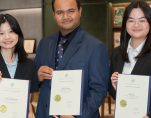
The awardees of Hong Kong Life Sciences Scholarship Awards 2025/26: (from left) SANTOSO Rachelle Jacinda, RAHMAN Syed Rayan, and TAI Wing Yin Vincy.
The Scholarship Awards aims to recognize and support students pursuing life sciences or biomedical sciences programs at local UGC-funded institutions. Each awardee would receive a HK$50,000 scholarship, mentorship from industry professionals through the HKLSS Mentorship Scheme, and priority enrollment in the HKLSS Life Sciences Summer Internship Program, which offers students an integrated hands-on learning experience across Hong Kong, the Yangtze River Delta (YRD) Region and the Guangdong-Hong Kong-Macao Greater Bay Area (GBA).
Brought together by the Scholarship Awards, three awardees of cohort 2025/26 – SANTOSO Rachelle Jacinda(Y3 BSc in Biological Sciences, CityUHK), RAHMAN Syed Rayan(Y3 BSc in Applied Biology with Biotechnology, PolyU), and TAI Wing Yin Vincy(Y3 Bachelor of Biomedical Sciences, HKU), embarked on a shared journey – to be nurtured, grow, and ultimately bloom as future leaders in life sciences, contributing their skills and passion to advance Hong Kong’s life sciences ecosystem and build a better tomorrow through inter-disciplinary collaborations.
Awardees of Hong Kong Life Sciences Scholarship Awards 2025/26 (from left) Vincy, Rachelle, and Rayan shared their career aspirations in life sciences and enthusiasm for the HKLSS pillar programs.
Homegrown Biological Sciences Dream Fuels Up in Hong Kong Arriving from Indonesia three years ago, SANTOSO Rachelle Jacinda (Rachelle) joined Hong Kong’s life sciences community as an undergraduate with determination and hope. Her passion was first ignited by family medical challenges and her curiosity for biology drove her to pursue deeper studies in biological sciences.
What opened her door to her true calling was the hands-on laboratory work. Rachelle came to appreciate not only the essential role of doctors but also the vital impact of scientists, both working together to advance healthcare. This realization fueled her dream for postgraduate studies, a goal that she once deemed rather idealistic.
She described the Scholarship Awards as a “confidence boost”. She recalled receiving an affirmation from one of the Scholarship Awards interviewers about her future plans, “I think you’re in a quite good place” reassured her that she was on the right path.
With her confidence boosted, Rachelle plans to leverage the scholarship to establish herself in Hong Kong – a supportive nurturing ground for life sciences students, and growing global healthcare investment. Embracing the local culture, she is now learning Cantonese and improving her Mandarin to gear herself up and pursue future opportunities in both Hong Kong and the Chinese Mainland.
From Hometown to International Life Sciences Research Lab “I wanted to become a surgeon [in the past] because I wanted to save lives every day. But if I become a researcher in the life sciences field, one single breakthrough can change millions of lives,” said, RAHMAN Syed Rayan (Rayan), who discovered his real passion in the research lab.
Rayan’s fascination with science began at the age of ten in Bangladesh, where he observed animals in his hometown. Like Rachelle, his enthusiasm for life sciences brought him to Hong Kong, where he was encouraged to immerse himself in research at the university laboratory, guided by professors with profound global research expertise. During semester breaks, Rayan seized every opportunity to broaden his knowledge. Now based in Hong Kong, on his freshman and sophomore years, he pursued an internship in Canada and a summer exchange in the UK, where research primarily followed a fundamental approach. He was thankful for the diverse doors Hong Kong had opened, as exposure to different research methods taught him to see things more holistically, which benefited his work in Hong Kong, known for its focus on translational research.
As Rayan continued to build his career in the life sciences field, receiving the Scholarship Awards meant a great deal to Rayan as he felt “trusted by the panel” and empowered him to be aware of his actions. “Having somebody else to tell you that you are on the right path and believe in you, is very important,” Rayan emphasized.
Rayan also feels especially grateful and refreshed to have found the amazing community he discovered through the Scholarship Awards, as he gets a chance to connect with like-minded peers, who all work towards the same goals and similar challenges. The Scholarship Awards has paved his way to additional opportunities, including priority access to the Society’s industry experience focused Summer Internship Program.
Scientists on TV Ignite Big Ambitions TAI Wing Yin Vincy (Vincy), raised in Hong Kong, developed her passion for life sciences as a child watching scientists in action on TV. Inspired by her curiosity and determination to make a difference, she chose to study biomedical sciences at The University of Hong Kong, following her passion despite conventional expectations.
During her time at university, she gained practical experience through internships in both laboratory and Good Manufacturing Practice (GMP)-compliant facility, which reinforced her ambition. She also minored in Sustaining Cities, Cultures and the Earth to explore inter-disciplinary connections, “As a student, we should not only focus on life sciences, but also learn more about the global perspective, especially when sciences can influence the world,” she said.
These experiences deepened her dedication to the field and the Scholarship Awards became more than an award – it offered a source of belonging that affirmed her place in the life sciences community. “I feel like I am part of the Society, someone who can eventually grow and evolve together with the community and industry,” she said.
The Scholarship Awards has helped bridge her to the broader life sciences ecosystem, as Vincy was connected with previous and other same-cohort awardees at the Presentation Ceremony, and she looks forward to meeting more entrepreneurs, researchers, and C-suite executives from the life sciences sector and gaining guidance from them through HKLSS’ Mentorship Scheme and Summer Internship Program.
Powering Ambition: HKLSS Opens Paths Beyond the Classroom with its Pillar Programs From different beginnings, Rachelle, Rayan, and Vincy find common ground through HKLSS. For them, the Scholarship Awards is more than financial support – it brings them to the pillar programs, a gateway to industry-centered mentorship, industry experience, and a vibrant community driving the future of life sciences in Hong Kong, the YRD, the GBA and beyond.
“I would very much love to go there [Shanghai and Shenzhen] because I will have the opportunity to explore new places and also to meet people with different cultures,” Rachelle said, while Rayan and Vincy also saw the internships as valuable opportunities to gain experience in the Chinese Mainland. “I have heard so many good things from my friends, especially the pharmaceutical companies over there,” Rayan added.
As a life sciences ecosystem enabler, HKLSS continues to expand its pillar programs, activities, and network to meet the evolving needs of members at different career stages. To address the growing demand for life sciences talent and attract both local and non-local professionals to the city, HKLSS also launched Biotech Talent, a dedicated job platform that connects talent with opportunities in the life sciences and biotechnology industry, and offers employers direct access to a diverse talent pool. Through a growing suite of initiatives, the Society partners with its network to support and cultivate a vibrant life sciences ecosystem with dedication. Hashtag: #HongKongLifeSciencesSociety #HKLSS #香港生命科技青年會 #LifeSciences
The issuer is solely responsible for the content of this announcement.
About Hong Kong Life Sciences Society
Hong Kong Life Sciences Society (HKLSS) is an organization established by Nan Fung Group in 2018 aiming to build a dynamic life sciences ecosystem in Hong Kong. Through knowledge exchange, collaboration and public engagement, HKLSS aims to attract, cultivate and retain talent in Hong Kong’s life sciences and biotechnology sectors.
Members of Hong Kong Life Sciences Society Founder and Board Chair: Mr Vincent Cheung Board Vice-chair: Mr Shannon Cheung, Prof Nancy Ip, Mr Antony Leung Executive Director: Prof Ken Wong
Members of the Advisory Board Prof Tom Cheung, Dr Vanessa Cheung, Ms Irene Chu, Mr Shan Fu, Mr Meng Gao, Ms Gladdy He, Prof David Ho, Dr Lu Huang, Mr Emmanuel Hui, Prof Daniel Lee, Ms Nisa Leung, Prof Suet Yi Leung, Prof Kai Liu, Prof Stephanie Ma, Dr Jay Mei, Prof Malik Peiris, Prof Leo Poon, Dr Jin Seok Seo, Prof Anderson Shum, Dr Qiusong Tang, Mr William Tang, Prof Lap-Chee Tsui, Prof Yung Hou Wong, Mr Frank Yu, Prof Kwok-Yung Yuen
Matein Khalid 2026 has started with a bullish bang for my Dr. Copper trade, even though a single trading session when half of Asia is still getting over its New Year’s Day hangover is hardly an optimal sample size. Yet as I see LME spot copper trade at $12500 a metric ton, I feel exhilarated as this is precisely the breakout I flagged for my friends and […]
Europe’s ambitions in semiconductors, embedded software and advanced electronic systems have been sharpened with the release of the Electronic Components and Systems Strategic Research and Innovation Agenda 2026, a document that sets priorities for research, industrial deployment and public investment across the continent’s technology base. The updated agenda outlines how Europe plans to strengthen technological sovereignty in electronic components and systems at a time of intense global […]
Finnish authorities have detained two crew members from a foreign-flagged cargo vessel as part of an expanding criminal investigation into damage to an undersea telecommunications cable linking Helsinki and Tallinn, sharpening security concerns across the Baltic Sea region at a time of heightened geopolitical tension. The sailors were taken into custody following the seizure of the vessel Fitburg, which Finnish officials believe may be connected to the […]
OpenAI chief executive Sam Altman has publicly acknowledged the expanding impact of artificial intelligence on mental health and cybersecurity, signalling a shift in how one of the world’s most influential AI developers frames the social risks of its technology. The remarks came alongside an announcement that OpenAI is seeking a Head of Preparedness, a role designed to anticipate and mitigate potential harms as AI systems grow more […]
Bitcoin surged beyond the $91,000 mark as a broader rally lifted ether and dogecoin, with traders pointing to political developments tied to Venezuela and signals of possible United States involvement as catalysts for volatility across digital asset markets. The move underscored how geopolitical risk, alongside liquidity conditions and investor positioning, continues to shape price action in cryptocurrencies that are increasingly sensitive to macro and political cues. The […]






 https://www.mysweethome.hk
 https://www.facebook.com/MySweetHomeEmploymentAgency
 https://www.instagram.com/my.sweet.home.hk




 www.linkedin.com/company/hklss/





