News related to
Edge

Arabian Post Staff -Dubai Pre‑orders for Huawei’s second‑generation Mate XTs smartphone have begun in China, ahead of its unveiling scheduled for 4 September. The device does not have an official US release at this time. The Mate XTs, slated for presentation on 4 September at 14:30 China time, retains the tri‑fold, or “S‑style”, design of its predecessor while introducing refinements such as two new finishes—white and crimson purple—and a more […]

A quarter of white‑collar professionals in the UAE express concern that artificial intelligence might one day replace their roles, yet more than half acknowledge that AI tools have made their work noticeably easier—presenting a complex picture of apprehension tempered by appreciation.

LinkedIn data shows that 80 per cent of professionals in the UAE now use AI tools “regularly,” a significant increase from 56 per cent in 2024. This puts the UAE second globally in AI adoption behind only India, where the figure stands at 85 per cent. Confidence in experimenting with AI is high, with 81 per cent of local professionals saying they enjoy exploring AI tools, and 73 per cent reporting more frequent and confident usage compared with the previous year. Many describe learning AI as “a second job.”

A survey by The National found that roughly 25 per cent of the 200 respondents worry about AI’s future impact on their jobs. Yet more than half affirm that AI has made their current tasks easier, and 7 per cent report that their roles have already been replaced—though they emphasise this is based on a small sample. Roles in media, advertising and marketing appear particularly vulnerable to automation. Nevertheless, David Mackenzie of recruitment firm Mackenzie Jones Middle East maintains that, at present, AI lacks the sophistication to supplant senior professionals in white‑collar roles.

Broader sentiment in the UAE workforce is largely optimistic. A Korn Ferry workforce report indicates that 82 per cent of employees in the UAE feel positive about AI’s potential—a stance mirrored in neighbouring Saudi Arabia. Moreover, a survey reveals only 7 per cent of UAE professionals would resist working alongside AI as a colleague, compared with 21 per cent globally. There is, however, cautious pragmatism: 35 per cent support limiting automation in sensitive sectors such as healthcare and education, and 61 per cent would endorse full automation only if accompanied by a universal basic income or welfare compensation, compared with 40 per cent worldwide.

These mixed perspectives take shape against a backdrop of national ambition and infrastructural investment. The UAE has broadened its Golden Visa programme to attract global talent in AI, climate technology and advanced digital industries—a strategic move to make itself a hub for technological innovation and sustainable growth. The country’s AI strategy also includes the establishment of dedicated institutions and leadership structures, such as the Ministry of State for Artificial Intelligence, Digital Economy and Remote Work Applications, led by Omar Sultan Al Olama, who was appointed in 2020 as the world’s first minister for artificial intelligence.

Academic insights reinforce the nuanced impact of AI across sectors. A recent study of creative professionals—including journalists and filmmakers—reveals that while AI enhances operational efficiency and reduces costs, it also raises concerns about authenticity, cultural integrity and skill erosion. The absence of sector‑specific guidelines leaves individuals to navigate AI adoption on their own.

On a global scale, developments are shaping discourse on AI’s real effects. A Stanford‑led study has documented a 16 per cent decline in employment among workers aged 22–25 in sectors vulnerable to automation, such as customer service and software development, between late 2022 and mid‑2025. Experienced workers remain comparatively shielded as AI takes over repetitive tasks. The report emphasises the importance of policies that favour human‑AI collaboration rather than outright replacement. Microsoft’s AI chief Mustafa Suleyman urges professionals not to fear job loss, but rather stagnation—championing reskilling, collaboration, and a growth mindset.

These threads converge as the UAE continues to pursue its goal of becoming an AI leader by 2031—anchored in education, infrastructure, investment and workforce transformation. Yet the responses of professionals remain varied: a blend of anxiety, adaptability and optimism defines the evolving relationship between AI and work in the UAE.

Featuring ISO-Certified, High-Performance Products from Korea’s Leading Manufacturers — Meet Them at Hall 1, Booths 1801–1812, Kuala Lumpur Convention Centre, 2–4 September 2025 KUALA LUMPUR, MALAYSIA – Media OutReach Newswire – 25 August 2025 – Korean companies engaged in the manufacturing of products in the oil & gas field are scheduled to participate in the upcoming Oil & Gas Asia exhibition (OGA 2025), to be held at […]

By T N Ashok NEW YORK: Trump’s 50% tariffs on Indian exports took effect from Wednesday as there has been no resolution to the dispute over Russian oil buys in by India. In a move that has stunned global markets and rattled one of America’s most strategically important partnerships, President Donald Trump on Wednesday imposed […]

Proposed an interim dividend of HK11.0 cents per share Highlights: Revenue increased to approximately HK$1,436.6 million. Gross profit increased to approximately HK$518.2 million. Profit attributable to owners of the Company amounted to approximately HK$120.7 million. As at 30 June 2025, the Group operated a total of 178 chain retail stores Basic earnings per share was approximately HK12.1 cents. The Board recommended the payment of interim dividend of […]

The US Department of the Treasury has issued a formal call for public feedback on cutting‑edge mechanisms that regulated financial institutions might deploy to detect illicit digital asset activity. This request stems from the Guiding and Establishing National Innovation for U. S. Stablecoins Act, signed into law on 18 July 2025, mandating that entities issuing payment stablecoins are treated as financial institutions under anti‑money laundering, sanctions, and related frameworks. The Treasury now seeks input on application programming interfaces, artificial intelligence, digital identity verification, and blockchain analytics as tools to bolster enforcement and transparency. Respondents are invited to submit comments by 17 October 2025.

The Treasury plans to assess submissions to evaluate how these technologies may enhance detection abilities, weigh the associated costs and privacy and cybersecurity implications, and understand operational hurdles. This evaluation will inform a report to Capitol Hill, which will include suggestions for legislative and regulatory action, possibly followed by guidance or rulemaking.

The request arrives on the back of Executive Order 14178, issued in January 2025, advocating for US leadership in digital finance technologies. It also follows the Working Group on Digital Asset Markets report, released in July 2025, which called for stronger AML/CFT and sanctions frameworks, including enhanced public–private cooperation and digital identity measures.

Regulated entities are urged to outline how they are using—or could use—APIs to improve risk detection, for example through real‑time data sharing or transaction monitoring. AI deployment examples might cover systems capable of spotting complex illicit finance networks via large‑scale transaction analysis. Digital identity verification inputs could focus on portable credentials or biometrics, and the blockchain component invites discussion of analytics tools that integrate on‑chain and off‑chain data, as well as efforts to overcome obfuscation techniques.

Treasury’s criteria for evaluating the proposals extend beyond efficacy. Institutions must weigh how sensitive the data is, the privacy implications of collection and analysis, the technological and operational burdens of implementation, and any cybersecurity vulnerabilities.

Industry reactions underscore both opportunity and burden. As the Treasury’s announcement puts it, “innovative tools are critical to advancing efforts to address illicit finance risks but can also present new resource burdens for financial institutions.” Advocacy groups like America’s Credit Unions have endorsed the consultation, framing it as a critical step in aligning stablecoin activity with the GENIUS Act’s one‑year implementation horizon, urging rapid progress toward safe digital asset services for communities.

Law‑firm analysis also points to the broader AML/CFT context. The consulting documents note that the GENIUS Act and its complementary Executive Order seek to fold stablecoin activities into the Bank Secrecy Act framework—bringing them under familiar obligations for AML, sanctions screening, transaction monitoring, and customer due diligence.

The public consultation ends on 17 October 2025. Following that, the Treasury is expected to synthesise the feedback into a report for the Senate’s Banking committee and the House Financial Services committee, and potentially proceed with issuing guidance or initiating rulemaking.

Beyond these regulatory actions, separate developments in the enforcement space illustrate an increasing reliance on technology to combat illicit finance. The IRS’s CI‑FIRST initiative streamlines subpoena processes and heightens data‑sharing with financial institutions to tackle financial crimes, including those linked to illicit trafficking and fraud, using AI and automation.

In parallel, academic innovations continue apace. Recent studies have explored graph neural networks and unsupervised anomaly detection for tracing illicit flows through Bitcoin, offering early malice‑detection frameworks that prioritise interpretability and adaptability—trends that align well with the Treasury’s probe into AI, APIs, identity verification and blockchain monitoring.

A surge of enthusiasm from the United Arab Emirates’ retail investors is bolstering domestic stock markets, signalling growing public confidence in the country’s economic trajectory. Data from the latest edition of the UAE Retail Investor Beat, conducted between 10 and 21 July 2025, shows that 85 per cent of people taking investment decisions are now allocated to UAE-listed equities, with 39 per cent invested in Abu Dhabi shares, 28 per cent in Dubai, and 18 per cent holding positions in both platforms.

Investor confidence appears grounded. Currently, 63 per cent report being “very confident” in the UAE’s economic performance, while a further 29 per cent describe themselves as “somewhat confident.” When looking ahead, 59 per cent express strong confidence in the long-term performance of locally listed stocks, with an additional 32 per cent somewhat confident. Investors remain optimistic about the near future: 48 per cent anticipate substantial gains over the next 12 months, while 34 per cent expect steady growth. On a regional scale, 58 per cent believe the Middle East will generate the highest returns over the next five years, ahead of the United States at 50 per cent.

Sectoral preferences reveal clear priorities. Real estate leads with 55 per cent of investors expressing confidence, followed by technology at 48 per cent, and both financial services and energy at 37 per cent each.

George Naddaf, managing director of eToro MENA, framed these findings in the context of market performance: the Dubai Financial Market and Abu Dhabi Securities Exchange are among the top-performing exchanges globally, outperforming the S&P 500 by a wide margin. He credits sustained earnings, robust macroeconomic conditions, and supportive government measures for underpinning investor sentiment and reinforcing preference for local opportunities.

Despite this supportive sentiment, geopolitical risks remain front of mind. Nine‑tenths of respondents expect tariffs and trade disputes to exert meaningful pressure on their portfolios over the next six months, and 89 per cent have either adjusted or intend to adjust investment strategies in response. More than half—53 per cent—are tilting further towards UAE equities, while 51 per cent are increasing exposure to commodities. Gold and precious metals are viewed as the most resilient asset class by 49 per cent of investors; cryptocurrency ranks second at 45 per cent and is already the most held class, with 54 per cent ownership.

Naddaf described this as a “disciplined, dual-track approach,” combining reinforcement in domestic equities with defensive hedges in commodities.

Capital commitment remains strong. Sixty‑five per cent of UAE retail investors have already stepped up contributions in past months, while 76 per cent anticipate further increases in the coming three months.

Advertisements

Saudi Arabia’s non‑oil private sector sustained strong expansion in July, although growth eased compared with June. The Purchasing Managers’ Index, compiled by S&P Global for Riyad Bank, slipped to 56.3 from June’s 57.2, yet remained well above the 50‑point mark that separates expansion from contraction.

Domestic demand continued to underpin business activity, prompting firms to recruit aggressively. Employment surged again in July, marking another historic increase following June’s 14‑year high. Chief Economist Naif Al‑Ghaith commented that “the non‑oil economy remained on a solid growth track in July, supported by higher output, new business, and continued job creation”.

Despite this resilience, output growth moderated, registering its slowest pace since January 2022. Firms pointed to rising competition and reduced customer visits as key factors behind the slowdown. One of the more notable concerns was the first decline in new export orders in nine months, highlighting challenges in attracting foreign clients.

Cost pressures, while still elevated, showed a slight easing. Input price inflation decelerated marginally, though labour expenses remained steep amid efforts to retain staff through bonuses. Nevertheless, firms passed on some of this pressure to consumers, with output prices rising for a second consecutive month.

Looking back to June, the sector had posted particularly robust growth. The PMI rose to 57.2, driven by strong domestic demand, new project starts, and intensified marketing efforts. New orders reached a four‑month high, while hiring surged at its fastest pace since May 2011. Input costs rose sharply and were reflected in higher output prices, even as confidence among firms reached a two‑year high.

This strong performance aligns with broader economic diversification goals by boosting sectors beyond oil. In March, S&P upgraded Saudi Arabia’s sovereign credit rating to ‘A+’ from ‘A’, citing sustained progress under Vision 2030 and confidence in rising activity in construction, manufacturing, logistics, and mining. While the International Monetary Fund earlier revised down the country’s GDP forecast for 2025 to 3 percent, it acknowledged continued resilience in the non‑oil sector.

Regionally, the trends contributed to relative stability in the stock market. While shares in Saudi Arabia ended largely flat amid sectoral shifts, healthcare and energy gained traction, even as real estate, finance, and materials lagged behind. Firms operating across the region reported softer non‑oil demand signals, reinforcing cautious optimism among investors.

As Saudi Arabia navigates through post‑oil economic structures, the non‑oil sector stands out for its adaptability. Businesses continue to expand teams and absorb input challenges, yet face mounting pressure from market competition and weakened foreign demand. While optimism about future activity remains, it has notably softened to the lowest level since July 2024.

Shark teeth — evolution’s finely tuned cutting tools — show early signs of weakening as seawater pH levels shift. A German-led experiment found that teeth from blacktip reef sharks immersed in water with a pH around 7.3—an acidity projected by the year 2300 if carbon emissions continue unchecked—displayed significantly more structural damage than those in water at the current average of 8.1. Observations included widespread corrosion, surface cracks, and erosion […]

In the rapidly evolving world of finance, it is essential to have a partner you can trust by your side. Nexium Markets is not just a broker — it is a team of professionals who support clients at every stage of their investment journey. We work to provide traders with access to global markets while empowering them with knowledge, technology, and a reliable infrastructure. Nexium Markets is […]

By K Raveendran The oil market has by now mastered the skill to absorb shocks, even when they appear designed to disrupt trade flows and destabilise long-term patterns. Rather than creating turbulence, as many initially feared, the global oil market has taken the imposition of punitive tariffs by the United States on India’s Russian oil […]

By Tajul Islam When Bangladesh’s students took to the streets last year, their demands were clear: dismantle the structures of fascism, restore democracy, and build a government that put the people before politics. Their movement culminated in a historic moment on August 8, when Nobel laureate and Grameen Bank founder Dr. Muhammad Yunus was sworn in as Chief Advisor to the interim government. The appointment followed the […]

Google Cloud has introduced the Google Cloud Universal Ledger, a Layer-1 blockchain platform tailored for financial institutions, now operating in a private testnet. Developed with Python-based smart contracts and designed for 24/7 capital markets operations, the platform aims to support tokenisation, payments, settlements and asset management at scale. It follows a pilot with the Chicago Mercantile Exchange, which completed integration testing in March, and signals broader plans […]

BANGKOK, THAILAND – Media OutReach Newswire – 27 August 2025 – Thai Cement Manufacturers Association (TCMA) successfully hosted its flagship event, the “2025 TCMA Technical Conference and Exhibition” from 21-22 August 2025 at Hotel La Casetta by Toscana Valley, Khao Yai. The event brought together key figures from the Thai cement industry, global organizations, and leading innovators/ technology providers to exchange insights and strengthen collaboration to accelerate […]

HANAU, GERMANY – Newsaktuell – 26 August 2025 – VACUUMSCHMELZE (VAC), a global leader in the production of rare earth permanent magnets and Torngat Metals, a Quebec-based rare earths development company, have signed a non-binding Memorandum of Understanding (MOU) to pursue an offtake agreement for Torngat Metals to supply VAC with long-term security of fully traceable and responsibly produced separated rare earth oxides. The MOU was signed […]

SHENZHEN, CHINA – Media OutReach Neswire – 26 August 2025 – On August 26, 2025, Linklogis Inc. (09959.HK, “Linklogis”) released its interim results. In the first half of 2025, the total transaction volume processed by its technology solutions reached RMB 203.6 billion. The total revenue and income amounted to RMB 374.5 million. The number of anchor enterprise and financial institution customers for its supply chain finance technology […]

DMCC and Vermiculus have formalised a strategic partnership through a Memorandum of Understanding, aimed at advancing financial market infrastructure with cutting-edge technological capabilities. The agreement positions DMCC to enhance its support for nearly 26,000 member companies across its business ecosystems through AI-powered, cloud-native fintech solutions.

The MoU will explore collaborative development of technology solutions tailored to exchanges, clearing houses and central securities depositories—including joint projects and knowledge-transfer initiatives. This aligns with DMCC’s broader objective to incorporate AI across its infrastructure and strengthen Dubai’s standing as a global trade and technology centre.

Ahmed Bin Sulayem, Executive Chairman and Chief Executive Officer of DMCC, emphasised the vital role of technology and knowledge exchange in shaping the future of trade and finance. He noted that the partnership lays the groundwork for innovation and business growth, reaffirming DMCC’s commitment to deliver global businesses the environment to thrive from Dubai.

Vermiculus, founded in 2019 in Stockholm, brings expertise in developing state-of-the-art, cloud-native systems with AI integration for mission-critical financial market infrastructure. With experience spanning over 25 years and more than 75 projects for global exchanges, clearing houses and central securities depositories, the firm is well-placed to support DMCC’s ambitious technology strategy.

Taraneh Derayati, CEO of Vermiculus, highlighted the alignment between both organisations’ pursuit of high-quality AI-focused fintech solutions. She cited their successful history of collaboration with DGCX as a natural foundation for this broader partnership.

Nils-Robert Persson, Founder and Chairman of Vermiculus, underlined that working with a dynamic business district such as DMCC presents valuable avenues for mutual growth. He reiterated Vermiculus’s commitment to delivering reliable, innovative solutions to exchanges and financial institutions globally.

The timing of the agreement coincides with deepening economic and technological ties between the UAE and Sweden, reflecting a shared drive toward innovation-led growth. The venture reinforces Dubai’s commitment to attracting impactful partnerships and bolstering its position as an international nexus for commerce and technological advancement.

By facilitating the deployment of AI-driven infrastructure solutions, the collaboration aims to increase resilience, scalability and efficiency in DMCC’s financial market operations. The initiative also signals an increasing convergence between trade hubs and fintech innovators—underscoring Dubai’s strategic pivot toward technology-powered trade ecosystems.

The nature and timeline of specific projects under the MoU have not been detailed publicly, but both parties appear intent on leveraging their capabilities swiftly to deliver tangible benefits across DMCC’s diverse business ecosystem.

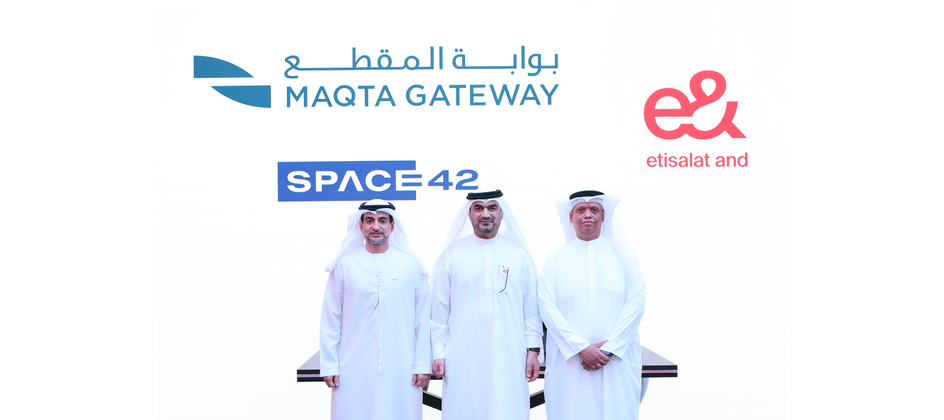
UAE-based Space42 has entered into a five-year memorandum of understanding with Microsoft and Esri to create the most comprehensive digital base map across Africa, aiming to serve more than 1.4 billion people and catalyse economic and infrastructural development. The “Map Africa Initiative” seeks to transform fragmented and outdated geospatial data into timely, accurate intelligence for governments, businesses and communities.

Under the agreement, Space42 will coordinate fundraising and project management, supply satellite data via its sovereign and commercial networks, devise AI-driven digital-twin models, and lead research and automation of map-production processes. Esri will handle the creation of the base maps using GeoAI and remote-sensing technologies while training regional teams to ensure long-term sustainability. Microsoft will provide Azure cloud infrastructure and AI capabilities to enable large-scale processing and secure data sharing.

Africa faces persistent challenges of unreliable and inaccessible mapping information, constraining infrastructure planning, investment decisions and service delivery. The Map Africa Initiative aims to address these by offering a uniform, high-resolution mapping platform, licensed to governments and updated locally by national mapping agencies. This platform is expected to foster a new commercial ecosystem, with African startups benefiting from access to essential geospatial intelligence. Data will be hosted in data centres managed by G42 and Microsoft across the continent.

The mapped data promises significant impact across multiple sectors. In logistics and ports, enhanced terrain mapping can facilitate route optimisation and reduce bottlenecks. Energy developers will gain more precise site-selection tools for solar and wind infrastructure. Governments will benefit from improved border monitoring, disaster preparedness and resource management. Urban planners and smart-city developers will gain foundational geospatial data critical for designing efficient public services and digital economies.

For Space42, the agreement deepens strategic partnerships with Microsoft and Esri, enlarges its African footprint, and opens pathways in analytics, licensing, and infrastructure. It positions Space42 as a trusted partner to governments in delivering scalable geospatial solutions. Peng Xiao, Chief Executive Officer of G42, stressed the broader goal: to close the “intelligence gap” by delivering AI-powered insights that enable smarter planning, sustainable development and inclusive innovation across the Global South.

Hasan Al Hosani, CEO of Smart Solutions at Space42, stated that partnership is integral to the UAE’s approach; this collaboration signals a strategic, not merely technical, advance. Jack Dangermond, President of Esri, emphasised the technical rigour required to convert satellite imagery into detailed, accurate base maps—a capability Esri brings to the initiative.

The initiative aligns closely with the broader UAE strategy. In 2024, the UAE was Africa’s largest investor, deploying around US $44 billion, nearly matching investment levels from the UK and China combined. Space42, as the UAE’s national space entity, serves as both a conduit for exporting data-driven development solutions and a facilitator of knowledge transfer between the UAE and Africa.

Strengthening its ecosystem, Shopee connects affiliates and brands to help shoppers enjoy Lagi Murah and Lagi Cepat deals. KUALA LUMPUR, MALAYSIA – Media OutReach Newswire – 26 August 2025 – For the first time Shopee’s flagship event, Shopee House, welcomed affiliates from every channel, including Shopee Live, Shopee Video, and YouTube Shopping, at its headquarters in Kuala Lumpur last weekend. The two-day activation brought together 500 top-performing […]

Gaining Unparalleled Industry Insights to Shape the Future of Wealth Management HONG KONG SAR – Media OutReach Newswire – 26 August 2025 – Citi Hong Kong recently partnered with the FinTech Association of Hong Kong (FTAHK) and Shenzhen FinTech Association (SZFTA) to organize a specialized field trip to Shenzhen for its talented Wealth Summer Interns, providing participants with exposure to the dynamic and rapidly evolving fintech landscape […]

Snowflake, the leading cloud data platform, has inaugurated a new office at The Square, Vittal Mallya Road in Bengaluru, further solidifying its presence in one of India’s largest technology hubs. The move follows the company’s expansion into Mumbai earlier, reflecting its commitment to establishing a robust footprint in the country.

The new Bengaluru office aims to be a hub for innovation, with a focus on data and artificial intelligence. Snowflake intends to foster collaboration between local and global teams to leverage the rapidly growing talent pool in the region. The company is not only seeking to tap into India’s burgeoning tech ecosystem but also to cultivate a work environment where data professionals and engineers can develop solutions that drive both local and global customer impact.

Bengaluru, known as India’s Silicon Valley, is home to a vast number of technology firms, startups, and innovation centres. As one of the leading tech cities globally, it offers an abundance of skilled professionals and a vibrant startup ecosystem. Snowflake’s decision to expand in Bengaluru underscores its confidence in the Indian market and the country’s crucial role in its global growth strategy.

The new office will serve as a centre of excellence, enabling Snowflake to provide tailored data solutions to clients across various sectors, including finance, retail, healthcare, and technology. It will also act as a research and development hub, working closely with Snowflake’s global teams to accelerate the delivery of cutting-edge products and services. This move aligns with Snowflake’s broader strategy of capitalising on AI, machine learning, and advanced data analytics to deliver transformative results for businesses around the world.

Snowflake’s expansion is a part of a broader trend where global tech giants are increasingly looking towards India as a critical location for their growth and innovation. India’s talent pool, particularly in software development, data science, and AI, continues to be one of the main driving forces for international firms seeking to innovate and build scalable solutions. The Bengaluru office will further enhance Snowflake’s ability to tap into this wealth of expertise and cater to the growing demand for advanced data solutions in the region.

The company’s expansion is also expected to create significant job opportunities, not just in data engineering and analytics but across various domains, from sales and marketing to customer support. By strengthening its local presence, Snowflake plans to build stronger relationships with its clients and partners in the region, which will be essential as it looks to further integrate itself into the local tech ecosystem.

In addition to providing innovative solutions for businesses, Snowflake’s new office will serve as a training ground for local talent. With a strong focus on learning and development, the company intends to upskill its employees and equip them with the necessary skills to tackle emerging data challenges. The office will also act as a key centre for Snowflake’s efforts in advancing data security and privacy, two areas that are increasingly top-of-mind for organisations operating in the cloud.

Metaplanet, a rising star in the global financial landscape, has secured a spot on the FTSE Japan Index as part of the index provider’s upcoming September 2025 Semi-Annual review. This milestone marks a significant achievement for the company, reflecting its growing influence and the wider surge of interest in Bitcoin, of which Metaplanet is a notable accumulator.

The inclusion in the FTSE Japan Index is a noteworthy development for Metaplanet, a firm that has increasingly drawn attention for its strategic investments, particularly in cryptocurrency. By being added to such a prestigious index, the company solidifies its position as a key player in both the financial and digital asset sectors. This move aligns with the broader trend where digital currencies, including Bitcoin, are gradually being embraced by traditional financial markets, despite the volatility and regulatory challenges they often face.

This development also highlights the importance of cryptocurrency in the modern investment ecosystem. Bitcoin, the largest and most well-known cryptocurrency, has continued to capture the imagination of investors globally, with its price trajectory remaining a focal point of market analysts and institutional investors alike. Metaplanet, which has been accumulating Bitcoin in substantial amounts, stands to benefit significantly from this alignment with the FTSE Japan Index, as it opens up new avenues for investment and institutional partnerships.

For Metaplanet, this index inclusion is more than just a symbol of growth—it signals the company’s readiness to compete at a higher level in the global financial arena. The FTSE Japan Index is a barometer of leading Japanese stocks, and Metaplanet’s acceptance onto this index brings it into the fold of internationally recognized entities. This could potentially lead to more widespread institutional adoption of its business model, which is centred on the integration of cryptocurrency into mainstream investment strategies.

Experts suggest that this inclusion is likely to accelerate Metaplanet’s efforts to gain greater market exposure, especially within the highly competitive cryptocurrency sector. With major institutional investors showing increasing interest in Bitcoin as a store of value and a hedge against inflation, Metaplanet’s move to the FTSE Japan Index could drive its market valuation further, benefiting from an influx of both retail and institutional investors who view its role in the crypto market as promising.

While Bitcoin’s price has faced fluctuations, its long-term trajectory continues to be shaped by institutional interest. The broader cryptocurrency market, once considered a speculative investment class, is gaining momentum as a key asset class, with more traditional financial institutions moving towards crypto assets. For Metaplanet, this move is a calculated step in line with these market trends, positioning itself as a leader in the digital asset investment space.

The decision by FTSE to include Metaplanet in its Japan Index signals a shift in the broader financial market’s view of cryptocurrencies. As more companies within the cryptocurrency space are achieving mainstream recognition, it is becoming increasingly clear that digital currencies are not only a passing trend but a growing component of the future financial landscape.

While Metaplanet’s entry into the FTSE Japan Index is a significant milestone, the company’s focus remains squarely on its long-term investment strategy. With a growing portfolio of Bitcoin assets, the company is poised to leverage its inclusion in one of the world’s most prestigious indices to further its ambitions in both traditional financial markets and the digital currency world.

The inclusion could pave the way for Metaplanet to attract further attention from international investors seeking exposure to Bitcoin’s potential growth. As regulatory frameworks for cryptocurrencies continue to evolve, companies like Metaplanet are positioning themselves to navigate these challenges and capitalise on the growing integration of digital currencies into the global financial system.

The US government has secured a 10% stake in Intel, a move that has sparked significant debate within the business and investment community. This unprecedented acquisition, part of the Biden administration’s push to strengthen domestic semiconductor manufacturing, could reshape the company’s relationship with investors and international stakeholders. Intel executives have raised concerns, warning that this direct involvement by the government might lead to complications in global markets, […]

Dubai has witnessed the debut of COLABB, a groundbreaking real estate platform that combines investment, interior design, and digital strategy. The integrated platform, launched with the aim to reshape the regional real estate sector, seeks to streamline processes for developers, investors, and consumers alike.

COLABB promises to offer a comprehensive, multi-disciplinary approach to property development, management, and design. By bridging traditionally separate fields, it hopes to create a unified platform that delivers a seamless, end-to-end real estate experience. The project’s focus on integrating digital tools into real estate development is a key element in positioning COLABB as a forward-thinking force within Dubai’s competitive property market.

The platform’s three-pronged approach combines investment management, design services, and cutting-edge digital strategies. Investors will have access to a range of property development opportunities, including high-end residential and commercial projects, while interior designers will benefit from an intuitive design tool that aligns with industry trends and client preferences. Additionally, COLABB’s digital strategy will include data-driven insights, virtual tours, and market predictions, making it easier for all stakeholders to make informed decisions.

With the UAE’s rapidly growing real estate market, COLABB aims to capitalize on the increasing demand for smarter, more efficient ways to manage, invest, and design properties. Dubai, being a regional real estate hub, provides a perfect testing ground for this integrated platform. The city’s thriving construction and property development sectors are increasingly focused on embracing technological advancements, which COLABB is well-positioned to address.

The real estate landscape in Dubai has undergone significant transformation in the past few years. COLABB enters at a time when the city is seeing rising interest from international investors and homebuyers, with many new developments aimed at addressing the needs of the global market. The platform’s innovative approach to property development and management could offer a competitive edge in this dynamic environment.

For developers, COLABB promises a seamless experience that incorporates smart design with financial planning. By offering tools that allow for the early-stage integration of interior design concepts and investment strategies, COLABB hopes to simplify the development lifecycle. This integrated approach aims to enhance the quality of buildings and offer more lucrative investment returns.

The platform’s commitment to digitalization could also provide a crucial edge, as it leverages data analytics and artificial intelligence to offer predictive insights into market trends, property valuations, and customer behaviour. By understanding these trends, COLABB can offer tailor-made solutions that address specific market needs, making it easier for investors and developers to navigate an increasingly complex industry.

Further boosting its appeal is COLABB’s strong emphasis on collaboration between stakeholders in the real estate sector. The platform fosters a community-like environment where architects, designers, contractors, and property owners can collaborate freely. The aim is to streamline communication, reduce overheads, and increase the overall efficiency of the development process.

As the Dubai property market continues to attract global attention, COLABB’s entry is expected to draw interest from major international real estate players. Its combination of investment management, design services, and digital solutions sets it apart from more traditional platforms, potentially ushering in a new era of property development in the region.


VISHNU RAJA
RYO YAMADA
HITORI GOTOH
IKUYO KITA
Just in:
Ningbo Consensus on Collaborative Development released at 2026 Global Mayors Dialogue · Ningbo // Asia Left Behind: Ten international companies have yet to report delivering on their cage-free egg pledges across the region // OpenAI abandons secrecy agreements for future data centres // Dubai details five-year visa benefits for returning visitors // APT29-linked campaign exploits outdated Apple and Android software // Geely’s i-HEV Intelligent Hybrid Technology Offers a New Direction Vision for Gasoline-Powered Vehicles // TVM –Mangaluru Vande Bharat claims top spot // Oil and chip shares retreat after Democratic victories // Millions Of Indians May Soon Be Deprived Of Government Assistance // Motorola introduces Signature 27 flagship priced at $1,599 // Miss Universe Hong Kong Jen Zhou Departs for Puerto Rico to Compete in the 75th Miss Universe World Final // Ousted top Kochi cop gets IG post // Emaar approves Development buyout ahead of planned delisting // Geely’s i-HEV Intelligent Hybrid Technology Offers a New Direction for Gasoline-Powered Vehicles // Xi Jinping Preparing For A Trilateral Summit With Trump And Putin At APEC Summit On Nov 18-19 // Oil advances towards $100 as tanker attacks persist // The “1st Greater Bay Area Health and Longevity Summit & Awards Ceremony” concludes successfully in Macao // CR Longdation Aethereal Cybersecurity × Global Cybersecurity Alliance (GCSA) Join Hands to Establish the “AI and Cybersecurity Research Centre” // Kochi police detain two actors over bid to honey trap doctor // Dubai boat show confirms international shipyard line-up for November //