Arabian Post Staff -Dubai Sharjah Asset Management has secured a “Best Place to Work” certification, signalling growing emphasis within Gulf investment entities on employee engagement, corporate culture and organisational wellbeing as competition for talent intensifies across the region. The company, which oversees a diversified portfolio spanning real estate, infrastructure and strategic investments for the Sharjah government, said the recognition reflects sustained efforts to build a supportive and […]
Driving “Attract In” and “Go Global”, Accelerating Hong Kong’s Greentech Ecosystem Development
HONG KONG SAR – Media OutReach Newswire – 24 March 2026 – Hong Kong Science and Technology Parks Corporation (HKSTP) today hosted the “Green is Action: GreenTech Hub 1st Anniversary Showcase” at InnoCentre in Kowloon Tong, highlighting the achievements of Hong Kong’s leading hub for green innovation over the past year.
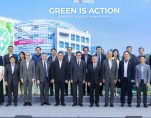
HKSTP held the “Green is Action: GreenTech Hub 1st Anniversary Showcase”, Professor Sun Dong, Secretary for Innovation, Technology and Industry, (middle, front row), Dr Sunny Chai Chairman of HKSTP (5th from Left), and Mr Terry Wong, CEO of HKST (5th from right), together with GreenTech Hub partners attended the celebration ceremony to mark the first anniversary of GreenTech Hub.
In its first year, GreenTech Hub expanded its partner network from 16 to 20 public-private organisations. By facilitating 360 business matching and hosting more than 100 greentech themed events, the GreenTech Hub is injecting new momentum into Hong Kong’s development as an international green technology and green finance centre.
The celebration ceremony for the 1st Anniversary Showcase was officiated by Professor Sun Dong, Secretary for Innovation, Technology and Industry, he said: “The anniversary of GreenTech Hub today is just the beginning. In collaboration with our three major I&T parks, the Government will continue to invest in I&T infrastructure and foster the development of strategic industries, with a view to enhancing the overall I&T ecosystem and promoting interactive development of the upstream, midstream and downstream sectors.”
Dr Sunny Chai, Chairman of HKSTP, remarked, “The first anniversary of GreenTech Hub proves that Hong Kong is where global green innovation converges and scales. We have attracted world-class R&D to the city while enabling homegrown greentech to be deployed worldwide for sustainable development. Through strategic partnerships, HKSTP is forging closer connections between research, industry, capital and real-world application scenarios, accelerating commercialisation and strengthening Hong Kong’s development into an international green technology and green finance hub.”
Leveraging Hong Kong’s Role as a Super-Connector to Bridge the Full Value Chain from R&D to Commercialisation
HKSTP announced the addition of four new partners to GreenTech Hub: CLP Holdings Limited, CTF Services Limited, Invest Hong Kong, and The Hong Kong and China Gas Company Limited, further strengthening Hong Kong’s green technology collaboration network. The GreenTech Hub brings together 20 partners spanning private enterprises, public bodies, universities, and industry associations. This collaborative ecosystem facilitates business opportunities, fosters knowledge exchange and best practices, and bridges financing gaps to expedite green technology development. Furthermore, leading local universities within the partner network offer talent training, testing facilities, and application scenarios for greentech solutions, speeding the journey from R&D to commercial impact.
HKSTP’s greentech ecosystem encompasses over 230 greentech companies, spanning new energy, green building, smart city solutions and green fintech. As the city’s leading collaborative platform for green innovation in the city, GreenTech Hub works closely with its partners to provide comprehensive support for park companies, fast-track the real-world application of green solutions, and further drive the synergistic development of green technology and green finance.
Global Expert Perspectives on Green Trends Alongside a Showcase of Breakthrough Technologies
The event featured a keynote address by Mr. Ethan N. Elkind, Director of the Climate Program at the Center for Law, Energy and the Environment (CLEE) at the University of California, Berkeley School of Law, who shared insights on global green development trends. Representatives from GreenTech Hub partners and park companies also shared their insights during two thematic panel sessions focusing on ecosystem collaboration and global expansion strategies.
To further elevate Hong Kong’s international profile and thought leadership in green technology, HKSTP plans to publish its first-ever research paper focusing on Hong Kong’s greentech ecosystem and energy storage technology in the fourth quarter of this year. GreenTech covers a broad range of areas, including new energy, energy storage and carbon trading, with battery and energy storage technology identified as one of our key focus areas. Given the strong growth potential of this sector, a dedicated research study would provide a more comprehensive review of the industry landscape and help identify the critical success factors needed to accelerate the commercialisation of battery and energy storage technologies.
As a two-way platform, GreenTech Hub has successfully attracted non-local greentech companies to establish a presence in Hong Kong while supporting local greentech ventures in expanding into international markets. Featured breakthrough technology solutions included:
Aurabeat — Award-winning energy-saving sonic air purification technology
Aurabeat has developed EcoSonic, a sonic air filtration technology combining AG+ silver-ion coating with sonic emitters, designed specifically for the commercial and industrial HVAC market. Its patented technology can reduce filter pressure drop by up to 70%, save up to 50% in energy, and improve indoor air quality. The solution has already been deployed in projects including the MTR, Hysan and Marina Bay Financial Centre in Singapore, demonstrating the strength of Hong Kong greentech in overseas markets.
Gotion High-tech — Globally leading new energy solutions
Gotion High-Tech is a world-leading provider of new energy batteries and green energy solutions. Its smart mobile energy storage charging unit, equipped with 209kWh large-capacity energy storage and 150kW high-power fast charging capability, supports a wide range of new energy transport and application scenarios, offering a breakthrough solution for EV charging infrastructure.
Harmony SkyTech — Drone systems, services and industrial application solutions
Harmony SkyTech showcased an electric vertical take-off and landing fixed-wing drone and related application solutions. These can be widely deployed in scenarios including power grid inspection, oil and gas pipeline inspection, surveying and mapping, logistics, and the transport of critical supplies, underscoring the immense potential of green low-altitude technologies.
Lihe Technology — Fully automated AI-powered water quality monitoring backed by national-level R&D
Lihe Technology specialises in environmental monitoring, water management and industrial automation. Its fully automated AI water quality monitoring system enables smart, highly efficient and precise monitoring. Through strategic collaboration with a GreenTech Hub partner, the company has established Hong Kong’s first branch of a National Engineering Research Centre of Advanced Technology and Equipment for Water Environmental Pollution Monitoring — Marine Eco-Tech Innovation Centre, driving the application and development of related technologies in Hong Kong.
One Energy — Electric motorcycles and the world’s first water-cooled fast-charging battery system
One Energy provides a one-stop e-mobility solution covering electric motorcycles, smart battery swapping stations and battery management systems. Its technology effectively shortens energy replenishment time, improves safety and enhances operational efficiency. The company has successfully expanded its footprint into Southeast Asia, Europe and Africa.
Hashtag: #HKSTP
The issuer is solely responsible for the content of this announcement.
Hong Kong Science and Technology Parks Corporation
Hong Kong Science and Technology Parks Corporation (HKSTP), established in 2001, has built a thriving innovation and technology (I&T) ecosystem in Hong Kong, supporting 12 unicorns, nurturing over 16,000 research talents, and hosting more than 2,400 technology companies from 24 countries and regions specializing in biomedicine, AI and robotics, fintech, and smart city development. HKSTP is dedicated to positioning Hong Kong as an international I&T hub.
To align with Hong Kong’s future development, HKSTP is committed to attracting and cultivating I&T talent, accelerating the commercialization of innovative outcomes, and providing comprehensive support for technology companies and professionals on their innovation journey. Its vibrant I&T ecosystem continues to grow, encompassing Hong Kong Science Park in Pak Shek Kok, InnoCentre in Kowloon Tong, and three InnoParks in Tai Po, Yuen Long, and Tseung Kwan O. These facilities drive advancements in applied technology, focusing on industries such as advanced manufacturing, micro- electronics, and biotechnology, steering Hong Kong toward new industrialization.
Hong Kong Science Park Shenzhen Branch, located in Futian, Shenzhen, leverages the strategic advantage of “support of the Motherland, connecting to the world.” It serves as a bridge for “bringing in and going global,” actively fostering cross-border I&T collaboration. The Shenzhen Branch supports global technology companies and professionals by providing research and collaboration spaces, with a focus on enterprises in seven key sectors: Medtech, big data and AI, robotics, new materials, microelectronics, fintech, and sustainable development.
HKSTP is dedicated to advancing Hong Kong’s I&T development by providing research infrastructure, startup and enterprise support services, professional investment and business expertise, fostering partnership networks, and attracting top talent. These efforts drive innovation as a new engine for economic growth for Hong Kong. More information about HKSTP is available at www.hkstp.org.
Arabian Post Staff -Dubai Abu Dhabi’s social development agenda has gained fresh momentum as the Department of Community Development signed a partnership with Mbank aimed at strengthening the financial resilience of families across the emirate, reflecting a broader policy shift towards preventive welfare and long-term economic stability. The agreement, announced as part of initiatives aligned with the UAE’s Year of Family, focuses on enhancing access to financial […]
Capcom’s latest instalment in its long-running survival horror franchise signals a decisive break from its own mythology, as Resident Evil Requiem dismantles legacy narratives to reposition the series for a new era. Requiem arrives with a clear narrative intent: to close the chapter on a sprawling continuity that has grown increasingly complex since the early 2000s. By directly confronting the consequences of Resident Evil 6, the game […]
Semiconductor chips have moved beyond their traditional role as hardware components to become strategic gateways shaping the trajectory of the global artificial intelligence economy, according to legal and technology analysts tracking the sector’s rapid evolution. At the centre of this shift stands Nvidia, which continues to command a dominant share of the market for graphics processing units used in AI training. Its high-performance chips, particularly those tailored […]
Japan’s latest government bond auction drew firm demand, offering a measure of stability to domestic markets as investors assessed shifting geopolitical signals tied to tensions involving Iran.
The Ministry of Finance’s sale of long-dated Japanese government bonds proceeded without disruption, with bid-to-cover ratios indicating healthy appetite among institutional buyers. Market participants pointed to a combination of steady domestic demand and easing concerns over an immediate escalation in the Middle East as key factors underpinning the auction’s outcome.
Yields on benchmark Japanese government bonds remained relatively contained following the sale, suggesting that investors were comfortable absorbing supply even as global markets remained sensitive to geopolitical developments. Traders said the absence of sharp volatility in oil prices and currency markets helped anchor sentiment, reducing the risk premium typically associated with periods of heightened uncertainty.
The auction came at a time when global bond markets have been navigating a complex mix of factors, including central bank policy adjustments, inflation expectations and geopolitical risk. Developments surrounding Iran, including diplomatic signals that hinted at a possible de-escalation, contributed to a more measured tone across financial markets, supporting demand for sovereign debt perceived as stable.
Japan’s bond market continues to be shaped by the Bank of Japan’s evolving monetary policy stance. The central bank has been gradually adjusting its approach to yield curve control, allowing for greater flexibility in long-term interest rates. While this shift has introduced some volatility in recent months, domestic investors such as banks and life insurers have remained key buyers, providing a reliable base of demand.
Analysts noted that the latest auction underscored the resilience of Japan’s domestic investor base, even as yields edge higher compared with previous years. The gradual normalisation of monetary policy has encouraged some investors to lock in returns at levels that are more attractive than those seen during the ultra-low rate environment that prevailed for much of the past decade.
At the same time, foreign participation in Japanese government bonds has shown signs of fluctuation, influenced by currency movements and relative yield differentials with other major markets such as the United States. The yen’s performance remains a crucial variable, as currency hedging costs can significantly affect the attractiveness of Japanese debt for overseas investors.
The broader global context remains a critical factor shaping investor behaviour. Tensions in the Middle East have periodically driven spikes in oil prices, which in turn influence inflation expectations and central bank policy trajectories. Any sustained escalation could lead to higher global yields, potentially affecting demand for sovereign debt across advanced economies, including Japan.
Market participants have also been closely monitoring fiscal dynamics. Japan’s high debt-to-GDP ratio remains a structural concern, although it is largely mitigated by the fact that a significant portion of government debt is held domestically. The government’s ongoing issuance programme reflects the need to finance fiscal measures while managing the cost of borrowing in a gradually changing interest rate environment.
The smooth execution of the latest bond sale is likely to be seen as a positive signal by policymakers, particularly as they navigate a delicate balance between supporting economic growth and ensuring financial stability. Japan’s economy has been showing signs of moderate recovery, with wage growth and corporate investment providing some support, although external risks continue to loom.
A major expansion of Yas Waterworld on Yas Island is scheduled to open in April, marking a significant addition to Abu Dhabi’s leisure and tourism portfolio as developer Miral pushes ahead with plans to position the emirate as a global entertainment destination. Miral, which oversees the development of Yas Island’s attractions, said the upgraded waterpark will introduce a broad range of new rides, attractions and immersive experiences […]
Amazon is developing an artificial intelligence-driven smartphone aimed at revitalising its voice assistant ecosystem, marking a strategic return to hardware after the commercial failure of its Fire Phone. The project, internally referred to as “Transformer”, is understood to centre on embedding generative AI deeply into the device’s operating system, signalling a shift from voice-first assistants to context-aware digital agents. The initiative comes at a time when large […]
SINGAPORE – Media OutReach Newswire – 24 March 2026 – Etiqa Insurance Singaporeand AIA Singapore today announced a strategic distribution partnership to broaden access to Shariah-compliant, values-based Takaful solutions across Singapore. This collaboration marks an important milestone in advancing the Islamic insurance landscape locally and enabling more customers, both Muslim and non-Muslim alike, to benefit from ethical, transparent and socially responsible financial solutions.
Under the partnership, Etiqa Insurance Singapore’s suite of Shariah-compliant Family Takaful products will be distributed through AIA Singapore and AIA Financial Advisers, the nation’s largest tied distribution channel comprising more than 6,300 highly professional, qualified AIA insurance representatives. This expanded reach significantly increases accessibility and choice for customers seeking principled and values-aligned protection and savings options.
Growing Demand for Values-Based Financial Solutions
Global demand for Takaful continues to rise as consumers increasingly prioritise financial solutions aligned with their personal values. The global Takaful market is projected to grow from US$36.5 billion in 2025 to US$63.6 billion by 2030, representing a compound annual growth rate (CAGR) of 11.7%[1]. Since launching its Takaful offerings, Etiqa Insurance Singapore has seen strong and accelerating momentum, supported by rising consumer awareness and growing confidence in Shariah-compliant financial protection.
Creating a Unified Takaful Ecosystem in Singapore
The partnership brings together the complementary strengths of both insurers to build a more cohesive and accessible Takaful ecosystem:
Etiqa Insurance Singapore — The pioneer in reintroducing Takaful insurance to Singapore after more than a decade, with deep expertise and a dedicated Shariah advisory framework.
AIA Singapore — One of the nation’s leading life and health insurers with extensive distribution capabilities, broad community reach and a diverse customer base.
Together, the two organisations are positioned to significantly expand the availability, understanding and adoption of Takaful solutions in Singapore.
“This partnership marks an important step in advancing access to Shariah-compliant protection and savings solutions in Singapore,” said Claudia Soh, Acting Chief Executive Officer, Etiqa Insurance Singapore. “By leveraging AIA’s extensive distribution network and strong presence within the Muslim community, we can scale Takaful solutions more effectively and reach customer groups that have historically been underserved. As demand for values-aligned financial planning grows, this collaboration reinforces our commitment to inclusive and responsible insurance.”
“This partnership with Etiqa is a pivotal step in our commitment to inclusivity and we are excited to work together,” said Alvin Fu, Chief Distribution Officer, AIA Singapore. “By integrating Etiqa’s Shariah-compliant expertise with our highly professional AIA insurance representatives, we can serve a wider customer base, close protection gaps and help more families live Healthier, Longer, Better Lives.”
Bringing Takaful to the Masses
While rooted in Islamic principles, Shariah-compliant, values-based Takaful solutions serve a broad spectrum of customers and appeal to increasingly values-driven consumers seeking ethical, transparent and socially responsible financial protection and savings solutions beyond the Muslim community.
Beyond distribution, Etiqa Insurance Singapore shares a long-term commitment to raising awareness, understanding and adoption of Takaful solutions across Singapore. Through educational programmes and community engagement initiatives, the partnership aims to enhance financial literacy, deepen understanding of Takaful principles and bring Takaful education directly to underserved communities, empowering consumers to make informed decisions on protection and savings.
The issuer is solely responsible for the content of this announcement.
About Etiqa Insurance Pte. Ltd (Etiqa Insurance Singapore)
Etiqa Insurance Pte. Ltd. (EIPL) is a life and general insurance company licensed and regulated by the Monetary Authority of Singapore and governed by the Insurance Act 1966. Having protected customers in Singapore since 1961 under the name United General Insurance Co. Sdn. Bhd., the company transitioned into the Singapore branch of Etiqa Insurance Berhad in 2009. Today, EIPL in Singapore stands as the pivotal operating entity of Etiqa Insurance Group, a leading insurance and takaful provider in ASEAN.
EIPL offers a comprehensive range of life and general insurance products accessible through its diverse distribution channels, including bancassurance, agents, brokers, financial advisers, partnerships, direct and online sales via Tiq by Etiqa. Etiqa is rated ‘A’ by credit rating agency Fitch for the group’s ‘Favorable’ business profile. EIPL is owned by Maybank Ageas Holdings Berhad, a joint venture combining local market expertise with international insurance knowledge, with 69% ownership by Maybank, the fourth largest banking group in Southeast Asia, and 31% by Ageas, an international insurance group operating across 13 countries.
About AIA
AIA Group Limited and its subsidiaries (collectively “AIA” or the “Group”) comprise the largest independent publicly listed pan-Asian life insurance group. It has a presence in 18 markets – wholly-owned branches and subsidiaries in Mainland China, Hong Kong SAR[2], Thailand, Singapore, Malaysia, Australia, Cambodia, Indonesia, Myanmar, New Zealand, the Philippines, South Korea, Sri Lanka, Taiwan (China), Vietnam, Brunei and Macau SAR[3], and a 49 per cent joint venture in India. In addition, AIA has a 24.99 per cent shareholding in China Post Life Insurance Co., Ltd.
The business that is now AIA was first established in Shanghai more than a century ago in 1919. It is a market leader in Asia (ex-Japan) based on life insurance premiums and holds leading positions across the majority of its markets. It had total assets of US$345 billion as of 31 December 2025.
AIA meets the long-term savings and protection needs of individuals by offering a range of products and services including life insurance, accident and health insurance and savings plans. The Group also provides employee benefits, credit life and pension services to corporate clients. Through an extensive network of agents, partners and employees across Asia, AIA serves the holders of more than 44 million individual policies and over 16 million participating members of group insurance schemes.
AIA Group Limited is listed on the Main Board of The Stock Exchange of Hong Kong Limited under the stock codes “1299” for HKD counter and “81299” for RMB counter with American Depositary Receipts (Level 1) traded on the over-the-counter market under the ticker symbol “AAGIY”.
[2] Hong Kong SAR refers to the Hong Kong Special Administrative Region.
[3] Macau SAR refers to the Macau Special Administrative Region.
HONG KONG SAR – Media OutReach Newswire – 23 March 2026 – A principal dinner was held by the Government this evening (March 23), bringing together about 130 family office decision-makers from Asia, Europe, the Americas, Oceania, and Africa to set the stage for the fourth edition of the Wealth for Good in Hong Kong (WGHK) Summit themed “Building Lasting Legacies”, which will take place tomorrow (March 24).
The Chief Executive, Mr John Lee, speaks at the principal dinner of the Wealth for Good in Hong Kong Summit today (March 23).
“For many, the future may feel less certain, more complex, than it did when we were at this event a year ago. But rest assured: Hong Kong stands strong and unwavering – a city where capital, institutions and families can keep a firm footing, even as the world around them is shifting,” the Chief Executive, Mr John Lee, said in his welcome remarks. “More and more family offices are turning to Hong Kong. We are now home to over 3 380 single family offices – a 25 per cent increase in the past two years. More than half of them have second-generation members, or beyond, in leadership roles. This reflects the confidence that ultra-high-net-worth families have in Hong Kong as a base for wealth transfer between generations.”
The night was highlighted by a magnificent “human-robot lion dance” performance at the start, where traditional lion dancers performed alongside agile robot dogs, bringing the stage to life through vivid movements. The display was a seamless blend of cultural heritage and cutting-edge technology, embodying Hong Kong’s spirit of embracing both tradition and innovation, while echoing the Summit’s focus on frontier themes such as AI and robotics.
Set against a vibrant blend of heritage and innovation, attendees of the principal dinner had an enjoyable night filled with great food and lively exchanges. They were also impressed by the fascinating world-famous Hong Kong skyline, glamourised by photo spots decorated with neon light and retro Hong Kong vibes set up at an open area of the venue. The beautiful night scene created a more relaxing atmosphere for them to connect and share their ideas of bringing social impacts with their wealth.
Tomorrow, family office decision makers and successors from around the world will engage in thought leadership by speakers on three core themes – “Strategic Asset Management for Family Legacy”, “Cultural Value Foundation for a Thriving Market”, and “Smart Tech Innovation Driving Capital Appreciation”- as well as a fireside chat on “Sports and Philanthropy” at the WGHK Summit. These conversations aim to inspire participants in various ways towards building legacies, reinforcing Hong Kong’s status as the premier hub for global family offices for legacy planning and value creation.
Hashtag: #WGHK
The issuer is solely responsible for the content of this announcement.
A man has admitted orchestrating a large-scale fraud that used artificial intelligence to generate songs and automated bots to stream them on digital platforms, earning more than $8 million in illicit royalties, according to prosecutors. Michael Smith, 52, entered a guilty plea in a United States federal court to charges linked to wire fraud and money laundering after authorities uncovered what they described as one of the […]
Microsoft is moving to scale back several artificial intelligence-driven features in Windows 11 while prioritising performance improvements, a shift that reflects mounting user feedback over system slowdowns and intrusive automation tools. The company has indicated that upcoming updates will focus on responsiveness, stability and user control, marking a departure from an aggressive push to embed AI across the operating system. The recalibration comes after months of criticism […]
Arabian Post Staff -Dubai Currency markets shifted sharply on Monday as investors sought safety in the US dollar amid intensifying tensions in the Middle East, triggering a broad sell-off in equities and risk-sensitive assets. The greenback strengthened against major peers, reflecting a flight to liquidity as geopolitical uncertainty deepened and hopes for de-escalation appeared increasingly fragile. Trading in Asia and Europe saw the dollar index climb, reversing […]
France’s decision to withhold access to critical source codes for Rafale fighter systems has intensified concerns within New Delhi over long-term control of its air combat capabilities, exposing tensions between strategic partnership and technological dependence.
Officials and defence analysts indicate that the refusal centres on highly sensitive software governing the aircraft’s Active Electronically Scanned Array radar, mission computer architecture and the SPECTRA electronic warfare suite. These components underpin the Rafale’s operational edge, enabling advanced targeting, threat detection and real-time combat adaptability. Without access to underlying code, local engineers face restrictions in modifying or upgrading the systems independently.
The development comes at a time when the Air Force is seeking greater flexibility to integrate indigenous weapons, sensors and software into imported platforms. The Rafale fleet, inducted under an intergovernmental agreement signed in 2016, is widely regarded as one of the most capable multirole assets in service. However, the absence of deep software access limits the scope for customisation beyond manufacturer-approved pathways.
Defence planners have long sought to reduce reliance on foreign vendors for mission-critical technologies, particularly software-defined systems that determine how aircraft perform in evolving combat scenarios. The inability to access core programming frameworks means that even incremental upgrades—such as adapting radar modes or integrating new missile systems—must be routed through the original manufacturer, potentially adding time, cost and operational constraints.
French authorities have maintained that certain technologies embedded within the Rafale are protected by stringent export controls and intellectual property safeguards. Industry sources suggest that this position reflects a broader policy followed by advanced aerospace manufacturers, who rarely transfer full software control of high-end combat platforms. Such restrictions are often justified on grounds of security, technological advantage and contractual obligations tied to proprietary systems.
For New Delhi, the issue extends beyond a single aircraft programme. It underscores a structural challenge in defence procurement, where imported platforms may offer cutting-edge capabilities but limit sovereign control over upgrades and lifecycle management. Analysts argue that the balance between immediate capability acquisition and long-term autonomy has become increasingly complex as modern warfare shifts towards software-centric systems.
The Rafale’s SPECTRA suite, in particular, has drawn attention due to its role in electronic warfare and survivability. Designed to detect, identify and counter threats ranging from radar locks to missile engagements, the system operates through highly classified algorithms. Without access to these algorithms, domestic agencies are unable to independently adapt the suite to emerging threat environments or tailor it to specific operational theatres.
Similarly, the AESA radar’s performance is closely tied to software-defined modes that govern target tracking, electronic counter-countermeasures and situational awareness. Integrating locally developed weapons or sensors requires compatibility at the software level, which becomes challenging when access is restricted. Defence experts note that while some integration is possible through interface agreements, deeper optimisation remains dependent on the original equipment manufacturer.
The issue has also revived debate over the country’s broader push for self-reliance in defence production. Programmes aimed at developing indigenous fighter aircraft, avionics and electronic warfare systems have gained momentum, yet gaps remain in high-end technologies. The Rafale case is being cited by some policymakers as evidence of the need to accelerate domestic research and reduce dependence on external suppliers for core technologies.
At the same time, others caution against overstating the dispute, noting that limitations on source code access are common in international defence deals. They argue that operational effectiveness is not necessarily compromised, as manufacturers continue to provide upgrades and support under contractual arrangements. The Rafale fleet has demonstrated strong performance in exercises and deployments, reinforcing its value as a frontline asset.
Diplomatic considerations are also at play. France has been a key defence partner, with cooperation spanning submarines, helicopters and space technologies. The Rafale agreement itself was seen as a milestone in bilateral ties, reflecting a high degree of strategic trust. Any friction over technology transfer is therefore likely to be managed within the broader framework of long-standing cooperation.
Industry observers point out that negotiations over technology access often involve trade-offs between cost, capability and control. Full access to source codes would significantly alter the commercial and strategic dynamics of defence exports, potentially affecting pricing structures and intellectual property protections. As a result, such concessions are rarely granted, even to close partners.
The episode highlights a growing reality in modern military aviation, where software defines capability as much as hardware. Control over code translates into control over upgrades, interoperability and operational doctrine. For countries seeking to maintain strategic autonomy, this raises fundamental questions about how to structure future procurement and development strategies.
President Donald Trump has ordered a five-day pause on planned military strikes targeting Iranian power plants and energy infrastructure, signalling a temporary shift in Washington’s approach amid rising tensions with Tehran and mounting concerns over broader regional escalation. Announcement, delivered through official channels, comes at a moment when military planners had reportedly finalised options aimed at crippling segments of Iran’s energy grid. The delay introduces a narrow […]
A sharp wave of liquidations swept through cryptocurrency markets after comments by Donald Trump signalling progress in talks with Iran triggered a rapid shift in investor sentiment, forcing traders betting on falling prices to unwind positions at speed. Market data showed that more than $265 million worth of short positions were liquidated within minutes as major digital assets surged. Bitcoin and Ethereum both recorded abrupt upward movements, […]
Resolv’s USR stablecoin has plunged by more than 70 per cent within days after an exploit drained roughly $25 million in Ether, leaving the decentralised finance protocol struggling to meet liabilities that significantly exceed its remaining assets. Data from blockchain trackers and market activity show USR trading near $0.27, far below its intended dollar peg, following a rapid loss of confidence among holders. The collapse has triggered […]
Duos Edge AI has expanded its footprint in Texas with the launch of a second edge data centre in Amarillo, signalling a push to localise artificial intelligence infrastructure and reduce latency for enterprise users in underserved regions. The new facility, announced this week, is designed to support high-performance computing workloads that require rapid data processing at the network’s edge, including real-time analytics, computer vision and industrial automation. […]
Bitcoin miners are facing a widening gap between production costs and market prices, yet data shows a marked slowdown in selling activity, raising questions about strategy and resilience across the sector. Bitcoin has been trading near $68,000, while estimates of the average cost to mine a single coin have climbed towards $85,000 or higher for many operators. The divergence has been driven largely by a sharp rise […]
Daily life across Cuba has become increasingly precarious as prolonged power cuts, dwindling fuel supplies and unreliable access to water combine to strain households already grappling with a fragile economy. Residents in Havana and provincial cities describe a routine shaped by uncertainty, with electricity outages stretching for hours and, in some regions, extending through entire days. The disruptions have intensified following tighter constraints on oil shipments, a […]
Kenya has moved to grant amnesty to its citizens who were recruited to fight for Russia in the war against Ukraine, signalling a shift towards rehabilitation over prosecution as authorities confront a growing trend of foreign recruitment tied to economic vulnerability. The announcement followed high-level diplomatic engagements led by Foreign Affairs Cabinet Secretary Musalia Mudavadi, who confirmed that Kenyans identified as having travelled to join Russian military […]
Luxury hotels across Thailand are cutting prices and pivoting towards domestic travellers as geopolitical tensions and security concerns disrupt international tourism flows, weakening one of the country’s most dependable economic pillars.
High-end resorts along the Andaman coast and landmark properties in Bangkok have introduced significant discounts, extended stay packages and exclusive local offers to offset a slowdown in foreign arrivals. Industry executives describe a shift in booking patterns, with cancellations rising in key long-haul markets and advance reservations thinning compared with earlier projections.
Tourism has long been central to Thailand’s economic model, contributing a substantial share of gross domestic product and supporting millions of jobs. The luxury segment, in particular, relies heavily on affluent visitors from Europe, the Middle East, China and North America, many of whom plan trips months in advance. Heightened regional tensions and broader global uncertainties have altered those patterns, prompting travellers to reconsider long-haul leisure plans.
Hotel operators report that destinations such as Phuket, Krabi and Koh Samui—traditionally magnets for premium travellers—have experienced a noticeable drop in occupancy rates at the top end of the market. In Bangkok, riverside hotels and internationally branded properties are also seeing softer demand from overseas guests, especially in the high-spending segments that underpin profitability.
To cushion the impact, hotels have rolled out targeted campaigns aimed at residents and expatriates. Weekend staycation deals, dining credits, spa packages and family-oriented promotions have become more prominent. Some properties are offering discounts of 20 to 40 per cent compared with standard peak-season rates, while others are bundling experiences to maintain revenue per guest despite lower room prices.
Industry analysts say the strategy reflects both necessity and opportunity. While domestic travellers typically spend less than international tourists, their presence can help maintain occupancy levels, keep staff employed and sustain ancillary revenue streams such as food and beverage services. Hotels are also leveraging loyalty programmes and partnerships with local banks and airlines to attract repeat customers.
Executives within major hospitality groups indicate that flexibility has become essential. Pricing is being adjusted more frequently in response to shifting demand signals, and marketing efforts are increasingly focused on short-haul markets that may be less sensitive to geopolitical developments. Regional travellers from Southeast Asia and parts of South Asia are being courted alongside domestic guests.
The slowdown in foreign arrivals is not uniform across all markets. Some segments, including travellers from neighbouring countries, continue to show resilience, though not enough to fully offset declines from traditional long-haul sources. Chinese outbound tourism, a key driver before the pandemic, remains uneven, adding another layer of uncertainty for hotel operators.
Government agencies have sought to reassure visitors by emphasising safety measures and the country’s established tourism infrastructure. Promotional campaigns highlighting cultural attractions, wellness tourism and culinary experiences are being amplified to sustain Thailand’s global appeal. However, industry participants acknowledge that external factors—particularly geopolitical tensions—are largely beyond their control.
Airline capacity and flight connectivity also play a critical role. Any reduction in routes or frequency can quickly translate into fewer arrivals, affecting hotel bookings across the spectrum. Conversely, competitive airfares and improved connectivity could help stimulate demand once conditions stabilise.
Luxury hotel operators are also reassessing cost structures to preserve margins. Energy efficiency initiatives, staffing adjustments and renegotiation of supplier contracts are among the measures being implemented. At the same time, there is caution against excessive discounting that could dilute brand positioning in the long term.
Tourism experts note that Thailand has demonstrated resilience in past crises, including political unrest, natural disasters and global health emergencies. Recovery patterns have often been swift once external conditions improve, supported by strong brand recognition and diversified tourism offerings.
The current environment, however, underscores the vulnerability of high-end hospitality to global shocks. Dependence on international travellers exposes the sector to sudden demand fluctuations, prompting calls for a more balanced mix of domestic and regional tourism.
Hotel groups are increasingly investing in digital marketing and data analytics to better understand changing consumer behaviour. Personalised offers, dynamic pricing models and targeted advertising campaigns are being used to capture demand in a more competitive landscape.
Pressure is mounting on the UK government to tighten import rules that domestic retailers say are distorting competition, as calls grow to align with measures already being advanced in the United States and European Union targeting low-cost e-commerce shipments. Industry groups representing high street chains and independent businesses have urged ministers to reconsider the “de minimis” threshold that allows low-value goods entering the country to avoid customs […]
Escalating investments in artificial intelligence infrastructure are driving a fundamental shift in how global technology companies design, build and operate data centres, as demand for computing power accelerates beyond traditional digital services. Major technology firms are committing tens of billions of dollars to expand AI-ready facilities, reflecting a race to secure capacity for training and deploying advanced machine learning models. This surge is not only redefining the […]



 www.hkstp.org