The United Arab Emirates reinforced its position as a centre for advanced technology and space sciences through 2025, recording a sequence of policy, industrial and scientific advances that underscored a broader shift towards an innovation-led, knowledge-based economy. Government agencies, research centres and private firms aligned capital spending with skills development, deepening international cooperation while scaling domestic capabilities across satellite manufacturing, Earth observation and deep-space research. At the […]
HONG KONG SAR – Media OutReach Newswire – 31 December 2025 – DL Holdings (1709.HK) announced yesterday that its subsidiary, DL Securities (Hong Kong) Limited (“DL Securities”), has received conditional approval from the Hong Kong Securities and Futures Commission (“SFC”) to provide virtual asset trading services under an omnibus account arrangement. DL Securities has accepted the conditions imposed by the SFC in respect of the upgrade of its Type 1 license to include virtual asset trading services as of 29 December 2025, and will commence virtual asset trading services upon receiving the SFC’s formal approval. This milestone marks DL Securities’ official entry into the small group of comprehensive financial institutions in Hong Kong that simultaneously hold full licenses for both traditional securities and virtual assets.
DL Securities’ formal approval as a licensed virtual asset service provider means that the sizeable digital asset and real-world asset (RWA) tokenization landscape being built by the Group will be delivered to global investors through a compliant, secure, and efficient channel — representing a critical step toward the inclusive-finance vision of “Investing Made Simple.”
Following the license upgrade, DL Securities plans to open omnibus accounts with OSL — one of the SFC-licensed virtual asset trading platforms in Hong Kong — to provide professional investors with secure and efficient execution services, including virtual asset trading and conversion between virtual assets and fiat currencies. The Company will implement stringent Know-Your-Customer (KYC) and Anti-Money Laundering (AML) procedures, perform continuous monitoring and risk assessment together with the platform, and conduct knowledge assessments for clients to ensure that services operate under the highest compliance standards.
To ensure prudence and regulatory alignment, DL Securities will strictly follow the additional conditions of the SFC and conduct virtual asset transactions via omnibus accounts on SFC-licensed platforms. Meanwhile, services will primarily target professional investor clients within its existing Type 1 regulated activity (securities dealing). This demonstrates that while embracing digital-finance innovation, DL Securities will continue to uphold Hong Kong’s rigorous regulatory framework and remain committed to delivering secure and compliant virtual asset services to high-net-worth clients.
Ahead of many licensed brokers whose roles remain focused only on “distribution,” DL has already established forward-looking strategic layouts in both asset digitalization and digital-asset investment, building a solid asset foundation for future business expansion. In terms of innovative RWA tokenization, the HK$500 million DL Tower located in Hong Kong’s Central district has formally commenced tokenization, with an initial tranche valued at HK$60 million. At the same time, the Group has completed the tokenization plan for its HK$312 million equity interest in the ultra-luxury U.S. real estate project ONE Carmel, aiming to pioneer an innovative shareholder-return mechanism. In addition, the Group has completed tokenization of nearly HK$40 million equity stakes in leading technology companies such as ByteDance and Kraken, enriching the diversity and growth potential of its digital-asset portfolio.
In terms of strategic investment in digital assets, the Group has likewise advanced its deployment. In computing power, nearly ten thousand high-performance mining rigs have been procured, generating close to two Bitcoins per day. The Group has also mapped out an additional HK$800 million digital-asset investment pathway, including HK$560 million into computing power and HK$240 million into tokenized gold assets. Cooperation with digital-asset asset-management platform Antalpha has achieved substantive progress, with an initial allocation of nearly HK$40 million in gold tokens completed. Meanwhile, continued investment in the fintech platform NeuralFin has delivered outstanding results — the platform’s valuation has reached HK$546 million and it has officially initiated preparations for U.S. listing, further strengthening the Group’s integrated digital-finance ecosystem.
Approval of the virtual-asset license provides crucial regulatory support for DL Securities to introduce the Group’s scarce, high-quality virtual-asset and RWA products to the broader investment market in a compliant and secure manner. Going forward, DL Securities will be able to offer professional and institutional investors compliant trading and professional advisory services covering mainstream digital assets such as BTC and ETH, as well as proprietary real-estate and equity-type RWA products. High-quality physical assets and frontier digital assets — once characterized by high thresholds and low liquidity — can now be transformed into fractional, tradeable digital rights, allowing broader groups of investors to share in the dividends of technological and asset-value growth.
Against the backdrop of global asset digitalization, RWA tokenization is becoming a key direction of financial innovation. While Chinese Mainland remains prudent toward such businesses, Hong Kong SAR — guided by a clear, stable, and internationally aligned regulatory framework — is actively assuming the role of a “testing ground.” Seizing this window of opportunity, DL has leveraged its deep understanding of the Hong Kong market, completed its virtual-asset deployment ahead of peers, and successfully obtained a pivotal license. This not only reflects DL’s strategic foresight but also its active participation in building Hong Kong into a global virtual-asset hub — firmly capturing first-mover advantages.
Mr. Andy Chen, Chairman and Chief Executive Officer of DL Holdings Group, stated:”This approval of our virtual-asset license is a milestone that has come naturally. DL has long ceased to be a bystander waiting for the license—we are already deeply engaged, holding substantial high-quality digital assets and RWAs. The license is a key — it opens the door for us to provide compliant services to investors worldwide. Looking ahead, DL will fully leverage our capital strength, asset reserves, and ecosystem advantages to become a trusted bridge connecting traditional finance and the digital-finance world.”
This license upgrade represents an important milestone in the Group’s deepening digital-finance strategy and embrace of fintech innovation. It is expected not only to significantly enhance business diversification and revenue potential but also to position the Company strongly in the digital-asset markets of Hong Kong and the Asia-Pacific region. Through rigorous compliance frameworks, professional teams, and deep collaboration with licensed platforms, DL Securities will provide professional investors with secure, efficient, and transparent virtual-asset financial services. Following the upgrade of Type 1 to include virtual-asset trading, the upgrade procedure for its Type 4 license (advising on securities) is also currently under final SFC review.
BANGKOK, THAILAND – Media OutReach Newswire – 30 December 2025 – An event themed “AI Empowers New-Gen Intelligent Substations” was successfully held in Bangkok where Huawei and Thailand’s Provincial Electricity Authority (PEA) jointly unveiled an innovative next-gen intelligent substation solution, marking a new milestone in the digital and intelligent transformation of Thailand’s power infrastructure.
William Zhang, President of Enterprise Business at Huawei Thailand, stated, “The new power system faces trends such as green energy integration and interactive power consumption. Digitalization and intelligence are key to addressing these challenges. As critical nodes in the grid, substations must be upgraded to enhance overall reliability. The solution we launched with PEA uses optical-visual linkage and AI-based predictive maintenance to enable intelligent inspections and efficient O&M, ensuring substations run safely, reliably, and efficiently.”
Pantong Thinsatit, Assistant Governor for Grid Network Operations at PEA, added, “Digital transformation is essential for high-quality development in the power industry. PEA is accelerating substation intelligence by harnessing innovation to reshape energy services. We’ve deployed intelligent unattended systems in 467 substations, using cutting-edge technology to ensure safe operations. Moving forward, we will push for full automation, eliminate data silos, and integrate smart poles, license plate recognition, battery monitoring, and emergency buttons for rapid, precise responses. This will make intelligent substations central to the energy ecosystem and provide a replicable model for industry-wide digital transformation.”
Traditional substations often struggle with three major issues: limited security monitoring, inefficient and error-prone manual inspections, and outdated cabling that causes high latency and poor stability, restricting multi-service processing and intelligent scheduling. Huawei’s solution tackles these challenges with three core capabilities:
Perimeter Protection—All-Weather Digital Security
Using fiber optic sensing and AI algorithms, the system automatically detects intrusions, links with video surveillance devices, and allows remote verification—shifting from reactive to proactive security with round-the-clock monitoring.
Intelligent Inspection—Innovative Maintenance
Multi-scenario AI inspection algorithms, computer vision models, and cloud-edge collaboration support automatic meter reading and transformer oil leakage warnings, enabling real-time remote management and minute-level fault responses.
Full Connectivity—Comprehensive Sensing Network
Intra-station passive optical networks (PONs) significantly reduce deployment time and costs, forming the power grid’s “nervous system” to deliver reliable, high-speed connectivity for intelligent O&M.
This joint achievement underscores Huawei and PEA’s progress in technological innovation and ecosystem cooperation. Looking ahead, Huawei will continue to work closely with Thai power companies and partners to accelerate the digital and intelligent transformation of the power sector. Hashtag: #Huawei
The issuer is solely responsible for the content of this announcement.
Abu Dhabi Global Market, the international financial centre of the capital, has crossed a defining threshold as it enters its second decade, announcing the onboarding of 11 major global financial institutions that together manage more than $9 trillion in assets. The expansion has lifted total assets under management on its platform to about $746 billion, up sharply from $635 billion a year earlier and roughly $450 billion […]
KINSHASA, CONGO – Media OutReach Newswire – 29 December 2025 –Vingroup today announced the signing of a trilateral Memorandum of Understanding (MoU) with Kinshasa (Democratic Republic of Congo) and Exposure SARL, establishing a comprehensive cooperation framework to support the development of a sustainable, modern, and accessible urban transportation system in Kinshasa.The agreement represents an important step forward in advancing urban infrastructure modernization and accelerating the green transition in the capital of the Democratic Republic of Congo.
From left to right: Mr. Fely Lukwaka Samuna, Director of Exposure Sarl; Ms. Nguyen Hoang Phuong, CEO of Vingroup Africa; Mr. Fiston Lukwebo Musengo, Provincial Minister for Public–Private Partnerships, Trade and Industry; and Mr. Jésus-Noël Sheke Wa Domene, Provincial Minister for Planning, Budget, Transport and Urban Mobility, at the signing ceremony.
Under the MoU, Vingroup, Exposure, and the City of Kinshasa, through its relevant authorities, will collaborate to study and promote the procurement and deployment of VinFast’s fully electric vehicles, including electric buses, electric cars, and electric scooters, to meet the transportation needs of the city and its residents. In parallel, the parties will jointly develop a comprehensive electric mobility ecosystem encompassing charging infrastructure and after-sales services.
To support the transition to electric mobility, the cooperation will focus on modernizing and greening Kinshasa’s transportation system across public transport services, mobility solutions for government officials and civil servants, and transportation options for the general public.
Vingroup, through its subsidiary VinFast, will provide detailed commercial and technical proposals for vehicle fleets, including buses, cars, and scooters. Exposure will be responsible for developing a detailed preliminary business plan for vehicle procurement and infrastructure development, as well as initiating the necessary local administrative and legal procedures for importation, distribution, and operations. Meanwhile, the City of Kinshasa will review and propose appropriate incentive mechanisms, covering tax policies, regulatory frameworks, and access to infrastructure, to encourage the development and adoption of green mobility. A designated focal authority will also be appointed to manage and oversee the electric bus fleet.
During the initial phase, expected to run from now through the end of Q1 2026, the parties have agreed on a roadmap to conclude formal contracts to operationalize the above objectives. Under this roadmap, VinFast is expected to supply approximately 500 electric buses and 1,000 electric cars for public fleet operations in Kinshasa. Over the same period, VinFast and Exposure plan to implement supply and distribution agreements to introduce between 10,000 and 20,000 electric cars and between 50,000 and 100,000 VinFast electric scooters to the local market.
In pursuit of a comprehensive green ecosystem, the parties will cooperate in developing an extensive charging station network and an authorized service workshop system, ensuring stable operations and convenience for electric vehicle users.
Specifically, Vingroup reaffirmed its commitment to sustainable development and positive local impact through knowledge transfer and human resource development. These initiatives include training programs for drivers, technicians, and on-site operations personnel, as well as technical design support for electrified transportation infrastructure. Exposure will undertake technical and economic assessments of the charging network and vehicle maintenance and repair facilities. For its part, the City of Kinshasa has committed to supporting land allocation, identifying locations for charging stations, and ensuring reliable power supply solutions, thereby establishing a solid infrastructure foundation for Vingroup’s green mobility ecosystem in the city.
Mr. Jésus-Noël SHEKE WA DOMENE, Provincial Minister of Planning, Budget, Public Service, Employment, Tourism, Transport and Urban Mobility, representative of the City of Kinshasa stated: “The City of Kinshasa highly values ourcooperation with Vingroup in advancing green and smart mobility solutions. This is a strategic step aligned with the city’s sustainable urban development vision, aiming to reduce environmental impacts, improve transportation infrastructure, and deliver long-term benefits to our citizens. We believe this partnership will help transform Kinshasa into a dynamic, modern, and livable city in the region.”
Mrs. Phuong NGUYEN, General Director of Vingroup Africa shared: “Vingroup is honored to partner with the City of Kinshasa on the journey toward building a modern, civilized, and sustainable living environment. The deployment of green and smart mobility solutions will not only gradually transform Kinshasa’s urban transportation landscape, but also create long-term, tangible value by improving quality of life for residents and supporting the city in achieving its future sustainable development goals.”
Previously, the Government of Kinshasa and Vingroup also signed a Memorandum of Understanding to explore large-scale urban development projects in the Democratic Republic of Congo. Under the MoU, the two parties will jointly study and develop a large riverside urban project covering approximately 6,300 hectares, strategically located within the capital’s urban expansion plan.
The mega urban development is expected to include residential areas, villas, hospitals, schools, shopping centers, hotels, entertainment complexes, and future government and ministerial offices, positioning it as a new tourism destination and a landmark of Kinshasa’s development. The city is expected to allocate land for the project in accordance with the agreed cooperation framework.
These strategic agreements underscore Vingroup’s international vision and growing global presence, reaffirm its pioneering role in green mobility, and further deepen economic cooperation between Vietnam and the Democratic Republic of Congo, as both countries pursue green growth and sustainable development.
Vingroup is Vietnam’s largest private conglomerate, operating across six core sectors: Industrials & Technology, Real Estate & Services, Infrastructure, Green Energy, Culture and Social Enterprises, guided by the vision of “To Create a Better Life for People”.
With a strong track record, scale, and proven capabilities, Vingroup continues to expand its international footprint. The Group was recognized by TIME magazine (USA) in the “TIME World’s Best Companies 2025” list, ranking among the world’s top 1,000 companies for outstanding contributions to sustainable development, innovation, and global impact.Hashtag: #Vingroup
The issuer is solely responsible for the content of this announcement.
Federal vehicle safety regulators have opened a probe into the emergency door release mechanism on the Tesla Model 3 following complaints that occupants may struggle to exit the vehicle during power failures or after crashes, raising concerns about passenger safety in critical moments. The National Highway Traffic Safety Administration said its Office of Defects Investigation has begun a preliminary evaluation after receiving reports that the manual door […]
Security researchers have demonstrated how widely deployed service robots can be commandeered without physical contact, raising concerns about safety, surveillance and supply-chain exposure as robots spread across factories, warehouses and public spaces. The findings were showcased at a major hacking conference in Shanghai, where white-hat teams revealed that certain commercial robots could be hijacked through low-cost attacks using voice commands or short-range wireless links. At the event, […]
Bitcoin could set a fresh all-time high in the first half of 2026, according to forward-looking projections outlined by digital asset manager Grayscale, which argues that a maturing market structure, institutional demand and macroeconomic tailwinds are aligning for another leg higher after the current cycle plays out. The outlook, published as part of Grayscale’s industry expectations for 2026, places Bitcoin’s next peak within the opening six […]
Bitcoin’s upward momentum has softened after a sharp recovery phase, while XRP has slipped to about $1.86, underscoring a pause in risk appetite even as exchange-traded fund assets linked to XRP reach roughly $1.25 billion. The divergence highlights a market grappling with profit-taking, regulatory recalibration and shifting liquidity conditions across major digital assets. Bitcoin’s price action shows signs of consolidation following a rebound that drew fresh inflows […]
By K Raveendran Gold’s surge has turned a long-running Indian household instinct into a global macro trade. With spot prices pressing above the $4,500 an ounce mark late in 2025 and year-to-date gains running above 70 percent, the metal is headed for its strongest annual performance since 1979. The question now animating dealing rooms as […]
Arabian Post Staff -Dubai Gold, silver and platinum prices pushed to record levels at the close of the year, extending a powerful rally driven by geopolitical strains, a softer US dollar and thin trading conditions that magnified price swings across commodities markets. Spot gold climbed as much as 1.6% on Friday to trade above $4,540 an ounce, a level unseen before, while spot silver for immediate delivery […]
Infleqtion has secured a $2 million contract from the United States Army to develop artificial intelligence systems that can navigate and make decisions in environments where communications are degraded, denied or entirely unavailable, underscoring the military’s accelerating interest in edge-based AI for future operations. The award focuses on advancing autonomous navigation and sensing technologies that can function without constant access to cloud computing or satellite links. For […]
Thousands of users of Trust Wallet suffered losses estimated at about $7 million after a malicious browser extension masquerading as the official Trust Wallet add-on circulated on Google Chrome’s extension store, prompting renewed scrutiny of security gaps in decentralised finance tools and browser marketplaces. The attack centred on a fake extension designed to mimic Trust Wallet’s legitimate Chrome interface. Once installed, the malicious software harvested private keys […]
Labour demand across the United Arab Emirates is on course to rise by more than one million roles by the end of the decade, with technology positions accounting for a growing share of new hiring as digital transformation accelerates across government and the private sector. The outlook, drawn from labour market modelling and workforce data cited in a new ServiceNow study, points to sustained growth driven by artificial intelligence adoption, cloud migration, cybersecurity needs and large-scale public investment programmes.
The report estimates that the UAE currently supports about 8.5 million jobs across its economy, of which roughly 169,000 are technology-focused roles. While this represents only a small fraction of total employment, the pace of change is expected to intensify as organisations automate processes, modernise legacy systems and respond to new regulatory and security requirements. Analysts tracking the Gulf labour market say the country’s ambition to position itself as a global hub for digital services, advanced manufacturing and knowledge industries is translating into long-term workforce demand rather than short hiring cycles.
Economic planners have prioritised sectors that combine high productivity with export potential, including financial technology, health technology, clean energy systems, logistics platforms and smart infrastructure. Programmes aligned with national digital strategies are encouraging public bodies and state-linked firms to move services online, adopt AI-enabled decision tools and integrate data across departments. Each of these shifts creates secondary demand for software developers, data engineers, cloud architects and IT service managers, while also reshaping non-technical roles that require digital fluency.
ServiceNow’s analysis suggests that technology roles are expanding faster than overall employment growth, even as traditional sectors such as retail, hospitality and construction continue to add jobs. Employers surveyed for the study reported difficulty filling specialised digital roles, particularly in cybersecurity operations, enterprise platform management and AI workflow design. These shortages are contributing to wage premiums for experienced professionals and increased investment in training pipelines.
Education providers and corporate academies have responded by scaling certification programmes, apprenticeships and mid-career conversion schemes. Universities in the UAE have expanded computer science and engineering intakes, while partnerships with global technology firms aim to align curricula with enterprise needs. Industry observers note that demand is not limited to coders; roles in product management, digital compliance, IT service delivery and change management are growing as organisations seek to embed technology into core operations.
Demographics and migration policy also shape the employment outlook. The UAE’s ability to attract skilled expatriates remains a central factor in meeting talent requirements, particularly for niche technical expertise that takes years to develop. Long-term residency options and sector-specific visas have helped stabilise the workforce, reducing turnover in high-demand roles. At the same time, localisation initiatives encourage employers to invest in training citizens for private-sector technology careers, broadening the domestic talent base.
Beyond pure technology positions, the report highlights a rise in hybrid jobs that combine domain knowledge with digital skills. In banking, compliance specialists increasingly work alongside data analytics teams; in healthcare, clinicians are expected to engage with digital records and AI-assisted diagnostics; in energy and utilities, engineers manage sensor-driven systems and predictive maintenance platforms. This blending of skills expands the effective footprint of the tech workforce beyond headline job titles.
Regional competition for talent is intensifying as neighbouring economies pursue similar diversification strategies. Salaries, quality of life and career progression prospects are key differentiators, according to recruitment firms operating in the Gulf. The UAE’s mature infrastructure, regulatory clarity and concentration of multinational headquarters continue to attract professionals, though employers face pressure to offer flexible working arrangements and clear upskilling pathways.
CachyOS is moving beyond its reputation as a desktop-focused Arch-based Linux distribution by outlining plans for a hardened server image aimed at improving performance, security and operational stability in production environments. The initiative, confirmed by the project’s developers in community briefings and development notes, signals an effort to position CachyOS as a credible option for administrators seeking finely tuned Linux systems without extensive manual optimisation. Known primarily […]
BinDawood Holding Company has agreed to acquire a controlling 51% stake in UAE-based Wonder Bakery in a deal valued at 96.9 million dirhams, marking a significant step in the Saudi retailer’s regional expansion strategy and its push into food manufacturing. The Riyadh-listed group said the share purchase agreement will be funded through internal resources alongside existing financing facilities, underlining a balance-sheet-led expansion rather than reliance on new […]
CAN GIO, VIETNAM – Media OutReach Newswire – 25 December 2025 – In 2024, when Hines released its seminal report Why Asia Now, the message was simple yet profound: The world’s most compelling growth story was shifting eastward. At that time, global markets were turbulent but still predictable.
Vinhomes Green Paradise: A Hidden Gem Poised to Shine in Vietnam’s Real Estate Market.
A year later, the landscape has morphed into something far more complex, rippling with tariff shocks, persistent inflation, rising bond yields, and growth downgrades across traditional economic powerhouses. The world feels as if it is moving through a narrow channel, buffeted by waves from every direction. And yet, amid all the noise, Asia has not only held its ground but stepped forward with a clarity and confidence that few regions can match.
Why Asia Now: A New Era of Resilience, Growth, and Opportunity
The forces shaping Asia’s rise have been gathering momentum for decades. What we are witnessing now is their convergence. Asia is not simply adapting to global volatility, it is redefining the foundations of resilience and growth. Its economies are becoming wealthier, stronger, and more self-reliant, and its real estate markets are revealing layers of opportunity that long-term investors have waited years to see.
The near-term picture, though challenged, underscores this resilience. Tariffs have uneven effects, and countries with strong domestic engines such as Australia are absorbing shocks with surprising ease.
But it is the longer horizon that illuminates Asia’s true arc. The region’s working-age population and middle class have expanded at a breathtaking pace, setting the stage for decades of consumption-led dynamism. Education levels are rising, service sectors are flourishing, and manufacturing capabilities are climbing the value chain.
Meanwhile, intra-Asia trade has quietly become the backbone of global commerce, with Asia-to-Asia routes now forming the largest share of world trade. As the region turns inward, not in isolation, but in self-reinforcing collaboration, Asia ex-China is projected to contribute more to global growth than the United States and Europe combined.
Real estate, often seen as a mirror for economic sentiment, is telling a similar story. Transaction volumes across Asia have been less volatile than those in Western markets, and pricing has remained more stable, offering a predictable return profile. Supply constraints, elevated construction costs, and a decade-low pricing position relative to long-term trends are creating what can only be described as an extraordinary entry window.
Why Capital is Flowing into Vietnam
If Asia’s trajectory could be captured in a single idea, it would be the beginning of a Value Uprising, a structural rise in long-term asset worth, powered by demographics, policy, and economic integration, rather than speculation.
From this continental narrative emerges Vietnam, a nation whose ascent is increasingly impossible to ignore. Over the past decade, Vietnam has transformed from a rising star into a gravitational force for global investors. Supply chain diversification has accelerated its role as a manufacturing and logistics nexus. Even with global tariffs shifting, Vietnam’s logistics sector continues to expand in sophistication, efficiency, and international relevance. Its demographic profile, marked by a median age years younger than China, offers a demographic dividend that many Asian economies have already spent. And as Southeast Asia’s digital backbone grows, Vietnam is stepping into the spotlight as one of the region’s next major data-center markets, a signifier of future industrial depth.
Ho Chi Minh City, in particular, has entered a new chapter. Its standing among Asia-Pacific cities for investment and development has climbed steadily, reflecting not only macroeconomic resilience but the confidence of global capital. It has become a symbolic frontier, an emerging metropolis where the contours of modern Asia are being redrawn.
At the heart of Vietnam’s momentum lies another extraordinary phenomenon: The consistent and rising flow of remittances. Vietnam ranks among the world’s top recipients, and Ho Chi Minh City alone welcomed over USD 9.46 billion in 2023, USD 9.6 billion in 2024, and more than USD 5.3 billion in the second quarter of 2025.
A remarkable portion of these funds, around one-fifth, finds its way into real estate. But this is not passive investment. It is a gesture of return, of building a future homeland, of preparing for business, family, and retirement. It is long-term capital with long-term intent.
Vinhomes Green Paradise: A Hidden Gem Poised to Shine in Vietnam’s Real Estate Market
Regulatory reform is reinforcing this trust. The revised Land Law and Real Estate Business Law offer stronger protections and broader rights for Vietnamese citizens, including those living abroad. In a period where global currencies fluctuate and deposit rates decline, investors are increasingly confronting a hard truth: Holding cash is, in many cases, a slow erosion of value. As economist Can Van Luc notes, the VND has lost 3.4 percent of its value in two years, even as the USD depreciated. Real estate, therefore, is not merely an alternative, it has become one of the few asset classes capable of preserving and multiplying value in real terms.
Against this backdrop, regions entering new cycles of infrastructure development are drawing accelerated capital inflows. And among them, one name rises above all others: Can Gio.
For decades, Can Gio stood quietly at the edge of Ho Chi Minh City, an ecological jewel, admired but distant. Today, it has become the most powerful symbol of Vietnam’s coastal urban future. Massive infrastructure investment is reshaping its accessibility, and yet its real estate prices remain a fraction of central districts. Compared to Phu My Hung, Can Gio’s price base is nearly half; compared to Districts 1 and 3, just one-fifth. The gap is not a discount, it is untapped potential waiting to be realized.
The emergence of Vinhomes Green Paradise has pushed this transformation into global consciousness. As the first official participant in the New7Wonders “7 Wonders of Future Cities” campaign, the project is channeling the same catalytic energy once witnessed in iconic developments. Internationally, such recognitions do not merely elevate prestige, they accelerate valuation cycles, attract global capital, and redefine a city’s future skyline.
With its one-of-a-kind geographic formation and proximity to Can Gio’s million-year-old biosphere reserve, Vinhomes Green Paradise stands as a once-in-a-century asset. It embodies scarcity in its purest form, an asset class that cannot be replicated, reshaped, or reborn elsewhere.
And that is where the narrative converges. Asia’s rise, Vietnam’s momentum, Ho Chi Minh City’s evolution, and Can Gio’s emergence are not isolated stories. Together, they form a new investment epoch characterized by structural uplift, demographic acceleration, and a rapidly expanding middle class. It is the era of the Value Uprising, a phase in which the forces of economics, policy, population, and global capital align to propel real estate into a new price horizon.
In moments like this, markets rarely wait. History shows that investors who move early define the benchmark for everyone who follows. The question is no longer whether Asia will rise, or whether Vietnam will lead, or whether Can Gio will transform. The question, now, is whether investors will seize a moment that may not return for another generation.
As Web Summit Qatar approaches, we spoke with Marina Levina, CEO of WISH, an international communications agency, about several persistent myths around PR. “During this marathon season of startup and investor events from Web Summit and Slush to GITEX Global, we at WISH keep hearing the same assumptions about PR repeated over and over again. Many of them sound reasonable at first, but in practice, they hold […]
By K Raveendran As 2026 approaches, the global oil market is heading into a year that could decisively reshape price dynamics, fiscal planning in producing states, and energy security calculations for importing economies. The defining feature of the coming year is not demand destruction or geopolitical shock, but the growing weight of surplus supply. Market […]
Japan’s MONJI+—A WebOps Enablement Platform Inspired by Voices from 77 Countries—Launches Its English Edition
OSAKA, JAPAN – Media OutReach Newswire – 24 December 2025 – ALAKI Inc., celebrating its 15th anniversary, has officially launched the English edition of MONJI+, an evolution of its 2018-born feedback tool MONJI β, now reimagined as a comprehensive WebOps Enablement Platform.
Alongside its free plan, available indefinitely, MONJI+ begins its full-scale expansion into the ASEAN market, helping teams elevate their website operations. In addition, a free Academic Edition is now offered to educational institutions to foster the next generation of web and IT talent.
A Platform Born from 77 Countries of Real-World Insight
Since its launch in Japan in 2018, MONJI β has been adopted by web agencies, corporations, and advertising firms worldwide—across 77 countries and regions—streamlining feedback workflows for website management and development.
In everyday website operations, teams often face:
Feedback scattered across tools and channels
Miscommunication between internal teams and agencies
Unclear priorities that fail to drive results
Knowledge loss when members change
Valuable learnings buried and forgotten
MONJI+ connects creation, publishing, maintenance, and optimization into a single workflow—eliminating silos and enabling all members to move forward toward shared goals.
Since its official launch in Japan in January 2025, MONJI+ has rapidly spread among enterprises and educational institutions. It is increasingly adopted as a practical standard among agencies and in-house teams, improving productivity and measurable outcomes.
Responding to Global Voices – Official Launch of the English Edition
During forums and seminars held alongside the Expo 2025 Osaka, Kansai, Japan, ALAKI engaged with government representatives and industry leaders from around the world.
The feedback was clear: inefficiencies in website operations, lack of improvement cycles, and a shortage of web marketing expertise are universal challenges. But one issue stood out above all—the shortage of skilled web and IT professionals.
Some governments even requested that MONJI+ contribute to national web/IT talent development, not just productivity gains. Following the Expo, inquiries from multiple countries confirmed the demand, prompting the official release of the English edition of MONJI+.
Confidence from SWITCH 2025, and a Vision for What’s Next
As part of its ASEAN expansion, ALAKI visited SWITCH 2025 (Singapore Week of Innovation & Technology), held from October 29–31. Through dialogues with government agencies, corporations, startups, and academic institutions, the importance of website operations productivity and digital talent development was reaffirmed.
Insights from leading ASEAN web and IT innovators will continue to shape the evolution of MONJI+.
Key Benefits of MONJI+
Eliminate inefficiencies and dependency on individuals—enhancing both productivity and performance in website operations.
Workflow Efficiency: Centralize feedback and progress tracking to prevent oversights
Error Reduction: Detect typos automatically with AI proofreading
Results-Oriented: Integration with analytics tools helps identify improvement areas instantly
Team Collaboration: Share real-time updates across internal and external members
Knowledge Building: Use the Wiki feature to retain expertise and reduce training costs
The Future of “Agentic WebOps” — Powered by Data and AI
MONJI+ evolves beyond a simple management tool—it becomes an AI-driven partner that learns from operational data to support human decision-making and creativity.
Our vision: a human-in-the-loop “Agentic WebOps” environment that helps teams achieve outcomes with AI-assisted decision support.
Available AI Features:
AI typo and error detection for feedback
AI chatbot assistance
Upcoming AI Features (Examples):
Content suggestion and creation
Feedback trend analysis and improvement recommendations
Design assistance
Webpage performance analysis and enhancement
Customer Success Stories
Global Marketing Agency (Singapore): “Sharing the same interface greatly improved collaboration across our international offices.”
Web Production Agency (Japan): “Centralized feedback management accelerated delivery times by roughly 30%.”
E-commerce Company (Japan): “By linking with an analytics tool, we identified key improvement areas instantly—our conversion rate increased by over 20%.”
Recruitment Platform (Japan): “With AI detecting typos automatically, our job listing checks became faster and more reliable.”
Vision Video – ‘Pride and Hope for the Web Industry’
Discover how MONJI+ envisions the future of website operations.
“Website operations shouldn’t be about chasing scattered messages—it should be about generating results that matter. With MONJI+, we unify feedback, workflow, and analytics, while AI suggests the next strategic move. Our mission is to help ASEAN teams reach outcomes faster and more reliably.”
— Yuji Yamauchi, Founder & CEO, ALAKI Inc.
Getting Started
Getting started is easy, with no credit card required. MONJI+ aims to be the shared foundation for website operations, accessible to everyone.
Forever-Free Plan: Access essential functions without time limits
30-Day Free Trial: Experience all features in a live environment
Free “Academic Edition” for Educational Institutions
To empower the next generation of web and IT professionals, MONJI+ offers an Academic Edition free of charge to universities, vocational schools, and online programs. Students and educators can experience real-world website operations, gain practical skills, and collaborate through shared projects.
By Umesh Sangaralingam The influx of private capital into Middle East markets is securing the region’s place as an evolving global investment hub. With sovereign wealth funds, institutional investors, family offices, and fund managers all increasing allocations, capital commitments are increasing at scale—but it’s not an equal field of opportunity for private investment firms in the region. Capital isn’t the sole defining factor that’s separating private […]
Thailand is moving quickly to reshape the digital map of Southeast Asia, with a surge in data centre construction and artificial intelligence investment shifting the country from a long-standing data transit role to a regional convergence point. New facilities clustered around Bangkok, Chonburi and the Eastern Economic Corridor are altering traffic flows, shortening latency across borders and drawing cloud, AI and content providers seeking scale outside established hubs.
The expansion reflects a change in how data moves across the region. Historically, much east-west traffic between South Asia, Greater China and the Pacific routed through Singapore before fanning out. With hyperscale campuses multiplying in Thailand, workloads are increasingly being processed and stored closer to end users, easing congestion and improving resilience. Network operators say the shift is visible in peering arrangements and cross-border fibre utilisation, with Bangkok emerging as a preferred interconnection point.
Policy has been a key driver. Authorities have offered investment incentives, fast-tracked permits and clarified power and land-use rules to attract large campuses. Grid upgrades and new renewable capacity have been prioritised to address the energy intensity of AI-ready facilities. The strategy aligns with a broader push to anchor higher-value digital services domestically, from cloud platforms and analytics to language models and industry-specific AI tools.
Global technology firms are responding. Cloud providers including Google, Microsoft and Amazon Web Services have expanded or announced investments to serve regional customers from Thai infrastructure, while chipmakers and systems integrators are working with local partners to deploy accelerated computing suited to AI training and inference. Industry executives cite Thailand’s central geography, improving power availability and maturing regulatory environment as decisive factors.
Domestic players are also scaling up. Telecom operators and property developers have formed joint ventures to build carrier-neutral sites, while energy companies are pairing data centres with solar and gas assets to stabilise supply. Universities and research institutes are increasing AI programmes to address talent gaps, with a focus on data engineering, cybersecurity and model governance. The goal is to ensure that infrastructure growth translates into local capability rather than pass-through capacity.
Competition across the region remains intense. Singapore retains strengths in finance, regulation and dense interconnection, but land and power constraints have pushed expansion elsewhere. Malaysia and Indonesia are adding capacity to serve fast-growing domestic markets, while Vietnam is drawing manufacturing-linked digital workloads. Against that backdrop, Thailand is positioning itself as a neutral aggregation point serving multiple neighbours within ASEAN, balancing scale with proximity.
Connectivity improvements underpin the shift. New submarine cable routes landing on both coasts, alongside terrestrial links to neighbouring countries, are diversifying paths and reducing dependence on a single choke point. Operators say this redundancy matters as enterprises distribute AI workloads across regions for cost, performance and regulatory reasons. Financial services, e-commerce and media firms are increasingly adopting multi-cloud strategies that favour locations offering reliable interconnection.
AI demand is shaping design choices. Facilities are being built with higher power densities, advanced cooling and space for accelerated hardware to support model training, while edge nodes closer to population centres handle inference and latency-sensitive tasks. This layered approach is changing how content delivery, language services and real-time analytics are deployed across Southeast Asia.
SINGAPORE – Media OutReach Newswire – 22 December 2025 – In today’s fast evolving job market, traditional qualifications alone are no longer sufficient to guarantee career longevity. Employers increasingly value agility, digital fluency, and continuous learning qualities that micro credentials deliver in concise, impactful ways.
Why Micro-Credentials Matter
Micro credentials are short, focused courses designed to equip professionals with in demand skills quickly. Unlike full degree programs, they enable learners to upskill or reskill without disrupting their careers. For industries shaped by rapid technological change such as digital marketing, artificial intelligence (AI), cybersecurity, and sustainability, these credentials are becoming essential for staying relevant.
According to the World Economic Forum’s Future of Jobs Report 2025, 39% of workers’ core skills will change by 2030, and 59% of the global workforce will need reskilling to meet evolving demands. This shift, driven by automation, AI, and sustainability imperatives, makes continuous learning a necessity rather than an option.
Micro credentials bridge this gap by offering industry aligned, stackable learning experiences that can be completed in weeks rather than years. Research indicates that employers are 72% more likely to hire candidates with micro credentials, as these certifications validate practical, job ready skills.
SIM’s Commitment to Career Readiness
SIM Global Education (SIM GE) is at the forefront of lifelong learning, responding to the urgent need for professionals to stay competitive in a rapidly changing economy. Through its Centre for Micro-Credentials (CMC), SIM offers a curated portfolio of short, stackable courses designed to deliver future-ready skills in high-demand areas such as digital marketing, AI, cybersecurity, and sustainability.
These programs are industry-aligned and developed in consultation with employers and global education partners to ensure relevance and practical application. Each course provides actionable knowledge that learners can immediately apply in their roles, making them ideal for busy professionals seeking quick, impactful upskilling.
A distinctive feature of SIM’s micro-credential ecosystem is the integration of digital badges. These secure, verifiable credentials contain metadata about the achievement, issuer, and criteria. Learners can showcase these badges on platforms like LinkedIn, signalling to recruiters and employers that they possess specialized expertise in emerging fields. This visibility supports skill-based hiring, a growing trend among organizations seeking demonstrable competencies rather than just academic qualifications.
SIM also emphasizes flexibility and accessibility. Courses are delivered in bite-sized formats, often online or blended, allowing learners to progress at their own pace without disrupting their careers.
The Bottom Line
Micro-credentials represent a strategic shift in preparing for the future of work. As industries evolve rapidly, the ability to adapt, upskill, and demonstrate verified competencies is essential. Degrees provide a foundation, but they often lack the agility to keep pace with emerging technologies.
SIM’s micro-credential programs offer flexibility, relevance, and recognition, enabling professionals to stay competitive in a skills-driven economy. Learners can customize pathways, focus on areas like AI, cybersecurity, or sustainability, and earn digital badges that employers value in skill-based hiring.
Micro-credentials help professionals future-proof their careers, ensuring resilience amid automation and digital transformation. For organizations, they build a workforce that is agile and ready for tomorrow’s challenges.
The issuer is solely responsible for the content of this announcement.
About SIM Global Education
SIM Global Education (SIM GE) is a leading private education institution in Singapore and the region. We offer more than 140 academic programmes ranging from diplomas and graduate diploma programmes to bachelor’s and master’s degree programmes with some of the world’s most reputable universities from Australia, Canada, Europe, United Kingdom, and the United States. SIM GE’s cohort is made up of 16,000 full- and part-time students and adult learners, of which approximately 36% are international students hailing from over 50 countries.
SIM GE’s holistic learning approach and culturally diverse learning environment aim to equip students with knowledge, industry skills and employability competencies, as well as a global perspective to succeed as future leaders in a fast-changing, technologically driven world.
For more information on SIM Global Education, visit sim.edu.sg
President His Highness Sheikh Mohamed bin Zayed Al Nahyan held talks with American entrepreneur Elon Musk, focusing on advances in artificial intelligence and emerging technologies and how cross-border collaboration can accelerate innovation with practical benefits for societies and economies. The meeting underscored Abu Dhabi’s ambition to position itself as a global hub for advanced technology while engaging with influential private-sector leaders shaping the future of AI, […]









 https://vinhomes.vn/en

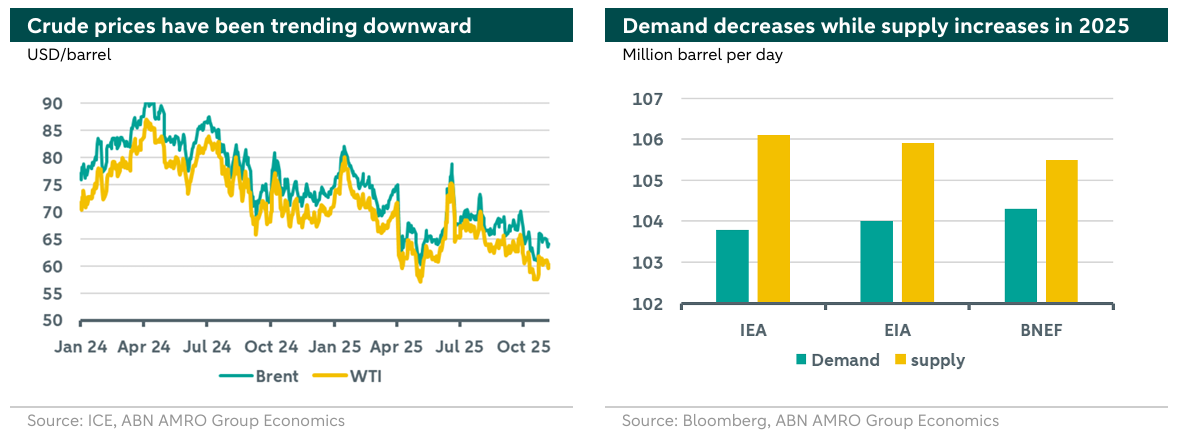
 By K Raveendran As 2026 approaches, the global oil market is heading into a year that could decisively reshape price dynamics, fiscal planning in producing states, and energy security calculations for importing economies. The defining feature of the coming year is not demand destruction or geopolitical shock, but the growing weight of surplus supply. Market […]