

Arabian Post Staff -Dubai
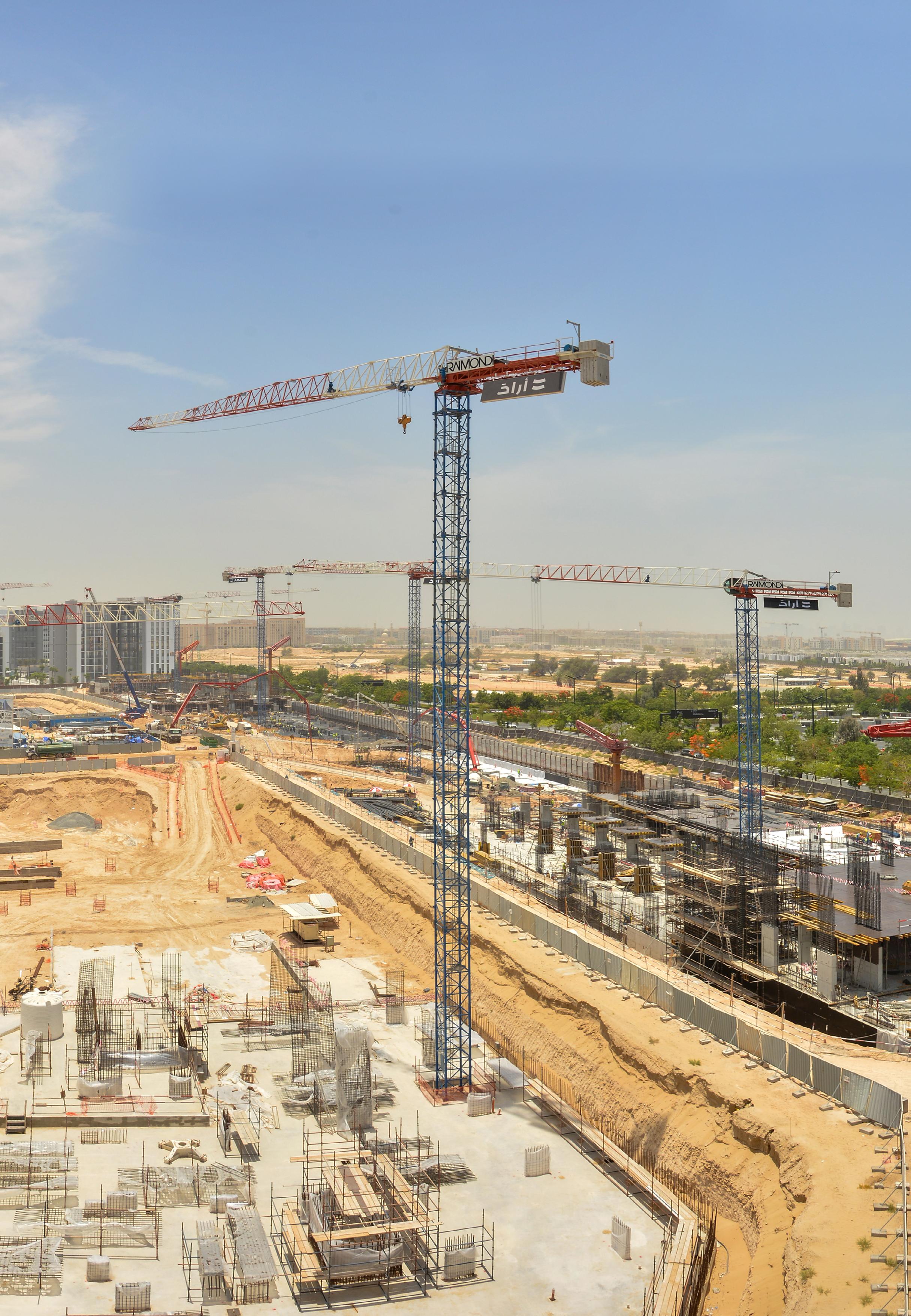
Raimondi Middle East has crossed the threshold of 100 cranes in operation across the UAE, underscoring how deeply the company has embedded itself in one of the Gulf’s busiest construction markets. The 100th machine, a Raimondi LR273 luffing jib crane, has been deployed in Dubai and is the first unit of that model to be installed in the country.
The milestone is more than a branding exercise. It reflects the intensity of building activity across the Emirates, where tower cranes remain one of the clearest indicators of project flow, contractor confidence and the pace of high-rise development. Raimondi said its active fleet is spread across a broad mix of residential, commercial and infrastructure works, with a particularly strong presence in dense urban locations where luffing jib and flat-top cranes are often preferred because they can operate within tighter site envelopes.
Dubai’s economic backdrop helps explain the significance of that number. Official data showed construction in Dubai grew 8.5 per cent in the first nine months of 2025, with the sector’s contribution to gross domestic product rising as building and real-estate activity remained firm. That expansion has been mirrored by a continuing pipeline of residential schemes, mixed-use developments and skyline-defining towers, all of which require specialist lifting equipment, careful installation planning and long maintenance cycles.
For Raimondi, the LR273 now entering the UAE market is a notable addition because it sits in the higher-capacity end of the company’s luffing range. The model is designed for an 18-tonne maximum lifting capacity, a maximum radius of 60 metres and hoist power options of 67kW and 86kW. Those specifications make it suitable for jobs where contractors need strong lifting performance without moving into the very heaviest segment of tower-crane deployment. Its first UAE installation has been placed on a waterfront residential project in one of Dubai’s culturally significant districts, working alongside two other Raimondi luffers.
That deployment also fits a wider pattern in the company’s regional strategy. Raimondi has spent the past two years reinforcing its presence on large residential and masterplan-led projects in Dubai and Sharjah, where site congestion, height restrictions and surrounding property lines often shape crane selection as much as raw lifting strength. In August 2024, the company deployed five LR213 luffing jib cranes on a major twin-tower development between Downtown Dubai and Business Bay, a project spanning more than 1.4 million square feet and 1,030 units. Four of those cranes were set to climb to heights of 145 metres and 190 metres as the structure advanced.
That earlier Dubai job illustrated why luffing jib cranes are winning favour on premium urban sites. Their smaller slewing envelope helps reduce overfly risk above neighbouring plots and public areas, while allowing contractors to continue work in districts where space is tight and logistics are costly. Raimondi has argued that reliability of the rental fleet, speed of installation and full-life-cycle service support are becoming as important as the crane itself, especially on projects where delays ripple through multiple subcontractors and financing schedules.
Engineering capability has also become part of the company’s pitch. Raimondi highlighted a separate regional milestone in May 2025, when an LR213 luffing jib crane was climbed to 322 metres in Dubai, which it described as the highest climbed crane in the region. That machine, operating on a 75-storey premium residential tower, required extensive redesign work around ballast, collar positioning, base loads and structural constraints because it had to be integrated with a pre-existing foundation after the building had already reached significant height.
Such projects show how the Gulf crane market is evolving. Contractors are demanding not just hardware, but technical studies, erection planning, climbing operations, maintenance and dismantling support from the same supplier. That integrated model is particularly important in the UAE, where projects often combine ambitious height targets, compressed delivery schedules and premium specifications. Raimondi says it intends to keep investing in regional service capacity and localised engineering support, a signal that it sees the UAE not as a one-off growth market but as a long-term operational base.
Follow Arabian Post
Select Arabian Post as your preferred source on Google and MSN News for trusted business news and Arab politics and updates.




