News related to
Operations

Fintech firm Ripple has announced the acquisition of wallet-and-custody specialist Palisade, aiming to accelerate its institutional digital-asset services by seamlessly combining bank-grade custodial infrastructure with wallet-as-a-service capabilities.

The deal positions Ripple to serve not just banks but fintech players, crypto-native firms and large corporates that require both long-term vaulting and high-speed transaction flows. Palisade brings features such as Multi-Party Computation key-management, zero-trust architecture, fast wallet provisioning, multi-chain support and decentralised-finance integration. According to Ripple President Monica Long the acquisition creates an “end-to-end provider for every institutional need, from long-term storage to real-time global payments and treasury management.”

Ripple’s custody solution already supports major institutions including Absa Bank, BBVA, DBS and Société Générale – FORGE, enabling a secure vault model that offers tamper-proof audit trails and cryptographic controls. Palisade will extend reach into wallets and payment rails, enabling use-cases such as on- and off-ramps, subscription billing, sweeping funds across accounts and real-time treasury operations.

Industry analysts note the move reflects a broader trend: as large companies move from observing digital-asset infrastructure toward building internal treasury and payments capabilities, they require turnkey, compliant solutions rather than in-house key-management or bespoke setups. The acquisition addresses that demand by marrying payments infrastructure and custody under one roof.

However, the deal comes amid a tougher market environment. While Ripple expands its institutional stack, its native token, XRP, continues to face downward pressure — trading below key moving averages and amid broader crypto-asset market liquidity stress. That contrast raises questions about whether infrastructure gains will translate into near-term revenue growth. Furthermore, regulatory and licensing complexity remains a challenge. Palisade is European-licensed, which helps fill a gap in Ripple’s footprint, but regulatory regimes in real-world-asset tokenisation and stablecoin flows remain evolving and unpredictable.

The acquisition forms part of a flurry of moves by Ripple this year: following its purchase of prime broker Hidden Road, stablecoin payments firm Rail and treasury-software provider GTreasury, the company has pledged more than US$4 billion in strategic investments and acquisitions. Integration of Palisade’s wallet-as-a-service platform into Ripple Payments will allow for new offerings such as instant wallet creation at scale, multi-chain asset support, and alignment of corporate treasury with digital-asset flows.
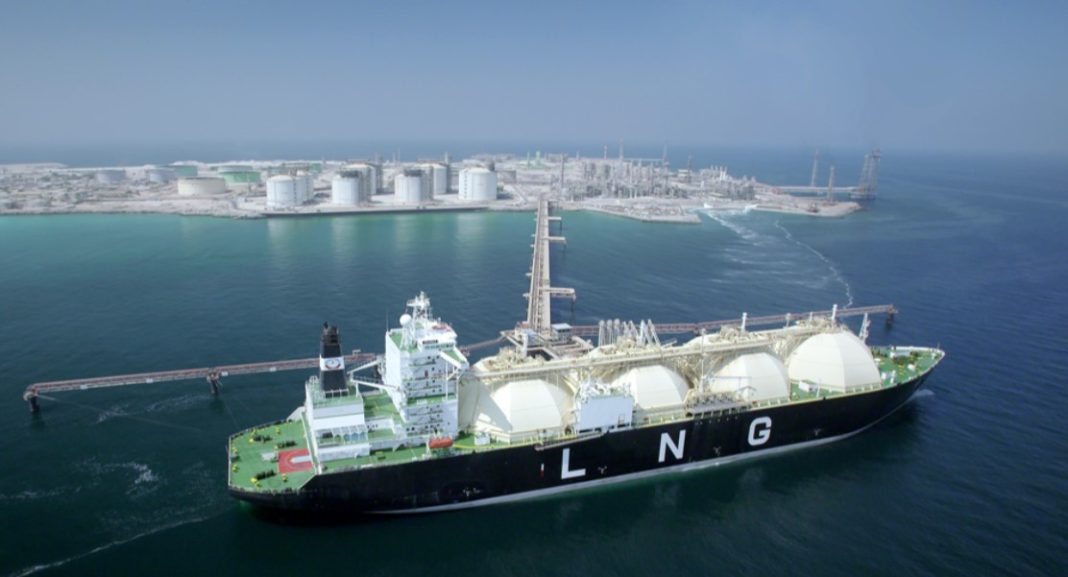
Abu Dhabi’s state energy company signed a 15-year sales and purchase agreement with a unit of British energy major for the delivery of up to 1 million tonnes per annum of liquefied natural gas. The contract represents the first long-term LNG sales deal between the company and Shell and marks the eighth offtake agreement secured for its new export facility.

The LNG will be supplied from the Ruwais LNG project in Al Ruwais Industrial City, Abu Dhabi, which is under development and is set to become the first LNG export plant in the Middle East and Africa region to operate on clean power. Shell holds a 10 per cent equity stake in the project. The agreement converts a previous heads of agreement into a definitive contract and accelerates the project’s commercial timeline.

By securing this deal, more than 8 mtpa of the facility’s planned 9.6 mtpa capacity has already been contracted across Asia and Europe, just 16 months after the project’s final investment decision in July 2024. The project comprises two liquefaction trains of 4.8 mtpa each and is designed to more than double the company’s existing LNG production capacity to around 15 mtpa.

The deal is timed to global gas-market conditions where demand is picking up and energy security is a key concern for buyers. By locking in long-term supply, the exporting company seeks to position itself as a “reliable global supplier of lower-carbon LNG”, while the buyer views the contract as a strategic commitment to expanding its LNG portfolio and securing long-term supplies.

For the seller, the rapid pace at which contract commitments have been won is significant. The chief executive of the gas-division described the achievement of contracting more than 80 per cent of the plant’s capacity within roughly a year of FID as “a new benchmark” for large-scale LNG projects globally, and noted that construction, contractor mobilisation and site works remain on track for commissioning by the end of 2028. The buyer emphasised its long-standing partnership of more than fifty years with the Abu Dhabi exporter and said the agreement supports its global LNG-expansion strategy.

Analysts note that the project’s clean-power design, advanced technology deployment, and rapid contracting distinguish it in the LNG market. That said, while the exporting company releases its ambition to expand its LNG portfolio, competitors in the region are also pursuing aggressive growth, raising competitive risk. Moreover, delivering commercial operations at a low-carbon intensity adds complexity and cost — achieving the projected timeline and performance will require careful execution.

On the demand side, the contract underscores how buyers are increasingly seeking longer-term and lower-emissions supply arrangements in the transition-era gas market. For the buyer, the deal adds to its diversified portfolio of LNG suppliers as it faces intensified competition for cargoes from traditionally dominant exporters. The seller’s ability to secure multiple offtake agreements rapidly helps de-risk the project and supports financing and construction momentum.

One key theme emerging is the alignment of LNG expansion with sustainability credentials. The Ruwais facility’s design to run on clean grid-powered operations, along with claims of being among the lowest-carbon intensity LNG plants globally, reflects a shift in gas-project metrics: projects are now evaluated not solely on cost and capacity but also on carbon footprint and technology sophistication. This trends suggests that access to lower-carbon LNG could become a differentiator among suppliers and a value driver for buyers.

However, achieving this low-carbon ambition may face challenges such as securing clean-power infrastructure, managing capital-cost escalation, and meeting stringent environmental and regulatory expectations across export markets. The broader LNG market is also subject to volatility in feed-gas supply, shipping capacity constraints, and fluctuating demand growth in key markets such as Asia and Europe.

HAI PHONG, VIETNAM – Media OuReach Newswire – 4 November 2025 – Indochina Kajima, the joint venture between Indochina Capital and Kajima Corporation, and ITOCHU Corporation held a ground-breaking ceremony for Core5 Vietnam’s second industrial project in Hải Phòng at Deep C 2 Hai Phong Industrial Zone. The project will deliver approximately 80,000sq.m of world-class ready-built factory space for lease, with a handover expected in Q1/2027. Photo […]

California-based Archer Aviation has signalled accelerated ambition in the electric air taxi sector with its CEO, Adam Goldstein, stating the company anticipates its first commercial flights within the next year across major city corridors. The objective is underpinned by a surge in interest, key contracts and strategic partnerships that could shape the future of urban air mobility.

Goldstein outlined that Archer’s inaugural production-model aircraft — dubbed Midnight — is scheduled to operate “in and around several big urban cities” by June next year, a milestone he described as achievable given current progress. He emphasised the dual track of domestic and international strategy, with particular emphasis on collaboration in the Gulf region. The company confirmed it is working with the UAE government and other global partners as part of its launch ecosystem.

Financially, Archer has bolstered its resources to support certification, manufacturing and ecosystem rollout. In its latest funding round, the firm raised some $300 million backed by institutional investors including BlackRock, bringing total liquidity to roughly $1 billion. These funds are earmarked for critical capabilities such as composites and batteries, underscoring the high cost of advancing from prototype to commercial launch.

Partnerships have emerged as a central pillar of Archer’s strategy. Late last year Archer acquired the patent portfolio of another eVTOL developer, allying further with global manufacturing partner Stellantis and with operators such as Jetex in the Gulf region. Specifically, Archer and Jetex signed a memorandum focused on leveraging Jetex’s network of fixed-base operator terminals—launching in Abu Dhabi and potentially expanding across 30 countries.

At the 2025 Paris Air Show Goldstein reaffirmed Archer’s interest in the UK and Europe as early-adopter markets, noting that regulatory frameworks and infrastructure development would be key determinants of where deployment regulatory certification is achieved first. He also addressed scepticism over the speed of robotic aircraft progress, dismissing a critical short-seller report by saying that “we prove everything by action … we have started our flight campaign, which is going really well, so we will continue to prove by showing not talking.”

The regulatory environment is evolving. The US federal government has elevated advanced air mobility as an industry priority, paving pathways for certification and integration of eVTOL aircraft into air-traffic systems. Nested within this push is the recognition that infrastructure — vertiports, charging systems, air-traffic management — remains the linchpin for commercial viability. Archer’s operations already envisage a dual business model: direct-to-consumer urban air rides and the sale of aircraft to operators.

Despite the momentum, significant challenges persist. Certification of a new aircraft category remains uncharted territory for many stakeholders; technological hurdles persist around battery energy density, noise reduction and charging turnaround. Market pricing models are under scrutiny as well; as early as 2024 industry analysts highlighted that selling an eVTOL aircraft at around US$5 million may be inconsistent with the aim of widespread, affordable urban service. Goldstein and his team must also build out manufacturing capacity: Archer’s planned Georgia manufacturing site, intended to ultimately produce up to 650 aircraft per year, is still under construction.

The Middle East remains a focal region for Archer’s first service launch. High-temperature performance testing of the Midnight aircraft is already underway in Abu Dhabi, where the company is collaborating with local civil-aviation authorities. Simultaneously, the company has signed on for major transport-network projects — notably serving as the official air-taxi provider for the 2028 Los Angeles Olympics, in which flights of 10-20 minutes between key venues are planned.

The United Arab Emirates has established itself as a leading hub for innovation and the deployment of advanced technology in the energy sector, according to George Bou Mitri, President of Honeywell for the Middle East, Türkiye and Central Asia. Speaking at the sidelines of the Abu Dhabi International Petroleum Exhibition & Conference 2025, he highlighted how the country’s digital transformation initiatives are serving as a global model for sustainable, technology-driven energy systems.

Bou Mitri said the UAE presents a distinctive example of openness, collaboration and synergy between public and private sectors in driving innovations that are making a tangible global impact in the energy industry. “The solutions created here in the UAE extend their influence far beyond its borders,” he commented. He noted that the country is actively integrating advanced technologies across its energy ecosystem, including expanding the use of LNG, hydrogen, solar and developing sustainable aviation fuel and bio-fuel as part of its emissions-reduction drive.

Honeywell is playing a significant role in this transformation. Bou Mitri pointed to the company’s participation in a landmark project with Abu Dhabi National Oil Company for the Ruwais LNG facility, expected to produce about 9.6 million tonnes annually. He also revealed that Honeywell is developing the region’s first fully autonomous control room powered by agent-based artificial intelligence in partnership with Borouge, aimed at managing petrochemical operations without direct human intervention.

Bou Mitri stressed that digital transformation forms the backbone of the sector’s future. He noted that global energy demand is projected to increase by 32 percent by 2050, while electricity demand is expected to grow by more than 75 percent in the same period, necessitating comprehensive tech solutions to balance growth with emission reduction and operational efficiency. He added that the UAE is clearly adopting that approach, emphasising that the country’s facilities are becoming important development grounds for technologies related to emissions management, artificial intelligence applications and workforce productivity improvements through digitalisation.

The autonomous control-room initiative with Borouge stands out as a practical demonstration of this strategy. According to Borouge, the project will deliver the petrochemical industry’s first AI-driven control room at its UAE plant operations and forms part of its “AIDT” programme with a targeted value generation of US$575 million. The collaboration is intended to optimise production, reduce energy use and enhance safety while lowering costs at what is set to be the world’s largest petrochemical site.

The UAE’s positioning as an innovation frontier for energy technologies comes at a time when the industry is under growing pressure to adapt. Emerging themes include the convergence of artificial intelligence, digital twins, autonomous operations, and clean-energy integration. The broader Middle East region is witnessing major energy investment momentum, with expectations of exceeding US$130 billion this year in oil and gas alone, and simultaneous major expansion in clean-energy investments including hydrogen, LNG and carbon capture projects.

For Honeywell, the UAE’s energy ecosystem is a fertile environment for deploying its digital and automation technologies, but challenges remain. Among these are workforce skills deficits — Bou Mitri pointed out that more than 50 percent of the global energy workforce is aged over 45 — and the need to transfer accumulated expertise to a younger generation. In a sector where downtime, operational safety and emissions control have high stakes, the technology must deliver in real-world conditions, not just in controlled test environments.

Critics might point to the scale of investment required, potential cybersecurity and data governance risks as operations become more connected and autonomous, and the difficulty of scaling pilot programmes into full-scale operations across multiple sites. Nonetheless, the UAE’s strategic posture — combining government backing, private-sector capability and a willingness to test and deploy cutting-edge systems — presents a compelling case study for the global energy community.

New collaborations with Citibank, Abu-Ghazaleh Global, RAK Properties, and others strengthen SIU’s commitment to connecting academic learning with global career opportunities. Swiss International University (SIU) has already informed about the new corporate partnerships that will start in October 2025 and that they will provide students with better access to internships, training programs, and job opportunities in various fields. The new partnerships are aligned with SIU’s goal to […]

HCM CITY, VIETNAM – Media OutReach Newswire – 4 November 2025 – Ho Chi Minh City Development Joint Stock Commercial Bank (HDBank, stock code HDB) reported consolidated 9M2025 profit before tax of VND14.8 trillion (US$562.4 million), up 17% YoY. Customers conduct transactions at an HDBank branch in HCM City. Profitability indicators remained among the highest in the banking sector, with Return on Equity (ROE) at 25.2% and […]

Advertisements

Abu Dhabi-based energy major Abu Dhabi National Oil Company has sealed three new agreements with US-based robotics specialist Gecko Robotics aimed at embedding artificial intelligence and robotics into its operations while accelerating the development of local skills for nationals. The accords were signed at the ENACT Majlis forum in Abu Dhabi and span a multi-year deployment for ADNOC Gas, a collaboration with the group’s training arm ADNOC […]

Beijing’s decision to eliminate a longstanding value-added tax offset for gold retailers marks a significant shift in policy, poised to raise domestic prices and influence global supply dynamics. From November 1 the Ministry of Finance announced that firms selling gold acquired from the Shanghai Gold Exchange or processed from it may no longer deduct VAT when disposing of the metal, whether in raw bars, coins or jewellery. […]

Dubai telecom operator du has launched a new cloud-mining subscription service named “Cloud Miner” offering residents in the UAE access to cryptocurrency mining without the need to purchase or operate hardware. The offering was introduced at a launch event held at the Burj Khalifa and will be managed under du’s B2B sub-brand du Tech. Customers will be able to lease 250 terahashes per second of mining capacity […]

Global enterprise cloud provider Oracle Corporation is pushing its multicloud and artificial intelligence strategy into a new phase, deploying ultra-high-density GPU clusters, open standards and unified data architecture to support large-scale model training and agentic AI workloads. At the heart of the initiative is Nathan Thomas, Vice President of Multicloud and AI Strategic Initiatives, who described the engineering-driven enhancements unveiled at the company’s AI world event in […]

Bengaluru is set to become a linchpin in global chip manufacturing as the India Cellular and Electronics Association and the Global Semiconductor Alliance formally announced a strategic alliance aimed at deepening the country’s role in global semiconductor value chains. The agreement, unveiled at a joint press conference co-organised with the India Semiconductor Leadership Roundtable, marks a significant push to integrate local design, manufacturing and packaging capabilities with global technology networks.

ICEA chairman Pankaj Mohindroo described the industry as standing at “an inflection point” and said the partnership with the GSA represented “a strategic step towards positioning India as a vital node in global semiconductor value chains, where design, manufacturing and innovation converge.” Meanwhile, GSA chief executive Jodi Shelton noted the collaboration with ICEA and the India Semiconductor Mission reflected “a shared commitment to connect India’s dynamic innovation with the global semiconductor ecosystem.” Under the terms of the alliance, the two bodies will co-host the India Semiconductor Leadership Summit in 2026, providing a forum where global fabless firms, design innovators and equipment suppliers will engage with emerging Indian fab and OSAT capacity.

The partnership is underpinned by India’s policy drive under the ISM. The government has approved an outlay of ₹76,000 crore to build semiconductor and display manufacturing ecosystems, and around ten projects with investment commitments of nearly ₹1.6 lakh crore have already been sanctioned. The alliance signals a concerted push not only to attract foreign capital but also to nurture domestic design champions and bridge the gap between India’s expanding electronics ecosystem and global supply chains.

Industry analysts highlight India’s strengths: a growing engineering talent pool, improving infrastructure and a policy regime increasingly supportive of semiconductor manufacturing. ICEA points to electronics output in India having reached USD 150 billion, with exports expected to surpass USD 50 billion. The doubling of the Electronic Component Manufacturing Scheme budget underscores the emphasis on scaling manufacturing capacity.

Nevertheless, challenges remain. Global semiconductor value chains remain highly concentrated, especially in fabrication and advanced node manufacturing. To catch up, India will need to address constraints including high capital intensity, access to specialised equipment, materials, technology transfer regimes and workforce readiness for advanced manufacturing operations. There is also the task of aligning timelines: large-scale chip fabrication plants typically take multiple years to commission and ramp. The broader global context matters too — recent supply-chain disruptions, geostrategic tensions and export controls complicate efforts for any aspiring hub.

Despite these hurdles, the ICEA-GSA partnership reflects a strategic recognition that design capabilities, ecosystem linkages, and global connectivity will matter as much as fabrication. By positioning India as a design-to-manufacturing platform and emphasising cross-border collaboration, the alliance aims to raise the country’s profile in the semiconductor supply chain beyond simply being a site for assembly. Industry figures emphasise this direction: Dr Randhir Thakur, chair of ICEA’s Semiconductor Leadership Forum and managing director & chief executive of Tata Electronics, described the partnership as poised to bring “the global and Indian semiconductor ecosystems closer, delivering unique value to customers, design companies, manufacturers and suppliers.”

On the global front, the GSA brings nearly three decades of experience connecting semiconductor leaders worldwide; its network includes chip-design firms, fabs, equipment vendors and global platforms like Google, Amazon and Tesla. Shelton remarked that the aim is for India to become a site where global design houses can work, test and scale—and thereby feed into the broader manufacturing and packaging ecosystem. GSA’s commitment to including India in its annual global executive events underscores the intent to shine a spotlight on India’s semiconductor ambitions.

On the morning of November 1, 2025, Sun PhuQuoc Airways officially takes off with its first flights to Phu Quoc, marking the beginning of Vietnam’s first leisure airline. PHU QUOC, VIETNAM – Media OutReach Newswire – 1 November 2025 – The sky over Vietnam welcomes a new pair of wings today as Sun PhuQuoc Airways (SPA), a member of Sun Group, officially begins commercial operations. From November […]

The White House announced a policy that prohibits credentialed reporters from freely entering Room 140, a section of the West Wing known as “Upper Press” housing senior communications staff, unless they first secure an appointment. The directive originates from the National Security Council, which cited the protection of “sensitive material” now routinely handled in that zone. Press Secretary Karoline Leavitt and her deputy Steven Cheung are among […]

Tokyo-based digital forwarder Shippio has secured fresh capital to accelerate its transformation of international trade logistics, signalling a push to capture a major share of cargo flows into and out of Japan and beyond. The company, founded in 2016, has raised a total of approximately ¥3.24 billion in its Series C round, comprising ¥1.87 billion in equity and ¥1.37 billion in debt financing, bringing its lifetime funding to roughly ¥7 billion overall.

Key investors in this round include DNX Ventures as lead investor, along with Suzuyo, New Commerce Ventures and YMFG Capital in the equity portion, and a consortium of financial institutions—such as Shoko Chukin Bank, Japan Finance Corporation, Mizuho Bank, Mitsubishi UFJ Bank and Resona Bank—providing the debt portion. The funds will support Shippio’s goal of capturing a 30 per cent share of Japan’s total cargo volume through product development, customer expansion and mergers and acquisitions.

Japan, as an island economy heavily dependent on imports and exports, has seen a dramatic up-surge in e-commerce and cross-border trade: customs clearance permits have reportedly increased eight-fold between 2016 and 2024. Despite this, many logistics operations remain mired in analog workflows and manual documentation. Shippio aims to plug that gap by deploying a digital platform that offers shipment tracking, cost analysis, invoice management and customs processing. The founder and co-CEO, Takanori Sato, has remarked that the company is building a multi-sided network for importers/exporters and freight forwarders, with an eye on becoming the leading digital forwarder in Asia.

Shippio’s growth trajectory is evident: industry data indicates the company achieved approximately US$1.8 million in revenue in 2024, up from roughly US$590 000 in 2023, representing year-on-year growth of more than 200 per cent. Though earlier funding profiles remain opaque, publicly available records state Shippio underwent a Seed round of ¥190 million in December 2018 and has proceeded through Series A and Series B stages.

The logistics industry in Japan presents both a compelling opportunity and formidable challenge. On one hand, the market is highly fragmented, low margin, and hard-to-digitise—qualities that deter many investors. On the other, digital disruption in freight forwarding is overdue and ripe for those who can execute. In an interview with a logistics-industry podcast, Sato acknowledged the complexity of the space, noting that legacy practices have persisted for decades, and that the challenge lies not simply in building technology but in shifting enterprise behaviour and workflows.

Shippio now aims to expand its platform coverage beyond freight forwarding into wider supply-chain orchestration, including customs brokerage, trucking and warehousing. The company has already opened an office in Ho Chi Minh City to establish a Southeast Asia footprint, recognising that Vietnam and other manufacturing-heavy nations will be key origins for cargo flowing to Japan and other Asian markets. Its ambition to gain 30 per cent share implies a very steep climb: the total Japanese import-export market for logistics services is large, and incumbent players have entrenched relationships.

Industry analysts observe that Shippio’s dual-capital structure—equity plus debt—reflects a hybrid growth model where the company needs forward-looking product development as well as stable working-capital to service logistics networks. The inclusion of major banks suggests confidence in Shippio’s revenue model and risk profile. However, some caution that scaling in freight forwarding entails managing international customs regimes, myriad carriers, modal shifts and often low visibility in cost structures and margins. How well Shippio executes integration of its digital platform with real-world assets and operations will determine whether it can move beyond a niche player into a regional logistics heavyweight.

Texas has approved a significant $1.1 billion loan for a proposed natural gas-fired power plant in the Permian Basin, marking the largest financial commitment under a state programme designed to secure the state’s energy future. The funding, provided at low interest rates, aims to address the rising demand for electricity driven by both industrial growth and the increasing need for energy to power emerging technologies, including artificial […]

Dubai-based global terminal operator DP World has pledged an additional $5 billion in investment to strengthen India’s maritime infrastructure, furthering its long-term commitment to the country. The announcement was made during India Maritime Week 2025, marking a significant boost to the nation’s integrated supply chain network that facilitates both exports and domestic trade. This latest financial commitment follows the signing of five Memoranda of Understanding with prominent […]

The blockchain platform admittedly known as Qtum has rolled out a new desktop artificial-intelligence agent called “Ally”, aiming to shift the landscape of AI productivity from cloud-only assistants to desktop-native, multi-model orchestration. The launch positions Qtum as a player in both blockchain and artificial-intelligence domains as users increasingly demand local control, privacy and advanced automation beyond chat-based tools. Ally can run on both Windows and macOS platforms […]

The Washington-based media outlet Radio Free Asia announced that it will suspend all editorial content production from Friday, citing critical funding shortfalls triggered by the federal government shutdown and delays in appropriations. The decision marks the first full shutdown of its news services since the broadcaster’s founding in 1996.

Chief Executive Bay Fang explained that the organisation is “forced to suspend all remaining news content production … for the first time in its 29 years of existence” and that operations in several overseas bureaus across Asia will close while staff are formally laid off and severance paid. The organisation reported that many employees have been on unpaid leave since March owing to previous funding cuts.

Analysts say the board’s move underscores a precarious moment for U. S.-backed international broadcasting. Radio Free Asia, which has delivered news in Mandarin, Burmese, Khmer, Korean, Vietnamese and Uyghur since the mid-1990s, has come under mounting pressure from a combination of political directives and fiscal constraints. In March the United States Agency for Global Media terminated its grant under a presidential executive order, prompting legal challenges. Over the following months the service slashed language operations, placed staff on extended leave and shrank its footprint.

The trigger for the complete pause is the failure of Congress to pass a full-year funding resolution, resulting in the federal shutdown beginning October 1 and the impasse over the 2026 fiscal year budget. The shutdown left USAGM unable to disburse new funding, forcing Radio Free Asia to exhaust reserves. The suspension leaves fewer than 30 employees in place, according to internal documents.

Supporters of the broadcaster warn that the shutdown of its services will leave a significant information gap in parts of Asia where independent media are scarce and press freedom is under threat. The outlet has been credited with investigative reporting on China’s Uyghur population, coverage of North Korean defectors and analysis of the 2021 Myanmar coup. Its multilingual services have made it one of the few external voices operating inside closed societies.

Critics of U. S. international broadcasting say that the funding model, which ties outlets to federal grants, is inherently unstable when funding is politicised. They argue that the reliance on appropriations makes such organisations vulnerable to shifts in administration priorities and partisan standoffs. The halt in operations at Radio Free Asia has already been welcomed by governments it has criticised, including Cambodia and China, which view the move as a blow to U. S. soft-power broadcasting efforts.

Industry observers note that other USAGM-funded broadcasters are also under strain. The Radio Free Europe/Radio Liberty has retained legal protection via a court injunction but still faces cash-flow challenges. The broader trend suggests that U. S. international media assets may have thoroughly entered a phase of retreat just as global information competition—particularly from China and Russia—is intensifying.

The implications of the suspension extend beyond media-industry metrics. Some Asian governments that had viewed the broadcaster’s presence as adversarial are already reclaiming influence. Beijing had added state-run radio frequencies in regions formerly served by Radio Free Asia’s Mandarin service, and Phnom Penh’s leadership publicly thanked Washington in March for the cuts, calling them “a major contribution to eliminating fake news” in the region.

A new wave of digital activity has shifted the balance of the internet as automated bots now account for over half of global web traffic. Cybersecurity data shows that traffic from non-human sources rose to 51 per cent in 2024, overtaking human‐generated traffic for the first time. Behind this shift lies a complex web of generative-AI, automated crawlers and malicious botnets, raising questions about the role of […]

Allianz Trade extends geographical footprint to new location Vietnam HONG KONG SAR – Media OutReach Newswire – 22 October 2025 – Allianz Trade in Asia Pacific is pleased to announce the opening of its first office in Vietnam. Headquartered in Ho Chi Minh City, the new office will provide comprehensive trade credit solutions to local exporters, catering to their increasing demand resulting from the country’s outperforming exports […]

The African Development Bank has approved a US$75 million financing package for Nyanza Light Metals Pty Ltd of South Africa to construct an 80 000-tonne-per-year titanium dioxide pigment production facility at the Richards Bay Industrial Development Zone. The plant will process locally and regionally sourced ilmenite ore into high-value pigment used in paints, coatings, cosmetics, food processing and medical applications. The financing deal includes US$50 million drawn […]

A configuration error in the cloud infrastructure of the software giant caused its service platform to falter around 16:00 UTC on October 29, affecting productivity tools, gaming services and enterprise systems worldwide. The company reported that the fault stemmed from a change to its global delivery network and ensuing DNS problems, which triggered widespread failures across key offerings. The affected services included the productivity suite used by […]

Dubai-listed developer Emaar Properties is sharpening its global expansion strategy by placing a stronger emphasis on India while exercising caution over entry into China’s troubled housing market, according to chief executive and founder Mohamed Alabbar.

Alabbar told the Future Investment Initiative conference in Riyadh that India would be “our next big step,” citing two decades of operations in the country and significant growth potential. He emphasised that, while Emaar remains “very interested in China,” it is holding off until the market shows clear signs of recovery, noting that “it is a different world. Let them recover.”

The directive comes after Emaar posted strong financial results: net profit jumped 25 per cent to AED 18.9 billion last year and rose a further 34 per cent in the first half of 2025, conditions that Alabbar says position the firm to target large market acquisitions rather than start-ups abroad. Emaar’s land-bank footprint already spans more than 1.87 billion sq ft globally, including a 122 million sq ft stake in India and around 175 million sq ft outside the UAE.

In India the driver is rising urbanisation, youthful demographics and a housing deficit that Emaar believes it is well placed to address. Alabbar signalled that the company is pursuing joint-venture partnerships with local groups rather than divesting its Indian operations, dismissing reports of a sale to one of the country’s major conglomerates. By contrast, China presents multiple headwinds including a pronounced housing market slump: new-home prices in 63 out of 70 major Chinese cities fell in September, reflecting a 0.4 per cent month-on-month drop and a 2.2 per cent year-on-year fall.

Analysts say Emaar’s bifurcated strategy makes sense in the context of broader market dynamics. India’s economy is forecast to grow about 6.7 per cent in fiscal 2025-26, according to a Reuters poll, while China is projected to expand by roughly 4.8 per cent amid real-estate weakness. Alabbar noted that the company sees China’s environment as “still suffering with their housing problem, but they’ll come up with it,” stating that Emaar wants to be ready rather than reactive.

Emaar’s preferred mode of overseas expansion appears to be acquiring significant stakes in existing developers, upgrading business models and rolling out its integrated real-estate offering rather than green-field launches. “Maybe you go and buy a majority stake in a developer and then change the way they do business … or maybe they already do good business and we learn from them,” Alabbar explained. That approach aligns with Emaar’s low net debt, elevated cash position and willingness to invest in large markets such as the US, Europe and China.

Critics caution that while India holds promise, foreign developers often face regulatory, land-title and partner-alignment risks. Emaar’s long-standing Indian venture, launched in 2005, endured partner disputes and execution delays, a history that Alabbar acknowledged when he said “we’ve been there 20 years. That’s big for us.” He further noted that successful growth in India depends on selecting the proper location and product mix. Meanwhile, China’s structural property problems are deep-rooted: unsold inventory and falling valuations continue to impair home­buyer confidence, raising questions about the timing of any major developer expansion into the market.

VISHNU RAJA
RYO YAMADA
HITORI GOTOH
IKUYO KITA