Just in:
UK air traffic outage inflicted £33m financial losses // Democrats capture Senate majority with seven Republican seats // Ta’ziz finalises $1.39bn funding for Ruwais industrial facilities // Pinarayi faults UDF over mounting road crashes // ADIA and partners establish $1.4 billion aviation venture // After Reaching 7 Million Users in the Philippines, Skyro Launches Transparent Cash Loans in Malaysia // Anthropic to prohibit persistent abuse of Claude chatbot // U.S. Mid Term Result Is A Clear Verdict Against Trump’s Authoritarianism // OpenAI identifies 948 Linux privilege escalation flaws using AI // Emirates Group records AED 4.1 billion half-year profit // Govt opposes Arlekar’s PSC action // Utilities pursue ₹1,992 cr in unpaid bills // Cyberport Venture & Capital Forum 2026 Grand Opening // Meraas showcases five residential zones at Dubai Design Week // CR Longdation Aethereal Cybersecurity × Global Cybersecurity Alliance (GCSA) Join Hands to Establish the “AI and Cybersecurity Research Centre” // Asia Left Behind: Ten international companies have yet to report delivering on their cage-free egg pledges across the region // Burying Head In “India Made Poverty Reduction” Data Is Dangerous // Arrow Electronics showcases technologies advancing intelligent robotics, mobility and digital infrastructure // Oil and chip shares retreat after Democratic victories // xCube Access Welcomes Entrust Capital Limited  Expanding Access to Professional Portfolio Management //

News related to
Operations

Gemini has secured registration with AUSTRAC and formally established its Australian arm, positioning itself as a regulated digital currency provider in the country. With the move, Australians can now trade with Australian dollars through local payment rails and the firm has named a dedicated country head to lead its strategy.

The new entity, Gemini Intergalactic Australia Pty Ltd, is now recognised by AUSTRAC as a digital currency provider, enabling full operations in compliance with Australia’s anti-money laundering and counter-terror financing laws. Local deposit and withdrawal options via PayID and Australia’s New Payments Platform will be enabled, reducing reliance on cross-border transfers.

Saad Ahmed, Gemini’s head of APAC, said the expansion aligns with robust demand in Australia’s crypto market, which the company estimates at roughly 22–25 per cent adoption. He emphasised that the decision to push into Australia preceded the government’s latest regulatory proposals. The firm plans to apply for an Australian Financial Services License to roll out advanced services such as staking and lending, but these will not be available at launch.

To lead its local presence, Gemini has appointed James Logan as Head of Australia. Logan was formerly in leadership roles at Luno and Bitget in Australia, thus bringing regional experience in crypto operations and regulatory compliance. His responsibilities include building partnerships, scaling operations, and navigating evolving policy frameworks.

Gemini’s entry comes amid intensifying regulatory focus in Australia. The government recently released draft legislation that would require crypto exchanges to hold an AFSL under the Corporations Act, thus applying the same regulatory rigour to digital assets as to traditional finance firms. Some industry observers view the move as a consolidation trigger—smaller platforms may struggle to absorb compliance costs.

Beyond regulation, banking integration remains a competitive differentiator. Australian customers have long faced friction when depositing and withdrawing via crypto platforms due to banks restricting or flagging such transactions. Gemini’s local setup aims to mitigate such barriers by partnering with Australian payment systems and financial institutions.

In the competitive landscape, Gemini will go head to head with established players such as Independent Reserve, CoinSpot, Binance Australia and OKX. While some already operate under established local compliance frameworks, Gemini emphasises institutional-grade infrastructure, regulatory integrity and global liquidity as its advantages.

Analysts view the timing of Gemini’s move as strategic. The firm’s recent listing on Nasdaq, in which it raised USD 425 million, has strengthened its capital base and credibility. Establishing operations in Australia now allows it to lock in market share under current rules, ahead of any stricter licensing regime.

Australia’s crypto adoption has surged in recent years. Surveys and industry reports suggest that by 2025 nearly one in four Australians hold digital assets—a rate comparable to the U. S. This growth, along with rising institutional interest, makes the market an increasingly attractive target for global exchanges.

Gemini has had a presence in Australia since 2019, serving local users via its global platform but with limited features and higher costs. Under the new structure, native AUD deposits, enhanced trading pairs, and faster settlement are expected to improve user experience and price competitiveness.

While Gemini’s initial rollout will omit certain features like crypto-backed credit or staking, the company says it is pacing its product expansion in tandem with regulatory clarity. It is adopting a “wait-and-watch” posture with respect to the government’s consultation process, but remains confident that its operations will comply.

The Australian push is one element in Gemini’s broader global strategy. It has also moved ahead in Europe under MiCA and is exploring tokenised stock trading in key markets. The firm now claims to serve customers in over 60 jurisdictions and has processed hundreds of billions of dollars in cumulative trading volume.

Apple has removed Eyes Up, an iPhone app that collected and archived videos of U. S. Immigration and Customs Enforcement arrests, marking the second platform the company has taken down after ICEBlock. The swift removal followed concerns from U. S. law enforcement that such apps pose risks to officers. Eyes Up’s functionality allowed users to upload videos, tag arrest locations, and view past incidents on an interactive […]

Branded residential developments in the Middle East and North Africa are now capturing a larger share of global signings, with standalone projects set to make up 45 per cent of the regional portfolio—well above the global average of 36 per cent.

Data from Global Branded Residences shows that the MENA region now accounts for 36 per cent of new global branded residence signings, outstripping traditional hubs such as North America, Europe and Asia. The region currently has 99 completed branded residences and 241 under development, representing 13 per cent of existing global supply and 25 per cent of the pipeline. The UAE leads with 201 projects, followed by Saudi Arabia and Egypt.

Dubai remains the most active city globally, with nearly 160 branded developments either completed or in the pipeline—surpassing markets like Miami, London, and New York. The breakdown in MENA shows that 31 per cent of completed branded residences are standalone, while 51 per cent of the pipeline comprises standalone projects. This shift indicates broader confidence among developers in models unlinked to hotel operations.

Fashion and lifestyle brands are playing an increasingly prominent role in driving the shift away from purely hospitality-anchored residences. In MENA, fashion labels account for 51 per cent of non-hotel branded projects—nearly double the global average of 26 per cent. Non-hotel brands now represent 30 per cent of the regional pipeline, up from 24 per cent among completed schemes. In effect, branded residences in the region are diversifying beyond hotels into lifestyle, design and luxury branding.

Fairmont is poised to be the largest operator in the region, with 19 schemes across completed and pipeline stages. New entrants include jewellery brand De Grisogono and hospitality/lifestyle brand Nobu.

Globally, the branded residences sector has expanded rapidly over the past decade. The total number of schemes globally stands at 1,746—779 completed and 967 under development. Across this global portfolio, hotel brands still dominate, accounting for 79 per cent of projects. However, standalone branded residences—those without hotel attachments—are projected to rise from about 8 per cent of the world’s projects to 12 per cent over time.

Broadly, the market is seeing several converging trends. Buyers are increasingly willing to pay a premium—often 20 to 35 per cent or more—for branded units over comparable non-branded luxury real estate, citing consistency of design, service, and long-term resale value. Developers, in turn, see branding as a differentiator that supports stronger pricing, absorption rates and margins. In fast-growing wealth markets, branding provides credibility and global marketing reach.

Asia Pacific has also moved into the spotlight. GBR has formally launched operations in APAC, targeting markets such as Thailand, Vietnam, India, Malaysia and emerging resort destinations. The firm forecasts that branded development projects in APAC may more than double, with the region evolving into one of luxury real estate’s fastest growing markets.

Nevertheless, challenges remain. Aligning brand partnerships with regional regulatory, legal and operational frameworks is complex. Delivering consistent service quality over time, especially in newer locations with less mature hospitality infrastructure, is no small task. In denser branded markets, developers must differentiate amenities, design and buyer experience to avoid commoditisation.

Abu Dhabi National Oil Company announced that its six publicly traded subsidiaries will distribute AED 158 billion in dividends through to 2030, nearly doubling the AED 86 billion cumulative payout since the first listing in 2017.

The announcement came during ADNOC’s inaugural Investor Majlis in Abu Dhabi, where the group underscored its commitment to shareholder returns and transparent governance. The dividend programme is subject to customary approvals and will provide long-term visibility to investors across its diversified portfolio of listed entities.

ADNOC’s six listed companies currently account for more than AED 550 billion in market capitalisation on the Abu Dhabi Securities Exchange and represent nearly 40 percent of the annual dividends distributed on the market. Under the new plan, three additional entities—ADNOC Distribution, ADNOC Gas, and ADNOC Logistics & Services—will join ADNOC Drilling in issuing quarterly dividends.

Dr Sultan Ahmed Al Jaber, ADNOC’s Managing Director and CEO, also serving as UAE Minister of Industry and Advanced Technology, described the dividend target as a “landmark step” adding clarity to the group’s capital return path. He stated the move would “enhance value” for citizens, residents, and partners, and reaffirmed ADNOC’s focus on cost discipline, efficiency and growth.

Each listed unit announced specific dividend floors and policy reforms. ADNOC Drilling set a cumulative floor of AED 25 billion by 2030, representing a 26 percent minimum return over the period. ADNOC Gas pledged a target of AED 90 billion, with dividends moving to a quarterly basis from 2025 onward. ADNOC Logistics & Services raised its guidance to AED 8.1 billion for 2025–2030 and intends to adopt quarterly distributions from the third quarter of 2025.

Other units will also tighten their dividend structures. ADNOC Distribution expanded its dividend policy through 2030 and targets cumulative returns exceeding 30 percent over the 2025–2030 period. Borouge affirmed a dividend floor for 2025 and envisaged a payout ratio of 90 percent of net profit in future years. Fertiglobe flagged interim dividend payments and share buybacks for 2025 to support yield.

Beyond dividends, ADNOC disclosed key developments across its upstream, LNG and petrochemical segments. ADNOC Gas has secured a long-term feedstock agreement worth AED 147 billion with its Ruwais LNG facility. Over 80 percent of project capacity is under contract. The group also reported that the merger of its petrochemical assets with OMV—that is, combining Borouge and Borealis into Borouge Group International —remains on course for completion in Q1 2026. Financing for the transaction, valued at AED 56.6 billion, is in place and synergies of at least AED 1.8 billion annually have been identified.

Earlier this year, ADNOC transferred its stakes in several listed subsidiaries—namely Distribution, Drilling, Gas and Logistics & Services—to its wholly owned investment arm, XRG, via off-market moves. The transfers, completed or pending regulatory clearance, were explicitly stated not to affect operations, leadership or dividend policies. Control remains with ADNOC via its 100 percent ownership of XRG.

Analysts view the dividend pledge as a strategic signal in a more competitive capital-raising environment. It strengthens the case for long-term investor confidence, especially amid global volatility in energy markets and shifting sector dynamics. Some warn, however, that such large commitments require careful balance with capital expenditure demands, especially for exploration, decarbonisation and upstream expansion to meet rising regional energy and gas demand.

JAKARTA, INDONESIA – Media OutReach Newswire – 9 October 2025 – PT Bank Amar Indonesia Tbk. (“Amar Bank”, IDX: AMAR), a pioneer in digital banking serving the retail and MSME segments, today announces that SBI Holdings, Inc. (“SBI Holdings”, TYO:8473), a leading Japanese financial services conglomerate, has taken a stake in Amar Bank. Following this transaction, SBI Holdings now holds more than 5% of Amar Bank’s shares, […]

Intercontinental Exchange, the parent company of the New York Stock Exchange, is committing up to $2 billion in cash to back Polymarket, giving the prediction-market platform a pre-investment valuation of $8 billion. ICE will also serve as the global distributor of Polymarket’s event-driven data and collaborate on tokenisation efforts.

The deal signals a bold shift by a major financial infrastructure firm into the realm of speculative markets tied to politics, culture, economics and sports. ICE’s announcement states the investment will not have a material impact on its 2025 financials.

Polymarket, launched in 2020 by Shayne Coplan, allows traders to take positions on the probability of real-world outcomes. The platform had earlier barred U. S. users after settling in 2022 with the CFTC over operating an unregistered exchange. But it has since acquired QCEX, a CFTC-licensed derivatives exchange and clearinghouse for $112 million, positioning itself for compliant U. S. operations.

In public statements, ICE’s Chair and CEO, Jeffrey C. Sprecher, described the move as connecting “trusted financial infrastructure” with a next-generation platform that leverages user behaviour and probability markets. Coplan said the partnership will help bridge “how individuals and institutions use probabilities to understand and price the future.”

Analysts view the crux of ICE’s interest lies in monetising Polymarket’s crowd-driven data. The platform’s users collectively assign probabilities to outcomes, producing sentiment indicators ICE can package and distribute to institutional clients. Michael Ashley Schulman, partner at Running Point Capital Advisors, noted that ICE sees more value in data distribution than in clearing event contracts.

Regulatory conditions have softened under the current federal regime. Polymarket had reported that investigations by the Department of Justice and the CFTC closed without new charges, eliminating a regulatory overhang. Legal experts note that its acquisition of QCEX gives it a structural path to U. S. markets that was unavailable earlier.

Despite that progress, legal risks remain. Some jurisdictions still view event-betting as gambling, not financial activity. In Belgium, for example, authorities recently banned the platform’s use within the country. Polymarket’s own disclosures show it had raised around $205 million in earlier rounds before ICE’s investment, but with limited access to established trading jurisdictions.

Institutional interest in prediction markets has surged since the 2024 U. S. election cycle, which fuelled growth in platforms wagering on election outcomes, geopolitical events and social trends. ICE’s investment may prompt legacy financial firms to explore similar tie-ups or launches of probabilistic trading models.

In markets, ICE’s shares nudged upward following the announcement. The platform’s next test will be demonstrating whether prediction markets, previously the domain of retail and niche crypto users, can scale under institutional frameworks while satisfying securities, derivatives and gambling regulators.

A Singapore High Court hearing is scheduled on 13 October 2025 to consider WazirX’s proposed Scheme of Arrangement, marking a pivotal moment in the embattled crypto exchange’s restructuring efforts. The court will hear further arguments on HC/SUM 940/2025, a case central to the platform’s ability to repay creditors and revive operations.

The hearing follows a tumultuous legal process. In June 2025, the court declined to sanction the original scheme submitted by Zettai Technologies, WazirX’s parent entity, citing structural concerns and ambiguities in how the proposal would address creditor claims. Zettai responded by seeking an opportunity for further arguments. The court acceded to that request, setting the stage for the October proceedings.

Prior to this hearing, the court has directed both Zettai and opposing parties to submit additional written submissions. Zettai filed on 26 September 2025, and the court issued further directions on 29 September requiring clarifications by 3 October 2025. Until now, no hearing date had been formally fixed.

The background to this process dates to July 2024, when WazirX suffered a cyberattack resulting in the loss of roughly $235 million. Nearly 16 million users were affected, with withdrawals and trading suspended indefinitely. The attack was widely attributed to North Korea’s Lazarus Group.

In January 2025, the Singapore High Court allowed users to vote on a restructuring plan. The vote concluded in March, with approximately 93.1% of users endorsing the scheme. However, in May, the court declined to give the scheme its sanction, stating the proposal failed to meet the required legal standards and flagged concerns over compliance with evolving Singapore regulations. Zettai was then directed to revise the scheme and conduct a revote.

In July 2025, after further oral arguments before the court, the original June decision was set aside and a revote was permitted to consider an amended Scheme. The court also extended the moratorium until 16 September 2025. Zettai responded by preparing an updated Scheme and explanatory statement, organising a town hall for creditors, and initiating a refreshed vote.

Analysts observe that the October hearing is likely to be decisive. If the court approves the amended plan, the process could move quickly toward fund distribution, theoretically within ten business days of the effective date. Should the court require further modifications or reject the proposal, the process could be delayed significantly, potentially pushing payouts into late 2025 or beyond.

Critically, the court has scrutinised how Indian law provisions intersect with its jurisdiction. Much of WazirX’s user base resides in India, prompting concerns about cross-border legal compliance and enforceability of creditor rights. By demanding detailed supplementary submissions, the court signals caution in approving a scheme that might expose it to legal vulnerabilities.

Creditors and industry watchers remain under strain, facing uncertainty over when and whether they will receive recovered funds. Many users have awaited payouts for more than a year, and confidence in centralised exchanges has been tested further by this case.

Advertisements

Google has broadened the reach of its Opal AI-powered app builder, enabling users in 15 additional countries to create mini web apps using text prompts and visual workflows. The expansion comes with performance upgrades and improved debugging tools to support more complex, no-code app development. Opal now operates in Canada, India, Japan, South Korea, Vietnam, Indonesia, Brazil, Singapore, Colombia, El Salvador, Costa Rica, Panama, Honduras, Argentina and […]

The Internal Revenue Service announced plans to furlough almost half its employees as the U. S. government shutdown extends past its initial contingency period. The move signals a drastic scaling back of tax-collection operations and invites legal scrutiny over potential permanent layoffs. Under the updated contingency plan, around 39,870 IRS staffers—roughly 53.6 per cent of its workforce—will continue to work, while the remainder will be placed on […]

A Memorandum of Understanding has been signed by Blykalla, evroc and Studsvik to assess the viability of co-locating small modular reactors and data centres at Studsvik’s licensed nuclear site in Nyköping, Sweden. The agreement marks a significant step in Europe’s efforts to power digital infrastructure with clean baseload energy. Under the MoU, the three organisations will form a joint steering committee to examine technical, commercial and regulatory […]

Google DeepMind has made public a new AI model, Gemini 2.5 Computer Use, capable of interacting with web and mobile user interfaces by mimicking human actions such as clicking, typing and scrolling. The model is now available in preview through the Gemini API, via Google AI Studio and Vertex AI, allowing developers to build agents that can directly operate interfaces otherwise inaccessible via backend APIs. The model […]

CleanCore Solutions announced it has accrued over 710 million Dogecoin tokens in its treasury, yielding more than US$20 million in unrealised gains as it edges toward a one-billion token target.

The Omaha-based company launched its Dogecoin treasury programme on 5 September, using proceeds from a US$175 million private placement to make phased acquisitions. The holding is backed by the Dogecoin Foundation and coordinated through its corporate arm, House of Doge.

At a trading price near US$0.245 per DOGE, CleanCore values its holdings at roughly US$173.9 million, leaving a buffer over its capital outlay after marking the gains.

Chief Executive Officer Clayton Adams described the strategy as aligned with “long-term vision of insiders and the House of Doge,” emphasising that the company is not just stacking DOGE but is seeking to expand its utility and maintain disciplined treasury management.

CleanCore says it maintains sufficient cash reserves to continue its accumulation efforts. It has forged a strategic alliance with Bitstamp by Robinhood to serve as the primary trading venue for its Dogecoin operations.

On the markets, shares of CleanCore fell 8.44 per cent to close at US$2.06, before a modest rebound of 1.46 per cent in after-hours trade.

Some analysts question the relevance of mNAV metrics for companies pursuing large crypto treasuries. Greg Cipolaro of NYDIG has argued that mNAV may neglect operational businesses beyond token holdings and may not properly account for convertible instruments.

Standard Chartered has cautioned that smaller firms with aggressive crypto treasury strategies could face overexposure pressures if market volatility intensifies, predicting that consolidation may occur among weaker players.

CleanCore continues to monitor short interest in its stock while working with the SEC to register shares issued under its private placement. The company also underscores that restricted and locked shares are held by insiders, the House of Doge, and affiliates.

Jamf launched its 16th annual Jamf Nation User Conference in Denver, unveiling a bold expansion of its device management platform with new AI tools, a richer API ecosystem and automated updates driven by declarative device management. The three-day gathering at the Colorado Convention Center brings together Apple IT administrators, security professionals and developer partners to explore the next era of enterprise Apple management. Jamf CEO John Strosahl […]

Riyadh — DataVolt, in partnership with the Energy & Water Academy and Innovatics, has inaugurated the Kingdom’s first industry-integrated National Diploma in Data Science and AI, embedding real-world projects into foundational training for Saudi talent. The diploma carries full approval from the Technical and Vocational Training Corporation and College of Excellence, and is granted endorsement by the Ministry of Communications and Information Technology alongside support from the […]

Wizz Air Hungary is reopening bookings for flights from Abu Dhabi to several European destinations, with services beginning in October and November 2025. Flight schedules show routes from Katowice and Krakow in Poland launching on 10 October. The carrier plans to resume Larnaca services from 15 November, operating four times weekly on Tuesdays, Thursdays, Saturdays and Sundays, and Sofia flights from 17 November on Mondays, Wednesdays and […]

Greenlogue/AP Mubadala Energy achieved a 36.5 per cent drop in its Scope 1 and 2 greenhouse gas emissions in 2024, the company’s newly published Sustainability Report reveals, underscoring the firm’s accelerating role in the energy transition. The decline was complemented by a sharp 55 per cent fall in emissions intensity, from 15.57 to 6.95 tonnes CO₂e per kilo barrel of oil equivalent. Emissions from flared gas fell […]

Oil markets climbed modestly on Wednesday as traders digested OPEC+’s decision to raise production by only 137,000 barrels per day from November — a figure widely viewed as cautious and aimed at managing oversupply pressures. Brent crude gained about 0.7 per cent to $65.93 a barrel, while US West Texas Intermediate added 0.8 per cent, reaching $62.24.

The measured increase is part of an ongoing tug-of-war between easing supply fears and softening demand estimates. Analysts argue that the restrained hike helped calm immediate market jitters about a flood of new barrels entering global markets. At the same time, the surge in output from non-OPEC producers—especially the United States—is tipping the scale toward a heavier supply environment.

The U. S. Energy Information Administration raised its 2025 forecast for domestic oil production to a record 13.53 million barrels per day, up from earlier projections. That upward revision intensifies concerns that global inventories could swell, placing downward pressure on prices. The EIA warns that crude inventories may build further, potentially squeezing prices in the coming months.

OPEC+ has signalled a cautious approach. The bloc’s members, including Saudi Arabia and Russia alongside six others, opted for incremental supply additions rather than aggressive increases. The decision underscores a balancing act: securing market share without triggering a disruptive oversupply.

Some market watchers believe the group is constrained by internal capability limits and the risk of destabilising the market. Only about 75 per cent of the targeted 2.7 million bpd raise since April has actually materialised, as certain member states struggle to meet output goals. Meanwhile, signs of macro slowdown and tepid fuel demand, especially in Asia and Europe, loom as headwinds.

Large oil majors are already adjusting strategies to navigate the tighter margins. Chevron, ExxonMobil, BP, Shell, and TotalEnergies are implementing cost cuts, trimming share buybacks, and streamlining operations to preserve balance sheets. Oil prices under $65 are straining profitability across the sector, particularly for producers with high breaking-even costs. Shell, for instance, has taken a $600 million impairment hit tied to biofuel and remediation operations in Europe.

In Argentina, falling oil revenues threaten the government’s ambitious economic plans centred on energy exports. Output at the country’s Vaca Muerta formation peaked in August but has shown signs of deceleration due to weaker global pricing and elevated costs. Local industry sources warn that strapped fiscal conditions and foreign-exchange restrictions are discouraging further investment.

Futures markets also reflect a state of tension. The structure remains sensitive to signals that either reassure or alarm about supply and demand balances. Traders are closely watching upcoming US inventory data, geopolitical developments affecting Russian shipments, and demand dynamics from China. Some analysts regard the cautious output hike as a temporary reprieve, with the risk that a sharper fall may take prices into the $50–$60 range if oversupply intensifies.

The International Energy Agency projects a potential surplus of 3.3 million barrels per day in 2026, even if current output levels persist — a scenario that would further test OPEC+’s capacity to contain downside. In contrast, OPEC’s internal modeling suggests a smaller deficit under the same conditions, reflecting wide divergences in forecasting assumptions. Investors and policymakers now wait for signs of demand resilience or fresh supply shocks, both of which could dictate whether oil stabilises in the $60s or slips further.

OpenAI has struck letters of intent with Samsung Electronics and SK Hynix to supply undiced DRAM wafers for its ambitious “Stargate” AI infrastructure initiative, with projected demand reaching as high as 900,000 wafers per month—potentially equivalent to 40 percent of global DRAM output. The agreements were announced during meetings in Seoul among OpenAI CEO Sam Altman, South Korean President Lee Jae-myung, Samsung Chairman Jay Y. Lee and […]

HO CHI MINH CITY, VIETNAM – Media OutReach Newswire – 7 October 2025 – Vinpearl Golf Léman, a 36-hole course with a distinctive design and comprehensive 5-star facilities, has officially opened in Củ Chi, on the outskirts of Ho Chi Minh City. The launch represents a new step in Vinpearl Golf’s development of international-standard courses and introduces a destination where the golf community can meet, compete, and […]

Sammaan Capital will sharply expand its affordable housing lending operations after Abu Dhabi’s International Holding Company invested $1 billion for a controlling stake, the non-banking lender’s CEO, Gagan Banga, told Reuters. The infusion is expected to accelerate the drive toward an assets-under-management goal of ₹1 trillion by fiscal 2027. To underpin its expansion, Sammaan plans to launch about ten new branches monthly, concentrating on tier-4 and tier-5 […]

The U. S. Cybersecurity and Infrastructure Security Agency has designated CVE-2021-43226, a privilege-escalation vulnerability in Microsoft’s Common Log File System driver, as actively exploited and added it to its Known Exploited Vulnerabilities catalog. The flaw allows a local, authenticated user to bypass security controls and elevate privileges to the SYSTEM level—a shift that can lead to full system compromise. Microsoft rates the vulnerability with a CVSS 3.1 […]

The Co-Hosted With The World Economic Forum, The Summit Is Set To Launch Regional Initiatives on Sustainable and Safe AI and the Transitioning Industrial Cluster KUALA LUMPUR, MALAYSIA – Media OutReach Newswire – 7 October 2025 – The Malaysia Centre for the Fourth Industrial Revolution (MYCentre4IR) together with the World Economic Forum (WEF) will co-host the Powering the Intelligent Age: Driving Innovation with Southeast Asia and Beyond […]

Dubai Airports has announced an extended 10-year strategy aimed at transforming Dubai International and Dubai World Central – Al Maktoum into the world’s most accessible and inclusive airports by 2035. The plan underscores a shift from enhancing infrastructure alone to driving cultural change, embedding empathy and user-centred design in every element of the passenger journey.

The strategy rests on three pillars: reinforcing existing accessibility frameworks, improving guest experience across every touchpoint, and elevating the airports’ status as global benchmarks in inclusive aviation. The commitment aligns with the UAE’s broader obligations to support the rights of People of Determination and Dubai’s ambition to become a disability-friendly city.

Majed Al Joker, Chief Operating Officer of Dubai Airports, emphasised that accessibility is a “core pillar” rather than a peripheral initiative. He noted that, for the first time, the airport authority is co-creating programmes with the PoD community to redesign the passenger journey from their lived perspective. The launch coincides with the debut of a public awareness campaign called “DXB for All”, which presents six narratives of travellers with sensory sensitivities, mobility challenges, hearing or visual impairments, and highlights their airport experiences.

This new phase builds on the 2022 “We All Meet the World Differently” campaign. While that initiative focused primarily on raising awareness, the current strategy delves deeper by integrating accessibility into operations, staff training, and passenger interactions. Airport operators intend to cultivate empathy across staff, travellers, and the public, encouraging all stakeholders to reframe how they engage with PoD.

To facilitate inclusive travel, Dubai Airports already provides a suite of services: a Travel Planner visual guide, the Sunflower Lanyard to signal discreet assistance, free two-hour parking, dedicated taxis, wheelchair support from curb to gate, over 520 hearing loops across terminals, and a sensory-friendly Assisted Travel Lounge in Terminal 2. These measures will be expanded and refined under the new strategy.

The initiative is being deployed through the “oneDXB” partnership network, which includes Emirates, flydubai, Dubai Police, GDIFA, Dubai Customs, dnata, Dubai Health, Dubai Duty Free, Serco, and other stakeholders. The collaborative structure ensures that airport services, security, passenger handling, health and taxi operations all align with inclusivity goals.

Challenges are considerable. DXB is already operating near capacity: in 2024 it handled 92.3 million passengers, its highest ever annual volume. That puts pressure on space, queueing, and infrastructure to adapt without undermining operational efficiency. Meanwhile, DWC is undergoing significant expansion—with a projected $35 billion investment to scale it toward handling up to 260 million passengers annually. Dubai Airports plans to shift major operations to DWC by 2032, adding urgency to ensuring that new terminals and systems are fully accessible from the start.

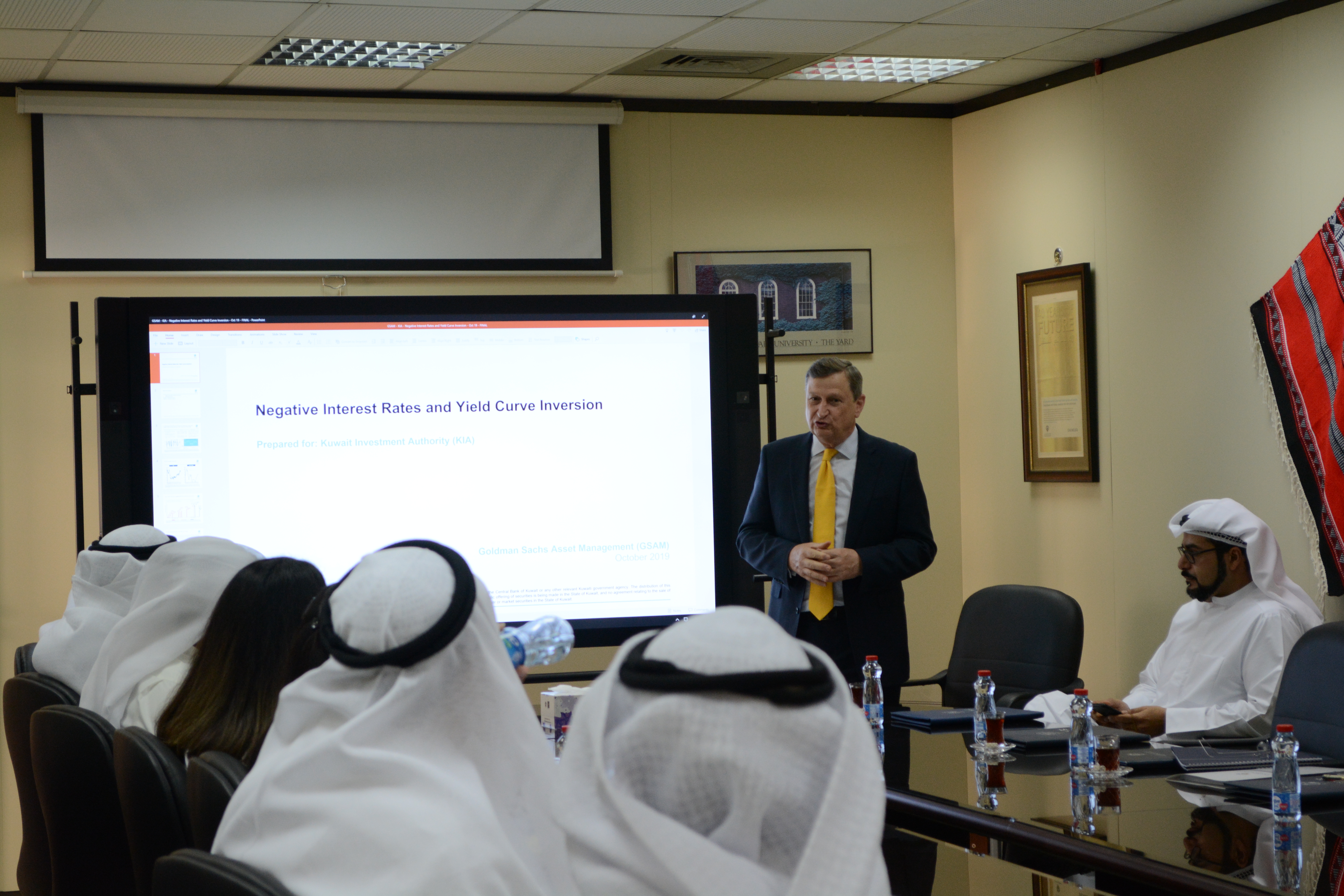
Goldman Sachs has launched a new office in Kuwait, asserting a significant push to enhance its reach across the Middle East and deepen its ties with Gulf-region clients under fresh leadership.

The New York-based investment bank said its role over five decades in Kuwait spans investment banking, capital markets and asset management. As part of its latest expansion, Goldman has tapped Mohammad Almatrouk as managing director of the Kuwait office, pending regulatory green light, while Fahad Alebrahim has been appointed managing director of the firm’s private wealth business in Kuwait.

David Solomon, Goldman Sachs’s Chairman and Chief Executive, framed the move as a commitment to “grow our capabilities across the Middle East and better serve our clients,” emphasising Kuwait’s economic vision as a catalyst for the firm’s expansion.

Goldman Sachs points to a long-standing capacity-building partnership in Kuwait that includes a professional training scheme designed to nurture talent at institutions such as the Kuwait Investment Authority, the Public Institution for Social Security and the Kuwait Fund. That programme, the bank says, will continue to play a central role in integrating local human capital into its global operations.

The choice of Kuwait underscores a growing focus on the Gulf’s institutional capital. Kuwait, host to one of the world’s largest sovereign wealth funds, has attracted global financial firms looking to align with its diversification and investment ambitions. Goldman Sachs’s decision follows earlier regional expansions, such as establishing a presence in Abu Dhabi and securing a banking licence in Saudi Arabia.

Kuwait’s Director General of the Direct Investment Promotion Authority, Sheikh Dr. Meshaal Jaber Al-Ahmad Al-Sabah, praised the move as aligned with Kuwait’s economic diversification and global integration goals. He stressed that opening the office supports national priorities including talent development and sustainable growth.

Regional analysts view Goldman’s Kuwait office as part of a broader recalibration by global banks to embed themselves closer to Gulf capital sources. Over the past two years, deal activity in sovereign and quasi-sovereign asset structures has exploded, prompting major firms including Lazard, JPMorgan and Deutsche Bank to expand in the Gulf with new leadership hires.

Inside Goldman Sachs, the timeline coincides with a leadership transition: the firm’s co-head for the Middle East and North Africa, Fadi Abuali, is slated to retire after nearly 28 years of service. His departure is expected to reshape the firm’s regional hierarchy just as Kuwait becomes a new hub.

Some observers caution the move carries execution challenges. Regulatory approvals in Kuwait must be secured, and Goldman must integrate the new office into its broader Gulf operations without duplicating functions. Success will depend on maintaining local relationships while delivering global platform advantages.

VISHNU RAJA
RYO YAMADA
HITORI GOTOH
IKUYO KITA