News related to
Operations

The Bank of England is evaluating the role of stablecoins in wholesale payments and tokenised asset infrastructure via its UK Digital Securities Sandbox, at a pivotal juncture for financial market innovation. Sasha Mills, Executive Director of Financial Market Infrastructure, outlined this approach during her keynote at City Week in London on 2 July. The central bank is focusing on blending stability, regulatory clarity, and interoperability as it reshapes post-trade and settlement systems.

Mills emphasised that the digitalisation of wholesale financial markets—driven by tokenisation, distributed ledger technology, smart contracts and programmable ledgers—has the potential to enhance market depth, reduce friction, and mobilise capital more efficiently. Yet she stressed that any emerging system must preserve the bedrock of financial stability: confidence in finality of settlement and risk parity across new and legacy platforms.

The Digital Securities Sandbox has emerged as a cornerstone of the Bank’s strategy. Since its inception, the sandbox has attracted both incumbents and new market entrants. A notable early application has been the UK Government’s Digital Gilt pilot—nicknamed DIGIT—where debt issuance occurs on a distributed ledger. Mills noted it has catalysed broader interest in using tokenisation to simplify asset mobility, enable intraday repo operations and improve collateral utilisation.

Crucially, the Bank is exploring the integration of stablecoins within this sandbox framework. While central bank money remains the preferred settlement asset, Mills described the Bank’s position as “open‑minded” to stablecoins’ potential utility in wholesale markets. The Bank plans to provide further clarity on stablecoin roles and standards later this year.

In its consultation approach to systemic stablecoins—launched with a discussion document in November 2023—the central bank is considering reforms such as permitting a percentage of reserves to be held in high-quality liquid assets, rather than unremunerated central bank balances. It is also contemplating transitional holding limits: for individuals, between £10,000 and £20,000; for businesses, up to £10 million. These measures aim to curb stability risks from sudden large outflows.

Beyond stablecoins, tokenised deposits are highlighted as a promising vehicle to merge regulatory safeguards of traditional deposits with the efficiency of real-time, on‑chain settlement. Mills confirmed the Bank is working to integrate tokenised deposits across DSS initiatives and its broader National Payments Vision.

Complementing these developments, the Bank continues to elevate its core infrastructure. Its Real‑Time Gross Settlement system is undergoing major upgrades under the RT2 programme. Upcoming enhancements include broader access, extended operating hours, and a synchronisation interface. This interface is designed to facilitate conditional settlement—in which transfers within the RTGS can be synchronised with transactions on external DLT systems.

The Bank has joined the BIS Innovation Hub’s DLT Innovation Challenge to test whether wholesale central bank money can be transacted and settled on external programmable ledgers. Mills described this as an experiment into how wholesale central bank monies, stablecoins, and tokenised deposits can co-exist safely.

The BoE maintains that a mixed infrastructure ecosystem—where traditional and emerging systems operate side by side—is the foreseeable outcome. Ensuring interoperability across public and private, permissioned and permissionless ledgers is essential to prevent liquidity fragmentation and support seamless transfer of capital. Public blockchains may offer connectivity solutions, provided they meet security and regulatory standards.

Mills cautioned that while technological adoption is important, regulators must integrate hard-earned lessons on confidence and stability. “Money requires confidence to support economic activity and growth in good times and bad,” she said, warning that failures in settlement finality could erode trust and trigger cascading market events.

With its “secondary innovation objective”, the Bank is actively reviewing existing regulations that pose barriers to digital finance, engaging continuously with industry participants. The DSS, tokenised deposits, upgraded RTGS, stablecoin framework, and experimental alignment with DLT signal a coordinated strategy to modernise UK wholesale finance.

ADNOC Gas has finalised a supply agreement worth 1.5 billion dirhams with Germany’s SEFE Securing Energy for Europe, signalling a significant push to reinforce the energy partnership between the UAE and European markets. The three-year contract will see ADNOC Gas deliver 0.7 million tonnes of liquefied natural gas, with shipments commencing this year from the Das Island liquefaction facility. The deal forms part of Europe’s broader strategy […]

Greenlogue/AP Abu Dhabi’s renewable energy developer Masdar and Spanish energy giant Iberdrola have announced a joint investment totalling €5.2 billion in the UK’s 1.4 GW East Anglia Three offshore windfarm. The project, located around 69 km off the Suffolk coast, will be equally co-owned—50:50—by both firms and supported by a €4.1 billion financing package arranged by 24 international banks. East Anglia Three forms part of a decade‑long partnership underpinned by a broader […]

HONG KONG SAR – Media OutReach Newswire – 11 July 2025 – Today, IX Asia Indexes announced the 2025 2nd quarter review of the ixCrypto Index Series and the IX Digital Asset Industry Index Series. The constituent changes will be implemented on the effective date of 18th July 2025 (Friday). The results of the constituent review and exchange review are as follows: 1. Constituent Review – ixCrypto […]

Air Arabia has recommenced double daily non‑stop flights between Sharjah and Damascus from 10 July 2025, marking a pivotal renewal of air connectivity between the UAE and Syria. The low‑cost carrier’s decision, following a suspension since 2012, responds to rising demand and broader regional diplomatic easing.

The carrier’s reinstated schedule includes two early departures from Sharjah at 04:15 and 10:45, landing in Damascus at 06:30 and 13:00, respectively. Return services depart Damascus at 07:30 and 14:00, arriving in Sharjah at approximately 11:40 and 18:10 local time. Utilising Airbus A320s and A321s, Air Arabia’s fleet will provide in‑flight entertainment via ‘SkyTime’, on‑board dining through ‘SkyCafe’, and loyalty benefits under its ‘Air Rewards’ programme.

During a launch ceremony at Sharjah International Airport, attendees included Adel Al Ali, Group CEO of Air Arabia, and Ali Salim Al Midfa, Chairman of Sharjah Airport Authority, indicating the route’s strategic significance. A reception at Damascus International Airport featured UAE Ambassador Hasan Ahmed Mohammed Sulaiman Alshehhi and Syria’s Chargé d’Affaires Ziad Yahya Zaher Edin.

CEO Al Ali emphasised the route’s importance in serving the substantial Syrian diaspora in the UAE, estimated at over 350,000 individuals, and facilitating enhanced travel for business, tourism, and family visits. He remarked, “This route holds particular significance in serving the Syrian diaspora in the region and meeting the growing travel demand between the UAE and Syria.” The airline anticipates this service will bolster trade ties, with bilateral trade having reached US $680 million in 2024—a 23 percent increase over 2023.

Air Arabia’s restoring of direct flights aligns with a wider trend of regional airlines re‑engaging Syria. Emirates is scheduled to recommence services to Damascus from 16 July, expanding to daily flights by October. Flydubai resumed operations on 26 June. Additionally, national carrier Syrian Air has restarted several regional services since January, while Qatar Airways reinstated a Doha‑Damascus route in early January. Turkish budget airline Anadolu Jet launched flights from Istanbul and Ankara in April.

Damascus International Airport itself underwent closure during an opposition offensive in December 2024, later reopening with limited commercial flights. Full international traffic resumed in January 2025, with renovation support from Turkey in February.

The renewal of these services carries deeper geopolitical significance, reflecting a subtle shift in diplomatic engagement with Syria. In April, the UAE’s General Civil Aviation Authority formally lifted suspensions on flights to Syria, and UAE‑Syrian ministerial talks have since addressed aviation, banking, and consular matters.

Travel agents and industry analysts have interpreted the move as a calculated expansion of Air Arabia’s network, offering cost‑conscious alternatives to Gulf‑Europe‑Syria itineraries, especially for the UK and Europe‑based Syrian diaspora. The airline’s fare structure and twice‑daily service are expected to attract both long‑standing diaspora links and emerging trade flows.

Independent aviation analysts note that Air Arabia’s streamlined operations, lean cost base, and digital platform—covering bookings via website, app, call centre, and travel agencies—are key competitive advantages. The company now serves more than 90 global destinations, including recent additions such as Sochi, Prague, and expansion within Russia and Europe.

Despite the optimism, security concerns remain. Damascus Airport was only partially reopened in January, and while the civil aviation authority has announced upgrades, full operational stability depends on infrastructure restoration and geopolitical calm. Some observers caution that air travel to Syria may still face intermittent regulatory or safety challenges, advising prospective travellers to monitor advisories and airlines’ updates closely.

Nevertheless, the resumption of the Sharjah–Damascus route represents a turning point for mobility in the region. By restoring a decade‑long link, Air Arabia reinforces its position as a catalyst for regional integration and economic exchange, while filling a transport gap for displaced communities and traders across the Gulf.

Nigeria has secured a $747 million syndicated loan, led by Deutsche Bank, to fund the initial 47.47‑kilometre phase of its flagship coastal highway spanning from Victoria Island to Eleko Village in Lagos. The Ministry of Finance confirmed the financing on Wednesday, marking a record for road infrastructure funding in the country. Lenders in the syndicate include First Abu Dhabi Bank, African Export‑Import Bank, Abu Dhabi Exports Office, ECOWAS […]

The Indian Institute of Technology Delhi has teamed up with TeamLease EdTech to introduce a 24‑week online executive programme in artificial intelligence for healthcare professionals. With live weekend sessions, hands‑on projects and mentorship from leading faculty, the course is scheduled to begin on 1 November 2025, and admissions are open until 31 July 2025.

The programme aims to equip clinicians, engineers, data scientists and med‑tech entrepreneurs with a robust understanding of AI applications across healthcare domains including diagnostics, imaging, risk scoring, hospital operations and public health analytics. Course modules cover foundational topics such as machine learning, deep learning, big data and IoT monitoring of patient data, before progressing to advanced concepts like natural language processing for electronic health records, predictive analytics and AI‑powered dashboards.

Classes will be conducted entirely online on weekends to accommodate working professionals, and participants will work with real clinical datasets and hospital data systems. A capstone project, mentored by IIT Delhi faculty and experts from AIIMS and the med‑tech industry, will enable learners to build deployable AI tools under guidance.

Fee structure is set at ₹1.20 lakh plus 18 per cent GST, payable in two instalments. Eligibility extends to any graduate professional working in healthcare, research, industry or academia with interest in AI, and no prior coding experience is required.

Officials emphasise that AI has moved from optional to essential in modern medicine. Professor Manav Bhatnagar, Head of the Continuing Education Programme at IIT Delhi, highlighted the institute’s goal to develop “next‑gen capabilities that respond to evolving healthcare needs”, adding that the programme will empower professionals to lead this transformation. Shantanu Rooj, Founder and CEO of TeamLease EdTech, noted that the collaboration bridges clinical knowledge and data intelligence to create impactful healthcare solutions.

External analysts point to broader global trends behind the move. The World Economic Forum estimates that AI could add over US $150 billion annually to global healthcare economies through enhanced efficiency and patient outcomes. In India, NITI Aayog and EY forecast the digital healthcare market—driven by AI diagnostics and telemedicine—to exceed $37 billion by 2030.

The curriculum is divided into several thematic blocks: foundational AI methods; clinical and hospital data analytics; predictive modelling; medical imaging and automation; IoT‑based monitoring; EHR and NLP; public health analytics; and design of dashboards and decision‑support tools. Over 10 case studies and numerous hands‑on exercises will ensure participants not only learn theory but also apply skills to real‑world challenges.

On completion, alumni can explore roles such as AI/ML Engineer developing diagnostic models; Healthcare Data Scientist analysing clinical datasets; Clinical AI Researcher validating AI systems in hospital settings; Digital Health Consultant guiding AI adoption; Medical Imaging Analyst interpreting scans; AI Product Manager in health‑tech; or Regulatory/Data Governance Specialist ensuring compliance.

The weekend‑only format promises greater flexibility for busy professionals, with interactive live sessions and opportunities to network with CIOs, med‑tech founders and industry experts. TeamLease EdTech will support the programme delivery and student success, integrating technology platforms with IIT Delhi’s academic oversight.

Applications close on 31 July 2025. The programme will run from 1 November 2025 through early May 2026. Prospective applicants are directed to IIT Delhi’s Continuing Education Programme portal for registration and scholarship information.

This launch positions IIT Delhi and TeamLease at the forefront of AI‑driven healthcare education, anticipating a future where data intelligence plays a transformative role in patient care, system efficiency and population health outcomes.

Advertisements

MUNICH, GERMANY – NEWSAKTUELL – 10 July 2025 – The Supervisory Board of TÜV SÜD AG has appointed Ishan Palit, former Asia Pacific CEO, as Interim Chief Executive Officer (Chairman of the Board of Management) effective July 15, 2025, following the announcement that Dr. Johannes Bussmann will be stepping down to become CEO of MTU Aero Engines AG. Johannes Bussmann will leave TÜV SÜD on July 14, […]

Behomes is announcing the launch of its new mobile app — Behomes Hub — created to connect real estate professionals, streamline day-to-day operations, and unlock new income opportunities in the UAE property market. Core features include a professional social network for agents, brokers, developers, and investors, as well as access to exclusive service referral programs with high-value cashback. “Our mission is to support every real estate professional […]

For the winners of the 2025 Golden Bull Award, the answer is clear: vision, agility, and a drive to challenge the norm. KUALA LUMPUR, MALAYSIA – Media OutReach Newswire – 10 July 2025 – These are high-performing companies and trailblazers. This year’s winners are leading the way through innovation, from adopting AI and strengthening cybersecurity to integrating ESG values into their core operations. They show us that […]

SINGAPORE – Media OutReach Newswire – 10 July 2025 – To celebrate Singapore’s SG60 milestone, Chevron Singapore, which operates the Caltex retail brand, has launched a limited-edition SG60 picnic set comprising a picnic box and two chairs. Designed to enrich Singaporeans’ upcoming National Day celebrations while fostering a sense of local community spirit, these unique items will be available for purchase at all 26 Caltex stations nationwide […]

Accra Regional Police have arrested Emmanuel Akanpatiba, a principal figure in a motorbike theft syndicate accused of stealing at least 12 motorbikes across the region. The arrest marks a significant breakthrough in a complex network operating within Accra’s metropolitan zones. Police said Akanpatiba was detained on 24 June following a tip-off after a red Royal motorbike—registration M‑25 CW 367—was reported stolen from a Madina residence. The arresting team acted […]

DoubleDown Interactive has struck an agreement to acquire Hamburg-based WHOW Games GmbH for €55 million, plus up to €10 million in performance-linked earn‑outs, in a move to deepen its foothold in Europe’s expanding social casino market. The transaction, financed from existing cash reserves, is slated to finalise in the third quarter of 2025. The licensing deal, part of a Share Purchase and Transfer Agreement with Azerion Tech Holding B. […]

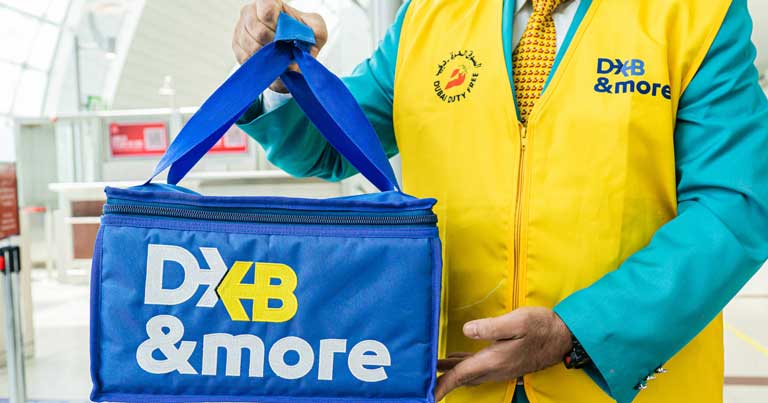
Dubai International Airport has introduced DXB Greet & Go in Terminal 3, revolutionising the way arrivals are greeted. Licensed hotels, tour operators and transport providers can now tap QR codes—replacing traditional placards—to meet guests efficiently in a dedicated arrivals area.

The initiative, officially live since early July, provides an authorised meeting zone designed to improve passenger flow and elevate hospitality standards. Dubai Airports has established this as part of its strategy to ease congestion and reduce stress at peak arrival times.

This digital-first service streamlines the reception experience: instead of waiting among crowds, drivers and host staff now scan pre-shared QR codes, guiding travellers directly to designated areas where they are met by clear signage. The system aligns with security protocols while offering better clarity and comfort.

Industry observers describe DXB Greet & Go as another milestone in Dubai’s automation and smart-performance ambitions. It complements prior enhancements—like biometric Smart Tunnels and QR-code navigation tools—designed to process high passenger volumes more swiftly while preserving a premium touchpoint.

Key regional operators have already registered. A senior operations manager at one of Dubai’s leading hospitality chains noted guest satisfaction has improved, citing fewer missed connections and faster handovers. Dubai Airports spokesperson emphasised that launch partners are primarily “licensed entities” committed to seamless, branded guest engagement.

Compliance and coordination with security teams were paramount in crafting the scheme. The dedicated meeting point follows stringent screening criteria and maintains oversight from airport operations, ensuring guest meets do not impinge on wider terminal safety. It also alleviates footfall in busy corridors, especially during peak periods.

Analysts see branding and service quality benefits. Sharply reducing wait times at arrivals enhances early impressions for high‑value guests, business travellers and VIPs—key revenues for both hotels and airport retail operators. And as QR-based systems gain traction worldwide, DXB’s approach may offer a replicable benchmark for other global gateways.

Passengers have already reported smoother arrivals. A recent poll by a GCC‑based travel blog found that 87 percent of users appreciated the clarity of designated zones and reduced crowding. Several said using the service felt more “personalised and modern”, aligning with expectations for a luxury travel experience.

Onboarding requires minimal effort: partners register via Dubai Airports’ platform, receive official QR codes linked to flight details, and station meeting personnel accordingly. QR scanning synchronises with flight schedules, activating the service only once the flight has landed and passengers have disembarked.

Dubai Airports reports the system has quickly gained traction among boutique hotels and VIP ground handlers, with expansion plans underway. Terminal 3—the main hub for Emirates—is expected to expand the service across other terminals if demand continues.

The move also integrates with existing smart journeys like DXB Express Maps, enabling visitors to navigate lounges, shops and gates by QR scanning digital kiosks. The combined effect is a frictionless experience from landing to departure, supporting ambitions to top 100 million annual passengers.

Shares of Nissan Motor Co. dropped sharply following the firm’s decision to increase its convertible bond issuance to ¥200 billion, up from the initially announced ¥150 billion. The company cited strong investor demand during the book-building process as justification for the upsized deal, though market reaction suggests heightened concerns over shareholder dilution. This convertible debt forms a key part of Nissan’s broader funding strategy, which includes a planned $4 billion […]

SUSE has unveiled its Sovereign Premium Support, a support service designed to meet stringent demands for digital sovereignty across the European Union. Named as such to reflect both its locality and commitment, the service offers EU-based support engineers and service managers, along with data storage confined to networks within the EU, guaranteeing compliance with regional regulations and data privacy expectations. Geopolitical shifts, evolving regulations and rising concerns […]

Asia‑Pacific digital‑native firms attracted USD 15.4 billion in artificial intelligence investment in 2024, a figure reported by IDC that underscores a shift towards deeper commitments and strategic growth, even as the volume of deals declined.

Capital concentration has intensified as larger funding rounds become the norm. IDC analysts found that while the number of funded AI startups has dropped, the average investment per deal has risen markedly—reflecting investors’ preference for enterprises closer to market maturity rather than early-stage ventures.

China, South Korea, Japan and India remain at the forefront of investment flows. These major markets, with their diverse tech ecosystems and supportive policies, continue to lead, though Southeast Asian nations are gaining traction as both AI adopters and innovators.

Generative AI, a wave propelled by breakthrough models in natural-language processing and image creation, is swiftly ascending as the dominant investment theme across Asia‑Pacific. IDC forecasts that GenAI allocations will more than double by 2028, reaching USD 54.5 billion and forging a new frontier for enterprise transformation.

There is mounting evidence that corporations are pivoting from rhetoric to implementation. Only 29 percent of digital‑native businesses have scaled AI organisation‑wide, yet more than 42 percent now actively pursue co‑innovation partnerships with technology vendors to integrate AI across operations. These collaborative efforts are reshaping collaboration models between AI startups and incumbents.

Costs associated with infrastructure and data security continue to shape investment flows. Enterprise-grade AI demands not only computational muscle but also robust governance frameworks to mitigate risks such as bias, intellectual property leakage and regulatory non‑compliance. Data from the region show that 34 percent of organisations have embedded governance within generative AI software development, an advanced step beyond policy‑level oversight.

Cloud infrastructure providers are doubling down on AI support across Asia‑Pacific. Amazon Web Services announced a USD 13 billion expansion in Australia and over USD 5 billion for a Taiwan region, alongside large‑scale investments in Singapore, Malaysia and Japan. AWS claims the region’s cloud spending will reach USD 250 billion in 2025, largely driven by AI demands.

This inflow of cloud capital is critical in overcoming entry barriers. Local language support, data sovereignty and integration capabilities have become competitive differentiators for these platforms—Microsoft Azure, Google Cloud and Alibaba Cloud are aggressively pursuing similar capacity expansion. Southeast Asia, in particular, is emerging as the fastest–growing regional cloud market globally.

Startups are adapting to investors’ sharper focus on maturity and scalability. Fewer low‑valuation seed rounds are appearing; instead, late‑stage funding for companies with clear product‑market fit, real revenue streams and enterprise traction is dominating. This trend reflects an increasingly risk‑averse capital environment that emphasises depth over breadth.

The build‑up of AI infrastructure is dovetailing with rising regulatory attention. With supervision frameworks being rolled out around sensitive sectors such as finance and healthcare, investors are seeking startups equipped with compliance capabilities. For instance, financial‑services firms are prioritising traceability and governance as mission‑critical components for future‑ready AI deployment.

In geographical terms, growth hotspots vary by stage of AI ecosystem development. China leads in institutional funding and government-backed initiatives. Japan and South Korea benefit from combined strengths in industrial automation, robotics and semiconductor production. India’s vibrant startup landscape is gaining attention, particularly in generative AI and enterprise software. Meanwhile, nations such as Indonesia and Malaysia are attracting more attention as AI adoption becomes a priority for government digitalisation agendas.

Challenges persist. High‑cost infrastructure, skilled‑talent shortages and fragmented regulatory regimes pose constraints. Yet the rise of public‑private coalitions and university‑industry alliances is beginning to address these gaps—skills acceleration programmes are proliferating, and data‑sharing frameworks are gaining traction.

Investors are now looking past headline metrics to evaluate alignment with national AI strategies, such as Japan’s AI strategy and India’s push for indigenous innovation. Locally relevant models—capable of understanding linguistic diversity, cultural contexts, and industry‑specific workflows—are increasingly being favoured over globalised, one‑size‑fits‑all solutions.

This funding environment has spurred momentum in adjacent areas. Edge computing, AI‑enabled cybersecurity, AI‑driven supply‑chain optimisation and health‑tech verticals are emerging as new battlegrounds for both startups and incumbents. These sub‑domains are drawing fresh rounds of investment and pilot partnerships.

Policy trends are also influential. Governments across Asia‑Pacific are advancing data protection frameworks, AI ethics norms and public‑sector adoption plans—all contributing to clearer roadmaps for private‑sector engagement. The interlinking of regulatory reform and capital deployment is strengthening ecosystem resilience.

Investor sentiment remains cautiously optimistic. Surveys suggest that, despite macroeconomic headwinds and geopolitical risk, most executives view cloud and AI as avenues to cost reduction, efficiency gains and differentiation. As AWS’s APAC vice‑president remarked, “AI is the biggest market opportunity since cloud in 2006,” signalling sustained confidence in long‑term upside.

Female MDRT Continues to be Market No. 1 AIA Macau MDRT Market No. 1 for 7 Years HONG KONG SAR – Media OutReach Newswire – 9 July 2025 – AIA Hong Kong & Macau have once again led the industry in the latest Million Dollar Round Table (MDRT) membership rankings. AIA Hong Kong continues to lead globally, securing four No. 1 positions, including top rankings in both […]

By Dr. Gyan Pathak Though on the eve of the workers’ all India general strike on July 9, 2025, Union Ministry of Labour, Government of India, tried to downplay the strike action by claiming that213 unions had informed of their staying away from the strike, India actually witnessed on Wednesday the largest ever general strike […]


Emirates Airline has formalised a strategic alliance with Crypto. com aimed at integrating Crypto. com Pay into its digital payment systems, underscoring a strong commitment to security and regulatory compliance. The partnership, set to activate next year, was marked by a Memorandum of Understanding signed by Adnan Kazim, Emirates’ Deputy President and Chief Commercial Officer, alongside Mohammed Al Hakim, President of Crypto. com’s UAE operations. The signing took place under the witness of Sheikh Ahmed bin Saeed Al Maktoum, Chairman and Chief Executive of Emirates Airline & Group, and Michael Doersam, Emirates’ Chief Financial & Group Services Officer.

Emirates’ leadership highlighted the rationale behind the move: embracing the growing demand among tech-savvy travellers and aligning with Dubai’s broader ambition to lead in financial innovation. Adnan Kazim emphasised the airline’s dedication to “meeting evolving customer preferences” and offering travelers more flexibility in payments. The integration also positions Emirates to engage with a younger demographic increasingly comfortable with digital currencies.

Crypto. com echoed this forward-looking sentiment. Eric Anziani, President and COO, described the agreement as a catalyst for wider cryptocurrency adoption in consumer finance. He welcomed Emirates as “an exceptional partner,” stressing that the integration will push momentum across the digital asset sector in the Gulf region.

The MoU outlines not only the technical integration of Crypto. com Pay but also joint marketing initiatives to increase awareness and encourage uptake. Emirates and Crypto. com intend to launch promotional campaigns aimed at customers, educating them on the convenience and security of paying with digital assets.

This collaboration reflects a broader trend within the UAE, where regulators have implemented a notable framework to encourage blockchain innovation while maintaining robust investor protection and financial system integrity. Dubai, in particular, has seen a surge in cryptocurrency utility across multiple sectors, including property, retail, and telecommunications. The MoU aligns with this ecosystem, reinforcing Dubai’s vision to be a global hub for crypto innovation.

Financial experts observing the region note that infrastructure investments, regulatory clarity, and consumer interest have driven a significant crypto inflow—valued at approximately US$34 billion between July 2023 and June 2024—suggesting strong institutional confidence. Adoption of digital payments by major consumer-facing corporations such as Emirates is seen as a transformative step in normalising cryptocurrencies as mainstream payment options.

Emirates’ approach to this partnership has been cautious yet calculated. Emphasis on security, compliance, and regulatory alignment indicates a measured strategy that places integrity at the forefront. The airline assures customers that the integration will meet “the highest security and compliance standards,” a crucial reassurance in light of global scrutiny surrounding crypto-related risks.

This is not Emirates’ first foray into strategic payment alliances. Earlier this year, the airline partnered with American Express Middle East to enhance offerings for small and medium‑sized enterprises across the Middle East and North Africa regions. The Crypto. com collaboration signals a parallel move into the emerging digital asset sphere, indicating Emirates’ growing appetite for financial innovation beyond traditional banking channels.

Industry analysts observe that including crypto payments could broaden Emirates’ appeal among adventurous travellers and those engaged in the digital economy. For Crypto. com, the partnership adds to a burgeoning presence in the GCC, enabling the company to showcase real-use cases with a prestigious flag-carrier.

The path ahead involves critical integration steps, including system upgrades, staff training, customer education, and regulatory coordination. Both parties have set a goal for full deployment by next year, providing a practical timeline for technology deployment and market engagement strategies.

SINGAPORE – Media OutReach Newswire – 9 July 2025 – PROPEL with Singlife, the one-stop shared services hub for financial advisory firms, has been named the winner of the highly coveted Insurtech Initiative of the Year – Singapore award at the 10th Insurance Asia Awards, in recognition of its contributions to the insurance industry in Singapore. This accolade – a first for PROPEL since its official launch […]

U. S. President Donald Trump has announced a sweeping 50 % tariff on copper imports, jolting commodity markets and triggering sharp moves across financial sectors. Copper futures in the United States surged to record highs, while international benchmarks in London and Shanghai retreated under mounting uncertainty surrounding shipment logistics and timing. At a Cabinet meeting, Trump confirmed the unprecedented levy, citing national security and a desire to bolster […]

Al Ansari Financial Services has disclosed that on Saturday 5 July, its subsidiary Al Ansar Exchange encountered a technical anomaly that resulted in the unintentional transfer of funds to a small number of customer accounts. The company said that their teams acted swiftly to locate and recover “the vast majority” of the erroneously transferred amounts. The incident did not interrupt the company’s routine operations, and Al Ansari stated that daily transactions proceeded […]

Continues to see strong growth in traditional powerhouse sectors such as automotive, technology and e-commerce Sees new opportunities in Malaysia for growth in life sciences and healthcare as well as new energy DHL is well-positioned to support Malaysia’s trade and logistics ambitions with expanded investments and capabilities KUALA LUMPUR, MALAYSIA – Media OutReach Newswire – 9 July 2025 – DHL, the world’s leading logistics provider, has reaffirmed […]

VISHNU RAJA
RYO YAMADA
HITORI GOTOH
IKUYO KITA