Just in:
ADIA and partners establish $1.4 billion aviation venture // U.S. Mid Term Result Is A Clear Verdict Against Trump’s Authoritarianism // Asia Left Behind: Ten international companies have yet to report delivering on their cage-free egg pledges across the region // Pinarayi faults UDF over mounting road crashes // Burying Head In “India Made Poverty Reduction” Data Is Dangerous // Vance attributes Republican midterm defeats to Iran conflict // As AI Reshapes Education, Singapore Convenes Global Dialogue on the Future of Early Childhood Education // DIP Holding targets Dh1.12 IPO price and $529m proceeds // Govt opposes Arlekar’s PSC action // Cyberport Venture & Capital Forum 2026 Grand Opening // SC to examine students’ exam plea today // Emirates Group records AED 4.1 billion half-year profit // xCube Access Welcomes Entrust Capital Limited  Expanding Access to Professional Portfolio Management // Democrats capture Senate majority with seven Republican seats // Fast Just Got Fastest: STING Energy Boost™ Celebrates Kimi Antonelli’s Formula 1® World Championship and the Fan Energy Behind It // Democrats secure Senate majority after Republican election losses // BJP’s Aggressive Response Exposes Anxiety Over Opposition Unity // ADIPEC leaders urge investment in global energy networks // Vingroup And Legends Global Announce Strategic Partnership For VinFast – Trong Dong Stadium // Arrow Electronics showcases technologies advancing intelligent robotics, mobility and digital infrastructure //

News related to
Operations

Arabian Post Staff -Dubai Central Bank of the UAE has appointed financial software group VERMEG to develop a central securities depository solution, a move that places the monetary authority more directly inside the country’s post-trade market infrastructure and signals a broader push to tighten the links between payments, settlement and capital markets. The announcement was made on 13 April, with CBUAE saying the project is intended to […]

Japan will release an additional 20 days’ worth of oil reserves from May as Tokyo tries to shield domestic fuel supplies from continued disruption in the Middle East and reduce its exposure to shipments that pass through the Strait of Hormuz. Prime Minister Sanae Takaichi told a cabinet meeting on April 10 that the move would come from the public stockpile, adding to emergency releases already under way since mid-March.

The decision marks a further escalation in Japan’s energy contingency response at a time when the Strait of Hormuz remains under severe strain despite a two-week ceasefire between the United States and Iran. The waterway is one of the world’s most important oil chokepoints, and its disruption has hit Japan especially hard because the country depends on the Middle East for about 95% of its oil imports. Takaichi’s government has been racing to prevent shortages, stabilise prices and reassure refiners, transport operators and households that fuel will continue to flow.

Tokyo had already moved ahead on March 16 with the release of reserves equivalent to 50 days of consumption, combining privately held stocks with state reserves and supplies jointly held with producing nations. That initial step was announced before a formal coordinated action by the International Energy Agency, underscoring the urgency felt by Japanese officials as tanker traffic through Hormuz became severely constrained. The new plan adds another layer of insurance rather than replacing the earlier programme, signalling that authorities believe the market shock may last longer than first expected.

Officials say Japan still has considerable room to act. As of April 7, the country held reserves covering 228 days, including 143 days in the public stockpile. That buffer gives policymakers flexibility, but it also reflects the scale of the threat they see. Refiners have already been forced to adjust operations as crude availability tightens, and the government is attempting to manage not only total supply but also how fuel is distributed across the country. Concerns have centred on keeping essential sectors supplied first, particularly healthcare, transport, agriculture, fisheries and livestock production.

Japan’s strategy goes beyond drawing down reserves. Takaichi said the government expects that by May more than half of oil imports will be secured through routes that do not involve the Strait of Hormuz. That shift is central to Tokyo’s effort to avoid becoming hostage to a single maritime corridor while conflict risk remains elevated. Officials have not identified every supplier publicly, but the Ministry of Economy, Trade and Industry has indicated that Japan is seeking alternative barrels from a wide range of countries, including Malaysia, Azerbaijan, Brazil, Nigeria and Angola.

The United States is set to play a larger role in that reshaping of supply. A ministry document cited by Reuters said oil imports from the US in May would be four times higher than a year earlier. Japan imported about 189,000 barrels a day from the US in May last year, equal to roughly 8% of total crude purchases for that month. Tokyo is also drawing on Middle East supplies that can bypass Hormuz, including shipments from Saudi Arabia’s Red Sea outlet at Yanbu and from Fujairah in the United Arab Emirates. Those routes do not eliminate vulnerability, but they reduce reliance on the narrow strait at the centre of the crisis.

Domestic politics and inflation pressures are also shaping the response. Takaichi has paired the reserve releases with fuel price measures meant to keep retail gasoline around a nationwide average of ¥170 a litre, even if crude prices remain elevated. Officials have warned that a prolonged supply shock could otherwise push pump prices much higher and strain households as well as businesses already dealing with cost pressures. Finance Minister Satsuki Katayama has also flagged the fiscal burden of existing subsidy measures, suggesting that energy security is becoming not only a supply issue but a budgetary one.

Arabian Post Staff -Dubai Saudi Arabia has restored full pumping capacity on its East-West pipeline to about seven million barrels a day, reactivating a strategic export artery that has become central to global crude flows during the disruption of shipping through the Strait of Hormuz. The Ministry of Energy said operational and technical teams brought the line back to full strength within days of attacks that had […]

Two empty supertankers heading towards the Persian Gulf reversed course near the Strait of Hormuz on Sunday, underscoring how quickly shipping sentiment can turn when diplomacy falters in one of the world’s most sensitive energy corridors. The movements came as talks between Washington and Tehran in Islamabad ended without agreement, leaving a fragile ceasefire under strain and traders, shipowners and refiners facing renewed uncertainty over access to […]

Arabian Post Staff -Dubai   Saudi Arabia Railways has launched five new logistics routes aimed at accelerating cargo movement between Gulf ports, inland industrial centres and cross-border markets, in a move designed to strengthen the Kingdom’s position in regional and international trade. The new network combines rail and road links, tying Arabian Gulf gateways to central and northern regions, with onward access to the Red Sea and […]

Hackers posing as trusted messaging and communications services have mounted a sustained surveillance campaign across the Middle East and North Africa, using fake app pages, phishing domains and a custom Android spyware known as ProSpy to target journalists, activists and political figures, according to a joint body of research published this week by Lookout, Access Now and SMEX. The operation, active since at least 2022 and documented […]

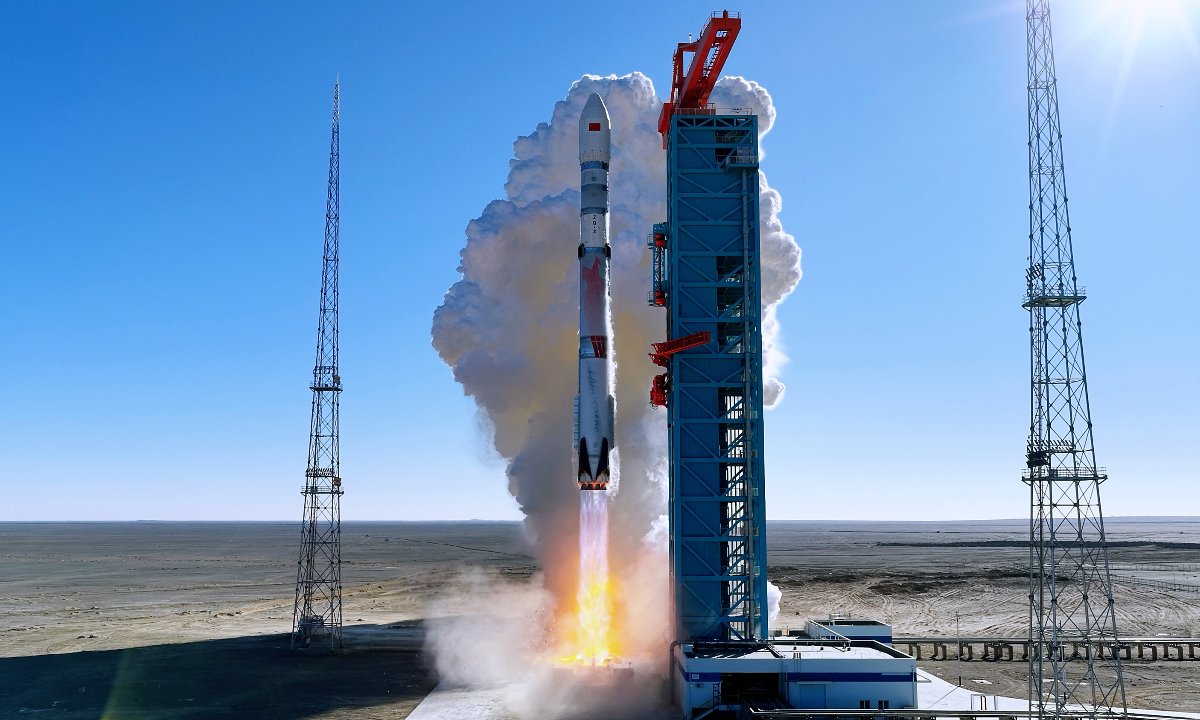
Beijing has pushed its reusable space programme a step further with the launch of an experimental spacecraft that state media described as a technology-verification mission, underlining how the country is trying to cut launch costs, raise flight tempo and broaden the range of missions it can carry out in orbit. The spacecraft was launched on 7 February aboard a Long March-2F rocket from the Jiuquan Satellite Launch Center in northwest China, in what was the fourth publicly disclosed mission of this type since 2020.

Chinese authorities released only a brief account of the flight, saying the spacecraft would verify reusable-spacecraft technologies and support the peaceful use of space. No official duration was given, and no details were provided on the systems being tested, the orbit reached or the vehicle’s configuration. That secrecy has become a hallmark of the programme and makes it difficult to judge exactly how far the technology has advanced, but the pattern of repeated flights suggests a sustained effort rather than a one-off demonstration.

Chronology matters here. China’s first disclosed flight in September 2020 lasted about two days. A second spacecraft launched in August 2022 stayed in orbit for 276 days before landing in May 2023. A third mission, launched in late 2023, returned in September 2024 after 268 days in orbit. Those longer flights point to growing confidence in long-duration autonomous operations, recovery procedures and mission endurance. Outside observers have often compared the craft with the United States’ X-37B-style approach to reusable uncrewed orbital vehicles, though Beijing has not publicly confirmed such comparisons.

This mission also fits into a much wider acceleration in Chinese space activity. On 7 April, China used a Long March-8 rocket from the Hainan commercial launch site to place 18 internet satellites into orbit for the Qianfan constellation. On 11 April, it carried out a sea launch using a Smart Dragon-3 rocket from waters off Guangdong, sending up a test satellite aimed at supporting satellite internet technology. Taken together, those launches show a programme expanding on several fronts at once: reusable vehicles, commercial launch infrastructure and large low-Earth-orbit communications networks.

Beyond low-Earth orbit, China is tying these advances to a broader national space agenda. Beijing is aiming for a crewed lunar landing by 2030 and is developing the Long March-10 rocket, the Mengzhou spacecraft and the Lanyue lunar lander for that effort. At the same time, the Chang’e-7 lunar probe is scheduled for launch in the second half of 2026. That means the reusable-spacecraft programme should be viewed less as an isolated experiment than as one part of an expanding architecture that spans launch systems, spacecraft design, lunar exploration and space-based connectivity.

Money and industrial policy are also shaping the picture. Reuters has reported that Beijing is funnelling more support towards private launch companies as it tries to build capacity for large satellite constellations and reduce reliance on state-owned providers alone. CAS Space has targeted fresh capital for reusable rocket research, while LandSpace and other firms are also turning to capital markets. Separate policy changes have given reusable-rocket developers a faster route to listing, provided they meet technical milestones, showing how closely commercial launch activity is now aligned with national strategic goals.

Yet the programme’s momentum should not be mistaken for mastery. China is advancing, but it is still chasing a lead established by SpaceX in frequent booster recovery and reflight. On 3 April, Space Pioneer said the maiden flight of its Tianlong-3 reusable rocket had failed, and Reuters reported that no Chinese firm had yet demonstrated the ability to recover and reuse a rocket’s main stage. LandSpace plans another recovery test for its Zhuque-3 rocket this year, while the Long March-12B reusable rocket completed a static firing test in January ahead of later flight missions. Progress is visible, but so are the engineering gaps.

Advertisements

More than 5,000 Rockwell Automation and Allen-Bradley programmable logic controllers are exposed to the public internet, sharpening concern across United States critical infrastructure as federal agencies warn that Iran-affiliated cyber actors are actively targeting such devices. Security researchers at Censys said they identified 5,219 internet-exposed hosts globally that responded as Rockwell or Allen-Bradley systems, with nearly three quarters of them located in the United States. The warning […]

Commercial artificial intelligence tools were used as operational components in a cyber campaign that hit nine Mexican government organisations, according to a full technical report published by Gambit Security, which said the intrusion ran from late December 2025 to mid-February 2026 and exposed hundreds of millions of citizen records. The report says Anthropic’s Claude Code generated about three-quarters of the remote command activity, while OpenAI’s GPT-4.1 was […]

Three ransomware operations — Qilin, Akira and DragonForce — were behind 40% of the 672 attacks logged worldwide in March, according to Check Point Research, highlighting how a criminal market that still looks fragmented on the surface is being pulled by a smaller group of high-output players. Check Point said Qilin accounted for 20% of published attacks, Akira 12% and DragonForce 8%, while 47 separate groups were […]

Arabian Post Staff -Dubai Abu Dhabi will bring back its flagship infrastructure gathering in a larger format next month, with organisers casting the 12-14 May event as a platform to push smart, sustainable and people-centred urban development at a time when the emirate is moving ahead with one of the region’s biggest public project pipelines. The Abu Dhabi Infrastructure Summit, hosted by the Abu Dhabi Projects and […]

Samsung Electronics is weighing a semiconductor packaging and testing project in Vietnam that could be valued at about $4 billion, a move that would deepen the country’s role in the global chip supply chain and expand Samsung’s manufacturing base in one of its most important overseas hubs. Reporting over the past two days has shown that the company is discussing a semiconductor project with Vietnamese authorities, while […]

Enhanced Labs has raised $1 million in a strategic pre-seed round as the decentralised finance startup seeks to widen access to structured yield products built on options and derivatives, moving beyond large crypto tokens towards a broader set of on-chain assets that includes tokenised real-world assets. The round was led by Maximum Frequency Ventures, with GSR, Selini, Flowdesk and angel investors also taking part, according to company […]

Arabian Post Staff -Dubai Saudi Arabia has moved to raise its profile in global data governance after the Saudi Data and Artificial Intelligence Authority, known as SDAIA, said it had joined the Global Privacy Assembly, a forum that links privacy and data protection authorities worldwide. The step puts the Kingdom’s privacy regime more visibly alongside international rule-setting efforts at a time when Riyadh is pushing digital government, […]

Arabian Post Staff -Dubai RAK Ceramics has moved to reassure customers, contractors and distributors that its operations across the UAE and the wider region remain uninterrupted, saying access across its customer network is continuing without disruption across both retail and project channels. The statement comes at a time when businesses across the Gulf are paying closer attention to logistics resilience, input costs and delivery schedules amid wider […]

Agentic AI is moving from pilot projects into mainstream corporate workflows, forcing boards and security teams to treat these systems less like software features and more like outside operators with broad access to data, tools and decisions. What changes the risk profile is not only the model itself, but the autonomy layered around it: agents can plan tasks, call other applications, handle credentials and act across systems […]

Arabian Post Staff -Dubai Saudi supply lines face deeper strain Attacks on Saudi energy facilities have knocked about 600,000 barrels per day from the kingdom’s oil production capacity and cut throughput on the East-West Pipeline by roughly 700,000 bpd, according to Saudi state media citing an Energy Ministry official, in a blow to the world’s top oil exporter at a time when its western pipeline route has […]

Russia said on Thursday that President Vladimir Putin had ordered a temporary ceasefire in Ukraine over Orthodox Easter, casting the move as a humanitarian gesture and urging Kyiv to follow suit, even as both sides remained deeply sceptical that any holiday pause would materially change the course of the war. The Kremlin said Russian forces were to halt combat operations from 4 p. m. on Saturday, April […]

Arabian Post Staff -Dubai Dubai Police said it helped dismantle the Lyons Clan, a violent Scottish criminal network accused of drug trafficking and money laundering across Europe, the Middle East and Asia, marking the UAE’s most clearly defined public role yet in the multinational case that has unfolded over the past two weeks. Authorities in Dubai, working with the Ministry of Interior, said the force arrested a […]

China has authorised state oil refiners to draw on commercial crude reserves as the Middle East war enters its sixth week, a move that points to mounting concern in Beijing over supply security, refinery operations and fuel stability in the world’s biggest crude importer. The decision marks a notable shift after reporting in March indicated that access to such reserves had been denied, underscoring how sharply the market backdrop has changed.

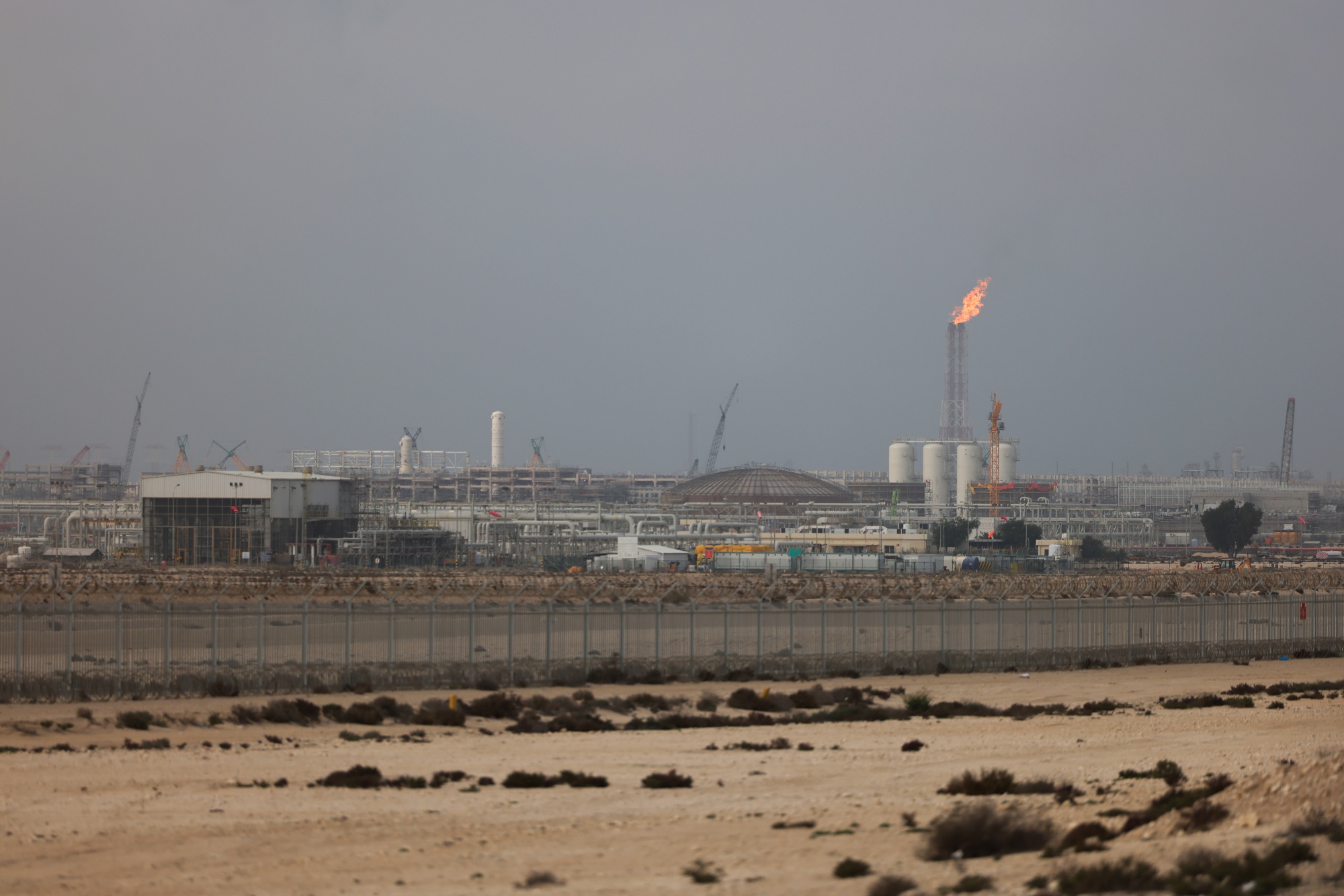
The policy adjustment comes as the conflict centred on Iran has disrupted flows through the Strait of Hormuz, a route that handled about 20 million barrels a day of crude and oil products in 2025 and remains one of the most critical chokepoints in global energy trade. The International Energy Agency said in March that the war had created the biggest supply disruption in oil market history, with flows through Hormuz falling from around 20 million barrels a day before the war to only a trickle.

For China, the timing is especially sensitive. State refiners have already been grappling with higher feedstock costs, disrupted shipping routes and a scramble for replacement barrels from outside the Gulf. Reuters reported in late March that Sinopec, the country’s largest refiner by capacity, had sought access to state reserves after deciding against buying Iranian crude, while also trimming refinery runs. Earlier reporting in mid-March said China had been building inventories rather than drawing them down, suggesting Beijing initially preferred to preserve stocks.

That stance now appears to have softened. Bloomberg reported on April 10 that authorities had given state refiners the green light to tap commercial reserves. While the precise volume and duration were not publicly disclosed, the move is significant because it signals Beijing is willing to use part of the country’s stock cushion to smooth supplies for domestic processing rather than rely solely on the spot market at a time of exceptional volatility.

The wider market has been under intense pressure even as talk of a ceasefire has briefly cooled futures prices. Reuters reported that physical crude markets in Europe and Africa remained extremely tight despite a temporary truce, with buyers in Asia and Europe competing aggressively for non-Middle East barrels. Another Reuters report said U. S. crude premiums had surged to record highs as importers sought alternatives to Gulf supplies. That matters for China because replacing lost or delayed Middle East cargoes has become more expensive just as refining margins in parts of Asia remain fragile.

Supply conditions deteriorated further this week after attacks on Saudi energy infrastructure cut output capacity by around 600,000 barrels a day and reduced throughput on the East-West Pipeline by about 700,000 barrels a day, according to Saudi state media cited by Reuters. The pipeline is vital because it allows exports to bypass Hormuz via the Red Sea. Damage there narrowed one of the few remaining alternative routes for Gulf producers trying to keep oil moving to Asian customers.

Asian refiners have already felt the strain. Reuters reported that seaborne crude imports into Asia in April were estimated at 19.22 million barrels a day, sharply below the three-month average of 25 million barrels a day. Although refined fuel prices eased after hopes of a truce, the same report said the market was still stressed and that it could take months for normality to return even if shipping improves. For Beijing, releasing commercial stocks is therefore less a dramatic emergency measure than a tactical effort to bridge a period of dislocation.

The decision also reflects China’s domestic balancing act. Authorities have been trying to keep fuel output steady even as weak underlying demand and higher crude costs squeeze refiners. Reuters reported on April 2 that officials had pressed independent refiners to maintain production despite the surge in oil prices and wartime disruption. That suggests Beijing is seeking to avoid sharp swings in fuel availability or industrial costs while preserving broader economic stability.

There is also a geopolitical layer. China has opposed any overtly force-based international response around Hormuz and has pushed for de-escalation at the United Nations, according to Reuters reporting on Security Council negotiations. At the same time, the reserve release shows that Beijing is preparing for a conflict that may not be resolved quickly and for shipping conditions that may remain uncertain even if diplomatic language softens.


Air travellers in Germany faced widespread disruption on Friday after Lufthansa cabin crew staged a one-day strike that the airline and airport officials said would force the cancellation of more than 520 flights and affect about 90,000 passengers, hitting the carrier’s Frankfurt and Munich hubs during a busy holiday return period. The walkout, called by the UFO cabin crew union, ran from 00:01 to 22:00 local time […]

A cross-border espionage campaign that targeted journalists, civil society figures and some government-linked entities across the Middle East and North Africa between 2023 and 2024 has been tied by researchers to BITTER, a long-tracked South Asian threat actor, marking what investigators describe as the first documented case linking the group to attacks on civil society in the region. The attribution remains qualified rather than definitive: Lookout said […]

Bitcoin Depot, one of the biggest operators in the crypto ATM business, has disclosed that hackers stole about 50.903 Bitcoin, valued at roughly $3.665 million, after gaining access to parts of its internal technology systems and taking control of credentials linked to its digital asset settlement accounts. The Atlanta-based company said the intrusion was discovered on March 23 and later judged material on April 6, before being […]

Google has warned that a financially motivated cyber group tracked as UNC6783 is targeting business process outsourcers and corporate helpdesks in a campaign aimed at stealing sensitive data from large companies and then using that access for extortion. The group, which Google says may be tied to the “Raccoon” persona, has targeted several dozen high-value organisations across multiple sectors, shifting attention to a weak point that many […]

VISHNU RAJA
RYO YAMADA
HITORI GOTOH
IKUYO KITA
Just in: