News related to
Operations

Global private equity heavyweight KKR has acquired a minority share in the company that leases Abu Dhabi National Oil Company’s gas pipelines, deepening its commitment to the UAE’s energy infrastructure. The financial terms and precise percentage of the stake were not disclosed. The deal gives KKR exposure to ADNOC Gas Pipeline Assets LLC, which holds the lease rights for a network of 38 pipelines across the UAE, […]

A joint venture between UAE grocer Spinneys and Philippines conglomerate Ayala Corporation aims to introduce premium supermarkets across the archipelago, with the first outlet slated for the fourth quarter of 2026. Ayala will control 60 per cent of the venture, with Spinneys holding the remaining 40 per cent, launching the Dubai-based brand’s first expansion beyond the Gulf Cooperation Council. The two-phase deal calls for Spinneys to bring […]

Etihad Rail has confirmed that passenger services will begin operations in 2026, ushering in a new era of high-speed connectivity across the UAE. At the Global Rail 2025 exhibition in Abu Dhabi, the company revealed the first public visuals of its passenger rolling stock and detailed plans for its network, integration efforts, and operating partnerships. Azza Al Suwaidi, deputy CEO of Etihad Rail Passenger Services, stated that […]

Metaplanet has added 5,268 Bitcoin to its treasury, lifting its total holdings to 30,823 BTC—a stash now worth roughly $3.5 billion. The move marks another aggressive step in the company’s ambition to dominate corporate Bitcoin accumulation.

The Tokyo-listed firm disclosed the latest purchase via its analytics platform, citing an average cost per coin in the range of $116,800. With this transaction, Metaplanet fortifies its position among the largest public Bitcoin treasuries globally. The company has previously disclosed a 5,419-coin buy earlier in September.

Metaplanet’s strategy, initiated in 2024 when it shifted from hotel and media operations into a Bitcoin-heavy treasury model, has relied heavily on capital raises and issuance of equity linked instruments. In early September, shareholders green-lit a plan to issue up to 550 million new shares overseas—raising about ¥130.3 billion —with proceeds earmarked in part for further BTC accumulation. Eric Trump, who serves on Metaplanet’s advisory board, was present at the meeting and took part in a fireside chat session.

The company projects bold long-term goals: by 2026, it aims to reach 100,000 BTC, and by late 2027, to hold 210,000—about 1 percent of total Bitcoin supply.

Despite its crypto focus, Metaplanet’s stock performance has been volatile. Since mid-June, the share price has fallen sharply—losing over 50 percent—reflecting investor concern over dilution risk, weak revenue fundamentals, and compressed valuation premiums compared to its Bitcoin holdings.

Analysts caution that Metaplanet’s heavily leveraged approach leaves it vulnerable. Should Bitcoin’s price fall, the firm could see large mark‐to-market losses or face funding constraints if markets turn against inflows. Still, Metaplanet argues its “Bitcoin yield” metric—growth in BTC per share—aligns incentives for equity holders to back continued accumulation.

The company also is diversifying its strategy. It has launched a U. S.-based subsidiary in Miami to manage derivatives and income-generation business lines, and is developing digital platforms rooted in Bitcoin.

The city-state’s employers have set a striking pace as they head into the final quarter of 2025: a Net Employment Outlook of 45 per cent signals that nearly three in five organisations expect to expand their workforces. That optimism comes amid shifting global headwinds, structural reforms, and a rising demand for specialised talent.

The ManpowerGroup Employment Outlook Survey canvassed 525 UAE employers across sectors to assess hiring intentions. A positive balance of 45 per cent means that those anticipating workforce increases outnumber those expecting reductions by nearly half. This figure places the UAE among the world’s more aggressive labour markets, especially given challenges such as global trade uncertainty, rising automation, and fluctuating commodity prices.

This projected hiring boom is not evenly distributed. The strongest demand lies in transport, logistics and automotive, energy and utilities, and consumer goods and services. These sectors appear ready to leverage infrastructure projects, green energy transitions, and regional consumption growth. Meanwhile, the information technology sector is showing solid demand at +48 per cent, reflecting sustained digital transformation pushes.

Driving much of this confidence is corporate expansion: 40 per cent of participating firms cited scaling operations as their primary reason for hiring. Another 28 per cent pointed to pivoting business models and growth into new areas. In addition, nearly 30 per cent of respondents acknowledged that talent shortages—and competition for specialised skills—are influencing recruitment strategies.

Yet the buoyant sentiment is tempered by caution. Roughly 10 per cent of employers still expect to trim staff, particularly in roles vulnerable to automation or in sectors facing structural disruption. Around 15 per cent responded that they will hold staffing constant, prioritising internal upskilling over external recruitment. In interviews, some HR executives noted that while they want to hire aggressively, wage inflation, geopolitical uncertainty, and regulatory shifts may prompt them to phase recruitment over several quarters.

Regional and global context strengthens the UAE’s position. In the third quarter of 2025, the UAE recorded a world-leading NEO of +48 per cent. That marked a standout alignment with its long-term growth strategy, and the Q4 figure of +45 per cent suggests sustained momentum rather than a cyclical spike. Elsewhere, the global average NEO stood at +24 per cent during Q3 — placing the UAE’s outlook nearly double the global benchmark.

Analysts view this hiring optimism as part of a broader strategy to reposition the UAE as a knowledge-economy hub. Recent government initiatives have focused on advanced manufacturing, artificial intelligence, sustainability, and logistics corridors. These programs have triggered demand not only for engineers and technicians but also for data scientists, sustainability consultants, and cross-disciplinary professionals. In one corporates sector round-table, a senior UAE CEO observed that “the competition for deep tech talent is global, and we must offer not just pay but opportunity, stability and a pathway for growth.”

Labour authorities are also aligning policies with employer needs. New visa frameworks, targeted Emiratisation programmes, and regulatory incentives for R&D investment are being synchronized with workforce forecasts. At the same time, the UAE’s PMI for non-oil activity has held above the expansion threshold, underlining demand growth across private sectors and supporting hiring intent.

However, potential headwinds remain significant. Global supply chain disruptions, slowing demand in key export markets, and monetary tightening in major economies could dampen growth. Employers may delay or scale back hiring plans if external pressures intensify. Some labour economists warn of mismatches between skills supplied locally and those demanded, especially in emerging fields.


Gold surged to an unprecedented high on Wednesday, driven by investor flight to safe assets after the United States entered a federal government shutdown that threatens to delay key economic data releases.

Spot gold climbed above $3,875 per ounce, and U. S. gold futures for December touched $3,887.40, marking fresh peaks in the metal’s dramatic rally this year. The dollar weakened, while U. S. stock futures slid, reflecting the heightened uncertainty gripping global markets.

The shutdown froze large swathes of federal operations after Congress failed to approve funding for the 2026 fiscal year, triggering furloughs for approximately 750,000 federal workers and imposing a daily cost to the government of around $400 million.

With the shutdown effectively halting the release of critical economic indicators—most notably the September non-farm payrolls data—the Federal Reserve is being forced to rely on alternate data sources to assess conditions ahead of its October meeting. Chicago Fed President Austan Goolsbee warned that central bankers will need to “turn to other data sources” if official reports are suspended.

In labor market reports released earlier, the JOLTS data showed only marginal growth in job openings in August, while hiring declined—signalling cooling momentum in the U. S. labour market. This, combined with the shutdown, has increased market expectations that the Fed will move to cut interest rates in October. Futures now price in a 96 per cent likelihood of a 25-basis-point cut.

Institutional demand has bolstered the gold rally: central banks have continued to accumulate bullion, even as inflows to gold-backed exchange-traded funds have surged. Analysts point to a powerful confluence of safe-haven inflows and speculative momentum. Deutsche Bank and other firms have flagged upside targets in the $3,900–$4,000 range if current conditions persist.

Silver also posted gains, hitting a 14-year high, while platinum and palladium lagged modestly. In India, gold prices on the MCX breached all-time highs, crossing ₹1,17,351 per 10 grams as global and domestic investors sought shelter from volatility.

Analysts caution, however, that the rally faces key risks. A rebound in the dollar, a surprise hawkish tilt from the Fed, or a sudden resolution of the funding impasse could reverse momentum. The longer the shutdown endures, the greater the danger that data collection becomes impaired—threatening the quality of future releases such as inflation, GDP, and employment statistics.

The valuation of the U. S. Treasury’s gold reserves has also gained attention: the gold holdings—officially booked at historical rates—now command a market value exceeding $1 trillion, driven by the steep rise in bullion prices.

Wall Street insiders note that the shutdown has injected a new element of volatility into markets already stretched by geopolitical tensions and macro imbalances. Equity futures were already under pressure on Wednesday, with the S&P 500 and Nasdaq both down nearly 0.5 per cent in early trade.

HONG KONG SAR – Media OutReach Newswire – 30 September 2025 – KPMG celebrated its 80th anniversary in Hong Kong last Friday, reaffirming its enduring commitment to the city’s growth and its role as a leading international financial centre. The milestone event, held at the Hong Kong Convention and Exhibition Centre, was graced by The Honourable John KC Lee, The Chief Executive of Hong Kong Special Administrative […]

Advertisements

Floodwaters unleashed by torrential rain swept through central Arizona, killing at least four people and forcing widespread evacuations and emergency declarations. Three victims were discovered in the historic mining town of Globe, where floodwaters rose rapidly and inundated downtown, while a fourth body was found near a submerged vehicle in Scottsdale. About 2.5 inches of rain fell within 24 hours in Globe, a city of roughly 7,250 […]

A wholly owned subsidiary of the Abu Dhabi Investment Authority has committed as lead investor to a single-asset continuation vehicle by GL Capital centred on SciClone Pharmaceuticals. The move marks a notable entry from a sovereign wealth fund into a GP-led secondary structure in the healthcare sector. The CV is understood to be valued around USD 230 million, according to ION Analytics. ADIA’s subsidiary has not disclosed […]

Core42, a subsidiary of G42, is rapidly advancing the UAE’s ambitions in cloud sovereignty and artificial intelligence, combining regulatory assurance with innovation infrastructure. Mohammed Adnane Retmi, Vice President of Sovereign Public Cloud at Core42, has articulated how this approach is enabling regulated sectors and positioning the nation as an AI hub. At the heart of Core42’s offering is its Sovereign Public Cloud, built atop Microsoft Azure but […]

0.1 percent of first-year regular premium equivalent from Family Takaful products launched after 1 August 2025 will be donated to the Community Chest of Singapore SINGAPORE – Media OutReach Newswire – 30 September 2025 – Etiqa Insurance Singapore, the insurance arm of Maybank Group, today announced a charity pledge linked to the launch of its latest Takaful products. Invest purpose, a new Shariah-compliant investment-linked plan designed for […]

Washington’s plan to sharply raise the cost of H-1B visas—the key route for skilled overseas professionals into the United States—has consequences far beyond immigration policy. It signals a potential reallocation of talent, capital and innovation that could redefine where the next wave of technology growth takes place. If the US prices out the world’s top engineers, data scientists and entrepreneurs, those individuals will gravitate toward regions offering […]

Bitcoin miners now hold approximately 1.8 million BTC, down from about 2.5 million in 2019—a shift that signals diminishing influence over the market and illustrates their evolving role in the ecosystem.

At their peak influence, miners were among the few entities controlling large pools of newly minted coins. Over time, however, many mining operators have adopted a business-like approach: periodically selling part of their mined yield to cover operational expenses, upgrade hardware, and manage liquidity. Those sales dilute their concentrated sway over supply movements.

On-chain data indicates miner outflows have shrunk sharply. CryptoQuant reports daily outflows dropped from 23,000 BTC in early 2025 to about 6,000 BTC in the most recent windows, with no extreme outflow days since February. Transfers from miner addresses to exchanges remain subdued, reinforcing the trend.

Despite dips in miner revenue—for example, daily earnings fell to about US$34 million in June—there is no evidence of forced liquidations. Instead, many miners are accumulating reserves while selectively monetising operations.

Publicly listed mining firms are increasingly decoupling their revenue streams from pure blockchain activity. CleanSpark, for instance, expanded a $100 million crypto-backed credit facility tied to its Coinbase holdings, with plans to fund growth across energy infrastructure and compute assets. Meanwhile, Cipher Mining struck a 10-year colocation deal with AI‐cloud provider Fluidstack, which could generate up to $3 billion in revenue over time and repurposes its infrastructure toward high-performance computing.

These developments reflect a broader industry evolution. With Paul’s halving in April 2024 slashing block rewards in half, miners now balance hash power growth against diminishing direct coin yield. To survive and scale, many operators are diversifying into hosting, AI, carbon credits, and “mining-as-a-service” models.

Smaller miners are under intense pressure. Rising energy costs, grid constraints, and compliance burdens marginalise those without scale or access to cheap power. Major operations are increasingly concentrated in jurisdictions with deregulated energy markets or surplus renewable capacity.

From a market impact perspective, miners’ strategic behaviour brings both stability and constraints. On one hand, their reduced dominance helps prevent supply shocks triggered by sudden bulk sales. On the other, their periodic selling still exerts friction on price rallies. Analysts suggest that sophisticated off-exchange OTC arrangements increasingly cloak miner sales, making their impact less visible but persistent.

UAE e-invoicing is becoming a cornerstone of digital transformation in the United Arab Emirates. With the Federal Tax Authority rolling out EmaraTax, businesses must adapt their invoicing processes to meet new compliance requirements. For many organizations relying on ERP systems, this poses a challenge — traditional ERPs are not built to handle complex, fast-changing tax regulations. Infinite GIP provides a smarter alternative, ensuring seamless UAE eInvoicing compliance, […]

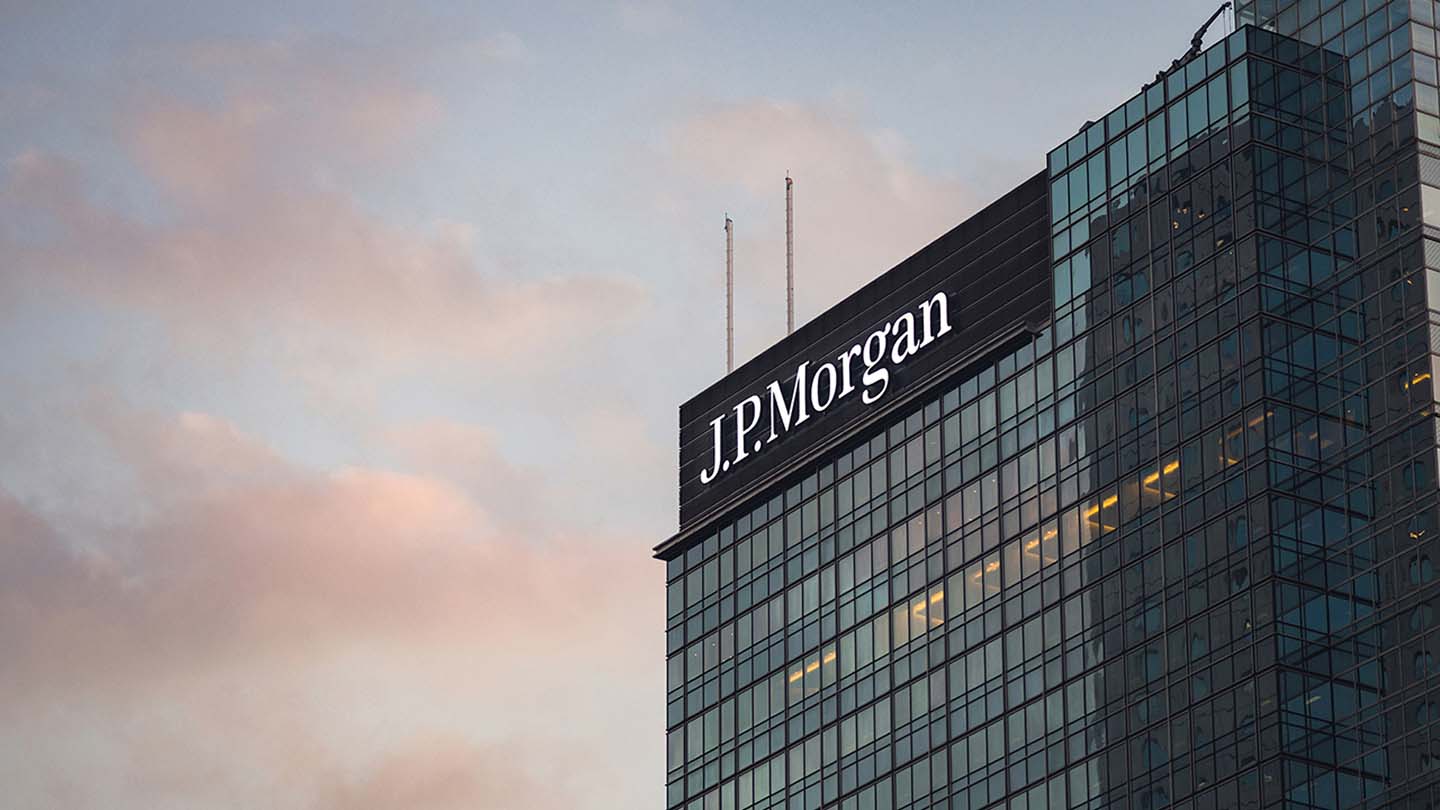
QNB Group has shifted its US dollar corporate payment operations in Qatar onto JPMorgan’s blockchain-based platform, enabling business clients to execute dollar payments within minutes, around the clock. The move marks a notable milestone in the uptake of decentralised ledger technology in mainstream banking.

The Doha-based lender will use JPMorgan’s Kinexys Digital Payments system to facilitate 24/7 USD transfers for its corporate clientele. Traditional banking rails, by contrast, typically operate during business days and may take several days to complete a transfer. The QNB–JPMorgan tie-up underscores the intensifying push by major financial institutions to modernise payment infrastructure.

Kinexys, previously known as JPMorgan’s payments and tokenisation arm, has seen growing traction across the Middle East and North Africa. QNB became one of the first banks in the region to adopt the system, following Saudi National Bank’s earlier deployment. The platform allows programmable payments, enabling banks to embed automated rules or compliance checks directly into settlement flows.

Under its new arrangement, QNB clients in Qatar will now enjoy significantly improved settlement speed and liquidity management. Instead of waiting for traditional cut-off windows, funds flow without interruption, reducing operational risk and improving cash-flow efficiency. Internally, the system allows QNB to manage its USD liquidity more dynamically across its branches and treasury operations.

JPMorgan’s wider strategy with Kinexys spans tokenised deposit accounts, cross-border settlements, and programmable payment capability. Earlier this year, the firm announced a GBP-denominated blockchain deposit offering, complementing its USD tokenisation efforts. JPMorgan has also piloted USD deposit tokens built on its Base blockchain in collaboration with institutional clients.

Across the MENA region, several leading banks have gone live on Kinexys. Commercial Bank of Dubai, First Abu Dhabi Bank and Bank ABC are among the adopters. Saudi National Bank currently uses the system for its U. S. dollar-denominated flows and plans to extend the infrastructure to large corporates in its domestic market.

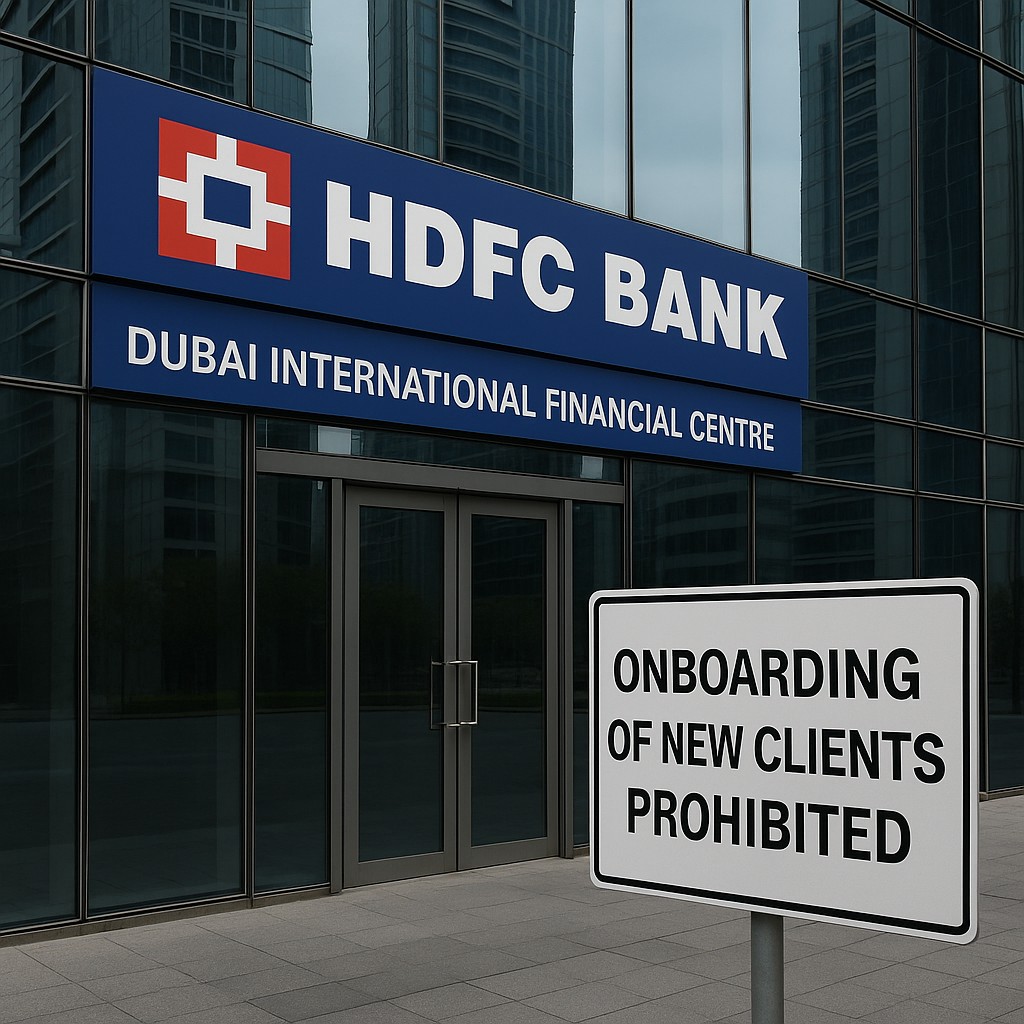
Dubai’s financial regulator has barred HDFC Bank’s Dubai International Financial Centre branch from soliciting, onboarding or servicing new clients, citing compliance lapses.

The order, issued by the Dubai Financial Services Authority and effective from 26 September, remains in force “until otherwise amended or revoked,” the bank stated. HDFC said it is taking steps to comply with the directive while engaging with the DFSA to address concerns.

HDFC clarified that the restriction does not apply to existing clients of the DIFC branch, nor to those who had already been offered services prior to the notice. As of 23 September, the branch had 1,489 customers, including joint holders.

According to HDFC, the bank does not expect this to materially affect its overall operations or financial position, noting that the Dubai branch’s business is not significant relative to its global activities.

The DFSA’s decision notice accuses the branch of servicing clients who were not properly onboarded, deficiencies in client onboarding processes, and other unspecified compliance shortcomings. The prohibition extends to advising on financial products, arranging deals, extending credit, custodial services, and financial promotions for new clients.

Analysts point to a backdrop of scrutiny over HDFC’s role in selling risky instruments—particularly Credit Suisse additional tier-1 bonds—to retail investors in the UAE. Those clients accused the bank of misclassification and inadequate risk disclosures. Investor accounts allege that KYC records were manipulated to designate them as “professional clients,” a requirement under DIFC rules for high-risk products.

Some UAE-based investors welcomed the DFSA’s move but urged stronger action, stating the suspension of new client intake is a limited measure given potential damage already done.

HDFC has a broader international presence including representative offices in Abu Dhabi, Kenya, London and Singapore, and branches in Bahrain and Hong Kong. The bank faces parallel scrutiny in India regarding related sales practices, prompting investigations by Indian enforcement agencies.

As the DFSA and HDFC engage in remediation talks, markets will closely watch whether the regulator escalates sanctions or lifts the ban after compliance is demonstrated.

Digital asset treasury firms, which raise capital to accumulate crypto assets on their balance sheets, are being reimagined by market analysts as possible long-term powerhouses akin to Berkshire Hathaway. Ryan Watkins, co-founder of Syncracy Capital, argues that the more successful of these firms—currently seen by many as speculative vehicles—could evolve into permanent capital engines that deploy resources, build operating businesses, and influence ecosystem governance.

These treasury firms already collectively manage over $105 billion in crypto holdings, across assets such as Bitcoin, Ethereum and others. Watkins emphasises that the largest winners will be those that transition from mere accumulation into diversified operations across staking, lending, infrastructure and enterprise investment.

The model diverges from traditional crypto “hoard and hope” strategies. Rather than simply acting as passive holders, Watkins projects that top-tier treasury companies will adopt a hybrid role: asset manager, growth investor, and operational builder. In his view, they may eventually resemble conglomerates that deploy capital into promising ventures, fund ecosystem projects, and re-invest profits strategically.

Some firms already reflect parts of this shift. MicroStrategy remains a benchmark, having raised capital through equity and convertible debt to purchase Bitcoin. As of mid-2025, dozens of public and private entities have announced intentions to create treasury arms or adopt treasury strategies. Firms are expanding beyond Bitcoin into Ethereum, Solana and other networks, seeking yield diversification.

A newly announced example is AVAX One, backed by Anthony Scaramucci and Hivemind Capital, which aims to raise $550 million to acquire AVAX tokens and expand into fintech and insurance acquisitions on the Avalanche network. This signals growing appetite for treasury firms to enter adjacent sectors and integrate vertically.

At the same time, regulatory and ethical challenges loom. Critics warn that some treasury firms may disguise self-dealing as capital deployment, favouring projects in which insiders hold undue influence. Without rigorous governance, the line between strategic investment and insider enrichment can blur.

Regulatory scrutiny is also emerging: authorities like the U. S. Securities and Exchange Commission and FINRA have initiated probes into suspicious trading around announcements by publicly traded firms adopting crypto treasury plans, seeking to determine whether some investors benefitted from non-public disclosures. Meanwhile, treasury entities face pressure to provide transparency in reserves and audit practices, especially as they reassure investors about balance sheet integrity.

The Dubai Financial Services Authority has issued a decision notice barring HDFC Bank’s Dubai International Financial Centre branch from onboarding or engaging new clients, citing deficiencies in its onboarding procedures and promotional practices.

Under the DFSA’s directive dated 25 September 2025, the branch is prohibited from soliciting or conducting any business with clients who had not already completed the onboarding process by that date. The restrictions span across a range of financial services: advising on financial products, arranging investment deals, arranging or advising credit, custody services, and engaging in financial promotions.

HDFC Bank has confirmed the measure, stating the branch’s Dubai operations are not “material to [the] overall business or financial position.” It said it has initiated steps to engage with the DFSA and address the regulator’s concerns.

Existing customers of the DIFC branch remain unaffected by the decision, and clients who had already been offered services may still be served.

The DFSA’s public register confirms the restrictions imposed on HDFC DIFC under Article 75 of the Regulatory Law 2004.

Concern over HDFC’s UAE operations has been mounting since investigations linked to the mis-selling of Credit Suisse Additional Tier-1 bonds surfaced. High-net-worth non-resident Indian investors alleged that HDFC’s UAE arms had pushed leveraged exposure to these risky instruments without adequate disclosure. When Credit Suisse’s AT1 bonds were written down in 2023, several clients in the Middle East faced losses and margin calls.

Regulatory scrutiny has coalesced around whether the branch’s client onboarding systems sufficiently aligned with the stricter DIFC regime for assessing and classifying “professional clients.”

Observers note that the regulatory move at HDFC’s DIFC arm fits a broader trend in the UAE: ensuring that financial institutions operating in its free zones adhere to rigorous compliance standards. While the central bank has in recent months fined other banks and suspended new customer intake over Sharia or anti-money laundering violations, this is a rare case targeting the onboarding practices of a foreign bank’s offshore branch.

Market analysts suggest the restriction could dampen HDFC’s ambitions in the Gulf region. The DIFC branch caters largely to high-net-worth and institutional clients, a growing segment across the Middle East.

Analysts also note that, though the branch is currently a limited part of HDFC’s global footprint, reputational damage and extended regulatory enforcement could constrict cross-border investment programmes tied to its UAE hub.

HDFC’s next steps include formal remediation under DFSA oversight, and the bank will need to demonstrate that its compliance and client due diligence processes meet the regulator’s expectations. Meanwhile, the directive will remain active until the DFSA issues a written amendment or revocation.

By Salah Uddin Shoaib Choudhury Bangladesh is entering one of the most dangerous phases of its history. At the centre of this looming crisis is the unelected regime of Muhammad Yunus, which is presenting itself abroad as democratic and reformist while systematically dismantling the country’s defence and intelligence structure. Behind the veneer of Nobel fame and global endorsements lies a far darker reality: Yunus’ growing alignment with […]

Dubai’s Roads and Transport Authority has revealed a 15-kilometre Dubai Autonomous Zone, an integrated corridor designed to link driverless land and water transport modes. The zone will stretch from Creek Station on the Metro Green Line through Al Jaddaf toward Dubai Creek Harbour and Festival City. The plan aims to weave Metro, RoboTaxis, RoboBuses, self-driving shuttles, autonomous abras, driverless logistics vehicles and street-sweeping bots into one seamless […]

Fortescue has sealed a flurry of contracts to deploy 300 to 400 zero-emission haul trucks at its Pilbara operations and to bolster its renewable energy capacity with the full acquisition of a Spanish wind tech company. The shifts represent a decisive scaling of its “Real Zero by 2030” ambition.

Under the new agreements, Chinese manufacturer XCMG will supply up to half of the electric 240-tonne haul truck fleet, with deliveries phased between 2028 and 2030. The remaining trucks will be produced by Liebherr, under an amended version of an earlier deal. The contracts build on an earlier framework signed in 2024 for battery-electric ancillary mining equipment.
XCMG itself refers to the Fortescue order as the largest export order for green mining equipment from China to date. The trucks may include autonomous features and use advanced software, similar to those operating in China’s open-pit mines.
Fortescue is also finalising its full takeover of Nabrawind, a Spanish wind tower and turbine technology company in which it held a minority stake since 2023. With full ownership, Fortescue plans to integrate Nabrawind’s self-lifting tower designs with turbines supplied by Envision Energy, aiming to deploy up to 2.1 GW of installed wind capacity in its Pilbara “East Pilbara generation hub.” The first wind energy is expected online by 2028, pending regulatory approval.

To support its Decarbonisation roadmap, Fortescue has signed supply agreements with several other Chinese clean-tech firms: BYD will supply energy storage systems; LONGi will provide photovoltaic modules; and Envision will deliver turbines and smart energy solutions. Fortescue describes the partnerships as a “multilateral collaboration” to access the best manufacturing capacity globally.
Andrew Forrest, the company’s Executive Chairman, emphasised that China’s ability to scale green technologies rapidly makes it a key partner in Fortescue’s strategy. He remarked that industry should “glue back” international cooperation through practical alliances rather than mere rhetoric. The company also continues to operate its R&D arm, Fortescue Zero, which is tasked with integrating and optimising power systems across its fleet and operations.

However, the pivot towards Chinese suppliers has already prompted adjustments to the Liebherr arrangement. Fortescue has scaled back Liebherr’s role to supplying at minimum half the haul trucks, down from its originally envisaged share, reallocating greater share to XCMG. Analyses suggest the move is intended to diversify risk, ensure supply chain resilience, and meet aggressive deployment timelines.
The decision also appears to reflect broader challenges in the green hydrogen sector: Fortescue has walked away from planned hydrogen projects in Arizona and Queensland, absorbing write-downs, and is now emphasizing electrification and green iron production instead. Internal restructuring and leadership turnover at Fortescue Zero have raised questions about execution, but the company underscores that the new strategy remains intact.

India has engaged with Washington over the U. S. decision to impose a one-time $100,000 fee on new H-1B visa applications, warning that the move threatens the mobility of skilled professionals and could strain bilateral trade ties.

The External Affairs Ministry affirmed it would continue talks with relevant stakeholders in the United States, emphasising that talent exchange has underpinned innovation and growth in both economies. The government noted that the new rule may disproportionately affect Indian nationals, since they constitute a significant share of the H-1B pool.

The White House announced that the fee will apply only to fresh petitions filed from September 21, 2025 onwards, not to renewals or existing visa holders. The administration framed this shift as part of efforts to prevent misuse of the visa system and prioritise higher-wage, high-skilled cases.

India’s reaction underscores deep concerns within its technology sector—many firms rely on U. S. operations staffed via H-1B sponsorship. Analysts estimate that the fee hike could reduce IT margins by 4–13 percent depending on visa intensity, while Indian IT stocks saw steep declines following the announcement.

At the same time, India is navigating friction on trade. U. S. tariffs levied on Indian goods—particularly a 50 percent cumulative duty tied to India’s oil imports from Russia—are already under scrutiny in bilateral talks. Officials assert that the visa and trade issues will be addressed as interconnected elements of the broader U. S.–India partnership.

During meetings on the sidelines of the U. N. General Assembly, India’s Foreign Minister and Commerce Minister held discussions with their U. S. counterparts, reinforcing that continued engagement is essential to manage tensions. The Indian side has also said that relevant domestic departments are evaluating options concerning the impact of the tariffs.

Despite the pushback, some U. S. industry figures support the new fee. Leaders at firms such as Nvidia, OpenAI and Netflix have welcomed the shift as a mechanism to prioritise high-value talent. Others, including JPMorgan’s CEO, have warned it risks driving skilled workers to competing nations. U. S. medical associations are lobbying for exemptions, arguing that the steep cost could impede physician recruitment, particularly in underserved areas.

India’s Finance Ministry has called for heightened monitoring of the economic fallout, citing possible impacts on remittance inflows and service exports. The ministry has described the short term as manageable but warned of long-term risks if the regime remains in place.

Within India’s tech industry, there has been a strategic pivot. Companies have invested over $1 billion in onshore training and hiring in the U. S., reducing dependence on H-1B deployment. Industry bodies argue that this shift could help absorb the shock should visa access tighten further.

Still, experts caution that such mitigation has limits. Smaller firms and startups that depend on cross-border talent mobility may feel the squeeze most acutely. Some analysts suggest that alternative destinations, including Canada, South Korea and the UK, may be more appealing to Indian professionals seeking global opportunities.

Proton has rolled out a sweeping revamp of its mobile email application for Android and iOS, boosting performance significantly while introducing full offline functionality and unifying the user experience across platforms. The redesign aims to position Proton Mail as a more competitive and responsive alternative in encrypted email. Under the update, the apps now allow users to read, compose and organise emails without network connectivity, syncing changes […]

IceWhale’s ZimaOS has rolled out version 1.5 with a new “Plus” edition behind a one-time $29 licence, while retaining a free Community edition with limited allowances. The upgrade also introduces expanded hardware support, mobile access improvements, and a freshly integrated backup app. The Plus edition removes caps on users, disks, and apps, whereas the CE edition continues to offer core features but restricts usage to 10 apps, […]

VISHNU RAJA
RYO YAMADA
HITORI GOTOH
IKUYO KITA