Just in:
ADIPEC leaders urge investment in global energy networks // Asia Left Behind: Ten international companies have yet to report delivering on their cage-free egg pledges across the region // XRG secures agreement for $1.45bn Australian LNG stake // ADIA and partners establish $1.4 billion aviation venture // mamun raises US$3 million to finance cross-border trade between the Gulf and Asia // As AI Reshapes Education, Singapore Convenes Global Dialogue on the Future of Early Childhood Education // Burying Head In “India Made Poverty Reduction” Data Is Dangerous // DIP Holding targets Dh1.12 IPO price and $529m proceeds // Arrow Electronics showcases technologies advancing intelligent robotics, mobility and digital infrastructure // Vance attributes Republican midterm defeats to Iran conflict // Fast Just Got Fastest: STING Energy Boost™ Celebrates Kimi Antonelli’s Formula 1® World Championship and the Fan Energy Behind It // Democrats capture Senate majority with seven Republican seats // Ta’ziz finalises $1.39bn funding for Ruwais industrial facilities // BJP’s Aggressive Response Exposes Anxiety Over Opposition Unity // Middle East governments assess Iran war after US vote // U.S. Mid Term Result Is A Clear Verdict Against Trump’s Authoritarianism // Govt opposes Arlekar’s PSC action // Vingroup And Legends Global Announce Strategic Partnership For VinFast – Trong Dong Stadium // xCube Access Welcomes Entrust Capital Limited  Expanding Access to Professional Portfolio Management // Emirates Group records AED 4.1 billion half-year profit //

News related to
Operations

BEIJING, CHINA – Media OutReach Newswire – 19 March 2025 – As AI transforms global industries, the transportation sector is undergoing notable change. Autonomous driving technology is rapidly scaling, with top companies like Google’s Waymo and Baidu’s Apollo Go leading the way. Waymo, a pioneer in autonomous driving, has launched commercial operations in four major U.S. cities, providing approximately 150,000 rides per week, which demonstrates its scalability. […]

MSI, a global leader in high-performance server solutions, has unveiled its latest range of server platforms at CloudFest 2025, held from March 18 to 20 at Europa-Park, Germany. The new lineup includes Open Rack v3 Servers, Data Center Modular Hardware System Servers, and NVIDIA MGX™ AI Servers, each designed to enhance scalability, efficiency, and sustainability in cloud computing environments. The ORv3 Servers focus on modularity and standardisation, […]

Organisations should balance optimisation and workforce expectations HONG KONG SAR – Media OutReach Newswire – 19 March 2025 – KPMG China announced today the release of its ninth annual Hong Kong Employment Outlook survey, providing insights into the latest trends and challenges facing the region’s employment market. The report covers the headcount expectations of Hong Kong professionals, a salary outlook with an analysis of compensation and benefits […]

American publicly traded Bitcoin mining companies have reached an unprecedented milestone, now controlling approximately 30% of the total global Bitcoin network hashrate. This significant increase underscores the growing influence of U.S.-based miners in the cryptocurrency ecosystem.

The hashrate, representing the total computational power used to mine and process transactions on the Bitcoin network, serves as a critical indicator of the network’s security and efficiency. As of mid-March, the Bitcoin network’s hashrate averaged 811 exahashes per second , reflecting a 2 EH/s increase in the first two weeks of the month. Notably, U.S.-listed miners have maintained their share at around 30% during this period.

This expansion is particularly remarkable considering that just over a year ago, these companies accounted for approximately 20% of the network’s hashrate. The rapid growth can be attributed to several factors:

– Access to Capital: Being publicly listed provides these miners with enhanced access to capital markets, enabling substantial investments in infrastructure and expansion.

– Availability of Resources: The United States offers abundant land and relatively affordable energy resources, essential for the energy-intensive process of Bitcoin mining.

– Aggressive Expansion Strategies: Companies such as IREN , CleanSpark, Riot Platforms, and MARA Holdings have been actively scaling their operations, deploying new mining rigs, and increasing their computational capacities.

IREN, in particular, has been at the forefront of this expansion. Despite reporting a loss of $51.7 million in the first quarter of 2025, the company has ambitious plans to boost its mining power to 50 EH/s in the coming months. This strategy reflects a broader trend among U.S.-listed miners to reinvest earnings into scaling operations, thereby increasing their share of the network hashrate.

However, this rapid expansion has not been without challenges. The average price of Bitcoin declined by approximately 10% in early March, pressuring mining economics. Additionally, the increase in network hashrate has led to heightened competition among miners, further squeezing profit margins. Some companies have responded by stockpiling Bitcoin to navigate these profit squeezes, leveraging the cryptocurrency’s price appreciation to bolster their balance sheets.

MARA Holdings exemplifies this trend. The company recently expanded its capacity by acquiring data centers in Ohio, adding a total of 372 megawatts of compute capacity. This acquisition brings MARA’s total nameplate capacity to nearly 1.5 gigawatts, positioning it as one of the largest players in the industry. Despite these advancements, MARA reported widening net losses of $124.8 million in the third quarter, highlighting the financial pressures faced by miners amid fluctuating Bitcoin prices and rising operational costs.

The consolidation of hashrate among U.S.-listed miners has broader implications for the Bitcoin network. While increased hashrate enhances network security by making it more resistant to attacks, the concentration of mining power raises concerns about decentralization—a core principle of the Bitcoin ethos. Industry stakeholders continue to debate the balance between operational efficiency and maintaining a decentralized network structure.

Escalating conflict in the Middle East has led to significant upheavals in global financial markets. On March 18, 2025, Israel launched extensive airstrikes across the Gaza Strip, effectively ending a ceasefire that had been in place since January. These strikes resulted in over 400 Palestinian casualties, including many women and children, marking one of the deadliest 24-hour periods in the region since 2023. Israeli Prime Minister Benjamin […]

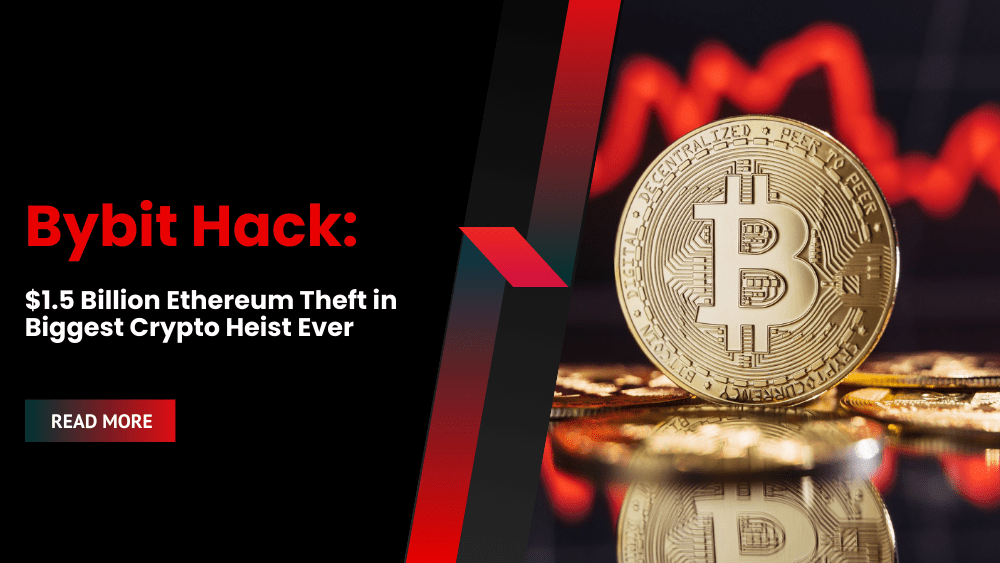
On 21 February 2025, Bybit, one of the world’s leading cryptocurrency exchanges, suffered a monumental security breach resulting in the theft of approximately 400,000 Ether tokens, valued at $1.5 billion. This incident has been identified as the largest cryptocurrency heist to date, surpassing previous records and sending shockwaves throughout the digital asset community.

The breach occurred during a routine transfer from Bybit’s cold wallet to a warm wallet—a standard procedure intended to ensure liquidity for daily operations. Attackers exploited this process by intercepting the transfer, redirecting the substantial sum to unknown addresses. Initial investigations have traced the hack to the Lazarus Group, a cybercrime organization associated with North Korea, notorious for orchestrating similar high-profile cyberattacks in the past.

In the immediate aftermath, Bybit’s market share plummeted from nearly 20% to a mere 5% by 2 March 2025, as users and traders sought more secure platforms. Binance emerged as a primary beneficiary during this period, with its market dominance soaring to 62% as traders migrated their assets. Other major exchanges, such as OKX and Coinbase, also experienced minor increases in market share, reflecting a broader redistribution of trading activity.

Bybit’s swift crisis response played a crucial role in stabilizing the situation. Unlike many exchanges that suspend withdrawals during security breaches, Bybit maintained operational status, allowing users to access their funds. This decision, coupled with consistent updates, helped maintain confidence and prevent mass withdrawals. The exchange also secured emergency funding from firms including Galaxy Digital, FalconX, and Wintermute, replenishing its reserves within 72 hours. By 9 March 2025, Bybit’s market share had rebounded to 9.04%. However, the exchange still faces significant reputational damage and lingering trust issues, raising doubts about its ability to fully regain its pre-hack position.

The incident has sparked discussions about the inherent vulnerabilities within the cryptocurrency ecosystem. While technological defenses continue to advance, this breach underscores that human error remains a critical weak point. INSEAD’s Ben Charoenwong emphasized that human failings, rather than technical glitches, are often the most significant factors in such incidents. He highlighted that a barrier to effective security is the reluctance to acknowledge ownership and responsibility for vulnerable systems.

The Bybit hack serves as a stark reminder of the importance of robust security protocols and the need for continuous vigilance in the rapidly evolving digital asset landscape. As the industry grapples with the implications of this unprecedented breach, stakeholders are urged to reassess their security measures, prioritize transparency, and foster a culture of accountability to safeguard against future threats.

Recent regulatory changes enhance credibility for corporate trustees but add to complexity and costs New eMPF Platform to reshape Hong Kong’s pension system and bring wave of change for pension trustees HONG KONG SAR – Media OutReach Newswire – 18 March 2025 – Access to Chinese Mainland clients, Asia’s growing private wealth sector and improving industry credibility are underpinning a positive outlook for Hong Kong’s trust industry, […]

Advertisements

Zed, the modern code editor developed by Zed Industries, has introduced native Git integration starting from version 0.177, aiming to streamline version control processes for developers. This integration allows users to perform essential Git operations—such as committing, pushing, pulling, and staging changes—directly within the editor. The Git Panel provides a comprehensive overview of the working directory and staging area, enabling efficient management of code changes. Designed with […]

South Korea’s Financial Supervisory Service has mandated that cryptocurrency exchanges contribute a 0.6% annual regulatory fee based on their operating revenues, amounting to a total of 7.9 billion won . This measure aims to bolster oversight within the rapidly expanding digital asset sector.

The fee structure, exceeding the initially anticipated 0.4%, requires quarterly payments due by the end of March, May, July, and October each year. The distribution of these fees among major exchanges is as follows:

– Dunamu, the operator of Upbit, is liable for 6.7 billion won .

– Bithumb faces a fee of 900 million won .

– Coinone is assessed at 150 million won .

– Gopax is charged 21.35 million won .

Korbit is exempt from this fee due to its operating revenue falling below the 3 billion won threshold set by the FSS.

The imposition of these fees underscores the South Korean government’s commitment to enhancing regulatory oversight in the cryptocurrency industry. By aligning digital asset platforms with traditional financial institutions under regulatory scrutiny, the FSS aims to ensure a more secure and transparent trading environment for investors.

This development follows the enactment of the Virtual Asset User Protection Act, which subjects virtual asset service providers to supervisory fees. The act stipulates that businesses with annual revenues exceeding 3 billion won are obligated to contribute to the FSS’s regulatory activities. These contributions are calculated using a rate of 2.686818 per 10,000 won of operating revenue from the previous fiscal year.

For instance, based on this rate, Upbit’s contribution is approximately 272 million won , while Coinone and Gopax are expected to contribute roughly 6.03 million won and 830,000 won , respectively. Korbit, with an operating revenue of approximately 1.7 billion won last year, is excluded from this fee due to not meeting the revenue threshold.

The supervisory fees are intended to fund the FSS’s regulatory activities, including inspections and oversight, ensuring that VASPs operate within the guidelines set forth by the Virtual Asset User Protection Act. This move brings virtual asset operators under the FSS’s inspection scope, aligning them with traditional financial institutions.

However, this new requirement poses significant challenges for many virtual asset exchanges. Most, except for Upbit and Bithumb, continue to suffer operating losses. Despite these losses, exchanges like Coinone and Gopax will still have to pay the supervisory share, adding financial pressure to their strained operations.

In addition to the supervisory fees, the Virtual Asset User Protection Act introduces various requirements for VASPs, including a mandate to hold at least 80% of users’ assets in cold storage. These funds must be segregated from company funds and invested in “risk-free” assets to generate a yield. Furthermore, crypto exchanges are required to reevaluate cryptocurrencies listed for trading, such as verifying their circulation and reviewing white papers.

The introduction of these supervisory fees and regulations reflects South Korea’s proactive approach to regulating the cryptocurrency industry. By implementing stringent oversight measures, the government aims to protect investors and maintain the integrity of the financial system in the face of rapid technological advancements and the growing popularity of digital assets.

The financial burden imposed by these fees may prompt smaller exchanges to reassess their operational strategies or consider mergers to remain viable. It also underscores the importance for cryptocurrency exchanges to maintain transparent and robust financial practices to comply with regulatory standards.


Dubai’s Crown Prince, Sheikh Hamdan bin Mohammed bin Rashid Al Maktoum, has enacted Executive Council Resolution No. of 2025, enabling free zone companies to extend their operations into mainland Dubai. This legislative move aligns with the Dubai Economic Agenda D33, which aspires to double the city’s economy by 2033 and solidify its status among the world’s top three economic cities. Under the new resolution, companies licensed by […]

Investcorp, a global alternative investment firm, has acquired a majority stake in Miebach Logistik Holding GmbH, a leading German supply chain and logistics consultancy. The transaction, announced on 17 March 2025, will see Miebach’s existing equity partners retain a significant minority share. Financial details of the deal have not been disclosed, and completion is anticipated in the second quarter of 2025, pending regulatory approvals. Established in 1973 […]

A prominent investment fund has made a significant wager on Brent crude oil prices surging toward $100 per barrel, reflecting growing concerns over escalating geopolitical tensions in the Middle East. On Monday, options contracts equivalent to 20 million barrels were traded, poised to profit if Brent’s June futures approach the $100 mark. This substantial position underscores the fund’s anticipation of a potential price spike amid mounting regional […]

Arabian Post Staff -Dubai Abu Dhabi’s sovereign wealth fund, Mubadala Investment Company, is actively engaging with global banks and market makers to establish a consortium of up to ten partners for the forthcoming Base Exchange in Rio de Janeiro. These prospective partners are expected to provide essential liquidity to the new stock exchange. In return, they would acquire equity stakes, resulting in a slight reduction of Mubadala’s […]

Revenue Growth Supported by Multiple Pillars Steadily Enhancing Shareholder Returns HONG KONG SAR – Media OutReach Neswire – 17 March 2025 – The world’s largest telecommunications infrastructure service provider China Tower Corporation Limited (“China Tower” or the “Company”) (Stock Code: 0788.HK) is pleased to announce its annual results for the year ended 31 December 2024. Performance Highlights RMB Million 2024 2023 Change Operating revenue 97,772 94,009 4.0% […]

The Federal Bureau of Investigation and the Cybersecurity and Infrastructure Security Agency have issued an urgent advisory concerning the Medusa ransomware, which has compromised over 300 organizations across critical infrastructure sectors. This cyber threat employs sophisticated tactics, including double and triple extortion schemes, posing significant risks to various industries. Medusa ransomware operates as a ransomware-as-a-service model, allowing cybercriminals to lease its infrastructure for malicious activities. Initially identified […]

Oracle Red Bull Racing is intensifying its collaboration with Oracle Corporation to integrate advanced cloud computing and artificial intelligence technologies into its operations for the 2025 Formula One season. This strategic move aims to bolster the team’s performance both on and off the track, reflecting a commitment to leveraging cutting-edge technology in the highly competitive world of motorsport. The team has adopted Oracle Cloud Infrastructure Compute A2 […]

MoirAI Cloud, a Florida-based AI infrastructure startup, has secured $1 million in pre-seed funding to enhance energy efficiency in AI-driven data centres. The company’s innovative approach leverages AI to optimise power consumption and significantly reduce energy waste, with the potential to cut energy usage by up to 95%. The investment comes at a time when the global data centre market is under increasing pressure to adopt more […]

By Nitya Chakraborty Sidelined by the Trump 2.0 administration and rebuffed by India, Bangladesh interim government is exploring all avenues to rejuvenate the country’s ailing economy by expanding its trade and investment relationship with Pakistan and China. The objective is to reduce the dependence on India in major areas where the outsourcing is possible from […]

North Korea has emerged as the third-largest government holder of Bitcoin, amassing approximately 13,562 BTC, currently valued at around $1.12 billion. This significant accumulation is primarily attributed to the state-sponsored hacking collective known as the Lazarus Group, which orchestrated a series of high-profile cryptocurrency thefts, including the unprecedented $1.5 billion hack of the Dubai-based exchange, Bybit, in February 2025.

The Federal Bureau of Investigation has officially attributed the Bybit hack to North Korean cyber actors associated with the Lazarus Group, also referred to as “TraderTraitor.” The breach involved the theft of approximately 400,000 Ethereum tokens, marking it as the largest cryptocurrency exchange hack to date. The stolen assets were subsequently laundered through various blockchain networks and converted into Bitcoin, significantly bolstering North Korea’s cryptocurrency reserves.

The Lazarus Group, active since at least 2007, has been implicated in numerous cyberattacks targeting financial institutions and cryptocurrency platforms worldwide. Their operations have evolved in sophistication, employing advanced techniques such as phishing, malware deployment, and exploiting vulnerabilities in decentralized finance platforms. Notably, in March 2022, the group was responsible for stealing $620 million from the Ronin Network, a blockchain platform associated with the online game Axie Infinity.

In the Bybit incident, the hackers exploited a vulnerability in the exchange’s system, enabling them to transfer the substantial sum to addresses under their control. Despite efforts by international authorities and cybersecurity experts to trace and recover the stolen funds, the hackers have successfully laundered a significant portion, complicating recovery efforts. Bybit has acknowledged the breach and is cooperating with global law enforcement agencies to mitigate the impact and enhance security measures.

North Korea’s strategic focus on cryptocurrency theft serves multiple purposes. The regime utilizes these illicit gains to circumvent international sanctions, fund its nuclear and ballistic missile programs, and bolster its struggling economy. The decentralized and pseudonymous nature of cryptocurrencies presents challenges for traditional financial oversight, providing the regime with a means to acquire substantial resources without direct detection.

The international community has expressed growing concern over North Korea’s cyber capabilities and their implications for global financial security. The United Nations has reported that these cyber activities have become a crucial revenue stream for the regime, with estimates suggesting that North Korea has stolen over $2 billion through cyberattacks targeting financial institutions and cryptocurrency exchanges. In response, several countries have imposed sanctions aimed at curbing these illicit activities and are collaborating to enhance cybersecurity measures across critical financial infrastructures.

Du, a leading telecom and digital services provider in the United Arab Emirates, has entered into a strategic collaboration with Microsoft to enhance cybersecurity services across the nation. Announced during the Mobile World Congress in Barcelona from March 3 to 6, 2025, this partnership aims to integrate Microsoft Azure’s advanced security technologies and artificial intelligence capabilities with du Tech’s managed services, offering a comprehensive security solution tailored […]

Abu Dhabi National Exhibitions Company Group has reported a record economic contribution of AED8.5 billion to the United Arab Emirates economy for the year 2024, surpassing the previous year’s figure of AED7.4 billion. This achievement underscores ADNEC’s pivotal role in advancing the nation’s strategic goal of fostering a diversified, knowledge-based economy. Humaid Matar Al Dhaheri, Managing Director and Group CEO of ADNEC Group, hailed 2024 as a […]

Pavel Durov, the founder of the messaging platform Telegram, has left France for Dubai after receiving permission from a French court. This development follows legal proceedings in which Durov faced charges related to the alleged misuse of his platform for criminal activities.

In August 2024, Durov was detained at a Paris airport and subsequently charged with facilitating the dissemination of child pornography, illegal drug transactions, and hacking tools through Telegram. French authorities accused him of failing to adequately monitor and prevent such illicit content on his platform. Upon his release, Durov was required to remain in France, post a €5 million bail, and report regularly to the police. 

The recent court decision allows Durov to leave France temporarily, with reports indicating that he has traveled to Dubai. Sources close to the case confirmed his departure, stating that the court granted him permission to leave for several weeks. Neither Durov nor his legal team have publicly commented on this development. 

Durov, who holds Russian, French, and United Arab Emirates citizenships, has maintained a stance advocating for user privacy and minimal interference from authorities. However, the charges in France have intensified debates about the responsibilities of tech platforms in monitoring and controlling illegal activities facilitated through their services. 

The legal challenges faced by Durov have had a notable impact on Toncoin , the cryptocurrency associated with the Telegram ecosystem. Following news of Durov’s departure to Dubai, Toncoin experienced a significant price increase, with reports indicating a surge of almost 20%. This spike reflects investor optimism, possibly anticipating a more favorable environment for Telegram’s operations and its associated projects in Dubai. 

Historically, Toncoin’s value has been sensitive to developments concerning Durov and Telegram. For instance, during Durov’s legal troubles in France, Toncoin’s price experienced volatility, underscoring the close ties between the cryptocurrency’s performance and the fortunes of its founder. 

Durov’s move to Dubai aligns with his previous patterns of relocating to jurisdictions with favorable regulatory environments for technology and cryptocurrency ventures. Dubai has been positioning itself as a hub for digital innovation, offering a supportive climate for blockchain and cryptocurrency projects. This relocation could signal strategic plans for the expansion and development of Telegram’s services and its blockchain initiatives, including Toncoin.

The situation also highlights the ongoing global discourse on the balance between ensuring user privacy and enforcing regulations to prevent the misuse of digital platforms for illegal activities. Governments worldwide are grappling with the challenge of holding tech companies accountable while respecting individual freedoms and promoting innovation. Durov’s case serves as a focal point in this complex debate, illustrating the tensions between regulatory authorities and technology entrepreneurs.

Gold prices have soared past the $3,000 per ounce mark for the first time, reflecting investors’ flight to safety amid escalating global economic uncertainties. The precious metal reached an unprecedented high of $3,004.86 during midday trading on Friday before settling slightly below this milestone later in the session. Several factors have converged to drive this historic surge. Chief among them is the intensifying trade conflict initiated by […]

Abu Dhabi-based technology investment firm MGX has invested $2 billion in Binance, the world’s largest cryptocurrency exchange, marking Binance’s first institutional investment. This landmark deal, finalized on March 12, 2025, represents the largest investment ever made in a cryptocurrency company and was conducted entirely using stablecoins. MGX, chaired by Sheikh Tahnoon bin Zayed al-Nahyan, has traditionally focused on artificial intelligence and next-generation technologies. This investment signifies a […]

VISHNU RAJA
RYO YAMADA
HITORI GOTOH
IKUYO KITA