Just in:

News related to
Part

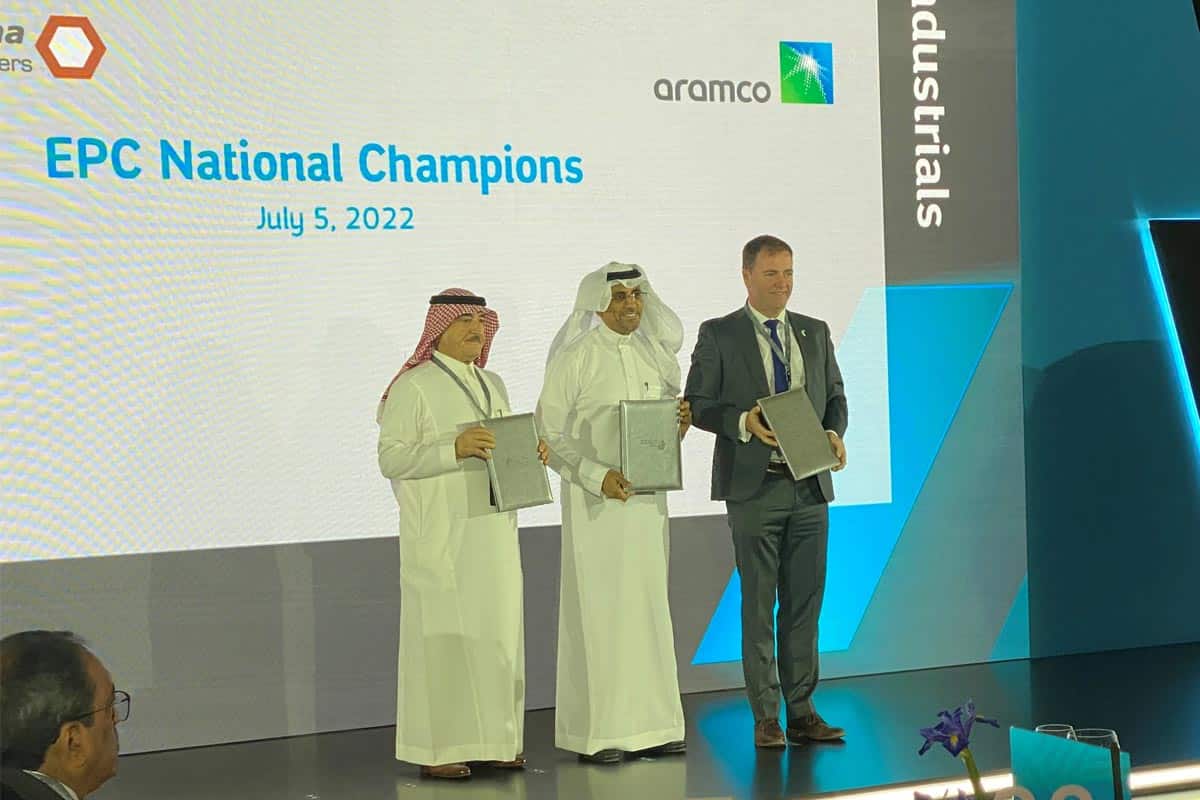
NesmaKent Energy Company , the joint venture between Saudi Arabia’s Nesma & Partners and the international engineering firm Kent, has secured a significant project management consultancy contract with Saudi Aramco. This contract marks a milestone for NKJV, positioning the partnership as a crucial player in the kingdom’s energy infrastructure development amid expanding ambitions in the energy sector.

The PMC contract involves comprehensive project oversight and management services for one of Saudi Aramco’s large-scale energy initiatives. NKJV’s responsibilities will span across planning, execution monitoring, quality control, cost management, and ensuring adherence to safety and environmental standards. This contract is part of Aramco’s broader strategy to engage specialised joint ventures that combine local expertise with international engineering standards, reinforcing Saudi Arabia’s Vision 2030 objectives to diversify and modernise its energy sector.

Nesma & Partners, well-established for its construction and engineering projects within the kingdom and region, has brought extensive local market knowledge and regulatory experience to the partnership. Kent, recognised for its global engineering and project consultancy portfolio, contributes advanced technical capabilities and international project management best practices. Together, the joint venture is expected to deliver high-quality consultancy services that meet Aramco’s stringent operational and environmental benchmarks.

The contract signals the growing trend among Saudi energy entities to engage collaborative partnerships that marry domestic strengths with foreign technological expertise. This aligns with the kingdom’s policy to increase localisation and private sector participation in mega projects. NKJV’s role as a PMC will extend beyond traditional supervisory functions, encompassing risk mitigation, technical advisory, and integration of innovative engineering solutions aimed at optimising project delivery and operational efficiency.

Saudi Aramco’s selection of NKJV follows a competitive tender process where multiple firms vied for the contract. The award underscores Aramco’s confidence in NKJV’s combined capabilities and track record. The project itself forms part of a wider portfolio of energy infrastructure investments by Aramco, which include enhancements in oil production facilities, downstream expansions, and renewable energy projects as the company transitions towards sustainable energy sources.

NesmaKent Energy’s contract exemplifies the shifting dynamics within the Saudi energy sector, where engineering consultancy and project management are gaining prominence as critical factors in successful project execution. The emphasis on specialised joint ventures highlights the kingdom’s commitment to leveraging cross-border partnerships to accelerate technological transfer and capacity building.

Industry experts note that the contract reinforces the strategic positioning of Nesma & Partners and Kent in the Middle East’s energy market. Nesma’s long-standing presence in Saudi Arabia has enabled it to navigate complex regulatory environments and develop robust relationships with government entities and private sector clients. Kent’s engineering pedigree, with a portfolio spanning oil and gas, petrochemicals, and infrastructure, complements Nesma’s regional experience with global standards.

The joint venture’s involvement in this Aramco project is expected to generate significant employment opportunities and skill development programmes in line with Saudi Arabia’s localisation agenda, known as Saudisation. NKJV plans to incorporate training modules and knowledge transfer frameworks to build local competencies in project management and engineering consultancy.

The energy project under NKJV’s management consultancy contract is critical to Aramco’s operational goals, encompassing upgrades to production capacity and the integration of advanced monitoring and control technologies. These developments are part of Aramco’s efforts to maintain its position as the world’s leading energy producer while adapting to evolving global energy demands and environmental regulations.

The scope of NKJV’s mandate also includes coordinating with multiple contractors, subcontractors, and regulatory bodies to ensure seamless execution. This requires a high level of technical expertise, project coordination skills, and compliance with international safety and quality certifications. NKJV’s approach reportedly emphasises sustainability and innovation, incorporating digital tools such as Building Information Modelling and real-time project analytics to enhance transparency and decision-making.

As Saudi Arabia intensifies its focus on energy diversification, including the expansion of renewable energy projects alongside traditional hydrocarbon investments, the expertise of joint ventures like NKJV will be crucial. Their ability to deliver complex projects efficiently and within budget will be pivotal in meeting the kingdom’s long-term strategic targets.

NesmaKent Energy’s success in securing this contract may open doors for further collaborations between Saudi and international firms in the energy consultancy sector. This contract reflects a broader trend of joint ventures becoming key conduits for technology transfer and knowledge exchange in the Gulf’s infrastructure and energy projects.


Arabian Post Staff For expatriates settling into the United Arab Emirates, understanding the country’s unique postal system is essential. Unlike many nations that utilize traditional postal codes, the UAE primarily relies on a Post Office Box system for mail distribution. This approach reflects the country’s infrastructural evolution and its emphasis on centralized mail collection points. In the UAE, individuals and businesses typically rent P.O. Boxes from Emirates […]

All 133 units of the Waldorf Astoria Residences Yas were sold out on launch day, generating AED 850 million in sales. This marks the first branded residential development on Yas Island, reflecting a significant demand for luxury living in Abu Dhabi.

Aldar Properties, the developer behind the project, reported that the swift sell-out underscores Yas Island’s growing appeal as a premier destination for both investors and residents seeking upscale living experiences. The development’s success is attributed to its prime location, waterfront views, and association with the Waldorf Astoria brand, known for its luxury and service excellence.

The residences, part of a broader strategy by Aldar to introduce iconic hospitality brands to Abu Dhabi, are situated near key leisure and entertainment attractions on Yas Island. This aligns with Aldar’s AED 1.5 billion investment programme aimed at transforming its hospitality portfolio to cater to the growing demand for premium experiences in the emirate.

The rapid sell-out of the Waldorf Astoria Residences Yas follows similar successes by Aldar, including the complete sale of Yas Riva, a luxury canal-front community, within 24 hours, generating over AED 1.4 billion in sales. These developments highlight the robust demand for high-end residential properties in Abu Dhabi, particularly among younger buyers and international investors.

The trend indicates a shift towards branded residences that offer not only luxurious accommodations but also a lifestyle associated with renowned hospitality brands. Aldar’s strategic partnerships with global brands like Waldorf Astoria and IHG’s Vignette Collection are central to this approach, aiming to enhance Abu Dhabi’s position in the global luxury real estate market.

USDT activity on the Tron blockchain has reached unprecedented levels, with the circulating supply now at $77.7 billion, monthly transaction volumes exceeding $611 billion, and over 65.6 million transfers recorded. This surge underscores Tron’s emergence as a dominant force in the stablecoin ecosystem, surpassing traditional financial networks in transaction throughput.

Tron’s ascent in the stablecoin market is attributed to its high-speed, low-cost infrastructure, which has attracted a vast user base. The network boasts over 300 million accounts, processing more than 14 million USDT transactions weekly, accounting for approximately 69% of global USDT activity. This dominance is further highlighted by Tron’s surpassing of Visa’s daily average transaction volume, with USDT on Tron reaching $53 billion in a single day compared to Visa’s $42 billion.

The network’s efficiency has made it a preferred choice for users in regions with limited access to traditional banking services. In Africa, for instance, 85% of users rated the Tron network five stars, citing its stable and low-cost payment experience. Similarly, in Argentina, a partnership with local e-commerce platform Kripton has enabled over 2,000 merchants to accept USDT payments, facilitating more than 100,000 transactions and $2 million in volume within 18 months.

Tron’s technological advancements, including the launch of the “Gas Free” USDT transfer feature, have further reduced transaction costs, solidifying its position in the payment sector. The network’s ability to process thousands of transactions per second with minimal fees has been instrumental in its widespread adoption.

Despite its rapid growth, Tron’s association with founder Justin Sun has attracted scrutiny. Sun, who has faced investigations by U.S. authorities for alleged market manipulation and facilitating illicit financial activities, recently returned to the U.S. to attend a dinner with former President Trump. His involvement in Trump’s crypto ventures, including a $75 million investment in World Liberty Financial and a significant stake in the $TRUMP memecoin, has raised concerns about potential conflicts of interest.

Webclei, a free online web vulnerability scanner, is gaining traction among cybersecurity professionals and developers for its robust capabilities in identifying security flaws in websites and web applications. Unlike many free tools that offer limited functionality, Webclei provides comprehensive scanning features typically found in premium solutions. At its core, Webclei operates on a template-based system written in YAML, allowing it to systematically test websites against a wide […]

OpenAI has announced the establishment of a legal entity in South Korea and plans to inaugurate an office in Seoul, marking its third operational base in Asia following Tokyo and Singapore. This strategic move underscores the company’s commitment to expanding its footprint in regions exhibiting significant growth in artificial intelligence adoption.

South Korea ranks second globally, after the United States, in the number of paying subscribers to ChatGPT. The nation’s robust technological infrastructure and a populace highly receptive to AI innovations have positioned it as a pivotal market for OpenAI’s expansion efforts.

Jason Kwon, OpenAI’s Chief Strategy Officer, emphasised South Korea’s comprehensive AI ecosystem, highlighting its strengths in hardware, software, and a diverse user demographic spanning various age groups. He noted that the country’s integrated approach to AI development makes it an ideal environment for meaningful AI impact.

In alignment with its expansion strategy, OpenAI has initiated recruitment processes to build a local team in Seoul. The company aims to foster collaborations with South Korean enterprises and governmental bodies to tailor AI solutions that resonate with local needs and regulatory frameworks.

Earlier this year, OpenAI entered into a partnership with Kakao, a leading South Korean internet company, to develop AI products customised for the Korean market. This collaboration is indicative of OpenAI’s approach to localising its offerings and integrating them seamlessly into existing digital ecosystems.

The establishment of a Seoul office also aligns with OpenAI’s broader initiative to implement data residency solutions across key Asian markets, including South Korea. By enabling local data storage, OpenAI addresses regional data sovereignty concerns and ensures compliance with local data protection regulations, thereby enhancing trust among enterprise clients and users.

OpenAI’s expansion into South Korea is part of a concerted effort to strengthen its presence in Asia. The company’s Tokyo office, opened in April 2024, serves as a hub for developing Japanese-language AI models and collaborating with local businesses and government entities. Similarly, the Singapore office, announced in October 2024, functions as the Asia-Pacific headquarters, focusing on regional partnerships and AI research initiatives.

Bitcoin exchange-traded funds have amassed over 75,000 BTC in net inflows over the past month, marking a significant shift in institutional investment patterns and fueling a surge in the cryptocurrency’s valuation. This influx, surpassing $6.5 billion, has been pivotal in driving Bitcoin to an all-time high of $109,900, reflecting a growing confidence among investors in the digital asset’s long-term prospects.

The substantial inflows into Bitcoin ETFs, particularly BlackRock’s iShares Bitcoin Trust , which alone attracted $6.5 billion, underscore a broader trend of institutional adoption. This movement is further evidenced by the actions of major financial entities such as JPMorgan Chase and Morgan Stanley, which have expanded their cryptocurrency offerings in response to increasing client demand.

Analysts attribute this surge to a confluence of factors, including favorable regulatory developments and macroeconomic conditions. The U.S. Senate’s progress on a regulatory bill for stablecoins and the establishment of a Strategic Bitcoin Reserve by the Treasury have provided a supportive policy environment. Concurrently, the weakening of the U.S. dollar and concerns over fiscal policies have prompted investors to seek alternative assets, positioning Bitcoin as a perceived safe haven.

The impact of these developments is evident in the market’s response. Bitcoin’s price trajectory has been bolstered by the sustained ETF inflows, with models estimating its fair value to be between $105,000 and $125,000 at the current rate of investment. This valuation aligns with the observed market behavior, where the cryptocurrency has maintained its upward momentum despite broader economic uncertainties.

The strategic moves by corporations also play a crucial role in this dynamic. Michael Saylor’s Strategy, for instance, has significantly increased its Bitcoin holdings, adding $765 million to its portfolio, which now exceeds $63 billion in value. Such corporate investments not only reflect confidence in Bitcoin’s potential but also contribute to its market stability and growth.

The entry of new players into the Bitcoin ETF space, such as Twenty One, led by the son of President Trump’s commerce secretary, indicates a diversification of investment vehicles and a broadening of the market base. This expansion enhances the accessibility of Bitcoin to a wider range of investors, further solidifying its position in the financial ecosystem.

Advertisements

Coinbase, the leading U.S.-based cryptocurrency exchange, is under intensified scrutiny as it confronts a new class-action lawsuit filed on behalf of investors who purchased company shares between April 14, 2021, and May 14, 2025. The lawsuit alleges that Coinbase and its executives failed to disclose critical information and did not adequately protect user data, leading to significant financial losses for shareholders following a sharp decline in stock value.

The legal action centers on claims that Coinbase misrepresented its ability to safeguard customer assets, particularly in the event of bankruptcy. Investors argue that the company did not sufficiently inform them that customer assets could be considered part of Coinbase’s bankruptcy estate, potentially making customers unsecured creditors. This concern was exacerbated when, on May 10, 2022, Coinbase disclosed in a regulatory filing that customer assets could be at risk in the event of bankruptcy, leading to a more than 26% drop in the company’s share price the following day.

Further compounding investor concerns, Coinbase recently revealed a significant data breach where cybercriminals bribed overseas support agents to access sensitive user information, including names, contact details, government ID images, and account histories. The breach affected up to 97,000 users and led to a ransom demand of $20 million, which Coinbase refused to pay. The company estimates the incident could cost between $180 million and $400 million in fixes and refunds. Following the disclosure, Coinbase’s stock dropped over 7%, shortly after it had surged 24% on news of its impending inclusion in the S&P 500.

The lawsuit also points to Coinbase’s alleged failure to disclose its engagement in proprietary trading. Despite public statements denying such activities, reports emerged in September 2022 indicating that Coinbase had formed a unit specifically for proprietary trading, investing $100 million in these trades. This revelation led to further declines in the company’s stock price, causing additional losses for investors.

In response to these allegations, Coinbase maintains that it has been transparent with its investors and is committed to addressing any concerns. The company has stated that it is cooperating with law enforcement regarding the data breach and has taken steps to enhance its security measures, including establishing a new U.S. support hub and implementing stronger protections against insider threats. Coinbase has also fired the implicated insiders and is pursuing criminal charges against them.

A critical vulnerability in GitLab’s AI-powered coding assistant, Duo, has exposed private source code repositories to theft through a sophisticated indirect prompt injection attack, cybersecurity researchers have revealed. The flaw, now patched, allowed attackers to embed hidden instructions within project content, leading the AI to leak sensitive data and manipulate its responses.GitLab Duo, introduced in June 2023 and built on Anthropic’s Claude models, is designed to assist […]

Dubai has initiated a pilot programme to tokenise property ownership, marking a significant advancement in its property sector. The Dubai Land Department , in collaboration with Prypco, has launched the ‘Prypco Mint’ platform, enabling fractional property investments through blockchain technology. This initiative positions Dubai as the first city in the Middle East and North Africa region to implement a licensed platform for real estate tokenisation. The project […]

PHNOM PENH, CAMBODIA – Media OutReach Newswire – 26 May 2025 – Prince Holding Group’s Chairman Neak Oknha Chen Zhi has been named Entrepreneur of the Year in Cambodia 2025 by the World Business Outlook Awards. Additionally, the Group’s Chen Zhi Scholarship has received the Best Overall CSR Excellence in Cambodia 2025 award. Chairman Neak Oknha Chen Zhi, honored as “Entrepreneur of the Year in Cambodia 2025” […]

Canonical’s Ubuntu 20.04 LTS, known as Focal Fossa, will reach the end of its standard five-year support period on 31 May 2025. This transition affects millions of users across enterprise, cloud, and personal environments, who must now decide between upgrading to a newer release or subscribing to extended support to maintain security compliance. Ubuntu LTS releases are designed to provide five years of free security updates and […]

A sophisticated phishing group known as Inferno Drainer has capitalised on a recently implemented Ethereum feature to conduct large-scale wallet-draining attacks, exposing a novel vulnerability within the blockchain ecosystem. This new tactic leverages Ethereum Improvement Proposal 7702 , part of the network’s broader Pectra upgrade, which permits Externally Owned Accounts to temporarily emulate smart contract wallets during transactions.

EIP-7702 was introduced to enhance transaction efficiency and flexibility by allowing EOAs, typically controlled by individuals, to process complex batch operations usually reserved for smart contracts. However, this flexibility has opened unforeseen attack vectors that cybercriminals like Inferno Drainer are now exploiting to extract significant funds without alerting users.

The initial alert came from Scam Sniffer, a web3 anti-scam platform, which identified a wallet compromised through this method losing nearly $150,000. This incident underscores the growing sophistication of phishing techniques targeting crypto users, marking a shift from conventional scams that often rely on direct wallet hijacking or tricking users into revealing private keys.

Blockchain security expert Yu Xian, founder of SlowMist, a firm specialising in combating crypto threats, explained that Inferno Drainer’s method differs markedly from previous phishing scams. Instead of forcibly taking control of a wallet, the group operates through a delegated MetaMask wallet—one authorised under EIP-7702’s new permissions system.

This approach involves the hackers silently approving token transfers by executing a batch authorisation process. Through this mechanism, the victim unknowingly triggers an “execute” command within MetaMask, which processes malicious batch data quietly in the background, resulting in a stealthy but effective draining of tokens.

“The phishing gang uses this mechanism to complete batch authorisation operations on tokens related to the victim’s address,” Xian said, highlighting the threat’s subtlety and the challenge it poses to wallet security.

The shift towards batch authorisations was designed to streamline interactions on Ethereum by allowing users to manage multiple transactions or permissions in a single operation. Unfortunately, it also offers a cover for nefarious actors to bundle illicit commands within legitimate transaction flows, evading traditional detection methods.

Industry analysts observe that this new exploit underscores the delicate balance between innovation and security in blockchain technology. Ethereum’s continuous upgrades aim to enhance usability and scalability but often introduce complexities that can be manipulated if not carefully monitored.

Inferno Drainer has reportedly refined this phishing tactic over months, adapting to Ethereum’s evolving infrastructure. Their campaigns focus on victims who have already adopted wallets compatible with the Pectra upgrade, ensuring that the batch execution feature is active and exploitable.

The Pectra upgrade itself is a significant step forward for Ethereum, promising improved transaction throughput and user experience. Yet, as this case reveals, the implementation of powerful features without equally robust security safeguards invites exploitation. Wallet providers, particularly MetaMask, face mounting pressure to integrate advanced detection algorithms and user alerts to mitigate such silent batch authorisation abuses.

Security firms are recommending users exercise heightened caution when approving wallet transactions, especially those involving batch operations. Unlike straightforward transaction confirmations, batch authorisations may bundle multiple permissions, some of which could be maliciously crafted.

The incident also highlights the growing arms race in crypto security, where threat actors rapidly adapt to platform upgrades and exploit minor oversights or new functionalities. While blockchain’s decentralised nature offers transparency, the intricacies of smart contract and wallet interaction often elude average users, increasing their vulnerability.

MetaMask’s role in this exploit is crucial, as the wallet’s delegation and permission system under EIP-7702 allows the execution of complex commands with user consent. Experts suggest MetaMask and similar wallet developers could implement clearer prompts, disallowing batch authorisations that combine unexpected or unverified commands, thereby reducing risk.

Regulatory scrutiny around crypto security continues to intensify as attacks like those by Inferno Drainer demonstrate the potential for significant financial loss. Governments and industry bodies are increasingly focused on fostering secure protocols and pushing for better user education to counteract sophisticated phishing attempts.

Cryptocurrency exchanges and DeFi platforms may also need to review their integration with wallets supporting EIP-7702, ensuring that their transaction flows do not inadvertently facilitate or obscure malicious batch authorisations.

This emerging threat reiterates the importance of layered security measures, including hardware wallets, multi-factor authentication, and vigilant transaction monitoring. As phishing schemes grow more advanced, users must adopt a cautious stance towards authorisation requests, verifying each operation’s legitimacy, particularly when batch executions are involved.

Inferno Drainer’s exploitation of Ethereum’s latest upgrade serves as a stark reminder that innovation in blockchain technology must be matched by equally innovative security frameworks. The broader crypto community faces a critical juncture where safeguarding user assets depends on swift adaptation to both technological progress and the evolving tactics of cybercriminals.

Efforts to address such vulnerabilities are underway within Ethereum developer circles, with proposals to refine permissioning models and enhance wallet interfaces to better distinguish legitimate transactions from potentially harmful batch authorisations. Collaboration between security researchers, wallet providers, and the wider blockchain community is crucial to curtail threats exploiting the complex functionalities introduced by upgrades like Pectra.

Lithuania’s Astrolight has secured €2.8 million in seed funding to advance its laser-based communication systems, aiming to establish a high-speed, secure optical data highway between satellites and Earth. This investment underscores the growing confidence in optical communication technologies as a superior alternative to traditional radio frequency systems. Astrolight’s flagship product, the ATLAS terminal, is engineered to facilitate data transmission from low Earth orbit satellites to ground stations […]

A surge in fraudulent activities targeting Schengen visa applicants has prompted urgent warnings from VFS Global and European embassies, as scammers increasingly exploit the high demand for travel to Europe.

In a notable case, a 38-year-old man from Kanyakumari was arrested at Thiruvananthapuram International Airport after attempting to travel to Slovakia with a forged Schengen visa. The visa, procured through an Angamaly-based agency for ₹7 lakh, initially passed scrutiny by Slovakian embassy officials in India. However, Sharjah immigration authorities identified it as counterfeit, leading to his deportation and subsequent arrest. Upon investigation, local police found his claims credible, releasing him on station bail while he assists in identifying the perpetrators.

This incident underscores a broader trend. Data from the district crime records bureau indicates a sharp increase in visa fraud cases, from 15–20 annually between 2021 and 2023 to 66 in 2024, with 23 cases already reported in 2025.

VFS Global, the official visa outsourcing partner for multiple Schengen countries, has reiterated that it does not collaborate with third-party entities for appointment bookings. All appointments must be scheduled through its official website, www.vfsglobal.com. The company warns against individuals or agencies claiming association with VFS Global and offering guaranteed appointments or expedited processing for a fee.

Bernard Vijaykumar, VFS Global’s Head for North Asia and the Philippines, emphasized the importance of early application to mitigate risks. “We strongly encourage all travellers to apply for their visas well in advance of their intended travel dates,” he stated. “Waiting until the last moment not only increases the risk of delays but also exposes applicants to fraudulent entities seeking to exploit their urgency.”

European embassies have echoed these concerns. Veronika Hadravova, Head of the Consular Section at the Embassy of Czechia in Bangkok, advised applicants to book appointments only through VFS Global and to be wary of scammers exploiting peak travel seasons. Similar advisories have been issued by embassies of Austria, Germany, Hungary, and Switzerland.

Common tactics employed by fraudsters include requesting advance payments to personal bank accounts, seeking personal information under the guise of application validation, and using fabricated email IDs to send fraudulent job offers or immigration communications. Applicants are advised to be cautious of pixelated or disproportionate logos on documentation and to avoid sharing sensitive information on public domains or social media platforms.

VFS Global has also highlighted that visa appointments are free of charge and should only be booked through its official website. The company does not influence visa decisions, which are solely at the discretion of the respective embassies or consulates. Applicants are urged to report any suspicious activity to the relevant authorities and to avoid engaging with unauthorized agents promising guaranteed approvals or expedited services.

KUALA LUMPUR, MALAYSIA – Media OutReach Newswire – 26 May 2025 – As global crypto markets show increased volatility, traders rethink their risk exposure. One vivid option is contracts for difference (CFDs). Kar Yong Ang, a financial market analyst at Octa broker, shares three reasons crypto traders should adopt CFDs and migrate from traditional exchanges. This year began with a harsh reminder that even the biggest crypto […]

Dubai has introduced the Middle East and North Africa’s first tokenised real estate investment platform, Prypco Mint, enabling individuals to invest in fractional shares of ready-to-own properties starting from AED 2,000. This initiative, spearheaded by the Dubai Land Department in collaboration with Prypco and Ctrl Alt Solutions, aims to democratise access to the emirate’s property market.

Currently, the platform is accessible exclusively to holders of UAE Emirates IDs, with plans for global expansion in subsequent phases. Transactions are conducted solely in UAE Dirhams, and cryptocurrencies are not utilised during the pilot stage. Investors can access comprehensive property details, including pricing, risk factors, and technical specifications, ensuring transparency and informed decision-making.

The project aligns with the Dubai Real Estate Sector Strategy 2033 and the Dubai Economic Agenda D33, which seek to position Dubai as a hub for smart real estate investment. Projections estimate that tokenised assets could account for up to 7% of Dubai’s real estate market by 2033, equivalent to AED 60 billion .

Regulatory oversight is provided by the DLD for physical real estate and the Virtual Assets Regulatory Authority for digital assets, ensuring an integrated and transparent approach. The Central Bank of the United Arab Emirates plays a pivotal role in overseeing the opening of corporate accounts linked to real estate tokenisation through the Client Money Account system, safeguarding investor funds until the purchase process is fully completed.

Industry stakeholders have welcomed the initiative, viewing it as a significant step towards enhancing liquidity and accessibility in the property market. By enabling fractional ownership, the platform opens up investment opportunities to a broader base of investors, particularly those seeking smaller-scale investments.

Dubai has launched the world’s largest visa application centre, a sprawling 150,000-square-foot facility located in Wafi City. Operated by VFS Global, the centre is designed to process up to 10,000 visa applications daily, serving as a centralised hub for travellers seeking entry to 37 countries. The centre boasts over 200 service counters and employs more than 400 staff members from 25 different nationalities, reflecting the emirate’s commitment […]

Union Minister Gajendra Singh Shekhawat is set to represent India at the BRICS Culture Ministers’ Meeting in Brasília on 26 May 2025. The gathering, hosted by Brazil under its current BRICS presidency, aims to bolster cultural cooperation among member nations—Brazil, Russia, India, China, and South Africa.

Shekhawat, who has held the portfolios of Culture and Tourism since June 2024, is expected to underscore India’s commitment to cultural diplomacy, heritage conservation, and fostering people-to-people exchanges. His participation aligns with India’s broader strategy to enhance multilateral cultural ties and promote its rich artistic heritage on the global stage.

The agenda for the meeting includes discussions on collaborative initiatives in performing arts, visual arts, literature, and the creative industries. Member countries will explore avenues for joint cultural projects that celebrate and preserve the diverse cultural identities within the BRICS bloc. India plans to advocate for inclusive cultural growth and enhanced multilateral cooperation within this framework.

In addition to the formal ministerial dialogue, the Indian delegation is scheduled to engage in bilateral meetings with counterparts from other BRICS nations. These discussions aim to expand cultural exchange programs, co-host festivals, and strengthen intergovernmental partnerships in the cultural sphere.

The BRICS Culture Ministers’ Meeting serves as a vital platform for fostering mutual understanding and cultural exchange among the five member countries. This year’s gathering emphasizes strengthening cultural cooperation, boosting institutional ties, and launching joint cultural projects that celebrate and preserve the diverse cultural identities within the BRICS bloc.

Major news organisations are grappling with the fallout from deploying artificial intelligence in content creation, as instances of fabricated material and misattributed authorship surface, raising concerns over journalistic integrity. The Chicago Sun-Times and The Philadelphia Inquirer faced backlash after publishing a summer reading list featuring non-existent books and fictitious expert quotes. The content, syndicated by King Features and crafted by freelance writer Marco Buscaglia using AI tools, […]

The village of Harrison Hot Springs in British Columbia has long been regarded as a focal point for Sasquatch lore, with many locals firmly convinced of the creature’s existence. This belief is deeply intertwined with the region’s First Nations heritage, where storytelling has preserved and passed down accounts of large, mysterious beings inhabiting the dense forests. The local narrative embraces Sasquatch not only as a cryptid of […]

Hitachi Vantara has introduced VSP 360, a comprehensive data management software designed to streamline storage across diverse environments. The new platform integrates block, file, object, and software-defined storage into a single, unified system, aiming to simplify operations and enhance efficiency for enterprises managing complex data landscapes. The launch reflects growing demand among organisations for versatile and scalable storage solutions capable of supporting hybrid and multi-cloud deployments. VSP […]

Scammers operating in the UAE have increasingly exploited WhatsApp’s business platform to impersonate trusted contacts, aiming to extract sensitive personal and financial information from unsuspecting users. This surge in fraudulent activity has prompted Meta, WhatsApp’s parent company, to initiate a targeted public awareness campaign by directly messaging users in the UAE with detailed guidelines to distinguish legitimate business profiles from fake ones.

These deceptive practices often involve scammers creating profiles that mimic reputable companies or individuals, using official logos and business names to gain credibility. The impersonators then contact users, requesting confidential details such as passwords, banking information, or verification codes under various pretexts, including prize claims, urgent payments, or account verification. Such tactics prey on the trust that users place in familiar or official-seeming contacts, making it crucial to understand the warning signs of fraudulent profiles.

Meta’s communication emphasises several practical steps for users to verify the authenticity of business accounts on WhatsApp. Genuine business profiles typically feature a green checkmark badge, signifying that WhatsApp has verified the account’s authenticity. Additionally, the FAQ highlights that official business accounts often provide clear contact information, including physical addresses and email IDs, which can be cross-checked independently. Users are advised to be cautious of unsolicited messages from accounts lacking these markers, especially if they request personal or financial information.

The prevalence of such scams in the UAE reflects a broader global trend where digital fraudsters exploit popular communication platforms. The UAE’s rapidly expanding digital economy and high smartphone penetration have made it an attractive target for cybercriminals. Reports indicate that these scams have led to significant financial losses and identity theft cases, affecting both individuals and businesses. Authorities in the region have responded by increasing collaboration with technology firms and law enforcement agencies to identify, disrupt, and prosecute offenders.

Cybersecurity experts underscore the importance of user vigilance and education alongside technological safeguards. They advise that users should not share one-time passwords , verification codes, or bank details via messaging apps. Moreover, any unsolicited requests for payments or personal data should be treated with scepticism. Experts also recommend reporting suspicious profiles directly to WhatsApp and local cybercrime units to aid in swift action against scammers.

WhatsApp has implemented several backend security measures to combat such misuse, including automated detection of suspicious accounts and the ability for users to block and report fraudulent profiles easily. However, the dynamic nature of scams means that fraudsters continuously evolve their methods to bypass safeguards, making user awareness a critical line of defence.

The UAE government has been proactive in addressing cybercrime through legal and regulatory frameworks. The Federal Law No. 5 of 2012 on Combatting Cybercrimes stipulates stringent penalties for offences involving electronic fraud, impersonation, and data breaches. These laws are complemented by public education initiatives and partnerships with the private sector to enhance digital literacy and security awareness across the community.

Telecommunications providers in the UAE have also joined efforts to strengthen network security and raise awareness about phishing and social engineering attacks. Campaigns targeting both consumers and corporate clients aim to provide up-to-date information on the latest threats and prevention strategies. These initiatives are crucial as social messaging platforms like WhatsApp remain primary communication channels for many residents and businesses in the country.

Despite these efforts, challenges remain due to the anonymous and borderless nature of cybercrime. Fraudsters often operate from outside the UAE, complicating jurisdictional enforcement. International cooperation and intelligence-sharing between countries have become essential components of the global response to digital fraud schemes. UAE authorities participate actively in such cooperative frameworks, seeking to enhance their capacity to track and dismantle scam networks.

Users are increasingly urged to adopt best practices for online security, including enabling two-step verification on WhatsApp accounts, regularly updating app software, and avoiding clicking on suspicious links. Businesses are encouraged to educate their customers about official communication channels and verify any unusual requests through direct contact.

Red Hat Enterprise Linux and Rocky Linux are accelerating efforts to support the RISC-V architecture, signalling a significant shift in the enterprise Linux landscape. This development reflects the growing momentum behind RISC-V, an open-source instruction set architecture that is reshaping hardware innovation amid challenges in traditional chip supply chains and rising demand for customisable, energy-efficient computing. Red Hat, a subsidiary of IBM and a dominant force in […]

VISHNU RAJA
RYO YAMADA
HITORI GOTOH
IKUYO KITA
Just in:
Electoral register gains 2.17 lakh voters // 11 Boutique Xinjiang Wineries to Debut in Singapore // US resumes flights after nationwide air traffic shutdown // Sun World Ba Den Mountain marks Vietnam Culture Day, welcoming Cambodian visitors over Bon Om Touk // Hackers falsify NVIDIA GPU readings to mask cryptomining // Fujairah highway pile-up leaves 14 dead and 30 injured // China’s Taiwan warning tests Washington’s defence commitments // Rooftop solar planning gaps behind power shortages // Yicura BioMed Advances Dual Capital and Industrial Strategy: Completes First Closing of Series B Financing Led by Gobi Partners // UAE crews sustain coastal oil removal as beaches reopen // US authorities dismantle North Korean cryptocurrency deception infrastructure // From Dubai to the EU: how UAE-based crypto firms can expand under MiCA // Crescent Enterprises venture arm funds Oyster Therapeutics development // The Honey Trap Is The Headline, The Chip Pipeline Is The Story // L’OCCITANE Celebrates 50 Years Of Provençal Craftsmanship With Holiday 2026 Collection // Inpex reaffirms Gulf oil strategy despite shipping constraints // Lego restores BrickLink marketplace after security investigation // TORRAS Launches Two New iPhone Duo Cases from Its Popular Ostand Series, Addressing Foldable Phone Users’ Concerns About Difficult Stand Positioning and Scratches // Microsoft apologises as Outlook services recover after outage // October Food Price Shock Has Far Reaching Consequences //