News related to
Space

New capital positions the robotics and industrial automation group to expand hardware automation across KitchenBASE sites in Hong Kong, Singapore, Taiwan, Japan, Korea, and Australia

HONG KONG SAR – Media OutReach Newswire – 27 October 2026 – Six markets across Asia-Pacific stand to gain from a $1.7 billion investment into Atoms, the robotics and industrial automation group founded by Uber co-founder Travis Kalanick. Andreessen Horowitz (a16z) led the round, joined by Uber, Bain Capital, Fifth Wall, and other institutional investors. The result strengthens a group that includes KitchenBASE, a commercial kitchen network spanning six of the most active food markets in the region.

New Capital, New Capability

The a16z-led round also adds Ben Horowitz, co-founder of the firm, to the Atoms board. This positions the group to push harder into robotics across food, mining, and transport. Within Atoms Food, KitchenBASE sits alongside hardware projects such as automated bowl-builders and order conveyance robots built to cut labour friction inside commercial kitchens. Fresh capital gives these projects more room to develop, with knock-on gains for the KitchenBASE network across Hong Kong, Singapore, Taiwan, Japan, Korea, and Australia.

A Boost for Regional Operators

For operators across Asia-Pacific, the benefits are practical. KitchenBASE facilities come licensed and ready-to-fit, and this lets food businesses move in under flexible contracts without the capital outlay of a traditional lease.

Brands that want to test a single market or push into several at once find a foothold in high-demand delivery zones across all six markets. New investment from Atoms in hardware automation and physical workflow management is expected to further sharpen efficiency and reliability, giving KitchenBASE operators a faster path to scale.

Hashtag: #ATOMS

The issuer is solely responsible for the content of this announcement.

About Atoms

is an industrial automation and robotics company founded by . Atoms Food includes KitchenBASE alongside food-tech hardware projects. Autonomous haulage and machine systems sit under Atoms Mining. Robotic wheelbases and autonomous movement systems for heavy industry fall under Atoms Transport.

About KitchenBASE

is the food infrastructure arm behind six brands trading across Asia-Pacific. Formally known as in Hong Kong, in Singapore, in Taiwan, in Japan, in Korea, and in Australia. Each brand equips food businesses with licensed kitchen space built for speed to market, so operators can rely on a steady base to launch, test, and expand.

New Merck Hong Kong Centre to Connect Global Expertise with Local Innovators and Accelerate R&D Commercialisation

HONG KONG SAR – Media OutReach Newswire – 26 October 2026 – Hong Kong Science and Technology Parks Corporation (HKSTP) and Merck, a leading science and technology company in life science, healthcare and electronics, signed a collaboration agreement today to establish their strategic partnership. Under the agreement, Merck will establish the “Merck Hong Kong Centre” at Hong Kong Science Park, dedicated to bringing in advanced scientific products, showcasing live technological demonstrations, and providing expert consultation services. Through technical training and clinical advisory sessions, an innovation scouting programme, and the co-hosting of an annual flagship event, the partnership will connect HKSTP’s I&T ecosystem with Merck’s domain expertise and global networks, supporting local startups and I&T talent, accelerating the translation of R&D outcomes into real-world applications, and jointly capturing opportunities across the Guangdong-Hong Kong-Macao Greater Bay Area (GBA) and international markets.

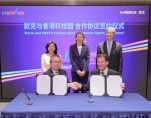
Witnessed by Dr Annika Bolten-Drutschmann, Consul General of Germany (Second row middle), Ms Cordelia Chung, Chairman of HKSTP (Second row first from left), and Mr Peter Yan, Director-General of the OASES (Second row first from right), Mr Terry Wong, Chief Executive Officer of HKSTP (Front row first from left), and Mr Rogier Janssens, President of Merck China (Front row first from right), signed the partnership agreement to establish their strategic partnership.

The HKSAR Government’s recently announced First Five-Year Plan places a strong focus on strategic industries, including life and health technology, artificial intelligence (AI), and new industrialisation, while the latest Policy Address sets out Hong Kong’s ambition to accelerate its development into an international health and medical innovation hub, progressively expanding access to the GBA, international markets, and capital markets. Arriving at a pivotal moment as Hong Kong I&T development enters a new phase, the partnership will bring together top-tier global scientific resources and inject fresh momentum into the city’s I&T sector.

Witnessed by Dr. Annika Bolten-Drutschmann, Consul General of Germany, Ms Cordelia Chung, Chairman of HKSTPand Mr. Peter Yan, Director-General of the Office for Attracting Strategic Enterprises (OASES), Mr. Terry Wong, Chief Executive Officer of HKSTP, and Mr. Rogier Janssens, President of Merck China, signed the partnership agreement. The signing was followed by the “Merck x HKSTP Groundbreaking Ceremony”, marking the official commencement of the Merck Hong Kong Centre and turning the partnership to a new chapter.

Mr. Terry Wong, Chief Executive Officer of HKSTP, said, “We are delighted to welcome Merck, a leading science and technology company, in establishing a strategic partnership with HKSTP and Hong Kong’s I&T ecosystem. As Hong Kong enters an exciting new phase of I&T development, collaboration with global leaders like Merck is crucial to foster the growth of the life and health tech sector. Our shared vision goes beyond offering physical space: we are bringing Merck’s advanced technologies, scientific expertise and global networks closer to our startups and researchers, helping them turn discoveries into practical solutions and explore opportunities for pilot projects, commercial partnerships and investment. Powered by the city’s unique positioning as the super connector between the Chinese Mainland and global markets, this partnership will catalyse collaboration between Merck’s global excellence in life sciences and HKSTP’s thriving ecosystem — taking the discovery and commercialisation of R&D results in the life and health sector to the next level, creating global impact and benefiting humankind.”

Mr. Rogier Janssens, President of Merck China, said, “Hong Kong’s first Five-Year Plan places innovation and technology at the heart of the city’s future, giving science and technology companies like Merck a clear direction for lasting engagement. For 358 years, Merck has advanced science and technology with a patient, generational outlook, and we are now deepening our presence in the Greater Bay Area’s innovation landscape. Merck Hong Kong Centre is the first step of that commitment in Hong Kong. Located next to HKSTP’s shared biomedical laboratory, it places our products and experts alongside the scientists and startups driving the research. We can help them build reliable, reproducible workflows from early experimentation to scale-up, and we can understand earlier what their science needs. Together with HKSTP, we aim to prove this approach in Hong Kong and replicate it elsewhere in China and beyond.”

Under the agreement, the collaboration will focus on four key initiatives:

  • Merck Hong Kong Centre: The dedicated physical facility at Hong Kong Science Park will provide Park startups and researchers with advanced scientific product supply, live demonstrations of cutting-edge technologies and expert consultation services. The Centre will serve as a physical hub connecting local innovators with Merck’s technology resources.
  • Training and Consultation Initiative: Connecting Merck’s industry experts with HKSTP’s startups and researchers through technical training, clinical advisory and professional consultation services to promote knowledge exchange and strengthen research and application capabilities.
  • Innovation Scouting Program: Establishing a structured mechanism to identify, evaluate and connect high-potential startups directly with Merck’s global innovation network, exploring collaboration opportunities including commercial partnerships, proof-of-concept pilot projects and strategic venture investment opportunities.
  • Merck Innovation Day: An annual flagship event held at Hong Kong Science Park focusing on life science, healthcare and electronics, bringing together startups, academia and industry leaders to showcase innovations and foster cross-sector exchange and co-development.

HKSTP is committed to building a vibrant I&T ecosystem and is currently home to around 400 life and health technology companies, supported by comprehensive R&D infrastructure and one-stop support services that help turn ideas into real-world applications. The partnership will further connect Park companies with Merck’s global resources, while providing Merck with a platform to access emerging technologies, research talent and high-potential companies in Hong Kong and the GBA, fostering two-way innovation exchange and opening up long-term collaboration opportunities.

Hashtag: #HKSTP

The issuer is solely responsible for the content of this announcement.

HKSTP

More information about HKSTP is available at .

Kerala’s new Vistadome service on the Kollam–Sengottai railway route faces an immediate capacity constraint, with short platforms at several stations preventing the addition of tourist coaches without reducing accommodation for ordinary passengers. The problem has emerged just days after the panoramic coach began oper…

300+ AI Applications Delivering Surges in Core Metrics and Annual Cost Reduction of Over CNY100 Million (Approx. US$15 Million)

NANJING, CHINA – Media OutReach Newswire – 26 October 2026 – Nanjing Iron & Steel Co., Ltd. (NISCO) has worked with Huawei and ecosystem partners to commercially deploy the world’s first steel model powered by swarm intelligence—the YuanYe Steel Large Model (YuanYe)—across multiple scenarios at scale. This helps NISCO transition its core operations from relying on experience to being powered by data and intelligence collaboration.

NISCO's intelligent operations center that covers the widest business range in the industry and uses 5-dimensional digital twins to deliver integrated production and operations management across spaces, boundaries, organizations, and equipment
NISCO’s intelligent operations center that covers the widest business range in the industry and uses 5-dimensional digital twins to deliver integrated production and operations management across spaces, boundaries, organizations, and equipment

As a traditional manufacturer navigating the challenges of transformation and cost efficiency, NISCO has built a robust digital and intelligent foundation by adopting industry-leading products including Ascend, Kunpeng, Huawei Cloud Stack, and Pangu models. By embedding AI into every core stage of production—ironmaking, steelmaking, rolling, and quality inspection—NISCO is forging green and high-end AI-powered super steel plants.

Unlike general-purpose monolithic models, YuanYe innovatively fuses multiple AI models with the steel industry’s metallurgical mechanism models to create a dual-drive, multi-model cluster architecture. This architecture features a “right brain” for probabilistic computing and a “left brain” for precise and scientific decision-making. Powered by massive amounts of sensing data aggregated from millions of operational technology (OT) data points across 26 business domains, NISCO has achieved real-time digital twin mapping within its intelligent operations center, laying solid data and scenario foundations for YuanYe. This enables the entire steelmaking process to become not only visible, but also capable of precise control and intelligent assessment. Now 100% of NISCO’s key equipment is connected and digitally controlled and its new product R&D cycles have been shortened by 50%, reducing annual costs by over CNY100 million (approx. US$15 million).

As the model continues to iterate, NISCO had launched 25 business agents by October 2026. These agents cover a wide range of scenarios, from visual quality inspection and process optimization to production scheduling and operations management, setting a new benchmark for digital and intelligent steel transformation.

NISCO's hot-rolling production line in its heavy plate plant
NISCO’s hot-rolling production line in its heavy plate plant

Breakthroughs in four core scenarios: YuanYe redefines traditional operations for significant safety, efficiency, and quality gains

  • In the ironmaking stage, AI makes traditionally invisible blast furnaces transparent. YuanYe leverages blast furnaces’ internal sensor data and metallurgical mechanism analysis to perform real-time dynamic simulations of the ironmaking process. Assisted by furnace temperature prediction and health diagnosis models, furnace operators can predict temperatures and identify issues two hours in advance, with over 90% accuracy. This shifts furnace operations from reactive post-event remediation to proactive pre-control, increasing prime-grade molten iron yield by over 10% while significantly cutting unit energy consumption.
  • In the rolling stage, AI drives precise predictions and codifies expert experience to enhance the operational stability of steel rolling and secure leadership in product quality. To tackle the highly dynamic and complex operating conditions during the rolling process, YuanYe’s rolling-force prediction model achieves millisecond-level response, narrowing the thickness tolerance to ±0.2 mm and reducing the steel thickness deviation to 1.9% to reach a world-leading standard. The rolling-force hit rate has jumped from 88% to 98%, supporting a steady annual output of over 2.5 million tons of steel plates and increasing the overall yield rate by 0.5%. Enhanced dimensional precision and physical-chemical stability allow NISCO’s products to meet demanding steel specifications across diverse applications, ranging from mega stadiums and oil pipelines to 10,000-ton cruise ships and LNG storage tanks.
  • In quality inspection, the synergy between robots and AI models serves as a discerning “eagle eye”, doubling metallographic inspection efficiency. During metallographic inspection for finished steel, the integrated smart metallographic inspection system built on YuanYe has achieved full-process automation, covering sample grinding and polishing, image acquisition, and smart grading. Inspection accuracy has risen to over 95%, while per-sample inspection time has been shortened from 10 minutes down to 3–5 minutes. This 80% increase in overall inspection efficiency frees human operators to focus on anomaly analysis and high-level decision-making.
  • In the energy and environmental control stage, NISCO leverages the YuanYe architecture to develop the S-Link Intelligent Agent for Gas and Flue Gas Sulfur Control. Integrating 602 process parameters alongside multi-modal image and knowledge capabilities, the agent achieves a smart closed loop across source prediction, process optimization, and end-of-pipe compliance. By combining mechanism inversion with time-series forecasting, it issues precise sulfur-risk warnings one hour in advance, achieving a sulfur prediction accuracy of over 95%. Operational optimization algorithms then calculate the optimal gas blending scheme within seconds. Finally, game-theoretic models dynamically allocate emission quotas, slashing natural gas co-firing consumption by nearly 50%. This has reduced downtime caused by emission exceedance by over 25%, and delivered more than CNY600,000 (approx. US$90,000) in annual economic benefits—securing both environmental compliance and drastic cost reduction.

From automating labor to empowering people: Defining a new paradigm of inclusive AI

Li Jinyan, General Manager of the Digital and Intelligent Integrated Development Department and Director of the AI Research Institute at NISCO, said: “Digital and intelligent transformation is inherently human-centric. Its purpose is not to replace people, but to unleash human potential. Our goal is to lift employees out of the endless sea of data, empowering them to direct their creative energy toward work of higher value.” To date, NISCO has deployed over 300 AI models across its plants, alongside more than 1,000 low-code agents and lightweight applications built independently by frontline employees.

As Cheng Yongfu, Senior Industrial Solution Expert at Huawei’s Steel & Non-ferrous BU, noted: “The real value of industrial AI can only be realized when it expands from single-point applications to comprehensive integration with production, operations, and management, which can unlock sustained, scalable empowerment.”

Looking ahead, as model deployment expands and computing demands continue to grow, NISCO will team up with Huawei and other partners to explore the construction of dedicated data centers for smart steel plants. Centered on the AI-native three-tier architecture (AI-native OS, AI-native factory, and AI-native enterprise) and powered by the YuanYe model, NISCO is accelerating high-quality steel development, aiming to provide a replicable and scalable benchmark for the digital and intelligent transformation of the global steel and manufacturing industries.

Hashtag: #Huawei #NISCO

The issuer is solely responsible for the content of this announcement.

Kerala’s new Vistadome service on the Kollam–Sengottai railway route faces an immediate capacity constraint, with short platforms at several stations preventing the addition of tourist coaches without reducing accommodation for ordinary passengers. The problem has emerged just days after the panoramic coach began oper…

Arabian Post Staff -Dubai Alpha Dhabi Holding has agreed to commit $1 billion (Dh3.67 billion) to Alpha Wave III, extending the Abu Dhabi-listed investment group’s exposure to artificial intelligence and high-growth technology businesses worldwide. The agreement, announced on Monday, covers a global investment fund managed by Alpha Wave Global and remains subject to applicable approvals. Alpha Dhabi said the commitment would support diversification of its investment portfolio, […]

SINGAPORE – Media OutReach Newswire – 26 October 2026 – Programme choice, fees, university recognition and career prospects are often among the first considerations when students compare higher education options. For students who may require accessibility support, however, another practical question can be equally relevant: whether they will be able to participate effectively in learning and campus life once they enrol. Accessibility in higher education extends beyond physical infrastructure. It can include how students access learning, participate in classes and assessments, navigate the campus, and communicate individual requirements to their institution.

In Singapore, the Enabling Masterplan 2030 (EMP2030) sets out the national vision of becoming a more inclusive society by 2030. Its 29 recommendations span three strategic themes, including strengthening support for lifelong learning. One of its stated aspirations is for persons with disabilities to have greater access to lifelong learning opportunities and resources by 2030. Against this backdrop, SIM Global Education (SIM GE) is highlighting why accessibility should form part of the conversation when students and families evaluate their higher education choices.

Accessibility considerations can begin before classes start

Students who anticipate requiring accessibility support may benefit from raising their needs before beginning their studies, rather than waiting until an issue emerges during the semester. SIM GE encourages students with disabilities to contact its Student Development team early to explore accessibility services, including where formal documentation or a diagnosis may not yet be available. The institution works with its partners to reduce barriers in academic and non-academic areas.

Early discussion does not mean that every requested arrangement will automatically apply. SIM GE notes that available access arrangements depend on the university associated with the student’s programme. This is particularly relevant when comparing programmes delivered in collaboration with different university partners. Students may therefore need to understand how accessibility arrangements apply to the specific qualification they are considering, rather than assuming that the same provisions apply across all programmes.

Physical accessibility forms one part of the student experience

The physical environment remains an important consideration, particularly for students with mobility or other access requirements. SIM’s current campus accessibility provisions include ramps for building access, automatic sliding doors at the main entrances to Blocks A and B, stair lifts, accessible toilets and parking spaces, Braille on lift buttons and lift service at the overhead bridge opposite the campus. SIM also acknowledges on its accessibility information page that gaps in physical accessibility may still exist and provides a channel for students to raise barriers they encounter while navigating the campus.

For prospective students, this suggests that a campus visit can serve a purpose beyond viewing lecture theatres and recreational facilities. Students with particular accessibility requirements may also use the opportunity to understand how they would move between classrooms, student services, study spaces and other frequently used parts of the campus.

Inclusive learning extends beyond campus infrastructure

An accessible campus alone does not necessarily make the overall learning experience accessible. UNESCO has highlighted that students with disabilities can face barriers to higher education that extend beyond physical access, including barriers associated with learning environments and participation. It has called for broader collaboration to strengthen inclusion and equity within higher education.

For institutions, this places attention not only on facilities but also on how teaching and learning respond to different student needs. In 2026, SIM’s Centre for Teaching & Learning introduced a training series aimed at helping lecturers better understand and respond to students with special needs and diverse learning profiles. The initiative forms part of SIM Academic Division’s professional development efforts around more inclusive classroom practices.

Such efforts reflect a wider consideration for students choosing where to study: whether accessibility is addressed only through physical facilities or is also considered in the learning environment.

Programme-specific arrangements need to be understood early

Accessibility requirements can differ considerably between students. They can also be affected by programme structures, assessment requirements and the policies of the relevant awarding institution. SIM GE therefore advises early contact so that students can explore what accessibility services may be relevant to their individual circumstances. Its published guidance makes clear that available access arrangements are dependent on the university for the programme concerned.

For students and families comparing higher education options, practical considerations may include identifying who coordinates accessibility support, how early requirements should be raised, whether arrangements involve the institution, the awarding university or both, and what process applies if a student’s needs change during the course of study. Establishing these details before enrolment can provide greater clarity about what support may be available and what steps a student may need to take.

Accessibility is becoming part of the broader inclusion agenda

Singapore’s approach under EMP2030 places lifelong learning within the broader national effort to enable persons with disabilities to participate more fully in society. The Government’s 2025 updates to the Masterplan also included work to increase the availability of accessible training courses, alongside initiatives to create more inclusive physical and social environments.

Higher education institutions form one part of that wider learning ecosystem.

For prospective students, choosing a university will continue to involve considerations such as academic quality, programme fit, cost and future opportunities. For those who require accessibility support, understanding the learning environment and available support arrangements can provide another important piece of information before making that decision.

SIM GE’s position is that these conversations are better started early. By understanding what support is available, how it applies to a particular programme and where potential barriers may exist, students can make a more informed assessment of whether a learning environment meets their needs before their university journey begins.

References:

  1. Ministry of Social and Family Development — Enabling Masterplan 2030 – https://www.msf.gov.sg/what-we-do/enabling-masterplans/emp2030
  2. Ministry of Social and Family Development — EMP2030 Strategic Themes. – https://www.msf.gov.sg/what-we-do/enabling-masterplans/strategic-themes
  3. SIM Global Education — Student Accessibility – https://www.sim.edu.sg/degrees-diplomas/life-at-sim/student-care
  4. SIM Global Education — Student Care – https://www.sim.edu.sg/degrees-diplomas/life-at-sim/student-care
  5. SIM — Academic Development – https://www.sim.edu.sg/academics/teach
  6. UNESCO — Breaking Barriers in Higher Education for Students with Disabilities. Discusses accessibility and inclusion challenges faced by students with disabilities in higher education – https://www.unesco.org/en/articles/breaking-barriers-higher-education-and-students-disabilities

Hashtag: #SIMGlobalEducation #SIMGE

The issuer is solely responsible for the content of this announcement.

About SIM Global Education

SIM Global Education (SIM GE) is a leading private education institution in Singapore and the region. We offer more than 170 academic programmes ranging from diplomas and graduate diploma programmes to bachelor’s and master’s degree programmes with some of the world’s most reputable universities from Australia, Canada, Europe, United Kingdom, and the United States. SIM GE’s cohort is made up of 17,000 full- and part-time students and adult learners, of which approximately 41% are international students hailing from over 50 countries.

SIM GE’s holistic learning approach and culturally diverse learning environment aim to equip students with knowledge, industry skills and employability competencies, as well as a global perspective to succeed as future leaders in a fast-changing, technologically driven world.

For more information on SIM Global Education, visit

Advertisements

Arabian Post Staff -Dubai King Khalid International Airport in Riyadh reopened Terminals 1 and 2 on Sunday, October 25, assigning domestic services to the first and international flights operated by Saudi national carriers to the second after a suspension linked to Houthi attacks. The airport announced the arrangements on Saturday in a passenger advisory circulated through its social media channels. It urged travellers holding confirmed reservations to […]

CPI(M)-aligned legislator K. T. Jaleel has demanded that Chief Minister V. D. Satheesan withdraw his remarks about the Muslim League and apologise, accusing him of portraying Muslims as potential extremists. Jaleel’s criticism followed Satheesan’s assertion that extremist organisations could occupy the political space…
CPI(M)-aligned legislator K. T. Jaleel has demanded that Kerala Chief Minister V. D. Satheesan withdraw his remarks about the Muslim League and apologise, accusing him of portraying Muslims as potential extremists. Jaleel’s criticism followed Satheesan’s assertion that extremist organisations could occupy the politica…

By K Raveendran Escalating tensions between the United States and Iran are threatening to push global oil markets into another period of turbulence, but India has found an unexpected measure of protection in President Donald Trump’s decision to ease sanctions on Russian energy. The policy reversal, driven partly by Washington’s own need for Russian diesel, […]

The article India Gains Crucial Oil Lifeline Amid Iran Tensions And Crude Oil Spikes appeared first on Latest India news, analysis and reports on Newspack by India Press Agency).

Madhya Pradesh has placed a proposed ₹6,200 crore advanced semiconductor packaging facility at the centre of its investment strategy as Chief Minister Mohan Yadav unveiled fresh technology commitments at the Semiconductor Summit 2026 in Indore.

The two-day summit, inaugurated on Friday at the Brilliant Convention Centre, attracted investment proposals worth approximately ₹5,800 crore, potentially generating more than 10,000 jobs. Separately, five companies received letters of intent for land allocation covering projects valued at ₹9,625 crore.

The proposed semiconductor facility, involving Paras Semiconductors, a subsidiary of Paras Defence and Space Technologies, represents one of the state’s largest identified investments in advanced chip packaging. The company signed a memorandum of understanding with the state government on July 22 for a greenfield outsourced semiconductor assembly and testing plant.

The project is planned for the Indore-Ujjain corridor, where the government has identified approximately 50 acres for development. Its proposed capabilities include advanced packaging technologies associated with increasingly complex semiconductor devices, although commercial production schedules and confirmed manufacturing capacities remain undisclosed.

Advanced packaging allows multiple semiconductor components to be integrated within compact assemblies, improving communication between chips and potentially reducing power consumption. Technologies involving three-dimensional integration are particularly relevant to artificial intelligence accelerators, high-performance computing and specialised processors.

The proposed plant has been described as incorporating sophisticated packaging and testing capabilities. However, claims that it will become India’s first operational 3D artificial intelligence chip packaging facility remain dependent on implementation, technical specifications and the commissioning of competing projects.

Yadav said the summit demonstrated growing interest among technology companies in establishing manufacturing, research and engineering operations in Madhya Pradesh. More than 1,000 delegates participated, including representatives from Japan, South Korea, Taiwan and Sweden.

The investment proposals announced during discussions included ₹1,800 crore from Spintronics AI Semiconductors for phased development and ₹1,200 crore from Lalwala Industries for semiconductor manufacturing and chip design activities.

Other prospective investors included companies operating in electronics manufacturing, semiconductor design, healthcare technology and associated services. The government indicated that the proposals would require further approvals and implementation agreements before their anticipated employment benefits could materialise.

Among the five companies receiving land allocation letters, Cytech RE proposed a ₹6,415 crore hyperscale data centre with a capacity of 50 megawatts at Ganga Malanpur in Gwalior. The project represents the largest individual investment covered by those letters.

Una Ecosystems proposed a ₹2,000 crore lithium-cell manufacturing facility in Bhopal, while Auriga IT Solutions outlined a ₹500 crore global capability centre in Indore. Meena Circuits and Kaynes Electronics proposed electronics manufacturing investments of ₹400 crore and ₹310 crore respectively.

These investments extend beyond semiconductor fabrication and packaging, reflecting the government’s broader effort to attract data infrastructure, electronics manufacturing and technology services. The distinction is significant because the aggregate investment figures announced at the summit encompass several industrial categories rather than semiconductor production alone.

Yadav also announced plans for a Semiconductor Centre of Excellence and a separate Centre of Excellence for Photonics and Quantum Technologies. Both institutions are intended to support research, chip design, innovation and specialised workforce development.

The Madhya Pradesh State Electronics Development Corporation exchanged memoranda of understanding with five institutions, including SEMI India, Semiconductor Laboratory in Mohali and the Electronics Sector Skills Council of India.

The agreements cover technical collaboration, training, research and industry engagement. Their implementation is expected to involve cooperation between government agencies, academic institutions and private companies seeking access to specialised semiconductor expertise.

The state’s Semiconductor Policy 2025 offers financial incentives for eligible projects, including capital assistance and subsidised electricity. Officials have presented these measures as instruments for attracting investment into a sector requiring substantial initial expenditure and dependable infrastructure.

Yadav assured participating companies of administrative assistance, including streamlined approvals, single-window clearances and access to electricity supplies. He also identified the Indore-Ujjain Economic Corridor as a priority location for semiconductor packaging, electronics manufacturing and chip design.

Seven additional companies received letters of intent for office accommodation at the Electronics Complex in Pardesipura, Indore. Their proposed activities include semiconductor design, engineering services, research, artificial intelligence applications and electronics development.

The allocations cover approximately 44,816 square feet and carry projections of 1,280 employment opportunities. Among the beneficiaries are ADT Semiconductors, Spintronics AI Semiconductors, H-Semi Products and Truechip Solutions.

The summit’s programme includes technical discussions on semiconductor supply chains, advanced packaging, fabless chip design, photonics, quantum technologies and workforce requirements, alongside exhibitions involving more than 50 participating companies.


Ericsson, Play and Asseco have demonstrated a system for detecting unauthorised drones in Poland, combining radio sensing, acoustic monitoring and mobile connectivity, but have not deployed the technology across the country’s 18,000 telecommunications sites. The companies disclosed details on Thursday of a live demonstration conducted on 15 October at Ericsson’s research and development centre in Kraków. The trial illustrated how existing communications infrastructure could support surveillance of […]

BANGKOK, THAILAND – Media OutReach Newswire – 24 October 2026 – Makers of the capacitors, magnets and battery materials inside AI servers and electric vehicles (EVs) are lining up to invest in Thailand. Since 2023, they have filed 35 advanced materials projects worth about $690 million (23.5 billion baht) with the Thailand Board of Investment (BOI), the government’s investment promotion agency. Surging demand for AI, EVs, and clean energy is pushing global suppliers to build upstream capacity in the country.

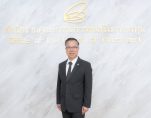
Mr. Narit Therdsteerasukdi, Secretary General of the Thailand Board of Investment (BOI)

The projects, filed through the first half of 2026, cover multilayer ceramic capacitors (MLCCs), thermal graphite films, high-performance ceramics, battery and fuel-cell materials, neodymium magnets, glass and quartz fabrics for printed circuit boards, and nanomaterials for precision manufacturing. Together they mark a shift for one of Southeast Asia’s largest economies from downstream assembly toward the high-value materials on which future industries are built.

In AI computing and clean energy, lighter, more heat-resistant and more conductive materials determine how well devices perform. MLCCs are essential components in products from smartphones to AI servers, and a single high-end server can use up to 30,000 of them.

“The world is moving toward products that are smaller and lighter, yet stronger and more efficient,” said Mr. Narit Therdsteerasukdi, Secretary General of the Thailand Board of Investment. “Producing advanced materials in Thailand is key to building sustainable industrial capacity, reducing reliance on imports, and opening the door for Thai companies to join higher-value supply chains.”

Thailand is already a production base for leading component makers, including Japan’s Murata Electronics, which holds more than 35 percent of the global MLCC market, and Kyocera AVX Components, the world’s top tantalum capacitor maker. Among the new projects, Taiwan’s Fultech Fiber Glass makes glass fabric for printed circuit boards, including high-performance grades for AI servers. Jones Tech produces synthetic and natural graphite films that carry heat away from electronic devices.

Beyond electronics, the projects strengthen supply chains for electric vehicles, batteries, and clean energy, from BGN Thai’s coated foils for lithium-ion batteries and Phinis Well’s neodymium magnets for EV motors to Xinyuan Graphite’s bipolar plates for hydrogen fuel cells.

CoorsTek Advanced Materials, a subsidiary of US-based CoorsTek — a global leader in engineered ceramics for the semiconductor and aerospace industries — has invested in producing ceramics for automotive pressure sensors and silicon nitride balls for hybrid bearings in EVs and wind turbines. Golden Egret Cemented Carbide is making tungsten carbide powders for precision cutting tools, reinforcing Thailand’s base for high-precision manufacturing.

“The advanced materials industry taking root in Thailand today is the foundation of tomorrow’s supply chains in electronics, EVs, batteries, and clean energy,” Mr. Narit said. “The BOI will keep building this investment base, strengthening upstream materials and components, and supporting R&D, technology, and workforce development, to move Thailand from downstream to upstream production and make it the region’s advanced materials hub.”

Note: USD conversions are based on the Bank of Thailand’s average selling rate of approximately 33.76 baht per USD.

Hashtag: #Thailandboardofinvestment #BOI #FDI #Investment

The issuer is solely responsible for the content of this announcement.

Thailand Board of Investment (BOI)

Established in 1966, the Thailand Board of Investment (BOI) has spent six decades promoting high-value investment from both foreign and Thai investors, strengthening the country’s competitiveness and driving its transition toward a sustainable, balanced new economy.

Investment Services Center — PR Section, Office of the Board of Investment (BOI)

555 Vibhavadi-Rangsit Road, Chatuchak, Bangkok 10900 Tel. +66 (0) 2553 8111, Fax +66 (0) 2553 8222

  • New report sets out a method the industry can use to put a financial value on climate resilience
  • The Westbund Central case study shows that its resilience measures are expected to keep storm-surge and rainfall-flood losses in 2050 below the losses an unprotected building would face today

HONG KONG SAR – Media OutReach Newswire – 23 October 2026 – Hongkong Land Holdings Limited (“Hongkong Land”) today published Building Value That Lasts: Quantifying the Return on Climate Resilience in Real Estate. The report developed with Marsh puts a financial value on designing buildings for a changing climate. Its case study is Westbund Central, Hongkong Land’s mixed-use waterfront development of approximately 1.7 million sq. m. on Shanghai’s Huangpu River.

(From left to right) From left: Michael Long, Head of Group Sustainability, Hongkong Land; Stuart Grant, Chief Executive of Westbund Central, Hongkong Land; Swenja Surminski, Managing Director of Climate and Sustainability, Marsh; and Michael Li, Chairman and President, Marsh Risk China.

The report finds that the development’s resilience measures cut expected storm-surge losses by 84% and rainfall-flood losses by 88% under today’s conditions. Westbund Central’s resilience measures are expected to keep storm-surge and rainfall-flood losses in 2050 below the losses an unprotected building would face today.

Closing the resilience valuation gap

Climate risk now shapes how real estate is assessed, financed and insured. Almost every climate related disclosure acknowledges the need for adaptation, yet fewer than one in ten puts a number on it. Hongkong Land and Marsh set out to close that gap together by treating resilience as an investment with a measurable return, not a cost to be absorbed.

Resilience pays, and the reductions are large

Working with global leading insurance broker and risk advisor Marsh, Hongkong Land modelled the average annual loss (AAL) at Westbund Central from storm surge, rainfall flooding and wind. AAL is the expected yearly cost of physical damage. The modelling compared climate risks today and in 2050 for buildings with and without resilience measures beyond those required by building codes. It assumed a future in which global greenhouse-gas emissions remain high.

Without the development’s enhanced resilience measures, expected storm-surge losses would more than double and wind losses would more than triple by 2050. The measures reduce expected losses as follows:

  • storm-surge losses fall by 84%, both today and in 2050
  • rainfall-flood losses fall by 88% today and 79% in 2050
  • wind losses fall by 36% today and 31% in 2050

Built for the climate of 2050

Westbund Central was engineered for projected climate conditions in 2050, rather than historical conditions. These measures significantly reduce the impact of increasing climate risk:

  • Storm surge: with Westbund Central’s resilience measures in place, average annual losses in 2050 are projected at 0.12%, compared with 0.38% for a building without these measures today.
  • Rainfall flooding: with the resilience measures in place, average annual losses in 2050 are projected at 0.05%, compared with 0.19% for a building without these measures today.

Insurers are raising premiums, tightening terms and withdrawing cover from exposed locations. In that market, a lower and more stable loss profile matters.

Westbund Centrals resilience features include:

  • 23% more drainage capacity, protecting against a 1-in-100-year rainfall event
  • Grade 1 waterproofed basements and the elevation of critical equipment
  • A “Sponge City” network of more than 12 features designed to capture and store stormwater, with capacity exceeding 2,000 m³

The figures are conservative. They count physical damage only and exclude extreme heat, the fastest-growing hazard at the site, which the development manages through design and operations.

Michael T. Smith, Group Chief Executive of Hongkong Land, said: “Climate change is a significant force reshaping real estate. At Westbund Central, climate resilience is core to all that we do because we believe resilience and commercial performance reinforce each other. This report shows the return on that investment can be measured today, with tools that already exist. The industry no longer has any excuse not to.”

Stuart Grant, Chief Executive of Westbund Central, said: “A premium destination is a seamless one. Much of the resilience work at Westbund Central is deliberately invisible to the tenants and visitors who use it every day. Its value shows in the disruption that never reaches them. Keeping the precinct open, comfortable and trading regardless of weather conditions is how resilience facilitates commercial performance.”

Michael Li, Chairman and President of Marsh Risk China, said: “Climate risk is now a balance-sheet risk. Westbund Central shows that adaptation pays back through lower loss exposure and stronger access to capital. As a risk orchestrator, Marsh matches protection needs to capital flows, helping clients quantify resilience and close the valuation gap.”

A method for the industry

The report is offered as a method others can apply, not just as an account of one development. It traces how climate risk can be assessed from site selection through to operations and linked to financial outcomes. It calls on the industry to:

  • quantify early, at site selection and design, when action is most cost-effective
  • bring insurers and lenders in from the start
  • build a shared standard so resilience can be benchmarked across assets, as carbon already is

For further details, please see the full report which is available for download [here].

Hashtag: #HongkongLand

The issuer is solely responsible for the content of this announcement.

Westbund Central

Hongkong Land’s Westbund Central is the Group’s largest-ever single investment. Scheduled to complete in phases up until 2028, it is an US$8 billion development encompassing approximately more than 1.7 million sq. m. of prime mixed-use property strategically located at Shanghai’s Xuhui Waterfront. It is a flagship development of Hongkong Land’s prime commercial properties’ CENTRAL Series. The ultra-premium integrated commercial property includes 240,000 sq. m of retail space, 650,000 sq. m. of premium Grade A offices, 160,000 sq. m. of high-end waterfront luxury residences, two hotels (55,000 sq. m.) and over 50,000 sq. m. of cultural and art venues.

Hongkong Land

Hongkong Land is a major listed property development, investment and management group. It focuses on developing, owning and managing premium and ultra-premium mixed-use real estate in Asian gateway cities, featuring Grade A office, luxury retail, residential and hospitality products. With over US$50 billion in assets under management, Hongkong Land’s ultra-premium mixed-use real estate footprint spans over 1.97 million sq. m. lettable area in operation and 1.43 million sq. m. lettable area under development, with flagship mixed-use projects in Hong Kong, Singapore and Shanghai. Its properties hold industry leading green building certifications and attract the world’s foremost companies and luxury brands. Established in 1889, Hongkong Land takes a long-term view, investing significantly alongside its capital partners and concentrating its portfolio where it can create the most value for tenants, customers and investors. Hongkong Land Holdings Limited has a primary listing on the London Stock Exchange, with secondary listings in Singapore and Bermuda. Hongkong Land is a member of the Jardine Matheson Group.

Marsh
Marsh (NYSE: MRSH) is a global leader in risk, reinsurance and capital, people and investments, and management consulting, advising clients in 130 countries. With more than 95,000 colleagues, Marsh helps build the confidence to thrive through the power of perspective. For more information, visit marsh.com, or follow us on LinkedIn and X.

Arabian Post Staff -Dubai Emaar Hospitality Group has confirmed the opening of Emaar South Golf Club in Dubai South, adding an 18-hole championship course to its leisure portfolio and expanding golfing facilities near Al Maktoum International Airport. The club welcomed its first players on 5 October and becomes the group’s fourth golf club. Designed by European Golf Design, the course measures 7,278 yards from the black tees, […]

Chinese President Xi Jinping has ordered an all-out search for survivors and urgent treatment for the injured after a powerful earthquake struck Tibet, killing at least 16 people and leaving dozens injured. The magnitude 7.0 earthquake hit Baqen County in Nagqu, in the Xizang Autonomous Region, at 10.33pm on Thursday. Local authorities said on Friday that the number of injured had risen to 65, while the confirmed […]

By Nitya Chakraborty U.S. Secretary of state Marco Rubio’s visit to India this week and talks with the Indian corporate leaders including Mukesh Ambani and Gautam Adani have roused unusual interest in the country’s business circles as also among diplomats globally. There are two aspects. First, Rubio gave priority to his visit to Jamnagar and […]

The article Marco Rubio, Mukesh Ambani, Elon Musk And Gautam Adani appeared first on Latest India news, analysis and reports on Newspack by India Press Agency).

Alibaba Group Holding Ltd shares plunged nearly 6% in Hong Kong on Thursday, leading a technology sector selloff after China’s market regulator demanded stronger product quality controls and consumer protection measures across major ecommerce platforms.

The company’s stock fell to HK$97.55 during morning trading, marking its steepest intraday decline in two months. Investors reacted to indications that Beijing could intensify scrutiny of online marketplaces, potentially increasing compliance costs for Alibaba and its competitors.

China’s State Administration for Market Regulation disclosed on Wednesday that it had convened a meeting in Beijing with representatives of leading digital commerce businesses to discuss improving product standards, strengthening consumer safeguards and addressing shortcomings in platform governance.

Shares of JD. com dropped approximately 4.7%, while Kuaishou declined more than 4%. Other technology companies, including Tencent, Meituan, Xiaomi and NetEase, also suffered losses as selling spread across the sector.

Hong Kong’s Hang Seng Index declined nearly 3%, touching a three-month low, while the Hang Seng Tech Index dropped more than 4%, reaching its weakest level since September 2024. The technology benchmark has lost more than 30% this year.

The regulatory announcement focused on persistent problems involving counterfeit merchandise, misleading advertising and products failing to match descriptions provided by online sellers. Authorities identified livestream shopping, instant retail services and social commerce as areas where product safety risks have become increasingly complex.

The regulator said platforms must strengthen their responsibilities as gatekeepers, establish comprehensive quality management systems and improve supervision throughout commercial supply chains. Companies were instructed to align their practices with existing regulatory guidance and the government’s 2026 quality improvement priorities.

Officials also emphasised greater transparency, improved aftersales services and more effective mechanisms for resolving consumer complaints. The measures seek to strengthen accountability among platform operators without necessarily introducing an entirely new regulatory framework.

Representatives from Alibaba’s Taobao and Tmall businesses attended the meeting alongside JD. com, Pinduoduo, Xiaohongshu, Kuaishou, Douyin, Vipshop and other online trading platforms.

The gathering followed guidance issued last year by ten government departments, including the market regulator, the Cyberspace Administration of China and the Ministry of Industry and Information Technology, concerning product and service standards across digital marketplaces.

Authorities acknowledged that companies had implemented improvements under those guidelines but said substantial challenges remained. Emerging business models were creating additional difficulties for regulators attempting to identify unsafe products, deceptive marketing and inadequate consumer safeguards.

For Alibaba, the renewed regulatory emphasis directly affects its domestic commerce operations, particularly Taobao and Tmall, which connect merchants with consumers across China’s vast online retail market.

Stricter monitoring requirements could oblige marketplace operators to devote additional resources to merchant verification, product inspections, complaint handling and supply chain oversight. The financial implications will depend on how existing requirements are implemented and enforced.

The announcement did not disclose fresh financial penalties against Alibaba or establish a timetable for additional enforcement measures. The market reaction therefore reflected concerns about possible regulatory consequences rather than confirmation of sanctions against the company.

Broader investor caution compounded the selling pressure. Mainland investors had reduced their exposure to Hong Kong equities during the preceding trading session, while technology valuations remained under pressure amid questions surrounding substantial expenditure on artificial intelligence infrastructure.

Alibaba has committed significant capital to expanding its computing capacity and artificial intelligence operations, making investor assessments of profitability and spending particularly important alongside regulatory developments.

The company completed an HK$80 billion share placement in August, allocating approximately 60% of net proceeds towards expanding global computing infrastructure and the remainder towards hyperscale artificial intelligence data centres and upgrades to cloud systems.

That financing underlined Alibaba’s commitment to technological investment even as its established ecommerce businesses face heightened expectations concerning operational standards and consumer safeguards.

The regulator also encouraged companies to use commercial data to improve product quality among suppliers, linking information gathered through online transactions with manufacturing improvements and better supply chain coordination.

Another proposal involved developing and publishing platform quality governance indices, intended to provide consumers with clearer information about standards maintained by different marketplaces.

Officials urged participating companies to strengthen cooperation with regulators and other stakeholders while making information about products and services more transparent.

The meeting included discussions of the ISO 9001 quality management framework and methods for businesses to assess their own governance arrangements. Platform representatives exchanged views on implementing quality improvements and addressing weaknesses identified by the authorities across online trading activities.

Abu Dhabi emerged as the leading centre of sovereign investment activity in the Middle East during the first nine months of 2026, with state-backed funds accelerating acquisitions, consolidating strategic assets and expanding international investments despite geopolitical uncertainty. New figures from investment research firm Global SWF show that Mubadala Investment Company deployed $26.2 billion between January and September, making it the most active sovereign investor in the Gulf. […]

Iran’s Islamic Revolutionary Guard Corps (IRGC) has claimed that its air defence forces shot down an American MQ-1 unmanned aircraft over the Strait of Hormuz, although independent confirmation of the reported interception remains unavailable. The claim, circulated through social media, follows a series of Iranian announcements concerning American surveillance drones operating around the strategic waterway. The available information does not establish whether the circulating statement describes a […]

The annual flagship program builds on the success of its first two editions, bringing global experts together around an agenda shaped by the green transition’s most urgent challenges and opportunities.

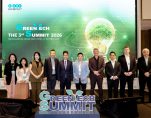
HONG KONG SAR – Media OutReach Newswire – 21 October 2026 – GoImpact will convene the 3rd Green Tech Summit on October 21-22 at Fullerton Ocean Park Hotel, Hong Kong, bringing together over 50 world-class experts and leaders from across sectors to exchange ideas and showcase solutions under the theme of “turning climate risks into opportunities”.

GoImpact's Green Tech Summit returns for its third year to turn cross-sector dialogue into action

Now in its third year, the Summit builds on the success of its first two editions and its role as a signature annual convening for cross-sector expertise. This year’s agenda is designed to move beyond discussion—creating space for participants to examine shared challenges, connect perspectives and identify opportunities for meaningful progress. With continuous strong support from Corporate Partners like HSBC, Swiss Reinsurance, Stephenson Harwood, and Sino Group, with City University of Hong Kong as Academic Partner, US Green Building Council as Learning Partner, and many trade associations as Community Partners, the Summit is a focal point gathering over 400 participants.

“To achieve a green and sustainable future, we need green capital at an unprecedented scale. Hong Kong will continue to leverage our robust financial structures and technological innovation to connect green projects with international capital, and work with our partners to build a greener future.,” said Joseph Chan, Under Secretary of Financial Services and Treasury Bureau of the HKSAR Government who is the guest-of-honour opening the Summit.

“The intersection of Green and Tech continues to be the important nexus driving actions and results in a world that faces increasingly harsh consequences of climate change-related risks,” “The Summit is a collective call to action for us to come together and focus on such priorities,” said Helene Li, CEO & Co-Founder of GoImpact.

The programme will feature over 20 sessions and workshops, with contributions from leading players such as the Bank for International Settlements, Henderson Land Development, National University Health System of Singapore and more.. The Summit will bring different perspectives into the conversation to support practical collaboration.

Hashtag: #GoImpact #GreenTechSummit2026

The issuer is solely responsible for the content of this announcement.

About GoImpact

Bridging the great divide between the talk and action, the move from ambition to action, accelerating the Sustainable Development agenda from intention to implementation – GoImpact means impact made easy and actionable.

GoImpact is an ecosystem developed to connect the dots and provide action enablers built around 2 key pillars:

  • Education
  • Advocacy

Through its partners network with online-to-offline initiatives along with connections to corporate organisations, higher-education institutes and regulators, GoImpact connects investors with deals relevant to their interests and provide learning opportunities to drive real change by example for everyone who is keen to understand more about the Sustainable Finance agenda.

Arabian Post Staff -Dubai Britain will deploy Royal Air Force Typhoon fighter jets to protect Saudi Arabian cities and critical infrastructure against escalating missile and drone attacks by Yemen’s Houthi movement, expanding its military involvement in the region. The Ministry of Defence announced on Tuesday that British aircraft would undertake defensive counter-air operations over Saudi Arabia, with explicit instructions not to conduct offensive strikes against the Iran-aligned […]

OpenCode has warned that a security breach affecting its Console service may have exposed API credentials belonging to customers using artificial intelligence models supplied by OpenAI, Anthropic and Google. The company said the incident affected 1.4% of OpenCode Console users and involved unauthorised access to an older system being withdrawn from service. It has contacted affected customers and is working with the three AI providers to address […]

VISHNU RAJA
RYO YAMADA
HITORI GOTOH
IKUYO KITA