Federal reforms regulating industrial hemp are reshaping the treatment landscape for sleep disorders, anxiety and epilepsy across the United Arab Emirates, as clinicians, researchers and regulators map how low-THC cannabis derivatives can be used safely within a tightly controlled system. The changes sit apart from the country’s framework on medical cannabis, which governs products with higher tetrahydrocannabinol content and remains subject to strict prescription and import rules.
The hemp law permits the cultivation, processing and use of cannabis varieties containing minimal THC, typically below 0.3 per cent, aligning the UAE with regulatory models adopted in several advanced economies. Officials say the objective is to unlock therapeutic and industrial value without opening pathways to recreational misuse. For patients, the most immediate implications are for cannabidiol-based preparations, which are non-intoxicating and increasingly studied for neurological and psychiatric conditions.
The policy shift creates new clinical options for people whose symptoms have proved resistant to conventional therapies. Insomnia and generalised anxiety disorder affect a growing share of the population, while epilepsy continues to pose treatment challenges for a subset of patients who do not respond adequately to standard anti-seizure medicines. Cannabidiol, or CBD, has drawn attention for its calming effects on the central nervous system and its role in reducing seizure frequency in certain epilepsy syndromes.
Specialists caution that hemp products are not a panacea. Evidence is strongest for specific childhood epilepsies, including Dravet and Lennox-Gastaut syndromes, where purified CBD has been shown to reduce seizure burden when added to existing regimens. Research into anxiety and sleep has produced more mixed findings, though small clinical trials and observational studies suggest benefits for sleep onset and stress modulation at carefully titrated doses.
Professor Barnes, a leading authority on cannabis medicine, notes that the global legal landscape has shifted rapidly. Medical cannabis containing higher THC levels is now legal in 71 countries under varying frameworks, reflecting broader acceptance of cannabinoid-based therapies when appropriately regulated. The UAE’s approach, by contrast, draws a bright line between hemp-derived products and medical cannabis, allowing limited therapeutic use while preserving the country’s zero-tolerance stance on recreational drugs.
Regulators emphasise that access will be medicalised rather than commercialised. Hemp-derived therapeutics are expected to move through pharmacy channels and clinical oversight, with product quality, labelling and traceability forming core pillars of compliance. Authorities have indicated that cultivation licences will be tightly issued, with genetics, THC thresholds and testing protocols specified to prevent diversion.
Healthcare providers see an opportunity to expand personalised care. Neurologists and psychiatrists report rising patient interest in non-sedating options that can be integrated with existing treatments. For epilepsy specialists, CBD’s favourable side-effect profile compared with some traditional anti-epileptic drugs is a significant draw, particularly for long-term management. Sleep physicians, meanwhile, are exploring whether hemp-derived formulations can reduce reliance on hypnotics that carry dependency risks.
Industry participants are preparing cautiously. Pharmaceutical distributors and research institutions are investing in clinical studies tailored to regional populations, recognising that dosage, formulation and delivery methods matter as much as legality. Oils, capsules and oral solutions are expected to dominate, given their dosing precision and lower risk profile compared with inhaled products.
Public health experts underline the need for clear guidance to avoid consumer confusion. Hemp products sold globally range from pharmaceutical-grade medicines to wellness supplements of uneven quality. The UAE framework seeks to close that gap by requiring evidence-based claims and physician involvement, reducing the risk of self-medication or exaggerated expectations.
The reforms also intersect with broader innovation goals. By enabling controlled research into cannabinoids, policymakers aim to position the country as a regional hub for life sciences, while maintaining strict ethical standards. Universities and hospitals are already collaborating on protocols to assess safety, efficacy and long-term outcomes in local cohorts.
Brookfield Asset Management is preparing to launch a cloud computing business called Radiant that will lease artificial intelligence chips directly to developers, underpinned by a newly formed $10 billion AI fund as part of its broader strategy to build an integrated AI infrastructure platform. Radiant’s model aims to control key inputs in the AI value chain from land and power to compute, offering an alternative to conventional cloud […]
Air raid sirens sounded across Caracas on Friday as parts of the Venezuelan capital experienced electricity outages, triggering widespread concern and a swift response from authorities who said the alarm reflected a security drill amid heightened tensions rather than an external attack. Officials said the sirens were activated in several districts shortly after dawn, coinciding with intermittent power losses that affected residential neighbourhoods, transport links and mobile […]
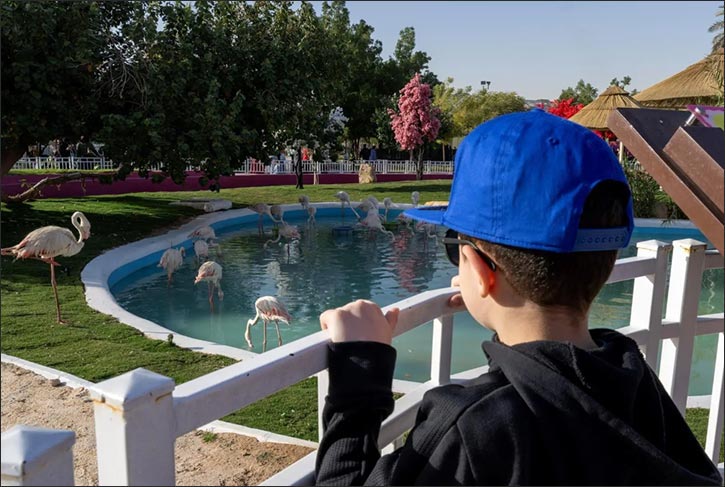
Riyadh Zoo has positioned itself as a family-centred destination within Riyadh Season 2025, offering child-focused environments designed around safety, comfort and controlled engagement with wildlife, according to official details released at the start of the year. The attraction, one of the season’s designated zones, is being presented as a model for how large-scale entertainment events in the capital are adapting to the needs of families with young children.
The zoo’s layout has been organised to prioritise safe movement and visibility, with dedicated pathways that reduce congestion and limit close contact points. Low-height viewing areas have been built to allow children clear sightlines to animals without the need for lifting or crowding, a feature aimed at reducing accidents while improving the overall experience. These design choices form part of a broader emphasis on balancing entertainment with parental reassurance.
Family seating areas are distributed throughout the zone, providing spaces for rest and supervision while maintaining visual access to enclosures. Organisers say this approach allows families to remain engaged without feeling overwhelmed by noise or foot traffic, an issue that has challenged other high-density attractions during the season. The emphasis on controlled flow and defined activity zones reflects planning standards that have been applied across several Riyadh Season venues.
Riyadh Zoo’s children’s facilities include interactive learning areas intended to introduce younger visitors to animal behaviour and conservation in an age-appropriate format. Educational elements are integrated into play-based experiences, with staff trained to manage group sizes and maintain clear boundaries between visitors and animals. This structure is designed to minimise stress for both children and wildlife while encouraging curiosity and awareness.
Safety protocols extend beyond physical design. Organisers have highlighted strict operational standards, including routine checks of barriers, continuous monitoring of visitor movement and the presence of trained personnel in high-traffic areas. Emergency response procedures have been aligned with wider Riyadh Season safety frameworks, ensuring coordination with medical and security teams operating across the city’s entertainment zones.
The focus on child-friendly environments aligns with Riyadh Season’s stated objective of expanding family-oriented destinations as part of the capital’s cultural and leisure transformation. Over successive editions, the festival has broadened its appeal beyond concerts and sporting events to include attractions that cater to younger audiences, reflecting demographic demand and changing leisure habits within the Kingdom.
Urban planners and event management specialists note that such initiatives also serve a longer-term purpose. By embedding safety-first design principles into popular venues, organisers can set benchmarks for future projects, particularly those involving children. The Riyadh Zoo model demonstrates how entertainment infrastructure can be adapted to local expectations while meeting international standards for visitor welfare.
Riyadh Season 2025 has placed increased emphasis on organisation and crowd management following feedback from earlier editions, when high attendance at certain zones led to congestion. The zoo’s structured layout and controlled entry points are intended to mitigate those risks, offering a calmer environment compared with more high-energy attractions elsewhere in the season.
Parents visiting the zoo have highlighted the value of clearly marked routes and viewing points that allow children to engage independently within defined limits. This approach reduces reliance on physical barriers alone, instead combining design, supervision and education to create a safer setting. For organisers, the challenge has been to preserve a sense of exploration while maintaining order, particularly during peak attendance periods.
The zoo’s role within Riyadh Season also reflects broader investment in leisure infrastructure as part of national diversification efforts. Family-oriented attractions are increasingly viewed as essential to building a sustainable entertainment economy, encouraging repeat visits and longer dwell times while appealing to residents and visitors alike.
Arabian Post Staff -Dubai Samsung Electronics has lifted the curtain on the Freestyle Plus, a new generation of its portable projector range that pushes further into artificial intelligence-driven home entertainment. Revealed ahead of the CES 2026 technology show in Las Vegas, the device signals Samsung’s intent to blend mobility with smarter software, at a time when consumer electronics firms are racing to embed AI across everyday products. […]
A compact, gaming-themed building set priced at $20 has become the latest expression of Lego’s strategy to blend nostalgia with accessibility, as the company rolls out a new Creator 3-in-1 Retro Gaming Console aimed at younger builders and adult collectors alike. The 268-piece kit, released at the start of January, reflects Lego’s effort to tap into enduring affection for early video-game hardware while keeping the price point […]
Global charging technology brand CUKTECH has launched its first desktop super-fast charging station in Vietnam, marking a strategic push into Southeast Asia’s fast-growing market for high-power, multi-device charging solutions aimed at professionals and power users.
The CUKTECH 30 Ultra Charging Station enters a segment shaped by the rapid proliferation of laptops, tablets, cameras and high-capacity smartphones that increasingly demand desktop-class power delivery. The company said the device is designed for users who run several devices simultaneously, including content creators, developers and technology enthusiasts seeking a single hub that replaces multiple chargers without compromising speed or safety.
At the centre of the product is an ultra-high power output architecture capable of delivering fast charging across several ports at once, supported by intelligent power allocation that prioritises devices based on real-time demand. The station features a visual interaction interface that displays charging status, wattage distribution and thermal conditions, a move intended to give users greater control and transparency over how power is being delivered during intensive workloads.
Vietnam has emerged as a focal point for consumer electronics launches, driven by rising disposable incomes, a young digital-first population and the country’s growing role as a manufacturing and innovation hub. By choosing Vietnam for its first desktop charging station rollout, CUKTECH is signalling confidence in demand for premium accessories that support hybrid work, gaming and creative production environments.
Industry analysts note that desktop charging stations are evolving from simple multi-port adapters into intelligent power management devices. As laptops adopt higher-wattage USB-C standards and smartphones push faster charging thresholds, manufacturers are racing to balance speed with safety, heat control and long-term battery health. Products that fail to manage thermal loads or power negotiation effectively risk damaging devices or underperforming under sustained use.
CUKTECH’s 30 Ultra addresses these concerns with built-in safety systems that monitor temperature, voltage and current in real time, automatically adjusting output to protect connected devices. The company has highlighted compliance with international charging protocols, allowing the station to work across a wide range of brands and operating systems without proprietary lock-ins.
The launch also reflects intensifying competition in the charging accessories market, where established players and newer brands are vying to differentiate through design, smart features and ecosystem compatibility. Desktop charging stations, once niche products, are now being positioned as essential tools for modern desks, particularly as remote and hybrid work setups become permanent fixtures for many professionals.
For content creators, the appeal lies in the ability to power cameras, laptops, tablets and phones from a single device while monitoring output visually, reducing cable clutter and downtime. For businesses and co-working spaces, such stations offer a shared charging solution that can support multiple high-demand devices without the need for wall-mounted adapters or extension cords.
CUKTECH’s expansion strategy has drawn attention due to its roots in advanced charging research and its association with broader consumer electronics supply chains in Asia. The company has previously focused on portable power banks and fast chargers, building a reputation for high-wattage products that cater to users with demanding power needs. Moving into desktop charging stations represents a natural extension of that portfolio, while also placing the brand in direct competition with premium accessory makers targeting professional users.
Vietnam’s technology retail landscape has become increasingly receptive to such launches, with consumers showing greater willingness to invest in quality peripherals that promise durability and performance. Retailers have reported strong interest in fast-charging solutions that can future-proof desks as device power requirements continue to climb.
Market observers also point to regulatory clarity around USB-C and fast-charging standards as a factor accelerating adoption. As devices converge on common charging protocols, consumers are more confident that a single high-end station can serve multiple generations of hardware, improving value over time.
Arabian Post Staff -Dubai Google’s Pixel smartphone line is set for a marked transition in 2026 as its camera system moves beyond image capture to function as an always-on AI sensing hub, according to multiple industry briefings, developer disclosures and patent filings tied to the company’s mobile roadmap. The shift centres on deeper integration of Google Lens with on-device artificial intelligence, turning the camera into a primary […]
Washington has decided to reduce anti-dumping tariffs on certain pasta imports from Italy, a step that Italian officials say could ease a long-running trade dispute and marginally lower costs for American consumers while restoring access for affected producers. Italy’s Foreign Ministry said the United States would cut duties imposed on specific Italian pasta brands after a review of the measures, which were introduced following complaints by American […]
European Space Agency officials are assessing the impact of another cyber intrusion after a criminal group claimed it is offering around 200 gigabytes of agency data for sale on underground forums, raising fresh questions about the resilience of public-sector space infrastructure to sustained digital threats. The alleged breach, disclosed by the attackers through dark-web postings and shared among cybersecurity monitoring firms, is described as involving internal […]
Arabian Post Staff -Dubai High-refresh 1440p gaming has settled into a clear sweet spot for PC players, balancing visual fidelity with frame rates that comfortably exceed 100 frames per second in demanding titles. Entering 2026, the market for graphics cards capable of driving 1440p monitors at 144Hz and beyond has become more stratified, shaped by architectural advances, shifting pricing strategies and a growing focus on memory capacity […]
Tuba, an artificial intelligence-driven healthcare benefit management platform, has been accepted into NVIDIA Inception, a global programme designed to support technology start-ups developing advanced AI solutions. The move places Tuba among a curated group of early-stage companies working with high-performance computing, data science and machine learning tools to scale products in complex sectors such as healthcare, finance and advanced manufacturing. The company’s entry into the programme […]
Ras Al Khaimah ushered in 2026 with a choreographed New Year’s Eve display that combined fireworks and drone technology on a scale not previously attempted in the emirate, securing a Guinness World Records title for the largest aerial image of a phoenix formed by multirotor drones. The 15-minute presentation unfolded along the waterfront, drawing large crowds and positioning the northern emirate at the centre of global attention as midnight celebrations rolled across time zones.
Officials confirmed that thousands of drones were deployed in tightly synchronised formations above the coast, producing a series of animated images that culminated in the phoenix, a symbol chosen to reflect renewal and ambition. The aerial sequence was interwoven with precision fireworks launched from multiple barges and shoreline points, creating a layered effect across sea and sky. Guinness adjudicators on site verified the specifications shortly after the display concluded, confirming the new benchmark had been met.
The event formed part of Ras Al Khaimah’s wider strategy to build a reputation for large-scale, family-friendly celebrations that draw international visitors beyond the traditional holiday hotspots. Organisers said months of preparation were required to coordinate aviation safety, maritime controls and public access, with authorities temporarily restricting airspace and marine traffic during the performance window. Emergency services and transport agencies operated under special plans to manage the influx of spectators along the coastal stretch.
Tourism officials described the New Year event as a showcase of how technology is reshaping public celebrations worldwide. Drone-based performances have grown rapidly over the past decade as an alternative to fireworks, offering reusable hardware, programmable precision and reduced debris. By combining both elements, the emirate aimed to deliver visual impact while demonstrating technical capability. Industry specialists note that such hybrid shows demand advanced software, redundant navigation systems and real-time monitoring to avoid collisions or signal loss.
Local hospitality operators reported strong occupancy across hotels and resorts, with restaurants and public viewing areas reaching capacity well before midnight. The celebrations extended across several zones, allowing visitors to experience the show from beaches, promenades and elevated vantage points. Authorities encouraged spectators to use public transport and designated parking areas to ease congestion, a measure that helped maintain steady pedestrian flows before and after the countdown.
The Guinness title adds to a growing list of high-profile achievements used by destinations to differentiate themselves in a competitive tourism market. Record-driven events have become a common tool to generate global media coverage and social media traction, though experts caution that they require careful balancing of spectacle, safety and sustainability. In this case, organisers highlighted the use of digitally controlled drones to minimise environmental impact compared with traditional fireworks-only displays, while acknowledging that pyrotechnics remain a key draw for audiences.
Cultural planners involved in the programme said the phoenix motif was selected to resonate across diverse audiences while aligning with the emirate’s long-term development narrative. The animated sequence depicted the bird rising and spreading its wings before dissolving into abstract patterns, followed by a countdown rendered in light above the water. Fireworks then traced the skyline in timed bursts, synchronised to a musical score broadcast along the shore.
The success of the event is likely to influence planning for future festivals and national celebrations, both within the emirate and across the region. Drone show providers are already expanding fleets and investing in higher-capacity batteries, brighter LEDs and more resilient communications links to support increasingly complex formations. Analysts say destinations that master these capabilities early can scale performances quickly for major occasions.
HONG KONG SAR – Media OutReach Newswire – 2 January 2026 – This season of giving, A Diamond is Forever joins hands with Asia’s premier luxury retailer, Lane Crawford, in paying tribute to the beauty and authenticity of natural diamonds. Together, they bring forward a shared commitment to exceptional craftsmanship, innovation, and responsible sourcing.
Renowned actress Charmaine Sheh (left) and fashion trendsetter Hilary Tsui (right) are invited to the event. Charmaine and Hilary discover natural diamonds and experience how diamond detection instruments can distinguish between natural and synthetic diamonds.
“The Forever Gifts: A Natural Diamond Series” the ultimate destination for bespoke natural diamond master creations in Hong Kong, launched with a line-up of activities at Lane Crawford’s flagship retail space in IFC mall. Renowned actress Charmaine Sheh, fashion trendsetter Hilary Tsui, VIPs, media members and influencers from Hong Kong and China were invited to explore exquisite natural diamond collections, thoughtfully curated by Lane Crawford.
Natural diamond workshops are held at Lane Crawford IFC, guiding guests through an immersive journey to explore diamonds from rough to polished
This special series starts with a selection of contemporary fine jewellery brands, each offering a unique design story and a commitment to creativity and excellence. They include State Property, YEPREM, Mio Harutaka, KORLOFF and Claudia Ma Fine Jewellery. “This collaboration marks an important moment for Lane Crawford. Together with De Beers, we’re creating a destination that celebrates the beauty of natural diamonds through exceptional craftsmanship and global creativity. This exclusive space reimagines how clients engage with fine jewellery – bringing artistry, innovation, and the opportunity to design something truly personal.” Emily Wong, Senior Vice President of Merchandising at Lane Crawford.
The exclusive event brought a series of interactive workshops led by experts Jodine Bolden and Samantha Sibley from the De Beers Institute of Diamonds alongside London-based multi-disciplinary artist Annette Fernando.
Left to Right: Fashion stylist Veronica Li, famous influencer Ansheles, international fashion blogger Steph Hui, actor Bruce Tong and actor and singer Chris Tong attend the natural diamond workshop to experience the extraordinary charm of natural diamonds
At the natural diamond workshop, participants gained hands-on experience on rough diamond sorting, polished diamond grading, and differentiation of natural diamonds versus synthetics. Participants also had the unique opportunity of viewing a nearby 297-carat rough diamond and kimberlite carrying a 22-carat rough diamond. Also on display was a gem called “Beating Heart”, a 0.329-carat rough diamond that features a smaller diamond moving freely inside its larger counterpart, a rarity that showcases the extraordinary conditions under which diamonds can form. This exquisite piece, recovered by De Beers Group and analyzed at the facilities of De Beers Institute of Diamonds, is recorded on the Tracr platform, giving insight into its history and heritage. Upon completion of the workshop, each participant received a natural diamond masterclass certificate from the De Beers Institute of Diamonds.
“We are pleased to partner with Lane Crawford for this special series of events to proudly recognize the enduring value of natural diamonds, and to honour the artists who continue to bring life to these creations.” says Loletta Lai, Vice President, Natural Diamonds APAC De Beers Group.
Complementing the technical insight offered by the De Beers Institute of Diamonds, artist Annette Fernando shared her art creations inspired by natural diamonds, named The Multi-Faceted Self. Through a reflective coloring workshop, Annette invited participants to explore the transformative journey of natural diamonds as a metaphor for personal growth and resilience.
The partnership between A Diamond is Forever and Lane Crawford spotlights crafted natural diamond pieces sourced and styled from around the globe, the most treasured gifts ever! These iconic legacy brands and exciting new talent alike, all centered around the timeless beauty of natural diamonds, come together at Lane Crawford, the ultimate destination for discovery, craftsmanship, and contemporary luxury.
Featured Brands
Claudia Ma Fine Jewellery Claudia Ma, driven by a passion for modern high jewelry and an unwavering dedication to quality, founded her eponymous brand, Claudia Ma, in 2000. With a distinctive design sensibility and an eye for artistic aesthetics, she masterfully reinterprets classic themes through innovative modern expressions. Her creations have earned widespread acclaim for their signature style and exceptional craftsmanship. Over the years, Claudia has collaborated with renowned names such as Shanghai Tang, Lane Crawford, and De Beers Group Forevermark, solidifying her brand’s standing in Hong Kong’s fine jewelry landscape.
Her latest work draws inspiration from the barbell as a symbol of balance, focus, and strength. Crafted in 18k gold and accented with natural diamonds, these versatile pieces embody resilience while seamlessly elevating everyday style.
According to Claudia, “Natural diamonds and craftsmanship go hand in hand. Craftsmanship brings out the diamond’s inner brilliance, while my design presents this timeless classic in a modern way for generations to enjoy. Without this artistry, even the finest diamond remains just a hidden treasure.”
State Property An award-winning contemporary fine jewellery label from Singapore, State Property fuses modern design with traditional craftsmanship. Founded in 2015 by a jeweller and an industrial designer, the brand draws inspiration from culture, literature, and history—bringing to life structured silhouettes in precious metals that embrace the softness of the human form.
“There’s an emotional gravity with natural diamonds that’s hard to replicate, State Property shares. “Their rarity, beauty, and resilience make them extraordinary. Each one a fragment of the earth’s story, time in a crystallised form. We’re drawn to materials that carry meaning, and diamonds embody permanence, memory, and the quiet luxury of time. At State Property, we strive to have those same qualities reflected in our own work — creating jewellery with intention, designed to endure and be cherished across generations.”
YEPREM Known for its avant-garde creations, House of YEPREM is a family-run brand that continues to push the boundaries of contemporary diamond jewellery. With a legacy rooted in timeless craftsmanship and visionary design, YEPREM’s striking pieces are now celebrated across America, Europe, the Middle East, and Asia.
“Natural diamonds are the ultimate expression of authenticity and endurance, virtues that mirror YEPREM’s journey and craftsmanship. Born from time, pressure, and perseverance, each diamond holds the essence of transformation and strength. Their inherent brilliance and purity transcend trends, embodying emotion and individuality. In YEPREM’s world, a natural diamond is not merely a material, it is the foundation upon which stories of resilience and radiance are told.”
Mio Harutaka Crafted in Japan by local artisans, MIO HARUTAKA channels the beauty of Mother Nature into every design. The brand, founded in 2011, is committed to achieving diamond traceability and sustainability while maintaining exceptional artisanal craftsmanship. Harutaka shares: “Craftsmanship is essential—it accounts for almost everything. All of these details depend entirely on the skills of the craftsmen. Craftsmanship is what allows me to welcome close, hands-on appreciation, knowing that each piece will meet that level of scrutiny with confidence and beauty.”
KORLOFF Since 1978, KORLOFF has been a symbol of true femininity—magnetic, adventurous, and bold. Renowned for crafting exquisite bespoke jewelry, each piece reflects daring designs and the unmatched artistry of French craftsmanship, showcasing the Maison’s boundless creativity and passion. “Our story began with a diamond, the Black Korloff, the largest brilliant-cut natural black diamond in the world. Its uniqueness, shaped over millions of years, continues to inspire us every day as a symbol of mystery, transformation, and the magic of nature. Natural diamonds possess an authenticity and depth that no other material can replicate. They remind us that beauty is born from time, pressure, and light, forces that mirror the creative journey behind each Korloff jewel.”
Meet the De Beers Institute of Diamonds Experts:
Jodine Bolden, Director of Education De Beers Institute of Diamonds Jodine has previously developed her career as an operations line manager within large FMCG companies, and European HR Management roles within the luxury Health & Beauty industry where she first developed her passion for creating exceptional consumer experiences. After moving to De Beers, she worked as HR Manager for 5 years and discovered her fascination for diamonds as she supported various global functions across the De Beers estate, she then involved creating the Institute of Diamonds Education Service and developing each course that they now offer to their clients.
Since 2018 the De Beers Institute of Diamonds Education Service has provided education on a range of diamond subjects including, Rough Diamond Sorting, Polished Diamond Grading and Laboratory-Grown Detection.
Samantha Sibley, Technical Liaison Manager De Beers Group, UK With over 30 years’ experience in De Beers’ research, development and commercial teams, Samantha brings a wealth of knowledge regarding the characteristics of both natural and laboratory-grown diamonds. She has been involved in the development of De Beers Group’s current and previous suites of verification instruments and currently also facilitates training and educational courses around the world on the use of these instruments for accurate screening results. Other projects involve research into irradiation and HPHT colour treatments and the utilisation of this information to develop screening processes within the De Beers grading laboratories.
Sam has a BTEC Higher National Certificate in Physics, is a diamond fellow of the Gemmological Association of Great Britain (DGA) and holds a team leader qualification from Leadership Management UK and the Chartered Management Institute. She has presented on diamond topics globally and has had first-hand experience of the diamond industry over many years through visits to mines, cutting centres, polishing factories, gemmological laboratories and tradeshows.
Annette Fernando, Commissioned Artist, “The Multi-Faceted Self” at The Forever Gifts: A Natural Diamond Series Annette Fernando (b. 1991, London) is a multi-disciplinary artist and curator. She holds a BA in Fine Art from Central Saint Martins and is currently pursuing an MA in Contemporary Art at Sotheby’s Institute of Art, where she was awarded the prestigious Cultural Leaders Scholarship.
Fernando’s artistic repertoire spans drawing, printmaking, painting, and film. Fernando’s current work is driven to immortalise natures scenes, capturing the beauty of moments often overlooked through various mediums. Fernando’s work has garnered significant recognition, including winning the Jerwood Drawing Prize in 2014 and selections for the Royal Academy Summer Exhibition in 2021 and 2023. Her pieces are held in public and private collections across the USA, France, Hong Kong, and the UK.
The issuer is solely responsible for the content of this announcement.
About De Beers Group
Established in 1888, De Beers Group is the world’s leading diamond company with expertise in the exploration, mining, marketing and retailing of diamonds. Together with its joint venture partners, De Beers Group employs more than 20,000 people across the diamond pipeline and is the world’s largest diamond producer by value, with diamond mining operations in Botswana, Canada, Namibia and South Africa. Innovation sits at the heart of De Beers Group’s strategy as it develops a portfolio of offers that span the diamond value chain, including its jewellery houses, De Beers Jewellers and Forevermark, and other pioneering solutions such as diamond sourcing and traceability initiatives Tracr and GemFair. De Beers Group also provides leading services and technology to the diamond industry in the form of education and laboratory services via De Beers Institute of Diamonds and a wide range of diamond sorting, detection and classification technology systems via De Beers Group Ignite. De Beers Group is committed to ‘Building Forever,’ a holistic and integrated approach for creating a better future – where safety, human rights and ethical integrity continue to be paramount; where communities thrive and the environment is protected; and where there are equal
opportunities for all. De Beers Group is a member of the Anglo American PLC group. For further information, visit www.debeersgroup.com.
About Lane Crawford
Founded in 1850, Lane Crawford is an iconic luxury department store, with a mission to search the world for the most exciting talent and product, to create the ultimate luxury edit of fashion and lifestyle for its customers across Greater China. Featuring the largest own-bought designer portfolio across Womenswear, Menswear, Beauty & Wellbeing,
Home and Lifestyle, and Fine Jewellery in the region, Lane Crawford constantly evolves its product, experience, and services offer to embrace the most innovative and relevant designers and exceptional craftsmanship of the season, and to reflect the dynamic pace of its market and customers.
With four stores in Hong Kong; and three stores across Shanghai, Beijing and Chengdu, supported by a global digital flagship, and a purpose-built ecommerce site for China and WeChat store, Lane Crawford is Greater China’s first and only omni-channel luxury fashion retailer. Each store is personalised to its location and designed to provide sensory experience, fusing fashion, design, art and music, while offering exceptional service.
Lane Crawford is a part of The Lane Crawford Joyce Group, Asia’s premier fashion retail, brand management and distribution group, which also includes cutting-edge fashion boutique Joyce; and fashion, beauty, and lifestyle brand management and distribution business ImagineX Group.
A landmark entertainment destination has begun operations at Qiddiya City on 31 December 2025, as Six Flags Qiddiya City opened to the public near Riyadh, marking the flagship attraction of the sprawling Saudi project and the first Six Flags theme park outside North America. The launch ceremony took place under the patronage of Prince Faisal bin Bandar, Governor of Riyadh Province, with senior officials and tourism sector leaders attending to celebrate what organisers described as a major milestone in the Kingdom’s leisure and tourism expansion.
Six Flags Qiddiya City debuted with an array of attractions designed to appeal to global visitors and local families alike, with the signature offering being Falcons Flight, a steel roller coaster that now holds records as the tallest, fastest and longest of its kind in the world. The coaster reaches speeds of roughly 155 mph and rises to approximately 640 feet, dwarfing many existing high-thrill installations. Other record-setting rides include Iron Rattler, the tallest tilt coaster, and Spitfire, the tallest inverted coaster, alongside a total lineup of 28 rides and attractions across six themed lands.
Park president Brian Machamer described Six Flags Qiddiya City as more than a collection of rides, pitching the venue as a fully immersive theme park where music, themed environments and guest experience are integrated throughout, distinguishing it from traditional amusement parks in North America. He said the design and storytelling elements aim to create a cohesive environment that extends beyond individual attractions.
The opening is a cornerstone of Qiddiya City’s broader vision as a global entertainment and cultural hub. Spanning hundreds of square kilometres on the edge of the Tuwaiq Mountains roughly 45 km from downtown Riyadh, Qiddiya is envisioned as a master-planned destination where entertainment, sports, arts and education converge. Six Flags Qiddiya City represents the first operational phase of this masterplan, with additional attractions including a water theme park, motorsport and esports facilities, performance venues and residential neighbourhoods planned over the next decade.
Officials noted that the park’s launch aligns with national priorities to diversify the economy under Vision 2030, an ambitious strategy championed by Crown Prince Mohammed bin Salman to reduce reliance on oil revenues and accelerate growth in tourism and leisure sectors. Tourism Minister Ahmed Al-Khateeb highlighted the significance of the Six Flags project in positioning the Kingdom on the global entertainment map, underscoring efforts to attract millions of visitors annually.
The park offers international food and retail outlets, themed entertainment spaces and technology-enhanced guest services to meet global standards. Ticket pricing was set to attract a broad demographic, with adult entry priced at around SR325 and children’s tickets at SR275, while infants under four are admitted free. Early visitor feedback pointed to enthusiastic reception, particularly for the record-breaking coasters and themed environments.
While the opening has been widely hailed as a transformative moment for entertainment in the Middle East, analysts and industry observers have also pointed to challenges. Six Flags’ broader corporate position following its merger with Cedar Fair includes ongoing portfolio evaluations and adjustments to its existing parks, which have seen closures and operational reassessments in North America. The international expansion represented by Qiddiya carries strategic importance but also introduces new operational and financial dynamics for the company.
Local business leaders have emphasised the anticipated economic impact of the park and the wider Qiddiya development, citing job creation, supply chain opportunities and tourism revenue growth. Community groups in the Riyadh region have expressed optimism about increased cultural and entertainment offerings, while some critics have raised questions about the sustainability of mega-projects in fluctuating economic conditions. Government planners maintain that phased development and diversified attractions will help ensure long-term viability.
The United Arab Emirates reinforced its position as a centre for advanced technology and space sciences through 2025, recording a sequence of policy, industrial and scientific advances that underscored a broader shift towards an innovation-led, knowledge-based economy. Government agencies, research centres and private firms aligned capital spending with skills development, deepening international cooperation while scaling domestic capabilities across satellite manufacturing, Earth observation and deep-space research. At the […]
Arabian Post Staff -Dubai Riyadh’s property landscape is being re-engineered at pace as public investment, private capital and planning reforms converge, with a multi-year pipeline spanning transport, data infrastructure and construction altering how the city builds, works and lives. The shift is being underpinned by the acceleration of Vision 2030, which is redirecting demand across offices, homes, retail and hospitality while seeding new growth in AI infrastructure […]
Security researchers have demonstrated how widely deployed service robots can be commandeered without physical contact, raising concerns about safety, surveillance and supply-chain exposure as robots spread across factories, warehouses and public spaces. The findings were showcased at a major hacking conference in Shanghai, where white-hat teams revealed that certain commercial robots could be hijacked through low-cost attacks using voice commands or short-range wireless links. At the event, […]
A London-based stablecoin infrastructure startup is seeking to accelerate how banks and regulated fintechs move money across borders after securing $1.45 million in pre-seed funding, underscoring growing institutional interest in blockchain-based settlement that aligns with European compliance rules. Nodu said the round was led by Digital Space Ventures and will be used to expand operations across Europe, hire engineering and compliance specialists, and deepen partnerships with regulated […]
Infleqtion has secured a $2 million contract from the United States Army to develop artificial intelligence systems that can navigate and make decisions in environments where communications are degraded, denied or entirely unavailable, underscoring the military’s accelerating interest in edge-based AI for future operations. The award focuses on advancing autonomous navigation and sensing technologies that can function without constant access to cloud computing or satellite links. For […]
By K Raveendran As 2026 approaches, the global oil market is heading into a year that could decisively reshape price dynamics, fiscal planning in producing states, and energy security calculations for importing economies. The defining feature of the coming year is not demand destruction or geopolitical shock, but the growing weight of surplus supply. Market […]
Stricter municipal requirements for private schools and learning facilities across Saudi Arabia have been issued by the Ministry of Municipalities and Housing, widening oversight of environmental quality, safety standards and urban planning as the kingdom continues to reshape its education landscape.
The updated framework applies to nurseries, kindergartens, schools and large educational complexes, covering private educational buildings established on land zoned for education as well as facilities built on government land leased to the private sector. It also extends to education facilities developed on plots allocated for commercial use, bringing a broader range of premises under a single municipal rulebook.
These revised rules aim to raise school standards, officials familiar with the changes say, by aligning environmental and safety benchmarks with national urban development goals. Municipal authorities will now assess new and existing private education facilities against clearer criteria for site suitability, building design, infrastructure access and community impact, with the stated objective of improving learning environments while reducing planning conflicts in fast-growing urban areas.
Environmental quality features prominently in the requirements. Schools and learning centres must meet stricter controls on waste management, ventilation, natural lighting and noise mitigation, particularly in densely populated districts. Municipal inspectors are expected to pay closer attention to how campuses manage traffic flow during peak hours and how outdoor spaces are designed to minimise heat exposure, reflecting broader sustainability priorities embedded in local planning codes.
Safety standards have also been expanded, with new specifications for emergency exits, fire prevention systems, accessibility for students with disabilities and safe pedestrian access. Facilities operating on leased government land will be subject to the same technical checks as those on privately owned plots, removing earlier ambiguities over compliance responsibilities between landlords and operators.
Urban planning considerations mark a significant shift in how private education projects are approved. The requirements link school licensing more tightly to neighbourhood zoning plans, population density and existing public services. Education facilities built on commercially zoned land must now demonstrate compatibility with surrounding uses, including retail and office developments, and show how student movement will be separated from heavy traffic and delivery routes.
Education sector specialists note that the changes reflect a growing emphasis on coordinated urban growth rather than piecemeal approvals. Private schooling has expanded rapidly over the past decade, particularly in major cities such as Riyadh and Jeddah, driven by demographic growth and rising demand for international curricula. Municipal authorities have faced mounting pressure to ensure that this expansion does not strain infrastructure or compromise safety.
Operators are being given clearer guidance on minimum plot sizes, building heights and setbacks, as well as requirements for green spaces and recreational areas. While the rules do not prescribe specific architectural styles, they emphasise functional design and durability, encouraging materials and layouts that support long-term use and lower maintenance costs.
For existing schools, the requirements introduce a phased compliance approach. Facilities already in operation will be required to align with the new standards within defined timeframes, with municipalities expected to prioritise critical safety and environmental upgrades. Education providers that fail to meet key benchmarks could face restrictions on licence renewals or limits on student capacity until deficiencies are addressed.
Private education investors and school operators are assessing the commercial implications. Some developers see higher upfront costs, particularly for projects planned on commercial land where redesigns may be needed to meet zoning compatibility rules. Others argue that clearer standards reduce regulatory uncertainty and improve asset quality over time, making compliant schools more attractive to parents and financiers.
The rules also intersect with broader national reforms aimed at improving quality of life and diversifying the economy under long-term development strategies. By tightening oversight of private education facilities, authorities are signalling that growth in the sector must be matched by higher standards of safety, sustainability and urban integration.
Municipal officials say enforcement will rely on closer coordination with education regulators to avoid duplication and ensure consistent interpretation of requirements. Digital permitting systems are expected to play a larger role in tracking compliance and scheduling inspections, although detailed implementation guidance is still being rolled out at the local level.
Thailand is moving quickly to reshape the digital map of Southeast Asia, with a surge in data centre construction and artificial intelligence investment shifting the country from a long-standing data transit role to a regional convergence point. New facilities clustered around Bangkok, Chonburi and the Eastern Economic Corridor are altering traffic flows, shortening latency across borders and drawing cloud, AI and content providers seeking scale outside established hubs.
The expansion reflects a change in how data moves across the region. Historically, much east-west traffic between South Asia, Greater China and the Pacific routed through Singapore before fanning out. With hyperscale campuses multiplying in Thailand, workloads are increasingly being processed and stored closer to end users, easing congestion and improving resilience. Network operators say the shift is visible in peering arrangements and cross-border fibre utilisation, with Bangkok emerging as a preferred interconnection point.
Policy has been a key driver. Authorities have offered investment incentives, fast-tracked permits and clarified power and land-use rules to attract large campuses. Grid upgrades and new renewable capacity have been prioritised to address the energy intensity of AI-ready facilities. The strategy aligns with a broader push to anchor higher-value digital services domestically, from cloud platforms and analytics to language models and industry-specific AI tools.
Global technology firms are responding. Cloud providers including Google, Microsoft and Amazon Web Services have expanded or announced investments to serve regional customers from Thai infrastructure, while chipmakers and systems integrators are working with local partners to deploy accelerated computing suited to AI training and inference. Industry executives cite Thailand’s central geography, improving power availability and maturing regulatory environment as decisive factors.
Domestic players are also scaling up. Telecom operators and property developers have formed joint ventures to build carrier-neutral sites, while energy companies are pairing data centres with solar and gas assets to stabilise supply. Universities and research institutes are increasing AI programmes to address talent gaps, with a focus on data engineering, cybersecurity and model governance. The goal is to ensure that infrastructure growth translates into local capability rather than pass-through capacity.
Competition across the region remains intense. Singapore retains strengths in finance, regulation and dense interconnection, but land and power constraints have pushed expansion elsewhere. Malaysia and Indonesia are adding capacity to serve fast-growing domestic markets, while Vietnam is drawing manufacturing-linked digital workloads. Against that backdrop, Thailand is positioning itself as a neutral aggregation point serving multiple neighbours within ASEAN, balancing scale with proximity.
Connectivity improvements underpin the shift. New submarine cable routes landing on both coasts, alongside terrestrial links to neighbouring countries, are diversifying paths and reducing dependence on a single choke point. Operators say this redundancy matters as enterprises distribute AI workloads across regions for cost, performance and regulatory reasons. Financial services, e-commerce and media firms are increasingly adopting multi-cloud strategies that favour locations offering reliable interconnection.
AI demand is shaping design choices. Facilities are being built with higher power densities, advanced cooling and space for accelerated hardware to support model training, while edge nodes closer to population centres handle inference and latency-sensitive tasks. This layered approach is changing how content delivery, language services and real-time analytics are deployed across Southeast Asia.
BANGKOK, THAILAND – Media OutReach Newswire – 23 December 2025 – Dhanarak Asset Development Co., Ltd. (DAD), the state-owned enterprise responsible for managing Thailand’s Government Complex, has announced the successful transformation of the site into a pioneering green and walkable urban prototype, positioning it as a model for sustainable government-led city development.
City of Green Lifestyles by Dr. Nalikatibhag Sangsnit
Under the leadership of Dr. Nalikatibhag Sangsnit, President of DAD, the multi-year redevelopment program reimagines state-owned land, one that treats public land not as a bureaucratic perimeter, but as shared civic infrastructure that prioritizes people, health, and nature.
Dr. Nalikatibhag Sangsnit, DAD’s President
“For decades, government districts in Thailand were designed to manage paperwork, not people,” Nalikatibhag said. “We wanted to reverse that logic. A city, especially a city owned by the state, must first work for human life: how people walk, how they rest, how they breathe, and how they coexist with nature in their daily routines.”
Before-and-after comparison of Government Complex Bangkok after its green redevelopment
From Bureaucratic Grey to Green Living
The centrepiece of the initiative is the newly opened 5.1-rai landscaped connector between Buildings B and C, a site that once functioned primarily as a traffic corridor and noise buffer. The area has been transformed into a pedestrian-friendly green passage linking offices, transit access points and communal spaces within the Government Complex.
Designed as urban infrastructure, a climate buffer reduces heat, improves water absorption and supports daily movement across the site. It also opens previously restricted government land to wider public use, blurring the boundary between administrative space and the city around it.
The project aligns with Thailand’s broader sustainability frameworks, including environmental, social and governance (ESG) principles and the government’s bio-circular-green (BCG) economic model. Design features focus on expanding tree canopy, increasing permeable surfaces and creating flexible areas that can support exercise, informal gatherings and community activity.
A Scalable Blueprint for State-Led Urban Transformation
Over the past six years, DAD has increased green spaces within the Government Complex by more than 47 rai, and when combined with adjacent landscaped zones, the total reaches over 138 rai, creating one of northern Bangkok’s largest continuous public green areas.
Nalikatibhag describes the City of Green Lifestyles concept not as a one-off redevelopment, but as a template for future public-sector land use, particularly in rapidly urbanising Asian cities where governments remain among the largest landowners.
“This is about proving that sustainability is not an added cost or a branding exercise,” he said. “When green infrastructure is designed as part of the system, when it improves health, reduces stress, lowers energy demand and invites public use, it becomes economically rational and socially inevitable. The role of the state is not only to regulate cities, but to set an example of how cities should be lived in.”
Global Recognition for Innovation
DAD’s sustainability efforts have earned international acclaim. In 2025, the company became the only public-sector organisation to win the Asia-level International Innovation Awards for two consecutive years, recognising its Government Complex Smart City initiative and the GCC Super Application, a digital platform integrating transport, navigation, and public services within the complex.
The awards, selected from more than 160 entries across 30 countries, underscore Thailand’s growing leadership in sustainable and technology-driven public sector transformation.
Redefining the Role of the State in City-Making
Unlike large-scale urban megaprojects, the Government Complex Bangkok initiative relies on system-based, incremental transformation, repurposing existing assets instead of acquiring new land. Urban policy analysts note that this approach provides a scalable blueprint for other governments managing extensive real estate portfolios.
“A government city should not feel separate from everyday life,” Dr. Nalikatibhag said. “If public space eases the intensity of daily life, improves health and restores a sense of balance between people and nature, then governance itself becomes more humane.”
The issuer is solely responsible for the content of this announcement.
Dhanarak Asset Development Co., Ltd.
Dhanarak Asset Development Co., Ltd. is a state-owned enterprise under Thailand’s Ministry of Finance, responsible for managing and developing the Government Complex and related assets. DAD is committed to advancing sustainable, human-centered urban development and creating models for environmentally and socially responsible government infrastructure.







 https://www.debeersgroup.com/
 https://www.linkedin.com/company/debeersgroup/posts/?feedView=all
 https://www.facebook.com/DeBeersGroupOfCompanies
 https://www.instagram.com/debeersgroup/



 By K Raveendran As 2026 approaches, the global oil market is heading into a year that could decisively reshape price dynamics, fiscal planning in producing states, and energy security calculations for importing economies. The defining feature of the coming year is not demand destruction or geopolitical shock, but the growing weight of surplus supply. Market […]