News related to
Space

Dubai’s Global Village is preparing a New Year’s Eve programme that will allow visitors to welcome 2026 seven times in a single night, aligning celebrations with multiple international time zones and reinforcing the city’s reputation for large-scale public festivities. The seasonal cultural park has announced that on December 31 it will stage a sequence of countdowns, each marked by fireworks and coordinated drone displays, beginning in the […]

Nikken Sekkei has unveiled an architectural vision for Trump Tower Dubai that signals a renewed push to blend global branding with locally grounded urban design, positioning the project as a high-profile addition to the city’s luxury real-estate landscape. The proposal introduces a vertically articulated tower intended to integrate hospitality, branded residences and curated public spaces, reflecting Dubai’s continued appeal to international developers and design houses. The Japanese […]

Google has replaced the long-standing magnifying glass icon in parts of its search interface with a “+” symbol, marking a visible step in the company’s push to centre artificial intelligence tools within its core product. The new icon acts as a gateway to AI-powered features that allow users to upload images, documents and other files directly into search, broadening how queries are framed and answered. The change […]

Arabian Post Staff -Dubai Mubadala Investment Company and Barings have launched a $500 million global real estate debt partnership, signalling growing institutional appetite for private credit strategies tied to property markets across major economies. The partnership brings together Mubadala’s balance sheet strength and global reach with Barings’ long-standing experience in real estate debt, at a time when banks have become more selective in property lending and borrowers […]

Hassan Allam Construction has secured a contract valued at about $250 million to deliver the new headquarters of the African Export-Import Bank in Egypt, marking one of the most significant institutional construction awards in the country’s financial infrastructure sector this year. The project will house Afreximbank’s global headquarters and is positioned as a flagship development reflecting the lender’s expanding role in trade finance across the continent. The […]

SINGAPORE – Media OutReach Newswire – 15 December 2025 – MyRepublic today announced the official launch of Card Arena, a dedicated Trading Card Game (TCG) community hub dedicated to local TCG players and collectors in Singapore. Card Arena is a neutral hub for local card shops, distributors, community groups, and new trading card game IP creators to showcase their products, host events, and grow their communities under […]

Zerobyte has entered the crowded data protection market with a proposition aimed at individuals, small businesses and early-stage teams seeking simple backup automation without licensing costs. Marketed as a free and easy-to-use tool, Zerobyte supports a wide range of backup needs at a time when data loss incidents, ransomware attacks and accidental deletions continue to disrupt organisations with limited technical resources. The tool is designed to automate […]

Advertisements

Alphabet Inc is positioned to record a sizeable paper profit after a major insider share transaction at SpaceX valued the aerospace company at about $800 billion, a level that could significantly uplift the book value of Alphabet’s long-held stake in the Elon Musk-led venture. The valuation, anchored by a tender offer pricing shares at roughly $421 each, more than doubles earlier benchmarks and underscores the growing financial […]

Advanced Micro Devices has reshaped its standing in the global semiconductor industry under chief executive Lisa Su, evolving from a company once associated mainly with cyclical PC demand into a diversified supplier central to the artificial intelligence build-out now reshaping data centres, cloud computing and high-performance workloads. AMD’s market capitalisation has hovered around the $200bn mark during 2024 and 2025, reflecting investor confidence that the company can […]

Quality of life has emerged as the defining differentiator in Dubai’s luxury real estate market, overtaking the earlier emphasis on global brand names as affluent buyers continue to flow into the emirate, according to senior industry voices tracking buying behaviour at the top end of the sector.

Developers and brokers say high-net-worth individuals are no longer drawn solely by branded residences, waterfront addresses or headline prices. Instead, purchasing decisions are increasingly shaped by liveability factors such as community design, access to green space, wellness infrastructure, privacy, security, and the integration of daily services within residential districts. This shift reflects the changing profile of buyers, many of whom are relocating families or establishing long-term bases rather than acquiring purely investment assets.

Dubai’s luxury segment has expanded sharply over the past few years, with prime residential areas such as Palm Jumeirah, Emirates Hills, Jumeirah Bay Island and Dubai Hills Estate recording strong demand across villas and high-end apartments. Transaction values at the upper end of the market have risen, supported by sustained interest from buyers based in Europe, the Middle East, East Asia and parts of Africa. Market participants note that this demand has remained resilient despite global economic uncertainty, underpinned by Dubai’s status as a low-tax jurisdiction, political stability and international connectivity.

Industry executives argue that the maturation of buyer expectations is a sign of a more sophisticated market. Luxury purchasers are placing greater weight on neighbourhood planning, walkability, schools, healthcare access and leisure amenities, alongside the quality of construction and long-term maintenance standards. Smart home technology, energy efficiency, noise management and private outdoor space have become standard expectations rather than premium add-ons.

Wellness has become a particularly influential theme. Developers are incorporating features such as landscaped parks, jogging tracks, cycling paths, spa facilities and air-quality controls into master-planned communities. Water access, whether through beachfront living, marinas or canal-side developments, remains a powerful draw, but buyers are increasingly scrutinising how these elements support daily living rather than visual appeal alone.

The rise of liveability as a core selling point has altered developer strategies. Several major players are prioritising mixed-use developments that blend residential, retail, hospitality and office components into self-contained ecosystems. This approach is designed to reduce commuting times and create neighbourhoods where residents can live, work and socialise within a short radius, aligning with broader urban planning goals set out by Dubai authorities.

Pricing dynamics also reflect the shift. Properties that combine prime locations with strong community features have outperformed standalone luxury units that rely mainly on branding or architectural statement. Analysts observe that buyers are willing to pay premiums for homes that offer privacy, low density and access to well-managed communal spaces, while overly dense developments face greater scrutiny.

Rental demand in the luxury segment has mirrored these trends. Executive tenants and relocating families are seeking properties that provide stability and lifestyle benefits, driving demand for villas and larger apartments in established communities. This has supported yields in select areas, reinforcing the appeal of liveability-focused developments to both end users and long-term investors.

Dubai’s regulatory environment has also played a role in shaping buyer confidence. Clear property ownership rules, long-term residency options linked to investment, and transparent transaction processes have helped position the city as a secure destination for capital. Market participants say this framework encourages buyers to consider lifestyle factors, confident that their legal and financial interests are protected.

Competition among developers has intensified as a result. Rather than competing solely on scale or brand partnerships, firms are differentiating through design quality, community management and post-handover services. Some developers have expanded in-house property management and concierge offerings to ensure consistent standards after completion, addressing a long-standing concern among luxury buyers.

Google has expanded its cultural mapping ambitions with the debut of the Google Art Project, a digital platform that places high-resolution artworks and virtual museum galleries within reach of anyone with an internet connection. The initiative extends the company’s mapping tools beyond streets and landmarks, offering close-up access to paintings, sculptures and artefacts held by leading museums across Europe, North America and Asia. Launched as a collaboration […]

Linux developers have introduced NTFSPlus, a new in-kernel driver designed to address long-standing problems with NTFS support on Linux systems, an issue that has affected desktop users, system administrators and enterprise environments that rely on Windows-formatted storage. The project represents a ground-up reworking of the ageing NTFS driver that has been part of the Linux kernel for many years but has struggled to keep pace with modern […]

SpaceX has signalled a major shift in its financial strategy by setting internal share prices that imply a valuation of about $800 billion and signalling plans for an initial public offering in 2026, according to communication to investors and financial institutions. The insider share sale, priced at roughly $421 per share, more than doubles the company’s valuation from mid-year levels and comes as SpaceX lays the groundwork for what could become one of the largest public market debuts ever.

Chief Financial Officer Bret Johnsen communicated to employees that the rocket and satellite operator founded by Elon Musk is preparing for a potential flotation in 2026, though the precise timing and structure remain contingent on market conditions and business milestones. SpaceX’s statement highlights that the internal valuation proposition is part of broader fundraising and liquidity arrangements rather than a definitive IPO roadmap.

Starlink, SpaceX’s satellite internet arm, underpins much of the valuation optimism. The constellation of thousands of low-Earth orbit satellites has expanded its service footprint significantly, adding millions of users globally and pushing the company’s revenue trajectory upward. Analysts say that this growth, alongside Starlink’s planned expansion into direct-to-mobile services and other connectivity niches, is central to investor enthusiasm for a public listing.

The valuation implied by the secondary offering eclipses previous private market benchmarks. SpaceX had been valued at about $400 billion earlier in 2025, and the $800-billion marker would place it among the most valuable pre-IPO companies globally. OpenAI’s valuation peak of $500 billion has been surpassed by this internal pricing, although that figure is not a public market price. SpaceX remains the second-most valuable private startup after OpenAI.

Despite speculation over the $800 billion figure, Musk has publicly questioned such valuation assertions, describing some of the media characterisations as inaccurate and emphasising the company’s strong cash flow and internal liquidity mechanisms. Musk’s comments reflect the tension between private market hype and management’s more cautious public posture on valuation and IPO timing.

SpaceX’s broader IPO strategy appears to be evolving. Reports indicate that the company has held discussions with investment banks about potentially raising over $25 billion in a 2026 offering, which could value SpaceX at more than $1 trillion. Multiple sources familiar with the talks suggest that a mid- to late-2026 timetable is under consideration, though this could shift depending on market conditions and regulatory factors.

Market participants are weighing the implications of a SpaceX public listing against broader trends in the US equity markets, which are exhibiting renewed IPO activity after a period of subdued issuance. A successful SpaceX listing at the projected scale would not only set new records in terms of funds raised but also provide a benchmark for other high-growth private companies that have been delaying public offerings.

Investors and analysts have reacted to the buildup in valuations with a mix of enthusiasm and caution. EchoStar, a significant stakeholder in SpaceX’s satellite ventures, saw its shares rise on increased IPO chatter, reflecting broader investor appetite for exposure to the commercial space sector. But concerns linger around execution risk and the technical challenges inherent in SpaceX’s ambitious projects, including the Starship launch vehicle and long-term goals such as lunar and Martian missions.

Critics of the current valuation narrative highlight that private share prices do not always translate into market realities once a company lists publicly. They note that factors such as regulatory scrutiny, evolving market sentiment and the inherent risks of aerospace and satellite operations could temper the ultimate IPO trajectory. Nonetheless, the expanded focus on Starlink’s recurring revenue streams and SpaceX’s diversified business portfolio underlines investor interest in the company’s long-term growth potential.

Acquisition creates a fully integrated regional connectivity platform, enabling seamless, low-latency connectivity that supports ASEAN’s expanding digital economy SINGAPORE/KUALA LUMPUR, MALAYSIA – Media OutReach Newswire – 13 December 2025 – SEAX Global (“SEAX”), a leading wholesale connectivity provider in Southeast Asia, today announced it has acquired a major stake in Interlink Telecom Public Company Limited (“ITEL”), a prominent Thai fixed network telecommunications provider. This acquisition consolidates SEAX’s […]

Premium design meets industry-leading warranty and long-term support DUBAI, UAE – Media OutReach Newswire – 12 December 2025 – The Middle East’s electric vehicle market is still developing but advancing quickly. In the Gulf Cooperation Council (GCC) region, EV sales penetration doubled from about 2 per cent to roughly 4 per cent in just one year, placing the region among the fastest-growing EV markets globally. 91% of […]

Mercato has opened its doors to a season of themed festivities with the unveiling of its Winter Spectacular, positioning the Jumeirah-based shopping mall as a key seasonal attraction during the December holiday period. Running from 11 to 25 December 2025, the programme transforms the Italian-style mall into a winter village designed to draw families, residents and visitors seeking an immersive festive experience that blends retail, entertainment and […]

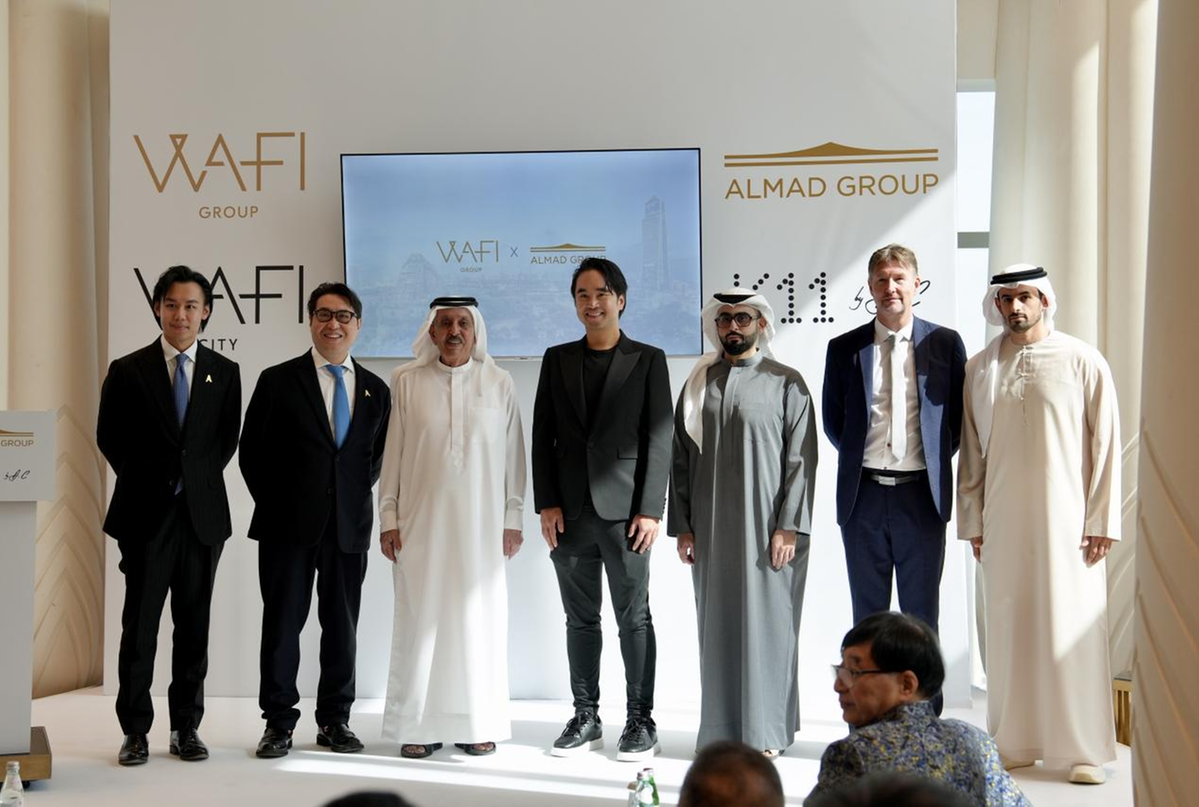
Hong Kong-based Almad Group and Dubai-based Wafi Group have formalised a strategic partnership aimed at tapping the fast-expanding animation, retail and cultural entertainment market in the Gulf, marking a notable deepening of commercial and cultural ties between East Asia and the Middle East.

The agreement, signed on December 11 in Dubai, brings together Almad Group’s lifestyle and cultural development arm, K11 by AC, and Wafi Group, one of the city’s established real estate and hospitality players. At the centre of the cooperation is the creation of a new joint venture entity, Wafi Anime 11, designed to anchor animation-led retail, immersive entertainment and intellectual-property-driven experiences in the UAE, with an eye on regional expansion.

Senior executives and representatives from both sides attended the signing, including Richard Cheung, group chief executive of K11 by AC; Dr Adrian Cheng, founder and executive chairman of K11 by AC of Almad Group; Sheikh Mana bin Khalifa Al Maktoum, founder and chairman of Wafi Group; and Sheikh Rashid bin Mana Al Maktoum, director of Wafi Group. The presence of Dubai Chambers’ executive vice-president for international relations, Salem Al Shamsi, underscored the broader trade and investment significance of the deal.

The partnership goes beyond a single retail concept. According to the framework outlined at the ceremony, Wafi Anime 11 will serve as a platform for developing themed cultural and entertainment projects, hosting IP-exclusive activities, and curating experiences aimed at both residents and international visitors. These initiatives are intended to align with Dubai’s wider strategy of positioning itself as a global hub for creative industries and experiential tourism.

A key commercial pillar of the agreement involves leasing and brand-entry cooperation for Hong Kong and the Chinese mainland labels seeking a foothold in the Middle East. The partners plan to introduce a portfolio of lifestyle, fashion and cultural brands that reflect contemporary Chinese creativity while adapting to local consumer tastes and regulatory environments. This approach reflects a growing trend among Asian brand owners to use Dubai as a gateway to the Gulf and wider Middle East and North Africa markets.

Tourism collaboration also features prominently. Almad Group and Wafi Group will roll out targeted incentive strategies aimed at visitors from Hong Kong and the Chinese mainland, encouraging longer stays and deeper engagement with Dubai’s retail and cultural offerings. Under the plan, travellers will be guided towards premium hospitality assets such as Sofitel Dubai The Obelisk and Raffles Dubai, both located within or adjacent to Wafi City, while being introduced to curated shopping, dining and entertainment itineraries.

Wafi City itself is expected to play a central role in the initiative. Long known as a mixed-use destination combining retail, hospitality and leisure, the complex will host several of the new animation-themed and IP-driven concepts. The partners believe this integrated environment provides a ready-made ecosystem for blending retail with storytelling, live events and digital engagement, a model increasingly favoured by younger consumers and families.

Another element of the cooperation involves the expansion of Gentry Club, a private members’ lifestyle concept, into the Middle East and North Africa. While details remain under development, the inclusion of Gentry Club signals an ambition to build community-based, experience-led offerings alongside mainstream retail, catering to affluent and culturally engaged audiences.

Richard Cheung said the agreement followed extensive groundwork and market analysis. “Our team has been studying the Middle East market since 2024 and is well aware of its immense development potential,” he noted. Cheung added that the first phase of cooperation would focus on brand introduction and ecosystem building, with several flagship labels representing Chinese cultural aesthetics expected to open by 2026.

Industry observers see the partnership as part of a broader shift in how cultural IP and retail are being deployed globally. Animation, gaming and character-driven franchises are no longer confined to screens or merchandise, but are increasingly used to anchor physical destinations, from themed malls to pop-up exhibitions and interactive spaces. The UAE, with its diversified economy, strong tourism flows and appetite for experiential formats, has emerged as a testing ground for such concepts.

BANGKOK, THAILAND – Media OutReach Newswire – 12 December 2025 – Vinhomes has been honored as “Developer of the Year Southeast Asia 2025”, the most prestigious title within the Dot Property Southeast Asia Awards 2025. The award marks a significant milestone in Vinhomes’ regional expansion journey and reaffirms its pioneering role in shaping modern urban developments, enhancing quality of life, and setting sustainable development benchmarks for Southeast […]

Australia has begun enforcing a landmark social media restriction aimed at limiting how platforms interact with users under 16, triggering debate among teenagers who question whether the policy addresses the realities of online life or simply shifts responsibility away from technology companies. The measures, introduced through updates to the Online Safety Act and reinforced by regulatory directives to major platforms, require companies such as Meta, TikTok, Snap […]

Global oil supply is likely to align closely with demand through 2026, according to fresh projections from the Organization of the Petroleum Exporting Countries, setting up a clear divergence with forecasts from other major agencies that warn of a sizeable surplus building in the same period. OPEC’s latest monthly assessment indicates that the OPEC+ alliance, which brings together OPEC members, Russia and other producing partners, expects market […]

PwC Middle East has relocated its Riyadh office to Laysen Valley, underscoring the professional services firm’s deepening commitment to the kingdom as demand for advisory, audit and consulting services accelerates alongside economic transformation programmes. The new office brings PwC’s teams and capabilities together in a larger, purpose-built environment designed to support collaboration, client delivery and skills development. The firm said the facility is intended to serve as […]

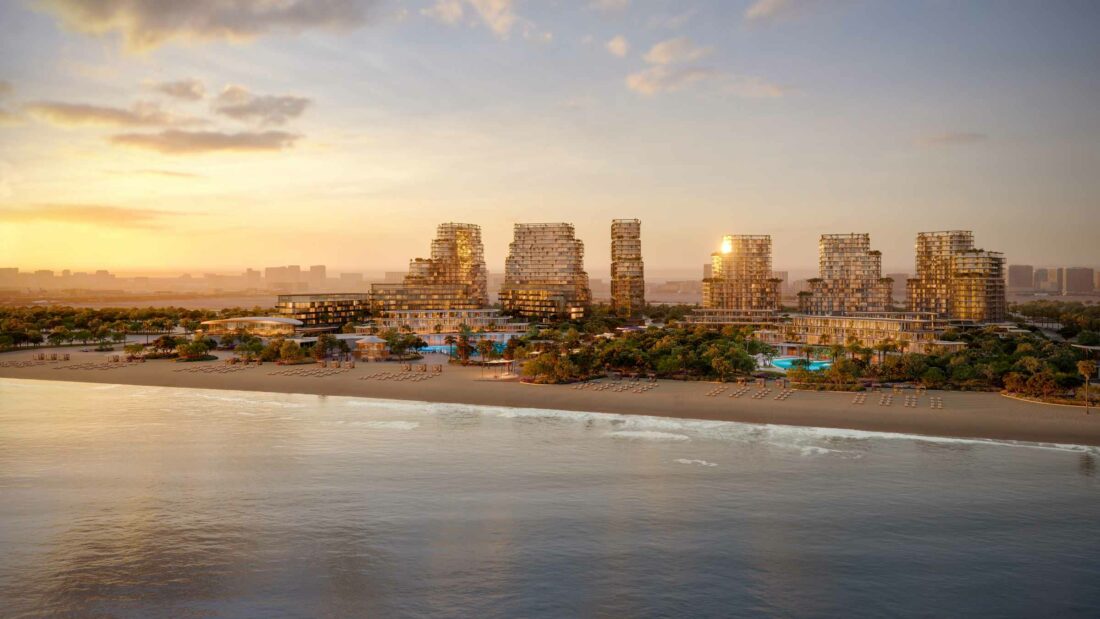
Beyond Developments has launched SIORA, its first beachfront masterplan on Dubai Islands, marking a significant step in the design-led developer’s expansion and reinforcing its alignment with Dubai’s long-term urban development strategy. The project becomes Beyond’s second large-scale community introduced within a year, underscoring the pace at which the company is scaling operations in a competitive real estate market shaped by strong demand for lifestyle-driven coastal living.

Planned across more than two million square feet, SIORA is positioned as a low-density waterfront enclave that blends residential, leisure and public-realm spaces. The development is conceived as a coastal sanctuary, with design cues drawn from Japanese garden philosophies and the concept of Ikigai, which centres on balance, purpose and fulfilment in everyday life. Beyond has said the masterplan aims to integrate natural elements, walkable environments and tranquil waterfront vistas to support wellness-focused living rather than high-intensity urban density.

Dubai Islands, formerly known as Deira Islands, has been earmarked by city planners as a key growth corridor for tourism, hospitality and mixed-use communities. The location offers direct coastal access while remaining closely connected to established commercial districts, ports and transport infrastructure. Authorities have promoted the area as part of a broader effort to diversify beachfront destinations beyond traditional luxury zones, combining residential neighbourhoods with cultural, retail and recreational assets. SIORA is expected to contribute to this repositioning by introducing a master-planned community rather than a standalone residential cluster.

Beyond Developments has framed the launch as part of a wider strategy to deliver future-ready communities that respond to evolving buyer preferences. Demand across Dubai’s residential market has increasingly tilted towards integrated developments that prioritise open space, sustainability and lifestyle amenities, particularly among long-term residents and international buyers seeking primary homes rather than short-stay investments. Waterfront projects, in particular, have continued to command price premiums, driven by limited supply and consistent global interest.

The company’s emphasis on Japanese-inspired design sets SIORA apart from conventional beachfront schemes dominated by high-rise towers and resort-style branding. Landscape-led planning, curated sightlines and quiet communal areas are intended to foster a sense of retreat within an urban context. Developers and architects working on similar concepts have pointed to growing interest in biophilic design and wellness-oriented planning, trends that gained traction as residents placed greater value on liveability, privacy and access to nature.

Beyond’s accelerated project pipeline also reflects confidence in Dubai’s regulatory environment and long-term population growth projections. Government initiatives supporting foreign ownership, long-term residency visas and infrastructure investment have underpinned sustained real estate activity across multiple price segments. Analysts tracking the market note that while transaction volumes have moderated from peak surges, end-user demand for well-located, thoughtfully designed communities remains resilient, particularly in waterfront and master-planned districts.

The launch of SIORA follows Beyond’s earlier community introduction within the same year, signalling a deliberate move to establish brand presence through scale rather than isolated developments. Industry observers note that new entrants adopting a design-led positioning often seek differentiation through master planning, architectural identity and curated amenities to compete with established developers. Delivering multiple large communities in quick succession also places emphasis on execution, construction timelines and long-term community management, factors that influence buyer confidence.

Borrowing against physical and financial assets has become a defining feature of credit markets as more companies look for flexible funding beyond traditional loans. The model, known as asset-based lending, is drawing interest from mid-sized firms facing tighter bank standards and from fast-growing businesses seeking to unlock capital tied up in receivables, inventory, or machinery. This shift reflects an environment where cash-flow volatility, higher borrowing costs, and […]

A wave of ambition is reshaping the technology landscape as leading entrepreneurs turn their attention to building artificial intelligence data centres in space. What began as scattered experiments in off-planet computing has matured into a competition among industry powerhouses seeking an edge in processing capacity, energy efficiency, and control over the infrastructure that will anchor next-generation AI systems. The pursuit is driven by the belief that Earth-based facilities are reaching fundamental limits, from land availability to cooling constraints, and that low-Earth orbit may provide the only environment capable of sustaining the exponential escalation in computational demand. Advocates frame this as an extension of a long-standing principle in engineering and exploration: to put human ingenuity to its fullest possible use, wherever the boundaries of science allow.

Several major technology leaders have stepped into this arena over the past two years. Their investments reflect a profound shift in strategy as companies realise that AI models cannot continue to scale using terrestrial infrastructure alone. The voracious energy requirements of large-scale training workloads challenge even the most advanced data-centre designs, pushing firms to explore solutions that draw on off-planet solar power and exploit the vacuum of space for passive cooling. Executives argue that orbiting facilities promise a cleaner energy profile, reduced environmental impact, and unprecedented independence from Earth’s physical constraints. As one aerospace investor remarked during a private industry event, the next digital revolution may be fuelled not by new algorithms but by new geography.

Engineering teams working on these orbital concepts often describe them as a convergence of satellite technology, chip innovation, and AI architecture. The logic is straightforward: satellites already operate reliably in extreme conditions with limited maintenance; AI systems increasingly require specialised compute hardware that benefits from consistent temperature conditions; and the economics of launch have changed dramatically due to reusable rockets. Once the cost of placing hardware into orbit falls to thresholds comparable to building premium facilities on Earth, the case for space-based computing strengthens considerably. What was once a speculative thought experiment has become a viable commercial target because access to space is no longer a privilege of governments alone.

However, the motivations driving this race are not solely technical. Strategic considerations weigh heavily. Ownership of orbital AI capacity promises unparalleled control over data sovereignty and computational independence. For executives wary of regulatory intervention or geopolitical risk, space offers a jurisdictional buffer that has become increasingly attractive. The ability to operate hardware outside traditional national borders gives corporations leverage at a moment when governments are tightening rules on data transfer, algorithmic transparency, and cloud-computing dependencies. Critics warn that this dynamic could set the stage for tension between public oversight and private ambition, particularly as orbital networks start to support commercial, defence, and financial applications simultaneously.

Security analysts have begun to examine the implications of off-planet AI infrastructure for global stability. On one hand, distributing critical systems across multiple orbital layers may reduce the vulnerability of communication and computing networks to terrestrial attacks or natural disasters. On the other, it introduces fresh risks, as high-value satellites could become targets in future disputes. Industry leaders tend to emphasise resilience and cooperation, arguing that shared standards and open coordination mechanisms can prevent escalation. Yet even in the early stages of development, commercial confidentiality and competitive pressure limit transparency, raising questions about how cooperative such a system can truly be.

Environmental considerations further complicate the picture. Proponents argue that orbital facilities will dramatically reduce the carbon footprint of data centres by tapping continuous solar energy and eliminating the need for extensive water-based cooling. They claim that redirecting computation to space will relieve pressure on overloaded terrestrial grids and free up land used for sprawling data-centre campuses. Environmental organisations counter that launching hundreds of tonnes of hardware into orbit will generate emissions during the construction phase and intensify concerns about space debris. Engineers involved in the projects acknowledge these issues but maintain that the long-term carbon savings outweigh the initial costs. Some firms have begun exploring closed-loop manufacturing cycles using recycled orbital material, a concept still in its infancy but increasingly part of corporate presentations.

The economic dimension of the space computing race has also attracted significant attention. Venture capital firms see orbital AI networks as a foundational platform similar in scale to the early internet, creating opportunities for startups focused on maintenance robotics, radiation-hardened chips, inter-satellite laser communication, and autonomous control systems. Government space agencies have shown interest too, recognising that private data-centre initiatives could stimulate broader commercial activity in orbit. Financial analysts caution that the capital intensity of these projects is immense and that many entrants may struggle to secure the funds required to move from prototype to full-scale deployment. But they also acknowledge that the firms leading the charge have histories of turning audacious concepts into viable industries.

One of the most compelling arguments for orbital AI centres revolves around scientific potential. Researchers emphasise that such facilities could support breakthroughs in materials engineering, climate modelling, pharmaceutical development, and astrophysics. Training models in microgravity environments may enable experiments that are impractical on Earth, and the isolation of orbital systems creates opportunities for secure high-performance computing dedicated to sensitive research. A prominent AI scientist recently noted at a conference that new frontiers in intelligence will be unlocked only when researchers have access to computational substrates as novel as the algorithms themselves, and that space may provide exactly that.

Despite enthusiasm, several fundamental questions remain unresolved. Energy transmission is one of them. While orbiting platforms can harness abundant solar power, efficiently transferring that energy to onboard compute clusters and ensuring stable operation during orbital night remains a challenge. Another issue concerns maintenance. Although robotic servicing is improving, most concepts still require periodic human intervention, raising questions about safety, reliability, and cost. Legal scholars are also wrestling with the future regulatory landscape, debating whether orbital AI nodes should be governed by space law, telecommunications frameworks, or entirely new agreements. These uncertainties highlight the complexity of forging infrastructure that defies conventional definitions.

Public perception is another area shaping the debate. The idea of billionaire-led initiatives expanding beyond Earth has drawn criticism from those who view it as a diversion of resources from urgent terrestrial needs. Advocates counter that technology has always advanced through bold exploration and that the benefits of space-based AI will eventually extend across society, from medical research to disaster forecasting. Several industry leaders have used narratives emphasising human progress and responsibility, suggesting that building orbital computing platforms represents a contribution to global knowledge rather than a retreat from Earth’s challenges.


VISHNU RAJA
RYO YAMADA
HITORI GOTOH
IKUYO KITA