Arabian Post Staff -Dubai International visitor spending in the Middle East is forecast to rise by US$116 billion, or 57%, between 2025 and 2030, signalling a sharp expansion in tourism revenues despite near-term geopolitical disruption. The projection comes from the ATM Travel Trends Report 2026, produced by Arabian Travel Market with Tourism Economics, an Oxford Economics company, and presented at Arabian Travel Market in Dubai. The report […]
Arabian Post Staff -Dubai Yemen’s Houthis claimed on Wednesday that they had shot down a Saudi F-15 fighter jet over Marib governorate, an assertion that would mark a significant escalation in the renewed fighting between the group and Saudi Arabia if independently confirmed. Houthi military spokesman Yahya Saree said the aircraft was hit while conducting operations over Marib and was brought down by what he described as […]
A US federal judge has ordered Elon Musk’s X Corp and SpaceXAI to disclose any agreement behind their resolution of antitrust claims against Apple, even as the companies press ahead with the same lawsuit against OpenAI. Judge Mark Pittman of the US District Court for the Northern District of Texas directed X and SpaceXAI to provide the court with any agreement or combination of agreements with Apple […]
Greenlogue/AP Aldar Properties and Mubadala Investment Company have jointly acquired Masdar City Square for Dh918 million, expanding their income-generating real estate portfolio in Abu Dhabi’s Masdar City to Dh4.7 billion. The acquisition was completed through the real estate joint venture established by the two Abu Dhabi groups in 2024. Masdar City Square comprises more than 47,000 square metres of net leasable space across seven office buildings and […]
Saudi warplanes struck Houthi positions across Yemen on Wednesday as the Iran-aligned movement pressed territorial gains along the Red Sea coast and widened attacks on Saudi targets, intensifying a new front in the Middle East war. Houthi military spokesman Yahya Saree said Saudi aircraft had carried out as many as 450 strikes during the week. Officials from Yemen’s internationally recognised government acknowledged that their forces and Saudi […]
HONG KONG SAR – Media OutReach Newswire – 16 September 2026 – Hong Kong’s Chief Executive, John Lee, today (September 16) announced his fifth Policy Address, putting forward a series of measures to create development opportunities and enhance the well-being of the people.
“This year marks the opening year of the National 15th Five-Year Plan. In the thick of accelerating global changes not seen in a century, the vibrant momentum driven by our country’s robust strength, enormous market and high-quality development presents Hong Kong with boundless opportunities. We will better develop our economy and boost social well-being, starting a bright new chapter for Hong Kong,” Mr Lee said.
Entitled “A Strategic Vision for a Bright New Era, Driving Reform and Boosting Development, Unleashing Opportunities and Enhancing Livelihood”, the Policy Address takes the First Five-Year Plan for Economic and Social Development of the Hong Kong Special Administrative Region (2026-2030) (Hong Kong’s First Five-Year Plan) as its blueprint, and proposes numerous key measures focusing on five major development opportunities to advance high-quality development.
To attract and retain high-calibre talent, the Hong Kong Special Administrative Region (HKSAR) Government will expedite the development of the Northern Metropolis University Town to strengthen the city’s position as an international education hub. The HKSAR Government will also increase the research postgraduate places by around 30 per cent and the quota for government scholarships by 200, and establish five new major academies for training international talent: the International Clinical Trial Academy, Maritime Academy, Hong Kong International Legal Talents Training Academy, Hong Kong Intellectual Property Academy and Hong Kong International Academy of Policing.
To promote industry development, the Policy Address proposes to accelerate development of an international gold trading market and to explore a proposal to provide tax concessions for qualifying activities within the gold and commodity trading ecosystem. The HKSAR Government will also announce details of the new Renminbi-denominated and physically settled gold futures contracts; explore the possibility of increasing the Exchange Fund’s gold holdings, and gradually transfer its physical gold holdings to designated vaults appointed by the Hong Kong Precious Metals Central Clearing Company Limited.
A number of policies are proposed to promote industry development, including introducing specialty insurance (e.g. commodity, commercial aerospace, etc.); injecting funding into the Artificial Intelligence Subsidy Scheme to support the development of the intelligent computing industry; accelerating the adoption of medical innovation and industry chain development to enable the public to benefit from better and newer drugs; and fostering a new economic landscape for the low-altitude and emerging industries, such as commercial aerospace.
The Government is developing six special industry parks, including the Loop Hong Kong Park, San Tin Technopole, Hung Shui Kiu Industry Park, Sandy Ridge Data Facility Cluster and Hung Shui Kiu/Ha Tsuen modern logistics cluster. Land is also earmarked for building an advanced construction industry park to increase investment opportunities for enterprises.
To attract enterprises to establish a foothold in Hong Kong, tax concessions will be granted on the basis of the value brought by enterprises, instead of solely considering the industry sector. The Government will introduce an amendment bill this year, providing preferential tax rates of 5 per cent, or half-rate, for selected enterprises operating in key sectors such as finance, advanced manufacturing, innovation and technology, as well as research and development, headquarters activities and logistics and supply chain management.
The HKSAR Government will fully support the work of the International Organization for Mediation headquartered in Hong Kong, and build a global capital of mediation. It will also drive the establishment of the International Institute for the Unification of Private Law in Hong Kong, support the Judiciary to advance the development of the International Commercial Court, and establish the “Strategy Committee on Intellectual Property Trading Development” to assist the Government in formulating strategies and support measures for the promotion of intellectual property trading.
Regarding international co-operation, two United Nations (UN) organisations, the centre of excellence on global advanced manufacturing and the Office on Drugs and Crime’s GlobE Network Asia Pacific Regional Bureau, will establish their presence in Hong Kong respectively. Elsewhere, the new WestK Performing Arts Centre, scheduled to open next year, will feature four performance venues built to the highest international theatre standards, while Asian and international sports associations will be encouraged to establish a presence in Hong Kong.
“Today, Hong Kong is at a critical juncture in advancing from stability to prosperity. We are fully aware that formulating a comprehensive, strategic roadmap is integral to our long-term development. The Government has been persistent in mapping our way by driving development through reform. The primary goal of our policies is to enable economic development that can benefit the people of Hong Kong, and meet their aspirations for a better life,” Mr Lee said.
Yemen’s Houthi movement said on Wednesday that it had shot down a Royal Saudi Air Force F-15 fighter jet over Marib province, a claim that Saudi authorities had not confirmed and that could not immediately be independently verified. Houthi military spokesman Yahya Saree said the aircraft was brought down with a locally manufactured surface-to-air missile while conducting what he described as hostile operations over Marib. He gave […]
Response by KK Chiu, International Director, Chief Executive, Greater China, Cushman & Wakefield:
Optimising the Housing Ladder and Improving Living Conditions
We welcome the Government’s commitment to increase housing supply, shorten the Composite Waiting Time for public rental housing and further strengthen the housing ladder. The adoption of a long-term housing supply framework comprising 40% public rental housing, 30% subsidised sale housing and 30% private housing, together with the delivery of approximately 196,000 public housing units over the next five years, will provide a clearer housing and homeownership pathway for different income groups.
We believe that increasing the supply of subsidised sale housing and enhancing the housing ladder will help more public housing tenants progress towards homeownership, accelerate housing mobility and enable families with genuine housing needs to gain access to public housing more quickly.
We support the Government’s efforts to increase public housing supply, continue the Light Public Housing programme and implement the Basic Housing Units regime in an orderly manner to phase out substandard subdivided units. This approach is consistent with our long-held view that increasing housing supply is the fundamental solution to improving inadequate housing conditions. With the Government targeting the resolution of substandard subdivided units in domestic buildings by 2030, we expect living conditions for grassroots households to improve progressively.
Urban Renewal Incentives
We support the Government’s more flexible approach to urban renewal, including transferable plot ratio arrangements and measures to unlock redevelopment potential. These initiatives will help enhance market participation, accelerate renewal in areas with pressing redevelopment needs and contribute to overall housing supply growth. We recommend the Government provide clearer guidance on application requirements and further streamline cross-departmental approval procedures to facilitate implementation.
Advancing the Yacht Economy
We welcome the Government’s continued efforts to promote the yacht economy. Beyond increasing marina berth supply and enhancing supporting infrastructure, we believe it is equally important to further facilitate cross-boundary initiatives, allowing greater mobility of yachts within the Greater Bay Area and fostering regional collaboration.
As more superyachts and high-net-worth visitors arrive in Hong Kong, demand is expected to rise across luxury tourism, hospitality, food and beverage, retail, marine services and waterfront commercial facilities, helping unlock the economic potential of Hong Kong’s coastline and island resources. At the same time, Hong Kong has the potential to develop a more comprehensive marine industry ecosystem encompassing yacht repair and maintenance, refitting services and specialised professional services. The development of a holistic marine services value chain will further strengthen Hong Kong’s competitiveness as a regional and international yachting hub.
Response by John Siu, Managing Director, Hong Kong, Cushman & Wakefield:
Planning Ahead for AI and Data Centre Infrastructure
We welcome the Government’s commitment to accelerate the development of the Sandy Ridge Data Facility Cluster, which is expected to provide computing power equivalent to 36 times Hong Kong’s current capacity by 2032, alongside a HK$1 billion injection into the Artificial Intelligence Subsidy Scheme. These initiatives will provide important support for the development of Hong Kong’s artificial intelligence and data centre sectors, further strengthening the city’s position as a regional digital and innovation hub.
However, with rapid advancements in artificial intelligence, large language models and cloud computing, demand for computing power is expected to grow significantly in the coming years. We believe that, in addition to planning data centre sites, the Government should proactively review long-term requirements for power supply, electricity grid capacity and related infrastructure. As AI adoption becomes more widespread, access to reliable power and supporting infrastructure will be a key factor in maintaining Hong Kong’s competitiveness as a technology and data centre hub.
We support the Government’s stated direction of pursuing “high-efficiency computing power, stable electricity supply and low-carbon transition”. Looking ahead, we recommend that the Government regularly review future demand for land, power supply and supporting infrastructure arising from the growth of artificial intelligence and data centre activities, particularly within the Northern Metropolis and other strategic development areas. A coordinated approach to computing, energy and digital infrastructure planning will help attract more data centre operators and technology companies to Hong Kong, while supporting the city’s long-term development as a regional hub for data and artificial intelligence.
Response to the Budget 2026/2027 by Rosanna Tang,Deputy Managing Director, Head of Research, Hong Kong, Cushman & Wakefield:
Clear Industry Positioning for the University Towns
We welcome the Government’s efforts under Hong Kong’s First Five-Year Plan to further define the positioning of the three university towns in the Northern Metropolis University Town, and are encouraged by its strategy to promote synergy among the university towns, the San Tin Technopole and surrounding industry parks. As the only city in the world with five universities ranked among the global top 100, Hong Kong possesses a strong foundation in higher education and research. At the same time, the San Tin Technopole is set to become a key innovation and technology hub. The complementary strengths of these two pillars, both geographically and strategically, provide a solid foundation for building a globally competitive innovation ecosystem in Hong Kong.
We are particularly encouraged by the Government’s emphasis on integrated industry-academia-research collaboration. The university towns should not be viewed merely as educational developments, but as strategic platforms for research commercialisation, international talent attraction and the cultivation of emerging industries. Closer collaboration among universities, research institutes, innovation and technology enterprises and industry parks will help establish a complete innovation value chain covering talent development, scientific research, technology transfer and industrial implementation.
In addition, the Plan proposes approximately 300 hectares of educational facilities as the core of the university towns, connected with adjacent strategic industry areas, distinctive conservation areas, sports and cultural facilities, and surrounding communities, bringing the overall development footprint to more than 1,000 hectares. Such a large-scale integrated education and industry development model is rare in Hong Kong’s urban planning history and clearly demonstrates the Government’s long-term vision of creating a knowledge-based city cluster and an international education hub in the Northern Metropolis.
Attracting Signature Industry Projects and Anchor Institutions to Enhance the Northern Metropolis’ Global Appeal
We welcome the Government’s efforts to establish differentiated industry positioning through the three university towns, while integrating key development nodes such as the San Tin Technopole, the Hong Kong Park of the Hetao Shenzhen-Hong Kong Science and Technology Innovation Co-operation Zone, the Hung Shui Kiu Industry Park and Ta Kwu Ling. This provides a clearer direction for industrial development in the Northern Metropolis and helps address long-standing market concerns regarding overlapping functions and unclear district positioning.
As highlighted in our previous research, we believe the next critical stage for the Northern Metropolis will be its ability to attract influential anchor institutions and leading enterprises. By bringing together universities, research institutes and industry leaders, Hong Kong can foster the clustering of businesses, talent and capital, gradually forming industry clusters with scale and international competitiveness. Hong Kong should also capitalise on its common law system, international financial centre status, intellectual property protection framework and global talent network by focusing on high value-added segments such as research and testing, intellectual property management, fundraising and listing activities, and international accreditation services. This will help Hong Kong establish an irreplaceable role within the Greater Bay Area industrial value chain.
Beyond strategic industries, we believe the Northern Metropolis could also explore internationally recognised and iconic industry projects to further enhance its global profile and attractiveness. For example, the Government may consider developing initiatives around new energy vehicles, smart mobility and advanced technologies, while exploring the feasibility of internationally recognised racing events, testing facilities or technology R&D platforms, such as those associated with Formula One. By leveraging motorsport-related economic activities and innovation-led development, Hong Kong could attract international automotive manufacturers, mobility technology companies and research institutions to establish regional headquarters, R&D centres or testing facilities in the city. This would in turn support the growth of engineering, intelligent transport, advanced manufacturing, tourism, hospitality, retail and convention and exhibition industries, further enriching the Northern Metropolis industrial ecosystem.
Accelerating Land Supply While Advancing Industries and Infrastructure in Parallel
We note that Hong Kong’s First Five-Year Plan proposes a significant acceleration in land and housing supply within the Northern Metropolis. Residential completions are expected to increase substantially from approximately 11,000 units during 2021/22 to 2025/26 to around 70,000 units during 2026/27 to 2030/31. Over the same period, the supply of “spade-ready sites” will rise from approximately 120 hectares to around 900 hectares, representing an increase of around 7.5 times. These figures demonstrate that the Northern Metropolis is transitioning from a planning and land formation phase to a new stage characterised by large-scale development, industrial implementation and population intake.
However, we believe the success of the Northern Metropolis should not be measured solely by the volume of land or housing delivered. As substantial residential, innovation and technology, and industrial sites come on stream, the focus should gradually shift from land supply to city-building. The Government should ensure the coordinated delivery of railway and cross-boundary infrastructure networks, industry parks, commercial facilities, public services and community amenities, while accelerating the introduction of leading enterprises and strategic industries to create sufficient, high-quality employment opportunities and achieve a genuine jobs-housing balance.
In particular, we believe the Northern Metropolis should be driven by industry-led development, with the San Tin Technopole, the Hetao Shenzhen-Hong Kong Science and Technology Innovation Co-operation Zone, the university towns and major industry parks serving as key growth engines. This would create a virtuous cycle in which industry attracts population, population supports consumption, and consumption drives urban development. Only through the coordinated growth of industry, talent, infrastructure and communities can the Northern Metropolis evolve from a large-scale land development project into a modern metropolitan district integrating industry, education, living and international exchange.
Response by Tom Ko, Executive Director, Head of Capital Markets, Hong Kong of Cushman & Wakefield:
New Opportunities for Student Accommodation Market
We welcome the Government’s initiatives to deepen Hong Kong’s development as an international hub for post-secondary education through the “Hong Kong: Your World-class Campus” campaign, expanded global student recruitment efforts and the extension of the Immigration Arrangements for Non-local Graduates pilot arrangement to graduates from Greater Bay Area campuses of Hong Kong universities. These initiatives will further enhance Hong Kong’s attractiveness to overseas students and talent while reinforcing the “Study in Hong Kong” brand.
We are encouraged by the continued progress of the Hostels in the City Scheme. The scheme has already received 41 confirmed applications, providing approximately 10,800 bed spaces and demonstrating strong market confidence in the long-term growth of Hong Kong’s education sector.
The scheme has opened up a new supply channel for converting commercial buildings into student accommodation. At a time when hotel conversion opportunities are becoming more limited as tourism continues to recover, it provides an alternative pathway for investors while helping unlock the value of underutilised commercial assets and meet rising demand for student housing. As the Government prepares to tender the first dedicated student hostel site, we believe purpose-built student accommodation will gradually emerge as a distinct and scalable asset class within Hong Kong’s real estate market.
To further increase supply, we recommend that the Government continue reviewing and refining approval procedures for student hostel conversions. Greater flexibility and streamlined processes, while maintaining appropriate safety and operating standards, would encourage wider market participation and support Hong Kong’s ambition to become a leading international education destination.
The issuer is solely responsible for the content of this announcement.
About Cushman & Wakefield
Cushman & Wakefield (NYSE: CWK) is a leading global commercial real estate services firm for occupiers and investors with approximately 53,000 employees in over 350 offices and nearly 60 countries. In Greater China, a network of 23 offices serves local markets across the region. In 2025, the firm reported revenue of $10.3 billion across its core services of Valuation, Consulting, Project & Development Services, Capital Markets, Project & Occupier Services, Industrial & Logistics, Retail, and others. Built around the belief that Better never settles, the firm receives numerous industry and business accolades for its award-winning culture. For additional information, visit www.cushmanwakefield.com.hk or follow us on LinkedIn (www.linkedin.com/company/cushman-&-wakefield-greater-china).
Germany’s hospitals are accelerating preparations for a potential wartime surge of wounded patients, with military planners warning that a NATO conflict could send hundreds of casualties into the health system each day. The Bundeswehr has built scenarios involving 300 to 1,000 wounded service personnel arriving daily, a scale that would rapidly overwhelm Germany’s five military hospitals and require extensive use of civilian facilities. Military medical planners say […]
SUSE has enabled its enterprise real-time Linux platform for LF Energy’s SEAPATH architecture, giving electricity grid operators and equipment vendors a commercially supported operating system option for virtualised digital substations. The integration, developed with open-source engineering specialist Savoir-faire Linux, combines SUSE Linux Enterprise Real Time with Kernel-based Virtual Machine, or KVM, virtualisation and cluster support. SUSE said the work makes it the first enterprise Linux vendor to […]
Hong Kong has placed a global gold trading hub at the centre of its first five-year economic plan, using the market as an entry point to expand commodity trading and broaden international use of the renminbi.
The 2026-2030 plan, released on Wednesday, calls for an integrated gold ecosystem covering storage, trading, clearing, refining and related financial services, while encouraging more renminbi-denominated commodity products. The government said it would strengthen links with mainland exchanges and attract international investors as it develops the city’s role as a global offshore renminbi centre.
It describes gold as an asset and envisages a one-stop storage, trading and clearing centre.
The strategy gives formal five-year backing to a gold-market expansion already under way. Hong Kong began trial operations of a central clearing and settlement system for gold in July and plans to launch the system formally in the first quarter of 2027. The administration is also seeking to expand storage capacity, improve refining capability and support more gold dealers and financial institutions in establishing operations in the city.
The plan says Hong Kong will explore renminbi-denominated gold and commodity markets and deepen co-operation with the Shanghai Gold Exchange and Shanghai Futures Exchange. It also aims to increase the range of products priced in the Chinese currency and encourage the use of renminbi for pricing and settlement in spot commodity transactions.
Chief Executive John Lee’s administration has framed the programme as part of a broader effort to strengthen Hong Kong’s position as an international financial centre while aligning more closely with China’s national development priorities. The five-year plan also seeks to enlarge the city’s offshore renminbi business, improve liquidity support and expand the range of renminbi bonds and other financial products.
Hong Kong remains the world’s largest offshore renminbi market. The government said offshore renminbi lending reached a record 935 billion yuan in 2025, while renminbi bond issuance reached 1 trillion yuan for a second consecutive year. The new plan proposes a dedicated offshore renminbi liquidity provision mechanism and wider use of the currency in trade, investment, financing and government expenditure.
Gold is intended to provide the first platform for a wider commodities push. The government said Hong Kong would use its status as an approved delivery point in the London Metal Exchange’s global warehousing network to develop trading, risk-management and financing services across additional commodities.
Since Hong Kong joined the LME warehousing network in 2025, approved storage space has exceeded 60,000 square metres and metal inventories have risen above 20,000 tonnes, according to the government. Authorities plan to facilitate more LME-approved warehouses in the Northern Metropolis and introduce a half-rate tax concession for physical commodity trading to attract additional market participants.
The Hong Kong Exchanges and Clearing group also plans to announce details this year for new renminbi-denominated, physically settled gold futures contracts. The government said the contracts are intended to strengthen the currency’s role in precious-metal pricing and provide another channel for international investors to gain renminbi exposure.
Other measures include possible tax concessions for qualifying gold and commodity activities, additional insurance capacity for gold storage and trading, and support for an industry-led trade association. Officials are also examining tokenised warehouse-receipt financing and blockchain-based systems that would allow commodity inventories to be used more flexibly as collateral.
The administration has set a target of lifting Hong Kong’s gold storage capacity to more than 2,000 tonnes within three years. It is also encouraging internationally qualified refiners to establish or expand local operations, with government agencies assisting interested companies in identifying sites and navigating regulatory requirements.
Closer integration with mainland markets is another element of the strategy. The plan calls for wider market access between Hong Kong and mainland gold markets and further collaboration with the Qianhai Mercantile Exchange, including development of renminbi-settled commodity futures, options and spot products.
Arabian Post Staff -Dubai Saudi Arabia is broadening international security contacts as Iran-backed Houthi forces consolidate positions along Yemen’s Red Sea coast, with Britain backing Riyadh and reports of Israeli intelligence co-operation emerging as the kingdom confronts missile, drone and maritime threats. The Saudi outreach has accelerated after Houthi forces captured territory and islands around the Bab el-Mandeb Strait, the narrow waterway linking the Red Sea with […]
Djibouti has joined the Artemis Accords, becoming the 72nd country and eighth African nation to endorse the US-led principles for peaceful, transparent and coordinated civil space exploration. Djibouti’s ambassador to the United States, Mohamed Siad Douale, signed the accords on behalf of his government at NASA Headquarters in Washington on Monday, September 14. NASA Deputy Administrator Matt Anderson hosted the ceremony, which was also attended by US […]
BRICS leaders have placed development priorities of emerging economies at the centre of their New Delhi agenda, endorsing stronger representation for the Global South while advancing cooperation on trade, technology, finance and sustainable growth.
Chinese President Xi Jinping used the 18th BRICS Summit to argue that countries should pursue development paths suited to their own national conditions, a message that overlapped with the summit’s broader emphasis on policy autonomy, inclusive growth and reform of global institutions.
Addressing the first leaders’ session on September 12, Xi marked 20 years of BRICS cooperation and said members had strengthened themselves through unity while preserving independence in choosing their economic and social models. He described BRICS as an increasingly important platform for emerging markets and developing countries.
The summit’s New Delhi Declaration gave that theme wider institutional form. Leaders called for a more representative international order, greater participation by developing countries in global decision-making and reforms to institutions including the United Nations, World Trade Organization and international financial architecture.
The declaration also reflected the diversity within the expanded grouping. Rather than prescribing a single model of development, BRICS leaders stressed national circumstances, differing capacities and the need for policy space, particularly in areas such as energy transition, industrialisation and climate action. That approach broadly matched Xi’s argument that development strategies should reflect domestic conditions rather than external templates.
Xi sought to extend the idea into technology policy. He proposed an initiative on artificial intelligence-enabled industrialisation, deeper cooperation in research and applications, and stronger industrial and supply-chain links. China also promoted open-source AI collaboration and international platforms intended to improve access to emerging technologies for developing economies.
Other leaders framed similar priorities through their own national perspectives. Prime Minister Narendra Modi emphasised resilience, innovation, cooperation and sustainability, the four themes of India’s 2026 BRICS chairship, and called for solutions developed within the grouping to serve a wider range of developing countries. He also urged members to translate summit commitments into practical programmes.
BRICS members agreed on measures spanning digital cooperation, food and energy security, health, trade facilitation and the use of local currencies in cross-border transactions. The declaration supported stronger payment connectivity while stopping short of endorsing a common BRICS currency.
The economic agenda also underlined the practical test facing the grouping. Members backed use of national currencies in trade and investment, stronger cooperation through the New Development Bank and efforts to improve financial resilience. Such measures are intended to widen financing options for developing economies without committing members to a single monetary framework or common currency.
The expanded bloc now brings together countries with sharply different political systems, strategic alignments and economic structures. That breadth gives BRICS a larger claim to represent developing-country concerns, but it also limits how far members can converge on detailed policy prescriptions. Analysts have noted differences over whether the group should remain primarily an economic and development forum or assume a stronger geopolitical role.
Those tensions were visible alongside the development agenda. Leaders opposed protectionism and unilateral economic measures, supported a stronger multilateral trading system and called for reforms that would increase the voice of developing countries. At the same time, members avoided turning the summit into a unified ideological platform, relying instead on consensus language broad enough to accommodate competing interests.
Xi’s second summit intervention on September 13 placed a “people-centred” development philosophy within a wider call for Global South cooperation. He urged progress on the UN Sustainable Development Goals, improvements to global climate governance and a consensus-based framework for governing artificial intelligence.
China’s approach also carries strategic implications. Beijing has increasingly used BRICS and other multilateral forums to promote its views on development, sovereignty and global governance. Some members share its criticism of unequal representation in international institutions, while others remain cautious about allowing BRICS to become identified with any single country’s geopolitical agenda.
Arabian Post Staff -Dubai Silicon Central Mall has become the first operating hub for Keeta Drone’s food delivery service in Dubai, linking participating restaurants with customers around Dubai Silicon Oasis through approved autonomous flights. The service is operating after clearance from the Dubai Civil Aviation Authority, with customers able to place eligible food and beverage orders through the Keeta app. Drones depart from Silicon Central Mall and […]
Arabian Post Staff -Dubai Dubai will host the third Quantum Innovation Summit from September 28 to 30, bringing government bodies, researchers, technology companies and investors together as the UAE expands work on quantum computing, secure communications and post-quantum cybersecurity. The event will be held at the Grand Hyatt Dubai Conference & Exhibition Centre and is hosted by the UAE Cyber Security Council for a second consecutive year, […]
Beijing will ban the possession, storage and operation of recreational drones across the capital from November 15, tightening low-altitude security controls after a light aircraft crashed into the city’s tallest skyscraper in June.
The revised Beijing Unmanned Aircraft Management Regulations, approved by the municipal legislature this month, designate the entire municipality as controlled airspace and prohibit individuals and organisations from keeping drones or key components unless they fall within specified exemptions. Transporting or carrying such equipment into Beijing will also be barred.
The rules mark a significant escalation from restrictions introduced on May 1, when Beijing prohibited drone sales and rentals, required real-name registration and made all outdoor flights subject to approval. Existing owners were previously allowed to retain registered aircraft, but that arrangement will end when the amended regulations take effect.
Authorities have opened several channels for residents to dispose of devices before the deadline. Owners may sell drones at government-approved buyback points, surrender them for recycling, send them outside Beijing by post or carry them out of the municipality themselves. Subsidies are available to individuals whose drones had completed the required police information verification.
For buybacks completed between September 12 and October 31, the subsidy is set at 30 per cent of the transaction price, capped at 3,000 yuan per drone. The rate falls to 15 per cent, with a 1,500-yuan ceiling, for transactions from November 1 to November 14. Scrapping payments are 200 yuan per drone before November and 100 yuan during the first two weeks of November, while eligible postal transfers outside Beijing are free.
The regulations retain exemptions for activities judged necessary for counter-terrorism, emergency rescue, major events, teaching, scientific research, industrial production, agriculture and certain sporting purposes. Such users must undergo security assessment and operate under designated safeguards, while authorised flights remain subject to national aviation requirements.
Beijing’s move follows the June 26 crash of a two-seat Sunward SA 60L Aurora light sport aircraft into Citic Tower, also known as China Zun, in the capital’s central business district. The aircraft struck the 528-metre tower shortly before 6pm after departing from an airfield roughly 50 kilometres east of central Beijing.
The pilot, the only person aboard, was killed and 13 people were injured. Chaoyang district authorities later said the aircraft had left its approved flying area during a solo flight and lost contact with the airport before hitting the skyscraper.
Investigators described the episode as a public-safety incident caused by personal factors involving the pilot. Authorities said he had suffered long-term insomnia and anxiety and that writings recovered during the investigation contained references to ending his life. The finding drew attention to how a light aircraft was able to enter tightly controlled airspace over the capital.
Citic Tower, headquarters of state-owned Citic Group, stands in Beijing’s Chaoyang district near the East Third Ring Road. The impact damaged the building’s glass facade, triggered an evacuation and scattered debris around the surrounding business area.
Beijing had already classified its full administrative territory as controlled airspace for unmanned aircraft. Under the May rules, outdoor drone flights required prior approval from air-traffic authorities, while sales, rentals and the establishment of new storage sites were restricted. Police also introduced information-verification requirements for existing owners, a process that ended on July 31.
The amended framework removes the general option for ordinary residents to keep registered drones inside the municipality. Once the November rules take effect, police will be authorised to inspect storage arrangements, confiscate unlawfully held equipment and impose penalties on individuals and organisations that breach the controls.
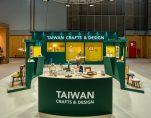
PARIS, FRANCE – Media OutReach Newswire – 14 September 2026 – Curated by the National Taiwan Craft Research and Development Institute (NTCRI) under Taiwan’s Ministry of Culture, TAIWAN CRAFTS & DESIGN returns to Maison&Objet Paris 2026, presenting seven Taiwanese brands: KIMU, Lumamiling, MOTOR design, Pan Pan Hua, TOMO, UMAMI, and WÈI CRAFT.
TAIWAN CRAFTS & DESIGN Pavilion in M&O September 2026
Rooted in craft, the showcase explores how Taiwan’s materials, techniques, cultural heritage, and contemporary design can respond to modern lifestyles and international markets. Working across wood, leather, ceramics, paper mulberry bark fibre, mixed media, lighting, and furniture, the seven brands reveal a craft culture that is culturally grounded, adaptable, and forward-looking.
KIMU reinterprets East Asian culture through its concept of “The New Old,” transforming familiar memories and aesthetics into contemporary objects.
Based in southern Taiwan, Lumamiling works with Indigenous barkcloth traditions and paper mulberry fibre, translating ancient techniques into lighting, furniture, and objects relevant to sustainability and contemporary living.
MOTOR design, guided by “An Eastern Soul in a Western Form,” combines mixed materials, cultural perspectives, and advanced manufacturing, with all design and production based in Taiwan.
Inspired by Taiwan’s mosaic tiles and architectural heritage, Pan Pan Hua develops handcrafted ceramic tiles for objects, interiors, architecture, and bespoke spatial applications.
TOMO celebrates the warmth and individuality of wood through close attention to grain, proportion, construction, and the tactile qualities of handcraft.
Furniture brand UMAMI balances materials, proportions, function, and detail like ingredients in cooking, creating adaptable furniture for residential, commercial, and public spaces.
Working primarily with leather, WÈI CRAFT explores material, structure, and storytelling through handcrafted objects designed to evolve beautifully through time and use.
Through Maison&Objet Paris, TAIWAN CRAFTS & DESIGN expands the meaning of “Made in Taiwan”—connecting craftsmanship, cultural depth, design innovation, and production expertise with international designers, architects, buyers, retailers, galleries, and creative professionals.
From Taiwan to the world, the initiative aims not only to make Taiwanese craft visible, but to make it part of the way the world lives.
MAISON&OBJET Pulse Paris · 10–14 September 2026 TAIWAN CRAFTS & DESIGN PAVILION · Hall 5A · Stand A91 Hashtag: #TaiwanCraftsDesign #NTCRI #MaisonObjet
The issuer is solely responsible for the content of this announcement.
Iran’s Islamic Revolutionary Guard Corps said on Monday that its air defences had intercepted and destroyed an MQ-1 unmanned aircraft over the Strait of Hormuz, adding another disputed military incident to the escalating confrontation with the United States around the strategic waterway. The IRGC said its Aerospace Force used a new air-defence system operating under Iran’s integrated air-defence network to engage the aircraft above the strait. It […]
China’s state security minister Chen Yixin has warned that artificial intelligence poses six major risks to national security, ranging from political manipulation and cyberattacks to data leakage, social disruption and military transformation. Chen, who heads the Ministry of State Security, set out the risks in an article published on Sunday by China Cyberspace magazine, arguing that Beijing must build a stronger system for monitoring, regulating and responding […]
General aviation manufacturers posted higher aircraft shipments and sharply stronger billings in the first half of 2026, although weaker piston-aircraft deliveries left the industry’s performance uneven across major segments. The General Aviation Manufacturers Association said manufacturers delivered 1,458 aeroplanes worldwide through the second quarter, up 1.7 per cent from 1,433 in the same period of 2025. Aeroplane billings climbed 15.5 per cent to $14.3 billion from $12.4 […]
ZHANGJIAKOU, HEBEI – Media OutReach Newswire – 13 September 2026 – In the third season of Village Voyage, CGTN host Julian Waghann from the United States and Mexican traveler Juan Carlos Cheang Guzmán journey across Zhangjiakou, a city in Hebei Province some 200 kilometers northwest of Beijing, to explore how its land and people are creating new possibilities for rural life. Known for its mountains, wide-open highlands and vibrant outdoor culture, boosted by the 2022 Beijing Winter Olympics, Zhangjiakou has emerged as a distinctive destination in northern China.
Village Voyage Season 3 Poster
This latest season takes viewers beyond the city‘s famous landmarks and into the countryside, where international travelers get their hands in the soil, learn traditional crafts and share everyday meals with local residents. Through these experiences, they discover a different side of rural China and the people who are helping shape its future.
Mountain pulse: A year-round outdoor playground
The mountains of Chongli in Zhangjiakou are more than the backdrop for the 2022 Beijing Winter Olympics. Once best known for their snow-covered slopes, they are increasingly becoming a year-round destination for outdoor activities.
“Winter is for skiing, but summer opens up a whole new world,” said a local outdoor guide.
Since the Winter Olympics, residents have been steadily unlocking the hills’ year-round potential: from mountain biking and trail running to hiking and camping. The mountains no longer fall dormant when the snow melts.
Julian and Juan pedal along forest trails, surrounded by mountain air and the scent of damp earth. At the Chongli 168 Ultra-Trail Race, they stand at the starting line as thousands of runners surge forward – a river of energy that sweeps up everyone watching.
For Juan, the scene strikes a familiar chord. “Mountains don’t have borders,” he said. “The urge to run and challenge yourself in the wild is something we share, whether in Latin America or here.”
Field-rooted well-being: Yoga that grew from the soil
Surrounded by farmland and an open sky, Yugouliang Village sits on a high plateau in northern Zhangjiakou. The village has gained attention for a distinctive form of outdoor yoga practiced among its fields. Unlike the wellness trends often associated with urban gyms and resorts, yoga here has grown naturally out of village life.
“Our yoga comes from farm work,” one villager explained. “It is part of how we live.” Between planting and harvesting, they stretch and breathe, finding stillness in the middle of open fields.
Julian and Juan first experienced another part of village life by making youmian, a local staple made from oats. They kneaded the dough and shaped it by hand, then headed into the fields, where they spread their mats on the earth and practiced yoga alongside local residents.
“This feels familiar,” Juan reflected. “No matter where we are, people want the same things – health, peace, security and a life that feels full.”
Yugouliang offers a different picture of rural China: not a place frozen in the past, but a community that has found its own rhythm and a new sense of well-being amid the fields.
Living heritage remains part of daily life
Located in the southern part of Zhangjiakou, Yuxian is known for its historic settlements, traditional architecture and folk arts. Its ancient buildings have also reached new audiences through popular culture. Some of its architecture has inspired locations in Black Myth: Wukong, the hit Chinese action role-playing game.
Yuxian paper-cutting is one of its best-known folk traditions. “Paper-cutting came from everyday people,” said a master of the craft. “It used to decorate farmhouse windows. Now it reaches the wider world.”
With that spirit in mind, Julian and Juan tried their hand at paper-cutting, fumbling with scissors to produce something far from perfect – but they feel, briefly, what it means to make art out of ordinary life. Here, heritage isn’t sealed behind glass. It’s passed from hand to hand, cut into paper and woven into the fabric of daily existence.
Where clean energy meets modern farming
If Yuxian’s ancient villages preserve the memories of the past, Desheng Village shows how rural communities are looking toward the future. Located in the highland farming region of northern Zhangjiakou, Desheng has embraced modern agriculture and solar power as part of its rural development.
Rows of solar panels stretch across the land, capturing sunlight that once only fed crops. Beneath them, modern greenhouses hum with temperature-controlled precision. It’s agriculture reimagined – and the benefits are tangible.
“We used to depend heavily on the weather,” one villager said “Now technology and sunlight give us new hope.”
Julian and Juan stepped into the greenhouses, picking ripe tomatoes and crisp cucumbers, tasting the sweetness of a harvest that no longer depends on luck. They saw how clean energy revenue flows back into the community – funding schools, roads and public spaces.
As night fell, they joined a bonfire gathering in the village square. Music, laughter and conversation filled the evening air. Around the fire, the visitors saw another side of rural development: a village changing with the times while maintaining the close-knit community spirit that has long defined local life.
More than a journey: Stories shaped by the land
For a new generation of travelers, immersive experiences are offering a more complete picture of rural China. In Zhangjiakou, the countryside is not defined by a single landscape or a single way of life. Chongli’s mountains pulse with year-round energy; Yugouliang’s fields offer a slower rhythm of life; Yuxian’s ancient villages keep traditional architecture and folk crafts alive; and Desheng shows how clean energy and modern agriculture can create new opportunities for rural communities.
Here, tradition and innovation coexist in the same villages, where ancient skills can find new audiences and modern technology can take root in centuries-old communities.
Every village has its own story. From mountain trails and open farmland to historic villages and modern greenhouses, Zhangjiakou reveals a northern Chinese countryside that is more diverse, dynamic and full of possibility than any single image can capture.
Visitors may come for the scenery. But by stepping into village life, they leave with something more lasting: a closer understanding of the people who live on this land, the traditions they carry forward and the future they are building together.
Hashtag: #CGTN
The issuer is solely responsible for the content of this announcement.
Arabian Post Staff -Dubai Dubai Aerospace Enterprise has launched a $2.1 billion syndicated loan, adding another large bank financing to its funding programme as the aircraft lessor manages a substantially enlarged global fleet following major acquisitions this year. DAE is rated Baa2 by Moody’s and BBB by Fitch. The launch places the Dubai-based aviation services group back in the syndicated loan market less than six months after […]
Arabian Post Staff -Dubai flydubai will begin dedicated freighter operations on October 1, adding three Boeing 737-800 cargo aircraft as the Dubai carrier broadens its freight business and strengthens capacity for regional trade. The aircraft will join the fleet through a wet-lease agreement with SolitAir and will be based at Al Maktoum International Airport, or Dubai World Central. Each freighter will offer payload capacity of up to […]





 https://www.brandhk.gov.hk/
 https://www.linkedin.com/company/brand-hong-kong/
 https://x.com/Brand_HK/
 https://www.facebook.com/brandhk.isd
 https://www.instagram.com/brandhongkong