Two pilots were killed after an Air Canada aircraft collided with a ground vehicle at New York’s LaGuardia Airport, triggering a major emergency response and raising fresh concerns over airside safety at one of the United States’ busiest aviation hubs. Authorities said the incident occurred during ground operations, when the aircraft was moving on the runway or taxiway area and struck a service vehicle. The impact led […]
Escalating missile exchanges between Iran and Israel have entered a more intense phase, with sustained barrages causing injuries, infrastructure damage and widespread disruption across multiple regions. Authorities in Israel reported dozens wounded after waves of projectiles struck urban centres, marking a sharp rise in the scale and frequency of attacks as the confrontation stretches into its fourth week. Air raid sirens sounded across major cities, including Tel […]
Phuket is consolidating its reputation as a stable and secure residential destination for international families, driven by rising long-haul connectivity, sustained property demand, and the continued expansion of integrated communities such as Laguna Phuket.
Developers and market observers point to a steady influx of buyers from Europe, the Middle East and parts of Asia, many seeking second homes or relocation options that combine lifestyle appeal with perceived safety and infrastructure reliability. The island’s positioning has strengthened as global travel networks stabilise, with airlines restoring and expanding direct routes that reduce dependence on regional transit hubs.
Property agents report that demand for villas and managed residences has remained resilient despite broader economic uncertainties. Buyers are increasingly prioritising privacy, security and access to international-standard amenities, including healthcare and education, factors that have become central to relocation decisions among globally mobile families. This shift has contributed to sustained price support in premium segments, even as other markets experience fluctuations linked to interest rate pressures.
Laguna Phuket, one of Southeast Asia’s largest integrated resort developments, continues to play a pivotal role in shaping the island’s residential narrative. The area has expanded beyond its origins as a resort complex into a mixed-use community offering branded residences, leisure facilities and infrastructure tailored to long-term living. Industry analysts note that such master-planned developments provide a level of predictability and governance that appeals to foreign buyers navigating unfamiliar regulatory environments.
Thailand’s regulatory framework for foreign ownership remains a key consideration, with condominium purchases offering a more straightforward pathway than landed property. Developers have adapted by structuring projects to align with legal constraints, including leasehold arrangements and managed ownership models. Market participants say this flexibility has allowed Phuket to remain competitive with regional alternatives such as Bali and parts of the Gulf, where regulatory regimes differ but competition for affluent expatriates is intensifying.
Connectivity has emerged as another critical driver. Phuket International Airport has seen a gradual expansion of long-haul routes linking the island to major cities in Europe and the Middle East. Airlines have responded to sustained leisure demand by maintaining seasonal services for longer periods and, in some cases, converting them into year-round operations. This has enhanced accessibility for families seeking to maintain ties with home countries while residing abroad.
Education infrastructure has also expanded, with international schools on the island broadening curricula and increasing capacity. Institutions offering British, American and international baccalaureate programmes have reported rising enrolments, reflecting a more permanent expatriate population rather than short-term visitors. Healthcare services have followed a similar trajectory, with private hospitals investing in facilities and specialist care aimed at international residents.
Security and governance remain central to Phuket’s appeal. Local authorities have emphasised public safety measures and infrastructure upgrades, including road improvements and utilities management, to support population growth. While Thailand’s broader political landscape has seen periods of uncertainty, Phuket’s tourism-driven economy and established administrative structures have provided a degree of continuity valued by investors.
Economic diversification has added another layer to the island’s evolution. Although tourism remains the dominant sector, ancillary industries such as wellness, digital services and remote work hubs have expanded. The rise of remote working has encouraged a segment of professionals to relocate for extended periods, blending lifestyle considerations with employment flexibility. This has reinforced demand for properties designed for year-round occupancy rather than seasonal use.
Pricing dynamics reflect this transition. High-end villa developments and branded residences have seen consistent interest, with some projects reporting strong pre-sales activity. At the same time, mid-market segments have experienced more moderate growth, suggesting a bifurcation driven by buyer profiles. Developers are responding by tailoring offerings to distinct segments, from luxury beachfront estates to compact units suited for remote professionals.
Environmental considerations are increasingly shaping development strategies. Concerns about overdevelopment, waste management and coastal preservation have prompted calls for stricter planning controls. Some projects have incorporated sustainability features such as energy-efficient design and water management systems, aligning with global trends and buyer expectations. Balancing growth with environmental protection remains a challenge, particularly as demand continues to rise.
Competition from other destinations has intensified. Bali has attracted interest with its cultural appeal and relatively accessible property structures, while Gulf cities have promoted tax advantages and large-scale master-planned communities. Phuket’s advantage lies in its combination of established tourism infrastructure, natural assets and a maturing residential market. Analysts note that maintaining this edge will depend on continued investment in connectivity, governance and sustainable development.
Dubai Business Events (DBE), operating under the Dubai Department of Economy and Tourism, has completed a productive appearance at IBTM World 2026 in Barcelona. The participation further demonstrated Dubai’s rise as a leading destination for international meetings and business events, while highlighting its expanding events portfolio and alignment with the D33 Dubai Economic Agenda.A delegation of 32 partners joined DBE at the show, including major hotels, […]
Arabian Post Staff -Dubai Dubai has activated a “Green Corridor” with ports in the Sultanate of Oman, aiming to streamline the movement of sea and air cargo while cutting transit times and reducing environmental impact across key Gulf trade routes. The initiative, announced by authorities overseeing logistics and customs operations in the emirate, is designed to enable faster clearance of goods through pre-approved procedures, digital documentation, and […]
HCMC, VIETNAM – Media OutReach Newswire – 19 March 2026 – Southern Vietnam consistently stands out as one of the country’s most dynamic gateways for international travelers. Anchored by Ho Chi Minh City, Vietnam’s economic and financial nucleus, this region benefits from year-round tropical weather and a richly diverse marine ecosystem, positioning it as a natural tourism hub.
In 2025, Ho Chi Minh City recorded the highest visitor volume nationwide, welcoming over 53.5 million arrivals, including approximately 8.5 million international tourists. Yet, a persistent paradox remains. Despite its status as the country’s primary entry point, the city largely functions as a transit node rather than a destination where visitors choose to linger. Many travelers stay only briefly before continuing to established coastal destinations such as Vung Tau, Phu Quoc, or Phan Thiet.
Ho Chi Minh City has yet to fully evolve into a tourism ecosystem capable of sustaining extended stays. The limitation is not solely due to the absence of large-scale, destination-defining developments, but also stems from a more fundamental constraint, connectivity infrastructure. For years, the southern region’s interprovincial transport network has developed unevenly, resulting in prolonged travel times and overreliance on a limited number of arterial routes.
That landscape, however, is entering a period of inflection.
A new wave of infrastructure investment – arguably the most extensive in the region’s history – is being deployed, with Can Gio at its epicenter. The convergence of strategic transport corridors is not only reducing travel friction between economic and tourism centers, but also unlocking the long-overlooked potential of Can Gio, gradually reshaping the broader economic and tourism geography of southern Vietnam.
The city’s long-term vision positions Can Gio as a new growth pole, with projected capacity to attract approximately 40 million visitors annually. This ambition contributes to Vietnam’s national target of welcoming 30-35 million international tourists and 160-180 million domestic travelers by 2030.
A 40-Million-Visitor Hub and the Transformation of Southern Tourism
Historically, Can Gio has been recognized as the “green lung” of Ho Chi Minh City, home to a vast mangrove ecosystem and a UNESCO-recognized biosphere reserve spanning approximately 75,000 hectares. Under a new development vision, the district is gradually repositioning itself as “Saigon’s seaside”, a large-scale coastal tourism center located just beyond a metropolitan population of over 10 million.
A series of major infrastructure projects is now converging to redefine Can Gio’s accessibility. For the first time, the area will benefit from a multi-layered transport network, effectively dismantling the geographic isolation that has persisted for decades.
On the aviation axis, Can Gio will connect directly to Long Thanh International Airport, designed to handle up to 100 million passengers annually, via Rung Sac Road and the Ben Luc – Long Thanh Expressway.
On the urban rail axis, the Ben Thanh – Can Gio metro line, expected to commence operations in Q3 2028, will reduce travel time from the city center to the coast to just 13 minutes, shorter than a typical coffee break, effectively integrating Can Gio into the daily living, working, and leisure radius of both residents and visitors.
On the road network, the Can Gio Bridge, scheduled for completion in 2029, will replace the existing Binh Khanh ferry and establish seamless connectivity with regional expressways, embedding Can Gio into both domestic and international logistics networks.
Meanwhile, the Can Gio – Vung Tau sea-crossing route, targeted for completion in early 2029, will open a new coastal tourism corridor, enabling Can Gio to capture a share of the more than 18 million annual visitors currently traveling to Vung Tau.
Complementing this infrastructure backbone, the emergence of Vinhomes Green Paradise is widely viewed as a catalytic force, one capable of activating a new “southern economic and tourism super-map.”
Conceived as an ESG mega-urban development, the project is designed not only to deliver integrated hospitality, entertainment, and lifestyle offerings, but also to function as a central gateway and distribution hub for regional tourist flows.
A True ‘Must-play’ Destination
Commenting on the Vinhomes Green Paradise project in Can Gio, Mike Gorman, Senior Project Architect at RTJ II Golf Course Architects, remarked: “This is going to be completely unique to Vietnam. It will become something people from around the world travel to experience, a true ‘must-play’ destination.”
Its large-scale, experience-driven ecosystem includes: VinWonders Can Gio, envisioned as one of the region’s leading entertainment complexes; two international-standard 18-hole golf courses; a network of 5–6 star hotels and boutique properties totaling nearly 7,000 rooms; the 7-hectare Song Xanh Theater; a five-star Vinmec hospital in collaboration with Cleveland Clinic (USA); and Vin New Horizon, a senior living urban model. This diversified offering enables year-round operations, catering to a wide spectrum of visitor demographics and preferences.
Vinhomes Green Paradise has been conceptualized to align with evolving tourism trends, urban utility integration, and experiential demand, while leveraging Can Gio’s ecological assets to create distinctive, place-based experiences for both visitors and residents. Among hundreds of global participant, Vinhomes Green Paradise has been selected as the first official participant in the “7 Wonders of Future Cities” campaign organized by New7Wonders. Jean-Paul de la Fuente, Director of New7Wonders and President of the campaign, described the project as a compelling model for the concept of a future city, where progress is measured by quality of living across generations.
From an investment perspective, the formation of this “southern economic and tourism super-map” signals not only expanded headroom for the tourism sector, but also the influx of capital and the prospect of sustained real estate value appreciation.
For context, Singapore welcomed approximately 16.5 million international visitors in 2025, generating around SGD 29 billion (equivalent to USD 22.6 billion) in tourism revenue. Against this benchmark, Can Gio’s target of 40 million annual visitors serves as a foundation for long-term asset value growth, as the area evolves into a leading coastal economic and tourism urban center in Vietnam and the wider region.
Hashtag: #Vinhomes
The issuer is solely responsible for the content of this announcement.
Inviting visitors to Hong Kong Art Month for a cultural journey connecting art and the city
HONG KONG SAR – Media OutReach Newswire – 18 March 2026 – Art Central, in collaboration with the Hong Kong Tourism Board, is launching a digital Hong Kong Art Month Discovery Guide alongside a series of travel and experience packages for the Fair’s eleventh edition. These offerings bring visitors from the Greater Bay Area and overseas a seamless art travel experience, allowing them to enjoy Hong Kong’s diverse hotels, dining, attractions, and transport networks alongside their visit to the Fair.
As a cornerstone event of Hong Kong Art Month, Art Central returns to the iconic Central Harbourfront from 25 to 29 March 2026. The Fair brings together contemporary art, curated programmes, and a vibrant community of galleries, artists, collectors, overseas visitors, and local audiences to build a dynamic platform for artistic exchange. Art Central 2026 is financially supported by the Mega Arts and Cultural Events Fund under the Culture, Sports and Tourism Bureau of the Hong Kong Special Administrative Region Government.
Entering its second decade, Art Central 2026 will assemble 117 galleries and 500 artists from Hong Kong, Asia, and around the world, further reinforcing its position as an integral platform for discovery and exchange among collectors and curators. Co-curated by Enoch Cheng and Zoie Yung, the Fair’s eleventh edition will present a series of artistic programmes—including performances, video art, large-scale installations, and talks—examining the frictions and intimacies that shape contemporary social and virtual life, foregrounding emergent Asian voices.
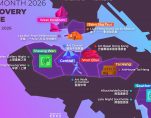
To enrich the artistic journey for visitors, Art Central, in partnership with the Hong Kong Tourism Board, proudly presents the digital Hong Kong Art Month Discovery Guide. The guide compiles exciting events across the city’s art districts, covering gallery exhibitions, special museum showcases, and performing arts programmes across Central, Sheung Wan, Wan Chai, Tai Hang, the Southern District, Tsim Sha Tsui, and the West Kowloon Cultural District. Beyond visual arts, the guide offers detailed dining recommendations in the vicinity, perfectly illustrating Hong Kong’s diverse culinary culture. The curated selections range from local street food and refined Cantonese cuisine to Michelin-starred contemporary European dining. Featured establishments include MIAN, Amber, Belon, L’Atelier de Joël Robuchon, Chinesology, Gu Liang Cai, and the historic Luk Yu Tea House. Through this comprehensive guide, visitors can easily navigate the city’s streets and alleys alongside their visit to Art Central, seamlessly transitioning from visual arts to culinary delights while deeply experiencing Hong Kong’s unique charm as Asia’s events capital. Explore more in the Hong Kong Art Month Discovery Guide.
To allow visitors to incorporate the Fair into their broader Hong Kong itineraries with ease, Art Central has introduced a brand-new Flexible Date Ticket, available in limited quantities exclusively during the advance sale period. Holders of the Flexible Date Ticket may select any single day between 25 and 29 March 2026 for entry during general admission hours without the need for advance date selection.
Art Central has also launched comprehensive packages on various travel platforms covering accommodation, attractions, and transportation for the convenience of visitors. For example, through Ctrip, visitors can book curated packages combining Fair admission with selected offers and enjoy a HK$50 no-minimum-spend Uber Taxi promo code with the purchase of any ticket, easily charting a cultural journey connecting art and city life.
Ctrip’s accommodation bundles span top-tier five-star luxury properties such as Four Seasons Hotel Hong Kong, Mandarin Oriental Hong Kong, and The Murray, Hong Kong, as well as boutique options including The Pottinger Hong Kong, offering convenient and elevated choices for cultural getaways and weekend itineraries.
Additionally, attraction bundles will extend the Fair experience to multiple transportation options and popular leisure destinations, including the Peak Tram, the Hong Kong Observation Wheel, the Star Ferry, and the Airport Express. This allows visitors to integrate transportation, accommodation, and urban cultural experiences, extending their exhibition visit into a city journey exploring Hong Kong’s art and lifestyle.
Furthermore, Art Central has launched combo packages on Klook, pairing the Flexible Date Ticket with admission to the Hong Kong Observation Wheel at the Central Harbourfront (HK$302) or a Cupping Room coffee e-voucher (HK$314). These allow visitors to take in the spectacular views of Victoria Harbour or take a relaxing coffee break following their visit to the Fair. After viewing the exhibition, visitors can also take the “WestK Ferry” from Central Pier 9—a short eight-minute ferry ride—to effortlessly reach the West Kowloon Cultural District and continue their exploration at M+, the Hong Kong Palace Museum, and the WestK FunFest.
Package offers are exclusively available for purchase via Ctrip and Klook. For more details regarding participating hotels, dining, attractions, and transport partners, please visit artcentralhongkong.com/tickets. Ticket Packages might be subject to change without prior notice and are available in limited quantities while stocks last.
Hong Kong Observation Wheel Ticket + Uber Taxi HK$50 Promo Code
Adult: HK$164 Child: HK$54
Ctrip
Experience
Art Central Advance Ticket + Star Ferry World Star / Shining Star Water Tour Ticket + Uber Taxi HK$50 Promo Code
Adult: HK$351 Child: HK$188
Ctrip
Transport
Art Central Advance Ticket +
Airport Express Ticket to/from Central (Hong Kong Station) + Uber Taxi HK$50 Promo Code
Child: HK$89
Ctrip
F&B
Art Central Advance Flexible Date Ticket +
Cupping Room HK$50 Coffee E-Voucher
HK$314
Klook
Experience
Art Central Advance Flexible Date Ticket +
Hong Kong Observation Wheel Ticket
HK$302
Klook
Hotel
Art Central Advance Ticket + Hotel Bundle
RMB ¥581+
Ctrip
Options include: Four Seasons Hotel Hong Kong / The Upper House / Mandarin Oriental Hong Kong / Island Shangri-La, Hong Kong / The Murray, Hong Kong, a Niccolo Hotel / JW Marriott Hotel Hong Kong / The Pottinger Hong Kong / Two MacDonnell Road, Hong Kong / Lan Kwai Fong Hotel @ Kau U Fong / Bishop Lei International House
Opening Dates and Hours Tuesday 24 March VIP Preview (by invitation)
Wednesday 25 March Fair Hours 12 pm – 5 pm Night Central 5 pm – 9 pm
Thursday 26 March Fair Hours 12 pm – 7 pm
Friday 27 March Fair Hours 12pm – 7 pm
Saturday 28 March Fair Hours 11 am – 7 pm
Sunday 29 March Fair Hours 11 am – 5 pm
Venue Central Harbourfront Hong Kong, 9 Lung Wo Road Hashtag: #ArtCentralHK #ArtCentralUOB #HongKongArtWeek
The issuer is solely responsible for the content of this announcement.
About Art Central
Art Central, a cornerstone event of Hong Kong Art Week, presents the next generation of talent from Asia’s most forward-thinking galleries alongside celebrated artists from across the globe. Since its inaugural edition in 2015, Art Central has established itself as a leading platform for innovation in contemporary art, advancing the profiles of artists and galleries and reinforcing their presence within the international art landscape. Today, the Fair is recognised for the strength of its curatorial programming and as a vital meeting point for discovery and exchange among collectors and curators representing private, corporate, and institutional collections worldwide.
Fair Director Corey Andrew Barr joined Art Central as Fair Director in 2019. A champion of Hong Kong artists, Barr has expanded the Fair’s platform to highlight local talent and underscore its position as a benchmark for aspiring galleries from around the world. He was formerly the director of a prominent Hong Kong- and London-based gallery focusing on contemporary Asian art, and prior to that, served as Specialist and Head of Sales for Phillips in New York, where he also organised exhibitions of contemporary art, photography, and design by leading international artists.
Curator Enoch Cheng is an artist-curator whose work spans curation, moving image, installation, performance, dance, and fashion. His cross-disciplinary multimedia practice reinterprets norms, stories, and myths through contemporary lenses, drawing on a range of creative practices and engaging audiences through diverse cultural traditions. Cheng was awarded the Asian Cultural Council Fellowship (2020) and held artist residencies at the Museum of Arts and Design, New York (2022), and the American Museum of Natural History, New York (2020). He was most recently named Artist of the Year (Visual Arts) at the 2025 Hong Kong Arts Development Awards, recognising his contributions to the arts, including his role at Art Central since 2024.
Curator Zoie Yung, currently based in Hong Kong, is an independent exhibition consultant and curator, and former exhibition manager of chi K11 art museum in Shanghai. She provides a unique approach to exhibition production by combining practice in exhibition spatial arrangement and her knowledge of Chinese Xuanxue as well as Western astrology. Selected recent exhibitions include Wonder-verse (chi K11 art space, Hong Kong, 2022) and Curve of Buoyancy (Duddell’s, Hong Kong, 2021). She also actively organises public education campaigns; she has collaborated with local organisations, including Tai Kwun Contemporary, Para Site, 1a Space, and Hong Kong Visual Arts Centre.
About UOB UOB is a leading bank in Asia. Operating through its head office in Singapore and banking subsidiaries in China, Indonesia, Malaysia, Thailand and Vietnam, UOB has a global network of more than 470 branches and offices in 19 markets in Asia Pacific, Europe and North America. Since its incorporation in 1935, UOB has grown organically and through a series of strategic acquisitions. Today, UOB is rated among the world’s top banks: Aa1 by Moody’s Investors Service and AA- by both S&P Global Ratings and Fitch Ratings.
For nine decades, UOB has adopted a customer-centric approach to create long-term value by staying relevant through its enterprising spirit and doing right by its customers. UOB is focused on building the future of ASEAN – for the people and businesses within, and connecting with, ASEAN.
The Bank connects businesses to opportunities in the region with its unparalleled regional footprint and leverages data and insights to innovate and create personalised banking experiences and solutions catering to each customer’s unique needs and evolving preferences. UOB is also committed to helping businesses forge a sustainable future, by fostering social inclusiveness, creating positive environmental impact and pursuing economic progress. UOB believes in being a responsible financial services provider and is steadfast in its support of art, social development of children and education, doing right by its communities and stakeholders.
About Mega Arts and Cultural Events (ACE) Fund The Culture, Sports and Tourism Bureau of the Hong Kong Special Administrative Region Government sets up the Mega ACE Fund to attract and support international or large-scale arts and cultural events which bring significant arts, cultural or economic values and can be recurrent and anchored in Hong Kong, or events which can bring exceptionally significant arts or cultural merit, as well as publicity and image building values to Hong Kong as an arts and cultural hub with a view to contributing to Hong Kong’s development into an arts and cultural metropolis as well as a tourist destination, providing development opportunities for the arts, cultural and creative sectors, and facilitating arts and cultural exchange.
Global aviation networks faced sustained disruption as conflict involving Iran triggered widespread airspace closures across major Gulf transit hubs, grounding flights and stranding tens of thousands of passengers in one of the most severe interruptions to international travel in years. Airlines halted or diverted services across a corridor that typically handles a significant share of long-haul traffic between Europe, Asia and Africa. Airports in Dubai, Doha and […]
Dubai Police reopened key airport-bound roads after a disruption linked to a fire incident near Dubai International Airport forced temporary closures and traffic diversions, easing congestion that had built up across surrounding districts and arterial routes. Authorities said precautionary measures were introduced early Monday after reports of a fire in the vicinity of Dubai International Airport, prompting swift action from emergency services and traffic management teams. Access […]
Arabian Post Special Missile and drone strikes linked to the widening confrontation around Iran have forced Gulf governments to confront a reality long considered unlikely: the region’s economic hubs, energy infrastructure and aviation networks can no longer assume insulation from large-scale conflict. Airports, oil terminals and urban centres across the Gulf have experienced disruptions as Iranian projectiles and drones targeted sites tied to military or logistical support […]
Arabian Post Staff -Dubai Emirates airline said on Monday it expects to operate a limited flight schedule from Dubai after 10am local time, following disruption caused by a drone attack that triggered a fire near the city’s main airport and forced the temporary suspension of operations. Airport authorities halted flights after emergency services responded to a blaze sparked by the incident in the vicinity of Dubai International […]
Britain’s counter-drone and air-defence units have shot down multiple Iranian drones across the Gulf theatre as London expands what it describes as a strictly defensive military posture, with ministers arguing the operations are aimed at protecting British personnel, allied states and vital regional infrastructure rather than joining any offensive campaign against Tehran. The latest intercepts come as tensions around the Gulf and the wider Middle East continue […]
Arabian Post Staff -Dubai Flight operations at Dubai International Airport were temporarily suspended after a fire broke out near the airfield, prompting authorities to divert several aircraft to Al Maktoum International Airport while emergency crews brought the blaze under control. Authorities in Dubai halted departures and arrivals at the region’s busiest aviation hub as a precaution after flames were reported in the vicinity of the airport’s fuel […]
Dubai-based technology firm Solstice Data has signed a memorandum of understanding with the Kerala government to invest ₹52,600 crore in a large-scale data infrastructure project at the KINFRA Industrial Park in Mattannur, marking one of the biggest technology investments proposed for the state’s digital economy. The agreement envisions the development of advanced artificial intelligence-driven high-performance computing data centres on approximately 100 acres of land in Kannur district, a move officials say could reshape the region’s industrial profile.
The MoU was exchanged in Thiruvananthapuram between Raj Babu Thulaseedharan, Solstice Data’s country head for India, and Santhosh Koshy Thomas, managing director of Kerala Industrial Infrastructure Development Corporation, commonly known as KINFRA. The signing ceremony took place in the presence of Industries Minister P Rajeev and Director of Industries P Vishnuraj, signalling strong administrative backing for the project.
Solstice Data, headquartered in Dubai, specialises in designing and operating high-performance computing facilities that support artificial intelligence applications, cloud services and large-scale data processing. The company has overseen more than sixty data-centre projects internationally, including facilities in North America. The planned Kerala campus is expected to incorporate similar advanced infrastructure, supporting large computing workloads used by artificial intelligence developers, research institutions and global technology companies.
Officials involved in the negotiations describe the proposed facility as a strategic attempt to position Kerala within the expanding global data-centre ecosystem. The investment is scheduled to be implemented over a five-to-seven-year period, with phased development of computing infrastructure and supporting utilities. Such projects typically require heavy investments in power systems, cooling technology, fibre-optic connectivity and advanced cybersecurity frameworks, all of which are considered essential to attract international technology firms that rely on reliable data-processing capacity.
Mattannur’s KINFRA Industrial Park was selected as the project site after infrastructure upgrades created additional industrial land within the complex. The park covers about 175 acres, with roughly 123 acres designated for industrial use after internal roads, power supply and other facilities were developed. Officials said the Solstice Data project will occupy the remaining 100 acres currently available for new enterprises within the park, effectively completing the industrial allocation of the site.
Kerala’s industry department has framed the project as part of a broader push to attract technology-driven investments beyond the state’s established IT corridors. While cities such as Kochi and Thiruvananthapuram host major software parks and technology campuses, northern districts have been seeking large industrial anchors to stimulate employment and infrastructure development. Officials believe a data-centre cluster could generate both direct and indirect jobs, ranging from engineering and maintenance roles to specialised positions in artificial intelligence research and cloud-computing operations.
Industries Minister P Rajeev said the planned facility is expected to open significant digital opportunities for the state’s technology ecosystem. According to government officials, the project will be developed in collaboration with local partners, potentially creating links with educational institutions, startups and software companies working in artificial intelligence and data analytics. The state has promoted digital innovation as a key pillar of its industrial strategy, aiming to expand sectors such as fintech, health-tech and data science.
Data-centre investments have gathered momentum globally as demand for computing power rises with the growth of artificial intelligence models, streaming services and cloud-based applications. Major technology companies have been building hyperscale facilities capable of handling vast quantities of data, often requiring reliable electricity supply and extensive fibre-optic connectivity. Industry analysts say regions that provide stable power networks, regulatory clarity and strong connectivity stand to attract significant investments from technology infrastructure firms.
Kerala has gradually positioned itself as a destination for knowledge-based industries through investments in IT parks, research institutions and digital-skills programmes. Earlier technology initiatives in the state have involved collaborations with global companies and overseas investors. Observers see the Solstice Data project as another example of cross-border partnerships shaping technology infrastructure, particularly with firms based in the Gulf that maintain commercial ties with southern states.
Local authorities in Kannur district view the project as a potential catalyst for broader economic activity around Mattannur, an area already connected by road networks and the nearby Kannur International Airport. Industrial planners say large technology campuses often stimulate the creation of ancillary industries including power equipment suppliers, cooling system manufacturers and digital-services firms.
Solstice Data’s decision to establish an artificial-intelligence-focused data-centre campus also reflects the intensifying competition among regions seeking to host digital infrastructure. Governments across Asia have introduced policies aimed at attracting such projects through land allocation, tax incentives and investments in high-capacity electricity grids.
Government plans to establish an $11 billion fund aimed at accelerating semiconductor development, a move designed to strengthen the country’s position in the global electronics supply chain and reduce dependence on imported chips. The proposed initiative, valued at more than ₹1 trillion, is under active discussion and could be unveiled within months as part of a broader push to expand domestic technology manufacturing.
Semiconductors form the backbone of modern technology, powering devices ranging from smartphones and laptops to vehicles, industrial equipment and artificial intelligence systems. Officials believe the new fund will provide subsidies for chip design, semiconductor manufacturing equipment and the development of supporting supply chains, while encouraging investment from both domestic conglomerates and international technology companies.
Policy planners view the programme as a key step in transforming the country into a major centre for semiconductor manufacturing and design. Industry specialists say the fund would complement earlier government initiatives aimed at building a full semiconductor ecosystem, including design, fabrication, assembly, testing and packaging capabilities.
The proposal builds on earlier efforts launched in 2021 under the semiconductor incentive scheme, which earmarked about $10 billion to attract chip manufacturers and component makers. That programme sought to cover a significant share of the capital costs associated with establishing fabrication and assembly plants, a strategy widely adopted by governments worldwide seeking to secure technology supply chains.
Authorities have framed semiconductor development as a strategic priority amid rising global demand for advanced electronics. The push is also tied to ambitions of expanding the domestic electronics manufacturing sector, which has grown rapidly over the past decade as multinational companies diversify production away from traditional manufacturing hubs.
Major industrial projects linked to this strategy are already underway. A semiconductor assembly and testing facility led by Tata Group in the northeast is expected to become one of the country’s first large-scale chip processing plants, while U. S. firm Micron is developing a packaging facility valued at about $2.7 billion. These projects represent early steps toward creating an integrated semiconductor ecosystem spanning design, fabrication and advanced packaging.
Other proposals include joint ventures between technology firms and global chipmakers. One such project involves a partnership between HCL Group and Taiwan’s Foxconn to establish a semiconductor unit near Jewar airport in Uttar Pradesh. The facility is designed to produce display driver chips used in consumer electronics and could reach an output of tens of millions of units annually once operational.
Government officials have also focused on strengthening the talent pipeline required for the semiconductor industry. A national programme known as “Chips to Startups” aims to train around 85,000 engineers in chip design across more than 300 academic institutions, reflecting recognition that workforce development is critical for sustaining a competitive semiconductor sector.
Industry leaders note that chip manufacturing remains one of the most capital-intensive segments of the technology economy. Fabrication plants require investments that can exceed $10 billion, along with long development timelines and highly specialised expertise. As a result, government subsidies and strategic partnerships are widely seen as essential for building a viable domestic semiconductor base.
Global competition in the semiconductor sector has intensified as governments race to secure supply chains for critical technologies. The United States has enacted multi-billion-dollar incentives through its CHIPS and Science Act, while China continues to channel state funding into chip design and manufacturing. Similar programmes have emerged in Europe, Japan and South Korea, underscoring the geopolitical significance of semiconductor production.
Economic planners argue that strengthening chip capabilities could support broader industrial growth, particularly in sectors such as electric vehicles, telecommunications, defence electronics and artificial intelligence infrastructure. Demand for semiconductors is expected to surge as digitalisation spreads across industries and emerging technologies such as machine learning, cloud computing and smart devices expand globally.
Technology companies have shown growing interest in establishing operations in the country as electronics manufacturing scales up. Smartphone assembly has expanded sharply, with global firms increasing production capacity and boosting exports, reflecting a shift in supply chains that had previously centred heavily on East Asia.
Private investment in semiconductor start-ups has also gained momentum. State-backed funds and regional initiatives have begun supporting chip design ventures working on networking processors and communications hardware, signalling a move toward building indigenous intellectual property alongside manufacturing capacity.
Challenges remain significant. Establishing advanced chip fabrication facilities requires complex infrastructure, steady power supply, large water resources and access to specialised equipment dominated by a small number of global suppliers. Analysts say progress will depend on sustained policy support, long-term financing and collaboration with established semiconductor companies.
Arabian Post Staff -Dubai Global aviation authorities have begun rolling out a new digital platform designed to eliminate paper documentation for hazardous air cargo shipments, a move aimed at improving safety and efficiency across the air freight industry. The International Air Transport Association has launched DG Digital, a technology integrated into its DG AutoCheck compliance platform that enables shippers, airlines and logistics companies to create and approve […]
Air freight rates have surged sharply across several global trade corridors as the war involving the United States and Israel against Iran disrupts transport routes, closes large portions of Middle Eastern airspace and forces cargo operators to reroute shipments at significantly higher cost. Industry data show some air cargo routes have experienced price increases of up to 70 percent since the escalation of hostilities, with South Asia–Europe […]
Arabian Post Staff -Dubai Saudi Arabia has introduced a sea-to-air logistics corridor linking its western seaports with airports, an initiative aimed at sustaining cargo flows to international markets as disruptions continue to affect major shipping lanes and aviation routes. The programme connects Red Sea ports with key aviation gateways to allow freight arriving by sea to be transferred rapidly onto cargo aircraft, enabling exporters and logistics companies […]
AMSTERDAM, NETHERLANDS – Media OutReach Newswire – 12 March 2026 – Vietnam Airlines officially marked its entry into the Dutch market today with a high-profile promotion event at Amsterdam Schiphol Airport, announcing the much-anticipated launch of nonstop flights between Hanoi and Amsterdam.
Beginning June 16, 2026, Vietnam Airlines will operate three weekly round-trip flights using the state-of-the-art Airbus A350 wide-body aircraft.
The event, joined by the Ambassador of Vietnam to the Netherlands, Mr. Ngo Huong Nam, served as a strategic platform to introduce the new route to key European travel partners. The gathering highlighted Vietnam’s growing appeal as a top-tier destination and reinforced the airline’s mission to bridge Vietnam with Europe’s most vital economic hubs.
Beginning June 16, 2026, Vietnam Airlines will operate three weekly round-trip flights using the state-of-the-art Airbus A350 wide-body aircraft. As the first-ever direct link between the two nations, this service will drastically reduce travel time and position Amsterdam as a primary gateway for passengers traveling from Europe to Southeast Asia.
The flight schedule is optimized for maximum convenience, offering seamless onward connections from Hanoi to Vietnam’s most iconic destinations, including Ho Chi Minh City, Da Nang, Nha Trang, and Phu Quoc, as well as broader regional networks across Northeast Asia and Australia.
“Europe remains a cornerstone of our international growth strategy,” stated Nguyen Quang Trung, Executive Vice President of Vietnam Airlines. “The launch of the Hanoi–Amsterdam route is a testament to our dedication to the European market. By strengthening our ties with regional travel and tourism partners, we are creating a vital corridor for trade, cultural exchange, and tourism between Vietnam and the Netherlands.”
With the addition of Amsterdam, Vietnam Airlines now operates 12 nonstop services to eight major European cities, including Paris, Frankfurt, London, Munich, Milan, Copenhagen, and Moscow. This expansion solidifies the national flag carrier’s role in connecting Vietnam with global economic centers while showcasing the nation’s culture and hospitality to the world.
Hashtag: #VietnamAirlines
The issuer is solely responsible for the content of this announcement.
Industry insights indicate that ride-hailing platforms are gradually expanding beyond core passenger transport, with increased focus on predictive safety capabilities, AI-enabled customer support, embedded payment systems, and more structured regulatory engagement.
MANILA, PHILIPPINES – Media OutReach Newswire – 11 March 2026 – 2026 may be the year that more ride-hailing apps will expand their operations to become mobility superapps, according to industry experts who have analyzed the movements of multiple apps across the board. The analysis suggests that this shift will be driven by multi-service bundling, predictive safety features, boosted AI integration, cashless payment options, and coordination with regulators.
“Our global market review found that the way forward for ride-hailing platforms is to evolve into mobility superapps,” Evgenia Matrosova, inDrive Chief Ride-Hailing Officer, said. “Users want convenience more than anything, where diverse mobility solutions, proactive safety functions, and seamless digital payments can all be found in one platform. Integrated services won’t just push innovation forward; they signify reliability and flexibility on the road and beyond.”
#1 Ride-hailing apps may begin venturing into adjacent services.
More ride-hailing apps may begin expanding into adjacent mobility services this year due to an increase in global demand for integrated transport services. For instance, market intelligence firm Sensor Tower listed inDrive and other ride-hailing platforms among the most downloaded travel apps in 2025—revealing global demand for their expansion into adjacent travel services.
Zooming into the platforms’ service expansion, industry experts are optimistic about the potential in food delivery. Data shows that restaurants worldwide are considering working with delivery platforms that offer them more control over their profit margins.
A separate Ken Research study also revealed that online travel booking has also enjoyed similar local growth, with a projected revenue of Php 50 billion. This could boost pre-booked airport pickups’ popularity, with travelers viewing this as a much-needed convenience.
These all reveal one thing: the lines between passenger transport and adjacent mobility services are beginning to blur. Thus, ride-hailing apps may begin venturing into adjacent mobility services to create an all-in-one experience for users.
#2 Safety systems are slowly shifting from protection to prediction
At present, in-app safety features are often limited to real-time monitoring, emergency hotline buttons, and a speed dial to the platform’s 24/7 support. However, industry experts forecast that ride-hailing apps may begin using AI-powered analytics and risk modeling for predictive road safety measures.
For instance, the Forum of European National Highway Research Laboratories says that AI can collect traffic data, weather feeds, and other key information to predict collisions and recommend alternate routes. Predictive safety features like this can help ride-hailing apps move past interventionary measures and proactively protect their drivers and passengers.
#3 AI to enhance the in-app customer experience
Industry experts also say that mobility services may continue leveraging AI to improve customer experience. There are also early indicators that ride-hailing apps may experiment with using human-like AI voices in their customer support systems. AI may also be used in developing personal mobility agents that manage drivers’ schedules and earnings and intervene during emergencies.
With ride-hailing platforms considering venturing into food delivery, they may use AI to simulate customer interactions. Large language models can simulate dialogue-based ordering, allowing users to verbally dictate their orders or send them via chat platforms like WhatsApp. Not only would this speed up the delivery process, but it would also cater to users who prefer personal interactions.
#4 Ride-hailing apps eyeing seamless in-app payment systems
Cashless payment options, such as e-wallets and online bank transfers, are gaining popularity among Filipino consumers. A Bangko Sentral ng Pilipinas report found that 57.4% of Filipinos’ retail transactions were paid online. This creates an opportunity for ride-hailing companies to make their payment schemes more seamless. They may consider embedding cashless payment options in their apps, which can automatically deduct their transaction from their attached online banking and e-wallet accounts.
inDrive’s internal research shows that Filipino commuters are also price-sensitive, often allocating tight budgets to their transportation expenses. This consumer attitude could pave the way for ride-hailing companies to install in-app wallets. These facilitate better online budgeting and accommodate users who prefer cash.
#5 Ride-hailing apps expected to continue to uphold price fairness
Strict regulatory compliance has always influenced the dynamics of the ride-hailing industry. In particular, the Land Transportation Franchising and Regulatory Board has been staunch in implementing its fare matrix. Just last December, the regulator imposed surge caps to maintain affordable holiday fares—underscoring its commitment to keeping prices affordable for passengers.
With this in mind, industry dynamics suggest a growing emphasis on collaborative regulatory models. Experts advise ride-hailing companies to continue collaborating with government regulators to promote pricing fairness. They also recommended continuing to implement lower commission rates to increase drivers’ income and strengthen passenger loyalty. This year, platforms may also take it a step further by rolling out promotions, capped surge policies, and loyalty models.
These trends paint a picture of what could come next for the ride-hailing industry this year. With these in mind, inDrive will continue to uphold transparency, safety, and inclusivity for drivers and passengers alike. For more updates on inDrive’s initiatives this year, visit www.inDrive.com or follow @inDrive.ph on social media.
The issuer is solely responsible for the content of this announcement.
About inDrive
inDrive is a global mobility and urban services platform. The inDrive app has been downloaded over 400 million times, and has been named the second most downloaded mobility app for the third consecutive year. In addition to ride-hailing, inDrive provides an expanding list of services, including intercity transportation, delivery, and financial services. In 2023, inDrive launched New Ventures, a venture and M&A arm.
inDrive operates in 1065 cities in 48 countries. Driven by its mission of challenging injustice, the company is committed to having a positive impact on the lives of one billion people by 2030. It pursues this goal both through its core business, which supports local communities via a fair pricing model; and through the work of its impact programs.
Arabian Post Staff -Dubai Dubai’s skyline continues to glitter with life even as missile alerts and air-defence interceptions echo across parts of the Gulf, highlighting the unusual resilience of a city built largely by foreign workers and entrepreneurs. While tourists and some diplomatic staff rush to depart amid escalating confrontation between Iran and the United States–Israel alliance, many expatriates who call Dubai home have chosen to remain, […]
More than 10,000 citizens of the People’s Republic of China have returned safely from several West Asian countries including the United Arab Emirates, Oman and Saudi Arabia, according to a spokesperson from the Ministry of Foreign Affairs in Beijing, highlighting coordinated efforts by diplomatic missions and local authorities to assist travellers during a period of heightened regional uncertainty.
Officials stated that consular teams across multiple countries worked closely with airlines, airport authorities and host governments to organise departures and ensure that travellers were able to leave safely. The effort covered Chinese tourists, business travellers and temporary workers who had been present across several Gulf states when concerns about travel disruptions intensified.
Authorities described the return of more than 10,000 citizens as part of a broader emergency response mechanism that allows embassies and consulates to provide rapid assistance to nationals overseas. Diplomatic missions in Abu Dhabi, Riyadh, Muscat and other regional capitals coordinated with Chinese carriers and international airlines to arrange flights and secure transit permissions, ensuring orderly departures from major regional airports.
Embassy staff reportedly maintained continuous communication with travellers through consular hotlines and digital messaging platforms, offering guidance on documentation, airport procedures and available transport routes. Officials also worked with host governments to facilitate safe passage to airports and ensure travellers received assistance where needed.
Chinese diplomatic representatives emphasised that governments across the Gulf region extended cooperation during the operation, helping to maintain stability at airports and allowing evacuation plans to proceed without major disruptions. Aviation authorities in the region assisted with flight scheduling and airport logistics, enabling large numbers of travellers to depart over a relatively short period.
The spokesperson noted that consular protection remains a central responsibility of the foreign ministry and its overseas missions. Chinese embassies regularly issue safety advisories to citizens abroad and maintain contingency plans for large-scale assistance operations when circumstances require urgent coordination.
Travel between China and the Gulf has grown significantly during the past decade, driven by tourism, trade and energy cooperation. The United Arab Emirates in particular has become a major destination for Chinese tourists and business travellers, supported by visa-on-arrival policies and expanding air connectivity between Chinese cities and Gulf hubs such as Dubai and Abu Dhabi.
Tourism authorities in the Emirates have highlighted the importance of Chinese visitors to the hospitality and retail sectors. Before the global pandemic disrupted international travel, Chinese travellers represented one of the fastest-growing visitor segments to Dubai, contributing strongly to hotel occupancy and shopping activity across the city.
Saudi Arabia has also expanded tourism cooperation with China as part of broader economic diversification plans. Initiatives linked to the kingdom’s Vision 2030 programme have encouraged tourism flows, cultural exchanges and investment partnerships, drawing increasing numbers of visitors from Asia.
Oman has similarly sought to attract Chinese tourists and investors by easing visa procedures and promoting cultural heritage destinations, while maintaining strong commercial ties with Chinese energy companies involved in infrastructure and industrial development.
Consular officials said the return operation involved travellers from multiple Gulf states as well as other nearby countries where Chinese citizens had been working, studying or travelling. Embassy staff helped verify identities, issue emergency travel documents where necessary and assist those who required medical or logistical support before departure.
Airlines operating between the Gulf and East Asia played a central role in transporting travellers. Carriers from the region, alongside Chinese airlines, expanded seat capacity on several routes and adjusted flight schedules to accommodate additional passengers returning home.
Officials indicated that the successful movement of thousands of travellers reflects increasing coordination between diplomatic networks, aviation authorities and emergency management agencies. Governments have developed more structured protocols for assisting nationals overseas following earlier crises that highlighted the need for rapid response capabilities.
Chinese authorities have emphasised that citizens travelling abroad should remain attentive to official travel advisories and maintain contact with embassies and consulates when circumstances change. Digital registration systems have also been introduced to allow travellers to inform diplomatic missions of their presence in foreign countries, improving the ability of officials to provide assistance if required.
Business operations across major companies in the United Arab Emirates remain steady despite heightened geopolitical tensions across parts of the Middle East, with executives from several sectors emphasising strong balance sheets, diversified portfolios and resilient domestic demand as buffers against potential disruption. Statements issued by leading firms in aviation, energy, banking, logistics and real estate underline a common message: operations continue normally while financial fundamentals remain intact. […]
DUBAI, UAE – Media OutReach Newswire – 8 March 2026 – As aviation disruptions continue in the Gulf region following reports of a drone strike near Dubai International Airport, global company 1win has organized a private evacuation operation for its VIP clients currently in the United Arab Emirates.
“Safety first,” the Owner of 1win commented on X. “When airports in Dubai closed, and many were stranded, not knowing how to get out, in less than a day, we organized the evacuation of our VIP clients on all private jets, so they could return home safely without waiting for the situation to stabilize. We are here to support you in any situation.”
Commercial aviation in the region has been heavily disrupted. The airline Emirates temporarily suspended flights to and from Dubai International Airport, urging passengers not to travel to the airport until the security situation stabilizes. Several international routes have also been cancelled in the coming weeks as airlines reassess operational risks.
To provide additional flexibility for VIP clients who were unable or unwilling to rely on disrupted commercial flights, 1win coordinated private aviation options with several international charter operators. The initiative focused on offering direct departures from airports in Dubai and Abu Dhabi to destinations across Latin America, Asia, and the CIS region.
Industry reports indicate that demand for business aviation in the UAE has surged sharply as travelers seek alternatives to disrupted commercial flights. Several aviation outlets and international media reported a significant spike in private jet charters and sharply rising prices for departures from Dubai, reflecting the growing demand for alternative travel options during the crisis.
1win’s charter program remains ongoing, with additional aircraft arranged depending on client travel needs.
Hashtag: #1win
The issuer is solely responsible for the content of this announcement.
About 1win
Founded in 2016, 1win is a crypto platform in the global gaming industry. Operating across Asia, Latin America, and Africa, 1win offers a wide range of services adapted to regional audiences. In 2024, 1win partnered with actor Johnny Sins as its brand ambassador. In 2025, MMA legend Jon Jones joined 1win as its global ambassador. American professional wrestler and mixed martial artist, Gable Steveson, stepped into the 1win global ambassador team earlier this year.








 https://artcentralhongkong.com/
 https://www.facebook.com/artcentralhk

 https://www.instagram.com/artcentralhk/