News related to
blockchain

For years, the cryptocurrency debate has centred on price. Every discussion returned to charts, volatility, and market speculation. The fixation on value swings has distracted from a much more important story. The future of digital finance is not about price movement. It is about infrastructure. Regulated stablecoins are emerging as the foundation of a new global financial system. They combine the trust of established currencies with the […]

The world’s largest cryptocurrency, Bitcoin, vaulted above $111,000 after a steep dip earlier this week, triggering sharp gains across major tokens including Ethereum, XRP and Solana. On-chain metrics signalled accumulating momentum while traditional equity markets in Asia registered fresh highs, boosting risk-assets overall.

Bitcoin climbed to around $111,223, representing a gain of approximately 3.7% within 24 hours, after briefly touching a low near $103,602. Other digital assets followed: Ethereum reached roughly $4,062, XRP $2.47 and Solana approximately $193.33, with 24-hour gains of between 3% and 5%.

Analysts highlight several factors underpinning this recovery. On-chain data show the realised value-to-transaction ratio for Bitcoin has declined — a historical marker of heightened accumulation rather than passive holding. A crypto-analytics firm noted that “strong declines in the RVTS have preceded major bull phases, as they indicate that Bitcoin is being used, accumulated, and transferred — not just held.”

Broader market dynamics provided further tailwinds. In Japan, the Nikkei 225 index soared past 49,000 for the first time, advancing the year-to-date gain to 25%. The move followed media reports indicating that the country’s leading opposition party plans to join coalitions which position its fiscal-dove leader for the prime ministership — one with a policy inclination towards low interest rates and expansionary fiscal measures.

Meanwhile, China’s third-quarter gross domestic product growth of 4.8% year-on-year narrowly exceeded forecasts of 4.7%, providing support for risk assets globally.

Beyond macro-signals, institutional behaviours also deserve attention. A leading publicly listed company with large Bitcoin holdings, Strategy, has signalled fresh crypto purchases — adding a layer of institutional demand to the structural thesis.

Within the crypto space, major platforms tied to tokenisation and stable-coin activity are also part of the narrative. Analysts at Galaxy Digital emphasise three structural drivers: increased AI-capex from tokenised assets, accelerating stable-coin infrastructure, and the migration of real-world assets onto blockchain networks. These are seen as propositions that may sustain momentum beyond short-term price moves.

Yet, market participants remain cautious. Liquidity remains thin and residual risks — such as further macro headwinds, regulatory tightening or a reversal in risk appetite — continue to warrant vigilance. As one analyst put it: “The near-term message is caution — respect thinner liquidity, post-crash psychology and a ‘wall of worry’ mood. The medium-term message is resilience.”

Within altcoins, XRP is gaining renewed focus ahead of potential ETF-related developments, while Solana is benefitting from its association with on-chain tokenisation flows. Market-data platform CoinGecko shows that XRP trades at around $2.46, with volume flows increasing as sentiment rebuilds.

Astra Nova has secured USD 48.3 million in a funding round aimed at accelerating its development of no-code, AI-driven tools for creators in the Web3 entertainment space. The capital will bolster expansion into new regions and deepen integrations among its ecosystem of mini-apps, games and community tools.

The bulk of the funding, approximately USD 41.6 million, came through a strategic investment round, building on prior backing from firms including Outlier Ventures and Middle East family offices. Astra Nova intends to deploy the funds toward global scaling, regulatory readiness and product enhancements.

Astra Nova’s core proposition rests on TokenPlay AI, a platform that enables creators to launch blockchain-enabled micro-apps without writing code. Powered by Alibaba Cloud infrastructure, it is designed to let developers spin up interactive communities and gamified utilities rapidly. In addition, Astra Nova operates NovaToon, Deviants: Fight Club, and BlackPass, all of which already draw user traction.

Crucially, major brands are integrating with Astra Nova ahead of its token launch. Shiba Inu, one of the most active crypto communities, is deploying mini-apps through TokenPlay AI, and the Simon’s Cat IP is also building live integrations. These are not mere announcements: the integrations are functional and active, driving transaction volume even before the token is fully in circulation.

Astra Nova’s native token, $RVV, is scheduled for issuance on 18 October. The token is intended as the foundational utility currency within the ecosystem, underpinning in-app upgrades, advertising, subscriptions, and community incentives. Transaction fees from ecosystem activity are programmed to trigger buybacks of $RVV, creating a feedback loop to support tokenomics.

Backing for the project includes strategic support from NEOM, NVIDIA’s Inception programme, and Alibaba Cloud. NVIDIA’s involvement is particularly significant: it provides access to GPU and AI computing capabilities that are critical to Astra Nova’s adaptive storytelling and intelligent NPC infrastructure. Alibaba Cloud offers global infrastructure scale, while NEOM’s partnership underscores sovereign interest in aligning the startup with Saudi Arabia’s broader AI and tech ambitions.

Astra Nova’s metrics already indicate early scale: the company claims more than 250,000 creators on its waitlist for TokenPlay AI, cumulative user reach across its live products exceeding 500,000, and 200,000 daily active users across the ecosystem. The ARPG built on Unreal Engine 5 has surpassed 100,000 playtest downloads, reinforcing early demand and user engagement.

Analysts see the model’s strength in its orchestration of multiple components—creator tooling, community building, content, and gaming—into a unified framework supported by AI and blockchain. The pre-launch traction with IPs such as Shiba Inu and Simon’s Cat gives the ecosystem a runway of activity even from day zero of token issuance.

Bitcoin’s price dropped below $105,000 early Friday in London trading, recovering marginally later but signalling mounting pressure in crypto markets. Bloomberg data showed a fall of as much as 3 percent before a modest bounce. The slide comes after a week of heightened volatility that has dragged digital-asset valuations lower.

The crypto sector has shed billions. Total market capitalisation fell to its lowest point since July, as institutional and leveraged positions faced heavy liquidations. Ethereum, the second-largest token, also fell sharply, trading under $3,800.

One key driver has been intensifying stress in U. S. regional banks. Shares of Zions Bancorp plunged after it disclosed a $50 million loan impairment, while Western Alliance is embroiled in fraud allegations tied to borrowers. Those troubles have sparked a “flight to safety” across risk assets, nudging investors away from speculative trades.

The collapse in derivatives markets was steep: over $1 billion in long and short positions were wiped out in rolling liquidations, especially on exchanges with aggressive leverage mechanics. The drop below the 200-day moving average—around $107,500—has undermined a long-term support zone, fuelling further anxiety among traders.

At the same time, trading volume surged. Weekly volume for Bitcoin hit its highest level since March, suggesting heavy participation even amid panic. Some analysts see that as a sign of re-accumulation by institutional players, though it remains unclear whether those inflows will stabilise prices.

Technical watchers are eyeing potential floor zones near $100,000, while others suggest $88,000 could act as an “open target” if selling accelerates. Meanwhile, on-chain data reveals that wallets holding between 100 and 1,000 BTC—sometimes called “shark wallets”—are accumulating aggressively, marking the fastest rate of inflow since 2013. Those trends echo previous panic phases, which often preceded longer rallies.

Some observers caution that Bitcoin’s repeated failure to behave as a “safe harbour” during market stress undermines one of its selling points. Still, others argue that the fundamentals remain intact—citing diminishing supply on exchanges, renewed institutional interest, and the durability of blockchain infrastructure.

Volatility is unlikely to subside soon. The week ahead includes major U. S. economic data releases and potential policy statements from central banks that could sway risk sentiment. In parallel, geopolitical frictions—particularly over trade and supply chains—may further rattle markets already in flux.

Gold surged past $4,300 per ounce this week, setting fresh records as investors turned decisively to safe-haven assets amid mounting geopolitical strain and expectations of forthcoming U. S. rate cuts. The run has intensified scrutiny over gold’s role in modern portfolios—and reopened questions about the value of what critics label a “sterile” asset. Spot gold climbed about 2.5 per cent to $4,316.99, while December futures peaked at […]

HONG KONG SAR – Media OutReach Newswire – 17 October 2025 – DL Holdings Group Limited (HKEX: 1709) today announced a comprehensive strategic partnership with Antalpha, a global leader in digital asset financial services. The collaboration—valued at up to US$200 million—covers tokenised gold assets and Bitcoin mining infrastructure, establishing a dual-track strategy that bridges traditional and digital finance. On the gold-asset side, DL Holdings is in the […]

SINGAPORE – Media OutReach Newswire – 16 October 2025 – Primech Holdings Ltd. (“Primech” or the “Company”), a leader in AI-powered hygienic robotics, today announced the signing of a strategic Memorandum of Understanding with GAIB, the economic layer for AI infrastructure. The partnership establishes a framework to tokenize Primech’s HYTRON autonomous cleaning robots and enable next-generation AI Robotics-as-a-Service (ARaaS) business models that open new capital pathways and […]

Advertisements

OwlTing, a Taiwan-based fintech focussed on stablecoin infrastructure, is set to begin trading its Class A common shares on the Nasdaq via direct listing on 16 October under the ticker “OWLS”. The move marks what the company calls a milestone in its evolution from hospitality and e-commerce into a compliance–led blockchain payments firm.

In its public filings, OwlTing reported revenue of US 7.6 million in 2024 and a payment volume across its platforms of approximately US 218 million. Though still unprofitable, the listing underscores growing confidence in the fragmented stablecoin infrastructure space.

The listing comes at a moment when several high-profile developments are shaping the stablecoin and payments ecosystem. Stripe’s Bridge unit is reportedly preparing to apply for a federal banking charter, aiming to navigate evolving U. S. stablecoin regulation. Meanwhile, major financial and technology firms are said to be in advanced talks to acquire BVNK, a London-based stablecoin platform.

OwlTing’s pivot from hospitality and blockchain traceability to payments and stablecoin services has been underway for some years. Its OwlPay platform enables businesses to accept stablecoins or fiat and settle globally. The company has obtained money transmitter licences in multiple U. S. states and holds themselves out as a “compliance-first” operator in a space that often struggles with regulatory uncertainty.

By listing via direct listing rather than a traditional IPO, OwlTing seeks to avoid dilution of existing shares and allow market-based price discovery. The company will ring the Nasdaq opening bell on 16 October to commemorate the debut. Analysts view the listing as Asia’s first fintech with a pure direct listing on Nasdaq, positioning OwlTing as a regional trailblazer in blockchain payments.

In parallel, Stripe’s ambitions in stablecoin continue to intensify. Its Bridge arm, acquired earlier this year, is now seeking a national trust charter to get ahead of U. S. regulation on digital assets and stablecoins. The charter would permit holding deposits and issuing stablecoins more directly under U. S. oversight.

Tether has agreed to pay $299.5 million to the Celsius Network bankruptcy estate, resolving long-standing disputes over Bitcoin collateral transfers tied to Celsius’s collapse in 2022. The deal was announced by the Blockchain Recovery Investment Consortium, a joint venture between GXD Labs and VanEck, acting as litigation administrator and asset recovery manager for Celsius’s creditors.

The settlement brings closure to adversary claims filed in August 2024 in the U. S. Bankruptcy Court for the Southern District of New York. Celsius had contended that Tether improperly liquidated Bitcoin collateral backing loans denominated in USDT, executing sales when Bitcoin’s market value closely matched Celsius’s debt — thereby undermining the lender’s position. Under the agreement, those claims will be dismissed, though the broader wind-down of Celsius remains ongoing.

BRIC was appointed by Celsius’s debtors and the unsecured creditors committee in January 2024 to steer recovery efforts of illiquid assets and litigation claims. According to BRIC’s announcement, the payment reflects a negotiated resolution consistent with maximizing returns for creditors. David Proman of GXD Labs remarked on the “timeliness” of the settlement and the objective of concluding contentious matters against Tether.

While $299.5 million is a substantial sum, it accounts for a relatively small fraction of the total claims Celsius had pursued—estimated at approximately $4 billion. Tether’s side had resisted full liability, positioning its role as merely transactional rather than one bearing responsibility for downstream collateral use, a stance it has maintained in past legal challenges. Some observers interpret the settlement as signalling heightened legal risks for stablecoin issuers in future insolvency contexts, where courts may scrutinize the proximity of collateral actions to debtor collapse.

The settlement does not necessarily foreclose other claims linked to the Celsius wind-down. BRIC remains responsible for managing a portfolio of residual litigation and illiquid digital assets, with the aim of continuing creditor recovery. The deal, in effect, removes one major legal obstacle in a broader restructuring process that has spanned years.

Market reaction has been muted. Crypto stakeholders and legal analysts are now closely watching whether regulators or courts will treat this settlement as a template—potentially influencing how stablecoin issuers are held to account in distressed scenarios. Some argue that issuers will face increased pressure to adopt stronger governance and compliance frameworks to mitigate similar exposures. Others caution against overinterpreting the settlement as an admission of liability.

What first inspired you to pursue your current industry or professional path? Was there a defining moment or influence that shaped your direction? My journey into financial technology began during my early days at Banque Misr, Egypt’s second-largest bank, where I witnessed firsthand the inefficiencies of traditional paperbased banking systems. The defining moment came when I was tasked with spearheading the digital transformation initiative, converting traditional transactions […]

The Bank of North Dakota and payments firm Fiserv have unveiled plans for a dollar-backed digital token dubbed “Roughrider,” to be deployed among banks and credit unions in 2026 as a new instrument for interbank settlement. The token, restricted initially to participating financial institutions, aims to accelerate and modernise bank-to-bank transactions within the state.

Under the agreement, Roughrider will be built on Fiserv’s digital asset infrastructure, leveraging the platform’s framework to interoperate with other stablecoins. The Bank of North Dakota becomes the first U. S. state bank to issue a stablecoin on Fiserv’s platform. The initiative targets enhanced liquidity, streamlined payments, and potential expansion into merchant adoption.

Governor Kelly Armstrong cast the move as bold institutional innovation, positioning the state as a testing ground for blockchain-enabled finance. “We’re entering a new era,” he said, emphasising that North Dakota financial institutions must embrace evolving money-movement tools. Fiserv’s COO Takis Georgakopoulos described Roughrider as merging the stability of traditional banking with the agility of distributed ledger technology.

State officials say the Industrial Commission, which oversees the bank, must approve the pilot plan. Once greenlit, the rollout will begin with a small cohort of local institutions. BND President and CEO Don Morgan noted that any costs from development will rest on the bank’s balance sheet rather than state taxpayer funding. The legal team of Troutman Pepper Locke has advised the bank in structuring the deal.

The federal legislative environment played a crucial role: in July, Congress passed the GENIUS Act, providing stablecoin issuers with a national regulatory framework requiring full backing by high-quality assets, transparency rules, and audit requirements. North Dakota’s scheme is built to align with those standards.

While Wyoming’s Frontier Stable Token launched in August and is available for public use, North Dakota’s strategy is more conservative. Roughrider will begin as a wholesale instrument; public or consumer-facing use is not part of the first phase. Some stakeholders view it as a deliberate step to mitigate operational and financial risks before broader deployment.

Analysts say North Dakota offers a lower-complexity environment for experimentation. With BND being the only state-owned bank in the U. S., the state provides a more controlled setting to work through technical, legal, and compliance challenges. If successful, the model could be scaled beyond North Dakota’s borders or adopted by others.

Banks and credit unions participating in the pilot stand to benefit from faster settlement, reduced settlement costs, and simpler liquidity management. But industry voices warn of potential downsides: deposit flight is a concern if stablecoins siphon off customer balances, and state regulators may need more capacity to oversee digital assets.

Fiserv, which serves roughly 10,000 financial institutions and 6 million merchants globally, sees this as an opportunity to embed stablecoin rails within its ecosystem. It launched its own white-label stablecoin platform earlier this year, with FIUSD as its internal token, and views Roughrider as a use case within that infrastructure.

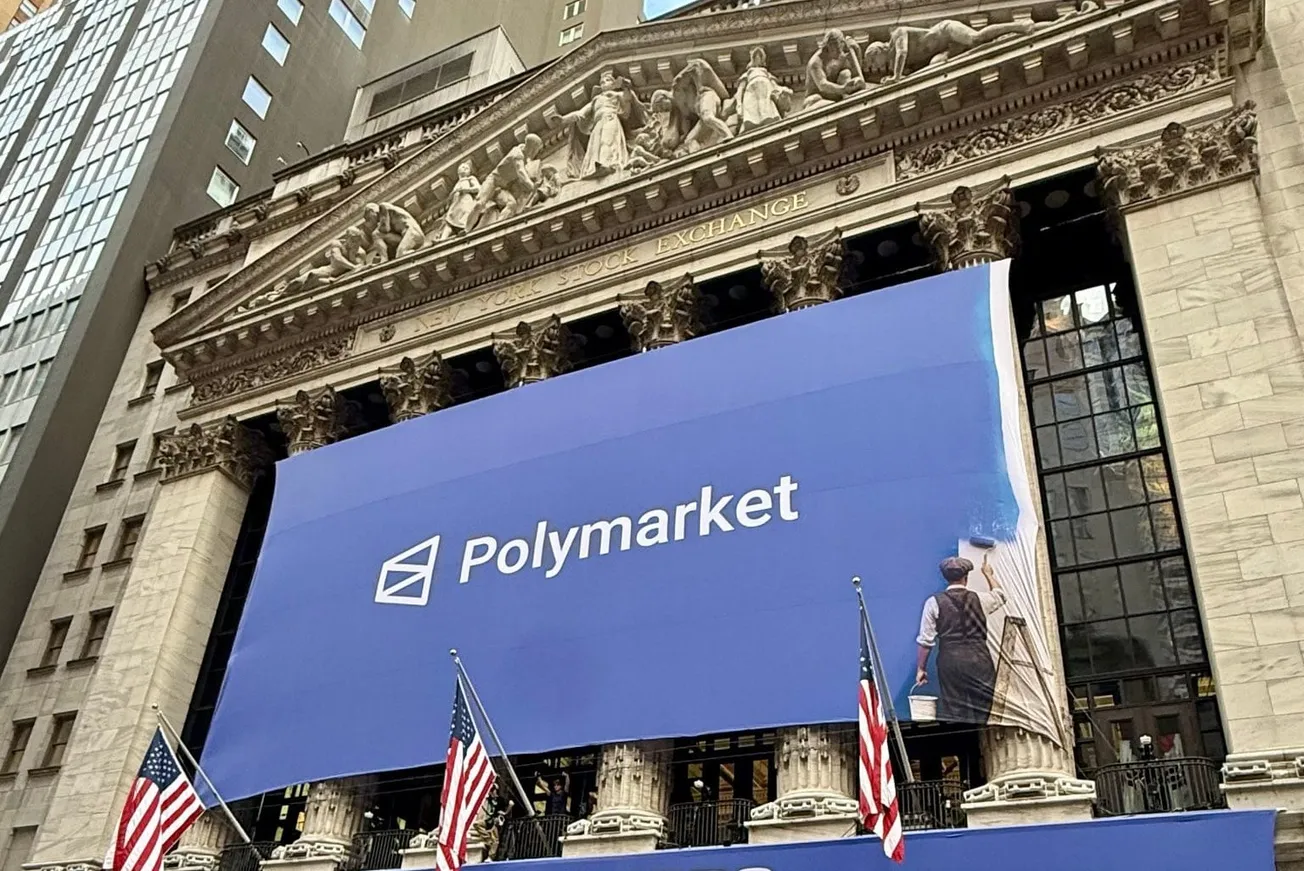
Intercontinental Exchange, which owns the New York Stock Exchange, is committing up to $2 billion in Polymarket, valuing the event-prediction platform at about $8 billion before the investment. ICE will serve as a global distributor of Polymarket’s event-driven data and will collaborate on tokenisation and related infrastructure.

Polymarket is gearing up for its return to U. S. markets following a multi-year regulatory hiatus. The firm acquired QCEX, a derivatives exchange and clearinghouse with CFTC licensure, for $112 million, enabling it to operate under U. S. regulation. The Commodity Futures Trading Commission has granted a no-action letter for event contracts, clearing a path for U. S. users to trade again.

Born in 2020 under the leadership of CEO Shayne Coplan, Polymarket permits users to wager on outcomes by purchasing “Yes” or “No” tokens. The market price implies a probability. Winning tokens settle at $1, while losing ones expire worthless. All trades occur via peer-to-peer smart contracts built on the Polygon blockchain.

Polymarket saw a surge in profile during the 2024 U. S. presidential campaign, when trading volume on election markets surpassed $3 billion. Its probability signals have since been picked up by mainstream outlets and financial analysts as indicators of public sentiment and forecasting.

ICE’s strategic investment reflects growing institutional interest in prediction markets. With control over NYSE infrastructure and deep data capabilities, ICE aims to monetise sentiment analytics and integrate such signals alongside traditional financial indicators. ICE has maintained that the investment will not materially affect its 2025 financials.

Coplan has acknowledged the significance of the tie-up, saying the partnership “marks a major step in bringing prediction markets into the financial mainstream.” Jeffrey Sprecher, ICE’s CEO, praised the union as an alignment between legacy market infrastructure and next-generation decentralised finance innovation.

Observers suggest that navigating regulatory risk is central to Polymarket’s success. Its three-year exit from U. S. users followed a 2022 settlement with the CFTC over unregistered derivatives operations. That settlement barred U. S. users from accessing the platform, and investigations into U. S. usage had been a cloud over the company. With the regulatory clearance and ICE backing, Polymarket is now executing a comeback in the U. S. domain.

Polymarket also attracted backing from 1789 Capital, a venture fund backed by Donald Trump Jr., which joined its advisory board earlier this year. Kalshi, a peer prediction market, won a favorable court ruling against the CFTC last year, setting precedents that influence Polymarket’s legal and operational landscape. The broader industry is watching closely, as the success or failure of this bet by ICE may signal whether prediction markets can transition from niche crypto tools to mainstream financial instruments.

Shayne Coplan, born in 1998 and a former dropout from New York University, is now recognised as the youngest self-made billionaire under the Bloomberg index following the deal. His trajectory illustrates the accelerating nexus among finance, tech and speculative market platforms.

Gold-backed digital tokens such as Paxos’s PAXG and Tether’s XAUT have shown greater resilience than much of the crypto market during a sweeping $19 billion liquidation event that struck major cryptocurrencies. While Bitcoin and Ether tumbling inflicted heavy losses across leveraged positions, these gold-pegged tokens either held value or gained modestly, driven by the ongoing rally in physical gold.

Bitcoin dropped about 8.5 per cent over 24 hours, and the broader crypto index fell roughly 12.75 per cent, but PAXG dropped a mere 0.23 per cent to around $3,998, while XAUT rose by 0.2 per cent to $4,010. That divergence reflects gold’s strength: the metal closed near $4,018 per troy ounce, bolstered by safe-haven demand in volatile markets.

The combined market capitalisation of gold-pegged tokens has now crossed $3 billion, with PAXG, XAUT and KAU as leading issuers. Trading volumes also surged, reaching about $640 million in a single day, reflecting investor flight into more stable digital assets. These tokens have returned over 50 per cent year to date, mirroring gold’s gain in 2025.

Gold’s atmosphere of strength rests on several pillars: strong inflows into physically backed gold ETFs, weakening U. S. dollar dynamics, inflation hedge demand and rising geopolitical fragility. The World Gold Council reports that global ETF holdings have now reached $472 billion, marking one of the strongest quarters ever in gold history.

Yet caution signs are mounting. Analysts and the World Gold Council warn the gold market may be entering overextended territory. With gold having risen across multiple weeks, technical indicators suggest the metal might be overbought and primed for a pullback. In particular, extreme deviation above its 40-week average raises the prospect of a reversal.

Adding fuel to this narrative is the entry of tokenisation infrastructure and institutional backing. Nasdaq-listed Prestige Wealth has raised $150 million to create a treasury vehicle for Tether’s gold reserves, aiming to layer blockchain transparency onto gold ownership. Meanwhile, the World Gold Council has floated a “Pooled Gold Interests” initiative in partnership with Linklaters and Hilltop Walk to democratise fractional ownership and tradability of vault-backed bullion.

A coalition of leading banks including Bank of America, Goldman Sachs, Deutsche Bank, BNP Paribas, Santander, Barclays, TD Bank, MUFG, UBS and Citi has unveiled a joint exploratory effort to design a blockchain-based stablecoin pegged to G7 currencies. The banks say the asset would maintain a fixed 1:1 value relative to existing fiat currencies, issued on public blockchains.

The initiative enters a financial landscape intensely focused on regulation, institutional adoption, and the evolving dynamics between corporate and sovereign digital currencies. According to statements from the banks, the plan is still in its early phase, focused on technical design and governance frameworks before market launch.

Under the plan, participating banks would cooperate on shared standards for transparency, reserve backing, compliance, and interoperability across financial systems. The banks emphasise that regulatory alignment will be central, particularly given heightened scrutiny in major jurisdictions. Some participants have intimated that this consortium initiative is intended to forestall fragmentation in the stablecoin space and ensure that banks maintain influence over the structure of digital money networks.

Sources familiar with the project note that discussions centre on multiple core challenges: how to segregate reserves to maintain full backing, how to deal with liquidity and redemption demands, how to interface with central bank digital currencies without cannibalising them, and how to meet anti-money laundering and know-your-customer mandates.

This bank-led initiative aligns with a broader pattern: European banks recently formed a consortium to launch a euro-denominated stablecoin under MiCAR compliance, aiming to counter the dominance of U. S. dollar–based tokens. That project includes ING, UniCredit, CaixaBank, and others.

Analysts say the involvement of global banks is a signal that stablecoins are no longer confined to fintechs or crypto firms. Goldman Sachs has forecast that the stablecoin market could expand into the trillions of dollars over time. Banks are increasingly seeing stablecoins as tools to support liquidity management, payments, and tokenised financial infrastructure.

The dominance of U. S. dollar–backed stablecoins is also one driver of such moves. A Standard Chartered forecast predicts that the total stablecoin savings held globally could climb to $1.22 trillion by 2028, a shift that could disintermediate banks in emerging markets.

Critics caution that bank-issued stablecoins must avoid replicating past financial crises: if redemption runs occur, banks issuers must be prepared to redeem at par value in all circumstances, including stress periods. Proper separation of reserves, legal structuring to prevent creditor claims on reserve pools, and independent auditing will be crucial. Regulatory authorities will need to decide whether bank-issued stablecoins should be treated as depository liabilities or securities.

Some central banks may view such bank initiatives as competitive to their CBDC ambitions. Others in regulation may welcome the partnership as allowing private-sector innovation within compliant guardrails. The outcome could reshape how payments and money move across borders.

India is dispatching over 450 technology firms and startups to GITEX Global 2025 in Dubai, anchoring the India Pavilion under the aegis of ESC. The pavilion will span multiple halls and spotlight more than 100 Indian enterprises across sectors such as AI, cybersecurity, cloud computing, IoT, smart mobility, fintech and digital infrastructure. Organisations will also engage in high-stakes networking, investor roundtables and B2B matchmaking.

GITEX Global 2025, running from 13 to 17 October at the Dubai World Trade Centre, draws more than 6,800 tech companies and some 2,000 startups from about 180 countries. It is expected to be the largest edition to date, integrating themes such as physical AI, quantum computing, biomedicine and semiconductor innovation. Across the co-located Expand North Star event, over 1,200 investors managing assets exceeding US$1.1 trillion will scout opportunities among scale-ups and unicorns.

The India Pavilion marks a concerted push to convert India–UAE strategic frameworks into tangible tech commerce. With the India–UAE Comprehensive Economic Partnership Agreement and the Local Currency Settlement System operational, cross-border ICT trade has surged. Bilateral trade crossed US$100 billion during fiscal year 2024–25, and electronics exports alone reached US$3.7 billion, positioning the UAE as a key destination for Indian hardware shipments.

At a preparatory briefing, Kamal Vachani, ESC’s regional director for Dubai, described the pavilion as more than a display — “a living showcase of India’s tech prowess and growing synergy with the UAE.” ESC’s CEO, Gurmeet Singh, noted that many participating companies are MSMEs or first-time exporters, and that the pavilion aligns with India’s ambition to emerge as a global electronics hub.

India’s strategy at GITEX goes beyond sheer numbers. Firms are bringing solutions purpose-built for global markets — from smart city platforms to blockchain-enabled supply chains. The pavilion will host curated sessions on cross-border compliance, regulatory alignment, and scalable deployment across Middle Eastern and African markets.

For the UAE, the event reinforces its vision of acting as a global nexus for innovation and capital. Major corporate names such as G42, e&, IBM, AMD, Huawei, Microsoft, Oracle and Amazon Web Services will anchor the exhibitions. New entrants including Cerebras, Tata Electronics, Qualcomm and Tenstorrent will attempt to break in. The show also emphasises future-critical infrastructure: hyperscale data centres, quantum systems, and semiconductor roadmaps are front and centre.

Globally, one of the event’s linchpin themes is the maturation of AI into domain-specific systems. The AI Semicon track will address sovereign technology imperatives in chip design, while the Quantum Expo will present fault-tolerant architectures. At the intersection of AI and healthcare, companies like Mammoth Biosciences and Paradromics will illustrate how gene-editing and neurotech are being reimagined. Robotics firms will showcase humanoid prototypes and autonomous “robocars,” underscoring the pivot to “physical AI.”

Strategic partnerships form a parallel narrative. India and the UAE are finalising memorandum exchanges via the UAE-India Business Council to deepen collaboration across fintech, logistics, digital infrastructure and state-level investment. The CEPA Start-up Series launched earlier this year in New Delhi underscores a joint intent to foster innovation-led cross-border growth.

Abu Dhabi’s government will lead a major showcase at GITEX Global 2025, unveiling a new era of AI-native public services under its Digital Strategy 2025–2027. The Department of Government Enablement will coordinate over 30 government and academic institutions in a pavilion displaying 55 flagship initiatives.

The event, held from 13 to 17 October at the Dubai World Trade Centre, will feature the launch of TAMM 4.0, positioning it as a flagship AI-driven government platform. Other key displays include AI Supervisor and Smart Investigator by the Abu Dhabi Police, Smart Hotel Check-In by the Department of Culture and Tourism, QMobility’s barrier-free parking pilot, the Personal AI Recruitment Companion, and Rayah, a student-parent tracking app from the Department of Education and Knowledge. The DGE expects many projects to be shown publicly for the first time, alongside immersive VR experiences aimed at portraying the impact of AI on diverse stakeholders.

Chairman of the DGE, Ahmed Tamim Hisham Al Kuttab, emphasised that public services are being designed around human needs, saying the “AI-Native by Design, Community-Driven by Purpose” approach drives a reimagined, intuitive government. DGE Director General Wesam Lootah added that over 100 high-impact AI solutions have already been deployed across the emirate, following assessments of nearly 400 options, moving toward the vision of being the world’s first fully AI-native government by 2027.

Abu Dhabi’s announcement underscores more than a display of technological ambition—it highlights strategic public sector transformation at scale. The emirate claims to have rolled out AI across more than 40 government entities, automating predictive service delivery, compliance analysis, and multilingual assistance. The upcoming pavilion will also showcase Sahatna, a health services initiative, and AI Majlis forums intended to foster public dialogue on ethical and inclusive AI adoption. Workforce transformation forms a core pillar: over 95 percent of Abu Dhabi’s 30,000 government employees have reportedly undergone extensive AI awareness and skills training, with AI leadership roles now embedded in all Abu Dhabi entities.

The Digital Strategy 2025–2027 backs this push with an investment of AED 13 billion dedicated to creating an AI-first government. Key transformation axes include lifecycle orchestration of public services, predictive governance, intelligent infrastructure, and a talent ecosystem to support long-term innovation. Abu Dhabi’s approach draws attention not only for local modernization but for its ambition to set a benchmark in government digital transformation globally.

GITEX Global 2025 is positioned as a pivotal stage for these ambitions. Now in its 45th edition, the event spans multiple intersecting tech domains—including AI, blockchain, sustainability, and digital infrastructure—and serves as a convergence point for technology, policy and innovation. Abu Dhabi’s participation marks its 14th consecutive presence, reinforcing continuity in its evolving digital narrative.

Bybit, a leading cryptocurrency exchange, has achieved a significant milestone by becoming the first fully licensed crypto exchange to operate in the UAE. This breakthrough comes amid the UAE’s ongoing efforts to establish itself as a global hub for digital assets and blockchain technology.

The UAE has long been a proponent of embracing emerging technologies, particularly in the fintech and blockchain sectors. The government’s progressive stance has attracted numerous cryptocurrency firms looking to establish a foothold in the region. Bybit’s licensing by the UAE’s Financial Services Regulatory Authority solidifies its position within this growing market.

The FSRA’s approval marks a crucial development, as it provides Bybit with a clear regulatory framework to offer crypto trading services to customers in the UAE. The exchange, which has previously operated under regulatory frameworks in other jurisdictions, will now operate in full compliance with local laws. This licensing allows Bybit to offer a wide range of digital asset services, including spot and derivatives trading, to both institutional and retail investors.

The approval is a testament to the UAE’s regulatory efforts to integrate the cryptocurrency sector into its broader financial ecosystem. The country has been proactive in ensuring that regulations keep pace with the rapid evolution of digital assets, making it an attractive destination for crypto companies seeking a compliant and stable environment.

Bybit’s decision to seek a licence in the UAE comes at a time when the global crypto market faces heightened scrutiny and regulatory challenges. In a climate where several countries have been introducing stringent regulatory measures, the UAE’s more flexible approach to crypto regulation has set it apart. This has resulted in an influx of international crypto firms looking to operate in the region, as they see the UAE as a secure base from which to expand their services.

The approval process for Bybit was rigorous and comprehensive, ensuring that the exchange adhered to strict security measures, anti-money laundering protocols, and customer protection standards. The FSRA has been meticulous in its review, demonstrating its commitment to fostering a secure and transparent environment for digital asset trading.

UAE officials have long spoken about their vision to turn the country into a leader in the global digital economy, with blockchain and cryptocurrency playing key roles in that vision. The emirate of Dubai, in particular, has been a front-runner in attracting cryptocurrency firms, with its Dubai International Financial Centre and the Dubai Financial Services Authority offering frameworks tailored to the needs of digital asset businesses.

The Bybit licensing follows a series of initiatives launched by the UAE government, including the establishment of the Dubai Virtual Asset Regulatory Authority. VARA’s creation was designed to regulate virtual assets, ensuring that companies operating within the region meet stringent compliance standards. This regulatory framework has been instrumental in bringing crypto companies into the fold, offering a more secure trading environment for users and businesses alike.

Bybit’s entry into the UAE market has also brought attention to the broader trends shaping the cryptocurrency industry in the Middle East. The UAE has become one of the leading markets for blockchain innovation, with numerous projects underway to integrate blockchain technology into sectors such as real estate, logistics, and finance. As the region’s appetite for digital innovation grows, companies like Bybit are poised to capitalise on this evolving landscape.

The licensing of Bybit is also expected to have a ripple effect on the wider cryptocurrency ecosystem. With the exchange now authorised to operate legally in the UAE, it may pave the way for other platforms to follow suit, thereby increasing the variety of options available to investors. This will likely enhance the overall appeal of the UAE as a destination for cryptocurrency trading and investment.

Despite the current global volatility in the crypto market, Bybit’s expansion into the UAE market reflects its long-term confidence in the future of digital assets. As the company continues to expand its services worldwide, the UAE’s stable regulatory environment offers a solid foundation for its growth in the Middle East.

State Street Corporation, a global asset management firm managing over $5.1 trillion in assets, has announced a significant shift in investment strategy, revealing that 60% of institutional investors plan to expand their allocations in Bitcoin and other cryptocurrencies. This move marks a notable change in the traditionally cautious stance of institutional investors toward digital assets.

The Boston-based firm’s latest report sheds light on the growing momentum in the crypto market, despite its historically volatile nature. The increase in institutional interest comes amidst an evolving regulatory landscape and a heightened focus on digital assets as an emerging class of investments. State Street’s research found that institutional investors, especially pension funds, endowments, and family offices, are increasingly viewing cryptocurrencies as viable long-term assets rather than speculative investments.

The surge in interest is partly driven by the evolving understanding of blockchain technology and its potential to revolutionise various industries. Many institutional investors, once sceptical of cryptocurrencies, are now integrating digital assets into their portfolios as part of a broader diversification strategy. State Street’s report highlights that over the next two years, the shift towards Bitcoin and crypto could lead to a more balanced investment portfolio for many institutional players.

One of the key drivers of this shift is the increasing recognition of Bitcoin as a store of value, akin to gold. With inflationary pressures persisting in traditional markets, many institutional investors are seeking alternative assets that offer the potential for significant returns, coupled with a hedge against inflation. In fact, Bitcoin’s rise over the past few years has been compared to the gold rush, attracting both institutional and retail investors keen on capitalising on its perceived scarcity.

The report highlights the rising number of crypto-friendly regulatory frameworks being developed globally. Governments and regulators in key markets, including the US and Europe, are progressively aligning with the crypto industry’s growth. Recent regulatory clarity is expected to further boost institutional confidence, providing a more stable environment for investors. This shift in regulatory attitudes signals a broader acceptance of digital currencies in the financial system.

The institutional appetite for cryptocurrencies is being encouraged by the increasing number of crypto-focused financial products. Bitcoin futures, exchange-traded funds, and custodial services have become more accessible, offering institutional investors a secure and regulated pathway into the crypto market. Major players like BlackRock and Fidelity have already launched Bitcoin ETFs, catering to the rising demand for digital asset exposure.

Despite the optimistic outlook, challenges remain. The volatility of cryptocurrencies, the risk of regulatory changes, and concerns over security are factors that continue to cause hesitation among some institutional investors. However, the growing presence of crypto in mainstream finance is undeniably reshaping perceptions and broadening the scope of opportunities within the digital asset space.

State Street’s survey also highlighted a shift in the broader financial ecosystem. As crypto adoption increases among institutional investors, the traditional financial sector is also ramping up efforts to integrate blockchain technology into its operations. From clearing and settlement systems to cross-border payments, blockchain is beginning to be recognised for its potential to enhance efficiency and transparency in financial transactions.

LearningCrypto has emerged as a leading force in the intersection of cryptocurrency and artificial intelligence, capitalising on the growing interest in crypto education. As more individuals seek to understand the complexities of digital currencies, platforms like LearningCrypto are responding to an urgent demand for in-depth knowledge in the ever-evolving crypto space.

The expansion of AI-driven educational tools has significantly reshaped how cryptocurrency is taught. LearningCrypto, which has grown rapidly over the past year, leverages AI to personalise the learning experience for its users. The platform uses AI algorithms to track a learner’s progress, adapt content, and recommend courses based on individual learning preferences and gaps in knowledge. By tapping into AI, the platform aims to bridge the knowledge gap, enabling people of all levels—from beginners to seasoned investors—to enhance their understanding of crypto assets.

Market trends show an overwhelming shift toward digital learning, especially in niche fields like cryptocurrency. As blockchain technology continues to disrupt traditional industries, there is a growing need for professional development courses tailored to the crypto world. This demand is being fuelled by a surge in cryptocurrency adoption and institutional interest, coupled with an increase in regulatory scrutiny. Individuals and businesses alike are eager to stay ahead of the curve, making crypto education a crucial priority.

LearningCrypto’s rise highlights a broader trend in the education sector, where AI is being harnessed not only for customised learning experiences but also for its potential to simulate real-world trading scenarios. This feature appeals to both new investors looking to explore the market and seasoned professionals wanting to test their strategies without the risk of losing capital. The ability to create simulated trading environments has proven to be a game-changer, giving users a safe space to learn and practice their skills.

Several factors contribute to the rapid adoption of crypto education platforms, with accessibility being at the forefront. These platforms offer an array of resources, from video tutorials and webinars to live sessions with industry experts. The inclusion of AI-driven assistance allows users to receive real-time feedback, enhancing their ability to grasp intricate concepts at their own pace. With many courses offered online, learners have the flexibility to study on their terms, making education more accessible than ever before.

The integration of AI also addresses one of the key challenges in cryptocurrency education—keeping up with the pace of change in the crypto market. AI tools can quickly adapt content to reflect the latest developments, market trends, and regulatory updates. This ability to provide up-to-date information ensures that learners are not left behind as the landscape shifts. For example, new developments such as the rise of central bank digital currencies and the ongoing discussions around the regulation of stablecoins are integrated into course materials in real-time.

The success of LearningCrypto is also a testament to the broader trend of the digital transformation of education. As traditional educational models struggle to keep up with technological advancements, online learning platforms powered by AI are becoming the go-to option for learners. Cryptocurrency, once viewed as a niche market, has gone mainstream, and its educational demand reflects this shift. By leveraging AI, platforms like LearningCrypto are positioning themselves at the forefront of this digital revolution in finance education.

Key players in the crypto education space have also taken note of this trend, with many developing their own AI-powered features to enhance the learning experience. Some platforms offer AI chatbots that provide instant answers to users’ queries, while others employ predictive analytics to help learners anticipate and prepare for market trends. This evolving landscape has raised the bar for crypto education, pushing platforms to integrate cutting-edge technology to remain competitive.

GITEX, the iconic technology and innovation expo, is broadening its footprint by expanding into Vietnam, heralding a new chapter for the Southeast Asian nation’s burgeoning digital economy. With the event’s successful history in the Middle East and Asia, this expansion signals a strong shift towards positioning Vietnam as a central player in the global digital arena. The launch aligns with Vietnam’s ambitious vision to develop a digital economy worth over $200 billion by 2030, driven by the country’s evolving tech ecosystem, government-backed initiatives, and an increasingly connected population.

GITEX Vietnam, set to take place in Hanoi, is expected to be a major catalyst for the nation’s digital transformation. The expo, known for showcasing the latest advancements in AI, cloud computing, cybersecurity, and smart technologies, will provide a platform for global tech giants and local startups to foster collaboration. This shift not only promises to boost local innovation but also offers international companies the opportunity to tap into Vietnam’s rapidly growing market. The country’s young, tech-savvy population and expanding digital infrastructure make it an ideal destination for the event, underscoring the symbiotic relationship between GITEX’s global platform and Vietnam’s digital future.

The expansion into Vietnam is a testament to GITEX’s strategic move to capture the rising tide of digitalisation across Southeast Asia. According to industry analysts, Vietnam’s digital economy is one of the fastest-growing in the region. With the government’s commitment to building a robust digital infrastructure, the country aims to integrate digital solutions across key sectors, including healthcare, education, logistics, and manufacturing. This government push is expected to further accelerate innovation in AI and blockchain technologies, sectors where Vietnam has begun to make notable strides.

One of the main drivers behind Vietnam’s digital economy ambitions is the government’s Digital Transformation Program, which aims to equip businesses and individuals with the tools to thrive in the new digital world. As part of this initiative, the Vietnamese government has pledged to support local startups and foster an environment conducive to technological advancements. Public-private partnerships are expected to play a pivotal role in bridging the gap between government policy and the commercial sector, ensuring that both infrastructure and innovation go hand in hand.

GITEX’s involvement in this transformation is poised to elevate Vietnam’s digital capabilities on the global stage. By offering a comprehensive view of the latest trends, technologies, and business solutions, the event will expose Vietnamese enterprises to the tools and insights needed to enhance productivity, efficiency, and innovation. As part of the expansion, Vietnam’s homegrown tech companies will also be able to showcase their capabilities, fostering collaboration with global leaders in digital technologies.

The 2025 edition of GITEX Vietnam will feature a broad spectrum of sectors, including digital health, fintech, artificial intelligence, and cybersecurity. These areas align closely with the country’s vision to modernise key industries and improve overall living standards through technology. AI, for instance, is expected to play a crucial role in enhancing Vietnam’s manufacturing sector, enabling greater automation and precision in production. Additionally, fintech’s rise in Vietnam promises to boost financial inclusion by offering innovative solutions to underserved populations, with digital payments and mobile banking expanding rapidly in urban and rural areas alike.

The growing momentum of GITEX in Southeast Asia is evident through its ongoing success in regions like the UAE, India, and Saudi Arabia, where it has served as a crucial platform for digital transformation discussions. The move into Vietnam further strengthens its position as a global tech hub, providing valuable opportunities for cross-border collaboration. Vietnamese companies, eager to expand their reach, will benefit immensely from the international exposure GITEX provides, potentially paving the way for future partnerships, investments, and technological breakthroughs.

Since its arrival in September 2025, the XPL token has drawn attention as the fulcrum of Plasma’s stablecoin-first blockchain vision. The network, engineered to process high-volume stablecoin transfers with minimal friction, stakes much on XPL’s design, distribution, and incentive architecture. A close look at how the token functions, how it has been received in markets, and what early ecosystem moves suggest reveals both promise and pitfalls.

XPL is conceived as the backbone of network security, transaction operations, and ecosystem growth. Under Plasma’s model, validators will stake XPL to secure the network under the PlasmaBFT consensus protocol, earning rewards in return. Meanwhile, the token also acts as the medium for executing non-basic transactions and participating in governance-like decisions tied to ecosystem programs. In that sense, XPL parallels Bitcoin’s role on the Bitcoin network and Ether’s role on Ethereum, though with nuances shaped by Plasma’s stablecoin orientation. The team states that its architecture deliberately ties token mechanics to campaign-driven incentives designed to migrate traditional financial flows onto its rails.

From a distribution perspective, Plasma launched with a fixed supply of 10 billion XPL. Ten percent was allocated to a public sale, while 40 percent was reserved for ecosystem and growth initiatives. At mainnet beta, 8 percent of the total supply was unlocked to support initial liquidity, partner incentives, and launch integrations. The remainder—particularly allocations for team, investors, and long-term contributors—follows graded vesting schedules to temper sudden sell pressure. In the public sale design, non-U. S. participants’ tokens were fully unlocked at launch, while U. S. participants face a 12-month lockup. This dual-track unlocking scheme aims to balance inclusion and capital discipline.

The tokenomics also include a built-in inflation schedule and fee mechanics intended to contain supply pressure. Initial validator rewards are targeted around 5 percent per annum, with planned reductions over time toward 3 percent baseline. Meanwhile, the protocol supports a form of fee burn inspired by EIP-1559; as transaction usage scales, some portion of fees will be removed from supply, offsetting inflation. The combined effect is intended to sustain staking incentives without runaway dilution. Another technical feature is Plasma’s “paymaster” system, which allows standard USDT transfers to carry zero fees, subsidized by the protocol itself. That mechanism reduces the necessity for every user to hold XPL merely to pay gas, lowering adoption friction.

Market reception to XPL turned dramatic almost immediately. At launch, the network held more than USD 2 billion in stablecoin liquidity across over 100 DeFi protocols. Within 24 hours of trading, XPL surged by over 50 percent in some reports—a mark of speculative demand meeting limited immediate circulating supply. Some early buyers from the public sale reportedly reaped significant multiples, even as Plasma distributed bonus tokens to pre-deposit participants regardless of purchase. At peak, XPL reportedly hit above USD 1.50 before retracing to levels around USD 0.90 to USD 1.10. Observers estimated its fully diluted value approaching USD 8–10 billion, reflecting soaring expectations baked into launch pricing.

Yet that market euphoria also exposes structural tensions. The disparity between circulating supply and total supply creates a potential “float risk”—many tokens locked under vesting may exert downward pressure as unlocks commence. The timing and pacing of those unlocks will test whether early demand can be sustained under growing supply. Furthermore, while the paymaster model reduces friction, it also transfers the burden of fee subsidies to the protocol’s reserves. If usage scales unpredictably, that subsidy cost could challenge sustainability unless fee revenue or ecosystem yield compensates.

Another variable is how decentralized and secure the validator structure becomes. The strength of PlasmaBFT relies on meaningful decentralization and active participation. If validator concentration remains high or slashing risks are unevenly applied, token holders may question whether XPL truly underpins a secure, trust-minimized system. The use of reward slashing somewhat mitigates direct capital loss risk, but critics argue it may weaken incentives for strict validator discipline.

Beyond core mechanics, XPL’s ecosystem deployment matters. Early integrations offer a glimpse: Plasma granted XPL funding to Clearpool to support PayFi, a stablecoin‐settled credit infrastructure. That move reflects a play to establish secondary use cases—credit rails, yield protocols, merchant flows—that could entrench XPL usage beyond staking and fees. Meanwhile, Binance’s announcement of a 75 million XPL airdrop tied to its HODLer program signals aggressive token distribution into retail investor hands. That distribution may expand user base but also risks speculative churn.

On the regulatory front, XPL must navigate emerging scrutiny. Since stablecoins straddle monetary and securities domain, a blockchain built entirely around them invites questions about oversight and compliance. To date, Plasma has employed jurisdictional filtering, KYC onboarding, and cautious distribution to U. S. investors, but scaling into global payments heightens exposure. If major jurisdictions impose stricter rules on stablecoin issuance or transfer, XPL’s value proposition may face constraints or require adaptation.


Binance founder Changpeng “CZ” Zhao has publicly rejected Forbes’ assertion that his net worth is $87.3 billion, calling the figure “baseless and wildly overstated.” The dispute highlights ongoing tensions over the valuation of wealth tied to cryptocurrency assets, where transparency and methodology remain contested. Forbes placed Zhao near the top of its billionaire rankings, asserting that his holdings in Binance and related digital assets justify the $87.3 […]

Portuguese quantum computing firm Quantica Tech has revealed a new digital currency, Quantic Bitcoin, engineered to resist attacks from future quantum computers. The project rests on a proprietary “Quantum Interoperability” protocol designed to allow conventional blockchains and quantum‐era architectures to communicate and co-operate.

BTCQ is intended to preserve Bitcoin’s proof-of-work consensus but replace vulnerable cryptographic signatures with algorithms that conform to NIST-approved post-quantum standards. In transitional phases, the system runs quantum algorithm emulation on classical hardware—enabling development without immediate dependence on quantum hardware. Quantica has also introduced tiered fractional units, named Photons, Quarks and Bosons, to mirror Bitcoin’s Satoshi model at microtransaction scale.

The announcement reflects intensifying concern within cryptographic and blockchain communities about quantum threats to existing systems. Shor’s algorithm, for instance, is capable of undermining widely used public-key schemes, such as ECDSA, that secure most cryptocurrencies today. A literature review of quantum impacts on blockchain estimates that, although scalable quantum machines remain a work in progress, the threat horizon is accelerating, pushing many in the industry to preemptively explore quantum-safe alternatives.

Quantica says its interoperability protocol enables smart contracts in languages such as Solidity, Rust, Plutus and Vyper to invoke quantum layer functions through external script calls. The firm claims it has already shared the initial design of that protocol with the scientific community, though specific cryptographic details remain withheld. Plans are in place to issue Simple Agreements for Future Tokens in late 2025 and conduct a pre-sale of the token units ahead of public launch. The company is also working in parallel on related projects—Quanticacoin, USDT-Q and Q-Solana—to extend its quantum-capable ecosystem.

BTCQ joins a growing number of blockchain initiatives adopting quantum-resistant techniques. The Quantum Resistant Ledger, for example, has long leveraged XMSS to offer protection against quantum attacks, and many networks have begun integrating lattice-based or hash-based post-quantum cryptography.

Still, implementation and security challenges loom. Recent academic analysis warns that purely algorithmic guarantees do not suffice; side-channel attacks and hardware vulnerabilities may undermine post-quantum schemes if not carefully addressed. Analysts caution that the “harvest now, decrypt later” risk remains active: encrypted data captured today may be decrypted when quantum capabilities mature.

Market reception has been cautious. Many observers view Quantica’s claims as ambitious, given the dearth of open cryptographic proofs or independent audits so far. Some see the project as an early bet on quantum transition rather than an immediate substitute for existing value chains. Others argue the broader utility of quantum-resistant assets will depend heavily on regulatory frameworks, interoperability standards, and community adoption.

Quantica’s announcement arrives against the backdrop of intensifying activity in quantum and cryptographic infrastructure. Hardware vendors and research institutions are racing to scale error correction, qubit coherence and interconnects. Meanwhile, financial and security firms are preparing migration strategies for sensitive systems. Among commercial players, SEALSQ has unveiled hybrid cryptographic hardware intended to safeguard blockchain systems and IoT devices against quantum attacks.

Quantica has positioned BTCQ’s development as a shift from theoretical readiness to pragmatic construction. The firm contends it can build bridges between classical chains and quantum systems without heavy disruption to existing protocols. Early access via SAFTs and token presales aim to bootstrap an ecosystem of developers and enthusiasts.

A proposed ETF tracking the TRUMP meme coin has appeared on the Depository Trust & Clearing Corporation’s system — an infrastructural step that signals intent, though it falls short of regulatory approval.

Canary Capital, which filed an S-1 registration with the U. S. Securities and Exchange Commission for the ETF, now sees its TRUMP Coin fund listed in DTCC systems alongside other altcoin ETF candidates. The DTCC listing enables clearing and settlement readiness should approval arrive.

Analysts view the development as a technical milestone. Bloomberg ETF specialist Eric Balchunas observed that once a ticker appears on DTCC’s eligibility file, it rarely retracts — underscoring the forward momentum for the product. Nonetheless, he and others caution that DTCC inclusion is procedural and does not guarantee SEC consent.

Canary’s filing proposes that the ETF would offer exposure to the price dynamics of TRUMP token without requiring investors to self-custody the asset. To cover transaction costs inherent in the blockchain architecture, the filing permits the fund to hold up to 5 percent in Solana’s native token SOL, although it will not treat SOL as a core investment.

The TRUMP coin is a Solana Program Library token whose market value hinges heavily on political sentiment, community engagement and volatility rather than fundamental utility. Critics have raised concerns about the blending of political interests with speculative finance, warning of conflicts of interest and reputational risks to the broader crypto ecosystem.

This development coincides with DTCC’s addition of other altcoin ETFs — namely Fidelity’s Solana ETF and Canary’s XRP and Hedera funds — to its eligibility files. These moves have injected renewed optimism into altcoin ETF markets, though all such listings still await the SEC’s green light.

Momentum for altcoin ETFs has accelerated since spot Bitcoin and Ethereum funds gained approval. Still, the SEC has kept other proposals on ice, deferring decisions and delaying rulings. The regulator’s patience underscores the risk-management pressures it faces in balancing innovation and investor protection.

Canary’s TRUMP ETF filing follows earlier efforts by Trump Media & Technology Group, which has sought SEC approval for a suite of thematic “Truth Social Funds” ETFs covering areas such as energy, infrastructure and American icons.

VISHNU RAJA
RYO YAMADA
HITORI GOTOH
IKUYO KITA
Just in:
xCube Access Welcomes Entrust Capital Limited  Expanding Access to Professional Portfolio Management // ADIPEC leaders urge investment in global energy networks // Democrats capture Senate majority with seven Republican seats // CPI, CPM dispute portrayal of Vayalar uprising leaders // AI trust gap reveals distinct retail priorities: Divergent paths to consumer growth in Hong Kong and the GBA // ChatGPT billing fraud deploys rotating sites for card theft // America On Edge: November 3 Mid Term Polls Outcome May Weaken Trump // Bridge Data Centres Appoints New Co-Chief Executive Officer // Binance SAFU bitcoin holdings halve after security breach // Vingroup And Legends Global Announce Strategic Partnership For VinFast – Trong Dong Stadium // Assembly ruckus trial begins after 11 years // XTransfer and Bank of China (Hong Kong) Announce Partnership at Hong Kong FinTech Week // As AI Reshapes Education, Singapore Convenes Global Dialogue on the Future of Early Childhood Education // Bank99 launches business accounts through Austrian postal network // mamun raises US$3 million to finance cross-border trade between the Gulf and Asia // Can Bernie Sanders Ensure Enough Left Representation In New Congress? // Ondine Capital Announces First Close of Fund III to Drive AI and Semiconductor Innovation // Anthropic to prohibit persistent abuse of Claude chatbot // ONYX Hospitality Group Expands Strategic Partnerships through ONYX Rewards // Wired earphones regain buyers as 2016 nostalgia spreads //