Mistral AI is in talks to raise about €3 billion at a valuation of roughly €20 billion, a potential deal that would sharply lift the Paris-based artificial intelligence company’s standing among Europe’s most valuable private technology groups. The discussions remain fluid and may still change in size, timing or investor composition. If completed near the terms being discussed, the financing would mark another significant jump for a […]
Arabian Post Staff -Dubai L’Oréal Middle East has signed the UAE Climate-Responsible Companies Pledge, placing the beauty group’s regional operations under a national framework that asks private companies to measure emissions, set reduction plans and align business decisions with the UAE’s Net Zero by 2050 pathway. The pledge was announced at the third L’Oréal For the Future Summit in Dubai, where the company positioned climate action, refillable […]
New Delhi has moved into crisis-management mode as the war in Iran raises fuel costs, strains the rupee and forces the Centre to balance energy security against its deficit-reduction pledge.
The latest response includes curbs on bulk diesel purchases at retail outlets, a willingness to let the fiscal deficit widen beyond the Budget target, and measures to pull in overseas capital as policymakers try to contain pressure on inflation, subsidies and the balance of payments. The measures mark a sharp shift from the calmer macroeconomic backdrop at the start of the financial year, when lower inflation and steady growth had given authorities room to focus on consolidation.
Retail fuel outlets run by public sector oil marketing companies have been told to cap high-speed diesel sales at 200 litres per customer or vehicle per day. The restriction, planned for up to 90 days, is aimed at preventing hoarding and stopping commercial users from shifting large purchases to retail pumps, where prices are lower than bulk supply rates. Diesel bought from retail outlets cannot be resold, and dealers have been asked to ensure that sales go directly into vehicle tanks or approved containers.
The decision followed a surge in purchases from retail pumps after the conflict in West Asia widened the gap between retail and bulk diesel prices. Trucking firms, contractors and other commercial users have sought cheaper supplies, adding pressure on state-run fuel retailers that already carry most of the retail burden. Diesel accounts for a large share of transport and farm fuel demand, making any disruption politically sensitive as the kharif sowing season approaches.
The fiscal impact is becoming harder to ignore. The Budget had set the fiscal deficit target for 2026-27 at 4.3% of gross domestic product, after 4.4% in the revised estimate for 2025-26. Officials are now prepared to tolerate a higher deficit, potentially around 4.8% of GDP, if subsidy costs and energy-related spending rise further. Fertiliser subsidies are also expected to climb as global input costs move up, while fuel-related tax and pricing decisions could reduce revenue flexibility.
Spending cuts across ministries are being examined, though the Centre is likely to avoid sharp reductions in capital expenditure unless market conditions deteriorate further. Infrastructure spending has been one of the main pillars of growth in the past few years, and cutting it too deeply would risk weakening private investment at a time when companies are already facing higher transport and raw material costs.
The rupee has become the other pressure point. It strengthened on Friday after Brent crude fell below $90 a barrel on hopes of a diplomatic breakthrough, but the currency remains vulnerable to oil spikes because India depends heavily on imported crude. The Reserve Bank of India has introduced measures to attract dollar inflows, including support for foreign currency deposits and lower-cost hedging routes for overseas borrowing by state-run companies. Large lenders are preparing dollar bond issues, and banks expect a stronger push to tap non-resident deposits over the coming months.
Inflation has also started to reflect the shock. Retail inflation rose to 3.93% in May from 3.48% in April, with food and fuel costs moving higher. The reading remains close to the central bank’s 4% target, but the risk is that higher diesel prices feed into freight, farm operations and food distribution. Any weak monsoon spell linked to El Niño conditions would add another layer of pressure.
By Dr. Nilanjan Banik The Indian economy, to quote from Charles Dickens’ novel, looks like A Tale of Two Cities. Recent estimates suggest India’s real GDP expanded by 7.8%, with strong growth noted across sectors: services (9.3%), manufacturing (10.7%), and construction (7.4%). Consumption expenditure, which is the largest component of GDP explaining 58% of GDP, […]
The Persian Gulf Strait Authority has said the Strait of Hormuz will be “completely closed” to transit traffic, escalating fears of a wider maritime disruption at the world’s most sensitive energy chokepoint as tensions involving US military operations intensify. The notice, issued through a post on X, cited “aggressive US forces” and an announcement by the IR Armed Forces as grounds for the planned closure. It told […]
Arabian Post Staff -Dubai President Donald Trump said the United States and Iran could sign a peace agreement as early as this weekend to reopen the Strait of Hormuz, but Tehran pushed back against his claim, saying no final decision had been made on any settlement. The competing statements left diplomacy in a delicate phase on Friday, with Washington presenting the outline of a breakthrough while Iran […]
Investors have become so focused on AI software that many are overlooking the industries making the boom possible. I believe this could prove to be an expensive mistake. The dominant investment narrative has revolved around the companies building AI models, designing advanced chips and providing cloud-computing services. Investors have poured huge amounts of capital into firms such as NVIDIA, Microsoft, Amazon, Alphabet and Meta Platforms. Those businesses […]
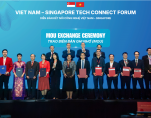
On the afternoon of May 29th, in Singapore, partnership signed at the Vietnam–Singapore Tech Connect Forum, witnessed by the highest-level government delegations from both nations, combining QuantumTX’s breakthrough MitoCharge technology with Kaopiz’s end-to-end software, AI, and IoT engineering capabilities
SINGAPORE – Media OutReach Newswire – 12 June 2026 – Kaopiz Holdings and QuantumTX announced a strategic Memorandum of Understanding (MOU) to co-develop next-generation preventive healthcare solutions powered by Artificial Intelligence, IoT engineering, and advanced health data platforms.
Kaopiz × QuantumTX sign MOU at Vietnam–Singapore Tech Connect Forum to co-develop next-generation healthcare solutions
The agreement was signed at the Vietnam–Singapore Tech Connect Forum held at Raffles City Convention Centre, Singapore, in the presence of Mr. To Lam, General Secretary and President of Vietnam, and Dr. Tan See Leng, Minister for Manpower and Minister-in-Charge of Energy and Science & Technology (MTI), Singapore – underscoring the partnership’s significance at the highest levels of Vietnam-Singapore bilateral cooperation.
Combining Hardware Innovation with Full-Stack Software & AI Engineering
QuantumTX contributes its proprietary MitoCharge technology – a clinically researched muscle-mitochondria activation system that delivers the physiological benefits of exercise without physical stress – purpose-built for the world’s rapidly aging population.
Kaopiz Holdings brings a 1,000-strong team of software engineers and IoT specialists with a proven delivery track record across healthcare, medical technology, and enterprise digital transformation. The combined capability spans:
End-to-end IoT device control software and embedded systems integration
AI-driven health data collection, processing, and analytics platforms
Cross-platform mobile applications for personalized health companion experiences
Cloud-based remote device management and real-time monitoring systems
Healthcare data security compliance aligned with applicable international standards
“Partnering with Kaopiz accelerates our next-generation product development while opening the door for MitoCharge technology to reach users across Vietnam and Southeast Asia.” – Mr. Ivan Goh, CEO, QuantumTX
Three Strategic Pillars of Collaboration
1. IoT Device & Software Development
Kaopiz will research, design, develop, and maintain software solutions deeply integrated with QuantumTX’s IoT medical devices, targeting the healthcare and rehabilitation sector.
2. Technical Support & Information Exchange
Kaopiz will embed advanced AI, Cloud Computing, and Data Analytics capabilities into QuantumTX’s medical device ecosystem, enabling predictive health insights, personalized rehabilitation guidance, and remote patient monitoring at scale.
3. Joint Market Development
Both companies will co-promote combined solutions to partners and customers across Vietnam, Singapore, and international markets, and will co-participate in healthcare technology projects, conferences, and exhibitions in the region.
“Population aging is a shared challenge that both Vietnam and Singapore must solve, and we believe technology is the key. Kaopiz is committed to leveraging our full expertise in software, AI, and IoT to co-develop next-generation healthcare solutions with QuantumTX, serving millions of people worldwide.” – Mr. Le Van Hoang, CEO, Kaopiz Holdings
A Milestone in Vietnam – Singapore Technology Cooperation
The MOU signing took place as part of the State Visit to the Republic of Singapore, at a forum co-organized by Vietnam’s Ministry of Foreign Affairs, Ministry of Science & Technology, Ministry of Finance, VSIP, and Enterprise Singapore. The forum brought together government leaders, research institutions, and enterprises from both nations to advance cooperation in science, technology, innovation, and sustainable development.
This partnership marks a tangible step in translating government-level bilateral commitment into commercial technology co-development, with a direct focus on healthcare innovation that addresses one of the most pressing demographic challenges shared by both Vietnam and Singapore.
The issuer is solely responsible for the content of this announcement.
About QuantumTX Pte. Ltd.
QuantumTX is a Singapore-based health technology company specializing in stress-free muscle activation devices backed by rigorous scientific R&D and clinical research. Its flagship MitoCharge technology activates muscle-mitochondria pathways to deliver physiological benefits equivalent to exercise, without physical exertion – designed specifically for aging populations, rehabilitation patients, and preventive health consumers. QuantumTX is committed to making healthy aging accessible and scalable across global markets.
About Kaopiz Holdings
Kaopiz is a global IT outsourcing and software development company with 12 years of experience and a core development center in Vietnam. With 1,000+ highly skilled engineers across software development, IoT solutions, AI integration, Cloud computing, Data engineering, and digital transformation, Kaopiz serves major enterprises in Japan, Singapore, and international markets across healthcare, finance, education, logistics, and manufacturing sectors, and more.
Kaopiz’s Singapore office is located at 1 Raffles Place, One Raffles Place Tower 2.
Launches VocSageX Agent Development Platform to Accelerate Commercial Adoption of Trustworthy AI
HONG KONG SAR – Media OutReach Newswire – 12 June 2026 – Voicecomm Technology Co., Ltd. (“Voicecomm Technology” or the “Company“, Stock Code: 2495.HK), a core technology provider and ecosystem operator of trustworthy conversational AI in China, announces that it has officially signed an ecosystem cooperation agreement with Huawei Cloud during the 2026 Huawei Cloud INSPIRE. The two parties will engage in in-depth collaboration across trustworthy artificial intelligence, industry AI agents, cloud computing infrastructure, and ecosystem development, with the shared goal of accelerating the large-scale deployment of enterprise AI applications.
At the conference, Voicecomm Technology also officially unveiled its next-generation enterprise AI product, the VocSageX Agent Development Platform, further strengthening the Company’s product portfolio in the trustworthy interactive intelligence sector.
Deepening Collaboration with Huawei Cloud to Build a Trustworthy AI Ecosystem Under the agreement, both parties will leverage their respective strengths in artificial intelligence technologies, industry applications, and cloud infrastructure to jointly drive innovation in enterprise AI solutions. Together, they will explore integrated solutions centered on large language models (LLMs), the VocSageX Agent Platform, and the Company’s proprietary “Intelligent Graph” system across both domestic and international markets.
Going forward, the two companies will continue to deepen cooperation in technology, computing power, market expansion, and ecosystem development. The partnership will accelerate the nationwide rollout and overseas deployment of mature solutions in areas such as smart cities and digital government, while fostering business growth for both organizations.
This collaboration marks a natural progression of an already established relationship built on long-term mutual trust. In January 2026, Voicecomm’s self-developed “Intelligent Graph” system officially passed the technical certification of Huawei’s Ascend AI basic software and hardware platform, completing preliminary validation in platform compatibility and algorithm integration.
Launch of VocSageX: A Trustworthy Foundation for Enterprise AI Speaking at the conference, Mr. Zheng Bo, Vice General Manager of Voicecomm Technology, noted that enterprises commonly face several challenges when deploying AI, including insufficient trustworthiness, high deployment costs, fragmented systems, and hallucination issues associated with large language models.
To address these challenges, Voicecomm launched the VocSageX Agent Development Platform, a comprehensive lifecycle management system covering agent design, training, deployment, orchestration, operations, maintenance, and asset management. The platform is built around five core capabilities: Trustworthy, Dedicated, Controllable, Collaborative, and Evolvable. It enables enterprises to rapidly develop customized industry-specific AI agents and realize multi-agent collaboration at scale.
Mr. Zheng added: “VocSageX is more than a development tool—it is a comprehensive AI agent operations platform designed for medium and large enterprises. Trustworthy AI that everyone can use is the true driver of productivity.”
Demonstrating Industry AI Applications Across Multiple Sectors In addition to the platform launch, Voicecomm showcased a range of industry AI agent applications at the conference, covering smart government services, smart elderly care, intelligent manufacturing, customer service, and enterprise digital transformation.
To date, the Company’s trustworthy AI agents have been widely deployed across sectors including city management and administration, automotive and transportation, telecommunications, finance, healthcare, and energy management.
Dr. Tang Jinghua, Chairman of Voicecomm Technology, said: “The AI industry is transitioning from the era of large language models to the era of AI agents. Enterprise demand for trustworthy, secure, and sustainable AI capabilities will continue to grow. Leveraging our proprietary trustworthy intelligence technology framework and strategic partnerships with leading ecosystem players such as Huawei Cloud, Voicecomm Technology is well positioned to capture the opportunities emerging in the enterprise AI market and accelerate the commercialization and value creation of AI technologies across a broader range of industries.”Hashtag: #VoicecommTechnology
The issuer is solely responsible for the content of this announcement.
About Voicecomm Technology Co., Ltd.
Founded in 2005 and headquartered in Wuhan, Voicecomm Technology is one of the leading core technology providers and ecosystem operators of trustworthy conversational AI listed on the Main Board of the Hong Kong Stock Exchange, and obtained the qualification as National-level SRDI, Technology Little Giant and High-Tech Enterprise. Leveraging its proprietary trustworthy Agent,the Company overcomes pain points in the commercialization of large language models, such as hallucinations and compliance issues, ensuring AI is usable, manageable, and controllable in enterprise environments. For enterprise-level customers, the Company provides AI services covering the entire process of “communication –decision – execution”. Its trustworthy Agent solutions have been widely deployed across multiple scenarios, including City management and administration, Automotive and transportation, Telecommunications, Finance, Healthcare, and Energy management, and it is dedicated to empowering the intelligent transformation of diverse industries.
A UAE-focused tourism session in Moscow drew one of the largest audiences at the Let’s Travel International Tourism Forum, underscoring the expanding role of travel in the broader economic relationship between the Emirates and Russia. The panel, titled “UAE-Russia Tourism Dialogue: Successful Stories”, was organised by the Russia-UAE Business Council in cooperation with the Embassy of the United Arab Emirates in the Russian Federation. Held during the […]
General Motors has moved deeper into the power business by enabling vehicle-to-grid functions for some electric-vehicle customers, positioning its bidirectional EV fleet as a distributed energy resource while pursuing sodium-ion batteries for grid-scale storage. The announcement, made at GM Empower 2026 in San Francisco, centres on a software update that expands the capability of GM’s vehicle-to-home energy system. The update allows eligible users to send electricity from […]
Arabian Post Staff -Dubai Hafeet Rail has completed 40 per cent of the Oman-UAE railway link, moving the Gulf’s first cross-border rail connection into a more advanced construction phase as work accelerates across tunnels, bridges, earthworks and logistics facilities along the corridor. The company, a joint venture between Etihad Rail, Oman Rail and Mubadala Investment Company, said the milestone covers civil works and major structures on the […]
Shin-Etsu Chemical plans to build a new rare-earth refining facility in Fukui Prefecture as Japan accelerates efforts to protect critical mineral supply chains from disruption caused by China’s export controls.
The project marks the company’s first new rare-earth refining facility since 2008 and comes as demand for high-performance magnets rises across electric vehicles, hard disk drives, robotics, wind power systems, defence equipment and advanced electronics. The investment is expected to exceed ¥35 billion, with ¥17.5 billion to be covered by government subsidy support, although the final cost and production schedule have not yet been fixed.
The new facility is intended to reinforce supplies for Shin-Etsu’s rare-earth magnet business and strengthen access to raw materials used in neodymium-based magnets. Heavy rare earths such as dysprosium, terbium and yttrium are particularly important because they improve magnet performance in high-temperature and high-stress applications, including vehicle motors and precision industrial systems.
Shin-Etsu already operates rare-earth refining facilities in Japan and has long been one of the country’s most important producers in the sector. Its rare-earth operations are centred in Fukui Prefecture, where it smelts materials and manufactures magnets at its plant in Echizen. The company says it works from raw materials through production to provide stable quality and supply, while also pursuing recycling and resource diversification.
The planned expansion reflects a broader shift in Japan’s industrial policy after months of tightening access to critical minerals. Chinese shipments of several heavy rare earths and gallium to Japan have been severely restricted since late 2025, heightening concerns among manufacturers that depend on these materials for magnets, semiconductors and other precision components. China continues to dominate mining, separation and refining capacity across the rare-earth value chain, giving Beijing considerable leverage over downstream industries.
Japan remains the largest rare-earth magnet producer outside China, but its manufacturers are still exposed to bottlenecks in the supply of heavy rare earths. The country has built stockpiles, backed overseas projects and encouraged recycling since the 2010 rare-earth shock, when diplomatic tensions with China exposed the risk of overdependence on one supplier. Those measures have improved resilience, but they have not removed the vulnerability.
The latest project is significant because it targets refining and processing rather than simply raw-material procurement. Mining deposits alone do not solve the supply challenge; rare earths require complex separation, purification and alloy processing before they can be turned into magnets. China’s advantage lies not only in reserves but also in decades of accumulated processing capacity, cost efficiency and industrial integration.
Shin-Etsu’s move also fits into a wider network of partnerships being pursued by Japan with Australia, France and the United States. Tokyo has backed alternative producers, supported offtake arrangements and encouraged private-sector investment in midstream processing. Australia-based Lynas has become a key non-China supplier, but output of heavy rare earths remains far below the volumes needed to replace Chinese supply in full.
The pressure is not limited to Japan. Manufacturers in the United States and Europe have faced similar supply uncertainty as export licensing delays affect rare earths used in aerospace, defence, clean energy and electronics. Companies exposed to the restrictions are searching for alternative suppliers, but industry executives warn that rebuilding a fully independent supply chain will take years.
For Shin-Etsu, the business case rests on both security and demand. Permanent magnets are central to electrification and digital infrastructure. Electric vehicles require compact, powerful motors; data centres and hard disk drives depend on precision magnetic components; wind turbines need high-strength magnets to improve efficiency. Demand growth has made the magnet supply chain a strategic concern for governments as well as manufacturers.
The company’s project is unlikely to eliminate Japan’s reliance on imported feedstock, especially for heavy rare earths where global non-China supply remains thin. It could, however, give domestic manufacturers greater control over processing, quality assurance and emergency production planning. That matters for customers in sectors where delivery delays can disrupt production lines and where material specifications are tightly controlled.
The government subsidy underscores how rare earths have moved from a specialist materials issue to a national industrial priority. Public support reduces the financial burden on companies undertaking technically demanding projects with long payback periods. It also signals that Tokyo is prepared to use industrial policy to keep strategic capabilities onshore.
By T N Ashok By the time Narendra Modi crossed Jawaharlal Nehru’s record as India’s longest-serving elected Prime Minister in continuous office, the country’s political landscape had already begun to resemble a battlefield after a great storm. The old certainties have vanished. Alliances that appeared permanent are fraying. Regional satraps are calculating survival. Political parties […]
Abu Dhabi’s L’IMAD Holding has deepened its grip on TAQA after its subsidiary Abu Dhabi Power Corporation bought a further 8.09 per cent stake in the listed power and water utility, lifting its holding to 98.12 per cent. The transaction, disclosed on Wednesday, involved the acquisition of 9.1 billion TAQA shares from Two Point Zero Group. Based on TAQA’s closing share price that day, the stake was […]
Arabian Post Staff -Dubai US forces struck military targets across Iran overnight, widening an air campaign that has pushed Washington and Tehran closer to open conflict as President Donald Trump warned that further attacks would follow unless a peace deal is secured. Central Command said the operation was completed about four hours after it began, shortly after midnight in Tehran, with strikes aimed at military surveillance assets, […]
Arabian Post Staff -Dubai Industrial and Commercial Bank of China Limited’s Dubai branch is marketing dual-currency green bonds, offering investors a dollar floating-rate tranche and a renminbi fixed-rate tranche as sustainable debt issuance continues to gain traction across Gulf capital markets. The proposed three-year dollar notes carry initial price guidance at the Secured Overnight Financing Rate plus 90 basis points, while the three-year offshore renminbi tranche is […]
SpaceX plans to begin testing artificial intelligence data centres in orbit by late 2027, accelerating Elon Musk’s push to turn the company’s satellite and launch network into a new layer of global computing infrastructure. The programme would move part of the AI computing race beyond land-based data centres, where power shortages, grid constraints, cooling costs and local opposition have become major obstacles for technology companies. The first […]
Egypt’s Suez Canal recorded its strongest monthly revenue since early 2024 as oil tankers turned increasingly to the Red Sea route after the effective shutdown of the Strait of Hormuz disrupted Gulf energy flows. Revenue from the waterway reached about $419 million in April, up 27 per cent from a year earlier, supported by a sharp rise in tanker crossings and higher net tonnage. The canal handled […]
By K Raveendran Resolution of the US-Israel war with Iran now appears further away than at any point in the conflict, with the latest American strikes pushing global markets into a more unsettled phase. The US launch of retaliatory attacks on Iranian defence and radar systems after Washington accused Tehran of responsibility for the downing […]
Arabian Post Staff -Dubai The OPEC Fund for International Development has mandated a no-grow €500 million five-year fixed-rate benchmark bond, returning to Europe’s public debt market as highly rated supranational borrowers continue to draw demand from investors seeking secure income. Initial price thoughts for the Regulation S senior unsecured issue have been set at mid-swaps plus 29 basis points. The expected issue rating is aligned with the […]
Intel has used Computex 2026 to present a broader artificial intelligence strategy built around rack-scale systems, new Xeon data-centre processors and industry partnerships aimed at the fast-expanding market for inference and agentic AI workloads. The announcements in Taipei marked a deliberate shift in emphasis for the company, from selling individual chips to supplying integrated platforms that combine processors, accelerators, networking and software. Intel’s pitch rests on the […]
JNK India has secured a large export order for an incinerator package linked to Abu Dhabi’s TA’ZIZ Salt Project, strengthening the company’s overseas order book and widening its role in waste gas handling systems for large industrial projects.
The order, received on June 8 from CC7 Emirates Engineering Solutions L. L. C., covers design, engineering, manufacture, procurement and supply on a Free Carrier basis. JNK India will also provide assistance, charged on a per diem basis, for erection, commissioning and witnessing of performance tests at the ADNOC-linked project in Abu Dhabi.
The contract has been classified by the company as a “large” order, a category it defines as being worth between ₹100 crore and ₹300 crore. While the exact contract value has not been disclosed, the award is material for a specialised engineering business operating in a segment where project references, technical qualification and delivery record strongly influence future bidding opportunities.
The Abu Dhabi project forms part of the wider TA’ZIZ industrial chemicals ecosystem at Ruwais, a major downstream expansion intended to support local production of chemicals used in construction, infrastructure, packaging, healthcare and other sectors. The Salt Project has drawn international engineering and procurement interest because of its scale and its place in the UAE’s push to deepen industrial supply chains beyond crude production.
JNK India specialises in process-fired heaters, reformers, cracking furnaces and other thermal engineering systems used in refineries, petrochemicals, fertilisers, hydrogen, methanol, steel and broader process industries. The latest award places its waste gas handling portfolio in sharper focus, particularly flares and incinerators, where industrial clients are investing to meet tighter environmental, emissions and process-safety standards.
Arvind Kamath, chairperson and whole-time director of JNK India, said the award marked an encouraging start to FY27 and reinforced the company’s ability to compete in international markets. He said the order reflected its engineering capability, manufacturing strength and execution record in complex industrial solutions, while also strengthening its presence in the waste gas handling segment.
The mandate is significant because incinerator packages are not commodity supplies. They require detailed thermal design, material selection, safety compliance and integration with broader plant systems. Performance testing is also critical, as waste gas handling equipment must function reliably under varied operating conditions and meet the technical specifications set by the main contractor and project owner.
CC7 Emirates Engineering Solutions is linked to the wider CC7 engineering group, which has been active in large chemical and industrial projects. Its role in the TA’ZIZ Salt Project gives JNK India access to a major Gulf industrial platform at a time when the region is expanding petrochemical, hydrogen, low-carbon ammonia and specialty chemicals capacity.
For JNK India, the Abu Dhabi order continues a strategic shift from a largely domestic heating-equipment business to a broader engineered-systems provider with export opportunities. The company’s capabilities include thermal designing, engineering, manufacturing, supply, installation and commissioning, with a fabrication facility at Mundra in Gujarat spread across about 20,000 square metres. The location gives it logistical access to a deep-draft port, an advantage for large export equipment.
The company has also expanded beyond conventional fired heaters into flares, incinerators, hydrogen production and distribution systems, process plants and emerging energy-transition applications. Its partnership with South Korea’s JNK Global adds technical depth in industrial combustion equipment, while a venture with Chemdist Group founders gives it exposure to green hydrogen, sustainable fuels, chemicals and carbon capture systems.
The order comes as Gulf energy producers and industrial developers are accelerating investment in downstream diversification. Abu Dhabi’s strategy has placed petrochemicals and industrial chemicals at the centre of its non-oil manufacturing ambitions, with Ruwais positioned as a key hub. This is creating opportunities for specialised suppliers that can meet demanding global project specifications while managing cost and delivery schedules.
Sri Lanka’s rupee rallied more than 2 per cent after the Central Bank of Sri Lanka shortened the deadline for exporters to convert foreign currency earnings into local currency, a move aimed at easing pressure on a market strained by rising import demand, energy costs and expectations of further depreciation.
The currency strengthened sharply in Colombo trading, touching 328 to the dollar from weaker levels around 336.50 before settling in a wider 332-334 range. The previous close was near 337.00-337.75, underscoring the immediate impact of the central bank’s intervention on market sentiment. The move marks one of the rupee’s strongest single-session gains this year after months of pressure linked to higher fuel bills, vehicle imports and heavy demand for dollars from importers.
The new rule, issued through an extraordinary gazette under the authority of Governor Nandalal Weerasinghe, requires exporters of goods receiving proceeds during a calendar month to convert the residual foreign exchange into Sri Lankan rupees on or before the tenth day of the following month. The change effectively reduces the conversion window to about 30 days from the earlier period of about 90 days, after permitted payments are made.
The directive came into immediate effect and applies to exporters after they use proceeds for authorised payments such as imports, debt servicing and other approved foreign currency obligations. It reverses part of the relaxation introduced in 2024, when the central bank gave exporters more time to convert proceeds as foreign exchange conditions improved after the country’s debt crisis.
The latest measure is designed to bring export dollars more quickly into the domestic market at a time when the rupee has come under renewed strain. The currency had fallen by about 8 per cent this year before the intervention, reflecting a combination of stronger import demand, elevated global energy prices and cautious dollar conversions by exporters waiting for more favourable rates.
Market participants said the shortened conversion period could provide near-term support by increasing the supply of dollars through the banking system. The effect, however, may be temporary if importers absorb the additional liquidity quickly, particularly with fuel, medicines, vehicles and intermediate goods continuing to drive demand for foreign exchange.
The rupee’s rebound follows a series of policy moves by the Central Bank of Sri Lanka to contain pressure on the currency and inflation. On May 26, the central bank raised the overnight policy rate by 100 basis points to 8.75 per cent, its largest increase since 2023, signalling a shift away from growth support towards price and currency stability. The rate move followed a faster-than-expected rise in inflation and a renewed deterioration in external conditions.
Headline inflation in Colombo stood at 5.5 per cent in May, marginally above the central bank’s target and slightly higher than April’s 5.4 per cent. Price pressures have been fuelled by energy adjustments and the spillover from tensions in the Middle East, which have pushed up import costs for fuel-dependent economies. Construction firms have also reported higher input costs and shortages of petrochemical-based materials.
The central bank has already spent foreign exchange to defend the currency. Around $211 million was used in May as the rupee tested its weakest level in four years on May 21. Foreign reserves fell 3.8 per cent in April to about $6.7 billion, reflecting the cost of higher imports and intervention, although reserves remain well above the crisis levels seen during the 2022 balance-of-payments collapse.
Sri Lanka’s external position has become more fragile after a stronger start to the year. The current account moved into deficit in April after surpluses during the first quarter, mainly because of a wider trade gap, a softer services surplus and higher primary income outflows. Workers’ remittances continued to improve, offering some relief, but the recovery in imports has changed the balance in the foreign exchange market.
The policy shift also comes as Sri Lanka remains under a $2.9 billion International Monetary Fund programme designed to restore macroeconomic stability after the country’s sovereign default. A further $695 million disbursement was approved in late May, helping support reserves and fiscal reforms, but the economy remains exposed to external shocks, especially oil price volatility and shifts in investor confidence.




 https://kaopiz.com/en/
 https://www.linkedin.com/company/kaopiz/
 https://x.com/KaopizGlobal
 https://www.facebook.com/com.kaopiz





