News related to
energy

LAS VEGAS, UNITED STATES – Media OutReach Newswire – 7 January 2026 – Amidst a CES 2026 landscape dominated by AI headlines and humanoid robots, a quiet corner of the Lens Technology booth has unexpectedly become a focal point for commercial space analysts.

There are no flashy RGB lighting effects here, only a sheet of glass as thin as a cicada’s wing, being repeatedly rolled and unrolled like a tape measure. This is the public debut of Lens Technology’s aerospace-grade UTG (Ultra-Thin Glass) photovoltaic encapsulation solution. This technology marks the official entry of the manufacturing titan—best known as a giant in the Apple supply chain—transferring its precision manufacturing capabilities from consumer electronics to humanity’s next trillion-dollar market: space infrastructure.

As leading global satellite companies begin the mass deployment of third-generation (V3) satellites, the Low Earth Orbit (LEO) internet race is entering a “second half” defined by heavy payloads, long lifespans, and low costs. Lens Technology’s entry aims to untie the knot that has long plagued the aerospace industry: the trade-off between flexibility and durability.

Farewell to the “Plastic Feel”: The Material Battle in Space

At the Lens Technology booth, engineers demonstrated the core contradiction to the audience: Traditional aerospace solar cell covers are either heavy Cerium-doped Glass (CMG) or expensive Fused Silica, typically ranging from 100μm to 500μm in thickness. They are robust, but too heavy and impossible to bend.

To adapt to the massive power demands of next-generation satellites (such as those supporting direct-to-cell services), solar wing designs are rapidly evolving from rigid panels to Roll-Out Solar Arrays (ROSA-like structures). This shift forced designers to temporarily turn to polymer materials like transparent Polyimide (CPI).

“However, polymers have a fatal weakness in space,” explained a Lens Technology on-site technical lead. “The LEO environment is filled with high-energy Atomic Oxygen (AO) and strong UV radiation. Under long-term exposure, polymer molecular chains break, causing the material to yellow, become brittle, and suffer a drastic drop in light transmission. This efficiency decay was tolerable for early satellites with 5-7 year lifespans, but for the new generation of mega-constellations pursuing higher commercial returns, it is unacceptable.”

Lens Technology’s answer is Aerospace-Grade UTG. As an inorganic material, glass possesses innate “immunity” to Atomic Oxygen and UV aging, ensuring high light transmission throughout the satellite’s lifecycle. More importantly, its dense structure provides an effective barrier against water vapor and micrometeoroids, offering physical protection for delicate ultra-thin HJT or future Perovskite batteries.

The 30-Micron “Moat”: A Perfect Match for Next-Gen Satellites

In the demo area, a piece of glass only 30μm-50μm thick is bent to an astonishing radius of R1.5mm. This level of flexibility drew gasps from the audience.

This is exactly the characteristic most coveted by top global satellite companies today. To reduce the cost per launch, next-generation mega-satellites must be stowed with origami-like efficiency inside the rocket fairing. Lens Technology’s UTG solution allows solar wings to be tightly wound like a tape measure during launch, and instantly recover to a flat state upon orbital deployment.

However, making glass thin is the first step; keeping it from shattering during the violent vibration of a rocket launch is the real challenge.

Analysts point out that Lens Technology’s core competitiveness lies in its proprietary chemical strengthening processes and laser/diamond wire cutting technologies. Glass fractures often originate from micro-cracks invisible to the naked eye. Leveraging processes honed on foldable smartphones, Lens has significantly reduced the density of micro-defects on the glass edges and surfaces. This means that even under immense tension and vibration, this “glass skin” remains tough and resilient.

Dimensional Strike: Reshaping Aerospace Costs with “Consumer-Grade” Capacity

If technical specifications are the ticket to entry, then capacity and cost control are Lens Technology’s ultimate weapons.

“The logic of commercial space has changed; it is now the era of industrial mass production,” commented an industry analyst at the scene. Compared to the small-batch, lab-grade customization model of traditional aerospace glass manufacturers, Lens Technology brings the scale of consumer electronics manufacturing.

Facing the grand ambition of global satellite leaders planning to launch tens of thousands of satellites annually, supply chain elasticity is critical. Lens Technology stated that it has the capability to rapidly expand existing pilot lines or flexibly retrofit mass production lines. This potential for “ten-thousand-satellite scale” delivery and yield control can significantly lower the BOM (Bill of Materials) cost per satellite—addressing the most sensitive pain point for commercial space giants today.

Outlook: The New Cornerstone of Next-Gen Space Energy

At CES, Lens Technology also “spoiled” its future technology roadmap.

As Perovskite/Silicon tandem cells are viewed as the mainstream for future satellite power, UTG will serve not just as a cover, but as an encapsulation substrate. Lens Technology revealed it is developing next-generation composite UTG integrated with Anti-Static (ESD) coatings and Selective Radiation coatings, which will not only protect chips from electrostatic discharge damage but also assist in regulating battery temperature.

Although this business currently accounts for a tiny fraction of Lens Technology’s massive revenue and is in a period of intensive validation with global top-tier photovoltaic component manufacturers (Tier 2) and top commercial space clients (Tier 1), its signal significance cannot be ignored.

From smartphone screens to satellite wings, Lens Technology is proving that in the era of scaled expansion for space infrastructure, ground-based industrial giants possessing extreme craftsmanship and mass manufacturing capabilities will be indispensable “pavers” for the interstellar journey.

Hashtag: #LensTechnology

The issuer is solely responsible for the content of this announcement.

Uncertainty has gripped Cuba after claims circulated that Venezuelan President Nicolás Maduro had been captured following a United States strike in Venezuela, a development that, if confirmed, would shake the island’s most important political and economic partnership. Cuban authorities have offered no confirmation of the reports, while state media has urged calm and emphasised continuity in Havana’s foreign policy, underscoring the fog surrounding events that residents say […]

Dubai World Trade Centre has confirmed plans to host 71 events during the first half of 2026, underscoring the emirate’s position as a regional hub for global exhibitions, conferences and large-scale trade gatherings. The schedule reflects a familiar rhythm for the venue, with activity slowing during Ramadan before resuming after Eid. According to the centre, the post-Eid calendar will open with the Dubai International Pharmaceutical and Technologies […]

Taiwan charity reaches 15 counties

TAIPEI, TAIWAN – Media OutReach Newswire – 5 January 2026 – The TVBS Foundation’s “Infinite Love” charity campaign raised over NT$32 million (around US$1.02 million) in 2025, reaching 15 counties and cities across Taiwan in its sixth consecutive year. The initiative integrates fundraising, emergency assistance, city prayer breakfasts, charity dinners, Christmas celebrations, sports philanthropy, and special television programs. The foundation connects government agencies, churches, civil organizations, and corporate partners to channel resources toward disadvantaged communities, education, and post-disaster reconstruction.

Christmas Eve Special Program Achieves High Ratings, Spreading Warmth on Christmas Eve.

The fifth annual “Share Infinite Love” (分享愛無限) campaign raised NT$5,535,590 (around US$176,856), with donations distributed to 12 social welfare organizations across Taiwan. Recipients include Libertas Educational Foundation and Blessed Children Education Association of Taiwan, which provide ongoing support for disadvantaged education and family care programs. The foundation emphasizes that “Infinite Love” serves as a long-term platform for action, striving to make goodwill visible and reach those who truly need assistance.

In response to the Mataian River Barrier Lake disaster in Hualien, a county on Taiwan’s eastern coast, the TVBS Foundation launched a special fundraising project that collected NT$26,902,435 (around US$859,503). The foundation established the “Guangfu Township Home Recovery Network” with local organizations, distributing NT$5,000 (around US$160) in settlement assistance to each affected household. Recipients expressed gratitude, saying, “TVBS Foundation’s care has helped us feel less alone during post-disaster reconstruction, knowing that people are walking alongside us.”

Connecting Local Governments and Churches: City Prayer Breakfasts and Charity Dinners Across Taiwan

The “City Prayer Breakfasts and Charity Dinners” serve as a key annual platform, held across 15 counties and cities in partnership with the Christian Cultural Exchange Association and local churches. In Taipei, Mayor Chiang Wan-An participated under the theme “Love in Taipei, Moving Forward Together.” New Taipei City Mayor Hou You-yi attended for the fourth consecutive year, incorporating anti-fraud awareness campaigns with police collaboration. Taichung hosted its fifth consecutive event, connecting over 50 local churches and providing long-term care to more than 45,000 disadvantaged households, with resources exceeding NT$210 million (around US$6.71 million).

Events also took place in Miaoli, Nantou, Yunlin, Taoyuan, Tainan, Kaohsiung, Chiayi, Changhua, Penghu, and Kinmen, each developing unique city-focused charitable initiatives. Hualien held a “Guangfu Township Special Session,” combining year-end care with post-disaster reconstruction efforts following the Mataian River Barrier Lake disaster. Teams went directly into communities to support recovery, distributing settlement assistance and ensuring that charitable efforts extend beyond formal events.

Taipei Christmas Infinite Love Attracts 240,000 Visitors, Creating a Shared Urban Festive Atmosphere

The “2025 Taipei Christmas Infinite Love”event at Daan Forest Park attracted approximately 240,000 visitors over three days, featuring a Christmas Music Concert and “International Christmas Culture Carnival.” Artists including Kelly Tsai (蔡家蓁), Black Storm (黑旋風) and David Lin (林道遠) ),and others, performed in rotation. Over 100 market booths and six major light installations created an immersive festive atmosphere, extending the foundation’s charitable reach into urban public spaces.

The TVBS Foundation partnered with the New Taipei Kings, a professional basketball team in Taiwan’s T1 League, for the “Infinite Love Charity Program,” extending charitable care through sports initiatives. Through basketball camps and community outreach programs, children from disadvantaged families across Taiwan received invitations to attend home games throughout the season. The program utilizes sports to convey positive energy and broaden the foundation’s reach to additional communities, illustrating how athletic partnerships can amplify charitable impact.

Christmas Eve Special Program Achieves High Ratings, Spreading Warmth on Christmas Eve

On Christmas Eve, Wednesday (Dec. 24), the TVBS Foundation aired its annual Christmas Eve Special Program featuring over 50 artists, reaching families across Taiwan through television screens. Through music, storytelling, and special segments, the program created a heartwarming celebration that extended the foundation’s spirit of accompaniment to viewers at the end of the year. The broadcast demonstrated the foundation’s commitment to utilizing media platforms to extend its charitable reach beyond in-person events.

In the special episode hosted by Kuo Tze Cheng (郭子乾) and Action Tang (唐從聖), representatives from different political parties set aside their differences to perform “Silent Night” together. The segment conveyed reconciliation and blessings through humor and music, becoming a ratings highlight that reached a peak. The cross-party performance demonstrated how charitable events can foster unity and goodwill across Taiwan’s political spectrum.

For the first time, the program introduced an “Online Prayer Room,” enabling viewers to write down their Christmas wishes and receive personalized prayers from pastors. Over 700 viewers participated, leaving messages of hope for peace and safety that religious leaders individually addressed. The interactive feature spread blessings through the screen to households across Taiwan, extending the foundation’s reach beyond traditional broadcast formats.

Hashtag: #TVBS

The issuer is solely responsible for the content of this announcement.

Washington’s move to detain Nicolás Maduro has sharpened the White House’s focus on Venezuela’s vast petroleum reserves, with President Donald Trump signalling that access to crude exports is now a strategic priority. The shift marks a harder edge in US policy towards Venezuela, but it also exposes legal, logistical and market obstacles that complicate any rapid redirection of oil flows. The administration’s intent has been framed as […]

Arabian Post Staff -Dubai Samsung used its “The First Look” showcase at the annual Consumer Electronics Show to signal a strategic shift in how large home appliances fit into everyday life, unveiling FoodNote and a slate of software-led upgrades aimed squarely at its refrigerator range. The announcements framed refrigerators not as static storage units but as adaptive hubs designed to manage food, energy use and household routines […]

Japan’s push to fold crypto-linked products into mainstream finance has gained political momentum, with senior government figures signalling support for digital assets trading on regulated exchanges as the country positions 2026 as a milestone year for its digital economy.

Speaking at a New Year gathering at the Tokyo Stock Exchange, Satsuki Katayama, a prominent member of the ruling Liberal Democratic Party known for her advocacy of financial innovation, outlined a vision in which tokenised assets and crypto-linked exchange-traded products operate alongside equities and commodities. While Katayama does not hold the finance minister portfolio, her remarks reflected broader policy debates underway in Tokyo over how far Japan should go in embracing digital finance within its tightly regulated markets.

The comments arrive as global asset managers press Asian regulators to open the door to crypto exchange-traded funds, following approvals in the United States and growing institutional interest in Europe. Japan has long taken a cautious stance after high-profile exchange failures earlier in the past decade, but officials now argue that clearer rules and stronger custody standards make broader participation possible without undermining investor protection.

Within government circles, 2026 is being framed as a symbolic inflection point. Lawmakers and regulators have increasingly referred to the year as a moment when legacy systems and digital infrastructure converge, particularly in capital markets settlement, identity verification and cross-border payments. Katayama described it as the start of a “digital era” for finance, a phrase that has been echoed in policy discussions tied to Japan’s broader digital transformation agenda.

Regulatory authority for any crypto-linked listings ultimately rests with the Financial Services Agency, which oversees exchanges and approves new financial products. The agency has already moved to modernise rules for security tokens and stablecoins, creating a framework that allows banks and trust companies to issue yen-backed digital currencies under strict supervision. Officials familiar with the discussions say the same principles—segregation of client assets, disclosure standards and market surveillance—would apply to crypto ETFs or similar instruments.

Market operators have begun preparing for that possibility. The Tokyo Stock Exchange’s parent group has invested heavily in trading and clearing systems capable of handling tokenised securities, while major brokerage houses are expanding digital asset teams to service institutional clients. Commodity exchanges have also explored how blockchain-based contracts could streamline settlement and reduce counterparty risk, particularly for energy and metals trading.

Japan’s interest in crypto-linked exchange products also reflects competitive pressure from regional peers. Hong Kong has positioned itself as a hub for virtual asset trading, approving spot crypto ETFs and encouraging global issuers to list in the city. Singapore, while more conservative on retail access, has built a reputation for regulatory clarity that attracts institutional capital. Policymakers in Tokyo are wary of ceding ground, especially as domestic pension funds and insurers look for diversified investment options in a low-yield environment.

Still, scepticism remains within Japan’s policy establishment. Some lawmakers and consumer groups warn that crypto markets remain volatile and vulnerable to manipulation, arguing that wider access through stock exchanges could expose unsophisticated investors to sharp losses. Regulators have responded by stressing that any approved products would likely be limited initially to professional investors, with strict marketing controls and suitability requirements.

Industry executives counter that regulated exchange-traded products may actually reduce risk by shifting activity away from offshore platforms toward transparent, supervised venues. They point to Japan’s experience with security tokens, where pilot issuances have proceeded without major incidents under a clear legal framework.

The debate has also revived questions about taxation and accounting. Crypto gains in Japan are currently taxed as miscellaneous income, a structure critics say discourages long-term investment and innovation. Government panels have been reviewing whether a shift toward capital gains treatment is warranted, particularly if digital assets become embedded in mainstream portfolios through ETFs and listed funds.

Advertisements

U. S President Donald Trump intensified geopolitical tensions by openly warning of possible military action against Colombia following a dramatic U. S. operation that resulted in the capture of Venezuela’s president, Nicolas Maduro. Trump made the comments aboard Air Force One, accusing Colombian President Gustavo Petro of presiding over a “sick” government and suggesting Colombia could be targeted if illicit drug and security concerns were not addressed, […]

  Washington moved to recalibrate its public posture on Venezuela as Secretary of State Marco Rubio outlined a strategy centred on economic coercion rather than direct governance, while President Donald Trump repeated assertions that the United States would be “in charge” following the removal of Nicolás Maduro. The contrasting messages underscored tensions inside the administration over how far Washington should go in reshaping the oil-rich South American […]

Venezuela’s state-run oil industry continued operating without interruption on Saturday despite a dramatic United States operation that led to the capture of President Nicolas Maduro, according to people familiar with the operations of Petróleos de Venezuela, known as PDVSA. Production, refining and internal logistics remained stable, the sources said, with no damage reported at oilfields, pipelines or export terminals that underpin the country’s energy revenues. The announcement […]

Aviation in the United Arab Emirates has deepened its role as a strategic pillar of the national economy, with 2025 marking a year of consolidation that underscored the sector’s influence on trade, tourism, logistics and supply chains. Policymakers and industry leaders say the ecosystem’s direct and indirect contribution has reached as much as 18 per cent of gross domestic product, reflecting the scale of activity generated by airlines, airports, maintenance hubs, free zones and aviation-linked services.

Passenger and cargo volumes across the federation continued to trend higher, supported by steady growth in international travel demand and the country’s positioning as a crossroads between Asia, Europe and Africa. Major hubs operated by Dubai Airports and Abu Dhabi Airports handled sustained traffic flows as carriers expanded networks and frequencies. Capacity discipline and targeted route additions allowed operators to absorb higher volumes while maintaining service standards, reinforcing the UAE’s reputation for operational reliability.

Flag carriers remained central to the sector’s momentum. Emirates Airline pressed ahead with fleet renewal and network optimisation, focusing on long-haul markets that underpin connectivity for tourism and business travel. Etihad Airways pursued a parallel strategy centred on profitability and partnerships, aligning growth with demand and strengthening Abu Dhabi’s role as a transfer hub. Together, the airlines’ scale supported ancillary industries ranging from catering and ground handling to training and aviation finance.

Cargo performance remained a defining feature of the year. Dedicated freighter operations and belly-hold capacity benefited from the UAE’s role in high-value, time-sensitive shipments, including pharmaceuticals, perishables and e-commerce. Logistics providers highlighted improved customs processes and digital clearance systems as key enablers, allowing faster turnaround times and reinforcing confidence among multinational shippers. The integration of air cargo with ports and free zones helped sustain supply chains amid ongoing adjustments in global trade patterns.

Governance and regulation were cited by executives as competitive advantages. The General Civil Aviation Authority continued to align oversight with international standards while supporting innovation through performance-based regulation. Industry participants pointed to predictable policy frameworks and coordinated planning between federal and emirate-level authorities as factors that reduced friction for investors and operators.

Sustainability initiatives gathered pace across airlines and airports, reflecting both regulatory expectations and commercial imperatives. Carriers advanced fuel-efficiency programmes through newer aircraft types and operational measures, while airports invested in energy management, waste reduction and water stewardship. Trials involving sustainable aviation fuel expanded through partnerships with energy suppliers and research institutions, positioning the UAE as an early mover in the region’s decarbonisation efforts. While volumes of alternative fuels remain limited, industry leaders argued that early adoption builds expertise and supply-chain readiness.

Technology adoption also shaped the sector’s evolution. Biometric processing, predictive maintenance and data-driven air traffic management systems were rolled out to improve efficiency and resilience. Airports leveraged automation to manage peak flows without proportional increases in staffing, while airlines used analytics to refine scheduling and revenue management. These investments were framed as necessary to accommodate future growth while preserving service quality.

The aviation workforce expanded alongside operations, with training academies and partnerships focusing on pilots, engineers and air traffic specialists. Officials emphasised localisation and skills development as priorities, citing aviation’s role in high-value employment and knowledge transfer. At the same time, competition for specialised talent remained intense, prompting employers to enhance retention and career progression pathways.

Tourism authorities linked aviation capacity directly to visitor inflows, noting that air connectivity underpins hotel occupancy, events and retail activity. Route launches and increased frequencies supported diversification into new source markets, aligning with broader economic strategies aimed at reducing reliance on hydrocarbons. Business travel and exhibitions contributed to premium traffic, reinforcing the UAE’s positioning as a regional commercial hub.

Arabian Post Staff -Dubai   OPEC+ decided to keep its oil production levels unchanged after a brief ministerial meeting on Sunday, opting to focus narrowly on market conditions while avoiding discussion of political strains affecting several of its key members. The decision came at a time of sustained pressure on crude prices and mounting concerns over global oversupply, underlining the group’s cautious approach as it seeks to […]

Europe’s ambitions in semiconductors, embedded software and advanced electronic systems have been sharpened with the release of the Electronic Components and Systems Strategic Research and Innovation Agenda 2026, a document that sets priorities for research, industrial deployment and public investment across the continent’s technology base. The updated agenda outlines how Europe plans to strengthen technological sovereignty in electronic components and systems at a time of intense global […]

Finnish authorities have detained two crew members from a foreign-flagged cargo vessel as part of an expanding criminal investigation into damage to an undersea telecommunications cable linking Helsinki and Tallinn, sharpening security concerns across the Baltic Sea region at a time of heightened geopolitical tension. The sailors were taken into custody following the seizure of the vessel Fitburg, which Finnish officials believe may be connected to the […]

Bitcoin surged beyond the $91,000 mark as a broader rally lifted ether and dogecoin, with traders pointing to political developments tied to Venezuela and signals of possible United States involvement as catalysts for volatility across digital asset markets. The move underscored how geopolitical risk, alongside liquidity conditions and investor positioning, continues to shape price action in cryptocurrencies that are increasingly sensitive to macro and political cues. The […]

Footage of a Tesla humanoid robot losing balance and falling during a controlled demonstration has reignited debate over the pace and credibility of Elon Musk’s ambitions in robotics, exposing the gap between promised timelines and the realities of building general-purpose machines that can operate safely among people. The incident occurred during a late-2025 demonstration of Optimus, Tesla’s bipedal robot unveiled as a future cornerstone of the company’s […]

Donald Trump has said United States oil companies would invest billions of dollars to rebuild Venezuela’s battered energy system, asserting that a change in political control would unlock one of the world’s largest proven crude reserves for American firms and help stabilise global supply. Speaking during a campaign-style address, Donald Trump portrayed Venezuela’s oil sector as a prime target for rapid private investment, arguing that US producers […]

By Nitya Chakraborty In the neighbouring Bangladesh, the political developments take unpredictable course many times, but the latest alliance between the NCP, the party of the students body which led the July Revolution and the fundamentalist Jamaat-e-Islami, has shocked the progressive forces who supported the uprising that led to the fall of the Sheikh Hasina […]

The article Khaleda Zia’s Death Is Helping BNP In February 12 Polls Through Sympathy Wave appeared first on Latest India news, analysis and reports on Newspack by India Press Agency).

UAE authorities have overhauled how excise tax is calculated on sweetened beverages from January 1, introducing a tiered, volumetric model that directly links the tax payable to the amount of sugar and other sweeteners contained in a drink. The change, announced by the Federal Tax Authority, marks a decisive move away from the previous flat-rate approach and places product formulation at the centre of tax outcomes for […]

Brookfield Asset Management is preparing to launch a cloud computing business called Radiant that will lease artificial intelligence chips directly to developers, underpinned by a newly formed $10 billion AI fund as part of its broader strategy to build an integrated AI infrastructure platform. Radiant’s model aims to control key inputs in the AI value chain from land and power to compute, offering an alternative to conventional cloud […]

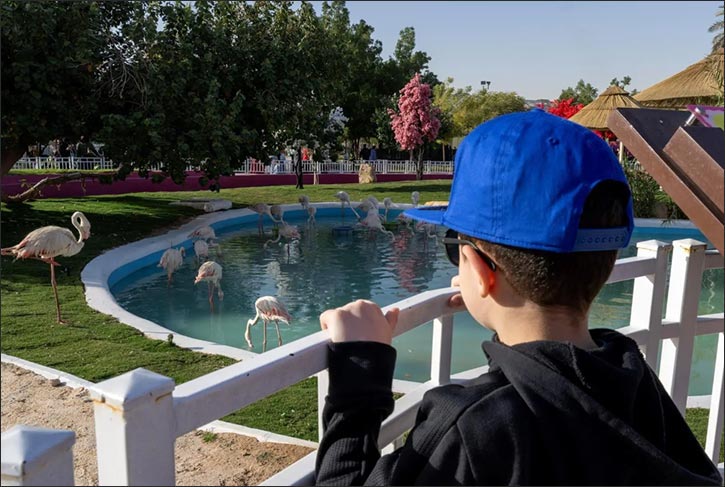
Riyadh Zoo has positioned itself as a family-centred destination within Riyadh Season 2025, offering child-focused environments designed around safety, comfort and controlled engagement with wildlife, according to official details released at the start of the year. The attraction, one of the season’s designated zones, is being presented as a model for how large-scale entertainment events in the capital are adapting to the needs of families with young children.

The zoo’s layout has been organised to prioritise safe movement and visibility, with dedicated pathways that reduce congestion and limit close contact points. Low-height viewing areas have been built to allow children clear sightlines to animals without the need for lifting or crowding, a feature aimed at reducing accidents while improving the overall experience. These design choices form part of a broader emphasis on balancing entertainment with parental reassurance.

Family seating areas are distributed throughout the zone, providing spaces for rest and supervision while maintaining visual access to enclosures. Organisers say this approach allows families to remain engaged without feeling overwhelmed by noise or foot traffic, an issue that has challenged other high-density attractions during the season. The emphasis on controlled flow and defined activity zones reflects planning standards that have been applied across several Riyadh Season venues.

Riyadh Zoo’s children’s facilities include interactive learning areas intended to introduce younger visitors to animal behaviour and conservation in an age-appropriate format. Educational elements are integrated into play-based experiences, with staff trained to manage group sizes and maintain clear boundaries between visitors and animals. This structure is designed to minimise stress for both children and wildlife while encouraging curiosity and awareness.

Safety protocols extend beyond physical design. Organisers have highlighted strict operational standards, including routine checks of barriers, continuous monitoring of visitor movement and the presence of trained personnel in high-traffic areas. Emergency response procedures have been aligned with wider Riyadh Season safety frameworks, ensuring coordination with medical and security teams operating across the city’s entertainment zones.

The focus on child-friendly environments aligns with Riyadh Season’s stated objective of expanding family-oriented destinations as part of the capital’s cultural and leisure transformation. Over successive editions, the festival has broadened its appeal beyond concerts and sporting events to include attractions that cater to younger audiences, reflecting demographic demand and changing leisure habits within the Kingdom.

Urban planners and event management specialists note that such initiatives also serve a longer-term purpose. By embedding safety-first design principles into popular venues, organisers can set benchmarks for future projects, particularly those involving children. The Riyadh Zoo model demonstrates how entertainment infrastructure can be adapted to local expectations while meeting international standards for visitor welfare.

Riyadh Season 2025 has placed increased emphasis on organisation and crowd management following feedback from earlier editions, when high attendance at certain zones led to congestion. The zoo’s structured layout and controlled entry points are intended to mitigate those risks, offering a calmer environment compared with more high-energy attractions elsewhere in the season.

Parents visiting the zoo have highlighted the value of clearly marked routes and viewing points that allow children to engage independently within defined limits. This approach reduces reliance on physical barriers alone, instead combining design, supervision and education to create a safer setting. For organisers, the challenge has been to preserve a sense of exploration while maintaining order, particularly during peak attendance periods.

The zoo’s role within Riyadh Season also reflects broader investment in leisure infrastructure as part of national diversification efforts. Family-oriented attractions are increasingly viewed as essential to building a sustainable entertainment economy, encouraging repeat visits and longer dwell times while appealing to residents and visitors alike.

Arabian Post Staff -Dubai Samsung Electronics has lifted the curtain on the Freestyle Plus, a new generation of its portable projector range that pushes further into artificial intelligence-driven home entertainment. Revealed ahead of the CES 2026 technology show in Las Vegas, the device signals Samsung’s intent to blend mobility with smarter software, at a time when consumer electronics firms are racing to embed AI across everyday products. […]

Plans to turn India into a major semiconductor manufacturing hub are moving from policy to execution, with four companies scheduled to begin chip production during 2026 and the government setting its sights on becoming one of the world’s leading producers by 2035. The transition marks a decisive phase for a country long dependent on imported chips but now seeking to embed itself in global electronics supply chains amid geopolitical realignments and rising demand for secure manufacturing bases.

The most advanced of the announced projects is the large-scale fabrication facility planned at Dholera in Gujarat, a joint venture between Tata Electronics and Taiwan’s Powerchip Semiconductor Manufacturing Corporation. The plant, cleared with government backing and financial incentives under the Semiconductor Mission, is designed to manufacture mature-node chips used in automobiles, power electronics, consumer devices and industrial equipment. Construction work has progressed through 2025, with commercial production targeted to start the following year, according to timelines shared with policymakers and industry partners.

Alongside the Dholera fab, three other facilities are slated to commence output in 2026, primarily in the assembly, testing, marking and packaging segment. Micron Technology’s ATMP plant at Sanand in Gujarat is expected to be the first major operational unit, focusing on memory products for global markets. Two domestic groups, Tata Electronics and Kaynes Semicon, are also developing advanced packaging facilities, while CG Power, in partnership with Japan’s Renesas Electronics and Thailand’s Stars Microelectronics, is setting up an outsourced semiconductor assembly and test unit in Gujarat. Together, these projects are intended to establish a foundational ecosystem rather than a single flagship plant.

Government officials argue that the emphasis on both fabrication and packaging reflects a deliberate strategy. While advanced-node fabs require decades of experience and heavy capital, mature-node manufacturing and packaging are seen as realistic entry points that align with India’s strengths in engineering talent, scale and cost efficiency. Officials involved in the programme say the objective is to capture value across the semiconductor chain while gradually building capabilities for more complex processes.

Public funding has played a central role. Under the incentive framework, the central government is offering support covering up to half the project cost for approved semiconductor and display manufacturing units, with additional incentives from host states. The total committed investment across approved projects runs into tens of billions of dollars, according to official estimates, making it one of the most capital-intensive industrial initiatives undertaken in the country.

Industry analysts note that the timing coincides with a global rethinking of chip supply chains. Disruptions during the pandemic years, coupled with trade and technology tensions, prompted governments and companies to seek diversified manufacturing locations. India’s pitch combines policy stability, a large domestic electronics market and strategic partnerships with established chipmakers. Executives at electronics firms say the presence of local chip production could shorten supply chains and reduce vulnerability to external shocks.

Challenges remain substantial. Semiconductor manufacturing demands ultra-reliable power, water and logistics, as well as a deep supplier base for chemicals, gases and equipment. Skills development is another constraint. While India produces large numbers of engineers, chip fabrication requires specialised expertise built through years of hands-on experience. To address this, training collaborations with overseas partners and academic institutions have been initiated, and several universities have launched semiconductor-focused programmes.

There is also scepticism about the 2035 ambition. Market researchers point out that becoming a “top” producer can be defined in different ways, whether by volume, value or technological sophistication. Countries such as Taiwan, South Korea and the United States dominate advanced-node manufacturing, while China has invested heavily across the value chain. India’s near-term projects focus on mature technologies, which serve vast markets but command lower margins. Supporters counter that demand for such chips is set to remain strong due to electric vehicles, renewable energy systems and industrial automation.

Chicago soybean futures eased in the latest session, trimming earlier advances, but still closed the year with their first annual gain in three years, marking a turnaround after a prolonged period of price pressure driven by ample global supplies and volatile demand signals. Prices on the Chicago Board of Trade moved lower during the session as traders locked in profits following weeks of upward momentum. Despite the […]

VISHNU RAJA
RYO YAMADA
HITORI GOTOH
IKUYO KITA