Arabian Post Staff -Dubai Saudi Arabia has identified about 114 million tonnes of mineralised ore containing rare earth elements and promising uranium concentrations at the Jabal Sayid project in Madinah, Energy Minister Prince Abdulaziz bin Salman has announced. Prince Abdulaziz disclosed the estimate on Monday during the 70th General Conference of the International Atomic Energy Agency in Vienna, placing the find at the centre of Riyadh’s drive […]
BRICS leaders have placed development priorities of emerging economies at the centre of their New Delhi agenda, endorsing stronger representation for the Global South while advancing cooperation on trade, technology, finance and sustainable growth.
Chinese President Xi Jinping used the 18th BRICS Summit to argue that countries should pursue development paths suited to their own national conditions, a message that overlapped with the summit’s broader emphasis on policy autonomy, inclusive growth and reform of global institutions.
Addressing the first leaders’ session on September 12, Xi marked 20 years of BRICS cooperation and said members had strengthened themselves through unity while preserving independence in choosing their economic and social models. He described BRICS as an increasingly important platform for emerging markets and developing countries.
The summit’s New Delhi Declaration gave that theme wider institutional form. Leaders called for a more representative international order, greater participation by developing countries in global decision-making and reforms to institutions including the United Nations, World Trade Organization and international financial architecture.
The declaration also reflected the diversity within the expanded grouping. Rather than prescribing a single model of development, BRICS leaders stressed national circumstances, differing capacities and the need for policy space, particularly in areas such as energy transition, industrialisation and climate action. That approach broadly matched Xi’s argument that development strategies should reflect domestic conditions rather than external templates.
Xi sought to extend the idea into technology policy. He proposed an initiative on artificial intelligence-enabled industrialisation, deeper cooperation in research and applications, and stronger industrial and supply-chain links. China also promoted open-source AI collaboration and international platforms intended to improve access to emerging technologies for developing economies.
Other leaders framed similar priorities through their own national perspectives. Prime Minister Narendra Modi emphasised resilience, innovation, cooperation and sustainability, the four themes of India’s 2026 BRICS chairship, and called for solutions developed within the grouping to serve a wider range of developing countries. He also urged members to translate summit commitments into practical programmes.
BRICS members agreed on measures spanning digital cooperation, food and energy security, health, trade facilitation and the use of local currencies in cross-border transactions. The declaration supported stronger payment connectivity while stopping short of endorsing a common BRICS currency.
The economic agenda also underlined the practical test facing the grouping. Members backed use of national currencies in trade and investment, stronger cooperation through the New Development Bank and efforts to improve financial resilience. Such measures are intended to widen financing options for developing economies without committing members to a single monetary framework or common currency.
The expanded bloc now brings together countries with sharply different political systems, strategic alignments and economic structures. That breadth gives BRICS a larger claim to represent developing-country concerns, but it also limits how far members can converge on detailed policy prescriptions. Analysts have noted differences over whether the group should remain primarily an economic and development forum or assume a stronger geopolitical role.
Those tensions were visible alongside the development agenda. Leaders opposed protectionism and unilateral economic measures, supported a stronger multilateral trading system and called for reforms that would increase the voice of developing countries. At the same time, members avoided turning the summit into a unified ideological platform, relying instead on consensus language broad enough to accommodate competing interests.
Xi’s second summit intervention on September 13 placed a “people-centred” development philosophy within a wider call for Global South cooperation. He urged progress on the UN Sustainable Development Goals, improvements to global climate governance and a consensus-based framework for governing artificial intelligence.
China’s approach also carries strategic implications. Beijing has increasingly used BRICS and other multilateral forums to promote its views on development, sovereignty and global governance. Some members share its criticism of unequal representation in international institutions, while others remain cautious about allowing BRICS to become identified with any single country’s geopolitical agenda.
Arabian Post Staff -Dubai Shipping through the Strait of Hormuz fell sharply at the start of the week, with only four commodity vessels recorded transiting the strategic waterway on Monday as attacks across the Middle East intensified. Preliminary ship-tracking data from Kpler showed the Monday total was down from 10 vessels on Sunday, extending a prolonged decline in commercial traffic through a passage that remains central to […]
A new round of 50 per cent US tariffs on Canadian goods took effect early Tuesday, adding the levy to 110 tariff items while removing 10 others from the list. The changes, effective from 12.01am Eastern Time on September 15, cover products including selected cheeses, motorboats, all-terrain vehicles, furniture, mattresses, lamps, aluminium products, paper goods and iron or steel structures. They form part of a package of […]
Arabian Post Staff -Dubai Oil prices rose on Tuesday as renewed attacks on Saudi Arabia and the continued shutdown of the kingdom’s East-West pipeline kept traders focused on the risk of further disruption to Middle East crude supplies. Brent crude climbed $1.24 to $106.93 a barrel, while US West Texas Intermediate gained $1.29 to $102.65 in Asian trading. The move followed another wave of Houthi attacks on […]
Arabian Post Staff -Dubai Wall Street is preparing for the Federal Reserve to raise interest rates this week for the first time since July 2023, after another surge in oil prices and stubborn inflation pushed market expectations decisively towards tighter policy. Interest-rate futures on Monday assigned roughly a 90% probability to a quarter-point increase at the Federal Open Market Committee’s September 15-16 meeting. A move of 25 […]
By R Suryamurthy The 2026 New Delhi Declaration arrives at a revealing moment for BRICS: two decades after the grouping emerged as a shorthand for the rising economic weight of the Global South, it is no longer merely demanding a larger seat at the table of global governance, but is beginning to construct the institutional […]
Chevron’s Australia president expects liquefied natural gas prices to remain elevated for about six months as war-driven disruption to Middle East supply keeps the global market tight. Balaji Krishnamurthy, who leads Chevron’s Australian operations, said at the Gastech conference in Bangkok on Monday that higher prices were likely to persist while the market adjusts to reduced Qatari exports and constrained shipping through the Strait of Hormuz. He […]
Iran’s Islamic Revolutionary Guard Corps said on Monday that its air defences had intercepted and destroyed an MQ-1 unmanned aircraft over the Strait of Hormuz, adding another disputed military incident to the escalating confrontation with the United States around the strategic waterway. The IRGC said its Aerospace Force used a new air-defence system operating under Iran’s integrated air-defence network to engage the aircraft above the strait. It […]
Egypt and India have agreed to pursue concrete steps towards lifting bilateral trade to $12 billion, with President Abdel Fattah El-Sisi and Prime Minister Narendra Modi also discussing ways to expand investment ties during talks on the sidelines of the 18th BRICS Summit in New Delhi.
The leaders met on Sunday as Egypt pressed for faster progress on a trade goal first set during El-Sisi’s state visit to New Delhi in January 2023. Egypt’s presidency said the discussions covered measures to strengthen the strategic partnership, increase commerce and encourage more investment from India in sectors including manufacturing, technology, clean energy and the automotive industry.
El-Sisi stressed the importance of translating the economic relationship into projects and commercial flows capable of taking trade to the $12 billion target. The two sides also reviewed opportunities for companies from India to expand their presence in Egypt, which Cairo has promoted as a production and export base serving markets in Africa, the Middle East and Europe.
Bilateral merchandise trade stood at about $6.5 billion in the 2025-26 financial year, according to figures cited by India’s embassy in Cairo. That leaves the two countries seeking almost to double the current level if they are to reach the objective discussed by their leaders.
Investment formed a central part of the meeting. Egypt highlighted manufacturing, information technology, renewable and clean energy, and vehicle production as areas where it wants to attract additional capital. Cairo has also sought greater participation by overseas companies in the Suez Canal Economic Zone and other industrial centres as it works to raise exports and secure more foreign currency.
Modi and El-Sisi reviewed the broader strategic partnership and discussed cooperation in economic and commercial fields, along with regional and international developments. Their meeting came as New Delhi hosted the September 12-13 BRICS summit under the theme of resilience, innovation, cooperation and sustainability.
Egypt joined BRICS at the start of 2024 and has since used the grouping to widen economic links with major emerging economies. The New Delhi summit brought together an expanded bloc whose agenda included trade, finance, technology, energy, climate issues and greater use of national currencies in cross-border transactions.
The trade push also builds on institutional contacts between Cairo and New Delhi. Egypt’s Foreign Minister Badr Abdelatty said during BRICS ministerial meetings in May that the two countries wanted to raise bilateral trade to $12 billion over five years and strengthen cooperation in investment, technology and other economic sectors.
El-Sisi and Modi upgraded relations to a strategic partnership in 2023, creating a framework for closer coordination across trade, investment, defence, energy and political consultation. The latest talks focused more narrowly on turning the economic component of that partnership into measurable gains, particularly through private-sector investment and expanded market access.
Egypt has been courting manufacturers as it seeks to increase domestic production and exports, while companies from India already operate in industries including chemicals, textiles, food processing and manufacturing. Cairo’s investment campaign has emphasised projects that can supply the domestic market while using Egypt’s trade agreements and transport links to reach neighbouring regions.
The two leaders also discussed international and regional issues, according to Egypt’s presidency, without announcing a separate bilateral agreement during the meeting. Their talks were among a series of leader-level engagements held around the BRICS gathering as member states sought to advance economic cooperation alongside the summit’s wider diplomatic agenda.
For Egypt, the $12 billion goal provides a benchmark for a relationship that has expanded beyond traditional merchandise trade into investment-led cooperation. For India, stronger commercial ties with Egypt offer access to a major Arab and African market and to production locations close to the Suez Canal, one of the world’s principal shipping routes.
Arabian Post Staff -Dubai Oman has called for new liquefied natural gas export routes that can bypass the Strait of Hormuz, arguing that the months-long disruption to the Gulf’s main energy artery has exposed a critical weakness in global gas supply chains. Energy and Minerals Minister Salim bin Nasser Al Aufi told the Gastech conference in Bangkok on Monday that producers and consumers needed to examine infrastructure […]
Austria has denied entry to Iran’s nuclear chief Mohammad Eslami, preventing him from addressing the International Atomic Energy Agency’s annual General Conference in Vienna after a travel-ban exemption was not approved. Eslami, Iran’s vice-president for nuclear affairs and head of the Atomic Energy Organization of Iran, had been expected to speak at the opening of the five-day gathering on Monday. Iran’s state news agency said on Saturday […]
Chinese foreign exchange regulators are stepping up pressure on banks to persuade corporate clients to hedge more of their currency exposure, to reduce companies’ vulnerability to yuan swings.
Some local branches of the State Administration of Foreign Exchange have urged lenders to encourage businesses to increase hedging, extending a campaign that has pushed corporate derivatives use to record levels. The guidance targets companies with sizeable foreign-currency receipts or payments as the yuan trades near three-year highs.
The push reflects Beijing’s preference for companies to manage exchange-rate risk through forwards, swaps and options. SAFE has repeatedly promoted what it calls an exchange-rate risk-neutral approach, arguing that companies should focus on their underlying business and use hedging tools to reduce the effect of currency movements on earnings.
Corporate hedging has risen sharply this year. SAFE said enterprises used foreign-exchange derivatives covering 35.3 per cent of their currency transactions in the first half of 2026, up 5.3 percentage points from the full-year level in 2025. The contracted value of derivatives used for exchange-rate risk management reached nearly $1.4 trillion, an increase of about 40 per cent from a year earlier.
The regulator has also broadened access to hedging services. About 130 major domestic and foreign-funded banks can provide foreign-exchange derivatives to companies, while a SAFE database shared with lenders covers about 290,000 foreign-trade enterprises. Authorities have encouraged banks to expand online dealing channels and improve credit and margin arrangements for smaller businesses.
The effort also seeks more balanced corporate behaviour. The latest local instructions add to earlier informal guidance from the central bank and SAFE asking some lenders to lift corporate hedging ratios. Such measures are part of a wider effort to prevent companies from building large unprotected positions after periods when many exporters assumed the yuan would remain weak or move gradually.
That behaviour became more costly as the currency strengthened. The yuan has appreciated this year against the dollar and was trading near a three-and-a-half-year high last week, while global currency markets have been unsettled by changing interest-rate expectations, higher energy prices and geopolitical tensions. Exporters receiving dollars can suffer valuation losses when the yuan rises unless they hedge future receipts.
Beijing has simultaneously tried to avoid an excessive or disorderly rise in the currency. The People’s Bank of China removed a 20 per cent foreign-exchange risk reserve requirement on forward dollar purchases from March 2, lowering the cost of buying dollars forward after a strong yuan rally. The move gave companies and banks more flexibility while signalling that policymakers wanted to discourage one-sided appreciation expectations.
SAFE data show that China’s foreign-exchange market remains supported by large trade and capital flows. Banks recorded a $271.2 billion surplus in foreign-exchange settlement and sales in the first half. The regulator said the ratio measuring companies’ willingness to convert foreign-currency earnings into yuan stood at 65 per cent, while the ratio reflecting demand to purchase foreign currency was 61 per cent.
Foreign-exchange reserves rose to $3.438 trillion at the end of August from $3.419 trillion a month earlier. The yuan gained 0.49 per cent against the dollar during August, while the dollar weakened against a basket of major currencies, contributing to valuation changes in China’s reserve holdings.
Officials have stressed that greater hedging is intended to strengthen corporate resilience rather than direct the yuan toward a particular level. SAFE has said exchange rates are determined by market supply and demand and are difficult to predict, making risk management more important as two-way fluctuations become more common.
The regulator has reduced some transaction costs for smaller companies and encouraged financial institutions to simplify documentation for derivatives. Banks have been asked to use enterprise data to identify firms with foreign-currency exposure and offer products suited to their cash flows rather than promote speculative positions.
President Donald Trump has urged Ukrainian President Volodymyr Zelenskyy to stop attacking Russian oil refineries, arguing that the strikes are worsening a global diesel shortage as fuel prices climb sharply in the United States. Trump said on Sunday that he had already spoken directly with Zelenskyy about the issue and wanted Ukraine to select other targets inside Russia. Speaking during a visit to Ireland, he said Ukrainian […]
SINGAPORE – Media OutReach Newswire – 14 September 2026 – Azbil Corporation (Tokyo Stock Exchange Code: 6845) announces that it will participate as a Gold Sponsor at Data Centre World Asia 2026 (hereinafter “DCWA”), Asia’s leading event for data centre technologies and digital infrastructure. The event will take place from 29 – 30 September 2026, at the Marina Bay Sands Expo & Convention Centre in Singapore.
DCWA Gold Sponsor
DCWA is part of Tech Week Singapore and serves as a key platform for data centre operators, technology providers, and industry stakeholders to exchange insights and explore emerging technologies shaping the future of digital infrastructure.
As demand for digital infrastructure continues to grow, data centre operators face increasing pressure to maintain reliable operations while improving energy efficiency. Azbil applies its expertise in measurement, control, and automation to help optimize building and cooling-system operations in mission-critical environments.
At DCWA, Azbil will highlight its Building Automation solutions and specialized services for mission-critical environments, including an intelligent building management system and the chiller plant digital twin. These solutions leverage advanced technologies to improve energy efficiency, support informed decision-making, and enhance the reliability and resilience of critical infrastructure operations.
Guided by its Purpose, “Expanding Technological Frontiers, Unlocking Human Potential,” Azbil will continue to create new value through its advanced measurement, control, and automation technologies and through co-creation with customers and partners, contributing to more reliable, efficient, and sustainable digital infrastructure.
Event Overview
Event
Data Centre World Asia 2026
Dates
29 – 30 September, 2026
Location
Marina Bay Sands Expo & Convention Centre Basement 2, Hall E, Booth M15
An open and scalable platform that integrates, monitors, and controls multiple building systems through a unified interface. It provides operational insights that support efficient facility management and efforts to improve Power Usage Effectiveness (PUE).
Chiller Plant Digital Twin
A virtual replica that simulates energy optimization strategies, detects anomalies, and provides real-time insights to improve chiller plant operations and enhance energy efficiency.
The issuer is solely responsible for the content of this announcement.
About Azbil Corporation
Azbil Corporation, formerly known as Yamatake Corporation, is a leading company in building and industrial automation, using its measurement and control technologies to provide customers with high value-added solutions to make their operations more efficient and sustainable. Founded in 1906, the Azbil Group consists of 30 companies and operates in 16 countries, providing cutting-edge solutions and services to meet the diverse needs of its global customers. As of March 31, 2026, Azbil employed about 9,000 people worldwide and generated JPY 298.9 billion in revenue. To learn more about Azbil Corporation and its solutions, please visit Azbil’s website at https://www.azbil.com.
ZHANGJIAKOU, HEBEI – Media OutReach Newswire – 13 September 2026 – In the third season of Village Voyage, CGTN host Julian Waghann from the United States and Mexican traveler Juan Carlos Cheang Guzmán journey across Zhangjiakou, a city in Hebei Province some 200 kilometers northwest of Beijing, to explore how its land and people are creating new possibilities for rural life. Known for its mountains, wide-open highlands and vibrant outdoor culture, boosted by the 2022 Beijing Winter Olympics, Zhangjiakou has emerged as a distinctive destination in northern China.
Village Voyage Season 3 Poster
This latest season takes viewers beyond the city‘s famous landmarks and into the countryside, where international travelers get their hands in the soil, learn traditional crafts and share everyday meals with local residents. Through these experiences, they discover a different side of rural China and the people who are helping shape its future.
Mountain pulse: A year-round outdoor playground
The mountains of Chongli in Zhangjiakou are more than the backdrop for the 2022 Beijing Winter Olympics. Once best known for their snow-covered slopes, they are increasingly becoming a year-round destination for outdoor activities.
“Winter is for skiing, but summer opens up a whole new world,” said a local outdoor guide.
Since the Winter Olympics, residents have been steadily unlocking the hills’ year-round potential: from mountain biking and trail running to hiking and camping. The mountains no longer fall dormant when the snow melts.
Julian and Juan pedal along forest trails, surrounded by mountain air and the scent of damp earth. At the Chongli 168 Ultra-Trail Race, they stand at the starting line as thousands of runners surge forward – a river of energy that sweeps up everyone watching.
For Juan, the scene strikes a familiar chord. “Mountains don’t have borders,” he said. “The urge to run and challenge yourself in the wild is something we share, whether in Latin America or here.”
Field-rooted well-being: Yoga that grew from the soil
Surrounded by farmland and an open sky, Yugouliang Village sits on a high plateau in northern Zhangjiakou. The village has gained attention for a distinctive form of outdoor yoga practiced among its fields. Unlike the wellness trends often associated with urban gyms and resorts, yoga here has grown naturally out of village life.
“Our yoga comes from farm work,” one villager explained. “It is part of how we live.” Between planting and harvesting, they stretch and breathe, finding stillness in the middle of open fields.
Julian and Juan first experienced another part of village life by making youmian, a local staple made from oats. They kneaded the dough and shaped it by hand, then headed into the fields, where they spread their mats on the earth and practiced yoga alongside local residents.
“This feels familiar,” Juan reflected. “No matter where we are, people want the same things – health, peace, security and a life that feels full.”
Yugouliang offers a different picture of rural China: not a place frozen in the past, but a community that has found its own rhythm and a new sense of well-being amid the fields.
Living heritage remains part of daily life
Located in the southern part of Zhangjiakou, Yuxian is known for its historic settlements, traditional architecture and folk arts. Its ancient buildings have also reached new audiences through popular culture. Some of its architecture has inspired locations in Black Myth: Wukong, the hit Chinese action role-playing game.
Yuxian paper-cutting is one of its best-known folk traditions. “Paper-cutting came from everyday people,” said a master of the craft. “It used to decorate farmhouse windows. Now it reaches the wider world.”
With that spirit in mind, Julian and Juan tried their hand at paper-cutting, fumbling with scissors to produce something far from perfect – but they feel, briefly, what it means to make art out of ordinary life. Here, heritage isn’t sealed behind glass. It’s passed from hand to hand, cut into paper and woven into the fabric of daily existence.
Where clean energy meets modern farming
If Yuxian’s ancient villages preserve the memories of the past, Desheng Village shows how rural communities are looking toward the future. Located in the highland farming region of northern Zhangjiakou, Desheng has embraced modern agriculture and solar power as part of its rural development.
Rows of solar panels stretch across the land, capturing sunlight that once only fed crops. Beneath them, modern greenhouses hum with temperature-controlled precision. It’s agriculture reimagined – and the benefits are tangible.
“We used to depend heavily on the weather,” one villager said “Now technology and sunlight give us new hope.”
Julian and Juan stepped into the greenhouses, picking ripe tomatoes and crisp cucumbers, tasting the sweetness of a harvest that no longer depends on luck. They saw how clean energy revenue flows back into the community – funding schools, roads and public spaces.
As night fell, they joined a bonfire gathering in the village square. Music, laughter and conversation filled the evening air. Around the fire, the visitors saw another side of rural development: a village changing with the times while maintaining the close-knit community spirit that has long defined local life.
More than a journey: Stories shaped by the land
For a new generation of travelers, immersive experiences are offering a more complete picture of rural China. In Zhangjiakou, the countryside is not defined by a single landscape or a single way of life. Chongli’s mountains pulse with year-round energy; Yugouliang’s fields offer a slower rhythm of life; Yuxian’s ancient villages keep traditional architecture and folk crafts alive; and Desheng shows how clean energy and modern agriculture can create new opportunities for rural communities.
Here, tradition and innovation coexist in the same villages, where ancient skills can find new audiences and modern technology can take root in centuries-old communities.
Every village has its own story. From mountain trails and open farmland to historic villages and modern greenhouses, Zhangjiakou reveals a northern Chinese countryside that is more diverse, dynamic and full of possibility than any single image can capture.
Visitors may come for the scenery. But by stepping into village life, they leave with something more lasting: a closer understanding of the people who live on this land, the traditions they carry forward and the future they are building together.
Hashtag: #CGTN
The issuer is solely responsible for the content of this announcement.
A commercial vessel was struck by a projectile in the Strait of Hormuz on Sunday, triggering a fire and an evacuation as fresh attacks intensified concerns over Middle East oil supplies. The United Kingdom Maritime Trade Operations said the vessel was hit while transiting the strategic waterway and that local authorities were assisting those on board. UKMTO initially said the extent of damage, the crew’s condition and […]
Abu Dhabi’s International Holding Company is moving to acquire an 80 per cent stake in Marlan Holding, giving the investment group a controlling position in the company behind UAE-based Marlan Space. The proposed transaction is being carried out through IHC’s wholly owned subsidiary International Tech Group SP LLC and remains subject to regulatory approvals and customary closing conditions, the company said. Financial terms were not disclosed. Marlan […]
Indonesian rescuers were searching the Java Sea on Sunday for 140 people missing after the passenger vessel Virgo Transport 8 sank during severe weather, with 102 survivors rescued and one person confirmed dead. The ship was carrying 243 people when it lost contact early on September 13 while sailing from Surabaya in East Java to Banjarmasin in South Kalimantan, according to Indonesia’s National Search and Rescue Agency. […]
Arabian Post Staff -Dubai Saudi Arabia has temporarily stopped its East-West oil pipeline after multiple drone attacks damaged sections of the route, tightening pressure on crude exports as shipping disruptions intensify around the Strait of Hormuz and Red Sea. The Energy Ministry said the pipeline was shut as a precaution after strikes on September 10 in the Riyadh and Madinah regions. Several people were injured, while emergency […]
METRO MANILA, PHILIPPINES – Media OutReach Newswire – 13 September 2026 – Green GSM Philippines will host the Green GSM Platform Driver Partner Festival from September 12-14, 2026, expected to bring together up to 5,000 current and prospective Driver Partners, with the handover of 1,000 electric vehicles to Green Driver Partners as the centerpiece of the event at The Tent in Las Piñas City and Green GSM’s depots. The event aims to meet the growing demand for the green transition among Driver Partners and the public transport community, while marking a new step in the expansion of Green GSM’s service ecosystem in the Philippines.
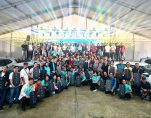
Green GSM Philippines and Driver Partner community at the Green GSM Platform Driver Partner Day.
One of the highlights of the event is the handover of the first 1,000 electric vehicles to Green GSM Platform Driver Partners, expanding their business options and giving the driver community access to more suitable and efficient operating models. The addition of more vehicles will also help Green GSM strengthen its service capacity and better meet customers’ growing mobility needs, while contributing to the transition to green transportation in the Philippines.
Building on the cooperation between VinFast and Green GSM, the event will further introduce the vehicle rental model designed for Driver Partners, with an initial investment starting from just PHP 5,000, opening up additional business options and reducing barriers for drivers to participate in electric vehicle operations. The program reflects Green GSM’s “5 Green Promises” commitment, with a focus on providing better vehicles, suitable operating models, and sustainable livelihood opportunities for the Driver Partner community.
Under this partnership model, eligible Driver Partners can choose from VinFast electric vehicles such as the 4-seater Herio Green/VF 5 and the 7-seater Limo Green. These all-electric models are designed to meet the needs of service operations, offering smooth performance, ease of use, and optimized energy, maintenance, and servicing costs compared with gasoline vehicles in the same segment. Through support programs for pioneering partners, including free charging and VinFast warranty coverage of up to 7 years/160,000 km for the Limo Green and the VF 5/Herio Green, drivers can significantly reduce operating costs, improve business efficiency, and increase their long-term earnings.
As part of the event series, Green GSM continues to reaffirm its long-term commitment to the Green Driver Partner community in the Philippines, with a focus on enhancing service quality, professionalism, and community engagement through the launch of the Global Green GSM Driver Partner Community in the Philippines. The Community serves as a platform to connect and support Driver Partners, while strengthening engagement across the broader Green GSM ecosystem.
Through the Community, members will be able to share and learn from one another’s experiences in operating electric vehicles and providing mobility services, stay updated on the latest information and policies, and work together to build an increasingly professional, connected, and sustainable Driver Partner community.
Through the “Green GSM Platform Driver Partner Festival,” Green GSM is committed to supporting the sustainable development of the driver community in the Philippines, raising awareness and encouraging the green transition, while expanding livelihood opportunities for drivers to increase their income. At the event, Driver Partners will have the opportunity to test-drive VinFast electric vehicles, receive answers from Green GSM regarding electric vehicles, learn about relevant policies and benefits, and receive prompt assistance in completing the registration procedures required to transition to providing services with electric vehicles.
The event forms part of Green GSM’s development plan to strengthen its ability to meet market demand, with the goal of providing more vehicles, faster service, and progressively higher service quality in line with five-star standards, delivering a more satisfying experience for customers on every green journey.
Ms. Le Thi Thu Trang, CEO of Green GSM Philippines, said: “Through the Green GSM Platform Driver Partner Festival and Car Handover Week, Green GSM aims to accompany the driver community in its development and expansion while enhancing both quality and professionalism. We seek to create more livelihood opportunities for drivers to access optimized and efficient operating models that can significantly increase their earnings. At the same time, we expect the event to inspire and help lay the foundation for the next phase of green mobility development in the Philippines.”
Green GSM currently operates electric taxi services in key urban areas across the Philippines, including Metro Manila in Luzon, Central Visayas, and Mindanao. Its two service offerings – Green GSM Car and Green GSM Limo, a 7-seater Premium Taxi – cater to customers’ diverse mobility needs.
In addition to its direct operations, Green GSM is expanding partnerships with local taxi operators to accelerate the green transition through diverse, flexible, and cost-efficient partnership programs.
Going forward, Green GSM will continue improving service quality and expanding its network, consistent with its “5 Green Promises” commitment, with the aim of raising service standards and contributing to greener urban mobility in the Philippines./.
Hashtag: #GreenSM
The issuer is solely responsible for the content of this announcement.
BRICS leaders have adopted a joint declaration expressing deep concern over escalating tensions in the Middle East and urging maximum restraint, securing consensus among members including Iran, Saudi Arabia and the United Arab Emirates. The New Delhi Declaration, approved on Saturday at the 18th BRICS Summit, called on all sides to avoid actions that could further aggravate the situation and reaffirmed support for resolving international disputes through […]
HANOI, VIETNAM – Media OutReach Newswire – 12 September 2026 – VinFast and GSM today officially announced new leadership appointments, succeeding Mr. Pham Nhat Vuong and Ms. Pham Thu Huong in senior global leadership roles. Accordingly, Mr. Pham Nhat Quan Anh, currently Chairman of VinFast Global, will concurrently assume the position of CEO of VinFast Global, succeeding Mr. Pham Nhat Vuong, while also taking on the roles of Chairman and CEO of VinFast Vietnam. Mr. Nguyen Quoc Tuan will assume the position of Chairman of GSM Global, succeeding Ms. Pham Thu Huong, while Mr. Pham Nhat Minh Hoang will become CEO of GSM Global and concurrently CEO of GSM Vietnam.
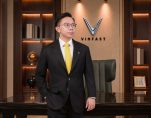
Mr. Pham Nhat Quan Anh, Chairman and CEO of VinFast Global, and Chairman and CEO of VinFast Vietnam.
The strengthening of the senior leadership teams at VinFast and GSM comes as Vingroup and companies across its ecosystem accelerate the training and development of in-house talent and transition leadership responsibilities to a younger generation of leaders, in line with the needs and growth trajectory of the system. In particular, both VinFast and GSM are entering a period of strong and decisive growth on a global scale.
Prior to assuming the position of Chief Executive Officer of VinFast Global from Mr. Pham Nhat Vuong, Mr. Pham Nhat Quan Anh was appointed Chairman of VinFast Global in May 2026. With his official assumption of the positions of Chairman and Chief Executive Officer of VinFast Global, as well as Chairman and Chief Executive Officer of VinFast Vietnam, Mr. Pham Nhat Quan Anh will hold ultimate and comprehensive responsibility for all of VinFast’s operations as the company enters a new phase of growth.
Following his official appointment, Mr. Pham Nhat Quan Anh commented: “I am deeply honored by the Board of Directors’ trust and confidence in entrusting me with the additional responsibility. Built on a strong foundation established over the years and supported by the growing confidence of customers across our markets, VinFast is well positioned to seize the significant opportunities ahead and further strengthen its role in advancing the global transition to sustainable mobility. I am committed to working closely with our talented team to uphold VinFast’s core values and continue delivering world-class products and the highest standards of service to customers around the world.”
Born in 1993, Mr. Pham Nhat Quan Anh holds a Bachelor’s degree from Singapore Management University and has held several key leadership positions at VinFast and other companies within the Vingroup ecosystem before being appointed Chairman of the Board of Directors of VinFast Auto Ltd. in May 2026. With extensive cross-sector management experience and a strategic operational mindset, he has made significant contributions to VinFast’s development, from building its foundation in the domestic market to expanding its presence internationally.
In addition to his senior leadership responsibilities at VinFast, Mr. Pham Nhat Quan Anh will continue to serve as Chief Executive Officer of VinMetal Trading and Production JSC, a high-quality steel manufacturer within the Vingroup ecosystem.
At GSM, Mr. Nguyen Quoc Tuan, currently Chief Executive Officer of GSM Global, has been appointed Chairman of GSM Global, succeeding Ms. Pham Thu Huong. Mr. Pham Nhat Minh Hoang will succeed Mr. Tuan as Chief Executive Officer of GSM Global and concurrently assume the position of Chief Executive Officer of GSM Vietnam.
Mr. Pham Nhat Minh Hoang, CEO of GSM Global and CEO of GSM Vietnam.
Born in 2000, Mr. Pham Nhat Minh Hoang has held senior leadership positions at VinFast, Green Future, VinSmart Future, GSM and other companies. In addition to his management responsibilities, he has directly invested in and serves as a major shareholder of several industrial, technology, energy and infrastructure companies within the Vingroup ecosystem, including VinSpeed, VinEnergo, VinMetal, VinVentures and robotics companies.
VinFast currently has a presence in 16 countries worldwide, including key markets such as Vietnam, India, Indonesia, the Philippines, Europe, the Middle East and North America. VinFast electric cars and electric motorcycles are currently manufactured at four facilities across three countries: Vietnam, Indonesia and India.
Alongside VinFast, GSM operates its green mobility brand, Green SM. The company currently operates in seven countries, including Vietnam, Laos, Indonesia, the Philippines, India, Kazakhstan and Denmark, and plans to expand into at least three additional markets within this year. GSM is also targeting a transition into a globally scaled public company with its shares listed on an international stock exchange.
The appointment of senior leadership is of particular importance, not only in addressing the more demanding requirements of the companies’ next phase of development, but also reflecting positive expectations for the future of VinFast and GSM as they continue their expansion into international markets.
Hashtag: #VinFast #GSM
The issuer is solely responsible for the content of this announcement.
Modi pressed Iranian President Masoud Pezeshkian to support freedom of navigation, uninterrupted commerce and the safety of seafarers as the two leaders met in New Delhi on Friday amid continuing conflict and shipping disruption across West Asia.
The talks, held on the sidelines of the BRICS summit, focused on bilateral relations and the regional security situation. India’s Prime Minister reiterated that disputes should be resolved through dialogue and diplomacy and called for sustained efforts to secure lasting peace and stability, according to an official statement issued after the meeting.
Modi specifically highlighted the need to safeguard freedom of navigation and commerce and the safety and well-being of seafarers. The issue has become a central concern for New Delhi as attacks on commercial vessels and disruption to maritime routes in the region have affected trade and put crews at risk.
The meeting was Modi and Pezeshkian’s second in less than two weeks. They had met on August 31 on the sidelines of the Shanghai Cooperation Organisation summit in Bishkek, where Modi also raised the protection of commercial shipping and seafarers and urged a diplomatic approach to the West Asia conflict.
Friday’s discussion came as the conflict involving Iran, the United States and Israel continued to place pressure on strategic waterways and supply routes. India has sought to maintain working relations with Iran while also preserving close ties with Israel and Arab states, making maritime security and regional stability important economic as well as diplomatic priorities.
At least 10 nationals of India have been killed in attacks on vessels transiting the region during the conflict. New Delhi has condemned attacks affecting Gulf countries, energy infrastructure and commercial shipping, while repeatedly calling for de-escalation and protection of civilians and maritime workers.
The maritime threat has sharpened concerns over energy shipments through Gulf waters that remain critical to India’s oil and gas imports.
Modi reinforced the same message earlier on Friday at the BRICS Business Forum, saying global trade could advance only when sea lanes were secure, supply routes remained open and seafarers were safe. He described India as a firm supporter of freedom of navigation and the safety of maritime crews.
Pezeshkian, who was making his first visit to India as president, used his participation in BRICS meetings to press for stronger economic cooperation among members and protection of legitimate trade from political and military pressure. He argued that the grouping’s strength would be demonstrated by converting economic capacity into functioning networks for trade, investment and joint financing.
The Iranian president also called for greater use of national currencies in trade among BRICS members and said Tehran was prepared to work as a strategic partner in energy and transport supply chains. His remarks reflected Iran’s effort to reduce exposure to sanctions and other constraints on cross-border commerce.
During the bilateral meeting, Modi thanked Iran for maintaining high-level participation in BRICS-related meetings despite difficult circumstances. He said the grouping could strengthen resilience, innovation, cooperation and sustainability among countries of the Global South.
The two leaders also reviewed broader bilateral ties and cooperation in multilateral organisations. Modi welcomed continuing coordination on issues of mutual interest within BRICS, where Iran is a full member alongside Brazil, Russia, India, China, South Africa and other states that have joined the expanded grouping.
The talks followed Pezeshkian’s participation in the Leaders’ Session of the BRICS Business Forum. Modi thanked him for attending and said engagement between the two countries should continue across bilateral and multilateral channels.
The New Delhi meeting also built on the August 31 discussions in Bishkek, when Pezeshkian told Modi that Tehran favoured a negotiated solution to its confrontation with the United States. Modi at that meeting expressed concern over escalating tensions and said civilians, civilian infrastructure, commercial shipping and seafarers should not be harmed.






 https://www.azbil.com
 https://www.linkedin.com/company/azbil-southeast-asia-and-india/