News related to
energy

S&P Global Ratings has lowered its growth expectations for both the UK and Egypt, saying the economic fallout from conflict-linked disruption across the Middle East is feeding through energy prices, trade routes and business confidence. For Egypt, S&P cut its forecast for real GDP growth in the 2025-2026 fiscal year to 4.7 per cent from 4.8 per cent, while also trimming the following year to 4.3 per […]

Arabian Post Staff -Dubai Abu Dhabi will bring back its flagship infrastructure gathering in a larger format next month, with organisers casting the 12-14 May event as a platform to push smart, sustainable and people-centred urban development at a time when the emirate is moving ahead with one of the region’s biggest public project pipelines. The Abu Dhabi Infrastructure Summit, hosted by the Abu Dhabi Projects and […]

Metso has launched a new line of flip-flow screens aimed at one of the harder jobs in minerals processing and aggregates production: separating fine, dry and often moisture-laden material without pushing operators towards water-intensive screening. The Finland-based group said its new GFF Series is designed to improve classification accuracy, lower circulating loads and support more energy-efficient plant performance in both mining and sand manufacturing. The launch, announced […]

Qatar and India have moved to reinforce one of Asia’s most important energy relationships, with senior ministers in Doha pledging closer cooperation and calling for urgent protection of global supply chains as conflict-linked disruption continues to unsettle oil and gas markets. During talks on April 9 and 10, Qatar’s Minister of State for Energy Affairs and QatarEnergy chief executive Saad Sherida Al-Kaabi told India’s Minister of Petroleum and Natural Gas, Hardeep Singh Puri, that Doha would remain a reliable energy supplier, while both sides stressed the need for uninterrupted navigation and the free flow of commerce.

The meeting carried weight beyond bilateral symbolism. Qatar is India’s largest supplier of liquefied natural gas and a major source of liquefied petroleum gas, making the Gulf state central to India’s fuel security at a time when shipping risks and production interruptions have tightened markets. New Delhi’s outreach came as it sought assurances on supply after weeks of strain across West Asian energy routes and amid concern over the effect of regional instability on domestic fuel availability and industrial consumption.

Doha’s message was also framed by diplomacy. The official Indian statement said the ministers welcomed the two-week ceasefire agreed on April 8 and underlined the need for an early end to disruption in global energy supplies. It added that Puri conveyed greetings and a message of solidarity from Prime Minister Narendra Modi to Qatar’s leadership, reflecting how the energy relationship is now closely tied to broader strategic engagement covering trade, investment and regional stability.

For India, the stakes are immediate. The country depends on imports for about half of its natural gas needs, and the supply shock has already exposed vulnerabilities in infrastructure and procurement. GAIL’s finance director said this week that the Dabhol LNG terminal in Ratnagiri was operating at less than half its 5 million-tonnes-a-year capacity because of constrained global supplies. Hindustan Petroleum’s Chhara LNG terminal in Gujarat has also faced difficulties after missing two cargoes in March and April that were expected from Qatar via ADNOC Trading.

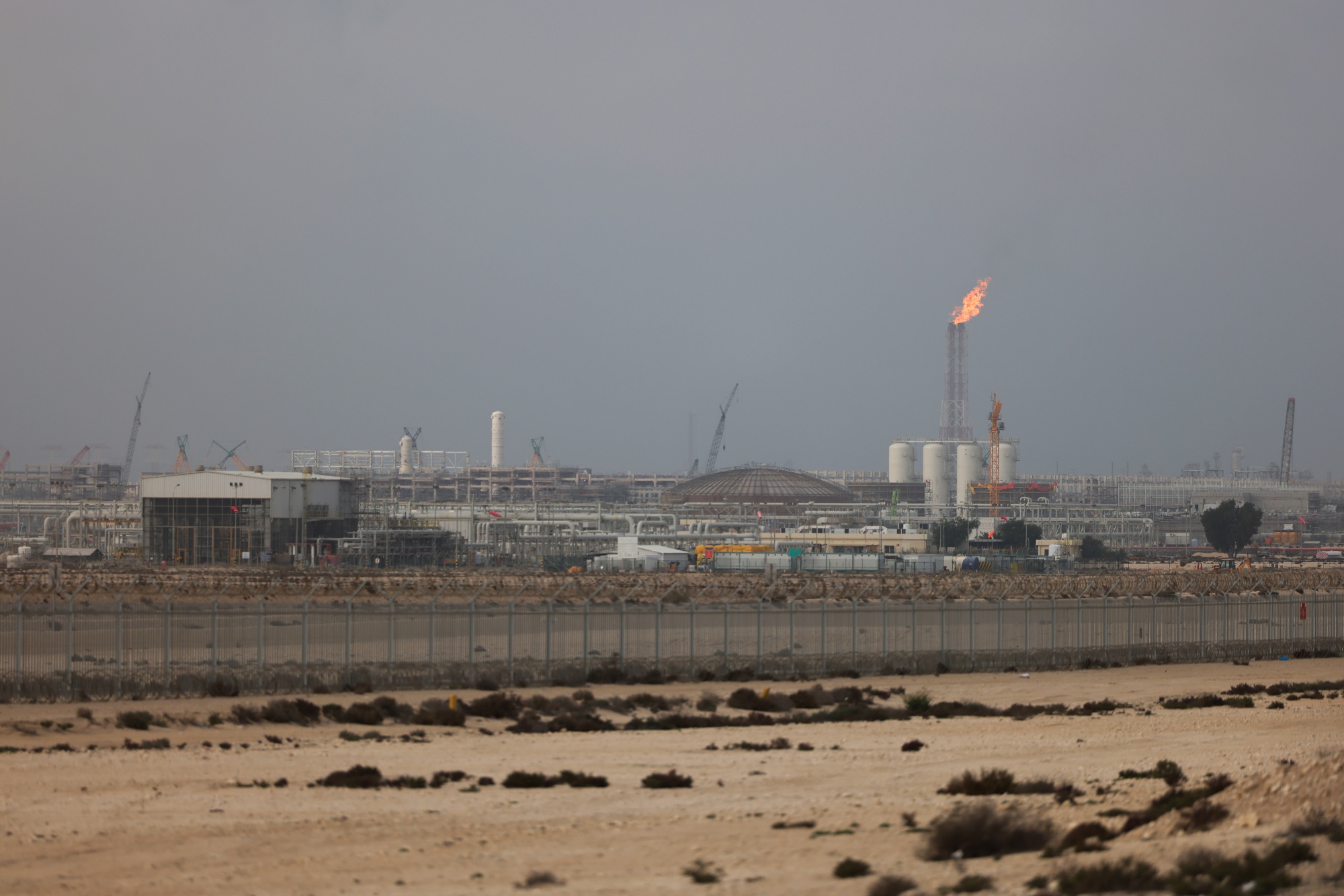
The background to the Doha talks is a sharp deterioration in regional energy logistics. Reuters reported on April 8 that QatarEnergy was preparing to restart LNG production after attacks in March forced stoppages at facilities in Ras Laffan and Mesaieed. Two of three trains at QELNG North 1 had been restarted, but a full return depended on vessels being able to pass safely through the Strait of Hormuz, one of the world’s most sensitive energy chokepoints. The same disruption has inflated spot prices and increased anxiety among large importers across Asia.

That makes Qatar’s long-term importance to India even clearer. In February 2024, QatarEnergy and Petronet LNG signed their largest single LNG supply agreement, under which Qatar will deliver 7.5 million metric tonnes a year from 2028 to 2048. Reuters reported at the time that Qatar planned to lift LNG liquefaction capacity to 126 million tonnes a year by 2027, up from 77 million, as it sought to strengthen its role in Asian and European markets. The scale of that agreement gives India a measure of stability, but it also underlines how deeply its gas strategy remains linked to a single Gulf supplier.

That dependence has advantages and risks. Qatar has earned a reputation for contractual reliability and remains among the lowest-cost LNG producers in the world, qualities prized by importers facing volatile spot markets. At the same time, the events of March and April have shown that even long-established energy corridors can be shaken by military escalation, damage to infrastructure and pressure on maritime routes. For policymakers in New Delhi, that is likely to sharpen interest in diversification through additional long-term contracts, more storage, broader sourcing and faster domestic gas infrastructure expansion.

India’s longer-term energy ambitions add another layer to the relationship. The government has repeatedly said it wants to raise the share of natural gas in the energy mix to 15 per cent by 2030, from just over 6 per cent at present. That target cannot be met without dependable imported LNG, even as the country pushes renewables, domestic gas output and cleaner urban fuels. Reliable Qatari supply therefore remains integral not only to short-term energy security, but also to India’s broader transition strategy and industrial planning.

Arabian Post Staff -Dubai Saudi supply lines face deeper strain Attacks on Saudi energy facilities have knocked about 600,000 barrels per day from the kingdom’s oil production capacity and cut throughput on the East-West Pipeline by roughly 700,000 bpd, according to Saudi state media citing an Energy Ministry official, in a blow to the world’s top oil exporter at a time when its western pipeline route has […]

UAE authorities are advancing a Dh6 billion federal highway project designed to ease chronic congestion on the Dubai-Sharjah-Ajman corridor, pressing ahead with what officials describe as a strategic expansion of the national road network as population growth and commuting demand intensify. The scheme, reviewed this week by the UAE Infrastructure and Housing Council, centres on the Fourth Federal Corridor, a planned road of about 68 kilometres with […]

Bank of Korea left its benchmark interest rate unchanged at 2.50 per cent on Friday, extending its policy pause to a seventh straight meeting as policymakers confronted a harder mix of rising price pressures, a weak won and a growth outlook darkened by higher energy costs and disruption linked to conflict in the Middle East.

The seven-member Monetary Policy Board said uncertainty had intensified and judged it appropriate to hold the base rate while assessing how the conflict, financial-market volatility and foreign-exchange swings feed through to the domestic economy. The central bank’s statement made clear that the policy dilemma has sharpened: inflation risks are moving up even as growth is expected to slow more than earlier forecast.

Governor Rhee Chang-yong, speaking after what Reuters reported was his final press conference before his term ends on April 20, said supply-side shocks from the Middle East were especially damaging for Asian economies reliant on imported energy. That matters acutely for South Korea, where policymakers are trying to prevent a renewed inflation cycle without choking activity at a time when sentiment has softened and some industries are already facing production constraints.

The rate hold had been widely anticipated. Reuters said all 31 economists in its poll expected no move at this meeting, reflecting a market consensus that the central bank had little room to ease and few grounds to tighten immediately. Instead, the decision underscored how monetary authorities in export-driven Asian economies are being forced to navigate a narrow path between external shocks and domestic fragilities.

At the centre of the debate is inflation. Official data showed consumer prices in March rose 2.2 per cent from a year earlier, up from 2.0 per cent in February, while core inflation, which excludes food and energy, also stood at 2.2 per cent. The Bank of Korea said petroleum prices had risen sharply and noted that short-term inflation expectations among the public edged up to 2.7 per cent. It now expects consumer inflation this year to exceed its February projection of 2.2 per cent by a meaningful margin, with core inflation also likely to come in above the earlier 2.1 per cent forecast.

That shift is important because the central bank had been able for months to argue that price growth was gradually stabilising near target. The worsening external backdrop has disrupted that narrative. The board said inflation is likely to move into the mid- to upper-2 per cent range as global oil prices and supply constraints lift import costs, though government price-stabilisation measures may soften part of the blow. Reuters reported that Seoul’s fuel-price caps, introduced last month for the first time in decades, helped restrain March inflation but are unlikely to provide a lasting shield if energy costs stay elevated.

Growth, meanwhile, is losing momentum. The central bank said the economy had been supported by strong exports, firmer consumption and continued job gains, but warned that downside pressure had increased since the outbreak of the Middle East conflict. It expects expansion this year to come in below the 2.0 per cent forecast issued in February, as higher energy prices and supply bottlenecks offset support from semiconductor exports and a supplementary budget. That combination leaves the Bank of Korea confronting an uncomfortable form of policy tension: weaker activity alongside stronger inflation.

The won has added to the pressure. The central bank said the currency weakened into the 1,500-won range against the US dollar as investors moved into safer assets and foreign investors sold domestic equities, before recovering some ground after a temporary ceasefire between the United States and Iran. A softer currency raises the local-currency cost of imported fuel and raw materials, complicating the inflation picture and limiting the case for any near-term rate cuts.

Financial markets reflected that cautious tone. Reuters reported that South Korea’s policy-sensitive three-year treasury bond futures erased early gains during the governor’s press conference, suggesting investors interpreted the message as more alert to inflation risks than to immediate growth support. Analysts cited by Reuters said the rebound in energy prices and the won’s weakness have narrowed the central bank’s room for manoeuvre, even if domestic demand still needs close watching.

Advertisements

Russia said on Thursday that President Vladimir Putin had ordered a temporary ceasefire in Ukraine over Orthodox Easter, casting the move as a humanitarian gesture and urging Kyiv to follow suit, even as both sides remained deeply sceptical that any holiday pause would materially change the course of the war. The Kremlin said Russian forces were to halt combat operations from 4 p. m. on Saturday, April […]

South Korea is sending a special envoy to Iran as Seoul steps up efforts to secure passage for 26 South Korean-linked vessels stranded around the Strait of Hormuz, underscoring how a partial US-Iran ceasefire has done little to restore normal shipping through one of the world’s most critical energy chokepoints. Seoul’s foreign ministry has appointed former ambassador to Kuwait Chung Byung-ha for the mission, with the government […]

HONG KONG SAR & NEW YORK, UNITED STATES – Media OutReach Newswire – 10 April 2026 – Wallace Woo Studio is proud to announce a seismic shift in the landscape of contemporary art with the formal introduction of Geological Abstractionism. This global launch is anchored by two definitive academic volumes: the new manifesto The Dimension of Sedimentation (ISBN: 978-988-71890-2-2) and the foundational philosophical art book Stalactite – The Clamorous Stillness (ISBN: 978-988-71890-0-8).

Wallace Woo Geological Abstractionism Artwork STA36

A Synthesis of Time and Matter

Refining a lifetime of meditative practice and artistic devotion, Wallace Woo presents a theoretical framework that transcends traditional abstract expressionism. While mid-century Western abstraction often focused on the “spontaneity of the moment,” Woo’s Geological Abstractionism shifts the focus to the “accumulation of eternity.” At the heart of this movement is Stalactite Aesthetics — a sophisticated visual language where gravity serves as the secondary artist. “In my studio, time does not flow away; it sediments,” says Wallace Woo. “Each layer of pigment represents a crystallized moment of consciousness.”

The Documentation of an Evolution

The global launch is supported by two landmark publications, both of which are part of the Hong Kong Public Libraries permanent collection, ensuring their status as protected intellectual property:

  • The Dimension of Sedimentation: The current manifesto defining the shift from “capturing a moment” to “accumulating time.”
  • Stalactite – The Clamorous Stillness: A visual-philosophical record documenting the transition from the fluid exploration of Zenflow to the established principles of Geological Abstractionism. This volume invites viewers into “Cave Time,” showcasing the artist’s signature “Acrylic with Ink Spirit” technique through two movements: Slow Living and Wild Growth.

Quick Fact Sheet: The Evolution of Abstraction

To position this new movement within art history, the following comparison highlights the breakthrough of Geological Abstractionism:

Movement Driving Force Geological Abstractionism’s Breakthrough
Action Painting (Pollock) Physical Action From human energy to Natural Gravity
Color Field (Rothko) Spiritual Space From visual rendering to Physical Sedimentation
Geological Abstraction (Woo) Gravitational Flow The first “Collaboration between spirit and Earth’s laws.”

The Philosophy: Internal Geomorphology

Woo defines his process as “Inner Geology“ — the study of how spiritual stillness can manifest as physical texture. By utilizing the inherent weight of fluid media and allowing it to settle through verticality, he captures what he calls the “Clamorous Stillness”.

Looking Toward Paris: June 2026

This global announcement serves as a strategic prelude to Woo’s solo exhibition in Paris this coming June at the Espace Temple Gallery, where the physical manifestations of these theories—the “solidified proof of evolution”—will be unveiled to the European art community.

Hashtag: #WallaceWoo #StalactiteAesthetics #GeologicalAbstractionism #innerGeology #ContemporaryArt #AbstractExpressionism #ISBN9789887189022

The issuer is solely responsible for the content of this announcement.

About Wallace Woo

Wallace Woo is a Hong Kong-born, Paris-based contemporary artist whose work bridges Eastern Zen philosophy with Western abstraction. His lifelong exploration of ‘Inner Geology’ has resulted in a unique visual lexicon recognized globally for its profound depth and temporal complexity.

China has authorised state oil refiners to draw on commercial crude reserves as the Middle East war enters its sixth week, a move that points to mounting concern in Beijing over supply security, refinery operations and fuel stability in the world’s biggest crude importer. The decision marks a notable shift after reporting in March indicated that access to such reserves had been denied, underscoring how sharply the market backdrop has changed.

The policy adjustment comes as the conflict centred on Iran has disrupted flows through the Strait of Hormuz, a route that handled about 20 million barrels a day of crude and oil products in 2025 and remains one of the most critical chokepoints in global energy trade. The International Energy Agency said in March that the war had created the biggest supply disruption in oil market history, with flows through Hormuz falling from around 20 million barrels a day before the war to only a trickle.

For China, the timing is especially sensitive. State refiners have already been grappling with higher feedstock costs, disrupted shipping routes and a scramble for replacement barrels from outside the Gulf. Reuters reported in late March that Sinopec, the country’s largest refiner by capacity, had sought access to state reserves after deciding against buying Iranian crude, while also trimming refinery runs. Earlier reporting in mid-March said China had been building inventories rather than drawing them down, suggesting Beijing initially preferred to preserve stocks.

That stance now appears to have softened. Bloomberg reported on April 10 that authorities had given state refiners the green light to tap commercial reserves. While the precise volume and duration were not publicly disclosed, the move is significant because it signals Beijing is willing to use part of the country’s stock cushion to smooth supplies for domestic processing rather than rely solely on the spot market at a time of exceptional volatility.

The wider market has been under intense pressure even as talk of a ceasefire has briefly cooled futures prices. Reuters reported that physical crude markets in Europe and Africa remained extremely tight despite a temporary truce, with buyers in Asia and Europe competing aggressively for non-Middle East barrels. Another Reuters report said U. S. crude premiums had surged to record highs as importers sought alternatives to Gulf supplies. That matters for China because replacing lost or delayed Middle East cargoes has become more expensive just as refining margins in parts of Asia remain fragile.

Supply conditions deteriorated further this week after attacks on Saudi energy infrastructure cut output capacity by around 600,000 barrels a day and reduced throughput on the East-West Pipeline by about 700,000 barrels a day, according to Saudi state media cited by Reuters. The pipeline is vital because it allows exports to bypass Hormuz via the Red Sea. Damage there narrowed one of the few remaining alternative routes for Gulf producers trying to keep oil moving to Asian customers.

Asian refiners have already felt the strain. Reuters reported that seaborne crude imports into Asia in April were estimated at 19.22 million barrels a day, sharply below the three-month average of 25 million barrels a day. Although refined fuel prices eased after hopes of a truce, the same report said the market was still stressed and that it could take months for normality to return even if shipping improves. For Beijing, releasing commercial stocks is therefore less a dramatic emergency measure than a tactical effort to bridge a period of dislocation.

The decision also reflects China’s domestic balancing act. Authorities have been trying to keep fuel output steady even as weak underlying demand and higher crude costs squeeze refiners. Reuters reported on April 2 that officials had pressed independent refiners to maintain production despite the surge in oil prices and wartime disruption. That suggests Beijing is seeking to avoid sharp swings in fuel availability or industrial costs while preserving broader economic stability.

There is also a geopolitical layer. China has opposed any overtly force-based international response around Hormuz and has pushed for de-escalation at the United Nations, according to Reuters reporting on Security Council negotiations. At the same time, the reserve release shows that Beijing is preparing for a conflict that may not be resolved quickly and for shipping conditions that may remain uncertain even if diplomatic language softens.

Washington and Tehran head into talks in Islamabad this weekend with far more at stake than a temporary pause in fighting, as negotiators face pressure to tackle the entire dispute at once rather than salvage only a narrow ceasefire. Pakistan has helped bring the sides to the table after a two-week truce took shape, but the diplomatic opening is already under strain from disputes over uranium enrichment, […]

Ethereum hovered near the $2,000 mark on Thursday after a choppy stretch that left the world’s second-largest cryptocurrency caught between stronger long-term supply dynamics and a fresh wave of geopolitical and macroeconomic uncertainty. Ether was trading around $2,178 during the session, after moving within an intraday range of roughly $2,167 to $2,264, underscoring the tight consolidation that has kept traders focused on whether the token can build […]

Arabian Post Staff -Dubai Attacks tied to the widening confrontation with Iran could spill far beyond the battlefield and damage global health, food security and the environment, the UAE told an international summit in Lyon, urging governments and institutions to rally around a “One Health” strategy that treats human, animal and ecosystem health as inseparable. The intervention came at a high-level gathering hosted by France on 7 […]

US unemployment benefit claims rose last week but stayed at levels that still point to a labour market holding together, even as investors and policymakers brace for a March inflation reading that could complicate the Federal Reserve’s next move. Initial claims for state unemployment benefits increased by 16,000 to 219,000 in the week ended April 4, according to Labor Department data released on Thursday. The prior week’s […]

Tokenised perpetual swaps tied to commodities and equities have surged into a new phase of growth, with weekly trading volume reaching about $31 billion as oil volatility and broader macro uncertainty pulled traders towards round-the-clock synthetic exposure. Oil contracts accounted for roughly $6.9 billion of that weekly turnover after geopolitical tensions rattled energy markets, while stock perpetual swaps climbed 908% to around $4.9 billion, underscoring how quickly […]

Greenlogue/AP Abu Dhabi’s 2PointZero Group has moved deeper into the renewable energy market in India through a new joint venture between its subsidiary ePointZero RSC and Adani Green Energy, extending a relationship between the two business groups and underscoring continued Gulf interest in large-scale clean power assets on the subcontinent. The venture will be executed through Minerva Holding, ePointZero’s renewable development platform in India, according to statements […]

U. S. authorities have dismantled the domestic arm of a cyber-espionage network that officials say was run by APT28, the Russian military intelligence hacking group also known as Fancy Bear and Forest Blizzard, after it hijacked vulnerable internet routers to redirect traffic, steal credentials and sift victims for higher-value targets. The Justice Department said the FBI used a court-authorised technical operation to identify compromised routers on U. […]

South Africa’s net foreign reserves fell to $73.19 billion at the end of March from $75.84 billion in February, as the country’s gross reserves also dropped to $77.76 billion from $81.06 billion, according to central bank data released on Thursday. The decline came after a stronger February reading and marks a pullback from levels that had been supported earlier this year by higher reserve values and foreign-exchange […]

Sub-Saharan Africa’s growth is set to hold at 4.1% in 2026, but the World Bank has cut its earlier projection and warned that a more hostile external backdrop, led by conflict-linked jumps in fuel and fertiliser costs, is making the region’s recovery harder to sustain. The lender said the outlook had been revised down by 0.3 percentage points from its October 2025 estimate, even as governments across […]

Arabian Post Staff -Dubai Mubadala Capital has closed its biggest Brazil-focused investment vehicle at about $900 million, exceeding its original $750 million target in a sign that large overseas investors still see room for opportunistic deals in Latin America’s biggest economy despite a tougher global fundraising climate. The fund, Brazil Special Opportunities Fund III, was backed by a $250 million anchor commitment from Mubadala Capital, the investment […]

Arabian Post Staff -Dubai Regional tensions showed little sign of easing on Wednesday as the United Arab Emirates reported a new wave of Iranian missile and drone attacks despite a ceasefire announced between Washington and Tehran. The UAE Ministry of Defence said air defences intercepted 17 ballistic missiles and 35 drones launched on April 8, adding to a mounting tally of projectiles intercepted since the wider confrontation […]

S&P Global Ratings has lowered the Philippines’ outlook to stable from positive, while affirming its long-term sovereign credit rating at BBB+, saying the war in the Middle East has raised the risks facing the country’s external accounts and public finances. The move keeps the nation within investment-grade territory but signals that a near-term upgrade is now less likely as higher energy costs, inflation pressure and a weaker peso complicate the policy outlook.

The ratings agency said elevated oil prices are likely to widen the current-account deficit this year and weaken external buffers, even as it still expects the economy to expand at a healthy pace and the fiscal deficit to narrow over the next two years. S&P projected growth of 5.8% in 2026 after the economy expanded 4.4% in 2025, with softer momentum in the first half and a rebound later in the year.

The decision lands at a delicate moment for Manila. The Bangko Sentral ng Pilipinas warned this week that higher fuel costs were already feeding into broader prices after March inflation accelerated to 4.1%, above the central bank’s 2% to 4% target band and sharply higher than February’s 2.4%. Transport costs were the main driver, with diesel prices up 59.5% from a year earlier and gasoline up 27.3%, while core inflation also edged higher, suggesting second-round effects may be starting to build.

That inflation pulse helps explain why S&P has become more cautious. A country that depends heavily on imported fuel is especially exposed when conflict disrupts Middle East energy flows, and the Philippines has been among the Asian economies hit hardest by the latest oil shock. Reuters reported that Brent crude had risen 55% since the Iran war began on February 28, while the Philippine peso slid to record lows against the dollar, adding another layer of imported inflation pressure.

The external vulnerability is not new, but the conflict has made it harder to ignore. Philippine officials have been scrambling to secure energy supplies, including seeking assurances over safe passage for Philippine-flagged ships and fuel cargoes through the Strait of Hormuz. Manila has also explored alternative sources of crude and emergency measures to protect domestic supply, underlining how quickly a geopolitical crisis can turn into a ratings issue for an energy-importing economy.

For investors, the key point is that S&P did not cut the rating itself. The agency kept the BBB+ grade in place, indicating that it still sees underlying strengths in the economy, including growth potential, remittance support and expectations of gradual fiscal repair. That distinction matters. An outlook change signals rising risk over the medium term, but it is not the same as a downgrade, and it leaves room for the sovereign to stabilise if external pressures ease and macroeconomic management holds firm.

Still, the downgrade in outlook will sharpen attention on the government’s fiscal path. The Philippines has already lowered its medium-term growth targets to reflect the impact of Middle East tensions and shifts in US trade policy. Official forecasts now put 2025 growth at 5.5% to 6.5%, down from 6% to 8%, while targets for 2026 to 2028 have been narrowed to 6% to 7%. That softer growth backdrop makes deficit reduction harder, particularly if the state is forced to spend more on fuel relief, transport support or other measures to cushion households and businesses.

There are signs, however, that the fiscal picture is not uniformly worsening. Treasury data showed the budget deficit in February narrowed marginally from a year earlier, while year-to-date figures improved sharply because of stronger revenues and earlier remittance of dividends. S&P’s own statement suggests it still expects fiscal metrics to improve, even if the war has made that path more vulnerable to setbacks.

Beyond the government balance sheet, the social cost of the energy spike is becoming harder to miss. Reuters reported that some farmers in Benguet province were abandoning harvests because higher fuel, labour and transport costs made it uneconomic to bring produce to market. That kind of strain matters for credit analysis because it shows how an oil shock can move from shipping lanes and currency markets into household spending, food supply chains and political pressure for intervention.


Iran-affiliated cyber actors are targeting internet-facing industrial control equipment used by parts of the United States’ critical infrastructure, with federal agencies warning that the campaign has already caused operational disruption and financial loss in some cases. The alert, published on April 7, said the activity was focused on operational technology devices, including programmable logic controllers, or PLCs, made by Rockwell Automation’s Allen-Bradley line. The warning matters because […]

VISHNU RAJA
RYO YAMADA
HITORI GOTOH
IKUYO KITA