North Korea fired multiple short-range ballistic missiles into waters off its east coast early on Sunday, prompting swift condemnation from Seoul, Tokyo and Washington and extending a run of weapons activity that is deepening security concerns across North-East Asia. South Korea’s Joint Chiefs of Staff said the missiles were detected from the Sinpo area at about 6:10 a. m. local time and were launched towards the East […]
Shiba Inu came under fresh selling pressure over the weekend, with the token falling about 5% on the daily chart and slipping to roughly $0.000006088 after failing to hold a short-lived push higher. By Sunday, live market data still showed SHIB trading near $0.00000603, leaving it around 4% lower over 24 hours with a market capitalisation of about $3.55 billion and daily turnover above $110 million, a […]
Air passengers face a tougher booking season as airlines trim connections, suspend weaker routes and ground aircraft to absorb a jet-fuel shock that has spread from energy markets into ticket prices and network planning. Industry officials are warning that the disruption could deepen through the northern summer, especially on thinner international and regional links where carriers have little room to absorb higher costs. Jet fuel prices have […]
MANILA, PHILIPPINES – Media OutReach Newswire – 18 April 2026 – VinFast today announced the signing of Memoranda of Understanding (MoUs) on strategic cooperation with 14 e-scooter distributors in the Philippines. The agreements demonstrate VinFast’s ability to rapidly scale its retail network, while further affirming its long-term commitment to advancing green mobility and building a comprehensive electric mobility ecosystem in the Philippines.
VinFast continues to collaborate with leading motorcycle distributors in the Philippines in support of the upcoming June 2026 product launch.
To support its planned product launch in June 2026, VinFast has continued to partner with leading motorcycle distributors in the Philippines, including Wheeltek Motor Sales Corporation; Gentrade International Phils., Inc. (Transcycle); Superbikes Corporation; Motoxpress Sales Corporation; FMN Industrial Corp.; Eduhome Enterprise, Inc.; Keymotors Incorporated; Motorpro by Abenson Ventures Inc. and Aserco; Moto Atelier Inc.; Ciclo Suerte; HG Motorzone; HGC Main Marketing (Motorboy); BLC Cycle Parts Supply; and Auto Ten Trade & Services Corp. Similar to the partners signed in January 2026, these partners have extensive networks, demonstrate strong operational capabilities, and possess longstanding experience in the motorcycle business, alongside a clear orientation toward the green transition.
VinFast and its partners will collaborate to rapidly roll out a showroom network across the market, with many outlets expected to be launched in parallel at the time of product introduction, laying the foundation for accelerated expansion of nationwide sales and after-sales services. The showrooms will be developed in high-demand areas with strong potential for green transition such as Metro Manila, Metro Davao, Rizal, Laguna, Cavite, Batangas, Metro Cebu, Bulacan, and other major urban provinces, and will adhere to VinFast’s global standards for operations and brand identity.
In the initial phase, the network will distribute a portfolio of swappable-battery e-scooters, including Evo, Feliz II, Viper, and other models expected to be launched in the near future, alongside upcoming models that will be further adapted to local infrastructure conditions and consumer usage patterns in the Philippines.
The Philippines is one of Southeast Asia’s largest motorcycle markets, characterized by strong demand for personal mobility and rapid urbanization. Amid fuel price volatility and a growing shift toward sustainable solutions, e-scooters are emerging as a promising pathway, particularly when supported by an integrated ecosystem.
VinFast is pioneering the development of a comprehensive e-scooter ecosystem in the Philippines, encompassing dealer networks, after-sales services, financing solutions, and energy infrastructure. Notably, the company aims to deploy approximately 30,000 battery-swapping stations nationwide in the near term, in collaboration with infrastructure partners, to deliver a convenient and flexible user experience.
Earlier in 2026, VinFast announced plans to expand its e-scooter business across five key international markets, including the Philippines, Indonesia, India, Thailand, and Malaysia, as part of its global strategy to scale a green mobility ecosystem.
Ms. Vo Thi Cam Tu, Managing Director of VinFast E-Scooters Overseas Market, said: “Our partnerships with 14 major dealers in the Philippines mark an important step in rapidly establishing a strong distribution and service foundation from the outset. We are not only introducing products tailored to local needs, but also developing an integrated ecosystem, from battery-swapping infrastructure to after-sales services, enabling consumers to access and adopt e-scooters in a convenient, efficient, and sustainable manner.”
In recent years, VinFast has steadily built its presence across key Southeast Asian markets, including the Philippines, through a diverse electric vehicle portfolio and strategic partnerships in infrastructure and services. The expansion into e-scooters further completes its green mobility ecosystem in the market and the region, while providing consumers with more flexible options in the transition to sustainable transportation.
Hashtag: #VinFast
The issuer is solely responsible for the content of this announcement.
Arabian Post Staff -Dubai Commercial shipping through the Strait of Hormuz remained far from normal on Friday evening even after Tehran said the waterway was open to all merchant traffic, with ship-tracking data showing a cluster of vessels moving towards the passage before many stopped or turned back. The movements underlined the gap between Iran’s political signal and the shipping industry’s assessment of operational risk across one […]
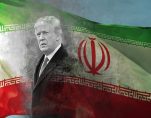
Arabian Post Staff -Dubai President Donald Trump said Iran had agreed to suspend its nuclear programme without a fixed end date, lifting market hopes that a broader settlement could be close after Tehran declared the Strait of Hormuz open again to commercial shipping during the ceasefire period. Trump said in a phone interview on Friday that the halt would be “unlimited”, while also projecting confidence that […]
China has launched a new satellite designed to track greenhouse gases with greater precision, adding a fresh layer of space-based monitoring to the country’s climate and environmental data network.
The satellite lifted off aboard a Long March-4C rocket from the Jiuquan Satellite Launch Centre in north-west China at 12:10 pm Beijing time on April 17. State media said the spacecraft entered its planned orbit successfully, marking the 638th mission of the Long March rocket family. Chinese reports described it as a high-precision greenhouse-gas detection satellite intended to strengthen observation of atmospheric conditions from orbit.
Chinese broadcaster CGTN reported that the satellite carries five instruments, including an atmospheric detection lidar, a broad-spectrum hyperspectral greenhouse-gas monitor, ultraviolet and infrared hyperspectral sensors for atmospheric composition, and a cloud-and-aerosol imager. Together, those tools are intended to improve detection of carbon dioxide, methane and related atmospheric variables, while helping scientists separate emissions signals from interference caused by clouds, aerosols and other background conditions. The spacecraft and launcher were developed by the Shanghai Academy of Spaceflight Technology, according to CGTN and other Chinese reports.
The launch gives Beijing a more advanced platform for a task that has become politically and economically important: measuring what is actually entering the atmosphere. Satellite-based observation has become a key part of climate governance because it can provide independent, repeated coverage across large industrial zones, energy corridors and remote terrain where ground-based monitoring is patchier or harder to verify. Methane, in particular, has come under sharper scrutiny because it traps far more heat than carbon dioxide over the short term, while carbon dioxide remains the dominant driver of long-term warming.
For China, the mission also carries strategic weight. The country has pledged to peak carbon dioxide emissions before 2030 and reach carbon neutrality before 2060, goals that require more dependable measurement of emissions trends and sector-by-sector performance. Yet that transition remains uneven. Reuters reported in February 2025 that China cut carbon intensity by 3.4 per cent in 2024, but still lagged behind its five-year target, underscoring the tension between climate pledges, industrial growth and energy security. More precise atmospheric data can help narrow that gap between policy targets and real-world measurement.
The new mission also builds on a longer Chinese effort to monitor greenhouse gases from space. In 2016, China launched TanSat, a carbon-tracking satellite aimed at taking global carbon dioxide readings roughly every 16 days, with accuracy of at least four parts per million, according to Reuters and the China National Space Administration. That earlier satellite was presented as a step towards giving policymakers more independent climate data. The new spacecraft appears to signal a move from pioneering measurement capability towards a more operational and higher-resolution system.
That matters beyond China. Space-based emissions tracking has gained prominence as governments, investors and campaigners press for more transparent climate accounting. The loss last year of MethaneSAT, a privately backed satellite funded in part by Jeff Bezos and operated by the Environmental Defense Fund, highlighted both the promise and fragility of this new monitoring architecture. At the same time, political pressure on some United States climate-observation programmes has raised concerns among scientists about the continuity of global emissions data. Against that backdrop, China’s launch adds capacity to a field in which international coverage remains valuable but uneven.
The timing is notable because climate data has become more than a scientific matter. It now feeds into carbon markets, industrial regulation, trade pressure and diplomatic claims over who is cutting emissions and who is not. Better satellite detection could strengthen verification of methane leaks from coal mines, oil and gas facilities, and large industrial sites, while also improving broader atmospheric modelling. Chinese researchers are already working on ever finer emissions datasets for the country, and the addition of a new orbital platform could help tighten links between satellite observation, ground measurements and policy enforcement.
World Bank has launched a new strategy for small states, promising a more tailored approach for countries that face outsized economic risks from isolation, narrow domestic markets and repeated external shocks. The plan, unveiled on Friday by World Bank President Ajay Banga during the spring meetings in Washington, puts jobs, private investment and more flexible financing at the centre of support for small island economies and other […]
Arabian Post Staff -Dubai UAE equities closed higher on Friday, extending a second straight week of gains as traders responded to signs that Washington and Tehran may keep diplomatic channels open, lifting sentiment across Gulf markets and pushing Dubai to its highest level in about six weeks. Dubai outpaced Abu Dhabi, with buying concentrated in banking and property names as investors weighed the prospect of lower geopolitical […]
Etihad Airways has set out one of its biggest Africa pushes in years, unveiling six new destinations across the continent as Abu Dhabi’s flag carrier deepens its reach into markets it says are being shaped by trade growth, cargo demand and rising cross-border mobility. The expansion adds services to Accra, Asmara, Kinshasa, Lagos, Harare and Lubumbashi, with the first of the new routes due to begin in […]
Commercial artificial intelligence models are advancing quickly in vulnerability research and exploit development, sharpening concern across the cybersecurity industry that tools built for productivity and defence could also lower the barrier for offensive misuse. A study by Forescout’s Vedere Labs found that commercial systems now outperform open-source and underground alternatives in identifying software flaws, while more than half of the models tested were able to generate exploits […]
Oman and Thailand moved to deepen economic and diplomatic engagement during a high-level meeting in Muscat, with both sides focusing on trade, investment, tourism and institutional cooperation as they seek to turn cordial political ties into broader commercial gains. Sayyid Badr bin Hamad Al Busaidi, Foreign Minister of the Sultanate of Oman, received Sihasak Phuangketkeow, Thailand’s Deputy Prime Minister and Minister of Foreign Affairs, during an official visit that also included a meeting with His Majesty Sultan Haitham bin Tarik.
The talks reflected a clear attempt by both governments to give sharper economic content to a relationship that has long been friendly but comparatively understated when measured against each country’s larger Asian and Gulf partnerships. Official statements from Muscat said the two sides reviewed bilateral relations and discussed the growing pace of cooperation in trade and investment, while also exploring tourism and opportunities in diplomatic training. That mix of subjects points to a partnership being built not only around commerce, but also around government-to-government capacity building and softer channels of engagement.
A parallel audience with Sultan Haitham added political weight to the visit. During that meeting, the Thai side expressed appreciation for Oman’s humanitarian cooperation in evacuating the crew of a Thai vessel in the Strait of Hormuz, a detail that underscored how bilateral ties have also been shaped by practical crisis support in a strategically sensitive waterway. Beyond symbolism, such exchanges matter because they build trust at a time when Gulf-Asia relations are being redrawn by energy security concerns, shifting supply chains and the search for new tourism and logistics corridors.
For Oman, the push fits neatly with Vision 2040, the state’s long-term strategy to diversify beyond hydrocarbons by expanding tourism, logistics, manufacturing and foreign investment. For Thailand, the outreach aligns with a wider diplomatic and commercial effort to strengthen links with Gulf economies that can offer energy cooperation, investment capital and access to markets stretching across the Arabian Peninsula and East Africa. The Muscat discussions suggest both sides see room to connect these ambitions in practical sectors rather than leaving the relationship at the level of protocol.
Business engagement has already been gaining momentum. In August 2025, Omani and Thai business leaders held bilateral meetings focused on food security, healthcare, perfumes and cosmetics, showing that commercial interest has been widening beyond headline sectors. Another official report from Oman highlighted agriculture, health and beauty, textiles, food processing and jewellery as promising areas for deeper cooperation. That matters because it shows the latest ministerial meeting did not emerge in isolation; it builds on groundwork already laid by chambers, officials and private-sector representatives looking for sector-specific deals.
Tourism stands out as one of the most immediate areas for expansion. Oman’s diplomatic mission in Thailand lists tourism, education and culture among its key priorities, while the latest ministerial readout in Muscat specifically identified tourism as an area of joint interest. Thailand remains one of Asia’s strongest leisure brands, while Oman has been working to market itself as a premium destination blending heritage, coastline and mountain landscapes with higher-end hospitality. Better institutional coordination, easier travel processes and stronger airline and tour partnerships could all flow from this kind of diplomatic push, particularly as both countries try to capture more affluent long-haul travellers.
The inclusion of diplomatic training in the talks may appear secondary, yet it offers an important clue about how the relationship could evolve. Training cooperation typically creates durable bureaucratic links, shared expertise and more frequent official contact, all of which help sustain commercial and political initiatives over time. In a period marked by regional volatility and growing competition for investment, countries are placing greater value on institutional familiarity and faster communication between ministries, embassies and trade-promotion bodies.
Falling oil prices after Iran said the Strait of Hormuz was open to commercial shipping have eased one of the sharpest inflation threats facing the US Federal Reserve, giving policymakers more room to consider rate cuts later this year if the decline in energy costs holds. Brent crude fell below $90 a barrel on Friday, April 17, for the first time since March 10, after dropping by […]
Iran said on Friday that the Strait of Hormuz was open to commercial shipping during the ceasefire, easing pressure on one of the world’s most sensitive energy chokepoints and helping lift Bitcoin towards $78,000 as investors moved back into risk assets. The market reaction was swift across oil, equities and cryptocurrencies, though the rebound also reflected wider hopes that hostilities involving the US, Israel and Iran may […]
Arabian Post Staff -Dubai Oil prices fell sharply on Friday after Iran’s foreign minister said the Strait of Hormuz would remain open to commercial shipping during a ceasefire, easing immediate fears of a prolonged choke on one of the world’s most important energy routes. Brent crude and US West Texas Intermediate both tumbled by more than 11% at one stage of trading, as investors unwound risk premiums […]
GUANGZHOU, CHINA – Media OutReach Newswire – 17 April 2026 – On April 15, the 139th China Import and Export Fair (hereinafter referred to as the “Canton Fair”) officially opened. As a leading enterprise in the manufacturing sector, Gree Electric made a grand appearance at Pavilion 4.2A under the theme “GREE, Making Better Electric Appliances,” presenting over a hundred innovative products in its largest exhibition area in Canton Fair history. Amid the global wave of green and intelligent manufacturing transformation, GREE is leveraging its hard-core independent innovation and full-industry-chain capabilities to show the world the confidence and resolve of China’s intelligent manufacturing to navigate industry cycles and lead the transformation.
GREE at the 139th China Import and Export Fair
Zhu Lei, CMO of Gree Electric, stated that Gree has participated in the Canton Fair for 31 consecutive years. This year, GREE brought 130 products to the event. Facing the global market, GREE strives to fully meet the practical needs of consumers from different regions worldwide. Notably, the majority of these products are originally manufactured in and exported from China, reflecting the dedication and ingenuity of GREE’s Chinese craftsmen.
It is reported that at this year’s Canton Fair, GREE has created a full-industry-chain exhibition space ranging from core components to scenario-based solutions. To date, buyers from over 50 countries and regions have scheduled visits and business negotiations, marking a 21% year-on-year increase.
Currently, the global home appliance industry is undergoing a dual transformation. On one hand, an energy efficiency revolution driven by the “Dual Carbon” goals makes the transition to eco-friendly refrigerants an urgent priority; on the other hand, an experience revolution spurred by consumption upgrades has made quietness, health, and smart features the core demands of users. GREE’s SilenzX series ultra-quiet air conditioners, showcased at the event, serve as a precise response to this trend. Equipped with a self-developed rotary four-cylinder compressor, the SilenzX series reduces the minimum sound pressure level of the outdoor unit to a mere 29 decibels—far below the industry average of 42 decibels. Backed by 137 invention patents, the product recently won a Gold Medal at the International Exhibition of Inventions Geneva, signaling that Chinese enterprises have shifted from being “followers” to “leaders” in the realm of comfort technology.
A deeper layer of competitiveness stems from GREE’s long-term bet on a green future. Among the products showcased at this Canton Fair, over 80% are equipped with AI, green energy-saving, and other advanced technologies. GREE has comprehensively implemented R290 eco-friendly refrigerant technology across its entire product matrix, including split units, window units, and water heaters. Furthermore, its world-first photovoltaic air conditioning system has achieved a systemic breakthrough of “zero carbon emissions, zero electricity bills, and zero waste.” The AI dynamic energy-saving technology also utilizes intelligent algorithm optimization to boost annual energy efficiency by 15.8% and reduce power consumption by 13.6%. Rather than isolated technological features, these represent comprehensive green solutions that cover the entire chain of energy production, transmission, and consumption, providing the industry with a leapfrog path from “low-carbon compliance” to “zero-carbon leadership.”
Behind this systemic innovation capability lies a full-industry-chain competitive moat forged through 35 years of independent R&D. At this Canton Fair, Gree introduced three major compressors—G-Boost, G-Storm, and G-Hyper—which have successfully overcome industry challenges such as ultra-high-temperature cooling and ultra-low-temperature heating. Its star product, the GMV 9 series, is capable of operating in an ultra-wide temperature range from -35°C to 60°C, marking GREE’s achievement of full-stack technological autonomy from core components to system integration.
Overseas buyers visit the booth of Gree
This strategic resolve is yielding substantial returns in GREE’s global layout. As one of the first Chinese home appliance companies to venture overseas, GREE has built a network covering more than 190 countries and regions. Independent brands now account for 70% of its total export volume, and this figure exceeds 85% in Belt and Road countries. This marks a highly successful, high-quality transformation from a traditional OEM (Original Equipment Manufacturer) model to an independent brand-led enterprise.
From core technological breakthroughs to a green and low-carbon transition, GREE remains rooted in technology and centered on quality. Its presence at the Canton Fair serves as a vivid microcosm of the transformation and upgrading of China’s manufacturing sector, demonstrating the powerful potential and dynamic momentum of “Made in China.” Hashtag: #GREE
The issuer is solely responsible for the content of this announcement.
Arabian Post Staff -Dubai Abu Dhabi Crown Prince Sheikh Khaled bin Mohamed bin Zayed Al Nahyan used meetings in Beijing with President Xi Jinping and Premier Li Qiang to push the UAE-China relationship deeper into energy, investment, technology and industrial cooperation, as both sides sought to align long-term economic goals with a more volatile regional backdrop. The visit, which ran from April 12 to April 14, also […]
Alarm over the Strait of Hormuz is spilling far beyond the Gulf, sharpening attention on the Malacca Strait near Singapore as traders, shipowners and Asian governments weigh what a prolonged disruption in West Asian energy flows could mean for the region’s busiest maritime corridor. The immediate military confrontation is centred on Hormuz, where Iran has tightened restrictions and the United States has imposed a blockade on Iranian […]
Greenlogue/AP The UAE Ministry of Investment has signed a memorandum of understanding with China’s Jereh Group to develop an integrated clean energy and industrial platform in the Emirates, in a move that aligns industrial expansion with lower-carbon power and deeper commercial ties between Abu Dhabi and Beijing. The agreement was signed by Mohammad Abdulrahman Alhawi, Undersecretary at the Ministry of Investment, and Li Weibin, Executive President of […]
Global growth prospects have darkened after the International Monetary Fund cut its forecasts and warned that the war involving the United States, Israel and Iran has delivered a fresh energy shock just as many economies were regaining stability. The Fund’s latest assessment points to weaker output, firmer inflation and mounting fiscal pressure as oil flows through the Gulf remain disrupted and governments weigh how to shield households […]
China’s economy expanded faster than expected in the first quarter, giving Beijing a firmer platform as it confronts the fallout from the war involving Iran, but the details beneath the headline number pointed to a recovery still leaning heavily on industry and exports while households remain cautious. Official data released on Thursday showed gross domestic product grew 5.0% from a year earlier in January to March, above the 4.8% forecast in a Reuters poll and up from 4.5% in the final quarter of 2025. Quarterly growth came in at 1.3%, slightly ahead of the previous quarter.
The stronger reading suggested that the first shockwaves from the conflict in the Middle East have not yet knocked China off course. Markets took the figures as a sign of resilience. Mainland share indices rose after the release and the yuan held near its strongest levels in three years, reflecting confidence that the world’s second-largest economy has, for now, absorbed higher energy risks better than some had feared.
Yet the composition of growth was less reassuring. March industrial output rose 5.7% from a year earlier, beating expectations, but retail sales slowed to 1.7%, well below forecasts and down from 2.8% in the first two months of the year. Fixed-asset investment in the first quarter rose 1.7%, also missing expectations, while property investment fell 11.2%. Those figures reinforced a pattern that has defined China’s economy for months: factories, infrastructure and technology manufacturing are carrying more of the load than domestic consumption or housing.
That imbalance matters because Beijing has repeatedly signalled that stronger household demand is essential to putting growth on a steadier footing. Economists cited in the reporting on Thursday said the first-quarter strength was driven largely by momentum built in January and February, especially through exports and industrial activity, while March showed signs of softer conditions. The slowdown in shop spending is particularly sensitive because consumer confidence has remained fragile even as policymakers talk up support for incomes, jobs and services-led demand.
The war has complicated that task without yet derailing it. Since hostilities erupted on 28 February, China has faced a familiar vulnerability: it is the world’s largest energy importer and still relies on stable global shipping and manageable oil prices to protect factory margins and household purchasing power. Reuters reported that economists believe China has so far weathered the shock because of large oil reserves, a diversified energy mix and price controls, but they also warned that persistently higher oil costs are beginning to filter through supply chains and squeeze profits.
Evidence of that pressure is already visible. Reuters noted this week that factory-gate prices in March rose for the first time in more than three years, a signal that energy-driven cost increases are feeding into production. Export growth, which had been one of the brighter spots, also lost momentum in March after a very strong start to the year, raising the possibility that manufacturers will find it harder to sustain their pace if shipping costs stay elevated and overseas demand weakens.
Beijing’s response is likely to stay measured unless the conflict worsens. Policymakers have already set a budget deficit of about 4% of GDP for 2026 and planned heavy bond issuance to support activity. Analysts polled by Reuters expect the central bank to keep the one-year loan prime rate steady through the year, with only a modest cut to reserve requirements anticipated later on. A stronger first quarter gives officials more room to avoid large-scale stimulus at this month’s Politburo meeting, though that calculus could change if oil prices climb further or exports weaken more sharply.
The broader international backdrop is not especially forgiving. The IMF said in its April World Economic Outlook material that the Middle East conflict is lowering growth expectations for advanced economies in 2026, even if the aggregate effect is described as modest. For China, that matters less through direct battlefield exposure than through energy costs, shipping uncertainty and the health of major overseas markets. A prolonged conflict would test the durability of China’s export-led strength at the same time as its consumer recovery remains incomplete.
Malaysia is positioning itself as a discreet diplomatic channel between Gulf capitals and Tehran, with Prime Minister Anwar Ibrahim saying leaders from the Arab world have asked Kuala Lumpur to convey their concerns to Iran’s leadership as governments search for ways to contain the Middle East conflict. Anwar made the remarks in Putrajaya on 16 April during a joint appearance with Australian Prime Minister Anthony Albanese, adding a new dimension to Malaysia’s response after it had already secured passage for its vessels through the Strait of Hormuz through direct engagement with Tehran.
The comments suggest Malaysia sees room to act beyond its traditional Southeast Asian brief at a moment when the war-linked shock in the Gulf is reverberating through energy markets, shipping lanes and food supply chains far beyond the region. Anwar’s statement also points to how some Gulf states may be looking for intermediaries that maintain workable ties with Iran while still being able to speak with a broader range of governments. Malaysia has presented itself as a neutral actor, and Anwar has argued that any contact with Tehran should be aimed at de-escalation rather than tactical positioning inside the conflict.
His remarks fit into a chronology that has been building for weeks. On 26 March, Anwar said Iran had agreed to allow Malaysian-flagged vessels to pass through the Strait of Hormuz after he held talks with leaders from Iran, Egypt, Turkey and other regional states. He thanked Iran’s president for facilitating the release of Malaysian oil tankers and their crews, while also acknowledging that Tehran remained wary because of what he described as broken assurances and the lack of firm security guarantees.
That earlier intervention mattered because the Strait has become one of the most sensitive pressure points in the wider confrontation. Iran’s restrictions and the broader conflict have disrupted oil and gas shipments, pushed governments to seek alternative supply arrangements and revived fears over the security of one of the world’s most important maritime corridors. ASEAN foreign ministers, in a virtual meeting on 13 April, urged the United States and Iran to sustain negotiations toward a permanent resolution and called for the restoration of safe and continuous navigation for vessels and aircraft through the Hormuz corridor.
Malaysia’s diplomatic posture is being shaped as much by economic exposure as by political calculation. Reuters reported this week that Kuala Lumpur and Canberra agreed to strengthen energy and trade ties in response to disruption caused by the Middle East conflict, with Anwar saying Petronas would prioritise supplying Australia with excess fuel. That followed reporting on Albanese’s 14-17 April visit to Brunei and Malaysia, where fuel security and fertiliser supply were central themes as Canberra sought to cushion the impact of the Hormuz disruption.
For Malaysia, that means diplomacy cannot be separated from domestic cost pressures. The government has already had to manage the implications of tighter oil and gas supplies, and Anwar said in March that while fuel subsidies would stay, Putrajaya would move to reduce subsidised fuel allocations to contain the fiscal strain. The message was that Malaysia’s outreach to Tehran is not only about foreign policy profile; it is also about protecting shipping, energy flows and household stability at home.
The broader regional setting helps explain why Gulf states might see value in using a country such as Malaysia as a messenger. Several governments in the Gulf are recalibrating how they deal with Tehran after the conflict exposed both their vulnerability to retaliation and the limits of outside security guarantees. At the same time, alternative mediators are emerging. Pakistan’s army chief was in Tehran on 16 April for talks linked to possible new US-Iran negotiations, underscoring how middle powers across Asia are trying to create off-ramps before the ceasefire window narrows further.
Malaysia is unlikely to become a formal broker on its own, and Anwar has not claimed such a mandate. What he has done is signal that Kuala Lumpur is already part of a live diplomatic relay, trusted by some Arab leaders to transmit messages to Tehran and willing to use that access in support of a political settlement. That role may suit all sides precisely because it is informal, low-key and tied to a country that has avoided the sharper alignments defining the conflict.
Arabian Post Staff -Dubai Middle East conflict damage to energy infrastructure could leave the region facing as much as $58 billion in repair costs, according to a sharply revised estimate from Rystad Energy, with oil and gas facilities alone accounting for up to $50 billion and much of the burden falling on complex plants whose restoration may take years rather than months. The research firm said the […]
Iran has floated a proposal that could allow ships to use the Omani side of the Strait of Hormuz without facing attack, according to a person briefed on Tehran’s negotiating position, offering a possible path to ease one of the biggest shocks to global energy trade in modern times if talks with the United States produce a wider settlement. The idea has emerged as the U. […]