Arabian Post Staff -Dubai Abu Dhabi’s Ethmar International Holding has partnered with Guggenheim Brothers Media to launch a multi-million-dollar investment fund aimed at backing emerging media and technology companies, positioning the venture at the intersection of capital, content and digital innovation. The new fund, announced by the two groups, is designed to provide growth capital to early- and mid-stage firms developing technologies and platforms that serve film, […]
Geely returned to CES 2026 for the third time, unveiling Full-Domain AI 2.0 and G-ASD to redefine next-gen smart vehicle tech.
Geely advanced from “Full-Domain AI 1.0” to 2.0, while officially launching the G-ASD intelligent driving system to accelerate the transition to high-level autonomous driving.
LAS VEGAS, USA – Media OutReach Newswire – 7 January 2025 – Geely Auto Group attended the Consumer Electronics Show (CES) 2026 for the third consecutive year, reinforcing its commitment to leading the next era of intelligent mobility. As CES continues to evolve into an AI-driven cross-industry innovation platform, Geely took center stage to unveil two major breakthroughs that will redefine the technical foundation of next-generation smart vehicles: Full-Domain AI 2.0, Geely’s upgraded vehicle intelligence architecture, and G-ASD (Geely Afari Smart Driving), Geely’s newly launched intelligent driving system designed to accelerate the transition to high-level autonomous driving.
Full-Domain AI 2.0 marks a significant evolution from Geely’s previous Full-Domain AI 1.0, shifting from fragmented, module-based intelligence toward a unified vehicle-wide AI architecture. Geely has achieved deep integration of vehicle-level computing power, data, and models to establish a powerful central intelligent engine, effectively empowering all vehicle functions with a “super AI brain” capable of unified scheduling and efficient collaboration across domains. This approach enables intelligent systems across the cockpit, chassis, safety, and driving domains to achieve mutual access and real-time interaction.
G-ASD marks a major step forward toward high-level autonomous driving. Developed as Geely’s next-generation intelligent driving system, G-ASD combines advanced AI, large-scale real-world driving data, and high-performance sensing and computing hardware to enhance safety and driving confidence in complex traffic scenarios.
Jerry Gan, CEO of Geely Auto Group: “AI is reshaping the automotive industry in many ways, from powertrains and components to a systematic reconstruction of mobility ecosystems and lifestyles. Geely is committed to creating safe, sustainable, and intelligent mobility for the world.”
Li Chuanhai, CTO of Geely Auto Group: “By 2030, cars will evolve into ‘Super Intelligence’ with emotional awareness, proactive service, and continuous evolution. G-ASD and Full-Domain AI 2.0 are not distant concepts—they are tangible innovations that integrate with cockpits and chassis to deliver highly humanlike, super intelligent, and extremely user-friendly experiences.”
Hashtag: #Geely
The issuer is solely responsible for the content of this announcement.
Google has extended its partnership with Xreal, elevating the China-founded augmented reality specialist to lead hardware collaborator for Android XR as the two companies work towards launching consumer AR glasses in 2026. The move signals a sharper push by Google to translate its advances in artificial intelligence and spatial computing into a mass-market wearable, while positioning Xreal at the centre of a growing Android-based ecosystem. The alliance […]
Tackle rising business costs and trade barriers with a unified digital platform for Free Trade Agreements as well as build stronger economic partnerships.
Bridge AI adoption gaps by co-funding shared data pools and introducing a regional “Trusted AI” mark to drive innovation and governance.
Future-proof the workforce with targeted work visas for global experts, job transformation roadmaps, and advanced leadership programmes.
SINGAPORE – Media OutReach Newswire – 7 January 2026 – KPMG in Singapore and the Singapore Institute of Directors (SID) are pleased to announce the release of a joint Budget 2026 Proposal, titled “Prospering in a New Global Landscape”.
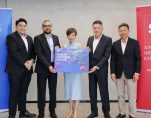
From Left to Right: Yong Jiahao, Partner, Infrastructure, Government & Healthcare (IGH) & Industrial Manufacturing, Tax, KPMG; Ajay Kumar Sanganeria, Partner and Head of Tax, KPMG; Lee Sze Yeng, Managing Partner, KPMG; Max Loh Khum Whai, Vice-Chair, Singapore Institute of Directors; Edwin Lee, Deputy CEO, Singapore Institute of Directors
By fostering resilient economic linkages, embedding digital trust, and cultivating world-class talent and leadership with cross-domain expertise, Singapore can ensure its businesses and economy remain secure, innovative, and competitive in an uncertain global landscape.
This Proposal outlines strategies to position Singapore as a critical hub for global flows, covering three crucial areas:
A new global order: Resilience as a pivotal growth strategy
The Intelligent Age: Smart solutions for an innovative era
The recommendations in the proposal are also supported by data-driven insights from a survey recently conducted by KPMG and SID. More than 1,000 professionals, managers, executives and technicians (PMETs) and business owners were surveyed on the challenges they face and the kinds of Budget 2026 support they hoped to see. [For more information, please refer to the deck with the full survey results: https://kpmg.com/sg/en/campaigns/kpmg-singapore-budget.html ]
Empowering businesses to leverage Singapore’s trusted role as a global connector
Global commerce is rapidly transforming amid rising protectionism, shifting trade rules, evolving tax regimes, and geopolitical tensions. Singapore’s long-term prosperity in the new global order depends on its ability to lead as a trusted connector and aggregator of the flows of goods, capital, data, and talent.
Singapore must strengthen its economic linkages, build secure and interoperable digital platforms, cultivate a workforce equipped with cross-domain expertise, and equip boards with essential skills to navigate emerging risks and opportunities. Trusted and resilient economic linkages will ensure the seamless movement of goods, services, and investments, while interoperable digital platforms will play a critical facilitation role in enabling cross-verification of information, streamlining compliance, and fostering trust across borders. These efforts are especially important in helping businesses cope with shifting regulations. KPMG and SID’s survey found that 51 percent of respondents identified increased business costs as the main challenge to cross-border expansion, followed by higher tariffs (26 percent) and supply chain difficulties (25 percent). To address these challenges, 43 percent of respondents want stronger economic and trade partnerships to overcome trade barriers.
KPMG and SID recommend:
a) Developing a unified digital platform for Free Trade Agreement (FTA) management (page 7) to help businesses navigate complex procedures and unlock the full benefits of FTAs. This would be seamlessly integrated with government systems, making it more seamless and cost-effective for businesses to comply with FTA requirements. This would enable firms to leverage Singapore’s extensive FTA network to gain footholds in new markets, further enhancing Singapore’s regional and global competitiveness.
b) Increasing access to working capital to accelerate local enterprises’ strategic transformation and implementing industry-specific governance frameworks (page 7). With geopolitical shifts driving a more complex regulatory landscape, increased and dedicated funding would enable businesses to transform for the future while responding effectively to evolving governance standards. Such funding should be complemented by industry-specific governance playbooks to equip boards with essential tools to strengthen agility and resilience.
c) Enhancing Singapore’s government-backed trade platform with blockchain and AI (page 6). The global economy has seen an increase in supply chain disruptions amid geopolitical and trade uncertainties. An enhanced Government-backed trade platform would enable Singapore to further facilitate the flow of trusted payments, making it even easier for businesses to validate transactions and act on smart recommendations to elevate supply chain efficiency. Amid a more fragmented world, the enhanced platform would also reinforce Singapore’s position as a reliable hub for global commerce, by promoting increased supply chain transparency for critical industries like semiconductors, pharmaceuticals, and advanced manufacturing.
d) Introducing progressive carbon taxes to reward decarbonisation and establish performance-based pathways for large emitters (page 9). Singapore’s carbon taxes must evolve to consider unique business needs and companies’ decarbonisation plans. Progressive carbon tax rates post-2030 – based on facility emissions volume, emissions per unit of output, and sectoral abatement potential – could be accompanied by permanent conditional tax rebates for energy-intensive, trade-exposed sectors. These rebates could be based on set criteria such as verified year-on-year reductions in carbon intensity and investments in low-carbon technology. To strengthen these efforts, Singapore could also establish an ASEAN Environmental Data Exchange to facilitate the sharing of standardised and interoperable environmental data between Singapore and its regional trade partners (page 8). The exchange would improve the flows of green trade and green capital, enabling Singapore to be a regional hub for environmental data harmonisation. Organisations like the Singapore Institute of Directors could play a catalytic role by building board-level capability, aligning disclosure expectations and promoting best practices through director education, guidance frameworks and peer learning on a regional scale, helping boards to lead initiatives like progressive carbon taxation.
Fostering an ecosystem of Trusted AI in the Agentic Era
The rise of artificial intelligence (AI) is reshaping global competitiveness, with agentic AI—capable of autonomous decision-making—introducing both transformative opportunities and significant challenges. While agentic AI can drive innovation, optimise operations, and unlock new efficiencies, it also raises critical concerns around accountability, ethical deployment, and governance.
A critical enabler of AI’s potential is data sharing, yet this often proves difficult due to competition, concerns over intellectual property, and a lack of trust between organisations. Businesses—particularly smaller enterprises—also face cost constraints in accessing high-quality data, and many also lack the strategic clarity and workforce competencies to identify where AI can augment their operations.
KPMG and SID’s poll found that 54 percent of respondents cited talent and skills gaps as the top challenge for adopting AI, followed by high costs of technology adoption (52 percent) and a lack of clear AI adoption strategies (48 percent). By addressing these concerns, Singapore will be able to fully leverage the vast potential of AI and data to reinforce its status as a hub across various sectors.
KPMG and SID recommend:
a) Co-funding sector-specific shared data pools in partnership with trade associations and industry stakeholders (page 15). These shared, anonymised data pools would enable businesses to access high-quality datasets without incurring prohibitive costs. Tailored to specific sectors such as logistics and retail, these pools would facilitate benchmarking, model training, and experimentation under a trusted framework that safeguards data privacy and protects intellectual property. Shared data initiatives should be paired with guided AI adoption support to help businesses understand how AI can enhance specific parts of their value chain. For example, targeted support could help logistics firms optimise supply chains or assist retailers in leveraging AI to personalise customer experiences. This dual approach would enable broader AI adoption and accelerate innovation across industries.
b) Enhancing the public-private partnership (PPP) framework to accelerate AI adoption (page 15). As firms navigate high costs and limited guidance around AI adoption, there is an opportunity for the Government to provide greater access to infrastructure to lower barriers for AI experimentation and deployment. The enhanced framework would create positive spillover effects from existing AI initiatives, as government agencies, academia and industry stakeholders collaborate to strategically integrate AI solutions into business strategies. The framework could also promote cross-sector collaboration in key industries, fostering a culture of open innovation in AI. To bolster digital trust, Singapore could also establish a regional “Trusted AI” mark to drive harmonisation and innovation (page 12). Although Singapore’s Model AI Governance Framework provides a strong foundation for responsible AI deployment, there is still a largely untapped opportunity for Singapore to champion an assurance label that shows firms have AI controls aligned with recognised AI governance standards. By pushing regionalrecognition of this mark, Singapore could accelerate cross-border innovation and trade. The mark would build on initiatives like AI Verify and Project Moonshot, which have helped to promote Trusted AI in Singapore.
c) Supporting hands-on AI governance training for board members and executives (page 13) through a dedicated fund. This would complement existing SkillsFuture programmes which focus primarily on AI awareness, by expanding the emphasis to address strategic and operational gaps at the leadership level – covering ethical deployment, change management and cross-domain applications.
Building globally relevant leaders with cross-domain skills
To fulfil its role as a hub for global flows, Singapore must enable its businesses to navigate a complex web of governance requirements, trade rules, tax policies, and tariffs. While compliance with governance standards will bring higher upfront costs, it also provides a foundation for businesses to lead in innovation and competitiveness. For instance, businesses that embrace sustainability compliance can innovate in areas like green finance, carbon accounting, and environmental data exchange.
Yet, none of this is possible without specialised talent and leadership. Singapore needs professionals and board leaders with expertise in areas such as supply chain management, AI governance, and sustainability strategy. These individuals must be able to connect the dots across domains, such as linking data governance with trade compliance or integrating sustainability goals into business operations. The need for enhanced talent development also emerged from KPMG and SID’s survey findings. Forty-nine percent of respondents want more skills development and upskilling courses. Meanwhile, 42 percent hope for more support for workforce transformation and job redesign, such as higher grants. In addition, 37 percent of respondents want more leadership and management development initiatives, especially in the areas of mentorship and coaching for emerging leaders and advanced leadership programmes.
KPMG and SID recommend:
a) Creating a dedicated work-pass category for “master trainers” and mentors (page 18). The work-pass would encourage international professionals to join local companies, public agencies and training institutions to lead structured upskilling or leadership development programmes. This would accelerate skills transfer, expose workers to global best practices, and build a robust pipeline of talent capable of driving strategic transformation and competitiveness in a rapidly evolving global landscape. Structured leadership development programmes could also include peer-sharing platforms (page 21) aimed at promoting transformation training among C-suite leaders. Backed by the public sector and industry stakeholders, such platforms could foster the exchange of best practices, promote collective learning on key sustainability capabilities and empower leaders to proactively redesign roles and workflows ahead of market shifts.
b) Setting up job transformation roadmaps with co-funded training and certification initiatives (page 19) tied closely to sector-specific needs. As rapid technological developments shape industry demand for skills, job transformation roadmaps would be beneficial in outlining sector-specific disruptions, challenges and opportunities. These roadmaps could be accompanied by industry-recognised certification, and programmes backed by both the public and private sectors. Tailored to sectoral needs, certifications could help to assess whether workers have acquired the necessary skills to perform in transformed roles, especially in fast-evolving sectors where traditional qualifications may no longer suffice.
c) Establishing a $100 million fund to advance social impact reporting (page 9). As Singapore pursues long-term resilience, it must also ensure that economic growth is sustainable and inclusive. The fund could be used to train professionals and board directors in the reporting of social metrics, support academic modules in social sustainability and certify social auditors and advisers. It could also be complemented by broader efforts to enhance environmental, social and governance (ESG) competencies among businesses’ top leadership. Singapore could establish a national registry of certified sustainability committee members (page 20) who can be matched to boards and committees across sectors. This would help to expand access to qualified board resources, especially for local enterprises.
Lee Sze Yeng, Managing Partner, KPMG in Singapore, said:
“Leadership today isn’t just about mastering AI or acquiring specialised skills—it’s about navigating the intersections of cross-border trade, technology, and sustainability. To remain competitive, leaders must move beyond the basics, using AI and data to drive real business outcomes while building governance frameworks that inspire trust. At the same time, they need the courage to take calculated risks and collaborate across ecosystems to unlock new opportunities. Initiatives like co-funding sector-specific shared data pools and guided AI adoption support are critical to overcoming barriers and equipping leaders with the tools to thrive. As disruptions grow increasingly cross-border and cross-domain, Singapore’s ability to cultivate leaders who can turn complexity into opportunity will define its success as a global flows hub.”
Ajay Kumar Sanganeria, Partner, Head of Tax, KPMG in Singapore, said:
“Singapore’s position as a global hub—connecting trade, data, and capital—offers businesses significant opportunities to grow and compete globally. Grants and platforms are vital enablers, but they must be part of a broader solution that simplifies complexities and empowers businesses to focus on innovation. Future-ready approaches, such as managing governance and compliance in a more consolidated or ‘as-a-service’ mode, can reduce burdens on enterprises. A unified digital platform for Free Trade Agreement (FTA) management, enhanced with blockchain and AI, could streamline compliance and unlock the full benefits of Singapore’s FTA network. Co-funded training programmes and shared governance frameworks can further help businesses pool resources and build capabilities. By combining grants, platforms, and smarter ways of working, Singapore strengthens its role as a trusted global connector and equips businesses to lead with confidence in an evolving world.”
Yeoh Oon Jin, Chair, Singapore Institute of Directors, said:
“Singapore’s future as a global hub for connectivity and commerce will be shaped by how boards of directors evolve to lead with resilience and trust. Budget 2026 is an opportunity to strengthen governance frameworks that embed sustainability, cyber trust and accountability into every organisation’s agenda. By empowering directors to champion innovation, sustainability and digital assurance, organisations can grow with confidence while reinforcing Singapore’s position as a secure and trusted connector for goods, capital, data and talent in an increasingly complex global landscape.” Hashtag: #KPMG #SID
The issuer is solely responsible for the content of this announcement.
About KPMG in Singapore
KPMG in Singapore is part of a global organization of independent professional services firms providing Audit, Tax and Advisory services. We operate in 142 countries and territories with more than 275,000 partners and employees working in member firms around the world. Each KPMG firm is a legally distinct and separate entity and describes itself as such. KPMG International Limited is a private English company limited by guarantee. KPMG International Limited and its related entities do not provide services to clients.
About SID
The Singapore Institute of Directors (SID) is Singapore’s national association for company directors. Established in 1998, our mission is to transform boards and empower board directors to be champions of good governance. SID works with regulators and partners to serve as the voice for directors and facilitates consultations and feedback sessions on regulatory matters. In advocating for good governance, SID advances thought leadership and benchmarking research and indices on corporate governance and directorship issues.
SID builds competencies and capabilities to enhance boardroom skills of directors for informed decision-making. An accreditation programme serves to set standards for and showcase best practices of good governance. The organisation supports members on their directorship journey with courses, workshops, advanced masterclasses, forum discussions and pit-stops. SID connects and strengthens the ecosystem with initiatives such as mentoring and networking. The Governance for Good Alliance is an initiative by SID to bring together key stakeholders who help advance our vision for every board director to be a champion of good governance.
Arabian Post Staff -Dubai Motorola used the Lenovo Tech World Showcase alongside CES 2026 to outline a sharpened strategy for premium smartphones, unveiling a new Razr foldable and a broader flagship portfolio designed to embed artificial intelligence deeper into everyday mobile use. The announcements signal a renewed attempt by the Lenovo-owned brand to regain momentum in the high-end segment, where competition from Samsung, Apple and fast-rising Chinese […]
LAS VEGAS, US – Media OutReach Newswire – 7 January 2026 – The 2026 International Consumer Electronics Show (CES 2026) opened on January 6 in Las Vegas, bringing together leading global technology companies. As the barometer of industry trends, CES highlights rapid advances in consumer electronics. This year, Changhong presented a new portfolio of AI-driven home appliances under the concept of “AI Technology + Human-Centric Design”, blending advanced intelligence with a distinctive design identity.
Changhong is accelerating the integration of AI across its home‑appliance lineup. Its panda-themed AI series merges this widely welcomed Chinese cultural symbol with AI capabilities, utilising anthropomorphic interaction, environmental sensing, and adaptive control to recreate a naturally intuitive and comforting user experience. The AI TV features the intelligent “Panda Xiaobai,” offering round-the-clock interaction. Complementing it, the AI refrigerator introduces cloud-based humidity control to maintain ingredients in an optimized freshness chamber, while the AI air conditioner delivers a gentle adaptive cooling experience reminiscent of a natural breeze. Completing the ecosystem, the AI washing machine employs triple-power cleaning for efficient fabric care. Blending everyday technology with humanistic warmth, Changhong aims to create smart home experiences that feel more intuitive and emotionally engaging.
Moreover, Changhong also unveiled several breakthroughs: The 100-inch RGB MiniLED TV, boasts an ultra-slim profile, an anti-glare display, and immersive audiovisual performance, complemented by industry-leading large-scale AI models like DeepSeek for enhanced voice interaction. The AI Air Manager 360° air conditioner extends beyond temperature control to incorporate air‑quality management, learning user habits to optimize comfort and energy efficiency. The full‑space preservation refrigerator applies AI freshness algorithms and dual‑system temperature control to eliminate odor mixing and temperature fluctuations. The AI washer‑dryer set intelligently identifies fabric types and automatically adjusts washing programs.
Changhong presents a holistic smart home ecosystem designed around user experience, further enhancing its visibility and presence in the international smart home landscape. Driven by its global “Technology + Sports” branding strategy, the brand has established an overseas network encompassing R&D, manufacturing, products, and services. Through intelligent sensing, natural interaction, and multi-scenario coordination, its AI appliances deliver a more efficient, convenient, and comfortable home experience, reflecting the Company’s forward-looking vision for smart living.
Through its fusion of AI innovation and vivid design, Changhong is shaping a distinct global brand presence, delivering smart home solutions that resonate both emotionally and technologically with users worldwide.
Hashtag: #Changhong
The issuer is solely responsible for the content of this announcement.
Pitchengine has re-emerged with a rebuilt platform and an expanded ambition, signalling a renewed push into the crowded public relations technology market with tools aimed at creators, brands and communications teams seeking more control over distribution and measurement. The company says its comeback centres on a modernised newsroom, stronger analytics and tighter integrations designed to meet how PR now intersects with social platforms, search and owned media. […]
Two-year collaboration to support Hong Kong’s talent pipeline by strengthening STEM readiness and industry exposure among teen girls and young women aged 12-19
HONG KONG SAR – Media OutReach Newswire – 6 January 2026 – The FutureGen Girls Foundation (“the Foundation“) and Microsoft Hong Kong have signed a Memorandum of Understanding (MOU) to launch a two-year strategic collaboration aimed at expanding access to artificial intelligence (AI) and STEM education for teen girls and young women aged 12-19 across Hong Kong. The collaboration will focus on developing future-ready skills, mentoring networks, and pathways that help teen girls and young women imagine and pursue diverse career opportunities in a rapidly evolving world of work and further expand outreach to all.
Starting in year 2026, Microsoft Hong Kong will support the Foundation to support the development of new learning experiences that integrate AI education, hands-on digital skills training, and real-world career exposure opportunities. Through workshops, mentorship, recognized learning programs, and outreach initiatives, the collaboration seeks to broaden participation in emerging fields and level the playing field from teen girls and young women to all students.
This initiative aligns with the Foundation’s mission to empower teen girls and young women, helping them bridge youth to careers with confidence, purpose, and access to diverse industry pathways. Key highlights of the collaboration include:
AI Skills Education: Integrating age-appropriate Microsoft AI learning tools and certification courses into FGG programs.
Mentorship & Role Modelling: Connecting students with Microsoft professionals and student ambassadors.
Community Engagement: Joint workshops, outreach activities, and participation in Foundation Youth Career Fairs.
Real-World AI Application: Showing how AI is applied across industries and helping students understand real-world applications and inspire problem-solving skills.
Inclusive Access: Ensuring opportunities reach students across diverse schools and districts.
“For many secondary school students, future development pathway can feel distant or unclear simply because they may not yet have the access or exposure to see what is possible,” said Jennifer Yu Cheng, Founder of the Foundation. “Our aim is to make that exploration easier – to open doors across more than 20 industries.”
“By expanding access to future ready learning and real world career experiences, we are helping to build a strong and diverse talent pipeline ready to step into the opportunities of tomorrow. This is the foundation of our collaboration with Microsoft Hong Kong.”
“Through this collaboration, we hope to empower students to unlock the courage to try, to explore different fields, and to image big futures for themselves,” said Secy Cheung, Foundation Founding Board Director. “The most meaningful change happens when young people realize that their voice and vision matter.”
Leo Liu, General Manager of Microsoft Hong Kong shared, “At Microsoft, we are deeply committed to empowering the next generation by democratizing access to AI and future-ready skills. Through trusted, secure platforms and hands-on learning experiences, we strive to make advanced technology accessible to all, fostering creativity, critical thinking, and lifelong learning. Together with the FutureGen Girls Foundation, we look forward to supporting Hong Kong’s youth to become frontier talent in the digital era.”
The foundation and Microsoft Hong Kong are committed to exploring further opportunities in future.
Hashtag: #FutureGenGirlsFoundation
The issuer is solely responsible for the content of this announcement.
About the FutureGen Girls Foundation
The FutureGen Girls Foundation (“the Foundation”) is a registered charitable organization dedicated to empowering teen girls and young women, bridging youth to careers. By collaborating with schools, industry partners, and community organizations, the Foundation creates pathways that support skill-building, career exploration, and youth leadership development across Hong Kong.
About Microsoft
Microsoft (Nasdaq “MSFT” @microsoft) creates platforms and tools powered by AI to deliver innovative solutions that meet the evolving needs of our customers. The technology company is committed to making AI available broadly and doing so responsibly, with a mission to empower every person and every organization on the planet to achieve more.
Meta’s plan to expand artificial intelligence across private messaging on Facebook, Instagram and WhatsApp has triggered a wave of privacy concerns, as users, civil society groups and regulators question how conversational data will be used and protected under the company’s 2026 policy framework. The update, disclosed as part of Meta’s broader AI roadmap, allows automated systems to analyse interactions in private chats to refine content recommendations and […]
United Arab Emirates will assume the presidency of the Middle East and North Africa Financial Action Task Force in 2026, placing the country at the centre of regional efforts to strengthen safeguards against money laundering, terrorist financing and the proliferation of illicit funds. The appointment comes at a time when the bloc is seeking tighter coordination among member states as cross-border financial flows grow in scale and complexity.
MENAFATF brings together 21 jurisdictions across the Middle East, North Africa and neighbouring regions, representing a combined gross domestic product estimated at more than $3 trillion. The organisation functions as the regional body aligned with the global Financial Action Task Force standards, conducting peer reviews, issuing guidance and supporting members as they implement international rules designed to protect financial systems from abuse.
The decision for the UAE to lead the organisation follows its expanding role in financial regulation and enforcement across the region. Federal authorities have invested heavily in strengthening supervision of banks, exchange houses, designated non-financial businesses and professions, while also expanding cooperation with international counterparts. Officials involved in the process describe the presidency as recognition of the country’s progress in aligning domestic frameworks with global benchmarks and its capacity to convene consensus among diverse economies.
During its term, the UAE is expected to steer MENAFATF’s strategic agenda, including the scheduling of mutual evaluations, thematic studies and capacity-building programmes. These initiatives are central to helping member states address gaps identified in national risk assessments and respond to emerging typologies such as the misuse of virtual assets, trade-based money laundering and complex ownership structures.
Regulatory specialists say the presidency carries influence beyond administrative oversight. The chair country plays a pivotal role in shaping discussions on policy priorities, coordinating technical assistance and representing the region in dialogue with global standard-setters. This places added scrutiny on how effectively the bloc can balance the varied economic structures and legal systems of its members while maintaining consistent application of standards.
The UAE has signalled that cooperation and practical implementation will be key themes of its tenure. Policymakers have spoken about deepening information-sharing among financial intelligence units, enhancing public-private partnerships and supporting jurisdictions that face capacity constraints. Such measures are viewed as essential for raising overall compliance levels and reducing vulnerabilities that can be exploited across borders.
MENAFATF members span hydrocarbon-rich Gulf economies, large consumer markets in North Africa and smaller states with developing financial sectors. This diversity has historically posed challenges in achieving uniform progress. Analysts note that leadership will need to balance ambition with pragmatism, ensuring that reforms are realistic and tailored to local contexts while still meeting international expectations.
The presidency also coincides with broader shifts in the region’s financial landscape. Digital payments, fintech platforms and virtual assets have expanded rapidly, creating new opportunities for inclusion but also new risks. Addressing these developments requires updating supervisory tools, training regulators and fostering dialogue with technology providers. Observers expect the UAE to push for clearer regional guidance in these areas, building on its own experience in regulating emerging financial services.
Another area likely to feature prominently is the effectiveness of enforcement. While many jurisdictions have strengthened legal frameworks, translating laws into successful investigations and prosecutions remains uneven. MENAFATF’s peer review process increasingly emphasises outcomes, not just technical compliance. Under UAE leadership, the organisation is expected to encourage members to demonstrate tangible results in asset recovery, sanctions and international cooperation.
Diplomats familiar with the process say the appointment also reflects confidence in the UAE’s ability to engage constructively with both regional partners and global institutions. The country has positioned itself as a bridge between markets, hosting multinational financial institutions and acting as a hub for trade and investment. That role brings responsibilities, particularly in ensuring that financial openness is matched by robust controls.
HONG KONG SAR – Media OutReach Newswire – 6 January 2026 –FastLane Group is honoured to receive the Total Xero Award 2025, marking its third recognition from Xero following their Asia Advisory Partner of the Year 2024.
This award is less about the trophy itself and more about what it represents — years of steady progress, consistent teamwork, and a shared commitment to improving the way we support businesses. It reflects the long-term effort of our team and partners who continue to learn, adapt, and refine how we use the Xero ecosystem to bring real value to clients.
“We are truly grateful for this recognition,” says Alex So, Founder of FastLane Group. “Each award reminds us that we’re on the right path, but it also keeps us grounded. Our progress comes from continuous effort, small improvements made every day, and the trust our clients place in us. Technology should empower people — not replace them — and we will keep working quietly and consistently to help businesses grow with clarity and confidence.”
From Cloud to Intelligence FastLane’s journey with Xero began with cloud accounting — transforming how businesses manage compliance and financial data. Today, the partnership has evolved into something more ambitious: using AI to make accounting faster, smarter, and more human.
Xero’s latest AI companion, JAX (Just Ask Xero), automates tasks such as reconciliation, invoicing, and financial insights through simple conversational commands. For Alex, JAX represents the next leap in professional practice.
“Cloud technology gave us speed,” he explains. “AI gives us insight. When our accountants can ask a system a question and get an intelligent answer instantly, they can spend their time advising clients, not crunching numbers.”
Trust, Transparency, and the Human Touch As AI becomes more embedded in accounting, FastLane emphasizes responsibility and human oversight. The firm aligns with Xero’s commitment to transparent and ethical AI — ensuring that every automated decision still begins and ends with human judgment.
“AI doesn’t take away our role; it amplifies it,” Alex says. “Technology can process data, but it can’t replace human intuition, empathy, or trust. That’s what clients truly value — and that’s what we protect.”
A Vision for the Future FastLane’s influence now extends across Hong Kong, Taiwan, and Malaysia, where it helps entrepreneurs and growing companies build smarter, more scalable financial systems. Beyond compliance, the firm focuses on advisory, automation, and strategy — redefining how accountants support business growth in an AI-driven world.
“The future accountant isn’t just a number-keeper,” Alex concludes. “They’re a strategic partner, powered by technology and guided by purpose. AI gives us back the time to think, lead, and create real impact.”
Hashtag: #FastLaneGroup
The issuer is solely responsible for the content of this announcement.
About FastLane Group
FastLane Group provides full-stack accounting services to startups, SMEs, and large corporations in Hong Kong, Malaysia, and Taiwan. As a Xero Platinum partner, the Company leverages Xero’s cloud-based accounting software to provide efficient services that comply with local accounting standards. The services cover customised professional accounting services, accountancy, bookkeeping, taxation, offshore formation, company secretary, etc. It was honoured as the Total Xero Award 2025 – Winner, Xero Asia Advisory Partner of the Year 2024 – Winner, and Xero Accounting Partner of the Year Hong Kong 2019 – Winner.
Abu Dhabi has unveiled a new Arabic-first artificial intelligence model that researchers say redefines how large language systems can understand, generate and reason in the Arabic language at scale. Technology Innovation Institute, the applied research arm of the Advanced Technology Research Council, announced Falcon-H1 Arabic as the latest addition to its Falcon family of large language models, positioning it as the most capable open Arabic AI model […]
Las Vegas will set the tone for the semiconductor year as leading chip designers prepare to unveil new processors at CES 2026, highlighting advanced manufacturing nodes and intensifying competition across PCs, data centres and artificial intelligence. Market expectations centre on launches from Advanced Micro Devices, NVIDIA and others that rely heavily on Taiwan Semiconductor Manufacturing Company to deliver 3-nanometre and refined 5-nanometre silicon, while Intel plans an […]
MiniMax is preparing to price its Hong Kong initial public offering at the top of the marketed range, signalling strong demand for artificial intelligence developers as investors seek exposure to homegrown technology firms with global ambitions, according to people familiar with the transaction.
The Shanghai-based company, best known for its large language models and consumer-facing AI applications, has accelerated its listing timetable amid a surge in interest for Chinese technology firms that are perceived to be less exposed to US trade and regulatory pressures. Bankers involved in the deal say early indications from institutional investors point to robust demand, particularly from Asia-based funds focused on long-term technology themes.
MiniMax, founded in 2021 by former SenseTime and Megvii researchers, has positioned itself as one of the country’s leading independent AI model developers. Its core products include general-purpose foundation models, AI companions and enterprise solutions used across gaming, education and content creation. The firm competes with larger players backed by internet conglomerates while marketing itself as more agile and research-driven.
People familiar with the IPO said the company is targeting a valuation that reflects the premium currently attached to AI-related listings in Hong Kong. While final pricing has not yet been approved, the expectation is that the offer will be set at the upper end of the range to capitalise on strong order books built during early marketing. The shares are expected to begin trading later this year, subject to market conditions and regulatory clearances.
The decision to push for top-range pricing comes as Hong Kong’s equity market shows signs of renewed momentum after a prolonged slowdown. Technology and healthcare deals have drawn increasing attention, supported by policy measures aimed at reviving capital markets and encouraging listings by innovative firms. Fund managers say AI remains one of the few sectors where investors are willing to pay up for growth, despite broader concerns over economic headwinds.
MiniMax’s IPO is also being closely watched as a test case for how investors value Chinese AI companies that operate largely outside the orbit of the country’s major internet platforms. Unlike peers that rely heavily on parent companies for distribution and funding, MiniMax has raised capital from a mix of venture investors and strategic backers, allowing it to retain greater operational independence. That positioning has resonated with some institutional investors seeking exposure to AI innovation without heavy platform risk.
The company has continued to expand its research capabilities, investing heavily in computing infrastructure and talent. Industry analysts note that MiniMax has been among the more visible Chinese developers releasing multilingual models and consumer applications that aim to compete with global offerings. Its emphasis on overseas markets, including Southeast Asia and parts of the Middle East, has helped broaden its revenue base and narrative ahead of the listing.
Still, the firm faces stiff competition. Domestic rivals supported by large technology groups benefit from vast user ecosystems and deep pockets, while international players continue to dominate cutting-edge model development. Pricing the IPO aggressively could raise expectations around execution and financial performance at a time when monetisation of AI remains uneven across the industry.
Market participants say Hong Kong has become a more attractive venue for such listings as regulatory scrutiny on technology firms has stabilised compared with earlier years. The city’s exchange has also updated listing rules to better accommodate companies with heavy research spending and limited near-term profitability, a profile that fits many AI developers.
Bankers involved in the transaction say MiniMax has highlighted its progress in commercialising products, including enterprise contracts and consumer subscriptions, to address investor concerns around sustainability. While the company is not yet profitable, it has signalled a clearer path to revenue growth than at earlier funding rounds, helped by rising demand for customised AI solutions among businesses.
Saal. ai and Nutanix have unveiled SovereignGPT at a launch event in Abu Dhabi, positioning the platform as a government-grade artificial intelligence system designed to meet stringent data sovereignty and security demands while retaining the performance expected of mission-critical deployments. The announcement places Abu Dhabi at the centre of a growing push by governments and regulated industries to localise advanced AI capabilities without ceding control over sensitive […]
HONG KONG SAR – Media OutReach Newswire – 5 January 2026 – Hong Kong is set to host the 94th INTERPOL General Assembly later this year, bringing global police chiefs from around the world to the city and highlighting Hong Kong’s strategic importance in global policing. It will be the first time for the General Assembly to be hosted in the Hong Kong Special Administrative Region (HKSAR) and the third time in China.
“We take pride in recalling that China hosted the INTERPOL General Assembly in Beijing in 1995 and 2017, and this time, Hong Kong, China will be the host city for the 94th General Assembly in 2026,” said Vice Minister of Public Security of the People’s Republic of China, Mr Xu Datong.
The Vice Minister of Public Security of the People’s Republic of China, Mr Xu Datong (second left, front row), accompanied by the Hong Kong SAR’s Commissioner of Police, Mr Chow Yat-ming (first left, front row), receives the INTERPOL flag at the closing ceremony during the 93rd INTERPOL General Assembly in Morocco last November, symbolising that the next General Assembly will be held in Hong Kong
The General Assembly is the governing body of the International Criminal Police Organization (INTERPOL), at which police chiefs and ministers of its 196 member states gather to discuss global security issues and foster collaboration.
The HKSAR’s Commissioner of Police Mr Chow Yat-ming, said the selection of Hong Kong as the host city highlights China’s trust in both the HKSAR and the Hong Kong Police Force (HKPF), and underscores Hong Kong’s strategic importance as an international “super connector” in global policing.
“Having served at INTERPOL and visited Rome, Italy; New Delhi, India; Vienna, Austria; and Glasgow, United Kingdom for various General Assemblies, I never imagined Hong Kong would have the opportunity to host this prestigious event,” Mr Chow said. “When our country proposed Hong Kong as the host, I felt deeply honoured.”
The HKSAR Government and HKPF aim to use this occasion to showcase positive stories about China, Hong Kong, and the HKPF, illustrating the success of the “One Country, Two Systems” formula for the HKSAR, Mr Chow added.
Mr Chow leads the Hong Kong delegation as part of the national delegation to attend the 93rd INTERPOL General Assembly in Morocco
Hong Kong has a long association with INTERPOL. The HKPF is a sub-bureau under China, and plays an active and prominent role within INTERPOL, contributing expertise on major crime trends, cybercrime, and financial crime.
The HKPF regularly sends officers to INTERPOL headquarters in the French city of Lyon and the Global Complex for Innovation in Singapore for secondments. Currently, three officers are serving in key roles, one in financial crime coordination in Lyon, and two in technology crime management roles in Singapore.
The HKPF is restructuring its strategy to expand ties with overseas law enforcement agencies, especially in ASEAN (Association of Southeast Asian Nations) and those under the Belt and Road Initiative, to better address emerging transnational crime.
Emphasis is placed on intercepting cross-border fraudulent funds, with the global FRONTIER+ platform (established in October 2024) now connecting 13 jurisdictions, facilitating real-time intelligence sharing and fund interception.
In this connection, on November 12, 2025, the HKPF held its inaugural Ethics Governance Roundtable in Hong Kong, with participation from INTERPOL, the Independent Commission Against Corruption (ICAC) and representatives from various countries.
INTERPOL’s delegation was led by the Director of the Office of Internal Oversight, Mr Eugênio Ricas. The Roundtable featured in-depth discussions on ethics governance including personal financial risk management strategies, achieving fruitful outcomes.
The HKPF will continue to leverage Hong Kong’s role as a “super connector” through various international policing platforms, including INTERPOL, to further strengthen collaboration with law enforcement agencies across different countries and regions, working together to safeguard global and regional security.
Mr Chow said that hosting the General Assembly is a top priority for the HKSAR Government and that preparations were already well underway.
“The HKPF is maintaining close communication with INTERPOL and China’s National Central Bureau to ensure smooth hosting of the 2026 General Assembly,” Mr Chow said, adding that he hopes that delegates attending the event will appreciate Hong Kong’s vitality, friendly spirit, and rich culinary culture during their stay.
“We are determined to ensure every delegation has an unforgettable experience from the moment they arrive at Hong Kong International Airport,” he said.
Europe’s ambitions in semiconductors, embedded software and advanced electronic systems have been sharpened with the release of the Electronic Components and Systems Strategic Research and Innovation Agenda 2026, a document that sets priorities for research, industrial deployment and public investment across the continent’s technology base. The updated agenda outlines how Europe plans to strengthen technological sovereignty in electronic components and systems at a time of intense global […]
Finnish authorities have detained two crew members from a foreign-flagged cargo vessel as part of an expanding criminal investigation into damage to an undersea telecommunications cable linking Helsinki and Tallinn, sharpening security concerns across the Baltic Sea region at a time of heightened geopolitical tension. The sailors were taken into custody following the seizure of the vessel Fitburg, which Finnish officials believe may be connected to the […]
Nvidia is stepping up output of its H200 artificial intelligence processors as demand from technology firms operating in China intensifies, reflecting a wider global race to secure advanced computing power for large-scale AI models. People familiar with the company’s manufacturing plans say production schedules have been tightened and supply allocations adjusted to prioritise customers seeking alternatives to restricted top-tier chips. The H200, built on Nvidia’s Hopper architecture […]
OpenAI chief executive Sam Altman has publicly acknowledged the expanding impact of artificial intelligence on mental health and cybersecurity, signalling a shift in how one of the world’s most influential AI developers frames the social risks of its technology. The remarks came alongside an announcement that OpenAI is seeking a Head of Preparedness, a role designed to anticipate and mitigate potential harms as AI systems grow more […]
Pressure on the global games industry is intensifying as regulators, courts and lawmakers move to tighten oversight on artificial intelligence, child protection, monetisation models and platform accountability, setting up 2026 as a pivotal year for legal risk and compliance. Publishers and studios are entering the year facing overlapping scrutiny from consumer watchdogs, data protection authorities and competition regulators, with legal experts warning that fragmented rules across jurisdictions […]
Footage of a Tesla humanoid robot losing balance and falling during a controlled demonstration has reignited debate over the pace and credibility of Elon Musk’s ambitions in robotics, exposing the gap between promised timelines and the realities of building general-purpose machines that can operate safely among people. The incident occurred during a late-2025 demonstration of Optimus, Tesla’s bipedal robot unveiled as a future cornerstone of the company’s […]
Cars sold across major markets are harvesting vast amounts of personal data from drivers and passengers without clear consent, fuelling a widening debate over privacy, ownership and the limits of digital surveillance in everyday transport. As vehicles become rolling computers, regulators and consumer advocates warn that protections have failed to keep pace with the speed and scale of data collection embedded in modern mobility. Vehicles equipped with […]
Brookfield Asset Management is preparing to launch a cloud computing business called Radiant that will lease artificial intelligence chips directly to developers, underpinned by a newly formed $10 billion AI fund as part of its broader strategy to build an integrated AI infrastructure platform. Radiant’s model aims to control key inputs in the AI value chain from land and power to compute, offering an alternative to conventional cloud […]









 https://fastlane-global.com/hk/




 https://www.linkedin.com/company/brand-hong-kong/
 https://x.com/Brand_HK/
 https://www.facebook.com/brandhk.isd
 https://www.instagram.com/brandhongkong




