Wall Street posted a powerful advance during the latest trading session, adding an estimated $700 billion to the combined value of listed companies as investors pushed major indices higher on a mix of easing inflation signals, resilient corporate earnings and renewed appetite for growth shares. The move underscored the scale at which US equity markets can reprice within hours when sentiment aligns across sectors. The benchmark S&P […]
Google has expanded its Workspace analytics by integrating detailed Google Meet usage metrics directly into the Gemini reports dashboard, giving organisations a consolidated, AI-driven view of how meetings shape productivity and collaboration. The rollout, confirmed for early 2026, allows administrators and managers to examine meeting duration, participation patterns, frequency, and engagement signals alongside broader Workspace data, marking a notable step in Google’s effort to embed artificial intelligence […]
In an era where luxury travel is no longer just about lavish surroundings, renowned service, or even selecting the perfect paintings for home decor to bring that elegance indoors, the integration of cutting-edge tech is reshaping how affluent globetrotting geeks experience this world. From artificial intelligence (AI) shaping bespoke services to augmented reality (AR), creating stunning previews, innovation is driving unprecedented levels of personalization, convenience, and engagement […]
A research team from the University of Tokyo has outlined a new approach to training large language models that aims to curb sensitive data leakage while preserving performance, addressing one of the most pressing challenges facing artificial intelligence developers as regulation tightens worldwide. The study, titled Crypto-LLM, proposes encrypting large volumes of training text before it is fed into a model, preventing the system from memorising personal […]
Arabian Post Staff -Dubai Abu Dhabi’s sovereign wealth fund Mubadala is stepping up its push into artificial intelligence and robotics, positioning the twin technologies as a central driver of industrial growth and a compass for future capital allocation, according to remarks by its chief executive at the World Economic Forum in Switzerland. The $330 billion investor, formally known as Mubadala Investment Company, has been widening its exposure […]
Revolut has moved to position itself at the centre of the next phase of digital payments after confirming that its Revolut Pay service will support Google’s Agent Payments Protocol, a framework designed to allow artificial intelligence agents to complete transactions on behalf of users. The integration is expected to extend one-tap checkout functionality across the UK and the wider European Economic Area, signalling a shift in how […]
Bandcamp has moved to bar music generated wholly or in substantial part by artificial intelligence, while Sweden’s official charts have removed a charting song after determining that it was largely AI-produced, marking a coordinated pushback by platforms and institutions against the growing presence of synthetic music in mainstream distribution. Bandcamp, a widely used platform for independent artists and labels, confirmed that it will no longer allow […]
MCP servers are emerging as a practical backbone for how advanced AI systems interact with real-world data and software, shifting the focus from monolithic models to modular, controllable services. Rather than embedding every capability inside a single model, MCP servers act as specialised microservices that expose clearly defined tools the AI can call on demand, allowing complex tasks to be broken into manageable, auditable steps. At […]
Pressure is building on academic institutions across the United Kingdom to reassess their presence on X, as concerns over platform governance, content moderation and reputational risk sharpen following a series of controversies linked to the social media network owned by Elon Musk. Data tracking institutional behaviour suggests higher education may be nearing a decisive shift, with more universities poised to disengage than remain active. Debate over academic […]
OpenAI is preparing to introduce its first dedicated device later this year, marking a shift from being solely a software-led artificial intelligence company to one that also delivers consumer hardware designed around its models and services. The plan, acknowledged by people familiar with the company’s roadmap and echoed in public remarks by senior executives, signals OpenAI’s ambition to embed its technology more directly into everyday use beyond […]
UAE President Sheikh Mohamed bin Zayed Al Nahyan arrived in New Delhi on a working visit, marking another step in the steady expansion of political, economic and strategic ties between Abu Dhabi and New Delhi. He was received at the Palam Air Base by Prime Minister of India Narendra Modi, accompanied by senior members of the Union Cabinet and officials from the external affairs establishment, underscoring the importance both sides attach to the engagement.
The visit places renewed focus on deepening UAE–India partnership at a time when bilateral cooperation spans trade, energy security, technology, defence and people-to-people exchanges. Officials said discussions during the visit would review progress under existing agreements while identifying new areas for collaboration aligned with long-term economic and geopolitical priorities.
The UAE and India have built a close relationship over the past decade, anchored by high-level political engagement and sustained institutional cooperation. The elevation of ties to a Comprehensive Strategic Partnership has provided a framework for collaboration across sectors, with regular leader-level interactions helping to maintain momentum. Sheikh Mohamed and Prime Minister Modi have met frequently on the margins of multilateral forums and through bilateral visits, creating a rapport that has translated into concrete outcomes.
Trade and investment remain central to the agenda. Bilateral non-oil trade has expanded significantly following the implementation of the Comprehensive Economic Partnership Agreement, which reduced tariffs, simplified customs procedures and opened services markets. Officials on both sides view the agreement as a catalyst for further growth, particularly in manufacturing, logistics, food security and digital services. The UAE has also emerged as a major investor, with sovereign and private capital flowing into infrastructure, renewable energy, ports and technology ventures.
Energy cooperation continues to be a pillar of the relationship. The UAE is a key supplier of crude oil and liquefied natural gas, while joint investments in strategic petroleum reserves and downstream assets have added depth to the partnership. As both countries pursue energy transition goals, collaboration has widened to include renewables, green hydrogen and climate technology, reflecting shared commitments to sustainability and diversification.
Defence and security cooperation has gained prominence amid evolving regional and global challenges. Regular joint exercises, intelligence exchanges and defence industrial cooperation have strengthened interoperability and trust. Counter-terrorism, maritime security and cyber resilience are areas where officials see scope for closer coordination, particularly given the shared interest in stable sea lanes and secure digital infrastructure.
Technology and innovation feature prominently in the discussions. The UAE’s push to position itself as a hub for advanced technologies aligns with New Delhi’s focus on digital public infrastructure, fintech and start-up ecosystems. Partnerships between research institutions, technology firms and start-ups have expanded, supported by policy initiatives and investment platforms designed to facilitate cross-border collaboration.
The large expatriate community also shapes the relationship. Millions of people from India live and work in the UAE, contributing to its economy and cultural diversity, while remittances and professional exchanges strengthen social and economic links. During past engagements, leaders have highlighted the role of this community as a bridge between the two nations, with initiatives aimed at skills development, worker welfare and cultural exchange.
On the multilateral front, both countries coordinate positions on regional stability, economic governance and climate action. Cooperation within forums such as the G20, where the UAE has participated as a guest under New Delhi’s presidency, has reinforced alignment on development priorities, debt relief for vulnerable economies and sustainable growth.
Officials familiar with the visit said meetings would assess progress on commitments made during earlier engagements and set timelines for new initiatives. Agreements and memoranda of understanding under consideration span sectors including education, healthcare, space cooperation and financial services, reflecting the breadth of the partnership.
ESET MDR delivers industry-leading real-time detection and a mean-time-to-respond (MTTR) of 6 minutes to keep businesses secure
SINGAPORE – Media OutReach Newswire – 19 January 2026 –ESET, a global leader in cybersecurity solutions, today announced the launch of two Managed Detection and Response (MDR) subscription tiers: ESET PROTECT MDR for small and medium businesses (SMBs) and ESET PROTECT MDR Ultimate for enterprises in Singapore.
Bridging the gap with MDR
ESET PROTECT MDR delivers a comprehensive cybersecurity package, offering 24/7/365 superior protection. This includes modern protection for endpoints, email, and cloud applications, vulnerability detection and patching, and managed threat monitoring, hunting, and response. For enterprises, ESET PROTECT MDR Ultimate offers continuous proactive protection and enhanced visibility, coupled with customised threat hunting and remote digital forensic incident response assistance.
ESET’s APAC SMB Cybersecurity Report 2024 revealed that 49% rate lacking a dedicated cybersecurity team and 52% rated keeping up with the latest threats as one of the top three cybersecurity challenges in Singapore. 31% also cited alert fatigue as the biggest challenge. Incidentally, APAC also faces the largest shortage of cybersecurity experts in the world. These highlight the urgent need for skilled cybersecurity professionals and managed services that can help bridge the country’s growing talent gap. ESET’s MDR services ensure organisations of all sizes and cybersecurity maturity to stay one step ahead of all known and emerging threats, effectively closing the cybersecurity talent gap, and facilitating expert consultations for incident management and containment in a fully managed experience.
ESET MDR delivers a remarkable 6-minute Mean Time to Respond (MTTR) — the fastest in the industry*. In comparison, the median time for organizations to detect a breach is 24 days**, leaving critical systems and data exposed for weeks. Every hour that a breach goes undetected dramatically increases the risk of data loss, operational disruption, and financial damage.
“Cyber threats are becoming more sophisticated and more time-critical, especially in highly connected digital economies like Singapore,” said Pamela Ong, Country Manager of Asia and Singapore at ESET. “Our AI-powered MDR services combine automation, human expertise, and global threat intelligence to help organisations move beyond reactive security. The ability to detect and respond within minutes can make the difference between a contained incident and a major breach.”
ESET’s MDR services Meet the Unique Challenges of MSPs
ESET recognises the growing pressures facing MSPs who must balance the critical task of securing clients’ complex IT environments with their own business growth and operations. With threat actors going heavy on supply-chain attacks and abusing MSP tooling, MSPs too find themselves fixed in the crosshairs of cybercriminals. Simply put, MSPs are not only potential victims, but also potential accessories to a crime. To help MSPs fulfill their security potential, ESET’s MDR is also designed to be deployed in an MSP environment with a single solitary security service, available 24/7 that help MSPs to secure themselves as well as their clients.
*Based on publicly available information as of 1 October 2025. **Verizon 2025 Data Breach Investigations Report Hashtag: #ESET
The issuer is solely responsible for the content of this announcement.
About ESET
ESET® provides cutting-edge digital security to prevent attacks before they happen. By combining the power of AI and human expertise, ESET stays ahead of known and emerging cyberthreats — securing businesses, critical infrastructure, and individuals. Whether it’s endpoint, cloud, or mobile protection, our AI-native, cloud-first solutions and services remain highly effective and easy to use. ESET technology includes robust detection and response, ultra-secure encryption, and multifactor authentication. With 24/7 real-time defense and strong local support, we keep users safe and businesses running without interruption. An ever-evolving digital landscape demands a progressive approach to security: ESET is committed to world-class research and powerful threat intelligence, backed by R&D centers and a strong global partner network. For more information, visit www.eset.com or follow us on LinkedIn, Facebook, and X.
President Donald Trump has moved to reshape how the United States pays for the explosive growth in electricity demand driven by artificial intelligence, backing a plan to use 2026 capacity auctions in the PJM Interconnection to force large technology companies to shoulder a greater share of grid expansion costs. The proposal, framed as a way to protect households and small businesses from higher power bills, places AI […]
Vertiv has widened the scope of its MegaMod HDX modular platform, adding new configurations designed to handle the surging power density and thermal demands of artificial intelligence workloads as data centre operators accelerate capacity builds across North America, Europe and parts of Asia. Vertiv said the expanded MegaMod HDX range integrates higher-capacity power distribution, advanced liquid cooling options and prefabricated deployment models aimed at facilities supporting racks […]
A $10 million federal award has been allocated to the University of Washington to expand advanced computing capacity and strengthen interdisciplinary research tied to artificial intelligence, marking one of the largest public investments in AI infrastructure at a single US campus this year. University leaders said the funding is designed to modernise core systems, widen access for researchers across disciplines and reinforce ethical frameworks as AI tools […]
Text prompts that turn into working mobile software are no longer confined to research labs. Replit’s move to bring what it calls “vibe coding” into mainstream iOS app development has placed artificial intelligence at the centre of how mobile products are conceived, built and shipped, with the company positioning its 2026 Mobile Apps feature as a decisive break from traditional coding workflows. The San Francisco-based platform, Replit, […]
Google has rolled out Flow, an artificial intelligence-powered video creation tool designed for Workspace users, marking a significant expansion of the company’s generative AI offerings for businesses and educators. Announced on January 16, 2026, Flow allows users to create high-definition, cinematic-style videos from simple text prompts embedded directly within familiar productivity applications such as Docs and Sheets. The launch places video creation alongside text, data and presentation […]
WhatsApp has reversed restrictions on third-party artificial intelligence chatbots for users in Brazil, allowing services such as ChatGPT to continue operating after regulatory pressure forced a rethink of its earlier stance. The change follows scrutiny from Brazil’s antitrust authority, Administrative Council for Economic Defense, which raised concerns that limits imposed through WhatsApp’s Business API could harm competition and innovation. The messaging platform, owned by Meta Platforms, had […]
Meta Platforms has exempted Brazil from a policy that barred third-party artificial intelligence chatbots from operating through WhatsApp’s Business API, adjusting its global stance after intervention by the country’s competition authority. The decision allows businesses in Brazil to continue deploying external AI tools on WhatsApp, reversing a restriction that had drawn complaints from technology firms and raised concerns about market foreclosure. The change follows scrutiny by Brazil’s […]
Alarmist predictions about artificial intelligence wiping out humanity are diverting attention from tangible harms already unfolding across workplaces, courts and online platforms, according to a senior academic who says the fixation on speculative futures is allowing powerful technology firms to sidestep accountability for present-day abuses. Speaking amid intensifying debates over AI governance, Professor Tobias Osborne argues that the dominance of “doomsday” narratives has distorted public understanding of […]
Starkey Middle East and Africa used the Emirates Otolaryngology Conference and Exhibition in Dubai to spotlight Omega AI, a hearing-aid platform positioned around clearer user feedback, discreet design and expanded connectivity, as manufacturers compete to make assistive devices easier to live with day to day. The showcase underlined how incremental hardware cues and software intelligence are becoming central to adoption, not just clinical performance. At the stand […]
BANGKOK, THAILAND – Media OutReach Newswire – 16 January 2026– ONYX Hospitality Group, a leading Southeast Asian hospitality management company specialising in hotels, resorts, serviced apartments, and luxury residences, is proud to announce its new partnership with Yee Fung Group to operate Y Hotel Nanshan in Shenzhen, People’s Republic of China.
ONYX Hospitality Group oversees renowned brands including Amari, OZO, Shama, and Oriental Residence across key destinations in the Asia–Pacific region. This agreement marks another significant milestone in strengthening ONYX’s presence in the Chinese market. Scheduled to open in Q4 2026, the hotel supports ONYX’s long-term growth strategy as it works toward its target of managing more than 75 properties by 2030.
Mr Yuthachai Charanachitta, Chief Executive Officer of ONYX Hospitality Group, commented: “This collaboration reflects the strong confidence Yee Fung Group has in ONYX, following our successful partnership in managing Y Hotel Hong Kong. It represents a significant step forward in building on that success and further expanding ONYX’s presence in the Greater China market. At the same time, this partnership reinforces ONYX’s position as a distinctive ‘Regional Player’, well-positioned for stable and sustainable growth across the region.”
Y Hotel Nanshan Shenzhen featuring 82 thoughtfully designed guest rooms and suites, located within YEE FUNG PLACE on a strategically significant site surrounded by key national infrastructure. The area is supported by five major national sea and land ports, including Shekou, Chiwan and Mawan, servicing more than 150 shipping routes. It is also situated at the heart of one of China’s leading innovation and industrial hubs, home to sectors such as integrated circuits, artificial intelligence, biomedicine and the marine economy, alongside more than 50 specialised industrial parks.
Y Hotel NanshanShenzhen is ideally suited for leisure travellers, offering convenient accessibility just 35 minutes from Shenzhen Baoan International Airport and 31 minutes from Shenzhen North Railway Station, and only 650 metres from Lilin Subway Station. The surrounding area features vibrant food markets and nightlife destinations such as Nanyi Fang, Shekou Sea World, Green World and Houhai, as well as cultural and recreational attractions including Shenzhen Poly Theatre, Shenzhen Talent Park, Nanshan Museum, Nanshan Park and Shenzhen Bay Park. Guests will also find leading shopping centres nearby, including Walmart, Xinhe Shopping Plaza, Garden City, Haiya Mega Mall, Coastal City and Shenzhen Bay MixC.
Furthermore, the hotel is located close to the headquarters of major national technology companies such as ZTE, Tencent, Huawei, Alibaba, Han’s Laser and Mindray, as well as Shenzhen University, positioning it as both a relaxing retreat and a strategic hub for business travellers seeking comfort alongside a distinctive lifestyle experience.Hashtag: #ONYXHospitalityGroup #YeeFungGroup #YHotel #HospitalityManagement #HotelManagement #LifestyleHotel
The issuer is solely responsible for the content of this announcement.
About ONYX Hospitality Group:
ONYX Hospitality Group, a reputable force in Southeast Asia’s hospitality industry, operates a collection of comprehensive yet complementary brands – Amari, OZO, Shama and Oriental Residence – catering to the distinctive needs of discerning business and leisure travellers in Southeast Asia where their expertise lies. In addition to its brand portfolio, ONYX Hospitality Group also operates additional hospitality services across spa and food and beverage. With over five decades of management experience, the company extends its innovative solutions throughout the region, upholding internationally recognised standards and ensuring optimal operational manoeuvrability. By fostering enduring relationships with like-minded business partners, ONYX Hospitality Group delivers unparalleled experiences in a dynamic and competitive market, meeting the ever-evolving demands of travellers.
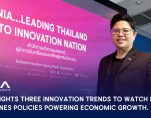
BANGKOK , THAILAND – Media OutReach Newswire – 16 January 2026 – The National Innovation Agency (Public Organization), or NIA, under the Ministry of Higher Education, Science, Research and Innovation (MHESI), is encouraging Thai entrepreneurs to keep a close eye on three key innovation trends for 2026: technology trends, market trends, and consumer trends. NIA also unveiled four major innovation policy directions: promoting investment in innovative businesses, strengthening innovation linkages across sectors, advancing regional innovation development, and enhancing national innovation competencies. These policies aim to accelerate the growth, capability development, and diffusion of innovative businesses, positioning them as key drivers of Thailand’s sustainable economic and social development.
Dr. Krithpaka Boonfueng, Executive Director of NIA
Dr. Krithpaka Boonfueng, Executive Director of NIA, said that rapid advances in artificial intelligence, escalating geopolitical tensions across multiple regions, trade decoupling and reciprocal tariff measures that create uncertainty in the global economy and value chains, as well as environmental issues and natural disasters, were major forces shaping change in 2025. ‘Innovation’ remains a critical tool for coping with these disruptions and uncertainties.
Looking ahead to 2026, Thai entrepreneurs will need to continue closely monitoring and adapting to change. Key innovation trends present both opportunities and challenges, starting with technology trends that help reduce costs and build long-term competitiveness. Notable technologies include Agentic AI, which can autonomously perform tasks such as customer chat responses, sales closure, order management, queue booking, price comparison, and automated purchasing; Hyper-Automation, which integrates bots and systems to reduce repetitive tasks, improve efficiency and accuracy, and enable real-time data-driven decision-making; and Carbon Accounting, which is becoming essential for SMEs involved in exports or global supply chains. Businesses are increasingly required to measure carbon footprints across energy use, production, logistics, and waste, in response to stricter global regulations such as the EU’s CBAM and Thailand’s forthcoming Climate Change Act.
Business trends highlight growth opportunities across several sectors. These include Health and Wellness, covering not only treatment but also prevention and therapy, particularly for working-age populations facing stress, office syndrome, and sleep disorders. Opportunities span physical therapy clinics, aromatherapy and sleep-aid products, herbal supplements, wellness tourism, yoga, and meditation. Another fast-growing area is the Pet Economy, as the Thai pet market continues to expand despite economic headwinds. This sector now includes holistic and organic pet food, fresh pet meals, fashion apparel, multifunctional pet furniture, and premium services such as pet spas, hotels, and condominiums. Additionally, Green and Circular Businesses are gaining traction, with upcycling and recycling ventures transforming waste and local materials into higher-value products. Although costs may be higher, sustainability-driven products can command premium prices, creating opportunities for community-based SMEs through innovative design aligned with environmental and fashion trends.
Consumer trends reveal a shift toward value-for-money and self-care. Hyper-Personalization is increasingly important, as consumers seek products tailored to individual needs, supported by advanced data analytics—such as supplements based on blood test results or skincare customized to personal skin conditions. Silver Solutions address the needs of Thailand’s aging society, with services focused on convenience, safety, and quality of life, including home modifications, slow-life travel programs, and assisted healthcare services. Meanwhile, Muketing or the Magic Economy reflects the enduring role of belief, spirituality, and cultural traditions in Thai society, creating economic value through religious tourism, spiritually inspired products, and design-driven items that blend art with faith.
Dr. Krithpaka added that NIA’s long-term mission is to transform Thailand into an innovation-driven economy, with startups and innovation-based entrepreneurs at its core. This requires the creation of new industries to drive growth and position Thailand as an “Innovation Nation” through three key objectives: developing innovations based on advanced and deep technologies that are difficult to replicate; creating high-value products and services rooted in creativity and cultural capital; and preparing a highly skilled workforcecapable of keeping pace with rapid technological change and evolving demographic and labor market structures.NIA works closely with domestic and international partners in its role as a Focal Conductor of Innovation, supporting innovative businesses through the 4G framework: Groom (incubation and capability building), Grant (funding support), Growth (market expansion and access to capital), and Global (international market entry).In 2026, NIA will drive Thailand’s economy and society through four key innovation policy pillars.
The first focuses on promoting investment in innovative businesses, offering a range of financial mechanisms including grants for early-stage ventures and co-investment schemes for growth-stage firms, such as corporate co-funding, public venture mechanisms (NIA Venture), global investment link programs, and capital gains tax exemptions to support startup fundraising.The second pillar emphasizes innovation linkages, strengthening collaboration between academia and industry to translate research into real-world applications through acceleration programs, innovation hubs, ecosystem platforms, tax incentives, and future mechanisms such as intellectual property financing.The third pillar supports regional innovation development, enhancing local economies and quality of life through Social Innovation Driving units (SID), Open Innovation programs, City and Community Challenge, Social Innovation Villages, and Ninmungkornth The Reality, which inspires new or small entrepreneurs to become local economic champions.The final pillar aims to enhance national innovation competencies, cultivating innovation mindsets, technological and business skills, entrepreneurial thinking, and global readiness across youth, startups, SMEs, and organizations. Key initiatives include STEAM4INNOVATOR, Startup Thailand League, NIA Academy training programs, and productivity-focused projects such as INNOProductivity for SMEs, aligned with international innovation management standards like ISO 56001.
Through these integrated efforts, NIA seeks to strengthen Thailand’s innovation ecosystem and ensure that innovative businesses can grow resiliently and compete on the global stage.
HONG KONG SAR – Media OutReach Newswire – 15 January 2026 – HKU Business School unveiled the “Hong Kong Economic Policy Green Paper 2026” (“Green Paper”). This comprehensive document delves into various facets of Hong Kong’s economic domain, covering everything from trade finance and Hong Kong’s role in the Greater Bay Area (GBA) startup ecosystem to green finance, the IP economy, social and shareholder value for Hong Kong-listed companies, and pressing social issues such as housing affordability and overcrowding in emergency departments. Moreover, with the emergence of AI, the Green Paper examines the impact of AI on the labour market, cybersecurity, and the development of a Web 3.0 ecosystem.
This is the fifth edition of the Hong Kong Economic Policy Green Paper, released by HKU Business School, with the aim of providing recommendations on how Hong Kong can effectively tackle these challenges.
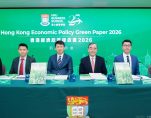
HKU Business School today unveils the Hong Kong Economic Policy Green Paper 2026. From left: Prof. Huiyin Ouyang, Associate Professor in Innovation and Information Management of HKU Business School, Prof. Dragon Tang, Professor in Finance in HKU Business School, Professor Hongbin CAI, Dean and Chair of Economics of HKU Business School, Prof. Richard Wong, Provost and Deputy Vice-Chancellor of The University of Hong Kong and Director, Hong Kong Institute of Economics and Business Strategy, Prof. Heiwai Tang, Associate Vice-President of The University of Hong Kong and Associate Dean of HKU Business School, and Dr. Tingting Fan, Principal Lecturer in Marketing of HKU Business School.
Prof. Richard Wong, Provost and Deputy Vice-Chancellor of The University of Hong Kong and Director, Hong Kong Institute of Economics and Business Strategy said, “This Green Paper was released after months of rigorous research by the scholars from HKU Business School. Grounded in an academic perspective and guided by a pragmatic, problem-solving approach, we have conducted objective analyses and in-depth investigations into core issues and real-world challenges currently facing Hong Kong’s development in political and economic operations, people’s livelihood, and industrial upgrading. Our aim is to provide the Government and relevant authorities with valuable insights and actionable policy recommendations.”
Professor Hongbin Cai, Dean and Chair of Economics of HKU Business School, said, “As a ‘super-connector’ bridging China and the world, Hong Kong’s unique role remains indispensable. Looking ahead, Hong Kong must deeply integrate into China’s national development plans, and also take a more prominent role on the international stage, with an in-depth understanding of the global market and active engagement with its international collaborators.
With campuses in Beijing, Shanghai, and Shenzhen, and an expanding presence in Vietnam and Europe, HKU Business School embodies our unique proposition: deeply rooted in Hong Kong, fully engaged with the Chinese Mainland, and truly international. This year’s Green Paper reflects our dedication to inspiring solutions based on rigorous research. As a world-class institute of higher education, we are committed to enabling Hong Kong to further unleash its core values and usher in a new era of high-quality development.”
Prof. Heiwai Tang, Associate Vice-President of The University of Hong Kong and Associate Dean of HKU Business School, added, “This Green Paper features research papers from ten teams of scholars with diverse backgrounds and varied expertise. Based on profound insights into Hong Kong’s development, they offer unique and targeted policy recommendations, building a rich and multifaceted framework of issues for the Green Paper. At the same time, behind these research achievements lies the scholars’ deep affection for and sense of responsibility toward Hong Kong.”
Regarding how digital technology can boost Hong Kong’s trade finance, he emphasised: “Both data and industry feedback clearly demonstrate the core value of trade finance. However, we need more synergy in the trade finance ecosystem and to catch up in digitisation. To address this, we must strengthen the governance and standard promotion of digital trade platforms and tools, deepen the cross-border interoperability of trade data, expand the functions of the Hong Kong Export Credit Insurance Corporation, focus on high-value-added trade enterprises, extend the coverage of Free Trade and Double Taxation Avoidance agreements, and promote responsible stablecoin adoption and Renminbi internationalisation.”
Prof. Dragon Tang, Professor in Finance at HKU Business School, stated, “Hong Kong is uniquely positioned to lead in the integration of blockchain technology within green finance, exemplified by our pioneering issuance of the world’s first tokenised green bonds, totalling HKD 6 billion in February 2024. With green finance representing a critical avenue for sustainable development, the global market is projected to grow significantly, emphasising the importance of transparency and trust. To capitalise on this opportunity, we must enhance our blockchain infrastructure, establish clear regulatory standards, and promote cross-border integration with initiatives like Core Climate. By leveraging blockchain’s capabilities, we can significantly reduce costs, improve transparency, and engage a broader investor base, ultimately driving our transition to a sustainable finance future.”
Prof. Huiyin Ouyang, Associate Professor in Innovation and Information Management, HKU Business School, commented on her study, saying, “Two weeks post-implementation of the hospital fee reform, the media reported no significant change in emergency department crowding, which aligns with what our analysis predicted. Overcrowding isn’t simply about patient behaviour – it’s a structural issue. Demographics are shifting, capacity is constrained, and alternative treatment options remain limited. What we now need is a careful, systematic evaluation of the fee changes. Where are vulnerable patients going for care? Are some patients delaying treatment? What unintended effects are emerging? Effective reform requires pairing fee adjustments with expanded primary care access. We can’t solve a capacity problem with pricing alone.”
Dr. Tingting Fan, Principal Lecturer in Marketing at HKU Business School, presented as well, spoke on her study and asked, “Why did Pop Mart go public in Hong Kong but register IP in Singapore? Or why was Molly ‘born’ in Hong Kong but did not go viral from Hong Kong? Why have local companies not managed to turn these homegrown IPs into major business triumphs? Learning from the past and looking forward, Hong Kong can leverage its financial market, legal system, as well as talents to build a comprehensive IP industry infrastructure and become an IP hub.”
The Green Paper includes ten articles; the key points are as follows:
Empowering Merchandise Trade Finance with Digital Technology in Hong Kong Author: Prof. Heiwai Tang, Associate Vice-President (Global), The University of Hong Kong; Associate Dean (External Relations), HKU Business School; Associate Director, Hong Kong Institute of Economics and Business Strategy; Victor and William Fung Professor in Economics
Trade is an essential lifeline for Hong Kong; its total merchandise trade was three times the city’s HKD3.2 trillion GDP in 2024. Trade finance is thus equally important, yet research shows that the total loans extended for trade finance have been declining.
As geopolitical and technological shifts reshape trade, Hong Kong must upgrade its trade finance services. With consumer-goods trade shifting to smaller, more frequent orders and shorter cycles, financial institutions need to streamline approvals and develop flexible products for e-commerce and logistics-driven cash cycles. Banks also need to digitise core processes in fund settlement. The article cautions that platforms directly connecting mainland manufacturers with overseas buyers disintermediate Hong Kong’s traditional hub-and-spoke role.
To address this, the article suggests the government leverage digital technologies to elevate the adoption of Hong Kong’s digital trade platforms through unifying core digital trade functions. Moreover, speeding up interoperability of trade data platforms with the Chinese Mainland and other economies will enable seamless data exchange.
Rebuilding Hong Kong as the Catalyst to the Greater Bay Area (GBA) Startup Ecosystem Prof. Alberto Moel, Professor of Practice in Finance, HKU Business School Prof. Joseph Chan, Associate Professor of Practice in Management and Strategy, HKU Business School; Associate Director, Centre for Innovation and Entrepreneurship
Offering a quantitative analysis of the evolution of Hong Kong’s startup landscape, the article found that post-2019 activity has slowed, mirroring global venture capital trends, with most failing to grow beyond 50 employees due to scarce late-stage capital despite early-stage availability. While fintech and logistics dominate and AI/blockchain grow quickly, deep tech lags—authors view this as temporary and highlight Hong Kong’s alignment in financial innovation, regtech, and GBA supply chains to attract investment and support corporate transformation.
To strengthen Hong Kong as the GBA’s premier startup hub and international financial centre, the article recommends nine policies—including fixing funding gaps, closing academia-market divides through industry-focused research for tech transfer, attracting/retaining talent, integrating Northern Metropolis with GBA supply chains, pivoting to high-value services, and drawing large tech platforms to incubate local startups.
The Applications of Blockchain in Green Finance: Hong Kong’s Experience and Opportunities Author: Prof. Dragon Tang, Professor in Finance, HKU Business School; Associate Director, Centre for Financial Innovation and Development
The green finance market has entered an important new phase. Hong Kong became the world’s first issuer of sovereign tokenised green bond when it priced an HKD800 million one-year note in February 2023. Despite this, Hong Kong faces several challenges in the practical implementation of using blockchain to advance green finance. This is due to the limited interoperability between blockchain platforms and existing financial infrastructure, which hinders cross-market transactions. Real-time settlement for tokenised assets is also difficult because of scalability constraints.
The article argues that the future success of blockchain development in green finance will depend on progress in three areas: standardisation, scalability, and security. Clear regulatory frameworks and common technical protocols are needed to provide legal certainty and interoperability across platforms. While collaboration among regulators, technology providers, and energy-market participants can align rules for tokenisation. Blockchain can also connect Hong Kong’s Core Climate platform with overseas counterparts, as cross-border integration is crucial to the inherently international nature of climate finance.
Can Hong Kong be an IP hub for Future Labubu? An Overview of Hong Kong’s IP Industry Dr. Tingting Fan, Principal Lecturer in Marketing, HKU Business School Prof. Heiwai Tang, Associate Vice-President (Global), The University of Hong Kong; Associate Dean (External Relations), HKU Business School; Associate Director, Hong Kong Institute of Economics and Business Strategy; Victor and William Fung Professor in Economics
As Labubu’s success turns the spotlight on the growing importance of the IP industry, the authors propose that this can inspire more creators and businesses to invest in branding, licensing, and cross-border collaborations. This can also attract policymakers’ attention to the emerging IP sector as a key driver of innovation and economic growth.
To position Hong Kong as a leading regional IP trading centre, the authors recommend that stakeholders—including IP developers, entrepreneurs, and government agencies—coordinate efforts across key areas. These include building a robust IP financing ecosystem, such as through government-issued IP bonds replicating the green finance model; enhancing infrastructure and platforms to support IP development; developing specialised talent and professional services in the IP sector; promoting IP initiatives throughout the Greater Bay Area; and strengthening IP protection alongside a solid legal framework.
Thematic Research: Maximisation of Social Value and Shareholder Value – Insights from Hong Kong-listed Companies Across Sectors Author: Prof. Sean Chang, Associate Professor of Practice in Finance, HKU Business School
Through a triangulation research approach, the article examines how social policies, international frameworks, and corporate social responsibility influence a company’s valuation and capital budgeting decisions. Using insights from major Hong Kong-listed companies across nine sectors—spanning transport, utilities, financials, banking, conglomerates, technology, real estate, consumer, and hotel servicing—the research highlights CSR’s role in enhancing long-term firm performance.
Key findings show that corporate risk assessment, company valuation, and stock performance are significantly influenced by CSR-linked socially responsible investing (SRI) factors. Hong Kong-specific social values, such as equality and sustainability, shape investor preferences, guiding finance managers to tailor solutions and adapt regulatory standards. While conventional metrics remain dominant, incorporating social value boosts long-term firm value by building shareholder trust and mitigating risks; companies can pursue CSR projects financed via SRI bonds to create dual economic and societal benefits.
The study recommends embedding core values like equality and sustainability into corporate strategies, aligning budgeting processes with social objectives to pinpoint investments yielding both returns and positive impacts, and urging Hong Kong-listed firms to sustain capital budgeting aligned with enduring societal values.
Housing Affordability and Homeownership in Hong Kong, 1985-2023 Mr. Allen W. Huang, Student Researcher, Hong Kong Future Economy Institute Mr. Alex Ngau, Research Associate, Hong Kong Future Economy Institute Prof. Michael B. Wong, Assistant Professor in Economics, Management and Strategy, HKU Business School
Hong Kong’s housing market has grown increasingly unaffordable, hindering upward mobility for younger generations. Main findings from the research reveal that since the 2002 suspension of the Home Ownership Scheme (HOS), homeownership has declined sharply, rendering private housing “impossibly unaffordable” for median-income households. A wide public-private rent gap drives young people to accept lower-paying or part-time jobs to qualify for public rental housing (PRH), distorting labour supply, stifling human capital investment, and fuelling a surge in adult co-living with parents; younger cohorts (born 1980-1999) face far lower access to public housing and ownership than prior generations at the same age.
Taking Hong Kong Island as an example, between 2003 and 2024, the rent-to-income ratio for a typical 400-sq-ft private unit jumped from 35% to 60% of median household income, peaking at 65% in 2015 and 2019—far exceeding the UN-Habitat and World Bank’s 30% affordability threshold. Public housing rents stayed dramatically lower at just 7%–11% of median household income from 1985 to 2024. For home purchases, it now takes 18.2 years of median income to buy a 500-sq-ft private unit (up from 7.4 years in 2003), placing it in the “impossibly unaffordable” zone per the Demographia International Housing Affordability report, where ≤3.0 years is considered affordable and 9.0+ years is impossibly unaffordable. After the 2002 Home Ownership Scheme suspension, even subsidised HOS units now require 15.8 years of income on Hong Kong Island (up from 7.4 years in 2007), shifting them from moderately unaffordable to severely or impossibly unaffordable in urban cores.
To reverse these trends, the authors recommend ramping up production of high-quality ownership units, easing resale and leasing restrictions on existing subsidised sale flats to boost residential mobility and enable “trading up” the housing ladder, setting housing price and affordability targets over mere supply goals, and adopting responsive mechanisms to balance demand and supply.
Beyond Crisis Management: Structural Reform for the Overcrowding in Hong Kong’s Emergency Departments Prof. Huiyin Ouyang, Associate Professor in Innovation and Information Management, HKU Business School Ms. Yiran Zhang, PhD student, HKU Business School
Hong Kong’s public emergency departments (EDs) handle over 2.14 million annual attendances. This crisis, exacerbated by an ageing population, results from a structural mismatch: the majority of the attendances are for non-emergency conditions, leading to staff burnout and compromised care.
The article proposes three comprehensive structural reforms. First, improving operational efficiency with accurate wait time information systems is crucial. Second, increasing the ED fee (categories III–V) aims to divert non-critical patients. Success for this hinges on assumptions about patient responses, particularly how varied population segments will react to the price signal. International evidence raises concerns, showing that higher ED fees can reduce overall utilisation, but with the decrease primarily occurring among price-sensitive groups who may risk delays in receiving serious care. Therefore, for this reform to succeed, the public must have genuine access to alternative care pathways that can accommodate acute but non-emergency needs outside regular business hours, with pricing acceptable to price-sensitive populations. Third, AI can augment the workforce and manage demand (e.g., through telemedicine).
Ultimately, sustainable reform demands robust evaluation, political courage, and a commitment to address root causes, not just symptoms.
Initial Efforts to Empirically Measure AI Activity and Its Impacts on Hong Kong’s Labour Market Prof. Alan Kwan, Associate Professor in Finance, HKU Business School Prof. Mingzhu Tai, Associate Professor in Finance, HKU Business School; Associate Director, Institute of Behavioural and Decision Science Mr. Zihan Wang, Master student, HKU Business School
In an effort to empirically measure the impact of AI on Hong Kong’s labour force, the researchers observe that firms with a higher adoption of AI experience lower headcount growth. However, the scale of impact appears small in the city, which could be due to several potential reasons. One of these is the different composition of Hong Kong’s labour force compared with other countries. For instance, Hong Kong has a high proportion of finance or managerial talent, which is harder to displace; the city also features older or more elite workers. On the other hand, much of the impact of AI, particularly generative AI, is on the less elite and younger populations.
As such, the authors recommend policymakers produce more labour market statistics that track the impact of AI, particularly by occupation. On the rate of AI adoption in Hong Kong through innovation, the authors find that the city is heavily skewed towards research, but not commercialisation. This means that the quality and quantity of academic research is not translating to commercial use. To address this decoupling, the authors propose that the government tweak its existing early-stage startup funding platforms to encourage streamlining and higher utilisation of existing government resources.
The Impact of Generative Artificial Intelligence on Cybersecurity in Hong Kong Author: Prof. Michael Chau, Professor in Innovation and Information Management, HKU Business School
As GenAI can produce human-like text, code, images, and audio, cybersecurity crimes have become easier and faster to perpetrate. Not only have data leaks and hacks into security systems led to significant financial losses in Hong Kong, but they also hurt confidence in the city’s digital infrastructure.
The article recommends using AI to fortify Hong Kong’s cyber defence, such as using biometric verification and deepfake detection technologies, especially in areas involving critical infrastructure and high financial stakes. It is also important to prevent data leakage and other threats in using GenAI.
Hong Kong’s Next Growth: Pioneering the Web 3.0 Ecosystem Prof. Yulin Fang, Professor in Innovation and Information Management, HKU Business School; Director, Institute of Digital Economy and Innovation Mr. Yangchen Mou, PhD student, HKU Business School
Given the inherent risks in Web 3.0 operational models—most notably within Decentralised Finance (DeFi) systems—striking a balance between fostering the development of the Web 3.0 ecosystem and implementing appropriate regulation to maintain financial stability is and should be a key priority for Hong Kong authorities. To support this, the article categorises the industry into three distinct systems—Centralised Finance (CeFi), the integration of Traditional Finance and Centralised Finance (TradFi-CeFi), and Decentralised Finance (DeFi)—and put forward targeted policy recommendations for each.
For the CeFi system, the authors recommend creating a more conducive environment for development by refining specialised auditing frameworks, promoting a local Web 3.0 talent certification system, and introducing global leading CeFi institutions to the local market. For the TradFi-CeFi system, they suggest upgrading audit standards for traditional firms holding digital assets and upskilling traditional finance professionals with Web 3.0 expertise. In contrast, for the DeFi system, which carries higher inherent risks and poses greater regulatory challenges, the authors advise authorities to adopt a prudent stance while keeping monitoring its latest technological developments.
The full version of the Green Paper can be accessed here. Hi-res photos are available here.
Hashtag: #HKUBS
The issuer is solely responsible for the content of this announcement.
About HKU Business School
Established in 2001, HKU Business School is one of the youngest and most dynamic members of The University of Hong Kong (HKU). The School strives to nurture first-class business leaders and foster academic and relevant research that serves the needs of Hong Kong, China and the rest of the world in the new Asia-led economy. As a top international business school, the School has established its place as a globally impactful institution that leads the way through timely thought leadership, pioneering research, and educational excellence. Deeply rooted in Hong Kong and fully engaged with China, the School’s world-class faculty equip students with global knowledge and perspectives.
HKU Business School offers business education across a full range of disciplines, while achieving remarkable growth in faculty strength and research capabilities. The School ranks Asia’s No.1 in Financial Times’ Aggregated Research Ranking for two consecutive years, 2024 and 2025, while the University of Hong Kong ranked 11th in the world and No. 1 in Asia according to the QS World University Rankings 2026. The School has strategic partnerships with world-renowned universities and corporate partners, providing market-oriented content, superior learning, and instrumental resources.
To better serve our students and alumni in various cities and regions, and to facilitate collaboration opportunities with business communities around the globe, HKU Business School has established a unique international network that extends to Beijing, Shanghai, Shenzhen and Ho Chi Minh City.
HKU Business School is fully accredited by the European Quality Improvement Systems (EQUIS) and the Association to Advance Collegiate Schools of Business (AACSB).






 www.eset.com
 LinkedIn
 Facebook
 X



 https://www.instagram.com/onyxhospitalitygroup/