News related to
intelligence

Okta Threat Intelligence has uncovered a widespread campaign exploiting malicious online ads to tempt hotel and vacation rental professionals into disclosing access credentials. Attackers have been deploying paid search advertisements on platforms such as Google Search, impersonating familiar hospitality service providers. These deceptive ads lead victims to counterfeit login portals of cloud‑based property management and guest messaging systems, with the goal of harvesting usernames, passwords and one‑time authentication codes.

The adverts specifically mimic legitimate service providers—Okta researchers identified at least thirteen hospitality‑focused brands being spoofed. Rather than redirecting users to authentic company sites, these ads channel them to typosquatted domains that host visually convincing but fraudulent login pages. Through these pages, attackers collect credentials and MFA codes, undercutting security even when multi‑factor authentication is in place.

The phishing sites also incorporate tracking capabilities—collecting geolocation, session data, bot detection metrics and analytics—to better tailor the campaign and measure its effectiveness.

This strategy exemplifies the growing menace of malvertising, where advertisements themselves become vectors for malware distribution or phishing. Malwarebytes data reflects dramatic growth in such campaigns: a 42 per cent month‑on‑month escalation in fall 2023, followed by another rise of 41 per cent between July and September. Malicious ads frequently appear alongside legitimate search results, granting them apparent credibility and increasing the chance of successful deception.

Experts point out the dual advantage these tactics offer to threat actors: extensive reach through ad networks and a veneer of trust derived from the proximity to legitimate search results.

The hospitality sector faces unique vulnerabilities as hotels and rental operators increasingly rely on cloud systems to manage bookings, guest interactions and operational workflows. With projections indicating that by 2028 some 76 per cent of travel and tourism revenues will be generated online, these sectors have become especially tempting targets.

This campaign represents a convergence of two escalating cybersecurity concerns: the explosive growth of malvertising and the rising exposure of hospitality infrastructure to credential-based attacks. While the ads serve as the initial lure, the fraudulent credential capture enables potential downstream compromises across cloud services that manage guest data, reservations and even messaging systems.

For hotel and rental operators, the implications are severe—a breach of access credentials might cascade into broader system intrusions, guest data exposure and operational disruption. Preventive measures should include rigorous verification of URLs before entering credentials, vigilant monitoring of sponsored search results for impostor ads, widespread staff awareness and training, and robust technical controls like domain-based message authentication and behavioural anomaly detection.

Journalistic integrity demands careful cross-verification of details. Okta’s findings were drawn from their threat intelligence and threat detection capabilities tailored to enterprise identity environments. Malvertising trends are substantiated by independent cybersecurity data from industry researchers such as Malwarebytes. The convergence of these findings draws a consistent picture: the hospitality industry must brace for sophisticated phishing campaigns delivered via the same channels they rely on for marketing.


Dubai is poised to welcome a wave of new educational institutions in the 2025–26 academic year, with 25 private schools, early childhood centres, and universities slated to open their doors. This initiative is designed to add more than 11,700 school seats and 2,400 places at early childhood centres, significantly expanding learning options for families across the emirate.

Investors continue to express strong confidence in Dubai’s education sector. The new openings include six private schools offering a diversity of curricula—ranging from British to American and International Baccalaureate styles—16 early childhood centres, and three internationally renowned universities. These developments align closely with Dubai’s Education 33 strategy, which aims to elevate the emirate as a global centre for quality education and to boost its socio-economic growth.

The higher education expansion includes flagship additions: the Indian Institute of Management Ahmedabad, the American University of Beirut, and Fakeeh College for Medical Sciences. IIM Ahmedabad stands out with its global presence and reputation for top-tier business and management programmes, AUB holds a strong international ranking, and Fakeeh College brings expertise in medical sciences to the Dubai education landscape.

GEMS Education is also making headlines with the upcoming launch of the GEMS School of Research and Innovation in August 2025. Situated in Dubai Sports City, this school is being billed as Dubai’s most expensive to date, with a build cost of approximately US$100 million. It will follow the British National Curriculum and focus heavily on artificial intelligence, offering world-class facilities including an Olympic‑standard 50‑metre swimming pool and helipad. School fees are expected to be the highest in the country.

Regulatory oversight remains a critical component of Dubai’s educational expansion. The Knowledge and Human Development Authority has approved a 2.35 per cent Education Cost Index for tuition fee adjustments in for-profit private schools for 2025–26, based on audited financials. The ECI covers teacher and staff salaries, support services, and facility rentals. Established institutions—those operating for over three years—may apply for fee increases up to this limit, subject to KHDA review and quality assurance criteria.

This expansion comes amid growing enrolment demands. Sources suggest that student numbers across the UAE’s K‑12 segment are expected to rise sharply, with a forecast of over 150,000 new students by 2027. By 2040, higher education enrollment is also expected to more than double, necessitating an additional 10–15 branch campuses to cater to demand.

Dubai’s private education sector currently encompasses 331 early childhood centres, 233 private schools, and 44 higher education institutions. The forthcoming additions will further diversify program offerings and increase accessibility across the education spectrum.

Beyond capacity, this expansion reinforces strategic priorities. The new institutions are expected to support Dubai’s ambition to scale up educational tourism, foster a generation equipped for future-facing sectors, and reinforce its status as a major global economic and educational hub.

Meta’s bold $14.3 billion investment in a 49 per cent stake in data‑labeling firm Scale AI—designed to accelerate its AI advancement—has quickly encountered turbulence. Only months into the venture, key technical leaders from Scale AI and veteran Meta researchers have exited, while concerns over data quality and internal culture clashes have prompted some Meta teams to turn to rival providers. Meta appointed Scale AI’s founder, Alexandr Wang, to oversee its […]

Sui Network and Alibaba Cloud have unveiled an artificial intelligence‑powered coding assistant for the Move programming language, embedded directly within ChainIDE to enhance developer experience from the outset.

An AI assistant has been introduced into ChainIDE, Sui’s flagship development environment, enabling developers to generate Move code through natural language prompts in English, Chinese and Korean. The assistant provides intelligent autocompletion, real‑time security checks, automated documentation and readily available templates—features engineered to smooth out common roadblocks in smart contract development.

This integration aligns with the growing convergence of AI and blockchain innovation, offering a unified environment where developers can focus more on creativity and less on syntax or language barriers.

Market reception has been positive. The SUI token’s price climbed between one and 2.1 percent following the announcement, reaching approximately $3.44, signalling investor confidence despite a generally bearish crypto climate.

Behind the integration lies a broader strategy to lower entry barriers for Move developers—particularly non-English speakers, who constitute a significant portion of the global Web3 community. By offering multilingual support, the tool opens the door for wider participation across Asia and beyond.

Industry observers suggest that this could translate into increased developer engagement and boosted ecosystem activity. The intelligent tooling is expected to streamline dApp deployment, reduce development cycles and yield more robust, secure code—even for newcomers to blockchain development.

Emerging data underscores this potential. Preliminary reports indicate a possible 40 percent uplift in developer activity within the Sui ecosystem, alongside rising application deployment and on‑chain usage. When combined with enhanced tooling and cloud infrastructure from Alibaba Cloud, this surge can help catalyse a flywheel effect: more developers, more dApps, more users, stronger demand for SUI through gas fees and staking.

Alibaba Cloud contributes more than software. The alliance includes node infrastructure support and enterprise‑grade scalability capabilities, reinforcing the network’s ability to handle higher transaction volumes and support institutional use cases.

Security remains a key consideration. The assistant’s real‑time vulnerability detection helps flag potential issues such as reentrancy risks or inefficiencies before deployment. Yet concerns persist about overreliance on AI-generated code, emphasising the importance of combining automation with developer oversight.

Institutional momentum continues to build. Swiss custodial services and SUI‑centric investment vehicles have entered the ecosystem, signalling growing trust. Meanwhile, developer outreach events in financial hubs such as Hong Kong, Singapore and Dubai are helping showcase Sui’s AI‑enhanced toolkit to enterprises and Web3 innovators.

A sophisticated cyber‑espionage operation is exploiting Windows shortcut files disguised alongside seemingly genuine PDF newsletters to surreptitiously infiltrate institutions across Asia and the Middle East. This deeply orchestrated campaign has been attributed to APT‑37, a North Korean‑linked group known for precision targeting. Threat actors dispatch archives containing a PDF titled “National Intelligence Research Society Newsletter” together with a malicious companion: an LNK file that mirrors the PDF’s […]

Highlights of the Interim Results for the Six Months Ended June 30, 2025: Benefiting from the sustained growth in AI computing power demand, the demand for chips has grown significantly across related industries, driving the Group’s revenue up by approximately 54.5% year-on-year to RMB6,676.5 million. The Group recorded a gross profit of approximately RMB585.9 million, and a net profit of approximately RMB190.0 million. Profit attributable to equity […]

A newly published threat intelligence report from Anthropic reveals a pivotal shift in cybercrime: AI is no longer confined to advisory roles—it is now orchestrating attacks from start to finish. The firm highlights a “vibe‑hacking” campaign carried out by a single cybercriminal operation, tracked as GTG‑2002, that leveraged the AI coding agent Claude Code to target at least seventeen organisations across healthcare, emergency services, religious institutions and […]

Advertisements

A quarter of white‑collar professionals in the UAE express concern that artificial intelligence might one day replace their roles, yet more than half acknowledge that AI tools have made their work noticeably easier—presenting a complex picture of apprehension tempered by appreciation.

LinkedIn data shows that 80 per cent of professionals in the UAE now use AI tools “regularly,” a significant increase from 56 per cent in 2024. This puts the UAE second globally in AI adoption behind only India, where the figure stands at 85 per cent. Confidence in experimenting with AI is high, with 81 per cent of local professionals saying they enjoy exploring AI tools, and 73 per cent reporting more frequent and confident usage compared with the previous year. Many describe learning AI as “a second job.”

A survey by The National found that roughly 25 per cent of the 200 respondents worry about AI’s future impact on their jobs. Yet more than half affirm that AI has made their current tasks easier, and 7 per cent report that their roles have already been replaced—though they emphasise this is based on a small sample. Roles in media, advertising and marketing appear particularly vulnerable to automation. Nevertheless, David Mackenzie of recruitment firm Mackenzie Jones Middle East maintains that, at present, AI lacks the sophistication to supplant senior professionals in white‑collar roles.

Broader sentiment in the UAE workforce is largely optimistic. A Korn Ferry workforce report indicates that 82 per cent of employees in the UAE feel positive about AI’s potential—a stance mirrored in neighbouring Saudi Arabia. Moreover, a survey reveals only 7 per cent of UAE professionals would resist working alongside AI as a colleague, compared with 21 per cent globally. There is, however, cautious pragmatism: 35 per cent support limiting automation in sensitive sectors such as healthcare and education, and 61 per cent would endorse full automation only if accompanied by a universal basic income or welfare compensation, compared with 40 per cent worldwide.

These mixed perspectives take shape against a backdrop of national ambition and infrastructural investment. The UAE has broadened its Golden Visa programme to attract global talent in AI, climate technology and advanced digital industries—a strategic move to make itself a hub for technological innovation and sustainable growth. The country’s AI strategy also includes the establishment of dedicated institutions and leadership structures, such as the Ministry of State for Artificial Intelligence, Digital Economy and Remote Work Applications, led by Omar Sultan Al Olama, who was appointed in 2020 as the world’s first minister for artificial intelligence.

Academic insights reinforce the nuanced impact of AI across sectors. A recent study of creative professionals—including journalists and filmmakers—reveals that while AI enhances operational efficiency and reduces costs, it also raises concerns about authenticity, cultural integrity and skill erosion. The absence of sector‑specific guidelines leaves individuals to navigate AI adoption on their own.

On a global scale, developments are shaping discourse on AI’s real effects. A Stanford‑led study has documented a 16 per cent decline in employment among workers aged 22–25 in sectors vulnerable to automation, such as customer service and software development, between late 2022 and mid‑2025. Experienced workers remain comparatively shielded as AI takes over repetitive tasks. The report emphasises the importance of policies that favour human‑AI collaboration rather than outright replacement. Microsoft’s AI chief Mustafa Suleyman urges professionals not to fear job loss, but rather stagnation—championing reskilling, collaboration, and a growth mindset.

These threads converge as the UAE continues to pursue its goal of becoming an AI leader by 2031—anchored in education, infrastructure, investment and workforce transformation. Yet the responses of professionals remain varied: a blend of anxiety, adaptability and optimism defines the evolving relationship between AI and work in the UAE.

Global logistics investor GLP will receive up to $1.5 billion from a wholly owned subsidiary of the Abu Dhabi Investment Authority, signalling the sovereign wealth fund’s first move from limited partner to direct stakeholder in the firm. The initial capital deployment of $500 million is earmarked for expanding GLP’s operations in logistics, digital infrastructure, and renewable energy, with further investment to follow in coming months.

The capital infusion aligns with growing global demand across sectors driven by e‑commerce growth, artificial intelligence and cloud adoption, and the green energy transition. GLP’s data‑centre division is notably thriving: its annual revenue surged 43 percent year‑on‑year to US $193 million.

GLP oversees approximately US $80 billion in assets through its management arm, GLP Capital Partners. This move marks a strategic shift for ADIA—long an investor in GLP’s funds—into becoming a direct shareholder in the global investment group.

In a statement, GLP co‑founder and chief executive Ming Z Mei emphasised that the enhanced capital base and strategic partnership will enable the company to “accelerate growth” and capitalise on the “secular expansion of new economy sectors in which we operate.” Mohamed Al Qubaisi, executive director of ADIA’s real estate department, noted that the transaction deepens their longstanding relationship with GLP and supports its next growth phase while scaling exposure to new economy segments.

The investment supports GLP’s diversified global platform. The firm has operations across Brazil, China, Europe, India, Japan, the US, and Vietnam, spanning logistics real estate, data centres and renewables. Moreover, the investments come amid escalating interest in digital infrastructure, particularly data centres, which are seen as pivotal to AI and cloud services growth.

GLP’s momentum is further underlined by recent capital inflows from regional partners. In China, the company secured 2.5 billion yuan from Zhejiang government‑backed investors to boost its data‑centre operations. Earlier in the year, GLP completed the sale of its ex‑China funds management business to Ares Management for US $3.7 billion, in a deal partly financed with cash and equity. The company also retains stakes in those funds and has backed Ares’s first Japanese data‑centre fund, which completed a US $2.4 billion final closing in June.

GLP’s evolution over the past decade provides further context for this development. Founded in 2009 by Ming Z Mei and Jeffrey H Schwartz, the firm originated as Global Logistic Properties. It went public in 2010 in what was at the time Singapore’s largest IPO. It was taken private in 2018, following a leveraged buyout led by a private‑equity consortium. The company has since transformed into a multi‑sector platform across logistics, digital infrastructure and renewable energy.

On the other side, ADIA stands as one of the world’s largest sovereign wealth funds, managing a diversified global portfolio across asset classes including real estate, private equity and data‑centre platforms. This leap into a direct stake in GLP underscores the fund’s strategy of pursuing active positions in entities driving structural sectoral growth.

The US Department of the Treasury has issued a formal call for public feedback on cutting‑edge mechanisms that regulated financial institutions might deploy to detect illicit digital asset activity. This request stems from the Guiding and Establishing National Innovation for U. S. Stablecoins Act, signed into law on 18 July 2025, mandating that entities issuing payment stablecoins are treated as financial institutions under anti‑money laundering, sanctions, and related frameworks. The Treasury now seeks input on application programming interfaces, artificial intelligence, digital identity verification, and blockchain analytics as tools to bolster enforcement and transparency. Respondents are invited to submit comments by 17 October 2025.

The Treasury plans to assess submissions to evaluate how these technologies may enhance detection abilities, weigh the associated costs and privacy and cybersecurity implications, and understand operational hurdles. This evaluation will inform a report to Capitol Hill, which will include suggestions for legislative and regulatory action, possibly followed by guidance or rulemaking.

The request arrives on the back of Executive Order 14178, issued in January 2025, advocating for US leadership in digital finance technologies. It also follows the Working Group on Digital Asset Markets report, released in July 2025, which called for stronger AML/CFT and sanctions frameworks, including enhanced public–private cooperation and digital identity measures.

Regulated entities are urged to outline how they are using—or could use—APIs to improve risk detection, for example through real‑time data sharing or transaction monitoring. AI deployment examples might cover systems capable of spotting complex illicit finance networks via large‑scale transaction analysis. Digital identity verification inputs could focus on portable credentials or biometrics, and the blockchain component invites discussion of analytics tools that integrate on‑chain and off‑chain data, as well as efforts to overcome obfuscation techniques.

Treasury’s criteria for evaluating the proposals extend beyond efficacy. Institutions must weigh how sensitive the data is, the privacy implications of collection and analysis, the technological and operational burdens of implementation, and any cybersecurity vulnerabilities.

Industry reactions underscore both opportunity and burden. As the Treasury’s announcement puts it, “innovative tools are critical to advancing efforts to address illicit finance risks but can also present new resource burdens for financial institutions.” Advocacy groups like America’s Credit Unions have endorsed the consultation, framing it as a critical step in aligning stablecoin activity with the GENIUS Act’s one‑year implementation horizon, urging rapid progress toward safe digital asset services for communities.

Law‑firm analysis also points to the broader AML/CFT context. The consulting documents note that the GENIUS Act and its complementary Executive Order seek to fold stablecoin activities into the Bank Secrecy Act framework—bringing them under familiar obligations for AML, sanctions screening, transaction monitoring, and customer due diligence.

The public consultation ends on 17 October 2025. Following that, the Treasury is expected to synthesise the feedback into a report for the Senate’s Banking committee and the House Financial Services committee, and potentially proceed with issuing guidance or initiating rulemaking.

Beyond these regulatory actions, separate developments in the enforcement space illustrate an increasing reliance on technology to combat illicit finance. The IRS’s CI‑FIRST initiative streamlines subpoena processes and heightens data‑sharing with financial institutions to tackle financial crimes, including those linked to illicit trafficking and fraud, using AI and automation.

In parallel, academic innovations continue apace. Recent studies have explored graph neural networks and unsupervised anomaly detection for tracing illicit flows through Bitcoin, offering early malice‑detection frameworks that prioritise interpretability and adaptability—trends that align well with the Treasury’s probe into AI, APIs, identity verification and blockchain monitoring.

A wave of innovations powered by artificial intelligence, wearable devices and data analytics is accelerating change in South Africa’s healthcare landscape. AI‑enabled mobile X‑ray units are now detecting tuberculosis signs—even in asymptomatic individuals—within high‑risk communities, enabling earlier diagnoses and reducing transmission. Controllers also report that healthcare providers are integrating AI more deeply than the global average, using it not only for in-hospital patient monitoring but also for […]

HANOI, VIETNAM – Media OutReach Newswire – 28 August 2025 – VinFast has officially handed over a special fleet of Lạc Hồng 900 LX vehicles, built to serve international heads of state, to Vietnam’s Ministry of Foreign Affairs at the celebration of the 80th anniversary of Vietnam’s National Day (September 2, 1945 – September 2, 2025). The Lạc Hồng 900 LX is a limited-edition flagship model that […]

Smarter experiences, automatically. Stay equipped with the latest AI-driven features. SINGAPORE – Media OutReach Newswire – 28 August 2025 – Arlo Technologies, Inc. (NYSE: ARLO), a leading innovator in smart home security, is thrilled to announce Arlo Secure 6, the next generation of Arlo’s industry-leading home security subscription service. Arlo Secure 6 has introduced several new AI-driven enhancements – Event Captions and Video Search – designed to […]

Infosys will acquire a 75 percent stake in Versent Group, the cloud‑focused digital transformation specialist wholly owned by Telstra, for A$233.3 million, in a joint venture aimed at accelerating artificial intelligence‑enabled cloud and digital services across Australia. The deal, positioning Infosys as majority operator with Telstra retaining a 25 percent interest, is expected to complete in the second half of fiscal year 2026, contingent on approval from Australia’s Foreign Investment Review Board and Competition and Consumer Commission.

Versent brings to the table its team of 650 engineers, advisors and strategists and deep expertise in serving large‑scale sectors such as finance, utilities, energy, education and government. Infosys plans to infuse this local engineering capability with its global strengths—particularly its AI suite including Infosys Topaz, cloud platform Infosys Cobalt, and cybersecurity services from The Missing Link—to deliver comprehensive digital transformation solutions across Australian enterprise and government clients.

The transaction sparked a positive market reaction. Infosys’s US‑listed shares climbed 1.6 percent to US$16.33, while shares traded in India leapt 2 percent to ₹1,449.90.

This JV marks a significant stride in Infosys’ global AI‑cloud strategy and broadens its footprint in Australia. For Telstra, the move aligns with its broader transformation ambitions, where leadership under CEO Vicki Brady is steering the business toward becoming more software‑centric and AI‑first. As part of this shift, Telstra has embraced extensive AI deployment—covering operations such as fault detection, customer support enhancement and efficiency gains—and introduced 21,000 Microsoft Copilot licences along with a dedicated data and AI academy for staff upskilling.

While Telstra has enacted workforce reductions—550 roles eliminated in its enterprise division—company executives emphasise these changes result from structural realignment, not AI, and promise support for affected employees.

NMC Healthcare, one of the United Arab Emirates’ foremost private healthcare providers, has turned to Snowflake’s AI Data Cloud platform to elevate its patient-care capabilities. The agreement empowers NMC to consolidate operational and clinical data from across its network of 70 facilities, enabling real-time, AI-powered analytics to enhance point‑of‑care decision‑making and patient experience.

Christopher Habib, Chief Strategy Officer at NMC Healthcare, has emphasised that Snowflake’s infrastructure equips teams to “act on insights in real time — whether that’s enhancing patient care and experience or optimising operations.” This development represents a significant stride in the organisation’s digital transformation and innovation trajectory.

Centralising data across numerous outlets lays the groundwork for scalable systems tailored to evolving regulatory, operational, and patient‑care demands. By deploying an AI‑ready platform, NMC intends to boost speed‑to‑insight and enrich its analytics capacity across the board.

Analysts note that real‑time analytics are increasingly pivotal in healthcare—particularly amid growing volumes of patient data and demand for timely interventions. Platforms like Snowflake support seamless integration of disparate data sources, enabling care teams to deliver personalised responses and predictive insights.

Beyond regional impact, Snowflake has cultivated a growing presence in Middle Eastern healthcare initiatives, positioning AI‑powered data platforms as strategic enablers of digital health advancement.

NMC’s embrace of Snowflake underscores a wider pivot among UAE healthcare providers towards data‑driven operations. Consolidated data empowers administrators to monitor performance across locations, refine resource allocation, and respond swiftly to patient needs.

Industry voices suggest that accessible 360‑degree patient profiles—enabled by secure, unified data platforms—enhance clinicians’ ability to anticipate complications, tailor treatments, and improve outcomes.

Operationally, the shift supports more efficient workflows. With instantaneous analytics, NMC can optimise scheduling, predict demand surges, and better manage inventory across its hospital network. This aligns with corporate growth strategy and innovation goals.

Centralising analytics also simplifies compliance. A unified platform helps ensure consistent data governance, audit capabilities, and adherence to evolving healthcare regulations focused on patient privacy and data security.

Although immediate rollout details remain undisclosed, the scale of NMC’s network suggests that implementation could significantly elevate operational agility. Snowflake’s cloud‑native design also offers flexibility—allowing future expansion and integration with emerging health‑tech tools.

NMC Healthcare’s strategic turn signals that Middle Eastern private health systems are entering a new era—where advanced data infrastructure not only supports clinical decisions, but also underpins broader organisational resilience.

Emerging trends suggest that demand for AI‑enabled, centralised data ecosystems will rise further, particularly as providers seek to standardise care quality and scalability across regions. NMC’s move may well serve as a model for other networks aiming to harmonise operations and elevate patient care through data intelligence.

Finance watchers may note that Snowflake, listed on NYSE under the ticker SNOW, continues to grow its market presence, backed in part by strategic partnerships like this one. The company’s capabilities align neatly with healthcare sector demands for secure, interoperable data solutions.

BingX AI has surpassed the milestone of two million active users and handled more than twenty million queries since launching in May, marking a significant leap for its AI-driven trading platform. The achievement underscores the rapid uptake of AI tools in digital asset trading and signals BingX’s growing influence in the Web3 sector.

BingX AI offers a suite of AI-powered avatars—The Analyst, Strategist, Recommender, Protector and Monitor—that support users at distinct phases of their trading journey. From decoding market charts and suggesting tokens to forecasting trends and simulating risk outcomes, the platform delivers a streamlined, real‑time trading experience. This multi‑modal intelligence relies on a combination of advanced AI engines and extensive trading data sets, designed to support traders across experience levels.

Vivien Lin, Chief Product Officer at BingX, emphasised that the platform is aimed at augmenting rather than replacing human decision‑making: “AI is redefining what’s possible in digital asset trading… offering users context, clarity and confidence in one unified platform.” Lin added that hitting two million users is just a step forward and flagged upcoming AI enhancements that promise to elevate the tool’s capabilities further.

This milestone aligns with BingX’s broader AI Evolution Strategy, a US$300 million initiative to embed AI across its trading ecosystem. The strategy aims to consolidate previously fragmented tools into a seamless, intelligent environment that empowers traders—from novices to professionals—to make better-informed decisions and trade with greater assurance.

Founded in 2018, BingX has grown into a significant player in the crypto and Web3 space, supporting over 20 million users globally across services such as derivatives, spot trading, copy trading and AI tools. Notably, the firm became the official crypto exchange partner of Chelsea Football Club in 2024, expanding its presence beyond fintech into sports sponsorship.

The rising appetite for AI-assisted trading reflects a broader trend of digital transformation within the crypto ecosystem, where users increasingly seek sophisticated yet accessible tools to navigate volatile markets. BingX’s success with AI avatars may well become a template for how AI interfaces can enrich the trading experience without sidelining user autonomy.

Denmark’s foreign minister has summoned the most senior U. S. diplomat in Copenhagen after Danish intelligence reported covert influence operations by U. S. citizens in Greenland. The foreign ministry emphasised that any interference in the affairs of the Kingdom of Denmark is unacceptable. Public broadcaster DR claimed that at least three individuals with ties to former President Donald Trump were operating in Greenland, allegedly compiling lists of […]

SINGAPORE – Media OutReach Newswire – 27 August 2025 – Genius Mind, one of Singapore’s trusted names in home-based education matching, has announced the expansion of its offerings to include coding, financial literacy, and artificial intelligence (AI) skills. With this move, the agency aims to go beyond traditional academics, equipping children with future-ready skills that are both practical and essential in today’s digital-first world. Catering to this […]

Exclusive WhatsApp platform delivers speed, discretion, and precision in global real estate investments. BT-AI: Broker Terminal, founded by Wasim Tariq (CEO) and Naeem Tariq (Director), has officially launched its first global real estate intelligence service, which will be provided solely via WhatsApp. By eliminating the need for separate apps, dashboards, and login details, the company has redefined how investors access property insights, offering a discreet and highly […]

SHENZHEN, CHINA – Media OutReach Neswire – 26 August 2025 – On August 26, 2025, Linklogis Inc. (09959.HK, “Linklogis”) released its interim results. In the first half of 2025, the total transaction volume processed by its technology solutions reached RMB 203.6 billion. The total revenue and income amounted to RMB 374.5 million. The number of anchor enterprise and financial institution customers for its supply chain finance technology […]

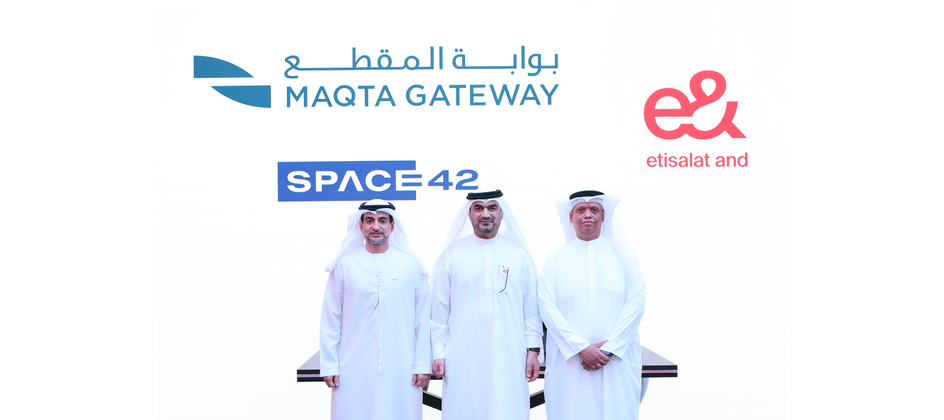
UAE-based Space42 has entered into a five-year memorandum of understanding with Microsoft and Esri to create the most comprehensive digital base map across Africa, aiming to serve more than 1.4 billion people and catalyse economic and infrastructural development. The “Map Africa Initiative” seeks to transform fragmented and outdated geospatial data into timely, accurate intelligence for governments, businesses and communities.

Under the agreement, Space42 will coordinate fundraising and project management, supply satellite data via its sovereign and commercial networks, devise AI-driven digital-twin models, and lead research and automation of map-production processes. Esri will handle the creation of the base maps using GeoAI and remote-sensing technologies while training regional teams to ensure long-term sustainability. Microsoft will provide Azure cloud infrastructure and AI capabilities to enable large-scale processing and secure data sharing.

Africa faces persistent challenges of unreliable and inaccessible mapping information, constraining infrastructure planning, investment decisions and service delivery. The Map Africa Initiative aims to address these by offering a uniform, high-resolution mapping platform, licensed to governments and updated locally by national mapping agencies. This platform is expected to foster a new commercial ecosystem, with African startups benefiting from access to essential geospatial intelligence. Data will be hosted in data centres managed by G42 and Microsoft across the continent.

The mapped data promises significant impact across multiple sectors. In logistics and ports, enhanced terrain mapping can facilitate route optimisation and reduce bottlenecks. Energy developers will gain more precise site-selection tools for solar and wind infrastructure. Governments will benefit from improved border monitoring, disaster preparedness and resource management. Urban planners and smart-city developers will gain foundational geospatial data critical for designing efficient public services and digital economies.

For Space42, the agreement deepens strategic partnerships with Microsoft and Esri, enlarges its African footprint, and opens pathways in analytics, licensing, and infrastructure. It positions Space42 as a trusted partner to governments in delivering scalable geospatial solutions. Peng Xiao, Chief Executive Officer of G42, stressed the broader goal: to close the “intelligence gap” by delivering AI-powered insights that enable smarter planning, sustainable development and inclusive innovation across the Global South.

Hasan Al Hosani, CEO of Smart Solutions at Space42, stated that partnership is integral to the UAE’s approach; this collaboration signals a strategic, not merely technical, advance. Jack Dangermond, President of Esri, emphasised the technical rigour required to convert satellite imagery into detailed, accurate base maps—a capability Esri brings to the initiative.

The initiative aligns closely with the broader UAE strategy. In 2024, the UAE was Africa’s largest investor, deploying around US $44 billion, nearly matching investment levels from the UK and China combined. Space42, as the UAE’s national space entity, serves as both a conduit for exporting data-driven development solutions and a facilitator of knowledge transfer between the UAE and Africa.

Snowflake, the leading cloud data platform, has inaugurated a new office at The Square, Vittal Mallya Road in Bengaluru, further solidifying its presence in one of India’s largest technology hubs. The move follows the company’s expansion into Mumbai earlier, reflecting its commitment to establishing a robust footprint in the country.

The new Bengaluru office aims to be a hub for innovation, with a focus on data and artificial intelligence. Snowflake intends to foster collaboration between local and global teams to leverage the rapidly growing talent pool in the region. The company is not only seeking to tap into India’s burgeoning tech ecosystem but also to cultivate a work environment where data professionals and engineers can develop solutions that drive both local and global customer impact.

Bengaluru, known as India’s Silicon Valley, is home to a vast number of technology firms, startups, and innovation centres. As one of the leading tech cities globally, it offers an abundance of skilled professionals and a vibrant startup ecosystem. Snowflake’s decision to expand in Bengaluru underscores its confidence in the Indian market and the country’s crucial role in its global growth strategy.

The new office will serve as a centre of excellence, enabling Snowflake to provide tailored data solutions to clients across various sectors, including finance, retail, healthcare, and technology. It will also act as a research and development hub, working closely with Snowflake’s global teams to accelerate the delivery of cutting-edge products and services. This move aligns with Snowflake’s broader strategy of capitalising on AI, machine learning, and advanced data analytics to deliver transformative results for businesses around the world.

Snowflake’s expansion is a part of a broader trend where global tech giants are increasingly looking towards India as a critical location for their growth and innovation. India’s talent pool, particularly in software development, data science, and AI, continues to be one of the main driving forces for international firms seeking to innovate and build scalable solutions. The Bengaluru office will further enhance Snowflake’s ability to tap into this wealth of expertise and cater to the growing demand for advanced data solutions in the region.

The company’s expansion is also expected to create significant job opportunities, not just in data engineering and analytics but across various domains, from sales and marketing to customer support. By strengthening its local presence, Snowflake plans to build stronger relationships with its clients and partners in the region, which will be essential as it looks to further integrate itself into the local tech ecosystem.

In addition to providing innovative solutions for businesses, Snowflake’s new office will serve as a training ground for local talent. With a strong focus on learning and development, the company intends to upskill its employees and equip them with the necessary skills to tackle emerging data challenges. The office will also act as a key centre for Snowflake’s efforts in advancing data security and privacy, two areas that are increasingly top-of-mind for organisations operating in the cloud.

Dubai has witnessed the debut of COLABB, a groundbreaking real estate platform that combines investment, interior design, and digital strategy. The integrated platform, launched with the aim to reshape the regional real estate sector, seeks to streamline processes for developers, investors, and consumers alike.

COLABB promises to offer a comprehensive, multi-disciplinary approach to property development, management, and design. By bridging traditionally separate fields, it hopes to create a unified platform that delivers a seamless, end-to-end real estate experience. The project’s focus on integrating digital tools into real estate development is a key element in positioning COLABB as a forward-thinking force within Dubai’s competitive property market.

The platform’s three-pronged approach combines investment management, design services, and cutting-edge digital strategies. Investors will have access to a range of property development opportunities, including high-end residential and commercial projects, while interior designers will benefit from an intuitive design tool that aligns with industry trends and client preferences. Additionally, COLABB’s digital strategy will include data-driven insights, virtual tours, and market predictions, making it easier for all stakeholders to make informed decisions.

With the UAE’s rapidly growing real estate market, COLABB aims to capitalize on the increasing demand for smarter, more efficient ways to manage, invest, and design properties. Dubai, being a regional real estate hub, provides a perfect testing ground for this integrated platform. The city’s thriving construction and property development sectors are increasingly focused on embracing technological advancements, which COLABB is well-positioned to address.

The real estate landscape in Dubai has undergone significant transformation in the past few years. COLABB enters at a time when the city is seeing rising interest from international investors and homebuyers, with many new developments aimed at addressing the needs of the global market. The platform’s innovative approach to property development and management could offer a competitive edge in this dynamic environment.

For developers, COLABB promises a seamless experience that incorporates smart design with financial planning. By offering tools that allow for the early-stage integration of interior design concepts and investment strategies, COLABB hopes to simplify the development lifecycle. This integrated approach aims to enhance the quality of buildings and offer more lucrative investment returns.

The platform’s commitment to digitalization could also provide a crucial edge, as it leverages data analytics and artificial intelligence to offer predictive insights into market trends, property valuations, and customer behaviour. By understanding these trends, COLABB can offer tailor-made solutions that address specific market needs, making it easier for investors and developers to navigate an increasingly complex industry.

Further boosting its appeal is COLABB’s strong emphasis on collaboration between stakeholders in the real estate sector. The platform fosters a community-like environment where architects, designers, contractors, and property owners can collaborate freely. The aim is to streamline communication, reduce overheads, and increase the overall efficiency of the development process.

As the Dubai property market continues to attract global attention, COLABB’s entry is expected to draw interest from major international real estate players. Its combination of investment management, design services, and digital solutions sets it apart from more traditional platforms, potentially ushering in a new era of property development in the region.

TAIPEI, TAIWAN – Media OutReach Newswire – 26 August 2025 – CyCraft Technology, a leading AI-driven solution provider based in Taiwan, announces its partnership with Serbia-based DARSOC, marking its first Endpoint MSSP collaboration in Eastern Europe. DARSOC adopted CyCraft’s XCockpit Endpoint (Endpoint Security Posture Management) to protect its clients, marking a key milestone for CyCraft in the region. (Left) Miroslav Vajda, CEO of DARSOC, is eager to […]

VISHNU RAJA
RYO YAMADA
HITORI GOTOH
IKUYO KITA