News related to
intelligence

Arabian Post Staff -Dubai Samsung Electronics has lifted the curtain on the Freestyle Plus, a new generation of its portable projector range that pushes further into artificial intelligence-driven home entertainment. Revealed ahead of the CES 2026 technology show in Las Vegas, the device signals Samsung’s intent to blend mobility with smarter software, at a time when consumer electronics firms are racing to embed AI across everyday products. […]

Microsoft chief executive Satya Nadella has called for a recalibration of how the technology sector talks about artificial intelligence, arguing that the industry should move beyond what he describes as “AI slop” and focus instead on a rigorous theory of the mind that reflects how people actually think, decide and create when equipped with powerful digital tools. His remarks, delivered during a wide-ranging discussion on the future […]

Competition between Tesla and Waymo is reshaping the trajectory of autonomous transport, with contrasting technical philosophies, regulatory strategies and deployment timelines sharpening the pace of innovation across the robotaxi market. Waymo holds a tangible lead in fully driverless commercial operations. Its vehicles, packed with lidar, radar and high-resolution cameras, have logged millions of autonomous miles without a human safety driver across multiple US cities. In places such […]

Samsung is preparing a significant overhaul of its Bixby voice assistant by integrating technology from Perplexity AI, a move aimed at strengthening on-device intelligence across the Galaxy S26 smartphone range scheduled for 2026. The partnership reflects Samsung’s push to reposition Bixby as a practical, search-driven assistant capable of delivering clearer answers and tighter control over handset functions, as competition in mobile artificial intelligence intensifies. People familiar with […]

Arabian Post Staff -Dubai Google’s Pixel smartphone line is set for a marked transition in 2026 as its camera system moves beyond image capture to function as an always-on AI sensing hub, according to multiple industry briefings, developer disclosures and patent filings tied to the company’s mobile roadmap. The shift centres on deeper integration of Google Lens with on-device artificial intelligence, turning the camera into a primary […]

Largest-ever Hong Kong Tech Pavilion features 3 Innovation Award-winning game-changers showcasing immense potential to scale

LAS VEGAS, US – Media OutReach Newswire – 2 January 2026 – Hong Kong Science and Technology Parks Corporation (HKSTP) and Hong Kong Trade Development Council (HKTDC) will join hands in spearheading the largest-ever Hong Kong Tech Pavilion to the annual Consumer Electronics Show (CES) in Las Vegas from January 6-9 (Tue-Fri). The showcase features 61 tech companies in a dynamic mix of early-stage and mature companies in AI, robotics, healthtech, and sustainability, to signify Hong Kong’s fast-rising technology advancements and the ability to empower innovators in and out of the city to scale imagination to global impact.

Taking centre stage this year, Hong Kong Tech Pavilion stars with several CES Innovation Award winning solutions, as well as world-firsts, in a display of technology strength across the Eureka Park and Global Pavilion that includes companies less than five years old and more established ventures. Highlights include:

  • Widemount Dynamics Tech: named Best of Innovation for Product in Support of Human Security for All, their Smart Firefighting Robot is designed to detect fires, navigate smoke-filled environments, provide real-time mapping, and determine the best extinguishing agent to minimize costs and risks for losses of life and asset.
  • PointFit: honored under the Digital Health category, the PF-Sweat Patch is an ultra-thin wearable built with patented biomarkers tracking technology, it offers a non-invasive alternative with continuous monitoring of vitals and performance for athletes and wellbeing enthusiasts.
  • Eieling Technology: honored under the Digital Health category, FattaLab® is the world’s first intelligence-driven compact fatty liver diagnostic device, delivering assessment results with medical-grade accuracy in just 30 seconds. The high level of convenience promotes early treatment to those who suffer from the disease, enabling immediate preventive care, and potentially boosts longevity.

Happenings such as announcement, product launches and briefings, and conversations to business-match at the Pavilions are lining up. That includes an introduction of GumAI, a smart oral healthcare solution developed by Dentomi, sharing more on the “Dentist coming in handy” approach; a demonstration of how DRESIO puts forth its “AI Physiotherapy for Everyone” solution; the launch of “wuBiee & wuBiee wrap” that moftBODY integrates neuroscience into smart textile onto daily shapewear, and more awaits at the Pavilions. Click here for the full line-up at Hong Kong Tech Pavilion, and schedule your visit now.

In addition, a Hong Kong Tech Networking Reception will be held on Day 2, welcoming all interested parties to engage in conversations of potential partnerships, and explore on business opportunities with Hong Kong tech companies. Registration is now open with details of the Reception as follows:

  • Date: 7 January 2026
  • Time: 5:30 – 7:30 pm
  • Venue: Mercato Della Pescheria, The Venetian

Appendix: List of 61 tech companies at Hong Kong Tech Pavilion, including 47 within the HKSTP ecosystem (in alphabetical order)

No. Company Name Booth Location
1 0x Limited Eureka Park
2 AIeveR Robotics Limited Global Pavilion
3 Airoma AI Limited Eureka Park
4 AniMed Technology Limited Eureka Park
5 AP Infosense Limited Global Pavilion
6 Aporion Technology Limited Eureka Park
7 BuyHive Limited Eureka Park
8 Cartesius Robotics Limited Global Pavilion
9 Cresento Limited Eureka Park
10 Cyanse Smart Energy Tech Limited Global Pavilion
11 Dealer Send Logistics Limited Global Pavilion
12 Decennium Platforms Limited Eureka Park
13 Dentomi Limited Eureka Park
14 DRESIO Limited Global Pavilion
15 Eieling Technology Limited Global Pavilion
16 Entoptica Limited Eureka Park
17 Ezygreenpak Limited Global Pavilion
18 Feelings Group Limited Eureka Park
19 Firefilm Group Limited Global Pavilion
20 FreightAmigo Services Limited Global Pavilion
21 Gembody Limited Eureka Park
22 Glassdio Scientific Company Limited Eureka Park
23 GoGoChart Technology Limited Global Pavilion
24 Green Vigor Limited Eureka Park
25 Greenbulb Trading Limited Global Pavilion
26 Hay-koze Limited Eureka Park
27 Haylo Tech Limited Eureka Park
28 HKSTP x ARROW HARDWARE LAB Global Pavilion
29 Hong Kong Aozhen Technology Co., Limited Global Pavilion
30 iCombo Tech Company Limited Eureka Park
31 ImageVector MedTech Limited Eureka Park
32 Immune Materials Limited Eureka Park
33 Innobound Limited Eureka Park
34 Loongrise Avionics (HK) Co., Limited Global Pavilion
35 Mangdang Technology Co., Limited Eureka Park
36 MedVision Limited Eureka Park
37 Meridian Innovation Limited Global Pavilion
38 MintMind Limited Global Pavilion
39 Mirror Caring Limited Eureka Park
40 MMSTAR Technologies Limited Eureka Park
41 moftBODY Limited Eureka Park
42 Multiply Studio & Technologies Limited Eureka Park
43 Novautek Autonomous Driving Limited Global Pavilion
44 Nuvatech Limited Eureka Park
45 On-Skin Wearable Technology Limited Eureka Park
46 Plasticvore Chain Limited Eureka Park
47 Point Fit Technology Limited Eureka Park
48 ReSaTech Limited Global Pavilion
49 Robocore Technology Limited Global Pavilion
50 Shannon & Turing Technology Limited Eureka Park
51 Solos Technology Limited Global Pavilion
52 TG0 Limited Global Pavilion
53 The Hong Kong Polytechnic University Global Pavilion
54 UbiquiTech Innovations Limited Eureka Park
55 Vcare Vision Technology Limited Global Pavilion
56 Vista Innotech Limited Global Pavilion
57 Webuild Tech Limited Eureka Park
58 WeWealth Electronic Innotech Limited Global Pavilion
59 Widemount Dynamics Tech Limited Eureka Park
60 Xeroptix Technology Limited Eureka Park
61 XOXO Beverages Limited Global Pavilion


Remarks:

  • The Hong Kong Tech Pavilion is located across Eureka Park (booth #63200, Hall G) and Global Pavilion (booth #50732, Hall A-D) at The Venetian Expo.

Hashtag: #HKSTP

The issuer is solely responsible for the content of this announcement.

HKSTP

More information about HKSTP is available at .

  Careto, the elusive cyber espionage group also known as “The Mask”, has resurfaced after nearly a decade of silence, deploying a new generation of attack techniques that signal a marked evolution in its operational capability and strategic intent. The renewed activity, disclosed by cybersecurity researchers during an international security conference in October, marks the first confirmed evidence of Careto-linked operations since early 2014, when the group […]

Advertisements

Global equity funds attracted sizeable inflows in the final week of 2025, reflecting sustained investor confidence as artificial intelligence-driven gains and expectations of resilient corporate earnings buoyed risk appetite across major markets. Fund flow data compiled from multiple tracking agencies showed investors adding billions of dollars to equity-focused vehicles, extending a trend that had strengthened through the closing quarter of the year.

The late-year surge followed a period of steady gains in global stock indices, underpinned by enthusiasm around productivity improvements linked to AI adoption and comparatively stable macroeconomic conditions in several advanced economies. Technology-heavy markets led the inflows, with North America and parts of Asia drawing particular interest, while Europe also registered net additions after earlier bouts of volatility tied to growth concerns.

Market participants pointed to a recalibration of expectations around monetary policy as another driver. With major central banks signalling that the peak of the tightening cycle had passed, investors appeared more willing to increase exposure to equities, especially companies positioned to benefit from automation, data analytics and cloud computing. Portfolio managers noted that the narrative around AI had broadened beyond a narrow group of mega-cap technology firms, supporting inflows into diversified equity funds rather than only thematic products.

Corporate earnings guidance also played a role in shaping sentiment. As the reporting season unfolded, many large firms indicated that margins were holding up better than feared, aided by cost discipline and selective price increases. While earnings growth varied by sector, analysts highlighted that consensus forecasts for the coming quarters stabilised after repeated downgrades earlier in the year, giving investors greater confidence to deploy capital before year-end.

Flows into emerging market equity funds showed a more nuanced picture. Some regions benefited from improving external balances and easing inflation pressures, which encouraged selective inflows, while others continued to see outflows amid currency volatility and geopolitical uncertainty. Asset managers said global investors remained discriminating, favouring markets with credible policy frameworks and exposure to global technology supply chains.

Bond funds, by contrast, recorded more modest movements during the same period, with some investors reallocating from fixed income to equities as yields plateaued. Mixed flows into money market funds suggested that cash levels remained elevated, reflecting a degree of caution even as equity allocations rose. This balance underscored what strategists described as a “measured optimism” rather than an unqualified risk-on shift.

Industry data indicated that passive equity funds and exchange-traded funds accounted for a significant share of the inflows, highlighting the continued appeal of low-cost vehicles tracking broad indices. Active equity funds also saw net subscriptions, particularly those with mandates focused on innovation, healthcare and industrial automation, sectors viewed as long-term beneficiaries of technological change.

Regional allocation patterns revealed that United States-focused funds captured the largest share of new money, supported by strong performance in technology and communication services stocks. Asia-Pacific equity funds followed, aided by signs of recovery in key economies and policy measures aimed at supporting growth. European equity funds experienced steadier, though smaller, inflows as investors weighed valuation appeal against ongoing structural challenges.

Market analysts cautioned that the momentum seen at the end of the year did not eliminate underlying risks. Valuations in some AI-linked stocks were described as demanding, leaving markets vulnerable to corrections if earnings failed to meet elevated expectations. Geopolitical tensions, trade policy uncertainty and uneven global growth were also cited as factors that could test investor confidence in the months ahead.

Remarks attributed to cybersecurity entrepreneur Shlomo Kramer have ignited a broader debate in technology and legal circles over how far governments and platforms should go in policing online speech, touching a sensitive nerve in the United States where the First Amendment sits at the centre of public life. Video clips and quotations circulating on social media platforms this week show Kramer arguing that authorities need to “control […]

  Tuba, an artificial intelligence-driven healthcare benefit management platform, has been accepted into NVIDIA Inception, a global programme designed to support technology start-ups developing advanced AI solutions. The move places Tuba among a curated group of early-stage companies working with high-performance computing, data science and machine learning tools to scale products in complex sectors such as healthcare, finance and advanced manufacturing. The company’s entry into the programme […]

Abu Dhabi National Energy Company PJSC and Emirates Water and Electricity Company have completed a Dh3.6 billion financing and development agreement for the Al Dhafra Power Plant, marking a significant expansion of dispatchable power capacity aimed at supporting the emirate’s fast-growing data centre sector. The project underlines Abu Dhabi’s strategy of pairing digital infrastructure growth with firm, utility-scale energy assets as demand from artificial intelligence, cloud computing […]

El Salvador has signalled an ambitious push to fuse its Bitcoin experiment with a broader artificial intelligence drive by 2026, underscoring President Nayib Bukele’s intent to position the country as a technology-forward outlier in Latin America despite persistent scepticism from multilateral lenders and sections of the domestic business community. Government officials have framed the coming two years as a consolidation phase, building on the decision taken in […]

The United Arab Emirates reinforced its position as a centre for advanced technology and space sciences through 2025, recording a sequence of policy, industrial and scientific advances that underscored a broader shift towards an innovation-led, knowledge-based economy. Government agencies, research centres and private firms aligned capital spending with skills development, deepening international cooperation while scaling domestic capabilities across satellite manufacturing, Earth observation and deep-space research. At the […]

United Arab Emirates authorities said they would withdraw remaining military personnel from Yemen, citing operational considerations and safety concerns, a move that underlines shifting dynamics within the Saudi-led coalition as the conflict enters another uncertain phase. The announcement followed a flare-up in tensions with Saudi Arabia over the conduct and coordination of military operations in the war-torn country, according to officials familiar with the matter. The UAE […]

BANGKOK, THAILAND – Media OutReach Newswire – 30 December 2025 – An event themed “AI Empowers New-Gen Intelligent Substations” was successfully held in Bangkok where Huawei and Thailand’s Provincial Electricity Authority (PEA) jointly unveiled an innovative next-gen intelligent substation solution, marking a new milestone in the digital and intelligent transformation of Thailand’s power infrastructure.

pea-innovative-practice

William Zhang, President of Enterprise Business at Huawei Thailand, stated, “The new power system faces trends such as green energy integration and interactive power consumption. Digitalization and intelligence are key to addressing these challenges. As critical nodes in the grid, substations must be upgraded to enhance overall reliability. The solution we launched with PEA uses optical-visual linkage and AI-based predictive maintenance to enable intelligent inspections and efficient O&M, ensuring substations run safely, reliably, and efficiently.”

Pantong Thinsatit, Assistant Governor for Grid Network Operations at PEA, added, “Digital transformation is essential for high-quality development in the power industry. PEA is accelerating substation intelligence by harnessing innovation to reshape energy services. We’ve deployed intelligent unattended systems in 467 substations, using cutting-edge technology to ensure safe operations. Moving forward, we will push for full automation, eliminate data silos, and integrate smart poles, license plate recognition, battery monitoring, and emergency buttons for rapid, precise responses. This will make intelligent substations central to the energy ecosystem and provide a replicable model for industry-wide digital transformation.”

Traditional substations often struggle with three major issues: limited security monitoring, inefficient and error-prone manual inspections, and outdated cabling that causes high latency and poor stability, restricting multi-service processing and intelligent scheduling. Huawei’s solution tackles these challenges with three core capabilities:

Perimeter Protection—All-Weather Digital Security

Using fiber optic sensing and AI algorithms, the system automatically detects intrusions, links with video surveillance devices, and allows remote verification—shifting from reactive to proactive security with round-the-clock monitoring.

Intelligent Inspection—Innovative Maintenance

Multi-scenario AI inspection algorithms, computer vision models, and cloud-edge collaboration support automatic meter reading and transformer oil leakage warnings, enabling real-time remote management and minute-level fault responses.

Full Connectivity—Comprehensive Sensing Network

Intra-station passive optical networks (PONs) significantly reduce deployment time and costs, forming the power grid’s “nervous system” to deliver reliable, high-speed connectivity for intelligent O&M.

This joint achievement underscores Huawei and PEA’s progress in technological innovation and ecosystem cooperation. Looking ahead, Huawei will continue to work closely with Thai power companies and partners to accelerate the digital and intelligent transformation of the power sector.
Hashtag: #Huawei

The issuer is solely responsible for the content of this announcement.

The United Arab Emirates is on course to generate more than one million additional jobs by 2030, placing it among the world’s fastest-expanding labour markets as economic diversification, technology adoption and population growth intensify demand for skilled workers, according to a workforce outlook released by ServiceNow.

The projection underscores the scale of change under way in the UAE’s employment landscape, where public and private sector investment is being channelled into advanced industries, digital services, clean energy, logistics and financial technology. Policymakers have positioned job creation as a central pillar of national economic strategy, linking employment growth to productivity gains, innovation and long-term competitiveness.

ServiceNow’s analysis indicates that the strongest employment momentum is emerging in technology-led roles, particularly in cloud computing, artificial intelligence operations, cybersecurity, data analytics and enterprise software services. Demand is also rising for professionals who can combine technical skills with business process expertise, reflecting the increasing automation of workflows across government entities, banks, energy companies and logistics firms.

This expansion is unfolding alongside steady population growth driven by immigration, as professionals from Asia, Europe and Africa relocate to the UAE for work opportunities. Labour market specialists say the inflow of skilled workers has become an economic asset, helping employers fill gaps in high-value roles while supporting consumption and domestic demand.

Beyond technology, job creation is expected to be broad-based. Construction and real estate continue to absorb labour as infrastructure spending remains strong, while tourism, hospitality and aviation are benefitting from sustained visitor growth and expanding airline capacity. Healthcare and education are also projected to add sizeable numbers of jobs as authorities invest in social infrastructure to support a larger and more diverse population.

The digital transformation of government services has emerged as a significant employment driver. Federal and emirate-level entities are accelerating the shift towards paperless operations, data-driven decision-making and AI-enabled public services. This has increased demand for systems architects, digital policy specialists and programme managers who can oversee complex technology deployments while ensuring regulatory compliance and data security.

Employers are also rethinking workforce structures as automation changes how tasks are performed. Routine administrative roles are increasingly being replaced or augmented by software platforms, while new positions are emerging in system oversight, process design and user experience management. Analysts say this transition is not eliminating jobs at scale but reshaping them, with a premium placed on adaptability and continuous learning.

Education and training institutions are responding by expanding programmes focused on digital skills, coding, data science and cyber resilience. Partnerships between universities, vocational institutes and multinational firms are becoming more common, aimed at aligning curricula with labour market needs. Corporate upskilling initiatives are also gaining traction as employers seek to retrain existing staff rather than rely solely on external hiring.

Wage dynamics are expected to reflect these shifts. Salaries in high-demand technology and specialist roles have been rising faster than the broader market, while competition for experienced professionals has intensified. Human resources consultants note that non-salary benefits, including flexible working arrangements, career progression pathways and residency incentives, are increasingly important in attracting and retaining talent.

The ServiceNow report places the UAE’s projected job growth ahead of many mature economies, where ageing populations and slower productivity gains are constraining employment expansion. By contrast, the UAE’s relatively young workforce, openness to foreign talent and willingness to adopt new technologies are seen as structural advantages.

Challenges remain, particularly around ensuring that job creation keeps pace with population growth and that skills mismatches do not widen. Economists warn that without sustained investment in education and training, shortages could emerge in critical areas, potentially pushing up labour costs and slowing project delivery. There is also a need to integrate more nationals into private-sector roles, a long-standing policy objective supported by wage subsidies, training schemes and regulatory measures.

SINGAPORE – Media OutReach Newswire – 29 December 2025 – Tanoto Foundation convened government leaders, international organisations, researchers, and civil society at the 2025 International Symposium on Early Childhood Education and Development (ECED), in Jakarta under the theme “ECED Ecosystem Synergy in Promoting the Best Start in Life.”

The symposium comes at a critical moment, as shared challenges across health, nutrition, education, and caregiving continue to shape early childhood development outcomes in Indonesia and globally, where many young children continue to face barriers to healthy development, from gaps in nutrition and care to limited access to quality early learning.

These challenges highlight the need for closer coordination across health, education, parenting, and social protection to ensure children receive holistic and equitable support from the earliest years.

Without strong cross-sector collaboration, Indonesia risks losing momentum in building its human capital and realising its demographic dividend towards Indonesia Emas 2045.

In partnership with key government ministries and cross-sector organisations, Tanoto Foundation convened the symposium as a platform to align policy, practice, and evidence across sectors, bringing together representatives from central and local government, international organisations, academia, civil society, and philanthropy.

The symposium featured two main discussion tracks focused on health and education, and parenting in early childhood.

The morning segment, “Synergising Health and Education for ECED”, focused on integrating health, nutrition, and early learning services, highlighting innovations in growth and development monitoring, nutrition interventions, and early stimulation within primary service systems.

The afternoon session, “Parenting and Early Learning”, placed families and caregivers at the centre of the ECED ecosystem, exploring responsive caregiving, interaction-based learning, and policy support to strengthen parents’ capacity to nurture children’s development.

Indonesian Minister of Health Budi Gunadi Sadikin officially opened the symposium, emphasising the decisive importance of early childhood for national development.

“The age of 0 to 5 years is a highly decisive phase in determining whether a person will grow into a healthy, intelligent adult who can contribute to the nation, including to increase per capita income,” the Minister said.

“If we do not act quickly, we risk missing Indonesia’s demographic dividend. This is our responsibility to our children.”

The Government of Indonesia has reaffirmed early childhood development as a national priority through the Long-Term National Development Plan 2025 to 2045 and the Medium-Term National Development Plan 2025 to 2029, with Holistic and Integrated Early Childhood Development (PAUD-HI) designated as a key performance indicator.

Opening the afternoon session, Indonesian Minister of Women Empowerment and Child Protection, Arifatul Choiri Fauzi, highlighted the symposium’s contribution to policy strengthening.

“This forum brings together strategic cross sector perspectives. We encourage the resulting recommendations to be used to strengthen policies, regulations, and service innovations for early childhood development,” she said.

Indonesian Deputy Minister of Higher Education, Science, and Technology, Prof. Stella Christie, underscored the importance of science-based parenting and high-quality interaction.

“Caregiving with optimal interaction between children and caregivers has the greatest potential to maximise child development,” she said. “No technology, including artificial intelligence, can replace the power of human interaction.”

She added that children learn through curiosity, imitation, and everyday experiences, making responsive and evidence-based parenting critical for brain development and lifelong learning.

CEO of Tanoto Foundation Benny Lee reaffirmed the Foundation’s long-term commitment to early childhood development as a cornerstone of human potential.

“The early years are when the foundations of brain development, health, and character are formed,” Benny said.

“This is not the work of one institution. It requires a truly supportive ecosystem built through collaboration among government, civil society, academia, and philanthropy.”

He emphasised that Tanoto Foundation, founded by Sukanto Tanoto, Founder and Chairman of Royal Golden Eagle (RGE), views early childhood development as a primary investment, where collective action can deliver lasting and sustainable impact. “This symposium is about ensuring that every child receives the strongest possible start in life, every parent receives the support they need, and every sector moves forward together,” he said.

The symposium brought together up to 200 participants, with speakers from government, development organisations, academia, research institutions, and philanthropy.
Hashtag: #RGE #TanotoFoundation #Philanthropy #Indonesia #ECED #EarlyChildhood #Healthcare

The issuer is solely responsible for the content of this announcement.

About Tanoto Foundation

At Tanoto Foundation, we unlock human potential, help communities thrive, and create lasting impact. Founded in 1981 by Sukanto Tanoto and Tinah Bingei Tanoto, we are an independent family foundation that believes in providing every person with the opportunity to realise his or her full potential. To do so, we catalyse systems change in education and healthcare. Our approach is impact-first, collaborative, and evidence-based. We invest for the long term and strive to develop leaders who can drive sustained, positive outcomes.


A sweeping federal decree-law has set out a unified legal framework aimed at protecting minors from online harm across the UAE’s fast-expanding digital ecosystem, placing clear duties on internet service providers and digital platforms that operate within the country or target users based there. The legislation signals a tougher regulatory posture as children’s screen time rises and online services become more embedded in everyday life. The decree-law […]

Infleqtion has secured a $2 million contract from the United States Army to develop artificial intelligence systems that can navigate and make decisions in environments where communications are degraded, denied or entirely unavailable, underscoring the military’s accelerating interest in edge-based AI for future operations. The award focuses on advancing autonomous navigation and sensing technologies that can function without constant access to cloud computing or satellite links. For […]

Labour demand across the United Arab Emirates is on course to rise by more than one million roles by the end of the decade, with technology positions accounting for a growing share of new hiring as digital transformation accelerates across government and the private sector. The outlook, drawn from labour market modelling and workforce data cited in a new ServiceNow study, points to sustained growth driven by artificial intelligence adoption, cloud migration, cybersecurity needs and large-scale public investment programmes.

The report estimates that the UAE currently supports about 8.5 million jobs across its economy, of which roughly 169,000 are technology-focused roles. While this represents only a small fraction of total employment, the pace of change is expected to intensify as organisations automate processes, modernise legacy systems and respond to new regulatory and security requirements. Analysts tracking the Gulf labour market say the country’s ambition to position itself as a global hub for digital services, advanced manufacturing and knowledge industries is translating into long-term workforce demand rather than short hiring cycles.

Economic planners have prioritised sectors that combine high productivity with export potential, including financial technology, health technology, clean energy systems, logistics platforms and smart infrastructure. Programmes aligned with national digital strategies are encouraging public bodies and state-linked firms to move services online, adopt AI-enabled decision tools and integrate data across departments. Each of these shifts creates secondary demand for software developers, data engineers, cloud architects and IT service managers, while also reshaping non-technical roles that require digital fluency.

ServiceNow’s analysis suggests that technology roles are expanding faster than overall employment growth, even as traditional sectors such as retail, hospitality and construction continue to add jobs. Employers surveyed for the study reported difficulty filling specialised digital roles, particularly in cybersecurity operations, enterprise platform management and AI workflow design. These shortages are contributing to wage premiums for experienced professionals and increased investment in training pipelines.

Education providers and corporate academies have responded by scaling certification programmes, apprenticeships and mid-career conversion schemes. Universities in the UAE have expanded computer science and engineering intakes, while partnerships with global technology firms aim to align curricula with enterprise needs. Industry observers note that demand is not limited to coders; roles in product management, digital compliance, IT service delivery and change management are growing as organisations seek to embed technology into core operations.

Demographics and migration policy also shape the employment outlook. The UAE’s ability to attract skilled expatriates remains a central factor in meeting talent requirements, particularly for niche technical expertise that takes years to develop. Long-term residency options and sector-specific visas have helped stabilise the workforce, reducing turnover in high-demand roles. At the same time, localisation initiatives encourage employers to invest in training citizens for private-sector technology careers, broadening the domestic talent base.

Beyond pure technology positions, the report highlights a rise in hybrid jobs that combine domain knowledge with digital skills. In banking, compliance specialists increasingly work alongside data analytics teams; in healthcare, clinicians are expected to engage with digital records and AI-assisted diagnostics; in energy and utilities, engineers manage sensor-driven systems and predictive maintenance platforms. This blending of skills expands the effective footprint of the tech workforce beyond headline job titles.

Regional competition for talent is intensifying as neighbouring economies pursue similar diversification strategies. Salaries, quality of life and career progression prospects are key differentiators, according to recruitment firms operating in the Gulf. The UAE’s mature infrastructure, regulatory clarity and concentration of multinational headquarters continue to attract professionals, though employers face pressure to offer flexible working arrangements and clear upskilling pathways.

Positioning Vietnam as Production-Export Hub to Global Markets, with SCGD Leading Decorative Surface Materials and Ceramic Tiles Market Ready to Drive Cement Business Expansion of Low-Carbon Products to Global Markets

HCMC, VIETNAM – Media OutReach Newswire – 25 December 2025 – SCG continues its Regional Optimization strategy, positioning Vietnam as a Strategic Hub in the ASEAN region for manufacturing and exports to global markets. SCG Decor (SCGD) supports PRIME GROUP in expanding production capacity for high-quality tiles to meet growing demand. The cement and building materials business in Vietnam is accelerating development of low-carbon cement for both domestic sales and global exports under the Green Building policy
to create sustainable growth while enhancing quality of life.

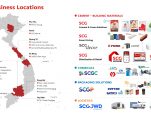
SCG's Business in Vietnam page-0001

Mr. Kulachet Dharachandra, Country Director – Vietnam, SCG, stated: “Vietnam is a strategically important country for SCG, with total investments exceeding 7 billion US dollars across 28 companies, representing 28% of SCG’s total assets. This covers chemicals, cement, building materials, packaging, and logistics businesses to serve both domestic and export market demands, enhancing competitive capabilities and building comprehensive production and supply chain potential.

Under the Regional Optimization strategy, SCG combines the strengths of Thailand and Vietnam in digital technology, artificial intelligence and automation, safety standards, and plant management, as well as social, environmental, and governance practices following ESG principles. Vietnam is a high-growth potential market due to its economy, government infrastructure policies, and increasing Green Building trends. It also has consumers with purchasing power for high-quality products and a large consumer base of over 100 million people, plus export potential with efficient production costs, which strengthens sustainable business growth and elevates quality of life in the region.”

SCGD supports PRIME GROUP, Vietnam’s Number One Market Leader of Decor Surface

PRIME GROUP, the flagship business in which SCG acquired shares in 2012, is the market leader of decorative surface materials in Vietnam and will be a key force strengthening SCGD toward its goal of becoming ASEAN leader.

Mr. Numpol Malichai, The Chief Executive Officer and President of SCG Decor Public Company Limited, stated: “Vietnam’s economy is growing, the middle class is expanding, and the real estate market is recovering in mid-range to premium residential projects that favor Glazed Porcelain (GP) tiles, leading to continuously increasing demand for these products.

PRIME has sales revenue of approximately 5,500 million baht with total production capacity of around 80 million square meters. The company plans to invest in expanding GP tile production capacity from 19 million square meters in 2025 to 25.6 million square meters in 2026, targeting expansion to 45 million square meters by 2030 to align with increasing demand. PRIME can also manage and control production costs of GP tiles to be able to competitive with the products from world-class competitors. This cost advantage supports PRIME to become the strategic production and export base of SCGD, strengthening the Regional Optimization strategy for sustainable growth.

In response to market change and maintain competitive level, PRIME invested in Biomass Gasifier systems at the Pho Yen plant to replace fossil fuel with biomass, thereby reducing energy costs and greenhouse gases, supporting Vietnam to become the strategic export hub to ASEAN and other countries. Furthermore, PRIME’s products meet customers’ needs of all market segments with product offering that covers innovative design and health and safety functions that are well-recognized throughout the Asian region. This supports business growth along with environmental care enhancement. Additionally, SCGD grows bathroom business and strengthens COTTO brand in the ASEAN market with over 44 distributors appointed in Vietnam, as well as growing Complementary products such as adhesive and grout, and others.”

SCG Low-Carbon Cement Supports Vietnam’s Infrastructure and Green Cities, Advancing Its Role as a Global Export Hub

SCG Cement and Building Materials has operated in Vietnam for more than 20 years, with 11 companies across the cement, roofing, and building materials businesses. With production bases located in the central and southern regions, the company supports domestic market growth while also serving as a strategic manufacturing hub for exports to global markets.

Mr. Wichet Chuchaeu, Country Director – Vietnam, SCG Cement and Building Materials Business, stated: “Vietnam’s economy continued to expand in 2025, driven by growth in the industrial and construction sectors. Accelerated government infrastructure investment has supported a steady recovery in demand for building materials and cement—especially low-carbon cement, whose growth aligns with national policies such as the 2050 Net Zero Emission commitment and the Green City policy, which targets that by 2050 at least 50% of new urban areas and 10% of all cities nationwide must meet government-defined green city criteria.”

The cement business has an annual production capacity of 3 million tons of clinker and 4 million tons of cement. Vietnam is the best-managed production-cost base among SCG’s regional cement operations, positioning the country not only as a strong domestic supply base but also as a key hub for exports. SCG currently exports both low-carbon cement and clinker to America, Europe, Africa, Oceania, and Asia.

SCG Cement continues to enhance environmental performance through the use of alternative and recycled materials, reduced coal consumption via alternative fuels such as biomass and refuse-derived fuel (RDF), and the implementation of Waste Heat Recovery (WHR) systems that significantly reduce natural resources, lower energy consumption and reduce CO2 emission.

These initiatives have earned SCG recognition through international environmental standards, including Singapore Green Building Product certification and International Environmental Product Declaration (EPD) System certification—affirming sustainability from production through to finished products.

“Our investment strategy and production cost optimization under the Regional Optimization concept have strengthened SCG’s competitiveness. Vietnam is now positioned as a central hub for manufacturing and exporting quality products to global markets. This supports growing demand for high-quality surface materials and environmentally friendly building materials, contributing to green city development and sustainably enhancing the quality of life for people in Vietnam and the region.”, Mr. Kulachet concluded.

Hashtag: #SCGCement

The issuer is solely responsible for the content of this announcement.

Thailand is moving quickly to reshape the digital map of Southeast Asia, with a surge in data centre construction and artificial intelligence investment shifting the country from a long-standing data transit role to a regional convergence point. New facilities clustered around Bangkok, Chonburi and the Eastern Economic Corridor are altering traffic flows, shortening latency across borders and drawing cloud, AI and content providers seeking scale outside established hubs.

The expansion reflects a change in how data moves across the region. Historically, much east-west traffic between South Asia, Greater China and the Pacific routed through Singapore before fanning out. With hyperscale campuses multiplying in Thailand, workloads are increasingly being processed and stored closer to end users, easing congestion and improving resilience. Network operators say the shift is visible in peering arrangements and cross-border fibre utilisation, with Bangkok emerging as a preferred interconnection point.

Policy has been a key driver. Authorities have offered investment incentives, fast-tracked permits and clarified power and land-use rules to attract large campuses. Grid upgrades and new renewable capacity have been prioritised to address the energy intensity of AI-ready facilities. The strategy aligns with a broader push to anchor higher-value digital services domestically, from cloud platforms and analytics to language models and industry-specific AI tools.

Global technology firms are responding. Cloud providers including Google, Microsoft and Amazon Web Services have expanded or announced investments to serve regional customers from Thai infrastructure, while chipmakers and systems integrators are working with local partners to deploy accelerated computing suited to AI training and inference. Industry executives cite Thailand’s central geography, improving power availability and maturing regulatory environment as decisive factors.

Domestic players are also scaling up. Telecom operators and property developers have formed joint ventures to build carrier-neutral sites, while energy companies are pairing data centres with solar and gas assets to stabilise supply. Universities and research institutes are increasing AI programmes to address talent gaps, with a focus on data engineering, cybersecurity and model governance. The goal is to ensure that infrastructure growth translates into local capability rather than pass-through capacity.

Competition across the region remains intense. Singapore retains strengths in finance, regulation and dense interconnection, but land and power constraints have pushed expansion elsewhere. Malaysia and Indonesia are adding capacity to serve fast-growing domestic markets, while Vietnam is drawing manufacturing-linked digital workloads. Against that backdrop, Thailand is positioning itself as a neutral aggregation point serving multiple neighbours within ASEAN, balancing scale with proximity.

Connectivity improvements underpin the shift. New submarine cable routes landing on both coasts, alongside terrestrial links to neighbouring countries, are diversifying paths and reducing dependence on a single choke point. Operators say this redundancy matters as enterprises distribute AI workloads across regions for cost, performance and regulatory reasons. Financial services, e-commerce and media firms are increasingly adopting multi-cloud strategies that favour locations offering reliable interconnection.

AI demand is shaping design choices. Facilities are being built with higher power densities, advanced cooling and space for accelerated hardware to support model training, while edge nodes closer to population centres handle inference and latency-sensitive tasks. This layered approach is changing how content delivery, language services and real-time analytics are deployed across Southeast Asia.

By Ashis Biswas How serious is the slogan for wresting the seven sister states in India’s northeast region, raised by Islamic extremists in Bangladesh, for New Delhi? For a proper assessment of the political challenge this poses for India, a brief study of background information is necessary. Bangladesh sought to revive old links with Pakistan […]

The article Bangladesh’s Bluster On Northeast India: Empty Threats, Or More? appeared first on Latest India news, analysis and reports on Newspack by India Press Agency).

SINGAPORE – Media OutReach Newswire – 22 December 2025 – In today’s fast evolving job market, traditional qualifications alone are no longer sufficient to guarantee career longevity. Employers increasingly value agility, digital fluency, and continuous learning qualities that micro credentials deliver in concise, impactful ways.

Why Micro-Credentials Matter

Micro credentials are short, focused courses designed to equip professionals with in demand skills quickly. Unlike full degree programs, they enable learners to upskill or reskill without disrupting their careers. For industries shaped by rapid technological change such as digital marketing, artificial intelligence (AI), cybersecurity, and sustainability, these credentials are becoming essential for staying relevant.

According to the World Economic Forum’s Future of Jobs Report 2025, 39% of workers’ core skills will change by 2030, and 59% of the global workforce will need reskilling to meet evolving demands. This shift, driven by automation, AI, and sustainability imperatives, makes continuous learning a necessity rather than an option.

Micro credentials bridge this gap by offering industry aligned, stackable learning experiences that can be completed in weeks rather than years. Research indicates that employers are 72% more likely to hire candidates with micro credentials, as these certifications validate practical, job ready skills.

SIM’s Commitment to Career Readiness

SIM Global Education (SIM GE) is at the forefront of lifelong learning, responding to the urgent need for professionals to stay competitive in a rapidly changing economy. Through its Centre for Micro-Credentials (CMC), SIM offers a curated portfolio of short, stackable courses designed to deliver future-ready skills in high-demand areas such as digital marketing, AI, cybersecurity, and sustainability.

These programs are industry-aligned and developed in consultation with employers and global education partners to ensure relevance and practical application. Each course provides actionable knowledge that learners can immediately apply in their roles, making them ideal for busy professionals seeking quick, impactful upskilling.

A distinctive feature of SIM’s micro-credential ecosystem is the integration of digital badges. These secure, verifiable credentials contain metadata about the achievement, issuer, and criteria. Learners can showcase these badges on platforms like LinkedIn, signalling to recruiters and employers that they possess specialized expertise in emerging fields. This visibility supports skill-based hiring, a growing trend among organizations seeking demonstrable competencies rather than just academic qualifications.

SIM also emphasizes flexibility and accessibility. Courses are delivered in bite-sized formats, often online or blended, allowing learners to progress at their own pace without disrupting their careers.

The Bottom Line

Micro-credentials represent a strategic shift in preparing for the future of work. As industries evolve rapidly, the ability to adapt, upskill, and demonstrate verified competencies is essential. Degrees provide a foundation, but they often lack the agility to keep pace with emerging technologies.

SIM’s micro-credential programs offer flexibility, relevance, and recognition, enabling professionals to stay competitive in a skills-driven economy. Learners can customize pathways, focus on areas like AI, cybersecurity, or sustainability, and earn digital badges that employers value in skill-based hiring.

Micro-credentials help professionals future-proof their careers, ensuring resilience amid automation and digital transformation. For organizations, they build a workforce that is agile and ready for tomorrow’s challenges.

References:

  1. The Future of Jobs Report 2025 – https://www.weforum.org/publications/the-future-of-jobs-report-2025/in-full/3-skills-outlook/
  2. Micro credentials offer accessible education for evolving workforce – https://dcs.wisc.edu/blog/microcredentials-offer-accessible-education/
  3. World Economic Forum – https://www.linkedin.com/posts/world-economic-forum_skills-gap-reskilling-the-future-of-ugcPost-7283091514723819521-JmZr/
  4. Career Sense & MySIM – https://www.sim.edu.sg/alumni/careersense-mysim
  5. CMC – https://cmc.sim.edu.sg/s/alumni-landing
  6. Digital Badge – https://learn.credly.com/blog/digital-badges-explained-what-why-how-and-when

Hashtag: #SIMGlobalEducation #SIMGE #GlobalEducation #InternationalDegree #CareerReady #FutureSkills

The issuer is solely responsible for the content of this announcement.

About SIM Global Education

SIM Global Education (SIM GE) is a leading private education institution in Singapore and the region. We offer more than 140 academic programmes ranging from diplomas and graduate diploma programmes to bachelor’s and master’s degree programmes with some of the world’s most reputable universities from Australia, Canada, Europe, United Kingdom, and the United States. SIM GE’s cohort is made up of 16,000 full- and part-time students and adult learners, of which approximately 36% are international students hailing from over 50 countries.

SIM GE’s holistic learning approach and culturally diverse learning environment aim to equip students with knowledge, industry skills and employability competencies, as well as a global perspective to succeed as future leaders in a fast-changing, technologically driven world.

For more information on SIM Global Education, visit

VISHNU RAJA
RYO YAMADA
HITORI GOTOH
IKUYO KITA
Just in:
OpenAI identifies 948 Linux privilege escalation flaws using AI // Private varsities bill all set to face the axe // Fast Just Got Fastest: STING Energy Boost™ Celebrates Kimi Antonelli’s Formula 1® World Championship and the Fan Energy Behind It // APT29-linked campaign exploits outdated Apple and Android software // Vance attributes Republican midterm defeats to Iran conflict // CR Longdation Aethereal Cybersecurity × Global Cybersecurity Alliance (GCSA) Join Hands to Establish the “AI and Cybersecurity Research Centre” // Oil and chip shares retreat after Democratic victories // ADIA and partners establish $1.4 billion aviation venture // UK air traffic outage inflicted £33m financial losses // Middle East governments assess Iran war after US vote // Trump’s Iran War Has A Share Of Contribution To His Midterm Debacle // Asia Left Behind: Ten international companies have yet to report delivering on their cage-free egg pledges across the region // Ousted top Kochi cop gets IG post // Dubai boat show confirms international shipyard line-up for November // Meraas showcases five residential zones at Dubai Design Week // The “1st Greater Bay Area Health and Longevity Summit & Awards Ceremony” concludes successfully in Macao // Ta’ziz finalises $1.39bn funding for Ruwais industrial facilities // Xi Jinping Preparing For A Trilateral Summit With Trump And Putin At APEC Summit On Nov 18-19 // Kochi police detain two actors over bid to honey trap doctor // SC to examine students’ exam plea today //