News related to
intelligence

A summer reading list published by the Chicago Sun-Times has ignited controversy after it was revealed to contain fictitious book titles and fabricated expert quotes, all generated by artificial intelligence. The content, which appeared in the paper’s “Heat Index” summer feature, was syndicated by King Features, a subsidiary of Hearst, and was not produced or vetted by the Sun-Times editorial staff. The reading list included non-existent titles […]

Headless commerce is reshaping the retail landscape by decoupling the front-end customer interface from the back-end commerce functionality, enabling brands to offer more personalised, flexible, and scalable shopping experiences. This architectural shift is gaining momentum as retailers face increasing pressure to innovate in response to evolving consumer behaviour, technological advancements, and the demand for seamless omnichannel engagement. At its core, headless commerce separates the presentation layer—how customers […]

HONG KONG SAR – Media OutReach Newswire – 20 May 2025 – XTransfer, the world’s leading and China’s No.1 B2B Cross-Border Trade Payment Platform, has been named for the first time to FXC Intelligence‘s Top 100 Cross-Border Payments Companies list for 2025. XTransfer’s debut on this prestigious list places it among a select group of companies at the forefront of innovation, inclusion, and global financial connectivity. XTransfer […]

Taiwan’s healthcare system is undergoing a significant transformation with the introduction of Nurabot, an AI-powered nursing assistant developed by Foxconn in collaboration with Kawasaki Heavy Industries. Designed to alleviate the workload of nursing staff, Nurabot is currently being trialed in several of Taiwan’s leading hospitals, including Taichung Veterans General Hospital , Baishatun Tung Hospital, Mazu Hospital, and Cardinal Tien Hospital. Equipped with advanced real-time sensing capabilities, Nurabot […]

Bithumb, South Korea’s second-largest cryptocurrency exchange, has significantly increased its market share, now handling approximately 25% of the nation’s crypto trading volume, up from under 10% in 2023. This surge positions the company for a planned Initial Public Offering in the latter half of 2025, with Samsung Securities appointed as the lead underwriter.

The exchange’s growth strategy included the elimination of transaction fees for all supported digital assets, a move that temporarily boosted its market share to a peak of 72% in early 2024. This aggressive approach allowed Bithumb to momentarily surpass its main competitor, Upbit, which has traditionally dominated the South Korean crypto market.

Bithumb’s decision to pursue an IPO is not primarily driven by a need for capital infusion. According to its semi-annual report, the company holds financial assets exceeding 400 billion won . Instead, the IPO aims to enhance corporate transparency and governance, thereby rebuilding public trust following past controversies involving its leadership.

The exchange has undergone significant leadership changes in preparation for the IPO. Former Chairman Lee Jung-hoon has returned as a registered director, while Jaewon Lee has been appointed as the new CEO of Bithumb Holdings. These changes are part of a broader effort to strengthen the company’s governance structure and align with regulatory expectations.

Bithumb has also shifted its banking partnership from NH Nonghyup Bank to KB Kookmin Bank, South Korea’s largest financial institution. This move is expected to enhance the exchange’s credibility and attract a broader customer base, including institutional clients.

Despite these advancements, Bithumb faces ongoing regulatory challenges. The Financial Intelligence Unit initiated an on-site inspection in March 2025 to assess the exchange’s compliance with anti-money laundering regulations. The outcome of this investigation could significantly impact the company’s IPO timeline and investor confidence.

Bithumb is considering listing options beyond South Korea, including a potential listing on the U.S. Nasdaq. This consideration arises from the complex regulatory environment in South Korea, where cryptocurrencies are not recognized as legitimate financial products, potentially complicating domestic listing procedures.

Financially, Bithumb reported a net profit of $110 million in 2024, reflecting its robust market position and operational efficiency. The exchange’s commitment to regulatory compliance and technological enhancements has contributed to its resilience in a volatile market.

A group of prominent Senate Democrats, led by Elizabeth Warren and Minority Leader Chuck Schumer, has urged the Trump administration to reconsider newly announced artificial intelligence chip agreements with Saudi Arabia and the United Arab Emirates . The lawmakers argue that these deals could compromise U.S. national security by potentially exposing advanced technology to adversaries like China and Russia, while also limiting the availability of critical components for American companies.

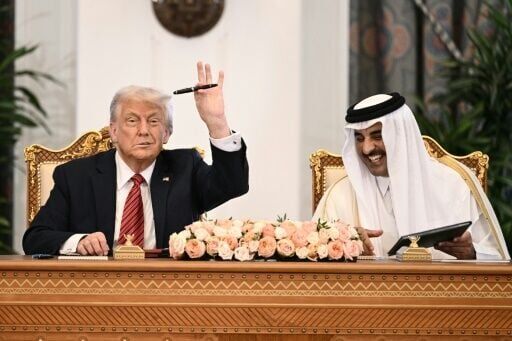
The agreements, unveiled during President Donald Trump’s recent trip to the Middle East, involve major U.S. tech firms such as Nvidia Corp. and Advanced Micro Devices Inc. selling tens of thousands of advanced semiconductors to the Gulf nations. These deals could pave the way for the sale of over a million more chips, coinciding with the administration’s plans to rescind and rewrite Biden-era rules that had capped the access of these countries to such technology.

Critics within the Senate express concern that these moves could inadvertently aid China’s technological advancement, given the close ties between the Gulf states and Beijing. They also warn that the agreements might strain the domestic supply of AI chips, potentially hindering the growth of U.S. companies reliant on these components.

OpenAI CEO Sam Altman has defended the administration’s decisions, dismissing critics as “naïve” and emphasizing the strategic benefits of the deals. Altman, along with White House AI advisor David Sacks, argues that the agreements shift the technological balance in favor of the U.S. against China. Despite these assurances, concerns persist among lawmakers and national security experts about the potential risks associated with the export of sensitive technology to the Gulf region.

The deals have also sparked debate within the tech industry, with some companies eager to pursue opportunities in the Gulf, while others express apprehension regarding security and geopolitical implications. The collaborations highlight a divide in the industry and raise broader questions about the global strategic direction of emerging technologies.

Taiwan Revealed: AI Technology Island SINGAPORE – Media OutReach Newswire – 20 May 2025 – Discovery Channel announces the premiere of Taiwan Revealed: AI Technology Island, in collaboration with the Ministry of Foreign Affairs, ROC (Taiwan). This brand-new documentary, which offers an insight into Taiwan’s advancements in artificial intelligence (AI) and semiconductor technologies, premieres on the Discovery Channel on Thursday, May 22, at 7:10 p.m. SGT, and […]

Advertisements

Huawei has launched its first laptops powered by its proprietary HarmonyOS 5, marking a significant move away from reliance on U.S. technologies. The newly introduced MateBook Fold and MateBook Pro models aim to challenge the dominance of Microsoft’s Windows and Apple’s macOS in the global PC market. The MateBook Fold, priced at 23,999 yuan , features an 18-inch OLED foldable screen without a physical keyboard, catering to […]

AI security solution integrated with NVIDIA Enterprise AI Factory validated design HONG KONG SAR – Media OutReach Newswire – 19 May 2025 – Trend Micro Incorporated (TYO: 4704; TSE: 4704), a global cybersecurity leader, today announced its bringing powerful and simplified security capabilities to NVIDIA Enterprise AI Factory validated design, helping organizations worldwide safely transform their business with next-gen AI infrastructure. Eva Chen, Co-Founder and CEO at […]

Sweden has embarked on a major technological initiative to establish a National AI Cloud infrastructure, with the Nordic data centre provider atNorth selected as the host for this critical platform. The project, led by 6G AI Sweden, aims to significantly enhance the country’s capacity to develop and deploy artificial intelligence technologies by providing state-of-the-art cloud computing resources tailored for AI research and industrial applications. This National AI […]

Cryptocurrency mining companies have registered a notable surge following the announcement of a strategic partnership between OpenAI and CoreWeave, a leading cloud computing provider. This alliance signals a growing intersection between artificial intelligence infrastructure and blockchain technology, propelling mining stocks higher and generating renewed investor interest in the sector.

CoreWeave, known for its specialised GPU-powered cloud services tailored to AI workloads, has struck a deal to supply critical computational capacity for OpenAI’s expanding suite of applications. This development positions CoreWeave as a vital player in supporting the back-end infrastructure of AI innovation. The company’s move has rippled through the crypto mining ecosystem, where hardware capable of efficiently processing complex algorithms is central to mining operations.

Investors responded positively to CoreWeave’s enhanced profile, with shares of prominent crypto mining firms climbing on various exchanges. The broader cryptocurrency market, however, displayed a more cautious stance, maintaining a consolidation phase despite escalating inflation expectations that often trigger volatility. This divergence highlights the nuanced market dynamics where infrastructure providers linked to AI growth are gaining momentum independent of general crypto price trends.

The launch of Galaxy Digital on the Nasdaq exchange further accentuated market activity around crypto-related firms. Galaxy Digital, a diversified financial services and investment management firm focusing on digital assets and blockchain technology, made a striking debut with its share price surging significantly on the first day of trading. The successful Nasdaq listing underscores growing institutional interest in the crypto and blockchain sectors, affirming confidence in their long-term viability despite fluctuating asset prices.

Market analysts note that the OpenAI-CoreWeave partnership exemplifies the convergence of artificial intelligence and blockchain technology, two sectors undergoing rapid expansion. This synergy offers mining companies an avenue to diversify and stabilise revenues by capitalising on increased demand for computational power beyond traditional cryptocurrency mining. As AI applications become more sophisticated and resource-intensive, providers like CoreWeave stand to benefit from expanded contracts and elevated valuations.

The partnership also sheds light on evolving mining operations, which now encompass hybrid models combining cryptocurrency validation with AI data processing tasks. This integration potentially improves profitability and operational resilience amid regulatory uncertainties and market fluctuations in the crypto domain. Mining firms that embrace such technological advancements may position themselves ahead of competitors relying solely on conventional blockchain mining.

Despite these promising developments, the crypto market continues to face challenges from macroeconomic factors, notably inflation expectations that often influence investor behaviour. Although asset prices across major markets, including cryptocurrencies, largely shrugged off these concerns, some volatility is expected as central banks adjust monetary policies. Cryptocurrency’s inherent volatility remains a consideration for both retail and institutional investors, who must weigh technological advancements against broader economic risks.

CoreWeave’s strategic positioning within this ecosystem is particularly significant given the rising demand for GPU-intensive workloads. The company’s infrastructure supports not only OpenAI’s needs but also a wide array of AI-driven enterprises, creating a robust client base and diversified revenue streams. This diversification contrasts with many mining firms whose fortunes are tightly correlated to cryptocurrency price cycles, adding an element of stability that appeals to investors.

Galaxy Digital’s Nasdaq listing is emblematic of the maturing crypto investment landscape. Founded by industry veteran Michael Novogratz, the firm has established itself as a critical bridge between traditional financial markets and the digital asset space. Its successful public offering reflects growing acceptance and integration of digital assets within mainstream finance, an important milestone for the sector.

Market watchers observe that while the immediate reaction favours companies linked to AI and cloud computing, the broader cryptocurrency market is navigating a complex environment marked by geopolitical tensions, regulatory scrutiny, and shifting monetary policies. These factors contribute to a cautious sentiment among traders, with prices consolidating rather than surging dramatically.

Nonetheless, the interplay between AI infrastructure providers and crypto mining firms represents a promising frontier. This convergence may drive innovation in both fields, fostering new business models and operational efficiencies. Companies that adapt to this trend could harness the dual momentum of AI growth and blockchain technology to sustain competitive advantages.

PepsiCo has embarked on a significant multi-year partnership with Amazon Web Services to boost its digital and cloud transformation initiatives. The agreement positions PepsiCo to harness AWS’s comprehensive infrastructure and advanced artificial intelligence tools, aiming to streamline operations, enhance data analytics, and drive innovation across its global business. This strategic collaboration reflects PepsiCo’s commitment to embedding technology deeply within its operations. By migrating critical workloads to the […]

By K Raveendran Donald Trump’s Gulf tour has marked a defining chapter in his post-presidential brand of deal diplomacy, delivering a staggering $2 trillion in agreements that stretch across Saudi Arabia, the United Arab Emirates, and Qatar. This campaign stands in sharp contrast to the flagging results of his so-called trade mark tariff war, which—despite […]

Qualcomm Technologies has revealed plans to establish a global engineering centre in Abu Dhabi, marking a significant expansion of its research and development footprint. The new facility will concentrate on cutting-edge technologies such as artificial intelligence, the industrial internet of things, and advanced data centre solutions, positioning Abu Dhabi as a pivotal node within Qualcomm’s worldwide network of engineering operations. This engineering centre is set to bolster […]

Donald Trump concluded his Gulf tour with the White House touting more than $2 trillion in economic agreements, a figure that has drawn significant scepticism from financial analysts and diplomatic observers. The administration presented the headline number as a demonstration of strengthened U.S.-Gulf relations and expanded economic ties. However, a detailed examination of the announced agreements reveals a far lower total when measured against firm commitments. Official […]

The United Arab Emirates has finalised a significant agreement with the United States to import advanced American-made artificial intelligence semiconductors, marking a pivotal step in Abu Dhabi’s ambition to become a global AI hub. The deal, announced during President Donald Trump’s Gulf tour, permits the UAE to import 500,000 Nvidia H100 chips annually, facilitating the development of large-scale data centres in the region.

This agreement coincides with the UAE’s broader commitment to invest $1.4 trillion in the U.S. over the next decade, focusing on sectors such as AI infrastructure, semiconductors, energy, and manufacturing. The investment framework includes partnerships with major U.S. companies like BlackRock, Microsoft, and Global Infrastructure Partners, aiming to mobilise up to $100 billion for next-generation data centres and energy infrastructure.

A key component of the deal is the construction of a 10-square-mile, 5-gigawatt data centre in Abu Dhabi, led by Emirati firm G42 and involving several U.S. tech companies. This facility is set to be the largest of its kind outside the United States, significantly enhancing the UAE’s data processing capabilities and supporting its AI initiatives.

The agreement also includes substantial U.S. investments in the UAE, with American energy companies expected to invest in upstream oil and gas and unconventional energy projects. Top U.S. firms such as ExxonMobil, Oxy, and EOG Resources are involved in these initiatives, reflecting a deepening of bilateral energy ties.

President Trump’s Gulf tour, which included visits to Saudi Arabia, Qatar, and the UAE, focused on securing financial commitments from wealthy energy producers to boost the U.S. economy and create jobs. The UAE’s pledge to increase its energy sector investments in the United States to $440 billion by 2035, up from the current $70 billion, underscores the success of this diplomatic effort.

The UAE’s strategic shift towards the U.S. in technology and energy sectors is seen as a move to decouple from Chinese influence, particularly in AI. Emirati officials have explicitly pursued this realignment to secure U.S. technology transfers, including advanced semiconductors like Nvidia’s H100 GPUs. This pivot follows U.S. pressure to remove Chinese equipment from critical infrastructure, exemplified by G42’s removal of Huawei technology from its data centres.

The $1.4 trillion investment framework also encompasses initiatives in critical minerals and industrial capacity. The UAE’s $1.2 billion mining partnership with Orion Resource Partners targets lithium, cobalt, and rare earth metals essential for AI hardware and renewable energy systems. Additionally, Emirates Global Aluminum plans to build the first new aluminum smelter in the U.S. in 35 years, aiming to nearly double the country’s domestic production.

Dunamu, the parent company of South Korea’s largest cryptocurrency exchange Upbit, concluded 2024 with a substantial Bitcoin reserve of 16,839 BTC, valued at approximately $1.1 billion based on year-end prices. This accumulation primarily stems from trading and withdrawal fees collected over the years, reflecting the firm’s dominant position in the domestic digital asset market.

The disclosure of these holdings coincides with Dunamu’s announcement of an 85.1% year-over-year increase in operating profit, reaching 1.18 trillion Korean won , and a 22.2% rise in net profit to 983.8 billion won for 2024. The company attributes this financial upswing to heightened trading activity following Bitcoin’s halving event in April, which reduced mining rewards and historically leads to increased market volatility and investor interest.

Contributing to the favorable market conditions were global macroeconomic factors, including expectations of U.S. interest rate cuts and a pro-cryptocurrency stance from the administration of President Donald Trump. These elements fostered increased liquidity and investor confidence, benefiting platforms like Upbit.

In response to its robust financial performance, Dunamu announced a tripling of shareholder dividends, distributing 8,777 Korean won per common share, up from 2,937 won the previous year. The total dividend payout amounts to nearly 300 billion won , signaling the company’s confidence in its sustained growth trajectory.

Despite these achievements, Dunamu faces significant regulatory challenges. South Korea’s Financial Intelligence Unit imposed a three-month suspension on Upbit, citing violations related to transactions with unregistered virtual asset operators and deficiencies in Know Your Customer protocols. The suspension specifically targeted new customer registrations and their ability to transfer virtual assets.

Dunamu contested the FIU’s decision, arguing that the sanctions were disproportionate and did not consider the company’s compliance efforts. A Seoul court temporarily lifted the suspension, granting Dunamu a 30-day injunction to challenge the regulatory action. This legal reprieve allows Upbit to continue operations while the dispute is adjudicated.

The regulatory scrutiny has had a tangible impact on Dunamu’s market valuation. Reports indicate that the company’s unlisted stock price declined by nearly 30% amid the ongoing investigations and enforcement actions. Analysts suggest that the outcome of the legal proceedings and Dunamu’s ability to address compliance concerns will be critical in restoring investor confidence.

Upbit maintains a commanding presence in South Korea’s cryptocurrency market, accounting for over 70% of domestic trading volume. In February 2024, the exchange reported a monthly trading volume of $101 billion, underscoring its significance in the country’s digital asset ecosystem.

President Donald Trump’s strategic tour across the Middle East has ignited internal discord within his administration, as China-focused officials express concern over expansive artificial intelligence agreements with Saudi Arabia and the United Arab Emirates . These deals, involving the acquisition of advanced semiconductors from U.S. firms Nvidia and Advanced Micro Devices , are perceived by some as potential threats to national security and economic interests. During his […]

President Donald Trump has unveiled a series of agreements with the United Arab Emirates totalling over $200 billion, encompassing significant investments in aviation and artificial intelligence. The announcements followed Trump’s meeting with UAE President Sheikh Mohamed bin Zayed Al Nahyan, underscoring a deepening strategic partnership between the two nations. Etihad Airways has committed $14.5 billion to acquire 28 wide-body Boeing aircraft, including 787 Dreamliners and 777X models, […]

Arabian Post Staff -Dubai The United States has pledged a $60 billion investment in the United Arab Emirates’ energy sector, as part of a broader $440 billion joint initiative extending through 2035. This commitment was announced during President Donald Trump’s visit to the Gulf, underscoring a significant deepening of economic relations between the two nations. Sultan al-Jaber, chief executive of the Abu Dhabi National Oil Company , […]

Dubai has announced a comprehensive zoning initiative under its 2040 Urban Master Plan, dividing the emirate into distinct urban and rural zones. This strategic move aims to bolster public safety, optimise emergency response times, and promote sustainable development across the region. Urban zones, encompassing areas such as Downtown Dubai and Business Bay, will see a significant enhancement in security infrastructure. The deployment of advanced technologies, including artificial […]

CoreSite, a prominent U.S. data centre colocation provider, has chosen Nokia to implement a comprehensive upgrade of its IP routing infrastructure spanning 30 data centres across the country. This collaboration aims to enhance network performance, reliability, and scalability to meet the surging demand for data-intensive applications and cloud services. The agreement covers the deployment of Nokia’s high-performance IP routing solutions, integrating both edge and core network capabilities […]

Apple continues to hold its position as the world’s most valuable brand, maintaining a dominant lead in the annual Kantar BrandZ rankings. The technology giant’s brand value remains firmly ahead of its competitors, driven by sustained innovation, strong consumer loyalty, and expanding services. Among the global giants, Saudi Aramco stands out as the only company from the Gulf Cooperation Council and Middle East region to secure a spot within the Top 100, reflecting its growing international recognition amid shifting energy markets.

The Kantar BrandZ report evaluates thousands of brands worldwide based on consumer perceptions, financial performance, and market presence. Apple, which has consistently topped the rankings for several years, saw its brand value strengthen further due to its diversified product ecosystem and significant investments in augmented reality, artificial intelligence, and subscription services. Its ability to integrate hardware, software, and services continues to set it apart, contributing to record-breaking revenues and reinforcing customer engagement across the globe.

The inclusion of Saudi Aramco in the Top 100 highlights the resilience and strategic positioning of this energy giant amid global transitions. As the world accelerates its shift towards renewable energy, Saudi Aramco’s presence in the rankings underscores its efforts to diversify and adapt to evolving demands. The company has been investing heavily in cleaner energy technologies and sustainability initiatives, while still capitalising on its vast oil reserves and refining capabilities. This dual approach has helped maintain its strong financial standing and global brand stature.

Saudi Aramco’s entry into the list marks an important milestone for the GCC and the Middle East, regions that have been working to boost their global business profiles beyond the traditional hydrocarbon sector. The company’s brand value benefits from its critical role in global energy supply chains and its status as one of the largest integrated energy and chemicals companies worldwide. Its prominence in the BrandZ ranking reflects the ongoing transformation of the regional economy and the growing importance of Gulf-based enterprises in international markets.

Technology companies dominate the upper echelons of the BrandZ Top 100, with Apple’s closest rivals including Microsoft, Amazon, Google, and Samsung. These brands owe their high valuations to their broad global reach, innovation pipelines, and ability to capture consumer attention in a fast-evolving digital landscape. The report shows a marked increase in the value of brands involved in cloud computing, software services, and digital entertainment, signalling shifts in consumer behaviour and business investment.

Financial services and luxury goods brands also feature prominently, with firms such as Visa, Mastercard, and Louis Vuitton holding strong positions. These sectors benefit from sustained consumer demand and adaptation to digital channels, including e-commerce and fintech innovations. Luxury brands have further capitalised on expanding affluent markets in Asia and the Middle East, contributing to their steady brand valuation growth.

Saudi Aramco’s inclusion is particularly notable given the absence of other Middle Eastern brands in the Top 100, illustrating the challenging environment for regional companies in competing at this global scale. Despite high national revenues and significant economic influence, many Gulf firms have yet to establish the kind of global brand recognition needed to appear alongside the world’s largest multinational corporations. This reflects broader economic and strategic factors, including the diversification efforts underway across GCC countries and their focus on building competitive industries beyond energy.

The report also highlights evolving consumer expectations around sustainability and corporate responsibility, with brands that demonstrate genuine commitment to environmental and social governance increasingly favoured in valuation metrics. For energy companies like Saudi Aramco, this presents both challenges and opportunities, as stakeholders scrutinise their environmental impact and transition strategies. The company’s public commitments to reducing carbon emissions and investing in alternative energy projects are critical to its ongoing reputation and brand strength.

Among the factors contributing to Apple’s sustained brand leadership is its capacity to maintain premium pricing while expanding its user base globally. Its flagship products such as the iPhone, iPad, and Mac continue to enjoy strong demand, while services like Apple Music, iCloud, and the App Store generate consistent recurring revenue streams. Innovations in health technology, privacy features, and integration with smart home devices further deepen consumer engagement and brand loyalty.

The Kantar BrandZ rankings serve as a barometer for global business trends, reflecting shifts in consumer sentiment, technological advancement, and economic power distribution. Apple’s dominance underlines the continuing importance of technology innovation as a driver of brand value, while Saudi Aramco’s position signals the evolving role of energy companies in the global economy. As the world grapples with climate change and digital transformation, these rankings highlight how adaptability and strategic vision underpin the most valuable brands.

The presence of Saudi Aramco in the Top 100 is likely to inspire other Gulf-based companies to pursue greater international brand recognition through strategic investments, partnerships, and innovation. Governments across the region have increasingly prioritised economic diversification and global competitiveness, aiming to foster industries such as technology, finance, tourism, and renewable energy. Building strong, globally respected brands will be essential to this long-term vision.

This year’s BrandZ report underscores the growing concentration of brand value among a relatively small group of global leaders, with the top 10 brands accounting for a significant share of total valuation. While new entrants occasionally disrupt the rankings, the core list remains dominated by technology firms and consumer-focused corporations with expansive ecosystems and high consumer trust.

Saudi Aramco’s performance within this competitive context is a testament to its strategic management and financial robustness. It reflects its ability to navigate geopolitical uncertainties, market volatility, and the pressures of a shifting energy paradigm. As international investors and consumers become more conscious of sustainability, Saudi Aramco’s ongoing brand strategy will likely focus on balancing its traditional strengths with innovation in low-carbon energy solutions.

The Kantar BrandZ Top 100 also illustrates broader global economic trends, including the rise of Asian brands and the shifting influence of different markets. Chinese companies such as Tencent, Alibaba, and Huawei continue to climb the rankings, leveraging vast domestic markets and aggressive expansion strategies. Meanwhile, European brands have seen mixed fortunes amid economic challenges and regulatory shifts, emphasising the competitive pressures on established global players.


Matein Khalid I was neurologically programmed to disbelieve every communique issued by the Indian or Pakistani military in the wartime and thus missed the spectacular 50% rise in the shares of A​VIC Chengdu Aircraft, a Shenzhen listed vendor of the $39 million J-10 fighter jet that downed three Indian ​$250 million Rafales, a MiG-29 and Sukhoi-30 while Frenc​h, British and US intelligence told sources in Reuters, Bloomberg, […]

VISHNU RAJA
RYO YAMADA
HITORI GOTOH
IKUYO KITA