News related to
intelligence

As businesses continue to evolve with the digital era, the demand for robust and efficient customer service operations has become pivotal to success. Customers now expect seamless interactions across all platforms, making omnichannel customer support essential. The ability to provide a consistent and high-quality experience, regardless of the communication channel, distinguishes leading businesses from the competition. In exploring this facet of customer relations, we delve into the […]

M A Hossain By any military measure, Ukraine’s ‘Operation Spider Web’ was an astonishing success. In a meticulously planned operation, Ukrainian drones struck deep into Russian territory, obliterating at least 40 military aircraft—including nuclear-capable Tu-95 and Tu-22M3 bombers—in a single, devastating blow. The attack revealed not only meticulous Ukrainian planning over 18 months but also the glaring vulnerabilities of Russia’s so-called impenetrable airspace. It was a coup […]

Rivian has unveiled a substantial software update designed to elevate the electric vehicle ownership experience through faster charging capabilities, advanced energy monitoring, and innovative driver engagement tools. This enhancement aims to improve battery efficiency and extend driving range, positioning Rivian’s models as increasingly competitive in the evolving EV market. The update introduces a faster charging protocol that significantly reduces downtime during charging stops. By optimizing the vehicle’s […]

Rapid advancements in artificial intelligence have intensified the demand for adaptable and scalable automation tools. Among the contenders, n8n has distinguished itself as a versatile platform, particularly appealing to developers and enterprises seeking customizable AI-driven workflow solutions. Its open-source framework, extensive integration capabilities, and robust AI features have positioned it as a formidable player in the automation landscape. A significant factor contributing to n8n’s appeal is its […]

Bell Canada has launched a major initiative to bolster the country’s artificial intelligence capabilities through the establishment of a nationwide network of high-performance, hydroelectric-powered data centres. Dubbed Bell AI Fabric, the project aims to provide 500 megawatts of AI computing capacity, marking a significant step in enhancing Canada’s sovereign AI infrastructure. The first facility, a 7-megawatt data centre in Kamloops, British Columbia, is set to commence operations […]

Dubai’s Roads and Transport Authority has initiated a comprehensive upgrade of Umm Suqeim Street, aiming to significantly enhance traffic flow and urban connectivity across the city. The project, stretching from the intersection with Jumeirah Street to Al Khail Road, is a pivotal component of a broader strategy to modernise the city’s infrastructure and accommodate its rapid urban expansion.

The upgrade is designed to increase the road’s capacity to 16,000 vehicles per hour in both directions, effectively reducing travel time between Jumeirah Street and Al Khail Road from 20 minutes to just six. This enhancement is expected to alleviate congestion and improve accessibility for key residential and commercial areas, including Jumeirah, Umm Suqeim, Al Manara, Al Sufouh, Umm Al Sheif, Al Barsha, and Al Quoz.

Integral to the project are the redevelopment of six major intersections along Umm Suqeim Street. These include the construction of four bridges and three tunnels, collectively spanning 4.1 kilometres. Notably, a two-lane tunnel in each direction will be constructed at the intersection with Jumeirah Street, complemented by a signalised surface-level junction. Another two-lane tunnel is planned at the intersection with Al Wasl Street to facilitate traffic flow from Sheikh Zayed Road towards Jumeirah Street, while maintaining uninterrupted surface traffic in the direction of Sheikh Zayed Road.

At the intersection with Sheikh Zayed Road, two bridges will be constructed to eliminate traffic overlap and enhance movement efficiency. Additionally, a tunnel will be developed at the intersection with First Al Khail Street to accommodate traffic from Al Barsha towards Sheikh Zayed Road, along with associated surface-level improvements. The stretch between First Al Khail Street and Al Asayel Street will be widened by adding one lane in each direction, increasing capacity to four lanes per direction. At Al Khail Road, the works involve the construction and widening of two flyovers—one connecting Al Khail Road with Al Quoz Industrial Area, and the other facilitating traffic from Umm Suqeim Street to Al Khail Road heading towards Deira.

Beyond vehicular traffic improvements, the project places a strong emphasis on enhancing pedestrian and cyclist infrastructure. Upgrades include the development of pedestrian walkways, dedicated cycling tracks, landscaped boulevards, and vibrant public spaces designed to foster community interaction and promote sustainable urban living. A direct link will also be established between the Mall of the Emirates Metro Station and nearby residential communities, enhancing last-mile connectivity and encouraging the use of public transportation.

This initiative is part of RTA’s master plan to overhaul the surrounding road network, which includes planned upgrades to Jumeirah Street, Al Wasl Street, and Al Safa Street. The overarching goal is to enable uninterrupted traffic flow from Jumeirah to Al Qudra Road over a distance of 20 kilometres, thereby improving connectivity across four major transport corridors: Sheikh Zayed Road, Al Khail Road, Sheikh Mohammed bin Zayed Road, and Emirates Road.

Mattar Al Tayer, Director General and Chairman of the Board of Executive Directors at RTA, stated that the upgraded corridor will directly serve vital residential and development areas with a combined population exceeding two million. He emphasised that the project is designed to accommodate Dubai’s rapid population growth and urban expansion while improving the overall quality of life for residents and visitors.

Construction is already 70% complete on a 4.6-kilometre segment of Umm Suqeim Street from Al Khail Road to Sheikh Mohammed bin Zayed Road. This phase includes an 800-metre tunnel near Kings’ School in Al Barsha South and a surface-level junction, scheduled to open in the third quarter of the year. The completion of this segment is expected to reduce travel time between Sheikh Mohammed bin Zayed Road and Al Khail Road by 61%, from 9.7 minutes to just 3.8 minutes.

The RTA is also leveraging advanced technologies to monitor and manage the project’s progress. Drones are being utilised to capture and analyse project data, while artificial intelligence is employed to track construction milestones and performance indicators. This integrated approach has enhanced operational efficiency on-site, accelerated decision-making processes, and enabled the provision of real-time, high-precision data. The adoption of these technologies has resulted in a 100% increase in field presence and a 60% reduction in the time required for site surveys. Time-lapse imaging systems are also being used to continuously monitor construction activities, contributing to a 40% improvement in overall project monitoring efficiency.

KUALA LUMPUR, MALAYSIA – Media OutReach Newswire – 2 June 2025 – June 2025 is shaping up to be one of the most eventful months of the year for global markets. For traders, this means opportunity—but also volatility. The economic calendar is packed with macroeconomic data releases and central bank meetings, while geopolitical risks remain close to the surface. Beyond the usual inflation prints and interest rate […]

Advertisements

NetActuate has unveiled a new point of presence in Dublin, Ireland, marking its tenth operational site in Europe. Situated within Equinix’s DB1 Dublin IBX Data Center, this expansion aims to bolster the company’s capacity to deliver low-latency, high-performance connectivity across the continent. The Dublin facility offers direct access to major digital exchange points, including the Equinix Internet Exchange and the Internet Neutral Exchange , facilitating seamless interconnection […]

Nvidia CEO Jensen Huang has issued a stark warning that U.S. export restrictions on advanced semiconductors are inadvertently accelerating China’s progress in artificial intelligence , potentially undermining America’s technological leadership. Huang contends that the sanctions, intended to curb China’s access to cutting-edge AI chips, have instead galvanized Chinese firms to develop domestic alternatives. “The Chinese competitors have evolved,” Huang remarked, highlighting Huawei’s rapid advancements. He emphasized that […]

Saudi Arabia’s sovereign wealth fund, the Public Investment Fund , is evaluating an initial public offering for its wholly-owned technology arm, Saudi Information Technology Company , as part of broader efforts to bolster the kingdom’s economic diversification strategy. According to individuals familiar with the matter, PIF has approached investment banks to submit proposals for roles in a potential share sale of SITE. The discussions are in preliminary […]

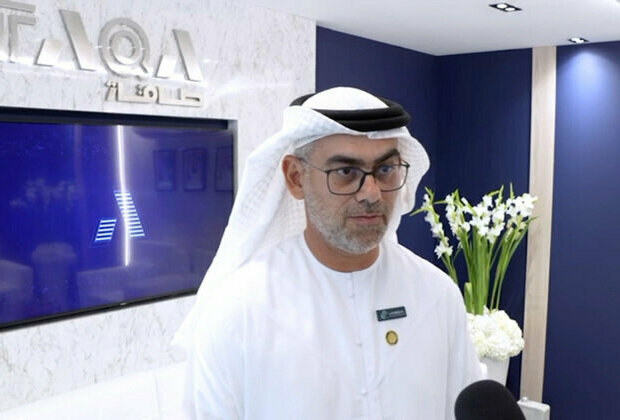
Abu Dhabi National Energy Company has unveiled plans to invest more than AED37 billion to meet the escalating power demands of the emirate’s expanding data centre and artificial intelligence infrastructure. The announcement was made by Group CEO and Managing Director Jasim Husain Thabet during the World Utilities Congress 2025.

This substantial investment is integral to TAQA’s strategy to deliver clean, certified, and reliable energy to critical infrastructure. The company aims to support Abu Dhabi’s ambition to become a global hub for digital innovation and AI development.

TAQA’s market capitalisation stands at approximately AED360 billion, positioning it among the top five companies in electricity generation, transmission, and water desalination across Europe, Africa, and the Middle East. Operating in 25 countries, TAQA has doubled its electricity production capacity to 56 gigawatts over the past four years, surpassing the total electricity consumption of the United Kingdom.

The company’s growth strategy includes significant international acquisitions. TAQA recently partnered with Mubadala to acquire an 875-megawatt gas-powered electricity station in Uzbekistan, aiding the country’s energy transition and opening new markets in Central Asia. Additionally, TAQA has acquired Transmission Investment, a leading UK-based energy and utility investment platform, enhancing its capabilities in offshore transmission services and infrastructure development.

In collaboration with Masdar, where TAQA holds a major stake, the company is developing 5 gigawatts of solar energy supported by 19 gigawatt-hours of battery storage. This integrated solar and battery system is designed to deliver a continuous supply of 1 gigawatt for 24 hours, marking it as the largest project of its kind globally.

TAQA plans to invest AED75 billion by 2030 to triple its electricity generation capacity to 150 gigawatts. Part of this strategy includes developing water desalination plants with a combined capacity of 1.3 billion gallons per day, with two-thirds utilising highly efficient reverse osmosis technology.

The company is also exploring acquisition opportunities in the United States, identifying it as a key market for expansion. TAQA aims to spend around $20 billion between 2023 and 2030 on organic and inorganic growth, targeting 150 gigawatts of capacity by the end of that period, up from around 56 gigawatts currently.

Messaging platform Telegram has successfully raised $1.7 billion through a convertible bond issuance, aiming to refinance existing debt and bolster its financial position. The five-year notes offer a 9% annual coupon and include a provision allowing bondholders to convert their holdings into equity at a 20% discount if Telegram proceeds with an initial public offering before maturity.

A significant portion of the proceeds, approximately $955 million, is earmarked to repurchase outstanding bonds from a 2021 issuance set to mature in March 2026. Telegram had previously repurchased around $400 million of this debt using internal funds. The remaining funds from the new bond sale will support the company’s operational expansion and strategic initiatives.

The bond offering attracted substantial interest from institutional investors. Existing backers like BlackRock and Abu Dhabi’s Mubadala Investment Company participated, alongside new entrants such as hedge fund Citadel. The high yield and potential for equity conversion made the bonds particularly appealing to investors seeking both income and growth opportunities.

Telegram’s financial performance has shown marked improvement. In 2024, the company reported a profit of $540 million on revenues of $1.4 billion, a significant turnaround from a loss of $173 million on $342 million in revenue the previous year. Projections for 2025 indicate a profit exceeding $700 million on revenues of $2 billion, driven by diversified income streams including advertising, in-app purchases, and premium subscriptions.

A notable contributor to Telegram’s revenue growth is a $300 million partnership with Elon Musk’s artificial intelligence firm, xAI. Under this agreement, Telegram will distribute xAI’s chatbot, Grok, within its platform, receiving compensation in both cash and equity. This collaboration signifies Telegram’s foray into integrating advanced AI technologies to enhance user engagement and service offerings.

Despite these financial strides, Telegram faces legal challenges. CEO Pavel Durov is currently under investigation in France for allegedly failing to cooperate with authorities probing illegal activities on the platform. Durov, who has been released on bail, is restricted from leaving France without official permission. His request to travel to the United States for investor meetings was denied by French prosecutors, citing insufficient justification. Durov maintains that Telegram has complied with all legal obligations and expresses uncertainty over the basis of the charges.

These legal issues have not deterred investor confidence. The successful bond issuance reflects a strong belief in Telegram’s growth trajectory and financial stability. The company’s user base continues to expand, with over 1 billion monthly active users and a doubling of paid subscribers to more than 15 million in the past year.

Revolutionizing Brain Health with CUHK Spin-off’s Cutting-Edge Technology to Enable Early Detection and Prevention HONG KONG SAR- Media OutReach Newswire – 29 May 2025 – Humansa, Asia’s leading health and longevity center, is proud to announce the launch of its ground-breaking BrainSpark Program, a brain health program in collaboration with i-Cognitio Sciences, a spin-off company from the Chinese University of Hong Kong (CUHK) founded by Prof. Vincent […]

Over 100 AI+ Game Changers Share Cutting-Edge AI Trends—Register for Free to Unlock New Opportunities. HONG KONG SAR- Media OutReach Newswire – 29 May 2025 – Artificial Intelligence (AI) is the game-changing key! Presented by BUSINESS GOVirtual (BGOV), AI+ Power 2025, Hong Kong’s premier AI application exhibition, will take place on June 5-6, 2025, at the Hong Kong Convention and Exhibition Centre. Showcasing local and Greater Bay […]

Telegram has entered into a one-year agreement with Elon Musk’s artificial intelligence company, xAI, to integrate the Grok chatbot into its messaging platform, which boasts over one billion users globally. Under the terms of the deal, Telegram will receive $300 million in a combination of cash and equity, along with 50% of the revenue generated from xAI subscriptions sold through the app.

This partnership marks a significant expansion for Grok, which was previously available exclusively to premium subscribers of X . By integrating Grok into Telegram, xAI aims to broaden its user base and compete more directly with established AI chatbots like OpenAI’s ChatGPT and Google’s Gemini.

Telegram CEO Pavel Durov announced the collaboration on X, highlighting the strategic move to enhance user engagement through advanced AI capabilities. The integration of Grok into Telegram is expected to provide users with a more interactive and intelligent messaging experience, leveraging Grok’s ability to generate text, understand images, and summarise conversations.

The financial structure of the deal underscores the growing value of AI integration in messaging platforms. The $300 million investment from xAI not only provides Telegram with substantial capital but also aligns both companies’ interests through the shared revenue model. This approach reflects a broader trend in the tech industry, where companies seek to monetise AI tools by embedding them into widely used applications.

Grok’s integration into Telegram comes amid a competitive landscape for AI chatbots. xAI, founded by Elon Musk in 2023, has rapidly developed Grok to offer features such as web search results, PDF uploads, and image understanding. The chatbot is designed to provide responses with a touch of wit and humour, distinguishing it from more conventional AI assistants.

The rollout of Grok on Telegram also raises questions about content moderation and user data privacy. Telegram has faced scrutiny in the past for its approach to content oversight, and the addition of an AI chatbot with unfiltered responses could attract further attention from regulators and watchdogs. xAI has previously faced criticism for Grok’s use of user data from X, leading to investigations by European privacy regulators.

The US Marine Corps is advancing a comprehensive artificial intelligence strategy aimed at overhauling its operational, logistical, and decision-making frameworks. This initiative is designed to embed AI into the core of military functions, moving beyond isolated technological applications to a holistic transformation of processes and structures. A central element of this strategy is the deployment of Digital Transformation Teams across various commands. These cross-functional units are tasked […]

Telegram has successfully raised at least $1.5 billion through a bond issuance, attracting investments from prominent entities including BlackRock, Mubadala Investment Company, and Citadel. This financial manoeuvre underscores investor confidence in the messaging platform, even as its founder and CEO, Pavel Durov, faces legal challenges in France.

The five-year bonds, offering a 9% yield, are structured with a conversion option, allowing investors to convert debt into equity should Telegram pursue an initial public offering . While an IPO is not imminent, this feature provides potential upside for investors. Proceeds from the bond sale are earmarked to retire approximately $1 billion in debt from bonds issued in 2021, with Telegram having already repurchased around $400 million of those bonds using cash reserves.

Durov’s legal predicament stems from preliminary charges in France, accusing him of non-cooperation with investigations into illegal activities on Telegram, including child exploitation content. Both Durov and Telegram contest these allegations, asserting compliance with all binding legal requests. Despite being released on bail, Durov is restricted from leaving France without permission, a situation that has not deterred investor interest.

Telegram’s financial performance has shown remarkable improvement. In 2024, the company reported a profit of approximately $540 million on revenues of $1.4 billion, a significant turnaround from a $173 million loss on $342 million in revenue the previous year. This growth is attributed to an increase in paid subscribers, now exceeding 15 million, and revenue streams from advertising, in-app purchases, and partnerships with developers building on Telegram’s platform.

Looking ahead, Telegram projects revenues of $2 billion and profits surpassing $700 million for 2025. The company continues to expand its user base, recently surpassing one billion monthly active users, and is exploring opportunities in artificial intelligence, including a collaboration with Elon Musk’s xAI to integrate the Grok chatbot.

Allianz Safety and Shipping Review 2025: Trade conflict between the US and China and growing shadow fleet add to substantial challenges for the shipping industry. Despite geopolitical headwinds: only 27 large ships lost worldwide in 2024, down by more than 20%, the industry’s lowest-ever total. Progress made on traditional risks such as fires, collisions, and groundings, which are the main causes of losses, but potential for large […]

By Nantoo Banerjee Pakistan is back in the business of pushing Jihadists into India. It is the same old story. Last week, barely 12 days after the announcement of a ceasefire on 10 May, Pakistani terrorists in Jammu & Kashmir’s Kishtwar district killed an Indian soldier in an encounter with the security forces. When were […]

India’s early southwest monsoon arrival has offered welcome relief to farmers, but uncertainty remains over the precise timing, distribution, and intensity of rainfall across the country. Addressing this challenge, the Indian Meteorological Department has introduced a sophisticated weather prediction model aimed at enhancing agricultural planning and flood management, marking a significant step in the nation’s climate resilience efforts.

This new weather model, developed through collaboration between national scientific agencies and international partners, integrates high-resolution atmospheric data and advanced computational techniques to improve the accuracy of monsoon forecasts. The system utilises a blend of satellite observations, ground station measurements, and oceanic data to create detailed projections of precipitation patterns at the district and sub-district levels.

For decades, India’s reliance on the southwest monsoon has shaped the rhythms of its agriculture and economy. The monsoon typically accounts for about 70% of the country’s annual rainfall, influencing the sowing and harvesting cycles of key crops such as rice, wheat, and pulses. However, the monsoon’s unpredictability—often caused by complex interactions between land, sea, and atmospheric conditions—has posed significant risks to food security and rural livelihoods.

The new model aims to reduce these risks by providing farmers and policymakers with more reliable short-term and seasonal forecasts. By predicting rainfall onset, duration, and distribution more precisely, the system enables better crop planning, irrigation management, and disaster preparedness. For flood-prone regions, timely alerts could minimise damage to infrastructure and human settlements.

Experts note that the model’s improvements stem largely from advances in artificial intelligence and machine learning, which allow for the assimilation and analysis of vast datasets that traditional forecasting methods struggle to process. The enhanced resolution of the model—down to a 5 km grid in many areas—represents a leap forward from previous models that averaged conditions over much larger geographic scales.

Climate scientists have long warned that climate change is exacerbating the variability and intensity of monsoon rainfall. Erratic monsoon behaviour, including unseasonal droughts and heavy downpours, has led to crop failures and increased vulnerability among India’s predominantly agrarian population. This makes timely and accurate weather forecasting more critical than ever.

The IMD’s new model is also expected to support state governments in managing water resources amid shifting rainfall patterns. States such as Maharashtra, Karnataka, and Tamil Nadu, which have experienced acute water shortages in recent years, could use the improved forecasts to optimise reservoir operations and groundwater recharge programmes.

While the system’s rollout is a technological milestone, challenges remain in ensuring that the forecasts translate into actionable insights for farmers, many of whom have limited access to digital platforms. To bridge this gap, the government is intensifying efforts to expand rural connectivity and disseminate weather information through local language broadcasts, mobile alerts, and community outreach programmes.

In parallel, agricultural extension services are being trained to interpret the forecasts and advise farmers on adaptive strategies, such as adjusting sowing dates and crop varieties to anticipated rainfall. Private sector players, including agri-tech startups, are also integrating these forecasts into advisory services and precision farming tools.

The enhanced weather model complements other ongoing initiatives in India’s climate adaptation framework, including the National Adaptation Fund for Climate Change and state-level disaster management plans. By aligning improved meteorological insights with policy and grassroots actions, authorities hope to mitigate the adverse impacts of climate variability on millions of rural households.

International experts have lauded the development as a crucial example of how countries with diverse climatic zones can leverage data-driven approaches to manage complex weather phenomena. The Indian model’s ability to simulate monsoon dynamics across the Himalayas, Western Ghats, and the vast Indo-Gangetic Plain provides valuable insights into regional microclimates.


OpenAI has announced the establishment of a legal entity in South Korea and plans to inaugurate an office in Seoul, marking its third operational base in Asia following Tokyo and Singapore. This strategic move underscores the company’s commitment to expanding its footprint in regions exhibiting significant growth in artificial intelligence adoption.

South Korea ranks second globally, after the United States, in the number of paying subscribers to ChatGPT. The nation’s robust technological infrastructure and a populace highly receptive to AI innovations have positioned it as a pivotal market for OpenAI’s expansion efforts.

Jason Kwon, OpenAI’s Chief Strategy Officer, emphasised South Korea’s comprehensive AI ecosystem, highlighting its strengths in hardware, software, and a diverse user demographic spanning various age groups. He noted that the country’s integrated approach to AI development makes it an ideal environment for meaningful AI impact.

In alignment with its expansion strategy, OpenAI has initiated recruitment processes to build a local team in Seoul. The company aims to foster collaborations with South Korean enterprises and governmental bodies to tailor AI solutions that resonate with local needs and regulatory frameworks.

Earlier this year, OpenAI entered into a partnership with Kakao, a leading South Korean internet company, to develop AI products customised for the Korean market. This collaboration is indicative of OpenAI’s approach to localising its offerings and integrating them seamlessly into existing digital ecosystems.

The establishment of a Seoul office also aligns with OpenAI’s broader initiative to implement data residency solutions across key Asian markets, including South Korea. By enabling local data storage, OpenAI addresses regional data sovereignty concerns and ensures compliance with local data protection regulations, thereby enhancing trust among enterprise clients and users.

OpenAI’s expansion into South Korea is part of a concerted effort to strengthen its presence in Asia. The company’s Tokyo office, opened in April 2024, serves as a hub for developing Japanese-language AI models and collaborating with local businesses and government entities. Similarly, the Singapore office, announced in October 2024, functions as the Asia-Pacific headquarters, focusing on regional partnerships and AI research initiatives.

Saudi Aramco is exploring asset sales to bolster its balance sheet as it navigates declining oil revenues and intensifies its international expansion efforts. The state-owned oil giant has engaged investment banks to propose strategies for monetising its assets, according to individuals familiar with the matter. While specific assets and banks involved remain undisclosed, the move underscores Aramco’s proactive approach to financial management amid market challenges.

The company’s net income fell by 12% to $106.2 billion in 2024, down from $121.3 billion the previous year, primarily due to lower oil prices and reduced production volumes. Consequently, Aramco plans to cut its total dividend payout by nearly a third in 2025, distributing $85.4 billion compared to $124 billion in 2024. This reduction is expected to impact Saudi Arabia’s budget, which heavily relies on Aramco’s dividends to fund its Vision 2030 economic diversification initiative.

In response to these financial pressures, Aramco is actively seeking investors for infrastructure assets in its $100 billion Jafurah gas project, aiming to become a major global natural gas player. The company intends to maintain majority ownership and operational control while attracting external investments to support development. This strategy follows previous deals, including nearly $28 billion raised in 2021 through selling 49% stakes in its oil and gas pipeline subsidiaries.

Aramco’s international expansion includes signing preliminary agreements with U.S. companies valued at up to $90 billion, encompassing sectors such as liquefied natural gas, artificial intelligence, and technology. Key deals involve a 20-year LNG purchase agreement with NextDecade’s Rio Grande LNG export project in Texas and collaborations with ExxonMobil to upgrade the Samref refinery in Saudi Arabia. Additionally, Aramco is in discussions to invest in two new refineries in India, seeking stable markets for its crude amidst increased competition from cheaper sources like Russia.

Despite the dividend cut, Aramco plans capital investments between $52 billion and $58 billion in 2025, focusing on expanding its gas capabilities and integrating its upstream and downstream businesses. The company expects potential operating cash flows of $9 billion to $10 billion from growth in its upstream gas business and $8 billion to $10 billion from its downstream business by 2030.

Aramco’s financial adjustments come amid a broader context of declining oil prices, with Brent crude trading around $70 a barrel, down from approximately $100 three years ago. The company’s performance-linked dividend has seen a significant reduction, reflecting broader struggles in the oil industry. Analysts suggest that Aramco may need to tap into debt markets to finance its dividend and capital expenditure commitments if oil prices remain subdued.

Major news organisations are grappling with the fallout from deploying artificial intelligence in content creation, as instances of fabricated material and misattributed authorship surface, raising concerns over journalistic integrity. The Chicago Sun-Times and The Philadelphia Inquirer faced backlash after publishing a summer reading list featuring non-existent books and fictitious expert quotes. The content, syndicated by King Features and crafted by freelance writer Marco Buscaglia using AI tools, […]

Scammers operating in the UAE have increasingly exploited WhatsApp’s business platform to impersonate trusted contacts, aiming to extract sensitive personal and financial information from unsuspecting users. This surge in fraudulent activity has prompted Meta, WhatsApp’s parent company, to initiate a targeted public awareness campaign by directly messaging users in the UAE with detailed guidelines to distinguish legitimate business profiles from fake ones.

These deceptive practices often involve scammers creating profiles that mimic reputable companies or individuals, using official logos and business names to gain credibility. The impersonators then contact users, requesting confidential details such as passwords, banking information, or verification codes under various pretexts, including prize claims, urgent payments, or account verification. Such tactics prey on the trust that users place in familiar or official-seeming contacts, making it crucial to understand the warning signs of fraudulent profiles.

Meta’s communication emphasises several practical steps for users to verify the authenticity of business accounts on WhatsApp. Genuine business profiles typically feature a green checkmark badge, signifying that WhatsApp has verified the account’s authenticity. Additionally, the FAQ highlights that official business accounts often provide clear contact information, including physical addresses and email IDs, which can be cross-checked independently. Users are advised to be cautious of unsolicited messages from accounts lacking these markers, especially if they request personal or financial information.

The prevalence of such scams in the UAE reflects a broader global trend where digital fraudsters exploit popular communication platforms. The UAE’s rapidly expanding digital economy and high smartphone penetration have made it an attractive target for cybercriminals. Reports indicate that these scams have led to significant financial losses and identity theft cases, affecting both individuals and businesses. Authorities in the region have responded by increasing collaboration with technology firms and law enforcement agencies to identify, disrupt, and prosecute offenders.

Cybersecurity experts underscore the importance of user vigilance and education alongside technological safeguards. They advise that users should not share one-time passwords , verification codes, or bank details via messaging apps. Moreover, any unsolicited requests for payments or personal data should be treated with scepticism. Experts also recommend reporting suspicious profiles directly to WhatsApp and local cybercrime units to aid in swift action against scammers.

WhatsApp has implemented several backend security measures to combat such misuse, including automated detection of suspicious accounts and the ability for users to block and report fraudulent profiles easily. However, the dynamic nature of scams means that fraudsters continuously evolve their methods to bypass safeguards, making user awareness a critical line of defence.

The UAE government has been proactive in addressing cybercrime through legal and regulatory frameworks. The Federal Law No. 5 of 2012 on Combatting Cybercrimes stipulates stringent penalties for offences involving electronic fraud, impersonation, and data breaches. These laws are complemented by public education initiatives and partnerships with the private sector to enhance digital literacy and security awareness across the community.

Telecommunications providers in the UAE have also joined efforts to strengthen network security and raise awareness about phishing and social engineering attacks. Campaigns targeting both consumers and corporate clients aim to provide up-to-date information on the latest threats and prevention strategies. These initiatives are crucial as social messaging platforms like WhatsApp remain primary communication channels for many residents and businesses in the country.

Despite these efforts, challenges remain due to the anonymous and borderless nature of cybercrime. Fraudsters often operate from outside the UAE, complicating jurisdictional enforcement. International cooperation and intelligence-sharing between countries have become essential components of the global response to digital fraud schemes. UAE authorities participate actively in such cooperative frameworks, seeking to enhance their capacity to track and dismantle scam networks.

Users are increasingly urged to adopt best practices for online security, including enabling two-step verification on WhatsApp accounts, regularly updating app software, and avoiding clicking on suspicious links. Businesses are encouraged to educate their customers about official communication channels and verify any unusual requests through direct contact.

VISHNU RAJA
RYO YAMADA
HITORI GOTOH
IKUYO KITA